Big Crown Records is proud to present Dave Guy’s debut album Ruby. Having lent his talents both on stage and in the studio to artists like Amy Winehouse, Lizzo, Pharrell, and Sharon Jones to currently playing every night on The Tonight Show as a member of The Roots, Dave steps out on his own with a jazz record that is both unique and modern. Ruby mixes his musical influences with the energies of the city that raised him, capturing different moods and inviting the listener into the world as Dave Guy sees and feels it. Recorded in Queens at The Legendary Diamond Mine, the album is produced by Homer Steinweiss and Nick Movshon and features musical contributions from Leon Michels, Marco Benevento, Claire Cottrill, and more.
Ruby instantly sits with the classics as an album that is fully realized and not simply a collection of songs. Lead single “7th Heaven” opens the album with an anthemic energy as Dave’s horn lines soar over thundering drums, ethereal vocals, and dancing piano. Keeping the energy high, “Footwork” is a Latin inspired number that is sure to soundtrack many a dance floor from SoHo to Harlem. The synth intro of “Pinky Ring” cleanses your palate for the mood shift when the track drops. Deep bass tones underline the impeccable drumming and
Dave effortlessly finds the pocket wasting no notes as the verses and choruses trade off. The record leans into spiritual jazz vibes on “Diamond Encore” with a dark and deep almost “Axelrodish” rhythm track then picks the energy back up with the stomper “Still Standing”. “Dave Wants You” has a bop all its own with an unorthodox drum pattern that Dave anchors with his trumpet hits. The otherworldly arrangement of “Drony Boy” puts the production on a pedestal. The first intro almost serves as an intermission on the album while the second
intro sets up the neck snapping track that is about to drop. A menacing guitar signals the builds and the whole thing is juxtaposed by Dave’s beautiful trumpet riffs. “Quesodillas” & “Green Door” begin the autumn of the album with their mellow & intimate energy and “Ruby’s Rubies”, the album’s closer is the perfect ending to the journey.
quête:v neck
"In a trajectory full of about-faces, Music for Four Guitars splices the formal innovations of Bill Orcutt's software-based music into the lobe-frying, blown-out Fender hyperdrive of his most frenetic workouts with Corsano or Hoyos. And while the guitar tone here is resolutely treble-kicked—or, as Orcutt puts it, 'a bridge pickup rather than a neck pickup record'—it still wades the same melodic streams as his previous LPs (yet, as Heraclitus taught us, that stream is utterly different the second time around). Although it's a true left-field listen, Music for Four Guitars is bizarrely meditative, a Bill Orcutt Buddha Machine, a glimpse of the world of icy beauty haunting the latitudes high above the Delta (down where the climate suits your clothes)..."—Tom Carter
Reissue
'Find Me Finding You', the new album from the new organization called the Laetitia Sadier Source Ensemble, manages to strike new chords while touching familiar keys in the song of life.
From its percolating opening beat, 'Find Me Finding You' locates new systems within the sound-universe of Laetitia Sadier. This in itself isn't a surprise - Laetitia has relentlessly followed her music through different dynamics and into a variety of dimensions over the course of four solo albums since 2010 (not to forget her three albums with Monade and the long era of Stereolab) - but the nature of the construction here stands distinctly apart from her recent albums. Laetitia was inspired by a mind's-eye envisaging of geometric forms and their possible permutations. As she sought to replicate the shapes in music, this guided the process of assembly for the album.
Part of the freshness of 'Find Me Finding You' comes from working and playing within the Source Ensemble and exploring new sound combinations via a set of youthful and evolving musical relationships. Laetitia recognized the energy of the tracks in their initial form and sought to preserve their vitality by not retaking too many performances - instead, the rawness in the tracks was retained and refined at the mixing stage, maintaining an edge throughout. When we hear synth lines diving, lifting and drifting, unusual guitar textures, the plucked sound of flat wound bass strings or the bottomless pulsing of bass pedals stepping out of the mix with an exquisite vibrancy, this is the sound of the Source Ensemble.
A key to Laetitia's music is her use of vocal arrangements. Throughout 'Finding Me Finding You' the shifting accompaniment creates space to bring this element gloriously forward. Arranged by Laetitia with Joe Watson and Jeff Parker making string charts that were subsequently transposed to vocal parts for several songs, richly arranged choirs of voices provide depth along with the thrilling presence of extra breath in the sound. Laetitia's community-politic is well-served by the groups of voices lending support to the machining of the song craft, providing additional uplift to her quintessentially forward-facing viewpoint - as well as massed voices from three different countries sharing space in harmony.
Working in collaboration is Laetita's tradition and a key to this album's view on being free together. The designation of Source Collective implies a new togetherness phase, alongside long time collaborators Emmanuel Mario and Xavi Munoz, keyboard and flutes parts played by David Thayer (Little Tornados) were essential contributions, as well as further keys, synths and electronics from Phil M FU and several intense guitar sequences from Mason le Long. Chris A Cummings (aka Marker Starling, Laetitia's favourite composer) graciously wrote 'Deep Background' for her. The duet with Hot Chip's Alexis Taylor on 'Love Captive' (not to mention Rob Mazurek's distinctive coronet playing) gives voice to an ideological cornerstone of 'Find Me Finding You'
Onimikìg Algonquin: (n. an.)- thunder Timothy Archambault's unaccompanied flute pieces for this album have been inspired by Indigenous brontomancy (divination by thunder). Each piece highlights a different extended flute technique metaphorically related to types of thunder sounds: claps, peals, rolls, rumbles, inversions, and CG (cloud-to-ground). An important document of new music meets contemporary musicological research via Stephen O'Malley of SUNN O)))'s Ideologic Organ. The Indigenous flute used in this recording is made of cedar respective to the traditional woods used by the Kichesipirini and other tribes who live along the Ottawa & Saint Lawrence Rivers. To the Algonquin the flute (Pibigwan) is the wind maker or essence of the wind. Unlike other tribal nations whom the majority used the flute as a courting instrument, the Algonquin generally utilized the flute for more contemplative singular usage to mimic the sounds of nature or as a signaling device during times of conflict. When love songs were required, they were usually more plaintive in character expressing sadness, loneliness, or concerning the departure of a lover. The album intro begins with the shaking of a necklace of otter penis bone, fish spine, bear claw, elk teeth and deer hide, gifted from Algonquin Elder Ajawajawesi. It is meant to focus the listener's attention before the flute pieces begin. The warble or multi-phonic oscillation prevalent in all the pieces traditionally represented the "throat rattling" vocalization of the tonic note, sometimes known as the horizon of which the melody floats from. Due to the repetition of multi-phonic oscillation the performer will breathe erratically creating an altered state correlating with similar traditional ceremonial practices.
Few names shine as brightly in the cosmology of dubwise bass music as that of V.I.V.E.K. From releasing absolutely ground-breaking tracks for the better part of 20 years primarily on his own System and VIVEK imprints, to curating and hosting his legendary System nights, to bringing so much rising talent to light, it’s honestly difficult to imagine the last two decades of UK and global sound system music without him.
For ZamZam 96 V.I.V.E.K went straight to the bedrock of sound system music and delivered a power-stepper of galactic proportions.
“Illusions Dub” opens with starkly heavy valve bass and a punishing kick, leaving little doubt where this journey is headed . Richly adorned with neck-snapping percussion, industrial snares, post-punk atmospherics and a gorgeous melodic figure, the tune employs classic 90s digi-dub principles while feeling like a message from a gloriously human -or post-human- future.
“Illusions (Raw Dub)” runs rugged through the desk in fine style, with barely restrained feedback, phasers, and deep space echo and reverb ripping open shimmering holes in space-time for a truly cosmic Part 2.
Papa Nugs & Suckerpunch return with the second iteration of
the Nug Nation series; Nug Nation Vol. II. A break-neck four
track exploration of club friendly sonics Nug Nation Vol. II
picks off where it’s predecessor left off, borrowing from the
fundamentals of golden era house and progressive through
a modern lens. All composed in the past 6 months, the EP is
an illustration of the current sound of Papa Nugs with the Aside focusing on groove heavy tracks punctuated by diva
and hip house vocals respectively, while the §ip highlights
the more playful, energetic elements of his production aimed
for the peak hours.
2024 Repress
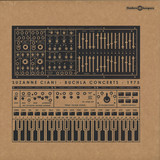
Finders Keepers invite you to witness the incredible first ever Buchla synthesiser concerts/demonstrations providing a distinctive feminine alternative to The Silver Apples Of The Moon if they had ever been presented in phonographic form. This is history in the remaking.
This spring Finders Keepers Records are proud to release an archival project that not only redefines musical history but boasts genuine claim to the overused buzzwords such as pioneering, maverick, experimental, groundbreaking and esoteric, while questioning social politics and the evolution of music technology as we've come to understand it. To describe this records as a game-changer is an understatement. This record represents a musical revolution, a scientific benchmark and a trophy in the cabinet of counter culture creativity. This record is a triumphant yardstick in the synthesiser space race and the untold story of the first woman on the proverbial moon. While pondering the early accolades of this record it's daunting to learn that this record was in fact not a record at all... It was a manifesto and a gateway to a new world, that somehow never quite opened. If the unfamiliar, modernistic, melodic, pulses, tones and harmonics found on this 1975 live presentation/grant application/educational demonstration had been placed in a phonographic context alongside the promoted work of Morton Subotnick, Walter Carlos or Tomita then the name Suzanne Ciani and her influence would have already radically changed the shape, sound and gender of our record collections. Hopefully there is still chance.
In short, Suzanne was a self-imposed twenty-year-old employee of the Buchla modular synthesiser company, San Francisco's neck and neck contender to New York's Moog. Buchla was run by a community of festival freaks and academic acid eaters whose roots in new age lifestyles and the reinvention of art and music replaced the business acumen enjoyed by its likeminded East Coasters. In the eyes of the consumer the creative refusal to adopt rudimentary facets like a piano keyboard controller rendered the Buchla synthesiser the more obscure stubborn sister of the synth marathon, steering these incredible units away from the mainstream into the homes and studios of free music aficionados, art house composers and die-hard revolutionaries. Championed and semi-showcased by composer Morton Subotnick on his albums The Bull and Silver Apples Of The Moon, Buchla's versatility began to open the minds of a new generation, but the high-end design features and no-compromise modus operandi was often confused with incompatibility and, in the pulsating shadow of Moog's marketing, the revolution would not be televised nor patronised. Suzanne Ciani, as one of the very few female composers on the frontline (and also providing the back line) did not lose faith.
These concerts' are the epitome of rare music technology historic documents, performed by a real musician whose skills and academic education in classical composition already outweighed her male synthesiser contemporaries of twice her age. At the very start of her fragile career these recordings are nothing short of sacrificial ode to her mentor and machine, sonic pickets of the revolution and love letters to an absolutely genuine vision of and 'alternative' musical future. In denouncing her own precocious polymathmatic past in a bid to persuade the world to sing from a new hymn sheet, Suzanne Ciani created a bi-product of never before heard music that would render the pigeon holes ambient' and futuristic' utterly inadequate. Providing nothing short of an entirely different feminine take on the experimental records' of Morton Subotnick and proving to a small, judgmental audience and jury the true versatility of one of the most radical and idiosyncratic musical instruments of the 20th century. These recordings have not been heard since then.
The importance of these genuinely lost pieces of electronic musics puzzle almost eclipses the glaring detail of Suzanne's gender as a distinct minority in an almost exclusively male dominated, faceless, coldly scientific landscape. Those familiar with Suzanne's work, a vast vault of previously unpublished non-records', will already know how the creative politics in her art of being' simultaneously reshaped the worlds of synth design, advertising and film composition before anyone had even dropped a stylus in her groove. Needless to say this record, finally commanding the archival format of choice, courtesy of the Ciani and Finders Keepers longstanding unison, was not the last first' with which this hugely important composer would gift society, and the future of a wide range of exciting evolving creative disciplines.
You have found a holy grail of electronic music and a female musical pioneer who was too proactive to take the trophies. With the light of Buchla and Ciani's initial flame Finders Keepers continues to take a torch through the vaults of this lesser-celebrated music legacy shining a beam on these non-records' that evaded the limelight for almost half a century. You can't write history when you are too busy making it. With fresh ink in the bottomless well, let's start at the beginning. Again. You, are invited!
In the night, the cadenced orientation of the strobe lights sketches geometric trajectories in the dark room. The icy condensation from the cocktail glass drips onto her fingers, caresses her nail polish, grazes the side slit of her evening dress, and evaporates before it touches the floor, the dance floor.
Her body, that of a femme fatale, stands between the clenched bodies of the dance floor. A beam of light pierces the darkness. It illuminates a Mediterranean chest – stronger than the bridle imposed by the buttons of his shirt – adorned with golden necklaces: symbols of faith turned into instruments of seduction. Sin is the antechamber to holiness.
She turns around, that’s him: Marcelo. She had long heard about him. Their gazes, perfect diagonals, get locked in the crowd. A cheeky smile reveals a golden tooth, the lights a shrouded sex bursting forth. His wink is a magnet. Often, words are a mere formality. Let’s make out.
Que rico.
Que lindo.
Te quiero.
Kitty Liv hat schon in jungen Jahren Musikliebhaber auf der ganzen Welt begeistert. Als Co-Frontfrau der Familienband "Kitty, Daisy & Lewis"
verkaufte sie über eine Viertelmillion Platten. Die Band tourte mehrmals um die Welt und gewann Fans wie Amy Winehouse, Mark Ronson und
Coldplay.
Jetzt schickt sie sich an, eine noch breitere Fangemeinde mit einem Solo-Albumprojekt zu erobern, das eine völlig neue Richtung für sie markiert. Als
Songwriterin, Produzentin und Multi-Instrumentalistin greift Kitty auf eine Vielzahl von Einflüssen zurück, von Erykah Badu und D'Angelo bis hin zu Al
Green und der Blues-Legende Howlin' Wolf, um eine Reihe persönlicher Songs zu produzieren, die die ursprünglichen Tiefen von Soul, Gospel, Blues
und Rock and Roll heraufbeschwören. Die Songs sind von einer tiefen Stimme durchdrungen, die fast ihre Dämonen kanalisiert. Kitty hat ihre Ideen
über mehrere Jahre hinweg entwickelt und nimmt derzeit einige atemberaubende Performances im Studio auf.
Die in Camden Town geborene und aufgewachsene Kitty lebt und atmet Musik, gründete die Durham Sound Studios und arbeitet mit anderen
Musikern und Künstlern zusammen, um magische Momente auf funkelndem analogem Aufnahmeequipment einzufangen. Wenn jemand seit seinem
siebten Lebensjahr Musik spielt, aufnimmt und schreibt, ist es nur eine Frage der Zeit, bis er einen Quantensprung in ein neues Paradigma macht.
- A1: The Voodoo Curse (Roots Radics)
- A2: Dance Of The Vampires (Roots Radics)
- A3: Blood On His Lips (Roots Radics)
- A4: Cry Of The Werewolf (Roots Radics)
- A5: The Mummy’s Shroud (Roots Radics)
- B1: The Corpse Rises (Roots Radics)
- B2: Night Of The Living Dead (Roots Radics)
- B3: Your Teeth In My Neck (Roots Radics)
- B4: Plague Of Zombies (Roots Radics)
- B5: Ghost Of Frankenstein (Roots Radics)
- C1: Oh What A Feeling (Wailing Souls)
- C2: You Are A No Good (Michael Prophet)
- C3: Love In My Heart (Wayne Jarrett)
- C4: Hold On To What You Got (Michael Prophet)
- C5: Firehouse Rock (Wailing Souls)
- D1: Bandits Taking Over (Wailing Souls)
- D2: Youthman (Michael Prophet)
- D3: Love And Unity (Michael Prophet)
- D4: He Can Surely Turn The Tide (Johnny Osbourne)
- D5: Sweet Loving (Michael Prophet)
Autorisierte Deluxe 2LP Ausgabe des von Henry 'Junjo' Lawes produzierten 'Evil Curse of the Vampires'.
Original Greensleeves zusammengestellter Dub-Klassiker, entscheidende Auswahl von Junjos klassischen, von Roots Radics angetriebenen Rhythmen, aufgenommen bei Channel One und gemischt von Scientist bei King Tubby's.
Das remasterte, ikonische Dub-Album ist jetzt mit einer zweiten Disc mit den Original-Vokalversionen versehen.
Streng limitierte einmalige Halloween-Pressung auf orangefarbenem Vinyl.
Color Vinyl[24,58 €]
Valley of Rain was Tucson’s Giant Sand’s debut album recorded in 1983, and eventually released by 1985. It included Howe Gelb on vocals, guitar and Winston Watson on drums for most of it, Tommy Larkins on drums for some of it and Scott Garber on fretless bass for all of it. At the time of the recording, Howe was unacquainted with the possibilities of tube (valve) amps and had recorded most of the album with a Roland JC120 at the miraculous 8 track facilities of The Control Center in Korea Town, Los Angeles by Ricky “Mix” Novak. This impromptu recording had occurred because the band refused to cancel their first Los Angeles live gig, at Madame Wong’s, when the band (Giant Sandworms) had broken up days before in Tucson. Instead, Howe headed out anyway with Scott, the newest member who’d only been in the band for about a year, after band mainstays Billy Sed and Dave Seger reasonably decided ‘enough was enough’ following a rough and tenuous year spent in the lower east side of NYC attempting to further the band circa 1981/82. Tucsonan Winston Watson, (who would go on to tour with Bob Dylan in the 90s, as well as Alice Cooper, Warren Zevon etc ) was already living in Los Angeles and was brave/kind enough to jump in for the live date with no rehearsal. The result was so sparked with adrenalin, that the trio set up an impromptu studio session the next day to attempt to capture the sonic thrust on tape. The total cost of the day and a half recording was $400 including one 1” reel of 30 minute tape. When Enigma Records offered to release the album they requested another 15 minutes of music to make it a full LP. Ron Goudie was then called in to oversee the extra recordings at a Venice, CA studio called Mad Dog with Eric Westfall engineering. Tommy Larkins, who had been on the previous country punk album of Howe’s “The Band of ... Blacky Ranchette” came in to drum for those last 3 songs. It was there when Howe borrowed an amp that had been stored at the studio did he discover the bolster of a tube amp and his world changed. The amp was a slightly modified Fender Twin Reverb owned by Robbie Krieger of The Doors. 30 some years later, now that the band had been put to sleep indefinitely, those very first songs had begun creeping into the last Giant Sand tours. It somehow seemed appropriate to give them another shot with the proper amp just to see what they could’ve been. What made the idea more approachable was the availability of both original drummers living back in Tucson. The first attempt came last summer with both Winston & Tommy and Thøger Lund on bass, as well as the 2 newest members, 29 year old Gabriel Sullivan and 23 year old Annie Dolan on double neck guitars. The sound was insane. The funny part was Gabriel, who engineered and mixed the session, gave it an intentional 80s production sound. Howe later explained to Gabe he had been at war with that production trend since those first original recordings. So they all tried it again at Christmas time, this time with a newly discovered Fender 30 amp that had only been in production from 1980 – 1983. This new re-recording of that first album now sounds like it should’ve sounded. It was re-done for $400 and the same day and a half session time as the original. Scott Garber even drove up from Austin TX with his fretless to play so that the album is literally the originally line up for at least half of the songs. And yes, no pedal boards were used too. The band intends to tour this summer playing only those Valley of Rain songs. Giant Sand Returns To Valley Of Rain.
Una Magnum Special Per Tony Saitta (aka. Blazing Magnum: Strange Shadows In An Empty Room)> is a cop movie directed in year 1976 by Alberto De Martino and starring Stuart Whitman, Martin Landau, Tisa Farrow, and Gayle Hunnicutt. It was co-produced by Italy and Canada. An Ottawa police captain searches for the person who poisoned his sister, who was attending the university in Montreal. Later on, he desperately starts to use his own brutal methods to find the killer, but the truth turns out to be something different than what he had expected.
Trovajoli has composed and conducted a score that elegantly occupies a place of all respect in the Cops/Giallo movies’ scoring. The score alternates between action-driven funky music to nostalgic/romantic music in a reflection of the two dimensions of the protagonist: his cop job full of tasks and his private life full of sadness, but he becomes the superhero of the story by taking vengeance against those who hurt him by killing his beloved sister, and ultimately discovering the unexpected truth. For this vinyl album the original record master in stereo sound was used, restored and remastered to the highest quality. More or less the music in the movie is featured on this album, prepared for release by the composer himself for a very fine listening experience. Enjoy a half-hour with Armando Trovajoli and his cool sound!
Multifaceted San Francisco psyche-delic band It’s A Beautiful Day drew on aspects of folk, classical, jazz and world music, their outstanding differences driven by the lead vocalist and violinist David LaFlamme, his keyboardist wife Linda, and harmony singer Patti Santos. This engaging compilation joins the anthem ‘White Bird’ and the spirited ‘Hot Summer Day’ with ‘Don And Dewey’ (based on ‘Wring That Neck’ by Deep Purple, who nicked one of their musical themes for the intro to ‘Child In Time’), plus the previously unreleased ‘Summer Blues’ and ‘You Are The Sun’ – this stunner’s a must for all It’s A Beautiful Day fans!
Seven Spires, die amerikanische Symphonic-Metal-Band aus Boston, werden ihr viertes Studioalbum mit dem Titel "A Fortress Called Home
veröffentlichen.
Der mit Spannung erwartete Nachfolger von "Gods of Debauchery" (2021) hebt ihre charakteristische Mischung aus Symphonic, Power und Extreme
Metal auf neue Höhen und zieht den Hörer dabei in die tiefsten Abgründe. Ihre Einflüsse stammen aus dem gesamten Spektrum des Metals und
darüber hinaus und reichen bis hin zu Jazz, spätromantischer Orchestermusik, cineastischen Klanglandschaften und mehr.
"A Fortress Called Home" wurde von Gitarrist Jack Kosto produziert, gemischt und gemastert. Der Tourneeplan von Seven Spires für 2024 beinhaltet
eine Europatournee mit Skálmöld und Atavistia im März.
Color Vinyl Repress
The world moves faster than ever these days, and even in the digital age, things can always be counted on to go in cycles. Despite all of the advances in computer recording technology, home studios, and electronic instruments, there is a flourishing interest in analog recording techniques and in recreating the mood and sound of vintage soul records. With one foot in the past but their eyes firmly set on the future, El Michels Affair are among the leaders of a resurgent funk & soul movement from New York City that’s sweeping both the music community and the charts.
Led by saxophonist/organist Leon Michels and producer/engineer Jeff Silverman, El Michels Affair began as a loose collaboration of session musicians (including members of top-selling acts Sharon Jones & the Dap Kings, the Budos Band, and Antibalas) that looked to blend some of the vibrant quality of soundtrack records with the recording aesthetic of early reggae, and the rawness of 60's rock--they called it 'Cinematic Soul.' This delicate balance was evident on their 2005 debut album Sounding Out the City, which earned critical acclaim and acted as the inaugural full-length release for Michels and Silverman’s burgeoning label Truth & Soul (also the moniker for the duo as a production team).
The buzz generated from the album and a series of moderately successful 7” vinyl singles from Truth & Soul led to an invitation by Toyota’s Scion division for El Michels Affair to accompany the rapper Raekwon of Wu-Tang Clan for a promotional concert. As avid Wu-Tang fans, not only were the band leaders thrilled with the opportunity, but Michels found that the ‘Cinematic Soul’ sound was consistent with the moods of RZA’s gritty soundscapes on the classic Wu-Tang releases. The concert was such as success, El Michels Affair went oan to play several more concerts nationwide backing Raekwon and other members of the Clan, and the shows led to the recording of two smash 7” singles featuring instrumental reinterpretations of the Wu-Tang classiac songs “C.R.E.A.M.” and “Bring Da Ruckus.” The singles combined to sell an extraordinary amount of over 7,000 units worldwide, and their success led to a contract in 2007 with indie hip hop powerhouse Fat Beats Records to record an entire album of Wu-Tang Clan interpolations entitled Enter the 37th Chamber.
Since the contract was inked, a worldwide explosion of retro soul led by Amy Winehouse, Mark Ronson, and Sharon Jones and the Dap-Kings has transformed the pop music landscape, and the Truth & Soul production duo have been in strong demand, recording with everyone from breakthrough Grammy-nominated artist Adele to punk rock innovator Iggy Pop. They’ve been commissioned for official remixes of Amy Winehouse and Dinah Washington (for the popular Verve Remixed series), and produced for Australian multi-platinum acts Jet and Gabriella Cilmi.
Despite the eclectic group of clients for the Truth & Soul production company, El Michels Affair continued to build an audience within the hip hop community. A track from Sounding out the City was sampled for Ghostface Killah’s 2007 track “Shakey Dog Lolita,” and a horn part written and performed by Michels (for Menahan Street Band) was famously lifted for Jay-Z’s smash single “Roc Boys.” Truth & Soul also worked in the studio on original productions with multi-platinum producer Just Blaze (T.I.’s “Live Your Life,” Jay-Z, Usher).
With their increasing presence behind the scenes in the industry, El Michels Affair looks to have their status as recording artists rise significantly in 2009. With the release of their finally-completed album Enter the 37th Chamber, they can finally step out of the shadows of the retro-soul trend and establish their status as one of the most exciting and versatile bands in modern recorded music.
- A1: Vertigo Prelude And Rooftop
- A2: Madeleine And Carlotta's Portrait
- A3: The Beach
- A4: Farewell And The Tower
- A5: The Nightmare And Dawn
- B1: Love Music
- B2: The Necklace And The Return And Finale
- B3: Theme From Alfred Hitchcock Presents (Funeral March Of A Ma
- B4: Theme From Dial M For Murder
- B5: Mouvements Perpetuels From Rope
- B6: Theme From The Trouble With Harry
- B7: Juke Box #6 From Rear Window
- B8: Prologue; Duet For Four Feet From Strangers On A Train
ORANGE VINYL[14,50 €]
Vertigo is a 1958 American film noir psychological thriller film directed and produced by Alfred Hitchcock. Vertigo received mixed reviews upon initial release, but is now often cited as a classic Hitchcock film and one of the defining works of his career. On this LP you will find the music of the original soundtrack along with some bonus tracks culled from other Alfred Hitchcock films and even from the television series.
More underground 90s rap bangers from Boom Bap Classics as they line up this supreme neck snapper from west coast lyricist Rasco. "Unassisted" is loved by backpackers and turntablists alike, whilst "Take It Back Home" features fellow Californian vocalist Planet Asia for more of the same.
The Shadow Ring (1992-2002) presents a comprehensive overview of the work produced by British musicians Graham Lambkin, Darren Harris, and later Tim Goss over the course of a decade. Throughout their legendary ten-year run, this shambolic rock outfit, formed by a group of teenagers in the port town Folkestone, were an enigmatic force on the international musical sub-underground. The group have left behind a mighty run of eight LPs, a handful of 7-inches, and a spate of raucous live shows and cryptic zine appearances on both sides of the Atlantic. Collected here for the first time are The Shadow Ring's live cuts, rarities, and complete commercial releases, spread out across eleven CDs and a DVD, accompanied by an nearly five-hundred-page book that includes a monographic biographical survey, more than one hundred color photos, a comprehensive discography with transcribed lyrics, and a selection of zine appearances, fliers, postcards, and other miscellanea. In aggregate, this significant collection not only plums the depths of the band and its attendant lore, but reveals a vivid minor history of mail-order networks, bedroom recording sessions, cross-USA couch-surfing, and encounters with fellow travelers such The Dead C, Harry Pussy, Charalambides, Richard Youngs and the No-Neck Blues Band. Where is the connecting thread between Ralf Wehowsky and Squirrel Nut Zippers? Inquire within. The roughly 200 songs in this set trace the band from its earliest days recording in Lambkin's parents' house (SHP Studios), through its brooding mid-period, garnering word-of-mouth notoriety that peaked with the trio turning down an invitation to tour with Pavement, to a string of increasingly uncompromising experiments with electronics, voice, and tape. Although the band's sound morphs considerably during this time period, from spartan beginnings using pots and pans as a drum set to their ultra-deconstructed latter-day approach, certain core sensibilities are apparent throughout: brash youthful rawness, wry and morbid lyricism, stripped-down angularity, and a penchant for atmospherics. This boxset, featuring every record and single, and buttressed by twenty-nine rarely-heard recordings, including proto-Shadow Ring projects such as the Cat & Bells Club and Footprint cassettes, and their unearthed final CD-R Darren Harris Reads Graham Lambkin, presents the first opportunity to hear this arc in full. The ebbs and flows of the band_their schoolboy beginnings, initial successes, first shows and tours, life milestones, and Lambkin's gradual development as a solo artist_are painstakingly detailed in a sizable band history-cum-Künstlerroman by Blank Forms artistic director Lawrence Kumpf, illustrated with candid photos, sketches, letters, newspaper clippings, and other ephemera. The music and videos can speak for themselves, but taken as a mass, this collection makes sense of the group's utter uncanniness without comprising one iota of their mystique, bringing something new to the table for completionists and the uninitiated alike.
Blue vinyl. Since forming in Western New York in 2016, Feeley and his musical partner Matt Cox have blurred the line between absurdism and existentialism, swirling ‘90s melodicism, new-millennium pop-punk energy, and heartfelt emo into a wry, smirking rock sound. Now, on their third album, Gangster of Love, the duo let their melting pot sonic palette go further than ever, exploring the outer edges of their musical spectrums. Produced by Sam Guaiana (Neck Deep, Bayside), Gangster of Love follows
2021’s SUP and 2018’s Tequila Sunrise and found the duo fleeing Buffalo for Los Angeles, where the push and pull between the two songwriters – the real magic at the heart of Super American – was allowed to flourish and grow in a brand-new environment