quête:vàli

Genres
Tout
Various - Wizzz! French Psychorama Volume 5 (67-75)

The journey through French-speaking pop archives continues with this fifth volume, packed with fuzz, gimmicks, and dissent. Far from the charts, the selected tracks display a great creative freedom, often backed by corrosive humor. Welcome to the surprising, kaleidoscopic, and colorful world of the late sixties and early seventies, Wizzz!
Born in Montauban, Robert Pico stumbled into music by chance when he met René Vaneste, then artistic director at Pathé-Marconi. René brought him to Paris to record his first 45 RPM EP in 1964. A year later, Pierre Perret introduced him to Vogue, where he recorded his second album with Claude Nougaro’s orchestra. Sylvie Vartan then introduced him to RCA, where he recorded four singles, including the astonishing "Chien Fidèle," a track backed by a hair-rising fuzz guitar. Alongside his solo career, he also composed for other artists like Alain Delon (the song was recorded but remains unreleased), Magali Noël, Bourvil, and Georges Guétary. In the Paris of the sixties, he mingled with Mireille Darc, Elsa Martinelli, Marie Laforêt, France Gall, Françoise Hardy, Petula Clark, Régine, Dani, Serge Gainsbourg, Joe Dassin, Franck Fernandel, Charles Level, and Roland Vincent. Despite his efforts and winning a Grand Prix Sacem for his final record, Robert Pico didn’t achieve the expected success in show business and decided to leave Paris and return to the Southwest, where he devoted himself to writing. He is the author of 23 books (including Delon et Compagnie, Jean-Marc Savary Editions 2025, a memoir about his youth and his many encounters). Today, he is relieved to never have become a celebrity and devotes himself to his work with passion.
In 1969, the Franco-Italian movie Erotissimo was released, directed by Gérard Pirès (who later directed Taxi in 1998, written and produced by Luc Besson). This pop comedy features Annie Girardot, Jean Yanne, Francis Blanche, Serge Gainsbourg, Nicole Croisille, Jacques Martin, and Patrick Topaloff. The soundtrack was written by Michel Polnareff and William Sheller, with lyrics by Jean-Lou Dabadie. "La Femme Faux-cils," performed by Annie Girardot. It recounts the feelings of a rich CEO's wife who seeks to develop her sex appeal under the influence of advertisement and magazines. Groovy, sparkling and light, this track, with ITS lush arrangements humorously critiques consumer society and feminine beauty standards.
“Je suis l’Etat” (1967) is the flagship track of the first EP by singer-songwriter Spauv Georges, aka Georges Larriaga, better known as Jim Larriaga (1941-2022). Born into a family of bakers, the young man was initially planning to become a hairdresser when he discovered English-speaking music through Elvis Presley and the Beatles. After this revelation, he decided he would become a songwriter and gave himself five years to succeed. He recorded his first two EP’s independently for RCA under the pseudonym Spauv Georges; meaning “that poor George”, a nickname given to him by the mother of her friend Jean-Pierre Prévotat (future drummer of the Players, Triangle, or Johnny Hallyday). Portraying a depressed and eccentric young man, Spauv Georges created corrosive and amusing songs that didn’t reach a wide audience, despite a TV appearance with Jean-Christophe Averty.
Supported by his loyal friend and fellow songwriter Jean-Max Rivière, Georges Larriaga met the future singer Carlos in the early '70s, then Sylvie Vartan’s assistant. He wrote songs for Carlos, including the popular "La vie est belle," "Y’a des indiens partout," and "La cantine", which went onto become a huge hit in 1972. He also composed for Claude François (“Anne-Marie”, 1971), Charlotte Julian (“Fleur de province”, 1972), helped launch child singer Roméo (who sold 4 million records), and later wrote the hit "Pas besoin d’éducation sexuelle" (1975) for the young Julie Bataille. In 1971, Jim recorded an album for Disc'Az: “L’univers étrange et fou de Jim Larriaga”, which featured pop gems like “La maison de mon père”.
The story of the song "Zoé" began when Pierre Dorsay, artistic director at Vogue Records, asked Swiss singer and musician Pierre Alain to write a song for a new female singer. The inspiration came when he realized that Zoé (the artist's name) was also the name of France's first atomic battery, created in 1948, which consisted of uranium oxide immersed in heavy water! The lyrics reflect a bubbling energy that must be handled with caution, while the instrumentation echoes this atomic theme, notably with the use of a theremin.
Zoé’s career lasted only as long as a single 45 RPM, but it seems Christine Fontane was the vocalist behind this pseudonym, who is known for several EPs, a good "popcorn" album in 1964, and a handful of children’s singles in the '70s. Regardless, the photograph on the cover is of a different girl entirely.
Later, Pierre Alain continued his career, writing songs for himself, Marie Laforêt, Danièle Licari, Alice Dona, Arlette Zola (3rd place in Eurovision 1982), and achieving multiple gold and platinum records in Canada. Also an inventor with several patents, president of the Romande Academy, and head of the French Alliance in Geneva, he now composes atonal music, books, and poetry. Moreover, he is also the host of "Les Mardis de Pierre Alain" at "Le P'tit Music'Hohl" in Geneva.
Filled with oriental choruses and fuzz guitar, "Fou" is from Jacques Da Sylva's only EP released by Vogue in 1967. Despite the quality of this recording, all traces of this singer disappear after this first effort.
Valentin is a baroque pop singer born in Belgium. He is the songwriter and composer of most of the tracks on his three singles released in the late 60s in Canada. A legend says that he reincarnated himself as Jacky Valentin during the 1970s for a rock'n'roll revival career in Belgium, but his older brother sadly debunked this story. Valentin's first two singles were arranged by Claude Rogen, a Parisian session pianist who had come to Canada to promote the song “Mister A Gogo”, a cover of David Bowie’s “Laughing Gnome”, adapted by singer Delphine, his wife at the time. Far from his usual network, Claude Rogen arranged music for Polydor, including the arrangements for “Je suis un vagabond” in 1969, a jerk tune with string arrangements and a furious optimism.
Jacques Malia wrote, composed, and recorded his only 45 EP for Festival in 1966. “Histoire de gitan” is an incredible beat track with bohemian scat that tells the story of a gypsy musician who came to Paris to make it in the Music-Hall, to no avail. The hero of the song and its author probably shared a similar fate, as Jacques Malia faded into anonymity after this remarkable attempt.
Bernard Jamet recorded two EPs for Barclay in the late sixties and co-wrote several songs with Christine Pilzer, Pascal Danel, and prolific songwriters Michel Delancray and Mya Simile. The track “Raison Légale” (1968), his masterpiece, immerses the listener in a courtroom right when a murderer is being judged, with jerk rhythm and free arrangements. A unique, paranoid, judicial, and psychedelic oddity.
Jean-Pierre Lebrot-Millers started his career in show business in 1967 as a singer and songwriter for the Philips label. After three singles, he wrote several songs of a new kind with his friend Pierre Halioche, in the midst of the sexual liberation movement and the democratization of drugs. With provocative lyrics, “Les filles du hasard” and “Barbara au Chapeau Rose” were released on a Philips singles in 1968. The character of Barbara was inspired by a queen of Parisian nightlife during the psychedelic years: model Charlotte Martin, who dated Eric Clapton from 1965 to 1968, then Jimmy Page from 1970 to 1983. Jean-Claude Petit’s arrangements, with a table-filled intro, soul brass, and Hendrixian guitar, emphasize the flamboyance of a hedonistic and sexy character, whose dog is named Junkie because “Junkie est un nom exquis”! The track was recorded live in three takes with a full orchestra.
Upon its release, the record was censored by Europe 1 and RTL due to its references to drug use. Jean-Pierre Lebrot was then banned from the airwaves and later dismissed by his record label. He changed his artist name to Jean-Pierre Millers, while his companion Pierre Halioche became D. Dolby for a new dreamy composition, “Chilla”, which Jean-Pierre produced himself with arrangements by Jean Musy. Once again, the song was immediately censored everywhere. After this setback, he decided to stop singing and started taking on odd jobs to support his Swedish wife and their son until the day he met Jean-Pierre Martin, then production manager at Decca, who had worked with Manu Dibango. Martin offered Jean-Pierre Lebrot-Millers, then employed at Rank Xerox, the position of artistic director at Decca. He accepted and became, a year later, promotion director (radio, press, TV). He worked on Julio Iglesias’s first album for Decca, which became a massive hit and allowed him to meet Claude Carrère. The latter asked him to write new songs and find their performers, much like a “talent scout.” It’s through him that Jean-Pierre discovered Julie Pietri and Corinne Hermès. He composed “Ma Pompadour” for Ringo, Sheila’s husband, and took the microphone again for the syncope hit “Rendez-Vous” in 1982.
That same year, Jean-Pierre Lebrot-Millers tried to release a track for which he had heavily gone into debt: “Si la vie est un cadeau”. Having recorded it in London, he presented it to numerous professionals, all of whom refused to get involved. The same thing happened with Antenne 2 and the Sacem when he proposed the song as France’s entry for Eurovision. He then met Haïm Saban, who was producing cartoon soundtracks and had just launched the Goldorak theme song. Saban, having listened to the song, declared it had the potential to become a hit. He sent Jean-Pierre and Corinne Hermès to meet the CEO of the Luxembourg radio and television network. The latter received them, asked to hear a verse and chorus a cappella in his office, and immediately hired them to represent Luxembourg at Eurovision 1983. They reworked the arrangements and recorded a new version with Haïm Saban as co-producer. The song ended up winning Eurovision 1983, a great comeback for our hero. He continued producing and hung out with the band Nacash in Belgium when a couple came to introduce their daughter for an impromptu audition in a hotel room. The girl sang “Les démons de minuit” while dancing to a radio cassette. Impressed, he had her take singing lessons for a year and composed a song for her (for which he had the melody and title, but no lyrics). This required him to go on the hunt for a lyricist, who ended up being Guy Carlier. They recorded the song, which was initially a ballad, at Bernard Estardy’s CBE studio, and gave the singer a new name: Melody. They showed the song around their industry network without success. Later, Estardy called Jean-Pierre to suggest changing the rhythm and making it pop-rock. Orlando, Dalida’s brother, liked the result and decided to co-produce the track. “Y’a pas que les grands qui rêvent » became a classic hit. The song has since been covered by Juliette Armanet (as a ballad, like the original) and Valentina.

Born into an aristocratic Breton family, Hervé Mettais-Cartier worked as a DJ at Queen Kiss, a nightclub in Poitiers, where he formed the band Les Concentrés with Michel (an actor) and Christian (a radio technician). Together, they created a repertoire of whimsical songs (“Ma bique est morte”, “J’suis un salaud”, “Fils de dégénéré”...) that they performed on stage dressed in white (in homage to “concentrated milk”). They performed at Bliboquet and Olympia in 1968 for the 10th edition of the “Relais de la chanson Française” organized by L’Humanité-Dimanche and Nous les Garçons et les Filles, sponsored by Pepsi Cola. Winners in the author-composer category, alongside Danish singer Dorte, their visibility allowed them to record a 45, and appear on television in Jean-Christophe Averty’s show. The A-side of the disc features Bruno le ravageur, a casatchok dedicated to Bruno Caquatrix, the director of Olympia, nicknamed in the song “Coq Atroce” or “croque-actrices”. The B-side is dedicated to “Fils de dégénéré”, a quirky tribute to Hervé's aristocratic roots, mixing absurdity with sophisticated vocal harmonies.
After Les Concentrés, Hervé Mettais-Cartier formed the duo La Paire et sa Bêtise with his friend Olivier Robert. They performed in Parisian cabarets and toured with Pierre Vassiliu. In the late 1970s, Hervé began a solo career. He recorded two albums for the Motors label in 1978 and 1979, which did not achieve their anticipated success due to lack of promotion. In 1980, he met Bernadette, with whom he started a family and created a “Chansons à voir” (songs to see) show that he performed until his death at the end of 2024.

Publicité comes from the final EP by the Missiles (Ducretet Thomson, 1966), a disc that also includes “La (nouvelle) guerre de cent ans”, featured on Volume 4 of our Wizzz! series. Please refer to the booklet for the story of the band.

“He’s 1.82 meters tall, 28 years old, weighs 135 kg, is black and Belgian”: this is the description of singer Hegesippe on the back of his sole single (Decca, 1967). He appears on the album cover wearing a Greek toga, like a hippie gag – we are at the end of the year 1967. In “Le crédo d’Hegesippe”, this former bodyguard of Antoine and the Charlots plays the delightful card of the thick brute converted to Flower-Power and non-violence, with arrangements by Jean-Daniel Mercier, aka Paul Mille.
“Ethéro-disco” was released on a promotional record for clients of the Maréchal company (Liège, Belgium) for the New Year 1979. Over a funky rhythm, celebrity impersonations (Brigitte Bardot, Jacques Dutronc, Fernandel…) deliver an enigmatic text about pharmaceutical products like ether, bismuth, and aspartate. The track was composed by Dan Sarravah (responsible for Joanna's “Hold-up inusité” featured on Wizzz! Volume 3) and Tony Talado, who was also a singer (one 45 in 1967), songwriter (with over a dozen credits between 1964 and 1985 in various styles from surf music to disco), author (Devenez Végétarien, Dricot Editions, 1985), ad designer, and psychologist.

Décollez-les is on the A-side of Mamlouk's only single, a pseudonym for Marsel Hurten, who is known for his work on several EPs in the late sixties, as well as composing music for Hervé Vilard’s “Capri, c’est fini”, Claude Channes' “La Haine”, Annie Philippe’s “On m’a toujours dit”, and Nancy Holloway’s “Panne de Cœur”.
This strange song, with Afrobeat horns and absurd dialogues between a chef and his kitchen staff, is the result of a collaboration between Marsel Hurten and one of his neighbors, a photographer from Pavillon-sous-Bois (93), where the musician settled after returning from the Algerian War. A music video was shot to promote the record.
Marsel Hurten was born in Tourcoing (59) into a musical family. At a young age, he joined the brass band founded by his grandfather, playing the piston before studying trumpet at the conservatory, as well as teaching himself how to play the guitar. As an orchestra musician, he toured in France, Belgium, Germany, and England. He released a series of solo 45’s between 1965 and 1968 for the DMF and Az labels before stopping recording to focus on working for other artists (Gilles Olivier, Noëlle Cordier…).
“L’amour nu” (Vogue, 1971) is the work of the short-lived Belgian band Mozaïque. The track, written by singer Jacques Albin, closely resembles another of his compositions, “Carré Blanc”, which he recorded in 1969 for Disc’AZ.
Represented by the Lumi Son micro-label based in Marignane (Côte d'Azur), Jean-Marc Garrigues released two 45 RPMs in the late sixties, defending the French jerk sound. The song “Je dis Non” is a short, joyful ode to youth, pop music, and rebellion.
Songwriter and performer Jacques Penuel released three singles. The first one, “Astronef 328” (Fontana, 1969), features a dizzying series of chords punctuated by sound effects, a sci-fi story, and arrangements by Jean-Claude Vannier.

We would like to sincerely thank Pierre Alain, Moon Blaha, Marsel Hurten, Bastien Larriaga, Jean-Pierre Lebrot-Millers, Bernadette Mettais-Cartier, Robert Pico, Olivier Robert, Claude Rogen, Micky Segura.

pas en stock

Commandez maintenant et nous commanderons l'article pour vous chez notre fournisseur.

23,11

Derniere entrée: 89 jours
Danger Mouse & Jemini - Ghetto Pop Life LP

Ghetto Pop Life was Danger Mouse’s first full length album on Lex and a hip hop classic, harking back to the sound of the early 90s East Coast and resurrecting Brooklyn’s most soulful thug MC, Jemini The Gifted One. Incorporating a full church choir on the title track, Danger Mouse also brings in heavy hitting guest rappers J-Zone, Tha Alkaholiks, The Pharcyde and Prince Po. In the words of the NME "Ghetto Pop Life is a funk-fuelled hip hop record that virtually orders you to get down’. LEX010LPRT was originally an exclusive variant but now available to all.

pas en stock

Commandez maintenant et nous commanderons l'article pour vous chez notre fournisseur.

27,69

Last In: 23 months ago
Danger Mouse & Jemini - Ghetto Pop Life LP
  • A1: Born-A-Mc
  • A2: Ghetto Pop Life Intro
  • A3: Ghetto Pop Life
  • A4: Omega Supreme
  • B1: What U Sittin On? Feat Tha Liks
  • B2: The Only One
  • B3: Take Care Of Business Feat J-Zone
  • B4: That Brooklyn Shit
  • C1: Yoo-Hoo!
  • C2: Copy Cats Feat Prince Po From Organized Konfusion
  • C3: Don't Do Drugs
  • C4: Medieval Feat The Pharcyde
  • D1: Bush Boys
  • D2: Here We Go Again
  • D3: I'ma Doomee (Love Letter)
  • D4: Knuckle Sandwich
également disponible

Gold Vinyl[27,69 €]


Ghetto Pop Life was Danger Mouse’s first full length album on Lex and a hip hop classic, harking back to the sound of the early 90s East Coast and resurrecting Brooklyn’s most soulful thug MC, Jemini The Gifted One. Incorporating a full church choir on the title track, Danger Mouse also brings in heavy hitting guest rappers J-Zone, Tha Alkaholiks, The Pharcyde and Prince Po. In the words of the NME "Ghetto Pop Life is a funk-fuelled hip hop record that virtually orders you to get down’. LEX010LPRT was originally an exclusive variant but now available to all.

pré-commande30.01.2026

il devrait être publié sur 30.01.2026

27,69
Modern Sound Quartet - Italian Library Breaks (5x7")
  • 01: Imprevedibile
  • 02: Confabulante
  • 03: Melissa
  • 04: Mais
  • 05: Aglio
  • 06: Genziana
  • 07: Bucaneve
  • 08: Papaveri
  • 09: Campanule
  • 10: Taurus
  • 11: Il Diavolo

The Modern Sound Quartet represents one of the most treasured, yet least documented, outfits in the history of Italian library music. An exceptional studio band of session musicians with a formidable groove, they released only a handful of albums under this name in the second half of the 1970s. However, their sound indelibly shaped dozens of "invisible" soundtracks, often without ever receiving an official credit on the back sleeve.

Led by pianist and composer Oscar Rocchi, and featuring Andrea Surdi (drums), Luigi Cappellotto (bass), and Ernesto Verardi (guitar), the quartet embodies the more jazz-funk, cinematic, and irresistibly groovy side of the 1970s Milan scene. They established themselves as a compelling alternative to the already established groups operating primarily out of Rome, such as I Marc 4 or I Gres.

Juggling late-night club jam sessions, tours supporting Italian pop giants like Ornella Vanoni, and creating rhythmically intense library records, the Modern Sound Quartet forged a unique sonic aesthetic: sophisticated, electric, and profoundly metropolitan.

This boxset celebrates their funkiest side—an irresistible combination of incandescent drum breaks, tight grooves, and high-intensity fusion passages—bringing together some of the most sought-after tracks from legendary LPs like Erbe Selvatiche (1977), Floreama (1977), Horoscope (1978), and I Tarocchi (1980). The selection also delves further back to the roots of their sound, including two powerhouse tracks from Pop-Paraphrenia (1973), a project where Oscar Rocchi—backed by a young, lethal Tullio De Piscopo on drums—sowed many seeds that would fully blossom in the subsequent Modern Sound Quartet output.

Created with DJs, beatmakers, and collectors of Italian library music in mind, this boxset deliberately features tracks that were never previously released on 7 inch—an ideal format for maximizing the rhythmic punch of the quartet's sound.

Available in a limited worldwide edition (500 copies), enriched by iconic 70s-style artwork conceived and designed by Eric Adrian Lee.

pré-commande30.01.2026

il devrait être publié sur 30.01.2026

79,79
HARUKA NAKAMURA - All Day LP

HARUKA NAKAMURA

All Day LP

12inchTR-10
Toudai
30.01.2026
  • A1: New Song
  • A2: Shunkashuto
  • A3: Classic
  • A4: Be Over Come
  • B5: Arupejio
  • B6: Hajimari No Hi Ni
  • B7: My Song
  • B8: Green Light
  • B9: Kaze Kara No Tegami

haruka nakamura has released two new albums simultaneously.
Titled "ALL DAY" and "ALL RAY," the two albums total 16 tracks, a series of beat sounds.

"ALL DAY"
Scenery of the four seasons in the light, scenes of everyday life passing.

"ALL RAY"
A journey wandering in search of hope, a longing for light from the darkness.

It's been two years since haruka nakamura released the "Light Years" series, a four-album series spanning the four seasons, in collaboration with
THE NORTH FACE Sphere.
In the two years since, while working on films and various other projects, she has continued to create beat sounds by self-sampling melodic sketches
that suddenly pop into her mind in the course of everyday life, as her life's work.
These tracks, "ALL DAY" and "ALL RAY," will be released as a culmination of her collaboration with THE NORTH FACE Sphere, spanning two albums,
totaling 16 tracks. These songs feature even more striking melodies and beats than her previous work. While both works focus on the light of the four
seasons, they each have a different expression.
On the path to the album, eight singles will be released in advance over eight consecutive weeks.
The artwork was created by Suzuki Takahisa (16 design institute) using photographs taken by Haruka Nakamura, with a watercolor-style arrangement.
All ten jackets, including the eight singles, are decorated with beautiful, unified artwork that adds to the album's unique worldview.

pré-commande30.01.2026

il devrait être publié sur 30.01.2026

40,76
The Walker Brothers - Lines LP
  • 1: Lines
  • 2: Taking It All In Stride
  • 3: Inside Of You
  • 4: Have You Seen My Baby
  • 5: We're All Alone
  • 6: Many Rivers To Cross
  • 7: First Day
  • 8: Brand New Tennessee Waltz
  • 9: Hard To Be Friends
  • 10: Dreaming As One

Following their successful comeback, they dropped another album featuring a variety of country and pop songs, as well as covers of artists such as Jimmy Cliff and Randy Newman. The album is a stylistic follow- up to No Regrets , where the group blends their pop songs with romantic orchestral arrangements. The singles "Lines" and "We're All Alone" became firm favourites with fans, and the album is widely regarded as a hidden gem among fans of country pop and yacht rock

pré-commande30.01.2026

il devrait être publié sur 30.01.2026

34,24
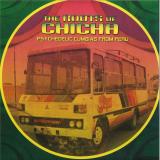
The Roots of Chicha - Psychedelic Cumbias from Peru 2x12"
 
23

The Roots of Chicha, compiled by Barbès Records, was originally released in 2007 and became the first recording to popularize psychedelic cumbia around the world.

From the late 60's through the 80's, Peruvians invented a new popular musical hybrid inspired by music from the Americas. In 1968, Enrique Delgado released his first record on Odeon with his new group, Los Destellos, single-handedly creating Peruvian cumbia. He codified the genre early on by using the electric guitar as the primary melodic instrument, and mixing cumbia rhythms with folkloric huaynos, criollo voicings, Cuban guarachas and guajiras, rock, boogaloo, surf, psychedelia, oriental music, classical music, and bits and pieces from Brazil, France, Chile... All Peruvian cumbia bands for the next thirty years would end up drawing from the exact same sources (Grupo Celeste, Los Mirlos, Juaneco Y Su Combo, Manzanita Y Su Conjunto...).

This new wave of Peruvian cumbia came to be known as chicha. Chicha is originally the name of an alcoholic drink, made of fermented maize, which the Incas were especially fond of. In the past thirty years, however, the word has taken on a pejorative connotation. Peruvian cumbia started being called chicha in the late 70s, around the same time that the music came to be viewed as the expression of the slums – the pueblos jovenes. Little by little, the word became an adjective, and people now talk of chicha culture, chicha press, chicha architecture, even of a chicha president, and none if it – you guessed right – is meant as a compliment. Chicha suggests corruption, shady deals, and cholos – a derogatory term for a person of Andean heritage that, of late, is being reclaimed and worn as a badge of honor by the very cholos it was supposed to demean in the first place.

pas en stock

Commandez maintenant et nous commanderons l'article pour vous chez notre fournisseur.

26,01

Derniere entrée: 19 jours
GARY NUMAN - TELEKON LP 2x12"

GARY NUMAN

TELEKON LP 2x12"

2x12inchBBQLP2704
Beggars Banquet
30.01.2026
  • This Wreckagea
  • The Aircrash Bureaua
  • Telekonb
  • Remind Me To Smileb
  • Sleep By Windowsb
  • I'm An Agentb
  • I Dream Of Wiresc
  • Remember I Was Vapourc
  • Please Push No Morec
  • The Joy Circuitd
  • Like A B-Film(Unreleased Track)D
  • Please Push No More(Early Versiond
  • The Aircrash Bureau(Early Version)D
  • I'm An Agent(Early Version)
également disponible

Deluxe Version[43,49 €]


Gary Numans zweites Studioalbum "Telekon" wurde 1980 veröffentlicht und war sein drittes Album in Folge, das Platz #1 der britischen Charts erreichte. Gary bezeichnet dieses Album - zusammen mit seinen beiden Vorgängern, "Replicas" von Tubeway Army und seinem Solo-Debütalbum "The Pleasure Principle" - als die "Maschinen-Phase" seiner Karriere. Obwohl es schwierig war, an die vorherigen Veröffentlichungen anzuknüpfen, erwies sich "Telekon" als äußerst einflussreich. Im Gegensatz zu seinen Vorgängern enthält "Telekon" viele Gitarren, dazu Streicher und üppige Synthesizer-Klänge. Trent Reznor gab an, das Album während der Entstehung von "Pretty Hate Machine" täglich gehört zu haben. Diese erweiterte Deluxe-Edition enthält vier unveröffentlichte Tracks, darunter: "Like A B-Film", ein unvollendeter Song aus den "Telekon"-Sessions sowie drei frühere Versionen der Songs "Please Push No More", "Aircrash Bureau" und "I"m An Agent". Die 45th Anniversary Editions von "Telekon" wurden von Geoff Pesche in den Abbey Road Studios neu gemastert. Das Artwork stammt von Michael Speed (Beggars), der bereits mehrfach mit Gary an seinen Reissues gearbeitet hat. Alle Editionen enthalten dieselbe Tracklist.

pré-commande30.01.2026

il devrait être publié sur 30.01.2026

29,20
GARY NUMAN - TELEKON LP 2x12"

GARY NUMAN

TELEKON LP 2x12"

2x12inchBBQLPX2704
Beggars Banquet
30.01.2026

Gary Numans zweites Studioalbum "Telekon" wurde 1980 veröffentlicht und war sein drittes Album in Folge, das Platz #1 der britischen Charts erreichte. Gary bezeichnet dieses Album - zusammen mit seinen beiden Vorgängern, "Replicas" von Tubeway Army und seinem Solo-Debütalbum "The Pleasure Principle" - als die "Maschinen-Phase" seiner Karriere. Obwohl es schwierig war, an die vorherigen Veröffentlichungen anzuknüpfen, erwies sich "Telekon" als äußerst einflussreich. Im Gegensatz zu seinen Vorgängern enthält "Telekon" viele Gitarren, dazu Streicher und üppige Synthesizer-Klänge. Trent Reznor gab an, das Album während der Entstehung von "Pretty Hate Machine" täglich gehört zu haben. Diese Deluxe Expanded Edition ist ein doppelte Rainbow Sparkle-Vinyl-LP mit vier bislang unveröffentlichten Tracks, darunter ein noch nie gehörter Gary-Numan-Song aus den Album-Sessions mit dem Titel "Like A B-Film". Diese Deluxe-Edition enthält außerdem eine Replika des originalen 12-seitigen Tourhefts von 1980.

pré-commande30.01.2026

il devrait être publié sur 30.01.2026

43,49
GRUPO UM - NINETEEN SEVENTY SEVEN

Grupo um celebrate 50 years with release of lost dictatorship-era album nineteen seventy seven!

First time release - vinyl comes with printed innersleeves

Brazilian avant-jazz vanguardists Grupo Um celebrate their 50th anniversary, sharing a second previously lost 1970s album from the vaults. Nineteen Seventy Seven (titled after the year it was recorded) is another rip-roaring instrumental fusion treasure from the band which spawned from within Hermeto Pascoal’s famed mid-1970s São Paulo collective.

Like their debut album Starting Point, Grupo Um’s Nineteen Seventy Seven was recorded when Brazil's military dictatorship was at its most repressive. “There were no open doors to those who dreamt to be protagonists in creative instrumental music”, remembers drummer Zé Eduardo Nazario, “even popular composers and singers had to submit their songs to censors and many records were banned and confiscated from the stores.”

Just like Hermeto Pascoal's Viajando Com O Som (1977) and Grupo Um's previous album Starting Point (1975), both of which remained unreleased until the 21st century, Zé Eduardo asserts that the 1977 album was flatly 'without any chance to be released at that time."

Recorded at Rogério Duprat’s Vice-Versa Studios in São Paulo, the group were under both time and space restraints, “we chose the small Studio B,” Lelo Nazario recalls, “which had a Tascam (TE AC) 12x8 console and a 4-channel AMPEX AG 440 machine. Therefore, we had to record without overdubs, everything straight to tape.”

Expanding from a trio to a quintet, original Grupo Um members Lelo Nazario (keys), Zé Eduardo Nazario (drums), and Zeca Assumpção (bass) were joined by saxophonist Roberto Sion and percussionist Carlinhos Gonçalves. Carlinhos, Zé and Zeca had already played together in the group Mandala, while brothers Lelo and Zé had just finished a stint backing Hermeto Pascoal during his years in São Paulo.

Lelo was deeply immersed in modular synthesizer experimentation during this period, working extensively with the ARP2600 and EMS Synthi AKS. These electroacoustic explorations formed the sonic foundation for "Mobile/Stabile," one of his first compositions to merge modular synthesis with Brazilian music, a fusion that would ripple throughout the Brazilian jazz scene. The piece premiered at the first São Paulo International Jazz Festival in 1978, performed by Grupo Um with guest trumpeter Márcio Montarroyos. In a shocking moment, festival organizers interrupted the show mid-performance, sparking fierce backlash from both audience members and journalists who denounced the incident as artistic censorship during Brazil's era of political and cultural repression. The version on Nineteen Seventy Seven is the first recording of the composition.

Nineteen Seventy Seven combines Afro-Brazilian rhythm, modular synthesis and a plethora of whistles, percussion and effects pedals. Album opener “Absurdo Mudo” - so titled for the absurd difficulty it poses to the musicians performing it - starts out in a cloud of mysterious dissonance, before the haze breaks for a glorious keyboard and saxophone interplay atop an uptempo samba groove. “Cortejo dos Reis Negros (Version 2)” (Procession of the Black Kings), based on the maracatu rhythm, inverts the traditional jazz song structure by beginning with improvisations, which are followed by the theme and a final coda. “The studio also had two Parasound electronic reverb units,” Lelo notes, “and the timbre is very audible on the soprano sax and percussion.”

Grupo Um’s daring music represents a manifesto of resistance during the dictatorship years, but it’s one which remains just as relevant today. As Lelo puts it: “For me, the aesthetic issue has always been about combining contemporary avant-garde languages with Brazilian music, independent of categories and commercial interests. The result of this fusion takes music to a new level.”

Recording credits (1977)
Recorded at Vice-Versa B Studio, São Paulo, November 9, 1977
Produced by Lelo Nazario and Zé Eduardo Nazario
Engineered by Ricardo “Franja” Carvalheira


Lelo Nazario – Wurlitzer electric piano, acoustic piano, signal generator, percussion

Zé Eduardo Nazario – drums, percussion

Zeca Assumpção – electric bass

Carlinhos Gonçalves – percussion

Roberto Sion – soprano sax, clarinet

Release credits (2025)
Produced by UTOPIA Studio, São Paulo
Project Coordination in Brazil by Irati Antonio (Utopia Studio)
Tape Restoration and Digital Mastering by Lelo Nazario at Utopia Studio, July 2025
Liner Notes by Lelo Nazario and Zé Eduardo Nazario
Photography by Jorge Las Heras, Lelo Nazario, and artists' personal archives
Photo Restoration by Lelo Nazario
Artwork and Design by Alessandro Renaldin

pré-commande30.01.2026

il devrait être publié sur 30.01.2026

23,11
Della Mae - Magic Accident LP
  • 1: Magic Accident
  • 2: My Own Highway
  • 3: Family Tree
  • 4: I Compare Everyone To You
  • 5: Nothing At All
  • 6: Out Run 'Em
  • 7: Lifeline
  • 8: Little Bird
  • 9: What You're Looking For
  • 10: Takes All Kinds

With a GRAMMY nomination and years of touring experience, this female- forward string band releases a career- defining album with Magic Accident . Longtime supporters of women in roots music, Della Mae teamed up with producer Alison Brown for this new release, their first on Nashville-based Compass Records. Magic Accident showcases the band's range of talents, from Americana songs that evoke early Chicks to energetic bluegrass and dreamy indie folk-inspired tunes.

The band's vocal power and instrumental skill shine throughout this mostly original collection, with standout tracks including "Out Run 'Em," written by guitarist Avril Smith and featuring champion fiddler and band founder Kimber Ludiker, "Lifeline," sung by bassist Vickie Vaughn, and the title track, written and sung by Celia Woodsmith. Guest artists on the project include Mary Bragg (vocals) and Jen Gunderman (accordion), with Brown playing banjo and guitar throughout. Since forming in Boston in 2010, Della Mae has proved to the roots music world that an all-women band is no novelty. Their 2013 Rounder Records release, This World Oft Can Be, earned them their first GRAMMY nomination for Best Bluegrass Album. That same year, the International Bluegrass Music Association named them Emerging Artist of the Year. Della Mae has performed in over 30 countries on behalf of the U.S. State Department. They are favorites on the roots music circuit, where their highenergy performances always get audiences on their feet, inspired by the power of their music and message. Available on turquoise coloured vinyl with 4-page folder and digipak CD editions

pré-commande30.01.2026

il devrait être publié sur 30.01.2026

31,51
Deep Purple - Greatest Hits LP 4x12"
  • 1: Highway Star (Live At Schleyer-Halle)
  • 2: The Cut Runs Deep
  • 3: Vavoom: Ted The Mechanic
  • 4: Ramshackle Man
  • 5: A Castle Full Of Rascals
  • 6: Perfect Strangers (Live At Schleyer-Halle)
  • 7: Truth Hurts
  • 8: Solitaire
  • 9: Loosen My Strings
  • 10: Anyone's Daughter (Live At The Nec)
  • 11: A Touch Away
  • 12: Black Night (Live At Schleyer-Halle)
  • 13: Nasty Piece Of Work
  • 14: Slow Down Sister
  • 15: Child In Time (Live At Schleyer-Halle)
  • 16: Anya (Live At Schleyer-Halle)
  • 17: Love Conquers All
  • 18: Sometimes I Feel Like Screaming
  • 19: Wicked Ways
  • 20: The Purpendicular Waltz
  • 21: Speed King (Live At Schleyer-Halle)
  • 22: The Battle Rages On
  • 23: King Of Dreams
  • 24: Soon Forgotten
  • 27: Fortuneteller
  • 28: Lazy (Live At Schleyer-Halle)
  • 29: Somebody Stole My Guitar
  • 30: Hush (Live At The Nec)
  • 31: Smoke On The Water (Live At The Nec)
  • 32: Knockin' At Your Back Door (Live At The Nec)
  • 33: Fire In The Basement
  • 25: Time To Kill
  • 26: Cascades: I'm Not Your Lover

"Deep Purple's Greatest Hits, released in 2009, is a comprehensive compilation showcasing the legendary band's most iconic tracks. Spanning their groundbreaking career, the album features classic live versions of hits like ""Smoke on the Water,"" ""Highway Star,"" ""Child in Time,"" and ""Black Night,"" offering a perfect introduction to Deep Purple's influential sound. Known as pioneers of hard rock and heavy metal, the band’s virtuosic guitar solos, soaring vocals, and dynamic keyboard riffs shine throughout this collection. Greatest Hits captures the essence of Deep Purple's heyday while celebrating their timeless appeal. It highlights the band’s ability to blend powerful rock energy with intricate musicianship, making them a cornerstone of the genre. For longtime fans and newcomers alike, this compilation is an essential addition to any rock music collection, solidifying Deep Purple’s legacy as one of the most influential bands in rock history. Greatest Hits is available as a limited edition of 1500 individually numbered copies on purple coloured vinyl."

pré-commande30.01.2026

il devrait être publié sur 30.01.2026

79,41
Within Temptation - Hydra LP

Within Temptation

Hydra LP

12inchMOVLP3741
Music On Vinyl
30.01.2026
  • 1: Let Us Burn
  • 2: Dangerous
  • 3: And We Run
  • 4: Paradise (What About Us?)
  • 5: Edge Of The World
  • 6: Silver Moonlight
  • 7: Covered By Roses
  • 8: Dog Days
  • 9: Tell Me Why
  • 10: Whole World Is Watching
  • 11: Keep On Breathing
  • 12: One Of These Days
  • 13: Living On Fire
  • 14: And We Run
  • 15: Silver Moonlight
  • 16: Covered By Roses
  • 17: Tell Me Why
  • 18: Whole World Is Watching

"‘Hydra’ is the sixth studio album by Dutch symphonic metal band Within Temptation. It was originally released on January 31, 2014 in Europe and on February 4, 2014 in North America. The album contains guest appearances by singer Howard Jones (ex-Killswitch Engage), rapper Xzibit, metal vocalist Tarja Turunen (ex-Nightwish) and alternative rock singer Dave Pirner (Soul Asylum). It was the first album by Within Temptation to be recorded with three guitarists, with Stefan Helleblad making his Within Temptation studio debut on ‘Hydra’ since his addition to the band shortly after the release of ‘The Unforgiving’ in 2011. ‘Hydra’ is also the first Within Temptation album to feature Robert Westerholt's growling techniques since the band's debut album, ‘Enter’ in 1997. The band wanted it to be a real Within Temptation record, but heavier, more musically challenging, pushing borders and frontiers with new elements and influences, and at the same time bring back more from their early metal roots “... A bit like the past and future at the same time"" – as stated by the band.

The album title refers to the great variation in musical genres, the band improves on with each new release. Guitarist Robert Westerholt adds: ""Hydra is a perfect title for our new album, because like the monster itself, the record represents the many different sides of our music"". According to the ancient Greek mythology, the Hydra was a giant multi-headed serpent that, for each severed head, sprang forth two more in their place. This new Expanded Edition comes with 8 bonus tracks, never released on vinyl before.

pré-commande30.01.2026

il devrait être publié sur 30.01.2026

39,92
Eric Malmberg - Milda döden hämtar oss alla till slut

We Jazz Records is delighted to present the first ever vinyl release for two modern classic tracks by Swedish organist Eric Malmberg. Originally released in 2007 by the label Häpna on Malmberg's second solo album "Verklighet & Beat", the pair of tunes herein serve as proof of Malmberg's remarkable artistic vision, echoing both the pure pastoral beauty and the irresistible groove of his work. This release, part of the ongoing 7" series by We Jazz Records, follows the label's Artistic Director Matti Nives's 10+ years of obsession with the aforementioned Malmberg album after an initial chance encounter with the side A track on a WIRE Magazine compilation in 2007.

"Eric Malmberg's music is a small miracle. I don't want to call him a genius, because I don't want to jinx him. But I will say that he's a complete original, in addition to being a vastly talented musician. I will also say that his recordings and the two performances that I saw by Sagor & Swing merit a place on a short list of most enjoyed musical experiences of the last half decade. I could bleat about the quality of the work, but "most enjoyed" to me carries the stronger charge." – David Grubbs, New York, March 2007

"A special mention needs to go out to the phenomenal and totally bonkers 'Till minne av Lilly Lindström' a track which starts with a clean break, builds into dancefloor abusing Hammond-hammering mayhem and then ends up with lush string orchestrations and disco-lite sweeps. Insane and more enjoyable than you could possibly imagine - an album to totally lose yourself in, and one for anyone looking for something just that little different. Huge recommendation." – Boomkat

pas en stock

Commandez maintenant et nous commanderons l'article pour vous chez notre fournisseur.

9,45

Last In: 4 years ago
Benny Rodrigues - Master French

Strong one on Voyage Direct from Rotterdam's Benny Rodrigues...TIP!

The label say "Benny Rodrigues seems to delight in confounding critics. Since making his debut alongside Darko Esser with 2007's Underwater Records-­-released 'Paradox', the Rotterdam-­-based DJ has surprised and excited at every turn.

Variously delivering woozy tech-­-house, rave revivalism, stripped-­-back minimal, jackin' acid, wide-­-eyed deep house and, under his occasional ROD alias, shirts-­-off warehouse techno. Along the way, he's released music on some of Europe's most prestigious labels, including Desolat, Soma, EC Records, Be As One and Wolfskuil Records.

Here, he makes his debut for Tom Trago's Voyage Direct imprint with two undulating, hypnotic, heads-­-down tracks that blur the boundaries between house and techno. Rhythmically loose but impressively tough - like all of Rodrigues' best productions - both cuts are built around mesmerising late night grooves and intoxicating chords.

'Master French' kicks things off, lacing nagging shakers, subtle synth strings and fluttering chords over a robust, shuffling tech-­-house groove. Rodrigues works the mix like a master, bringing elements to the fore before sliding them into the background. It's a simple, heads-­-down, 4am groove, but it's executed brilliantly.

'Z', on the other hand, is an altogether breezier affair, with repetitive, new age-­- inspired synthesizer melodies seemingly drifting over a rock solid house groove. Notable ride cymbals and warm beats proper the track forward, giving it a humid, tropical feel. This is music to move the body, mind and soul. "

pas en stock

Commandez maintenant et nous commanderons l'article pour vous chez notre fournisseur.

11,72

Derniere entrée: 76 jours
The Mars Volta - Noctourniquet

The Mars Volta

Noctourniquet

2x12inch4250795604969
CLOUDS HILL
30.01.2026
  • A1: The Whip Hand
  • A2: Aegis
  • A3: Dyslexicon
  • B1: Empty Vessels Make The Loudest Sound
  • B2: The Malkin Jewel
  • B3: Lapochka
  • C1: In Absentia
  • C2: Imago
  • C3: Molochwalker
  • C4: Trinkets Pale Of Moon
  • D1: Vedamalady
  • D2: Noctourniquet
  • D3: Zed And Two Naughts

Noctourniquet And then everything went black, at least for a while, at least for The Mars Volta. In the months and years following their fifth full-length, Octahedron, Omar kept on at his usual fearsome creative pace. In fact, he ramped up his output considerably, starting up his own Rodriguez Lopez Productions label and releasing a slew of solo albums. It was a practice he’d begun shortly after De-Loused’s release, with his solo debut A Manual Dexterity: Soundtrack Volume One, but as the decade reached its close, Omar grew to rely upon his solo recordings as an outlet for his prolific creativity, these albums often exploring musical pastures far beyond even The Mars Volta’s wide-ranging parameters. Before choosing to release music under his own name, Omar would always play it to Cedric first, to see if the frontman thought it had potential to become Mars Volta music. Shortly after Octahedron’s completion, Cedric flagged one batch of tracks Omar had cut with Deantoni Parks, a brilliant drummer and composer who’d briefly occupied the Mars Volta drumstool in-between Jon Theodore and Thomas Pridgen’s tenures, and whose volcanic creativity and unique, unpredictable approach to rhythm and composition had quickly made him one of Omar’s favourite artistic foils.

As with the music that made up Octahedron, the new tracks Cedric had optioned for The Mars Volta often veered far from the riotous, Grand Guignol visions of their earlier releases. It possessed the punchy, song-based focus of Octahedron, though this was a considerably darker, more menacing strain of pop, with synthesisers figuring heavily in the productions. Cedric took the tracks in 2009 and set about writing songs to the music. But no more new Mars Volta music would be heard until 2012. The years that passed in-between were nonetheless momentous, and busy, witnessing an unexpected reunion of the members of At The Drive-In, and Cedric joining his own side-project, Anywhere. But there wasn’t any sign of life within the Mars Volta until Omar, Cedric and their bandmates took to the road for a series of live shows in the spring of 2011, billed as The Omar Rodriguez-Lopez Group, debuting the songs that would become Noctourniquet. The album followed the next year, and it remains one of The Mars Volta’s finest, its electronic textures staking out unfamiliar but fertile new ground.

An unsettling, subtly turbulent listen, Noctourniquet found Cedric sketching out a story about “some sort of device that stops the darkness from bleeding”, drawing influence variously from the nursery rhyme Solomon Grundy, the Greek myth of Hyacinthus and the song Birth, School, Work, Death by British underground rockers The Godfathers. It was an album of dystopian futurism, signalled by the paranoid cyber-rock of opener The Whip Hand and its unnerving chorus, “That’s when I disconnect from you”. But it was also an album of inspired, unexpected moves and uncanny invention, like how Dyslexicon seemed to eerily evoke Blondie’s Rapture, before rushing headlong into its bruising chorus, tempos shifting restlessly throughout like quaking earth beneath the listener’s feet, or how Aegis put a brave new spin on The Mars Volta’s trademark rewiring of salsa’s overdriven passions, or how Cedric had never sounded as scary as he did on The Malkin Jewel’s mutant burlesque shuffle. Tracks like Molochwalker were sleek and concise in a way The Mars Volta had never really attempted before – which was all part of Omar’s plan.

“It had all been guitar, guitar, guitar, overdubs, everything fighting for space in the same frequency,” he explains. “So for Noctourniquet, it was all about subtracting elements, of sticking to how I made demos.” Deantoni’s presence helped revivify the group, playing against cliché and expectation, and taking each song in unexpected directions. “I’d beatbox a rhythm for him to play, to go with my guitar part, and he’d come back with three or four alternate options. It was so great.” Similarly, Cedric had never sung better than on Noctourniquet, staking out a fearsome spectrum from the chilling Tom Waitsian growl of The Malkin Jewel to the keening, beautiful vocalisation on Vedamalady, rising to match some of Omar’s most deft, most immediately effective and melodic songs yet. Indeed, Noctourniquet is the sound of a band discovering new ways to do familiar things, renewing their commitment to their mission, finding fresh inspiration a decade in, and shaking off any complacency that might have come with ten years of acclaim and success.

pré-commande30.01.2026

il devrait être publié sur 30.01.2026

27,69
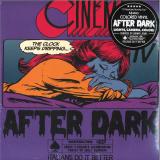
Various Artists - After Dark 4
  • A1: Wolfram Feat Desire – Sad Ibiza Song
  • A2: Orion – Call A Psychic
  • A3: Mothermary – Coming For You (Nicolaas Remix)
  • A4: Double Mixte – Chateau D'eau
  • B1: Love Object – Epicurus
  • B2: The Operator – Danser
  • B3: Talvi - The Day We Met Never Ended For Me
  • B4: Kid Moxie & Nina* – Waiting For Tonight
  • C1: Farah – Losing My Religion
  • C2: Sally Shapiro – Moonlight Dance (Tommy '86 Remix)
  • C3: Glüme – Dangerous Blue
  • C4: Cigar Cigarette – Come Correct
  • D1: Desire – Silver Machine
  • D2: Causeway – I'm Falling Apart
  • D3: Esper Star – Boys Of Summer
  • D4: Juno Francis – Romantica
  • E1: Sally Shapiro – Purple Colored Sky
  • E2: Club Intl Feat Logan Avidan – Hazel Eyes
  • E3: Mesh Kimono – Afterburn
  • E4: Dlina Volny – Saturday
  • F1: Annie-Claude Deschênes – Electric Light
  • F2: Cameron Romance – Meet You On The Other Side
  • F3: Joon – I Think They Call It Love
  • F4: Lovelock Feat Orion – Riders On Dark Horses
  • F6: Pynkie & Social Media – Zoom
  • F7: Body Double – Telescope
  • F5: Double Mixte – Am I A Fool To Love You

15 years since their fantasy disco scene-defining 1st volume, Johnny Jewel’s IDIB lasso Sally Shapiro, Desire, Farah, Lovelock and the kreme of their field for a 27-song, 2-hour re-up


Where previous volumes took their sweet time to arrive, ‘Volume 4’ graces the ‘floor only two years since the last, and nobody’s complaining. From its slo-mo, dry-iced covers of Jennifer Lopez’ ‘Waiting For Tonight’, Don Henley’s ’Boys of Summer’ and even flipping R.E.M.’s ‘Losing My Religion’, thru to exclusive pearls by our disco queen crush, Sally Shapiro, and Johnny Jewel as Desire, it’s the ideal soundtrack for late summer into silly season.

pas en stock

Commandez maintenant et nous commanderons l'article pour vous chez notre fournisseur.

50,38

Last In: 5 months ago
Various - MIX PLATE

Various

MIX PLATE

12inchAGS-093
Aloha Got Soul
30.01.2026

Compilation of contemporary Hawaiian music on Aloha Got Soul. Inspired by a 1970s compilation series that featured emerging talent from the Hawaiian Islands, Aloha Got Soul’s Mix Plate provides a snapshot of what Hawaii sounds like today. This is the second installment in the ongoing series.

pré-commande30.01.2026

il devrait être publié sur 30.01.2026

26,68
Sweatmaster - More!

Sweatmaster

More!

12inchSVART359LP
Svart Records
30.01.2026
  • 1: Dirty Water
  • 2: Destroyer
  • 3: Scream Out Loud For Love
  • 4: Police Bastard
  • 5: More!
  • 6: Hole In The Ground
  • 7: We Take All
  • 8: Eazy
  • 9: Spring That Never Ends
  • 10: Sad Song Man
  • 11: Chevy Van
  • 12: Tail Down
  • 13: Leather
  • 14: All Right, All Night
également disponible

Orange/Black Smoke Vinyl[29,37 €]

Transparent Orange/Black Smoke Vinyl[24,33 €]


Sweatmaster releases a new full-length album after a 15-year hiatus via Svart Records Sweatmaster, one of the aristocrats of Finnish garage rock, is making a big comeback with the release of their fifth album More! in January 2026. After the release of their 2010 album Dig Up the Knife, the band took a long break, which ended a few years ago with live performances both domestic and abroad. At the same time, new material began to emerge in the rehearsal room, and the band quickly found a common strategy for working on it. "We were unanimous about the strengths of our band and decided to get to the heart of the matter. The main idea was to make straightforward songs carried by the vocals. The kind that would work well live with our aggressive playing style," says the band's drummer Matti Kallio. Svart Records will release Sweatmaster's fifth album early next year. More! is a sharp package of fourteen songs that has not been polished to death. "We wanted a raw and electric sound for the new album, built tightly around the three of us playing. The aim was to stick to Sweatmaster's original energy and not spread ourselves too thin. However, despite our efforts, the intervening years brought some new tones with them," guitarist Mikko Luukko explains the background of the new album. The album's first single will be released on Friday, September 19th, and according to singer-bassist Sasu Mykkänen, Destroyer is the essence of Sweatmaster. "The drum fill draws you into the pull of the electric triangle. The guitar taps at the ballads and wants nothing more than to drive the rhythm until the passionate vocals take over. The song doesn't lead anywhere, it's already there. 2 minutes, 37 seconds. Wham bam. Here you go." More! is available for pre-order now at Svart’s webstore on Svart exclusive vinyl, limited coloured vinyl, classic black vinyl, and CD. Release date January 30th, 2026.

pré-commande30.01.2026

il devrait être publié sur 30.01.2026

23,49
DJ MITSU THE BEATS - Stack Wave (Feat. Stuts) 7"
  • Side A. Stack Wave Feat. Stuts
  • Side B. On The Edge Of The Wate

A miraculous collaboration comes to life! DJ Mitsu the Beats, a globally active member of the Sendai-based hip-hop crew GAGLE, joins forces with beatmaker and
producer STUTS for the new track "Stack Wave" now released as a 7-inch single.

The track features DJ Mitsu the Beats’ gently swaying, looped beats and layered choruses, combined with STUTS’ sophisticated multi-layered instrumentation.
The result is a delicate, immersive sound that evokes the quiet stillness of a seaside setting while capturing the beautiful yet fleeting reverberation of the vast ocean.

Included is the instrumental track "On the edge of the water" from the original album "New Horizon" scheduled for release in November 2025. With jazz-infused beats
and electric piano, the track reflects the theme of sea and chill, creating a relaxed, timeless atmosphere.

The jacket artwork is a collaborative design featuring ocean photography by Yasuma Miura, a photographer based in Shonan and Kamakura who travels the world while
surfing, and design by So Iguchi (soiguchi design), known for his work on outdoor brand catalogs and lookbooks.

pré-commande30.01.2026

il devrait être publié sur 30.01.2026

29,20
Articles par page:
N/ABPM
Vinyl