A chance meeting in Mexico City set Points of Inaccessibility into motion. When Ibero-American composer Rafael Anton Irisarri crossed paths with Dutch media artist Jaco Schilp at MUTEK in 2024, a conversation about how technology shapes perception revealed an unexpected common ground. Schilp invited Irisarri to a spring 2025 residency at Uncloud, the Utrecht-based collective he co-founded, where Irisarri's sound began to take form amid an environment shaped by Schilp’s visual research.
The Uncloud studio was located inside the former Pieter Baan Centre, a forensic psychiatric prison where suspects of violent crimes were once confined. Its long history of silence and containment shaped the atmosphere in which the project developed. Within this setting, Irisarri coaxed long bowed-guitar tones through a network of pedals and looping systems. The raw gestures thickened into a vaporous and architectural field of sound. Schilp processed the material through a custom point-cloud software patch that produced images in continuous flux. The visuals flickered, dissolved and reformed like memories that resist coherence, functioning as a digital Rorschach that reflected the observer’s own perception.
Amid these spectral echoes, the project evolved into an examination of how the past persists within present signals. Memory endures as residue and interference, continually shaping perception even when its source has faded.
Schilp’s visual process required a continuous stream of sound in real time. Irisarri improvised throughout the residency, generating material that allowed the visuals to develop in parallel. Once back in his New York studio, he began shaping the recordings by carving pathways through the improvisations and mapping selected passages into MIDI. This process allowed him to build outward from the bowed-guitar material with minimal overdubs, adding Prophet 5 textures, Moog bass and strings that expanded the harmonic field while keeping the original performances at the center. To refine the structure, Abul Mogard provided editorial input, working with Irisarri’s stems to guide transitions and strengthen the overall pacing. The material, originally created under conditions of immediacy and constraint, evolved into a fully realized work through careful revision, patience and sustained reworking.
The title engages the geographic concept of the Poles of Inaccessibility, locations defined solely by their distance from all surrounding points. Irisarri adapts this idea to the conditions of digital life, where new forms of inaccessibility arise through the informational enclosures that structure perception. What appears to be a fully connected network often produces a deeper kind of separation, one shaped by the filtering logic of the systems that mediate experience. In this sense, the digital sphere mirrors its geographic counterpart. We inhabit spaces saturated with signals, yet the possibility of genuine contact becomes increasingly remote.
At its core, Points of Inaccessibility considers what can be understood as the new rituals of capitalist realism. Irisarri uses the term digital shamanism to describe the forms of simulated connection that organize contemporary life. These systems promise comfort through algorithms, influencers and AI interlocutors, yet they often reproduce the same conditions that generate loneliness in the first place. What appears as connection becomes the echo of connection, a sequence of gestures that imitate solidarity while withholding it. Like the geographic poles, these rituals are defined by distance. They pull us into environments where everything is illuminated, yet meaningful proximity becomes increasingly rare. In this sense, the work approaches a hauntology of the present, a reflection on futures that have stalled and intimacies that have been thinned by the algorithmic infrastructures that surround us.
This thematic tension unfolds across the album’s four movements. Faded Ghosts of Clouds introduces the work with textures that rise and dissipate in slow cycles, creating an atmosphere that resists clear definition. Breaking the Unison occupies a pivotal position in the sequence and focuses on the moment when the individual and the system fall out of alignment. Its shifting patterns trace the scattering of signals that once suggested connection, revealing the instability at the heart of contemporary perception. Signals from a Distant Afterglow forms the center of the album and features vocals by Karen Vogt, whose presence enters the sound field like a fragile transmission shaped by distance and delay. The closing piece, Memory Strands, follows motifs that appear, recede and briefly intersect before returning to quiet. Across these movements, the album outlines a landscape in which emergence and disappearance continually inform one another.
Listening to Points of Inaccessibility is an encounter with a sound field that is constantly in flux. Elements surface briefly, shift position and recede, creating a sense of motion that resists stable interpretation. The music moves between closeness and vastness, carrying traces of memory while withholding a clear point of resolution.
The album’s visual identity completes the project’s conceptual arc. In Mexico City, where Irisarri and Schilp first met, Daniel Castrejón transformed stills from Schilp’s point-cloud visuals into the cover image. The final artwork captures a single suspended frame of the digital material, a moment extracted from a field that is normally in constant motion. Its surface recalls the texture and abstraction found in the work of Catalan artist Antoni Tàpies, where material presence and erasure coexist within the same plane.
What emerges is a work that examines the tension between technological systems and human presence. Points of Inaccessibility asks whether connection is still possible within environments shaped by mediation and delay, or whether we have become isolated points within the very networks that promise proximity. What possibilities for relation persist within environments organized by algorithms and interruption? And how are we meant to understand presence when so much of it is constructed at a distance?
Points of Inaccessibility will be released on BioVinyl on February 6, 2026, with audiovisual performances planned throughout 2026.
Mastered by Stephan Mathieu
Artwork by Jaco Schilp
Design and layout by Daniel Castrejón
Artist photo by Iulia Alexandra Magheru.
Suche:väth
- A1: Svitanie - Jonáš Gruska
- A2: Yamaha Birds Pt 1 - Dialect
- A3: La Guardiana De Las Ondas Radiales 1 - Makakinho Do Amor
- A4: Sonderbare Ereignisse Am Lake Hillier - Baldruin
- A5: Kirkas Laulu, Haalea Valo - Olli Aarni
- A6: Wind Up Paradise Birds -Øyvind Torvund, Bit20 Ensemble, Trond Madsen, Jørgen Træen, Kjetil Møster
- A7: Whizz -Vic Bang
- A8: A Glitch In The Jungle - Grykë Pyje
- A9: Harpusta / Tarjous -Tomutonttu
- B1: Vögel Unserer Heimat - Native Instrument
- B2: Irekle Qoştar - Hmot
- B3: Ptakodisk - Artificial Memory Trace
- B4: Mijn Papegaai Fluit Pure Tonen - Floris Vanhoof
- B5: Aviary - John Also Bennett
- B6: Susurrus - Cheryl E Leonard
- B7: The Wild Birds Of Bluesealand - Mike Cooper
- C1: Un Signe Sylvestre - Matthias Puech
- C2: Barrockstadt Feathered Symphony - Enchanted Lands
- C3: Kolibřík - Ursula Sereghy
- C4: Pigeon Tones For Eggflute - Ecka Mordecai, Malvern Brume
- C5: Bird To Bottle - Banana, Alexandra Spence, Mp Hopkins
- C6: Whistle & Bag - Rie Nakajima
- C7: The Listener - Martina Lussi
- D1: Clivis - James Rushford
- D4: Synthetic Birdsong - Andrew Pekler
- D5: 030652_0125ꜱ12 ᴡᴀᴠ - Atte Elias Kantonen
- D6: Dive Woodz - Kensho Nakamura
- D7: Time Flys - Felicity Mangan
- D8: While They Gathered My Ears Grew - Maria Komarova
- D9: Birds In Gutter - Misha Kurilov
- D2: Three Calls - Kate Carr
- D3: Starlings Gulls Doves - Infant
When you listen to birds, they usually talk about food, sex/family, or anxiety. If they knew about the true nature of humanity's cruel and exploitative relationship with birds, they would be discussing rebellion. Humanity's current trajectory about birds is to cause the extinction of one-third of all bird species by the end of this century.
This record crystallises the borders between memory, beauty, and anxiety. At the core is an amalgam of all the birds we have met and heard, their sounds synthesised from a blend of memories. Esthetically it simulates the qualities of bird sounds, hitting similar frequential sweet spots. There is a great variety of birds captured here, from high to low frequencies, from solo voices to groups, from birds standing on their own to complex world-building, where the bird voices are part of an ecosystem, becoming one of the instruments.
You could stop there, enjoying this record on a musical level, but it invites us to do one step further, to consider reconfiguring our relationship with the Earth and its inhabitants. To question our impact, and to ask why we need synthetic bird music. Is it just a visionary endeavour or is it because we are failing at fostering a world in which organic birds and other creatures can thrive?
32 artists from the whole world, including our favourite artists from Eastern Europe, have contributed to this compilation both with new and previously released music. Their music is ordered from dawn to dusk and into the night. For many of the artists it's their first time on mappa, but some have previously released an album with us.
Water can retain or wash away memory; flowing or freezing. It gives life and shapes earth, while frozen imprints of an ancient past are waiting to melt – back into sound or fluid motion, or simply to dissipate and disappear. For their split release, Yoichi Kamimura and Olli Aarni offer two distinct reinterpretations of a performance recorded live at the Temppeliaukio Kirkko – a church in Helsinki built directly into solid rock and bathed in natural light – meditating on glacial landscapes and water cycles, using shared field recordings that bifurcate into two sonic visions of “ice journey”.
Yoichi Kamimura’s extensive recordings formed the bedrock of the original performance, notably from time spent on Suomenlinna Island just outside Helsinki in 2021, aiming to capture the remnants of the glacial movements that formed the area’s geology. Elsewhere, the voices of ringed seals, underground waterways of Kyoto, and icy rivers in Lapland from Kamimura’s library float in as well. “The small, charming, and gentle islands floating in the Baltic Sea—some with little cottages and restaurants—reminded me of the drifting ice in the Sea of Okhotsk between Japan and Russia,” describes Kamimura. Fragments of a Christmas choir creep in too, recorded at the church on Suomenlinna Island. Titled Kōri no ryokō , Kaimimura’s reinterpretation of the performance emphasises a shared future across all icy sea regions of the world: thawing ancient memories and the threat of disappearing entirely.
On Jäämatkailu, Olli Aarni presents his own expansive reworking of the same source material, heavily processed alongside his own field recordings from Vantaanjoki river and Suontee lake in Finland. “I was thinking about the processes of erosion, water carving rock, the prehistoric glaciers over the landscape in my own environment,” explains Aarni. The soundscape hums with both intimate details and macrocosmic flow, and a submersible bass rumble hinting at an iceberg far below the tip, morphing at time scales beyond human comprehension.
Side A is composed by Yoichi Kamimura using field recordings of drift ice (Shiretoko, Hokkaido, 2019–2022), the Lake Biwa Canal (Kyoto, 2020), the Therme Vals baths (Vals, 2017), spring water (a fountain next to Saint Benedict Chapel, 2017), a Christmas choir (Suomenlinna Church, Helsinki, 2021), ice in the Juutuanjoki River (Inari, 2021), and recordings from Yoichi’s and Olli’s concert (Temppeliaukion kirkko, Helsinki, 2021), KORG iPolysix, and KORG minilogue xd.
Side B is composed by Olli Aarni using the aforementioned sounds + field recordings of the river Vantaanjoki and the lake Suontee, sampled sounds, and a computer.
- A1: I'm 9 Today (2019 Remaster)
- A2: Smell Memory (2019 Remaster)
- B1: There Is A Number Of Small Things (2019 Remaster)
- B2: Random Summer (2019 Remaster)
- B3: Asleep On A Train (2019 Remaster)
- C1: Awake On A Train (2019 Remaster)
- C2: The Ballað Of The Broken Birdie Records (2019 Remaster)
- C3: The Ballað Of The Broken String (2019 Remaster)
- D1: Sunday Night Just Keeps On Rolling (2019 Remaster)
- D2: Slow Bicycle (2019 Remaster)
- E1: The Ballað Of The Broken Birdie Records (Ruxpin Remix Ii)
- E2: Smell Memory (Bix Remix)
- E3: There Is A Number Of Small Things & The Ballað Of The Broken Birdie Records (Μ-Ziq Straight Mix)
- E4: The Ballað Of The Broken Birdie Records (Biogen Mix)
- F1: Smell Memory Kronos Quartet
- F2: Random Summer Hauschka
- F3: The Ballað Of The Broken String Sóley
In 1999, on December 23 to be precise, the electronic music landscape changed forever. On that day, the now legendary Icelandic band múm released their debut album “Yesterday Was Dramatic – Today Is OK”. The thing is though, back in the day, hardly anybody realized. It was Christmas after all, people were busy with potentially more important things and didn’t pay attention to some kids selling records on Reykjavík’s high street. Little did those shoppers know.
Thankfully, those 10 tracks weren’t overlooked for long. On the contrary: the album went on to become one of the most influential building blocks of what back then was called electronica and today is considered an art form playing a crucial and important role in shaping and defining the rich electronic music culture of the 21st century. Now, 20 years after the record dropped onto planet Earth, Morr Music is re-issuing the remastered album with its original artwork, adding newly commissioned re-works: A note-for-note representation of “Smell Memory“ by Kronos Quartet (with additional drums by múm’s Samuli Kosminen), a gentle reinterpretation of “Random Summer” by acclaimed pianist and composer Hauschka and an otherworldly new version of “Ballad Of The Broken String” recorded by label mate Sóley. Additionally, four remixes produced in the early 2000s are made available for the first time ever on vinyl here.
In 1999, electronic music was in full bloom. The dance floors were thriving worldwide.Yet the concept of using electronic sounds in acoustic-based productions (or vice versa) was still in its infancy. Many producers were trying, most of them failed. The results felt often forced, fabricated, unimaginative, random and forgettable. New ideas require new mindsets after all. With “Yesterday Was Dramatic – Today Is OK”, múm established a new approach in music production. Instead of setting a fixed agenda and working with a distinct hierarchy for their sonic palette, Gyða Valtýsdóttir, Kristín Anna Valtýsdóttir, Gunnar Örn Tynes and Örvar Smárason let each instrument and sound source be true to itself, creating an ever-evolving universe of sonic bliss. Listening to the album in 2019 still makes every music lover’s heart jump. Combining Drill-and-Bass-inspired beat-chopping, future-informed DSP-programming, ethereal vocal work, indie rock’s boominess, folk music’s soulful brittleness and a lofty feeling for melody and arrangement, the album is a rare example of musical transcendence and remains impossible to categorize.
Many of the ideas formulated and recorded for the album quickly became an integral part of the canonical self-conception musicians around the world were and still are aspiring to. How these ideas really came about, though, is not known – the dynamics, the struggles, the qualms, the sudden realization of having achieved something which might actually stick. Maybe that is a good thing. Örvar Smárason remembers that most of the album “was recorded in a tiny, sweaty room in the summer of 1999 with carpenters banging nails around us, but sometimes we put on headphones so we couldn’t hear them.” It is a good thing they did. As is often the case with classics, all one can do is listen closely and let the magic sink in – again and again.
1988-1990[16,39 €]
DINTE's partnership with Philadelphia store/distro World Gone Mad yields three more essential cassette-only mixtapes exploring the global proliferation of the punk spirit - this time exploring 1980s French language post-punk and new wave in France, Belgium and Switzerland across the decade. This is part 2 of 3, focusing on 1984 to 1987.
- 1: Face
- 2: Face
1984-1987[16,39 €]
DINTE's partnership with Philadelphia store/distro World Gone Mad yields three more essential cassette-only mixtapes exploring the global proliferation of the punk spirit - this time exploring 1980s French language post-punk and new wave in France, Belgium and Switzerland across the decade. This is part 1 of 3, focusing on 1988 to 1990.
This one already has created a nice little stir with the soul crowd, and rightly so.
The A side "Is It Still Good For You" is a wonderful Modern soul chugger that oozes that late night club feel. Simple in its melody and production but bounces along so soulfully. Great vocals but the late Johnny Kemp with the group on some killer backing harmonies.
Kinky Foxx could be described as an ever changing funk machine with nuts and bolts that remained strong over time. This band planted its roots in the Bahamas where the name "Kinky" was given to Joseph Foxx and teaming up with his Brother Donny Foxx formed the musical group named, "DER KINKY FOXX"!!! The two Foxx Brothers added members Kevin Bassett-Guitar, Johnny Kemp-Vocals, and Burnis Stubbs-percussion performing clubs and concerts in the Bahamas. Moving to New York City Kinky Foxx changed members to compete with the major funk venue during the early 80s. Acquiring Dan Atherton Sr. AKA "The Slammin 'Drummer", Larry Robinson-Keyboardist, Timmy Allen-Bass, Kevin Robinson-Guitar these musicians combined forces with Johnny Kemp, Kevin Bassett, and Burnis Stubbs to form the New York City based "Original" Kinky Foxx from '79 to '81, burning up the famous Cellar Club in NYC, the mecca for Black Funk entertainment. With a front line of top musical talent some members moved on to follow solo recording and production careers and contracts. To fill lead gutiarist and Bass guitarist vacancies Jerry Powell was added on guitar,and Leslie Booker was added on bass. In 1982 Kinky Foxx added Vincent Lilly on lead vocals and Curtis Styles on Keyboards.The Foxx released the hit song "So Different" on Sound of New York records in '83 and embarked on a Canadian experiment leaving the US to play briefly in Montreal, Quebec at Club Checkers. The rest is history as the band became so popular in Quebec and Ontario they could have been called Canadian residents, usually working 6 nights a week and 11 months out of the year from '83-'91 . Dan Atherton moved on in '83 to pursue a career as The "Slammin Drummer" for hire, and was sought after by a barrage of major artists,touring with Bobby Brown,New Edition,Levert,Teddy Riley and Guy,Cameo,and Atlantic Starr. Tyrone Govan aka "King" moved in as the Foxx Drummer in '83 and remained with the group until the band went their separate ways in the mid 90's. The Foxx's last performance in the States was in North Carolina on tour and backing Prince's sister Tyka Nelson in the 90's. Currently the band has sparked interest once again writing and recording new material and is forming a reunion show which will eventually lead to additional performances with other recording acts and headline shows.
A year and a half has passed since Slovak-Hungarian artist Adela Mede self-released her debut album ‘Szabadság’. Its liner notes described it as “a navigation”, a search through “the personal, familial, cultural, folkloric and geographic of her past and present.” Her second album, ‘Ne Lépj a Virágra’ no longer searches; here, she puts down roots and delves deeper into the earthy reality of her home, Central Europe. Mede sings in three languages with newfound conviction and grace – this is an album of profound faith and confidence in the potential of this fertile soil.
Composed and recorded during the last 18 months in Bratislava, Slovakia – a city where three countries meet, where the East and the West collide – 'Ne Lépj a Virárga' translates to “don't step on the flower”. Its themes – budding potential, recognizing the beauty in the ordinary, solidarity, turning despair into hope – emerged through Mede's wholehearted involvement with her community, teaching singing to both children and adults, and various grassroots volunteering initiatives. It features collaborations with local artists, Mede's singing students, as well as fellow Eastern European contemporary artists Martyna Basta and Wojciech Rusin.
Adela Mede embellishes carefully crafted songs with minimalist and folklore influences, but also embraces more experimental approaches. The result is a collection of quite varied yet consistent pieces which highlight Mede's proficiency as a singer, arranger, producer and improviser. It is a grounded, confident next step for the Bratislava-based artist. Whether her vocals are naked, heavily processed, warped and reversed, or looped and layered; whether the production is sparse and minimalist or overwhelming and swampy; none of that changes the fact that the gentle tentativeness of her debut is gone. This is “Central European music”, at its most striking and meaningful: patient, determined, embracing both complexity and possibility.
Allowing yourself to find meaning or beauty in the mundane is an act of generosity, Whether it’s seeing a smiling face in an electrical outlet socket, or discerning cosmic design amidst the forest floor detritus, it comes from a place of kindness to yourself and senses – and openness to hidden spirit of the world. These tracks came together during a period of intense personal change for adaa, rooted in a fruitful reflection on the connections between spirit and body, “feeling my flesh so I can feel and understand my spirit,” as adaa puts it. The sense of a crossover and clash of multiple connected realities – on-screens, on-line, on-earth, off-world, after-life – unites adaa’s multifaceted productions.
Ostensibly an assemblage of found sounds. scribbled thoughts and poems from diaries, and musial snippets, the album's scattered production reflects adaa’s own many mirror worlds. Field recording sit behind most tracks, alongside VST synths, guitars, and a variety of voices, from adaa’s own mangled vox to EVP samples taken from YouTube (recorded sounds believed to be spirits or paranormal activity), all processed to varying degrees.
While the music was mostly produced either in adaa’s studio in Providence, Rhode Island, or in bed, the field recordings bring the outside world in. The result of walks in the woods, hum of roads and highways, hiss of beaches, warmth of walks with friends and past lovers “around the East Coast”. It sits behind tracks like ‘sight’ where a lilting piano lin bobs atop a pond of rustling and distant whistles. Is that birdsong? Or ghosts? Saccharine hyperpop arpeggiation crossfades sharply into noise guitar squall. Angelic demon voices yawn into a hefty crescendo. Pure drones duet with gales of undefinable field sounds.
“Sometimes I feel like a seed in frosted soil,” says adaa. “If i choose to be optimistic.”
- A1: Rock Around The Clock - Bill Haley And His Comets
- A2: Sixteen Candles - The Crests
- A3: Runaway - Del Shannon
- A4: Why Do Fools Fall In Love - Frankie Lymon & The Teenagers
- A5: That'll Be The Day - Buddy Holly & The Crickets
- A6: At The Hop - Danny & The Juniors
- A7: He's So Fine - The Chiffons
- A8: See You In September - The Tempos
- A9: I Only Have Eyes For You - The Flamingos
- B1: Surfin' Safari - The Beach Boys
- B2: Little Darlin' - The Diamonds
- B3: Almost Grown - Chuck Berry
- B4: (He's) The Great Imposter - The Fleetwoods
- B5: Smoke Gets In Your Eyes - The Platters
- B6: Peppermint Twist (Part 1) - Joey Dee & The Starliters
- B7: Barbara-Ann - The Regents
- B8: Book Of Love - The Monotones
- B9: A Thousand Miles Away - The Heartbeats
- C1: Do You Wanna Dance - Bobby Freeman
- C2: Party Doll - Buddy Knox
- C3: Come Go With Me - The Del-Vikings
- C4: You're Sixteen - Johnny Burnette
- C5: Love Potion #9 - The Clovers
- C6: Since I Don't Have You - The Skyliners
- C9: Get A Job - The Silhouettes
- D1: Come Back My Love - The Wrens
- D2: Crying In The Chapel - The Orioles
- D3: Cupid - Sam Cooke
- D4: Earth Angel - The Penguins
- D5: Freight Train - Rusty Draper
- D6: Gee - The Crows
- D7: I'm Sorry - Brenda Lee
- D8: Johnny B. Goode - Chuck Berry
- D9: The Locomotion - Little Eva
- E1: Mr. Lonely - Bobby Vinton
- E2: Reet Petite - Jackie Wilson
- E3: Runaround Sue - Dion
- E4: Searchin' - The Coasters
- E5: A Teenager In Love - Dion & The Belmonts
- E6: To The Aisle - The Five Satins
- E7: Whispering Bells - The Del-Vikings
- E8: Will You Love Me Tomorrow - The Shirelles
- E9: Hey Little One - Dorsey Burnette
- F1: Diana - Paul Anka
- F2: The Girl Can't Help It - Little Richard
- F3: It's All In The Game - Tommy Edwards
- F4: A Kiss From Your Lips - The Flamingos
- F5: Oh What A Night - The Dells
- F6: Rock And Roll Music - Chuck Berry
- F7: Sh-Boom - The Crew Cuts
- C7: Chantilly Lace - Big Bopper
- F8: The Stroll - The Diamonds
- F9: Walking Along - The Solitaires
- C8: Tutti Frutti - Little Richard
Inspired by the soundtrack from the motion picture American Graffiti, this 3LP collection captures the sound of late night cruising, jukebox romance and early rock ’n’ roll rebellion. Spanning doo wop, rockabilly and classic pop, the set brings together era defining hits from the mid 1950s to early 1960s, featuring timeless favourites by Chuck Berry, The Beach Boys, Dion, Little Richard, Sam Cooke, The Platters and many more. Pressed across three vividly coloured vinyl records, red, blue and yellow, this set is both a nostalgic listening experience and a striking collector’s piece, celebrating the golden age of American rock and pop in authentic style.
If there is a year zero for the introduction of reggae music to Japan, you’d be forgiven for thinking it was 1979 when Bob Marley and the Wailers toured the country, trailed by an entourage of journalists, photographers and fans ready to spread the message of the music into all corners of Japanese society.
But the story of Japanese reggae is not a linear one, and the music that is collected on Tokyo Riddim 1976-1985 captures the moment J-reggae entered the broader public consciousness, merging commercial city pop style with an infectious backbeat, that has drawn comparisons with the emergence of Lovers Rock in the UK.
Rather than look directly to Jamaica, many producers and artists in Japan were inspired instead by the more approachable sounds of The Police and UB40, their reggae fix arriving pre-filtered through the lens of new wave pop from the UK. Playful and groovy, these album deep cuts have been overlooked for too long.
Among them are Miki Hirayama, the idol singer who borrowed the bassline from Bob Marley’s Natural Mystic on ‘Denshi Lenzi’, Chu Kosaka, who headed to Hawaii to cut the Jimmy Cliff-inspired ‘Music’ and Marlene, the Philippine songstress whose cover of Roberta Flack’s ‘Hittin’ Me Wear It Hurts’ owed much to her producer’s obsession with Sly & Robbie’s Compass Point sound.
Then there was Izumi “Mimi” Kobayashi, who enlisted the Babylon Warriors to perform on a dubbed-out version of her own track ‘Lazy Love’, the city pop-meets-new wave reggae sound of Miharu Koshi’s ‘Coffee Break’, Junko Yagami’s anti-apartheid deep cut ‘Johannesburg’ and Lily, whose ‘Tenkini Naare’ was produced by Ryuichi Sakamoto and closes out the compilation with a flourish.
While these stories may not always conform to neat narratives, they do provide a more accurate reflection of the indirect ways in which styles infiltrate one another and, in their naivety, have the potential to create something beautifully strange and entirely new. Previously only available in Japan, the tracks on this compilation are a testament to that curious alchemy.
Tokyo Riddim 1976-1985 is released on vinyl and as a full album download (no streaming), featuring original artwork by Japanese Fukuoka-based artist Noncheleee, whose cover pays homage to the iconic dancehall album art of Wilfred Limonious.
Released on 1st September, Tokyo Riddim 1976-1985 is part of Time Capsule's Nippon Series, a loose series of compilations exploring different musical scenes from Japan between the 1960s and 2010s.
Mutable Ground is an album created through an exchange of recordings between Anna and Yannis. The project is rooted in the idea of sudden shifts in current events and the ever-growing emotions tied to loss, change, and tension. Each track title is inspired by unstable phenomena and objects, reflecting the potential for unexpected movement and the transitions of both nature and humanity. Repetitive, chaotic drum patterns, vocals that echo sounds of wounded or lost animals, hollow soundscapes reveal a sonic world where creation and destruction coexist—where people dance around fires, caught between fragility and resilience.
- A1: Roudi Vagou - Gleisende Lichter
- A2: Roudi Vagou - Halb So Schwer
- A3: Roudi Vagou - So Sueß
- A4: Roudi Vagou - Lila Gibt Es Nicht
- A5: Roudi Vagou - Iss Mich Ganz Auf
- A6: Roudi Vagou - Grenzueberschreitung
- A7: Roudi Vagou - Aufgeben Ist Kein Verzicht
- B1: Läuten Der Seele - Komischer Anruf
- B2: Läuten Der Seele - Punkt Mitternacht
- B3: Läuten Der Seele - Nur Fuer Uns Zwei
- B4: Läuten Der Seele - Mineralwasserflasche 1
- B5: Läuten Der Seele - Glaskopf Mit Watte
- B6: Läuten Der Seele - Rathausdach
- B7: Läuten Der Seele - Ein Kitzeln In Den Graebern
- B8: Läuten Der Seele - Mineralwasserflasche 2
- B9: Läuten Der Seele - Mondraetsel
Across an extensive suite of enchanting miniatures, Matthias Kremsreiter and Christian Schoppik present the hypnagogic vision of Taghelle Nacht. Recording under their respective Roudi Vagou and Läuten der Seele aliases, Kremsreiter and Schoppik combine their distinct but equally accomplished instrumental practices into a new collaboration that weaves swooning samples amongst instrumental passages. They lead us through 16 vignettes that revel in the cognitive dissonance and seductive magic of moonlight at midnight.
Both artists have past form within the folds of contemporary experimental electronic music in Germany. Kremsreiter's work as alibikonkret has manifested on DIY tape releases created with a methodical, technically-minded approach. Debuting his Roudi Vagou pseudonym on Taghelle Nacht, he pivots to a more playful, instinctively felt method that allows the compositions to flow with a natural cadence. Schoppik has been a key figure in the celebrated dark-ambient-folk scene, not least as part of the group Brannten Schnüre. His work as Läuten der Seele includes the acclaimed 'water trilogy' of LPs between 2022 and 2024, with a greater emphasis on instrumental, atmospheric production, and a last, stunning collaborative album with Nový Sv?t's Jota Solo.
On Taghelle Nacht the precise ingredients of each piece soften at the edges as tape loops and swathes of reverb seal the joints between spellbinding melodic refrains. Opening track and lead single 'Gleisende Lichter' sets the tone with ghostly murmurs, spine-tingling string refrains and splashes of cymbal that cut through the gloom with stark clarity. A lilting romanticism stirs at the heart of the orchestral samples that populate the likes of "Grenzu?berschreitung" - old-world beauty sometimes buried in dust, elsewhere rendered with startling clarity. 'So Süß' lets buzzing, sustained drones and dissonant sweeps of extended technique glide in and out of each other. Granular processing subtly breaks apart the mellow swell on 'Komischer Anruf', and forlorn sax calls out into heavy-hearted space on 'Glaskopf Mit Watte'. At every turn a new scene is painted, distinct from the last and yet all bound up in the pervasive, pale blue light cast over the sleeping landscape Kremsreiter and Schoppik have sculpted.
Snatches of song drift by like dreamlike fragments, and achingly tender flourishes fleetingly appear and retreat - ideas and expressions momentarily caught in the light before retreating into the shadows once more. This is the evocative world of Taghelle Nacht - an unsettling depiction of the surreal blend of memories and imagination that merge into each other once the sun goes down.
- Elegia
- Voce In Xy
- Canti Delle Sfere
- Frammenti Di Sonno
- Movimenti E Silenzi Per Spazi Bianchi
- Antico Adagio
- Ondulazione Melodica
- Motus
- Frammenti Di Suono
- Vocis
- E Echi Armonici Part 1
- F Echi Armonici Part 2
For the first time, all the 1978 recording sessions of Lino Capra Vaccina's legendary Antico Adagio - including Frammenti da Antico Adagio and Echi Armonici da Antico Adagio - collected in one definitive deluxe edition. Minimalism, and so much more. Sheets of resonance, stunning harmonic interplay, intricate rhythms rising as one. Sidelong works of pulsing, hypnotic, ritualistic drone built from vibraphones, marimbas, gongs, bells, and cymbals, threaded by the sustained vocal tones of Juri Camisasca and Dana Matus. A trance-inducing, meditative, cosmic world of sonic interplay - the world beyond, joined with that which lays within.
Before an aberrant idea of progress ludicrously sped up our daily lives, even in hectic Milan it was possible to "play slowly" - with no pressure, simply following the path your art was showing you. This music moves between modal fascinations, ritual evocations, and states of hypnotic trance, evoking the acoustic environment of Tibetan and Zen Buddhist ceremonies and the temporal structures of Noh theatre, from which Vaccina took the name of his original label, Nō. Now, fittingly, this complete collection appears on Ubi Kū, the label of the Italian Buddhist Union.
Lino Vaccina (1953) first gained note as a member of Aktuala, creating a hybrid of rock, avant-garde, and ancient musics while incorporating sonic traditions from across the globe. After leaving in 1974, he studied at Milano's Civica Scuola di Musica, collaborating with Franco Battiato and Juri Camisasca, and forming Telaio Magnetico in 1975. In 1978 he self-released Antico Adagio in a tiny edition and wouldn't be heard from again until 1992. From 1979 to 1985 he was percussionist with the Orchestra of Teatro alla Scala under maestros such as Abbado and Ozawa. His career has been marked by an incredibly high bar of quality and a tragically slim recorded output - a rigorous and sensual language fusing Oriental, Mediterranean, and African influences with ritual elements and a cosmic sense of time.
As Massimo Torrigiani writes: "Lino Vaccina's music captivates through its internal coherence and its ability to generate states of suspension and deep listening - through undulations, small melodic fragments, dialogues between acoustic instruments and resonances that seem to evoke a phantom orchestra. An example of personal exploration, discipline and openness that speaks across time to anyone willing to be drawn into its sound."
Frammenti da Antico Adagio and Echi Armonici da Antico Adagio contain material from the original sessions, restored and issued by Die Schachtel in 2014 and 2017. The new masters, prepared by Giuseppe Ielasi, are based on those restorations and the original material. The package includes previously unpublished photographs from the May 1978 sessions and liner notes by Mauro Radice in Italian, English, and French. Cover art by Dana Matus. Printed by Legno, Milano & Mother Tongue, Verona.
Personnel: Lino Capra Vaccina (vibraphone, marimba, tablas, wooden drums, darbuka, cymbals, gong, metal sheets, bells, bass drum, tom, snare drum, piano, voice), Dana Matus (voice, percussion, cetra), Juri Camisasca (voice), Mario Garuti (violin), Roberto Mazza (oboe). Original production by Massimo Villa & Lino Vaccina with Piero Cannizzaro. Recorded May 1978 at Circle Studios, Milano.
The heights of the Italian avant-garde, at their very best.
- 1: Tribe
- 2: Halo
- 3: Mayday
- 4: Parallel Realities
- 5: Doppelgänger
- 6: Godlike
- 7: Ghost Town
- 8: Coldheaven
- 9: Back To Dirt
- 10: Snake Skin
- 11: Lies
- 12: Echo
Explosive Ukrainian metalcore force SPACE OF VARIATIONS returns with Poisoned Art, out on February 13, 2026 via Napalm Records. Blending furious brutality with heartfelt emotion, the four-piece band sheds their skin and continues to push the boundaries of modern metal, their new record showing a new facet of their ever-evolving sound—a new era. Twice crowned Ukraine’s best metal band, and former tour partners of genre giants Jinjer, SPACE OF VARIATIONS are raising the bar for metalcore with the twelve new tracks of Poisoned Art. Mercilessly honest, the opening track “TRIBE” sees the band battle existential fears in both English and their native Ukrainian. Driving in the urgency are diverse stylings, ranging from djent in “HALO” to fitting sirens in “MAYDAY”, showing that SPACE OF VARIATIONS doesn’t shy away from adding a certain edge to their catchy choruses. “PARALLEL REALITIES” cleverly combines soft melodies with brutality, staging captivating desperation and neck-snapping breakdowns as parallel realities. Explosive outburst “DOPPELGÄNGER” powerfully blends groovy distorted guitars and unrelenting intensity, contrasted by haunting melodic passages and subtle electronic textures, making this song especially hard-hitting. The mix of pummeling ferocity with emotional depth continues throughout “GODLIKE” and “GHOST TOWN”, before “COLDHEAVEN” stands out from Poisoned Art through its exploration of hip hop elements and cold industrial grain. “BACK TO DIRT” continues the djent vibe, while “SNAKE SKIN” delves into electronic territory.
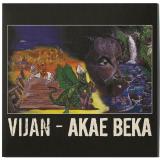
Vijan, originally released in 2003 by I Grade Records, is a seminal release from the “golden era” of St. Croix roots reggae, now available for the first time on 12” vinyl courtesy of Before Zero Records.
Produced by the legendary combination of Vaughn Benjamin and Laurent “Tippy I” Alfred, Vijan balances the raw, spiritual intensity of Vaughn’s songwriting with the sophisticated, melodic arrangements that became the hallmark of the I Grade sound.
This album features an incredible lineup of musicians who helped shape the sound of Virgin Islands reggae. The production credits boast the textured guitar layers of Tuff Lion , the deep, driving bass of Kenyatta Itola , and the rhythmic precision of Dion “Bosie” Hopkins. Uniquely, this album also showcases Vaughn Benjamin’s versatility as a multi-instrumentalist, contributing drums, bass, and keys on standout tracks like “All Ye Naashan” and “Thanks for Life”.
Akae Beka’s inimitable style of rich, deep, multi-layered songwriting and uncompromising devotion to RasTafari is on full display here. At the point of his untimely passing in 2019, Vaughn Benjamin had released over 70 albums, solidifying his place as one of the most prolific reggae artists ever known. Vijan remains
a glowing highlight in this expansive catalogue, capturing a specific moment of creative brilliance in the early 2000s.
The vinyl reissue allows listeners to engage with the album’s analogue richness and features the striking original artwork by Marcus Wilson, presented here as a 12” square masterpiece.
- 1: Una Isla (Meridian Brothers Remix)
- 2: Las Palabras Van (Malicia Remix)
- 3: Lapo De Agua (Ruido Selecto Remix)
- 4: T? Me Traes Calma (Nickelman Remix)
- 5: Las Palabras Van (Apichat Pakwan Remix)
- 6: Selva (Palka Remix)
- 7: T? Me Traes Calma (Boogie Mason Remix)
- 8: Las Palabras Van (Siete Catorce Remix)
Animaleja (Medellín, Colombia) and No Sabes (Nashville, Tennessee) unveil Nostalgia De Mar Remixed a special edition that brings together eight artists from across the globe. From the tropicanibalismo of Meridian Brothers in Bogotá and the experimental guaracha of DJ Malicia in Medellín, to the digital cumbia of Ruido Selecto weaving Latin roots with bass music, the album traces a sonic journey across continents. In Japan, Nickelman and Boogie Mason reimagine tropical sounds through lofi beats and hip hop, while in Amsterdam Apichat Pakwan fuses Asian tropical bass with contemporary electronica. Back in the tropics, Palka (Chiriki Records, Panama) offers a downtempo universe, and on the Mexico–Los Angeles border, 714 channels the power of the Latin club scene. Nostalgia De Mar Remixed is a global dialogue of rhythms, voices, and territories, where tropical roots find new forms beyond borders.
Alpha & Omega (Greensleeves / A&O Records), the legendary pioneers of UK Dub, have shaped the sound of modern roots and dub since the 1980s, building a vast catalogue of over 40 studio albums. Their deep, meditative sound is foundational to the evolution of soundsystem culture and the global spread of bass music from Jamaica to the UK and beyond. Now, as part of the acclaimed A&O reissue series by Steppas Records, we proudly present the long-awaited reissue of Voice in the Wilderness. Originally released in 1994, this classic LP is one of the rarest in the Alpha & Omega catalogue—original pressings are almost impossible to find and regularly fetch extremely high prices on Discogs. Lovingly re-mastered and housed in the original sleeve with iconic A&O artwork, Voice in the Wilderness is a powerful statement in dub and a true collector’s treasure. This is UK dub history, revived.
APORIAMOR noun 1. The death of love’s contradiction.
| “Embody APORIAMOR”
Etymology
aporia-: an irresolvable internal contradiction or logical disjunction in a text, argument, or theory. from Greek aporos ‘impassable’, from a- ‘without’ + poros ‘passage’
-amor: love. Sentimiento intenso del ser humano que, partiendo de su propia insuficiencia, necesita y busca el encuentro y unión con otro ser. Del latín amor.
-mor: latin for death.
APORIAMOR explores the affective ontological and organic processes of love and lust in the turmoil of an urban existence, through the female lens. It expresses the process of strengthening through heartbreak in its various forms.
With her debut EP The Art of the Concrete, elsas knew that by giving that name to a record which was ironically expansive and experimental, she would be calling for a distilled and clearer path further down the line. This is what she’s been incorporating into the sonic world of this new EP, APORIAMOR, signifying the birth of a more matured and distilled version of herself as an artist.
With APORIAMOR (“the death of love’s contradiction”) elsas conveys a personal process of healing in the romantic space. Through different experiences of heartbreak, elsas builds a language - a coping mechanism attached to its subsequent artistic expression – that isn’t founded on hardness or a closing-off, but instead, on a playful but profound reckoning, and learning of self-worth.
APORIAMOR embraces the complexities of being a lover-girl: of moving through life with an open heart. It celebrates the clarity, sweet hindsight, and detachment that come from processing emotion. APORIAMOR is both an affirmation and a release.
elsas makes canonical blends with a forward boundary-bending vision. Her sound in this record is naturally referential of both her Mediterranean heritage and UK alternative music — intrinsic parts of her lived experience. She has had the opportunity to collaborate with artists she deeply admires, each exchange enriching her creative world.
The experience of working hand-in-hand with Sampha for the last 3 years and ongoingly has been a core of her evolution as an artist. She has also collaborated in many forms with artists like Florence + the Machine, Little Simz, Jordan Rakei, Jockstrap, Obongjayar, Black Country New Road, Genevieve Artadi (KNOWER) and Duval Timothy. Additionally, her ongoing work with the Idrîsî Ensemble, of which she is a core member, continues to inform her artistic depth.
The making of this largely self-produced record unfolded over four years — “it’s a well-kneaded dough,” she says. These songs evolved through exposure to multiple environments: from early writing sessions in her childhood home in the Spanish countryside, to stages across the U.S. while on tour supporting Sampha.
Experimentation and modulation are an intrinsic part of elsas’ method, conceiving songs as organisms that respond to their surroundings. Collaborators on this collection of songs include Shrink, Will Lister, Gabriel Gifford, Ethan P. Flynn and more. The record was mixed by David Wrench (a long-time supporter of elsas’) and Nathan Boddy, and mastered by Matt Colton.
With APORIAMOR, elsas creates a visual world from the fabulation of the past, as an act of playful historical revisionism in which she embeds herself as both subject and storyteller. The songs function like an archive of her experiences across various years, each one unearthed and presented as some sort of archaeological artifact. Through this body of work, elsas begins to conceptualize herself as a legacy artist: one who honors the archive of her own becoming while emerging as a distinct and resonant voice in today’s musical landscape.
- A1: Lullaby
- A2: The Mess You Left
- B1: House Party
- B2: She Sad
Me vs Me, Vol. 1 is the debut album by Joe Allotta, a drummer, singer, and multi-instrumentalist active as a session musician for various
artists (Davide Shorty, Johnny Marsiglia, Funk Shui Project, Mario Biondi, Nick The Nightfly, etc.). The album was conceived in London,
Trapani, and Bologna and features performances by various musicians Joe has worked with in recent years.
The EP embodies a sound rich with emotion, expressed through four tracks that blend jazz with cutting-edge urban rhythms, with drums as
the central element of his compositions.
The four tracks on the EP thus have distinct personalities inspired by soul, breakbeat, and funk, souls that coexist in the artist's emotional
experience: the song "Lullaby" is a hip-hop beat with a funk flavor, while "The Mess You Left" moves through dreamlike sounds that crystallize
into a drum 'n' bass storm. House Party is very reminiscent of UK club sounds, it is full of synths and with a square drumming, it closes the
EP She Sad, a sort of skit that leaves room for an improvisation of guitar and drums.