Search:val experience band

Styles
All
Aroma Di Amore - Zonder Omzien

First-time reissue of Aroma Di Amore's 4th EP, originally released in 1986.

Aroma Di Amore is/was Belgian’s premier cult band. Since the early eighties ADA innovatively combined electronics with rock. With a mix of razor-sharp Flemish lyrics and unconventional song structures the group earned a cult status in Belgium and abroad. 40 years later they conclude their career with a few last concerts and a vinyl box set spanning the years 1983-1987.

At the notorious Rock Rally of 1982 Aroma Di Amore stands out with their wonderful handling of the Flemish language, a deep bass, typical cold new wave drums, biting guitar riffs with the occasional flavor of absolute madness. Frontman Jos Verlooy adopts the stage name Elvis Peeters. The explanation for this remarkable pseudonym choice: in 1977 – the period of the singer's musical awakening – one of the two famous rocking Elvises (not Costello, but Presley) succumbs to his pill addiction. So, dixit Verlooy, there is an Elvis vacant. A banal surname belongs next to that exotic first name. A combination that breathes rock 'n' roll, according to the singer.

His companion Gerry Vergult – who very much determines the sound with his metallic riffs, somewhat indebted to Jean-Marie Aerts – adopts the stage name Fred Angst. Completely in line with the depressing zeitgeist of the 1980s. Gerry eats and breathes music. Besides composing most of ADA’s songs, he records & self-produces a few fantastic dark en loner solo minimal wave tracks as Fred Angst. He is still musically active, more towards the electronic leftfield nowadays under the moniker Zool.

It is clear from an early age that companion Elvis Peeters possesses the gift of the word. As an adolescent he published the punkzine “Dus”. The punk spirit stimulates Peeters. He begins to transform the poetry that he has been entrusting to paper for some time into song lyrics. It is on a whim and without any stage experience that punk friends Peeters and Angst register for the Rock Rally as Aroma di Amore. On a bed of post-punk and cold wave (Joy Division, Wire and Sisters of Mercy are the main influences), they initially let out playful, minimalist and nonsensical slogans such as "Doe De Mafia" (1982) and "Gorilla Dans De Samba" (1983). Later on, the tone becomes more serious, although Peeters' choice of words continues to show a penchant for absurdism and sarcasm. No one in Dutch songwriting imitates this verbal elasticity, certainly at that time.

The numerous songs about war are downright horrifying. In the 1980s, an arms race is underway. When the Belgian government decides to install nuclear missiles in 1981, Aroma di Amore asks for one minute of silence in the hall during performances. In "Lauwe Oorlog" (1983), Peeters exposes the core of his unrest: “paraat voor de parade / de vrede wordt begraven / met militaire eer”. To this day, the frontman of AdA still proudly wears his at least 30 year old 'atomic energy, no thanks!' button.

In 1984 Aroma releases Koude Oorlog on the new and independent Brussels label Play It Again Sam. The traditional press and radio ignore the record, but in the alternative circuits the mini-album does not go unnoticed, and the group starts to build a solid fan base, resulting in more and more offers for gigs. There's also interest in the Netherlands, and due to the international contacts of PIAS, the record also ends up in France, Switzerland, Spain and Canada.

Encouraged by this modest success, the group returns to the studio for a 12" single. With new group member Frits De Cauter on sax, they record "Voor De Dood". To this day, Voor De Dood remains the most popular AdA song, as evidenced by the countless compilations on which the song has appeared.

AdA goes to the Netherlands to record their next album “De Sfeer Van Grote Dagen”. The people from Nasmak have built a new studio in Eindhoven and one of the members, Theo Van Eenbergen (later Henry Rollins), will be the producer. “De Sfeer Van Grote Dagen” is the group's most adventurous album, and the reviews are again unanimously favorable. However, sales are disappointing and PIAS proposes to recruit Chris Reed of Red Lorry Yellow Lorry and record a new single with him. "Zonder Omzien" is recorded at the prestigious Pyramid Studio. However, PIAS is waiting to release the album and in the meantime AdA is recording a number of extra tracks with producer Ludo Camberlin, including "Koekoek In De Stad". Towards the end of the year, Lo and Elvis travel to Africa for a few months and as a result the group comes to a standstill. In this period, Zonder Omzien is released.

At the beginning of 1986, Peeters and Meulen return, and Andrea Smits leaves the group. Luc Pillards is hired as a replacement, and when Ludo Camberlin presents himself as a new label boss and producer (Anything But Records), they start recording their first full album for the label. “Harde Feiten" kicks in immediately, and the group is back up to cruising speed. In the first week of release, the record even appears in the bestseller list of the record stores.

At the beginning of 1987 the recordings for the second album start, this time in a production by Peeters and Angst themselves. Shortly after the shooting, AdA goes to Switzerland for a short but successful tour, with Men 2nd and Cas & Organized Crime as support act. "Koudvuur" is published in the autumn and considered to be their strongest record so far by the group, the reactions are rather low. Both the reviews in the press and the sales are disappointing and put a damper on the joy. Nevertheless, the group is invited to perform in Valencia, Spain, where they have an unexpected success.

MUTANT SOUNDS BLOG

Aroma Di Amore have always been outsiders, even within the confinement of the alternative rock circuit. Their peculiar blend of raw guitars, electronics, Dutch lyrics and unconventional song structures was too hybrid for many. Those howewer who, without prejudice, would lend an ear to the band's music, discovered an energetic, authentic and uncompromising collective that stood above all trends. While so many Belgian "connaisseurs" had their doubts about the possibilities of international recognition for a band singing in Dutch, Aroma Di Amore toured France, Switzerland and Spain; their records figured in alternative charts from Poland to Canada.

From beginning to end the nucleus of Aroma Di Amore consisted of Elvis PEETERS, who in a inimitable, possessed way delivered his highly original lyrics, and Fred ANGST, guitarist mastering the heaviest riffs as well as refined tapestries of sound. Furthermore, the line-up varied throughout the band's carreer with:- H.K. (Guitarist from 1982 until 1983)- Andrea SMITS (Organ from 1982 until 1985)- Luc PILLARDS (Synthsizer in 1986)- Jan WANDELAAR (Guitar and synthesizer in 1986)- Pulcherie (Saxophone in 1983)- Wout DOCKX (Bass from 1987 until 1988)and especially- Lo MEULEN (Bass from 1983 until 1987)and the late Frits DE CAUTER (Saxophone from 1984 until 1986)contributing to the music.

pre-order now02.12.2022

expected to be published on 02.12.2022

20,71
FÖLLAKZOID - FÖLLAKZOID  LP

Green Vinyl

Föllakzoid are nearly unparalleled in the hypnotic lysergic drenched neo-psychedelic experience. On their debut it is mostly a rather bulky one, determined by the downright dirty, distorted electric guitar, which is also usually accompanied by a spacey, howling and herbaceous howling one. In addition, there is fat bass and powerful drums. During the prolific post-napster musical era dominated by myspace, the Chilean musical field opened up so that many bands could broaden their creative spectrum by taking global and timeless references as an aesthetic holy grail. This experimentation had the internet and specialized forums as a search engine, which not only provided the world parameters in trends, but also allowed to find true hidden gems, bands that were adored by a few connoisseurs of the real quality left behind by the record labels. In this context, a group of university students who have known each other from school began to rehearse in the Caracol Vip underground (Santiago, Chile), in a room owned by a local heavy-metal legend, Juanzer. Equipped with tube amplifiers, Marshall and other custom made, the members of that time: Gonzalo Laguna on vocals, Juan Pablo Rodriguez on bass, Domingo García-Huidobro on guitar, Diego Lorca on drums and Francisco Zenteno on second guitar, they began to play endless jams without a strict sense of songs or directed compositional notion. The rule was to follow the noise in a journey through valleys and peaks that allowed the spontaneous appearance of textures, lyrics, phrases and some invented chords that did not resemble anything that had been heard at that time. The rehearsals were transformed into true live performances without an audience, which were only seen by a few curious, among alcohol, smoke and deafening noise, which could only end when the owner of the room (Juanzer) entered to turn off the equipment. Over time he himself stayed as an auditor, witnessing how the musicians stripped themselves in their rehearsals. Considered at that time as play or fun, the idea of forming a band with a name came with the real live performances to which they were invited, without yet having songs made, at the end of 2006. The myth of their first live performance alludes to a numerical superstition, on July 7, 2007, in a small bar in Providencia (Santiago), which also provided the band with an upward recognition for the psychedelic-punk music they were doing, with a voracious vocalist who destroyed everything on stage and a band that stood firm on the endless songs they built. The name that was invented for that occasion was the result of a nonsense about the German word feuerzeug brought to the group by their close friend Alfredo Thiermann (who would later make the cover of the first album and become keyboardist), which the members of that time took and Spanishized at will. This neologism represents the second founding myth of the band since the interest in bands like Can, Neu! and AMON DUUL II and the characteristic motorik rhythm would soon arrive, in the form of kosmische musik. By 2008 the band had already added several live performances and some songs appeared, among which were Directo al Sol and Loop (nod to the English band), which allowed a greater deployment of ambient-noise resources, almost close to the 'concrete' music. The deconstructed rock of Spacemen 3 was also present in the form of repeated sequences on the bass and drums, as the layers of shrill guitars formed the foam of the tide bursting in the darkness of space. With the ideas and general feeling of the sound that they already had, the band made the decision to record their first album with the sound engineer and Juan Pablo's brother, Ignacio 'Nes' Rodríguez, who later together with JP would form the BYM label to make the first CDs of the forthcoming debut of Föllakzoid and other bands that Nes was recording. Sheltered that winter in the studio that Nes had built in an old house in Recoleta, the band recorded the bulk of the songs on the album with a new jam that emerged in that room composed of 1 note and moments of rising intensity: Sky Input I and II appeared to complete a set of songs that came from rock but were slowly passing to a level of trance and cacophony typical of orchestrated and atonal music. With three takes per song but only one take of the jam, the album was finished with a few extra takes and overdubs, some made in the house of Nes himself, who contributed a guitar to Loop, although it does not appear in the credits, and additional takes of "Pelao" Zenteno with delay and reverse for almost all songs. The names of the songs came from the lyrics that Laguna had worked from the live versions to the studio finals, except for Loop, Sky Input and El Humo. The cover of the album, which as mentioned was made by Thiermann, represents well the spirit of those days, when creative magma looked for an outlet through the instruments without any restriction or explicit direction from any of the members of the group. The image of the tree towards the sky speaks of the roots that rise towards the immensity, the nature projected towards the stratosphere. Ideas that the neo-psychedelia of those years seemed to capture well, echoing in the Chilean bands that at that time were gathering around the BYM label. Both the creative fluency and the lack of a musical director ensured that Föllakzoid was an original band that did not impose themselves a way of doing things or sounding, collective music took shape in the most wonderful way, without characters, without a record name, without faces. Just an instant in space. 2022 GALAXY GREEN coloured vinyl

out of Stock

Order now and we will order the item for you at our supplier.

31,72

Last In: 3 years ago
Frankie and the Witch Fingers - Monsters Eating People Eating Monsters...

Bubbling up from the psychedelic tar pits of L.A., Frankie and the Witch Fingers have been a constant source of primordial groove for the better part of the last decade. Formed and incubated in Bloomington, IN before moving west to scrap with Los Angeles’ garage rock rabble, the band evolved from cavern-clawed echo merchants to architects of prog-infected psych epics that evoke a shift in reality. After a stretch on Chicago/LA flagship Permanent Records the band landed at yet another fabled enclave of garage and psychedelia - Brooklyn’s Greenway Records, now working in tandem with psych powerhouse LEVITATION and their label The Reverberation Appreciation Society, the groups latest effort is dually supported by a RAS / Greenway co-release. After years of searching for the specific alchemy that would tear open the cosmos, they found the formula with the addition of Shaughnessy Starr on drums in the summer of 2018. They began a new cycle and tripped into tip-on double gatefold territory, flesh-ing out their lysergic impulses into a monolith of sound that closes in from all sides. The band reached new levels of grandiosity and utilized every minute to manifest their psych-soul Sabbath in four dimensions, spilling psychic blood on a populace ready and eagerly waiting. Yet, as expansive, inventive, and immersive as any studio album might be, the band is born for the stage. As their live prowess caught the ears of some legends in their own right, the band practically lived on the road last year with stints opening for Oh Sees, Cheap Trick and ZZ Top. Along the way the constant pulpit of the stage would form ZAM into a transformative experience while plotting their next permutation of space and time. That transformation, Monsters Eating People Eating Monsters... (repeated infinitely,) rises like a Phoenix from the road tar, van exhaust, and ozone crackle of amps in heat. Once off the road it was recorded in just five blistering days. Though, while the tour may have hammered the album into shape and brought about a wind of change, those changes stretched to the band itself as well. In the wake of the tour the band’s longtime bassist Alex Bulli made his exit, with the majority of bass parts on the album being written and played by multi-instrumental magician Josh Menashe with occasional pitch in from songwriter Dylan Sizemore. Stripped to their core the band has created their most ambitious work to date, an album that takes the turbulence of ZAM and crafts it into a beast more insidious and singular than anything in their catalog. Moving forward, the band has taken on new blood. Completing their lineup, Nikki Pickle (of Death Valley Girls) will join them working the new album out roadside on bass. A new horizon of Frankie and the Witch Fingers draws near and we’re all set to follow them into the unknown.

pre-order now11.11.2022

expected to be published on 11.11.2022

22,90
Jasmine Myra - Horizons LP

Jasmine Myra

Horizons LP

12inchGONDLP052BLK
Gondwana Records
28.10.2022

Gondwana Records announces Horizons the debut album from Jasmine Myra, produced by Matthew Halsall, it's an elevating debut record of understated beauty

Jasmine Myra is a Leeds-based saxophonist, composer and band leader Her original instrumental music has a euphoric and uplifting sound, influenced by artists as diverse as Kenny Wheeler, Bonobo and Olafur Arnalds and like Mammal Hands and Hania Rani her music has a special, emotive quality that draws the listener into her world. Matthew Halsall first heard Myra's music in 2019 shortly before the pandemic hit, signing her to Gondwana Records and producing her beautiful debut album, Horizons.

"I was immediately drawn to Jasmine's music. I could hear jazz, electronica in her music but with a deep, honest, emotional quality. I was really impressed with her skills as a composer and bandleader, that she is open and intelligent enough to bring all those influences together, to make something fresh and original. We were also delighted to work with a young artist from the North of England. London is often seen as the place to be, but cities like Manchester and Leeds are full of creative musicians too, and that sense of local community is at the heart of our values as a label."

Myra came-up through the bustling, creative Leeds music scene and her music draws on the sense of community that permeates life in the city and which is notable for a strong DIY ethos in its musical community. She attended Leeds Conservatoire and played with the Leeds based Abstract Orchestra, a jazz big-band, led by tutor Rob Mitchell that explores the synergy between jazz and hip-hop found in the recordings of Madlib, MF Doom of J Dilla. Indeed, Myra cites MF Doom and Soweto Kinch as early influences on her own music. It was in her last year at the conservatoire that Myra started to consider leading her own group and started to really think about what her own music might sound like and her first band featured guitarist Ben Haskins and drummer George Hall who both feature on Horizons and her band draws heavily on the Leeds community featuring rising stars such as pianist Jasper Green and harpist Alice Roberts.

Myra also mentions local legend, Dave Walker, who owns an instrument repair shop called 'All Brass and Woodwind' which is right next to the music college. She worked there while studying and he introduced her to a lot of local musicians. Walker also has his own line of saxophones (played by Shabaka Hutchins, Pete Wareham and Nubya Garcia), and gifted Myra the saxophone she plays on Horizons. It was Walker who encouraged Myra to apply for Jazz North Introduces, a scheme that supports emerging jazz artists in the North of England and Myra credits her winning a place, in 2018,with helping her grow in confidence.

" It gave me the opportunity to start gigging outside of Leeds, which I was very keen to do. I was quite surprised by people's reaction to the project and the support I was being shown, which helped me gain a lot of confidence. It became clear to me very quickly that being a solo artist was what I wanted to do and it was also apparent to me that mine was one of the only female-led instrumental bands on the Leeds scene, which encouraged me even more, as I wanted my project to inspire younger female musicians".

Horizons was produced by Matthew Halsall and mixed by Portico Quartet collaborator Greg Freeman, and much of the music was written during lockdown. It was a hard time for a lot of people, and initially Myra struggled mentally, deprived of shows and the connections of making music with her band and friends, but she also realised what she wanted as an artist and the result is heard on Horizons.

"I realised that my aim was to start writing music that made people feel happy and uplifted. Writing is one of my biggest passions, but I also love performing. Playing live and seeing the audience connect with my music and have a positive experience brings me so much joy".

This sense of elevation is at the heart of Horizons, together with the feeling of a journey, of reaching new ground. Prologue and Horizons were originally composed as one piece as they encapsulate Myra's own personal development as she worked on the album - taking the listener on a journey, especially Prologue; and then Horizons is that moment of release when you've reached the end goal. 1000 Miles takes inspiration from the music of Shabaka and the Ancestors. Whereas Words Left Unspoken was written after Myra's grandmother unexpectedly passed away in June, and due to Covid restrictions she was unable to visit her before she passed and say how much she loved her. Morningtide is a nod to Kenny Wheeler, particularly the track Opening from Sweet Time Suite on Music for Large and Small Ensembles but Myra also puts her own spin on it as she also does with Promise, another track influenced by Wheeler. Awakening has a calm and euphoric quality and represents that sense of problems lifting, or of reaching the other side, and New Beginnings finishes the album with a positive vibe and a sense of moving forward from darkness

This then is Horizons. A soulful, emotional and up-lifting debut from a major new voice. A snapshot of a young artist at the beginning of her journey - drawing on jazz and electronica influences to create something fresh and new. But also a celebration of her home town Leeds, and a record built on a sense of support and community before looking out to wider Horizons.

Jamie Cullum on BBC Radio 2 "...That's Jasmine Myra and 'New Beginnings', wonderful to hear new music from a new artists i've not heard before, a great new artist!"

Tom Ravenscroft on BBC 6 Music "Leeds-based saxophonist, composer and band leader Jasmine Myra. 'New Beginnings' on Gondwana Records. Compositions drawing influence by Kenny Wheeler, Bonobo, Ólafur Arnalds. Produced by Matthew Halsall"

out of Stock

Order now and we will order the item for you at our supplier.

27,52

Last In: 3 years ago
Lee Tracy & Isaac Manning - Is it What You Want

As the sun sets on a quaint East Nashville house, a young man bares a piece of his soul. Facing the camera, sporting a silky suit jacket/shirt/slacks/fingerless gloves ensemble that announces "singer" before he's even opened his mouth, Lee Tracy Johnson settles onto his stage, the front yard. He sways to the dirge-like drum machine pulse of a synth-soaked slow jam, extends his arms as if gaining his balance, and croons in affecting, fragile earnest, "I need your love… oh baby…"

Dogs in the yard next door begin barking. A mysterious cardboard robot figure, beamed in from galaxies unknown and affixed to a tree, is less vocal. Lee doesn't acknowledge either's presence. He's busy feeling it, arms and hands gesticulating. His voice rises in falsetto over the now-quiet dogs, over the ambient noise from the street that seeps into the handheld camcorder's microphone, over the recording of his own voice played back from a boombox off-camera. After six minutes the single, continuous shot ends. In this intimate creative universe there are no re-takes. There are many more music videos to shoot, and as Lee later puts it, "The first time you do it is actually the best. Because you can never get that again. You expressing yourself from within."

"I Need Your Love" dates from a lost heyday. From some time in the '80s or early '90s, when Lee Tracy (as he was known in performance) and his music partner/producer/manager Isaac Manning committed hours upon hours of their sonic and visual ideas to tape. Embracing drum machines and synthesizers – electronics that made their personal futurism palpable – they recorded exclusively at home, live in a room into a simple cassette deck. Soul, funk, electro and new wave informed their songs, yet Lee and Isaac eschewed the confinement of conventional categories and genres, preferring to let experimentation guide them.

"Anytime somebody put out a new record they had the same instruments or the same sound," explains Isaac. "So I basically wanted to find something that's really gonna stand out away from all of the rest of 'em." Their ethos meant that every idea they came up with was at least worth trying: echoed out half-rapped exhortations over frantic techno-style beats, gospel synth soul, modal electro-funk, oddball pop reinterpretations, emo AOR balladry, nods to Prince and the Fat Boys, or arrangements that might collapse mid-song into a mess of arcade game-ish blips before rallying to reach the finish line. All of it conjoined by consistent tape hiss, and most vitally, Lee's chameleonic voice, which managed to wildly shape shift and still evoke something sincere – whether toggling between falsetto and tenor exalting Jesus's return, or punctuating a melismatic romantic adlib with a succinct, "We all know how it feels to be alone."

"People think we went to a studio," says Isaac derisively. "We never went to no studio. We didn't have the money to go to no studio! We did this stuff at home. I shot videos in my front yard with whatever we could to get things together." Sometimes Isaac would just put on an instrumental record, be it "Planet Rock" or "Don't Cry For Me Argentina" (from Evita), press "record," and let Lee improvise over it, yielding peculiar love songs, would-be patriotic anthems, or Elvis Presley or Marilyn Monroe tributes. Technical limitations and a lack of professional polish never dissuaded them. They believed they were onto something.

"That struggle," Isaac says, "made that sound sound good to me."

In the parlance of modern music criticism Lee and Isaac's dizzying DIY efforts would inevitably be described as "outsider." But "outsider" carries the burden of untold additional layers of meaning if you're Black and from the South, creating on a budget, and trying to get someone, anyone within the country music capital of the world to take your vision seriously. "What category should we put it in?" Isaac asks rhetorically. "I don't know. All I know is feeling. I ain't gonna name it nothing. It's music. If it grabs your soul and touch your heart that's what it basically is supposed to do."

=

Born in 1963, the baby boy of nine siblings, Lee Tracy spent his earliest years living amidst the shotgun houses on Nashville's south side. "We was poor, man!" he says, recalling the outhouse his family used for a bathroom and the blocks of ice they kept in the kitchen to chill perishables. "But I actually don't think I really realized I was in poverty until I got grown and started thinking about it." Lee's mom worked at the Holiday Inn; his dad did whatever he had to do, from selling fruit from a horse drawn cart to bootlegging. "We didn't have much," Lee continues, "but my mother and my father got us the things we needed, the clothes on our back." By the end of the decade with the city's urban renewal programs razing entire neighborhoods to accommodate construction of the Interstate, the family moved to Edgehill Projects. Lee remembers music and art as a constant source of inspiration for he and his brothers and sisters – especially after seeing the Jackson 5 perform on Ed Sullivan. "As a small child I just knew that was what I wanted to do."

His older brother Don began musically mentoring him, introducing Lee to a variety of instruments and sounds. "He would never play one particular type of music, like R&B," says Lee. "I was surrounded by jazz, hard rock and roll, easy listening, gospel, reggae, country music; I mean I was a sponge absorbing all of that." Lee taught himself to play drums by beating on cardboard boxes, gaining a rep around the way for his timekeeping, and his singing voice. Emulating his favorites, Earth Wind & Fire and Cameo, he formed groups with other kids with era-evocative band names like Concept and TNT Connection, and emerged as the leader of disciplined rehearsals. "I made them practice," says Lee. "We practiced and practiced and practiced. Because I wanted that perfection." By high school the most accomplished of these bands would take top prize in a prominent local talent show. It was a big moment for Lee, and he felt ready to take things to the next level. But his band-mates had other ideas.

"I don't know what happened," he says, still miffed at the memory. "It must have blew they mind after we won and people started showing notice, because it's like everybody quit! I was like, where the hell did everybody go?" Lee had always made a point of interrogating prospective musicians about their intentions before joining his groups: were they really serious or just looking for a way to pick up girls? Now he understood even more the importance of finding a collaborator just as committed to the music as he was.

=

Isaac Manning had spent much of his life immersed in music and the arts – singing in the church choir with his family on Nashville's north side, writing, painting, dancing, and working various gigs within the entertainment industry. After serving in the armed forces, in the early '70s he ran The Teenage Place, a music and performance venue that catered to the local youth. But he was forced out of town when word of one of his recreational routines created a stir beyond the safe haven of his bohemian circles.

"I was growing marijuana," Isaac explains. "It wasn't no business, I was smoking it myself… I would put marijuana in scrambled eggs, cornbread and stuff." His weed use originated as a form of self-medication to combat severe tooth pain. But when he began sharing it with some of the other young people he hung out with, some of who just so happened to be the kids of Nashville politicians, the cops came calling. "When I got busted," he remembers, "they were talking about how they were gonna get rid of me because they didn't want me saying nothing about they children because of the politics and stuff. So I got my family, took two raggedy cars, and left Nashville and went to Vegas."

Out in the desert, Isaac happened to meet Chubby Checker of "The Twist" fame while the singer was gigging at The Flamingo. Impressed by Isaac's zeal, Checker invited him to go on the road with him as his tour manager/roadie/valet. The experience gave Isaac a window into a part of the entertainment world he'd never encountered – a glimpse of what a true pop act's audience looked like. "Chubby Checker, none of his shows were played for Black folks," he remembers. "All his gigs were done at high-class white people areas." Returning home after a few years with Chubby, Isaac was properly motivated to make it in Music City. He began writing songs and scouting around Nashville for local talent anywhere he could find it with an expressed goal: "Find someone who can deliver your songs the way you want 'em delivered and make people feel what you want them to feel."

One day while walking through Edgehill Projects Isaac heard someone playing the drums in a way that made him stop and take notice. "The music was so tight, just the drums made me feel like, oh I'm-a find this person," he recalls. "So I circled through the projects until I found who it was.

"That's how I met him – Lee Tracy. When I found him and he started singing and stuff, I said, ohhh, this is somebody different."

=

Theirs was a true complementary partnership: young Lee possessed the raw talent, the older Isaac the belief. "He's really the only one besides my brother and my family that really seen the potential in me," says Lee. "He made me see that I could do it."

Isaac long being a night owl, his house also made for a fertile collaborative environment – a space where there always seemed to be a new piece of his visual art on display: paintings, illustrations, and dolls and figures (including an enigmatic cardboard robot). Lee and Issac would hang out together and talk, listen to music, conjure ideas, and smoke the herb Isaac had resumed growing in his yard. "It got to where I could trust him, he could trust me," Isaac says of their bond. They also worked together for hours on drawings, spreading larges rolls of paper on the walls and sketching faces with abstract patterns and imagery: alien-like beings, tri-horned horse heads, inverted Janus-like characters where one visage blurred into the other.

Soon it became apparent that they didn't need other collaborators; self-sufficiency was the natural way forward. At Isaac's behest Lee, already fed up with dealing with band musicians, began playing around with a poly-sonic Yamaha keyboard at the local music store. "It had everything on it – trumpet, bass, drums, organ," remembers Lee. "And that's when I started recording my own stuff."

The technology afforded Lee the flexibility and independence he craved, setting him on a path other bedroom musicians and producers around the world were simultaneously following through the '80s into the early '90s. Saving up money from day jobs, he eventually supplemented the Yamaha Isaac had gotten him with Roland and Casio drum machines and a Moog. Lee was living in an apartment in Hillside at that point caring for his dad, who'd been partially paralyzed since early in life. In the evenings up in his second floor room, the music put him in a zone where he could tune out everything and lose himself in his ideas.

"Oh I loved it," he recalls. "I would really experiment with the instruments and use a lot of different sound effects. I was looking for something nobody else had. I wanted something totally different. And once I found the sound I was looking for, I would just smoke me a good joint and just let it go, hit the record button." More potent a creative stimulant than even Isaac's weed was the holistic flow and spontaneity of recording. Between sessions at Isaac's place and Lee's apartment, their volume of output quickly ballooned.

"We was always recording," says Lee. "That's why we have so much music. Even when I went to Isaac's and we start creating, I get home, my mind is racing, I gotta start creating, creating, creating. I remember there were times when I took a 90-minute tape from front to back and just filled it up."

"We never practiced," says Isaac. "See, that was just so odd about the whole thing. I could relate to him, and tell him about the songs I had ideas for and everything and stuff. And then he would bring it back or whatever, and we'd get together and put it down." Once the taskmaster hell bent on rehearsing, Lee had flipped a full 180. Perfection was no longer an aspiration, but the enemy of inspiration.

"I seen where practicing and practicing got me," says Lee. "A lot of musicians you get to playing and they gotta stop, they have to analyze the music. But while you analyzing you losing a lot of the greatness of what you creating. Stop analyzing what you play, just play! And it'll all take shape."

=

"I hope you understood the beginning of the record because this was invented from a dream I had today… (You tell me, I'll tell you, we'll figure it out together)" – Lee Tracy and Isaac Manning, "Hope You Understand"

Lee lets loose a maniacal cackle when he acknowledges that the material that he and Isaac recorded was by anyone's estimation pretty out there. It's the same laugh that commences "Hope You Understand" – a chaotic transmission that encapsulates the duality at the heart of their music: a stated desire to reach people and a compulsion to go as leftfield as they saw fit.

"We just did it," says Lee. "We cut the music on and cut loose. I don't sit around and write. I do it by listening, get a feeling, play the music, and the lyrics and stuff just come out of me."

The approach proved adaptable to interpreting other artists' material. While recording a cover of Whitney Houston's pop ballad "Saving All My Love For You," Lee played Whitney's version in his headphones as he laid down his own vocals – partially following the lyrics, partially using them as a departure point. The end result is barely recognizable compared with the original, Lee and Isaac having switched up the time signature and reinvented the melody along the way towards morphing a slick mainstream radio standard into something that sounds solely their own.

"I really used that song to get me started," says Lee. "Then I said, well I need something else, something is missing. Something just came over me. That's when I came up with 'Is It What You Want.'"

The song would become the centerpiece of Lee and Isaac's repertoire. Pushed along by a percolating metronomic Rhythm King style beat somewhere between a military march and a samba, "Is It What You Want" finds Lee pleading the sincerity of his commitment to a potential love interest embellished by vocal tics and hiccups subtlely reminiscent of his childhood hero MJ. Absent chord changes, only synth riffs gliding in and out like apparitions, the song achieves a lingering lo-fi power that leaves you feeling like it's still playing, somewhere, even after the fade out.

"I don't know, it's like a real spiritual song," Lee reflects. "But it's not just spiritual. To me the more I listen to it it's like about everything that you do in your everyday life, period. Is it what you want? Do you want a car or you don't want a car? Do you want Jesus or do you want the Devil? It's basically asking you the question. Can't nobody answer the question but you yourself."

In 1989 Lee won a lawsuit stemming from injuries sustained from a fight he'd gotten into. He took part of the settlement money and with Isaac pressed up "Saving All My Love For You" b/w "Is It What You Want" as a 45 single. Isaac christened the label One Chance Records. "Because that's all we wanted," he says with a laugh, "one chance."

Isaac sent the record out to radio stations and major labels, hoping for it to make enough noise to get picked up nationally. But the response he and Lee were hoping for never materialized. According to Isaac the closest the single got to getting played on the radio is when a disk jock from a local station made a highly unusual announcement on air: "The dude said on the radio, 107.5 – 'We are not gonna play 'Is It What You Want.' We cracked up! Wow, that's deep.

"It was a whole racist thing that was going on," he reflects. "So we just looked over and kept on going. That was it. That was about the way it goes… If you were Black and you were living in Nashville and stuff, that's the way you got treated." Isaac already knew as much from all the times he'd brought he and Lee's tapes (even their cache of country music tunes) over to Music Row to try to drum up interest to no avail.

"Isaac, he really worked his ass off," says Lee. "He probably been to every record place down on Music Row." Nashville's famed recording and music business corridor wasn't but a few blocks from where Lee grew up. Close enough, he remembers, for him to ride his bike along its back alleys and stumble upon the occasional random treasure, like a discarded box of harmonicas. Getting in through the front door, however, still felt a world away.

"I just don't think at the time our music fell into a category for them," he concedes. "It was before its time."

=

Lee stopped making music some time in the latter part of the '90s, around the time his mom passed away and life became increasingly tough to manage. "When my mother died I had a nervous breakdown," he says, "So I shut down for a long time. I was in such a sadness frame of mind. That's why nobody seen me. I had just disappeared off the map." He fell out of touch with Isaac, and in an indication of just how bad things had gotten for him, lost track of all the recordings they'd made together. Music became a distant memory.

Fortunately, Isaac kept the faith. In a self-published collection of his poetry – paeans to some of his favorite entertainment and public figures entitled Friends and Dick Clark – he'd written that he believed "music has a life of its own." But his prescience and presence of mind were truly manifested in the fact that he kept an archive of he and Lee's work. As perfectly imperfect as "Is It What You Want" now sounds in a post-Personal Space world, Lee and Isaac's lone official release was in fact just a taste. The bulk of the Is It What You Want album is culled from the pair's essentially unheard home recordings – complete songs, half-realized experiments, Isaac's blue monologues and pronouncements et al – compiled, mixed and programmed in the loose and impulsive creative spirit of their regular get-togethers from decades ago. The rest of us, it seems, may have finally caught up to them.

On the prospect of at long last reaching a wider audience, Isaac says simply, "I been trying for a long time, it feels good." Ever the survivor, he adds, "The only way I know how to make it to the top is to keep climbing. If one leg break on the ladder, hey, you gotta fix it and keep on going… That's where I be at. I'll kill death to make it out there."

For Lee it all feels akin to a personal resurrection: "It's like I was in a tomb and the tomb was opened and I'm back… Man, it feels so great. I feel like I'm gonna jump out of my skin." Success at this stage of his life, he realizes, probably means something different than what it did back when he was singing and dancing in Isaac's front yard. "What I really mean by 'making it,'" he explains isn't just the music being heard but, "the story being told."

Occasionally Lee will pull up "Is It What You Want" on YouTube on his phone, put on his headphones, and listen. He remembers the first time he heard his recorded voice. How surreal it was, how he thought to himself, "Is that really me?" What would he say to that younger version of himself now?

"I would probably tell myself, hang in there, don't give up. Keep striving for the goal. And everything will work out."

Despite what's printed on the record label, sometimes you do get more than one chance.

out of Stock

Order now and we will order the item for you at our supplier.

11,72

Last In: 3 years ago
GRUPO PAN - PAN LP

Grupo Pan

PAN LP

12inchVAMPI263
Vampisoul
30.09.2022

First time reissue of one of the essential and most sought-after Venezuelan rock albums, originally released in 1970, along the lines of what other artists such as Santana or El Chicano were doing from the United States in those same years. Grupo Pan was led by Carlos "Nené" Quintero, former member of Los Dementes, Ray Pérez's group, and through this record he aims to retain the rhythmic strength and brass arrangements typical of salsa, but also explore other sounds based on powerful guitars. This reissue includes original artwork, liner notes and exclusive photos. 180g vinyl Grupo Pan was formed in 1970 in the popular Caracas neighborhood of Marín at the initiative of Carlos "Nené" Quintero together with his brother Jesús "Chú" Quintero. His experience as a professional musician as part of Los Dementes, Ray Pérez's group, would allow him to retain the rhythmic strength and brass arrangements typical of salsa, but also explore other sounds based on powerful guitars. The band would be completed with Alfredo Padilla (percussion), David Azuaje and Carlos Guerra (trombones), Henry Camba (trumpet) and Rubén "Micho" Correa (electric guitar), already with a solid reputation as a guitarist after years playing in rock bands. Nené Quintero would resume contact with his acquaintance Mario Tepedino, at that time artistic director of 2001 Juvenil, a Venezuelan tv show focused on the promotion of young musical values, who would offer them to appear on said program. Through the popularity provided by their frequent television appearances, they were offered the opportunity to record an album. In December 1970 their first and only LP would release, recorded at the Fidelis studios in Caracas and produced by Mario Tepedino. It was published by Souvenir, a label responsible for the release of many other essential Venezuelan rock albums, such as the highly sought-after records by The Love Depression or Ladies W.C. "Pan" successes in overcoming through its grooves the eternal rivalry between the followers of the hard rock sounds and those who, on the contrary, were devotees of salsa. All the songs on the album are written by "Nené" Quintero himself and remain as fundamental milestones in the history of Venezuelan rock. The album would contribute to the birth of a new paradigm of Latin rock, along the lines of what other artists such as Santana or El Chicano were doing from the United States in those same years. After this Souvenir release, the band would also record two singles on another label called Promus. Grupo Pan would remain active until 1973 when the band members would follow different paths. "Pan", their only LP, has become one of the essential and most sought-after Venezuelan albums, and we are pleased to now be able to present the first-time reissue, including liner notes and exclusive photos.

pre-order now30.09.2022

expected to be published on 30.09.2022

24,58
Zusammen Clark - Earlier

Genteel, springlike sounds emanate once more from Paris. Those who live there or have visited will know a joy in this that non-residents or travelers can only imagine, but one senses that there’s a texture to it all that bakes into the human experience when winter finally lifts and trees blossom, warm breezes blow. After being stuck at home for two years, once the weather picks up and the world hopes to shift back in gear without millions of deaths, one’s imagination begins to run. Parisian duo Zusammen Clark have codified this sound of openness and warmth using known goalposts of sound – the subtle drag of these sturdy, easygoing songs, a direct path from Jean-Charles Delarue’s previous outing in Bruit Direct outfit City Band; the descent of chord structures, a deep voice going high and staying louche. Maybe a bit of Felt’s cherry red pastoral, shades of that time in speculative fiction where Pavement signed to Postcard (remember? it was the same year that Dandelion and Les Temps Heureux got out of bed and toured coffeehouses together), the Go-Betweens just before the wheels fell off, or NYC underdogs Plates of Cake. Horns swoop in at the right moments and don’t linger. Hooks lock in and down, lead guitar casually doubles itself. Hair gets done, stubble let fashionably go. Along with bandmate and cousin Jerome Lemee, Delarue constructs a frame, pencils in the outline and begins decorating these songs with all the right touches and a confidence that knows where to place them, not just the value of the objects. This is a world of sound where everything has a story and a place, every room can provide a closet mix. It’s a world that opens into a larger world, a human world, maybe a world these two knew from childhood, maybe one they’ve built for themselves. Earlier is too well-assembled to not have a foundation in profoundly comfortable moments in life, and the knowledge of how to get there, even if one knows they can never stay. It’s a catalogue of delight, impossible to oversell. – Doug Mosurock TRACKLIST: A1 - Magyar A2 - Animals & Evidence A3 - Rest Position A4 - Swim In A Blue B1 - Parallel Lines B2 - Ho Chi Minh B3 - The Postcard B4 - Own Company

pre-order now30.09.2022

expected to be published on 30.09.2022

22,06
LTJ XPERIENCE - FEELING BETTER EP

Luca LTJ Trevisi (LTJ Xperience) began his dj/producer career in the 80s. As resident dj in two of the most famous Italian clubs of the time, Kinky in Bologna and Cap Creus in Imola, he was one of the first Italian jocks to spin House and to re-propose those black music, jazz and latin-bossa classics from the 70s that at the end of the same decade would have given birth to the Acid Jazz and Rare Groove movements. His first single release in 1988, titled First Job, together with Kekkotronics, was also the first release ever on Bologna based Irma Records. It was featured in a lot of compilations of the time and entered several playlists, rapidly reaching cult status for many UK and US djs. During the early 90s LTJ delivered a couple of singles in a kind of pre-breakbeat style: Dont Stop The Sax, released all over Europe, and Funky Superfly. He also produced US singer Tameka Starrs single Going In Circles, always for Irma Records, still a classic in the downtempo/r&b field. In the second half of the nineties Luca began to produce acid jazz bands like Bossa Nostra, still today one of Irma Records main acts. Their first album had Vicky Anderson as special
guest and today is still considered one of the most important European acid jazz albums. In the following years he concentrated on developing his activity as collector and rare vinyl merchant, which gave him the chance to get in touch with djs from all over the World and to discover many forgotten gems from the past years. Thanks to this experience he was able to create two extremely successful rarities series on Irma Records:

Groovy and Suono Libero. In the meanwhile LTJ started to dj outside Italy too, performing in important venues like the Blue Note and Jazz Café in London, Giant Step in New York and Montreux Jazz Festival in Switzerland. In 1999 saw the release of his first solo album under the LTJ Xperience moniker. The album was produced with the collaboration of fellow Irma artist and producer Ohm Guru and had Taka Boom and Jackson Sloan among the guests. Two of the main tracks on the album are brazil house classic Sombre Guitar and title track Moon Beat, which became a true hit of the Chill Out genre, featured in dozens of important compilations.

After making countless productions for Irma Records, including their second album When The Rain Begins To Fall (with the participation of the historic Spanish-American singer Joe Bataan), and the recents singles as ORGAN MIND / I LOVE YOU (favorite track by Larry Heard ) & ON THE FLOOR / SOUND MACHINE, LTJ is devoted almost exclusively to re-edit and reconstruct tracks from the past with the addition of sounds and rhythms in post production for labels like SUPER VALUE, SMALL WORLD DISCO, HOT GROOVY RECORDS, OH CRISTO! increasing the production of this new musical genre that is currently defined as beatdown/slo-mo, working with international labels such as Far Out Recordings, Sleazy Beats, Future Classics, E.A.R. Music For Dreams, Apersonal Music, Roam Recordings, !K7.

out of Stock

Order now and we will order the item for you at our supplier.

15,92

Last In: 11 months ago
Lee Tracy & Isaac Manning - Is it What You Want LP

As the sun sets on a quaint East Nashville house, a young man bares a piece of his soul. Facing the camera, sporting a silky suit jacket/shirt/slacks/fingerless gloves ensemble that announces "singer" before he's even opened his mouth, Lee Tracy Johnson settles onto his stage, the front yard. He sways to the dirge-like drum machine pulse of a synth-soaked slow jam, extends his arms as if gaining his balance, and croons in affecting, fragile earnest, "I need your love… oh baby…"

Dogs in the yard next door begin barking. A mysterious cardboard robot figure, beamed in from galaxies unknown and affixed to a tree, is less vocal. Lee doesn't acknowledge either's presence. He's busy feeling it, arms and hands gesticulating. His voice rises in falsetto over the now-quiet dogs, over the ambient noise from the street that seeps into the handheld camcorder's microphone, over the recording of his own voice played back from a boombox off-camera. After six minutes the single, continuous shot ends. In this intimate creative universe there are no re-takes. There are many more music videos to shoot, and as Lee later puts it, "The first time you do it is actually the best. Because you can never get that again. You expressing yourself from within."

"I Need Your Love" dates from a lost heyday. From some time in the '80s or early '90s, when Lee Tracy (as he was known in performance) and his music partner/producer/manager Isaac Manning committed hours upon hours of their sonic and visual ideas to tape. Embracing drum machines and synthesizers – electronics that made their personal futurism palpable – they recorded exclusively at home, live in a room into a simple cassette deck. Soul, funk, electro and new wave informed their songs, yet Lee and Isaac eschewed the confinement of conventional categories and genres, preferring to let experimentation guide them.

"Anytime somebody put out a new record they had the same instruments or the same sound," explains Isaac. "So I basically wanted to find something that's really gonna stand out away from all of the rest of 'em." Their ethos meant that every idea they came up with was at least worth trying: echoed out half-rapped exhortations over frantic techno-style beats, gospel synth soul, modal electro-funk, oddball pop reinterpretations, emo AOR balladry, nods to Prince and the Fat Boys, or arrangements that might collapse mid-song into a mess of arcade game-ish blips before rallying to reach the finish line. All of it conjoined by consistent tape hiss, and most vitally, Lee's chameleonic voice, which managed to wildly shape shift and still evoke something sincere – whether toggling between falsetto and tenor exalting Jesus's return, or punctuating a melismatic romantic adlib with a succinct, "We all know how it feels to be alone."

"People think we went to a studio," says Isaac derisively. "We never went to no studio. We didn't have the money to go to no studio! We did this stuff at home. I shot videos in my front yard with whatever we could to get things together." Sometimes Isaac would just put on an instrumental record, be it "Planet Rock" or "Don't Cry For Me Argentina" (from Evita), press "record," and let Lee improvise over it, yielding peculiar love songs, would-be patriotic anthems, or Elvis Presley or Marilyn Monroe tributes. Technical limitations and a lack of professional polish never dissuaded them. They believed they were onto something.

"That struggle," Isaac says, "made that sound sound good to me."

In the parlance of modern music criticism Lee and Isaac's dizzying DIY efforts would inevitably be described as "outsider." But "outsider" carries the burden of untold additional layers of meaning if you're Black and from the South, creating on a budget, and trying to get someone, anyone within the country music capital of the world to take your vision seriously. "What category should we put it in?" Isaac asks rhetorically. "I don't know. All I know is feeling. I ain't gonna name it nothing. It's music. If it grabs your soul and touch your heart that's what it basically is supposed to do."

=

Born in 1963, the baby boy of nine siblings, Lee Tracy spent his earliest years living amidst the shotgun houses on Nashville's south side. "We was poor, man!" he says, recalling the outhouse his family used for a bathroom and the blocks of ice they kept in the kitchen to chill perishables. "But I actually don't think I really realized I was in poverty until I got grown and started thinking about it." Lee's mom worked at the Holiday Inn; his dad did whatever he had to do, from selling fruit from a horse drawn cart to bootlegging. "We didn't have much," Lee continues, "but my mother and my father got us the things we needed, the clothes on our back." By the end of the decade with the city's urban renewal programs razing entire neighborhoods to accommodate construction of the Interstate, the family moved to Edgehill Projects. Lee remembers music and art as a constant source of inspiration for he and his brothers and sisters – especially after seeing the Jackson 5 perform on Ed Sullivan. "As a small child I just knew that was what I wanted to do."

His older brother Don began musically mentoring him, introducing Lee to a variety of instruments and sounds. "He would never play one particular type of music, like R&B," says Lee. "I was surrounded by jazz, hard rock and roll, easy listening, gospel, reggae, country music; I mean I was a sponge absorbing all of that." Lee taught himself to play drums by beating on cardboard boxes, gaining a rep around the way for his timekeeping, and his singing voice. Emulating his favorites, Earth Wind & Fire and Cameo, he formed groups with other kids with era-evocative band names like Concept and TNT Connection, and emerged as the leader of disciplined rehearsals. "I made them practice," says Lee. "We practiced and practiced and practiced. Because I wanted that perfection." By high school the most accomplished of these bands would take top prize in a prominent local talent show. It was a big moment for Lee, and he felt ready to take things to the next level. But his band-mates had other ideas.

"I don't know what happened," he says, still miffed at the memory. "It must have blew they mind after we won and people started showing notice, because it's like everybody quit! I was like, where the hell did everybody go?" Lee had always made a point of interrogating prospective musicians about their intentions before joining his groups: were they really serious or just looking for a way to pick up girls? Now he understood even more the importance of finding a collaborator just as committed to the music as he was.

=

Isaac Manning had spent much of his life immersed in music and the arts – singing in the church choir with his family on Nashville's north side, writing, painting, dancing, and working various gigs within the entertainment industry. After serving in the armed forces, in the early '70s he ran The Teenage Place, a music and performance venue that catered to the local youth. But he was forced out of town when word of one of his recreational routines created a stir beyond the safe haven of his bohemian circles.

"I was growing marijuana," Isaac explains. "It wasn't no business, I was smoking it myself… I would put marijuana in scrambled eggs, cornbread and stuff." His weed use originated as a form of self-medication to combat severe tooth pain. But when he began sharing it with some of the other young people he hung out with, some of who just so happened to be the kids of Nashville politicians, the cops came calling. "When I got busted," he remembers, "they were talking about how they were gonna get rid of me because they didn't want me saying nothing about they children because of the politics and stuff. So I got my family, took two raggedy cars, and left Nashville and went to Vegas."

Out in the desert, Isaac happened to meet Chubby Checker of "The Twist" fame while the singer was gigging at The Flamingo. Impressed by Isaac's zeal, Checker invited him to go on the road with him as his tour manager/roadie/valet. The experience gave Isaac a window into a part of the entertainment world he'd never encountered – a glimpse of what a true pop act's audience looked like. "Chubby Checker, none of his shows were played for Black folks," he remembers. "All his gigs were done at high-class white people areas." Returning home after a few years with Chubby, Isaac was properly motivated to make it in Music City. He began writing songs and scouting around Nashville for local talent anywhere he could find it with an expressed goal: "Find someone who can deliver your songs the way you want 'em delivered and make people feel what you want them to feel."

One day while walking through Edgehill Projects Isaac heard someone playing the drums in a way that made him stop and take notice. "The music was so tight, just the drums made me feel like, oh I'm-a find this person," he recalls. "So I circled through the projects until I found who it was.

"That's how I met him – Lee Tracy. When I found him and he started singing and stuff, I said, ohhh, this is somebody different."

=

Theirs was a true complementary partnership: young Lee possessed the raw talent, the older Isaac the belief. "He's really the only one besides my brother and my family that really seen the potential in me," says Lee. "He made me see that I could do it."

Isaac long being a night owl, his house also made for a fertile collaborative environment – a space where there always seemed to be a new piece of his visual art on display: paintings, illustrations, and dolls and figures (including an enigmatic cardboard robot). Lee and Issac would hang out together and talk, listen to music, conjure ideas, and smoke the herb Isaac had resumed growing in his yard. "It got to where I could trust him, he could trust me," Isaac says of their bond. They also worked together for hours on drawings, spreading larges rolls of paper on the walls and sketching faces with abstract patterns and imagery: alien-like beings, tri-horned horse heads, inverted Janus-like characters where one visage blurred into the other.

Soon it became apparent that they didn't need other collaborators; self-sufficiency was the natural way forward. At Isaac's behest Lee, already fed up with dealing with band musicians, began playing around with a poly-sonic Yamaha keyboard at the local music store. "It had everything on it – trumpet, bass, drums, organ," remembers Lee. "And that's when I started recording my own stuff."

The technology afforded Lee the flexibility and independence he craved, setting him on a path other bedroom musicians and producers around the world were simultaneously following through the '80s into the early '90s. Saving up money from day jobs, he eventually supplemented the Yamaha Isaac had gotten him with Roland and Casio drum machines and a Moog. Lee was living in an apartment in Hillside at that point caring for his dad, who'd been partially paralyzed since early in life. In the evenings up in his second floor room, the music put him in a zone where he could tune out everything and lose himself in his ideas.

"Oh I loved it," he recalls. "I would really experiment with the instruments and use a lot of different sound effects. I was looking for something nobody else had. I wanted something totally different. And once I found the sound I was looking for, I would just smoke me a good joint and just let it go, hit the record button." More potent a creative stimulant than even Isaac's weed was the holistic flow and spontaneity of recording. Between sessions at Isaac's place and Lee's apartment, their volume of output quickly ballooned.

"We was always recording," says Lee. "That's why we have so much music. Even when I went to Isaac's and we start creating, I get home, my mind is racing, I gotta start creating, creating, creating. I remember there were times when I took a 90-minute tape from front to back and just filled it up."

"We never practiced," says Isaac. "See, that was just so odd about the whole thing. I could relate to him, and tell him about the songs I had ideas for and everything and stuff. And then he would bring it back or whatever, and we'd get together and put it down." Once the taskmaster hell bent on rehearsing, Lee had flipped a full 180. Perfection was no longer an aspiration, but the enemy of inspiration.

"I seen where practicing and practicing got me," says Lee. "A lot of musicians you get to playing and they gotta stop, they have to analyze the music. But while you analyzing you losing a lot of the greatness of what you creating. Stop analyzing what you play, just play! And it'll all take shape."

=

"I hope you understood the beginning of the record because this was invented from a dream I had today… (You tell me, I'll tell you, we'll figure it out together)" – Lee Tracy and Isaac Manning, "Hope You Understand"

Lee lets loose a maniacal cackle when he acknowledges that the material that he and Isaac recorded was by anyone's estimation pretty out there. It's the same laugh that commences "Hope You Understand" – a chaotic transmission that encapsulates the duality at the heart of their music: a stated desire to reach people and a compulsion to go as leftfield as they saw fit.

"We just did it," says Lee. "We cut the music on and cut loose. I don't sit around and write. I do it by listening, get a feeling, play the music, and the lyrics and stuff just come out of me."

The approach proved adaptable to interpreting other artists' material. While recording a cover of Whitney Houston's pop ballad "Saving All My Love For You," Lee played Whitney's version in his headphones as he laid down his own vocals – partially following the lyrics, partially using them as a departure point. The end result is barely recognizable compared with the original, Lee and Isaac having switched up the time signature and reinvented the melody along the way towards morphing a slick mainstream radio standard into something that sounds solely their own.

"I really used that song to get me started," says Lee. "Then I said, well I need something else, something is missing. Something just came over me. That's when I came up with 'Is It What You Want.'"

The song would become the centerpiece of Lee and Isaac's repertoire. Pushed along by a percolating metronomic Rhythm King style beat somewhere between a military march and a samba, "Is It What You Want" finds Lee pleading the sincerity of his commitment to a potential love interest embellished by vocal tics and hiccups subtlely reminiscent of his childhood hero MJ. Absent chord changes, only synth riffs gliding in and out like apparitions, the song achieves a lingering lo-fi power that leaves you feeling like it's still playing, somewhere, even after the fade out.

"I don't know, it's like a real spiritual song," Lee reflects. "But it's not just spiritual. To me the more I listen to it it's like about everything that you do in your everyday life, period. Is it what you want? Do you want a car or you don't want a car? Do you want Jesus or do you want the Devil? It's basically asking you the question. Can't nobody answer the question but you yourself."

In 1989 Lee won a lawsuit stemming from injuries sustained from a fight he'd gotten into. He took part of the settlement money and with Isaac pressed up "Saving All My Love For You" b/w "Is It What You Want" as a 45 single. Isaac christened the label One Chance Records. "Because that's all we wanted," he says with a laugh, "one chance."

Isaac sent the record out to radio stations and major labels, hoping for it to make enough noise to get picked up nationally. But the response he and Lee were hoping for never materialized. According to Isaac the closest the single got to getting played on the radio is when a disk jock from a local station made a highly unusual announcement on air: "The dude said on the radio, 107.5 – 'We are not gonna play 'Is It What You Want.' We cracked up! Wow, that's deep.

"It was a whole racist thing that was going on," he reflects. "So we just looked over and kept on going. That was it. That was about the way it goes… If you were Black and you were living in Nashville and stuff, that's the way you got treated." Isaac already knew as much from all the times he'd brought he and Lee's tapes (even their cache of country music tunes) over to Music Row to try to drum up interest to no avail.

"Isaac, he really worked his ass off," says Lee. "He probably been to every record place down on Music Row." Nashville's famed recording and music business corridor wasn't but a few blocks from where Lee grew up. Close enough, he remembers, for him to ride his bike along its back alleys and stumble upon the occasional random treasure, like a discarded box of harmonicas. Getting in through the front door, however, still felt a world away.

"I just don't think at the time our music fell into a category for them," he concedes. "It was before its time."

=

Lee stopped making music some time in the latter part of the '90s, around the time his mom passed away and life became increasingly tough to manage. "When my mother died I had a nervous breakdown," he says, "So I shut down for a long time. I was in such a sadness frame of mind. That's why nobody seen me. I had just disappeared off the map." He fell out of touch with Isaac, and in an indication of just how bad things had gotten for him, lost track of all the recordings they'd made together. Music became a distant memory.

Fortunately, Isaac kept the faith. In a self-published collection of his poetry – paeans to some of his favorite entertainment and public figures entitled Friends and Dick Clark – he'd written that he believed "music has a life of its own." But his prescience and presence of mind were truly manifested in the fact that he kept an archive of he and Lee's work. As perfectly imperfect as "Is It What You Want" now sounds in a post-Personal Space world, Lee and Isaac's lone official release was in fact just a taste. The bulk of the Is It What You Want album is culled from the pair's essentially unheard home recordings – complete songs, half-realized experiments, Isaac's blue monologues and pronouncements et al – compiled, mixed and programmed in the loose and impulsive creative spirit of their regular get-togethers from decades ago. The rest of us, it seems, may have finally caught up to them.

On the prospect of at long last reaching a wider audience, Isaac says simply, "I been trying for a long time, it feels good." Ever the survivor, he adds, "The only way I know how to make it to the top is to keep climbing. If one leg break on the ladder, hey, you gotta fix it and keep on going… That's where I be at. I'll kill death to make it out there."

For Lee it all feels akin to a personal resurrection: "It's like I was in a tomb and the tomb was opened and I'm back… Man, it feels so great. I feel like I'm gonna jump out of my skin." Success at this stage of his life, he realizes, probably means something different than what it did back when he was singing and dancing in Isaac's front yard. "What I really mean by 'making it,'" he explains isn't just the music being heard but, "the story being told."

Occasionally Lee will pull up "Is It What You Want" on YouTube on his phone, put on his headphones, and listen. He remembers the first time he heard his recorded voice. How surreal it was, how he thought to himself, "Is that really me?" What would he say to that younger version of himself now?

"I would probably tell myself, hang in there, don't give up. Keep striving for the goal. And everything will work out."

Despite what's printed on the record label, sometimes you do get more than one chance.

out of Stock

Order now and we will order the item for you at our supplier.

23,49

Last In: 3 years ago
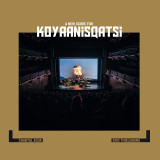
Chantal Acda & Eric Thielemans - Koyaanisqatsi

Dark-folk songwriter Chantal Acda and beyond drums-percussion musician extraordinaire Eric Thielemans propose a new score for Koyaanisqatsi, re-actualising the incredibly beautiful, raw, rhythmic and touching images of this 80-ties cinematographic masterpiece. Slow deep electric waves, lonely synths in sonic desert landscapes, rhythmic pulses, transporting drums and bells, and deeply longing sounds and voices make up the audible fundamentals of this imagined, neo shamanic, ritualistic music to accompany the Earth as it keeps on supporting our post human frenetics even today. This release contains a selection of the musical material scored for a live performance together with the screening of the movie. The live performance premiered on Film Festival Gent and Vooruit in the fall of 2022.

Currently based in Belgium, Dutch-born Chantal Acda (b. 1978) has worked under the Sleepingdog moniker since 2006, making three acclaimed albums that closed on the 'With Our Heads in the Clouds and Our Hearts in the Fields' (2010) album for which she collaborated with Adam Wiltzie (Stars of the Lid, A Winged Victory For The Sullen). They toured the UK and Benelux with Low in 2011. After all this, it was time for her first real solo record. Playing in various formations (Isbells, True Bypass, Marble Sounds) had made her conscious of the patterns that we all, as humans, share in. So, she sought out kindred spirits with whom she might record an album filled with freedom and intensity, and who were conscious of the patterns we so often fall back on. Nils Frahm was the first of these to cross her path. The inventive German pianist and producer is an intense and adventurous performer and was a perfect match for it. Acda also experienced a direct bond with Peter Broderick, a multi-instrumentalist known from his solo work (on labels such as Bella Union and Erased Tapes) and from his work with, among others, Efterklang. Cellist extraordinaire Gyda Valtysdottir from Icelandic group Múm had previously worked with Chantal as a member of the Sleepingdog live band. And lastly, Shahzad Ismaily stumbled into this picture by chance, but when Acda and he found themselves in the same room they formed an instant rapport. After this first record, 3 other solorecords followed. Chantal kept on searching for a deeper connection with the outside world and recorded "The Sparkle In Our Flaws" (2015) and "Bounce Back" (2017). She also released some live recordings with her band and also Bill Frisell, a highly respected jazz guitarist.(2018). These records were released on the German label Glitterhouse. Chantal and her band toured with these records in Europe. In 2019 Chantal created her first music/theatre performance P_wawau for Oerol Festival, The Netherlands. She worked with Valgeir Sigurdson (Björk, Bonnie Prince Billy,...) and singers from Het Nederlands Kamerkoor. As a result of this, she released the recorded music: Puwawau (2019). In 2021 Chantal released her most recent album Saturday Moon. (2021) For this album she worked with her band (Eric Thielemans, Alan Gevaert, Gaetan Vandewoude and Niels Van Heertum) but also with Bill Frisell, Shahzad Ismaily and Mimi and Alan Sparhawk (Low). Saturday Moon was very well received, internationally, by the press.

Eric Thielemans is a drummer and percussionist. Travelling across music scenes and disciplines, Thielemans navigates by means of his own compass. Most known for his resonant solo works like a Snare is a Bell, Sprang, Aural Mist and Bata Baba Loka and many collaborations with musicians in the experimental music scene, as well as the Jazz scene, and indie folk/pop/rock scenes Thielemans keeps on pushing the borders and expanding conscious aural spaces and territories. Recently, Thielemans has collaborated with PVT - a trio together with Mika Vainio & Charlemagne Palestine (album released April 2020) , PAT - a new trio together with Oren Ambarchi and Charlemagne Palestine, A new duo together with Oren Ambarchi, Billy Hart ("Talking about the Weather"), Chantal Acda ("The Sparkle in our Flaws", "Bounce Back", "Puwawau", "Saturday Moon"), Marshall Allen (Sun Ra), Tape Cuts Tape, Distance Light & Sky, Jozef Dumoulin, Trevor Dunn, Shahzad Ismaily, Vaast Colson, Nico Dockx, and many more. Currently Thielemans is working on r-e-s-o-n-a-n-c-e , a culminative work that encompasses and brings to the surface the underlying currents within his life in and with music. Withing r-e-s-o-n-a-n-c-e he investigates the everyday magic through conversations, writing and score writing to invite as many souls as possible to experience and co create the magic in the everyday.

pre-order now16.09.2022

expected to be published on 16.09.2022

18,28
Calibre - Feeling Normal 4x12"

Calibre

Feeling Normal 4x12"

4x12inchSIGLP016RP
Signature
09.09.2022

2022 Repress

Multi-faceted artist Calibre today shares his sixteenth studio album "Feeling Normal". The album is out now to pre-order on Vinyl, CD and on digital platforms via his own independent imprint Signature Recordings.

The record is his first bonafide 140bpm record and a staggering body of work that shows the genius levels of one of electronic music's most respected auteurs. Across the 13 tracks, he transcends through space and time, creating music that will take the listener on a weighty sonic journey. The album announcement is accompanied by two dub versions "Bad" and "Badder" deconstructed from the track "Badman" with DRS from Mark Ernestus available via his Hardwax store January 29th and Bandcamp February 12th. "Getting to work with Mark Ernestus is a real honour, I collected Basic Channel, Rhythm & Sound and his other work for many years and still do. It's hard to avoid the influence of this guy in electronic music across genres and so it is a real pleasure to have him do his thing with the Badman tune which I think sounds closely related."

All of the tracks on the record have been road-tested in Calibre's DJ sets over the last 2/3 years with many of them being sought-out by his hardcore fans. It was only a matter of time then that he put them out for all to consume. With a nod to the dancefloor, the clear idea for the album came about following the release of his most personal album to date "Planet Hearth". "It still works in the headspace but ultimately it's been written for the sweaty club experience we miss now, also after an album like Planet Hearth it felt very liberating to do," he remarks. When writing albums, he often just puts it down to the general chaos of life, not citing any one influence but generally just waits to see what comes. With one of the tracks on the album written 7 years ago on the island of Valentia, It became a project that he spent the intervening years collecting tracks for, not really knowing when he was going to put it together as an album. "The whole album is special to me, everything on there has import and meaning beyond for me, I have spent much time on all these and hope they are special for other people too."

Belfast-born, Berlin-based Calibre - AKA Dominick Martin - shows no sign of slowing down. As a producer, DJ, songwriter, multi-instrumentalist and painter, he is one of the most unique and inspiring living artists. With a career spanning two decades, his ability to remain underground whilst being one of the most-respected is testament to who this enigmatic artist is. To this day, he has never been remixed and has a seriously impressive amount of unreleased music under wraps. With everything on hold and gigs on the backburner, this record is exactly what the world needs right now.

out of Stock

Order now and we will order the item for you at our supplier.

37,44

Last In: 2 years ago
King Gizzard & The Lizard Wizard - K.G. LP

King Gizzard & The Lizard Wizard are repressing their sixteenth album, K.G. n 2010. In the wake of a global pandemic, it’s a collection of songs that saw the six members of the band retreating to their own homes scattered around Melbourne, Australia to compose and record remotely. But have no fear! Not a drop of that unnamed alchemical something that makes this band so special is missing. This is the Gizz firing on all sonic cylinders, for if ever a band were built to swiftly adapt to adverse circumstance then it is them. Hell, on paper Covid-19, with its monstrous yet unseen face, ecological implications and new language, even sounds like an abandoned concept for a King Gizzard & the Lizard Wizard album.

Truth be told, the practicalities of the creation of K.G. is a side-issue. It is the contents and the sheer visceral power of music that matters. Music that will live on long after a virus has passed. Back in 2017 the band released Flying Microtonal Banana, now one of their most highly regarded albums. That it was the first of five released by the band that year and was only part the story – a story made all the remarkable by the fact it was recorded using a microtonal musical scale that requires quarter tone tunings, on instruments custom-made for the occasion. It spawned a plethora of live favourites such as ‘Rattlesnake’, ‘Sleep Drifter’, ‘Nuclear Fusion’ and ‘Billabong Valley’ and showed the wider world that the Gizz paint from a palette that extends far beyond the musical colours of western rock. Here were songs in tunings more common in traditional Turkish or Arabic music.

“FMB was one of the purest and most enjoyable recording experiences we’ve had, and the ideas just kept coming” explains de facto band leader and multi-instrumentalist Stu Mackenzie. “But we didn’t think we would play it live as the music dictated a new medium that requires different instruments, new flight cases and so. It was a liberating studio-based experiment which surprisingly translated seamlessly and spawned some of favourite songs to play live.”

So now they return to the microtonal tunings on K.G., an album best described as a pure distillation of the King Gizzard sound, one that cherry picks the best aspects of previous albums and contorts them into new shapes and via defiantly non-Western rock scales. There’s walk-on theme song ‘K.G.L.W’, the celestial disco-funk of ‘Intrasport’, the righteous life-giving staccato rock of ‘Ontology’, epic stoner-sludge closer ‘The Hungry Wolf Of Fate’, which ends the album in abrupt burst of white noise. All come together to represent the next-level of the expanding Gizz sound.

K.G. is both a stand-alone work and also part of a bigger musical picture. More news on that shall be forthcoming – fans of the band know by now that King Gizzard don’t do things by halves. If music were organic matter, then their albums are ever-changing entities: initial highlights are often superseded on further exploration, favourite tracks replaced by less obvious moments, while riffs or bursts of noise from four or five albums back might suddenly rear their heads again.

pre-order now02.09.2022

expected to be published on 02.09.2022

28,15
Blondie - Vivir en la Habana

Originally released in July 2021 on blue vinyl – this is a yellow vinyl re-press – original notes below

During 2019, Blondie was invited to perform in Havana, Cuba as part of a cultural exchange through the Cuban Ministry of Culture. This was a 40 year ambition come especially for songwriter & guitarist Chris Stein, who had longed to visit Cuba for most of his life. Artist and director Rob Roth documented this special moment and career highlight by shooting a short film titled “BLONDIE: VIVIR EN LA HABANA”.
The film is broken up into 3 parts — Water, Fire and Air — and present a meditation on the experience as well as highlights from the two-night live musical performances with special guests Alain Perez, David Torrens and Cuban Fusion Pioneers Sintesís at Havana’s famous Teatro Mella.
With narration from Blondie founding members Debbie Harry, Chris Stein, and Clem Burke, providing a glimpse into the passion and beauty they discovered in Havana and the magic moments of performing alongside incredible Cuban artists. “BLONDIE: VIVIR EN LA HABANA” goes beyond the atypical short form film and live music documentary by presenting a portrait of the legendary band’s first experience in Havana and of the magical exchange between musicians from the two cities each call home and their intertwined influences.

The sound track for the film features Cuban musicians Carlos Alfonso, Ele Valdés, María del Carmen Ávila, Alejandro Delgado, Juan Carlos Marin, Jamil Schery, Degnis Bofill, Adel González

Released in July on limited edition pale blue vinyl to accompany the film which will feature throughout 2021 in many prominent Film Festivals inc the Tribeca Film Festival.

pre-order now12.08.2022

expected to be published on 12.08.2022

18,45
Starlite Campbell Band - The Language Of Curiosity

Renowned for their distinctive songwriting, unique sound with beautifully
produced recordings, onstage chemistry and electrifying live shows,
European and British blues award nominees the Starlite Campbell Band
are Suzy Starlite and Simon Campbell who fell in love on stage and
married following a whirlwind musical romance
With their fresh taste of original '70s British rock and British blues, the husband
and wife duo have been on an exciting roller-coaster of a musical ride following
the release of their debut album 'Blueberry Pie' to rave reviews worldwide and a
prestigious nomination for Best Album in the European Blues Awards.The band's
exciting and highly anticipated second album 'The Language of Curiosity' is
released on November 5th, 2021 and supported by a European tour.
'The Language of Curiosity' is a collection of stories about different facets of
post- modern real- life experiences from working for the man, attitudes towards
lust, passion and casual sex, space travel, social systems and abuse by power
and money, war and the global refugee crisis, gatekeepers in the music industry,
people giving up and growing old before their time and feel good '70s inspired
British rock and British blues; it's like looking at different sides of a Rubik's cube.
From full-on rock 'n' roll tribal drums, thunderous bass, badass dirty guitar riffs,
drunken echoes of slide and lap steel, melting melodies and vocal harmonies
combined with old school valve guitar amps and analog tape machines, Starlite &
Campbell have a very British sound! With a vibe and feel reminiscent of the mid
'60s to early '70s British rock & British blues; think Peter Green, Faces, Deep
Purple, Led Zeppelin but not like those really... more like Starlite-Campbell!

pre-order now05.08.2022

expected to be published on 05.08.2022

23,74
Naima Bock - Giant Palm LP

Naima Bock

Giant Palm LP

12inchSP1486
Sub Pop
01.07.2022

The roots of Naima Bock’s music are far reaching. Born in
Glastonbury to a Brazilian father and a Greek mother, Naima spent
her early childhood in Brazil before eventually returning to England
and various homes in South East London. This heritage combines
with more recent pursuits in Naima’s music. From the Brazilian
standards that the family listened to while driving to the beach, to the
European folk traditions she tapped into on her own, and the pursuits
that interest her today - studies in archaeology, work as a gardener,
and walking the world’s great trails - Naima’s music draws from
family, the earth and music handed down through generations.
 Naima’s debut album, ‘Giant Palm’, is undoubtedly infused with the
Brazilian music of her youth and regular family visits. She found
inspiration in “the percussion, the melodies, chords - and particularly
the poetic juxtaposition of tragedy and beauty held within the lyrics.”
 By the age of 15, Naima was embedded in the music scene of SouthEast London, eventually forming Goat Girl with school friends and
touring the world. After six years playing bass in Goat Girl, Naima left
the band to try something new. She set up a gardening company and
started a degree at University College London in archaeology
because, as she jokes, “I liked being near the ground.” During this
time, she wrote music, played guitar, learned violin, worked with evershifting South-London collective Broadside Hacks, and met producer
and arranger Joel Burton through Memorials of Distinction labelhead
Josh Cohen. Joel’s burgeoning interest in Western classical music,
global folk music, and experience in large scale arrangement and
orchestration informed the collaborative process that eventually
culminated in ‘Giant Palm’.
 Recorded with the help of over 30 musicians (including Josh Cohen
on synth / electronics) by Dan Carey of Speedy Wunderground at his
studio space in Streatham, South-East London, and engineered by
Syd Kemp, the songs on ‘Giant Palm’ represent a snapshot of a
specific feeling, of brief moments in Naima’s life that make up a larger
whole.
 The expansive yet delicate arrangements highlight Naima’s love for
the collectivist values of traditional folk music, in which songs belong
to everyone, and singing can take on countless forms without the
need to exactly replicate something. “All the other representations
that I’d had of singing felt so unattainable,” she recalls. ‘Giant Palm’
finds Naima bucking these expectations to let her unique voice and
sense of communal creativity flourish.

pre-order now01.07.2022

expected to be published on 01.07.2022

25,17
Various - Call Home

Various

Call Home

12inchHO7386
Heilo
30.06.2022

Oslo-based American-Norwegian trio Buster Sledge releases their first
studio album Call Home in May 2022, following up on their self-recorded
and self-released debut Spirit (2020)
Fiddle, banjo, guitar and three voices are the vehicle for lyrical storytelling against
an orchestral background anchored in the acoustic music traditions of the United
States. Hailing from northern California, lead vocalist and songwriter Michael
Barrett Donovan mixes themes from personal experience with folk and country
music archetypes to breathe new life into time-tested song structures. Banjoist
Mikael Jonassen and guitarist Jakob Folke Ossum both share a thorough
appreciation for the fundamentals of bluegrass music, clear melodies and
harmony- singing through the lens of being trained jazz musicians. In eleven
tracks, Call Home tips its hat to artists such as Norman Blake, The Punch
Brothers, Tim O'Brien and John Hartford. Buster Sledge was the first group to
record in the recently relocated Globus Studio of Sjur Lyseid (Little Hands of
Asphalt) and his influence from behind the mixing board pushed the band into a
slightly-augmented acoustic sound with more streamlined arrangements which is
a suiting duet with the album art by William Hay that realizes a scene of a rider
overlooking a large river-valley in impressionistic swaths of color.
Banjoist Mikael Jonassen, from Bodo in the far north, is Norway's first and only
higher-education certified banjo player. Despite beginning with an electric banjo
and playing exclusively fusion jazz, Jonassen currently focuses his efforts on
Scrugg's style acoustic banjo and the playing of Bela Fleck and has taken several
trips to the US to learn from the masters. Jakob Folke Ossum, jazz- guitarist
turned flat- picking aficionado, discovered the sound of acoustic flat- picking
through Tony Rice and Bryan Sutton and meticulously taught himself from
records and videos. Fiddler Michael Barrett Donovan made a living as a musician
in New York City doing a master's in classical composition while touring with a
Grateful Dead tribute band. The three met in a comment section on a bluegrass
forum after Donovan moved to Norway in 2019. The rest of the story you'll have
to ask them at a show sometime. Buster Sledge has been on stage in many small
venues in southern Norway, don't miss them the next time they come to town!

pre-order now30.06.2022

expected to be published on 30.06.2022

19,75
Joyful Joyful - Joyful Joyful LP

Having initially met more than a decade ago at a local community radio station, sometimes doing guest slots on each other’s live, improvised noise shows, Cormac Culkeen and Dave Grenon knew they had a mutual interest in working with sonic textures. They listened to each other’s bands for a handful of years, and in 2017, “made good on a threat” that they’d been making for quite a long time: to start a band. At Cormac’s gentle but clear urging—declaring that they’d gone ahead and booked a space in which to record a video—the two wrote their first song, “Sebaldus,” an ambitious 12-minute trip, which also serves as the fireworks finale to their self-titled debut album. With surges of pathos that smooth out into something more soothing in turn, Cormac goes: “The hunter, you’ve seen him / The archer, his arrows are strong / And hunger, you’ve known her / I know the winter is long.” The track is as much about enduring a Canadian winter as it is about the eponymous 8th century hermit, shot through with sublimated desire. As Cormac put it, Joyful Joyful’s songs are “a little bit outside of time.” But while the lyrics beg close, oblique reading unto themselves, there’s also a distinct sense that they’re only one of many more ways that the duo shapes sound. Cormac, whose voice is like a sea with irregular tides, lights up about an idea in traditional sean-nós Irish music that songs already exist and are out there; it’s up to the singer to become the conduit. This belief in music as something to be channelled, and something more than sound, resonates with the singer’s fundamentalist religious past. To paraphrase: lots of group singing, harmonies, no instrumentation, totally unmediated, no priest, congregational—not choral, not a performance, not about talent, the spirit moves through people. “Of course that informs how I think about singing,” Cormac says. So, when they were exiled from the church because of their queerness, they took the music with them, dislocating it from its dogmatic bounds but not from its transcendent potential. This record might be thought of, then, as a kind of queering of sacred, devotional traditions—or at the very least, a space where all of these things can be held at once. Perhaps perceivable by some as contradictions, these intersecting influences create the conditions for an incredibly singular sound. Dave is steady and exploratory in his handling of this multiplicity, arranging sounds as they’re revealed, corralling them, coaxing them into form. “Because Dave is there,” Cormac says, “I get to sing three times higher, and three times lower, and faster, and backwards, and all of these sounds! That are there. They’re all there.” When asked about early musical memories, Cormac recalled an immediate fascination with harmony: from demanding that the first person they ever heard singing it explain what they were doing, to always (still, to this day) singing in harmony with their twin sister around the house, to being part of a children’s choir that sang soprano in Handel’s Messiah—not realizing until they entered the room with all the other ranges that their learned melody was but one part of the whole. Just as tellingly, Dave reflects on his early attraction to “abstraction and becoming abstract,” describing childhood afternoons messing with microphone and speaker feedback loops, producing long, enduring sounds with almost undetectable variations. In a way unique to the coalescing of these two listeners, notions of harmony are central to their output. Dave samples field recordings, old keyboards and synths, and vocal drones, running the live singing through four or five parallel effects chains, sampling and treating everything again in the moment. “Another way to put it is that Cormac’s voice comes into the board and then comes back out shifted, delayed, and shattered; Cormac and I hear it, live with it, and respond,” Dave says. This work is contingent not only on a deep intuition (neither of them read sheet music) of polyphony and due proportion (something St Thomas Aquinas famously listed as an attribute of beauty) but also on their connection to each other and ability to read subtle cues. Dave says they’d hold each other’s hands while performing if it was more convenient to do so, riffing on something else Cormac mentioned about traditional Irish singing: that someone would always hold the singer’s hand, for fear that without a tether to the ground they might find themselves utterly lost, unsure how to return. Joyful Joyful doesn’t shy away from offering such experiences of departure; they’re willing to unsettle their audiences because they themselves are unsettled. Their shared penchant for spooky, heavy music, and self-described “omnivorous” listening practices equip them with an array of sonic concepts that support this effort; Diamanda Galás, The Rankin Family, Pan Sonic, Pauline Oliveros, Keith Fullerton Whitman, Yma Sumac, and Catholic hymnody were just a few that came up. Observing their audience gives them insight about the effect of each song—something they considered while arranging the album. Its arc is marked by soft, sometimes sudden oscillations between cacophony and euphony, day and night (listen for insects), and from sexual, visceral entanglements to more ephemeral, celestial ones. Front to back, it arouses expansion, unraveling. Of lightning, Vicki Kirby writes: “quite curious initiation rites precede these electrical encounters. An intriguing communication, a sort of stuttering chatter between the ground and the sky, appears to anticipate the actual stroke.” By all accounts, something similar seems to happen at Joyful Joyful shows, between those on the stage and those off it, between what’s earthly and what’s beyond. “A lightning bolt is not a straightforward resolution of the buildup of a charge difference between the earth and a cloud … there is, as it were, some kind of nonlocal communication effected between the two,” writes Karen Barad, extrapolating on Kirby’s thought. Cormac acknowledges that while they and Dave play a role in this mysterious charge that comes about, they’re not solely responsible. However ineffable it may be, it’s undoubtedly a form of communion—and a sensuously shocking one at that

pre-order now10.06.2022

expected to be published on 10.06.2022

23,32
Mamaleek - Kurdaitcha

Mamaleek

Kurdaitcha

12inchFR126LP
Flenser Records
13.05.2022

Long overdue pressing of cult band’s most sought after release. Engineered and remastered by Jack Shirly (Deafheaven, Bosse-de-Nage, Oathbreaker). For fans of Have a Nice Life, Xasthur, and Planning For Burial. Entirely remastered and includes a never before heard bonus track!! Mamaleek’s Kurdaitcha is finally back in print! The San Francisco-based duo released their third album of weirdo black metal, Kurdaitcha, on the legendary cult label Enemies List Home Recordings (Have a Nice Life, Giles Corey), and it quickly sold out. For years the LP has been a hard to find collector’s item. Kurdaitcha finds the project in its initial period of creating music influenced by black metal, hip hop, jazz, and spirituals. Founded in 2008 in the Bay Area by two anonymous brothers, Mamaleek has explored a vast sonic territory on the edge of a genre renown for its aversion to change. Their expert utilization of left-field samples and unconventional instrumentation, and their insistent drive to experiment continues to set the band apart from their peers. This pressing of Kurdaitcha has been remastered and features a previously unreleased bonus track with a gold foil stamped jacket. “Mamaleek are the great destroyers.” — Invisible Oranges // “An incredibly rich and rewarding experience.” —Heavy Blog Is Heavy // “Is it good, though? It’s fucking mental. It’s amazing. It’s absolutely horrible. It’s barely listenable at times and yet you can’t turn it off. The music is perfect. Like broken glass is perfect.” —Echoes And Dust // “The group cloaks its music in the kind of warm, hypnotic distortion that defines shoegaze, and underneath that haze is a style that’s conceptually abrasive yet altogether beautiful.” — FORBES

pre-order now13.05.2022

expected to be published on 13.05.2022

27,69
Amorphis - Halo (Boxset)

Amorphis

Halo (Boxset)

2x12inch4251981700311
Atomic Fire
11.02.2022

"Rock and metal music have always been a haven for those who have bigger stories to tell; who have grander emotions to convey. For more than thirty years, Finnish figureheads Amorphis have done their best to carve their very own niche in heartfelt yet aggressive, melancholic yet soothing tunes. On “Halo”, their staggering fourteenth studio effort, the Fins underline their trailblazing status as one of the most original, culturally relevant and rewarding acts ever to emerge from the land of the thousand lakes. In the past, mythology and legend took the role of today’s pop culture: Stories and a set of values uniting us by giving us a voice and a tapestry on which we can find each other and identify with something. By weaving the tales of Finnish national epos “Kalevala” into their songs and interpreting them in a timeless way, Amorphis combine the role of ancient minstrels and luminaries of the modern world, honouring tradition without getting stuck in the past. The vibrant, lively, and touching beauty that is “Halo” highlights their musical and storytelling mastership on a once again soaring level: It’s a progressive, melodic, and quintessentially melancholic heavy metal masterwork plucked from the fickle void of inspiration by original guitarists Esa Holopainen and Tomi Koivusaari, bassist Olli-Pekka Laine, drummer Jan Rechberger, longtime keyboardist Santeri Kallio and vocalist Tomi Joutsen, the band’s long-standing lyrical consciousness Pekka Kainulainen and a selected group of world class audio professionals led by
renowned Swedish producer Jens Bogren. Considering the band’s prolonged journey in the forefront of innovative metal music, it’s difficult to grasp how Amorphis manages to raise the proverbial bar time and time again, presenting a more than worthy finale to the trilogy begun with 2015’s “Under the Red Cloud” followed by 2018’s “Queen of Time.” “It really is a great feeling that we can still produce very decent music as a band,” says Holopainen, a founding member of the band. “Perhaps a certain kind of self-criticism and long experience culminate in these latest albums.” To the songwriter himself, “Halo” sounds both familiar and different. “It is thoroughly recognizable Amorphis from beginning to end but the general atmosphere is a little bit heavier and more progressive and also organic compared to its predecessor,” he elaborates. Tomi Joutsen, the man with vocal cords capable of unleashing colossal, bear-like growls as well as singing soothing, mesmerising lullabies, adds, “To me, ‘Halo’ sounds a little more stripped down compared to ‘Queen Of Time’ and ‘Under The Red Cloud.’ However, don’t get me wrong: when a certain song needs to sound big, then it sounds very big.” He’s right, of course: By stripping down some of the arrangements, the monumental moments become even more monumental. That’s of course also thanks to producing renaissance man Jens Bogren who harvested the thirteen final tracks from a batch of thirty songs Amorphis offered him. “Jens is very demanding, but I really like to work with him,” says Holopainen. “He takes care of the whole project from start to finish, and he allows the musician to focus on just playing. I may not be able to thank Jens enough. Everything we’ve done together has been really great, and this co-operation has carried Amorphis significantly forward.” Indeed. Setting off with the stormy grandeur of opener “Northwards,” Amorphis take us on an epic journey through the lands of the north, their rich cultural and historical heritage and musical traditions. This is not only an album for fans or metal connoisseurs. It’s a must for every imaginative mind out there with a soft spot for cinematic soundscapes, triumphant melodies and breathtaking dynamics measuring the borderlands of light and dark. However, no Amorphis album would be complete without the imaginative and poetic storytelling of renowned lyricist and “Kalevala” expert Pekka Kainulainen. “From day one, Pekka has always been an enthusiastic and prolific lyricist for Amorphis,” says Joutsen. “It is a slow process of translating archaic Finnish poetry into English and adapting it our progressive rhythms. Fortunately, Pekka does everything on time and with great care.” Since 2007’s “Silent Waters,” Kainulainen has been navigating the mythological waters of his homeland with great skill and respect. For “Halo,” he outdid himself once again. “‘Halo’ is a loose themed record filled with adventurous tales about the mythical North tens of thousands of years ago,” he explains. “The lyrics tell of an ancient time when man wandered to these abandoned boreal frontiers after the ice age. While describing the revival of a seminal culture in a world of new opportunities, I also try to reach the sempiternal forces of the human mind.” Thirty-one years after their inception, with uncounted global tours under their belt and fourteen albums deep in their career, Amorphis still proves to be the musical fountain of youth, an extraordinary band constantly reinventing itself without abandoning its mystical roots. With “Halo”, they deliver an astonishing album that deserves to be played everywhere, transcending the realms of metal and rock by its sheer profoundness and musicality."

pre-order now11.02.2022

expected to be published on 11.02.2022

30,63
Amorphis - Halo (Boxset)

Amorphis

Halo (Boxset)

2x12inch4251981700281
Atomic Fire
11.02.2022

"Rock and metal music have always been a haven for those who have bigger stories to tell; who have grander emotions to convey. For more than thirty years, Finnish figureheads Amorphis have done their best to carve their very own niche in heartfelt yet aggressive, melancholic yet soothing tunes. On “Halo”, their staggering fourteenth studio effort, the Fins underline their trailblazing status as one of the most original, culturally relevant and rewarding acts ever to emerge from the land of the thousand lakes. In the past, mythology and legend took the role of today’s pop culture: Stories and a set of values uniting us by giving us a voice and a tapestry on which we can find each other and identify with something. By weaving the tales of Finnish national epos “Kalevala” into their songs and interpreting them in a timeless way, Amorphis combine the role of ancient minstrels and luminaries of the modern world, honouring tradition without getting stuck in the past. The vibrant, lively, and touching beauty that is “Halo” highlights their musical and storytelling mastership on a once again soaring level: It’s a progressive, melodic, and quintessentially melancholic heavy metal masterwork plucked from the fickle void of inspiration by original guitarists Esa Holopainen and Tomi Koivusaari, bassist Olli-Pekka Laine, drummer Jan Rechberger, longtime keyboardist Santeri Kallio and vocalist Tomi Joutsen, the band’s long-standing lyrical consciousness Pekka Kainulainen and a selected group of world class audio professionals led by
renowned Swedish producer Jens Bogren. Considering the band’s prolonged journey in the forefront of innovative metal music, it’s difficult to grasp how Amorphis manages to raise the proverbial bar time and time again, presenting a more than worthy finale to the trilogy begun with 2015’s “Under the Red Cloud” followed by 2018’s “Queen of Time.” “It really is a great feeling that we can still produce very decent music as a band,” says Holopainen, a founding member of the band. “Perhaps a certain kind of self-criticism and long experience culminate in these latest albums.” To the songwriter himself, “Halo” sounds both familiar and different. “It is thoroughly recognizable Amorphis from beginning to end but the general atmosphere is a little bit heavier and more progressive and also organic compared to its predecessor,” he elaborates. Tomi Joutsen, the man with vocal cords capable of unleashing colossal, bear-like growls as well as singing soothing, mesmerising lullabies, adds, “To me, ‘Halo’ sounds a little more stripped down compared to ‘Queen Of Time’ and ‘Under The Red Cloud.’ However, don’t get me wrong: when a certain song needs to sound big, then it sounds very big.” He’s right, of course: By stripping down some of the arrangements, the monumental moments become even more monumental. That’s of course also thanks to producing renaissance man Jens Bogren who harvested the thirteen final tracks from a batch of thirty songs Amorphis offered him. “Jens is very demanding, but I really like to work with him,” says Holopainen. “He takes care of the whole project from start to finish, and he allows the musician to focus on just playing. I may not be able to thank Jens enough. Everything we’ve done together has been really great, and this co-operation has carried Amorphis significantly forward.” Indeed. Setting off with the stormy grandeur of opener “Northwards,” Amorphis take us on an epic journey through the lands of the north, their rich cultural and historical heritage and musical traditions. This is not only an album for fans or metal connoisseurs. It’s a must for every imaginative mind out there with a soft spot for cinematic soundscapes, triumphant melodies and breathtaking dynamics measuring the borderlands of light and dark. However, no Amorphis album would be complete without the imaginative and poetic storytelling of renowned lyricist and “Kalevala” expert Pekka Kainulainen. “From day one, Pekka has always been an enthusiastic and prolific lyricist for Amorphis,” says Joutsen. “It is a slow process of translating archaic Finnish poetry into English and adapting it our progressive rhythms. Fortunately, Pekka does everything on time and with great care.” Since 2007’s “Silent Waters,” Kainulainen has been navigating the mythological waters of his homeland with great skill and respect. For “Halo,” he outdid himself once again. “‘Halo’ is a loose themed record filled with adventurous tales about the mythical North tens of thousands of years ago,” he explains. “The lyrics tell of an ancient time when man wandered to these abandoned boreal frontiers after the ice age. While describing the revival of a seminal culture in a world of new opportunities, I also try to reach the sempiternal forces of the human mind.” Thirty-one years after their inception, with uncounted global tours under their belt and fourteen albums deep in their career, Amorphis still proves to be the musical fountain of youth, an extraordinary band constantly reinventing itself without abandoning its mystical roots. With “Halo”, they deliver an astonishing album that deserves to be played everywhere, transcending the realms of metal and rock by its sheer profoundness and musicality."

pre-order now11.02.2022

expected to be published on 11.02.2022

26,01
Items per Page:
N/ABPM
Vinyl