The Altered Hours have just announced details of their second full length album ‘Convertible’. The Irish group have just signed with Pizza Pizza Records and the 8 track album is set for release in May 2021. Following on from some successful headline tours across Europe supporting their debut album & some blistering EP’s along the way, the group found themselves looking for the next step in their ever- evolving journey. Having previously recorded in Anton Newcombe’s Berlin studio for their debut singles & ending up in the infamous Funkhaus studios to lay down what would become their debut album ‘In Heat Not Sorry ’, the band decided once again to
change the approach & take their new songs back to the privacy of their own studio space on the outskirts of Cork City. The new LP ‘Convertible’ is the result of countless late night/early morning sessions that took place over the past 2 years. Choosing to self produce and engineer this record was a conscious choice as the band felt an urge to take what they had learned on the road & in various studios previously, and condense all of this energy back into the boiling pot of their own rehearsal space.
The group have been a part of some exciting movements since the beginning and their path has been an organic one. They quickly became known in their hometown for taking over an ex-government building in the heart of Cork city, turning into a studio and creating a hub for the scene that surrounded them. The years that follow shine a light on the relentless energy of this group and unwavering love for playing shows anywhere & everywhere. Having been invited to perform at Liverpool Psych Fest numerous times, supporting the Brian Jonestown Massacre, selling out venues, churches & clubs, playing rip-roaring DIY shows in friends’ basements, getting joined by members of Spacemen 3 on stage and more recently, being invited by fellow Irish rockers Fontaines D.C to join them on their 2019 European tour playing sold out shows in venues like The Bataclan, Paris & Paradiso, Amsterdam. It’s been a wild ride for The Altered Hours so far & their music keeps evolving & growing as the experiences build. This is a group with the spirit of music deeply ingrained in them and a passion for making rock music something that you can believe in.
Their second full length album ‘Convertible’ is a window into the band’s idiosyncratic tendencies, a closer look into how their writing & sound continuously moves forwards while somehow remaining rooted in their own unique world all at once. The Altered Hours seem born to be an underground affair, something that they wear with pride and this album is a wonderful culmination of their DIY upbringing, their unfiltered rock ‘n’ roll spirit along with a confident stride into personal songwriting.
Suche:various part a
Arkham are an early historic Belgian 70's prog-fusion outfit that played eclectic jazz and rock mixtures in the 'Canterbury' vein, inspired by Soft Machine and Egg. Featuring keyboard player Jean-Luc Manderlier who would later join Magma, drummer Daniel Denis who would also move on to Magma as well as Univers Zero, and drummer Patrick Cogneaux.
Arkham aren't nearly as dark as Magma or Univers Zero, their jazzy overtones placing them a little closer to Soft Machine. The three musicians, who show some maturity, are obviously pouring their hearts out through out the album, which exudes an intensity that can't be ignored.
Never released before on vinyl, the recordings reproduced on this album come from magnetic tapes of some of Arkham's concerts and rehearsals, recorded at various times.
Spirits Having Fun records are ones made from and for shows and spaces—arrangements rooted in a deeply collaborative process, that come to life through intuitive and locked-in live improvisation. Following their 2019 debut Auto-Portrait, Two finds the New York and Chicago based four-piece continuing to challenge ideas of what a rock band can be, pulling apart their musical experiences and reimagining them as kinetic compositions, equally studied but palpably organic.
Two is constructed around gut feelings and strong grooves, elastic rhythms and playful pacing. Its twelve songs expand, contract, and make sharp turns between melodies under singer-guitarist Katie McShane’s meditative lyrics. “Broken Cloud,” which was also released last year on a compilation in support of Chicago Community Jail Support, offers a glimpse into her reflections on the natural world: "A city grew out of the ground / to a mountain it's only a blur."
True to its name, the internal logic of the band is also just a lot of fun, built on trust and deep-rooted musical relationships. Before there was Spirits Having Fun, McShane, bassist Jesse Heasly, guitarist-vocalist Andrew Clinkman, and drummer Phil Sudderberg had performed together in various arrangements over the years. McShane, Heasly and Clinkman met in a specific corner of the Boston underground in 2013, a time when a scene had coalesced around students from local music conservatories frequently collaborating with punk bands and noise artists, exchanging ideas and warping musical worldviews. Heasly and Clinkman played together in Cowboy Band, making mutant, free jazz-inspired takes on old country tunes. When Clinkman moved to Chicago, Heasly and McShane played in experimental groups like EKP and Listening Woman; in Chicago, Clinkman met Sudderberg playing in projects like jazz scene fixture Ken Vandermark’s high-powered band Marker.
Spirits first came together as an attempt at a long-distance collaboration among friends in 2016, driven by the simple feeling of missing each other; they’d meet up for marathon weekends here and there to practice, playing small loops through dive bars and art spaces around the Midwest—just enough for McShane and Heasly to afford plane tickets back home. Being split between Chicago and New York forced the project into a deliberate pace. “We tried to take it slow and let it be what it was,” said McShane. That sense of patience unexpectedly prepared them for March of 2020, when their planned tours and the release of Two were indefinitely delayed.
Two was mostly recorded in the summer of 2019 with the help of omnipresent Chicago engineer Dave Vettraino and DPCD’s Alec Watson, whose contributions on organ, synths, and piano are laced throughout the record. The album reflects a synthesis of solitary and communal songwriting processes—each song drawing on fragments written by individuals, which McShane threaded together and shaped through her distinct compositional lens, making the songs whole before returning to them to the band to mature collectively. When composing, McShane writes first on the keyboard before adapting parts for guitars played by herself and Clinkman. Their dueling approaches to guitar are complementary: McShane, being a newer guitarist, brings a freshness to the project (“I'm just discovering the whole time,” she says) while Clinkman has been playing since childhood.
“There's a lot more collaboration on this record,” says Clinkman, “in terms of all of us letting stuff bloom a little bit more.” The record’s first single, “Hold The Phone” is a good example of this process—it started with a playful intro riff from Clinkman, a melody and bridge added by McShane, a wobbly outro groove added by Heasly, which Sudderberg brought to life. Another single, the dynamic “See a Sky,” written primarily by Heasly, underscores the rhythm section chemistry at play across the record, the song ebbing and flowing around Heasly and Sudderberg’s eclectic percussive palettes.
“Entropy Transfer Partners” is the only song on the record with lyrics by Clinkman, and the album’s most politically direct—a call for solidarity in the face of systemic failures, an acknowledgment of the shared material devastation caused by our country’s ongoing healthcare and housing crises: “These are not things we're experiencing individually. We struggle through them collectively. And we could actually declare, all of us, that it doesn't have to be this way, and fight and organize to ameliorate some of those conditions.” (“We won't work to create the shit you monetize, to run our lives,” they sing.)
From front to back, Two is an absorbing listen simply for its impressive range. But as the members explain themselves, the complexity of the record is about more than its intricate riffs, or how often they count out an odd time signature, but how they reject the notion of boxing the songs in, letting the melodies take on lives of their own. “Making music that feels alive is important to us,” says Clinkman. “Music feels most powerful to me when it deepens our sensation of feeling alive and connected to other humans. It’s so easy to feel worn down and isolated; that your life’s value is fixed to your productivity at your job, or the things that you have or don’t have. Making music that feels joyful and fun seems like one effective antidote to that feeling.”
Assemble Music returns in 2021 with its 25th release: a 5-track heavyweight compilation featuring a handful of the finest electronic acts in Portugal and two well sought after internationals.
Population One a.k.a. Terrence Dixon, having released in iconic labels such as Metroplex, Tresor, Rush Hour and Jeff Mills’ imprint Axis in the last decades, kicks off this record with ‘Unfolding’ some Detroit Techno cargo (A1), followed by a hypnotizing, spiraling acidic Techno bomb - ‘Acid Grind’ (A2) - courtesy of the Algarve duo Roundhouse Kick. Prolific Portuguese DJ and producer, formerly based in The Netherlands, Lake Haze finishes off this first side with the Electro infused, twisted ‘Acid Warfare’ (A3).
Over to the B side, Roma Zuckerman, originally from Siberia and also releasing a double LP on Nina Kraviz’s трип this year, pulls off a classic fast-paced Acid groove on ‘We Call Its Acidomine’ (B1), while the Lisbon duo 2Jack4U takes us to a dream party land with the anthem ‘Acid 00010’ (B2)
Surely a must-have tool for an upcoming post-pandemic rave!
It was once said that listening to ‘Antiphonals’ was, “like listening to a
progressive rock album except it’s just the keyboard parts.” As the
second full-length LP on Late Music, Davachi offers here a slow and
sedate solo affair composed with the various horns and woodwinds of
the mellotron alongside organs, pianos, harpsichord and more quiet
delights.
CD in 4 panel gatefold lancing pack.
LP in standard 3mm spine printed sleeve, poly-lined inner bag and
digital download card.
As a composer and performer of both acoustic and electronic music,
Sarah Davachi’s work is concerned with the close intricacies of
intimate aural space, utilizing extended durations and simple
harmonic structures that emphasize subtle variations in texture,
overtone complexity, psychoacoustic phenomena and temperament
and intonation.
Similarly informed by minimalist tenets of the 1960s and 1970s,
baroque leanings toward slow-moving chordal suspensions and
experimental production practices of the recording studio
environment, in her sound is manifest an experience that lessens
apprehension of consonance and dissonance in likeness of the
familiar and the distant.
Davachi has toured extensively across the globe and has shared the
stage and collaborated with artists such as Grouper, William Basinski,
Ariel Kalma, the Bozzini Quartet, the London Contemporary
Orchestra, Oren Ambarchi, Donald Buchla, Suzanne Ciani, the BBC
Scottish Symphony Orchestra, Jessica Moss, Áine O'Dwyer,
Alessandro Cortini, James McVinnie, Ian William Craig, Kara-lis
Coverdale, Aaron Dilloway, Robert Aiki Aubrey Lowe, Ellen Arkbro,
Loren Connors and filmmaker Paul Clipson.
Between 2007 and 2017, Davachi had the unique opportunity to work
for the National Music Centre in Canada as an interpreter and content
developer of their collection of acoustic and electronic keyboard
instruments. In 2020, she established her own label, Late Music.
Following the critically acclaimed Vinyan cassette, Kāthā is Siamese Twins’ second curated pan-Asian compilation selected to form a continuous and coherent whole, whose strong transcendental ambience comes tinged with Eastern psychedelia. Kāthā is the Khmer and Thai name used for chanted sacred mantras and magical incantations that offer protection, charm, or certain influence in life. Its origins stem from "Gāthā", a Sanskrit term referring to any poetic metre commonly used in legends - verses recited (usually mentally) in rhythm with the breath as part of mindfulness practice or meditation. A hypnotic sound bath in which tribally-rooted ambient morphs into one entity. Drones, live instruments and esoteric textures are transformed into a contemporary Kāthā interpretation.
- A1: Say Yes (Detest Of Sirens)
- A2: Stay True (Vinyl Version)
- A3: Back Again (Vinyl Version)
- A4: Run The Streets (Vinyl Version)
- A5: Rekontext #1 (Berger&Apos;S Theme)
- A6: Where We At (Vinyl Version)
- A7: Cthru (Vinyl Version)
- B1: Cleanser #1 (Vinyl Version)
- B2: Losing Mine (Vinyl Version)
- B3: Rekontext #2 (Vinyl Version)
- B4: What I Meant (Vinyl Version)
- B5: Cleanser #2 (Detached Observer&Apos;S Theme)
- B6: Deià (Bends)
- B7: Test Of Sirens (Vinyl Version)
Oliver Torr is about to release his first full length solo album. The album features many moods and colours, with Oliver exploring the use of his voice and lyrics as a new form of his expression. Successfully mixing electronic avant-garde/experimental forms with pop-like harmonic structures is the main theme of the record.
The idea of recontextualisation and themes of observation are mainly inspired by the philosophical literature and ideas of John Berger, Marshall McLuhan, and many others was a driving force during the creation of the album. The lyrical and sound design content is mainly inspired by panic attacks and depression, and serves as a therapeutic tool to aid in personal psychological healing.
Tracks make use of creative sound design by utilising field recordings and various experimental instruments and sources of sound, such as the Radical Chip, designed by John Richards (one of Oliver's mentors) and Max Wainwright. Tracks like 'Deià' which create a chaotic sonic palette are the author's representation of his mind under the siege of an intense panic attack, experienced in the seaside town of the same name that is located on the island of Mallorca.
Oliver feels like the album has been writing itself for the past 5 years, and in the past few months it has decided to finally show its form. With the help of Aid Kid, who is mixing the album and providing additional production, Oliver has put together a 14-track rollercoaster record, with the help of some special guests. Guests on vocals include Chrysalism, BCAA's Bilej Kluk, and sci fi RnB newcomer LVCIFER. Other sonic collaborators include Sunnbrella (guitars on two tracks), Bastl Instruments' David Strobach (distorted samples in intro), Peter Kutin, and Radio Laude's DeSteffan and R.A. (distorted samples/vocal on one track).
The record's sonics are a combination of Oliver's conscious influences, including experimental music, classical avant-garde, shoegaze, IDM, EBM, electronica, hints of modern club music, as well as PC music influences.
Oliver Torr is known as a composer, music producer, performer and installation artist. Outside of his solo projects, he has worked with many prominent musicians and creative companies/film makers worldwide. He is the founder of XYZ project, a music label concentrating on electronic music and audiovisual art (xyzproject.bandcamp), and a member of the noise.kitchen crew (a music and synth shop run by Bastl Instruments in Prague). Oliver is also a part of the 2020 SHAPE Platform roster (shapeplatform.eu), and the 2021 Gravity Network roster (gravitynetwork).
Oliver releases the album prior to the release of his 'Trans Europe Postal Express' project (supported and arranged in collaboration with SHAPE Platform) and gallery exhibition at MeetFactory art space Prague, that will take place in March, and will further the sonic palette of the album.
The album's artwork is directed and designed by Kristyna Kulikova and photographed by Lukas Havlena (VICE, National Gallery of Prague).
The album's pre-release sees a teaser trailer shot and directed by Tereza Halamova and Filip Kettner that will be released 1st of February. A short movie music video with the same crew is scheduled a month after the album's digital release.
A remixed version with reworks from established European electronic musicians (including Peter Kutin, Fausto Mercier, Wim Dehaen, Natalie Plevakova, Evil Medved, NobodyListen, David Herzig, Ancestral Vision and Trauma), will be coming in the next few months after the release.
Over the last few years, NuNorthern Soul has established a number of traditions, most notably annual releases that provide a snapshot of the label’s output while also considering their suitability for certain seasons. Perhaps the most popular is founder Phil Cooper’s Summer Selections series, which each year showcases warm and sunny gems mined from a range of forthcoming releases.
The 2021 edition of the sampler, the third in total, may well be the best yet. Six tracks deep and as subtly varied as you’d expect, the entertaining set features tracks from a mixture of exciting newcomers, experienced producers and long-time members of the NuNorthern Soul family.
To kick things off, Cooper introduces us to Marshall Watson, an American producer who later in the year will release two five-track EPs on the label. ‘A Door To The Sky’, which will feature on the Sunsets On Larkin Part 1 EP, is sumptuously sun-kissed, with delay-laden electric guitar textures and sparkling electronics reclining over a tactile electronic groove.
LOVA’s ‘Echoes of Memories’, the track that follows, recalls the atmospheric, synthesizer-sporting new age Balearica popularised by Quiet Force in the late 1980s. The Italian producer was signed after bringing a USB stick of productions to one of Phil Cooper’s gigs in Ibiza; his Gypsophilia EP will be one to check when it drops later in the year.
Gusk’s ‘Sketch #4 - Anafi Nights’ is seductive and exotic. It’s a crackling and atmospheric musical painting that daubs starry stabs and yearning melodies atop a bubbly, lo-fi drum machine beat. It provides a perfect snapshot of the Greek musician’s Mediterranean Sketches EP, which gathers together home recordings made between 1997 and 2003.
Arguably even more immersive and enveloping is ‘Aqua Blancas Sunrise’ by Tambores En Benirras, the musical project of Cumbrian selector DJ Gripper. A slow-burning delight full of intricate musical flourishes –think drifting female vocalizations, Indian-influenced percussion, twinkling pianos and haunting clarinet motifs the track is one of the many highlights on the Barrow in Furness based producer’s forthcoming debut album for NuNorthern Soul.
To round things off, Cooper has chosen to offer-up cuts from two very experienced artists. George Solar (real name Georg Boskamp) is an Ibiza-based German producer who has been collaborating and releasing music since the late 1980s. ‘Infrared’, his contribution to Summer Selections 3, is a languid and glassy-eyed slab of slow-motion Balearic dub. His Los Ra-yos Del Sol EP will be one to look out for later in the year and is his debut solo release.
The sampler’s final missive fittingly comes from long-time friend of the family B.J Smith, a regular contributor to NuNorthern Soul releases who has reunited with Huw Costin – a vocalist he previously worked with on Smith & Mudd releases for Claremont 56 for a double A side single due later in 2021. ‘Sun When You Come’ is as warming and hazy as you’d expect and features Costin’s emotive, reverb-laden vocals and mazy electric piano solos rising above a suitably horizontal groove. It provides a stunning, sunset-ready conclusion to another superb set of Summer Selections.
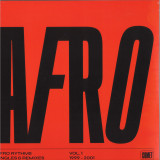
Comet Records is excited to present Afro Rhythms Vol. 1 the first repress since 1999 of Singles and Remixes out of Black Voices’s LP from Tony Allen Afrobeat pioneer, along with the iconic Psyco On Da
Bus creating a new sound between experimental, electronica and afrobeat, both albums produced by sound activist Doctor L
The compilation is a proper trawl through the vault of the early years of Comet Records featuring producers and artists as IG Culture, Eska, Catalyst aka Alex Attias, Psycho On Da Bus Featuring Doctor L and Tony Allen, Cinematic Orchestra and the legendary Parisian duo Chateau Flight.
The tracks "The Drum" and "Brotherhood" produced respectively by IG Culture (Son Of Scientist) and Cinematic Orchestra are part of The Allenko Brotherhood Ensemble project, a collaboration between the
unique drumming style of Tony Allen and the best in contemporary producers.
Comet label continues its hypnotic elliptical orbit through radical funk realms and dancefloor wormholes, connecting to five decades of music from four continents and still heading for the future, a pure and positive light to guide our way on.
- A1: Shake The Dust
- A2: Nobody But You
- A3: Night Fires
- A4: One And Only One
- A5: Rhythm And Blues
- A6: Sure Thing
- A7: Oliver Swan
- A8: I Got The Fever
- B1: Do Me
- B2: I Betcha Heaven's On A Dirt Road
- B3: Gonna Let You Have It
- B4: Hale To The Man
- B5: Alone At Last
- B6: Get It Up
- B7: Shot From The Saddle
- B8: Rich Man
- B9: Down To The Station
LTD. COL. VINYL[44,41 €]
- Dritter Teil in LITAs hochgelobter Country Funk Serie! - Mit Dolly Parton, J.J. Cale, Conway Twitty, Larry Jon Wilson und Billy Swan, unter vielen anderen - Inklusive eines bisher unveröffentlichten Tracks von Tony Joe White - Alle Tracks neu gemastert - Neues Original-Artwork des renommierten Künstlers J. William Myers (der für Robert Altmans "Nashville", Waylon Jennings und Willie Nelsons "Waylon & Willie"-Album und die LP-Cover für die Charlie Daniels Band verantwortlich zeichnet) // Im Sommer 2012 wehte ein neuer Sound aus der staubigen Wüste herein. Es war ein Sound, der schwer zu fassen war, schwer zu kodifizieren; ein Sound, der sich wie ein wildes Pferd dem Zugriff entzog. Aber dies war kein Trend, keine Eintagsfliege, keine Vermischung von Stilen. Dieser Sound reichte Jahrzehnte zurück, in die zweite Hälfte der 1960er und frühen 1970er Jahre, als abenteuerlustige Künstler begannen, Country-Harmonien mit dem Hochgefühl des Gospels, dem sexuellen Schub des Blues und einem Hauch von Großstadt-Härte zu vermischen. Dies war ein neuer Sound mit einem einfachen Namen: Country Funk. Country Funk 1969-1975, erstmals 2012 veröffentlicht, brachte eine disparate Gruppe von Künstlern zusammen, die durch das einfache Gefühl ihrer Songs verbunden waren. Country Funk ist abwechselnd verspielt und melancholisch, slow jammin' und booty-shakin'. Es ist ein Sound, der sich sowohl im Studio als auch in der Bar durchsetzt, wie die auf Volume I vertretenen Künstler beweisen: Johnny Adams, Mac Davis, Dale Hawkins, Tony Joe White, Bobbie Gentry, Larry Jon Wilson, und viele andere. Nur zwei Jahre später wurde Volume I mit einer neuen Sammlung von Songs für Country Funk 1967-1974 (LITA 116, 2014) fortgesetzt. Volume II ließ nicht locker und bot alles, was man an Loose Talking und Lap-Steel Twangin' vertragen konnte. Schwergewichte wie Willie Nelson, Townes Van Zandt, Kenny Rogers, Dolly Parton und J.J. Cale teilen sich die Barhocker mit den weniger bekannten Stimmen von Bill Wilson, Donnie Fritts und Thomas Jefferson Kaye. Mit Country Funk Volume III 1975-1982 wird noch mehr Funk aus dem Kofferraum geholt. Diesmal sind die Jeans enger, die Haare größer und die Discokugel dreht sich zu einem Country-Synthie-Beat. Produziert und zusammengestellt von Jason Morgan (DJ/Sammler aus der Bay Area) und Patrick McCarthy (Co-Produzent/Compiler von Volume I & II), enthält die Trackliste neben den Stammgästen Dolly Parton, J.J. Cale, Larry Jon Wilson und Tony Joe White (dessen Track hier zum ersten Mal veröffentlicht wird) auch neue Gesichter wie Steven Soles, Gary & Sandy, Conway Twitty, Travis Wammack, Billy Swan, Rob Galbraith, Brian Hyland und viele mehr. Als die 1970er Jahre abebbten und sich die 1980er Jahre näherten, erweiterte sich die Palette des Country-Funks um Disco-Beats, schwere Moog-Synthesizer-Bässe und Clavinet. Volume III zeigt Künstler, die sich weiterhin gegen traditionelle Country-Tropen und -Produktionen wehren, während sie modernen Soul, Disco und verkorksten 80er-Jahre-Synthie-Pop in sich aufnehmen. Dies ist der wahre Soundtrack des Urban Cowboys. Aufsatteln, Partner.
- A1: Shake The Dust
- A2: Nobody But You
- A3: Night Fires
- A4: One And Only One
- A5: Rhythm And Blues
- A6: Sure Thing
- A7: Oliver Swan
- A8: I Got The Fever
- B1: Do Me
- B2: I Betcha Heaven's On A Dirt Road
- B3: Gonna Let You Have It
- B4: Hale To The Man
- B5: Alone At Last
- B6: Get It Up
- B7: Shot From The Saddle
- B8: Rich Man
- B9: Down To The Station
LP[38,28 €]
- Transparentes Vinyl mit roten und blauen Schlieren - Dritter Teil in LITAs hochgelobter Country Funk Serie! - Mit Dolly Parton, J.J. Cale, Conway Twitty, Larry Jon Wilson und Billy Swan, unter vielen anderen - Inklusive eines bisher unveröffentlichten Tracks von Tony Joe White - Alle Tracks neu gemastert - Neues Original-Artwork des renommierten Künstlers J. William Myers (der für Robert Altmans "Nashville", Waylon Jennings und Willie Nelsons "Waylon & Willie"-Album und die LP-Cover für die Charlie Daniels Band verantwortlich zeichnet) // Im Sommer 2012 wehte ein neuer Sound aus der staubigen Wüste herein. Es war ein Sound, der schwer zu fassen war, schwer zu kodifizieren; ein Sound, der sich wie ein wildes Pferd dem Zugriff entzog. Aber dies war kein Trend, keine Eintagsfliege, keine Vermischung von Stilen. Dieser Sound reichte Jahrzehnte zurück, in die zweite Hälfte der 1960er und frühen 1970er Jahre, als abenteuerlustige Künstler begannen, Country-Harmonien mit dem Hochgefühl des Gospels, dem sexuellen Schub des Blues und einem Hauch von Großstadt-Härte zu vermischen. Dies war ein neuer Sound mit einem einfachen Namen: Country Funk. Country Funk 1969-1975, erstmals 2012 veröffentlicht, brachte eine disparate Gruppe von Künstlern zusammen, die durch das einfache Gefühl ihrer Songs verbunden waren. Country Funk ist abwechselnd verspielt und melancholisch, slow jammin' und booty-shakin'. Es ist ein Sound, der sich sowohl im Studio als auch in der Bar durchsetzt, wie die auf Volume I vertretenen Künstler beweisen: Johnny Adams, Mac Davis, Dale Hawkins, Tony Joe White, Bobbie Gentry, Larry Jon Wilson, und viele andere. Nur zwei Jahre später wurde Volume I mit einer neuen Sammlung von Songs für Country Funk 1967-1974 (LITA 116, 2014) fortgesetzt. Volume II ließ nicht locker und bot alles, was man an Loose Talking und Lap-Steel Twangin' vertragen konnte. Schwergewichte wie Willie Nelson, Townes Van Zandt, Kenny Rogers, Dolly Parton und J.J. Cale teilen sich die Barhocker mit den weniger bekannten Stimmen von Bill Wilson, Donnie Fritts und Thomas Jefferson Kaye. Mit Country Funk Volume III 1975-1982 wird noch mehr Funk aus dem Kofferraum geholt. Diesmal sind die Jeans enger, die Haare größer und die Discokugel dreht sich zu einem Country-Synthie-Beat. Produziert und zusammengestellt von Jason Morgan (DJ/Sammler aus der Bay Area) und Patrick McCarthy (Co-Produzent/Compiler von Volume I & II), enthält die Trackliste neben den Stammgästen Dolly Parton, J.J. Cale, Larry Jon Wilson und Tony Joe White (dessen Track hier zum ersten Mal veröffentlicht wird) auch neue Gesichter wie Steven Soles, Gary & Sandy, Conway Twitty, Travis Wammack, Billy Swan, Rob Galbraith, Brian Hyland und viele mehr. Als die 1970er Jahre abebbten und sich die 1980er Jahre näherten, erweiterte sich die Palette des Country-Funks um Disco-Beats, schwere Moog-Synthesizer-Bässe und Clavinet. Volume III zeigt Künstler, die sich weiterhin gegen traditionelle Country-Tropen und -Produktionen wehren, während sie modernen Soul, Disco und verkorksten 80er-Jahre-Synthie-Pop in sich aufnehmen. Dies ist der wahre Soundtrack des Urban Cowboys. Aufsatteln, Partner.
Brian Leeds a.k.a. Huerco S' West Mineral label present a groggy Midwestern ambient doozy with Chat, the first collaborative release by Pontiac Streator and Ulla Straus
Pontiac Streator previously appeared as a guest on the first West Mineral LTD release, Pendant's Make Me Know You Sweet, while Ulla Straus is perhaps best known for her part on the cultishly adored bblisss compilation tape which introduced Huerco S.'s Pendant alias to the world at large.
Their first album together is a bedroom-crafted confection where drowsy blues and raga smudge with lounging exotica themes in a blunted style to properly heavy-lidded effect.
Chat was recorded on July 5th in Pilsen, Chicago on Ulla's bed after a long week spent dancing with friends, staying up all night typing in chatrooms, and hate-watching Fox news. The results channel that experience into four lop-sided creations that feel satisfyingly burned out and immersive, like the murmur of zonked chat between close friends.
In four parts; Chat One thru Chat Four, the record unfurls with a muggy mid-fi tension between its illusive fidelities, kindling a smoky atmosphere that colours listening spaces with seductive smells
and a muggy, keening tension that recalls the minutes before sundown
This balmy feel of the surreal comes out in a sylvan patina of sweetened cicadas and curling pads urged along by a stream of wooden drums, variously recalling Spencer Clark on some kind of
Aguirre soundtrack mission in the tropics, a heatsick Rainforest Spiritual Enslavement piece, or, in the dream-pop drift of the last part, like Leven Signs smudged by Muslimgauze.
Coolly serving to expand West Mineral LTD's remit after that spellbinding Pendant album and a 12" of ectoplasmic dubs from uon, the flux of arid/fluid textures and para-dimensional fidelities in
Chat feels somehow calming yet fraught with a somnambulant appeal that's dangerously easy to
Re-mastering by: Kevin Gray
This is a reissue of a now out-of-print album from live trio date by the legendary LA-based pianist, composer and multi-bandleader, Horace Tapscott. Pianist Horace Tapscott is always at his best when he is leading a trio. Born in 1934 in Houston, Texas, Horace came from a musical family centered around his mother, Mary Malone Tapscott, who worked professionally as a singer and pianist. When Horace was nine, the family moved to Los Angeles. As a teenager in the late 1940's, Horace was surrounded by the music of Central Avenue: Art Tatum, Charlie Parker, Coleman Hawkins, Dexter Gordon, were among the many cats on the set. Around this time, Horace also began to take music lessons from teachers Dr. Samuel R. Browne and Lloyd Reese, whose other students included Eric Dolphy and Frank Morgan. Horace's musical studies included trombone in addition to piano.
In 1952, Horace graduated from Jefferson High, got married to Cecilia Payne and went into the Air Force. Horace played in an Air Force Band while he was stationed in Wyoming for his term of duty. After mustering out, he returned to Los Angeles where he worked around on various gigs until he joined the Lionel Hampton Big Band as a trombonist.
In 1959, Horace finally went with the Hampton Big Band to New York, where his friend Eric Dolphy introduced him to John Coltrane. A tough winter, a lack of gigs, and too many nights on the floor of a friend's art gallery finally sent Horace packing for sunny Southern California, where a life with wife and family awaited his return.
The sixties saw Horace emerge as a die-hard leader of the Avant Garde. Horace began to gain public notice playing with his own group, that included alto saxophonist Arthur Blythe, bassist David Bryant, and drummer Everett Brown II. Horace also appeared on records for the first time.
Horace was always outspoken about racism, politics, stereotypes, and social ethics. His forward-minded vocal presence on and off the microphone is as much a part of his art as his piano playing. As a result, he was labeled a "dissident," categorized as an "employment risk," and black-listed from the music industry establishment in the early 1970's. None of this slowed Horace down. He began gigging sporadically at Parks and Recreation events and for churches around Watts. This "dark period," with his only regular gig at his friend Doug Weston's Troubadour on Los Angeles' "Restaurant Row", was also a time of intense creativity.
Around 1977, Horace reorganized the Pan-Afrikan Peoples Arkestra with the help of several old friends and many new faces. The Arkestra performances involve singing, dancing, and poetry in addition to the music. Soon after the new group's debut, Horace came to the attention of producer Tom Albach who contracted Horace to record a number of albums for Nimbus Records. Albach also helped introduce Horace to an international audience by arranging several European tours.
The 80's saw Horace emerge as one of jazz's premiere solo pianists. He recorded several solo piano albums for Nimbus.
Repress
Second release on Nina Kraviz (pronounced 'trip') label is another double-EP compilation this time entitled 'De Niro Is Concerned'.
'The idea of this compiled album/concept compilation is about one of those moments when you suddenly realise that you can't continue as you did before and there is no way back. I was in a 4am facebook chat with Reynier (Deniro) and we both thought Robert De Niro might have had a moment like that. Most of the tracks in TRP002 are live recordings, which is a key part of the label's concept: to release music that is abstract and very specific in texture, yet very human, unplanned and organic, because I really believe in music that captures the emotional moment of when it was made." Nina Kraviz
Featuring a great introductory track from the Icelandic wunderkind Bjarki, a superb collaboration between Nina and the seminal Exos, the legendary Steve Stoll delivers a brilliant acid groover, two classic techno tracks from Amsterdam based Reiyner Hooft AKA Deniro, the wonderful trance induced 'L'Importance De Doute' by Parrish Smith, a slice of melancholic techno from Nikita Zabelin and a welcome re-release of the legendary, highly sought after secret weapon Barcode Population - Barcode Population (which will be on the vinyl only) . An eight-track no-holes barred barnstormer of a double-pack.. !!
Freiburg based Italian stallion Enea releases his 2nd longplayer "Overview" on his own, soulful South-German imprint, Beatalistics Records.
The 10 track album once again showcases the versatile background of the former Bass-Player, who grew up on the picturesque Lake Constance. Having been a familiar name in the international Drum'n Bass scene for more than a decade, Enea now also takes us beyond the classic 170+ bpm rhythm structures to give us a proper "Overview" of his musical philosophy.
Comprising his typical softer rolling, Liquid based tunes like "Wonders" featuring label partner MC Fava, "Earthrise" with "Freebird" or "Moon" alongside the vocal talent Vavunettha, he additionally presents various influential styles throughout the album. "Interstellar Dub" and the dub remix of "Nuh Smile" featuring Kyrad from Switzerland lead us off the beat on dubby paths, whereas the title track "Overview", "Clouds" or the remix of "Fly High" with Meks Sample & El Tronic show his affinity for smoother Trip-HipHop grooves. By the way, you might recognize an organic and pulsating bass here and there, of course played by the maestro himself! This is warm and beautiful music for sophisticated and open minded souls. Enea!
Fractal City, the latest Cubenx album is a collection of terrestrial jams and arachnean ambient ballads that are particularly apt for urban listening. If its predecessors cracked the musical codes in force and shone by the versatility of their references, this new opus offers its listener an intense and symbolic sound environment.
The raw material of Fractal City was first conceived as a series of sound patches, designed to run in parallel with Canadian digital artist Maotik's installation. Broadcasted in real-time by generative patches reacting to various external and non-human data, those musical excerpts have been rendered in hundreds of nuances and extended over infinite durations. This unusual approach confers to the recording of the finished album's outstanding immersive strength.
Recorded live on a single track over a short period of a few weeks, the nine compositions of Fractal City capture the obsessions of its author for postmodern urban landscapes, and the revelation of new perspectives on the city of Paris.
The opening piece `Ssarg´ seems to hide the figure of the Mexican ambient producer Jorge Reyes. Cubenx built a cocoon of energetic layers, a new home of the mystical kind harmoniously integrated in a flourishing rainforest ecosystem.
`Transect ´refers to the urban development model of the same name, which is based on a division of the city into autonomous "fractal" zones. It also echoes the concept of "metro polarities" which considers the city as a mosaic of social groups. "By cycling in the evening with a friend, we could get away from the city centre to the suburbs of Paris. The contrasts are striking. You move from chic districts to bedroom communities, from industrial zones to improvised caravan camps. But there is a kind of energy in this heterogeneity that pushes you to always pedal further."
A few miles away, it would look like Art and urbanism have tried to level the cultural and social discrepancies of the outskirts of Paris. "Architectural sites like the Arcades of Bofill are splendid. There are completely extravagant projects, which seem to emerge from nowhere."
These buildings with ambitious aesthetics off the beaten tourist track, deteriorate over time and often remain far from the expectations of the local population. A feeling of nostalgic beauty is particularly perceptible on the slowest and most introspective ballads of the album as 'Urban Decay', 'Hagel' or 'Axe Majeur'. The producer leaves nonetheless no room for melancholic emptiness. "Every time, I have the impression that urban culture is taking its rights back and that young people appropriate the places in one way or another."
Just like `Transect', ` Quantified' and `Fractal City' present themselves as mirrors of a daily urban life in constant motion. All three are empowered by an overheated factory, which dispatches hypnotic beats and burst of analogue compressors with a clinical precision and direct them straight away to the reptilian areas of their listener's brains.
The sequencing leaves however space and time to take breath and makes way for aerial sonic excursions of spiritual and enlightened nature. On `Human Dilemma', Cubenx shows some concerns to opening the Pandora's box of transhumanist theories. While a long cosmic wave gives the listener a feeling of perfect fullness, a dizzying guitar distortion cast doubts on long term outlooks. `Smash Other' on the other way alternates gentle dissonances over an ocean of white noise and concludes the album on ethereal note.
With ´Fractal City", Cubenx eludes his irreconcilable love for shoegaze pop song and techno to concentrate exclusively on the production of mutant experimental materials. The result is an uncanny musical object, rich in image and sensation. Cubenx give us a guiding framework, enthralling enough to engage the listener to a tour of town. But he leaves it to the sole listeners to design their own projection of the city.
- A1: Miguel A Ruiz - Transparent
- A2: Camino Al Desvan - La Contorsion De Pollo
- A3: Mecanica Popular - Impresionistas 2
- A4: Finis Africae - Hybla
- A5: Orfeon Gagarin - Ultima Instancia
- B1: Victor Nubla - 2000 Lenguas
- B2: Javier Segura - Malaguenas 2
- B3: Jabir - Vuelo Por Las Alturas De Xauen
- B4: Miguel A Ruiz - Trivandrum
- B5: Mecanica Popular - Impresionistas 1
- C1: Finis Africae - Hombres Lluvia
- C2: Esplendor Geometrico - Sheikh
- C3: Victor Nubla - Chandernagor
- C4: Luis Delgado - El Llanto De Nouronihar
- C5: Camino Al Desvan - Adjudicado A La Danza
- D1: Mataparda - Me Llena La Cachimba
- D2: Suso Saiz - Horizonte Paseo
- D3: Camino Al Desvan - Fock Intimida A Gordi
- D4: Mataparda - La Papa Suave
- D5: Eli Gras - Flu
Following “La Contra Ola” (BJR015), Bongo Joe presents 'La Ola Interior', a compilation exploring the ambient side of the Spanish electronic music produced in the 80’s, bringing together 19 little-known and innovative pieces from the golden age of Spanish electronic music !
It gathers musicians from various horizons and of many generations, who shared the desire to create an immersive soundscape and to combine electronic music with non-Western musical traditions. As a general rule, the Anglo-Saxon tropism did relate the spanish peninsula’s ambient music to the Balearic Sound, that is to say to the relaxing music played in Ibiza’s nightclubs. But this music takes place in the productive territory of experimental musics, and particularly in its two main breeding grounds: the tape recording underground and the independent musicians-producers scene.
Inseparable from the processes of self-publishing, distribution and exchange of music that were then taking place in Spain in an artisanal way, the vast underground movement of cassettes was divided between an "ethno-trance" combining industrial beats and oriental sounds on the one hand (Esplendor Geométrico, Miguel A. Ruiz / Orfeón Gagarin) and unclassifiable low-fi tinkerers on the other hand (Camino al desván, Eli Gras, Mataparda, Victor Nubla). Hyperactive, this scene is radical and strongly dominated by the hardest musical styles, but the ambient, influenced by the German Kosmische Musik and "krautrock", also develops here.
The second vein of Spanish ambient comes from some of the independent labels of the peninsula (DRO, GASA, El Cometa de Madrid, EGK) whose activity will mark the return of some of the most adventurous musicians-producers of the 70s. Some were influenced by American minimalism (Luis Delgado / Mecánica Popular, Suso Saiz, Javier Segura), others by Fourth-World Music conceived by Jon Hassell and Brian Eno (Finis Africae, Jabir). Having passed through folk, ancient, traditional or contemporary music, and being familiar with improvisation and studio techniques, these artists come from a mutant hippie culture, capable of phagocyting many musical styles from electronic ambient to ethnic improvisation and modal jazz.
These two scenes and generations that make up LA OLA INTERIOR intersect around a common interest in non-Western musical traditions. Their exploration may be that of the tribal origins of electronic rhythms or the Arab heritage of Spain. Above all, it is a dreamy exoticism, an immobile journey as the sounds, rhythms or instruments of these traditions are scrutinized by Western practices (avant-garde music, electronic technology). The result is a hybrid music, filtered and reinvented, neither Western nor extra-Western, with a pronounced taste for the fusion of opposites, which we have called "Acid Exoticism" because of its permanent search for trance or contemplation. Atmospheric, contemplative and serial, these musics still plunge us today into a sensorial journey, at the same time interior and distant, organic and technological, between exotic reminiscences and interior visions.
- A1: Signaturemovers (Seekers Edit)
- A2: Interplay 7
- A3: Little Willow Fly Catcher
- A4: A Little Nucleus
- A5: Eleven (Seekers Edit)
- A6: Overtime Focus
- A7: Gloss
- A8: New Old Dream
- B1: Into The Jungle
- B2: Interstellar
- B3: Systemupgrade (Seekers Edit)
- B4: Life Is Beautiful
- B5: Rainy Groove
- B6: Renunciation
- B7: Vibrations
- B8: Cavern (Seekers Edit)
Fragments, The Debut Album From Trifecta (Beggs, Holzman, Blundell)
Trifecta, a new addition to the Kscope roster, features 3 of the contemporary
music scene’s most lauded and revered musicians - bassist and songwriter Nick
Beggs, keyboardist extraordinaire Adam Holzman and completing the line-up,
Craig Blundell - one of the world’s most celebrated drummers.
Having performed together as part of Steven Wilson’s band, the three would
jam together after soundchecks and from these sessions the fledgling ideas for
Fragments were born. Nick Beggs comments “after the last tour with Steven
finished, we had a handful of tracks ready to work on and as we moved through
our various separate projects we agreed to work on Trifecta.”
The record primarily leans toward a fusion of jazz rock, being instrumental except for the first single (the wonderfully titled “Pavlov’s Dog Killed Schrodinger’s Cat”), the lyrics of which, Beggs states, “are written from the perspective of
a layman trying to understand quantum mechanics...and failing.”
Each band member completed the recording and engineering of their own
contributions in their various home studios, helping to bring their individual
production ideas to each track. Adam Holzman mixed the record at his New
York home studio with the mastering handled by Andy VanDette (Rush, David
Bowie, Deep Purple, Porcupine Tree, Beastie Boys) in New York.
Asked what fans of the musicians can expect from Trifecta, Beggs says, “Fission!
It’s like Fusion but less efficient and more dangerous.”
The debut album resulting from this “fission” of these extraordinary musicians
is entitled ‘Fragments’ and will be released on Kscope on 20th August 2021.