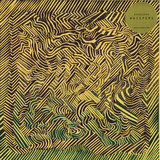
Randy Rice mixed accoustic singer-songwriter songs with electrifying acid guitar in his marvellous privately pressed double album from 1974.
Offered here in a much needed reissue so you do not have to spend over a grand for an original copy.
Housed in it's original minimalist hand made artwork with the little upgrade twist of silk-screen printing.
· First ever vinyl reissue of ultra rare privately pressed double LP!
· Remastered sound!
· Reproductions of the two original inserts!
· Plus a new one with liner notes by Randy Rice himself sharing his memories of the recording!
I was between the ages of 18 and 20 when I wrote the 22 songs found on To Anyone Who Ever Laughed at Someone Else. They express the thoughts and frustrations, hopes and fears of a young man coming of age in a world that was full of upheaval and transformation. I was a product of that period in America we call the sixties—those years between the assassination of President John F. Kennedy in November 1963 and the resignation of President Richard Nixon in August 1974. In fact, this record was released that same month Nixon resigned. Over the next five years, I toured the country as an acoustic artist performing at clubs, coffeehouses and colleges. During that time, I watched the idealism and social consciousness of the sixties slowly fade away. In its place emerged a cynicism and materialism that still seems to be with us so many years later. More than anything else, I think To Anyone Who Ever Laughed at Someone Else is a time capsule that speaks to us from a past era. A period when, above all other things, we asked questions. We questioned our country, we questioned our faith, we questioned the very purpose of life itself. I am very excited to bring those questions and these songs to a new generation on a new continent. Special thanks to my friends Jordi Segura of Wah Wah Records who took the initiative to release this 50th Anniversary Re-issue of To Anyone Who Ever Laughed at Someone Else and Michel Veenstra Klinkhamer, who introduced us.
A1.Hello
A2. Mr. Dumpty, Before The Fall
A3.The Song
A4.Mrs.Bitch
A5.Students From Marian Catholic High School
A6.Will You Still Love Me When You're Twenty-One
A7.To Anyone Who's Ever Laughed At Someone Else
B1.The Other Day
B2.SPQR Part 1 - I Wish That Fly Would Land So I Could Swat Him
B3.SPQR Part 2 - Sorry
B4.SPQR Part 3 - My Last Question
B5.SPQR Part 4 - Gosh, Darn, Golly Gee, or Those Canadians Can Sure Tell It Like It Is
B6.SPQR Part 5 - All American Girl
B7.SPQR Part 6 - Let Me Grow
C1.For Me, For You
C2.The New Testament, Or A Good Samaritan Will Never Jew You · Matthew: Love Means Never
Having To Say You're Happy
C3.The New Testament, Or A Good Samaritan Will Never Jew You · Mark: Jesus Was A Capricorn, But
Then So Am I
C4.The New Testament, Or A Good Samaritan Will Never Jew You · Luke: Morning Meditation
C5.The New Testament, Or A Good Samaritan Will Never Jew You · John: Mother Mary, Let Me Be
C6.The New Testament, Or A Good Samaritan Will Never Jew You · Fred: Post-Mortem Dirge
D1.Everyday People Revisited
D2.Filler Song
Out Of Here
D5.The Continuing Story Of A Square Peg In A Round Hole Part 3: Footnote To The Preceding Nineteen Songs, And Is It Really Necessary
D6.The Continuing Story Of A Square Peg In A Round Hole Part 4: I Hope I Always See You
Smiling
D7.The Continuing Story Of A Square Peg In A Round Hole Part 5: My Song
D3.The Continuing Story Of A Square Peg In A Round Hole Part 1: The Ballad Of Uthage
D4. The Continuing Story Of A Square Peg In A Round Hole Part 2: I Think It's Time For Me To Get
Buscar:vee
Coke bottle green[28,95 €]
Pissed Jeans has never been a band that goes halfway-they're known for their feral vocals, biting lyrics, buzzsaw guitars, and unhinged live shows, and their sixth album, Half-Divorced is no exception. These songs skewer the tension between youthful optimism and the sobering realities of adulthood, and when viewed through frontman Matt Korvette's scowl, everything takes on a level of violent absurdity. Pissed Jeans' notorious acerbic sense of humor remains sharper than ever as they dismember some of the joys that contemporary adult life has to offer, from helicopter parents to stolen catalytic converters to being $62,000 in debt. On "Seatbelt Alarm Silencer," Korvette growls, "Call it a death drive but that ain't fair / Drive implies I'm headed somewhere." Korvette, Brad Fry (guitar), Randy Huth (bass), and Sean McGuinness (drums) weren't in any rush to finish Half-Divorced, which was recorded by Don Godwin at Tonal Park in Takoma Park, Maryland. "We're not the kind of band that bangs out a new record every two years," Korvette said. "Pissed Jeans is truly like an art project for us, which is what makes it so fun." This lack of restraint rages within the songs that unexpectedly veer into classic hardcore punk territory-often coming in at under two minutes long and erupting like the "butane tank explosion" Korvette sings about in "Junktime." In the last song, "Moving On," Korvette sneers, "Cheesing into my camera phone / Pretending that I'm not alone / Life's the first thing that we all postpone." One gets the sense that Pissed Jeans refuses to "postpone" life in quite the same way-life, like art, is something that happens now, not later. - Chelsea Hodson
Black Vinyl[27,52 €]
Pissed Jeans has never been a band that goes halfway-they're known for their feral vocals, biting lyrics, buzzsaw guitars, and unhinged live shows, and their sixth album, Half-Divorced is no exception. These songs skewer the tension between youthful optimism and the sobering realities of adulthood, and when viewed through frontman Matt Korvette's scowl, everything takes on a level of violent absurdity. Pissed Jeans' notorious acerbic sense of humor remains sharper than ever as they dismember some of the joys that contemporary adult life has to offer, from helicopter parents to stolen catalytic converters to being $62,000 in debt. On "Seatbelt Alarm Silencer," Korvette growls, "Call it a death drive but that ain't fair / Drive implies I'm headed somewhere." Korvette, Brad Fry (guitar), Randy Huth (bass), and Sean McGuinness (drums) weren't in any rush to finish Half-Divorced, which was recorded by Don Godwin at Tonal Park in Takoma Park, Maryland. "We're not the kind of band that bangs out a new record every two years," Korvette said. "Pissed Jeans is truly like an art project for us, which is what makes it so fun." This lack of restraint rages within the songs that unexpectedly veer into classic hardcore punk territory-often coming in at under two minutes long and erupting like the "butane tank explosion" Korvette sings about in "Junktime." In the last song, "Moving On," Korvette sneers, "Cheesing into my camera phone / Pretending that I'm not alone / Life's the first thing that we all postpone." One gets the sense that Pissed Jeans refuses to "postpone" life in quite the same way-life, like art, is something that happens now, not later. - Chelsea Hodson
'Reet' is a lost treasure of late 1960s folk/psych-folk. The only album she ever put to tape, with clear pure voice and guitar. luckily recorded by Andres Raudsepp in 1969.
Reet will be loved in the same breath as ;Sibylle Baier, Vashti Bunyan, Molly Drake, Bridget st John, Reet Hendrikson deserves wider listening and recognition.
Reet Hendrikson was born in Estonia only months before the "great escape" into exile in 1944. Brought up and educated in Sweden, she went to study in the US in 1967 on a Fulbright scholarship, before she made her mark as an Estonian musician in Canada. While her arrangements of Estonian folksongs on the guitar reflected the styles of the sixties, her voice and choice of material sounded authentic and made a connection with ages past.
When Hendrikson arrived in Canada in 1968 via the US, her Estonian was native-like because of the high quality of Estonian schools in Sweden. She was thus able to characterise the identity of young ex-patriate Estonians – especially those born in exile from Soviet occupation – in a new and meaningful way. A formal musical background allowed her to create the arrangements that accompanied her simple but pure singing voice. Having heard her under northern Muskoka pines at an Estonian summer seminar, it didn't takeAndres Raudsepp ( of raindeer records)long to bring her to a recording studio. "Reet – Estonian folksongs" appeared in 1969.
Hendrikson soon found her way to the scholarly atmosphere of Boston where, as a multi-instrumentalist, she joined a group of musicians who favoured traditional folk music. Back in Sweden in the 1980ies, she was invited to join a scholarly society of Estonian young women, which she led during musical sessions. She visited Estonia as frequently as possible, trying in particular to be helpful to Estonian musicians by providing sheet music and much-needed repertoire from the Swedish National Radio Archives, where she worked for a while..
Reet Hendrikson died in Stockholm in the autumn of 2000.
The Decline And Fall Of Heavenly’ Gets Re-Issued On Vinyl. Skep Wax Records are re-issuing all four Heavenly albums over a two year period, and this is the third instalment, following on from ‘Heavenly vs Satan’ and ‘Le Jardin De Heavenly’. Each LP includes relevant single releases as additional tracks, a 7” booklet with lyrics, pictures, and new sleeve notes by the members of the band. Altogether, the four albums will amount to a thorough collection of the band’s recorded output. Heavenly will be playing gigs in various countries in 2024. The third Heavenly album will be re-released by Skep Wax Records on Friday 2nd February. The re-release will also include all five tracks from the Atta Girl and P.U.N.K Girl 7” singles. The Atta Girl and P.U.N.K. Girl singles were released in 1993; album The Decline and Fall of Heavenly came soon after in 1994: collectively they show a band that is rapidly expanding its scope. The album veers confidently from high speed indiepunk (Me And My Madness) to cool surf instrumental (Sacramento) and back again to the sweetest indiepop (Itchy Chin). Meanwhile, the singles, which include the band’s most celebrated tune - P.U.N.K Girl – demonstrates how much confidence Heavenly were deriving from their involvement in the nascent Riot Grrrl scene. All the anger is there, the politics are direct and crystal clear – yet the whole thing is still delivered with the sweetest pop melodies. It’s like being punched and kissed at the same time. The three releases also show how Heavenly had come to feel equally at home in the UK and in the US. The album maybe feels more British, as demonstrated by the Old World irony of the ‘Decline and Fall’ title. At Heavenly gigs in the UK, often playing with other bands on the increasingly influential Sarah Records, audiences were getting bigger, while the bands were finding a sweet spot where anti-corporate understatement and a dismissive attitude to an increasingly misogynist UK Press was no barrier to success. P.U.N.K Girl and Atta Girl on the other hand, are more gleeful, more headlong, and somehow feel more American: they are carried along by the excitement and adrenaline of having found another spiritual home - the indiepunk Riot Grrrl scene that was focussed on Olympia, WA, the HQ of Heavenly’s US label K Records. (K released P.U.N.K Girl and Atta Girl together on one 10” EP.) Amelia Fletcher and Cathy Rogers were now confidently sharing vocals, sometimes harmonising, sometimes taking it in turns, sometimes singing over each other. Peter (guitar) Mathew (drums) and Rob (bass) had become adept at changing gear from ornate pop to full-on punk, unafraid of genre rules and increasingly happy to make up their own version of what pop music should sound like. The more delicate, more decorative arrangements of Heavenly’s first two albums had been left behind. The band – or more accurately, the women in the band – were still dogged by accusations of being too fey, too ‘twee’: not ROCK enough. But, as the chorus of Atta Girl makes clear, any attempts to define Heavenly by their ‘cuteness’ now received an unambiguous response: ‘Fuck you, no way!’ The fourth and final Heavenly album ‘Operation Heavenly’ will be released later in 2024. Heavenly were: Amelia Fletcher (guitar, vocals), Cathy Rogers (guitar, vocals), Rob Pursey (bass), Peter Momtchiloff (guitar), Mathew Fletcher (drums).
Kepler is free” represent the brand new Athenian Urban Jazz scene in full. You may say that they actually started the whole scene with their debut album "Teegarden" by Veego Records, an instant sold out! Voted by local music portals as one of the best albums of 2020 and probably one of the best debuts ever when it comes to the Greek jazz game. “Kepler Is Free” jazz rock ensemble makes expansive music that straddles the line between '70s soul-jazz, alternative hip-hop, and experimental electronica.
The name of the band is inspired by a retired space telescope launched by NASA to discover Earth-size planets orbiting other stars. Named after astronomer Johannes Kepler. Founded in November of 2018 by Sokratis Tsentoglou (drums) who gathered George Migdanis (electric guitar), Nikiforos Nugent (keys), Spyros Zardas (trumpet) and Vasilis Alexopoulos (bass guitar), they all came together from different musical backgrounds in order to create original and groundbreaking material.
Commuting over their shared love of jazz and hip-hop, they composed their debut album, “Kepler”, with five tracks that highlighted their love for the music of GoGo Penguin, Badbadnotgood and Alfa Mist.
The fact that all the members were young and had not played in other Jazz bands before was something that shook the Greek Jazz community. ''Second Light'' was recorded in difficult conditions and was delayed quite a while until it was finished due to the pandemic.
The band played a handful of sold out shows in Athens over the last few months proving with their performance and the attendance that the band created a crossover from Jazz to pop audience. "Juno" track was a smash hit on legendary "En Lefko'' Radio station over the last two years. Worth to mention that just a month before the release of their second album Kepler is Free collaborated with LEX, one of the most famous rappers in Greece with the "Spike Lee" track.
- A1: Ben E King - Stand By Me
- A2: Secret Service - Ten O‘clock Postman
- A3: Kool & The Gang - Ladies Night
- A4: Patrick Hernandez - Born To Be Alive
- A5: The Tokens - The Lion Sleeps Tonight
- A6: Neil Sedaka - Oh Carol
- A7: Anita Ward - Ring My Bell
- B1: Donna Summer - On The Radio
- B2: Chubby Checker - Let‘s Twist Again
- B3: Frankie Valley & The Four Seasons - Big Girls Don‘t Cry
- B4: Gloria Gaynor - Never Can Say Goodbye
- B5: Bobby Vee - Take Good Care Of My Baby
- B6: Hello - New York Groove
- B7: D D. Sound - Disco Bass
Vol. 2[18,28 €]
The greatest hits of the 1960s and 1970s are now available on the „Golden Chart Hits of 60er & 70er Jahre“ vinyl compilation.
Enjoy 14 hits being still unforgettable up to the present day and played daily on numerous radio stations around the globe, including Top 10 hits such as Secret Service „Ten O‘Clock Postman“, Patrick Hernandez „Born To Be Alive“ or Kool & The Gang „Ladies Night“. An absolute must for all fans of 60s and 70s music!
Andy Sharrocks started writing songs in 1976. He found a vehicle for these songs with punk band Accident On The East Lancs. This started out as a covers band, but Andy soon became frustrated when the other members wanted to stay that way. The band disintegrated but Andy retained the name, forming a new cutting edge four piece playing his songs. He financed their first single in 1979 on his own label Roach Records. This was a double A side as one of the sides was a ditty called We Want It Legalised. The other side was a Bo Diddley kind of groove called Tell Me What Ya Mean, which Record Collector magazine recently said sounded like a song The Strokes should cover. This line up fell apart when immediate success failed to arrive, but Andy formed another band out of the ashes of local band Wilful Damage, and the guitarist out of the original covers band. They recorded and released on Roach Records another double A sided single in 1981 as well as an album released on cassette tape on Cargo Records. The singles now exchange hands on the collectors market for over seventy pounds, the album has been rereleased on vinyl twice, once on a German label, and once on UK’s OZIT/MORPHEUS Records which came with a bonus live album The singles have been released on many punk compilations and We Want It Legalised is about to be released on a new Manchester punk compilation on Cherry Red Records. They played many free festivals including Deeply Vale three times, and did many great supports including The Fall, Tractor, Here And Now and Crass. Andy left the band in 1982 for personal reasons, and had a one single deal with I Believe In Love on the Vibes and Vibes record label in 1985. Refusing to compromise and do covers, Andy found it impossible to make a living doing his own material which was now primarily Americana, after discovering alt.country through Steve Earle and Lyle Lovett in 1985. He went on the road as a tour manager, which is where he met Hilly Briggs, who went on to produce Andy’s first solo album in 2004 called Walking In Familiar Footsteps, which featured ex Rolling Stones Guitarist Mick Taylor, Bluesband and Manfreds frontman Paul Jones and Bobby Vee’s sons Jeff and Tommy on drums and bass respectively. Andy was now living in London and was gigging regularly on his own or with a revolving circle of musicians going under the collective title of Andy Sharrocks & The Smokin’ Jackets. He played over five hundred gigs all over London and the UK. He also did many supports for Mick Taylor, Buddy Whittington, Steve Gibbons, The Strawbs, Curved Air, and supported John Mayall on a UK nationwide tour, and played the Jazz Café in Camden twice with John. He also played The Hells Angels Bulldog Bash three times, The Skegness Rock n Blues Festival, The Herelbeke Blues festival in Belgium and The Colne Blues Festival. In 2009 he released another album called Dirt with The Smokin’ Jackets, which came out to great critical acclaim. Andy is now releasing a triple album of truly magnificent UK Americana, called Country Rock n Roll n Durty Blues. Press Quotes : "Country Rock ‘n’ Roll ‘n’ Durty Blues is a sprawling album of original rock and blues which takes you from Muddy Waters to modern Americana" – Nigel Carr, Louder Than War // "Good honest earthy rock ‘n’ roll done the old fashioned way with passion and aplomb" – Mark Radcliffe, BBC // "Country Rock ‘n’ Roll effortlessly lives up to its title … and more" – Pete Feenstra, Get Ready To Rock // "As a listener it really is bloody good fun - Briticana, Americana with a very English voice
Almost two years on from his last EP offering, Veerus returns for another double shot of groove-inflected techno power.
The Italian artist has been a stellar contributor to Drumcode since his debut in 2019 with the outstanding ‘Hypnosis’ EP. From the ‘System’, to ‘Recovery’ and his most recent EP offering ‘Yard’ in early 2022, we’ve been given a sense of his deft touch for crafting dramatic techno, that’s equal parts exquisite and dynamic.
His latest work ‘Cycle’ reinforces the passion he imbues each production with. “These two tracks perfectly express my vision of techno nowadays,” he shares. “Not fast, groovy, with researched sounds and a crazy impact on the dancefloor.”
The title track balances tension and release on a knife’s edge, as it builds deliciously via a menacing array of synths, before dropping down into an all-out laser-focused march. A powerful cut that’s been a go-to for Adam Beyer at Awakenings, Loveland and Resistance Ultra in Croatia, among others.
‘It’s Funky’ was two months in the making and bring bags of energy and atmosphere as it explores funky terrain, not in the bottom end, but rather Veerus’ colourful approach to writing melodies. A great track for building excitement throughout a set.
Repress!
For those who know, Bambooman is one of the most sought-after, probing, and distinctive voices in UK electronic music right now.
The Yorkshire-born producer's catalogue builds into an aural mosaic, comprising everything from scrunched up hip-hop to techno deviance, all delivered with an impish sense of individuality.
'Whispers' certainly resonates. It's a lengthy, bucolic work, an album of great breadth but also one of sustained mood – think those hazy summer evenings when shadows stretch out across the road, and autumn lingers around the corner.
This new album has a dusty, organic, and decidedly personal feel, much more at home with Jon Hassel's 'fourth world' aesthetic than the club.
The results are also imbued with an incredible sense of mystery, with Bambooman's productions frequently being shot through with a hallucinatory sense of the uncanny. Entirely self-composed, 'Whispers' utilises "lots of field recordings that I've collected over the last few years, while within the tracks you can find lots of the instruments, percussion, bells and whistles that have been gathered throughout my life."
In certain ways 'Whispers' is entirely autobiographical: Bambooman reaches back to his varied alter egos, to the ambient releases, art commissions, and soundtrack projects that litter his discography. The cover art was even pieced together by Oliver Pitt – of Glasgow group Golden Teacher – who was an early ally in the producer's sonic quest.
Stylistically 'Whispers' veers from avant hip-hop of Flying Lotus to the theoried composition of Terry Riley, from the future-forward percussive energy of Battles to the ever-evolving electronics of Mark Pritchard. It's a record marks by a fiercely independent spirit, but also by a close-knit cast of collaborators.
King Kashmere takes a starring turn, following the pair's collision on the recent 'SUPERGOD' EP.
Each vocal is recorded, chopped up and then spliced across the album, with Elsa Hewitt also making a number of appearances and re-appearances.
credits
Fatima Yamaha's soundtrack for the Dutch documentary 'Onzichtbaar' directed by Gabrielle Provaas is temporarily available on limited LP and was only for sale during the live show at ADE 2023. Only a handful of LP's are available for sale and won't be repressed. The documentary sheds light on the invisible heroes who tirelessly keep the Netherlands clean day and night. From schools and offices to hospitals and streets, they work tirelessly and humbly. Their hard work keeps society running smoothly. 'Onzichtbaar' challenges viewers to reflect on their own involvement and unveils the price we pay for the facade of cleanliness we hold dear.
Scout (Amsterdam, 17 februari 2001) heeft in de afgelopen jaren volledig zijn eigen geluid gevonden binnen de Nederlandse popmuziek. In een wereld tussen Hip-Hop en alternatieve Pop ziet de zanger en producer zich als verhalenverteller. In zijn EP "littekens" komt zijn grootse en melancholische geluid tot leven in een verhaal over zijn ervaringen met liefde en mentale gezondheid. Door in zijn eigen slaapkamer te schrijven en op te nemen is de EP doordrenkt met kwetsbaarheid en intimiteit. Hierdoor neemt de opkomende ster de luisteraar mee naar zijn eigen wereld.
Na jaren ervaring te hebben opgedaan op piano pakt Scout in 2016 voor het eerst een basgitaar op en voordat hij het weet schrijft de jonge artiest op zijn kleine studentenkamertje in Delft zijn eigen muziek. Het ging ineens niet meer over noten, rijmschema's en akkoorden: het maken van muziek was uitgegroeid tot zijn therapeutische uitlaatklep. Hieruit volgt in 2020 uiteindelijk zijn self-titled debuutalbum "Scout".
Sinds eind 2022 brengt het opkomend talent consistent muziek uit en vindt hij zijn eigen weg binnen het muzieklandschap. Door steeds meer instrumenten onder de knie te krijgen en meer en meer te leren over muziek en emotie ontstaat een werkelijk nieuw, echt en eigen geluid wat maar met één woord te omschrijven valt: kippenvelmuziek.
Na het uitkomen van zijn EP "littekens" in april 2023 wordt hij benaderd om dit werk uit te brengen op vinyl. Om deze muzikale reis uit te breiden en om nog dieper in de wereld van scout te duiken bevat de LP vier bonustracks. Hieronder valt een akoestische versie van het populairste nummer "herfst", die de kwetsbaarheid van de jonge maker nog verder naar voren brengt. Ook bevat de LP een live versie van "de wereld draait door". Deze versie is opgenomen in beroemd restaurant "De Goudfazant" in Amsterdam. Een speciale plek voor Scout, hier heeft veel van zijn familiegeschiedenis zich afgespeeld. Het nummer komt hierdoor nog meer tot zijn recht door het rauwe geluid van alleen piano en stem. Ook bevat de LP twee extension tracks die het verhaal van de spreekwoordelijke littekens verder uitbreiden. Zo komt Scout in zijn nummer "hartendief" tot de realisatie dat zijn partner hem niet ziet zoals hij haar en komt hij in het nummer "kwijt voor altijd" tot een besluit om het hoofdstuk van deze littekens voorgoed af te sluiten. Deze extension tracks zijn tot op heden alleen te beluisteren op de LP maar zullen in de loop van 2024 ook op streamingdiensten verschijnen. Deze releases zijn de voorzet voor een reeks singles in 2024 die uiteindelijk zullen leiden tot zijn eerste studioalbum in 2025.
- A1: Scarface
- A2: Donda Bag
- A3: Bosses Linking With Bosses (Feat. Veeze)
- A4: Leaving London
- B1: All Star Team
- B2: Luh Tyler Flow (Feat. Los & Nutty)
- B3: I75
- B4: Jimmy
- C1: Skateland
- C2: Life Full Of Lies
- C3: I Can't Rap Foreva
- C4: Dancing With The Devil, Pt. 2 (Feat. Vory)
- D1: Big Meech Holiday (Feat. King Hendrick$)
- D2: Jackboys
- D3: Fly Gods (Feat. Westside Gunn)
Summer's Mine is the third studio album from acclaimed Detroit legend and rapper, Babyface Ray. After an enormous 2022 that saw the release of two full-length studio albums, getting named to 2022's XXL Freshman Class & YouTube Music's Black Voices Fund, and a sold out nationwide headlining tour, Babyface Ray returns to bless the streets with something fun for the summer. The 16 track album showcases a side of Ray that fans have become familiar with, and features appearances from fellow Motor City peers Veeze and Los & Nutty, King Hendrick$, Vory, & Hip-Hop luminary Westside Gunn. Never afraid to make a bold statement, Ray is here to say that in 2023, Summer's Mine.
Black Truffle is thrilled to present a previously unheard performance by rudra veena master Ustad Zia Mohiuddin Dagar, recorded in the North Indian city of Vrindavan at the Druhpad Samaroh festival in 1982. Z.M. Dagar was a nineteenth-generation descendant of the Dagar family of musicians, famed for their profoundly meditative approach to the tradition of Hindustani court music. Perhaps the most revered members of the family were the brothers Mohinuddin and Aminuddin Dagar, who played a key role in reawakening interest in dhrupad in the mid-20th century. The great exponents of the tradition from whom Z.M. Dagar descended were all singers, and dhrupad is essentially vocal music. However, as Z.M. Dagar explained, the veena family of instruments plays an important role in the education and practice of dhrupad singers, especially as an aid to mastering the fine microtonal nuances of pitch essential to the genre. Introduced as a child by his father to the rudra veena, a large and low-pitched veena amplified by two enormous gourds, Z.M. Dagar became the first modern dhrupad musician to perform with it as an instrumental soloist, giving his first recital at the age of 16. Devoted to the instrument throughout his life, he made innovations to its design and materials, as well as introducing novel techniques (such as playing without the use of the traditional wire plectrum, resulting in the remarkable warmth of his tone). In the great Dagar family tradition, his approach to the various ragas that make up the dhrupad repertoire was stately, slow, and considered, with a great emphasis on the alap, the heavily improvised exposition section. True to form, in this recording of Dagar performing the night raga Yaman Kalyan, the alap section stretches out to more than forty minutes of slow-motion bliss, a frozen tanpura drone hovering above Dagar’s gracefully bent notes and elegantly twisting phrases. In the alap’s first half, Dagar’s figures are so intently focused on the lower reaches of the rudra veena’s range that they register more as shudders and moans than melodic patterns. As the performance continues, he slowly climbs in pitch, though continuing with the same intent focus on the articulation of single notes and subtle microtonal variations. This leads to the jod section of the performance, which, though still accompanied only by the tanpura, gradually takes on a more rhythmic character. Developing almost imperceptibly over the course of nearly thirty minutes, the jod moves from the stillness of the opening alap to a rapid pulse that announces the closing section of the piece, where Dagar is joined by Shrikant Mishra on the pakhawaj (a double headed hand drum). Where many performers use the final section of the raga as an exercise in unrestrained virtuosity, Dagar and Mishra subtly weave a web of finely shifting accents and hypnotic melodic variations, bringing the recording to a fitting conclusion while remaining within the meditative space occupied by the performance as a whole. Adorned with beautiful archival photographs of Dagar taken by Swedish percussion legend Bengt Berger and accompanied by detailed notes from Bradford Bailey, Vrindavan 1982 is a stunning document of music unmatched in its patient focus and mysterious emotional depth. .
Straight Outta Caledonia is the first commercially available “Greatest Hits” of the outsider songwriter Jackie Leven, an artist
who has largely remained in obscurity in his native Scotland despite being one of the greatest wordsmiths – and singers – it ever
produced. A well-travelled musician who began making psychedelic, progressive music in the late 60s before emerging as an
epic storyteller full of pathos, humour and humanity in the 90s, Leven lived and wrote like many of the fragile, gregarious
characters of his songs; large, full of life and empathy. Leven passed away in 2011 after recording 30+ albums under different
guises or with his briefly successful New Wave band Doll by Doll. Straight Outta Caledonia is a compilation collated by Night
School Records on its Archival label School Daze that seeks to introduce Leven’s music to new generations.
In an age of isolation, alienation and loss of visceral experience, Jackie Leven’s music can be massive and welcoming. It feels
connected to some universal humanity and vibrates with vitality. His songs are often full of tragedy and comedy simultaneously,
cutting straight to the heart, often plugging directly into the nervous system of the listener. His lyrics are rich, dense with imagery
that can veer from apocalyptic to the comically banal in a sentence, with a songwriting panache that can be heavy handed to
almost bursting point before skewering the song with a clownish, warm punchline. His productions ranged from Bob Dylan’s
Rolling Thunder Revue style rock band orchestrations with strings and organ as on the epic Ancient Misty Morning or they could
be pared down to the purest form of folk song as on Poortoun: Leven on stage alone with an acoustic guitar, albeit played with a
mastery of the instrument that he often only hinted at. Musically his sound can bend traditional structures or stay completely
confined within them yet still forever push towards an ecstatic release, as on the cinematic Snow In Central Park.
The most exciting, jaw-droppingly effective tool at Leven’s disposal was his voice. A multi-octave instrument that, though
damaged during a savage assault in Fife, he used with flair; he had both a brazen disregard for the rules and a deep humility, all
of which is evidenced with every phrasing. A baritone that could flit up through the register – always touched by his gentle
Kirkcaldy accent – it’s the prime delivery method for his songs. Leven’s voice enabled him to inhabit the characters in his songs to
an uncanny degree, a skill that in turn enables the listener to empathise with them and, subsequently, the singer. It’s most evident
in stand out song The Sexual Loneliness Of Jesus Christ, a breathtaking re-telling of the life of its protagonist, not as a pure,
sinless messiah but as a sexually frustrated, solitary man condemned to an existential loneliness no one else will ever feel. In
many ways the track is the archetypal Jackie Leven song. Produced by Pere Ubu’s David Thomas, what strikes the ear first –
after the samples of unemployed workers in Glasgow following the closing of the Clyde shipyards – is the audacious, rhythmic
tremolo effect Leven employs through the verses before the production opens up to allow Leven’s vocal to lift into a soar, a
freeing glide powered both by the force of the singer’s chutzpah and the inherent, doomed destiny of the protagonist. With any
other singer such subject matter could come across as gauche or worse, pretentiously sonorous, but Jackie Leven’s genius was
such that he could be this cinematic and brazen while touching something elemental and true in the beholder. It’s a skill evident in
every song on Straight Outta Caledonia, the trademark of a songwriter who revelled and excelled in intensity with a lightness of
touch.
In his lifetime, Jackie Leven toured, wrote and recorded at a ferocious rate. He recorded under aliases to avoid record contract
restrictions, played house shows in Europe after or instead of official concerts, events which were often spoken word story telling
masterclasses as well as performances of his often bewilderingly dense songbook. His music has traditionally been catalogued
as “folk” music and has been largely banished to a small, dedicated group of international fans and apostles both private and well
known, like author Ian Rankin or Glenn Matlock. Since his passing in 2011 however, there has been a growing recognition
amongst a newer generation, with artists like James Yorkston or Molly Nilsson publicly stating the influence of the unsung
troubadour on their own craft. Jackie Leven’s fairytales for hard men are often forensic deconstructions of masculinity, sad and
ecstatic, light and shadow, always endlessly rich, a resource as bountiful as Leven himself’s human spirit undoubtedly was.
“I hope you die by my side, the two of us at the exact same time, I hope we die not long from now, the two of us at the exact same time”
By the time Molly Nilsson released History, she had already established a fledgling cult status built on homemade YouTube videos and home-burnt Cdrs. Writing from a distance, it’s clear that History is the first classic album in her canon and arguably a classic of the 21st Century underground music panorama.While the methodology on History hadn’t changed from Nilsson’s previous 3 albums – it was recorded solo at The Lighthouse, Nilsson’s home studio based on a Berlin crossroads – on this record the songwriting reached a new peak and the emotional scythe cut deeper. Here, Nilsson managed to combine a cosmic, outward looking perspective with an intimate knowledge of the human condition and its place in these turbulent times. In truth, no other songwriter has excavated the modern psyche so clearly and perfectly.
The tracklist to Nilsson’s fourth album reads as an early greatest hits for Molly Nilsson followers and also serves as the perfect entry point to a whole world the artist has been building for the last 10 years. In Real Life crystalises the millenial obsession with relationships built online, with a generation paying for the baby boomer’s excesses with their anxiety towards the harshness of every day life. It’s a call to arms for a generation who fell in love on Skype. On I Hope You Die, one of Molly Nilsson’s most iconic songs, the songwriter flips the song title into a tale of doomed romance, a relationship based on discommunications and the thrill of the other. It’s also one of the most heartfelt songs full of pathos written by anyone, an ode to obsession. Doomed romance, life lived on the flipside of day and the role of the outsider in society are themes that crop up through-out History. On
Bottles Of Tomorrow, the narrator is sweeping up, in love with the night and examining the remains a society leaves behind.
On City Of Atlantis, Nilsson veers from the plaintive balladry she had begun to make her name with, embracing trance-like synth and dance music details to create an unlikely anthem using the mythological city as a means to comment on the patriarchal rendering of history by power. With by now trademark panache, she turns complicated subject matter into a glorious song that transforms into an ecstatic pop moment.
Hotel Home, another Nilsson classic, paints loneliness not as a debilitating anxiety, but as a powerful to that propels the artist forward through her travels. It’s a song that hints at an endearing self-awareness also; the writer is never at home, living life on the road, content that “the world will find me when the time is ripe.”
There’s never been a greater time.
New York-based label Kindergarten Records is thrilled to unveil Ayesha’s debut album, ‘Rhythm is Memory’ – 10 boundary-pushing tracks, a shape-shifting percussive journey with electric moments.
While intended for maximum dancefloor impact, Ayesha’s first LP is also conceptually thought-provoking and playful, exploring how bodies store and channel creative knowledge.
A self-taught producer, Ayesha relies on her instincts to make music: sensing what her body wants to feel and hear. To her, essential to building a groove is channeling what is already inside us –
memories – whether they are based on lived experience or coded in the body: culturally, ancestrally, or intergenerationally. The result is this Indian-American producer’s distinct rhythmic voice, with its
many configurations boldly expressed across her debut album.
Kindergarten first released Ayesha’s material in 2020 with her ‘Natural Phenomena’ EP, a four-track journey which she described as “an undulating love letter to nature and the dancefloor, a space
where her biophilia collides with her yearning for the dancefloor.” Subsequently, she continued to build upon her luminous, scintillating sound with a contribution to ‘Fluo II’ titled “Aspara Dub”, followed
by “Varanasi” and “Downpour” on ‘Ether’, a split release with Sha Ru in 2021. With each release, Ayesha's sound evolved, adding shades, layers, and perpetual rhythmic nuance to a mind palace of
dancefloor possibilities.
That is why her and Kindergarten are a perfect match -- driven by their mutual fascination with exploratory sonics and a shared commitment to the community that inspires them. Kindergarten
Records has shaped itself into a trailblazing label, uniting a diverse and innovative collective of local and international producers, while embodying a strong familial atmosphere.This debut LP represents
a significant step-up for both the artist and the imprint, as they strive harmoniously towards a shared goal: delivering a sonic experience full of colorful, otherworldly bass-fueled expansion.
‘Rhythm is Memory’ captures Ayesha’s signature love for driving techno and organic percussion, while at moments veering into newer electro territory while keeping it psychedelic, spacious, dubby, and
always playful. This feels intuitively right for a producer at a crossroads in her career. All tracks intricately weave together pulsing drum grooves, slinky synths, nuanced melodies, and delightfully
unexpected twists. No single genre can do justice to describing this project as Ayesha delicately nods to many, reveling in the spaces between.
Undoubtedly, across A and B sides, 'Rhythm is Memory' imparts the joy of sonic experimentation to listeners and dancers. Ayesha invites us into her creative process and its steady evolution – rooted in
many days and nights of exploration, reflection, and repetition. "The ritual practice of cultivating and tending a garden is what comes to mind if I were to visualize this record. Beautiful things can emerge
from care and consistent attention," says Ayesha. While she refers to her specific experience making 'Rhythm is Memory,' this powerful album culminates a decade of working in nightlife for Ayesha – a
project slated to leave an indelible mark on the underground. To mark this impressive milestone in their catalog, Kindergarten Records is proud to return to pressing vinyl after a hiatus since 2020,
recognizing the significance of putting out a physical release to behold such a moment in both the label's and the artist's trajectory.