Madame E. is a musical setting of Georges Bataille's 'Madame Edwarda', a short novel that interlaces themes of eroticism, religiosity and death, and was written under the pseudonym Pierre Angelique in 1941, during the occupation of Paris.
Composer Mirco Magnani wrote eleven electronic pieces and presented them to actor/singer Ernesto Tomasini. They turned them into songs by adding vocal melodies and together they produced a libretto based on Bataille's French text. The result of their dynamic interpretation is a hypnotically spellbinding performance where the audience is transported through worlds - ancient and new - and where Tomasini's haunting falsetto conveys the tormented emotions in Bataille's work and becomes the instrument that articulates the writer's famously obscure themes.
The experimental operatic performance captures the atmosphere of heightened human passion, reminiscent of opera seria and revisited through hazy and minimalistic lens. The resulting dark and twitchy mood amalgamates old vintage electronic devices, string piano and Stella Veloce´s touching violoncello. The stage becomes a space where Eros and Thanatos, real and virtual, analogue and digital, cluster and melody, spirituality and technology are intermixed and turned unidentifiable, hence collapsing the binary logic of dualism.
Written by Magnani/Tomasini and produced by Mirco Magnani, with lyrics taken from "Madame Edwarda" by Georges Bataille, Madame E. was developed between Berlin and London where Magnani and Tomasini are respectively based. Recorded in Berlin, mastered by Murcof and released by Magnani's label Undogmatisch, a collective that also includes Nicolas Defawe (Urban Spree) and Valentina Bardazzi, the painter responsible for the album artwork.
quête:velo
- A1: Infinito Em Nós
- A2: Segredo
- A3: Transe
- A4: Retrato De Maria Lúcia
- B1: Da Menor Importância
- B2: Morena
- B3: Essa Confusão
- B4: Hexagrama 28
Mr Bongo proudly presents, ‘AFIM’, the second solo album by one of Brazil’s most exciting new talents, Zé Ibarra. You may be familiar with the hypnotic, entrancing tones of Ibarra’s vocals through his work with the Latin Grammy award-winning, four-piece, Bala Desejo and the band Dônica. He has also toured with the musical titan, Milton Nascimento, performing guitar and vocals, which is quite the honour and a testament to Ibarra's craft. As a solo artist, he has performed headline solo shows in Japan, Portugal and the US, as well as recently completing a support tour with the great, Seu Jorge.
‘AFIM’ is comprised of eight tracks, featuring Zé’s own compositions as well as cover versions of tracks by contemporaries and friends, Sophia Chablau, Tom Veloso, and Dora Morelenbaum. It combines elements of MPB, jazz, pop and progressive rock in a bold, authoritative style. The album represents the intersection between different facets of the artist, from the stripped-down, intimate, guitar singer-songwriter, to dense arrangements with sweeping strings sections. Writing this album allowed Ibarra "to explore sides of myself that had not yet been organized in an album: a certain darkness, a more cinematic musicality, a desire for new soundscapes.
The album features the single, 'Transe', a song with an instantly comforting tone reminiscent of classic Brazilian songs of the past (think Caetano Veloso). It is built on a rhythmic guitar that supports dynamic sound layers, opening space for Ibarra's intense interpretation. Cinematic atmospheres that lend an air of mystery come courtesy of string arrangements by Jaques Morelenbaum.
His unique cover version of Sophia Chablau's 'Segredo' is equally compelling, taking Sophia's punky-indie original in a different direction and making it feel like his own. 'Essa Confusão', a song celebrating the intensity of love and co-written by Dora Morelenbaum, is steered into epic, 70's AOR, singer-songwriter territory with wind arrangements by Ibarra, Jorge Continentino and strings by Jaques Morelenbaum.
The album is the result of the collaboration of experienced musicians and long-time partners of Ibarra. Fellow Bala Desejo and Dônica member Lucas Nunes co-produced the album. The core band featured on the record consists of Lucas Nunes on organs, Alberto Continentino on bass, Daniel Conceição and Thomas Harres on drums and percussion, Rodrigo Pacato on additional percussion, Chico Lira on Fender Rhodes and Guilherme Lírio on guitar.
The overall feel of the record is archetypically quintessential without slipping into retro mode. It is a stunning album from one of the finest musicians of his generation. A true star of Brazil’s blooming contemporary scene.
- 1: High Velocity Impact Splatter
- 2: Sadistic Embodiment
- 3: Kill Or Become
- 4: A Skeletal Domain
- 5: Headlong Into Carnage
- 6: The Murderers Pact
- 7: Funeral Cremation
- 8: Icepick Lobotomy
- 9: Vector Of Cruelty
- 10: Bloodstained Cement
- 11: Asphyxiate To Resuscitate
- 12: Hollowed Bodies
The kings of death metal return in their most visual form. A Skeletal Domain, Cannibal Corpse's 13th studio album, is presented as a limited edition 12" Picture Disc!
These Tasty Records returns with Primitive Velocity — a four-cut vinyl various built for peak-time impact.
On the A-side, French DJ Cptik sets things in motion with “Depart Imminent”, a razor-sharp acid weapon infused with eerie, nocturnal tension.
Ecuadorian duo Mop & Quims follow with “Overdose” a tight, percussive tool focused on groove and pressure, engineered for the floor.
The B-side opens with Cptik’s “Jungle Speed”, a high-energy rave cut powered by an infectious bassline and break-driven drums.
To close the record, French producer Aymeric delivers “Long Time Ago”, a melancholic acid finale, introspective yet effective, perfect for the final stretch of the night.
- Cut Throat
- Hanging Onto You
- Standing In The Downpour
- Better Today
- Talk About It
- Don't Worry About Me
- Crash And Burn
- Smugglers Haven
- Rotten
- Wasteland
- Otherside
Orange Colored Vinyl[23,49 €]
British punk trio GRADE 2 return swinging with Talk About It, their third and most blisteringly realized album, out on Tim Armstrong"s storied Hellcat Records. It"s an 11-track surge that fuses classic punk"s bare-knuckle conviction with the disillusionment, identity crises, and quiet rage of Gen-Z-delivered by three Isle of Wight lifers who"ve been sharpening their edge since they fifirst bashed out covers at 14. Jack Chatfifield, Jacob Hull, and Sid Ryan have spent thirteen years turning raw instinct into a signature roar, and Talk About It captures them at full velocity. Their blistering track, "Cut Throat," distills their ethos: fifierce guitars, punishing rhythm, and a narra-tive of clawing forward while the world seems hellbent on pulling you under. "It"s about a world that takes more than it gives," the band says-and that tension becomes fuel, a rallying cry for anyone navigating a landscape that feels colder by the day. With Talk About It, GRADE 2 don"t just revive punk"s urgency-they embody it.
- Tongue
- Pain
- Can't Feel It
- Longer
- Onenine-Eight-Zero
- Eclipse
- Skem
- I.d.c
- Beal Feirste
- Ache
The beauty, confusion, complexity, and intensity of their youth - lived under the shadow and around the scars of conflict - are entangled in the industrial dance-punk hybrid encoded in the record's DNA, aptly entitled Crystalpunk. "This record is us waving a flag for that generation -- the ones who inherited confusion, resilience, and a fractured sense of self." They're waving that flag as intensely as possible too. For the uninitiated, Chalk mainlines the reaction between genres, eras, and cultures, commuting this collision into their sound. The Belfast group could comfortably power an underground warehouse party after-dark, incite a mid-day festival mosh-pit, or shake an arena on any given evening.
Their power has seamlessly translated to the stage with the group packing venues and delivering alternately sweaty and electrifying performances to a growing rabid fan base. As a group, they've sold out shows across the UK, EU and USA, notched festival performances such as Glastonbury, SXSW, BBK, Trans Musicals and more across 11 countries and were handpicked to tour alongside IDLES and Fontaines D.C.. Coming from dissimilar backgrounds and rallying together naturally, Ben and Ross first crossed paths in film school. As the story goes, Ben had noticed a framed poster of Dublin disruptors Gilla Band in one of Ross's Instagram photos and felt a kinship before ever actually speaking to him.
"Nobody else at our school was into experimental noise guitar bands, so that was all I needed to see," laughs Ben. Emerging in 2022, Chalk initially made waves with songs like "Them," "Velodrome," and "Static." Ultimately, they come-of-age and tell a story that resonates beyond borders. Not just a portrait of the band, but one of their home, a complicated place where the sacrifices made and risks taken by activists, artists, ravers and punks created the only environment that a band like Chalk could emerge from. Crystalpunk is not about choosing a side, it's about choosing the future.
In a most original impetus this album traverses forty years of Italian new wave and singer-songwriter tradition. As in the desert where Infesta’s urge is to walk, we are ambushed by the most intense thermal and sonic difference.
It is from here that this important journey we mustn’t miss begins. It leads us eight thousand meters deep in the blue abyss. Not quite enough to come out the other side and, as a kite, bestow all the heights that I will reach. These depths are nevertheless necessary to adjust our eyes to the darkness that lives within us, as a machine to burst our hearts to which we can’t and won't be accomplices.
Machine against machine. The increasing pressure of the lashes of an incessant current, at times sweet and at times sour, on which all the courage is sung and yet is everywhere dispersed like thoughts on water and melodies to be lost at sea. Darkness persists: you said the world can be lived where all was taken. And it’s a crazy and estranging babbling that, stripped by a current, answers: never never never never, in no direction.
My companions, come back, the breaking point has been found, we sing together. Leaf after leaf the time has come: it is possible to destroy the Machine in a mad blinding light.
- Joao Gilberto - Bim Bom
- Elizete Cardoso - Outra Vez
- Luiz Bonfa - Copacabana
- Antônio Carlos Jobim & Roberto Paiva - Eu E O Meu Amor
- Joao Donato - Tim-Dom-Dom
- Carlos Lyra - Você E Eu (You And Me)
- Baden Powell - Improviso Em Bossa Nova
- Salinas - Tenha Fé, Pois Amanha Um Lindo Dia Vai Nascer
- Stan Getz & Charlie Byrd - Desafinado
- Sérgio Mendes - Oba-La-La
- Pery Ribeiro - Garota De Ipanema
- Orlandivo - Onde Anda O Meu Amor
- Shorty Rogers & His Giants - Chega De Saudade (No More
- Sylvia Telles - Corcovado
- Grant Green - Brazil
- Maysa - Agua De Beber
- Quincy Jones & His Orchestra - Soul Bossa Nova
- Trio Mocoto - Nao Adianta
- David K (Feat. Rolando Faria) - Mas Que Nada (David K R
- Tom & Joy - Para Bailar
- Seu Jorge - Carolina
- Salome De Bahia - Outro Lugar (Edit)
- Carlinhos Brown - Brasil Brasil (Ole Ole)
- Caetano Veloso - Hino Da Bahia
- Suba (Feat. Cibelle) - Felicidade
- Marcelinho Da Lua (Feat. Seu Jorge) - Cotidiano (Buzzin
- Bebel Gilberto - August Day Song
- Negrocan - Cada Vez (Grant Nelson Vocal Mix Edit)
Mit Brazil Greatest Hits veröffentlicht Wagram eine musikalische Reise durch die farbenfrohe Welt Brasiliens - von zeitlosen Bossa-Nova-Klassikern bis zu modernen Latin-Grooves. Auf zwei sorgfältig zusammengestellten Vinyl-LPs versammeln sich legendäre Aufnahmen und internationale Club-Favorites, die den Spirit von Rio, die Leichtigkeit des Samba und den warmen Sound des Tropenlands einfangen. Die erste LP präsentiert ikonische Stimmen und Instrumentalstücke der goldenen Bossa-Nova-Ära - voller Eleganz, Rhythmus und Melodie. Auf LP 2 geht es moderner und tanzbarer weiter: brasilianische Funk-Einflüsse, Remix-Perlen und energiegeladene Tracks zeigen, wie lebendig und vielfältig die Musikszene Brasiliens bis heute ist.
- 1: Channeling Elements
- 2: 300 Percent Density
- 3: Signs Of Discontent
- 4: Advancing Positions
- 5: Without Water
- 6: The Obvious Destination
- 7: Mass
- 8: Contents Under Pressure
- 9: Opposing Meter
- 10: Constant Velocity Is As Natural As Being At Rest
- 11: Words From The Lexicon
Violet Vinyl[24,33 €]
Candiria’s classic album 300 Percent Density reissued on vinyl in February Hailing from Brooklyn, New York, Candiria is one of the precursors of the mathcore genre. Formed in 1992 by vocalist Carley Coma, guitarists Chris Puma and Eric Matthews, and drummer/bassist/keyboardist/trumpeter Kenneth Schalk, the band was part of the second wave of New York hardcore, but subsequently expanded its performance to also play jazz, hip hop and progressive rock. 300 Percent Density is Candiria’s fourth studio album, originally released by Century Media in 2001. Critically praised for its experimental mix of metal, jazz, hip-hop, and hardcore, the album’s intricate arrangements and adventurous sound have made it a classic, stated by fans and critics as the band’s best work to date. The 25-year-old album is available on wax again in February 2026 via Svart Records. “Candiria have always been—and remain—a favorite among the group’s peers, because musicians already possess the vocabulary to understand the intricacy of the band’s arrangements and the tireless care and craft that went into perfecting them. Like the Dillinger Escape Plan and Converge, Candiria pressed hard to break through the monoculture of metal’s awkward transitional years and pave the way for similarly experimental bands.” -Decibel Magazine
- 1: Channeling Elements
- 2: 300 Percent Density
- 3: Signs Of Discontent
- 4: Advancing Positions
- 5: Without Water
- 6: The Obvious Destination
- 7: Mass
- 8: Contents Under Pressure
- 9: Opposing Meter
- 10: Constant Velocity Is As Natural As Being At Rest
- 11: Words From The Lexicon
Black Vinyl[23,49 €]
Candiria’s classic album 300 Percent Density reissued on vinyl in February Hailing from Brooklyn, New York, Candiria is one of the precursors of the mathcore genre. Formed in 1992 by vocalist Carley Coma, guitarists Chris Puma and Eric Matthews, and drummer/bassist/keyboardist/trumpeter Kenneth Schalk, the band was part of the second wave of New York hardcore, but subsequently expanded its performance to also play jazz, hip hop and progressive rock. 300 Percent Density is Candiria’s fourth studio album, originally released by Century Media in 2001. Critically praised for its experimental mix of metal, jazz, hip-hop, and hardcore, the album’s intricate arrangements and adventurous sound have made it a classic, stated by fans and critics as the band’s best work to date. The 25-year-old album is available on wax again in February 2026 via Svart Records. “Candiria have always been—and remain—a favorite among the group’s peers, because musicians already possess the vocabulary to understand the intricacy of the band’s arrangements and the tireless care and craft that went into perfecting them. Like the Dillinger Escape Plan and Converge, Candiria pressed hard to break through the monoculture of metal’s awkward transitional years and pave the way for similarly experimental bands.” -Decibel Magazine
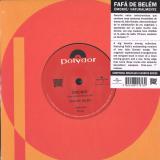
A longtime favorite among Brazilian music collectors! Fafá de Belém’s take on Joao Donato´s ‘Êmoriô’ and ‘Naturalmente’ strip away the originals’ sophisticated arrangements in favor of a more driving groove and a raw, funky edge that makes them absolute dancefloor weapons.
First time 7” reissue, cut at 45 RPM !
--------------------------------------------------------------------
Singer and actress Fafá de Belém is one of Brazil’s most beloved and popular artists. This vinyl single from 1975 marked the very beginning of her long and successful career in Brazilian popular music and, over the years, has become a highly sought-after collector’s item among DJs worldwide.
The record features two tracks, ‘Êmoriô’ and ‘Naturalmente’, written by João Donato alongside Gilberto Gil and Caetano Veloso, originally released on his album “Lugar Comum” that same year. Fafá de Belém’s versions, however, strip away the originals’ sophisticated arrangements in favor of a more driving groove and a raw, funky edge that makes them absolute dancefloor weapons.
- Sorry Again
- There's Only One Thing Left To Say
- Tripping Wires
- I Can't Stop Smiling
- The All-Consumer
- Drug Girls
- Rubble
- Labrador
- Hey You, Get Off My Moon
- Medio Core
- What You Left Behind
- Wake Up, I'm Leaving
- Marzipan
- Labrador (Drum Machine Version)
- Diamond Jubilee
- What You Left Behind (Reprise)
- Your Silent Face
- You're So Good To Me
- Seven Seas
- Breaking Lines
2LP-Erstauflage auf farbigem Loser-Vinyl: "BIO PETROL" Disk 1 und "MAGENTA" Disk 2. "¡Simpatico! (Remastered and Expanded)" bringt das lange vergriffene zweite Album von Velocity Girl aus dem Jahr 1994, "¡Simpatico!", mit einem superfrischen Mastering und einer Menge Bonus-Tracks aus der "¡Simpatico!"-Zeit endlich wieder raus. Das Originalalbum klingt besser als je zuvor und wird durch ein komplettes Album mit B-Seiten und Raritäten ergänzt. Velocity Girl wurde um 1989 an der University of Maryland außerhalb von Washington DC gegründet, mit dem Gitarristen Archie Moore (Black Tambourine), dem Gitarristen Brian Nelson (Black Tambourine), dem Schlagzeuger Jim Spellman (Starry Eyes, Foxhall Stacks, High Back Chairs, Julie Ocean, Piper Club), dem Bassisten Kelly Riles (Starry Eyes) und der Sängerin Sarah Shannon (Starry Eyes, The Not Its). Die Band kombinierte englisch inspirierten, lauten Shoegaze-Fuzz mit rauem US-Indie-Rock und klassischem Pop-Songwriting im Stil der 60er Jahre. Eine Killer-Single auf Slumberland und ununterbrochene Tourneen erregten die Aufmerksamkeit der Indie-Rock-Kenner, und bald darauf unterschrieb Velocity Girl einen Vertrag mit Sub Pop auf einer Motorhaube in Hoboken, New Jersey. Nach der Tournee zur Unterstützung ihres Debüts ,Copacetic" verbrachte die Band den größten Teil des Jahres damit, eine Reihe von Songs für ein zweites Album zu schreiben. So hatten sie noch nie gearbeitet - es war eine neue Erfahrung, Zeit und Budget (vom Label!) darauf zu verwenden, ein Album zu produzieren, das kein selbst produziertes Punkrock-Studioalbum war. Nachdem sie ihr neues Material monatelang im lauten Stil von ,Copacetic" gespielt hatten, waren die Bandmitglieder von den Songs begeistert, wollten sich aber von der rauen, amateurhaften Atmosphäre ihrer früheren Alben lösen. Und ihre Einflüsse waren diesmal etwas anders: weniger My Bloody Valentine und Wedding Present, mehr New Order. Jemand bei Sub Pop brachte die Band mit John Porter zusammen, dem ehemaligen Mitglied von Roxy Music, der The Smiths, Billy Bragg, The Alarm und eine Reihe anderer Acts der 80er Jahre produziert hatte. Sie trafen sich während einer Tournee in Los Angeles. Er erklärte sich bereit, das Album in einer dreiwöchigen Session in den Cue Studios in Falls Church, Virginia, zu produzieren. Er war genau das, was die Band brauchte: ein Redakteur, Arrangeur und Zuchtmeister. Als er gnadenlos jeden unnötig wiederholten Takt herausschnitt, merkte die Band, dass sie sich zu einem klareren Sound hingezogen fühlte und fast komplett auf die laute Gitarre verzichtete, zweifellos beeinflusst durch Porters Präsenz. Velocity Girl waren super zufrieden mit dem Ergebnis, und ,¡Simpatico!" kam im Juni 1994 raus. Diese erweiterte Neuauflage enthält eine Reihe von Songs, die einige Monate nach den Albumaufnahmen in den Inner Ear Studios in Arlington, Virginia, aufgenommen wurden. Die Sessions lieferten spielerisch-experimentelle B-Seiten für die Singles des Albums, zwei Cover-Songs (das New-Order-Cover ,Your Silent Face" und ein Beach-Boys-Cover) für eine Single auf Merge Records und einen Compilation-Track.
- A1: Everybody’s Gotta Learn Sometime' From “The Eternal Sunshine Of The Spotless Mind” Soundtrack (2004)
- A2: ‘Love' From “Starbucks Sweetheart (2014)
- A3: I Can’t Help Falling In Love' From “Resistance Radio The Man In The High Castle” (2017)
- A4: ‘Ramona' From “Scott Pilgrim Vs The World” Soundtrack (2010)
- B1: Michelangelo Antonioni' From “A Tribute To Caetano Veloso” (2012)
- B2: Your Cheatin’ Heart (New Recording)' Originally From “Timeless A Hank Williams Tribute” (2001)
- B3: I Only Have Eyes For You' From Doug Aitken’s “Song “ Exhibition (2012)
- B4: True Love Will Find You In The End' (New Recording) Originally From The Tribute Album "The Late Great Daniel Johnson” (2004)
Das Album „Everybody’s Gotta Learn Sometime“ ist eine Sammlung von Becks Liebesliedern, die alle
bereits veröffentlicht wurden, mit Ausnahme von zwei Titeln, die Beck zwar schon früher veröffentlicht,
aber für dieses Album neu aufgenommen hat: „True Love Will Find You in the End“ und „Your Cheatin’
Heart“.
Mit legendären Titeln wie „Everybody’s Gotta Learn Sometime“ aus dem Soundtrack zu „Eternal Sunshine of the Spotless Mind” und einer gefühlvollen Interpretation von „I Can’t Help Falling In Love“ ist dies
eine liebevoll zusammengestellte Songsammlung von Raritäten, Bonusmaterial und Coverversionen exklusiv
auf rotem Vinyl.
- A1: Não Identificado (Caetano Veloso)
- A2: Sebastiana (Rosil Cavalcanti)
- A3: Lost In The Paradise (Caetano Veloso)
- A4: Namorinho De Portão (Tom Zé)
- A5: Saudosismo (Caetano Veloso)
- A6: Se Você Pensa (Roberto Carlos-Erasmo Carlos)
- B1: Vou Recomeçar (Roberto Carlos-Erasmo Carlos)
- B2: Divino, Maravilhoso (Caetano Veloso-Gilberto Gil)
- B3: Que Pena (Êle Já Não Gosta De Mim) (Jorge Ben)
- B4: Baby (Caetano Veloso)
- B5: A Coisa Mais Linda Que Existe (Gilberto Gil-Torquato Neto)
- B6: Deus É O Amor (Jorge Ben)
Gal Costa’s 1969 self-titled album stands as one of the
boldest statements of the Tropicália movement. Blending
psychedelic rock, experimental arrangements, and Brazilian
popular music with fearless originality, the album showcases
Costa’s powerful, expressive voice at its most adventurous.
Featuring contributions from major Tropicália figures such as
Caetano Veloso and Gilberto Gil, its mix of sweetness and
sonic daring helped redefine contemporary Brazilian music,
cementing Gal Costa as a groundbreaking and influential artist.
Before he turned 20, Lô Borges released one of the most captivating albums to come out of Brazil's rich musical landscape - a record that somehow flew under the radar at the time but has since become a cult favorite for listeners around the world. Recorded in the same whirlwind year as the legendary "Clube da Esquina" - the groundbreaking collaboration with Milton Nascimento and Beto Guedes - this self-titled solo debut finds Lô Borges in full creative flight. Pressured by Odeon Records to deliver a solo project, Borges responded with a burst of youthful brilliance, sometimes writing a song in the morning and laying it down in the studio that very night. The result? An album that's spontaneous, heartfelt, and sonically stunning. From the shimmering guitars of 'Você Fica Melhor Assim' to the dreamy melodies of 'Cançao Postal' and the jazz-infused groove of 'Calibre,' the album blends Brazilian popular music with rock, soul, and subtle psychedelic touches. It's got the intimate spirit of a bedroom recording, but with the musical sophistication of legends - with collaborators like Toninho Horta, Tenorio Jr., Nelson Angelo, and of course, Beto Guedes helping bring Borges' vision to life. Fans of Caetano Veloso, Gilberto Gil, or early Nascimento will feel right at home here - but Lô Borges brings his own voice, at once tender and electrifying, to every track. The guitars are fuzzy, the harmonies rich, and the songwriting nothing short of magical. Though it didn't make a splash in 1972, "Lô Borges" has only grown in stature over the years. It's the kind of album you discover once, then return to again and again - a timeless treasure from a young artist who helped redefine Brazilian music from the ground up. If you're into warm, soulful songwriting with a touch of experimental edge, this record is waiting for you. Give it a listen - and see why "Lô Borges" is considered one of Brazil's most underrated masterpieces. Reissue on 180g vinyl.
Previously released on Jeff Mills' Axis Records as part of The Escape Velocity series, The Hidden Notes projects finds Rod20 (aka ROD) exploring the deeper more intimate space-trip side of Techno. "With techno verging towards the peak of mainstream exposure, alongside algorithmic distractions altering our sub-consciousness, The Hidden Notes Project shows my deepest intimate quest into inner psychoacoustics frequencies, without the urgency to shout, convince or adapt in a rat race driven outside world. Sequences of bleeps & tones that the modern ear has grown accustom to in the wider context of noise. But what if we become the noise controlling our existence? What if undiscovered planets and abstract concepts we humans don't understand were hidden in our consciousness all along? Which stars are we actually chasing? Most above all The Hidden Notes Project finds me leaving the theory of context and embracing the purpose of internal control."
Queer communities have long transformed parties into something powerful: spaces where care flourishes, injustice gets challenged, and new worlds are danced into being. But today, DJs command huge fees while behind-the-scenes workers earn below minimum wage. Corporations profit from our culture while communities that created these spaces are displaced. As venues shut and workers burn out, it’s clear that something has gone deeply wrong.
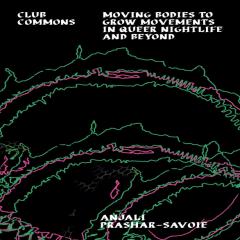
Club Commons: Moving Bodies to Grow Movements in Queer Nightlife & Beyond by Anjali Prashar-Savoie takes you inside hidden stories of resistance and reinvention. We meet the people reshaping nightlife from below: abolitionist security teams creating safety without police, sober raves doubling as mental health support, radical childcare at parties, venues becoming worker cooperatives, and free party crews reclaiming public space. Through their work, we see how party-throwing skills build movements, how refusing to play changes everything, and why protecting queer nightlife means transforming who owns it.
Quotes
“When Anjali shines her perceptive light on dancefloor culture, everything is better illuminated. I can’t wait to read this book. It’s one we need.” Emma Warren (author of Dance Your Way Home/Up the Youth Club)
“Anjali’s one of the most exciting and insightful voices writing about dance music today, bringing fresh perspectives, intellectual rigour and emotive power to a conversation that’s too often homogenous, superficial or cynically commercial. Club Commons promises to be an essential and overdue book: a chance to reexamine the queer history of club culture, celebrate and critique its present, and map out radical possibilities for its future.” Ed Gillett (author of Party Lines)
“Beautifully written and unique, Anjali Prashar-Savoie’s behind-the-scenes journey through queer nightlife is as thorough as it is fascinating. Documenting a world that commercial interests are rapidly destroying, Club Commons is proof that queer culture holds the key to a better future for the dancefloor and beyond.” Professor Sam Parsley (author of Minor Keys, coach, DJ and founder of In the Key, a directory and platform championing the careers of women, trans and non-binary electronic music producers)
“Club Commons: Moving Bodies to Grow Movements in Queer Nightlife & Beyond is a vital reminder of how important the dance floor is to connect, unfurl and envision new futures. The text highlights the historic and existing care work entangled with the club space, particularly in providing temporary sites of refuge and embodied joy for Black and LGBTQIA+ communities. This is juxtaposed with research on the corporate and carceral commodification of nightlife in recent years, which exposes the false premise that club spaces are always radical. This book affirms my belief that the non-commercial nightlife ecosystem is an essential part of our social change infrastructure, rather than a luxury. Club Commons is a call to action to reclaim this space on our own terms and revive the underground.” Camille Sapara Barton, (author of Tending Grief: An Embodied Guide to Being with Grief Individually and in Community)