A 12" that has been bubbling under the radar for a while is the ridiculously catchy "Beach Boy" by Vertical Lines. The vocal side is almost Stevie Wonder-like in its delivery with some great vocals by Barry Michael Cooper who carries the groove perfectly. Works well with both Disco and 'Yacht Rock' audiences alike.
The instrumental track is a prime slice of vintage 1982 drum-programming and a very early executive production from Tuff City owner, Aaron Fuchs. Recently featured in Dam-Funks sets, "Beach Boy" has been growing in popularity over the last couple of years and will fit into creative sets like a dream. Needs to be played LOUD over a great system!
Cerca:vertical lines
- 1
- Al Wahem
- Al Hathayan
- Al Maraya
- Assarab
Al Wahem (“The Illusion”) is the new full-length release by PRAED, the Swiss–Lebanese duo of Raed Yassin and Paed Conca. Recorded between Beirut and Berlin, the album returns to the group’s central aesthetic: a rhythm-driven weave of Egyptian shaabi, electronics, improvisation and the gritty pulse of street-level sound. Nearly twenty years into the project, PRAED have distilled their approach into four pieces that subtly shift the listener’s bearings, reordering grooves and fragments until familiar elements take on new identities.
The twenty-minute title track sets the tone. A tightly interlocking two-drum foundation from Pascal Semerdjian and Ayman Zebdawi shapes a structure that expands steadily: synth figures branch outward, clarinet and bass lines act as internal guideposts, and brief vocal calls from Yassin and guest singer Mayssa Jallad sit inside the texture rather than leading it. PRAED’s shaabi keyboard language is present, but the duo stretch it outward, building tension and movement through patient accumulation.
“Al Hathayan,” at 4:46, tightens the focus. Conca’s clarinet moves between melodic arcs and clipped rhythmic gestures, threading through electronic loops that surface and disappear. Zebdawi’s percussion adds a raw, tactile quality, placing acoustic patterns and electronics in direct conversation. The piece acts as a bridge between the album’s two long-form compositions.
Side B begins with “Al Maraya,” a thirteen-minute piece that relies on electronic, bass and clarinet interplay. The atmosphere nods to the breadth of PRAED Orchestra!, but remains anchored in the duo’s rhythmic foundations. Rather than building mass, the layering creates a sense of depth, as if new spaces were opening inside the groove.
The album closes with “Assarab,” featuring keyboardist Amr Said. Semerdjian and Zebdawi again form a dual percussive axis, while synths hover between melody and pulse, and themes recur in widening circles rather than building vertically. The porous boundary between electronic and acoustic sources — processed clarinet mistaken for a sequencer, rhythmic figures springing from live drums — is where the album’s theme of “illusion” shows itself most clearly.
Al Wahem follows a long arc: early releases on Annihaya, a key appearance on Ruptured Sessions Vol. 5 – Live at Radio Lebanon (2013), later albums on Akuphone, and the large-scale PRAED Orchestra! documented on Morphine Records. This new Ruptured/Annihaya co-release brings the duo back to a concentrated format, reorganizing their familiar materials with renewed clarity and intent.
DeepLabs opens 2026 with an exciting new release, “Förvandling,” from Tarik Hensen—the collaborative project of two exceptional producers, Martinou & Ben Kaczor.
This release completes a full-circle journey: rooted in Detroit techno, traveling through Malmö, and landing in Basel, where these influences converge into a singular, immersive statement.
Longtime admirer of both artists’ solo works, Luke Hess joins the project with his own interpretation of Förvandling, bringing his distinct Detroit-informed perspective to the release.
Förvandling is the Swedish word for “transformation,” describing the metamorphosis of a caterpillar into a butterfly.
The title reflects the evolution of techno itself—how it shifts and reshapes across cities, communities, and eras while retaining its core spirit.
Varp refers to the vertical warp threads in woven fabric—essential structural lines that hold everything together.
The track mirrors this concept: hypnotic percussion and immersive ambience interlace with melodic tones, unified through Tarik’s live dub mixing approach, creating a rich, fluid tapestry of sound.
Malm translates to raw ore, the unrefined material that, when forged with alloys, becomes durable metal.
True to its name, the track channels a deep, raw warehouse energy—refined into a functional gem through harmonious stabs, textured layers, and driving momentum.
Closing the EP, Luke Hess’s remix of Förvandling draws from elements across the original works while incorporating new audio stems from the DeepLabs studio.
The result is a seamless transformation of Tarik Hensen’s aesthetic into Luke’s unmistakable Detroit sound—an adventurous, atmospheric journey crafted for extended DJ sets and immersive dancefloor moments.
Tarik Hensen and Luke Hess invite you to weave these tracks into your curated selections and allow them to transform the dancefloor in unexpected ways.
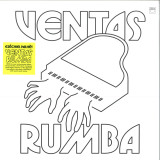
With his new instrumental album Ventas Rumba, the French composer (and singer) returns to his signature instrument, the piano, blending it with warm synth tones. This album represents a "return to his roots ", allowing Ezéchiel Pailhès to reinvent himself in a seamless way while still exploring ballads and ritornellos, halfway between light-heartedness and melancholy. Ezéchiel Pailhès has been meaning to write a solo piano album for as long as he can remember. Hardly surprising, of course, for this academically-trained pianist, brought up on classical music and then studied jazz. Yet, since his 2001 debut with the electro-pop duo Nôze, and his subsequent four albums, the artist had constantly postponed this project that was so close to his heart. Then in 2022, just as he was getting ready to start producing an album of new songs, this long-standing aim finally materialized.
The melodies he wrote seemed to stand on their own naturally, spurring him on to compose this series of fourteen tracks, recorded in sessions split between France and Latvia.
A new piano: the Una Corda
Ezéchiel wanted this project dedicated to the piano to begin a new narrative, to explore new instrumental terrain and new tones, something far removed from the familiar piano he has been playing all his life. He opted for the Una Corda piano, designed by David Klavins, a groundbreaking instrument builder renowned for his distinctive pianos with vertical shapes and frames.
The Una Corda, created in 2014, is an upright piano with a single string per note (unlike three strings on traditional pianos). Enticed by the "crystalline and unique" tones of this instrument, which is hard to find in France, Ezéchiel travelled to Kuldiga, Latvia (where David Klavins set up his workshops and studios), to record the first part of the album. Although the title of the album may initially conjure up images of a distant, sensual dance, the reality is quite different. Ventas Rumba indeed refers to the waterfall and rapids (in Latvian: rumba) of the river Ventas, which runs near this small village in the western part of the country. Ezéchiel chose to blur the lines, as the sound and musicality of the title likely evoke both his short stay in the Baltic country, and also a form of distant exotic imagery perfectly in tune with his own mischievous wit. Tracks as short stories
Back in France, Ezéchiel enhanced the first tracks recorded in Kuldiga with subtle synth tone layers, and added other tracks composed and recorded at his Montreuil studio. The album reflects a deliberate and sensitive orchestration of piano, synth keyboards and digital effects, as he puts it: "playing to erase the differences between the tones of the various instruments", as if each instrument's texture echoed the others. According to Ezéchiel, you can listen to Ventas Rumba as you would leaf through "a collection of short stories", through compositions that rarely exceed three minutes and evoke figures of movement, lightness, curves or modulation, such as "La ligne", "La valse des singes" or "Fly Finger". Others more seriously relate to a kind of spirituality, which quietly infuses such different tracks as "Ferveur", "Éclair" and "Louanges". Ezéchiel adds: “I’m by no means religious, but I like what God has managed to get musicians to achieve (laughs)". "Louanges", for instance, despite its electronic edge, "refers to Olivier Messiaen, a very devout composer who I greatly admire". Other tracks are directly inspired by the classical music he listens to on a daily basis. For example, Chopin's “8th Nocturne” formed the backdrop of “Pianovado”. Likewise, the harmonic structure of Beethoven's “Waldstein Sonata No. 21” inspired “Opus 53”. Aside from these multiple references and inspirations, which quickly recede behind a style that is uniquely his, Ezéchiel Pailhès keeps exploring ideas already found on his first solo albums, this time in an instrumental format, undoubtedly purer, fostering an imaginary world that evokes the shapes and themes of ballads, ritornellos, light-heartedness, passing time, reverie or a universal subdued melancholy.
Glasgow-based, Rome-born Loris S. Sarid, like many during the pandemic, found himself placing his focus in all new places once he was locked down with little to do. As such his close care for a little tomato plant, grown on a windowsill in his flat, gave him an unusual spark of inspiration which led to this album, Music for Tomato Plants. It is his homage to "the unapparent courage of simplicity, and the beauty and lightness of the most ordinary things." In real terms, it is a lush ambient exploration with melodies that are optimistic and hopeful. Sustained chords unfurl like new growth, fresh percussive lines emerge like ripened fruit and the whole thing is beautifully pure and innocent.
- 1