A1 - Planet Genesis
Chronicle makes his Spatial debut in style with Planet Genesis, opening with a beautifully crisp 2-step break over light atmospheric padwork, quickly accompanied by Hot Pants snares and dancing strings. Graceful hi-hats and insanely subtle vocal usage ebb and flow in the mix while soothing melodies enter and depart at will. The breakdown offers an intense change of tone before the breaks resume and continue the journey to a destination unknown.
A2 - Crystal Clear
Very much living up to its title, Crystal Clear sees Chronicle deliver a finely tuned assortment of beats with a remarkable clarity that truly shines in the "old school brand new" sensibilities of throwback atmospheric drum & bass. Snippets of various classic breaks can be heard in the mix with a superb attention to detail, taking you back with a style quite reminiscent of the golden era of late 90's Logical Progression.
B1 - Libra
Airy pads and a rousing yet subtle melody delicately introduce Libra, as Chronicle gradually builds towards a thrilling yet thoughtful amen workout set to blissful atmospherics. With a plethora of exquisite production techniques on show, the track showcases the versatility of Chronicle, offering something new to enjoy on each listen - the layers of detail are truly impressive.
B2 - Higher Limits
Echoing whirs and clicks dance playfully around light pads in the unique DJ-friendly intro to Higher Limits, a detailed, joyful track which celebrates a bygone era with sharp, expertly edited breaks and a smooth 808 bassline to die for. Micro melodies and long waves of delicious synths add texture and depth to the mix, resulting in the perfect closing track to a superbly varied and elegantly produced debut EP.
Words by Chris Hayes (Spatial / Red Mist)
Cerca:very
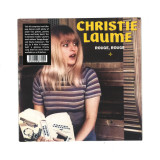
This 45 comprises two killer pop dancers with plenty of psych fuzz guitars, punchy horns and funky beats: the in-demand Christie Laume's mod anthem 'Rouge-Rouge' and Marta Kubisova's 'Tak Dej Se K Nám A Projdem Sv?t' a glorious LP-only song that has never available on a 45 before. Sister-in-law of Edith Piaf (who introduced her to the music business), Christie Laume became a ye-ye style singer in '60s France. Her mod anthem 'Rouge, Rouge' (1967) is a great song that never fails in making the dance floor shake, taken from a very rare and in-demand E.P. On the flipside we can find Marta Kubisová, one of the most popular singers in the Czech Republic in the '60s. Her 'Tak Dej Se K Nám A Projdem Sv?t' is a glorious LP-only song from 1969 that has never available on a 45 before. Expect heavy basslines, punchy horns and fuzzy guitars. Both songs are officially reissued here on a 45 for the first time.
- H3: @Rt$ W3Re M3@Nt T0 F7¥
- Lithonia
- Survive Feat. Chlöe
- Steps Beach
- Talk My Shit Feat. Amaarae & Flo Milli
- Got To Be
- Real Love
- In The Night Feat. Jorja Smith & Amaarae
- Yoshinoya
- Can You Feel Me Feat. Legend
- No Excuses
- Cruisin' Feat. Yeat
- We Are God
- Running Around Feat. Fousheé
- Dadvocate
- Happy Survival Feat. Khruangbin
- A Place Where Love Goes
It is with a certain sadness for his fans across mediums that Donald Glover has declared Bando Stone and the New World the last Childish Gambino album. The ostensible soundtrack to a feature-length movie of the same name, the hour-long project includes snippets of dialogue that hint at the film’s apocalyptic subject matter. The fact that the soundtrack is preceding the actual film is part of Glover’s strategy: He wants listeners to work to figure out what they’re listening to. “The soundtrack forces the audience to participate in a way that I don't feel like most things force you to participate,” he says. “It forces you to have an imagination. I already see people being like, 'This is very cinematic, this must be the part that... This feels like a credit sequence.' A lot of stuff feels flat because it's not asking you to participate. Art used to be you had to participate on some level and have some sort of thought process on it. You can't just be like, 'Oh, this is mid.'” Even without the benefit of the full visuals, these 17 tracks make for a satisfying swan song that synthesizes what came before with fresher ideas gleaned from the threshold of finality.
- Chaparral
- Time Crisis Too
- Cowprint
- Father's Prayer
- Bog Song
- Away Here
- String Performer
In the winter of 2022, Holy Wave had a week off after a short tour that ended with a show in Los Angeles. The band found particular glee in playing those shows at that time, as they weren't sure they'd ever be doing that again just a few months prior_this batch of songs results from hanging out with some very good friends at Studio 22. "The band have fashioned themselves into mainstays in the world of gauzy psychedelia, infusing dream pop soundscapes with colorful instrumentation, lush melodies, and weighty pathos." - Under the Radar Magazine"_narcotic neo-psych with synthed-out bedroom-pop undertones." - Shindig Magazine"_lush-yet-tempered instrumentation that's undeniably pleasant, if not downright attractive." - Flood Magazine"The sound of Austin's Holy Wave has been getting progressively dreamier with each successive release, their music lush and immaculately arranged." - Post-Trash"Wonderful aural tones, meandering genteelly." - Narc Magazine
- Honey
- Come Down Softly To My Soul
- How Does It Feel?
- I Believe It
- Revolution
- Let Me Down Gently
- So Hot (Wash Away All Of My Tears)
- Suicide
- Lord Can You Hear Me?
Spacemen 3 began assembling their third album, 1988's Playing With Fire, at perhaps the freest, most confident point in their career. Recording began with the band road-tested and rugged, even amidst the functional volatility that famously motivated their course. The sessions' first offering came in the form of "Revolution," a single of heroic Stooges-devotion and the most commercially successful release the group had to date. High expectations for the album were soon exceeded, as Playing With Fire would become Spacemen 3's crowning studio achievement and cement their rightful place on the vanguard of otherworldly rock 'n' roll.
An exquisite mix of stuttering tremolo guitars and wistful melodies, Playing With Fire sheds any trappings of revisionism and furnishes a nuanced grade of psychedelia. Epic entries like "Suicide" (named after the notorious NYC band) and the mesmeric "How Does It Feel?" catch Spacemen 3 at their celestial apex, the very point where their collective writing, performance and production would crest and wondrously splinter.
Includes download card and new insert with liner notes by Marc Masters.
- Prologue
- We Don't Wanna Grow Up
- Banning Back Home
- Granny Wendy
- Hook-Napped
- The Arrival Of Tink And The Flight To Neverland
- Presenting The Hook
- From Mermaids To Lost Boys
- The Lost Boy Chase
- Smee's Plan
- The Banquet
- The Never-Feast
- Remembering Childhood
- You Are The Pan
- When You're Alone
- The Ultimate War
- Farewell Neverland
"Hook is a 1991 fantasy adventure film directed by Steven Spielberg, starring Robin Williams, Dustin Hoffman, Julia Roberts, Maggie Smith and Bob Hoskins. The soundtrack was composed and conducted by legendary film composer John Williams. The narrative follows a grown-up Peter Pan who has to return to Neverland after his children are abducted by his old nemesis, Captain Hook. Hook performed very well and eventually became nominated for five Academy Awards. Amongst these nominations was the Academy Award for 'Best Original Song', for the song ""When You're Alone"". Hook is available as a limited edition of 2000 individually numbered copies on translucent red coloured vinyl. The 2LP comes in a deluxe sleeve with leather laminate finish."
A1 - Ocean Breeze
Kicking off the EP we have an understated 2-step banger from label head ASC as Ocean Breeze rips into your consciousness, positively bursting at the seams with a wonderful rolling break - make no mistake this track will make you and the dancefloor move. Building continually with a trademark subtle female vocal and wavy synthwork, Ocean Breeze is the perfect livener for any discerning atmospheric set.
A2 - Blue Planet
Straight into the action with a heavy break pattern, Blue Planet sees ASC experiment with deep, thunderous kicks and tightly edited, weighted snares set to take you higher - as the classic, recognisable vocal sample urges.Throughout the track we are treated to a darkly atmosphere created by thoughtful pads and effects which elevate the mix while the breaks make the most of their headline billing to the end.
B1 - Cyclic Nature
Continuing the break focussed approach to the EP, ASC unleashes a break heard right at the start of Spatial's history in Force Majeure - in fact this piece began life as a remix of that very same track, before taking on its own identity and becoming Cyclic Nature. Intense and hot-blooded, dense analogue kicks battle echoing drums and subtle melodies to form a wonderfully constructed atmosphere we just can't get enough of.
B2 - Shapeshift
Dialling back the intensity, Shapeshift is introduced more gradually this time with a DJ-friendly cymbal driven intro, with curious clicks and sound effects jostling over a mellow synthy backdrop. Before long a relaxing old-school break enters the mix while textured pads fluctuate with inquisitive jolts of melodic energy, elevating Shapeshift to become quite the memorable EP closer indeed.
Words by Chris Hayes (Spatial / Red Mist)
- A1: Arnold Layne Pink Floyd
- A2: See Emily Play Pink Floyd
- A3: Apples And Oranges (Stereo Version) Pink Floyd
- A4: Matilda Mother (2010 Mix) Pink Floyd
- B1: Chapter 24 Pink Floyd
- B2: Bike Pink Floyd
- B3: Terrapin Syd Barrett
- B4: Love You Syd Barrett
- B5: Dark Globe Syd Barrett
- C1: Here I Go Syd Barrett (2010 Remix)
- C2: Octopus Syd Barrett (2010 Mix)
- C3: She Took A Long Cool Look Syd Barrett (2010 Mix)
- C4: If It's In You Syd Barrett
- C5: Baby Lemonade Syd Barrett
- D1: Dominoes Syd Barrett (2010 Mix)
- D2: Gigolo Aunt Syd Barrett
- D3: Effervescing Elephant Syd Barrett
- D4: Bob Dylan Blues Syd Barrett
An Introduction To Syd Barrett, is a reissue of the 2010 collection that brought together for the first time the tracks of Pink Floyd and Syd Barrett on one compilation.
David Gilmour, who originally worked on Syd Barrett's two solo albums, as co-producer of The Madcap Laughs and as producer of Barrett, was the executive producer for the album. Damon Iddins and Andy Jackson at Astoria Studios remixed five tracks including ‘Octopus’, ‘She Took A Long Cool Look’, ‘Dominoes’ and ‘Here I Go’, with David Gilmour adding bass guitar to the last track. Pink Floyd's ‘Matilda Mother’ also received a fresh 2010 Mix.
The album features the original 24-page booklet and graphics plus all lyrics, and was designed including the cover art by long time Pink Floyd associate the late Storm Thorgerson and his estimable studio.
Born in Cambridge in 1946, Roger Keith 'Syd' Barrett was the primary songwriter, guitarist and original lead vocalist in the first incarnation of Pink Floyd. He formed the band in the mid-1960s with drummer Nick Mason, bassist Roger Waters and keyboard-player Richard Wright. With their groundbreaking, semi-improvised sets at the legendary UFO Club in London's Tottenham Court Road, they became the prime movers of British psychedelia.
Barrett wrote the warped pop vignettes ‘Arnold Layne’ and ‘See Emily Play’, the group's two hit singles from 1967, as well as 'Apples And Oranges', and the lion's share of the material – the dreamy ‘Matilda Mother’, ‘Chapter 24’ and the whimsical ‘Bike’ – on their debut album The Piper At The Gates Of Dawn. Recorded at EMI's famed Abbey Road Studios while the Beatles were making Sgt Pepper's Lonely Hearts Club Band, Pink Floyd's first album has proved an enduring classic, referenced by everyone from David Bowie to Spiritualized via The Damned.
Barrett contributed ‘Jugband Blues’ to A Saucerful Of Secrets, the band's follow-up, but his behaviour became increasingly erratic and he left in April 1968, a few months after the addition to the group of his Cambridge friend David Gilmour on guitar and vocals.
Syd Barrett's first solo album, The Madcap Laughs, was a long time coming but made the Top 40 on its release in January 1970. Barrett followed in November that year, and contains tracks such as ‘Baby Lemonade’ and ‘Gigolo Aunt’ that provided the names for two cult US groups in the 80s and 90s.
Over the last four decades, Syd Barrett has become the ultimate rock enigma. In 1975, he paid an eerie visit to his former band mates at Abbey Road while they were recording ‘Shine On You Crazy Diamond’, the centrepiece of the Wish You Were Here album he had inspired. He never entered a studio again. In 2001, he was the subject of a BBC Omnibus documentary.
He died in July 2006 but his legacy lives on in the music of R.E.M., Robyn Hitchcock, Julian Cope, Spiritualized, Blur and countless other groups. Earlier this year, Faber and Faber published Syd Barrett: A Very Irregular Head, an exhaustive biography by long-time fan Rob Chapman.
An Introduction To Syd Barrett provides a handy overview of this visionary talent, this madcap genius whose star shone brightly yet burnt out all too quickly.
Nu bossa icon Sabrina Malheiros has released four now classic original studio albums for Far Out Recordings. Her first, Equilibria, was originally released in 2005, ascending the daughter of Azymuth bassist Alex Malheiros to international acclaim. Celebrating 20 years since it was first released—for Record Store Day 2025—Equilibria will be available on vinyl for the first time ever.
A masterful collection of sambas and bossas, Equilibria strikes the perfect balance between classic Brazilian songwriting and modern production courtesy of Far Out mainstay Daniel Maunick. The album features some of Brazil’s very best musicians including members of Azymuth, as well as Incognito frontman and guitarist Jean-Paul ‘Bluey’ Maunick.
As one review put it, Equilibria is “guaranteed to turn your limbs to liquid…. Prepare to be swept away”
2025 Blue Vinyl Repress
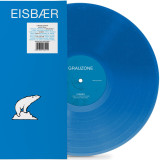
WRWTFWW Records is very honored to announce the official reissue of Grauzone's essential 1981 maxi single with timeless classic "Eisbär", proto-techno beast "FILM 2", and romantic synth ballad "Ich Lieb Sie", just in time for the 40th anniversary of the Swiss band's formation. The three-track vinyl is sourced from the original reels, cut at 45rpm, and comes with its iconic artwork on a 350gsm sleeve.
Ich möchte ein Eisbär sein...Written by Martin Eicher after a nightmare in which he saw talking polar bears on the walls, and with music by the Grauzone crew consisting of Martin and his brother Stephan Eicher, Marco Repetto, Christian "GT" Trüssel, and Claudine Chirac (on saxophone), "Eisbär" is the most recognizable title from the band, a sublime mix of ingredients reflecting the transitional era it comes from - the raw energy of punk music still palpable, combined with the audacity of early electronics, the warm groove of a disco gem, beautifully fragile lyrics, and one of the best basslines ever. It became a mega hit, totally unplanned, but how could you resist such a track
"FILM 2" is the ultimate b-side monster, a menacing all-instrumental pre-techno masterpiece, slowly building to a magnetizing frenzy. An instant underground favorite, it was famously heard played at both speeds depending on the scenes and DJs you were frequenting, 45rpm as it was first intended, and 33rpm for the cosmic experience (search Daniele Baldelli's Cosmic C75 1982 mixtape online for a great example of this).
The maxi single ends with "Ich Lieb Sie", a synth-pop meets doo-wop ballad, a true love song oozing with innocence. Simple, stylish, and just right.
At the crossroads of post-punk, new wave, pop, and electronic experimentation, the Eisbär maxi offers three songs that are technically different but hold the same spirit, the perfect embodiment of Grauzone's music - wild, unpredictable, and youthful, yet sophisticated, catchy, and ingenious. The magic recipe for the good stuff.
Stephan Eicher went on to be, arguably, the most successful Swiss musician ever, with an international career extending from pop chanson to experimental escapades and collaborations with Moondog, artists Sophie Calle and John Armleder, and author Martin Suter among many other luminaries. Marco Repetto flourished as a techno and ambient producer, releasing multiple projects including releases on Aphex Twin's Rephlex label.
Grauzone and WRWTFWW will continue to collaborate on the band's 40th anniversary reissue campaign, with numerous projects planned for the year, including a vast selection of music, visuals, and literature never available before.
For their second album 'The Foel Tower', Quade holed up in an old stone barn in the cradle of a Welsh mountain valley.
The valley was a stark and windswept backdrop with little daylight, as the band would huddle around crackling fires each evening. “There was very much a feeling of being on the complete fringes of society,” the band says. “The last vestiges of settlement before the unrelenting barren moors that loomed over us.”
It was an environment that would shape the band – a Bristol four piece made up of Barney Matthews, Leo Fini, Matt Griffiths and Tom Connolly – and the record they have made. It’s an album that is as dreamy as it is melancholic, and as quiet and tender as it is forceful and potent – gliding across genres like winds blowing over those wide-spanning Welsh hills – to arrive at something the band half-jokingly, yet somewhat accurately, describe as “doomer sad boy, ambient-dub, folk, experimental post-rock.”
Quade is a band but it’s also a very close-knit group that have been friends since childhood who use this musical vehicle for interpersonal explorations and connections. “We’ve individually experienced a lot of difficulty over the last several years and Quade has represented a space to shelter from these,” the band says. “This means we often communicate extensively with each other about the issues affecting us individually and collectively. These conversations and concerns are central to The Foel Tower.”
In many ways, the making of this record – or any Quade record – goes way deeper than the simple writing, construction and recording of music. It is a profoundly deep and meaningful experience. “A key theme of the album relates to why we connect with specific places in the way that we do,” the group says. “We often remove ourselves to isolated valleys, sheltered from some of the painful personal struggles that we have experienced as a band. These become spaces in which we collectively purge ourselves of some of these difficulties hoping to make Quade a physical and emotional place of solace. This album celebrates these places that we’ve been able to retreat to and recuperate.”
It is a deep, dense record that is stuffed with musical, cinematic and literary influences – from Ursula La Guin and Cormac MacCarthy through to RS Thomas and Yeats – but despite the heavy, introspective and anxious nature of some of the material, it is also a record that is remarkably deft, agile and considered.
Made with producer Jack Ogborne and mixer Larry ‘Bruce’ McCarthy, there is a pleasing duality to the final sound of the record. One that feels fragile and intimate but also powerful and forceful, as introspective as it is expansive, and a record that is as detailed and textured as it is wide open and spacious.
The album title also pays homage to the place that shaped it so greatly. Within this remote Welsh valley stands the Foel Tower, a stone structure filled with valves and cylinders that can raise and lower the level of the reservoir to draw off water. Which it can then send as far as 70 miles to Birmingham. However, in the late 1800s this land was occupied by local farmers and families in the hundreds until the British Government acquired the land, cleared the valleys, and promptly displaced them in order to begin serving the vastly expanding industrial English city. The band dug into the history and politics of this and wove it into the themes they were already thinking about, using what the Foel Tower stands for as something of a contemporary metaphor. “This tension was something that we wanted to explore without the haughty judgement of our more metropolitan lifestyles,” they say. “And to explore how this specifically relates to ourselves: how can we envisage a genuinely ecological future for ourselves – one that is accessible, affordable and in harmony with endangered rural practices.”
What makes The Foel Tower such an incredible record is that it feels born of a time, place and situation that only existed in that very moment. It’s a snapshot of those 10 days spent in rural Wales and all the feelings and anxieties the band were experiencing at that specific time, magically caught on tape. “The album very much feels tied to this valley for us and the conversations and experiences we shared there,” they say. “It brings up a great deal of poignancy for us, an emblem of some fleeting respite from the strains we all have to experience. But there’s also deep sadness knowing how transient these moments are – in fact, there’s just a great deal of sadness in this album. But it’s also a record that while personal, resigned, and emotionally burdened, is ultimately hopeful.”
The Ibex Band, with Giovanni Rico and Selam Woldemariam at the creative helm, provided the musical backbone for legends like Aster Aweke, Girma Beyene, Tilahun Gessesse, Mulatu Astatke, and Mahmoud Ahmed, including the iconic album Ere Mela Mela, shaping modern Ethiopian music as we know it today. This 1976 album (Ge’ez Year 1968) played a pivotal role in that legacy and has now resurfaced to set the record straight.
There’s a tendency to talk about the seventies as a golden age of Ethiopian music. There are good reasons for that, and just as good reasons against it. However, the notion of a golden past privileges the role of Western explorers and suggests that the pinnacle of Ethiopia’s musical culture is something only a foreigner can appreciate and unearth. It downplays the complexities of Ethiopia’s culture and history, creating an artificial divide between then and now. And it underestimates the constantly evolving sound that has followed.
The legendary musical outfit The Ibex Band, later metamorphosed into The Roha Band, has played a central role in defining the sound of many of the greatest stars on the music scene of Ethiopia from the mid-seventies onwards–but their golden output has never really waned. The story of the origins of the band that provided the musical backbone for greats such as Aster Aweke, Girma Beyene, Tilahun Gessesse, backing the solo career of group member Mahmoud Ahmed as well as backing Mulatu Astatke and many others has yet to be properly told.
Two misconceptions plague the image of Ethiopian music, one is that the music is pure because it is, by some notion, unexploited, the other is that it is all traditional. To begin with, a combination of political changes between the late sixties and the mid-nineties created an environment where only the most dedicated and skilled musicians struggled on and pursued a musical career against fierce odds. The whole Ibex Band, with Giovanni Rico and Selam “Selamino” Seyoum Woldermarian at the creative helm, are arguably the origo of the vibrant scene in the mid-seventies, and the said pair are foremost responsible for not only navigating the band through troubled times, but also modernizing the 6/8 chickchicka rhythm to a contemporary form. Giovanni laid the rhythmic foundation with heavy looped basslines that reinvented traditional melodies as dance music, and with Selamino’s innovative guitar work they influenced scores of musicians from Abegaz Kibrework Shiota to Henock Temesgen. Even Giovanni’s Fender bass and Selamino’s Gibson guitar inspired younger musicians in their choice of instruments. Not only in choice of instruments but also in sound–even as the digital revolution hit Ethiopian music, a lot of popular music still took its cue from the masters from Ibex and Roha.
Ibex emerged out of the ashes of the sixties group the Soul Echos band, adding Giovanni and Selamino to their ranks and taking their cues from a slew of influences, such as Motown and The Beatles, fused with traditional music. A tighter-knit unit than most bands at the time – Ibex has remained six to seven members throughout their whole career, compared to many bands that were as large as fifteen or sixteen men strong when Ibex set out. Their playing has been viciously focused, economical yet heavy. Just a year before the recording sessions of the album in your hands, Giovanni and Selamino made a contribution to the popular musical lexicon of Ethiopia that was simply defining the popular sound: their arrangement and recording of bandmate Mahmoud Ahmed’s solo effort and real commercial breakthrough tune and eponymous album, Ere Mela Mela, from 1975.
Selamino has never limited himself to being an adroit lead guitarist, but has always been a scholar of history, and as such he has probably contributed as much to modern Ethiopian music with his guitar playing and compositions as with a deepened understanding of modern or contemporary – Zemenawi – Ethiopian music. Selamino’s contributions serve as a metaphor for those of the whole band, at one and the same time creating and defining a new, danceable and updated sound anchored in Giovanni’s bass, whilst also elevating the broader scene through their support for others on the scene and on top of that, increasing the understanding of the music.
There is an understandable desire to romanticize the musical heyday Ibex and Roha were at the forefront of, because so much of the output is sorrowfully hard to come by. Ibex creativity was nothing short of ridiculously fierce compared to many of their Western contemporaries. Based on their sheer recorded output alone they could have usurped the title “hardest working in show business” from James Brown, recording more than 250 albums or 2500 songs in the seventies and eighties. Some only surface as cassettes today, others were never given full LP release, and some are simply impossible to find today. In the light of that, it’s nothing short of a miracle that the recording Stereo Instrumental Music from 1976 (Ge’ez Year 1968) has resurfaced. Unearthed in perfect condition on a chrome cassette, this is musical history comes alive–to set the future straight. Stereo Instrumental Music was recorded in collaboration with Karl-Gustav Lundgren, a Swedish national working for the Radio Voice of the Gospel. It took two sessions at the Ras Hotel ballroom in Addis Ababa. The Ibex Band was the first band in Ethiopia to employ a four-track recorder for their recording (the first available in the country, lent by Karl-Gustav). Later the same week, Giovanni and Selamino realized that, lengthwise, the recorded material fell short of what they wished for, so they recorded four more tracks in one more session on a single-track recorder. The Ras Hotel and Ghion Hotel, where the Ibex Band held musical residencies were to Ethiopia in general and Addis Ababa in particular what Motown was to the USA and Detroit a few years earlier – a hotbed of musical creativity and showmanship.
The most astonishing thing about Ethiopian music of the last half century is how tradition and modernity are intertwined. Because of this feature, it’s kind of hard to tell when there ever was or when we are in a “golden age”. So much of music from the past has been criminally neglected, but because of the hardships in the past, it would be an oversimplification to say that said past was a golden age. Probably, the golden age is what we are approaching, because for the first time both the past and future are accessible, and the monumental contributions from before can lay a firm foundation for a thriving music scene today. The Ibex Band stands firmly in the past, present and the future. That, if anything, is golden.
The detailed history of Stereo Instrumental Music is in many ways unique. To begin with, it couldn’t have been recorded earlier (there were no four-track recorders available) and it really couldn’t have been recorded afterwards either, at least not in the years directly following, because of the toll the musical scene took from the unfavorable political climate that followed when the nascent Derg regime and rival groups tried to assert themselves, the musical equipment lent from The Voice of Gospel Radio simply disappeared from Ethiopia when the radio station folded in 1977. Karl-Gustav Lundgren,
the Swedish foreign national who assisted during the recording, worked with the Ethiopian Evangelical Church Mekane Yesus at the time, recalls how they only had about fifteen minutes to get the microphones in place for the recording as to not alert neither the management at Ras Hotel nor the authorities and most importantly, to complete the recording before the curfew came into effect at midnight. In leaping to the opportunity to use previously unavailable equipment to push their sound forward and improvising to meet the logistical challenges, the Ibex Band displayed the very avant-gardism and adaptability that explains their longevity as a band through the years. The recording of Stereo Instrumental Music is from a given time in history, but it sounds as beyond time.
Much of the energy that burst out of the scene that Stereo Instrumental Music came out of dissipated or got sidetracked during the societal changes Ethiopia went through in the 1970s and 80s. Whilst leaders might have professed to be revolutionary, the work ethic of the Ibex Band can truly be described as that. They never called it quits, but adapted, toured extensively abroad in Africa, Europe, and the Middle East, and found ways to work even in the face of the curfew that curtailed a lot of musical life. They even played major arenas in the nineteen eighties, despite said curfew and restrictions. The whole extent of their legacy has never been told, but their music speaks louder than words, so therefore… tune in to the Ibex Band’s Stereo Instrumental Music.
- Avery Island / April 1St
- Atmosphere
- Muchomurky Bílé
- Walk On The Wild Side
- Run Run Run
- The Last Beat Of My Heart
- Mr. Tambourine Man
- Super-Electric
- O Superheroin
- Over And Over
- Calling Occupants Of Interplanetary Craft
Released in late 2012, Odes was the fourth studio album from The Flowers of Hell. It is a covers record and the first release from the group to feature vocals and verse-chorus-verse song structures. Never available on vinyl until now. Greg Jarvis, front man of The Flowers of Hell, has created something very special; the artwork features a die cut outer sleeve, revealing the printed inner sleeve and when removed, revealing more artwork on the inside of the 300gsm outer sleeve. The music has been remastered for LP by Odes co-producer Peter Moore.Pressed in a red 180g heavyweight vinyl, the whole package is stickered and poly bagged, a real show stopper!
Following the success of last year’s Walks - their first album of completely original compositions - Group Listening release a new 12” vinyl of Tell Everyone Everything via PRAH Recordings.
The title track and artwork are informed by decay, expiration and musical renewal.
“The title comes from a music festival that happened a few years back in Bristol. A really small DIY festival, called Tell Everyone Everything. I really liked the title - so I stole it. The name stuck in my mind as something very open and positive - a radical action. It could be taken as a proposal for progressive change, or a revolutionary art manifesto,” explains Paul Jones.
“The cover art is a photo that I took a long time ago somewhere on a beach in Sir Benfro (Pembrokeshire). The colours are all weird because it was taken on a very expired roll of Kodachrome. It’s sort of eerie. The bucket and spade had just been left there. It was one of the last ever rolls of Kodachrome to be processed, I snuck it into the developers on the last month they were still open, just before the very last processing plant was shut down forever.”
The release features remixes by both Ancient Plastix (who the duo toured with in 2024) and Loggsplitter. The band were delighted with the results: “I loved watching Ancient Plastix every night and was thrilled when he agreed to remix our song. It turned out great too”, says Stephen. Of the Loggsplitter remix Paul says: “It’s like a hot blast of compressed air travelling across the downs from a ravers airhorn. Lush”
Here comes a very special production from East Germany of the early 70s!
One of the TOP Soul-Jazz & Beat combos in the country led by bassist and singer HORST KRÜGER,
recorded two previously unreleased, outrageously good titles here in the newly formed septet format.
"Ich will die Zeit nicht bereuen" is probably by far one of the most crispy produced German-language soul beat numbers that existed in the GDR at that time! From the pen of Ralf Petersen, the then head of Berliner Rundfunk personally, no pure high-class hit was recorded here, but hard-hitting, rocking beat.
It was not without reason that the choice of the head of broadcasting fell on the recently formed Horst Krüger Septet, which also gave the contemporary jazzy sound a perfect touch through an intensified brass section from 1970 on.
The title "Sonderbar" is exactly what its title promises, peculiar and extraordinary. A feat that was created as such in 1972. This somewhat sweeter SoulJazz vocal piece had a concrete idea, which composers Dieter Kopf, Horst Krüger and Franz Bartzsch as a musical arranger as well as Jens Gerlach in the musical free spirit of the hippiesque era. A through the stylistic device of Repetito in the text
dominant repetition, which is complicated in the context of the ever-evolving theme about feelings and love Groove of bass, guitar, drums and organ theme is reflected, redefined and constantly found again, simply masterfully. An interlude with a flute solo and a groovy dreamy Hammond organ solo at the end of the title, envelops the verses very contemporary.
Horst Krüger on bass guitar and his wife Gerti Möller with her outstandingly distinctive and powerful voice on the microphone.
A must for every fan of early beat, rock and soul!
- A1: That’s The Very Reason
- A2: Tower Of Meaning/Rabbit’s Ear/Home Away From Home
- B1: Happy Ending
- B2: All-Boy All-Girl/Tiger Stripes/You Can’t Hold Me Down
- C1: Introductions
- C2: Hiding Your Present From You/School Bell
- C3: Too Early To Tell
- D1: Changing Forest
- D2: Sunlit Water
The double vinyl LP includes the complete nineteen minute plus version of Tower of Meaning/Rabbit’s Ear/Home Away along with the previously unreleased songs That’s The Very Reason, and Too Early to Tell. Side four includes two instrumental tracks from the previously unreleased in the UK “Sketches For World Of Echo” Changing Forest and Sunlit Water
- 01: Jacob's Ladder
- 02: Sugarplum
- 03: Cargo
- 04: Take Foz
- 05: Letter From Viola
- 06: Don't Touch
- 07: The Twitch
- 08: Wallflower
- 09: Starry Nowhere
- 10: Boom Boom
- 11: Cowboy Country
In many ways this is The Monochrome Set"s él Records album. Definitely not a rock album, more eclectic, with influences spanning the 1920"s to the early 1960"s. On this Album Bid is crafting his skills as a songwriter: the minimalist "Cowboy Country" could be a Burt Bacharach song without the orchestra, "Sugarplum" a Hoagy Carmichael song but with a pop group, "Jacob"s Ladder" an early 1960"s twangtastic beat song. There is a tangible Latin influence throughout the album, even a little Flamenco, especially on the songs "Cargo" and "Don"t Touch", all with a feather light touch. The very sparse and light nature of the album probably worked against it commercially in an 80"s world of heavy drums, rock guitar and New Romantic synths. 40 years later the quality of the songwriting shines through.
Limited edition of 500 copies.
Hard Top assembles the previously unreleased 1975 recordings of legendary South African saxophonist Kippie Moketsi (also spelled Moeketsi). The 2LP vinyl edition is presented in a gatefold sleeve featuring artwork by Mafa Ngwenya and comes from As-Shams Archive on the heels of the Tete Mbambisa's previously unreleased African Day album in 2024.
By 1975, at the age of 50, saxophonist Kippie Moketsi had already earned his stripes as a South African jazz figurehead. His tenure with the Jazz Epistles and the cast of the "South African Jazz Opera" King Kong in the late-1950s had not only marked his own rise to fame but also seen him help catalyse the ambitions of a younger generation of iconic artists who would go on to become the defining figures of modern South African jazz. While he didn't enjoy the same international attention as his protégés Miriam Makeba, Hugh Masekela and Abdullah Ibrahim, his humble and challenging career on the local jazz scene until his death in 1983 saw him forge an enduring legacy.
Owing to the efforts of record producer Rashid Vally, Kippie Moketsi's journey through the 1970s is beautifully documented, most notably on the albums Dollar Brand + 3 (1973), Tshona! (1975) and Blue Stompin' (1977), in which he shares the spotlight with Abdullah Ibrahim, Pat Matshikiza and Hal Singer respectively. As a featured performer on Soul of the City's Diagonal Street (1975) and Dennis Maple's Our Boys are Doing It (1977), Moketsi is seen embracing the popular orientations of South African jazz in 1970s but, having come up in the 1940s and 1950s, he never forgot his roots as a dedicated admirer and scholar of traditional American jazz.
While Moketsi did write some memorable compositions, it was in the role of interpreter that he shone most brightly. With its title derived from a good-natured nickname that nodded to Moketsi's elder status by way of his receding hairline, Hard Top is a covers album that looks back in time to the era of rhythm and blues while also indulging 1970s pop and funk with a decidedly South African vibe. Officially joining Kippie Moketsi's catalogue 50 years after it was recorded, Hard Top provides an opportunity to celebrate the multiple dimensions of a South African jazz legend and reflect on the unwavering support of his fan, producer and friend Rashid Vally, who passed away in December 2024.
- Collection 001 - 001 A 23:46
- Collection 001 - 001 B 23:48
- Collection 002 - 002 A 18:12
- Collection 002 - 002 B 20:54
- Collection 003 - 003 A 22:14
- Collection 003 - 003 B1 09:33
- Collection 003 - 003 B2 05:25
- Collection 004 - 004 A 16:11
- Collection 004 - 004 B1 07:08
- Collection 004 - 004 B2 09:52
- Collection 005 - 005 A1 08:38
- Collection 005 - 005 A2 08:54
- Collection 005 - 005 B1 07:14
- Collection 005 - 005 B2 03:53
- Collection 005 - 005 B3 03:57
- Collection 005 - 005 B4 04:03
- Collection 006 - 006 A1 17:35
- Collection 006 - 006 A2 05:12
- Collection 006 - 006 B 23:12
- Collection 007 - Merzrock B1 + Dubbing 5 11:21
- Collection 007 - Merzrock A1 + Anemic Pop 1 02:00
- Collection 007 - Merzrock A1 + Anemic Pop 2 08:32
- Collection 007 - E-Study #3-1 + Merzsolo 1 15:49
- Collection 007 - E-Study #3-1 + Merzsolo 2 05:58
- Collection 008 - Concrete Tape Ph#1~ 05:19
- Collection 008 - E8 A1 + 006 A1 06:03
- Collection 008 - Merzsolo 10/6.81 A1 10:36
- Collection 008 - E8 B2/Concrete Tape Ph#1~ 06:28
- Collection 008 - Sans Titre Merz 1 + Tape Loops 04:54
- Collection 008 E6 A3 + Concrete Tape Ph#1~ 06:46
- Collection 008 - Merzsolo 10/6.81 A5 + Violin 03:21
- Collection 009 - N.a.m.4 + E-8 06:11
- Collection 009 - Telecom 1/3 + N.a.m.5 17:32
- Collection 009 - E-3-1-1 11:24
- Collection 009 - E-3-1-2 01:50
- Collection 009 - Tape Loop + Noise 1 (Concrete Tapes) 02:39
- Collection 009 - Tape Loop + Noise 2 (Concrete Tapes) 04:25
- Collection 010 - 007 B1 + Ah Corps 11:47
- Collection 010 - E3 B2 + Ah Corps 11:28
- Collection 010 - N.a.m.6 With Radio & Tapes 22:47
Carrying on their longstanding dedication to the seminal output of Merzbow, Urashima returns with what is unquestionably their most ambitious release to date: “Collection 001-010”, a deluxe, 10 LP vinyl box set limited to 299 copies, gathering together the entirety of the project’s first ten releases, originally released in 1981. Encountering the band in its early incarnation of the duo of Masami Akita and Kiyoshi Mizutani, raw, exposed and bristling with energy, foreshadowing numerous trajectories they would follow over the coming years, these astounding full lengths - the majority of which have never been released on vinyl - come housed in a beautifully produced, deluxe wooden box, with each LP in its own individual sleeve reproducing the original artwork, and a LP-sized 32-page book containing reproductions of artworls and collages by Masami Akita, an interview conducted by Jim O'Rourke, and liner notes penned by Lasse Marhaug, Thurston Moore, and Akita himself, amounting to what is unquestionably one of the most historically significant releases we’re likely to encounter in 2025.
Deluxe Edition of 299 copies, remastered from the original analog tapes by Masami Akita, each LP comes in its individual sleeve reproducing the original artwork, also includes a LP-sized 32-page book. ** Since its founding during the late 2000s, the Italian imprint, Urashima, has become a definitive voice in the landscape of noise. Bringing forth beautiful limited edition releases, they’ve sculpted a singular vision of one of the most vibrant and revolutionary bodies of experimental sound to have graced the globe. Among the many projects that they have supported over the decades, there has been an undeniable dedication to the output of the seminal Japanese noise outfit, Merzbow, making a significant amount of the project’s out of print back catalog available across a range of formats. Now they return with what is arguably their most stunning and ambitious release dedicated to the project to date: “Collection 001-010”, gathering the entirety of Merzbow’s first ten releases, largely privately released by the band on cassette across 1981, in a deluxe, 10 LP vinyl box set. Representing what is effectively ground zero in Japanese noise and collectively amounting to some of the most sought after releases ever produced within that movement, Urashima’s truly beautiful collection comes fully remastered by Masami Akita himself from the original tapes, presenting all but a small number in their first ever vinyl pressings, with each LP housed in its own individual sleeve reproducing the original artwork, alongside a LP-sized 32-page book containing reproductions of artworks and collages by Masami Akita, an interview conducted by Jim O'Rourke, and liner notes penned by Lasse Marhaug, Thurston Moore and Akita himself. Towering with energy and groundbreaking creative vision, within the realms of noise and experimental music, releases don’t get more monumental or historically important than this!
Merzbow came roaring onto the Tokyo scene in 1979, and remains, to this day, one of the most prolific and aggressively forward-thinking projects in experimental music. Eventually becoming the solo vehicle for the efforts of Masami Akita, in its earliest incarnation the project was the duo of Akita and Kiyoshi Mizutani, taking their name from German artist Kurt Schwitters' pre-war architectural assemblage, The Cathedral of Erotic Misery or Merzbau, and quickly set out to challenge entrenched notions of what music could be. Embracing technology and the machine, even in its earliest iterations, Merzbow pushed toward new territories of the extreme, arriving at a space of pure, unadulterated sonic onslaught that has continued, for over 40 years, to set the pace for the entire genre of noise, and has remained one of the movement’s most important, definitive voices, continuously laying the groundwork for countless artists who have followed in its wake.
When dealing with historical gestures, there’s an invertible aura surrounding original line-ups and early statements, and rightfully so. It is often within a band’s debut that we catch the purest glimpse of the raw energy and creative ferment that made them what they are. This is certainly the case when regarding the coveted early releases of Merzbow, capturing the emergence of the project in its form as the duo of Masami Akita and Kiyoshi Mizutani as they helped set the blue print from the then emerging movement of Japanese noise. Over the course of its nearly five decades of activity, Merzbow has always been noted for how prolific and ambitious the project is. This was no less the case in the very beginning. While they were active for roughly two years prior, in 1981 alone they issued ten self-released cassettes numerically titled “Collection 001-010”, albums which have both individually and collectively become holy grails in the realms of noise, with only two - “Collection 007” and “Collection 009” - ever receiving vinyl reissues prior to now.
As Lasse Marhaug deftly articulates in the newly commissioned liner notes for “Collection 001-010”, despite having been recorded in different location across a span of time, the sum total of Merzbow’s first ten releases might be best regarded as a single release to be listened to in the same, durational sitting, with the material standing well apart from what most came to expect from Merzbow, while foreshadowing numerous trajectories the project would take over the coming years. Not only do these recordings feature a vast array of instrumentation - tapes, acoustic and electric guitar, violin, drums, voice, recorder, organ, found sounds, clarinet, homemade and prepared instruments, a vast arsenal of effects and electronics, and piano, to only begin to scratch the surface - the majority of which would disappear from the project’s active sources of sound generation over the subsequent years, but there is a slow pacing and raw sense of openness and exposure that reveals strong connections to the avant-garde improvisations of groups like AMM, Musica Elettronica Viva, and Gruppo di Improvvisazione Nuova Consonanza, the psychedelia of groups like Taj Mahal Travellers and Flower Traveling band (both of whom Akita mentions having seen in youth within his interview with Jim O’Rourke), and rock in general - albeit in fully abstracted forms - unspooling as brittle, pointillistic, textural, raw and abrasive forms, that occasionally flirts with unexpected tonal sensibilities. As Marhaug describes it in his excellent liner notes: «Sonically, “Collection” sounds more sparse and stripped. It’s dry sounding, up-front, no reverb, and there’s less heavy low-end grime and thin on the signature frequency sweeps. Viewed in a 1981 context, musically, it’s more akin to what the LAFMS (Los Angeles Free Music Society) pool of artists were doing at that time than what was happening in industrial music... There’s a strong playfulness throughout, like the sound objects are being explored for the first time, without neither restraint nor hurry. Events are allowed to be fully examined before the music moves on, or simply cuts off. To a large degree, the music on “Collection” feels acoustic in nature, although a Electro-Harmonix ring-modulator features prominently throughout.»
Easily described as a rarely encountered revelation into the original and earlier documented studio sound of Merzbow, “Collection 001-010” collectively amounts to an engrossing sonic journey in its own right, while also allowing for important, often overlooked connections drawn from numerous other creative wellsprings, notably free jazz, underground rock, the output of European and Japanese avant-garde music, as well as Dada, Fluxus, and Mail Art, much of which, beyond the illumination made possible by the sounds, Jim O’Rourke’s fantastic interview with Akita, published in the booklet, further explores, offering great insights into the origins of Merzbow and the thinking behind the project, as well as aspects of the earliest days of Japanese noise.

- 1: Burn From Inside
- 2: A Cage Full Of Sins
- 3: Can't Be Done
- 4: Before You Leave
- 5: A Symmetry Of Faith
- 6: Son Of Myself
- 7: Carry On
How does one approach the morning after a party for the end of the world? This is a question which Mamuthones had to ask themselves, in the wake of their last album for Rocket, 2018's Fear On The Corner. Nonetheless, from the aftermath of this uncertain period has risen the still more flourishing realm of From Word To Flesh - a colourful and multi-faceted creation very much befitting the outsider spirit of Rocket's new Black Hole imprint. “I believe that with this album a circle has been closed” reflects Mamuthones mainman Alessio Gastaldello. “We returned to the atmosphere of the first Mamuthones albums with the skills acquired throughout the journey, with new sounds and with new creative processes. I would say that what remains constant – and at the core of our music – is the obsessive rhythms and the search for a sonic rituality: this is for certain our trademark”. This is clear right from the curtain raiser 'Burn From Inside', which beams the emotive approach of the band through the shamanic prism of Coil's Ape Of Naples. From there, hypnotic repetition marries to abstract abrasion and mournful laments with equal finesse, as redolent of the spiritual zest of Popol Vuh and Ash Ra Tempel as the gnostic folk of Six Organs Of Admittance. Elsewhere, 'A Symmetry Of Faith' summons a union of post-punk and psychically charged folk aligned with the recent work of Bristol's Beak. The Sardinian ritual of the Mamuthones – in which sinister masked figures weighed down with cattle bells conduct a ceremonial procession to ward off evil forces - has gone on for some two thousand years, and it may be that these ghoulish avatars are engaged in a celebration of the endless cycles of death and rebirth, fortifying spirits for a new epoch. Amidst the chaos and tumult of the 2020s, the band of this name has undergone just such a change themselves, and ‘From Word To Flesh’ is the fruit of their struggle. As Alessio says “With this album I think the Mamuthones have never been so unmediated, so naked: all masks gone”