Death Is Not The End collaborate with Uzbek label Maqom Soul to deliver an LP counterpart to last year's mixtape of the same title, compiling specially picked & fully licensed individual belters from the ex-soviet studios of Central Asian republics between 1978 and 1989 - incl. Uzbek, Tajik, Kurdish & Uyghur artists pulling traditional folk motifs together with pop & rock and psych elements.
"These recordings do not form a smooth or coherent history. They feel more like a sequence of discoveries made at different moments and in different circumstances. Songs and instrumental pieces that once lived inside specific contexts radio broadcasts, philharmonic programs, touring routes now sit side by side, revealing hidden connections as well as clear fractures between them.
Nasiba Abdullaeva appears here as a voice from the end of an era. Trained within a conservatory system, she worked inside the format of the Soviet pop song while filling it with melodic logic that did not come from Moscow or Leningrad. Her voice is soft and sustained, shaped by Eastern melisma, and it never functions as decoration. Even in tightly structured songs there is a sense of resistance, an effort to preserve a musical language rooted in Uzbek tradition rather than fully adapted to an all Union standard.
The ensemble Sintez, later renamed Navo, represents a different path. Beginning as a student rock group, the band was gradually absorbed into the official VIA system with all its limitations and compromises. Yet it was precisely within those boundaries that Sintez and Navo developed a recognizable sound. Electric guitars and jazz rock harmonies do not overpower the folk material but remain in tension with it. Their recordings feel like negotiations between what the musicians wanted to play and what they were allowed to perform.
The Tajik ensemble Gulshan reflects an institutional approach carried to a high professional level. Formed under television and radio structures, the group treated folk material almost as a written score. Carefully constructed arrangements, close attention to orchestration, and restrained use of pop techniques define their sound. There is less spontaneity here, but a strong sense of discipline and structure, where national melody becomes part of a carefully controlled sonic framework.
Koma Wetan occupies a very different space. Formed in the 1970s, this Kurdish rock group approached poetry and folklore as tools of cultural assertion. Their psychedelic rock never feels like a stylistic borrowing. Instead it functions as a contemporary vessel for language and themes that might otherwise have remained unheard. Even today these recordings sound fragile and stubborn at the same time.
The Uyghur ensemble Yashlik, closely connected to a musical drama theatre, operated somewhere between stage performance and popular music. Their songs are built on folk melodies but shaped for wide audiences. What emerges is a constant attempt to preserve the recognizability of Uyghur musical identity without freezing it in a folkloric frame. Yashlik's music exists in a state of balance between representation and development.
Digging Central Asia does not attempt to establish hierarchies or offer a single wayof listening. Names and dates matter less than the sound itself. Tape noise, abrupt transitions, and unexpected timbres remain part of the material rather than flaws to be corrected. This music existed at the crossroads of multiple routes geographic, cultural, and ideological. Heard today in a new context, it no longer feels peripheral. Instead it stands as a reminder that the history of popular music is far more fragmented, layered, and polyphonic than it is usually allowed to be."
Search:vessel
- 1: Mawdoo’ Tani
- 2: El Faqd
- 3: El Fetra
- 4: Nafas
- 5: Ma’na
- 6: Wanas
- 7: Alb
- 8: Khayal
- 9: Nedaa
Simsara Records is proud to announce Syrr, the new album by Egyptian artist Maryam Saleh, arriving 27 March 2026. A mythic and introspective work, Syrr transforms memory, loss, and lived experience into a shifting world of sound, voice, and embodied emotion. Written and composed by Saleh, the album traces a three-part journey—Origin & Image, Vessel, and Intuition & Echo—in which the self is fractured, questioned, reassembled, and ultimately expanded. Blending raw expression with subtle dramatics, Saleh crafts an immersive sonic autobiography rooted in intuition, embodiment, and human becoming.
Co-produced by Maryam Saleh, Maurice Louca, and Kamilya Jubran—who also perform keys, oud and backing vocals throughout—the album’s songs are set to or inspired by existing Egyptian and Arabic song forms (including mawwal, lullaby, madih, muwashshah, taqtuqa and more). The project underwent a rigorous three-year journey of songwriting and composition by Saleh with Kamilya Jubran as mentor before recording.
“Syrr” is mixed by Mokhtar El Sayeh and mastered by Heba Kadry, with artwork by Pauline Gouablin (photography), Omar Mostafa (image editing, treatment and inserts design), and Maged El Sokkary (typography and illustration). Lyrics translation by Nariman Youssef. Produced by Simsara Music with support from the Arab Fund for Arts and Culture (AFAC).
Primordial Mind forms the mysteries and intensity of inner life into eight mandalic instrumentals where Mas Aya and Khôra, artists who share 15 years of music making, orchestrate an inspired, prismatic palette of percussive and melodic sources. Each composition presented stages a vigorous meshwork of colours and textures, contrasting riveting polyrhythms with towering arrangements for flutes, synths, and processed acoustic instruments. Tendencies which the artists trace in their solo practices are amplified, blended, and refracted sublimely in unison, serving as energetic portals to the collective awareness.
Combining trans-ethnic scaling alongside a heady brew of rhythmic influences and advanced electronic processing, the recordings on this album operate with a tactility that vaults between free jazz, dub, raga, ambient, and ritual music. Assimilated powers of primal drum patterning and psychoactive, ceremonial melodies, invoke fourth world adjacencies with the work of Don Cherry, Jon Hassell, Popol Vuh et al. There is an alchemical, Buddhist/Taoist/Hindu inflection that guides the record’s narrative, formed through dialogue between the artists over lifelong shared interest in spiritual modalities generally and the tantric approaches of the global east in particular. The album title is derived from an unexcelled esoteric work known as the Kalachakra (Wheel of Time)Tantra and its associated commentary the Ornament of Stainless Light which detail forms of inner and outer transubstantiation within its complex cosmology and metaphysiology.
Mas Aya is the moniker of Brandon Miguel Valdivia, acclaimed Nicaraguan-Canadian composer, producer, and musician whose electronic and jazz inspired works creatively interlace Colombian, Cuban, and a wide array of traditional music. Khôra is the name of the occult entity that uses multi-instrumentalist, producer, and writer Matthew Ramolo to pronounce itself. Returning to Marionette following 2024's monumental Gestures of Perception, Primordial Mind reinforces the rigorous and magical approach to creation which defines Khôra’s two decades of sonic output. Brandon and Matthew met back in 2011 and the pair toured around eastern Europe with Toronto band Picastro in 2013, also performing as a duo with Brandon contributing drums to Khôra's opening sets. After a short spate composing and playing in the ensemble Bespoken together, they continued to discover shared inspiration in psych/art rock, jazz, experimental and electronic music, providing a fertile soil for friendship and collaboration resulting in their collaged, lo-fi album Tangled Roots in 2017. Mythic and talismanic, the duo's Marionette debut weaves a luminous tapestry of organic pulses, offering itself as a support for resonant meditation and a motor for lucid action and intuition.
Brandon Miguel Valdivia: Percussion, Flutes, Log Drum, Korg Lambda, Angklung, Tambor Alegre, Udu
Matthew Ramolo: Modular Synth, Archival Samples, Angklung, Guitar, Duduk, Bass, Percussion, Arrangements and Mix
The Activist returns to Sneaker Social Club with a fresh double-drop of mutant grime futurism featuring deadly flows from Tia Talks and Jammz.
Low End Activist first came through centred on link-ups with grime MCs before widening the scope of his sound with purely instrumental, conceptually-charged albums. This sure-shot double single reaffirms his affinity for outsider grime production as a vessel for deft bars from breakthrough talent and seasoned mic veterans alike.
On 'False Idols' and 'Atomic Clock' there's an emphasis on sharply angled, glitchy production that bends and warps well outside the established formula of MC-focused beats. Constantly shifting, hyper-detailed and front-loaded with walloping slabs of bass, both cuts are devastating in either vocal or instrumental form. Tia Talks pulls no punches stating her truth on the former, while Jammz muses on the endless battle against time on the latter, continuing the peerless run of avant-grime that courses through the Activist's back catalogue.
Time To Get On Board A New Black Universal Express.
With each new recording Anthony Joseph presents an imaginative, personal vision of contemporary black culture, and The Ark is yet another compelling album by the award-winning Trinidadian poet and musician. This second part of a sequence of two albums launched with last year’s Rowing Up River To Get Our Names Back, finds Joseph giving full vent to his desire to explore many thought-provoking themes. However, there is a specific thread running through the glorious offering of sounds.
”I was especially interested in the idea of using Afrofuturism as a means of using the future in order to correct the wrongs of the past,” explains Joseph. “And so a lot of lyrics reimage or imagine an alternate black history. At the same time there are elements of autobiography.” The aforesaid cultural phenomenon, a view of the black experience through the prism of science fiction and ancient Egypt and Africa, as mapped out by visionaries from music and literature such as Sun Ra, Parliament-Funkadelic and Octavia E. Butler, has previously inspired Joseph. His 2006 novel The African Origins Of UFOs was a multi-hued work, and the new music shows how Joseph
has, much like all significant artists, gone on to broaden his conceptual palette, creating beguiling new stories and images set to startling rhythms and tones. Tracks such as ‘James’, with its taut, crisp bass and dubbed-up brass, and ‘Transposition Of Space (Glissant)’, a potent evocation of the influential Martiniquan theorist set in a haze of jazz guitar and ambient synthesizers, are marvels of text-sound painting.
As for ‘Baron Samedi’, shaped by a languid, almost wounded guitar line and slow rise of horns that frame Joseph’s journey to the ‘mountain of fire, almost touching the sky’ it is an epic blend of commanding vocal delivery and dramatic sonic tapestry.
Joseph led the Spasm band in the early 2000s and recorded well-received albums such as Bird Head Son and Time, in which songs were largely based on spirituals or chants enhanced by improvisation. But his musical curiosity has naturally led to collaborations, and the new work is produced by Dave Okumu, the prodigiously talented guitarist-vocalist-composer known as the leader of Mercury Music Prize-nominated The Invisible, and who was also a member of the seminal band Jade Fox.
Having first performed together at a show curated by influential saxophonist-flautist Shabaka Hutchings at the storied Total Refreshment Centre In London during lockdown, Joseph and Okumu struck up a rapport that further developed when the former guested on he latter’s album. With the connection made Joseph knew Okumu was the ideal producer for this latest project, which has a freewheeling, almost black psychedelic thing. After sifting through demos and loops the guitarist made on pro-tools the poet started to live with the music. Many months later words began to take shape. Joseph then went into the studio with Okumu’s band and set about creating a magnum opus. Boasting a stellar cast such as vocalist Eska Mtungwazi, trumpeter Byron Wallen and keyboardist Nick Ramm, The Ark is a highly intricate musical mosaic framed by simmering funk grooves, wily jazz improvisation and haunting dub effects. Through the use of many genres the music has simply become its own genre.
The Ark can be perceived as a vessel or means of transport to new worlds, along the lines of Sun Ra’s Ark or Funkadelic’s Mothership, and the material it contains is a unique blend of who Anthony Joseph is and how he sees the world and society in these stimulating, challenging times. “It balances the personal with the universal in a much more vulnerable, accessible way than on previous albums,” Joseph explains.
“It has become less about a personal experience and more about a collective, communal experience in which the artist is conduit, messenger, urban griot.”
- A1: Old Becoming New
- A2: Vessel Diaspora
- A3: Floor Phlegm Hue
- A4: Soft Tissue
- A5: Arriving Through The Front Door
- B1: Moth Ball
- B2: Spin
- B3: Terraforming
- B4: Lilac Sea
- B5: Oumuamua
London experimental spoken word and electronics duo BAG land on Phantom Limb with mesmerising new album This House is a Body, marrying visceral poetry with exploratory production to achieve beguiling, occasionally screwy and occasionally dreamy sonics.
“This album functions as a floor plan, a house in itself, collecting and containing the ecosystems of multiple rooms,” write BAG - Canadian artist and poet Jody DeSchutter and London producer Daniel Allison. “The roles we play can be defined by the room we are in; and it can be near impossible to tell what room we are in without looking from outside. This album maps out a number of rooms which hold such relations, memories, or experiences and builds them all into a single house, a single body.” Formed from Allison’s headspinning, depth-mining production for synthesis, field recording, and acoustic instrumentation, and DeSchutter’s lysergic and prophetic spoken word, the palette of This House is a Body can turn on a dime from claustrophobia and dread to hyperreal dream sequence, illuminated in sunstreamed glory in places and dripping with basement effluvia in others. Throughout, words, meaning, and imagery all dissolve into an architecture of alternately familiar and unknowable sound.
Spectral Bounce’s latest offering comes direct from Norway, courtesy of Anders Hajem — co-founder of Boring Crew Records. To date, the Oslo producer’s previous releases have been vessels for the exploration of myriad dance musics, seeing the artist fluently turn his hand to soulful house, dub techno and 2-step.
SPEC07 — the Myr EP — is a much more focused affair, finding Hajem in techno mode across 4 potent cuts typified by undulating drums and swelling echoes. Despite its emphasis on percussion, atmosphere has not been sacrificed for rhythm: vivid FX and meticulous attention to detail bring these tracks to life beyond the context of the dancefloor. This is music that can be stepped into and explored, productions that reward repeat listens.
Opening at full throttle, “Myr” is a jackin’ percussive workout, harnessing punchy drums for maximum effect. Its pulsating low-end runs in tandem with trembling synths that perpetually reflect and refract in the stereo field. Atop its rolling drums, hardgroove-inflected “Sprett” utilizes timestretched vocals, cavernous reverb and ecstatically quivering tones, elevating this 2000s-era framework to new heights. “Existence” brings things to a deeper and more hypnotic place: delays are turned up, siren calls reverberate and timbres ebb and flow. Hajem goes more chasmic still on “Concussion”, hitting the brakes for a much slower cadence and allowing space for a truly expansive listening experience. Heady and mystical, entrancing and otherworldly — listen close enough; beneath the dizzyingly shifting pulses and rattling drums you’ll hear incantations, while bass tones pulse in the depths.
SPEC07 — immerse yourself!
Credits:
Art by Susanne Janssen
Mastering & Cut by Marco Pellegrino @Analogcut
Words by Cameron Leaf
Saxophonist and producer Ben Vince announces the release of his sixth album, Street Druid, the first in almost six years via AD 93.
Street Druid merges acoustic, manipulated and electronic sound and it has saxophone, synth, voice, guitars and drum machine, and features drum kit from Moses Boyd. It features artwork by Byzantia Harlow. It is at once tender, psychedelic and fierce. It is not interested in genre or category. It lasts just under 45 minutes.
A prelude for the future, hands join to cast a peace spell. Consciousness is vast water seeking divine essence and meaning where colours merge and refract. The street druid walks through the night, a benevolence in the darkness, guiding you home. Immersed in noise, life can feel empty, like hollow vessels, a sentient interlude. At times we are found in Gaia’s rhythm, kinetic and rebuilt, transcending through the impact of sound on the body. Every moment is a new change, a new challenge, a new life, we must ride the wave if we are not to be caught adrift or drown. Trying to keep hope intact, we must not retreat into fear, recognise we all live here in Longville and stop the fire before it engulfs us all.
In spring 2025, Abul Mogard and Rafael Anton Irisarri created the source material for their second album, Where Light Pauses in the Silence of the Sun, during a three-day residency at Morphine Raum in Berlin. Functioning as both recording studio and performance venue, the space has no stage, with the audience gathered around the performers. Working within an open framework, the duo reshaped the music each evening while recording the performances live to multitrack. Rotary speakers, modular synthesizers and bowed guitar formed the core of their sonic language, captured through a 1970s mixing console and microphones placed around the room.
Back in Mogard’s studio in Rome, the material was further crafted as motifs were stretched, fragments isolated, and tempos dissolved. Irisarri recorded additional guitar textures and treatments in New York, while passages recorded by Martina Bertoni and Andrea Burelli in Berlin reinforced the harmonic centres and brought breath, refinement and a new sensibility to their compositions. The process continued as Mogard’s layering and subtraction reassembled everyone’s parts into the final arrangement.
The album opens with “In the Eastern Wild,” building from a sparse outline into a monumental formation of low-frequency weight, its internal motion shaped by the rotating Leslie speaker. “Over the Domes” widens into a broader acoustic field, where sustained modular tones meet waves of softly plucked guitar. The music then turns inward with “A Blue Descent,” centred on Bertoni’s cello, whose growling timbre introduces a melancholic depth.
At the album’s centre, “In a Quiet Radiance” unfolds around a slow guitar ostinato, its luminous stillness opening into a more expansive and reflective state. Across its ten-minute span, Burelli’s violin lines and Bertoni’s lower cello phrases gradually surface, weaving through the harmonic field. Mogard brings Burelli’s processed voice to the fore, its emotive, operatic presence becoming one of the record’s pivotal moments. “Of Blessed Ages” suspends the sonic flow, shifting between parallel major and minor chords as lingering, slowly decaying melodies shape the music’s internal drift. The closing “Among Shadows” settles into a darker resonance as layered textures recede.
Mogard and Irisarri’s shared language balances restraint and maximalism. UK magazine Crack describes the music as “a tidal wave held in suspension,” while Dutch newspaper de Volkskrant writes, “What a colossal sound, and how this music strikes at the emotions.” Reflecting on the residency sessions, Irisarri recalls: “At moments I genuinely couldn’t tell if a sound was coming from me or from Abul. It stopped feeling like two people making decisions and began to feel like we were inside a system moving on its own."
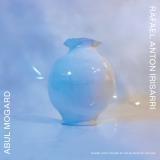
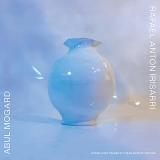
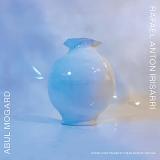
Marja de Sanctis’ cover artwork revisits the vessel sculpture from the duo’s first album, Impossibly Distant, Impossibly Close. There it appeared as raw, unfired clay. Here it has been fired in the kiln and finished with a glaze. Light gathers on its polished surface and spills into the surrounding space. As she explains, “I wanted to convey the idea of continuity within the duo, and the vessel became a kind of container for that idea. However, their music felt different this time, and with the collaboration of Martina and Andrea, I felt it should have a sleeker, softer, more glamorous look, very distant from the first raw appearance.” The transformation of the vessel from raw clay to fired form suggests a passage from immediacy toward permanence, mirroring the music’s gradual expansion.
In spring 2025, Abul Mogard and Rafael Anton Irisarri created the source material for their second album, Where Light Pauses in the Silence of the Sun, during a three-day residency at Morphine Raum in Berlin. Functioning as both recording studio and performance venue, the space has no stage, with the audience gathered around the performers. Working within an open framework, the duo reshaped the music each evening while recording the performances live to multitrack. Rotary speakers, modular synthesizers and bowed guitar formed the core of their sonic language, captured through a 1970s mixing console and microphones placed around the room.
Back in Mogard’s studio in Rome, the material was further crafted as motifs were stretched, fragments isolated, and tempos dissolved. Irisarri recorded additional guitar textures and treatments in New York, while passages recorded by Martina Bertoni and Andrea Burelli in Berlin reinforced the harmonic centres and brought breath, refinement and a new sensibility to their compositions. The process continued as Mogard’s layering and subtraction reassembled everyone’s parts into the final arrangement.
The album opens with “In the Eastern Wild,” building from a sparse outline into a monumental formation of low-frequency weight, its internal motion shaped by the rotating Leslie speaker. “Over the Domes” widens into a broader acoustic field, where sustained modular tones meet waves of softly plucked guitar. The music then turns inward with “A Blue Descent,” centred on Bertoni’s cello, whose growling timbre introduces a melancholic depth.
At the album’s centre, “In a Quiet Radiance” unfolds around a slow guitar ostinato, its luminous stillness opening into a more expansive and reflective state. Across its ten-minute span, Burelli’s violin lines and Bertoni’s lower cello phrases gradually surface, weaving through the harmonic field. Mogard brings Burelli’s processed voice to the fore, its emotive, operatic presence becoming one of the record’s pivotal moments. “Of Blessed Ages” suspends the sonic flow, shifting between parallel major and minor chords as lingering, slowly decaying melodies shape the music’s internal drift. The closing “Among Shadows” settles into a darker resonance as layered textures recede.
Mogard and Irisarri’s shared language balances restraint and maximalism. UK magazine Crack describes the music as “a tidal wave held in suspension,” while Dutch newspaper de Volkskrant writes, “What a colossal sound, and how this music strikes at the emotions.” Reflecting on the residency sessions, Irisarri recalls: “At moments I genuinely couldn’t tell if a sound was coming from me or from Abul. It stopped feeling like two people making decisions and began to feel like we were inside a system moving on its own."
Marja de Sanctis’ cover artwork revisits the vessel sculpture from the duo’s first album, Impossibly Distant, Impossibly Close. There it appeared as raw, unfired clay. Here it has been fired in the kiln and finished with a glaze. Light gathers on its polished surface and spills into the surrounding space. As she explains, “I wanted to convey the idea of continuity within the duo, and the vessel became a kind of container for that idea. However, their music felt different this time, and with the collaboration of Martina and Andrea, I felt it should have a sleeker, softer, more glamorous look, very distant from the first raw appearance.” The transformation of the vessel from raw clay to fired form suggests a passage from immediacy toward permanence, mirroring the music’s gradual expansion.
In spring 2025, Abul Mogard and Rafael Anton Irisarri created the source material for their second album, Where Light Pauses in the Silence of the Sun, during a three-day residency at Morphine Raum in Berlin. Functioning as both recording studio and performance venue, the space has no stage, with the audience gathered around the performers. Working within an open framework, the duo reshaped the music each evening while recording the performances live to multitrack. Rotary speakers, modular synthesizers and bowed guitar formed the core of their sonic language, captured through a 1970s mixing console and microphones placed around the room.
Back in Mogard’s studio in Rome, the material was further crafted as motifs were stretched, fragments isolated, and tempos dissolved. Irisarri recorded additional guitar textures and treatments in New York, while passages recorded by Martina Bertoni and Andrea Burelli in Berlin reinforced the harmonic centres and brought breath, refinement and a new sensibility to their compositions. The process continued as Mogard’s layering and subtraction reassembled everyone’s parts into the final arrangement.
The album opens with “In the Eastern Wild,” building from a sparse outline into a monumental formation of low-frequency weight, its internal motion shaped by the rotating Leslie speaker. “Over the Domes” widens into a broader acoustic field, where sustained modular tones meet waves of softly plucked guitar. The music then turns inward with “A Blue Descent,” centred on Bertoni’s cello, whose growling timbre introduces a melancholic depth.
At the album’s centre, “In a Quiet Radiance” unfolds around a slow guitar ostinato, its luminous stillness opening into a more expansive and reflective state. Across its ten-minute span, Burelli’s violin lines and Bertoni’s lower cello phrases gradually surface, weaving through the harmonic field. Mogard brings Burelli’s processed voice to the fore, its emotive, operatic presence becoming one of the record’s pivotal moments. “Of Blessed Ages” suspends the sonic flow, shifting between parallel major and minor chords as lingering, slowly decaying melodies shape the music’s internal drift. The closing “Among Shadows” settles into a darker resonance as layered textures recede.
Mogard and Irisarri’s shared language balances restraint and maximalism. UK magazine Crack describes the music as “a tidal wave held in suspension,” while Dutch newspaper de Volkskrant writes, “What a colossal sound, and how this music strikes at the emotions.” Reflecting on the residency sessions, Irisarri recalls: “At moments I genuinely couldn’t tell if a sound was coming from me or from Abul. It stopped feeling like two people making decisions and began to feel like we were inside a system moving on its own."
Marja de Sanctis’ cover artwork revisits the vessel sculpture from the duo’s first album, Impossibly Distant, Impossibly Close. There it appeared as raw, unfired clay. Here it has been fired in the kiln and finished with a glaze. Light gathers on its polished surface and spills into the surrounding space. As she explains, “I wanted to convey the idea of continuity within the duo, and the vessel became a kind of container for that idea. However, their music felt different this time, and with the collaboration of Martina and Andrea, I felt it should have a sleeker, softer, more glamorous look, very distant from the first raw appearance.” The transformation of the vessel from raw clay to fired form suggests a passage from immediacy toward permanence, mirroring the music’s gradual expansion.
- A1: Viaje Al Sol
- A2: The Maestro
- A3: Esferas De Cristal
- A4: Mama
- A5: Cascabel
- A6: Juguentes Rotos
- B1: Sigilo
- B2: Orquesta Sinfonica Angustia
- B3: Toro De Falaris
- B4: Perdon De Judas
- B5: Viento Androide
- B6: Corpus De Sangre
- A1: Dellarge - Viaje Al Sol (Silent Servant Remix) 7
- B1: Dellarge - Cascabel (Pedro Vian Remix) 7
lim. 150 blue transparent 180 Gr LP + 7" + Poster / incl. Silent Servant Remix
A cross-cutting label exploring the boundaries between different disciplines based on deep listening and music research, Modern Obscure Music is set to release 'INRI' (INDUSTRIA NACIONAL DEL RUIDO INFINITO) on the 1st December, the new album from Dellarge.
Inspired by the scenic beauty of his studio's surroundings at Lake Pátzcuaro in Michoacan, Mexico, Alejandro Barba, aka Dellarge, delves deep into the depths of his artistic consciousness to craft a spiritual album that encapsulates the essence of the place. 'INRI' stands for Industria Nacional del Ruido Infinito (National Industry of Infinite Noise) and serves as a vessel for Dellarge's innermost self-expression and reflections on the potential of humanity.
A multifaceted artist and veteran of the music industry for over two decades, his latest musical creation is an intimate and personal album and a departure from previous Techno/EBM-orientated Dellarge releases. 'INRI' (INDUSTRIA NACIONAL DEL RUIDO INFINITO) offers a mesmerizing blend of ambient, futuristic, and industrial sounds that transport listeners into a realm of mysticism, futurism, and duality and stands as a testament to Dellarge's artistic growth and his ability to transcend boundaries, offering listeners an immersive experience that connects them to his world.
Drawing inspiration from numerous sources, Dellarge found creative fuel in books such as 'El Arte de los Ruidos' by Luigi Russolo, 'Manifiestos y Textos Futuristas' by F.T. Marinetti, and science fiction classics including 'Congreso de Futurología' by Stanislaw Lem, 'Neuromancer' by William Gibson, and 'Dune' by Frank Herbert. Musically, he delved into the works of Coil, Michael Bundt, The Threshold Houseboys Choir, krautrock legends CAN and Popol Vuh, early Kraftwerk, Arthur Brown, Yello, Esquivel, The Residents, and Hector Lavoe for inspiration.
When asked about the creative process behind the album, Dellarge revealed a disciplined routine that involved immersing himself in the sounds, focusing on minute details that connected with the vivid world he envisioned. Ethereal tracks such as 'Viento Androide' and 'Viaje al Sol' offer a glimpse of a hopeful future, while darker compositions such as 'Corpus de Sangre' and 'Toro de Falaris', explore the wickedness and compassion within humanity. Each piece in the album represents a unique sonic journey.
'Viaje al Sol', the first single to be taken from the album, is set for release on the 27th October, and is also available as an EP which includes a remix from Juan Mendez aka Silent Servant. The remix is also included on the digital version of the album and available on 7" vinyl alongside an exclusive reworking of 'Cascabel' by the founder of Modern Obscure Music, Pedro Vian.
Replicant Memories is the seismic fallout from the clash between bvdub and East of Oceans: two of Brock Van Wey's three aliases representing different stylistic directions, while being vessels for the same unbridled oceanic creativity.
Within the four chapters of this epic, the bottomless emotion of bvdub melts into the euphoria of East of Oceans, electricity discharging and mists rising from their collision while they together reach new heights of intensity.
This music changes you. Like being exposed to forces of nature, there is no holding back and no place to hide within its wild embrace. It is music for surrendering into. And be left in gratitude for.
12” vinyl, full sleeve artwork with Mordançage front cover artwork by artist Jo Torres, design & centre labels by Ciaran birch. Limited run of 300.
“Singing Vessels” draws inspiration from the sonorities and aesthetics of Amazonian medicine ceremonies and traditional Andean music. At its heart is a collection of clay whistles from ancient South America, whose timbres conjure the vibrant soundworld of the Andes. The piece also incorporates shamanic instruments from the Amazon, such as the shacapa — a bundle of dry leaves whose rustling produces a deep, soothing texture with remarkable sensory resonance.
Interwoven with generative electronics, live looping and synthesisers, these organic timbres create evolving psychoacoustic spaces where the mystery of nature meets inner realms of perception and consciousness. The piece unfolds as a ceremonial passage through a shamanic ritual: beginning in a dense jungle of sounding entities, rising into moments of cathartic purging, dissolving into states of blessing and communion, and finally returning to the here and now with renewed awareness.
Nervio Cosmico is an electroacoustic experimental duo based in Bristol, formed by Chilean composer Daniel Linker and Italian sound artist Matteo Amadio. Blending acoustic instruments from ancient South American shamanic traditions with live looping, generative sound design, and live electronics, they craft sonic journeys that explore perception, consciousness, and a spiritual connection with nature.
Monolith 45 series I
A new chapter emerges within Organic Signs.Conceived as a vessel dedicated to a single frequency, Monolith 45 is born to trace the lineage of progressive trance — that tribal, hypnotic, and ceremonial sound that carved its path during the early 2000s, and which today we reclaim with reverence.
Each release stands as a stone marker along this continuum: timeless signals that resonate equally with memory and vision. As with the broader work of Organic Signs, this new line will follow a dual path: rescuing forgotten gems from the past while also curating new music that embodies the same spirit.
Monolith 45 becomes the place where past and present intertwine, shaping a narrative that honors tradition while opening new doors for exploration.
The first monolith in the series carries with it two totems of the genre:
On the A-side, Magnetrixx – Intraferences, originally released in the year 2000 on the legendary Tatsu Records. Behind this moniker stands Stefan Lewin, not only a key architect of the progressive trance sound but also the mind behind ACL (Audiophile Circuits League), one of the most special modular synthesizer brands..
His work bridges eras: from shaping the trancefloor at the turn of the millennium to designing instruments that define modern electronic creation.On the B-side, Ticon – Lo Mi Hi, a track that saw the light in 2001 on Digital Structures, one of the most influential labels of that era.
Ticon are nothing short of mythical within this universe — pioneers whose sound blurred borders between deep grooves, psychedelic textures, and progressive structures, leaving an indelible mark that still resonates with dancers and producers worldwide.
With Monolith 45, we seek not only to preserve these transmissions but to project them into the present: to reawaken a sound that was always more than music, a tribal pulse, a ritual language that invited bodies and minds into collective trance.
This is our homage, our offering, and our way of extending the path forward.
Her New Knife ist eine Shoegaze-/Alternative-Band aus Philadelphia, Pennsylvania. Zu den Mitgliedern der Gruppe gehören Edgar Atencio (Gitarre und Gesang), Ben Kachler (Gitarre), Carolina Schooley (Bass) und Elijah Ford (Schlagzeug). Die Band veröffentlichte letztes Jahr ,chrome is lullaby" über das einflussreiche Label Julia's War Recordings. Die EP besticht durch ihren rohen, verletzlichen Charme und bietet Fans von Shoegaze und Post-Punk eine tiefe Verbindung zu ihrem einzigartigen Sound. Nach einer einmaligen Björk-Coverversion (,Pagan Poetry") kehrt die Band nun mit einer 6-Song-Remix-EP zurück, die Remixe von TAGABOW, Sword II, Frost Children und anderen. Die physische Version der Veröffentlichung ,Chrome is Lullaby Deluxe" enthält auf Seite A die EP ,Chrome is Lullaby" und auf Seite B die entsprechenden Remixe.
This is the story of an artist in search of sound and breath: an artist who dares to question the rhythm of silence—an invitation to rethink music, sound, and musical collaboration. This is the story of a journey that, after opening countless paths, has finally found its vessel—and its messengers. Three artists of profound musical truth and radical freedom, merging into an exceptional trio that crosses genres and transcends words in a journey toward pure emotion.
Le Rythme du Silence is the culmination of this long search. Yom delivers it here with violinist Théo Ceccaldi and cellist Valentin Ceccaldi—kindred spirits in sound. “I’ve been working on this idea of the ‘rhythm of silence’ for years,” Yom explains. “I first heard the phrase from a Sufi master, describing the foundation of meditation. It struck something deep in me. I’ve practiced meditation for a long time, and we often think of it as a kind of stillness—opposed to noise and life. But in truth, the rhythm of silence enables meditation. It means accepting that the world continues to move and live around you, even as you try to be still. I wanted to compose from that place. To imagine sound as vibratory matter—the primal substance of creation. That required letting go of fixed structures: forgetting melodies, abandoning the idea of a constructed solo. I needed to leave behind music as a system, and touch sound as a living, breathing entity. It took years. Many projects led me elsewhere. But with the Ceccaldi brothers, I finally found the right resonance. Working with them was simply obvious—it was indredibly powerful.”
Yom first rose to prominence reimagining Jewish traditional music with his 2008 debut New King of Klezmer Clarinet. Since then, his path has led through rock (With Love, 2011; You Will Never Die, 2018), electronic utopias (The Empire of Love, 2013), meditative and sacred soundscapes (Prière, 2018), and countless unclassifiable hybrids (Unue, 2009; Green Apocalypse, 2010). It was inevitable that he would eventually cross paths with the free-spirited Théo and Valentin Ceccaldi—two artists who also place collaboration and genre-blurring at the heart of their artistic development. Their projects are always bold, demanding, and full of life (Kutu, Tricollectif, ONJ, Velvet Revolution, Grand Orchestre du Tricot, Lagon Noir, Constantine, etc.). And so, when the three met within the iXi string quartet, something clicked.
“I was seated between the two of them in the quartet,” Yom recalls, “and I could feel their energy flowing from both sides—it was wild! They’re so tuned into each other, they don’t need words. It’s like they’re connected by musical Wi-Fi. The groove happens instantly. They’re precise when they want to be—thanks to their experience in pop-influenced projects —but they can also let go completely, diving into pure sound. That’s exactly what this project needed.”
Without a single rehearsal, the trio formed instinctively. They began performing Yom’s compositions live, unfolding them into a single continuous piece, where clarinet and strings stretch the limits of sound and breath.
Bowed, plucked, or prepared with clothespins, the Ceccaldi strings engage in a playful and intense dialogue with Yom’s custom B-flat clarinet. Through their imaginative listening and fearless invention, air and space open into a vast new soundscape—one that lies somewhere between meditation and healing music.
“When Yom shared the concept of the rhythm of silence, we were immediately drawn in,” says cellist Valentin Ceccaldi. “There’s a deep intensity and spiritual commitment in his music that really spoke to me. With this trio, we’re trying to dive into the core of sound—but also to create a kind of communion with the audience. It’s like gradually turning up the volume on silence, and realizing it’s made of countless tiny sounds—the music of particles in motion" This stripped-down intensity demands full presence—body and mind—of these three musicians, vibrationally connected in a state close to trance. With them, we enter a journey - not religious, but sacred nonetheless.
The Rhythm of Silence becomes an echo of our most intimate, most distant inner landscapes.
An album—and a trio—to return to without end.
Jamie McCue is the man behind the Canadian label Silent Season and his newest concern, Moon Garden is fast becoming just as vital. This fantastic fourth outing comes from Transient Vessels, who McCue describes as "a local artist and good friend of mine." Opener 'Another Day' is a slow-motion motion dubbed-out melon twister that echoes the early Leftfield sound and is detailed with both textured synth leads and more introspective chords. 'Denihilism' is just as slow motion but deeply absorbing with plenty of wide open space for the pads to linger and the drums to churn and hypnotise.