Suche:victim recordings

Styles
Alle
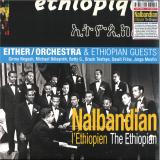
NALBANDIAN THE ETHIOPIAN & EITHER/ORCHESTRA - NALBANDIAN THE ETHIOPIAN (ETHIOPIQUES)

The Éthiopiques series returns! Essential archive recordings from an extremely fruitful period in Ethiopian music.

Before “Swinging Addis” took over the world, there was Moussié Nerses Nalbandian — the Armenian-born composer who shaped modern Ethiopian music. Mentor, arranger, and pioneer, he laid the foundations of Ethio-jazz.

This Éthiopiques volume revives his forgotten legacy, recorded live by Either/ Orchestra First issue ever with new exclusive photos and in depth liner 8-page insert.

“Ethiopian jazzmen are the best musicians that we have seen so far in Africa.
They really are promising handlers of jazz instruments.”

Wilbur De Paris
(1959, after a concert in Addis Ababa)

አዲስ፡ዘመን። *Addis zèmèn* **A new era.**
The time is the mid-1950s and early 1960s, just before "Swinging Addis" bloomed – or rather boomed – onto the scene. Brass instruments are still dominant, but the advent of the electric guitar, and the very first electronic organs, are just around the corner. Rock’n'Roll, R’n’B, Soul and the Twist have not yet barged their way in. Addis Ababa is steeped in the big band atmosphere of the post-war era, with Glenn Miller's *In the* *Mood* as its world-wide theme song, neck and neck with the Latin craze that was in vogue at the same period. Life has become enjoyable once again, with the return of peace after the terrible Italian Fascist invasion of Ethiopia (1935-1941). The redeployment of modern music is part and parcel of the postwar reconstruction. *Addis zèmèn* – a new era – is the watchword of the postwar period, just as it was all across war-torn Europe.
The generation who were the young parents of baby boomers** were the first to enjoy this musical renaissance, before the baby boomers themselves took over and forever super-charged the soundtrack of the final days of imperial reign. Music is Ethiopia's most popular art form, and very often serves as the best barometer for the upsurge of energy that is critical for reconstruction. Whether it be jazz in Saint-Germain-des-Prés or the *zazous* who revolutionised both jazz and French *chanson* after the *Libération*, be it Madrid's post-Franco Movida, or Dada, the Surrealists and *les années folles* that followed World War I, the periods just after mourning and hardship always give rise to brighter and more tuneful tomorrows. Addis Ababa, as the country's capital, and the epicentre of change, was no exception to this vital rule.

**Two generations of Nalbandian musicians**
Nersès Nalbandian belonged to a family of Armenian exiles, who had moved to Ethiopia in the mid-1920s. The uncle Kevork arrived along with the fabled "*Arba Lidjotch*", the** "*40 Kids*", young Armenian orphans and musicians that the Ras Tafari had recruited when he visited Jerusalem in 1924, intending to turn their brass band into the official imperial band. If Kevork Nalbandian was the one who first opened the way of modernism, pushing innovation so far as to invent musical theatre, it was his nephew Nersès who would go on to become, from the 1940s and until his death in 1977, a pivotal figure of modern Ethiopian music and of the heights it. Going all the way back to the 1950s. Nothing less. And it is Nersès who is largely to thank for the brassy colours that so greatly contributed to the international renown of Ethiopian groove. While the younger generations today venture timidly into the genealogy of their country's modern music, often losing their way amidst a distinctly xenophobic historiographical complacency, many survivors of the imperial period are still around to bear witness and pay tribute to the essential role that "Moussié Nersès" played in the rise of Abyssinia's musical modernity.
Given the year of his birth (15 March 1915), no one knows for sure if Nersès Nalbandian was born in Aintab, today Gaziantep (Turkiye/former Ottoman Empire) or on the other side of the border in Alep, Syria... What is certain is that his family, like the entire Armenian community, was amongst the victims of the genocide perpetrated by the Turks. Alep, the place of safety – today in ruins.
Before Nersès then, there was uncle Kevork (1887-1963). For a quarter of a century, he was a whirlwind of activity in music teaching and theatrical innovation. *Guèbrè Mariam le Gondaré* (የጎንደሬ ገብረ ማርያም አጥቶ ማግኘት, 1926 EC=1934) is his most famous creation. This play included "ten Ethiopian songs" — a totally innovative approach. According to his autobiographical notes, preserved by the Nalbandian family, Kevork indicates that he composed some 50 such pieces over the course of his career. This shows just how much he understood, very early on, the critical importance of song as Ethiopia's crowning artistic form. Indeed, for Ethiopian listeners, the most important thing is the lyrics, with all their multifarious mischief, far more than a strong melody, sophisticated arrangements or even an exceptional voice. (This is also why Ethiopians by and large, and beginning with the artists and producers themselves, believed for a long time — and wrongly — that their music could not possibly be exported, and could never win over audiences abroad, who did not speak the country's languages).

Last but not least, one of Kevork's major contributions remains composing Ethiopia's first national anthem – with lyrics by Yoftahé Negussié.
Nersès Nalbandian moved to Ethiopia at the end of the 1930s, at the behest of his ground-breaking uncle. Proficient in many instruments (pretty much everything but the drums), conductor, choir director, composer, arranger, adapter, creator, piano tuner, purveyor of rented pianos,... he was above all an energetic and influential teacher. From 1946 onwards, thanks to Kevork's connexion, Nersès was appointed musical director of the Addis Ababa Municipality Band. In just a few years, Nersès transformed it into the first truly modern ensemble, thanks to the quality of his teaching, his choice of repertoire, and the sophistication of his arrangements. It was this group that would go on to become the orchestra of the Haile Selassie Theatre shortly after its inauguration in 1955, which was a major celebration of the Emperor's jubilee, marking the 25th anniversary of his on-again-off-again reign.

At some point or other in his long career, Nersès Nalbandian had a hand in the creation of just about every institutional band (Municipality Band, Police Orchestra, Imperial Bodyguard Band, Army Band, Yared Music School…), but it was with the Haile Selassie Theatre – today the National Theatre – that his abilities were most on display, up until his death in 1977. To this must be added the development of choral singing in Ethiopia, hitherto unknown, and a sort of secret garden dedicated to the memory of Armenian sacred music, and brought together in two thick, unpublished volumes. Shortly before his death (November 13, 1977), he was appointed to lead the impressive Ethiopian delegation at Festac in Lagos, Nigeria (January-February 1977).

His status as a stateless foreigner regularly excluded him from the most senior positions, in spite of the respect he commanded (and commands to this day) from the musicians of his era. Naturally gifted and largely self-taught, Nerses was tirelessly curious about new musical developments, drawing inspiration from the very first imported records, and especially from listening intensely to the musical programmes broadcast over short-wave radio – BBC *First*. A prolific composer and arranger, he was constantly mindful of formalising and integrating Ethiopian parameters (specific “musical modes”, pentatonic scale, and the dominance of ternary rhythms) into his “modernisation” of the musical culture, rather than trying to over-westernise it. It even seems very probable that *Moussié* Nerses made a decisive contribution to the development of tighter music-teaching methods, in order to revitalise musical education during this period of prodigious cultural ferment. Flying in the face of all the historiographical and musicological evidence, it is taken as sacrosanct dogma that the four musical modes or chords officially recognised today, the *qǝñǝt* or *qiñit* (ቅኝት), are every bit as millennial as Ethiopia itself. It would appear however that some streamlining of these chords actually took place in around 1960. It was only from this time onward that music teaching was structured around these four fundamental musical modes and chords: *Ambassel*, *Bati*, *Tezeta* and *Antchi Hoyé*. A historical and musical “details” that is, apparently, difficult to swallow, especially if that should honour a *foreigner*. Modern Ethiopian music has Nersès to thank for many of its standards and, to this day, it is not unusual for the National Radio to broadcast thunderous oldies that bear unmistakable traces of his outrageously groovy touch.

Auf Lager

Bei uns am Lager und sofort versandfertig

22,06
Guilty Razors - Complete Recordings 1977 - 1978

UILTY RAZORS, BONA FIDE PUNKS.


Writings on the topic that go off in all directions, mind-numbing lectures given by academics, and testimonies, most of them heavily doctored, from those who “lived through that era”: so many people today fantasize about the early days of punk in our country… This blessed moment when no one had yet thought of flaunting a ridiculous green mohawk, taking Sid Vicious as a hero, or – even worse – making the so-called alternative scene both festive and boorish. There was no such thing in 1976 or 1977, when it wasn’t easy to get hold of the first 45s by the Pistols or the Clash. Few people were aware of what was happening on the fringes of the fringes at the time. Malcolm McLaren was virtually unknown, and having short hair made you seem strange. Who knew then that rock music, which had taken a very bad turn since the early 1970s, would once again become an essential element of liberation? That, thanks to short and fast songs, it would once again rediscover that primitive, social side that was so hated by older generations? Who knew that, besides a few loners who read the music press (it was even better if they read it in English) and frequented the right record stores? Many of these formed bands, because it was impossible to do otherwise. We quickly went from listening to the Velvet Underground to trying to play the Stooges’ intros. It’s a somewhat collective story, even though there weren’t many people to start it.
The Guilty Razors were among those who took part in this initial upheaval in Paris. They were far from being the worst. They had something special and even released a single that was well above the national average. They also had enough songs to fill an album, the one you’re holding. In everyone’s opinion, they were definitely not among the punk impostors that followed in their wake. They were, at least, genuine and credible.

Guilty Razors, Parisian punk band (1975-1978). To understand something about their somewhat linear but very energetic sound, we might need to talk about the context in which it was born and, more broadly, recall the boredom (a theme that would become capital in punk songs) coupled with the desire to blow everything off, which were the basis for the formation of bands playing a rejuvenated rock music ; about the passion for a few records by the Kinks or the early Who, by the Stooges, by the Velvet mostly, which set you apart from the crowd.
And of course, we should remember this new wave, which was promoted by a few articles in the specialized press and some cutting-edge record stores, coming from New York or London, whose small but powerful influence could be felt in Paris and in a handful of isolated places in the provinces, lulled to sleep by so many appalling things, from Tangerine Dream to President Giscard d’Estaing...
In 1975-76, French music was, as almost always, in a sorry state ; it was still dominated by Johnny Hallyday and Sylvie Vartan. Local rock music was also rather bleak, apart from Bijou and Little Bob who tried to revive this small scene with poorly sound-engineered gigs played to almost no one.
In the working class suburbs at the time, it was mainly hard rock music played to 11 that helped people forget about their gruelling shifts at the factory. Here and there, on the outskirts of major cities, you still could find a few rockers with sideburns wearing black armbands since the death of Gene Vincent, but it wasn’t a proper mass movement, just a source of real danger to anyone they came across who wasn't like them. In August 1976, a festival unlike any other took place in Mont-de-Marsan – the First European Punk Festival as the poster said – with almost as many people on stage as in the audience. Yet, on that day, a quasi historical event happened, when, under the blazing afternoon sun, a band of unknowns called The Damned made an unprecedented noise in the arena, reminiscent of the chaotic Stooges in their early adolescence. They were the first genuine punk band to perform in our country: from then on, anything was possible, almost anything seemed permissible.

It makes sense that the four+1 members of Guilty Razors, who initially amplified acoustic guitars with crappy tape recorder microphones, would adopt punk music (pronounced paink in French) naturally and instinctively, since it combines liberating noise with speed of execution and – crucially – a very healthy sense of rebellion (the protesters of May 1968 proclaimed, and it was even a slogan, that they weren’t against old people, but against what had made them grow old. In the mid-1970s, it seemed normal and obvious that old people should now ALSO be targeted!!!).
At the time, the desire to fight back, and break down authority and apathy, was either red or black, often taking the form of leafleting, tumultuous general assemblies in the schoolyard, and massive or shabby demonstrations, most of the time overflowing with an exciting vitality that sometimes turned into fights with the riot police. Indeed, soon after the end of the Vietnam War and following Pinochet’s coup in Chile, all over France, Trotskyist and anarcho-libertarian fervour was firmly entrenched among parts of the educated youth population, who were equally rebellious and troublemakers whenever they had the chance. It should also be noted that when the single "Anarchy in the UK" was first heard, even though not many of us had access to it, both the title and its explosive sound immediately resonated with some of those troublemakers crying out for ANARCHY!!! Meanwhile, the left-wing majority still equated punks with reckless young neo-Nazis. Of course, the widely circulated photos in the mainstream press of Siouxsie Sioux with her swastikas didn’t necessarily help to win over the theorists of the Great Revolution. It took Joe Strummer to introduce The Clash as an anti-racist, anti-fascist and anti-ignorance band for the rejection of old-school revolutionaries to fade a little.

The Lycée Jean-Baptiste Say at Porte d’Auteuil, despite being located in the very posh and very exclusive 16th arrondissement of Paris, didn’t escape these "committed" upheavals, which doubled as the perfect outlet for the less timid members of this generation.
“Back then, politics were fun,” says Tristam Nada, who studied there and went on to become Guilty Razors’ frontman. “Jean-Baptiste was the leftist high-school in the neighbourhood. When the far right guys from the GUD came down there, the Communist League guys from elsewhere helped us fight them off.”
Anything that could challenge authority was fair game and of course, strikes for just about any reason would lead to increasingly frequent truancy (with a definitive farewell to education that would soon follow). Tristam Nada spent his 10th and 11th unfinished grades with José Perez, who had come from Spain, where his father, a janitor, had been sentenced to death by Franco. “José steered my tastes towards solid acts such as The Who. Like most teenagers, I had previously absorbed just about everything that came my way, from Yes to Led Zeppelin to Genesis. I was exploring… And then one day, he told me that he and his brother Carlos wanted to start a rock band.” The Perez brothers already played guitar. “Of course, they were Spanish!”, jokes their singer. “Then, somewhat reluctantly, José took up the bass and we were soon joined by Jano – who called himself Jano Homicid – who took up the rhythm guitar.” Several drummers would later join this core of not easily intimidated young guys who didn’t let adversity get the better of them.

The first rehearsals of the newly named Guilty Razors took place in the bedroom of a Perez aunt. There, the three rookies tried to cover a few standards, songs that often were an integral part of their lives. During a first, short gig, in front of a bewildered audience of tough old-school rockers, they launched into a clunky version of the Velvet Underground's “Heroin”. Challenge or recklessness? A bit of both, probably… And then, step by step, their limited repertoire expanded as they decided to write their own songs, sung in a not always very accurate or academic English, but who cared about proper grammar or the right vocabulary, since what truly mattered was to make the words sound as good as possible while playing very, very fast music? And spitting out those words in a language that left no doubt as to what it conveyed mattered as well.
Trying their hand a the kind of rock music disliked by most of the neighbourhood, making noise, being fiercely provocative: they still belonged to a tiny clique who, at this very moment, had chosen to impose this difference. And there were very few places in France or elsewhere, where one could witness the first stirrings of something that wasn’t a trend yet, let alone a movement.

In the provinces, in late 1976 or early 1977, there couldn’t be more than thirty record stores that were a bit more discerning than average, where you could hear this new kind of short-haired rock music called “punk”. The old clientele, who previously had no problem coming in to buy the latest McCartney or Aerosmith LP, now felt a little less comfortable there…
In Paris, these enlightened places were quite rare and often located nex to what would become the Forum des Halles, a big shopping mall. Between three aging sex workers, a couple of second-hand clothes shops, sellers of hippie paraphernalia and small fashion designers, the good word was loudly spread in two pioneering places – propagators of what was still only a new underground movement. Historically, the first one was the Open Market, a kind of poorly, but tastefully stocked cave. Speakers blasted out the sound of sixties garage bands from the Nuggets compilation (a crucial reference for José Perez) or the badly dressed English kids of Eddie and the Hot Rods. This black-painted den was opened a few years earlier by Marc Zermati, a character who wasn’t always in a sunny disposition, but always quite radical in his (good) choices and his opinions. He founded the independent label Skydog and was one of the promoters of the Mont-de-Marsan punk festivals. Not far from there was Harry Cover, another store more in tune with the new New York scene, which was amply covered in the house fanzine, Rock News (even though it was in it that the photos of the Sex Pistols were first published in France).
It was a favorite hang-out of the Perez brothers and Tristam Nada, as the latter explained. “It’s at Harry Cover’s that we first heard the Pistols and Clash’s 45s, and after that, we decided to start writing our first songs. If they could do it, so could we!”
The sonic shocks that were “Anarchy in the UK”, “White Riot” or the Buzzcocks’s EP, “Spiral Scratch” – which Guilty Razors' sound is reminiscent of – were soon to be amplified by an unparalleled visual shock. In April 1977, right after the release of their first LP, The Clash performed at the Palais des Glaces in Paris, during a punk night organised by Marc Zermati. For many who were there, it was the gig of a lifetime…
Of course, Guilty Razors and Tristam were in the audience: “That concert was fabulous… We Parisian punks were almost all dressed in black and white, with white shirts, skinny leather ties, bikers jackets or light jackets, etc. The Clash, on the other hand, wore colourful clothes. Well, the next day, at the Gibus, you’d spot everyone who had been at this concert, but they weren’t wearing anything black, they were all wearing colours.”

It makes sense to mention the Gibus club, as Guilty Razors often played there (sometimes in front of a hostile audience). It was also the only place in Paris that regularly scheduled new Parisian or Anglo-Saxon acts, such as Generation X, Siouxsie and the Banshees, the Slits, and Johnny Thunders who would become a kind of messed-up mascot for the venue. A little later, in 1978, the Rose Bonbon – formerly the Nashville – also attracted nightly owls in search of electric thrills… In 1977, the iconic but not necessarily excellent Asphalt Jungle often played at the Gibus, sometimes sharing the bill with Metal Urbain, the only band whose aura would later transcend the French borders (“I saw them as the French Sex Pistols,” said Geoff Travis, head of their British label Rough Trade). Already established in this small scene, Metal Urbain helped the young and restless Guilty Razors who had just arrived. Guitarist for Metal Urbain Hermann Schwartz remembers it: “They were younger than us, we were a bit like their mentors even if it’s too strong a word… At least they were credible. We thought they were good, and they had good songs which reminded of the Buzzcocks that I liked a lot. But at some point, they started hanging out with the Hells Angels. That’s when we stopped following them.”

The break-up was mutual, since, Guilty Razors, for their part, were shocked when they saw a fringe element of the audience at Metal Urbain concerts who repeatedly shouted “Sieg Heil” and gave Nazi salutes. These provocations, even still minor (the bulk of the skinhead crowd would later make their presence felt during concerts), weren’t really to the liking of the Perez brothers, whose anti-fascist convictions were firmly rooted. Some things are non-negotiable.
A few months earlier (in July 1978), Guilty Razors had nevertheless opened very successfully for Metal Urbain at the Bus Palladium, a more traditonally old-school rock night-club. But, as was sometimes the case back then, the night turned into a mass brawl when suburban rockers came to “beat up punks”.

Back then, Parisian nights weren’t always sweet and serene.

So, after opening as best as they could for The Jam (their sound having been ruined by the PA system), our local heroes were – once again – met outside by a horde of greasers out to get them. “Thankfully,” says Tristam, “we were with our roadies, motorless bikers who acted as a protective barrier. We were chased in the neighbouring streets and the whole thing ended in front of a bar, with the owner coming out with a rifle…”
Although Tristam and the Perez brothers narrowly escaped various, potentially bloody, incidents, they weren’t completely innocent of wrongdoing either. They still find amusing their mugging of two strangers in the street for example (“We were broke and we simply wanted to buy tickets for the Heartbreakers concert that night,” says Tristam). It so happened that their victims were two key figures in the rock business at the time: radio presenter Alain Manneval and music publisher Philippe Constantin. They filed a complaint and sought monetary compensation, but somehow the band’s manager, the skilful but very controversial Alexis, managed to get the complaint withdrawn and Guilty Razors ended up signing with Constantin with a substantial advance.

They also signed with Polydor and the label released in 1978 their only three-track 45, featuring “I Don't Wanna be A Rich”, “Hurts and Noises” and “Provocate” (songs that exuded perpetual rebellion and an unquenchable desire for “class” confrontation). It was a very good record, but due to a lack of promotion (radio stations didn’t play French artists singing in English), it didn’t sell very well. Only 800 copies were allegedly sold and the rest of the stock was pulped… Initially, the three tracks were to be included on a LP that never came to be, since they were dropped by Polydor (“Let’s say we sometimes caused a ruckus in their offices!” laughs Tristam.) In order to perfect the long-awaited LP, the band recorded demos of other tracks. There was a cover of Pink Floyd's “Lucifer Sam” from the Syd Barrett era – proof of an enduring love for the sixties’ greats –, “Wake Up” a hangover tale and “Bad Heart” about the Baader-Meinhof gang, whose actions had a profound impact on the era and on a generation seeking extreme dissent... On the album you’re now discovering, you can also hear five previously unreleased tracks recorded a bit later during an extended and freezing stay in Madrid, in a makeshift studio with the invaluable help of a drummer also acting as sound engineer. He was both an enthusiastic old hippie and a proper whizz at sound engineering. Here too, certain influences from the fifties and sixties (Link Wray, the Troggs) are more than obvious in the band’s music.

Shortly after a final stormy and rather barbaric (on the audience’s side) “Punk night” at the Olympia in June 1978, Tristam left the band ; his bandmates continued without him for a short while.

But like most pioneering punk bands of the era, Guilty Razors eventually split up for good after three years (besides once in Spain, they’d only played in Paris). The reason for ceasing business activities were more or less the same for everyone: there were no venues outside one’s small circuit to play this kind of rock music, which was still frightening, unknown, or of little interest to most people. The chances of recording an LP were virtually null, since major labels were only signing unoriginal but reassuring sub-Téléphone clones, and the smaller ones were only interested in progressive rock or French chanson for youth clubs. And what about self-production? No one in our small safety-pinned world had thought about it yet. There wasn’t enough money to embark on that sort of venture anyway.

So yes, the early days of punk in France were truly No Future!

nicht am Lager

Bestelle jetzt und wir bestellen den Artikel für dich beim Lieferanten.

21,43

Last In: vor 6 Tagen
Midryasi's Kult - Italian Dark Sound
  • 1: Taste For Damnation
  • 2: Italian Dark Sound
  • 3: Slaughter
  • 4: M.i.m. Mayhem
  • 5: Hypnopriest
  • 6: Cellar
  • 7: The Lost Son Of Sylvester Anfang
  • 8: Mountain Devil

DYING VICTIMS PRODUCTIONS is proud to present MIDYRASI’S KULT’s highly anticipated debut album, Italian Dark Sound, on CD and vinyl LP formats. MIDRYASI'S KULT are revolutionary and uncompromised. Featuring veterans from such Italian doom stalwarts as Doomsword, Midryasi, Agarthi, and Fiurach, their unique blend of elements from the NWOBHM, doom metal, and early black metal – all fused in their distinctive national dark-sound tradition, which includes such cult legends as Black Hole and Death SS – results in an obscure, hypnotic, and exciting formula. In March 2025, after just one week on Bandcamp, MIDYRASI’S KULT were intercepted by Caligari Records, who released on cassette their debut demo, Mountain Devil. Featuring three songs in a concise 15 minutes, this demo reaped international acclaim for its originality and attitude. But that was but a foretaste of darker delights to come. Witness the first full-length of MIDRYASI’S KULT, Italian Dark Sound.

Truly titled, Italian Dark Sound is an intoxicating spelunk into catacombs both idiosyncratic and indefinable. Totaling 32 time-/mind-expanding minutes, the eight primary tracks here – the outro is titled “The Lost Son of Sylvester Anfang,” which should offer an obvious clue to the black-metal-minded out there – each offer something different from the next, and yet all add up into a shadowy experience that’s both rocking and atmospheric. In fact, if one were to single out an aspect between the demo and album, it’s that MIDYRASI’S KULT exude more energy on this full-length without sacrificing any of their occult aura. But, just like that demo, Italian Dark Sound features supremely pro production – gritty, earthy, and yet kaleidoscopic in texture – under the guidance of Gabry "The Way" Strada, head of RDF Studio and who’s now collaborating on the upcoming Doomsword new album. In the vein of an open artistic project, all the artwork is made by vocalist / bassist Geilt himself, and up to 11 musicians have been involved in these recordings

vorbestellen27.03.2026

erscheint voraussichtlich am 27.03.2026

22,65
Communards - Red (35th Anniversary Edition) 2x12"

Red Vinyl

The Communards’ sophomore album ‘Red’ consolidated the genius of the musical partnership between Bronski Beat singer Jimmy Somerville and pianist Richard Coles. Fusing synths and hi-NRG production with lush string and horn arrangements, The Communards straddled pop and the political, the album’s themes set against the political unrest and moral panic of late 80s Britain. A global smash upon its release, this remastered and expanded 35Th Anniversary Edition features an extensive array of B-sides, live tracks, demo versions and remixes, including classic mixes by legendary 80s club doyens Shep Pettibone, Clivilles & Cole (better known as C&C Music Factory) and a euphoric new 2022 remix of ‘Never Can Say Goodbye’ by UK outfit The 2 Bears (Hot Chip’s Joe Goddard and DJ Raf Rundell). Available on Deluxe Double CD , Collector White & Red Double Vinyl , Black Vinyl. All editions remastered , with new sleeve notes.

nicht am Lager

Bestelle jetzt und wir bestellen den Artikel für dich beim Lieferanten.

40,97

Last In: vor 51 Tagen
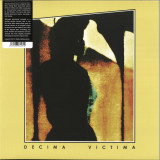
DECIMA VICTIMA - UN HOMBRE SOLO

Decima Victima were a Spanish band that, during their short-lived career between 1981 and 1984, developed a very personal sound reminiscent of Joy Division, The Cure and other British post-punk bands. Despite commercial success evaded them, rarely has any Spanish band achieved such a high degree of quality and coherence in their music and personality. Although included in our past release MR 305 (2010) as part of a limited edition boxset, this is the first time their second album "Un Hombre Solo" (1984) gets an official reissue in its original single LP format. For this edition, the sound of the original tape recordings has been cleaned and improved and the artwork has been slightly modified following the band's ideas.

nicht am Lager

Bestelle jetzt und wir bestellen den Artikel für dich beim Lieferanten.

22,27

Last In: vor 15 Monaten
DECIMA VICTIMA - DECIMA VICTIMA LP

Décima Víctima were a Spanish band that, during their short-lived career between 1981 and 1984, developed a very personal sound reminiscent of Joy Division, The Cure and other British post-punk bands. Rarely has any Spanish band achieved such a high degree of quality and coherence in their music and personality. Despite only being active for under three years, Décima Víctima left a long-lasting legacy, and their influence would later be heard in Spanish bands such as Family, Los Planetas and Sr Chinarro. For this edition, the sound of the original tape recordings has been cleaned and improved and the artwork has been slightly modified following the band's original idea. The original ssions were no short of joy and experimentation. Paco Trinidad, the producer, understood what the band wanted and managed to achieve it technically. Despite commercial success evaded them, their first LP was acclaimed by the press, especially by El Pais, one of the biggest-selling newspapers in Spain. Unavailable for years and always in high demand, this is the first time their debut album gets an official reissue in its original single LP format. For this edition, the sound of the original tape recordings has been cleaned and improved and the artwork has been slightly modified following the band's original idea.

nicht am Lager

Bestelle jetzt und wir bestellen den Artikel für dich beim Lieferanten.

22,27

Last In: vor 16 Monaten
Joel Sarakula - Soft Focus LP

Joel Sarakula's new album "Soft Focus" is a mid-career album spanning his many influences and genres including Soft-Rock, Funk and Indie Pop, all brought under the umbrella of his gentle gaze and a 'soft' aesthetic. "Soft Focus" is also the name of a photographic technique born out of a spherical abberation of the lens where the image is a bit blurry and undefined: it's both flattering and forgiving on the subject. It's an apt title. As a lifetime wearer of (vintage) glasses, Sarakula knows a lot about spherical abberations. Perhaps he produced these songs with his glasses off as these are abstract and warm vignettes, never overstaying their welcome and for this reason Sarakula manages to feature twelve new tracks on "Soft Focus".

Highlights include one of the two Shawn Lee produced tracks "I'll Get By Without You", the rockier, iberic beat of "King Of Spain", the soulful affirmation of "Back For Your Love" and the psychedelic-tinged "Bird Of Paradise" and "Microdosing". This is a lovingly crafted album, well polished and it feels like the culmination of Sarakula's adventures in soulful soft-rock and his defining statement in the genre. While comparisons will be made with contemporary projects like Shawn Lee's Young Gun Silver Fox, Drugdealer, Benny Sings and Prep, echoes of soft-rock icons Ned Doheny, Boz Scaggs, Todd Rundgren and Michael Franks also ripple gently through the album.

Imagine if Ray Manzarek was the frontman for the Bee Gees... It's a neat visual introduction to Joel Sarakula, a UK-based Australian artist who writes, produces and sings Soulful Pop, gazing out at a contemporary world through vintage glasses, vintage threads and long blond hair. His music is informed by a rich, 1970s-inspired palette, drawing on soft-rock, funk and disco influences: sunny, uptempo jams for darker times. Self-aware that he looks and occasionally sounds like the love child of Ray Manzarek and the Gibb brothers, his self-deprecating sense of humour is always there just below the fringe.

Born in Sydney, based in UK and international in outlook Sarakula is a songwriter who has travelled the world in search of his muse, experiencing everything from being a victim of Caribbean carjackings to performing in the remote fishing villages of Norway before finally establishing his career in the UK and Europe. Since then he has released albums such as "Island Time" (2023), "Companionship" (2020), "Love Club" (2018) and "The Imposter" (2015) that have racked up plays on rotation across national UK and European radio and got him noticed in The New York Times, The Independent (UK), The Irish Times, Rolling Stone Germany, El Pais (Spain) and Sydney Morning Herald. It's- been a long road finding his current cult status starting out at the piano from a young age in suburban Sydney, writing and singing songs by the time he was a teenager and onstage by fifteen years old playing jazz standards in his local golf club. "I came from humble beginnings, it's best not to mention" as he sings in his 70s boogie influenced song "I'm Still Winning". Joel Sarakula is a fixture on the festival and club circuit having previously performed at SXSW, Primavera Sound and Glastonbury festivals. Ever the internationalist, he tours with pickup bands sourced from each territory he plays in: a Barcelona band for Spain, a Berlin band for Germany and so forth. This cross-cultural exchange is another echo of the 1970s when world travelling soul and pop artists from the US did the same and guarantees that his live shows remain fresh, exciting and absolutely contemporary.

vorbestellen08.11.2024

erscheint voraussichtlich am 08.11.2024

20,97
Sibla x Zygos - The Path

Sibla X Zygos

The Path

12inchRARE10
Rarefied
04.10.2024

Rarefied's Newest Sonic Assault Finds Label Mates Sibla And Zygos In Some Chthonic Dwelling Performing Occult Rites For Sub Bass Dominance. Three Prime Cuts Of Out-there Dubstep For Fans Of Moldy, Decrepit Basements, Decaying Houses In The Middle Of Woods, And Fog Drenched Nights.

the Path' Heaves Underneath Pneumatic Infrabass Pressure And A Din Of Percussion That Sounds Like A Warehouse Falling Apart. It Lurches Forward On Broken Ankles, Scanning With Cataract Eyes, For Its Next Victim.

The Aptly Named haunted' Is Built From The Ground Up On Evp Recordings, Static Hiss, And Disintegrating Tape Reels. A Lone Scream Echoes Towards Infinity Until The Mid-way Point Where Black Stars Crack The Void.

The Circle Is Complete With sigil'. Hewn Together With Horror Flick Soundtracks, Whispered Voices And A Feral Half-step Foundation. It Seems Zygos And Sibla's Golem Has Breathed Life For The First Time.

nicht am Lager

Bestelle jetzt und wir bestellen den Artikel für dich beim Lieferanten.

12,82

Last In: vor 7 Jahren
MARKY RAMONE’S BLITZKRIEG - KEEP ON DANCING

Keep on Dancing EP by Marky Ramone's Blitzkrieg on 10-inch 45 rpm vinyl with four versions fresh out of the oven. Faithful to the essences, the band of the only Ramone still standing trims all the fat off the originals and makes every second count. High voltage. DESCRIPTION Marky Ramone needs little introduction. The only Ramone still standing was born in 1952 in Brooklyn and joined the band in 1978, replacing Tommy, and remained with the Ramones until they disbanded in 1996 (with a 1983-1987 hiatus due to personal problems). He is a restless person and has never stopped recording and performing live, either solo (MR & the Intruders, MR & the Speedkings) or in projects and collaborations (Joey Ramone, Teenage Head, Tequila Baby, Wardogs...). MARKY RAMONE'S BLITZKRIEG is the name of the band with which he has been touring the world for 15 years celebrating the Ramones' legacy, as well as adding some own-penned songs and some covers of other iconic punk rock bands to his repertoire. Over the years the line-up has varied, but in recent times the band has consolidated its position on stage with the resounding presence of Vitoria-Gasteiz's own Iñaki Urbizu "Pela" (La Excavadora, Victima's Club) as frontman and vocalist, and the Argentinians Marcelo Gallo and Martín Sauan (Expulsados) on guitar and bass. So, the time seemed right to transfer all the energy generated live to a 10" plastic EP. Four versions fresh out of the oven. Three tracks under two and a half minutes and one just over three minutes. True to the Ramones essence, they remove all the fat that was left over from the originals and make every second count. The Gentrys' "Keep On Dancing" opens the selection. The original track reached number four in the US charts in 1965 and, after passing through the hands of MARKY RAMONE'S BLITZKRIEG, classic Ramones covers like "Do You Wanna Dance" inevitably come to mind. The idea is easy, speed up the original a bit, in 4/4, and then play it faster. The hard part is that the result is so exciting and energetic. "It's Not Unusual", the Tom Jones hit, becomes maximum fun. The familiar, catchy tune is elevated to a whole new level of energy and intensity so that the chorus can be belted out loud. The Beatles' "Octopus's Garden", originally composed and sung by Ringo Star, is transformed into a playful punk-pop song to escape, if only momentarily, from the worries of the earthly world in the backdrop of a bar with a good sound system. Closing "New York, New York", the classic song from the Frank Sinatra songbook, celebrates New York City. It fits perfectly with Marky's identity as a native of the city, rooted in its culture and spirit, capturing the vibrant energy and rebellious attitude of the city that never sleeps. Some can cover hundreds of different songs and make them their own, and others can't. MARKY RAMONE'S BLITZKRIEG, like their originators, are certainly one of those who can. The band is just as comfortable with a colossal song as they are with a ditty, it's all about electric atmosphere and chemistry and, on each of these new recordings, the voltage is very high. One euro from the sale of each record will go to the victims of war. Stop the war!

vorbestellen12.07.2024

erscheint voraussichtlich am 12.07.2024

24,58
GIRLSCHOOL - Hit And Run LP

Girlschool

Hit And Run LP

12inchRDEG-LP-881-ME
Renaissance Recordings
01.05.2024

Hit and Run is the second studio album by the British heavy metal band Girlschool, released in 1981. It is their most successful album, having reached No. 5 in the UK Albums Chart. The band appeared on Top of the Pops in 1981, miming to the hit song of the title track. Lead track „C‘mon Let‘s Go“ was featured in the Gemini Award winning 2005 documentary film „Metal: A Headbanger‘s Journey“.

Frequently associated with contemporaries Motörhead, they are the longest-running all-female rock band, still active after more than 40 years. During their career they travelled the world, playing in many rock and metal festivals and co-headlining with or supporting important hard rock and heavy metal bands. They maintain a worldwide cult following, and are an inspiration for many female rock musicians.

vorbestellen01.05.2024

erscheint voraussichtlich am 01.05.2024

28,53
GIRLSCHOOL - Hit And Run LP

Girlschool

Hit And Run LP

12inchRDEG-LP-881-CV
Renaissance Recordings
01.05.2024
  • C‘mon Let‘s Go
  • The Hunter
  • (I‘m Your) Victim
  • Kicklt Down
  • Following The Crowd
  • Tush
  • Tonight
  • Hit And Run
  • Watch Your Step
  • Back To Start
  • Yeah Right
  • Future Flash
  • Please Don‘t Touch
auch erhältlich

blue marbled LP[28,53 €]


Hit and Run is the second studio album by the British heavy metal band Girlschool, released in 1981. It is their most successful album, having reached No. 5 in the UK Albums Chart. The band appeared on Top of the Pops in 1981, miming to the hit song of the title track. Lead track „C‘mon Let‘s Go“ was featured in the Gemini Award winning 2005 documentary film „Metal: A Headbanger‘s Journey“.

Frequently associated with contemporaries Motörhead, they are the longest-running all-female rock band, still active after more than 40 years. During their career they travelled the world, playing in many rock and metal festivals and co-headlining with or supporting important hard rock and heavy metal bands. They maintain a worldwide cult following, and are an inspiration for many female rock musicians.

vorbestellen01.05.2024

erscheint voraussichtlich am 01.05.2024

23,95
Jessica Williams - Orgonomic Music LP 2x12"

Williams was one of the greatest jazz pianists of all time, but she was also a victim of geography. Her technical brilliance, complete control of the piano, creative imagination, wit, and constant desire to stretch herself put her at the top of her field although relatively few (beyond her fellow pianists) seemed to realize it during her lifetime. Born and raised in Baltimore, she recorded her first three albums in her hometown. But other than a few lesser-known sets in Europe, a handful of albums for Jazz Focus in Canada and her Red & Blue label in Detroit, and just two projects in New York for the Max Jazz label, all of her recordings were made on the West Coast where she lived starting in 1976. Jessica was reluctant to travel much, particularly in her later years, and her visits to New York were rare so she was largely overlooked by East Coast critics. Listeners who are only familiar with Jessica Williams’ later work where she is generally heard with a trio or as a soloist stretching out mostly on standards (although focusing more on originals on her own small label’s releases) will be surprised by Orgonomic Music. The pianist heads a septet, the largest group on any of her many recordings. While Jessica plays some stunning lines on the piano, the emphasis is as much on her writing as on her playing, and each of the other musicians get opportunities to have their say. Orgonomic Music, which was released by the small Clean Cuts label in 1981, has been out of print for decades. The original eight selections (six of the pianist’s originals, one piece by Stone, and John Coltrane’s “Dear Lord”) are joined by two previously unreleased performances.

vorbestellen22.03.2024

erscheint voraussichtlich am 22.03.2024

48,11
KISHI  BASHI - MUSIC FROM THE SONG FILM: OMOIYARI (2x12")
 
33

"Omoiyari" means to have empathy and consideration for others, and act on it. This fall, the American indie-folk multi-instrumentalist and singer-songwriter Kishi Bashi is set to release the companion album to his forthcoming documentary song film, titled Music from the Song Film: Omoiyari. Consisting of two LPs_"The Songs" and "The Score"_the release showcases what is essentially the soundtrack to Omoiyari, the feature-length motion picture co-directed by Kishi Bashi, aka Kaoru Ishibashi or "K," which is being released via MTV Documentary Films in November. Focusing on K's own six-year journey of discovery surrounding his research of the incarceration of 120,000 Japanese Americans that followed the attack on Pearl Harbor in 1941, the film is part social justice documentary and part song-film experiment. The album includes K's live improvisations, which are featured in the documentary, many recorded on the sites where the concentration camps stood. Written during and about the artist's transformational dive into his personal identity and serving as a broad survey of the Japanese American experience as well as the incarceration_Music from the Song Film: Omoiyari serves as an evocative musical accompaniment to the lessons of empathy and compassion portrayed in the film and highlights the process and power of one of modern indie's most talented musicians.

vorbestellen17.11.2023

erscheint voraussichtlich am 17.11.2023

33,19
BLUE SMILEY - Ok

Blue Smiley

Ok

12inchLPTSR270
TOPSHELF RECORDS
10.11.2023
auch erhältlich

Vinyl[16,77 €]


StriIn 2013, Blue Smiley officially formed in Brian Nowell and John Slavin’s rodent-infested North
Philadelphia apartment. With Nowell primarily composing from the hammock he used as a bed, Blue
Smiley created three short recordings within a year, featuring drummers Gracie Clements, Tim
McMonigle, and Joe Veltri. Matt McGraw, drummer and childhood friend of Slavin’s, later joined the
group to galvanize a sound that helped define Philadelphia indie rock of the 2010’s. Blue Smiley’s first
professionally recorded album ok released in 2015, featuring dystopian noise-pop compositions with
fuzzy effects, unique for its focus on groove and precipitous tempo changes. Slavin then relocated to
Austin, TX while close friend and bassist Michael Corso joined Nowell for the next iteration of the
group. True to the Blue Smiley ethos, their next full-length return soon followed, replete with snappy,
short songs that waste no time getting to the point. On return, Nowell’s hushed vocals settle deeper
into the band’s tapestry, like an iridescent thread that catches your eye at just the right moment.
During their last tour, the band introduced a handful of new songs, but never made it to the studio.
While celebrating his upcoming 27th birthday with his parents, Nowell expressed his intentions to put
these tracks together for a third LP. Tragically, Nowell was found unresponsive in his room the
following morning on October 8, 2017, a victim of fentanyl poisoning. In spite of the band’s premature
ending, their legacy is now immortalized with this physical recording.

vorbestellen10.11.2023

erscheint voraussichtlich am 10.11.2023

36,35
BLUE SMILEY - Ok

Blue Smiley

Ok

CassetteCSTSR270C
TOPSHELF RECORDS
10.11.2023
auch erhältlich

Vinyl[36,35 €]


StriIn 2013, Blue Smiley officially formed in Brian Nowell and John Slavin’s rodent-infested North
Philadelphia apartment. With Nowell primarily composing from the hammock he used as a bed, Blue
Smiley created three short recordings within a year, featuring drummers Gracie Clements, Tim
McMonigle, and Joe Veltri. Matt McGraw, drummer and childhood friend of Slavin’s, later joined the
group to galvanize a sound that helped define Philadelphia indie rock of the 2010’s. Blue Smiley’s first
professionally recorded album ok released in 2015, featuring dystopian noise-pop compositions with
fuzzy effects, unique for its focus on groove and precipitous tempo changes. Slavin then relocated to
Austin, TX while close friend and bassist Michael Corso joined Nowell for the next iteration of the
group. True to the Blue Smiley ethos, their next full-length return soon followed, replete with snappy,
short songs that waste no time getting to the point. On return, Nowell’s hushed vocals settle deeper
into the band’s tapestry, like an iridescent thread that catches your eye at just the right moment.
During their last tour, the band introduced a handful of new songs, but never made it to the studio.
While celebrating his upcoming 27th birthday with his parents, Nowell expressed his intentions to put
these tracks together for a third LP. Tragically, Nowell was found unresponsive in his room the
following morning on October 8, 2017, a victim of fentanyl poisoning. In spite of the band’s premature
ending, their legacy is now immortalized with this physical recording.

vorbestellen10.11.2023

erscheint voraussichtlich am 10.11.2023

16,77
BLUE SMILEY - Return LP

Blue Smiley

Return LP

12inchLPTSR271C
TOPSHELF RECORDS
10.11.2023
auch erhältlich

Cassette[16,77 €]


In 2013, Blue Smiley officially formed in Brian Nowell and John Slavin’s rodent-infested North Philadelphia apartment. With Nowell primarily composing from the hammock he used as a bed, Blue
Smiley created three short recordings within a year, featuring
rummers Gracie Clements, Tim McMonigle, and Joe Veltri. Matt McGraw, drummer and childhood friend of Slavin’s, later joined the
group to galvanize a sound that helped define Philadelphia indie rock of the 2010’s. Blue Smiley’s first professionally recorded album ok released in 2015, featuring dystopian noise-pop compositions with
fuzzy effects, unique for its focus on groove and precipitous tempo changes. Slavin then relocated to Austin, TX while close friend and bassist Michael Corso joined Nowell for the next iteration of the
group. True to the Blue Smiley ethos, their next full-length return soon followed, replete with snappy, short songs that waste no time getting to the point. On return, Nowell’s hushed vocals settle deeper
into the band’s tapestry, like an iridescent thread that catches your eye at just the right moment.

During their last tour, the band introduced a handful of new songs, but never made it to the studio. While celebrating his upcoming 27th birthday with his parents, Nowell expressed his intentions to put
these tracks together for a third LP. Tragically, Nowell was found unresponsive in his room the following morning on October 8, 2017, a victim of fentanyl poisoning. In spite of the band’s premature ending, their legacy is now immortalized with this physical recording.

vorbestellen10.11.2023

erscheint voraussichtlich am 10.11.2023

36,35
BLUE SMILEY - Return

Blue Smiley

Return

CassetteCSTSR271C
TOPSHELF RECORDS
10.11.2023
auch erhältlich

180g Vinyl[36,35 €]


In 2013, Blue Smiley officially formed in Brian Nowell and John Slavin’s rodent-infested North Philadelphia apartment. With Nowell primarily composing from the hammock he used as a bed, Blue
Smiley created three short recordings within a year, featuring
rummers Gracie Clements, Tim McMonigle, and Joe Veltri. Matt McGraw, drummer and childhood friend of Slavin’s, later joined the
group to galvanize a sound that helped define Philadelphia indie rock of the 2010’s. Blue Smiley’s first professionally recorded album ok released in 2015, featuring dystopian noise-pop compositions with
fuzzy effects, unique for its focus on groove and precipitous tempo changes. Slavin then relocated to Austin, TX while close friend and bassist Michael Corso joined Nowell for the next iteration of the
group. True to the Blue Smiley ethos, their next full-length return soon followed, replete with snappy, short songs that waste no time getting to the point. On return, Nowell’s hushed vocals settle deeper
into the band’s tapestry, like an iridescent thread that catches your eye at just the right moment.

During their last tour, the band introduced a handful of new songs, but never made it to the studio. While celebrating his upcoming 27th birthday with his parents, Nowell expressed his intentions to put
these tracks together for a third LP. Tragically, Nowell was found unresponsive in his room the following morning on October 8, 2017, a victim of fentanyl poisoning. In spite of the band’s premature ending, their legacy is now immortalized with this physical recording.

vorbestellen10.11.2023

erscheint voraussichtlich am 10.11.2023

16,77
Last Rites - Baptized In Hell LP

The popularity of speed/thrash metal in the late 80's and early 90's is undeniable.

After the demise in the late 80's of cult speed metal band BLOODLUST, Sandy K and John Lisi embarked on a new project, remaining true to their roots in fierce and fast metal. With the addition of Jeff Mohr and A.J. Cavalier to the group, LAST RITES emerged, wanting to assert themselves as a "schizophrenic speed metal" band.

And that's exactly what we can expect from LAST RITES! In this vinyl release, where we put together the band's two cassette recordings ("Don't Be Denied" from 1990 and "Agony" from 1991), we can find a perfect example of the speed/thrash of the turn of that decade: fierce, intense and uncompromising, roaming on themes of personal despair and social criticism

vorbestellen27.10.2023

erscheint voraussichtlich am 27.10.2023

26,01
Walter Etc. - When The Band Breaks Up Again LP

Named after the fictional character created by James Thurber-- popularized by Ben Stiller in 2013's The Secret Life Of Walter Mitty--Hayes has always channeled his thoughts and emotions through that character, rather than write about himself directly. "I really related to the character of Walter Mitty," says Hayes. "He's known for daydreaming too much and being lost in his head, which has been accurate to the Walter in my songs.

But really it's all just a cover up because back in those days we were still on family computers and I didn't want anybody to see songs by Dustin Hayes on iTunes." The band released a number of EPs and albums before going on something of a hiatus in 2015. But the creative itch was something Hayes couldn't stop scratching, and in 2016 he reformed the band as Walter Etc., the idea being to allow members to come and go as they please, weaving in and out
of records as life and schedules allowed.

Now, though, Walter Etc. have returned with When The Band Breaks Up Again, a new album made by the original three members with a very telling title. "The three of us got into music together via Green Day and more '90s pop-punk and skate punk stuff," explains Hayes.

vorbestellen22.09.2023

erscheint voraussichtlich am 22.09.2023

32,73
Bokani Dyer - Radio Sechaba

Already a multi award-winning and established artist, with a growing global reputation, South African artist Bokani Dyer presents his newest record ‘Radio Secheba’ - due for release on digital, CD & LP vinyl formats on 12th May 2023 via Brownswood Recordings.

This 15-track album continues Dyer’s creative journey of making rich and immersive music which places him amongst the new wave of South African jazz artists, including the likes of Siya Makuzeni and Nduduzo Makhathini.

‘Radio Sechaba’ provides an intimate view into South Africa’s multifaceted people - and an opportunity for global connection through music. The meaning behind ‘Sechaba’ in the album title is nation. The record hones into the related topics of nation-building and unity and this is no ordinary topic for Dyer, who was born into a Botswanan community in exile from apartheid. The title of this thought-provoking album echoes that of “Radio Freedom” - the voice in exile of the African National Congress.

Dyer’s career highlights include acclaim as a solo artist (including being named the Standard Bank Young Artist Award winner for Jazz in 2011) and with his trio (the Bokani Dyer trio’s Neo Native won the South African Music Award for Best Jazz Album in 2019). Bokani features on the opening track of the critically acclaimed Johannesburg scene jazz compilation, ‘Indaba Is’ - released in early 2021. Bokani played at the 2022 North Sea Jazz Festival in Rotterdam, Netherlands, was a part of the South African Songbook (2019) at the Lincoln Centre USA, London Jazz Festival (2015), headlined the Cape Town International Jazz Festival (2015) and held an artistic residency at the Bird’s Eye jazz club in Basel, Switzerland (2014).

vorbestellen12.05.2023

erscheint voraussichtlich am 12.05.2023

27,52
Artikel pro Seite:
N/ABPM
Vinyl