This mega-rare 1969 album pays tribute to the Bronx and Brooklyn neighborhoods where young Latinos had invented the boogaloo a few years earlier. This record highlights the quality of Peruvian boogaloo and the talent of musicians such as pianist Otto de Rojas and percussionist Coco Lagos. First time reissue. In the mid-sixties, when young Latino musicians in New York fused Afro-Cuban rhythms with rock, soul and jazz, they had no idea that their boogaloo bang bang would reverberate just as strong and loud in a distant South American country. From 1955, La Sonora Macedo, took Cuban music to every corner of Peru, backed the leading musicians of the Peruvian tropical universe, such as Ñiko Estrada, Joe di Roma, the double bass player Pepe Hernández, and the trumpet players Tito Chicoma and Charlie Palomares. All diehard fans of Cuban music, always alert to any new artist arriving from the island. In the early sixties, light rock, doo-wop, ballads, Italian songs and bossa nova paraded across Lima's stages, making performances by Cuban bands, previously so frequent, a thing of the past. Moreover, the unanimous success of the Beatles from 1964 onwards, gave the impression that music from the English-speaking world would dominate the rest of the decade. But this was not the case. In large part because of Manuel Guerrero's good relations with U.S Latino labels, such as Alegre Records, which released the initial recordings by Johnny Pacheco and Charlie Palmieri, allowing listeners in Lima to follow the development of the salsa movement almost from the beginning. MAG was undoubtedly the best representative of these new sounds. In 1969, the LP "Acabo con Lima, huyo pa' Nueva York" was released on this label, a project which brought together three figures from Lima's show business world: Manuel Antonio Guerrero, owner and founder of MAG, who wasn't shy of joining in on the chorus and percussion during recordings, Pablo Villanueva "Melcochita", a multifaceted artist from a talented musical family from the popular district of La Victoria, was responsible for the vocals and percussion on the album. And the third Lima show business figure in this project was the musician, singer and comedian Alberto Montroy Laostervened, who gained fame in the sixties while still in his twenties for his imitation of Cantinflas, the Mexican actor. Alberto bore a devilish resemblance to Cantinflas, not only in his gestures but also physically. Under the name of Pepe Moreno "Karamanduka" he also went on to record songs abroad such as "El boogaloo de Cantinflitas". "Acabo con Lima, huyo pa' Nueva York" was immediately re-released in other countries, highlighting the quality of Peruvian boogaloo and talent of musicians such as pianist Otto de Rojas and percussionist Coco Lagos, who feature prominently on the album. Songs such as 'Vuela mi descarga', 'Peruvian boogaloo' and 'Peruvian guajira', pay tribute to the Bronx and Brooklyn, neighborhoods where young Latinos had invented the boogaloo a few years earlier.
Buscar:vil n x
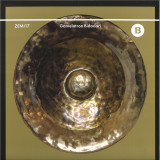
The Gamelatron is many things; one could call it a sculpture, a multimodal installation, an instrument, a robot, a feat of engineering, a vision—and it is all of these things. More importantly, though, it is a concept sustained by Aaron Taylor Kuffner, aka Zemi17, whose Gamelatrons are “sound producing kinetic sculptures” designed to create an immersive, visceral experience for the listener. Not a small feat, and yet the ambitions of Zemi17 are absolutely realized in this long-standing project, culminating now in his third release for The Bunker NY: Gamelatron Bidadari.
The Gamelatron Bidadari is not just a name—it is one of seventy-plus musical sculptures that Zemi17 has conceptualized, designed, and fabricated. Therefore, it would be inaccurate to think of this release as simply a series of arrangements composed in a finite period of time. Rather, it’s a window into a project and a process that is much larger than any single album can encapsulate. Gamelatron Bidardi is the culmination of more than a decade of work, and is central to Zemi17’s evolution, not only as a musician but as an artist.
Having studied gamelan for many years in Indonesian villages and at the Institut Seni Indonesia in Yogyakarta, Kuffner is a musician, an artist, technologist, and craftsman. The gongs in his sculptures are co-created with master Indonesian artisans. Each Gamelatron composition is site-responsive, meaning its sounds are composed for the acoustics and intentions of the space it inhabits, whether it’s an art gallery, a wooded landscape, or the inner temple of Burning Man. The Gamelatron does not stand alone: it is in constant co-creation with its physical environment, and in dialogue with gamelan’s long-standing history.
Originally exhibited at the Smithsonian Renwick as part of a show entitled, No Spectators: The Art of Burning Man, the Gamelatron Bidadari produces sounds that are delicate yet strong, and deeply hypnotic. Textured chiming creates intricate polyrhythmic patterns that are both complex and simple, or in a word, elegant. On Gamelan Bidadari, Zemi17 refrains from adhering to the strict musical structures; his approach to composition is free flowing.
He says, “I want to evoke what the music tells me it has to offer. It is like following water to its conclusion (or non-conclusion).” The arrangements on this album, written by Zemi17 and performed by the robotic arms of the Gamelatron, leaves the listener feeling enchanted, nourished and enriched.
A sense of the mystical comes through in the tonal quality of the instrument, and is conceptually felt in the sculpture’s name: the Bidadari, which loosely translates to “forest nymph.” The music conjures up natural wonder, and the four sculptures that make up the Gamelatron Bidadari, in fact, resemble trees. They are four independent yet connected entities, each with a large gong situated at their structural base—the sonic “roots” of the sculpture—while smaller gongs branch off of a golden, trunk-like spine. The Gamelatron Bidadari is as physically stunning as it is mesmerizing to the ear. A kind of divinity is invoked through its sound, or a sacred cohesion between past and present, tradition and new form. Meant to be viscerally experienced, the sounds of the Gamelatron call for sublime togetherness. Gamelatron Bidadari is not just an album but the crystallization of Kuffner’s work; it is a condensed yet spacious glimpse into the sonic power of Zemi17’s Gamelatrons, which have already been heard and experienced live by over a million people.
Jeder Song hat die Kraft, Erinnerungen wachzurufen und das Gefühl von Heimat durch Musik nutzbar zu machen: von der psychedelisch-funklastigen Single 'Something's Going On' bis zur kongregativen Energie des neuen Tracks 'We Give Thanks' verschmilzt 'Could We Be More' die Afro-Londoner Synergie, die so natürlich die Wärme und Identität von Kokoroko untermauert. Die Mehrfach-Preisträger Kokoroko sind auf soulige, bläserlastige Sounds mit westafrikanischen Wurzeln und Londoner Einflüssen spezialisiert. Sie spielten bereits auf vielen europäischen Festivals (von Glastonbury über Meltdown bis Elbjazz und Jazz á la Villette) und freuen sich darauf, ihre Reichweite in 2022 und darüber hinaus weiter auszubauen. Die Band trat in mehreren BBC-Fernsehshows auf, ihre beiden Boiler Room-Sets wurden zusammen fast eine halbe Million Mal angehört.
- 'This female-led, multicultural collective of under 30s is a vital example of not only jazz's new form but the shape of things to come.' - The Guardian
- 'Drawing influence from West African highlife and jazz, wellmarinated in enough polyrhythm seasoning to induce fires on the dance floors they play.' - OkayAfrica
- 'Afrobeat, jazz, soul and ’70s psych-leaning funk - luminescent!' - Cool Hunting
Jeder Song hat die Kraft, Erinnerungen wachzurufen und das Gefühl von Heimat durch Musik nutzbar zu machen: von der psychedelisch-funklastigen Single 'Something's Going On' bis zur kongregativen Energie des neuen Tracks 'We Give Thanks' verschmilzt 'Could We Be More' die Afro-Londoner Synergie, die so natürlich die Wärme und Identität von Kokoroko untermauert. Die Mehrfach-Preisträger Kokoroko sind auf soulige, bläserlastige Sounds mit westafrikanischen Wurzeln und Londoner Einflüssen spezialisiert. Sie spielten bereits auf vielen europäischen Festivals (von Glastonbury über Meltdown bis Elbjazz und Jazz á la Villette) und freuen sich darauf, ihre Reichweite in 2022 und darüber hinaus weiter auszubauen. Die Band trat in mehreren BBC-Fernsehshows auf, ihre beiden Boiler Room-Sets wurden zusammen fast eine halbe Million Mal angehört.
- 'This female-led, multicultural collective of under 30s is a vital example of not only jazz's new form but the shape of things to come.' - The Guardian
- 'Drawing influence from West African highlife and jazz, wellmarinated in enough polyrhythm seasoning to induce fires on the dance floors they play.' - OkayAfrica
- 'Afrobeat, jazz, soul and ’70s psych-leaning funk - luminescent!' - Cool Hunting
Moroccan Jajouka master Bachir Attar meets American experimental musician Elliot Shrap for a live jam of drum machines and traditional Moroccan instruments in 1990. Bachir Attar's Career spans five decades and represents the transcendental sounds of Jajouka, a small Moroccan village situated between Fes and Tangier, known for its unique mystical sound. Fans include William Burroughs and The Rolling Stones with which Bachir recorded with in 1989. A year later Attar collaborated with the prolific avant-garde jazz musician Elliot Sharp on this very Album. Both Sharp and Attar have dedicated their careers to exploring the meeting points between east and west and this album is a unique example of two brilliant minds creating a new, ultra trippy sonic experience. This release is the first collaboration between Fortuna Records and our friends Dikraphone Records out of Morocco, serious unearthers of lost Moroccan music. Look out for more Dikraphone-Fortuna collaborations in the future!
- A1: Moby - Natural Blues
- A2: Deluxe - Pony
- A3: Kazam - Swag On
- A4: Smith & Mighty - Same (Feat Tammy Payne)
- A5: Alex Gopher - The Child (Radio Edit)
- A6: Goldfrapp - Lovely Head
- B1: Mr Scruff - Get A Move On
- B2: Dday One - Cielo Azul
- B3: Dj Cam - Birds Also Sing For Anamaria
- B4: Bonobo - Terrapin
- B5: Simon Says - Late At Night
- C1: Fakear - Morning In Japan
- C2: Kid Loco - A Grand Love Theme
- C3: Guts - What Is Love?
- C4: Moloko - Fun For Me
- C5: Waldeck - Memories (Feat Patrizia Ferrara)
- C6: Ancient Astronauts - I Came Running
- D1: Gotan Project - Epoca (Feat Cristina Vilallonga)
- D2: Chinese Man - I've Got That Tune
- D3: The Mighty Bop - Feeling Good
- D4: Thievery Corporation - It Takes A Thief
- D5: Quantic - Time Is The Enemy
‘Reich’s music expands from minimalist austerity to more full-bodied passages and back again. Reminiscent of his earliest work, it is very beautiful.’ – Financial Times
‘The music has tender energy, and an undercurrent of melancholy. Its droning tones sometimes seem to be pulling apart – like taffy, or like Richter’s stretching spaghetti stripes of color.’ – New York Times
Nonesuch Records releases the first recording of Steve Reich’s Reich/Richter, performed by Ensemble intercontemporain and conducted by George Jackson. The composition was originally written to be performed with German visual artist Gerhard Richter and Corinna Belz’s film Moving Picture (946-3).
Reich describes Richter’s book Patterns, which served as source material for the film: “It starts with one of his abstract paintings from the ’90s. He scanned a photo of the painting into a computer and then cut the scan in half and took each half, cut that in half and two of the four quarters he reversed into mirror images. He then repeated this process of ‘divide, mirror, repeat’ from half to quarter, eighth, sixteenth, thirty-second, all the way up to 4096th. The net effect is to go from an abstract painting to a series of gradually smaller anthropomorphic ‘creatures’ (since the mirroring produces bilateral symmetry) to still smaller very fine stripes.
“Belz described the film in terms of ‘pixels’. It begins with two-‘pixel’ stripes and the music begins with a two-sixteenth note oscillating pattern. When the film moves to four ‘pixels’, the music moves to a four-sixteenth note pattern, then to eight, and sixteen,” the composer continues. “After that, I began introducing longer note values – initially eighth notes, and later to quarter notes. By the middle of the film, when the images move from 512 to 1064 pixels, the music really slows to dotted half notes. Finally, as the ‘pixel’ count begins to diminish, the music moves back into more rapid eighths and then ending with the most intense rapid sixteenth movement.”
After more than one hundred performances of Reich/Richter at The Shed in New York in 2019, it was performed in London at the Barbican by the Britten Sinfonia conducted by Colin Currie and then in Paris at the Philharmonie, where this recording was made. The Austrian ensemble Windkraft Tirol, led by Kasper de Roo, will perform Reich/Richter on September 8 at Szentrum, Silbersaal in Schwaz, and the LA Phil New Music Group, led by Brad Lubman, performs the piece, accompanied by Richter and Belz’s film, at Walt Disney Concert Hall in Los Angeles on April 1, 2023.
Nonesuch has recorded every new piece of music by Steve Reich since 1985, beginning with The Desert Music and continuing through 2018’s Pulse/Quartet, resulting in twenty-two albums and the two box sets Phases in 2006 and Works: 1965-1995 in 1997. The label will put out a collection of his complete works in 2023.
Reich released a book last month, Conversations, that includes dialogues with past collaborators, fellow composers, musicians, and visual artists who have been influenced by his work, including: David Lang, Brian Eno, Richard Serra, Michael Gordon, Michael Tilson Thomas, Russell Hartenberger, Robert Hurwitz, Stephen Sondheim, Jonny Greenwood, David Harrington, Elizabeth Lim-Dutton, David Robertson, Micaela Haslam, Anne Teresa de Keersmaeker, Julia Wolfe, Nico Muhly, Beryl Korot, Colin Currie, and Brad Lubman. Booklist said in its review, ‘Iconoclastic American composer Steve Reich is singular in his own right, and when he is in conversation with other equally iconoclastic composers, conductors, sculptors, musicians, percussionists, and video artists, sparks not only fly, they sparkle. Reich and his colleagues conduct lovely give-and-takes during which they share stories, creative approaches, and viewpoints. Reich's Conversations is the best kind of eavesdropping.’
Steve Reich has been called ‘America’s greatest living composer’ (Village Voice), ‘the most original musical thinker of our time’ (New Yorker), and ‘among the great composers of the century’ (New York Times). His music has influenced composers and mainstream musicians all over the world. Music for 18 Musicians and Different Trains have earned him two Grammy Awards, and in 2009, his Double Sextet won the Pulitzer Prize. Reich’s documentary video opera works – The Cave and Three Tales, done in collaboration with video artist Beryl Korot – have been performed on four continents. His recent work Quartet, for percussionist Colin Currie, sold out two consecutive concerts at Queen Elizabeth Hall in London shortly after tens of thousands at the Glastonbury Festival heard Jonny Greenwood (of Radiohead) perform Electric Counterpoint followed by the London Sinfonietta performing his Music for 18 Musicians.
In 2012, Reich was awarded the Gold Medal in Music by the American Academy of Arts and Letters. He has additionally received the Praemium Imperiale in Tokyo, the Polar Music Prize in Stockholm, the BBVA Award in Madrid, and the Golden Lion at the Venice Biennale. He has been named Commandeur de l’Ordre des Arts et des Lettres and has been awarded honorary doctorates by the Royal College of Music in London, The Juilliard School, and the Liszt Academy in Budapest, among others. ‘There’s just a handful of living composers who can legitimately claim to have altered the direction of musical history and Steve Reich is one of them’, states the Guardian.
Pierre Boulez founded the Ensemble intercontemporain in 1976 with the support of Michel Guy (who was France’s Minister of Culture at the time) and the collaboration of Nicholas Snowman. The Ensemble’s thirty-one soloists share a passion for twentieth and twenty-first century music. Under the artistic direction of Matthias Pintscher, the musicians work in close collaboration with composers, exploring instrumental techniques and developing projects that interweave music, dance, theater, film, video and visual arts. In collaboration with IRCAM (Institut de Recherche et Coordination Acoustique/Musique), the Ensemble intercontemporain is also active in the field of synthetic sound generation. New pieces are commissioned and performed on a regular basis. Resident of the Cité de la musique – Philharmonie de Paris, the Ensemble performs and records in France and abroad, taking part in major festivals worldwide.
George Jackson, winner of the 2015 Aspen Conducting Prize, came to attention after stepping in at short notice with Orchestre de Paris, where he stepped in for Daniel Harding. Recent highlights include leading Ensemble intercontemporain at Festival Romaeuropa, the Rainy Days Festival in Luxembourg, and Festival D’Automne in Paris, as well as conducting the RTÉ National Symphony Orchestra, the orchestra of Opéra de Rouen and the world premiere of Tscho Theissing’s Genia with Theater an der Wien. His varied operatic experience includes performances at Opera North, Hamburg State Opera and Opera Holland Park, as well as conducting a new production of Hänsel und Gretel at Grange Park Opera.
New Zealand drum & bass titans The Upbeats have galvanized the global turbulence and turmoil during COVID to create their most explorative and emotionally heavy album to date "Not Forever". Featuring the likes of Fat Freddys Drop frontman Joe Dukie, Jordan Dennis, Levine Lale, Sylvee, Syrene Favero and US MC don Armanni Reign, "Not Forever" is unlike anything the duo has released before. Written in a different way, approached from another perspective, created with a newfound love for the creative process and the scene at large; It's a whole new side to the duo who have continually pushed themselves and their sound into the unknown...
Following on from Le Motel’s knockout release in February, Brussel-based producer DJ JM lands on Maloca Records with a new EP ‘Squash’. The prolific producer is known for his impressive output of production-only mixes and releases on labels such as Nervous Horizon, Goon Club Allstars, and Even The Strong. The DJ JM project was first established in Vilnius, Lithuania in 2015, becoming quickly known for off-kilter club records. Heavily driven by percussion, DJ JM continues his powerful stride, this time providing six weird and wonky dancefloor anthems. With the Maloca Records ethos built upon global collaborations, on this record DJ JM teams up with Ugandan MC Swordman Kitala on ‘Funicular’. Launching Maloca Records in 2020, Le Motel aims to bring together an international network of makers which was highlighted on the label’s first compilation, Maloca Vol. 1. The release focused on a terrestrial and borderless percussive sound that has been bubbling in clubs and Le Motel’s orbit, featuring tracks from Nick León, OMAAR, DJ JM, Dengue Dengue Dengue, Coen, DJ N.K. and Tsongo. Maloca has also released solo EPs from Howie Lee, Farsight and Griffit Vigo.
Zu Beginn des neuen Jahrtausends erklärte der Rolling Stone: "Soulfly scheinen für die Ewigkeit gebaut". Mehr als zwei Jahrzehnte, unzählige Welttourneen und ein Dutzend Alben später scheint diese Prophezeiung wahr.
Als Ikone des Undergrounds, Wegbereiter des extremen Metals, Krieger der Dritten Welt und Anführer eines vielfältigen und engagierten Stammes überlebt Max Cavalera nicht nur, sondern gedeiht, indem er ein Killer-Riff nach dem anderen raushaut. Dieselbe Stimme, derselbe Körper und derselbe Geist, die Soulfly 1997 ins Leben riefen, beschwören auch heute noch unfassbar schweren Lärm herauf, der auf dem zwölften Soulfly-Album "Totem" zehn Scheiben monströser Musik abwirft.
With a back catalogue that spans half a dozen studio LPs as Boom Bip,
plus another two as one half of electronic pop duo Neon Neon, Bryan
Hollon has already made a name for himself as a Mercury prizenominated producer and multi-instrumentalist
Equally impressive are the credits to Warpaint drummer Stella Mozgawa's name;
she's contributed percussion to albums by Kurt Vile, Cate le Bon, Courtney
Barnett, Sharon Van Etten, and Kim Gordon, among others. But as improvisational
techno duo Belief, the pair make music that harkens back to '90s acts like LFO
and 808 State – artists that indelibly, but near-anonymously, altered club and rave
culture, mostly identifiable by clean, bold logos on 12" sleeves. Without being
derivative of the era, they add their own instincts and experiences to grace the
musical universe with new answers to the question: What Would Mark Bell Do?
Hollon met Mozgawa just after she joined Warpaint, when Boom Bip shared a
rehearsal space in Echo Park with the band. The two quickly bonded over a love
of early Warp Records, drum breaks, acid house, and Y2K- era rave flyers. They
swapped playlists and ideas when Mozgawa played drums for Neon Neon's 2013
West Coast tour, but due to busy schedules, it would be another three years
before they packed every piece of gear they collectively owned into Eric
Wareheim's Absolutely Studios for an initial jam session. Instinctively playing to
each other's strengths and whims – and recording the session to build on later –
allowed Mozgawa to explore a style of music she'd long considered a dark art,
and pushed Hollon, known for his meticulous planning in previous work, to be
more spontaneous.
It was all in good fun – early shows billed the pair as 'Beef' with a comedic wink
to its pulsating minimalism. But as the two began committing themselves to
finalizing and recording more soulful, enigmatic tracks, the reverent nature of
what they were doing began to emerge: while Belief pays homage to the pioneers
of techno, the project is born out of an oddly divine foresight Mozgawa and
Hollon share, the synergy of two devout tastemakers building a shrine to inner
peace and outward pleasure
Zu Beginn des neuen Jahrtausends erklärte der Rolling Stone: "Soulfly scheinen für die Ewigkeit gebaut". Mehr als zwei Jahrzehnte, unzählige Welttourneen und ein Dutzend Alben später scheint diese Prophezeiung wahr.
Als Ikone des Undergrounds, Wegbereiter des extremen Metals, Krieger der Dritten Welt und Anführer eines vielfältigen und engagierten Stammes überlebt Max Cavalera nicht nur, sondern gedeiht, indem er ein Killer-Riff nach dem anderen raushaut. Dieselbe Stimme, derselbe Körper und derselbe Geist, die Soulfly 1997 ins Leben riefen, beschwören auch heute noch unfassbar schweren Lärm herauf, der auf dem zwölften Soulfly-Album "Totem" zehn Scheiben monströser Musik abwirft.
Jóhann Jóhannsson's original score for Denis Villeneuve's film The Prisoners (the Hugh Jackman/Jake Gyllenhaal blockbuster) on double vinyl, with double sided full-color. insert.
Hooveriii - A Round of Applause Time after time, we all talk about … well, time — often in aphorisms and cliches. X is “a waste of time,” while Y is “time well spent.” We are all apt to lose track of time but, perhaps in equal measure, we have plenty of time on our hands. We think we have all the time in the world -- until we remember that time flies, after which our time runs out and we’re dead (for a long time). Since 2020, internal clocks have had to be readjusted with the pace of life ebbing and flowing. For Los Angeles psych-rock sextet Hooveriii (pronounced "Hoover Three") that adjustment seeped its way into their songwriting and ultimately their forthcoming album, A Round of Applause. The record cherrypicks from an array of genres — pop, girl-group ditties, synth-ish keyboards and funk —but the end result is a cohesive long-player with songs that revolve around the Spanish Inquisition (“Stone Man”); or follow “the legendary Peruvians who run long distances in the Andes Mountains (“The Runner”). “I let my imagination run wild,” Hoover said. Elsewhere on A Round of Applause, the Hooveriii frontman finally recorded a song, “The Pearl,” that he wrote in 2017. “It sounds like a Harry Nilsson jingle like to me, a fantasy song,” he continued. “It's more like a nursery rhyme than a song with an important message. You know, it's just like keeping things fun. … Nilsson didn’t take everything so fucking seriously. We want to avoid that self-seriousness. We're a bunch of goofy musicians.”
Ending a break of twelve years, The Villains Inc. returns from the past to deliver four lost tracks from the label mastermind himself! Author of a short yet remarkable discography on Dominance Electricity, Electro Empire, and Drivecom just to name, Italian don Gab.Gato takes this opportunity to revisit some of his classics by a quatuor of undisputed electro heavyweights.
UK veteran Phil Klein opens hostilities on A side with his outstanding remix of "Electro Empire". Originally released on German Electrocord back in 2003, Gab.Gato's version sees a luminous electro-funk treatment in pure Bass Junkie style. Needless to say this electro banger will hit you hard with its untouchable sub bass, oldschoolish tones, hammering drums and retrofuturistic atmosphere!
Italian techno / electro legend Max Durante, coming next, propels "The Villains Inc" cut to another dimension. Taken from the "No Light Or Shadow EP" (ATVS002 in 2008), the track mutes into a milestone of an experimental slaughter tinted with industrial sororities. Following a catchy Speak n' Spell overture, the song introduces some hot and sexy female orgasms, while a heading acid line enhanced by a straight to the point rhythm will drive you on the dancefloor.
US DJ / Producer Sinistarr on the flip goes deeper into the realm with his "Couterterrorism" rework of "A Scanner Darkly". Published on Boris Divider's Drivecom in 2007, the tune evolves into a completely fresh and transformed version. A frantic bassline carries you away on a fast inducing grimey dancefloor boogie combined with hi tones and no nonsense electro beat!
Last but not the least, Drexciyan Dj Stingray closes the EP with its groovy "313 Psycotropic mix" of "S.N.A", a tune written by Gab.Gato and Matteo Merlo in 2007 on "The Systematik Network Attack EP" (ATVS001). Stingray's mix sounds like a sonic, ethereal and thought after assault based upon cutting-edge sororities over playful vocals.
Craftily written and designed (artwork project by Gab.Gato, and illustrated by Simonloop aka Urbanmagic, in 2009 was prophetic on his own: clones programmed to reappear from the past), nasty "Reprogrammed EP" features the almighty ATVS signature we all know, a dark, magnetic and rough sound ranging from breakbeat acid-tinged to Detroit-influenced electro and techno style. Should we mention that this limited 12" (no digital) is expected to sell fast and earn the status of collectible masterpiece, just like the previous releases on the label!
Radio Slave & Dustin Zahn team up as Radio Zahn for ‘Berlin Sessions Vol. 1’.
Joining forces for the first time, Radio Slave and Dustin Zahn launch their collaborative works as Radio Zahn with a set of colourful, groove-laden techno tracks inspired by the sound of mid-90s New York on Rekids this May. Across all three mixes of ‘Twilo’ and ‘Power Muzik’, the duo deploys chunky, hard-hitting drums alongside building arrangements and masterful use of synths and dubbed-out FX, with the former featuring vocals by Toy Tonics member Kosmo Klint. A dream for fans of intricate, dancefloor-friendly techno, the release showcases why Radio Slave and Dustin Zahn are two of the most consistently exciting artist in dance music.
Responsible for some of the most recognisable tracks in the genre, including ‘Grindhouse’, ‘Don’t Stop No Sleep’, ‘Another Club’, and other timeless cuts, Radio Slave aka Matt Edwards’ work with Joel Martin as Quiet Village and solo work as Rekid has received critical acclaim, and he remains one of the most in-demand and consistent remixers around.
Since the late ’90s, Zahn’s hypnotic and driving techno has consistently caught the ears of top DJs and labels worldwide, best exemplified at his legendary marathon sets at Berghain. His vital work with Intellephunk includes the nearly two decades long running Communion after-hours events, cementing his invaluable contributions to the Minneapolis techno scene and beyond.
- 01: Cold Water
- 02: Opium Fogs
- 03: Docker Blues
- 04: Submerged
- 05: Haunted Cassette Spools From &Apos;92 Jungle Tape Packs Washed Up On Bermondsey Beach Waste Away And Dissolve Into The Thames Like Nightmares
- 06: Mysterious Rural Experiences Leak Into The Town And Colour His Perception Of It
- 07: The Relatively Poor Quality Of London's Water
- 08: Sliding Into The Thames
- 09: Drink The City
- 10: Subterranean Southwark
- 11: This Is Where C Wilson Wrote Ritual In The Dark
- 12: Have You Been To The English Deer Park?
'For the born Londoner the country ever remains an incredible mystery. He knows that it is there – somewhere – but he has no true vision of it. In spite of himself he Londonises it, suburbanises it; he sticks a gas lamp or two in the lanes, dots some largish villas of red brick beside them, and extends the District or the Metropolitan to within easy distance of the dark wood.' – Arthur Machen, Far Off Things