Phonophobia is a record that inspired thousands of dirty punks all over the world, and having the chance to re-release it is such a honour for us. I don't think we need to introduce this record and this band to any of the people who are reading these lines, but a few words are necessary to explain the value of this product. Phonophobia has originally been recorded and mixed at Southern Studios in London in August 1991. This version has been remixed and remastered by Dean Jones and Phil Vane with additional production at Springvale Studios in Ipswich in October 2009. The sonic assault is now more than ever ear damaging, so prepare your turntable and your eardrums for this final violent assault!
Cerca:viole
- A1: Shooter
- A2: Back Up 2021 (Feat Debby Friday & Sb The Moor)
- A3: Wriggle
- A4: Hot Fuck No Love (Feat Cakes Da Killa & Maxi Wild)
- A5: Our Time (Feat Nailah Middleton)
- B1: Wriggle (Homemade Weapons Remix)
- B2: Back Up (Dave Quam Remix)
- B3: Hot Fuck No Love (Jana Rush's Naughty Bitch Remix) (Vinyl Exclusive)
- B4: Wriggle (Cardopusher's Ebm Remix)
Loser Edition[18,45 €]
This LP finally brings a Clipping fan-favorite, 2016's Wriggle, onto vinyl in an improved, expanded version that features new art, previously unreleased remixes, and a track that's exclusive to the vinyl format. The original, digital-only Wriggle EP was six tracks that weren't finished in time to make it onto the group's 2014 Sub Pop debut, CLPPNG. For "Shooter," Clipping recorded themselves firing fifteen different guns, the sounds of which exclusively constituted the beat's drums, augmented only by a synthesized tone-row. The verses referenced the well-worn technique of "hashtag rap," but instead of using it to boast about the rapper's personal wealth and masculine prowess, Clipping put forth imagistic narratives of three violent encounters. True to much of the group's music, "Shooter" was an attempt to reframe a familiar style and test the limits of its formal capabilities. "Hot Fuck No Love" contains what might be the most explicit verse to date from Clipping's favorite New Jersey rapper Cakes Da Killa. The EP's title track, "Wriggle," was built around a sample of the influential power-electronics song "Wriggle Like a Fucking Eel" by Whitehouse, transforming William Bennett's torturous imperative into a instructional dance-floor banger. "Wriggle" and "Shooter" have become classic Clipping tracks and staples of their live show. With this vinyl edition, Clipping fans old and new - and there are many new fans thanks to their breakout 2020 album, Visions of Bodies Being Burned, and Daveed Diggs' thriving acting career - get the vinyl version of Wriggle they've been clamouring for.
Originally conceived as a medium for Chicago-based multi-media artist/activist Damon Locks's sample-based sound collage work, Black Monument Ensemble (BME) has evolved from a solo mission into a vibrant collective of artists, musicians, singers, and dancers making work with common goals of joy, compassion, and intention. A genuinely multi-generational collective, ages of BME members range from 9 to 52 years old; members include instrumentalists and fellow IARC recording artists Angel Bat Dawid and Ben LaMar Gay. Their debut album Where Future Unfolds was released in 2019 by International Anthem glowing praise; landing at #3 on Bandcamp's "Best Albums of the Year," #25 on WIRE Magazine's "Best Albums of 2019," and being repeatedly dubbed "The Best Album of 2019" by BBC/Worldwide radio titan Gilles Peterson. Locks & BME's new album NOW was created in the final throes of Summer 2020, following months of pandemic-induced fear & isolation, the explosion of social unrest, struggle & violence in the streets, and as the certain presence of a new reality had fully settled in. Set up safely in the garden behind Chicago's Experimental Sound Studio, the music was recorded in only a few takes, capturing the first times members of BME had ever played or sang the tunes. For Locks, the impetus was more about getting together to commune and make art than it was about producing an album. In his words: "It was about offering a new thought. It was about resisting the darkness. It was about expressing possibility. It was about asking the question, 'Since the future has unfolded and taken a new and dangerous shape... what happens NOW?'"
CRIMSON/BLACK COLORED
Indie Retail Exclusive Crimson & Black color vinyl Originally conceived as a medium for Chicago-based multi-media artist/activist Damon Locks's sample-based sound collage work, Black Monument Ensemble (BME) has evolved from a solo mission into a vibrant collective of artists, musicians, singers, and dancers making work with common goals of joy, compassion, and intention. A genuinely multi-generational collective, ages of BME members range from 9 to 52 years old; members include instrumentalists and fellow IARC recording artists Angel Bat Dawid and Ben LaMar Gay. Their debut album Where Future Unfolds was released in 2019 by International Anthem glowing praise; landing at #3 on Bandcamp's "Best Albums of the Year," #25 on WIRE Magazine's "Best Albums of 2019," and being repeatedly dubbed "The Best Album of 2019" by BBC/Worldwide radio titan Gilles Peterson. Locks & BME's new album NOW was created in the final throes of Summer 2020, following months of pandemic-induced fear & isolation, the explosion of social unrest, struggle & violence in the streets, and as the certain presence of a new reality had fully settled in. Set up safely in the garden behind Chicago's Experimental Sound Studio, the music was recorded in only a few takes, capturing the first times members of BME had ever played or sang the tunes. For Locks, the impetus was more about getting together to commune and make art than it was about producing an album. In his words: "It was about offering a new thought. It was about resisting the darkness. It was about expressing possibility. It was about asking the question, 'Since the future has unfolded and taken a new and dangerous shape... what happens NOW?'"
- A1: Shooter
- A2: Back Up 2021 (Feat Debby Friday & Sb The Moor)
- A3: Wriggle
- A4: Hot Fuck No Love (Feat Cakes Da Killa & Maxi Wild)
- A5: Our Time (Feat Nailah Middleton)
- B1: Wriggle (Homemade Weapons Remix)
- B2: Back Up (Dave Quam Remix)
- B3: Hot Fuck No Love" (Jana Rush's Naughty Bitch Remix)
- B4: Wriggle (Cardopusher's Ebm Remix)
LP[17,19 €]
This LP finally brings a Clipping fan-favorite, 2016's Wriggle, onto vinyl in an improved, expanded version that features new art, previously unreleased remixes, and a track that's exclusive to the vinyl format. The original, digital-only Wriggle EP was six tracks that weren't finished in time to make it onto the group's 2014 Sub Pop debut, CLPPNG. For "Shooter," Clipping recorded themselves firing fifteen different guns, the sounds of which exclusively constituted the beat's drums, augmented only by a synthesized tone-row. The verses referenced the well-worn technique of "hashtag rap," but instead of using it to boast about the rapper's personal wealth and masculine prowess, Clipping put forth imagistic narratives of three violent encounters. True to much of the group's music, "Shooter" was an attempt to reframe a familiar style and test the limits of its formal capabilities. "Hot Fuck No Love" contains what might be the most explicit verse to date from Clipping's favorite New Jersey rapper Cakes Da Killa. The EP's title track, "Wriggle," was built around a sample of the influential power-electronics song "Wriggle Like a Fucking Eel" by Whitehouse, transforming William Bennett's torturous imperative into a instructional dance-floor banger. "Wriggle" and "Shooter" have become classic Clipping tracks and staples of their live show. With this vinyl edition, Clipping fans old and new - and there are many new fans thanks to their breakout 2020 album, Visions of Bodies Being Burned, and Daveed Diggs' thriving acting career - get the vinyl version of Wriggle they've been clamouring for.
I first discovered khroniky – Ukranian folk songs – in the Highlands of Scotland. I was watching a screening of Bajka, a mesmerising documentary made by the filmmaker Lucia Nimcová and sound artist Sholto Dobie. I knew nothing about these ballads beforehand, but I was fascinated by these odd, beautiful songs, especially the easy way in which they mixed misery and levity, where gentle melodies blend with tales of dark violence. The folk songs describe hardship, murder, torture, death in gulags, heavy drinking, outsmarting men, love affairs. But they’re often very funny too – many of the songs make fun of marriage, and there’s an amazing subcategory of khroniky songs called potka (vagina) songs.
The khroniky have never been properly documented because they were considered too crude, or contained lyrics that were problematic, politically. When Ukrainian folk songs have been archived in the past, it’s normally a sanitised, more polite version of the ones that Lucia remembers from her childhood. Lucia grew up on the other side of the Ukrainian border in Slovakia. She is part of the Rusyn (Ruthenian) minority ethnic group found in the borderlands of Slovakia, Hungary, Romania, Ukraine and Poland. Rusyn is a centuries-old Slavic language, looked down upon as a poor, uneducated dialect by the neighbouring Ukraine and Slovakia. It was forbidden to talk about Rusyn culture at Nimcova’s primary school, but the khroniky stayed in her memories.
“I remember weddings when I was young,” says Lucia, who now lives in Addis Abeba, Ethiopia. “At the end of the night, when everyone was drunk and the young couple would go around their guests, people would sing in Rusyn. There was singing and dancing, and songs about being in prison or falling in love. I picked up the lyrics and sometimes my mum would make my sister and I sing them for people we met on the train. I was about five or six but the lyrics still come back when I sing to my kids.”
Determined that these rich, nuanced, unique songs shouldn’t be forgotten, she decided to record them. Over two years, Lucia, joined by experimental musician Sholto Dobie, visited Rusyn villages high in the Carpathian mountains to rediscover the songs and make the documentary. It was at the beginning of war breaking out in Ukraine in 2014.
“The Rusyn community is a very closed one,” explains Lucia. “Sometimes we’d have to wait several days to hear someone sing; we had to earn their trust before they shared something very personal to them. We’d stay up ‘til 5am at a wedding, then go straight to a morning baptism, or collect haystacks with the villagers, hoping they’d sing while they were working.”
DILO is named after an important independent Ukrainian daily newspaper that was shut down when the Red Army entered Lviv in 1939. The four long tracks on DILO blur field recordings with song; an unpolished, privileged glimpse into a private world. We hear dogs barking and insects buzzing in the summer heat, then a blast of hurdy gurdy or violin will drift in, or a plaintive song soars softly over the rural background noise, with casually harrowing lyrics about a cuckoo, “lifeless in a world of misery”, as translated in the album’s booklet.
For both Lucia and Sholto, it was important not to tamper too much with what they heard. “When you think about ethnography,” Lucia explains, “you have to have a lot of time, love and respect to document it with sensitivity.”
“The songs all have their own atmosphere and intimacy from the spaces they were recorded in and it was important to maintain these particularities and move with them,” adds Sholto, who now lives in Vilnius, Lithuania. “They guide and sometimes interrupt a journey between interiors – domestic spaces; in kitchens, by the fire – and exteriors; marketplaces, cow sheds. We used contact microphones to record metal bridges and fences, and we spent one afternoon recording a wool processing machine, the details of the rattling and tuning wheels are the ground layer for the third track.”
Lucia took rough notes and diary entries during the recording process, which are now shared in the booklet alongside a selection of lyrics, loosely translated, but revealing the depth and astonishing beauty that sometimes lies in the language of these folk songs.
The feel of the album is intimate, flipping between laughter, where a woman sings about selling her pussy to buy a cow in one track, then shifts to a raw, painful truth; an adult son asks his mother why his dad won’t be back for dinner, as he’s gone to war.
Since Lucia and Sholto began working together in 2014, they have shared the audio recordings on radio and film and shown photos in gallery spaces, making sure these special, smutty, poignant songs don’t get lost. This new record and booklet joins that same continuum, another glorious fruit from the same rare tree.
- A1: Built To Last (Feat Xzavier Stone)
- A2: Let's Go
- A3: Simple Stuff
- A4: Black Ting (Feat Le3 Black)
- A5: Insecure Behaviour & Fuckery (Feat Nova)
- A6: Self Doubt (Leaving The Club Early) (Leaving The Club Early)
- B1: On The Lake Outside (Feat Baths)
- B2: Reflection
- B3: Change
- B4: Running Like That (Feat Eden Samara)
- B5: We're Building Something New (Feat Iceboy Violet)
Made during summer 2020, Loraine James’ second Hyperdub album, ‘Reflection’, is a turbulent expression of inner-space, laid out in unflinching honesty, offering gentle empathy and bitter-sweet hope. ‘Reflection’ further develops a unique pop sensibility realised on last year’s ‘Nothing EP’, while tones of Drill and R&B seep through into this collection too. In contrast to the brash splashes of 2019’s ‘For You And I’ LP and the grimey anger of ‘Nothing’, ‘Reflection’ is pared-down and confident, taking the listener through how last year felt as a young black queer woman in a world that has suddenly stopped moving, the arc of the album peppered with Loraine's diaristic confessions. Starting positively with the gentle pop-trap of ‘Built To Last’ ft Xzavier Stone, into the bumpy instrumental of ‘Let's Go’, the album switches tone with ‘Simple Stuff’, followed by regular collaborator Le3 bLACK amplifying Loraine's vulnerability on the downcast drill of ‘Black Ting’, then ‘Insecure Behaviour And Fuckery’ is a techno glide which pairs Nova's confrontational plea for respect, delivered in monotone autotune, against deep Drexciyan chords. With Baths on vocals, the weightlessness of ‘On The Lake Outside’ soothes numb feelings, and Eden Samara explores the shadow world of anxious dreams on the airy R&B of ‘Running Like That’. Closing track ‘We're Building Something New’ with Manchester rapper Iceboy Violet brings the album together, confidently suggesting a new world is in reach. ‘Reflection’ is a brave step forward for a unique and creative 21st century musician.
Kojaque follows his critically acclaimed cult concept record, ‘Deli Daydreams’, with an
expansive, urgent debut album. In this landmark debut, Kojaque mines both his
emotional interior as an artist, and the external forces of a love triangle barrelling
towards chaos. ‘Town’s Dead’ is a mind-bending, explosive and expansive trip,
documenting a tumultuous love triangle that unfolds across New Year’s Eve in a
place where gentrification poses as much a threat as the violence of street dealers.
Sonically, the record smashes any previous expectations, stretching an aural palate
that leaps from rage to solace, from clattering musical combustions to tender
ruminations. The tremendous scope and scale of ‘Town’s Dead’ demonstrates an
artist utterly untethered to assumptions about what a particular voice or genre should
be, and instead explores radical musical territory. Dark corners of parks, bedrooms,
clubs, streets and psyches are excavated and pouring over the rubble is an artist
who refuses to conform, unafraid of the vulnerabilities that are exposed when the
voice rings true, because there’s just no point in being anything else.
Kojaque is part of a new wave of Irish artists flooding the world with blistering and
sophisticated literature, film and music - ideas and work that emerged from a social
revolution stonewalled by late-stage capitalism. Welcome to that state of mind, where
the path less travelled is the only one worth taking.
On the announcement of his debut album Kojaque has said: “‘Town’s Dead’ comes
from the potential that I see in Dublin and in the people I’m surrounded by day in and
day out. There’s nothing but talent and ambition among young people, I’m constantly
reminded of that through the art and music that I see being made but I think so often
the city grinds you down, it takes your hope and your ambition. I know that it can
change because so many of my friends express the exact same wants, desires and
frustrations with living in Ireland. If so many of us are on the same page then I know
that things can change, there just needs to be some sort of catalyst to kick start that
change and for me that’s always been art and music. Time and time again, amazing
art continues to be made in spite of the struggles and setbacks that are presented
when living here. The title track and the album is a fight against what can sometimes
feel inevitable, it’s a rejection of what people tell you is your destiny as a young
person in the city, Town’s NOT dead it’s just Dormant.”
CD housed in digisleeve containing 12-page lyric and photo booklet.
Black double vinyl housed in 5mm wide spine single sleeve with 12-page lyric and
photo booklet.
“Hints of Odd Future and its offspring... Kojaque is not your average rapper” - i-D
“Dublin’s hip-hop community are making waves right now... an intimate introduction
to the world this bold artist inhabits” - Clash
“Social realist rhymes set to silky hip-hop” - NME
“Likeable and funny” - Trench
“The Dublin MC forcing us to face real life; both the gory and the glory” - Wonderland
“Ireland’s freshest hip-hop hope, Kojaque, serves ‘soft hip hop’ with a side order of
poetry and performance art” - Notion
Transmeridian is the first album from Departure Lounge (ex-Bella Union) in 19 years. It features all four original members plus a guest appearance from legendary REM guitarist, Peter Buck, one of many long-standing admirers of a band that embodied a lost age of reflective, experimental pop music coming to the fore at the turn of the Millennium alongside The Beta Band, Tunng, Boards Of Canada and Gorky’s Zygotic Mynci.
The surprise new album, named after the defunct ‘golden age of aviation’ cargo airline for which singer/guitarist Tim Keegan’s dad was chief pilot, is released on Violette Records (formed by Michael Head (Shack, The Pale Fountains) and Matt Lockett ) on digital and vinyl formats on Fri 26 March 2021.
Originally scooped up by Simon Raymonde’s Bella Union label (labelmates with John Grant’s Czars) following the self-funded release of their debut album Out Of Here (1999), Departure Lounge’s sophomore outing, Too Late To Die Young (2002) was equally acclaimed and was honoured as the first ever Album Of The Week on the emergent BBC 6 Music. The band toured extensively in the UK, Europe and the US, including outings with The Go-Betweens, Morcheeba, Paul Heaton and Robyn Hitchcock, peers whose stylistic contrasts reflect the eclectic nature of Departure Lounge themselves.
Calling a halt in late 2002, citing family and geographical reasons (drummer Lindsay lives in Nashville, where their second album Jetlag Dreams (2001) was recorded), the four members remained firm friends and occasional collaborators, before reuniting in late 2019 for shows at The Green Door Store, Brighton and The Lexington, London, ostensibly to support the digital reissues of their first three cult-classic albums. With no plans other than to make some new music, the next day they set off for Middle Farm Studios, Devon.
Tim Keegan (vocals/guitar), Chris Anderson (lead guitars/keyboards/bass), Lindsay Jamieson(drums/keyboards) and Jake Kyle (bass/guitar/drums) channelled their evident joy at being back together into a complete 13-track album, largely conceived and recorded in just one 24-hour session in the company of studio owner and co-producer, Peter Miles. Ranging from soulful Americana to piano and mellotron-fuelled melancholia via pastoral musings on the nature of post-youth and eerie Spaghetti Western-tinged instrumentals, the next leg on the Departure Lounge journey is a multi-mood expression of pure artistic freedom.
The ‘leak’ of instrumental track Al Aire Libre (remixed by Parisian groovemeister Kid Loco) in October 2020 gave little away as to what fans could expect from a new Departure Lounge record, the track going gracefully everywhere and nowhere on a whistled Latino breeze. First single proper, Mercury In Retrograde, covered in the twinkling lights of a music box Casio CZ101 melody, turned the clock back - this was an old live favourite that never got past the studio door. Unfinished business brought to a happy conclusion, the single returned Keegan’s honest and distinctive lyrical voice back to British music at just the time listeners needed it.
It was an emotional thread, rather than one musical style, which gave the first three Departure Lounge albums their coherence. The songs told the story of the band. Transmeridian has the same sense of deeply connected musical energy. The purring, campfire acoustica of Timber and So Long bear no obvious resemblance to the ethereal, end-of-the-evening, piano-led interlude Paging Marco Polo, whilst the quasi-glam stomp of Mr Friendly would normally have no business sharing space with the strange, spacey Gurnard Pines (named after an abandoned holiday camp on the Isle Of Wight). Yet the journey’s ebb and flow, accelerations and pauses make for compelling, grown-up listening. Australia, showcasing the chiming Rickenbacker 12-string of Athens, GA’s finest guitar slinger, leaves no doubt that Departure Lounge’s pop sensibilities also remain solidly intact.
These four friends from different musical backgrounds came together originally with the stated aim of ‘creating music to soothe the troubled soul’. Citing their love of (and placing on record their debt to) influences including Robert Wyatt, Nick Drake, Talk Talk, Lou Reed, Arvo Pärt and Cocteau Twins, the band’s diversity of taste is reflected in the music they create.
Transmeridian is only the second full-length LP released by Violette Records, formed by Michael Head (Shack, The Pale Fountains) and Matt Lockett as a platform for Head’s work and developing into a respected independent label as well as multi-disciplinary event organiser, drawing in outsiders working in music, literature, art and design. The label continues to host live events whenever possible and recently initiated an ELP (halfway between and EP and an LP) vinyl series, putting out acclaimed releases by The Pistachio Kid and Studio Electrophonique.
Maze & Lindholm, widely critically acclaimed since their first LPWhere The Wolf Has Been Seen-released by Aurora Borealis in 2018-bring out yet another aspect of their ever fruitful collaboration.While their debut album was constantly balancing between contemplation and anxiety (never quitepitch dark but often on the fence between extremelycontrasted moods) the live rendition of theirnew opus offers a profound sonic meditation.
A River Flowing Home To The Seanever tries tocompete with the world's deafening din nor embraces its inherent violence-as "Where The Wolf Has Been Seen" often did-but rather emphasises a certain relation to silence while magnifying it.Celebrating its rarity and approaching its own production as an intimate yet enthralling experience. As opposed to a river forming into a torrent, the piece flows at a quiet paceand invites us toexperience a state of inner tranquility.
- A1: Dissemblance – Capture
- A2: Carcass Identity – Reflexion Ocean
- A3: Fit Siegel – Wayne County Stomp
- B1: De Ambassade – Standhouden
- B2: Wang Inc – Approdo
- B3: Krikor Kouchian – Niños Matadores
- C1: Céline Gillain – Fight Or Flight
- C2: Kreidler – Kannibal
- D1: Moisture – Gammut
- D2: Violent Quand On Aime – Of Course I'm A Liar
Orange Vinyl
Soul Jazz Records new ‘Cold Wave’ is a new collection of current electronic artists who have all been shaped by the early European cold wave artists of the late 70s and early 80s. This is the first release of Soul Jazz Records’ new Cold Wave overview and a second volume will be released just four weeks later. These first artists created new electronic musical landscapes as well as pursuing a stubborn D-I-Y aesthetic, often releasing material on cassette and pioneering use of lo-fi technology, primitive drum machines and home-recording
techniques. As part of this continued evolution today many of the artists featured here also self-release their own material, run labels, publish fanzines, or are part of wider musical collectives. Aside from the first electronic, no wave, and post-punk artists cited as influences – Suicide, Patrick Cowley, The Normal, Martin Hannett, Laurie Anderson, Public Image – this new generation of artists also show an exquisitely open source of electronic and disparate influences, everything from Underground Resistance to Purcell, from Scientist to New Beat and more besides. Most of the featured artists are based in Europe and include Krikor, Dissemblance and VQOA from France, De
Ambassade from the Netherlands, Moisture from Sweden, Kreidler from Germany, Celine Gillian and Carcass Identity from Belgium. One exception is FIT Siegel out of Detroit, connecting the electronic pathways of Europe to the Motor City.
A new label, full acid !
With a first tside by BUK rack in the Violent Cases style, defgenitly shouting and exciting followed by a mental stabilisator radiation.
The flip opens with a mental tribe tune turning chanting & shiny from Acudup.
Neurorbital finishes the job with a deep mental tribe tune hidding industrial ambiances... Forest music.
Master by IND, cover by Distorganic
- A1: Zapp - More Bounce To The Ounce
- A2: Zapp - Be Alright
- A3: Roger - I Heard It Through The Grapevine
- A4: Roger - So Ruff, So Tuff
- B1: Roger - Do It Roger
- B2: Zapp - Dance Floor (Pt. I)
- B3: Zapp - Doo Wa Ditty (Blow That Thing)
- B4: Zapp - I Can Make You Dance (Pt. I)
- B5: Zapp - Heartbreaker (Pt. I, Pt. Ii)
- C1: Roger - In The Mix
- C2: Roger - Midnight Hour (Pt. I)
- C3: Zapp - Computer Love
- C4: Roger - Night And Day
- D1: Roger - I Want To Be Your Man
- D2: Zapp - Curisosity 93
- D3: Zapp & Roger - Slow And Easy
- D4: Zapp - Mega Medley
Zapp & Roger’s ‘All the Greatest Hits’ is the band's first Greatest Hits compilation, a collection covering their first four albums performed as a band. The album was originally released on Reprise in 1993 and is now available to pre-order on two-colour per LP Violet and Magenta / Orange and Pink 140g coloured vinyl.
‘All the Greatest Hits’ includes signature hits ‘More Bounce To The Ounce’ sampled by The Notorious BIG, and ‘Computer Love’ sampled by ‘2Pac’ as well as ‘Doo Wa Ditty (Blow That Thing),’ ‘So Ruff, so Tuff’ and ‘Be Alright.’
[f] b2. Zapp - Dance Floor (Pt. I) [Single Version]
[k] c2. Roger - Midnight Hour (Pt. I) [Single Version]
- 01: Kontrole
- 02: En Toen Was Er Niets Meer
- 03: Twijfels
- 04: (Aka Ik Wil Eruit)
- 05: Pijn
- 06: They Wanted Us Away
- 07: Sick In Your Mind
- 08: The Scream
- 09: He Lives In His Dreams
- 10: If There Is Something
- 11: Neo I (Rise And Fall)
- 12: Neo Ii (I Wanna Be On My Own)
- 13: Neo Iii (Living On The Edge)
- 14: Neo Vii (Lean On Me)
- 15: Im Not Afraid Of You
- 16: The Last Time
- 17: I Lost Control Again
- 18: My Night
De Brassers were one of the most notorious bands in the Belgian new wave/punk history. With their no nonsense attitude they scared the shit out of the local catholic community of Hamont. De Brassers were a local mixture of the Sex Pistols (in the lowest gear) and Joy Division (they always performed a cover version of Joy Division’s Shadowplay), combining a criticism of bureaucracy and politics with experiences of psychological and existential tensions. The doomed sound they produced tells a lot about the dark atmosphere of the late seventies and early eighties: the fear of atomic bombs, cold war pessimism, police violence against squatters, the first cases of AIDS, and the grim years of Reagan & Thatcher.
This compilation takes you back to that time. All tracks from their first 7″ "En Toen Was Er Niets Meer” & their self-titled 12″, plus rare & unreleased tracks taken from various live performances & the cassette “Levend”. If you’re in for a raw slice of Belgian history let de Brassers immerse you in a cold wave of punk.
- A1: The Last Of Us Part Ii
- A2: Unbound
- A3: Longing
- A4: Eye For An Eye
- A5: It Can't Last
- A6: The Cycle Of Violence
- A7: Reclaimed Memories
- B1: Cordyceps
- B2: Longing (Redemtions) (Redemtions)
- B3: Restless Spirits
- B4: Chasing A Rumor
- B5: They're Still Out There
- B6: Unbroken
- B7: The Rattlers
- C1: The Obsession
- C2: Soft Descent
- C3: The Wlf
- C4: A Wolf's Gost
- C5: Masks On
- C6: It Can't Last (Home) (Home)
- C7: Inextinguishable Flames
- D1: Allowed To Be Happy
- D2: Collateral
- D3: The Cycle Continues
- D6: The Island
- D7: Beyond Desolation
- D4: All Gone (The Promise) (The Promise)
- D5: Grieving
4x12" Box Set[80,63 €]
The stunning new soundtrack to the highly anticipated game, ‘The Last of Us Part II’. ‘The Last of Us’ is one of the most successful video games of all time. It sold over 20 million copies worldwide since it was released in 2013. It’s sequel, ‘The Last of Us Part II’ is one of the most anticipated games of 2020 and has already won awards including a Golden Joystick Award, The Game Award and The Game Critics Award. ‘The Last of Us (Original Soundtrack)’, also scored by Gustavo Santaolalla sold more than 25K copies in the UK. Marketing.
Ambient instrumental version of Steve Von Till’s previous release No Wilderness Deep Enough.
Limited Violet Colour Vinyl.
For fans of Neurosis, Jóhann Jóhannsson, Ólafur Arnalds, Nick Cave & Warren Ellis, Brian Eno.
“Von Till has delved into prolonged and hypnotic expressions of darkness and decay...achingly slow post-classical hues (glissandro strings, mournful horns, reverb piano) fusing intimacy to grandeur. But the most stentorian, weariest voice imaginable - graver even than Mark Lanegan - and the existential dread of his words equally chills to the bones.” 4/5 MOJO (No Wilderness Deep Enough)
Steve Von Till has made a life’s work out of seeking the elemental. With a solo discography that stretches back more than two decades, he has toiled in a shadow realm, peeling back layers of reality in a never-ending search for true meaning and raw emotion. A Deep Voiceless Wilderness strips back the veil even further. An achingly beautiful ambient work with neo-classical leanings, the album is a hallucinatory and elegant rumination on our disconnect from the natural world, each other, and ultimately ourselves.
For some listeners, the album may recall the work of modern composers like Jóhann Jóhannsson, Brian Eno or Gavin Bryars. For Von Till, it’s about surrendering to the spirit of place—and to the original intent behind his 2020 solo album, No Wilderness Deep Enough. That album marked a significant first for Von Till: It was his first solo record without a guitar in hand. Instead, Von Till intoned powerful and thought-provoking lyrics over piano, cello, mellotron and analog synthesizers. A Deep Voiceless Wilderness is that same album without Von Till’s words.
“This is how I originally heard this piece of music,” he says. “Without the voice as an anchor or earthbound narrative, these pieces have a broader wingspan. They become something else entirely and unfold in a more expansive way. The depth of the synths, juxtaposed with the strings and French horn, have space to develop and allow the listener to imagine their own story.”
- Roxette
- She Does It Right
- Back In The Night
- Going Back Home
- Riot In Cell Block No. 9
- Sneakin’ Suspicion
- She’s A Wind Up
- Baby Jane
- Down At The Doctors
- Milk And Alcohol
- As Long As The Price Is Right
- Put Him Out Of Your Mind
- Hong Kong Money
- No Mo Do Yakamo
- Jumping From Love To Love
- Violent Love
- Waiting For Saturday Night
- Monkey
- Trying To Live My Life Without You
- Crazy About Girls
- My Way
- Mad Man Blues
- Don’t Wait Up
- See You Later Alligator
- Hunting Shooting Fishing
- Milk And Alcohol… (New Recipe)
Dr. Feelgood’s best-of - ‘Singles (The U.A. Years)’ - is to be remanufactured and reissued on vinyl for the first time since its original release in 1989.
Released on 11 June, ‘Singles - The U.A. Years’ is a celebration of 26 tracks of Dr. Feelgood at their absolute peak. Having formed in 1971 in Essex, founding members Lee Brilleaux (singer), John B. Sparks (Sparko) on bass guitar, John Martin (The Big Figure) on drums and guitarist Wilko Johnson, whose iconic and renowned choppy style of playing saw the band build huge notoriety in London’s live music scene resulting in a record deal with US Artists in 1974.
- 01: Delitto Sull'autostrada (Seq.1 - Titoli) 3:04
- 02: Delitto Sull'autostrada (Seq.2) 2:15
- 03: Delitto Sull'autostrada (Seq.3) 2:23
- 04: Delitto Sull'autostrada (Seq.4) 2:16
- 05: Delitto Sull'autostrada (Seq.5) 3:15
- 06: Delitto Sull'autostrada (Seq.6) 5:36
- 07: Delitto Sull'autostrada (Seq.7) 2:44
- 08: Delitto Sull'autostrada (Seq.8) 3:28
- 09: Delitto Sull'autostrada (Seq.9 - Finale) 2:27
Musica Per Immagini is pleased to announce the first release on vinyl of Franco Micalizzi's soundtrack to the film “Delitto Sull'Autostrada”, directed by Bruno Corbucci and starring the Italian-Cuban-American actor Tomas Milian. Eclectic, innovator, full of life and energy, out of the ordinary, the composer is best known for his scores in poliziotteschi films such as “Roma A Mano Armata”, “Napoli Violenta” or “Italia A Mano Armata”, whose theme was used also in Quentin Tarantino's “Death Proof”. The music for the third chapter of the so- called 'delitti' series, centered on the character of Nico Giraldi, reflects the artist constant search for a 'circular' groove of great impact, common to scores composed for previous crime films: the unmistakable sound of the clavinet and the brass of his big band, a funky mood 'borrowed' from beatmakers all around the world, is here 'evolved' in an electronic key, thanks to a skinfull use of keyboards and synthesizers.
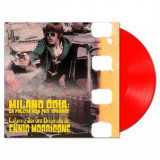
"Milano Odia: La polizia non può sparare", a 1974 movie directed by Umberto Lenzi, is the quintessence of the Italian police films. Not only, it's even more violent and extreme than usual, with one of the best interpretations ever by the Cuban actor Tomas Milian.
The soundtrack for the film is commissioned to Ennio Morricone, who at the time was already a full-time score composer, and had already worked in the same field. The Maestro wrote the entire OST starting from a single, obsessive theme, arranged in many different ways for each different scene or atmosphere.
The whole soundtrack had never been released until 2007, and this is the first whole edition on vinyl ever. It comes in a gatefold package, with a 30x30cm inlay poster.
- A1: There Is No End
- A2: Rich Black (Feat Koreatown Oddity)
- A3: Coonta Kinte (Feat Zelooperz)
- A4: One Inna Million (Feat Lava La Rue)
- B1: Stumbling Down (Feat Sampa The Great)
- B2: Crushed Grapes (Feat Lord Jah-Monte Ogbon)
- B3: Gang On Holiday (Em I Go We?)
- C1: Mau Mau (Feat Nah Eeto)
- C2: Tres Magnifique (Feat Tsunami)
- C3: Hurt Your Soul (Feat Nate Bone)
- D1: Cosmosis (Feat Okri & Skepta)
- D2: My Own (Feat Marlowe)
The wisdom of Tony Allen's words was as deep as his grooves, and these two sentences, which announce the dozen songs that follow, truly capture the spirit of There is No End. Tony’s motivating concept and desire was to work with younger artists, and especially the new generation of rappers, and give them voice in a time of global turmoil when music has never been more important – not necessarily as a "weapon" for the future in the manner of Fela's violently political songs, but also as medicine to heal a fractured world today.
For all those who knew him, he was a deeply spiritual man whose life's mission was not just to create a new musical language, but to pass it on to subsequent generations. In thinking back on the incredible process of creating this album without Tony physically present to guide him, producer Vincent Taeger remarked that his friend and mentor "was a teacher without speaking... a drummer and a guardian, with a great artistic vision and that vision filled the songs even after he had left us." Ben Okri, like everyone else involved in this valedictory album, had a very similar experience, declaring in awe that "this man could have lived another 150 years and kept creating new worlds. He had become the master shaman of his art. He knew himself and his mind. He wanted the album to be open to the energies of a new generation... but like a great mathematician or scientist who found a code of for a new world, with just a few beats, he created this extraordinary canvas." Featured artists include Skepta, Sampa The Great, Lava La Rue, Danny Brown, Damon Albarn and many others