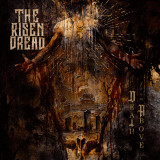
These tracks are responsible for a huge impression on Dream Software and the sound of the label, so it is with great honour we reissue these tracks and release them back into the outersphere. The soundtrack to a retrofuturist world gleaming with optimism. A world where humanity, technology and nature exist in a peaceful symbiosis. A real utopia. We thank you Alex for your inspirational music.
Written and produced by Alex Silvi (Alien Signal) throughout the years of 1993-1994. ‘North Polar Stars’, ‘Brilliant Evening Planets’ and ‘Violent Volcanoes of Io’ originally released on album ‘Celestial Sights of the Future’ from Upland Recordings in 1993. ‘Quantum Limit’ was originally released on album ‘The Search Begins’ also on Upland Recordings in 1993, whereas ‘Atomic (Esoteric Mix)’ was a self-release from 1994.
Lovingly remastered by Lopazz@mixmastering.de and carefully distributed by One Eye Witness.
© Dream Software, Corp (2024)
Поиск:violent
Все
Maximum Violenceis Americandeath metalbandSix Feet Under's 3rd studio album. Thealbum goes back toChris Barnes' roots inCannibal Corpsewith violent themes/lyrics. Itwas also the first Six Feet Under album to featureSteve Swansonon guitars.
- Baby I'm Your Man
- It's So Easy
- Power
- The Hole I See
- Feedback
- A&E
- Flick Of The Wrist
- Turn On The Radio
- Sweetheart
- Politicians
- SE23:
- Karen's God Plan
Crankers of amp, torturers of fuzzbox and denizens of small-hours salvation, Thee Alcoholics dished out a rancorous and righteous debut in their decent `Feedback' - one that filtered gnarled riffage and motorik malevolence through a uniquely debauched prism in pursuit of some extremely ill-advised audial dystopia. Thee Alcoholics may have started life as the home-birthed brainchild of Rhys Llewellyn (Hey Colossus/Acidliner/Drmcnt) yet an evolution since has proven the ultimate form of this beastly creation to be the live arena. In assembling cohorts to turn these visceral jams into something to shake rafters and rattle pint-glasses, new frontiers of ornery intensity have made themselves manifest, and such is the form of the monstrous Bear Bites Horse Sessions, a live-in-the-studio document recorded with Wayne Adams at Bear Bites Horse studio in Haggerston, London, chronicling a band breathing life into a Stoogian paradigm, and doing so apparently whilst barely breaking a sweat. Taking essential elixirs of in-the-red mania, hypnotic repetition and deathless swagger, these twelve jams walk a crooked path that neighbours the nihilistic vortex of Loop, the saturnine lurch of The Fall and the deadpan derangement of The Heads but remains possessed of a maverick charisma and mischief all its own. Lovers of lysergic heaviosity and the sound of a Marshall 4x12 violently spluttering its last will find much to satisfy here, but moreover Bear Bites Horse Sessions is a testimony to sonic punishment as a gateway to new horizons, audial excess as a path to wisdom, and answers, right or wrong, being found in the bottom of a glass.
- Atomic Nightmare
- Uxfxtx (United For Thrash)
- Destined To Die
- Addicted To Mosh
- Brainwash Possession
- Ordered To Thrash (Instrumental)
- Toxic Death
- Lethal Injection
- The Plague Returns
- After Nuclear Devastation
Splatter Vinyl[27,52 €]
Violator wurde 2002 in der brasilianischen Hauptstadt Brasília gegründet und hat sich zum Ziel gesetzt, eines der Aushängeschilder der postmillennialen neuen Welle des Old-School-Thrash-Metal zu werden. Die vierköpfige Band entstand aus der gemeinsamen Vorliebe der Mitglieder für genreprägende Acts aus der goldenen Ära der Szene in den 1980er Jahren. Sie mischten den unerbittlichen Stil der frühen Pioniere aus ihrem Land (Sepultura, Korzus) mit der amerikanischen Tradition (insbesondere den Genre-Titanen Exodus) und einer Prise Hardcore-Crossover. High Roller Records sind stolz darauf, vier Schlüsselveröffentlichungen der Gruppe auf Vinyl neu aufzulegen, wobei „Violent Mosh“ 2004 ihr erstes professionelles Werk auf dem brasilianischen Label Kill Again Records war. Nach einem Demo und einem Vierer-Split gab die Sechs-Track-EP den Ton an für das, was zwei Jahre später auf Violators Debütalbum „Chemical Assault“ folgen sollte. Beide Titel fangen die energiegeladenen Live-Shows ein, die sie sowohl alleine als auch als Support von internationalen Größen wie Destruction spielten. Apropos, auf der „Annihilation Process“-EP von 2010 konnte Sänger/Bassist Pedro Arcanjo nicht mehr nur den deutschen Frontmann Schmier oder Kreators Mille imitieren, während die Musik reifer wurde und Songs wie das ausgefeilte „Futurephobia“ haufenweise Potenzial erkennen ließen. Mit ihrem zweiten Album „Scenarios of Brutality“ (2013) löste die Band dieses Versprechen ein, indem sie ihren mittlerweile unverkennbaren Sound voll zur Geltung brachte, der das Flair eines neuzeitlichen Genre-Klassikers verströmt. Riff-lastig, mit intensivem Tempo und glaubwürdig Zorn und Wut durch etablierte Themen ausdrückend, die von gesellschaftspolitischem Bewusstsein und Doom-Mongering bis hin zu schlichter Thrash-Selbstreferenzialität reichen und mit rohen, aber kraftvollen Produktionen aufwarten, sind diese vier Platten äußerst wichtige Ergänzungen zum Genre-Kanon - Let the Violation Begin!
Mastered for vinyl by Christoph Brandes at Iguana Studios
- Atomic Nightmare
- Uxfxtx (United For Thrash)
- Destined To Die
- Addicted To Mosh
- Brainwash Possession
- Ordered To Thrash (Instrumental)
- Toxic Death
- Lethal Injection
- The Plague Returns
- After Nuclear Devastation
Black Vinyl[25,17 €]
Violator wurde 2002 in der brasilianischen Hauptstadt Brasília gegründet und hat sich zum Ziel gesetzt, eines der Aushängeschilder der postmillennialen neuen Welle des Old-School-Thrash-Metal zu werden. Die vierköpfige Band entstand aus der gemeinsamen Vorliebe der Mitglieder für genreprägende Acts aus der goldenen Ära der Szene in den 1980er Jahren. Sie mischten den unerbittlichen Stil der frühen Pioniere aus ihrem Land (Sepultura, Korzus) mit der amerikanischen Tradition (insbesondere den Genre-Titanen Exodus) und einer Prise Hardcore-Crossover. High Roller Records sind stolz darauf, vier Schlüsselveröffentlichungen der Gruppe auf Vinyl neu aufzulegen, wobei „Violent Mosh“ 2004 ihr erstes professionelles Werk auf dem brasilianischen Label Kill Again Records war. Nach einem Demo und einem Vierer-Split gab die Sechs-Track-EP den Ton an für das, was zwei Jahre später auf Violators Debütalbum „Chemical Assault“ folgen sollte. Beide Titel fangen die energiegeladenen Live-Shows ein, die sie sowohl alleine als auch als Support von internationalen Größen wie Destruction spielten. Apropos, auf der „Annihilation Process“-EP von 2010 konnte Sänger/Bassist Pedro Arcanjo nicht mehr nur den deutschen Frontmann Schmier oder Kreators Mille imitieren, während die Musik reifer wurde und Songs wie das ausgefeilte „Futurephobia“ haufenweise Potenzial erkennen ließen. Mit ihrem zweiten Album „Scenarios of Brutality“ (2013) löste die Band dieses Versprechen ein, indem sie ihren mittlerweile unverkennbaren Sound voll zur Geltung brachte, der das Flair eines neuzeitlichen Genre-Klassikers verströmt. Riff-lastig, mit intensivem Tempo und glaubwürdig Zorn und Wut durch etablierte Themen ausdrückend, die von gesellschaftspolitischem Bewusstsein und Doom-Mongering bis hin zu schlichter Thrash-Selbstreferenzialität reichen und mit rohen, aber kraftvollen Produktionen aufwarten, sind diese vier Platten äußerst wichtige Ergänzungen zum Genre-Kanon - Let the Violation Begin!
Mastered for vinyl by Christoph Brandes at Iguana Studios
- Poisoned By Ignorance
- Uniformity Is Conformity
- Give Me Destruction Or Give Me Death
- Apocalypse Engine
- Deadly Sadistic Experiments
- Futurephobia
- You'll Come Back Before Dying (Executer Cover)
- Nausea (Heresy Cover)
Splatter Vinyl[27,31 €]
Violator wurde 2002 in der brasilianischen Hauptstadt Brasília gegründet und hat sich zum Ziel gesetzt, eines der Aushängeschilder der postmillennialen neuen Welle des Old-School-Thrash-Metal zu werden. Die vierköpfige Band entstand aus der gemeinsamen Vorliebe der Mitglieder für genreprägende Acts aus der goldenen Ära der Szene in den 1980er Jahren. Sie mischten den unerbittlichen Stil der frühen Pioniere aus ihrem Land (Sepultura, Korzus) mit der amerikanischen Tradition (insbesondere den Genre-Titanen Exodus) und einer Prise Hardcore-Crossover. High Roller Records sind stolz darauf, vier Schlüsselveröffentlichungen der Gruppe auf Vinyl neu aufzulegen, wobei „Violent Mosh“ 2004 ihr erstes professionelles Werk auf dem brasilianischen Label Kill Again Records war. Nach einem Demo und einem Vierer-Split gab die Sechs-Track-EP den Ton an für das, was zwei Jahre später auf Violators Debütalbum „Chemical Assault“ folgen sollte. Beide Titel fangen die energiegeladenen Live-Shows ein, die sie sowohl alleine als auch als Support von internationalen Größen wie Destruction spielten. Apropos, auf der „Annihilation Process“-EP von 2010 konnte Sänger/Bassist Pedro Arcanjo nicht mehr nur den deutschen Frontmann Schmier oder Kreators Mille imitieren, während die Musik reifer wurde und Songs wie das ausgefeilte „Futurephobia“ haufenweise Potenzial erkennen ließen. Mit ihrem zweiten Album „Scenarios of Brutality“ (2013) löste die Band dieses Versprechen ein, indem sie ihren mittlerweile unverkennbaren Sound voll zur Geltung brachte, der das Flair eines neuzeitlichen Genre-Klassikers verströmt. Riff-lastig, mit intensivem Tempo und glaubwürdig Zorn und Wut durch etablierte Themen ausdrückend, die von gesellschaftspolitischem Bewusstsein und Doom-Mongering bis hin zu schlichter Thrash-Selbstreferenzialität reichen und mit rohen, aber kraftvollen Produktionen aufwarten, sind diese vier Platten äußerst wichtige Ergänzungen zum Genre-Kanon - Let the Violation Begin!
Mastered for vinyl by Christoph Brandes at Iguana Studios
- Poisoned By Ignorance
- Uniformity Is Conformity
- Give Me Destruction Or Give Me Death
- Apocalypse Engine
- Deadly Sadistic Experiments
- Futurephobia
- You'll Come Back Before Dying (Executer Cover)
- Nausea (Heresy Cover)
Black Vinyl[25,17 €]
Violator wurde 2002 in der brasilianischen Hauptstadt Brasília gegründet und hat sich zum Ziel gesetzt, eines der Aushängeschilder der postmillennialen neuen Welle des Old-School-Thrash-Metal zu werden. Die vierköpfige Band entstand aus der gemeinsamen Vorliebe der Mitglieder für genreprägende Acts aus der goldenen Ära der Szene in den 1980er Jahren. Sie mischten den unerbittlichen Stil der frühen Pioniere aus ihrem Land (Sepultura, Korzus) mit der amerikanischen Tradition (insbesondere den Genre-Titanen Exodus) und einer Prise Hardcore-Crossover. High Roller Records sind stolz darauf, vier Schlüsselveröffentlichungen der Gruppe auf Vinyl neu aufzulegen, wobei „Violent Mosh“ 2004 ihr erstes professionelles Werk auf dem brasilianischen Label Kill Again Records war. Nach einem Demo und einem Vierer-Split gab die Sechs-Track-EP den Ton an für das, was zwei Jahre später auf Violators Debütalbum „Chemical Assault“ folgen sollte. Beide Titel fangen die energiegeladenen Live-Shows ein, die sie sowohl alleine als auch als Support von internationalen Größen wie Destruction spielten. Apropos, auf der „Annihilation Process“-EP von 2010 konnte Sänger/Bassist Pedro Arcanjo nicht mehr nur den deutschen Frontmann Schmier oder Kreators Mille imitieren, während die Musik reifer wurde und Songs wie das ausgefeilte „Futurephobia“ haufenweise Potenzial erkennen ließen. Mit ihrem zweiten Album „Scenarios of Brutality“ (2013) löste die Band dieses Versprechen ein, indem sie ihren mittlerweile unverkennbaren Sound voll zur Geltung brachte, der das Flair eines neuzeitlichen Genre-Klassikers verströmt. Riff-lastig, mit intensivem Tempo und glaubwürdig Zorn und Wut durch etablierte Themen ausdrückend, die von gesellschaftspolitischem Bewusstsein und Doom-Mongering bis hin zu schlichter Thrash-Selbstreferenzialität reichen und mit rohen, aber kraftvollen Produktionen aufwarten, sind diese vier Platten äußerst wichtige Ergänzungen zum Genre-Kanon - Let the Violation Begin!
Mastered for vinyl by Christoph Brandes at Iguana Studios
Violator wurde 2002 in der brasilianischen Hauptstadt Brasília gegründet und hat sich zum Ziel gesetzt, eines der Aushängeschilder der postmillennialen neuen Welle des Old-School-Thrash-Metal zu werden. Die vierköpfige Band entstand aus der gemeinsamen Vorliebe der Mitglieder für genreprägende Acts aus der goldenen Ära der Szene in den 1980er Jahren. Sie mischten den unerbittlichen Stil der frühen Pioniere aus ihrem Land (Sepultura, Korzus) mit der amerikanischen Tradition (insbesondere den Genre-Titanen Exodus) und einer Prise Hardcore-Crossover. High Roller Records sind stolz darauf, vier Schlüsselveröffentlichungen der Gruppe auf Vinyl neu aufzulegen, wobei „Violent Mosh“ 2004 ihr erstes professionelles Werk auf dem brasilianischen Label Kill Again Records war. Nach einem Demo und einem Vierer-Split gab die Sechs-Track-EP den Ton an für das, was zwei Jahre später auf Violators Debütalbum „Chemical Assault“ folgen sollte. Beide Titel fangen die energiegeladenen Live-Shows ein, die sie sowohl alleine als auch als Support von internationalen Größen wie Destruction spielten. Apropos, auf der „Annihilation Process“-EP von 2010 konnte Sänger/Bassist Pedro Arcanjo nicht mehr nur den deutschen Frontmann Schmier oder Kreators Mille imitieren, während die Musik reifer wurde und Songs wie das ausgefeilte „Futurephobia“ haufenweise Potenzial erkennen ließen. Mit ihrem zweiten Album „Scenarios of Brutality“ (2013) löste die Band dieses Versprechen ein, indem sie ihren mittlerweile unverkennbaren Sound voll zur Geltung brachte, der das Flair eines neuzeitlichen Genre-Klassikers verströmt. Riff-lastig, mit intensivem Tempo und glaubwürdig Zorn und Wut durch etablierte Themen ausdrückend, die von gesellschaftspolitischem Bewusstsein und Doom-Mongering bis hin zu schlichter Thrash-Selbstreferenzialität reichen und mit rohen, aber kraftvollen Produktionen aufwarten, sind diese vier Platten äußerst wichtige Ergänzungen zum Genre-Kanon - Let the Violation Begin!
When Bob Vylan won the first MOBO award for Best Alternative Music Act in 2022, the punk-grime duo took to the stage and used the platform to speak about how they managed to achieve the impossible as independent artists in a genre-defying space. “We released an album this year that we produced entirely, mixed entirely, recorded entirely, all from my bedroom…so everybody that’s here, bigging up Atlantic and bigging up Warner, fuck that, us man did it ourselves”.
It was an acceptance speech that rattled the room and built anticipation for their next projects.
Humble as the Sun, the forthcoming album from Bob Vylan continues with much of the rage and urgency that they have come to be known and loved for, but this latest project shows that they are now stronger and wiser, bolstered by the wins and learnings that they have fought hard for along the way. The resulting tracklist aims to leave the listener feeling power alongside their anger, and brings a fresh and compelling blend of punk, rock, grime and rap together in an experimental way.
Following on from the last album, Bob Vylan Presents the Price of Life, the message woven throughout Humble as the Sun remains dark in places but is high-energy, defiant and unapologetic in its critique of a broken social and political system that so many have fallen victim to, but feel powerless against.
This album is for the underdogs, the ones who come out swinging and those who refuse to be defeated in the face of injustice, and aims to remind listeners that anger is a fire that can be harnessed and put to use. The album creation started from a conversation with the sun, which is, after all, a big ball of fire that sustains life.
From masculinity to myths about the G Spot, the themes and topics explored on Humble As The Sun make for an often humorously empowering celebration of the peoples ability to endure, overcome and bring about change.
The lyricism on this album is even more layered than their previous projects, still darkly humorous, anti-establishment and unforgiving but at times pauses to deliver much-needed words of afrmation to listeners, “You are loved. You are not alone. You are going through hell but keep going.” Bobby assures the listener, ofering an antidote to the state of the world, aiming to give some power and agency to those who hear it. At a time when so little trust or faith exists between the people and the powers that be, Bob Vylan ofers out a hand in the despondent darkness that has overwhelmed so many in the shadow of a burning planet. They guides the listener to a place where they can see some light and feel empowered to do something, to fight back, to continue pushing forwards despite the challenges faced along the way.
Mixing all of the best quintessentially British - and Jamaican - musical elements from punk to drum and bass, grime and rock, Bob Vylan creates a sound that reflects the state of the nation, at once voicing the frustrations that normal people have, while also highlighting one’s ability to persevere, overcome hardship and to change.
Computer Future is the sprawling and ambitious third album by amorphous Brisbane, Australia garage rock outfit Velociraptor! The 14-song opus is the best recorded capture yet of everything that makes the ‘Raptors so beloved, a stream of addictively catchy rockers characterised by stupidly infectious melodies, an overabundance of earworm hooks, guitars aplenty plus of course their trademark gang vocals and harmonies. The shadowy cabal behind Velociraptor have returned from a spell away from the spotlight with renewed vigour and focus, more committed to and appreciative of their combined talents and chemistry than their younger selves, who were perhaps more about concerned about chasing good times rather than long ones. These days there are more cooks in the ‘Raptors kitchen than before but that’s only allowed them to expand the palette of the Computer Future menu without compromising on quality. Their distinctively melodic take on the garage rock form is still entirely evident, only it’s now augmented by quirkily compelling sonic detours into psych and new wave realms, the band all the while sounding wholly like themselves and nobody but themselves (apart from perhaps the Devo-indebted title tracks). In their halcyon days Velociraptor were a force to be reckoned with, an amorphous collective sometimes up to 12 members strong - many of them wielding guitars of some description - who partied hard and played even harder, attacking their live shows with unbridled glee and genuine gusto. They toured Europe/UK, and staged with bands the calibre of Black Lips, New York Dolls, OFF!, Radio Birdman and Violent Soho. The unparalleled camaraderie of their renowned live blitzes - plus sheer size of the band - at times threatened to overshadow the genuine strength of their songwriting and recorded output, but now with Computer Future those concerns are firmly in the past!
Clothilde’s new album sounds like a constant departure from almost everything. Up until now, her music pieces seemed uncontrolled, a total commitment to the machines. She was, somehow, in between us - listener, audience - and the idea of a machine producing sounds she doesn’t seem to control. Of course, none of this was entirely true, she was mostly in control, but the fantasy, the orchestration of it was beautiful. It was sci-fi-ish, Metropolis-magnificent.
In “Cross Sections” everything is purposely under control. We feel, without being told, that Clothilde is directing the narrative, inviting us to partake of this raw and austere electronic sound, forcing us to learn to enjoy it. This is new. Whereas before she would expect you to stay put and listen, eventually you would understand and give in. Or your body would. Now she is telling you to be there, she doesn’t want to be alone, she wants us to feel this subterranean urgency at all costs.
The real eureka moment comes with “Medullary Rays”, when we start cohabiting with the sounds, when they feel familiar. The darkness becomes real; it is palpable how she is stretching each sound and making them come to life at every moment. It is violent, brutal. Like every track, it's a relief when it ends, it's like coming out of a car crash alive. Much of the A side of is Clothilde pushing the boundaries of her sound. She is not testing but finding new ground and sharing it with us. She is exorcising, demolishing and building over and over again, she is crying and screaming, dozing off with the demential levels of bass, making us constantly listen to alarm bells. She is scaring the shit out of us.
The B side keeps the levels of anxiety high up, especially on the 13-minute “Ring”. Surrealistic drones come and go, every second sounds like the end of something, the accumulation of tension is torrential and it never, never stops. We hope there is a conclusion to this. But there is not. “Cross Sections” builds and feeds on this darkness but, in a way, it is self-contained. Never explodes, never releases itself from itself. It is a continuous process of catharsis that it is never over. It never aims to be. Like, you know, life itself.
We've all been there. It feels familiar. Now it has a sound, or sounds. It can be heard and it is outer dimensional. “Cross Sections” is a tremendous effort from an artist trying to survive something. You never know what is. You don’t need to know what it is. It is just there. Cliché but it has to be said: highest possible volume on this one.
Punk pioneers Crass continue their vinyl reissue series, repressing their limited releases by adjacent artists through Crass Records, in association with One Little Independent. 1983's 'Multi-Death Corporations' broke new ground by addressing, in the lengthy liner notes and artwork, the growth of corporations and the violent suppression of leftwing politics in Central America. The Austin-based band released material through ex-Dead Kennedys singer Jello Biafra, cited influences such as Black Flag and D.O.A, as well as working with Crass Records. Penny Rimbaud tells us; “MDC were one of the first American bands to follow the political mantle set by Crass in the UK. Straight-edge purist to the last mouthful of sprouted grass, MDC were equally fierce with their polemic and uncompromising politics. Sharp as a blade, they cut through the crap. ‘They meant it, ma’am’, and some.”
- 1: Red Mist White Knuckles
- 2: The Story Of War
- 3: Should Be Heaven
- 4: Don’t Be Afraid
- 5: Where’s The One?
- 6: Like An Avalanche
- 7: I Am Dead
- 8: What Is This Love?
- 9: Sunflowers And Starlight
- 10: The World I See Is Not The World I Want
On How It Ends (?), slinky melodies snake through nocturnal atmospherics, drawing you into a world built on poetic, painterly lyricism. Night Crickets, a long-distance groove affair that materialized during the drawn-out days of lockdown, has emerged once again to soundtrack our waking dreams.
David J (Bauhaus, Love & Rockets), Victor DeLorenzo (Violent Femmes) and multi-instrumentalist Darwin Meiners spearhead a loose collective of like-minded creative souls whom, through sheer tenacity and a burning desire to collaborate and create, transcend the restrictions of space and time. Audio files shared from Los Angeles to Milwaukee, from London to the San Francisco Bay, and the ghosts of Candlestick Park shimmer through the fog, coalescing in a glorious ‘gesamtkunstwerk’ that draws from the past, the present and the imagined future.
Declaring Bauhaus, Love And Rockets, and Violent Femmes iconic, foundational bands in the history of alternative music would receive little pushback from those in the know. San Francisco born artist Darwin Meiners is a fan of all three. A chance meeting with David J grew into a friendship, and Darwin not only became a bandmate, but his manager. After reaching out to Victor DeLorenzo through e-mail, Darwin met the Violent Femmes drummer after their set at Coachella. Soon, after the three collaborated on Darwin’s 2014 release Souvenir.
As the pandemic took hold, Darwin was looking for a new project to occupy the lock down time and approached Victor, who was keen to proceed and suggested that David join as well. The musical trust established between these three was immediate and Night Crickets were born. Within weeks a global process was initiated between them, the recordings eventually forming the album, A Free Society.
Following that release, inspired by how well – and quickly – they all worked together, the trio kept up their collaboration. “We are each free to discover musical connections that could only exist in an ideal creative setting” explains Victor. “We are very lucky to have three musicians who write, sing and play various instruments in one trio… our egos seem to melt into one when we face musical decisions, so our expeditions are always filled with pure discovery, humor and drive!”
How It Ends (?) was crafted with the same collaborative spirit as A Free Society. Each member contributed contributed unique elements to spur their collective creativity—whether a drum pattern, a lyrical concept, or a musical idea—and together, they expanded these initial sparks into the finished work. True to their approach, much of what you hear was captured in the first take, reflecting a genuine, unfiltered moment.
The music on the How It Ends (?) is a true evolution of the debut album. It is deeper and darker. Having said that, the dark tone is alleviated by a healthy measure of the buoyant, bouncy and melodic. “Much of the new material is very psychedelic and the contrast between this heavy, dark psychedelia and the more uplifting pop elements puts me in mind of The Beatles’ ‘Revolver’ album to some degree,” tells David J. “The recording process for the new album was exactly the same as the first in that we all recorded remotely, taking turns to share files and reacting spontaneously to the previous track, overdubbing then passing on once again until we all felt that the track was done.”
“While we didn’t start with a specific theme, the album emerged as a contemplative exploration of endings” says Darwin. “It touches on the loss of individuals, the shifting of ideas, and the fragility of systems. Beneath this sense of darkness and finality, however, there are threads of beauty and glimpses of hope. We invite you to immerse yourself in the album and experience the journey we’ve embarked upon.”
Camelot, the legendary seat of King Arthur's court in Early Middle Ages Britain, was probably not a real place. A corruption of the name of a real Romano-Briton city, the word "Camelot" accumulated symbolic, mythic resonances over centuries, until achieving its present usage as a near-synonym of "utopia." In the mid-20th century alone, Camelot inspired an explosion of representations and appropriations, among them the violent, affectless Arthurian court of Robert Bresson's 1974 film Lancelot du Lac and the absurdist iteration of Monty Python's 1975 Holy Grail, both of which feature armored knights erupting into fountains of blood; the mystical Welsh world of novelist John Cowper Powys's profoundly weird 1951 novel Porius, with its Roman cults, wizards and witches, and wanton giants; and the nationalist nostalgia of President John F. Kennedy's White House. Unsurprisingly there are fewer Camelots in more recent memory. Camelot, Canadian songwriter Jennifer Castle's extraordinary, moving 2024 chronicle of the artist in early middle age, charts a realer, more rooted, and more metaphorical place than the fabled Camelot of the Early Middle Ages (or its myriad depictions), but it too is a space more psychic than physical. In Castle's Camelot, the fantastic interpenetrates the mundane, and the Grail, if there is one, distills everyday experience into art and art into faith, subliming terrestrial concerns into sublime celestial prayers to Mother Nature, and to the unfolding process of perfecting imperfection in one's own nature. Co-produced by Jennifer and longtime collaborator Jeff McMurrich, her seventh record is at once her most monumental and unguarded to date, demonstrating a mastery of rendering her verse and melodies alike with crisply poignant economy. For all their pointedly plainspoken lyrical detail and exhilarating full-band musical flourishes, these songs sound inevitable, eternal as morning devotions. "Back in Camelot," she sings on the lilting, vulnerable title track, "I really learned a lot / circles in the crops and / sky-high geometry." The album opens with a candid admission of sleeping "in the unfinished basement," an embarrassing joke that comes true. But the dreamer is redeemed by dreaming, setting sail in her airborne bed above "sirens and desert deities." If she questions her own agency_whether she is "wishing stones were standing" or just "pissing in the wind"_it does not diminish the ineffable existential jolt of such signs and wonders. This abiding tension between belief and doubt, magic and pragmatism, self and other, sacred and profane, and even, arguably, paganism and monotheism, suffuses these ten songs, which limn an interior landscape shot through with sunstriped shadows of "multi-felt dimensions" both mystical and quotidian. The epic scale and transport of "Camelot," with its swooning strings, gives way dramatically to "Some Friends," an acoustic-guitar-and-vocals meditation in miniature on Janus-faced friends and the lunar and solar temperatures of their promises_"bright and beaming verses" versus hot curses_which recalls her minimalist last album, 2020's achingly intimate Monarch Season. (In a symmetrical sequencing gesture, the penultimate track, the incantatory "Earthsong," bookends the central six with a similarly spare solo performance and coiled chord progression, this time an ambiguous appeal to _ a wounded lover? a wounded saint? our wounded planet?) Those whom "Trust" accuses of treacherous oaths spit through "gilded and golden tooth"_cynics, critics, hypocrites, gurus, scientists, doctors, lovers, government, the so-called entertainment industry_sow uncertainty that can infect the artist, as in "Louis": "What's that dance / and can it be done? What's that song / and can it be sung?" Answering affirmatively are "Lucky #8," an irrepressible ode to dancing as a bulwark against the "tidal pools of pain" and the "theory of collapse," and "Full Moon in Leo," which finds the narrator dancing around the house with a broom, wearing nothing but her underwear and "big hair." But the central question remains: who can we trust, and at what cost faith, in art or angels or otherwise? Castle's confidence in her collaborators is the cornerstone of Camelot. Carl Didur (piano and keys), Evan Cartwright (drums and percussion), and steadfast sideman Mike Smith (bass) comprise a rhythm section of exquisite delicacy and depth. This fundamental trio anchors the airiness of regular backing vocalists Victoria Cheong and Isla Craig and frames the guitars of Castle, McMurrich, and Paul Mortimer (and on "Lucky #8," special guest Cass McCombs). Reprising his decennial role on Castle's beloved 2014 Pink City, Owen Pallett arranged the strings for Estonia's FAMES Skopje Studio Orchestra. On the ravishing country-soul ballad "Blowing Kisses"_Pallett's crowning achievement here, which can be heard in its entirety in the penultimate episode of the third season of FX's The Bear_Jennifer contemplates time and presence, love and prayer_and how songwriting and poetry both manifest and limit all four dimensions: "No words to fumble with / I'm not a beggar to language any longer." Such rare moments of speechlessness_"I'm so fucking honoured," she bluntly proclaims_suggest a state "only a god could come up with." (If Camelot affirms Castle as one of the great song-poets of her generation, she is not immune to the despairing linguistic beggary that plagues all writers.) Camelot evinces a thoroughgoing faith not only in the natural world_including human bodies, which can, miraculously, dance and swim and bleed and embrace and birth_but also in our interpretations of and interventions in it: the "charts and diagrams" of "Lucky #8," a daydreamt billboard on Fairfax Ave. in LA in "Full Moon in Leo," the bloody invocations of the organ-stained "Mary Miracle," and all manner of water worship, rivers in particular. (Notably, Jennifer has worked as a farmer and a doula.) The album ends with "Fractal Canyon"'s repeated, exalted insistence that she's "not alone here." But where is here? The word "utopia" itself constitutes a pun, indicating in its ambiguous first syllable both the Greek "eutopia," or "good-place"_the facet most remembered today_and "outopia," or "no-place," a negative, impossible geography of the mind. Utopia, like its metonym Camelot, is imaginary. Or as fellow Canadian songwriter Neil Young once sang, "Everyone knows this is nowhere." "Can you see how I'd be tempted," Castle asks out of nowhere, held in the mystery, "to pretend I'm not alone and let the memory bend?"
. For Fans Of: The Weather Station, Weyes Blood, Adrianne Lenker, Phoebe Bridgers, Joan Shelley, Lana Del Rey, Cass McCombs, Angel Olsen & Neil Young. Camelot, the legendary seat of King Arthur’s court in Early Middle Ages Britain, was probably not a real place. A corruption of the name of a real Romano-Briton city, the word “Camelot” accumulated symbolic, mythic resonances over centuries, until achieving its present usage as a near-synonym of “utopia.” In the mid-20th century alone, Camelot inspired an explosion of representations and appropriations, among them the violent, affectless Arthurian court of Robert Bresson’s 1974 film Lancelot du Lac and the absurdist iteration of Monty Python’s 1975 Holy Grail, both of which feature armoured knights erupting into fountains of blood; the mystical Welsh world of novelist John Cowper Powys’s profoundly weird 1951 novel Porius, with its Roman cults, wizards and witches, and wanton giants; and the nationalist nostalgia of President John F. Kennedy’s White House. Unsurprisingly there are fewer Camelots in more recent memory. Camelot, Canadian songwriter Jennifer Castle’s extraordinary, moving 2024 chronicle of the artist in early middle age, charts a realer, more rooted, and more metaphorical place than the fabled Camelot of the Early Middle Ages (or its myriad depictions), but it too is a space more psychic than physical. In Castle’s Camelot, the fantastic interpenetrates the mundane, and the Grail, if there is one, distills everyday experience into art and art into faith, subliming terrestrial concerns into sublime celestial prayers to Mother Nature, and to the unfolding process of perfecting imperfection in one’s own nature. Co-produced by Jennifer and longtime collaborator Jeff McMurrich, her seventh record is at once her most monumental and unguarded to date, demonstrating a mastery of rendering her verse and melodies alike with crisply poignant economy. For all their pointedly plainspoken lyrical detail and exhilarating full-band musical flourishes, these songs sound inevitable, eternal as morning devotions. “Back in Camelot,” she sings on the lilting, vulnerable title track, “I really learned a lot / circles in the crops and / sky-high geometry.” The album opens with a candid admission of sleeping “in the unfinished basement,” an embarrassing joke that comes true. But the dreamer is redeemed by dreaming, setting sail in her airborne bed above “sirens and desert deities.” If she questions her own agency whether she is “wishing stones were standing” or just “pissing in the wind” it does not diminish the ineffable existential jolt of such signs and wonders. This abiding tension between belief and doubt, magic and pragmatism, self and other, sacred and profane, and even, arguably, paganism and monotheism, suffuses these ten songs, which limn an interior landscape shot through with sunstriped shadows of “multi-felt dimensions” both mystical and quotidian. The epic scale and transport of “Camelot,” with its swooning strings, gives way dramatically to “Some Friends,” an acoustic-guitar-and-vocals meditation in miniature on Janus-faced friends and the lunar and solar temperatures of their promises—“bright and beaming verses” versus hot curses which recalls her minimalist last album, 2020’s achingly intimate Monarch Season. (In a symmetrical sequencing gesture, the penultimate track, the incantatory “Earthsong,” bookends the central six with a similarly spare solo performance and coiled chord progression, this time an ambiguous appeal to … a wounded lover? a wounded saint? our wounded planet?). Those whom “Trust” accuses of treacherous oaths spit through “gilded and golden tooth” cynics, critics, hypocrites, gurus, scientists, doctors, lovers, government, the so-called entertainment industry sow uncertainty that can infect the artist, as in “Louis”: “What’s that dance / and can it be done? What’s that song / and can it be sung?” Answering affirmatively are “Lucky #8,” an irrepressible ode to dancing as a bulwark against the “tidal pools of pain” and the “theory of collapse,” and “Full Moon in Leo,” which finds the narrator dancing around the house with a broom, wearing nothing but her underwear and “big hair.” But the central question remains: who can we trust, and at what cost faith, in art or angels or otherwise? Castle’s confidence in her collaborators is the cornerstone of Camelot. Carl Didur (piano and keys), Evan Cartwright (drums and percussion), and steadfast sideman Mike Smith (bass) comprise a rhythm section of exquisite delicacy and depth. This fundamental trio anchors the airiness of regular backing vocalists Victoria Cheong and Isla Craig and frames the guitars of Castle, McMurrich, and Paul Mortimer (and on “Lucky #8,” special guest Cass McCombs). Reprising his decennial role on Castle’s beloved 2014 Pink City, Owen Pallett arranged the strings for Estonia’s FAMES Skopje Studio Orchestra. On the ravishing country-soul ballad “Blowing Kisses” Pallett’s crowning achievement here, which can be heard in its entirety in the penultimate episode of the third season of FX’s The Bear Jennifer contemplates time and presence, love and prayer and how songwriting and poetry both manifest and limit all four dimensions: “No words to fumble with / I’m not a beggar to language any longer.” Such rare moments of speechlessness “I’m so fucking honoured,” she bluntly proclaims suggest a state “only a god could come up with.” (If Camelot affirms Castle as one of the great song-poets of her generation, she is not immune to the despairing linguistic beggary that plagues all writers.) Camelot evinces a thoroughgoing faith not only in the natural world including human bodies, which can, miraculously, dance and swim and bleed and embrace and birth but also in our interpretations of and interventions in it: the “charts and diagrams” of “Lucky #8,” a daydreamt billboard on Fairfax Ave. in LA in “Full Moon in Leo,” the bloody invocations of the organ-stained “Mary Miracle,” and all manner of water worship, rivers in particular. (Notably, Jennifer has worked as a farmer and a doula.) The album ends with “Fractal Canyon”s repeated, exalted insistence that she’s “not alone here.” But where is here? The word “utopia” itself constitutes a pun, indicating in its ambiguous first syllable both the Greek “eutopia,” or “good-place” the facet most remembered today and “outopia,” or “no-place,” a negative, impossible geography of the mind. Utopia, like its metonym Camelot, is imaginary
Oliver Coates' Throb, shiver, arrow of time is a portal into somatic chiaroscuro, aglow with the embers of imperfect memories and smudged with the plumes of internal echoes, which augment in vast, mercurial dimensions. For his third album on RVNG Intl., the British cellist, composer and producer offers a capsule of personal resonance and remembrance, assembled over the past six years. Throb, shiver, arrow of time traces the familiar metallic anatomy and viscous string modulations of his 2020 release skins n slime, while recentering his inner compulsions following a procession of lauded score writing projects, including the films Aftersun (Charlotte Wells, 2022), The Stranger (Thomas M Wright, 2022) and Occupied City (Steve McQueen, 2023). While working on Aftersun, Wells asked Coates how music could signal that someone is going on a trawl through their memory_a question that has stayed with him ever since and fosters a heartbeat running through the record. Throb, shiver, arrow of time is "all about inaccurate transmissions from our memories, overlaid with emotions from other sources," says Coates. The release is imbued with the ache and glow of recollections mulched together, where the guttural dissonance of misremembering is shrouded by strange orbs of sentiment. At the record's inner core is "Shopping centre curfew," a swift yet cavernous track that emerged five years ago when two real world events, both occurring in South London during the pandemic lockdowns, became fused in a dream: the demolition of Elephant and Castle shopping center, and the discussion of a curfew as a real possibility for all men following a violent crime. A strange simultaneity occurred with this piece of music and Coates built the album out from there, a sense of temporal entropy refracting shimmers of lurking convulsions into lucid sonic topologies. The ten compositions of Throb, shiver, arrow of time find weightless melodies soaring across after-image gradients, magnified and compressed. Misted tones within "Please be normal" and "90" soften drone-soaked shudders of inner acoustics messing up. Vocal invocations appear from long-term collaborators Malibu and chrysanthemum bear, as well as drifting synth radiance from Faten Kanaan. Throb, shiver, arrow of time furthers Coates' reach in collapsing the digital into the analogue and vice versa, allowing serendipity to reorganize the material and push out against the confines of flatness. This sculptural approach to sound is deeply influenced by the intricate installations of artist Sarah Sze, whose permutations of visual matter with its own after-image form kaleidoscopic epitaphs for ephemera and emotion. Coates' thinking about Sze's work and processes flowed together with his own playing and editing techniques, superimposing the textural relief of a live take back into a composition, and allowing the sound to succumb to a dream of itself. As Coates expands, "The cello is a kind of melancholic instrument with a light ethereal spirit. When the sound is flattened into digital processes, with shifted frequencies and time stretching I'm trying to give it even more of those qualities. Sometimes I'm distancing myself from it, so it becomes a piece of discarded debris that has soul in it, a down-sampling. Or other times, it's trying to maximize the present tense in the act of playing, and collapse that vivid color into a burnished, photocopied kind of sound. So the music acts like weather, weathering the listener, or as flames licking at the sides of objects." As the record unfurls, the compositions swell in duration, until the granular glimmers of its finale "Make it happen" persist in almost violent delight. "There's a feeling of not wanting to let this album go, trying to defy the extinguishing sound at the end of the music, trying to push the colors beyond the confines of the structure, to defeat the silence." In the scramble to resist denouement, Coates suspends the arrow of time in its eternal flight, just for a moment, to reveal the solace of the dust settling in the afterglow. Oliver Coates' Throb, shiver, arrow of time will be released on vinyl, Japanese import CD, and digital editions on October 18, 2024. On behalf of Oliver and RVNG Intl., a portion of the proceeds from this release will benefit The Traditional Music and Song Association of Scotland, an organization fostering opportunities for people of all ages to participate in the traditional music and culture of Scotland.
DRIVETRAIN
“That Detroit”
Pure electro, unfiltered and unrelenting. From the subs to the
robotic, it’s all Detroit.
“Destination”
Intelligently spirited techno, manufactured with the aggressive
punch to command body movement.
JANI HO
“Ripple In Time”
The evolution of minimal, hypnotic syncopation, precisely
characterized with tireless charisma.
“Violent Delay”
Applied science fearlessly melding an irrefutable symphonic
hook with unyielding oscillation .
Cindy is to release a new six song EP called Swan Lake on 4th October via Tough Love. The title isn't a nod to the folktale or ballet in any real way, but to the fact that it all has ended up in the collective imagination as an object, vaguely recognizable, a little suggestive, and mostly blank. Karina Gill, Cindy's songwriter, likes to make use of that kind of resonance to connect sound and experience. The six songs on this EP continue the stripped-down habits of previous Cindy releases, while adding a few departures and left-turns. Cindy likes to work at the essentials and the elements here say exactly what's needed. In other ways, these songs present a soft filigree that's unusual for their recordings. Oli Lipton (Now, Violent Change) on guitar and Will Smith (Now) on bass play counterpoint melodies to Gill's structures. Staizsh Rodrigues (Children Maybe Later, Almond Joy, Peace Frog) sings vocal harmonies that both offset and deepen Gill's voice and delivery. There are playful drums by Mike Ramos (Tony Jay, Sad Eyed Beatniks) and coolly elaborate guitar lines from Stanley Martinez (Famous Mammals, Violent Change, Non Plus Temps). Gill's songs strike this balance too: almost nonchalant reporting tied up in unexpected knots. A ride in an elevator connects up with questions about peace and/or the nature of things; the title track wonders about associative thinking and associative feeling; The Bell is an account of one of those times when everything makes sense but you can't explain it; and there's the scene of a party viewed with admiration for how friends can love each other. As Gill herself says: "People have told me that they can't quite identify my influences. Me neither. The foundational layers of music of the past and my past have been metabolized like breakfast and turned into more me, sorry to say. But I experience the music of people I'm connected with and it impacts me in the moment. There's the music I'm around - April Magazine, Sad Eyed Beatniks, Violent Change, Katsy Pline, collaborating with Mike on Flowertown - that I can feel a direct line from. Then there's music that is being made far away but feels close, like Lewsberg, specifically, for this EP. "
Cindy is to release a new six song EP called Swan Lake on 4th October via Tough Love. The title isn’t a nod to the folktale or ballet in any real way, but to the fact that it all has ended up in the collective imagination as an object, vaguely recognizable, a little suggestive, and mostly blank. Karina Gill, Cindy’s songwriter, likes to make use of that kind of resonance to connect sound and experience. The six songs on this EP continue the stripped-down habits of previous Cindy releases, while adding a few departures and left-turns. Cindy likes to work at the essentials and the elements here say exactly what’s needed. In other ways, these songs present a soft filigree that’s unusual for their recordings. Oli Lipton (Now, Violent Change) on guitar and Will Smith (Now) on bass play counterpoint melodies to Gill’s structures. Staizsh Rodrigues (Children Maybe Later, Almond Joy, Peace Frog) sings vocal harmonies that both offset and deepen Gill’s voice and delivery. There are playful drums by Mike Ramos (Tony Jay, Sad Eyed Beatniks) and coolly elaborate guitar lines from Stanley Martinez (Famous Mammals, Violent Change, Non Plus Temps). Gill’s songs strike this balance too: almost nonchalant reporting tied up in unexpected knots. A ride in an elevator connects up with questions about peace and/or the nature of things; the title track wonders about associative thinking and associative feeling; The Bell is an account of one of those times when everything makes sense but you can’t explain it; and there’s the scene of a party viewed with admiration for how friends can love each other. As Gill herself says: "People have told me that they can’t quite identify my influences. Me neither. The foundational layers of music of the past and my past have been metabolized like breakfast and turned into more me, sorry to say. But I experience the music of people I’m connected with and it impacts me in the moment. There’s the music I’m around – April Magazine, Sad Eyed Beatniks, Violent Change, Katsy Pline, collaborating with Mike on Flowertown – that I can feel a direct line from. Then there’s music that is being made far away but feels close, like Lewsberg, specifically, for this EP. " CINDY – UK Tour Dates: Oct 31st WOE is 6 @ Walthamstow Trades Hall, London w/ Cuneiform Tabs & Bobby Would. Nov 1st Coventry, UK Just Dropped In Records, 2 Halifax, UK The Grayston Unity, 4 York, UK The Fulford Arms, 5 Gateshead, UK The Central Bar, 6 Glasgow, UK The Glad Café, 7 Manchester, UK Rat & Pigeon, 8 Cambridge, UK NCI Centre.
Bones Shake are a scuzzy, fuzz enthused garage rock trio formed in Manchester in 2011. They play everything to the extreme; violent bottle-neck blues riffs, drums kicked, pounded and exploited and squeals of reverb drenched vocals which when combined, will help save your soul. With a relentless energy, they’ve never taken their foot off the gas. In July 2022 they released Bleed to critical acclaim, itself the follow up to 2019’s debut LP Sermons. Purge sees the trilogy complete. Through tirelessly playing across the UK and Europe, their cult following makes them one of the best not so kept secrets in the underground scene. Wherever they go they fill out venues and have now played the infamous Raut Oak festival twice. With a string of previous releases under their belt, they have gone from strength to strength and attracted attention worldwide. Imagine a desert dive bar, the only bar in a hundred miles, the soundtrack as the shots fly is Purge. Talking about the LP, Bones say that “we needed to purge ourselves of these songs so we stuck two fingers up, lodged them at the back of the larynx and spewed out a new album.” Opener ‘Banshee’ wastes no time in providing that proverbial kick to the face these guys are infamous for. With a gnarly vocal and guitar interplay you’re hooked from the first note; the intensity rises with every rotation and if this one doesn’t leave you breathless you are not listening loud enough. ‘One Kiss’ is a filthy little blues number that taunts and teases, while ‘Pretty Little Things’ takes you on a journey through their sound bringing out all the bumps and grinds you could possibly muster. ‘The Creeper’ is a bit different to their usual, adding a sense of intrigue and unease that draws you in deep. Lead single ‘Let Go’ is an adrenaline fuelled expedition through all the best parts of their sound, with a few surprises thrown in for good measure. ‘Passive Intervention’ changes track a little, keeping you aurally attentive while title track ‘Purge’ is the experience that can’t be surmised, get the volume up high and release. With its rolling, thunder-esq. drums, closer ‘Stench’ rounds things off in the best way; leaving you wanting more. Purge is without doubt their strongest and most visceral release to date, dare you miss out on this experience
Green[23,95 €]
‘What makes Sex Swing so powerful is that they transcend the limitations of rock music. Their sound is so full of possibilities, violence, sexuality, sacrifice, even religion. If there was a future to look forward to for heavy guitar music, this is it’ The Quietus The locals call it Sop Ruak – eighty thousand square miles of mountains and mystery and unholy medicine. “It really is an endless seam of activity,” Sex Swing frontman Dan Chandler explains of Golden Triangle – both the title of their new album and the region between Myanmar, Thailand and Laos that inspired it. To know this contradictory corner of the world is to understand fully why the cult-beloved noise-rock artisans turned to it when writing their hotly-anticipated third full-length. The real-life Golden Triangle is a groundswell of both natural wonder and drug production, and who combines beauty and narcotic brutality better than Sex Swing? For a decade now, this
collective of revered UK underground musicians, comprising members of Earth, Mugstar, The Keep and Jaaw, have been pulling audiences into drug- like slipstreams with their alchemy of pummelling rhythms, towering guitars, and unrelenting saxophone through which glimmers of light occasionally pierce through. No wonder their Golden Triangle is an album telling distortion-shrouded tales from one of the most storied, enigmatic places on the planet, with enough invention within to fill eighty thousand miles and more.
Where does this violent, hypnotic aural travelogue take you within the Sop Ruak? The seven tracks that make up The Golden Triangle see the band – completed by bassist Jason Stoll, drummer Stuart Bell, guitarist Jodie Cox, synthesist/guitarist Oli Knowles and saxophonist Colin Webster – adventure first to ‘The Confluence of the Ruak and Mekong Rivers,’ full of shimmering orchestration and feather-light ambience. Then come stops in ‘Myawaddy’, named after a small town embroiled in bloodshed on the border of Myanmar
and Thailand, and ‘Boten, Route 13’ – sparked by stories of a seemingly endless stretch of road from Laos into China. Before long, listeners are plunged into ‘Hpakant’, one of the album’s most invigorating and singular moments, lyrically inspired by a jade mine in Myanmar, where the spoils of forced labour are exchanged for prostitution and methanphetamine. The result is a mesmerising slow-burn of sax, snaking rhythms and sinister spoken word courtesy of the Scottish-born Bruce McClure, who “took the theme and turned it into a sci-fi story of exploitation and vice,” explains the frontman. It’s a track that, like the rest of Golden Triangle, underlines the evolution Sex Swing have undertaken since forming in 2014. From the raw and primitive sounds of the self-titled debut full-length, followed up by the coruscatingType II in 2020. Sex Swing’s third effort retains those early primitive elements and adds layers of structure and complexity. Golden Triangle initial formation was that of programmed beats and bedroom recordings shared electronically in the height of the pandemic. Those ideas were then completed during intensive writing sessions at a secluded farm in Oxfordshire.
Album credits consist of recording by Stanley Gravett at Holy Mountain Studios in Hackney, mixing by Wayne Adams at Bear Bites Horse, mastering from James Plotkin, and the continued aesthetic collaboration with artist Alex Bunn. Golden Triangle bristles with a rawness familiar to fans of the British sonic punishers, but adds new elements indicative of a group never resting on their laurels or sitting in one place. Why would they, after all? There’s an entire world of mountains and mystery and unholy medicine out there to be explored. The Golden Triangle, it seems, is just the beginning.
Black[23,95 €]
‘What makes Sex Swing so powerful is that they transcend the limitations of rock music. Their sound is so full of possibilities, violence, sexuality, sacrifice, even religion. If there was a future to look forward to for heavy guitar music, this is it’ The Quietus The locals call it Sop Ruak – eighty thousand square miles of mountains and mystery and unholy medicine. “It really is an endless seam of activity,” Sex Swing frontman Dan Chandler explains of Golden Triangle – both the title of their new album and the region between Myanmar, Thailand and Laos that inspired it. To know this contradictory corner of the world is to understand fully why the cult-beloved noise-rock artisans turned to it when writing their hotly-anticipated third full-length. The real-life Golden Triangle is a groundswell of both natural wonder and drug production, and who combines beauty and narcotic brutality better than Sex Swing? For a decade now, this
collective of revered UK underground musicians, comprising members of Earth, Mugstar, The Keep and Jaaw, have been pulling audiences into drug- like slipstreams with their alchemy of pummelling rhythms, towering guitars, and unrelenting saxophone through which glimmers of light occasionally pierce through. No wonder their Golden Triangle is an album telling distortion-shrouded tales from one of the most storied, enigmatic places on the planet, with enough invention within to fill eighty thousand miles and more.
Where does this violent, hypnotic aural travelogue take you within the Sop Ruak? The seven tracks that make up The Golden Triangle see the band – completed by bassist Jason Stoll, drummer Stuart Bell, guitarist Jodie Cox, synthesist/guitarist Oli Knowles and saxophonist Colin Webster – adventure first to ‘The Confluence of the Ruak and Mekong Rivers,’ full of shimmering orchestration and feather-light ambience. Then come stops in ‘Myawaddy’, named after a small town embroiled in bloodshed on the border of Myanmar
and Thailand, and ‘Boten, Route 13’ – sparked by stories of a seemingly endless stretch of road from Laos into China. Before long, listeners are plunged into ‘Hpakant’, one of the album’s most invigorating and singular moments, lyrically inspired by a jade mine in Myanmar, where the spoils of forced labour are exchanged for prostitution and methanphetamine. The result is a mesmerising slow-burn of sax, snaking rhythms and sinister spoken word courtesy of the Scottish-born Bruce McClure, who “took the theme and turned it into a sci-fi story of exploitation and vice,” explains the frontman. It’s a track that, like the rest of Golden Triangle, underlines the evolution Sex Swing have undertaken since forming in 2014. From the raw and primitive sounds of the self-titled debut full-length, followed up by the coruscatingType II in 2020. Sex Swing’s third effort retains those early primitive elements and adds layers of structure and complexity. Golden Triangle initial formation was that of programmed beats and bedroom recordings shared electronically in the height of the pandemic. Those ideas were then completed during intensive writing sessions at a secluded farm in Oxfordshire.
Album credits consist of recording by Stanley Gravett at Holy Mountain Studios in Hackney, mixing by Wayne Adams at Bear Bites Horse, mastering from James Plotkin, and the continued aesthetic collaboration with artist Alex Bunn. Golden Triangle bristles with a rawness familiar to fans of the British sonic punishers, but adds new elements indicative of a group never resting on their laurels or sitting in one place. Why would they, after all? There’s an entire world of mountains and mystery and unholy medicine out there to be explored. The Golden Triangle, it seems, is just the beginning.
“I am OBSESSED with the 80s. I love the loud neon colours and fashion and the kinetic energy of the music. It’s uplifting and bittersweet with a ton of keyboards, what’s not to like?” reasons Morgane when asked what it is she likes about the decade. This exuberance is brightly reflected in the mirror ball synthpop of her third album released at the end of September. It is her second long player to appear on vinyl after the release of Between The Funk And The Fear debut on the Polytechnic Youth label.
Morgane was the keyboard player in Stereolab between 1995 and 2001 during which time they released Emperor Tomato Ketchup (her favourite) and Dots And Loops. As a teenager though she first played the drums, then guitar and bass. She only learnt the keyboards one month before joining the group. “They gave me 40 songs to learn, it was a baptism of fire”.
After leaving Stereolab, Morgane first moved to New York for nine years; she’d always planned to move to America having spent a lot of time there with her parents and of course those space-pop pioneers. The warmer weather of LA enticed her though and you can hear its pulse in Day-Glo Chaos. The album’s thumping heart is pumped by the city’s night sky and when asked she cites three particular albums as her favourites: the oddball analogue electro of Jacno’s 1979 debut; John Carpenter’s ‘Escape From New York’ and The B-52’s ‘Cosmic Thing’. There’s also a strong nod to the playful computerised harmonies of Yellow Magic Orchestra whilst she’s somewhat partial to the synth prog of Yes and Soft Machine. “I actually created a synth on Ableton Live named after Rick Wakeman’. I should create one after Mike Ratledge next!”
Throughout her work (but especially on this record) you can hear the influence of computer games. “I’m an avid gamer and have been one since I was a teenager and fell in love with my Commodore 64”. Though not a fan of Hotline Miami or the GTA series (“too violent”) she liked Hang On and loved Outrun which she used to play a lot on her Sega Master System. “I just got the soundtrack reissue from Data Disc and it is beautiful” she enthuses.
You’ll see and hear such influences on the lead single from the album ‘Midnite Rogue’ the video to which pays (im)perfect juddering homage to such arcade culture. Car tyres glued to sticky tarmac, French pop music lost in the air. The title was inspired by a Fighting Fantasy book which she adored as a kid. “I love the idea of this entity causing mischief during night time”, she beams. It’s not hard to see why.
The vinyl is limited edition blue vinyl with a numbered certificate. This is the first coloured Evo vinyl. The Miners Son Film Soundtrack features self-penned material from Ettecon. 11 original Tracks, most of which has been written and composed by Ettecon Productions. A Nostalgic story of the hopes and dreams of a rock band in 1984. THE MINER’S SON depicts how a year of industrial action and violent unrest changed the face of a small tight knit community and their way of life forever. A bitterness that is still very much felt today. The film focuses on a bygone industrial past of a Kent town in Southeast England. Some of the characters are based on real people and true events from the day. The findings for this story are factual and sourced from friends and family who lived through this turbulent time. This story evolved from the memories of Kevin Short, co-writer & producer of The Miner’s Son. Kevin, a miner’s son himself was a guitarist in many local rock bands who struggled to achieve recognition. Despite this, he recalls the era as a fun and carefree time. A world away from how people see life today.
- Lost
- Control
- Nothing
- Acf
- Lies
- Ungod
- Throw
- Violent Mood Swings
- Red On White
- Can T Happen Here
180g Black Vinyl[30,46 €]
Ungod is the debut album by industrial rock band Stabbing Westward, released in 1994. The album blends aggressive guitar riffs with dark, brooding electronic elements, capturing the angst and intensity of the early 90s alternative scene. Produced by John Fryer, known for his work with Nine Inch Nails and Depeche Mode, Ungod features standout tracks like ""Violent Mood Swings"" and ""Nothing,"" showcasing Christopher Hall's raw, emotive vocals and the band's gritty, atmospheric sound. Although it didn't achieve mainstream success, Ungod gained a cult following, establishing Stabbing Westward as a significant force in the industrial rock genre. The album's dark, introspective themes and innovative production remain influential in the industrial rock landscape. Ungod is being reissued for the first time since its original release and is available as a 30th anniversary edition of 1000 individually numbered copies on translucent red & black marbled vinyl. The vinyl package includes an insert.
In 2004, California-based indie band Golden Shoulders followed up their highly acclaimed debut with their second album, Friendship Is Deep. Now, on the twentieth anniversary of its release, the album most requested by their fans for a vinyl release is finally set for one on Unspun Heroes. Described as “one of the great semi-lost albums of the 21st Century”, the album showcases singer, songwriter, and band mainstay, Adam Kline’s knack for lyrical hooks and penchant for catchy melodies. But, like friendship, this is deeper than its pop sensibilities might suggest.
From the moment the opening track I Will Light You On Fire opens with its simple piano refrain and vocal harmonies you know you’re listening to something worthy of further exploration. From this building of tension between its temporary aural chaos and the beauty that ultimately emerges, you’ll be hooked. Yet, scratch beneath the surface and you’ll find this is an album that carries with it a political, pro-peace, and pro-humanity message, albeit somewhat more satirical than you might expect of a band hailing from America’s West Coast. This is particularly notable on tracks such as Golden Soldiers and the Committee, where Kline’s turn of phrase and wit shines through, cleverly weaving words so they create detailed poetic mosaics.
Golden Shoulders is a loose and ever-changing lineup of international talent, with Kline as the kingpin and sole songwriter. Given the pedigree of those whose talents grace the album – among them, Todd Roper and Greg Brown (Cake), Josh Klinghoffer (PJ Harvey, RHCP, Pearl Jam), Neal Morgan (Joanna Newsom, Fleet Foxes), and Dan Elkan (Broken Bells) – it’s no surprise the compositions and attention to detail present in each and every one of the 14 songs is top notch. It’s this pleasing mix of accomplished individuals, and their mishmash of influences, which lend a pinball effect to the set of stylistically diverse songs on Friendship Is Deep. Collectively though, the music you’ll hear has a focus, one that channels late 90’s Brendan Benson, the poppier side of 80’s Violent Femmes, and even the mid-60’s flair of the Beatles’ Rubber Soul.
Der Klassiker der US-Sludge-Metal-Band aus dem Jahr 2005, erstmals seit 10 Jahren wieder auf Vinyl verfügbar.
- Ltd. Col. 2LP: (Black Red Marbled Vinyl)
Horse Jumper of Love thrive on patient and pummeling songs. Since 2013, the Boston trio of singer-guitarist Dimitri Giannopoulos, bassist John Margaris, and drummer James Doran have slowly stretched the fringes of indie rock across five full-length LPs. Their music unwinds with gutting emotional intensity thanks to Giannopoulos' impressionistic lyrics and how the arrangements violently lurch from delicate to bludgeoning. Disaster Trick, the band's new album out August 16 via Run For Cover, is their most direct and uncompromising LP yet. Its 11 songs tackle self-destructiveness and healing with jolting lucidity. Where the band's last LP 2023's Heartbreak Rules excelled with quiet, bare-bones songwriting, Disaster Trick cranks up the volume and boasts some of the most expansive arrangements of the band's catalog. Recorded at Asheville, North Carolina's Drop of Sun Studios with producer Alex Farrar, the recordings soar with searing guitars and a thunderous rhythm section. "I tried the quiet thing on the last album and I realized there's definitely two parts of me: I like really heavy music, and I like really gentle music," says Giannopoulos. "The two albums I was listening to the most, while we were in the studio were the Leonard Cohen's Songs From a Room and Hum's Downward is Heavenward." Disaster Trick is a dark record but it's never dour. There's a glimmer of hope and humor throughout these 11 songs, written with the grace that only time and growing up can bring. As he sings on "Death Spiral," "I know it sounds dramatic / But I must describe / The way that it felt." There's catharsis when it's needed most. "This album is a reflection on destructive behavior from a lens of more clarity," says Giannopoulos. "A lot of the songs came out of this point where things in my life were going well but I couldn't accept it. I was being a brat. Disaster Trick is me cleaning up my act a bit and reflecting on it."
GT Replacement stylus for tough handling - extremely sturdy for scratching DJs
GT was developed by Ortofon in close co-operation with SWS Audio GmbH. The cartridge was named "Great and Tough" and was based on the construction of the well-known Ortofon Series 500 design - mend for standard half inch mounting - in a black housing with white printing.
The vital parts in the GT are based on a very robust and reliable parts used in Scratch. Further, during development of GT, efforts were also concentrated on supplying a very high output of 8 mV and improvement of frequency response to give higher resolution and sound image.
Tracking avility is decisive for the DJs especially when scratching and back-cuing. In this situation raise of tracking force could be an immediate, but in many cases not very effective solution. The reason is that the antiskating adjustment, if not at a very moderate level, will double the skating effect when back-cuing.
As a rule, never use more than half of normal antiskating related to the tracking force! To make GT even more resistant against violent handling, such as drop or touch of fingers, we have made a rubber suspension of the cantilever even more rigid against axial pull.
GT Stylus Technical data
Output voltage at 1000Hz, 5cm/sec. - 8 mV
Channel balance at 1kHz - 1,5 dB
Channel separation at 1kHz - 25 dB
Channel separation at 15 kHz - 18 dB
Frequency response - 20-18.000 Hz +/- 2 dB
Tracking ability at 315 Hz at recommended tracking force - 80 μm
Compliance, dynamic lateral - 6 μm/m N
Stylus type - Spherical
Stylus tip radius - R 18 μm
Tracking force range - 3.0-5.0 g (30-50 mN)
Tracking force recommended - 4.0 g (40 mN)
Tracking angle - 20°
Internal impedance, DC resistance - 1000 Ohm
Internal inductance - 580 mH
Recommended load resistance - 47 kOhm
Recommended load capacitance - 200-400 pF
Still Wave was born from the deep outer space, in a future past of void
and broken feelings, to play violently post romantic, epically desperate
swansongs for lovers
Sing along. Hold your heart. And smile while you fall.
Line-up:
Daniele Carlo - Drums, Percussion
Luca Fois - Guitar, Keyboards, Backing Vocals
Tomas Aurizzi - Guitar, Keyboards
Manuel Palombi - Bass, Harsh Vocals
Valerio Granieri - Lead Vocals
From Philadelphia, this band has a ’90s college rock feel. A mix of VIOLENT FEMMES, ARCHERS OF LOAF, and CLAP YOUR HANDS SAY YEAH.
2024 Repress
180 Gram, Tip On Sleeve RSD version of this classic. One of the rarer records of the mythical Strata East albums is finally reissued for the first time on Heavenly Sweetness!
The recording of Earth Blossom, the John Betsch Societys one and only album, seems something of an enigma nowadays. For even though Nashville is clearly one of the towns in the US with the highest number of recording studios, who would have thought that the capital of country music would give birth to one of the forgotten masterpieces of 1970s spiritual jazz. The path leading to the album starts in 1963 when John Betsch, originally from Jacksonville in Florida, arrives in Nashville to study at Frisk University. He is a young drummer and joins Bob Holmes trio. Holmes is one of the towns major jazz organists and pianists; he becomes Betschs mentor and, over the space of two years, John will play alternately with him and with the trumpeter Louis Smiths group. However, in 1965, John leaves town to go to the prestigious Berkeley University in Boston and do a two-year course along with his fellow debutants with names like John Abercrombie, Ernie Watts and Alan Broadbent. Two years later, he is invited by a pianist friend, Billy Chilf, to join the legendary singer/songwriter Tim Hardins group. Just after Woodstock, John Betsch and Tim record a psychedelic album Columbia will never release together with the members of the future group Oregon: Colin Walcott, Glen Moore, Paul McCandles and his friend Billy Chilf. But he soon leaves this group to return to Nashville where he hooks up again with his friend Bob Holmes. Two years later, he is accepted on Archie Shepp and Max Roachs famous course at the University of Massachusetts Amherst (UMASS) and for the next four years he participates in this collective of intellectuals and musicians under the aegis of the two masters.
During this period he returns to Nashville to form his Society whose music is obviously influenced by the Afrocentric ideas of the UMASS student and political movement. However, the album, recorded in one day and in one take, also bears the hallmark of their generations psychedelic experiences, and in the themes and playing of the musicians we can hear a less violent form of music than the radical free jazz of New York or Chicago. Nature and environmental themes are the inspiration behind tracks touched by the spirit of Coltrane but also of Flower Power.
After Amherst, John Betsch joins Marion Browns group in 1976, leaves Tennessee for good and makes his home in New York over the next ten years or so. He plays and records with Dollar Brand, Kalaparusha Maurice McIntyre and many others, before heading off to France. He has lived in Paris for the last twenty years and played in Steve Lacy, Mal Waldron and Archie Shepp bands, as well as forming groups of his own. He now lives in Paris and plays with many musicians/bands.
Type B[335,71 €]
2 box design options
Includes faithful reproductions of 17 issues of the legendary TRIBE MAGAZINE
Limited serial numbered edition
Deluxe editions of all three versions of A Message From The Tribe housed in special edition gatefold jackets with OBI
(LP+7") + (LP+10") + (45RPM 2LP)
Includes the world’s first analog pressing of recently uncovered instrumental tracks
180g heavyweight vinyl!
A poster featuring album and magazine artwork
(The back side is TRIBE x Pharoah Sanders or Herbie Hancock from Tribe Magazine.)
Detroit, 1972. The events of one of the most violent riots in American history were still fresh in the minds of Detroit citizens when Wendell Harrison and Phil Ranelin formed the pioneering jazz collective “Tribe”. First compiled by P-VINE in 1997, with a following reissue project, Tribe’s discography would see a re-evaluation from the club music scene, followed by long-deserved acclaim from the larger music scene.
This release contains PHIL RANELIN and WENDELL HARRISON’s “A Message From The Tribe”, Tribe’s inaugural release – and perhaps their most famous. We’ve collected all three editions, as well as 17 issues of Tribe Magazine, a seminal afro-centric magazine published by Tribe in a limited edition box set.
Type A[335,71 €]
2 box design options
Includes faithful reproductions of 17 issues of the legendary TRIBE MAGAZINE
Limited serial numbered edition
Deluxe editions of all three versions of A Message From The Tribe housed in special edition gatefold jackets with OBI
(LP+7") + (LP+10") + (45RPM 2LP)
Includes the world’s first analog pressing of recently uncovered instrumental tracks
180g heavyweight vinyl!
A poster featuring album and magazine artwork
(The back side is TRIBE x Pharoah Sanders or Herbie Hancock from Tribe Magazine.)
Detroit, 1972. The events of one of the most violent riots in American history were still fresh in the minds of Detroit citizens when Wendell Harrison and Phil Ranelin formed the pioneering jazz collective “Tribe”. First compiled by P-VINE in 1997, with a following reissue project, Tribe’s discography would see a re-evaluation from the club music scene, followed by long-deserved acclaim from the larger music scene.
This release contains PHIL RANELIN and WENDELL HARRISON’s “A Message From The Tribe”, Tribe’s inaugural release – and perhaps their most famous. We’ve collected all three editions, as well as 17 issues of Tribe Magazine, a seminal afro-centric magazine published by Tribe in a limited edition box set.
- A1: El Shaddai Theme
- A2: Blessed By The Gods
- A3: Medley 1 (The One Who Receives The Glow -Apostle’s Guide - Michael’s Hand)
- A4: Eternal Heaven And Earth - Enoch’s Theme
- A5: Never Ending Journey
- A6: Rapid Evolution
- A7: The Infinite In The Void
- A8: Overture In The Twilight
- B1: Dignified Time
- B2: Scarlet Liturgy
- B3: Encounter The Sanctuary
- B4: Nephilim Appeared
- B5: Dear Past
- B6: Resonating Heaven And Earth
- B7: Hell Fire Cry
- B8: Violent Soul
- B9: Tragic Scream
- B10: Reverbs Of The Gods
- C1: Flight Of Darkness
- C2: Sariel’s Thoughts
- C3: Ringing Scorching Heat
- C4: Mad Motherhood
- C5: Hymns Of The Underworld King
- C6: Baptized Melody
- C9: The One Trapped In The Dark
- C10: High In The Sky, The Bells Of Hope Are Ringing
- D1: Dripping Madness
- D2: Mirror Reflecting A False
- D3: Forbidden Boundaries
- D4: My Evolutionary Form
- D5: Torn Heart
- D6: Gate To Immortality
- D7: Creation Of The World
- C7: Delusions Beyond The Imaginary
- C8: Revelation
"Relive Enoch's mystical journey in his quest to defeat the fallen angels!
El Shaddai Ascension of the Metatron is back on Nintendo Switch in full HD and for the first time in vinyl format!
To celebrate the occasion, in partnership with CRIM headed by creator and designer Sawaki Takeyasu, here's the game's original soundtrack in a magnificent Gatefold 2 x LP edition with white discs.
The El Shaddai Ascension of the Metatron soundtrack is composed and arranged by Masato Kôda and Kento Hasegawa, and features a variety of epic orchestral pieces and sacred, dreamlike melodies.
It has been praised for its quality and distinctive style, which fits perfectly with the game's artistic design and narrative."