
Buscar:visco space
- 1

4
As the tenth candle flickers atop the torta alla panna, Archeo Recordings play the Uno reverse card, breaking with tradition to give us a gift in celebration of its birthday: the first in a series of exquisite EPs on which the label's favourite contemporaries pay homage to past masters. Each re-polished gem is plucked either directly from the beatific back catalogue of the fine Florentine label or is at least Archeo-adjacent, perhaps a sign of future wonders to come. Like a musical version of Janus, who can be found at the heart of Bertoldo di Giovanni's frieze in the Medici villa, Archeo Recordings will continue to look forwards and backwards to provide sublime sounds for us all.
Pepe Maina officially joined the Archeo family in 2019 with the much-needed reissue of his 1979 masterpiece Scerizza (AR015), but his astounding music has been a constant companion to label head Manu for much longer. An inter-dimensional, multi-instrumental maverick, Maina weaves the frayed edges of prog rock, new age, organic jazz and global minimalism into a shimmering tapestry all of his own. The results are spread across fifty years and almost as many albums, largely self-released and always absolutely untarnished by commercial concerns.
Based in a small village in the hills of Brianza, just north of Milan, Maina translates the beauty of his surroundings into transformative tone poems, and the folkloric fusion of "The Infinite", originally released on his 2014 CD Tales From The Hill, is the perfect example of his practice. It opens with a recitation of Giacomo Leopardi's 1825s poem "L'Infinito" by famed Italian actor Vittorio Gassman. A leading figure in the romantic movement, Leopardi explores the idea of time and space within the natural world, and the peace that comes with an appreciation of the immensity of eternity. Manu, longtime digger and now a burgeoning producer, expands upon the original with tribal percussion, chirping electronics and a spheric bassline, folding Maina's elegant strings and gossamer pads into a new arrangement suited for a slow dance under the stars.
Unless you had a well-trained ear tuned to Italy's avant-jazz scene, chances are your first encounter with innovative flautist Roberto Aglieri came via the 2017 Archeo reissue of hisalmost untraceable LP Ragapadani (AR011). It's a true testament to Manu's digging credentials that he snatched this masterpiece out of the esoteric atmosphere and brought it attention it so richly deserved. A delicate union of digital synthesis and versatile flute - be it soft and silvery or
brilliant and clear - the 1987 album was a shapeshifting masterpiece, replaying scenes from Virgil, Verdi, Visconti and Pasolini with a neon glow. Quintessentially Italian, but uncanny and previously unimagined - Penthouse and Portico perhaps. Powered by a percolating prototechno sequence, cascading keys, hallucinogenic vocal snippets and a variety of tonal timbres from Roberto's reed, "Danza N. 1" long deserved the praise reserved for Jean-Luc Ponty's pinnacle, so many thanks to Manu for our collective introduction. The tall task of reinterpreting this particular paragon falls to Perugian polymath Daniele Tomassini AKA Feel Fly, whose peerless skills as both producer and musician have delighted DJs and dancers alike. Hot on the heels of his diverse and definitive remixes of Tony Esposito for AR027, Daniele delivers a radical rework of "Danza N. 1" perfect for both day rave sunshine and full moon party alike. Enhanced by snapping breaks and a rattling kick, the bassline gurgle emerges as a progressive powerhouse, laying the foundation for the trilling flute and circular keys to cast a psychedelic spell. As the slow-Goa revival picks up pace, this one is way ahead of the pack.
Archeo take us all the way back to the start of its story here - well almost. Though it bore the stamp AR001 (2015), this Radio Band reissue actually hit shelves months after Tony Esposito's "Je-Na' / Pagaia"; a false start perhaps but a true classic all the same. Radio Band were a group of DJs from Florence who all sailed the airways of Radio Fantasy in 1984 and whose one and only release was this super groovy slice of Italo-boogie. Following the example of Milanese DJs Band of Jocks but far surpassing their formulaic funk fizzle, Radio Band employed an intergalactic bassline, cosmic keys and that undeniably Italian style of rapping to deliver a sophisticated party-starter which even found its way to disco deity Ron Hardy. Back to the here and now, and if you've found yourself pumping an ecstatic fist to a supercharged Italian epic of late, chances are its from the mind of the mysterious Radiomarc. Operating on the ascendent Popcorn Groove imprint, this shadowy figure steers his country's lost classics into peaktime territories, finding a sweet spot between late Italo-disco, early Italo-house and contemporary cool. Pushing the tempo with a club-ready 4/4, setting the sequencer to stun and supplementing the original melodies with a series of synth riffs, the mystery producer send this one into orbit. Radio Band - Radio Rap - Radiomarc, the circle is complete.
Few have done more to develop cross-cultural musical exchange than Futuro Antico. A collaborative venture from musician, archeologist and ethnomusicologist Walter Maioli, keyboardist and tonal theoretician Riccardo Sinigaglia and multi-disciplinary artist and composer Gabin Dabiré, Futuro Antico formed in Milan in 1979, combining ancient international folkloric traditions with otherworldly electronics. The result is an arresting melange of Mediterranean, African and Asian instrumentation, mimicked by esoteric synth tones and hypnotic minimalism, which the group perfected on their acclaimed 1990 LP Dai Primitivi All'Elettronica. The meditative and transportive "Pan Tuning" belongs to their largely overlooked 2005 CD only release Intonazioni Archetipe, and has been amongst Manu's most loved tracks from the first moment he heard it. Who else is better placed to reshape this evocative opus into an immersive, transcendental dance floor journey than label favourites Mushrooms Project? The duo sows the original elements into a sprawling fifteen minute fusion of séance and science, at times propulsive with a ritualist rhythm of tuned percussion and crunching drum machine at others drifting off into ethereal ambience. Mushrooms Project continue to push the boundaries of the Afro-cosmic style, and this remix marks a new zenith.

- 1:
- 2:
- 3:
- 4:
- 5:
- 6:
- 7:
- 8:
The Sludge Of The Land is the new album by digital folklore and post-exoticism Italian duo Babau. Their first full length since 2023’s Flatland Explorations Vol. 2, with The Sludge Of The Land Babau lands on Impatience with their signature audio-prestidigitation at it’s most disorientingly pungent and zonked, a uniquely contemporary approach described as the sound of a continent moving; animals, plants and minerals included.
As part of a residency at Casa degli Artisti, Milan, in 2022, Babau turned their atelier into a recording studio and performing venue thanks to Francesco Piro, who produced the entirety of the album. There, the duo improvised with different acoustic and digital instruments for several hours a day. Returning after ten years to a sound more akin to a band or small orchestra, Babau re-explores tropes and themes of exotica and jazz from their unique and off-kilter perspective of terminally-online diggers-dwellers of the internet flatland.
An homage to digital content consumption and dopamine-infused sensory overloads, The Sludge Of The Land imagines itself as an abstract sonic wunderkammer of online detritus. By diving into the world of ‘sludge content’: audiovisual chaos produced by mixing different content using split screens or dizzying patchworks of videos, Babau celebrates the formless, viscous goo, spam, chum and slop of out-of-context moving image, fast paced digital videos and lo-fi mp4 artifacts. By endlessly spiraling into the non-spaces of The Net, Babau explore the uncharted parageographies of lavacasts, mysterious Chinese anthropozoomorphic legendary beings, vampiric doomscrolling glides and doppelganger, ctrl+c & ctrl+v spiritualism. These ghosts of pointless microevents and traveling-without-moving bedroom boredom are stuffed by Babau with the epic tone and compositional approach of exotica and world music 2.0 reveries, resulting in an absurd, playful narrative of the dangers and allures of the web.
Bringing together the sound of Richard Hayman and Black Dice, Korla Pandit and Sun Araw, Tony Scott and Carl Stone, once again the duo crafts a compelling audio-textual hallucination of transglobal chimera. A multi-fi, extremely layered treasure of fifth world music.
RIYL - Sun Araw, the strangest corners of the internet, Senyawa, digital wind instruments, Nuke Watch, Black Dice, exotica, hallucinating.
Babau is the pantropical project of Artetetra founders Matteo Pennesi and Luigi Monteanni, where their fascination with exotica, world music 2.0, and field recordings merges with the compositional and improvisational techniques of computer music.
Their latest work, All the Gurls were at the Women’s Archo Ashinto, was recently released by Bamboo Shows, while the previous Stock Fantasy Zone and Flatland Explorations Vol.2, were released by Discrepant. They were selected as SHAPE+ artists in 2023, and the duo has performed at various festivals in Italy and beyond, including Fusion, Club to Club, Terraforma, Nextones, Outernational Days, Camp Cosmic, and Saturnalia. For years, they have been striving to synthesize what has been described as the sound of a continent in motion—people, animals, plants, and minerals included.
The Sludge Of The Land was produced and mixed by Francesco Piro at Casa degli Artisti, Milan, and co-produced by Babau
Drums by Giovanni Todisco, bass by Francesco Piro and piano on A4 by Vittorio Cosmo.
Master by Nick Foglia.
Art by Luca Schenardi.

Unmistakable are the sonic experiments of Spanish alchemist ORBE; with this fresh release on Token. ORBE's iconically viscous textures and impactful percussion weasel their way into 'Ascender' for a deeper release on Kr!z's label. Thick, brooding atmospheres drive these tracks into stories of pursuit and escape throughout its four tracks.
A slick, pulsating low end in 'Flashback' stands out as a first impression for an imposing EP. Electric leads zip by for maximum psychosis; he's known for his uncompromising dissonance and drive. A staple of the Spanish scene, ORBE bites down hard on deep and hypnotic techno to resonate through concrete warehouses. This jagged edge to club music continues through 'W9Y' - a more drum-forward cut with noisy transitions and breathable synthwork. Sharper stabs occupy this space as opposed to the track's predecessor and tension is maintained with a lingering pad in the background. A meditative conclusion for the A side, ORBE quickly shifts his attention in the titletrack 'Ascender'. Emphasizing tone and tune on the kick, the lead comes with confrontation. Rolling through shifting hats, the producer brings boiling tension through minimal arrangement and the weight of his sound design - a skillset only the most seasoned artists can claim. To close things out, 'Break Nation' does just that - cutting off the traditional four/four rhythm and instead presenting itself as a bass stepper. With ORBE's classic unison packed synths, this dweller presents a whole other perspective on 'Ascender'. A hybrid of influences and yet still destined for the techno dancefloor, this breath of fresh air serves as deep dive into the subconscious for an eyes-closed experience.

Blake Lee has always been fascinated by the unknown, and space, in its isolating, mysterious vastness, embodies this theme immaculately. The open void, captured so memorably by Stanley Kubrick in '2001: A Space Odyssey', is Blake's far-reaching canvas on 'No Sound In Space', a cinematic meditation on the cosmos that's painted in nuanced, emotionally sincere colors. The Los Angeles-based composer has been contemplating his full-length debut since 2021, using his guitar as a sonic paintbrush rather than find himself snared in its traditional aesthetic constraints. Transforming its characteristics with effects and subtle processes, he layers sustained tones and intimate improvisations, creating richly visual polychromatic utopias teeming with unknown life.
Since 2011, Blake has been most known for being the guitarist and a music director for Lana Del Rey, notching up three songwriting credits on her acclaimed ‘Ultraviolence’ full length. He sees his solo work is a form of escapism, a place where he can experiment and find comfort and catharsis outside of expectations and formal structure. The album was written instinctively, and Blake made sure he didn't force anything, letting go and getting out of his own way, listening intently as sounds and textures materialized organically. "I didn't want to ruin it by being a perfectionist," he laughs. And his collaboration with Kenyan sound artist KMRU, who runs the OFNOT label and contributes to two of the tracks on the album, occurred similarly organically.
Blake was moved to reach out to KMRU when he caught a performance of 'Natur' at Los Angeles' Zebulon in 2022, leading to a prolonged back-and-forth. They didn't meet in person until earlier this year, by which time they'd become firm friends, continuously sharing music and conversation. KMRU had lent a valuable ear to Blake, who sent early playlists of 'NSIS' that, over the months, slowly evolved into the finished album. It's the first release on OFNOT that's not by KMRU himself; the label emerged last year with the release of KMRU's own 'Dissolution Grip', and Blake's debut immediately expands its sonic universe. Alongside the playlists, Blake also provided KMRU with the tracks' raw stems, which KMRU began to edit and expand in his Berlin studio. 'Miura' and 'Waiting' are the result of this process, two sublime abstractions that augment Blake's dreamlike, euphoric tones with KMRU's pebbly distortions and booming low-end rumbles. And this same playful sense of freeness seeps into Blake's other compositions.
On the misty 'In A Cloud', he surrounds cascading string tones with soft-focus pads that swell until they're like crashing waves, and on the two 'Echoplexx' pieces, he uses delay and reverb to smudge his sounds until they're viscous residue, the harmonies obscured by whooshes of white noise and distant chimes. The mood is quieted somewhat on 'Moving Air', as Blake's swirling tones form half-heard lullabies, coalescing into a dense, melancholy crescendo, and he fills out the sound with reverberant airport recordings on 'Pan Am', letting pitchy My Bloody Valentine-esque drones warble beneath the transitory chatter. Each track melts into the next, forming a billowing, cryptic narrative that leaves more questions than answers. Blake is constantly searching, and fills his unoccupied space with warmth, perception and sensitivity.
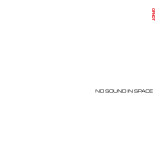
Blake Lee has always been fascinated by the unknown, and space, in its isolating, mysterious vastness, embodies this theme immaculately. The open void, captured so memorably by Stanley Kubrick in '2001: A Space Odyssey', is Blake's far-reaching canvas on 'No Sound In Space', a cinematic meditation on the cosmos that's painted in nuanced, emotionally sincere colors. The Los Angeles-based composer has been contemplating his full-length debut since 2021, using his guitar as a sonic paintbrush rather than find himself snared in its traditional aesthetic constraints. Transforming its characteristics with effects and subtle processes, he layers sustained tones and intimate improvisations, creating richly visual polychromatic utopias teeming with unknown life.
Since 2011, Blake has been most known for being the guitarist and a music director for Lana Del Rey, notching up three songwriting credits on her acclaimed ‘Ultraviolence’ full length. He sees his solo work is a form of escapism, a place where he can experiment and find comfort and catharsis outside of expectations and formal structure. The album was written instinctively, and Blake made sure he didn't force anything, letting go and getting out of his own way, listening intently as sounds and textures materialized organically. "I didn't want to ruin it by being a perfectionist," he laughs. And his collaboration with Kenyan sound artist KMRU, who runs the OFNOT label and contributes to two of the tracks on the album, occurred similarly organically.
Blake was moved to reach out to KMRU when he caught a performance of 'Natur' at Los Angeles' Zebulon in 2022, leading to a prolonged back-and-forth. They didn't meet in person until earlier this year, by which time they'd become firm friends, continuously sharing music and conversation. KMRU had lent a valuable ear to Blake, who sent early playlists of 'NSIS' that, over the months, slowly evolved into the finished album. It's the first release on OFNOT that's not by KMRU himself; the label emerged last year with the release of KMRU's own 'Dissolution Grip', and Blake's debut immediately expands its sonic universe. Alongside the playlists, Blake also provided KMRU with the tracks' raw stems, which KMRU began to edit and expand in his Berlin studio. 'Miura' and 'Waiting' are the result of this process, two sublime abstractions that augment Blake's dreamlike, euphoric tones with KMRU's pebbly distortions and booming low-end rumbles. And this same playful sense of freeness seeps into Blake's other compositions.
On the misty 'In A Cloud', he surrounds cascading string tones with soft-focus pads that swell until they're like crashing waves, and on the two 'Echoplexx' pieces, he uses delay and reverb to smudge his sounds until they're viscous residue, the harmonies obscured by whooshes of white noise and distant chimes. The mood is quieted somewhat on 'Moving Air', as Blake's swirling tones form half-heard lullabies, coalescing into a dense, melancholy crescendo, and he fills out the sound with reverberant airport recordings on 'Pan Am', letting pitchy My Bloody Valentine-esque drones warble beneath the transitory chatter. Each track melts into the next, forming a billowing, cryptic narrative that leaves more questions than answers. Blake is constantly searching, and fills his unoccupied space with warmth, perception and sensitivity.

- A1: Grana
- A2: Vorsichtig - Mutiger - Verloren
- A3: The Idea Of A Horizon
- A4: View From My Parents House
- B1: Folie
- B2: X-Pulse
- B3: Ungeheuer Ist Vieles
- B4: Seance
- B5: Nexus Ii On The Beach
- B6: Langsame Bewegung
- B7: Zwischen Luft
- C1: Chez Charles
- C2: P-Analyse
- C3: La Caduta Degli Dei
- C4: Aavikon (No Water)
- C5: Что Такое Человек
- D1: Dark Matter Art Cabinet
- D2: Hatch On A Hunch
- D3: Theban Constitutional
- D4: Kismet
- D5: No Noosphere
21
ESP Institute artist Bartellow, one third of the project Tambien and otherwise known in the Contemporary Classical sphere as Beni Brachtel, returns to the label with his second full-length release, Noosphere. While currently heading the SVS label and residency series out of Munich, Beni’s resume expands well beyond electronic music to include immersive sound installations such as The Adven- ture Of The Empty House (solo live performance across seven floors of Walter Henn’s Deckelbau building), a slew of compositions for the Bavarian State Opera (for which he doubled as conductor), and a prolific career of over twenty-five theater scores for institutions such as the Münchner Kammerspiele, Schauspiel Basel, Maxim Gorki Theater Berlin, Berliner Ensemble, Schauspiel Köln, Schaus- piel Graz and with directors Ersan Mondtag, Alexander Eisenach, Jessica Glause and Tobias Staab among others.
Noosphere is a compendium excerpting from theatrical scores WUT (Elfriede Jelinek, at Schauspielhaus Köln, directed by Ersan Mondtag, 2020), Ödipus and Antigone (Maxim Gorki Theatre Berlin, directed by Ersan Mondtag, 2017), Der Zauberberg (Thomas Mann, Schauspiel Graz, directed by Alexander Eisenach, 2017), Hass Tryptichon (Sybille Berg, Wiener Festwochen / Maxim Gorki Theatre, directed by Ersan Mondtag, 2019), Wonderland Ave. (Sibylle Berg, Schauspielhaus Köln, directed by Ersan Mondtag, 2018), Die Verdammten (after Visconti ́s film, Schauspielhaus Köln, directed by Ersan Mondtag, 2019) and Roi Ubu (Alfred Jarry, Theater Neumarkt, Zurich, directed by Alexander Eisenach, 2018).
The work traverses homages, infusing everything from Baroque to Impressionism, and while these types of references are certainly built into the canon of Theatre as a discipline, here we gather histor- ic layers in an even wider net. Under the self-referential thumb of Contemporary Classical music, this sort of "hindsight" approach has been largely avoided, however, in today’s all-access arena, the constant stream of historic causal-chained events has opened a delta where anything is possible. This defines Bartellow’s stance among his colleagues as well as his cultural position as a composer.
Beni considers beauty a fleeting objective in the arts, that expression is often expected to follow notions of Destructivism or the unfulfilled. Art will pore over wounds, collective angst, mourn- ing a loss of natural habitat or a fear of technological invasion, yet there is a bitter irreverence for the friction or salvation in beauty itself. Acknowledging this subjectivity — what one audience considers superficial pleasure may be deeply profound to another — he leans into musical instinct as if composing via divine conduit.
Noosphere conjures a array of suspense, ecstasy, melancholy, and dread, but in isolating the work from its theatrical component, Brachtel directs our focus toward formal qualities, clearing unim- peded space to conceive fresh narratives and examine dynamism and interconnectivity. In sympathy with often difficult theatre pieces, the passages can be dark and transgressive, but more importantly they remain relative to Brachtel’s circumstances at their time of creation. The title Noosphere speaks to the evolution of human thought and knowledge, opening a door to subjective points-of-view. For example, Nexus II On The Beach refers to both Roberto Musci’s Water Messages On Desert Sand as well as the film Bladerunner, invoking the image of an android enjoying the sunset, but whether or not this abstraction may be considered beautiful depends the listener’s cumulative life experience and perspective.
This is hybrid chamber music, augmented by electro-acoustic layers, juxtaposing various periods and successively processing their residual themes into a trans-generational rendering of “now.”

Flatland/Spaceland is the debut solo release from renowned pedal steel player, visual artist and composer Joe Harvey-Whyte, who has worked with the likes of Tony Visconti, The Hanging Stars and Susanne Sundfor. Flatland/Spaceland blurs the borderlines between ambient and neoclassical to create an engaging and meditative listening experience.
The first side of the 2 track EP, titled Flatland is a glacial ambient creation made using pedal steel guitar processed through multiple effects together with field recordings and occasional revelatory sounds from Himalayan singing bowls. Spaceland, on side B, takes the composition and refracts it through an orchestral lens. A 26-piece ensemble delicately creep in to the calming world echoed by side A. As the piece develops the result is something more akin to a film soundtrack. Occupying the space between ambient and neoclassical, Flatland / Spaceland by Joe Harvey-Whyte invites us to take a step back from the busyness of our lives for 20 minutes and reflect.

8
GEORGIA's new kaleidoscopic hyper-music-entity "State Effect (Accel)" expands the NYC's duo project in a high-dimensional phase space—and does so within their all-kind-of-music frame.
State Effect (Accel) is happening this very moment, it is a positive cry for change—a brilliant plan.
This record is "viscous" — whatever I do, wherever I am, it sort of "sticks" to me.
It is "nonlocal" — its 'accelerated' effects are globally distributed through a huge tract of time. It forces me to experience time in an unusual way.
It is "phased" — I only experience pieces of it at any one time.
It is "inter-objective" — it consists of all kinds of other/multiple entities but it is not reducible to the sum of its parts.
This music reveals the present and its psychic dimension, no titles could have been more relevant.
Justin Tripp and Brian Close's new kaleidoscopic hyper-music-entity expands their GEORGIA project in a high-dimensional phase space. A great work of cognitive music mapping that plots all the states of a system — Lovely bubbly HTML.
The eight tracker long playing make extensive use of the vocal participation of Paris/Berlin-based artist/DJ MARYLOU aka OISEAU DANSEUR and Gabi Asfour of visionary NY fashion collective threeASFOUR.

13
• One of the first punk rock bands of the 70s music revolution, and certainly the first in Ireland, the Radiators From Space came roaring out of a 7-inch 45 with (I’m gonna smash my Telecaster through the) ‘Television Screen’ in April of 1977, a month after ‘White Riot’.
• Before the year’s end, a second 45 ‘Enemies’ (sometimes NMEies) and the “TV Tube Heart” long-player had appeared. Although the second single was on there, the debut was recorded in an altogether more relaxed style, presaging that there would be more to the Radiators than three chords and a polemic. In fact, they were obviously more sophisticated players than some of their contemporaries.
• The album was a full-on assault on all that any self-respecting youth would find wrong about the world at the time. All band members contributed to the songs, but it was Philip Chevron’s acerbic, angry, pointed and literary lyrics that gave the band such an edge. Philip strutted a gritty lead guitar counterpointing Pete Holidai’s underpinning rhythm, with Mark Megaray’s flowing bass lines belying the instrument’s more usual role to sit in with drummer Jimmy Crashe’s taut, driving rhythm. Steve Rapid fronted the band on some tracks, but Pete and Philip carried most of the lead vocals. Steve left before the record came out – he became a successful graphic designer and has re-imagined the sleeve for this 10-inch issue. He also designed the original.
• A second album, “Ghostown”, produced by Tony Visconti, came out in 1979, hailed now as one of the classic Irish albums of all time. Over the years the band periodically re-formed, first with the gay love song of great yearning ‘Under Cleary’s Clock’, and then making two more great albums in “Trouble Pilgrim” and “Sound City Beat”, covering great Irish 45s of the 60s and early 70s.
• Philip went on to a career as a Pogue, sadly leaving us way too young in 2013. Mark Megaray likewise departed at an early age. Pete and Steve keep the flame alive with Trouble Pilgrims, and if you are lucky you can catch them at a Dublin club sometime – well worth it.
• But “TV Tube Heart” is where it all started for Dublin’s finest.

9
November 2020 sees the 50th Anniversary of the release of David Bowie’s The Man Who Sold The World in North America. The album marks the beginning of a collaboration with guitarist Mick Ronson that would last through classic works including Hunky Dory, Ziggy Stardust and Aladdin Sane—as well as the first in a 10-year series of indispensable albums stretching through 1980’s Scary Monsters…
Originally titled Metrobolist, the album's name was changed at the last minute to The Man Who Sold The World. The 2020 re-release of the album under its Metrobolist moniker has been remixed by original producer Tony Visconti, with the exception of the track ‘After All’ which Tony considered perfect as is, and is featured in its 2015 remaster incarnation.
The Metrobolist 50th anniversary artwork has been created by Mike Weller who was behind the historically controversial “dress” cover which Mercury Records refused to release.
As with the Space Oddity 50th anniversary vinyl, as well as a 180g black vinyl edition, it will come in 2020 limited edition handwritten numbered copies on gold vinyl (# 1971 - 2020) and on white vinyl (# 1 - 1970) all randomly distributed.

13
This classic album, released in July 1972 on the back of three chart-topping T.Rex LPs – provides a perfect snapshot of the era the press dubbed ‘T. Rextasy’ and is proof of Bolan’s extraordinary and enduring appeal across the generations.
The Slider contained two UK Number 1 hit singles, Telegram Sam and Metal Guru and the first to bear the T. Rex Wax Co imprint, a seal of approval from EMI Records, who felt Bolan sufficiently important to warrant having his own record label. This edition features the complete album remastered by producer Tony Visconti and Ted Jensen.

11
First released in 1975, Bolan’s Zip Gun was produced by Marc Bolan, without Tony Visconti for the first time. Originally issued as a UK-only release, the album features the hit singles “Light Of Love” and “Zip Gun Boogie”. The tracks have a futuristic tone, reflecting Bolan’s love of science fiction but also incorporate elements of American soul music.

Shielding's Innerlig is viscous, densely detailed, trippy music.
Dripping with texture, these are supple tunes that generously expand to fill whatever space they're in, loops stretching towards the lilac virtual horizon. Constantly mutating rhythms, heavily atmospheric grooves. RIYL Harmonious Thelonious, Jan Jelinek, Theo Parrish.

7
Limited Edition 400 Only Translucent Violet Coloured Vinyl Lp. Housed In A Full Colour Outer Sleeve With Mind Bending Artwork And Download Code.
Third Earthling Society Album For Riot Season Following The Previous And Now Sold Out 'england Have My Bones' (2014) & 'ascent To Godhead' (2017)
'mo - The Demon' Was Recorded At Leeds College Of Music Between November 2017 - February 2018. The Basis Of The Album Was To Record An Imaginary Soundtrack To The Shaw Brothers Bat Shit Psychedicrazy Kung Fu Horror 'the Boxer's Omen' Aka Mo Or Demon.
The Story Is An Everyday One.
After A Hong Kong Kick Boxer Is Paralysed By A Cheating Thai Competitor, His Mobster Brother Vows Revenge And Journeys To Thailand For A Duel. Along The Way, Our Hero Is Met By Bizarre Visions, Entered Into A Buddhist Monastery, And Begins A Quest To Save The Soul Of A Deceased Monk (his Twin Brother In A Past Life) Who Died At The Hands Of A Powerful Black Magician.
We've All Been There. However The Movie Descends Into A Kind Of Spiritual Jodorowsky Mushroom Fest That Is Completely Deranged And Is Therefore One Of Those Perfect Midnight Movies.
So We Got Free Studio Time At Lcm In November And Just Went 'fuck It' Lets Make An Imaginary Soundtrack In Homage To Such A Great Movie.
Taking Inspiration From All The Things Musical That Have Inspired Us Over The Years. Berlin Era Bowie, Prime Magazine Circa 'correct Use Of Soap', Electric Funk Miles, 'caravanserai' Santana, Embryo And God Knows What Else (it Doesn't Really Matter As It All Ends Up Earthling Society), We Think We've Made A Groovy As Fuck Concept.
Then, Invited Back In February We Decided To Record 2 Stand Alone Pieces 'spring Snow' And 'jetavina Grove' And Bring All Our Space Rock Elements And Psych Raga Back Into The Fray. Throw In Some Super Cool Korean Vocals Courtesy Of Bomi Seo Of Tirikiliatops And Run The Guitars Through A Harmonizer H910 (as Used By Visconti On Low An Heroes) And Its The Perfect Swansong To The Last 14 Years Of Playing Live And Recording Together.

Roots In Heaven is a Berlin-based act that could very easily capitalize on his past accomplishments within the world of intrepid electronic music. As a label owner, resident DJ at cutting-edge clubs, and accomplished solo artist behind a number of conceptually unique full-length albums, the conceiver of this project won't likely need any introduction to the intrepid fans of electronic music. As an extension of this artist's already solid commitment to deep sound, Roots in Heaven represents a new voyage without the help of biographical cues to his listeners: hidden behind an evocative mesh mask lined with obsidian feathers, Roots in Heaven ignores the need to provide 'social proof' or self-justification. He communicates purely through the language of concentrated sensory impression, for which reason he has titled his debut, 'Petites Madeleines,' after one of the most memorable descriptive sequences in literary history (the famous meditation on the madeleine from Proust's À la recherche du temps perdu). As a prelude to the first full-length, Roots In Heaven has issued an untitled EP as a resounding 'shot across the bow'. However, this record is no half-conceived experiment to see what works and what doesn't, nor does it even feel like an 'EP' (in the traditional meaning of being a précis whose full report is available elsewhere). Attentive listening to its contents can cause a kind of time dilation, and a mysterious feeling of entering a world where familiar dualities (nature vs. technology, action vs. contemplation) are replaced by a feeling of total immanence. The A-side, 'Sang des Betes", accomplishes this with cascading, viscous layers of electronic tones that narrow and widen, rise and fall like the breath of some ancient entity. Periodically, bright flashes of tone arc across the horizon of the sound space, emphatically present but also elusive.

12
Presenting the new ssaliva release on Ekster: We Never Happened'. 180g vinyl packed in a pantone printed outer sleeve with drawing by Charles-Henry Sommelette. Comes with printed inner-sleeves and silk screened plastic oversleeve.
.
I am a vessel. A muffled mass. A bulk. Extent. A womb. I move. So I am neither here nor there. Always somewhere in between. To give substance to this frame, I carve out a piece of me. Sometimes a shape, sometimes a form. Into this space I pour the siege of me: words, pictures, you. So we can become me. Viscosity and temperature dictate the time it takes. When it is done, I break the mold I am. I take the cast inside and place it by the others. Choose one and take it home.
- 1
Artículos por página
