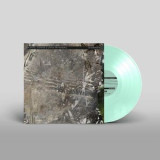
DISCREATIONs mittlerweile 6. Studioalbum und das erste Album mit ihrem neuen Sänger Marc Grewe (ex-Morgoth)! Das bisher düsterste Album der Band kommt mit Blast-Attacken, tonnenschweren Grooves und düsteren Melodien in Hülle und Fülle sowie einem erdigen, aber dennoch kraftvollen Sound daher.
Mit "Iron Times" veröffentlichen DISCREATION ihr bisher düsterstes Album. Entstanden während der Corona-Pandemie und unter dem Einfluss eines drohenden Krieges mitten in Europa, wurde "Iron Times" von den unzähligen Kriegen und Wendepunkten der Geschichte inspiriert.
"Iron Times" ist auch ein Wendepunkt für die Band, denn mit Marc Grewe (ex-Morgoth) begrüßten DISCREATION jüngst eine echte Death Metal-Legende in ihren Reihen. Seine markante Stimme passt perfekt zu den neuen Songs.
Blast-Attacken, tonnenschwere Grooves, düstere Melodien und eine grimmige Entschlossenheit kennzeichnen DISCREATIONs eigene Variante des deutschen Death Metal.
Produziert wurde "Iron Times" von Alexander Krull, der dem Album einen erdigen und doch kraftvollen Sound verpasst hat. Ziel war es, den rohen Live-Sound der Band einzufangen und mit einem zeitgemäßen Punch zu versehen. Die Mission wurde erfüllt!
Das Artwork von Björn Gooßes (Killustrations) visualisiert die Geißel des Krieges oder den "God Of War" - wie eine der Hymnen auf "Iron Times" heißt - als waffenschwingenden Geist. Nicht nur bedrohlich, sondern auch kunstvoll!
Search:visual
Ground Groove, the third full-length release from the LA-based, Iranian-American producer and DJ, Maral, begins with an invocation: the sprawling, achingly heavy Feedback Jam opens the floodgates of history. Conventional (linear) spacetime collapses, crushed beneath the track’s lumbering 4/4 heartbeat and successive waves of distortion. As each wave recedes, samples trickle forward in the mix — seeking, perhaps, to fill the void. Voices and instruments rise and fall in uncanny reverse. Overlapping, implied melodies flicker into focus, then flit away. Feedback Jam is at once an initiation ritual, and a thesis statement for the record that follows.
Drawing upon a vast personal archive of Iranian folk, classical, and pop recordings (some sourced from mixtapes made by her parents in the eighties/nineties), Maral presents, on Ground Groove, a further refinement of the signature “folk club” sound she developed as a live DJ— a sound she would later codify on Mahur Club (2019) and Push (2020). By collecting, dissecting, and re/presenting sonic fragments from Iran, Maral practices a kind of dance-floor ethnomusicology. The subject of her inquiry: Iranian
culture and contexts, throughout history and in the present. But, crucially, this inquiry is instantiated within and throughout the body of the listener, whether this listener is dancing in the club, or riding the train, nodding along with headphones on.
Maral speaks of being in collaboration with her samples, treating each as a distinct bandmate, often consulting with an artist’s catalog (or even a single recording) as one would a trusted creative partner. In so-doing, Maral claims to seek to transcend the self. In this regard, her output neatly triangulates contemporary dance and heavy music with much of the traditional religious music that she samples. Broadly speaking, each of these idioms addresses a desire —shared by audience and performer alike—to transcend the self through volume, repetition, and movement.
Having, in her youth, studied the Setar under Nader Majd (the founder of Virginia’s Center for Persian Classical Music), Maral cycled through various genres (ex: punk, emo, dub) in her adolescence and early twenties, all the while expanding her knowledge of, and appreciation for, Iran’s diverse musical traditions during regular summer trips to Tehran. In college, Maral taught herself to make beats with a ripped copy of Ableton (which remains her DAW of choice), eventually transitioning to playing and hosting various club nights. Forever abiding by an autodidactic, DIY impulse to create art and foster community, Maral relocated to Los Angeles in 2013, where she quickly immersed herself in the city’s numerous overlapping music scenes.
Collaboration (beyond sampling) has proven an important component of her process, with notable spoken word contributions from the likes of Lee Scratch Perry and Penny Rimbaud, as well as a 2021 Panda Bear collab track (On Your Way), which the Animal Collective founder co-produced. Maral is equally attentive to the visual components of her records (album art, music videos, etc.), drawing upon the work of peers and friends for inspiration.
Indeed, the genesis of Ground Groove can be traced back to an audio-visual collaboration between Maral and the artist Brenna Murphy, originally commissioned for the 2021 Rewire Festival — a project that would eventually serve as the album’s foundation. Tracks eight through eleven on Ground Groove comprise Maral’s half of this installation, with tracks one through seven composed afterwards, inspired by the fruits of Maral and Murphy’s collaboration. Murphy’s visuals will be released alongside Ground Groove as a visual accompaniment. Additionally, Murphy designed the album’s art, directed the video for the lead single (the aforementioned Feedback Jam), and is featured on track six, Shy Night.
Composed largely on Ableton, Ground Groove features more frequent and more prominent live recordings from Maral (guitar, bass, and vocals) than either Push or Mahar Club. The cult favorite Roland MC-909 groovebox rears its head on Mari’s Groove. Mixed by Trayer Tryon (Hundred Waters) and mastered by Daddy Kev, the attention to sonic quality on Ground Groove constitutes another significant step in Maral’s development as a studio artist.
Ground Groove’s eleven tracks are “grooves” in the obvious sense, in that they are each driven by a persistent, propulsive rhythm, but the album’s title may just as well suggest the glacial passage of time—the scope of human history, in which individual voices, like streams, carve paths (impossibly) through earth and stone, winding their way to the vast sea of the present.
Limited colour variant "battlefield aftermath with blood & dirt swirl" Following their 2020 debut, Ruin, FORETOKEN's latest album sees the group expand upon their foundations of meticulously lofty soundscapes, mythological narratives, and elaborate musicianship. Utilizing traditional narratives of myths, legends, and folklore from a wide range of Western and Middle Eastern origins, Triumphs examines the ignored collateral damage of the cost of victory through these established mythos. Taking musical inspiration from melodic and tech death metal, as well as power, folk and black metal, Foretoken's core sound on Triumphs is bolstered by subtle and captivating use of traditionally Scandinavian, Southeast Asian, and Middle Eastern instruments for atmospheric depth. Reunited once again with Hannes Grossmann (Hate Eternal, Alkaloid, Obscura, Necrophagist, Blotted Science, and Triptykon) on drums and boasting a guest guitar appearance by The Black Dahlia Murder's Brandon Ellis, FORETOKEN's technical prowess shines through without overpowering any of the nine songs' rhythmic charge. Triumphs was penned throughout 2021 by both Steve Redmond (guitar and orchestration) and Dan Cooley (vocals), with the pair settling on eight original compositions and a cover of Naglfar's I Am Vengeance. Grossmann then commenced drum tracking at his own studio, Mordor Sounds, with guitars recorded by Redmond himself and vocals captured at Trepan Studios by Tony Petrocelly, before mixing and mastering duties were placed in the accomplished hands of Jacob Hansen (Arch Enemy, Fleshgod Apocalypse, The Black Dahlia Murder, and more) at Hansen Studios. Visually tied together by portrait artist Tomas Honz's detailed cover painting, depicting a protagonist's journey in the aftermath of battle, Triumphs aesthetic component is a symbolic embodiment of the duo's enduring fascination with historial consequence via a folkloric lens. Taking fables and fantasy to extreme sonic heights, FORETOKEN's Triumphs is as lofty in ambition as it is accomplished in its musicianship and songcraft.
For Erika's second album "Anevite Void", she explores her live process as it permeates everything she does, including documenting the process of life in the elaborate sci fi mythology she created. Erika began performing live in Ectomorph in 1997 when she was gifted a TR-606 by BMG and asked to join the group. This grew to her building her own studio, performing solo as Erika, collaborating with people like Jay Ahern and Noncompliant, and performing as a member of Circle of Live. Her depth of thought and clarity of vision has led to her mentoring people on live performance through the In Bloom platform, where she has made a large impact on many up and coming musicians. "Anevite Void", Erika's new album, finds her organically writing songs for her live shows, allowing them to take shape through performance, and later recording them in the studio, making this the first album she has entirely written and produced on her own. Mixed by long time collaborator BMG, she finds this record as the launching point for a new process for her. Conceptually, this album was inspired by "the irregular life cycles created by three suns circling over a planetary organism that presents two major biomes: rocky crystalline desert, and deep layered forest, each of which exists above and/or below ground, depending on what phase the suns are in." From this realm the album took shape. She also chronicled this concept in drawings but found this painting by Detroit puckish punk legend Nai Sammon perfectly visually explained the concept, and chose it for the cover. She describes "each track is about an organic process that occurs: acts of survival of the biomes, or what happens between them and the multitude of other beings that they host." Erika is currently splitting her time between being based in Berlin and Detroit, is part of the triumvirate that runs Interdimensional Transmissions (BMG, Erika and Amber) that are releasing this record and produce legendary events such as No Way Back, Samhain and Return to the Source. She performs live and DJs and collaborates and oozes sonic truth in its many forms. Visit the "Anevite Void" in early 2023.
Marroon coloured vinyl.
1st pressing on Maroon coloured vinyl. Manzanita is the common name for a kind of small evergreen tree endemic to California which has strong medicinal properties. It's also the name of the brand new full length by visual artist, writer, songwriter, and musician Shana Cleveland. Subtle, powerful, and unafraid. We can't actually tell you how much we love this record because you'd never believe us, so we'll just say that it is her strongest and most personal album to date. These songs are as strong as the bricks in the Brill building, and seem destined to be covered by others in years to come. Where her previous record, 2019's Night of the Worm Moon (Hardly Art) functions as a collection of speculative fictions equally inspired by Afro-futurist pioneers Herman "Sun Ra" Blount and Octavia Butler, Manzanita concerns the love that loves to love. "This is a supernatural love album set in the California wilderness," Cleveland explains. The combinations of words and song structure are so strong throughout that one hardly notices Cleveland's nimble fingerpicking on first listen, or how much is packed into the arrangements. The lyrics are satisfyingly direct, with the buoyantly whimsical descriptions typical of the 1960s New York School of poetry. It's peppered with the kind of unexpected turns that make the words more modern, and in their spookiness they are more West Coast, as in "Mystic Mine," with its "Mystic Mine Lane, cars rotting away/ I feel so relieved to be/ Back in the country." So much of the pop music we love is propelled by those first blushes of infatuation and lust, but Manzanita concerns the kind of love that one can only experience with time, work, and devotion. Cleveland says: "The songs were all written while I was pregnant (side A) or shortly after my son's birth in that weird everything-has-quietly-but-monumentally-shifted state (side B)," she says. Moving to the country, starting a family, laughing for real at the same joke the thirteenth time you've heard it, surviving heavy shit (this is the first release since Cleveland's successful treatment for a diagnosis of breast cancer at the start of 2022). This is a love album that's somehow populated with the insect world, ghosts, and evil spirits. Sonically, Manzanita sits in a meadow similar to her previous solo records, set back and away from the genre-recombinant garage pop of her band La Luz. This is part due to the fact that there's a different sonic palette in use here. While Cleveland continues to play guitar and vocals; Johnny Goss, who has recorded all of Shana's solo material and early La Luz recordings, and Abbey Blackwell (Alvvays, La Luz) play the bass; Olie Eshleman is on pedal steel; and Will Sprott plays the keyboards, dulcimer, glockenspiel, and harpsichord-little of which would have been out of place on her previous two solo records-Sprott also adds layers of synthesizer infused with the sounds of the natural world.
Tape
1st pressing on Maroon coloured vinyl. Manzanita is the common name for a kind of small evergreen tree endemic to California which has strong medicinal properties. It's also the name of the brand new full length by visual artist, writer, songwriter, and musician Shana Cleveland. Subtle, powerful, and unafraid. We can't actually tell you how much we love this record because you'd never believe us, so we'll just say that it is her strongest and most personal album to date. These songs are as strong as the bricks in the Brill building, and seem destined to be covered by others in years to come. Where her previous record, 2019's Night of the Worm Moon (Hardly Art) functions as a collection of speculative fictions equally inspired by Afro-futurist pioneers Herman "Sun Ra" Blount and Octavia Butler, Manzanita concerns the love that loves to love. "This is a supernatural love album set in the California wilderness," Cleveland explains. The combinations of words and song structure are so strong throughout that one hardly notices Cleveland's nimble fingerpicking on first listen, or how much is packed into the arrangements. The lyrics are satisfyingly direct, with the buoyantly whimsical descriptions typical of the 1960s New York School of poetry. It's peppered with the kind of unexpected turns that make the words more modern, and in their spookiness they are more West Coast, as in "Mystic Mine," with its "Mystic Mine Lane, cars rotting away/ I feel so relieved to be/ Back in the country." So much of the pop music we love is propelled by those first blushes of infatuation and lust, but Manzanita concerns the kind of love that one can only experience with time, work, and devotion. Cleveland says: "The songs were all written while I was pregnant (side A) or shortly after my son's birth in that weird everything-has-quietly-but-monumentally-shifted state (side B)," she says. Moving to the country, starting a family, laughing for real at the same joke the thirteenth time you've heard it, surviving heavy shit (this is the first release since Cleveland's successful treatment for a diagnosis of breast cancer at the start of 2022). This is a love album that's somehow populated with the insect world, ghosts, and evil spirits. Sonically, Manzanita sits in a meadow similar to her previous solo records, set back and away from the genre-recombinant garage pop of her band La Luz. This is part due to the fact that there's a different sonic palette in use here. While Cleveland continues to play guitar and vocals; Johnny Goss, who has recorded all of Shana's solo material and early La Luz recordings, and Abbey Blackwell (Alvvays, La Luz) play the bass; Olie Eshleman is on pedal steel; and Will Sprott plays the keyboards, dulcimer, glockenspiel, and harpsichord-little of which would have been out of place on her previous two solo records-Sprott also adds layers of synthesizer infused with the sounds of the natural world.
Originally released in 1979 on Mistlur Records in Sweden, Nyanser is widely considered Thomas Almvqvist’s masterpiece.
It's almost unspeakably beautiful.
With his adventurous, virtuoso guitar technique to the fore, the album explores a unique path through world music, folk, jazz and acoustic experimentation, whilst retaining a very personal vision.
It’s aged very, very well indeed and is now rare and immensely sought-after, coveted for many years by collectors of all musical genres. This Be With re-issue, remastered from the original analogue tapes, shows off just why this deserves to be back in press.
The majority of the album is a solo exercise with Thomas playing Rhodes, flute, synthesizer and percussion as well as his idiosyncratic guitar on all tracks. Alongside Thomas in the studio were an array of young, experimental Swedish musicians in the nascent stages of their careers including the much lauded Swedish composer Ann-Sofi Söderqvist, vocalist Turid Lundqvist and perhaps the key contributor to the album, Hans Peter Andersson, whose alto, tenor and baritone saxophone contributions shift the album from into the realms of jazz, most notably on “Horisont” and “E.M.”
The whole ensemble comes together on the centrepiece of the album, the joyous aquatic harmony of “Coral Reef”, one we've been playing out for the past 5 years to dropped jaws. The album presents a very visual aesthetic, each track evoking images of landscapes and far-flung corners of the earth. Almvqvist himself considered the visual aspect of his sound very important, describing his approach as “picture music.”
Nyanser is considered one of the earliest examples of a fusion of world music, jazz and folk traditions, certainly from a Scandinavian artist. Despite its impact on release being minimal outside of those aficionados tuned into such sounds, over the years the album has become something of a "lost" cult classic and a fine example of the experimentalism going on in Scandinavian music at the time. The English translation of nyanser - ‘shades’ - is a particularly apt description of the sounds contained within.
Thomas very sadly passed away in 2008 at the age of 55. We hope this reissue will go some way to bringing his unique output to a wider audience and secure the legacy he deserves as one of Sweden’s great guitarists and musical visionaries. It sounds sensational, if we do say so ourselves. Working with audio from the original analogue tapes, the vinyl mastering chops of Simon Francis are on full show here in what he considers to be some of his best ever work for Be With. Pete Norman’s cutting skills have made sure nothing is lost whilst the beautiful artwork has been restored here at Be With HQ as the finishing touch to helping this revered work find a rightful place in every record collection.
“On this, their second LP, P16.D4 solicited tapes from several artists from Europe, England, the U.S., Canada, and Japan, and mixed that with their own material. Though in the current digital age collaborations from artists thousands of miles apart is quite normal, this was a quite radical approach back in 1982, when work on this LP began – an interesting concept that actually works quite well, since these artists, which include Bladder Flask, DDAA, the Haters, Merzbow, Nocturnal Emissions, Nurse With Wound, and several others – work in a similar free-ranging experimentalism as P16.D4, and their particular elements, usually just vocals or one instrument or noise implement, blend well without diluting P16.D4’s own peculiar brand of avant-garde post-industrialism, but merely give it another facet. One of the best tracks, “Aufmarsch, Heimlich,” consists of a choir submitted anonymously from Eastern Europe phasing in and out of static while a skronky alto sax bleats away. Most of the pieces exist somewhere just beyond the borders of free jazz, industrial, and even classical avant-garde, full of jarring noises and strange transitions and with a heavy overlay of electronics. What started out as an experiment yielded one of P16.D4’s best albums.” - Rolf Semprebon / AMG
“Distruct is organized around sounds provided by the cream of experimental musicians of the early ’80s, from Nurse With Wound to Nocturnal Emissions, via De Fabriek, Die Todliche Doris, The Haters, Merzbow, and others. Obviously, there is no question of remixing here, and at no time do P16.D4 seek to hide its sources, clearly identifying the contribution of each artist in the liner notes. It would be futile to try to find the paw of each artist, the trio operating vis-à-vis its collaborators the same methods as in their own work. Reworked, distorted by various effects, cut, edited, aggregated with other sounds, produced by P16.D4 themselves, reprocessed. Exchange, communication, two other data that will constantly recur in the work of P16.D4, rich in external contributions and encounters of all kinds. Musically, and despite the diversity of sources treated, Distruct escapes the heterogeneous character, which often marks this type of collaboration, to offer a coherent whole: fragments of opera, Soviet speeches, out-of-tune guitar, saxophone, tattered violins, overdriven and metallic noisy attacks, jackhammers, field recordings, battered choirs, and many other less identifiable sounds. In addition to the desired dialogue between the artists, Distruct also offers a real reflection on listening, and on the expectations of the listener.” - Dissolve
P16.D4 was a German electronic noise music collective, active primarily from 1980 to 1988. P16.D4 embraced tape cut-ups, musique concrète, endless recycling and transformation of previously published material, and many long-distance collaborations with like-minded artists such as DDAA, Vortex Campaign, Nurse With Wound, and Merzbow. Their active participation in the international industrial tape scene yielded collaborative output such as their release Distruct, where bands such as Nurse with Wound, Nocturnal Emissions, Die Tödliche Doris, and The Haters provided the source material. The longest-term collaboration was with the installation and conceptual artist Achim Wollscheid, who used P16.D4 sounds as the basis for LPs he recorded under the name SBOTHI. Ralf Wehowsky, the only constant member of the group, later released solo material under the alias RLW.
Members of P16.D4 were also involved with Selektion, a collective of people involved with sound as well as the visual arts. Selektion published LPs, CDs, books, visual art and design.
The collective worked in a strongly improvised, spontaneous and anti-professional way, using acoustic and electronic instruments, using existing sound fragments, duplicating and alienating them, using repetition, distortion, changes in speed and playing direction. For this they used not only sounds of other artists but also their own material from earlier productions. Late works of the collective are associated with musique concrete.
“This music is staggeringly original and innovative, and while it’s possible to locate it in a chain of circumstance that links it to ‘Industrial’ music, P16.D4 indulged in none of the empty cliches associated with the genre, worked incredibly hard, and seem to have been aiming at a form of sound art that was much more profound, varied, subversive, and potentially dangerous. Kuhe In 1/2 Trauer’s accompanying credits indicate their radical approach to making music: lots of improvisation, lots of live electronics, extensive use of tape-loops, some conventional instrumentation, and much that isn’t – like the milk churn on ‘Paris, Morgue’ or the use of baking tray and washing machine elsewhere. Even when guitars, drums or keyboards are used, they’re played very weirdly. It’s not even made clear who was doing what; the main credit is ‘Concept,’ which I assume means that one of the three devised the framework in which the noise would operate itself, and while RLW gets the lion’s share of these credits, a lot of the cuts are evenly divided among the team and I have no doubt that the group operated in a very democratic or libertarian manner. None of this prepares you for the insane and troubling sounds that reach your ears, composed with scant regard for conventional logic and following an exciting, absurdist path, especially in the matter of tape edits and juxtapositions of recordings.” - Ed Pinsent, The Sound Projector.
“Though this German group started out as a the new wave band P.D., by the time of Kuhe in 1/2 Trauer, their first LP under the P16.D4 name from 1984, they had developed far beyond into extremely experimental music similar to other post-industrial artists working with abstract avant-garde soundscapes. There’s a bleak industrial feel to the gritty, lo-fi electronics and tape loops, while the group throws in enough curve balls to keep it interesting. On some pieces, strange, looped choirs bubble out of throbbing pulses and drones of feedback, while others have clanging and clattering, and elements of musique concrète and improvisation blur the boundaries even further. The opening track, “Default Value,” is one of those disorienting pieces with noises flying everywhere, while “Paris Morgue” takes excerpts from one of their old P.D. tracks and messes it up with additional instruments, while the ungainly titled fourth track throws in a heavy texture of percussive noises to create an edgy ambience about to teeter off the edge, and the even darker and more ambient title track takes the tension even further. Arrhythmic and amorphous and capable at moments of becoming quite noisy and abrasive, while at others far more somber and quiet, Kuhe in 1/2 Trauer is quite a fascinating release.” - Rolf Semprebon / AMG
P16.D4 was a German electronic noise music collective, active primarily from 1980 to 1988. P16.D4 embraced tape cut-ups, musique concrète, endless recycling and transformation of previously published material, and many long-distance collaborations with like-minded artists such as DDAA, Vortex Campaign, Nurse With Wound, and Merzbow. Their active participation in the international industrial tape scene yielded collaborative output such as their release Distruct, where bands such as Nurse with Wound, Nocturnal Emissions, Die Tödliche Doris, and The Haters provided the source material. The longest-term collaboration was with the installation and conceptual artist Achim Wollscheid, who used P16.D4 sounds as the basis for LPs he recorded under the name SBOTHI. Ralf Wehowsky, the only constant member of the group, later released solo material under the alias RLW.
Members of P16.D4 were also involved with Selektion, a collective of people involved with sound as well as the visual arts. Selektion published LPs, CDs, books, visual art and design.
The collective worked in a strongly improvised, spontaneous and anti-professional way, using acoustic and electronic instruments, using existing sound fragments, duplicating and alienating them, using repetition, distortion, changes in speed and playing direction. For this they used not only sounds of other artists but also their own material from earlier productions. Late works of the collective are associated with musique concrete.
Kate NV's WOW offers listeners a prismatic shift in perspective and scale, a parallel dimension in which the mundane becomes funny, unfamiliar, and altogether sensational. Turning the contents of her 2020 album Room for the Moon upside down and spilling them across a floor checkered with intrigue and surprise, Kate places sound, object, and ritual under the microscope to magnify the delight hidden in plain sight of everyday life. WOW is Kate Shilonosova's fourth full-length release as Kate NV in six years, and third for RVNG Intl. Her prolific musical output aligns with a highly attuned aesthetic and a deep commitment to visual world building. WOW is one of many of these worlds in which music is fully saturated with color, deeply tactile and textural. Shiny, sproingy, plastic. Where Room for the Moon embraced structure (abstractly speaking) and veered pop, WOW happily abandons conventional song shapes, parsing the experience of musical time into ecstatic fragments. It's difficult to imagine a more fitting album title: pure exclamation, an organic pitch of delight leaving the mouth, with no clear etymological links. On Room for the Moon, Shilonosova's voice was layered and lyrical, with sweeping and urgent melodies. WOW finds her as a peripheral purveyor of high jinks, peeking out from the corners, commenting on her surroundings in non-verbal, and arguably non-human, utterances. Instead of employing lyricism, Shilonosova steps outside of language, and rewards us with a gum ball machine of textures: soda fizz and wind-up teeth and scraps of bubble wrap become comically huge, as if heard from an insect's perspective. Words are tasty plosives, onomatopoeias, percussive chirps and one-liners, and singing serves as another form of what Shilonosova refers to as "funny tiny sounds." WOW skews and skitters, trips over its own feet and laughs about it, plays out of tune on purpose, tilts and leans like a top-heavy flower. Shilonosova is a longtime user of Found Sound Nation's Broken Orchestra sample pack, a sound catalog of over one thousand dilapidated instruments sourced from Philadelphia public schools. These perfectly imperfect instruments are tightly spliced into WOW's patchwork of synthesizer and reworked snippets of Shilonosova's friends playing clarinet, flute, and marimba. It's central to the record's internal logic: a disregard for what is, and isn't, broken, what is, and isn't, a sentence or a song. A commingling of subject and object, with a firmly new wave sensibility. Shilonosova has long had an unusual relationship with inanimate objects (citing her bicycle as her best friend), as if the joys they evoke for her are personality traits of the objects themselves. On WOW, she evinces a kind of inverted anthropomorphism: she shrinks her voice and becomes an object among multitudes, toylike in size and perspective, cohabitating with sedentary, indifferent roommates. This pursuit of childlike perspectives is a thread that runs through much of her catalog, and places her work on a plane with that of her personal hero Nobukazu Takemura, who for decades has treated his music as a portal to childlike curiosity, both in subject matter and tone. With an invitation to pursue this curiosity, WOW further confirms Kate NV's deeply inventive, fluid and technically dizzying artistry. By refusing constraints and rules, Shilonosova embodies a profound freedom, allowing objects, sounds, and processes to unfold organically; or, as she puts it, a commitment to "accepting randomness." She succeeds terrifically at a breed of auditory defamiliarization that is all her own, and the rewards for listeners are many: through her lens, the small becomes monstrous, the abstract becomes sensorial, and the old becomes new. Kate NV's WOW will be released on February 10, 2023 on vinyl and digital formats. On behalf of Kate NV and RVNG, a portion of the proceeds from this release will benefit War Child, an organization that supports children and their families impacted by conflict, and working to build sustainable peace for generations to come.
Yellow Vinyl
Kate NV's WOW offers listeners a prismatic shift in perspective and scale, a parallel dimension in which the mundane becomes funny, unfamiliar, and altogether sensational. Turning the contents of her 2020 album Room for the Moon upside down and spilling them across a floor checkered with intrigue and surprise, Kate places sound, object, and ritual under the microscope to magnify the delight hidden in plain sight of everyday life. WOW is Kate Shilonosova's fourth full-length release as Kate NV in six years, and third for RVNG Intl. Her prolific musical output aligns with a highly attuned aesthetic and a deep commitment to visual world building. WOW is one of many of these worlds in which music is fully saturated with color, deeply tactile and textural. Shiny, sproingy, plastic. Where Room for the Moon embraced structure (abstractly speaking) and veered pop, WOW happily abandons conventional song shapes, parsing the experience of musical time into ecstatic fragments. It's difficult to imagine a more fitting album title: pure exclamation, an organic pitch of delight leaving the mouth, with no clear etymological links. On Room for the Moon, Shilonosova's voice was layered and lyrical, with sweeping and urgent melodies. WOW finds her as a peripheral purveyor of high jinks, peeking out from the corners, commenting on her surroundings in non-verbal, and arguably non-human, utterances. Instead of employing lyricism, Shilonosova steps outside of language, and rewards us with a gum ball machine of textures: soda fizz and wind-up teeth and scraps of bubble wrap become comically huge, as if heard from an insect's perspective. Words are tasty plosives, onomatopoeias, percussive chirps and one-liners, and singing serves as another form of what Shilonosova refers to as "funny tiny sounds." WOW skews and skitters, trips over its own feet and laughs about it, plays out of tune on purpose, tilts and leans like a top-heavy flower. Shilonosova is a longtime user of Found Sound Nation's Broken Orchestra sample pack, a sound catalog of over one thousand dilapidated instruments sourced from Philadelphia public schools. These perfectly imperfect instruments are tightly spliced into WOW's patchwork of synthesizer and reworked snippets of Shilonosova's friends playing clarinet, flute, and marimba. It's central to the record's internal logic: a disregard for what is, and isn't, broken, what is, and isn't, a sentence or a song. A commingling of subject and object, with a firmly new wave sensibility. Shilonosova has long had an unusual relationship with inanimate objects (citing her bicycle as her best friend), as if the joys they evoke for her are personality traits of the objects themselves. On WOW, she evinces a kind of inverted anthropomorphism: she shrinks her voice and becomes an object among multitudes, toylike in size and perspective, cohabitating with sedentary, indifferent roommates. This pursuit of childlike perspectives is a thread that runs through much of her catalog, and places her work on a plane with that of her personal hero Nobukazu Takemura, who for decades has treated his music as a portal to childlike curiosity, both in subject matter and tone. With an invitation to pursue this curiosity, WOW further confirms Kate NV's deeply inventive, fluid and technically dizzying artistry. By refusing constraints and rules, Shilonosova embodies a profound freedom, allowing objects, sounds, and processes to unfold organically; or, as she puts it, a commitment to "accepting randomness." She succeeds terrifically at a breed of auditory defamiliarization that is all her own, and the rewards for listeners are many: through her lens, the small becomes monstrous, the abstract becomes sensorial, and the old becomes new. Kate NV's WOW will be released on February 10, 2023 on vinyl and digital formats. On behalf of Kate NV and RVNG, a portion of the proceeds from this release will benefit War Child, an organization that supports children and their families impacted by conflict, and working to build sustainable peace for generations to come.
Over the last half decade, the music collective Constant Smiles has produced a prolific output of acclaimed music, culminating in their forthcoming record Kenneth Anger, masterfully brought to life by engineer Jonathan Schenke (Parquet Courts, Liars, Dougie Pool). The group is known most recently for their much-praised debut album for Sacred Bones records, Paragons, an emotionally resonant offering of indie folk masterpieces that all confront the internal ways we process our struggles with intimacies, addiction and humanity produced by Ben Greenberg. Constant Smiles' primary singer/songwriter Ben Jones uses the creative process as a tool for working through deeply transformative periods in his life. The band's indie folk music lays bare this internal process, but on Kenneth Anger, the music shifts to synth pop and looks externally, examining creativity, community, ritual, and their place in the healing process. Ritual takes a primary role in the eponymous Kenneth Anger. Not only is auteur Kenneth Anger himself known for his sensorial depictions of ritual, Jones often used the films as a silent visual back drop during his song writing sessions, a ritual that grounded the creation of the album. And while the director's use of saturated color inspired the warm `80s synth style production, the director's trailblazing spirit of authenticity also pushed Jones through his most vulnerable expression to date. While the narrative undertones of the songs deal with fear and isolation and anxiety, the songs themselves were created through the healing process of ritual, and enriched with collaboration, community and trust. The resulting music produces a balm that can genuinely recalibrate the nervous system. The listener journeys through the depths of every track while being lifted and guided by the music's transformative, hypnotic power and this illustrates one of the foundational accomplishments of the album. Just as a Kenneth Anger film explores the underbelly of the unconscious through often soothing visuals, Kenneth Anger the album conjures the underworld into a series of synth pop classics.
David Cunningham was born in Ireland in 1954. His work ranges from pop music to gallery installations including several collaborations with visual artists. His first significant commercial success came with The Flying Lizards' single "Money," an international hit in 1979.
Originally released in 1976, Cunningham's first solo album Grey Scale has become a landmark statement of DIY minimalist composition – continuing in the vein of the wild explosion of arthouse experimentation from the early '70s. Cunningham, then a student at the Maidstone College of Art in Kent, drafted fellow student non-musicians and (using whatever instruments available) crafted an endlessly shifting sonic palette with an improvisor's keen sensitivity to space, texture and tone.
As Cunningham states in the liner notes, his approach was to "pursue something (which may appear trivial or meaningless) so rigorously or relentlessly to the point that it reveals something new."
Cunningham was influenced by live performances he was attending at the time by English composers Cornelius Cardew, Gavin Bryars and Michael Nyman as well as free improvisors Evan Parker, Derek Bailey, David Toop and Paul Burwell.
The inaugural release on Cunningham's own Piano label, Grey Scale was indeed "something new" in 1976. The artist quickly integrated his experimental sensibilities to produce art-rock pioneers This Heat, whose debut appeared on Piano in 1979. His popular success performing as The Flying Lizards (with two electro-punk albums on Virgin during the New Wave era) was presaged by this seminal work of fascinating sound collage and tonal freedom. First-time reissue.
Nach dem Erfolg ihres atemberaubenden Debütalbums 'Lonely World' (2019), das Melodie und Melancholie umwerfend schön und effektiv vereinte, veröffentlicht die britische Post-Hardcore-Band Acres nun den Nachfolger 'Burning Throne', eine erdrückende, kathartische und perfekt ausgearbeitete Reflektion und Sinnfindung nach der erzwungenen Pandemie-Pause. Es ist nicht nur das bisher härteste Material der Band, sondern auch ihr ergreifendstes und ehrlichstes. Ein Werk, in das die Band jedes Quäntchen ihrer Seele hineingesteckt hat.
Repress of Infraktion 005 !
With new visuals...
Beware : you will have to make the hole by yourself (labels are sticked ^^) So you know it was never played before !!
And... remember : SKATING IS NOT A CRIME !
On her third album, Berlin-based Dutch-Italian composer and sound designer Aimée Portioli, aka Grand River, asks what guiding forces might be driving, enticing, and affecting us. “All Above” is rooted in her deeply personal philosophy as an artist, blurring the boundaries between electronic music and acoustic music and sculpting familiar ambient forms into personal themes painted with rich emotional colours. Written painstakingly over the last two years, the album is the most ambitious and divergent set of music Portioli has assembled so far, with a wide variety of instrumentation (including voices, strings, organs, guitars, and synthesisers) focused around the piano. She‘s keen to assure listeners that while that instrument isn‘t always heard, it‘s constantly at the forefront of the album, shepherding its emotions and anchoring its mood. It makes sense then that on the opening track ‘Quasicristallo’, the acoustic piano is the first element we hear, recorded closely, so its characteristic rattle and creak can speak as loudly as the familiar tones themselves. When the music blooms into abstraction and processed electronics, it‘s almost imperceptible: reverb mutates into ghostly vapour trails, and distortion forms the keys into another instrument entirely.
“All Above“ follows 2020‘s acclaimed “Blink A Few Times To Clear Your Eyes“ and 2018‘s “Pineapple” released on Donato Dozzy and Neel‘s Spazio Disponibile imprint. Having garnered praise from outlets like Resident Advisor, XLR8R, The Quietus, Inverted Audio, and The Verge, Portioli operates in a unique space within the electronic music scene, straddling the art world and the wider electronic music scene. She‘s developed sound art installations for Rome‘s La Galleria Nazionale and the Terraforma Festival-related Il Pianeta, and has appeared at Barbican, MUTEK, Le Guess Who?, Kraftwerk, and other internationally renowned venues and festivals, often collaborating with Marco Ciceri on A/V presentations. Ciceri also maintains the visual identity of Portioli‘s label One Instrument, a concept imprint that asks artists to create music only using a single device. All this experience is poured into “All Above”, a richly visual album that‘s far more than just an imaginary film score. While on ‘Human’, her piano punctuates a rhythmic synthesised bassline and smudged choirs that can‘t help but trace out the silver screen. The composer is keen to clarify that she doesn‘t think of her music (or sound in general) in visual terms.
Portioli studied as a linguist and used her art to develop an emotional language that‘s not bound by expected cultural constraints. When she adds a different instrument or process, it‘s not to reference a visual cue but to mark a journey through different states of being. Each element embodies a different emotion or mood: the electric guitar represents strength or violence, synthesisers shuttle us into the dream world, and the acoustic instruments highlight intimacy and warmth – even heart. Read like this, the tracks are like meditative poems rather than cinematic vignettes: ‘The World At Number XX’ is seemingly centred around a chugging synthesised arpeggio, but the cosmic, Klaus Schulze-esque pads, strangled guitar and evocative organ tones hint at the open-hearted, literate psychedelia of the 1970s; ‘In The Present As The Future’ meanwhile is breathy and windswept, juxtaposing urgent rhythmic phrases with light, flute-like gusts of harmony.
Dedicated to Editions Mego founder Peter Rehberg, who died suddenly last year, “All Above” demands engagement and refuses to evaporate into the background. The album asks listeners not just to absorb the album as a whole but notice the cracks in the structure and discern the tension they cause. That‘s never more evident than on the closing track ‘Cost What It May’, a piece of music almost jarring when Portioli chops into noisy waves of electric guitar. In the wrong hands, this might sound like a power move – some rock posturing to act as a finale. But Portioli‘s expression is different. She‘s forcing a level of engagement that perceives the negative space as just as necessary as the saturated positive, and what could be more haunting and emotionally resonant than that?
Composed, produced and mixed by Aimée Portioli.
Mastered by Stephan Mathieu.
Cut by Andreas Kauffelt at Schnittstelle, Berlin.
Photography by Federico Boccardi.
Design and layout by Riccardo Piovesan.
(ASMR) is a tingling sensation that usually begins on the scalp and moves down the back of the neck and upper spine. It signifies the subjective experience of "low-grade euphoria" characterized by "a combination of positive feelings and a distinct static-like tingling sensation on the skin." It is most commonly triggered by specific auditory or visual stimuli.
Jens Brands has created a large number of installations, musical performances and Interactive Media works. He uses the concepts of parallel activities rather then ideas of fusion. The pieces presented on this recording focus on sonic events related to electronic music (such as intense volumes and dynamics, white noise, square or sine waves) but stay entirely acoustic.
On a live performance of »Ratchets«, the sounds are generated with the idea of a physical, sculptural, yet invisible presence. It might happen that the body of a person moving around in the audience has more impact on the sound then the variations produced by instruments themselves.
"I was always interested in the idea of making acoustic music that has the quality of electronic music," muses Dortmund based musician and visual artist Jens Brand. "Electronic music is fantastic, but I don't like speakers very much."
Take his performance entitled »Motors And Styrofoam«. Pieces of glistening white styrofoam fitted with small motors hang from the ceiling above the audience's heads, squatting balefully in mid-air like lopsided clouds. Acting as a resonator, the styrofoam amplifies the whirr of the motors, which builds up into a loud, persistent drone overlaid with overtones.
Equally uncompromising is »Ratchets«, which deploys a number of football rattles, those small wooden devices originally used by hunters. The ratchets are set in motion by motors whose speed and direction are controlled by a computer: they click busily away, producing a dense, enveloping sound reminiscent of heavy rainfall. In performance, the sound of the ratchets is spellbinding in its rawness and intensity, attaining impressive volumes as it interacts with the features of the space.
Pure Adult are a Brooklyn-based experimental rock duo formed
by Jeremy Snyder and Bianca Abarca. At the centre of their
music is the far-left political ethos and DIY attitude the pair
share.
Having grown up in the unusually sheltered environment of a
church-turned-cult, Snyder has always found himself drawn to
the harsh, dissonant music that was off-limits during his
formative years. In 2017, he and contemporary dancer and
visual artist Bianca Abarca formed Pure Adult, who released
their debut EP, ‘Pure Adult I’, in 2019. Now they are set to
release their debut album, ‘II’, on FatCat Records.
After leaving the church in 2007, Jeremy began studying
religion, philosophy and politics whilst working as a sound
engineer. “I ended up touring with some small pop rock bands,
while my studies brought me through an array of beliefs and a
far-left political worldview. While I’ve identified as a communist
for almost 20 years now, I didn’t fully give up on religious belief
until around 2010. A fundamental element to our belief system
was this sort of unverifiable feeling that must be something and,
because I’ve experienced that feeling, virtually nothing can
make me deny it. And it’s comforting, in a world of quantifiable
uncertainty, a guise of certainty,” he says.
In more recent years, Jeremy has become the engineer of
choice to internationally acclaimed acts such as Mdou Moctar
and IDLES, both of whom are big fans of Pure Adult. IDLES
lead singer Joe Talbot says of the band’s forthcoming album:
“Pungent chaos that serves no pomp, instead it throws around
dark innuendo like a rag doll to the cadence of fury and fucking.
The best album I’ve heard in ages. The best band you haven’t
seen. Go dig, it’s beautiful at its worst.”
As well as the release of their debut album at the start of 2023,
Pure Adult are also preparing to release a collaborative EP with
Gustaf, Thank and Heavy Lungs in the Spring. They will support
Gilla Band on tour in the US early next year.
“Blown-out, hyperactive, aggressive, and danceable rock
informed by punk and post-punk.” - Brooklyn Vegan
“A furious piece of work” - Steve Lamacq, 6 Music