The early days of the man affectionately known to his peers as Tubbs' are chronicled in some detail in the notes to this LP's predecessor and companion volume, not unreasonably titled "King Tubby's Classics Chapter 1". It's unlikely that anyone who buys Volume 2 will not already have Volume 1, but for the few who don't it's only fair that we start the note with a short précis of the early life and career of the boy born to be 'King ...
Buscar:volum
- A1: Gwen Mccrae - Move Me Baby (Danny Krivit Edit)
- A2: Alien Alien - Perfidia (Feat Igino - Severino Panzetta & Ray Mang Remix)
- A3: Escape From New York - Fire In My Heart
- B1: Margie Lomax - God's Greatest Gift To Man Is A Woman
- B2: Roisin Murphy - Ancora Ancora Ancora (Severino & Nico De Ceglia Remix)
- B3: Marianne Faithfull - Sex With Strangers (Feat Beck)
- B4: Lisa King - You've Got Magic
- C1: William Stuckey - Just Around The Corner
- C2: Larry Heard Presents Ona King - Premonition Of Lost Love (Extended Adult Mix)
- C3: Kassav - Aveou Doudou
- C4: Fajardo '76 - C'mon Baby, Do The Latin Hustle (Oye Mami Ven Y Baila El Latin Hustle) (Oye Mami Ven Y Baila El Latin Hustle)
- D1: Game - Gotta Take Your Love (Single Version)
- D2: Horse Meat Disco & Kathy Sledge - Jump Into The Light (Wash House Dub)
- D3: Horse Meat Disco - Self Control (Feat Xavier Smith & Roy Inc - Eagle Dub)
- D4: The Rah Band - Messages From The Stars
Yellow Vinyl[30,97 €]
The first volume of Back To Mine was released back in 1999 by Nick Warren, designed to showcase a selection of tracks you’d find and be heard playing at the artist's home. Selectors have come in the form of New Order, Pet Shop Boys, Fatboy Slim, and Faithless who all dug deep to find their essential at-home listening.
The latest compilers in the Back To Mine series are none-other than the renowned four-piece, Horse Meat Disco. The horsemen are known for their incredibly fun, deep-diving selections, and this shines through in their Back To Mine compilation in flamboyant style.
Over the course of 16 years of their nightclub tenure, they have become a global brand as pinnacle players of the queer party scene in London and beyond, holding down residencies in New York, Berlin, and Lisbon. Their flamboyant nature and incredibly fun, deep-diving selections have made them one of Disco’s most beloved acts.
Across 15 eclectically brilliant tracks, Horse Meat Disco, which comprises Jim Stanton, James Hillard, Luke Howard, and Severino Panzetta expertly traverse through classic disco cuts, wonky dancefloor groovers, and silky smooth soul.
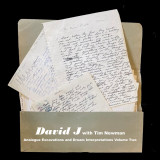
While Bauhaus have been waiting to continue their reunion shows, founding member David J has been trawling through his archive of tapes and diaries from the early 80s in coll;aboration with sound sculptor Tim Newman to present two volumes of unique spoken word and songs, including a vocal contribution from Black Francis of The Pixies and guitar overdubs by Warren Defever of His Name Is Alive and Adrian Utley of Portishead. Sleeve notes by Andrew Brroksbank of the Bauhaus Archive.
While Bauhaus have been waiting to continue their reunion shows, founding member David J has been trawling through his archive of tapes and diaries from the early 80s in coll;aboration with sound sculptor Tim Newman to present two volumes of unique spoken word and songs, including a vocal contribution from Black Francis of The Pixies and guitar overdubs by Warren Defever of His Name Is Alive and Adrian Utley of Portishead. Sleeve notes by Andrew Brroksbank of the Bauhaus Archive
It’s the desire to celebrate their sonic bounty that first got Oberst and the band excited about
the idea of comprehensive reissues. But this wouldn’t be a Bright Eyes project if a moment
devoted to appreciating the past weren’t turned into an opportunity to connect with the future.
That’s where the companion EPs (on Opaque Gold vinyl) come in. Or as Oberst puts it, “the
supplemental reading” for the primary reissues: one six-track EP per reissued album, each
featuring five reworked songs from that album. “My thing was they had to sound different from
the originals, we had to mess with them in a substantial way.” Plus one cover that felt “of the
era” in which that particular albums was made - a song that meant something to the band at
the time. To help the EPs come alive in the fullest way, Bright Eyes called in lots of old friends,
like Bridgers, M. Ward, and Welch and Rawlings, as well as new ones like Katie Crutchfield of
Waxahatchee.
‘Fevers And Mirrors’ is pressed on Merlot Wave coloured double vinyl
Camille Bertault and David Helbock are two of the most jawdroppingly talented members of the cohort of European jazz
musicians currently in their mid-Thirties. Their journeys in improvised
music are always adventurous, playful and exciting.
She is the rising star of French vocal jazz. He, Austrian-born, is one
of the most fascinating pianists on the scene. Their personalities
appear to be polar opposites, yet Bertault’s livewire humour and
Helbock’s calm self-assuredness only appear different on the surface.
When it comes to the musical choices they make, they are
emphatically on the same page. Each is astonishingly versatile, with
an innate sense of dramaturgy. This voice / piano duo reaches
unbelievable levels of inventiveness here on ‘Playground’.
“We both love Egberto Gismonti and Hermeto Pascoal, Björk and
Monk,” Helbock explains. “We also wanted a classical piece.” The
duo found the initial repertoire to explore and to spread their musical
wings with relative ease. Bertault’s vocal artistry is hers and hers
alone. Her voice is a magnificent instrument to carry a melody,
whether at breakneck speed and with devastating precision or at
pindrop volume. Helbock’s creativity, as he exploits all the sound
possibilities of the grand piano, is completely ‘sui generis’ as well. He
dampens the piano strings, he plays directly on them, he uses the
piano case as a percussion instrument, he makes use of electronics.
And ‘Playground’ is the first time he has worked with loops.
His accompaniment therefore has an almost orchestral scale and
depth, a jewel case for this scintillating and very special voice. The
pair have written seven new numbers for the album: we hear the
whimsical blues of ‘Lonely Supamen’, the mysterious ‘Fabelwesen’,
the chanson-esque ‘Aide-moi’ and the ethereal-melancholic ‘Bizarre’.
‘Playground’ is a kaleidoscope of sounds and emotions which
invigorates, excites - and will always surprise. The craft and
technique may be breath taking, but neither musician ever forgets the
essential: “It’s not about showing strength or virtuosity, but about
expressing the truth of the moment,” says Camille Bertault. And that
is what she and David Helbock have delivered with each and every
track.
- A1: Sudden Reverb - Sound Tlakotli (Deadbeat Remix)
- A2: Pitch Black - Transient Transmission (Adrian Sherwood's Delta B(0)=B Remix)
- A3: The Orb - Say Cheese (Gaudi's Dubble Mozzarella Mix)
- A4: David Harrow - In My Head (Inside My Head Mix)
- B1: Subset - The Astrogator (Sub Signals Mix)
- B2: 3Head - Afnaz (Dennis Bovell Dub Mix)
- B3: Groove Armada - Oh Tweak To Me (Gaudi Remix)
- B4: Shpongle - How The Jellyfish Jumped Up The Mountain (Cosmic Trigger Remix)
- C1: Aux25 - Passing Through
- C2: Simm Feat Phelimuncasi - Cracks
- C3: Alpha Steppa - Colour
- C4: Radikal Guru - Badman Skank
- C5: Paolo Baldini Dubfiles - Ethiolò Dub
- D1: African Head Charge - Disciplined And Dignified
- D2: Gaudi Feat Steel Pulse - Cry Dubber
- D3: 100Th Monkey - Fly Higher Dub
- D4: Dub Fx - Dub Everyday (Gaudi's Sub Signals Remix)
- D5: Phonolab Feat Bill Laswell - Where Do Comets Come From
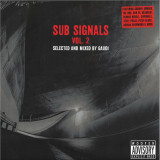
Sub Signals Vol.2 is a deep dive into underground bass, guided by artist and producer Gaudi. Featuring predominantly unreleased originals and versions by some of the biggest names in the worldwide dub collective, it intricately combines analogue elements with digital grooves to stunning effect.
Much more than just a compilation, the Sub Signals series is a celebration of the evolution of the sound of dub, from its original roots in reggae to its fusion with a much wider spectrum of sounds and influences. Gaudi curated the first volume back in 2006 for the cult Canadian label Interchill, sourcing tracks and dubs from High Tone, Zion Train, Manasseh, Almamegretta, Noiseshaper, Creation Rebel, Greg Hunter, Dubadelic and more.
15 years on, Gaudi has created the second volume, blending contributions by established reggae names Steel Pulse, Dennis Bovell and African Head Charge with next generation dub producers Alpha Steppa, Radikal Guru and Paolo Baldini Dubfiles, headline acts Groove Armada, Dub FX and The Orb with underground artists Deadbeat, Pitch Black and SUBSET, to create a seamless 75 minute mix.
“With Volume 2, I wanted to create a deep vibrational experience by shaping an aural trajectory that encompassed the many aspects of dub and its related sub-frequencies. To achieve my goal, I reached out to the artists I regularly work with to ask for contributions, in some cases digging in their archives to find what I was looking for.”
As a solo artist, Gaudi has recorded over 20 albums, while as a producer he has hundreds of productions under his belt. He has worked with legends of the reggae and electronic music worlds including Lee "Scratch" Perry, Horace Andy, Dub Pistols, Hollie Cook, Youth, Mad Professor, Prince Fatty, Lamb, Trentemøller and Nusrat Fateh Ali Khan.
Dedicated to the sound of dub in its many forms, Gaudi’s latest excursion of his Sub Signals series is pure bass therapy, designed to excite your eardrums and worry your woofers.
- A1: Gwen Mccrae - Move Me Baby (Danny Krivit Edit)
- A2: Alien Alien - Perfidia (Feat Igino - Severino Panzetta & Ray Mang Remix)
- A3: Escape From New York - Fire In My Heart
- B1: Margie Lomax - God's Greatest Gift To Man Is A Woman
- B2: Roisin Murphy - Ancora Ancora Ancora (Severino & Nico De Ceglia Remix)
- B3: Marianne Faithfull - Sex With Strangers (Feat Beck)
- B4: Lisa King - You've Got Magic
- C1: William Stuckey - Just Around The Corner
- C2: Larry Heard Presents Ona King - Premonition Of Lost Love (Extended Adult Mix)
- C3: Kassav - Aveou Doudou
- C4: Fajardo '76 - C'mon Baby, Do The Latin Hustle (Oye Mami Ven Y Baila El Latin Hustle) (Oye Mami Ven Y Baila El Latin Hustle)
- D1: Game - Gotta Take Your Love (Single Version)
- D2: Horse Meat Disco & Kathy Sledge - Jump Into The Light (Wash House Dub)
- D3: Horse Meat Disco - Self Control (Feat Xavier Smith & Roy Inc - Eagle Dub)
- D4: The Rah Band - Messages From The Stars
Black Vinyl[29,20 €]
Yellow Vinyl
The first volume of Back To Mine was released back in 1999 by Nick Warren, designed to showcase a selection of tracks you’d find and be heard playing at the artist's home. Selectors have come in the form of New Order, Pet Shop Boys, Fatboy Slim, and Faithless who all dug deep to find their essential at-home listening.
The latest compilers in the Back To Mine series are none-other than the renowned four-piece, Horse Meat Disco. The horsemen are known for their incredibly fun, deep-diving selections, and this shines through in their Back To Mine compilation in flamboyant style.
Over the course of 16 years of their nightclub tenure, they have become a global brand as pinnacle players of the queer party scene in London and beyond, holding down residencies in New York, Berlin, and Lisbon. Their flamboyant nature and incredibly fun, deep-diving selections have made them one of Disco’s most beloved acts.
Across 15 eclectically brilliant tracks, Horse Meat Disco, which comprises Jim Stanton, James Hillard, Luke Howard, and Severino Panzetta expertly traverse through classic disco cuts, wonky dancefloor groovers, and silky smooth soul.
Repress
Microfunk EP Volume 3 takes minimal drum n bass to a whole new level. While the starting track by Subwave and Bop has a strong summer flavor that's perfect for meeting the sunrise, the second one by Abstract Elements & Electrosoul System takes you on a spacey journey and drops you into its clean, minimalistic groove. On the flipside we have deep, smooth vibes by Dissident (aka Kontext) and a trippy IDM track by Microfunk Crew. You can easily drop the A-side to impress a party with the deeper side of drum n bass, whereas the B-side is well suited to home listening and chill-out rooms.
Discrepant presents Istanbul based audio/visual artist Koray Kantarcıoğlu's follow-up to his debut album Loopworks (CREP59, 2018).
Whilst the first volume used 60’s and 70’s Turkish records as it source material, Loopworks 2 expands the sampling pool to local records as well as snippets from 70's TV and 80's new age and jazz tapes. This disparate material is mangled and glued together with Koray’s very personal sampling techniques.
This result becomes a dreamy, haunted and enigmatic collection of floating vignettes. Koray also enlists the help of local musicians such as Ekin Fil, who contributed to the album with haunting vocals and sound textures as well as Berke Can Ozcan who adds drums and percussion into the haunted mix.
The LP comes with a bonus CD entitled 'Loopworks 2 Extras', that could be another album itself, created from extra material that couldn’t make it to the LP.
Composed in 2020 and 2021.
- A1: Dj Ghost - Techno Trip
- A2: Insider - Boots On The Run
- A3: Body-Shock - Invasion Of The Body-Snatchers
- A4: Dj Looney Tune - Workstation
- A5: Body-Shock - Sleepless
- A6: Liquid Overdose - Contact
- A7: Cherrymoon Trax - House House House
- A8: Dj Looney Tune - Beatbox (Acieed Mix)
- A9: Liquid Overdose - Fearsome Bass
- B1: Jan Vervloet & Dj Ghost - Super Dry
- B10: Joyrider - The Deadline (Ny Mix)
- B11: Body-Shock - Attack Of The Body Snatchers
- B2: Jones & Stephenson - The First Rebirth (Dj Ghost & Danny C Remix)
- B3: Push - Universal Nation (Dj Ghost & Danny C Remix)
- B4: Traxcalibur - The Dreamer
- B5: Repulsive 2 - Recactussed
- B6: Dave Davis - Transfiguration
- B7: Blue Alphabet - Cybertrance
- B8: Final Analyzis - El Punto Final (Power Mix)
- B9: Dreamland - Mind Penetration
Our next mixtape features a superb, tight blend of some of the very best tracks to fly out of the speakers at the Cherry Moon Club. At the helm we have DJ Ghost, spinning the grooves to take us on a journey through the ages, through the genres, from twisted acid concepts to hypnotic trance and gut busting hardcore. Ghost aka Bjorn Wendelen has been a stalwart for us at Bonzai since the very early days. He’s delivered several cuts for us over the years and has branched out with his own Ghoststyle brand with great success. The famous Cherry Moon was and remains one of the biggest names in Belgian club-life, with 30 years of embracing club culture. Since the start in 1991, they have brought the best techno, hard-trance and house to the scene. During the 90's and early 00's, Cherry Moon was the place to be for clubbers from all over Belgium, France, the Netherlands and even other European countries. Housed on classic K7 tape, this comp features a host of tracks from the likes of DJ Ghost, Insider, Body-Shock, DJ Looney Tune, Jones & Stephenson, Push, Blue Alphabet, Final Analysis, Joyrider, Dreamland and more. So, dust off your vintage cassette machine and prepare to be blown away by the sound of Cherry Moon.
- A1: Ruth - Polaroid/Roman/Photo (Instrumental First Mix Edit)
- A2: Richard Wahnfried - Time Actor
- A3: Mecanica Popular - La Edad Del Bronce
- A4: Graham Gouldman - Bionic Boar
- B1: Ose - 29 H 08 Mm (Cdm Edit)
- B2: Schaltkreis Wassermann - Lux
- B3: Logic System - Unit
- B4: Explorer - No 8
- B5: Peter Godwin - Emotional Disguise (Instrumental)
The cosmic journey continues! Finally the fourth volume of the Cosmic Disco Machine series is out. As always pressed in limited number of copies , this volume is served in marbled white vinyl.The musical selection includes classic songs like "Time Actor" by Richard Wanhfried, as long as more underground and exclusive tracks such as "La Edad Del Broce" by Mecanica Popular, "Polaroid / Roman / Photo" By Ruth just to mention two from the rich traclkist.
The selection of these tunes is, as always, treated in any detail, artistic and musical, all tracks being gently mastered keeping the original and characteristic mood of each song. Just get it and you will discover the rest by listening to this new unmissable volume.Have a good listening and stay tuned for the next chapter of our cosmic journey.
- A1: Mandrill - Fat City Strut
- A2: The Wild Magnolias - Corey Died On The Battlefield
- A3: Ltg Exchange - Waterbed (Instrumental)
- A4: Allez Allez - African Queen
- B1: Fela & Africa 70 - Everything Scatter (Rere Run) (Rere Run)
- B2: Tony Allen With Afrobeat 2000 - Nepa (Never Expect Power Always) (Never Expect Power Always)
- B3: Lionel Hampton - Them Changes
- C1: Manu Dibango - Super Kumba
- C2: Screaming Jay Hawkins - Africa Gone Funky
- C3: Harold Alexander - Tite Rope
- C4: Jack Ashford & The Sound Of New Detroit - Do The Choo-Choo
- C5: Africa Djole - Wassahoumba
- D1: Niagara - Sangandongo
Second volume of this collection of pure Funk, Afro Beat and African Funk music is out!
This chapter, as previous one, includes highly respected artists such as Mandrill, The Wild Magnolias, Manu Dibango, Fela Kuti, Tony Allen, Buddy Miles and many others, but also includes the very rare and exclusive long version of “Sangadongo” from Niagara.
All these artists guarantee the high quality of this collection, a record that any funk lover can’t miss: the real funk from the origins and the groove in its free form.
- 1: The Clare Sisters Cool Cool Cool
- 2: Earl Hooker Apache War Dance
- 3: Chuck Daniels Tiny Tim
- 4: Otis Blackwell & His Band My Josephine
- 5: Lance Roberts Gonna Have Myself A Ball
- 6: Willie Wright Gibble, Gobble
- 7: Bob Calloway And The Chicks Native
- 8: Sonny Day Beyond The Shadow Of A Doubt
- 9: Howlin' Wolf Wang Dang Doodle
- 10: Toussaint Mccall Summertime
- 11: Titus Turner Coralee
- 12: The Voodoos Voodoo Walk
"Blues & Rhythm, Popcorn, Exotica & Tittyshakers" untertitelt, ist das der Reissue des 5. Volumens in der Exotic Blues & Rhythm Serie. Das Original erschien vor Jahren in einer limitierten Auflage von 500 Stück, war recht schnell vergriffen und ist heute ein begehrtes Sammlerstück. Auch der Reissue ist limitiert - es gibt 700 Stück - alle in durchsichtigem/ clear Vinyl.
BT50 sees the return to the fold of XY0815.
Showcasing his ever-expanding palette, Gates Need Inputs Vol. I sees the Weimar based producer stepping away from the dancefloor.
Brighter in mood than previous contributions, the first volume of two, presents XY0815 displaying his typical finesse and restrained flex on electronica and downtempo.
Edition of 300 copies.
This first-ever vinyl reissue, remastered from the original analog tapes, includes a gatefold jacket and inner sleeve with restored, new, and alternate art and photos by Terry and Jo Harvey Allen; an insert with lyrics, original notes, and Terry’s letter to H.C. Westermann about the songs; and a high-res download code. Deluxe CD edition features a trifold jacket and inner sleeve. Recorded exactly two years after acclaimed visual artist and songwriter Terry Allen’s masterpiece Lubbock (on everything), the feral follow-up Smokin the Dummy is less conceptually focused but more sonically and stylistically unified than its predecessor it’s also rougher and rowdier, wilder and more wired, and altogether more menacingly rock and roll. Following the 1973 Whitney Biennial, in which songwriter and visual artist Terry Allen and fellow iconic artist Horace Clifford “Cliff” Westermann both exhibited, Allen maintained a lively long-distance correspondence and exchange of artworks and music with Westermann, whose singular and highly influential art he admired enormously. In a February 1981 letter to his friend and mentor, written shortly after the late 1980 release of his third album Smokin the Dummy, while he and his family were living in Fresno, California, Terry explains the genesis of the album title: Westermann died shortly after receiving this letter, enclosed with a Smokin the Dummy LP, the minimalist black jacket of which Allen suggested that Cliff fold into a jaunty cardboard hat if he didn’t like the music. That response was unlikely, since Westermann loved Terry’s music, calling his debut record Juarez (1975) “the finest, most honest and heartfelt piece of music I ever heard.” The Panhandle Mystery Band had only recently coalesced during those 1978 Lubbock sessions, Lloyd Maines’s first foray into production. Through 1979, they honed their sound and tightened their arrangements with a series of periodic performances beyond Allen’s regular art-world circuit, including memorable record release concerts in Lubbock, Chicago, L.A., and Kansas City. Terry sought to harness the high-octane power of this now well-oiled collective engine to overdrive his songs into rawer and rockier off-road territory. His first album to share top billing with the Panhandle Mystery Band, Dummy documents a ferocious new band in fully telepathic, tornado-fueled flight, refining its caliber, increasing its range, and never looking down. Alongside the stalwart Maines brothers co-producer, guitarist, and all-rounder Lloyd, bassist Kenny, and drummer Donnie and mainstay Richard Bowden (who here contributes not only fiddle but also mandolin, cello, and “truck noise theory,” the big-rig doppler effect of Lloyd’s steel on “Roll Truck Roll”), new addition Jesse Taylor supplies blistering lead guitar, on loan from Joe Ely (who plays harmonica here). Jesse’s kinetic blues lines and penchant for extreme volume were instrumental in pushing these recordings into brisker tempos and tougher attitudes. Terry was feverish for several studio days, suffering from a bad flu and sweating through his clothes, which partially explains the literally febrile edge to his performances, rendered largely in a perma-growl. (By this point, he was regularly breaking piano pedals with his heavy-booted stomp.) Like the album title itself, the songs on Smokin the Dummy ring various demented bells. The tracks rifle through Terry’s assorted Obsessions especially the potential energy and escape of the open road, elevated here to an ecstatic, prayerful pitch and are populated by a cast of crooked characters: truckers, truck-stop waitresses, convicts, cokeheads, speed freaks, greasers, holy rollers, rodeo riders, dancehall cheaters, and sacrificial prairie dogs, sinners seeking some small reprieve, any fugitive moment of grace. A reigning deity of a certain kind of country music since the mid-70s. – The New York Times // The kind of singular American artist who expresses the fundamental weirdness of his country. – The Wire
The West Coast Pop Art Experimental Band make an interesting case for being one of the era's more unclassifiable bands. Vol 3. A Child's Guide To Good And Evil was a great example of this. This album is considered to be the band's most accomplished work and a masterpiece of the psychedelic genre. Released just nine months after Volume 2, the band explores their incredibly creative psychedelic pop song writing with an accomplished mastery of studio technique.
The album cover features iconic original artwork by Jon Van Hamersveld, who also created covers for the Beatles and the Rolling Stones. During their short existence The West Coast Pop Art Experimental Band became known for their strange compositions, sometimes referring to the sound of the Byrds, while at other times exposing the weirdness of Captain Beefheart and Frank Zappa.
- A1: Bob Marley - Sun Is Shining
- A2: John Holt & Dennis Brown - Wildfire
- A3: Johnny Clarke - Declaration Of Rights
- A4: Max Romeo - Material Man
- A5: Barrington Levy - Warm And Sunny Day
- A6: Freddie Mcgregor - Big Ship Sailing
- B1: Gregory Isaacs - Babylon Too Rough
- B2: Dennis Brown - Africa
- B3: Don Carlos - Rivers Of Babylon
- B4: Fred Locks - Vision Of Redemption
- B5: The Congos - La La Bam-Bam
- B6: Horace Andy -Ain't No Sunshine
- B7: Lee "Scratch" Perry & The Upsetters - Soul Fire
- C1: Alton Ellis - I'm Still In Love
- C2: Prince Lincoln Thompson - They Know Nat Jah
- C3: The Heptones - Take Me Darling
- C4: Beres Hammond - Rock Away
- C5: Marcia Griffiths - Come See About Me
- C6: Bob Marley - African Herbsman
- D1: Sly & Robbie - We Are Africa
- D2: Leroy Smart - Ballistic Affair
- D3: Errol Dunkley - Ok Fred
- D4: Bob Andy - Teachers
- D5: Black Uhuru – Sinsemilla
Famed free jazz concert registration of an early New Direction for the Art performance. Recorded in 1971. Old-style Gatefold LP, with rare photographs & extensive liner notes by Alan Cummings.
The performance by Takayanagi Masayuki New Direction for the Art at the Gen’yasai festival on August 14, 1971 was an intense, bruising collision between the radical, anti-establishment politics of the period in Japan and the febrile avant-garde music that had begun to emerge a few years before. The ferocious performance that you can hear here was received with outright hostility by the audience, who responded first with catcalls and later with showers of debris that were hurled at the performers. Takayanagi though described the group’s performance to jazz magazine Swing Journal as a success, “an authentic and realistic depiction of the situation”.
In 1962, Takayanagi, bassist Kanai Hideto and painter Kageyama Isamu went on to form an AACM-style musicians’ collective called the New Century Music Research Institute. Every Friday, members gathered at Gin-Paris, a chanson bar in the fashionable Ginza district of Tokyo, to push the outer limits of jazz creativity.
But the pivotal moment for his music was the creation a new trio version of his New Directions group in August 1969, with the free bassist Yoshizawa Motoharu and a young drummer Toyozumi (Sabu) Yoshisaburō. Experiments eventually led to the creation of two basic frameworks for improvisation that Takayagi referred to as Mass Projection and Gradually Projection.
“La Grima” (tears), the piece that was played at the Gen’yasai festival, is a mass projection and listening to it, you can get a clear sense of what Takayanagi was aiming at. Mass projection involves a dense, speedy and chaotic colouring in of space that destroys the listener’s perception of time, and thus of musical development.
The ferocity of the performance of “La Grima” at the Gen’yasai Festival in Sanrizuka on August 14, 1971 was consciously grounded by Takayanagi in a particular historical moment, ripe with conflict and violence. A month after the festival, on September 16, three policemen would die during struggles at the site. This was the context that the three-day Gen’yasai Festival existed within. The line-up reflected the radical politics of the movement, with leading free jazz musicians like Takayanagi, Abe Kaoru, and Takagi Mototeru appearing alongside radical ur-punkers Zuno Keisatsu, heavy electric blues bands like Blues Creation, and Haino Keiji’s scream-jazz unit Lost Aaraaff.
New Direction for the Arts trio topped the bill on the opening day, playing an aggressive, uncompromising “mass projection” set of polyphonic improvisation. Alongside drummer Hiroshi Yamazaki and saxophonist Kenji Mori, Takayanagi soloed hard and continuously for forty minutes. This was performance as precisely calibrated metaphor: three musicians responding to the demands of the moment with instinctive force and fury, untethered by rules, leaderless yet not rudderless (the direction part of the group’s name was no accident). The piece was entitled La Grima – tears - and the fusion between the palpable anger of the performance and hopeless sadness of its title were also perfectly apt for the situation. This was a fight that the state was always going to win. Yet, by all accounts, the band’s set went down like a fart at a funeral. The band were showered with catcalls and debris throughout, and by chants of “go home” when the music finally came to an end.
However, looking back at the event in the year-end issue of Japan’s leading jazz magazine, Swing Journal, Takayanagi was surprisingly upbeat: New Directions brought a solid political consciousness to our performance and succeeded in an authentic and realistic depiction of the situation. But journalism revealed its superficiality in its inability to penetrate the core of the music. I don’t know much about anyone else, but we at least left behind a competent record.
It’s a fascinating statement in many ways. Perhaps on one-hand it can be read as stubborn, solipsistic and self-justifying, yet in conjunction with his statement in 1971 there are points that guide us towards an understanding of just what Takayanagi intended with his performance at the festival. As Kitazato Yoshiyuki has argued, it becomes an almost religious act, directed at the earth deities of the land. A union of anger, sorrow and malevolence that can be placed nowhere effective, all it can do is find expression and channeling. The forcible land seizures at Narita, the eviction of farmers from land that had been in families for generations, the destruction of communities: none of this can be prevented, not least by an artistic action. All that can be done is an attempt to mark the land itself, to soak it with the combined force of emotions and the volume of the performances, to bury something there that cannot be drowned out, even by the coming roar of jet engines.