
pré-commande17.04.2026
il devrait être publié sur 17.04.2026
35,71 €
il devrait être publié sur 17.04.2026

After Hours ist ein Album aus dem Jahr 1957 von den Prestige All Stars unter der Leitung des Trompeters
Thad Jones. Mit dabei sind außerdem Frank Wess (Flöte, Tenorsaxophon), Mal Waldron (Klavier), Kenny
Burrell (Gitarre), Paul Chambers (Bass) und Art Taylor (Schlagzeug). Das Album enthält vier Titel, die
alle von Mal Waldron komponiert wurden. Diese Neuauflage des Albums erscheint als Teil der Original
Jazz Classics Series auf 180-Gramm-Vinyl, gepresst bei RTI, mit vollständig analogem Mastering von den
Originalbändern bei Cohearent Audio und einem Stoughton Tip-On-Cover.
il devrait être publié sur 05.12.2025

An electrified meeting of minds, Candy Girl is a lost 1975 session by jazz pianist Mal Waldron, recorded in Paris with core members of the mighty Lafayette Afro Rock Band, the American funk unit who had made France their home and whose deep grooves would later be mined by generations of hip-hop producers.
By 1975, Waldron was a decade into his self-imposed exile from the United States—a transformed musician who had reassembled his sound in Europe and Japan after a devastating breakdown in the early '60s. His post-1969 output had stripped jazz down to its core elements: modal intensity, locked grooves, and hypnotic repetition. Candy Girl doesn’t interrupt this trajectory—it extends it, wrapping Waldron’s minimalist mantras around the funked-up chassis of the Lafayette rhythm section.
Originally released in microscopic quantities on the Calumet label and long shrouded in obscurity, Candy Girl was recorded spontaneously in the studio of French producer Pierre Jaubert, whose Paris HQ had become the workshop for both avant-garde jazz (Archie Shepp, Art Ensemble of Chicago, Steve Lacy) and psychedelic funk (Lafayette Afro Rock Band AKA Ice). This session finds Waldron jamming freely with bassist Lafayette Hudson, drummer Donny Donable, and keyboardist Frank Abel on clavinet, Moog and more—laying down raw, unfiltered instrumental funk with an experimental edge.
Highlights include the low-slung vamp of “Home Again”, the crisp, break-laden groove of “Red Match Box”, and the mesmeric swirl of the title track “Candy Girl” —a minor-key electric piano waltz with hints of cosmic soul. There's even a deep cut for the crate diggers: the somber yet meditative “Dedication to Brahms”, where Waldron deconstructs the Romantic composer’s third symphony into a sparse jazz reverie.
Unlike his polished sessions for Japanese labels or the avant-garde swing of his earlier Prestige work, Candy Girl feels more spontaneous, even accidental — and that’s part of its power. It’s a document of Waldron as bandleader, collaborator, and explorer, captured in the midst of a vibrant, cross-cultural scene in mid-70s Paris. Never officially issued with a cover and barely released at all, Candy Girl is a rare convergence of two underground traditions: Waldron’s Euro-exile electric jazz and the raw, sampled-future funk of the Lafayette Afro Rock Band. Now finally resurfaced, it deserves its rightful place in both stories.
Commandez maintenant et nous commanderons l'article pour vous chez notre fournisseur.

Mal Waldrons erste Hommage an Billie Holiday mit dem Titel »Left Alone« wurde 1959 aufgenommen, nur wenige Monate vor dem Tod der Sängerin
Archie Shepps oft düsteres Tenorsaxophon erinnert an die Textur von Holidays Stimme, ergänzt aber perfekt Waldrons üppiges Piano
Diese instrumentale Hommage an Billie Holiday ist eines der besten Alben, die ihr Andenken ehren
il devrait être publié sur 30.05.2025

il devrait être publié sur 24.01.2025

Jazz pianist Mal Waldron’s 1962 album The Quest features Eric Dolphy (clarinet, alto sax) and Booker Ervin (tenor sax). Recorded at Rudy Van Gelder Studios in New Jersey the album contains seven cuts that fall somewhere between hard-bop and avant-garde. This new edition of the album is released as part of the Original Jazz Classics Series and is pressed on 180-gram vinyl at RTI with all-analog mastering from the original tapes by Kevin Gray at Cohearent Audio and presented in a Tip-On Jacket.
il devrait être publié sur 27.09.2024

After playing with Mingus, Coltrane, Lady Day and Abbey Lincoln, inventive jazz pianist Mal Waldron moved to Europe and first reached Japan in 1970, where he met Idahoborn double-bassist Gary Peacock, who had played with Art Pepper, Bud Shank, Bill Evans and free-jazz giant, Albert Ayler before moving to Japan to study zen buddhism. First Encounter, recorded in Tokyo in 1971 for French producer Herve Bergerat, shows that the intense pairing was quite natural, the harmonic dissonance of Waldron’s “She Walks In Beauty” contrasted by the up-tempo groove of Peacock’s “What’s That”; future Native Son founder Hiroshi Murakami makes important contribution on drums.
il devrait être publié sur 01.07.2024

il devrait être publié sur 01.06.2024

Bass player Ron Carter’s debut album Where? features Eric Dolphy (clarinet, sax, flute) and Mal Waldron (piano). The album was originally released in 1961 having been recorded at Rudy Van Gelder Studios in New Jersey. This new edition of the album is released as part of the Original Jazz Classics Series and is pressed on 180-gram vinyl at RTI with all-analogue mastering from the original tapes by Kevin Gray at Cohearent Audio and presented in a Tip-On Jacket. US import.
il devrait être publié sur 15.03.2024

As the BBE Music J Jazz Masterclass Series hits its 19th title, the milestone is suitably matched by a collaboration between two giants of jazz brought together to deliver an exceptional album, working with a band of the very best Japanese jazz musicians. ‘Reminicent Suite’ by American pianist Mal Waldron and Japanese trumpeter Terumasa Hino was originally released in 1973 on the famed Victor label and was one of several Japan-only albums recorded and released by Waldron over a thirty-year period, most of which have never been available outside Japan. ‘Reminicent Suite’ comprises two extended tracks, both taking up a side each. The title track on Side A is composed by Waldron, and is a dark, brooding heavy groove typical of his early 70s sound. ‘Black Forest’ on side B is written by Hino and is a vivid and energetic piece, layered and textured with dense percussion and Hino’s signature trumpet tone. Mal Waldron started out in the early 1950s working extensively on the Prestige label with notable figures such as Gene Ammons, Jackie McLean and Charles Mingus. Most famously, he worked with Billie Holiday before leaving the States in the mid-60s and relocating to Europe where he established himself as a major figure working across many countries including France, Italy, and Germany, where he made his home in Munich. In 1969, Waldron recorded the first releases for two major European jazz labels, ECM and Enja, before visiting Japan on tour for the first time in 1970. Waldron instantly fell in love with Japan and, over the next three decades, extensively toured and recorded there for numerous labels. Terumasa Hino is one of the towering figures of post-war modern jazz in Japan. Coming to prominence via the Hideto Shiraki and Sadao Watanabe bands in the mid-60s, Hino soon emerged as one of the prime movers in new jazz generation that changed the direction of jazz in Japan. He explored a more open, freer, and improvised sound, mixing psychedelic and rock elements with freeform and post-bop jazz. Hino recorded for many of the leading jazz labels of the era including Columbia, Three Blind Mice, and East Wind and would go on to relocate to the US in the mid-70s, immersing himself with the leading fusion players of the New York scene including Larry Corryell, Mtume, Al Foster, Dave Liebman and many more. In the early 80s, Hino’s jazz funk tracks were dancefloor smashes on the UK jazz dance scene. Joining Waldron and Hino on ‘Reminicient Suite’ is a band made up of the very best Japanese jazzman of their day: Takeo Uematsu on sax, Terumasa’s brother, Motohiko Hino, on drums, and the legendary bass master, Isao Suzuki. Together, they deliver one of the very best albums of the era, a richly articulated and dynamic session that exemplifies the very best that the Japanese jazz scene was doing in the early 1970s. ‘Reminicent Suite’ is pressed on 200g vinyl presented in a gatefold sleeve plus obi strip, with new photos by Tadayuki Naito; translated original sleeve notes; and a 7500-word essay including interview with Terumasa Hino from Tony Higgins, co-curator of the J Jazz Masterclass Series. This is the first time this album has been available outside of Japan
il devrait être publié sur 26.01.2024

Originally released in 1957 Mal Waldron’s Mal/2 album features some of jazz music’s biggest names. Joining Mal Waldron (piano) are John Coltrane (tenor sax), Idrees Sulieman (trumpet) and Ed Thigpen (drums) amongst others. This new edition of the album is released as part of the Original Jazz Classics Series and is pressed on 180-gram vinyl at RTI with all-analogue mastering from the original tapes by Kevin Gray at Cohearent Audio and presented in a Tip-On Jacket.
il devrait être publié sur 28.07.2023

il devrait être publié sur 21.10.2022

Mal Waldron's first tribute to Billie Holiday, titled Left Alone, was recorded in 1959, mere months before the singer's death. He returned to salute the legendary vocalist on several occasions since then, with this recording likely being his final tribute, recorded less than a year before his own death. Waldron, who worked with Holiday during her last years, is intimately familiar with her takes of the six standards heard on this disc, along with her own "Lady Sings the Blues." Archie Shepp's often gritty tenor sax is reminiscent of the texture of Holiday's voice, yet he perfectly complements Waldron's lush piano. They also pack a punch with their stark performance of "Left Alone" (Shepp's occasional reed squeaks seem deliberate, as if to imitate breaks in her voice). Waldron also recites Holiday's lyrics set to his composition at the conclusion of the LP. Shepp switches to soprano sax for an emotional take of "Everything Happens to Me" and "I Only Have Eyes for You," with the latter song sounding as if the unheard singer is being ignored by her love interest. Shepp's "Blues for 52nd Street" is both sassy and swinging. This instrumental salute to Billie Holiday is one of the best albums ever to honour her memory. by Ken Dryden/AMG
il devrait être publié sur 08.10.2021
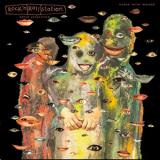
A long-overdue return to one of the most singular moments in Nurse With Wound's sprawling discography. Originally issued in 1994, Rock 'n' Roll Station marked a turning point - the album where Steven Stapleton's decades-long engagement with collage, musique concrète, and the outer limits of post-industrial sound first met the hypnotic, rhythm-driven studio sensibility of Colin Potter. What began as a request to rework some of the more percussive sections of 1992's Thunder Perfect Mind mutated, under Potter's hand, into something else entirely: an hour of swivelling grooves, warped exotica, and looping psychedelia, channelling the ghosts of Pérez Prado, Graham Bond, Joe Meek, and Jacques Berrocal into the most rhythm-conscious work the group had ever made. Three decades on, it remains one of the most beloved entries in the NWW catalogue. Issued by United Dirter as a limited LP, this new VIP edition reframes the album through four extended remixes and reworkings, each running close to or beyond ten minutes - a deep re-engagement with the source material by the extended Nurse With Wound family. Joining the usual suspects of Colin Potter, Matt Waldron, Andrew Liles, and Diarmuid MacDiarmada is an unexpected and historically significant presence: Jean-Jacques Birgé, the French composer, filmmaker, and co-founder of Un Drame Musical Instantané, whose GRRR imprint (founded 1975) famously appeared on the original Nurse With Wound List nearly half a century ago. A quiet circle, closing. The LP arrives as forerunner to a more ambitious project still to come: The Iron Lung Gives Way To The Surgical Stocking, a 5CD set due later in 2026, of which these reworks offer a first glimpse. Housed in striking new full-colour artwork by Babs Santini - Stapleton's longstanding visual alter ego. 500 ww copies in black & orange vinyl. Genre/Style: Electronic / Dark Ambient / Experimental / Drone
il devrait être publié sur 21.08.2026
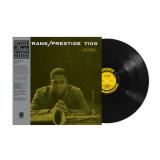
Original Jazz Classics celebrates John Coltrane’s centennial with this release of the mono edition of Coltrane. Originally released on Prestige in 1957 the album features Coltrane alongside Johnnie Splawn, Sahib Shihab, Red Garland, Mal Waldron, Paul Chambers, and Albert “Tootie” Heath. This new edition of the album is released on 180-gram vinyl pressed at RTI with all-analog mastering from the original tapes at Cohearent Audio and a Stoughton Tip-On Jacket.
il devrait être publié sur 14.08.2026

In the pantheon of classic free jazz, Noah Howard's The Black Ark looms large. Recorded at Bell Sound Studios in New York City in 1969 – just prior to the alto saxophonist's relocation to Europe – the album was eventually released in 1972.
The Black Ark exhibits not only the power and imagination of Howard's playing, but also his breadth as a composer and bandleader. Listeners expecting unrelenting blasts of "energy music" might be surprised to find a cohesion atypical of free jazz; amidst the wild, impassioned solos, Howard weaves in Latin rhythms and fat-bottomed grooves.
The first side, consisting of "Domiabra" and “Ole Negro,” sets the album's tone. Both tracks sound as if they could have appeared on some of Blue Note's proto-spiritual jazz, groove-heavy releases – evoking the likes of Lou Donaldson or Horace Silver – before ceding the floor to the horn players' anarchic firepower.
As John Corbett writes in the liner notes, "Two players stand out. Bassist Norris Jones – who would soon consolidate his name into a one-word reversed amalgamation/permutation of the two, Sirone – is given ample room, largely unaccompanied; his corporal approach foreshadows later work with the Revolutionary Ensemble. But the secret weapon on The Black Ark is Arthur Doyle. Straight from basement rehearsal sessions with Milford Graves, whose ensemble he had joined and who remained a favorite of the drummer for decades, Doyle is a human flamethrower."
Trumpeter Earl Cross' guttural, vocal effects complement Doyle's take-no-prisoners approach, while the estimable combination of Muhammad Ali (Rashied's brother) on drums and Juma Sultan on congas adds an ever-shifting propulsion. The septet is rounded out by the enigmatic pianist Leslie Waldron, who anchors the group with imaginative accompaniment and occasional boppish flourishes.
Every bit worthy of its reputation as an "out-jazz" holy grail, The Black Ark only sounds better with age. It remains the ideal record to convert the remaining free-jazz skeptics.
il devrait être publié sur 06.03.2026

Color Vinyl[49,79 €]
Here’s an expanded edition of one of Nurse With Wound’s most intense, unique opuses, so unique that for long-time fans it was a strange, chaotic loundge bizzarie when it first came out. For the first time, all four audio sides are complete (originally, there were only three sides). And to crown it all, a magnificent new cover by the great and talented Babs Santini, who is none other than Steven Stapleton behind his pseudonym of plastic artist, still in the luxurious tradition of the “silver collection” at Rotorelief Records.
Nurse with Wound’s album Huffin’ Rag Blues is unique in NWW’s discography. Stapleton teams up with composer, producer and multi-instrumentalist Andrew Liles, his co-creator of musical terrorism, to tackle the exotica and lounge genres, crushed into a cacophonous mess. Long-time NWW friends Colin Potter and Matt Waldron are also on board. Blues, jazz, crime films, bachelor pads and soap opera music are processed and discarded, then chopped up and recycled in a mix that contains a ton of space, but also overflows with dynamic tension, hilarious asides, sexually suggestive poetry and a certain rock & roll abandon.
This is a very surprising opus for long-time fans, is like a soundtrack that could illustrate a David Lynch film It’s brilliant, maddening, hilarious and sinister enough to earn a place in any collection with a little quirkiness and eccentricity. Huffin’ Rag Blues incorporates more familiar musical elements – including instruments (played live, even), rhythm and vocals – than almost any other Nurse With Wound album to date. The album’s main concern is, as always, to create environments for lucid dreaming rather than to create music as such.
il devrait être publié sur 06.02.2026

Warsaw 480km ist das Debütalbum des irisch/portugiesischen Quintetts pôt-pot, das die treibenden Grooves des Krautrock mit einer phosphoreszierenden Psych-Rock-Ausstrahlung verbindet, unterstrichen von Harmonium-Drones, hypnotischen männlich-weiblichen Gesangsharmonien und tiefen Schichten rauer Texturen. Das Album entstand in erster Linie aus Demos des Multiinstrumentalisten und Leadsängers Mark Waldron-Hyden während einer Zeit der Trauer und des persönlichen Umbruchs und wurde durch eine Reihe von Live-Studio-Sessions in voller Besetzung zum Leben erweckt, die ein außergewöhnliches Spektrum an Talenten dokumentieren, die sich in einer Umarmung der rohen Katharsis mit einer süßlich düsteren Kante vereinen. Ein entscheidendes Element von Warsaw 480km ist die beeindruckende Bandbreite an Einflüssen und atmosphärischen Landschaften. Waldron-Hyden beschreibt: ,Ich habe die ersten Songs geschrieben, als ich noch nicht wirklich an einem Ort lebte, daher denke ich, dass sie sich irgendwie vergänglich anfühlen - sie mit der Band zu entwickeln half mir, eine Zeit zu verarbeiten, in der ich emotional frei war, daher erinnern sie mich gleichermaßen an die schönen Erfahrungen, die wir als kreative Einheit teilten, und an die schwierigen Zeiten, die sie inspirierten." Die Leadsingle ,WRSW" ist ein Beispiel für diese Komplexität, denn ihr robustes rhythmisches Rückgrat trägt Tremolo-Gitarren, ein wummerndes Harmonium und eine halb gesprochene, an Lou Reed erinnernde Gesangslinie, in der Strophe und Refrain wunderbar miteinander verschmelzen. Vor allem ist Warsaw 480km ein Album, das seinen Reichtum und seine Aura durch bewusste Sparsamkeit erreicht, wie Waldron-Hyden erklärt: "Ollie Oliver Smith und Sara Sara Leslie sind Experten darin, das Beste aus einem Pedal, einem beschissenen Verstärker und einer geliehenen Gitarre herauszuholen, ein Ergebnis von angeborenem Talent und jahrelanger Erfahrung; sie verwenden einige Modulationen für dröhnende Passagen, aber es sind ihre Spielstile und ihr Verständnis für ,den Vibe`, die die geheimen Zutaten sind." Diese Art von intuitiver Verbindung und Zusammenarbeit ist unglaublich selten, und mit diesen zehn Stücken vollbringen pôt-pot etwas wahrhaft Entrücktes, indem sie tiefen Schmerz in eine leuchtende Träumerei alchemisieren. Für Fans von Lewsberg, Spacemen 3, Spiritualized, Brian Jonestown Massacre, Velvet Underground, The Oh Sees, Ty Segall, Uranium Club, Night Beats, Goat, Black Lips.
Commandez maintenant et nous commanderons l'article pour vous chez notre fournisseur.

After Hours is a 1957 album from the Prestige All Stars – led by trumpeter Thad Jones. Also including Frank Wess (flute, tenor sax), Mal Waldron (piano), Kenny Burrell (guitar), Paul Chambers (bass), and Art Taylor (drums), the album features 4 cuts, all composed by Mal Waldron. This new edition of the album is released as part of the Original Jazz Classics Series on 180-gram vinyl pressed at RTI with all-analogue mastering from the original tapes at Cohearent Audio and a Stoughton Tip-On Jacket.
il devrait être publié sur 05.12.2025

Out Friday 14th June, the renowned jazz and funk trumpeter Sefi Zisling presents his third album ‘The Librarian’, blending classic elements with psychedelic funk, soul, and spiritual jazz. ‘The Librarian’ is dedicated to all things close to Sefi’s heart. The album pays homage to his musical inspirations, his wife, friends, and Eyad, a Palestinian whose story moved Sefi.
"This album was made as an ode to the people I love, and I would like to dedicate this album to them." - Sefi Zisling
Sefi Zisling first started playing the trumpet at the mere age of ten, soon after enrolling in the prestigious art school Thelma Yellin. Performing in an array of bands since his early teens, Sefi has performed and recorded sessions with almost every key player of the jazz world in Israel. His debut album ‘Beyond The Thing I Know’, released on Tel Aviv’s leading collective Raw Tapes, propelled the trumpeter onto the world stage. Sefi then found his home on Tru Thoughts for his sophomore record ‘Expanse’, an album that captured the essence of the classic jazz session and transformed his role from instrumentalist to composer.
The cover art is a painting by the late Walid Abu Shakra, a member of the Abu Shakra family who have collectively played a pivotal role in the Palestinian-Israeli art scene and are respected worldwide. Walid aimed to highlight the expropriation of Palestinian land by the Israeli state and centred his artistic career on safeguarding a disappearing landscape through his monochromatic etchings.
Selling Points
Sefi Zisling's sophomore album "Expanse" sold out on vinyl in the first few months
The cover art is a painting by the late Walid Abu Shakra, a member of the Abu Shakra family who have collectively played a pivotal role in the Palestinian-Israeli art scene
Praise from Jazz FM (Playlisting), FIP, Jamie Cullum (BBC Radio 2), Jazz Times, Jazziz, Tom Ravenscroft, Huey Morgan, Cerys Matthews (BBC 6Music), Musica Macondo, Music Is My Sanctuary, Bandcamp Weekly, Wax Poetics and much more.
Recorded intimately and live with a five-piece ensemble
The LP features a spellbinding version of Mall Waldron's jazz standard 'All Alone'
Mixed by renowned engineer George Atkins (80 Hertz Studios)
Commandez maintenant et nous commanderons l'article pour vous chez notre fournisseur.

Am 28. März 2025 erscheint »Field of Lights«, das dritte Album von REGENER PAPPIK BUSCH. Das
Jazz-Trio verschiebt den Schwerpunkt seines Repertoires mit diesem neuen Album in Richtung Cool Jazz
und Post Bop und stellt erstmals drei eigene Stücke vor. Gleich mit dem Debüt, »Ask Me Now«, erreichten REGENER PAPPIK BUSCH 2021 die Spitze der deutschen Jazz-Charts, das Trio spielte bei den
Leverkusener Jazztagen, veröffentlichte 2022 das zweite Album »Things to Come«, gab mit Blixa Bargeld
einen Abend aus Werken der Beatliteratur und Bebop-Klassikern und spielte zahlreiche Konzerte.
»Field of Lights«, ihr drittes Album, ist von maximaler Unmittelbarkeit geprägt. Wir hören auf »Field of
Lights« Klassiker wie »All Alone« und »Billie’s Blues« von Billie Holiday und Mal Waldron, »Nostalgia In
Times Square« von Charles Mingus und eine äußerst raffnierte, pointierte Version von Thelonious Monks
»Bye-Ya«. Wir hören diese und andere bekannte Stücke, aber wir erkennen sie nicht immer gleich – weil
es REGENER PAPPIK BUSCH tatsächlich gelingt, ihnen eine neue Perspektive abzugewinnen.
il devrait être publié sur 28.03.2025

Black Vinyl[32,14 €]
Here is an expanded edition of one of Nurse With Wound's most intense and unique albums, so much so that for long-time fans, it was a strange, chaotic lounge oddity upon its release. For the first time, all four audio sides are complete (originally, there were only three sides).
To top it off, there is a stunning new cover by the great and talented Babs Santini, who is none other than Steven Stapleton using his artist pseudonym, continuing in the luxurious tradition of the "silver collection" at Rotorelief Records.
The album Huffin' Rag Blues by Nurse With Wound is unique in the NWW discography. Stapleton teams up with composer, producer, and multi-instrumentalist Andrew Liles, his co-creator of musical terrorism, to tackle the genres of exotica and lounge, crushed into a joyful cacophonic mess. Longtime NWW friends Colin Potter and Matt Waldron also join in.
Blues, jazz, cop movies, bachelor pads, and TV show music are treated, discarded, then chopped up and recycled into a mix that contains tons of space but also overflows with dynamic tension, hilarious asides, sexually suggestive poetry, and a certain rock & roll abandon. It's a very surprising album for long-time fans, like a soundtrack that could accompany a David Lynch film.
It's brilliant, exasperating, hilarious, and dark enough to earn a spot in any collection that appreciates a bit of weirdness and eccentricity.
Huffin' Rag Blues incorporates more familiar musical elements—including live-played instruments, rhythm, and vocals—than nearly any other Nurse With Wound album to date. As always, the album's main focus is to create environments for lucid dreaming rather than music per se.
il devrait être publié sur 21.03.2025

Nine Pound Hammer, die für ihre raue, überdrehte Mischung aus Punkrock, Hardrock, Country-Musik und Hillbilly-Ikonographie bekannt sind, waren eine der prägenden Bands der Cowpunk"-Szene, die in den späten 80er und frühen 90er Jahren den Weg für Alt-Country ebnete. Kanppe sechs Jahre nach ihrer ursrünglichen Auflösung spielten Scott Luallen, Blaine Cartwright, Matt Bartholomy und Bill Waldron im Jahr 2000 ein paar Reunion-Shows mit Nine Pound Hammer, und 2004 schließlich beschlossen Luallen und Cartwright, dass es an der Zeit sei, die Gruppe noch einmal loszulassen. In neuer Besetzung kehrten NPH mit "Kentucky Breakdown" auf die Bildfläche zurück. Das fünfte Album der legendären Band aus Lexington zeigt die Band um die Original Mitglieder Scott Luallen und Blaine Cartwright, der zwischenzeitlich mit NASHVILLE PUSSY beachtliche Erfolge feiern konnte, wieder in bestechender Form. Das liegt laut NINE POUND HAMMER daran, das "...das wahre Leben uns zu rauheren, verbitterten und durchgeknallteren Typen gemacht hat..." und das heutzutage "...so viele Crap Rock und leichtgewichtige Alternative Country Bands draussen sind, wir sind echt sauer und zeigen denen wie es gemacht wird!". "Kentucky Breakdown" wurde von Dave Barrick produziert und zeigt vor allem eins: NINE POUND HAMMER - oft kopiert, nie erreicht!!! Vinyl Reissue des Comebackalbums der Cowpunk-Urgesteinen NINE POUND HAMMER zum 20sten! Mit den Originalmitgliedern Scott Luallen und Blaine Cartwright (Nashville Pussy). Gepresst auf transparent-gelben Vinyl mit schwarzem Splatter. Limitierung 500 Stück weltweit, enthält einen bisher unveröffentlichten Bonustrack! Für fans von Nashville Pussy, Supersuckers
il devrait être publié sur 20.12.2024

"Niagara's third LP Afire is the rarest one from kraut drummer, formerly of Sunbirds, Klaus Weiss' band. An astonishing album which returns to the minimal sounds based on percussion and rhythm of their first album, yet retaining a feel of harmony all through it - this time not provided by the brass instruments that had been added in S.U.B., but though to the high emphasis put on combining a variety of drums each tuned to their perfect pitch, and the contribution of Embryo's bass player Dave King. Also present on the sessions were percussionists George Brown, Sabu Rex and Norman Tolbert. The phenomenal rhythms contained on this LP have made it a very sought after piece among those looking for cool samplers to mix.
Klaus Weiss is considered one of the best drummers of the German jazz scene, he was always very active and played with a lot of USA jazzmen travelling Germany like Hampton Hawes, Herbie Mann, Mal Waldron or Johnny Griffin, as well as with German greats as Klaus Doldinger, George Gruntz, Friedrich Gulda, etc. "
Commandez maintenant et nous commanderons l'article pour vous chez notre fournisseur.

Als eine der originellsten, vielschichtigsten und innovativsten Krautrock-Bands verschmelzen Embryo traditionelle ethnische Musik mit ihrem eigenen jazzigen Space-Rock-Stil. Im Laufe ihrer jahrzehntelangen Existenz hat die Gruppe die ganze Welt bereist, mit Hunderten von verschiedenen Musikern gespielt und Dutzende von Platten veröffentlicht. Auf beinahe jedem Album findet man unterschiedliche Besetzungen und Stilrichtungen. "Rocksession" ist ein weiteres Embryo-Album mit Material, das während der Sessions zwischen 1971 und 1972 aufgenommen wurde. Eigentlich wollte die Band diese Songs schon 1972 veröffentlichen. Aber Embryos damaliges Label United Artists war nicht so begeistert, also nahmen sie zuerst "Father, Son & Holy Ghosts" auf, um die Songs aus den vorherigen Sessions dann für "Rocksessions" sowie "Steig aus" zu verwenden. Die Besetzung (Dave King (b), Christian Burchard (dr), Jimmy Jackson (organ), Mal Waldron (e-piano) auf diesen beiden Alben ist fast identisch, mit dem Unterschied, dass Sigi Schwab von Roman Bunka bei "Steig Aus" an der Gitarre ersetzt wurde. "Rocksessions" war das erste Embryo-Album auf Brain, ein sehr vielseitiges Werk, das tief im typischen Jazzrock der Krautrock-Ära verwurzelt ist.
il devrait être publié sur 30.08.2024

Kimiko Kasai, who has had a spectacular career as a jazz vocalist, performing with Mal Waldron, Gil Evans, Herbie Hancock,
and others, moved to Toshiba EMI in 1987and released an LP of electro-pop Japanese works. He is in charge of the songwriting of all the songs himself,
and makes you listen to the adult and exotic majestic singing.
il devrait être publié sur 09.08.2024
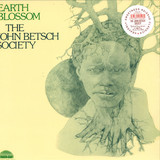
2024 Repress
180 Gram, Tip On Sleeve RSD version of this classic. One of the rarer records of the mythical Strata East albums is finally reissued for the first time on Heavenly Sweetness!
The recording of Earth Blossom, the John Betsch Societys one and only album, seems something of an enigma nowadays. For even though Nashville is clearly one of the towns in the US with the highest number of recording studios, who would have thought that the capital of country music would give birth to one of the forgotten masterpieces of 1970s spiritual jazz. The path leading to the album starts in 1963 when John Betsch, originally from Jacksonville in Florida, arrives in Nashville to study at Frisk University. He is a young drummer and joins Bob Holmes trio. Holmes is one of the towns major jazz organists and pianists; he becomes Betschs mentor and, over the space of two years, John will play alternately with him and with the trumpeter Louis Smiths group. However, in 1965, John leaves town to go to the prestigious Berkeley University in Boston and do a two-year course along with his fellow debutants with names like John Abercrombie, Ernie Watts and Alan Broadbent. Two years later, he is invited by a pianist friend, Billy Chilf, to join the legendary singer/songwriter Tim Hardins group. Just after Woodstock, John Betsch and Tim record a psychedelic album Columbia will never release together with the members of the future group Oregon: Colin Walcott, Glen Moore, Paul McCandles and his friend Billy Chilf. But he soon leaves this group to return to Nashville where he hooks up again with his friend Bob Holmes. Two years later, he is accepted on Archie Shepp and Max Roachs famous course at the University of Massachusetts Amherst (UMASS) and for the next four years he participates in this collective of intellectuals and musicians under the aegis of the two masters.
During this period he returns to Nashville to form his Society whose music is obviously influenced by the Afrocentric ideas of the UMASS student and political movement. However, the album, recorded in one day and in one take, also bears the hallmark of their generations psychedelic experiences, and in the themes and playing of the musicians we can hear a less violent form of music than the radical free jazz of New York or Chicago. Nature and environmental themes are the inspiration behind tracks touched by the spirit of Coltrane but also of Flower Power.
After Amherst, John Betsch joins Marion Browns group in 1976, leaves Tennessee for good and makes his home in New York over the next ten years or so. He plays and records with Dollar Brand, Kalaparusha Maurice McIntyre and many others, before heading off to France. He has lived in Paris for the last twenty years and played in Steve Lacy, Mal Waldron and Archie Shepp bands, as well as forming groups of his own. He now lives in Paris and plays with many musicians/bands.
Commandez maintenant et nous commanderons l'article pour vous chez notre fournisseur.

BBE Music is thrilled to present J Jazz: Free and Modern Jazz From Japan 1954-1988, a
remarkable large-format book covering some of the deepest, rarest, and most innovative
jazz music released anywhere in the post-war era. Compiled by Tony Higgins and Mike
Peden, co-curators of BBE Music's acclaimed J Jazz Masterclass Series, the book also
features a foreword by Japanese jazz icon, Terumasa Hino.
This is the first time a book of this type has been published outside of Japan and the first
anywhere of this size and scale. It is a unique collection of over 500 albums of free and
modern jazz released in Japan during a period of radical transformation and constant
reinvention. An era that saw Japan return from the ravages of World War Two to become a
global economic power and emerge as both a technological leader and an international
cultural force.
Through a unique gallery of albums, J Jazz charts the development of jazz in Japan from the
first stirrings of the modern jazz scene in the mid to late 1950s and on through the hard bop
and modal jazz of the 1960s. It steers the reader into the radical directions of the 1970s when
free jazz, fusion, post-bop, and jazz-funk opened up a growing number of Japanese jazz
artists to a new global audience before consolidating in the mid to late 1980s with a musical
scene that laid the path for the contemporary jazz generation to follow.
Over 500 full-colour sleeves from many of the leading names in Japanese jazz sit alongside
rare and private pressings that tell a story of constant change and musical exploration. J
Jazz includes profiles of several leading record labels such as East Wind, Frasco, King
Records, and Nippon Columbia as well as critical independents such as Three Blind Mice,
ALM, and Aketa’s Disk.
J Jazz includes interviews with celebrated jazz photographer Tadayuki Naito, and pianist
Tohru Aizawa, bandleader on the totemic spiritual jazz album, Tachibana Vol 1, as well as
free-jazz record collector and jazz musician Mats Gustafsson.
The book also features a chapter on albums by non-Japanese artists that only received a
Japanese release, with collectible, rare, and obscure releases by figures such as Herbie
Hancock, Miles Davis, Mal Waldron, Steve Lacy, and Art Blakey. J Jazz includes Japanese
jazz charts from some of the world's leading jazz DJs including Gilles Peterson, Toshio
Matsuura, Paul Murphy, and Shuya and Yoshihiro Okino. Among the specialist content is a
feature on obi strips by record dealer and Japanese jazz expert, Yusuke Ogawa, plus a
special article on Japanese Blue Note albums.
Across its 300-plus pages, J Jazz includes a detailed introduction contextualising the music,
tracing the story of Japan's fascination with jazz back before the war. It also features
biographical information on many of the key artists involved in shaping the post-war
Japanese jazz scene including Sadao Watanabe, Toshiko Akiyoshi, Masabumi Kikuchi,
Masahiko Togashi, Terumasa Hino, Yosuke Yamashita, Fumio Itabashi, Masayuki
Takayanagi, Takeo Moriyama, Isao Suzuki, and many more
il devrait être publié sur 31.05.2024

A Bad Diana is a project from Diana Rogerson, someone I first became aware of aged 12 when I read about Nurse With Wound and their United Dairies label in Smash Hits magazine. I was confused, mystified and intrigued in equal measure, and a couple of years later as a result I bought my first Nurse With Wound album. This led to an interest in all things NWW related. I guess Diana could be described as the matriarch of the Nurse With Wound world but she also had her own very distinguished pre-history with Fistfuck, an early-80s extreme noise outfit. She then made two mid 80s cult classic albums as Chrystal Belle Scrodd, both far out there rollercoaster rides of audio wildness, highly recommended to anyone with wide open ears. She then moved to rural Ireland and raised a family. There was the odd collaboration and then in 2007 A Bad Diana’s “The Lights Are On But No-One’s Home” was released on CD. I feel this is her meisterwerk and it has become something of a cult favourite over the years. Now for the first time, almost two decades later it is available on vinyl on Optimo Music Archiv. Produced in association with Steven Stapleton and Colin Potter from Nurse With Wound and irr. app. (ext.)’s Matt Waldron this is some seriously beautiful and strange listening. Next level sound design means this is an incredible headphone record but it is also a deeply warm and engaging home listening gem. Beautiful, magical, ultra hypno, soulful reverberations with the deep emotion of Diana’s voice tones and bio-vibrations.
Commandez maintenant et nous commanderons l'article pour vous chez notre fournisseur.

A private press rarity that few know of, ‘Song of Island’ was the third album from pianist Yasuhiro Kohno’s trio, recorded live at the jazz club and live house (gig venue) ‘Again’ in August 1985. Pressed up in small numbers, ‘Song for Island’ was issued on the private ASCAP Records, set up by pianist and band leader Yasuhiro Kohno. The album is a follow up to Kohno-san’s previous two albums, ‘Peace’ and ‘Roma in the Rain’, released on the cult Aketa’s Disk label. However, unlike the ‘Peace’ and ‘Roma in the Rain’ albums, ‘Song of Island’ has never been reissued before – until now. The title track was included on J Jazz volume 3. This is a very special album that captures a special time in Japanese jazz, when exemplary acoustic jazz was still being performed and recorded by dedicated and talented artists at the height of mid-80s synth pop. ‘Song of Island’ features four original compositions by Yasuhiro Kohno plus a distinctive take on a jazz standard. Yasuhiro Kohno was born in Nara, southern Japan, in 1953 and made his professional debut as a member of Japanese rocker Eikichi Yazawa's band before going on to accompany actor/singer Masatoshi Nakamura. As well as recording and performing under his own name, Kohno has also played with American musicians such as Richard Davis and Mal Waldron and continues to perform regularly in Japan. ‘Song of Island’ will be issued as a full reproduction of the original work, with inserts, translated original sleeve notes, plus new sleeve notes, photos, and interview with Yasuhiro Kohno by Tony Higgins.
il devrait être publié sur 18.11.2022

Abbey Lincoln's distinctive vocal style, thought-provoking writing, and spirited personality has secured her a place among the jazz greats. Though she made her first recording for Riverside, and later in life for Verve, it was with the young and audacious Candid Records that she made her biggest musical statement, 1961's Straight Ahead. Straight Ahead is one of Abbey Lincoln's greatest and most important recordings. A testament to her credibility and talents, the section on this album includes saxophone giant Colman Hawkins, the great Eric Dolphy on flute alto, trumpeter Booker Little, pianist Mal Waldron and the iconic drummer Max Roach.
il devrait être publié sur 29.04.2022

The variety of Kühn’s pianism in this collection is
quite remarkable.
The listener is first welcomed into the inviting,
comforting and regular pulse of Mal Waldron’s
‘Warm Canto’. And yet later, by complete contrast,
Kühn’s own composition ‘Sintra’ gives a
masterclass in freedom, delay and the alchemical
art of keeping the listener waiting on tenterhooks.
Prince’s ‘Purple Rain’ is achingly soulful, whereas
Kühn found the encouragement to revisit Bill
Evans’ ‘Peace Piece’ from the dignity and restraint
of classical pianist Igor Levit’s version.
LP pressed on 180g vinyl.
il devrait être publié sur 05.03.2021

Abbey Lincoln, often remembered for her seminal work with Max Roach, was a powerful performer and indeed one of the greatest Jazz voices of all time. "Straight Ahead" stands as one her best albums. Lincoln is matched here by a ultra-stellar line up including Jazz masters such as Booker Little — trumpet, Julian Priester — trombone Eric Dolphy — alto saxophone, bass clarinet, flute, Walter Benton and Coleman Hawkins — tenor saxophone, Mal Waldron — piano, Art Davis — bass, Max Roach — drums, Roger Sanders and Robert Whitley — congas. "Straight Ahead" is the perfect combination between Lincoln 's strong "Afro-Blue" tone singing, conscious lyrics and angular modern Jazz arrangements. Recorded in New York in a one-off studio session held on February 22, 1961 and released by Candid Records in the same year, the album includes highlights such as Oscar Brown jr's "When Malindy Sings", Thelonious Monk's "Blue Monk", Billie Holiday and Mal Waldron's "Left Alone" and "African Lady" a Randy Weston composition based on lyrics by the great writer Langston Hughes.
il devrait être publié sur 22.01.2021

Until Now, All Is Well is the latest track to be shared by The Nix, a loose collection of uniquely talented musicians corralled together by Nick McCarthy (ex Franz Ferdinand) and Seb Kellig around their Sausage Studio in east London.
Based around the original composition ‘Warm Canto’ by Mal Waldron, the track features founding member of the avant-pop band Stereolab Laetitia Sadier.
Out on Moshi Moshi Records, Seb of The Nix said about the making of the track:
A night at Sausage Studios and nothing falls into place...we talk, we laugh, we mess about. But the 'record' button remains un-hit.
Time is not on our side, we need inspiration, and we know where to find it:
We saddle our bikes and ride into the mild London night. Down to Homerton, along the Canal, passing Springfield, we end up in Tottenham.
The mighty Jah Shaka tears the place apart. Low ceilings, the place is filled with smoke and bass. One love, unity, another version....the mids, the tweeters - in perfect harmony. Familiar riddims, unknown dubs. Shaka on the wire.
We get back to Sausage as the sun rises. Our senses are numb. We can't hear, don't want to see, how good it feels not to be guided by ears but by the heart. We close the curtains and plug in.
Commandez maintenant et nous commanderons l'article pour vous chez notre fournisseur.
