“After a banner year that witnessed Lafawndah release her first album Ancestor Boy, the debut of her soundsystem Fara Fara, and further incursions into film, contemporary art and fashion, the ceaseless artist returns with another plot twist: The Fifth Season.
Inspired by her encounter with author NK Jemisin’s Broken Earth trilogy, Lafawndah both pays homage to and extends further the elemental, emotionally charged myths of Jemisin’s books. These are stories where a broken heart can tear apart a continent. In contrast to the precision- tuned industrial productions of Ancestor Boy, The Fifth Season breathes a different kind of volatility. Inviting a new degree of spontaneity and freedom into her process, Lafawndah’s collaborators - Theon Cross (tuba), Nathaniel Cross (trombone), Valentina Magaletti (percussions), and Nick Weiss (keyboards) - encircle her confrontational character studies with iridescent, cinematic chamber-bass moves.
These are torch songs for when it rains ash, creation ballads for when the earth turns inside out. Ghosts of Art Ensemble of Chicago and Rahsaan Roland Kirk color the air, yet Lafawndah’s mastery of pop songcraft, vocal production and razor-honed clarity of purpose cut through. In addition to the Lafawndah originals, The Fifth Season features interpretations of hybrid-folk godfather Beverly Glenn Copeland’s “Don’t Despair” and acid-impressionist prodigy Lili Boulanger’s “Old Buddhist Prayer.” Album highlight “You, at the End” deploys a poem by poet-performer Kae Tempest to aching, rift-tearing ends, and french dream-trap wraith Lala &ce features on “Le Malentendu”.
The Fifth Season anchors Lafawndah as a descendent of forebearers Brigitte Fontaine and Scott Walker - a born theatric whose acid humor warps the sub-continental undertow of her emotive storytelling. Lafawndah’s elementalism on The Fifth Season finds her imagination more agile than ever, and recent live shows have evinced a drive to push these compositions further out, deeper, and more aflame.”
Buscar:walk
- A1: L'aventurier (Feat Helena Noguerra & Louis Ronan Choisy)
- A2: Putain Putain (Feat Camille)
- A3: Marcia Balla (Feat Adrienne Pauly)
- A4: Sandy Sandy (Feat Soko)
- A5: Ou Veux-Tu Qu'je R'garde (Feat Emily Loizeau)
- A6: Two People In A Room (Feat Cocoon)
- A7: Dereglee (Feat Melanie Pain)
- A8: Oublions L'amerique (Feat Nadeah Miranda)
- B1: Voila Les Anges (Feat Coeur De Pirate)
- B2: Week-End A Rome (Feat Vanessa Paradis)
- B3: Mala Vida (Feat Olivia Ruiz)
- B4: Anne Cherchait L'amour (Feat Julien Dore)
- B5: Ophelie (Feat Yelle)
- B6: Amoureux Solitaires (Feat Hugh Coltman)
- B7: So Young But So Cold (Feat Charlie Winston)
- B8: Je Suis Deja Parti (Feat Coralie Clement)
The 80s owed everything to the punk revolution ... and betrayed it time and again.
ln 76-77, the incredible explosion of English-speaking bands focused the energies of a whole generation of Western youth - rebels ready to pick up a guitar and use it like a weapon. Yet more than punk music itself, it was the creative burst it triggered that radically shaped 80s pop and heralded an unending stream of inspired performers.
Although we often speak of the British and American golden age of post-punk from 78 to 84, with artists that included Talking Heads, Joy Division, PIL and Devo, France (together with Switzerland and Belgium) joined the movement too. Today, on a new album, the group Nouvelle Vague have paid tribute to this sumptuous "Frenchy" period clothed in the nihilism of punk, along with bitterness fuelled by the economic crisis and, paradoxically, the bewitching spirit of pop.
lts title, Couleurs sur Paris (Colours on Paris) is based on both a famous postcard collection and Oberkampf's 1981 punk anthem, and reflects the period, which oscillated between elation and despair. Written by artists sometimes known as "the modern young people" and including faux naïf electropop nursery rhymes by Elli & Jacno ("Anne cherchait l'amour", 1979), Lio ("Amoureux solitaires" , 1980)
and Etienne Daho ("Week-end à Rome", 1984), along with Lili Drop ("Sur ma mob", 1979) and Taxi Girl ("Je suis déjà parti", 1986), the songs clearly express the hopes and disappointments of the day.
The sense of melancholy suggested by the disenchanted lyrics of "Déréglée" - performed in 1977 by Marie-France, an icon of Paris nightlife - is even more noticeable on the 1981 hit by The Civils, who cynically sang, "Tonight, they're dying in Chad, but l'm buying my dream Walkman" before taking it to the chorus: "The economic crisis is fantastic, decadence is the right feel".
The punk shockwave con also be felt in the music of bands who radically shaped French culture and song. Like Rouen, with Les Dogs ("Sandy, Sandy", 1982), every provincial town and city in France began to produce bands at the end of the 70s and the start of the 80s. Wunderbach's 1983 punk pamphlet "Oublions l'Amérique" was a foretaste of what is now called alternative punk, a genre that won acclaim in 1988 with Mano Negra's "Mala Vida". Indochine, French pop legends for the last thirty years, also encouraged the trend in the summer of 1983 with "L'aventurier", after a first single brimming with the spirit of rebellion, "Dizzidence Politik".
Rita Mitsouko, the duo that emerged from the underground Parisian punk scene of the late 70s, rocketed to stardom in 1984 with "Marcia Baïla". Equally baroque, TC Matic - the first band fronted by Belgian singer Arno - released an ironic, political underground hit in 1983: "Putain, putain". Other artists fuelled a post-punk movement that explored the romanticism of machines and the darkness of new wave, including the cult, much-neglected duo from Nancy, Kas Product ("So Young but so Cold", 1982) and Switzerland's Stephan Eicher, whose "Two People ln A Room" (1985) followed on from "Eisbaer", a hit in a more underground style written with Grauzone in 1981. However, the genre's most influential practitioners were certainly Noir Désir. From their first single in 1987 ("Où veux-tu qu' je r'garde?"), they won mainstream success with their unique fusion of 80s gloom and power rock. Beyond from the meteoric success of Bordeaux's Gamine ("Voilà les anges", 1988) and the subversive spirit of Jad Wio ("Ophélie", 1989), French post-punk reached its climax with the success of Noir Désir, Rita Mitsouko, Stephan Eicher and Manu Chao, whose albums reigned supreme in the 90s French charts. From the underground scene to gold records: the eternal story of pop.
Triangulating a slinky signal to a square mile off the Swan River, Glowing Pin bring us ‘Pentagon Palette’, a master blast of frequency adjusted house, swamp stomp and chakra charmers from Australian newcomer Jonus Eric.
Though opening brace ‘The Cult’ and ‘Collect’ made first contact back in 2014, a loose connection between Perth and Hamburg hindered progress before ‘Mirrors’, ‘Emulator’ and ‘Waterfall’ walked across the web in 2019 to round out a dope debut release from this house auteur. Specialising in mind altering sound design and melodic flair, Jonus generates a neon swamp on ‘The Cult’, serving up a psychoactive roller caked in radioactive fuzz and insectile fizz. Thick bass swells and circular marimba make for a hypnotic rhythm, while a shapeshifting vocal and moody keyboard riff drag us back towards terra firma. The paradisiac refrain of ‘Collect’ soon sounds out through the jungle with a euphoric haze,
its sub-tickling bass and acid gurgle riding hyperactive drum programming as the track warps in the humidity. Soaked in serotonin and brisk at 137 BPM, ‘Mirrors’ burns off the mist to offer an airy update on the French Touch template. Though frazzled circuitry and dislocated vox serve this one with a twist, the chiming pianos and bouncy beat are still best enjoyed in a Golf GTI in the summertime. Jonus reaches for the lasers via the restless rhythm and rave sirens of ‘Emulator’, a fresh take on the funky house of the late nineties updated with unexpected breaks, squealing feedback and treated vocals usually found on a Four Set banger.
Next it’s off to the chillout room for ‘Waterfalls’, a fourth-world tone poem describing crystal caves, undiscovered wildlife and a holographic waterfall. Ditching the doof, and letting those colours tesselate, Jonus offers a +2 bump to your mana, before the post punk bassline, growling EBM vocal and off key organs of ‘YR Mind’ combine for a confrontational bonus track, only available in digital format.
A new colossal star rises in the twilight of funky soul jazz as Ernie Hawks releases his debut album "Scorpio Man" on Timmion Records. The impressive trombonist/flutist, is known to hold no punches, when performing live in the ranks of The Soul Investigators. Here he delivers a fierce selection of S.O.U.L. and Cymande flavored instrumentals that also bring to mind some of the finest sample-fodder library music.
The album's name, "Scorpio Man" might come from the stinging and slightly intimidating style Hawks handles the trombone slide, known to pierce the hearts and souls of the ladies in the front row during his live performances. On this album, Ernie rides to battle equipped only with the flute, but this does not mean we will be exposed to some smooth jazz snooze fest. Rather Ernie handles his instrument with muscular rawness at times and moody ambiance at others, sliding with ease into any groove that the extended Soul Investigators band lays down.
"Scorpio Man" is no one trick pony, and the listener will be shifted around from the exhilarating psych funk of "Scorpio Walk" all the way to the airy moods of "Street of Tears". Take a chance with the Scorpio Man, his sting will give you a funky high much better than what they sell in the streets.
THE KILIMANJARO DARKJAZZ ENSEMBLE are a project which has always been tied to films. Films are luxurious because they dispose of all these boring, unimportant, and trivial parts of our lives. This allows them to fully control our sensations, to put us in a very specific mood. Joy and sadness are occasionally OK, endless joy or endless sadness are clinical. But there is one sensation which can be persistent and unconditionally bearable at the same time. In the absence of a better alternative, let's call it "the mood". The mood is what TKDE are aiming at. The mood.
The mood is infinite and illimitable, but not uniform and unique. On "From The Stairwell", TKDE deliver eight new incarnations of the mood. Stairwells have always been intriguing. They appear to unavoidably lead you to your destination, but they only disclose the path bit by bit. What lies far ahead of you and far beyond you is hidden in the shadows. The stairwell could just as well be infinite. You climb up this murky stairwell, passing by many doors. Every door contains a variation of the mood, a short film, a song. You open the first one, "All Is One". The evaporating mist discloses a large and empty room with a barstool in the middle. On the barstool, a chanteuse from the roaring twenties. Her voice starts to trigger vibrations of the ground, the walls start spiralling around her, but she remains untouched in the eye of the storm. Second room, "Giallo". Sly guy, telling smile, nice suit. Walking down the streets in the dusk. The ambience starts to get out of phase, the guy stumbles in horror while blending with the surrounding to a brown soup. Fourth room. "Cocaine". Naked people with pig heads crawl on the floor, on the walls, on the ceiling. They try to hopelessly suck up the white dust which covers every single piece of this room and is constantly spit out by tubes coming out of the walls. Dissonant sounds accompany the work of this desperate hive. As the people manage to counteract the tubes, fragile melodies start to overpower the dissonances. Sixth room, "Cotard Delusion". Baby morphing into a black fluid morphing into an old man which turns his eyes inwards and finds his inside to be completely empty. The journey up the stairwell, down the stairwell, continues. The pictures fill your head and make you forget where you wanted to go in the first place.
"From The Stairwell" is a surprise and a logical step at the same time. It is a surprise because the songs are far less beat-driven in comparison to TKDE's earlier works, and even contain a few hopeful tints here and there. It is a logical step because in the end each song turns to have a very diverse dramaturgic flow. This could raise the conjecture that TKDE, initially started out to make music for existing and non-existing films, wanted to incorporate the audiovisual impression completely into songs, making the films superfluous. At times, "From The Stairwell" makes you think of 60's soundtracks, but the organic feeling of those is always interwoven with mechanical elements. Altogether, every single of the numerous details present in TKDE's new songs feels to be at the right place and you can either just dive into the mood or pick one of the many aspects and enjoy it on its own - be it Gideon Kiers' beats & fx, Jason Köhnen's bass & piano, Hilary Jeffery's trombone, Charlotte Cegarra's voice & piano, Eelco Bosman's guitar, Nina Hitz' cello, Sarah Anderson's violin, or - appearing as guest musicians - Eiríkur Óli Ólafsson's trumpet and Coen Kaldeway's saxophone & bass clarinet.
- A1: Two Mics (Feat Missing)
- A2: Back & Forth (Feat Spy)
- A3: Fix It All (Feat London Elektricity)
- A4: Burn (Feat Nu Tone & Terri Walker)
- B1: Highrise Fm (Feat Calibre)
- B2: Get Down (Feat Dj Zinc)
- B3: Brothers (Feat Unglued)
- B4: Tectonic Plates (Feat Diemantle)
- C1: Still Beautiful (Feat Keeno & Obsel)
- C2: A Song For You (Feat Dj Marky)
- C3: Joint Venture (Feat Calibre)
- C4: Gullyman Skank (Feat Chimpo)
- D1: Playing In The Dark (Feat The Vanguard Projecy)
- D2: Adoration (Feat Lsb)
- D3: Not The Fake Ones (Feat Roni Size)
- D4: Do You Ever (Feat Etherwood)
These two pivotal figures, who have stood at the forefront of drum & bass for over two decades, have now teamed up with an array of globally respected producers including Calibre, Roni Size, Nu:Tone, S.P.Y, DJ Zinc, Chimpo and DJ Marky, to create an uncharted 16-track LP. Following on from the success of the pair's first single 'Fix It All (feat. London Elektricity)', sit back and get ready to embark on the lyrical journey of a lifetime.
DRS first came across Dynamite during his time in Roni Size's Bristol collective Reprazent, the winners of the 1997 Mercury Prize 'Album Of The Year', now showing full circle movements in 2020. 'Playing In The Dark' pays respect to this collaboration and the combination of styles which is signalled so clearly throughout DRS and Dynamite's sound. As Dynamite explains that "the producers brought their pallets" for himself and DRS "to paint on", the duo were able to convey their message, history and wisdom in one of the most boundary pushing
projects that drum & bass has seen.
ALTER is proud to present ‘Tendrils’, the first LP release from London based artist & musician Malvern Brume. After gathering some hushed praise from the UK underground for a couple of excellent cassette releases and strong local live performances, ‘Tendrils’ is the first definitive document of the Malvern Brume sound world. His instrumentation and sound sources would be considered familiar staples in the world of “experimental” music, but Salter does an admirable job of making them his own. Comprised of 8 pieces, this is electronic music at its core but a kind that sounds as if it’s being played through fog. Like spores growing on a damp surface. Densely composed and thick with an almost asphyxiating atmosphere - even during the record’s more minimal moments - track titles like ‘Caught In The Exhaust Trails’ and ‘Sunk Into Plastics’ only heighten the tone further.
Salter was originally born in the countryside and since relocated to London, a place he finds “over stimulating in every sense”. Much of ‘Tendrils’ could be taken as a response to the city and a means of equating the two. Camberwell is listed as the location for composition, but field recordings are attributed to rural landmarks. The Rollright Stones on the Oxfordshire / Warwickshire border and Seven Sisters Cliffs by the English Channel are two in case, but despite their picturesque origins Salter renders them into abstract clatter. As if dubbed from the private tape archive of an old eccentric. In addition, synthesised electronic tones hum and buzz, occasionally giving away to strange, slurring sequences that sound like lost transmissions from the radiophonic workshop. Despite the nod to this electronic music institution, it’s lacking the sincere level of esteem that can turn one into a heritage act. There is a strangeness and distant other worldliness to the music that feels unselfconscious and keeps Malvern Brume from being easy to define by contemporary terms.
Salter says the album is defined by movement and the environments that have inspired him over the years. In his own words, “each of these tracks is inspired by a journey or moving through a space, not in a wishy-washy cosmic sense but more as a practical A to B.” With that in mind, ‘Tendrils’ is perfect music for solitary inner-city marshland walks and urban bike rides to forgotten local suburbs.
Buena Onda - Balearic Beats is a lovingly compiled collection of exciting music from the new Balearic generation that captures the essence and eclecticism of their Berlin party oasis, Buena Onda. It takes in 12 tracks of fast and slow, acid and downtempo, lush and dreamy sounds to transport you to a place of beauty, warmth and soul. It has been compiled by Hell Yeah label boss Marco with Buena Onda 's resident DJ and co-owner Gallo, and arrives later this summer as a 12" sampler, limited cassette, download, stream and original t-shirt. This first sampler features four tracks from it with artists Lucas Croon, Sergio Messina & The Four Twenties, Gallo, and Black Spuma all featuring.
First Up, Lucas Croon takes us on an epic 10 minute trip with his head-in-the-clouds sounds, long legged drums and summery pad work. Next, Sergio Messina & The Four Twenties mix vocodered vocals with lush acoustics on the dreamy 'Fly Away' while on the flip, Gallo's Tropical Hinterhof Remix of J-Walk layers up lush chords with new age hand drums and synth gorgeousness that is soothing and cleansing. Last of all, Phillip Lauer and Fabrizio Mammarella aka Black Spuma's mid tempo drums sink you into a groove that is embellished with heavenly chords and plenty of oceanic breezes all carrying you away. This is a fine taster of the full length compilation to come.
Eric D. Clark
"Written in approximately 1996 or shortly thereafter & born of a night out on the town naturally!
...having been to hear Ranga Tikki (Ms. Codi from New Zealand) drop knowledge in Berlin's SO36: she'd
played the "I have a dream" speech orated by Martin Luther King;
...the mind stopped at "From every Mountain Top"! I walked back through the streets shouting that to myself
until entering the flat then started immediately on the song!
Written and produced: ERiC D. ClARk
publisher: SUBCURRENT Music lTd.
Hans Nieswandt:
Between 1996 and 2000 (and in some cases beyond), Cologne project Whirlpool Productions produced a lot
of music, both as a group and as solo artists, at the legendary Can Studio in Weilerswist, a small town about
20 kilometres south of Cologne. Much of this music has been released, most notable the international
classic „From: Disco To:Disco“; but some of the music never saw the light of day. These two tracks I
produced myself at some point shortly after my first solo album „Lazer Muzik“ and I’m super glad to get a
chance to finally release them - because there is the important cause of helping to save the Paloma Bar, a
place where I played times and always loved it - an experience I dearly hope to repeat many times more.
And because I always liked those two tracks a lot, they just never found their proper platform, for whatever
reasons. As I think they are quite fitting to the sound of the Paloma, I’m more than happy to support this
unique place with this humble contribution. Written and produced by Hans Nieswandt around 20 years ago
at Can Studio, Weilerswist. Original date unknown.
Lowtec & Marvin Dash:
"Es gibt ein paar Lieblingsclubs in Deutschland, kleine Clubs wie z.B. Paloma in Berlin oder Pudel in HH -
wo es nur um die pure Liebe zur Musik geht - wo keine Kompromisse eingegangen werden müssen in
Bezug auf Trackauswahl oder zu deepen Sets, weil das Publikum einfach versteht worum es geht.
Sozusagen das verlängerte Wohnzimmer... Bei gefühlt jeder 2. Platte fragt jemand nach einer Track ID, alle
paar Minuten bringt jemand etwas zu trinken...das wollen wir unterstützen." (Lowtec & Marvin Dash)
Marvin Dash – Lost in the Woods: Written and produced by Ronald Reuter in around 2010. Previously
unreleased.
Lowtec – Museum Of Natural History Of Life: Written & produced by Jens Kuhn, 2000. Previously
unreleased.
New album of one of the biggest Reggae/Dub french soundsystem starring MacGyver, Rooty Step & Pupajim (who worked with Alpha Steppa, Biga Ranx, High Tone, Mungo's Hi-Fi ...).
Available as super limited edition including 60x60cm Poster !
Since their inception at start of the 2000s, Stand High Patrol have rocked sound systems to their own riddim, assimilating and re-purposing the codes of the genre in their own unique style. From tiny bars in Brittany to huge festival stages, on independent radio or across national airwaves, the crew have quietly trod their own path, never compromising their core value of independence. Connoisseurs have long recognised Stand High’s credentials both as a dub group and a leading sound system, but they stand out from the crowd because of their ability to deliver the unexpected, whether live or on record. Their ability to draw such a diverse audience is testament to this atypical approach to making music.
In 2020, almost 20 years since their humble beginnings, the collective presents their fifth album, “Our Own Way”. As with their first two albums “Midnight Walkers” and “Matter Of Scale”, now considered as classics in their genre, this new opus asserts itself as the latest representation of the crew’s versatile approach to crafting sound. Their music, a blend of its own known as “Dubadub”, has always borrowed influences from multiple sources, and over the course of their career their roots in dub and reggae have intertwined with hip-hop, jazz, new wave, trip-hop and numerous other genres. The ‘Dubadub Musketeers’ have never ceased experimenting, forever seeking to increase the sonic territory they cover, day after day. Both live and recorded, they’ve made it a point of honour to never offer up the same thing twice. Any resemblance that “Our Own Way” might bear to those first two albums is a consequence of this obvious creative continuity, rather than of going “back to basics”.
In contrast to the last two Stand High Patrol records, the hip-hop inspired “The Shift”, or the Bristol indebted “Summer On Mars”, “Our Own Way” doesn’t have a unifying concept or theme. Rather than being limited to a single aesthetic, the LP pays respect to the entire canon of Jamaican music, all unified under Stand High’s inimitable production values. With the wealth of experience gained during the recording of their last two records, the collective decided to aim for a freer project, letting themselves be guided by their own music and their own instincts. The end result is a musical portrait of what Stand High Patrol is in the present moment.
The tracks that make up the new LP burst out of the studio, each born out of unbridled, impulsive creativity. Previously unheard compositions and specially re-tooled dub plates have been assembled into a tracklist that shifts and moves like a classic Dubadub Musketeer live set. Each step of the process has been refined by years of practice : composition, effects, and the final mix. Throughout “On Our Way”, the brutal dub stepper, though still a favourite for sound system sessions, is noticeable by its absence. Instead, it’s the full weight of the crew’s reggae heritage that’s expressed in the mix. It's not just the depth and weight of each tune that strikes the listener, but also the spaces heard between the notes that grab and hold their attention.. The sense of a trip, whether musical, internal or geographic, is omnipresent throughout the LP, linking each track to those before and after. “Our Own Way” finds Stand High Patrol exploring as usual, yet also narrating their journey as they’ve rarely done before
Washed Out is Atlanta-based producer/songwriter/multi-instrumentalist Ernest Greene. Over three enchanting, critically-lauded albums and an EP, his music has proved both transportive and visual, each release inviting listeners into immersive, self-contained universes. With Purple Noon, his fourth album, and his return to Sub Pop, he delivers the most accessible Washed Out creation to date. Life of Leisure, Washed Out's 2009 debut EP, set the bar for the Chillwave era, shimmering in a warm haze of off-the-cuff Polaroids and pre-IG filters. Within and Without, his 2011 full-length debut on Sub Pop, morphed into nocturnal, icy synth-pop and embraced provocative imagery. 2013's Paracosm was Greene's take on psychedelia, with a full live band and kaleidoscopic light show, and saw him playing to the largest audiences of his career. The sample-heavy Mister Mellow (2017, Stone's Throw) delivered a 360 audio/visual experience, with cut-n-paste and hand-drawn animation to match the hip-hop influences throughout the album. With each release, Greene has approached his evolving project with meticulous detail and a steadfast vision. For Purple Noon, Greene again wrote, recorded, and produced the entirety of the album, with mixing handled by frequent collaborator Ben H. Allen (Paracosm, Within and Without). Production of the album followed a brief stint of writing for other artists (most notably Sudan Archives) which enabled Greene to explore genres like R&B and modern pop. These brighter, more robust sounds made their way into the songs of Purple Noon and mark a new chapter for Greene as a producer and songwriter. The vocals are front and center, tempos are slower, beats bolder, and there's a more comprehensive depth of dynamics. One can hear the luxuriousness of Sade, the sonic bombast of Phil Collins, and the lush atmosphere of the great Balearic beat classics. Mediterranean coastlines inspired Purple Noon, and Greene pays tribute to the region's distinct island culture - all rugged elegance and old-world charm - and uses it as a backdrop to tell stories of passion, love, and loss (Purple Noon's title comes from the 1960 film directed by Rene Clement and based on the novel The Talented Mister Ripley by Patricia Highsmith). Much like romantic Hollywood epics, the melodrama throughout is strong: a serendipitous first meeting in "Too Late"; a passionate love affair in "Paralyzed"; disintegration of a relationship in "Time to Walk Away"; a reunion with a lost love in "Game of Chance." Purple Noon adds a layer of emotional intensity to the escapism of Washed Out's oeuvre, taking the music to dazzling new heights.
Chra is the artist moniker for Austrian Christina Nemec (Bray, Shampoo Boy). SEAMONS is the latest missive in her ongoing exploration of suffocating abstract audio. At once designed and falling apart SEAMONS is rough and crude, a stumbling and staggering electronic expedition where nothing presents itself explicit in intent. It’s a tense obscure record that teases you into it’s peculiar vortex from it’s suggestive nature of exploring the enigma beyond it’s haunted facade.
VICIOUS WATER REGIMES stutters along as an ‘ugly’ mass of grey electronica. CAST(O)RO shines from light from the depths with it’s occasional foray into glistening tones. COLONIA MARINA SERENELLA is a dank squelching backdrop for a dark age. CAST twists tension with flickering electronics chaotic in their perpetual design of order confronting inevitable collapse. LET SHARKS SLEEP is not only a great title but a mind tickling adventure of descending/rising digital dance that builds in intensity with it's relentless repetition. WIDOW WALKS gallops and creaks along a path veiled in whispers. ENGE lunges through time with an air of deep uncertainty. SEAMONS hovers on the outskirts, crawling out of the speakers with endless surprising turns, few of them comfortable.
SEAMONS is progressive ambient, not the kind that makes you escape, but rather one you can't escape from. SEAMONS crawls into the very guts of sound to uncover and unravel the uneasy and unsettling underbelly within.
- A1: For The Dead
- A2: Be My Light, Be My Guide
- A3: I Can't Help Myself
- A4: This Is Not My Crime
- A5: Sleep Well Tonight
- A6: Haunted By You
- B1: London Can You Wait?
- B2: Olympian
- B3: Fighting Fit
- B4: We Could Be Kings
- B5: Where Are They Now?
- B6: Long Sleeves For The Summer
- C1: Speak To Me Someone
- C2: As Good As It Gets
- C3: Fill Her Up
- C4: You'll Never Walk Again
- C5: Stop
- D1: Is It Over?
- D2: Yours For The Taking
- D3: O Lover
- D4: Somewhere In The World
- D5: Let Me Move On
Celebrating the 25th anniversary of their debut album 'Olympian', this is the definitive ‘Best Of’ Gene compilation, available exclusively on vinyl. Compiled by Matt James, Steve Mason and Kevin Miles and featuring 22 tracks, pressed on 2LP 180g heavyweight blue coloured vinyl Featuring fan favourites, plus all of the bands 10 top 40 UK singles including ‘Sleep Well Tonight’, ‘Haunted By You’, ‘Olympian’, ‘For The Dead’, ‘Fighting Fit’, ‘We Could Be Kings’, ‘Where Are They Now?’, ‘Speak To Me Someone’, ‘As Good As It Gets’ and ‘Fill Her Up’
Includes a selection of sleeve notes from the band and respected journalist Keith Cameron Inspired by the songs of The Smiths, The Jam and The Faces, Martin Rossiter’s literate vocals and Steve Mason’s fluid guitar lines were perfectly complemented by the intuitive rhythm section of Kevin Miles and Matt James. Gene released four studio albums and a collection of Bsides and radio demos between 1995 and 2001, and were named Best New Act at the inaugural NME awards in 1995, and went on to score 10 Top 40 hits.
Sublime, unique, sexy and peculiar unreleased scores by electronic and jazz pioneer Ron Geesin, made for the sublime, unique, sexy and peculiar films by maverick director Stephen Dwoskin. There. we’ve said it. And if you have not heard of one or either of these two dudes it doesn’t really matter. Geesin made great music and worked with Pink Floyd. Dwoskin made odd films, most of them are in the BFI permanent collection. They are great and a bit strange.
These superb unreleased soundtracks come from a fascinating, progressive and important period in British film history. They represent an intriguing collaboration between the lively Ron Geesin from Scotland and the American Stephen Dwoskin, who both met in London.
Musically they are minimal, charismatic and quite groundbreaking. Here is the story…
HISTORY:
Steve Dwoskin arrived in London in 1964, aged 25, with several 16mm films in his trunk, shot in the cold-water flats of Greenwich Village. He had been on the fringe of the Factory scene, and some of his films starred Beverly Grant, ‘the queen of the underground’. But they had scarcely been seen, and they didn’t have soundtracks. For almost a year they stayed in the trunk, and stayed silent. Then he met Ron Geesin, somewhere around Portobello Road.
‘Slept last night, completely dressed after working over 12 hours on sound tracks at Ron’s,’ wrote Dwoskin in his diary for 29 July 1965. ‘My films are not anywhere near being anything. I need more energy, more concise and positive ideas and less inhibition. And of course space, money and people.’ Dwoskin, who taught and practised graphic design by day, had recently decided to stay in London beyond the term of the Fulbright scholarship that had brought him there.
Ron, living with Frankie in a basement flat in Elgin Crescent – they would marry the next year, with Dwoskin as best man – was about to leave the Original Downtown Syncopators, the trad jazz band he had joined aged seventeen-and-a-half, and was trying to go solo. On stage he would make vigorous use of piano and banjo; at home Frankie had bought him a new kind of instrument – a tape recorder. ‘Soon I had one tape recorder, two tape recorders, three tape recorders.’
Ron, wrote Dwoskin in his unpublished autobiography, ‘loved to record, and to cut and splice the quarter-inch recording tape to make new sounds. This triggered in me the idea of getting back to my films and finishing them’. Soon he was living in a dank basement in Denbigh Road, a few minutes’ walk from Elgin Crescent. Ron’s soundtracks for Dwoskin’ films, recorded in the Geesins’ flat, encompassed Ron’s very eclectic range of styles – madcap piano and fretted banjo as well as tape manipulation.
Aside from Ron’s soundtracks, some of which belong to films that no longer exist (including Pot Boiler), Frankie would act in one of the films that Dwoskin either lost or never finished during these years. He was disabled, having contracted polio as a child, and Ron and Frankie were both carers and collaborators; Ron had met him when he was struggling into his car.
There was no London equivalent to the underground film scene that Dwoskin had known in New York, and his films remained unseen until such a scene began to come into being, in the autumn of 1966. Some of them made their debut at the Mercury Theatre, near Notting Hill Gate, that September. Dwoskin wrote that Alone, starring Zelda Nelson (from Ron Rice’s Chumlum), and Chinese Checkers, with Beverly Grant and Dwoskin’s friend Joan Adler, went over best.
Soon both Dwoskin and Geesin became involved in the nascent London Film-Makers’ Co-op, which put on screenings in Better Books on Charing Cross Road – ‘if you can call them screenings,’ Ron recalls; ‘I’d call it fifteen blokes in various stages of disarray, peering through the smoke’. One or more of the films had been ‘striped’ with magnetic audiotape; with others ‘we had no means of direct syncing to the picture, so he started the film and I started the tape recorder’.
In the same autumn, Dwoskin moved into a flat almost opposite the Geesins on Elgin Crescent. More collaborations followed, including Naissant, on which Gavin Bryars, whom Geesin had met during a stint on the northern club circuit with novelty act Dr Crock and His Crackpots, played double bass.
Around the end of 1967 Geesin released his first solo LP, A Raise of Eyebrows, and Dwoskin won recognition the Fourth Experimental Film Competition, aka EXPRMNTL 4, an occasional film festival staged at Knokke-le-Zoute in Belgium. By now the films had optical soundtracks.
It was only after this that Dwoskin completed his first ‘British’ films, including Me Myself and I, with Barbara Gladstone, an American dancer who had appeared in Barbara Rubin’s Christmas on Earth, and with whom Dwoskin and Geesin had at one point devised a stage show, never produced. For Moment, a single-shot film, Geesin provided his most experimental score yet. At the time of its debut in 1970, Dwoskin and the Geesins were sharing a house in Ladbroke Grove.
By then, Ron was working with Pink Floyd, and soon afterwards he and Frankie moved out to the country, to be replaced by Bryars both in the house and as Dwoskin’s principal collaborator.
Until now these scores have remained part of the Geesin Archive and have never been issued.
Washed Out is Atlanta-based producer/songwriter/multi-instrumentalist Ernest Greene. Over three enchanting, critically-lauded albums and an EP, his music has proved both transportive and visual, each release inviting listeners into immersive, self-contained universes. With Purple Noon, his fourth album, and his return to Sub Pop, he delivers the most accessible Washed Out creation to date. Life of Leisure, Washed Out's 2009 debut EP, set the bar for the Chillwave era, shimmering in a warm haze of off-the-cuff Polaroids and pre-IG filters. Within and Without, his 2011 full-length debut on Sub Pop, morphed into nocturnal, icy synth-pop and embraced provocative imagery. 2013's Paracosm was Greene's take on psychedelia, with a full live band and kaleidoscopic light show, and saw him playing to the largest audiences of his career. The sample-heavy Mister Mellow (2017, Stone's Throw) delivered a 360 audio/visual experience, with cut-n-paste and hand-drawn animation to match the hip-hop influences throughout the album. With each release, Greene has approached his evolving project with meticulous detail and a steadfast vision. For Purple Noon, Greene again wrote, recorded, and produced the entirety of the album, with mixing handled by frequent collaborator Ben H. Allen (Paracosm, Within and Without). Production of the album followed a brief stint of writing for other artists (most notably Sudan Archives) which enabled Greene to explore genres like R&B and modern pop. These brighter, more robust sounds made their way into the songs of Purple Noon and mark a new chapter for Greene as a producer and songwriter. The vocals are front and center, tempos are slower, beats bolder, and there's a more comprehensive depth of dynamics. One can hear the luxuriousness of Sade, the sonic bombast of Phil Collins, and the lush atmosphere of the great Balearic beat classics. Mediterranean coastlines inspired Purple Noon, and Greene pays tribute to the region's distinct island culture - all rugged elegance and old-world charm - and uses it as a backdrop to tell stories of passion, love, and loss (Purple Noon's title comes from the 1960 film directed by Rene Clement and based on the novel The Talented Mister Ripley by Patricia Highsmith). Much like romantic Hollywood epics, the melodrama throughout is strong: a serendipitous first meeting in "Too Late"; a passionate love affair in "Paralyzed"; disintegration of a relationship in "Time to Walk Away"; a reunion with a lost love in "Game of Chance." Purple Noon adds a layer of emotional intensity to the escapism of Washed Out's oeuvre, taking the music to dazzling new heights.
This first album proper from Polish composer/violinist Olga Wojciechowska was originally released on CD only by Time Released Sound, and has been out of print for some years. We are very pleased to be bringing you this long overdue vinyl re-press, in an edition of only 200 copies, each of which comes in a beautiful 24pt heavyweight jacket, with translucent 180gm disc.
Maps and Mazes is a stunning collection of 10 pieces that were originally written for various international theater and dance productions, and their overall feel reflects this performative nature. These electronically treated, modern-classical beauties are somewhat dark and moody at times, and with their elegiac violin and haunting horns are both elegant and absorbing, and the ultimately lingering effect is one of series of spine tingling, late night serenades.
- A1: Garou Densetsu Title (Neogeo)
- A2: Garou Densetsu Title (Mvs)
- A3: Fatal Fury Title (Neogeo)
- A4: Fatal Fury Title (Mvs) Ver.1
- A5: Three Heads Are Better Than One (Player Select)
- A6: Fight! (Battle Start)
- A7: The Hooligan Of Downtown (Duck King's Theme)
- A8: Haremar Faith Capoeira School - Song Of The Fight Believers Will Be Saved (Richard Meyer's Theme)
- A9: The Sea Knows (Michael Max's Theme)
- A10: Four Thousand Years Of Chinese History (Tung Fu Rue's Theme)
- A11: Results Are Everything (Battle Results)
- A12: Suspicious Guy (Interrim Demo)
- A13: The King Cobra Is Coming (Hwa Jai's Theme)
- A14: The Hero Raiden (Raiden's Theme)
- B1: Let's Start (Bonus Game Start)
- B2: Keep Going Until The Ends Of Hell (Bonus Game Main Bgm)
- B3: You Are Great! (Bonus Game Victory)
- B4: Failure Is The Key To Success (Bonus Game Defeat)
- B5: Hit By A Stick If You Walk Along The Bridge (Billy Kane's Theme)
- B6: Kidnapping (Geese's Subordinates Demo)
- B7: Desperate Awakening (Geese Appearance Demo)
- B8: A Kiss For Geese (Geese Howard's Theme)
- B9: Just A Little Smart Fighting Fellow (2P Battle Bgm)
- B12: I Won't Give Up! (Continue)
- B13: Beyond Despair (Game Over)
- B14: Enter Your Name (Battle Records Display)
- B15: Fatal Fury Title (Mvs) Ver. 2
- B16: The Hero Raiden -Rof Arrange Ver
- B10: In The Shadows Of Victory (Victory Demo)
- B11: If You Gaze At Reality (Ending)
SNK, Brave Wave Productions and Limited Run Games are proud to reveal their fifth collaboration, Generation Series 012: Fatal Fury for both CD and vinyl. Known as Garou Densetsu (餓狼伝説) in Japan and originally released for NEOGEO in 1991, Fatal Fury is one of SNK’s earliest, but also most popular 2D fighting games. The soundtrack, composed by TARKUN (Toshikazu Tanaka), features catchy and exciting tunes for each character in the iconic SNK fighters lineup.
This release marks the first time the soundtrack of Fatal Fury will be made available on vinyl. As with all Generation Series and other Brave Wave releases, this release will be remastered specially for vinyl, CD and digital (via a free download code included with the vinyl edition) and restored to the highest possible quality. The rest of the package will include our usual offerings, including high-resolution artwork and liner notes contained in a full-color booklet.
As a special bonus, Side B of the vinyl (the final track on the CD) will contain the track The Hero Raiden -ROF Arrange ver.-, which was originally featured in the 2015 mobile title The Rhythm of Fighters. The bonus track, an arrangement of the original song from Fatal Fury, was composed by TARKUN.
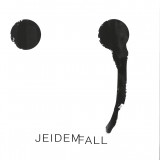
The man in the crowd is a wonderer with relaxed habits. In him the course of things and movement of the city is reproduced. The Düsseldorfer Detlef Weinrich is such a man in the crows. Some one who is constantly listening to future winds through rushes of the past. He loves the night for its free will. And his music tells stories about it. You might know him as a member of the band Kreidler. As a solo artist he goes under the name Tolouse Low Trax. And he's already got three Eps and two albums under his belt. His first solo album „Mask Talk“ thrives on a feathery beat frequency and cool new-wave-strength. His recently released piece „Corridor Plateau“, which appeared as a limited edition to accompany the exhibition „Corridor Plateau“ contains percussive electronics and Industrial sounding like its from the second industrial revolution. His third album „Jeidem Fall“, is also not from here. It sounds like music brought down to earth from the heavens. But its a dark cosmos in which there are only fleeting glimpses of light. All eight tracks were composed in a short space of time over the period of just a few months and fit together perfectly atmospherically. With a musical expressiveness that undoubtedly twists your emotions, „Jeidem Fall“ attacks the subconscious and clouds the mind. The drums have more movement that on „Mask Talk“. Along with the constant tapping of drumsticks goes melodical arpeggios dancing dark and dirty. At times longing vocals drift abstractly through the room, as on „Sa Seline“ or „Geo Scan“, without telling any obvious story.
To sound like stylistic cross references from the present and past is all just speculation for nothing on „Jeidem Fall“ really sounds like anything that has gone before. You could compare the dark minimal timbre of the drum computer aesthetic with Craig Leon's first reductive album „Nommos“. There is also a hint of the minimallist industrial of the Spanish band Esplendor Geometrico in the bubbly textures. But Tolouse Low Trax is still looking from the present into the future and filter and filters all his personal preferences through his MPC and his small synth setup to make them come alive here and now in a new way. Again Tolouse Low Trax has created a truly mysteriously vibrating drum computer music which offers hypnotic magic for the shadowy dance floor. Only a little light should illuminate the whole thing and the bodies that move above them should have no fear from threatening percussion which are displaced into a misty trance. A dark swaying shadowy mass, ideal for a journey at the end of the night and all those non-places where longing sleeps and the last romantics dance while getting drunk.