Essence of Life was formed in 1973 in Charlotte North Carolina at Johnson C Smith University.
Towan Butler and Craig Young were basketball players on scholarship who were singing in the shower after practice, when a man named Jock Johnson who was a business major who had graduated heard Towan and Craig singing in the shower and asked if we would like to be in a singing group that he was putting together, if we did he asked us to meet him later that evening at a location on campus.
When we arrived we were introduced to Jerry Johnson, who is Jocks brother, Kenny Lock and Larry Graves and Essence Of Life was formed. Essence Of Life has performed with such groups as Blue Magic, The Whispers and The Barkays to name a few.
Essence Of Life sang and danced their way into the hearts of fans all over the United States spreading love through high impact performances.
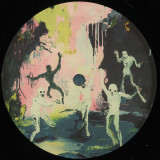
quête:walking shadow
The Comfort’s sixth release comes from the Italian producer Cesare Muraca, aptly titled Calabrian Flow.
Spanning four tracks, the record maintains a fundamental structure and attitude towards the dancefloor: dynamic, immersive, and universally compelling. But as always, the devil is in the details. From the A-side to the B-side, these tracks traverse moods and emotional nuance with elegance, unfolding like a well-told story.
The title track, Calabrian Flow, is a hypnotic interplay of bleeps and enchanting melodies, walking the fine line between dramatic ambiguity and raw force. Cosmic Odyssey, on the other hand, carries a sense of urgency, shrouded in shadowy gloom yet punctuated by flickers of light—a delicate interplay of tension and fleeting luminescence.
On the B-side, the record embraces pure release. The cathartic and expressive energy of Dynamic Dance offers both freedom and propulsion, while Working balances maximalism on a blade’s edge. Cesare utilizes choral chants that reverse and morph, synthesizers that pulse like distant signals, vortex-like low-ends, and an extremely tight rhythm. The result stuns and pulls—lingering long after the kick fades out.
- A1: Om Mani Padme Hum
- A2: Bohemia After Dark
- A3: Companionship
- A4: Stoned Ghosts
- A5: Jay-Jay
- B1: Dijar
- B2: Con Alma
- B3: Ct & Cb
- B4: The Turk's Bolero
- B5: Talk Some Yak-Ee-Dak
- C1: Calypso Blues
- C2: Balafon
- C5: I'm A Fool To Want You
- C4: Insensatez
- C5: Invitation
- D1: Yah-Yah Blues
- D2: Serenata
- D3: Just Give Me Time
- D4: Birn To Be Blue
- D5: Sconsolato
Jazz music has more than its fair share of overshadowed figures that whilst contributing much to the music have little presence in its collective conscious. One such musician is the talented multi-reedist, Sahib Shihab. Born Edmond Gregory, as he was known before he adopted the Muslim faith in 1946, Sahib Shihab's music background shows a deep and significant evolution, influenced by Thelonious Monk, Dizzie Gillespie (his experience in Dizzie's band marked Sahib's switch to Baritone, the instrument he became most readily associated with), and above all by Charlie Parker's Bop. Had it not been for the post-war migration of many top American jazz musicians to Europe, it is quite likely that the legendary Clarke-Boland Big Band might never come into existence. Sahib, one of this musicians disillusioned with the politics and racism of the United States, accepted to join the band of Quincy Jones for an European tour in 1959. When the tour ended, Shihab he remained in Europe where he joined, in 1961, the Clarke-Boland Big Band. The collection 'Companionship', whose line up consists of seven elements which derives from this original band, spotlights the consummate musicianship and individuality of Sahib Shihab and is testimony to his special musical gifts - not only as a top-rank flautist and baritone saxophone but also as a composer. Furthermore, it provides a welcome reminder of the high quality of the Clarke-Boland Big Band's rhythm section, the lively style of vibraphonist Fats Sadi and the power and personality of two of the C-BBB's horn-playing stalwarts, Benny Bailey and Ake Persson. Here's a real rarity, surely a desert island disc. This double album has it all from frantic banging percussive workouts to modal numbers to beautiful ballads. It's a staggeringly good piece of music and worth every penny of the price tag it commands. Let's have a look to the most significant pieces. Francy Boland's "Om Mani Padme Hum", taken from a Tibetan prayer, shows Shihab in exuberant mood, playing against a vigorous percussion background and making dramatic use of his special technique of combining voice and flute. Boland contributes an incisive, effervescent solo. "Bohemia After Dark", a classic original by bassist Oscar Pettiford which he first recorded back in August 1955, finds Shihab in exultant form on baritone. "Companionship" has a Bossa Nova beat and features Bailey on flugelhorn and Shihab on flute, playing with a limpid, floating sound. Bailey's minor-key original, "Stoned Ghosts" was, he says, inspired by listening to some music written by Bela Bartok before he emigrated to the United States. The piece has an infectious back-beat pulse and showcases the superb walking technique of Jimmy Woode. In "Con Alma" Shihab's mellow flute set against a churning 12/8 beat in this stylish Boland arrangement. Woode's performance of the superb Mei Torme ballad, "Born To Be Blue", reveals his great affection for the song. "lt is the perfect combination," he says, "a beautiful melody married to a great lyric. I really love that tune." It is a song of rueful resignation, putting a brave face on the blues. "Balafon" is an up-tempo Francy Boland original written for the French mime artist, Marcel Marceau. The rhythm section really cooks on this track with Kenny Clarke's cymbal work outstanding. Boland's solo here is notable for its neat, left hand punctuations. "Calypso Blues" has been written by Nat King Cole and Don George. lt tells the wry and wistful tale of a Trinidadian in New York desperately homesick for the land where everything 5 so much cheaper (in New York "a dollar buy, a cup of coffee and a ham on rye") and the girls more natural than the artificial, painted beauties of New York. Woode's composition, "Sconsolato" is a haunting theme in A minor and it brings to a close a truly fascinating album. This is dynamic music played with vigour, verve and vitality - and it is an enormous pleasure to rediscover it. A shadowy fugitive from his home in the land of jazz, Sahib Shihab remains a true unsung figure, worthy of more attention. With his equally expert technique on Baritone, Flute, Alto and Soprano saxophones and his capacity to adapt easily to a variety of musical settings. His warm, individual, singsong sound in improvisation and his unusual and interesting compositions mark him out as a hidden treasure in the dusty corners of jazz archive.
Somewhere close to Manchester’s ever changing city centre, as the sun fades and peeks through the newest glass facade, you’ll find Shaking Hand. One part in shadow, the other basking in prisms of light as they sketch out their own sonic landscapes in the dusty redbrick mill they call home. One that is just about clinging on from the encroaching developments that surround them.
Against this back-drop where buildings are constantly torn down & built back again, the three piece craft away. Pulling from early post-rock, and 90s US alternative rock, crafting their own brand of Northwest-emo. Assembling something new, yet nostalgic. Looking ahead towards the transforming horizon. Shaking Hand’s music is built on tension and release – quiets that stretch, louds that overwhelm. Repetition that feels both hypnotic and destabilising.
The band’s musical DNA runs through experimental guitar outfits like Women, Slint, Sonic Youth, Pavement, and Ulrika Spacek, balanced with the melodic sensibility of Big Thief and the dynamic intimacy of Yo La Tengo. Their compositions push against structure: sudden jolts of tempo, polyrhythms that almost fall apart, and riffs that unravel into something fragile or ecstatic. Yet, as Ellis notes, there’s an underlying warmth too: “Like walking through an empty city late at night but catching flickers of life in the buildings you pass.”
Early ideas like ‘Night Owl’ and ‘Sundance’ grew out of George’s lockdown “bedroom years,” where new tunings (open E, drop D, and stranger Pavement-inspired set-ups) opened up uncharted textures. Later, in grim rehearsal rooms, the murky epic ‘Cable Ties’ and the hypnotic ‘Mantras’ absorbed the gloom and grit of the band’s surroundings.
The album was recorded with producer David Pye (Wild Beasts, Teenage Fanclub) at Nave Studios in Leeds, housed in a converted church. “The live room was huge and perfect for capturing our sound,” says George. Determined to bottle their onstage energy, the band tracked the foundations live, layering vocals and guitars later. Soviet-era microphones, odd mic placements, and even phone-recorded demos fed into the mix. “You’ve got to watch out for David though,” Freddie laughs. “He made me play four tambourines in one hand, really hurt, man.”
Lyrically, the record drifts between abstraction and lived moments. George’s words often spill out instinctively, words falling into place before their meaning becomes clear. “A lot of the lyrics look like they’re buried in abstraction,” he says, “but when I look back I can see what they were about — whether that’s an emotional response at the time or just an observation of what was happening around me”. There’s contrast at the heart of it all – optimism vs. doubt, the lightness of youth vs. the monotony of work, a city in constant redevelopment vs. the people drifting through it.
The album artwork is taken from unused plans for the 1970s redevelopment of Los Angeles by architect Ray Kappe, entitled ‘People Movers’. Hypothetical buildings for real people, it feels a complement to the band’s own constructions. One thing’s for sure, Shaking Hand’s debut is built to last.
- You Smile When It Hurts
- Dreamin
- Time
- Blue Draginfly
- Arabian Night
- Reality
- Walking Alone
- Dar Tunnel
- I Try Alone
- Open My Head
- Tired To Follow
- Happy Birthday
Far from being a nostalgic exercise, the record reasserts their daring artistry, merging legacy and rebirth. Known for melodic minimalism, elegant melancholy, and pulsing electronics, the band has often been compared to Depeche Mode, New Order, or Joy Division, yet their singular identity has always set them apart. On this new album, they reinvent their sonic language, blending vintage synths with classical textures and luminous modern production. The result is a sensory journey where light and shadow converse, where poetry meets pulse, reaffirming their timeless relevance. Their influence extends across genres: sampled by Madlib, reinterpreted by Tricky, reimagined by Theophilus London, and remixed by DJs such as Marcel Dettmann. Tributes, reissues, and appearances in cinema and fashion underscore their resonance, from Lucie Borleteau's Chanson Douce movie to catwalks by Chloe.
Born in Marseille in the early 1980s and led by Alain Seghir alongside Catherine Loy , Brigitte Balian , and Beverley Jane Crew , Martin Dupont left a mythic legacy with tracks like ' Inside Ou't and 'Just Because...' before dissolving in 1987. Rediscovered through Minimal Wave reissues, their music captivated a new generation of underground and electronic enthusiasts. Today, Martin Dupont are reborn. Seghir and Crew, joined by Sandy Casado, Thierry Sintoni, and Olivier Leroy, embark on a world tour that affirms their unique ability to move and inspire. You Smile When It Hurts proves that their visionary sound has never been more alive
French artist Trypheme debuts on Impatience with “Odd Balade”, a darkly-hued collection of songs drawn from human delicacy and dreamworld mythology.
“Odd Balade” is Trypheme’s most ambitious and boldest record to date - both lyrically and musically. The album’s thirteen tracks resist rigid genre boundaries and flutter from medieval folk realms, sprawling synths, gothic 80s wave, leftfield pop, haunted vocals, mutant electronica to reverbed guitars - all reflected through her own shadowy prism. Especially album closer “A Walk In The Vercors” evokes a soothing serenity that echoes the sonic balm of Julee Cruise.
Trypheme’s musical repertoire trends heavily electronic and somewhat abstracted, but on “Odd Balade”, the artist slips into the role of the modern troubadour with a shift to a more poetically and personal songwriting that is infused with symbolism and dreamlike fantasies. The connective tissue of the album is the audacity to love and the vulnerability that ensues. As intimate and introspective as the lyrics are, the themes remain universal and human to the core: the fear of losing a loved one, the melancholia of leaving places and t“the fear of losing a loved one, the melancholia of leaving places and the cycles of life. The record was largely composed in Chars, stirred by the French village’s eerie atmosphere and frequent trips to the seaside in Brittany, where Trypheme resides. Drawing inspiration from the rugged terrain of the seaside landscapes, the writings of Allen Ginsberg and Mark Fisher and the hyperrealist art of Scott Prior, Trypheme uses her songs to depict life with broad strokes of rhythm.
On “Odd Balade” Trypheme consolidates herself as a gifted, nimble songwriter, masterly producer and subtly powerful vocalist. The record combines her skill for crafting lush, alien sound worlds and efficient, alluring arrangements with stealthily devastating songs. Belin’s voice becomes a key ingredient, appearing on eleven of Odd Balade’s thirteen tracks, by turns heavily manipulated, sampled and replayed as a form of percussion, or basically bare.
“Odd Balade” is the manifestation of Trypheme’s roving artistic practice, a ceremonial-grade sacrament cast in a rich nocturnal glow. Pairing the mundane with the mythic, the album stays true to its core: odd and strangely familiar.
RIYL - Riding off into the sunset to an unknown destination, hauntology, present, tales told by the fireside, hot summer rain, adventures, to feel a warm presence when you are walking in the forest or in the mountain, coastal landscapes, sailor’s stories, slow motion, vitesse, heavy blossoms, colors, the warmth of the sun, the tenderness of the moon, getting lost in unfamiliar streets, city’s lights, motorway rest area by night, magic numbers, rendez-vous, picnic, serendipity, poetry, the smell of old records and old books.
Tiphaine Belin has been releasing music as Trypheme since 2016. Odd Balade was written and produced by Belin, and mixed by Belin and Abel Roux. It was mastered by Amir Shoat. Cover art photography is by Ariane Kiks, with art direction by Ariane Kiks in collaboration with Mathilde Chaize.
- Dragging Dirt
- Shadow
- Echo
- Tiber Creek
- Nothing
- Voice In Headphones
- Context
- God Knows
- Underwater
- Context Ii
Lillian King's debut album In Your Long Shadow is out October 24th. It is about letting the wind in, Lake Michigan in the winter, and the silence of a long summer evening. And really it's about the grief of losing her dad, Neil King Jr. When her dad died in September 2024, grief permeated every facet of Lillian's life. The loss is felt in everything, but especially when doing the things her dad loved the most -- the simple everyday good things that make life worth living: cooking, walking the longer way to work, swimming in cold water. In the throes of grief it feels impossible to find anything that doesn't just make you sadder, but when Lillian did find those things, she grabbed onto them. Soon it was clear that the best coping mechanisms weren't gin and tonics, but talking to her mom and sister as much as possible, and producing an album. The album arrangement came together in a couple of weeks as Lillian brought bandmates and friends Robert Salazar and Nick DePrey new and old songs to build on. Robert played the drums, while Nick played keys (with a smattering of bass and guitar). The process was collaborative and intimate, and only got better when Jack Henry (producer of albums by Friko and Free Range) joined to record and mix it. Some of the songs on this album are years old, including "Underwater", which Lillian wrote one late night in Montreal a decade ago. However, most came together in the months approaching recording."Dragging Dirt" was written just a week before getting into the studio. Despite the bummer material, the recording process was spontaneous and light hearted. The song "Echo" came together unexpectedly during a break between songs. In the midst of recording In Your Long Shadow, Lillian had concerns about making a "grief album." Her sister Frances, as usual, had the right advice: "Every album from now on is going to be a grief album." In Your Long Shadow is about loss as much as it is about living with it. Take it outside on a walk.
Elations Recordings presents "Return of the Airpoets", an exploratory recording from longtime collaborators Reuben Lewis (I Hold The Lion's Paw) & Adam Halliwell (Mildlife, IHTLP), occupying a unique space between contemporary experimental music and avant jazz. Engineered and mixed by Reuben Lewis in 2023, and featuring guest appearances from acclaimed Australian drummer Ronny Ferella.
"Return of the Airpoets" continues a conversation begun with 'Cygon Dance', an extended duo between Lewis and Halliwell from Halliwell's 2023 LP "Freedom Lapse"; a dialogue that stems from a shared love and respect for Jon Hassell's Fourth World music. Sonic pioneer and adventurer, Hassell's futuristic vision advocated possible musics, stressing plurality and multiplicity. Faithful to his vision, Adam and Reuben, as trailblazers rather than imitators, delight in boundless musical possibilities, adopting Hassell's futurism as stock-in-trade, making it their own while augmented with neo noir hues and hints of the tilted electro-funk of Miles Davis' collaborations with Marcus Miller.
These nine tracks flow together as a unified suite, their shadowy presence stitched from fractured narratives: imaginary crimes, murders, dreams, the unspoken. At the same time, you can detect the artists' meticulous attention to sonic detail, feel the undercurrents, the complex layering. This music has been distilled, winnowed, from extended improv sessions, with the artists - as producers - zeroing in on offcuts, shards, and splinters, seamlessly patching together fragments in post-production to construct intricately layered sound collages, taking a leaf out of Tao Macero's book, building from the ground up.
Who are these airpoets? Their mystifying trial suggests the travails of Joseph K, sentenced for unspecified crimes. But I prefer to see them as fugitives escaped from Robert Bolaño's novel, "Savage Detectives". In Bolaño's book, poet Juan Garcia Madero is granted admission to the shadowy group of poets, the Visceral Realists, whose movement has no clear aims, and whose members "walked backward . . . gazing at a point in the distance, but moving away from it, walking straight toward the unknown." Like the visceral poets, these airpoets, Reuben Lewis and Adam Halliwell, set their sights on a point on the distant horizon, setting off without map or compass, drawing nearer and moving away, towards the unknown.
After completing his nationwide run with Ice Nine kills, the rocker has been hard at work prepping Cruel World. The collection of songs includes several notable features, including the likes of From First To Last, as well as Ice Nine Kills. The 9-song minialbum is chock full of TX2's well-known hard-hitting sinister sound, and he's bringing an added dose of heavy with these new songs as well. Fan-favorite track "MAD," which has seen 10,000+ video creates on TikTok and has created an unstoppable buzz around the project. Rising out of the shadows of a small town known for music, Fort Collins; TX2 brings an unmatchable intensity in his music through the form of powerful raw lyrics and explosive performances. After struggling for so many years as an artist, TX2 used his pain as fuel and finally found his sound. As a result, his music went viral on TikTok and he now has ~800K followers on the platform. TX2 has since begun a movement known among his fans known as the "X Movement", which is all about bringing awareness to mental health and creating a safe space for those in need to talk. The rules are simple, any member can vent and share how they are feeling, while other members are encouraged to push other members' self-esteem up. The movement is currently growing every day, providing a platform to speak about mental health, vent, and support one another. TX2 wants everyone to know they are not alone in their struggles. The nine rack minialbum is available on CD & LP!
- A1: Pharoah Jones
- A2: Ghost Gospel
- A3: Ill Feeling
- A4: Capital Punishment
- A5: Do Not Adjust
- A6: Cool Green Trees
- A7: Chill Scratch
- A8: Poisonous Fumes
- A9: Welcome Aboard The Starship
- B1: Keep On Runnin
- B2: Sounds Impossible
- B3: Painted Faces
- B4: The Knew Style
- B5: Chicken Wing Blues Sauce
- B6: Kool Breeze
- B7: Sexx Bullets
- B8: Soul Child
- B9: Take Off Runnin
- B10: Centurian
- B11: Bozack
- B12: Church
- B13: Splash One
- B14: Hank
- B15: 73 Goatee
"Chasing the funky symphonies that filled my head and my dreams..."
December 25th, 2023 - an Instagram post. Stimulator Jones shared half a dozen FIRE tracks from his beat tape archive. We were immediately drawn to the rough hewn boom bap.
"I'd release that", Rob commented.
Hours of material was shared and the result is this: Cool Green Trees (1999-2005). A collection of beats and loops Stimulator Jones created between the ages of 14-20 at home in his basement, bedroom and computer room in Roanoke, Virginia.
You will not believe the profound soulful genius contained within these naive schoolboy melodies.
December 25th, 1998 - 25 years ago to the day and his much-coveted Yamaha SU10 sampler was finally bestowed upon young Stimmy AKA Sam Lunsford: "I immediately hooked up a CD Walkman to the input jack and looped the beginning two bars of Grover Washington Jr.'s "Mercy Mercy Me". I don't know what exactly was so thrilling about hearing two measures of music repeating over and over but it was so infectious and hypnotizing and enthralling to me. I'll never forget that ecstatic rush of making my first loop - an uncontrollable, gleeful smile plastered all over my face." When you hear the pocket breakbeat symphonies featured here on Cool Green Trees, you'll feel the same sense of frisson.
In the wake of his Stones Throw breakthrough - Exotic Worlds & Master Treasures - Stimulator Jones was pegged by many as a 90s throwback artist. However, he literally IS a 90s artist. He's been recording music most of his life and he's now 40. He created the bulk of Cool Green Trees as a teenager. Everything before 2004 was recorded when Sam was still in school. He was in 8th grade when he made the 1999 tracks - he didn't even have his learner's permit. This album is a snapshot of a young man in a simpler time. Things were still mysterious back then and he was flying blind, relying on his ears and having to figure things out for himself: "I had no road map for becoming a beatmaker. I have been collecting music since I was a kid, I am a lifelong digger and seeker of cool and interesting sounds. I was there in the golden age of Hip Hop, and while I may have been a suburban white kid in Roanoke, Virginia, I was tuned in and I bought so many classic albums when they came out. I was attracted to Hip Hop because of the musical and poetic quality. I was hypnotized by the rhythms, partially because I was a drummer. I didn't brag about collecting my breakbeat records or making beats - it was something I did in isolation. It wasn't something I generally wanted to bring attention to and it didn't really score me any cool points. I certainly wasn't flexing on social media about it."
Hell, he can do that now!
Opener "Pharoah Jones" was inspired by Yesterday's New Quintet and Madlib's ability to capture that classic 70s sound whilst playing all the instruments. Sam created this one stoned afternoon by laying down a 2 bar loop and a shaker loop on his Yamaha SU700 sampler. He hung a microphone from the ceiling and played his Yamaha Stage Custom drum kit over the top before adding ender Rhodes and playing his dad's Selmer tenor sax through an Electro Harmonix Memory Man echo pedal. Yes! Up next, "Ghost Gospel" utilises a dope loop from a gospel record and adds some soul-funk drums overtop, whilst working that filter knob. Says Sam: "The loop reminded me of something Ghostface would rap over. The sample was in 3/4 waltz time but I flipped it for a 4/4 groove, a technique I picked up from RZA. "Ill Feeling" uses sped-up pieces from a dusty old funk record and putting them over a classic NOLA drum loop; gain chopping up a slow, bluesy 3/4 time signature and bending it to a 4/4 groove. Classy shit. "Capital Punishment" features drums tapped in live, inspired by MF Doom's Special Herbs series. "Do Not Adjust" consists loops found on a compilation of 70s French music at Happy's Flea Market, a classic Roanoke digging spot.
The sublime, evocative title track, "Cool Green Trees" was created when Sam was still living at home. He dumped samples off his SU10 into the family desktop and arranged them in a demo version of Pro Tools: "This track was sort of my ode to the DJ Shadow style of sample based production. Super spacey, slow, and moody. The heavily filtered drums were inspired by Alec Empire's 'Low on Ice' album. I later added some scratches and sounds from a Spider Man storybook record." "Chill Scratch" snags the final bit of a bossanova record and pairs it with a drum loop before adding experimental scratching run through an Electro Harmonix Memory Man echo pedal. "Poisonous Fumes" was made using a sampler, mixer and a turntable; a kind of mixtape beat collage with added scratches and sounds from various records. Using dialogue from superhero records was a nod to Madlib. "Welcome Aboard The Starship" is dark, downtempo trip-hop with a spooky bent. Sam paired a slow, hard drum loop with a guitar sample grabbed off a psychedelic rock record. To finish, he added various backwards sounds and weird atmospheric effects and a little scratching. Swoon.
Side B opens with "Keep On Runnin", made on a borrowed Roland SP202 sampler. Having always loved the sound of the Lo-Fi filter on those machines, reminiscent of the Emu SP1200, Sam always imagined Del or another of the Hieroglyphics crew rapping over this beat. You can certainly hear why. "Sounds Impossible" sees Sam experimenting with layering multiple kick samples at different volumes to create patterns similar to those heard by Showbiz and Lord Finesse during their God-level 1995 period. "Painted Faces" was made by chopping up a REDACTED record which he had gotten from Happy's Flea Market and paired it with a REDACTED drum loop. By the time Sam recorded "The Knew Style", he had acquired a shitty old 1960s portable turntable off eBay. It didn't function properly when he bought it but his brother opened it up, cleaned it out and got it working: "I remember he told me that there was a bunch of sand inside of it when he opened it up, as if its previous owner had taken it to the beach. I would take that turntable on my Happy's Flea Market digs so I could preview records...that's how I found this loop."
"Chicken Wing Blues Sauce" loops up a classic blues joint and pairs it with some REDACTED drums. A bit of filtering and arranging et voilà! "Kool Breeze", from 1999, is one of Sam's oldest surviving beats, as is "Sexx Bullets". The Roots sampled the same record, leaving Sam frustrated yet vindicated. "Soul Child" was an early SU10 creation, looping a dusty old Soul Children 45 and pairing it with 70s rock drum loops to great effect. "Take Off Runnin" was another loop found digging with a portable turntable. Paired with some boom bap drums it makes for a hypnotic head-nod groove. "Centurian" was intended to be a little beat interlude a la Pete Rock. The sample is from a sun-dappled soft-psych record and it's paired with a Robin Trower drum loop that just happens to fit perfectly. Sometimes you slap things together kind of haphazardly and magic happens. "Bozack" was the first beat Sam made using Pro Tools, his first foray into using chopped sounds instead of loops, an exciting new world. "Church" is beat interlude using a Phil Upchurch loop with the "Long Red" drums - a favourite break of Dilla et al. Sam was really on a tear in late 2004, probably because he was unemployed and phoneless and able to just make beats all day. He made "Splash One" on a borrowed Yamaha SU700 and again was experimenting with tapping the drums in live with his fingers, instead of using a loop or sequenced pattern. Channeling 9th Wonder, Sam used a water splash sound effect from a Batman record as a percussive element, hence the title (also a 13th Floor Elevators reference). The main loop is a backwards portion of one of his favourite Roy Ayers songs.
"Hank" is another fun little beat interlude thing, created on a borrowed Roland SP202 sampler with the fantastic Lo-Fi effect that resembled the Emu SP1200 at a fraction of the price. "73 goatee", from 99, is another of his oldest surviving beats, created in his bedroom with his Yamaha SU10 and his brother's Vestax MR-300 4-track recorder: "This one will always feel special. I can remember having a feeling all the way back then on the night that I created it that this was a solid beat with a catchy loop. There was something in the Fender Rhodes melody that resonated with me emotionally, and I had never heard a producer sample that portion before. I felt like I had found my own unique sound, my own unique loop. It came from an Ahmad Jamal '73. I actually even recorded myself rapping and scratching over this beat way back then, I still have that version in all its imperfect sloppy glory."
Sam explains just how much these tracks mean to him: "They all have immense historical and sentimental value and I'm proud of them. These beats come from an innocent, simple time when I was just figuring out how to craft these sounds. They're something very personal to me. They are the initial part of a journey that I really was taking *alone*. There was no YouTube. I couldn't Google shit. I didn't even know any other beatmakers, producers or DJs in my town that could teach me anything. It was always just me, alone, in a room with some equipment - chasing the funky symphonies that filled my head and my dreams. What I was doing wasn't cool. Most of my peers thought I was a weirdo and couldn't care less. Creating these sounds was an anti-social endeavour. In a sense, I felt like it was me against the world, and all I had to instruct and assist me were the recordings produced by my heroes - RZA, DJ Premier, Erick Sermon, Beatminerz, Showbiz, Diamond D, Beatnuts, Prince Paul, The Bomb Squad, Pete Rock, Q-Tip, E-Swift, Mista Lawnge, DJ Shadow, Cut Chemist, Peanut Butter Wolf, El-P and so many more...I dedicate this collection to them, and to my older brother Joe who has always been a musical and technical guiding light for me.
This was a time before every kid was a self-described producer and beatmaker, before everyone had a DAW, before Kanye and "chipmunk soul", before Red Bull beat battles, before there was any social media beyond chat rooms and AOL Instant Messenger, before Soundcloud, before SP-404 mania, before lo-fi beats to study to, before Splice, before targeted ads for MIDI chord packs, etc. In 99 when I told people that I had a sampler and made beats I was mostly met with bewildered confusion and indifference. Kids and adults alike would wonder why I got this weird machine for Christmas instead of something worthwhile like a Playstation or a mountain bike or even a guitar for that matter because at least that could be used to make "real music". Back then, sampling was still not widely respected as an art form - it was seen as lazy, talentless and unoriginal at best and outright criminal theft at worst. I had gotten respect for playing drums and guitar and things of that nature but this was a step in the wrong direction in the eyes of many."
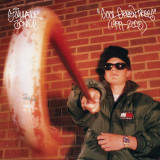
The cover photo is a picture of Sam standing on his back porch in the latter part of 1998, just before he got his first sampler. He was 13 years old, in 8th grade. His dad took the picture with his 35mm film camera: "I actually wanted to be pointing my dad's .22 pistol at the camera lens but he wouldn't let me. He gave me an old walking cane to use instead. The Tommy Hilfiger puffer jacket came from the lost and found at William Fleming High School where my mom worked as a secretary. I was thrilled when she brought it home because we never spent money on expensive name brand clothing like that - we were for the most part strictly a sale rack, bargain bin, thrift store, yard sale, flea market kind of family when it came to clothes. My watch is some cheap off-brand fake gold department store watch." Mastering for this vinyl edition was overseen by Be With regular Simon Francis and it was cut by the esteemed Cicely Balston at Abbey Road Studios to be pressed in the Netherlands by Record Industry.
- Dances Of Death Part 1: Introduction
- Dances Of Death Part 2: Eruption
- Dances Of Death Part 3: Beyond The Gates
- Dances Of Death Part 4: Outburst
- Dances Of Death Part 5: Days Of Betrayal
- Dances Of Death Part 6: Restless
- Dances Of Death Part 7: Sanctuary
- Dances Of Death Part 8: Finale
- Transgressor
- True Believers
- Night On A Bare Mountain
High Roller Records, 180g black vinyl, ltd 250, 425gsm heavy cardboard cover, insert, poster. Remastered by Patrick W. Engel at TEMPLE OF DISHARMONY in August 2024.
Ende der 1980er standen Mekong Delta ohne Gitarrist Frank Fricke (der ein Angebot von U.D.O. annahm) und Sänger Wolfgang Borgmann (der nichts mehr mit dem neuen Material anfangen konnte) da. Beide hatten die Identität der Band auf ihren ersten drei Alben mitgeprägt, doch mit dem amerikanischen Sänger Doug Lee und Uwe Baltrusch als verbliebenem Gitarristen gelang es den Gründungsmitgliedern Ralf Hubert und Jörg Michael, ein Album zu schaffen, das viele Fans für ihr Magnum Opus halten. Allein aufgrund seines achtteiligen, 20-minütigen Titeltracks kann man "Dances Of Death (And Other Walking Shadows)" - ursprünglich 1990 veröffentlicht - sogar zu den besten Progressive-Metal-Alben aller Zeiten zählen.
- Evanescent Psychic Pez Drop 02:48
- Demons 03:18
- Fog Over Frisco 03:46
- Too Late 05:57
- Hanky Panky Nohow 02:58
- Something To Do 02:11
- Ultra-Powerful Short Wave Radio Picks Up Music From Venus 01:32
- Up To You 04:03
- Somebody's Baby 03:38
- Walking Away From You 05:58
- Artificial Heart 03:00
- Cast A Shadow 02:24
- I'm Set Free 04:10
- Barnaby, Hardly Working 03:54
- Some Kinda Fatigue 07:38
- Speeding Motorcycle 03:30
- Nutricia 05:01
- Her Grandmother's Gift 02:39
- From A Motel 6 # 2 04:29
- Gooseneck Problem 00:04
- Surfin' With The Shah 02:07
- Ecstasy Blues 02:47
- Too Much, Part 1 01:18
- Blitzkrieg Bop 02:18
- One Self: Fish Girl 05:31
- Enough 05:26
- Drum Solo 00:08
- From A Motel 6 # 1 03:35
- Too Much, Part 2 00:21
- Sunsquashed 26:20
Gavin Vanaelst runs the space Aboli Bibelot in Antwerp where exhibitions and musical performances can happen side to side with dealings in centuries-old furniture and unique pieces of folk art or volkskunst. Gavin makes music under the aliases DJ Charme, Kassett and So Sorry. This is the first album under his birth name. Takeaway Loops cycles back to the days when Gavin was working as a courier for .
is a food delivery company. Their couriers - ehm, brand ambassadors, as the company prefers to call them - dressed in bright orange, they race their bikes around the city. They deliver meals and groceries for all sorts. Thanks to them, the privileged can stay tucked in their private spaces. Interaction between the two groups - the privileged and the brand ambassadors - is mostly kept to the bare minimum. And sparse communications are often driven by annoyances - “my Coke is warm because you kept it too close to the French Fries.” And on the streets the general public dis-approaches the brand ambassadors with pity. We tell our peers: “That’s not a good job,” and “stay away from the Sharing Economy.” Because, you know, in our capitalistic dollhouse we all stand our grounds and play our parts wholeheartedly.
During his shifts for , Gavin recorded location sounds on his phone at fast food restaurants while waiting on the orders he had to pick up and deliver. Later in his home studio Gavin added piano and electronics to this source material. The result: a gloomy soundtrack for a shadow world. Seven songs in evening blue with a bright orange glare.
A few years ago, our favorite Belgian publishing house Het Balanseer released Seizoenarbeid by Heike Geissler (available in English trough Semiotext(e)). Geissler writes about her job at Amazon in Leipzig. Because her writing and freelance work did not pay the bills any longer, she was forced towards this underprivileged shadow-world of unwanted jobs. Seizoenarbeid shed a light on freedom in an unfree world. A monument of ‘we are all in this, but not together’. Takeaway Loops gives us a similar peak in a world that is at the same time so visible, but then also very veiled for many. A world that we prefer to use, yet that most of us prefer not to see - a world that we don’t like to enter.
Last year at Harbourland subway station in Kobe i was mesmerized by its sound design, created by Hiroshi Yoshimura. For each part of the subway station he composed a short phrase. While walking trough the station, a full composition grows in your head. The looping melodies guide you trough a microworld. Trough a blue world of commuters, of the homeless, of the lonely, of the fast paced, of the tourist. Gavin creates a similar effect with Takeaway Loops. The tonality somehow corresponds to Yoshimura’s work. Yet instead of being guided trough a building, we are now taken to the after dark. You feel the concrete evening heat of the city. You hear the rain. Stiff fingers during cold winters’ nights. You are alone on the bike, cruising. Your maps app telling you where to go. You just left the fake leather bench of the well-lit pastiche interior of a fast food restaurant.
Next order, number ECN44! Please wait outside, sir?
You may recognise this fine fellow as the bass player for such acts as Spoon, Lee Fields' Expressions, Reigning Sound and The Jay Vons. Or perhaps you've heard the man himself wailing away on several well-received 45's released on Wick Records and compiled on the digital EP 'Hey Lovers'.
With 'Do You Still Think of Me?', his debut album for Wick Records, Trokan takes the listener through the full spectrum of 60s influenced music: the moody teen-beat bop of 'Save a Place', the garage dwelling angst of 'Nowhere to Be Found', to the sweet soul sound of the title track. But throughout the records, it's the unique sound of Benny's raspy, vulnerable lead vocal that carries us across this truly stunning collection of modern pop. 'Do You Still Think of Me?' is a breath of fresh air from a well-seasoned veteran. Unquestionably worth the wait.
You may recognise this fine fellow as the bass player for such acts as Spoon, Lee Fields' Expressions, Reigning Sound and The Jay Vons. Or perhaps you've heard the man himself wailing away on several well-received 45's released on Wick Records and compiled on the digital EP 'Hey Lovers'.
With 'Do You Still Think of Me?', his debut album for Wick Records, Trokan takes the listener through the full spectrum of 60s influenced music: the moody teen-beat bop of 'Save a Place', the garage dwelling angst of 'Nowhere to Be Found', to the sweet soul sound of the title track. But throughout the records, it's the unique sound of Benny's raspy, vulnerable lead vocal that carries us across this truly stunning collection of modern pop. 'Do You Still Think of Me?' is a breath of fresh air from a well-seasoned veteran. Unquestionably worth the wait.