Search:wante

Styles
All
NNAMDÏ - ‘Please Have A Seat’ LP

NNAMDÏ has never been able to stay in one place. The Chicago
multi-instrumentalist and songwriter set a blistering pace in 2020
with his critically acclaimed genre-fusing LP, ‘Brat’, a punk EP,
‘Black Plight’, and ‘Krazy Karl’, a full-length tribute to Looney
Tunes composer Carl Stalling. Add in his role as co-owner of label
Sooper Records, as well as recent tours with Wilco, SleaterKinney and black midi, and it’s an overwhelming schedule.
 However, his latest album, ‘Please Have A Seat’, is the result of a
much needed pause. “I realized I never take time to just sit and
take in where I’m at,” says NNAMDÏ. “It’s just nice to not be on
‘Go, Go, Go!’ mode, and re-evaluate where I wanted to go
musically.” This period of reflection allowed him to take stock of his
life and his relationships. “I wanted to be present,” he says. “Each
song came from a moment of clarity.” ‘Please Have A Seat’ serves
as an invitation to listen. It’s a request to sit down, be present, and
take in a moment. With this quiet introspection, NNAMDÏ found
inspiration in silence and nuance.
 While making the record, he decided to stretch the limits of his pop
songwriting: every track had to be hummable. Though he’s written
earworms throughout his career from playing in bands in
Chicago’s DIY community or releasing goofy raps as Nnamdi’s
Sooper Dooper Secret Side Project, here, his shapeshifting hooks
are undeniable. Each of the album’s fourteen songs, which
NNAMDÏ wrote, produced, and performed entirely himself, are
relentlessly re-playable, careening into unexpected and
disorienting places. With NNAMDÏ’s singular vision, ‘Please Have
A Seat’ is yet another leap from Chicago’s hardest working
musician. By taking a minute to sit down and catch his breath, he
re-emerged with the most ambitious, accessible, and nuanced
work of his career.
 Coloured vinyl LP format pressed on Walnut Brown vinyl.

out of Stock

Order now and we will order the item for you at our supplier.

25,63

Last In: 3 years ago
Imperial Wonders - Right To Work

The Imperial Wonders are one of the finest vocal groups to come out of Cleveland Ohio. "Work of Art" has been remixed by Opolopo, Daft Funk, Pagger and Leo Zero from the original 80s multitrack tapes. Opolopo produces one of his trade marked boogie sensations that is exactly how the band had wanted it to sound in the first place, some proper 80s boogie vibe. New boys Pagger swaggers the groove with ease and panache. Daft Funk house it up some with deepness personified grooves. Leo Zero with some help from Des Morgan flips the song with a spaced out dub that rocks. One not to be missed.

out of Stock

Order now and we will order the item for you at our supplier.

13,40

Last In: 23 months ago
Thylacine - 9 Pieces LP

Thylacine

9 Pieces LP

12inchINT01G301LP
Intuitive Records
26.10.2022

Since his debut album “Transsiberian”, Thylacine has developed a taste for composing through travel, an initiatory project that led him to compose during his journey on the Trans-Siberian Railway. A seminal album that allowed the young electro prodigy to make a name for himself on the electronic scene.

With the aim to combine music and image and to make us discover his world through travel, Thylacine has continued to climb the ladder and has racked up no less than 121 million streams. Whether it's "Anatolia", "Olatu", or "War Dance", Thylacine has made a name for himself by writing real hits.

Through "9 Pieces », Thylacine wanted to pay tribute to some iconic tracks that are currently only released digitally and independently and to let us discover his new compositions, all of which are just as transporting and refreshing. His new opus “9 Pieces” will contain unreleased tracks from his latest travels and encounters, pieces to be assembled in order to reconstitute a puzzle and immerse oneself in the universe of Thylacine.

Like this object, each musical piece will find its place alongside his greatest hits. "9 Pieces" will be released the 21st of October on Intuitive Records.

out of Stock

Order now and we will order the item for you at our supplier.

29,79

Last In: 3 years ago
DIGABLE PLANETS - BLOWOUT COMB LP (2x12")

* Dazed and Amazed Duo Color Vinyl * Fully printed inner sleeves * Liner notes by Larry Mizell Jr. // The album is named for the combs used to maintain an Afro hairstyle, and that's significant. The group's Ishmael "Butterfly" Butler said it summed up what they wanted to do with it: "It means the utilization of the natural, a natural style," he has said. Like with 1993's debut _Reachin' (A New Refutation of Time and Space)_, 'utilizing the natural' meant creating hip hop that blended jazz with the formidable rap skills of the aforementioned Butterfly, Craig 'Doodlebug' Irving and Mary Ann 'Ladybug Mecca' Vieira. Unlike that debut, it meant broadening to include guests such as Gang Starr's Guru, Jeru the Damaja, and Jazzy Joyce. Following the gold-selling commercial success of their debut, they here set out to prove their artistic prowess. This is intelligent, alternative hip hop that sounded like party music. Its lyrics are dense with wit, social commentary and politics - and its original inner sleeve was modeled on the newspaper of the Black Panther movement.

out of Stock

Order now and we will order the item for you at our supplier.

65,50

Last In: 3 years ago
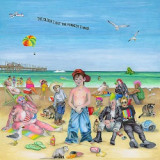
WHITMER THOMAS - THE OLDER I GET, THE FUNNIER I WAS

The Older I Get, the Funnier I Was, which follows Thomas’ brilliant 2020 HBO special The Golden One and his Can't Believe You're Happy Here EP released earlier this year, surveys a range of emotion and offers a broad sonic palette, moving between pop punk, electro, and the obvious influence of the singer-songwriters he grew up listening to in early childhood. It conjures the ennui of Bright Eyes alongside the barefaced storytelling of John Prine, the overstuffed lists of Fred Thomas with the lackadaisical humor of Colleen Green, among many others.

Thomas attributes the dexterity of the record to Duterte, who recorded and engineered most of it in addition to serving up plenty of encouragement when Thomas got down on the process. “As a comic, I used to test out new songs during sets to see if the funny bits were hitting, but since I wrote this in isolation I ended up writing lyrics and worrying less about making jokes,” Thomas says. That said, the album’s plenty funny. Stand-out and lead single “Rigamarole” opens with a Thomas-voiced infomercial that recalls his oft-cited lookalike Jim Carrey as the Grinch, before launching into a buoyant pop song about being depressed.

Whitmer Thomas will admit that when he traveled home to small town Gulf Shores, Alabama to record his HBO stand-up special, The Golden One, he expected to be greeted as a returning hero, a conquering king, or at minimum, a guy with a moderately successful career as an entertainer in Los Angeles. “I expected a big welcome home, open arms, but when I went back I realized: nobody fucking knows me. Nobody remembers me,” Thomas says. “In the years I’d been performing that show, I’d been romanticizing my childhood in this mythologized place, but the visit made me see that I’m not really from there anymore.”

The sense of alienation compounded when Thomas recognized how few people in town remembered his mom, to whom The Golden One is dedicated and largely about. Thomas grew up watching her perform with her twin sister at the legendary Flora-Bama Lounge, where he set the special, and still counts her as one of his musical influences. His new album, The Older I Get, the Funnier I Was, isn’t overtly about his mom, her presence is deeply felt throughout. While in Gulf Shores, Thomas discovered dozens of her old recordings, all of which had been wrecked by Katrina, but upon returning to LA, Thomas paid “a fancy place in Hollywood” to fix the tapes and hired Melina Duterte (Jay Som, Bachelor, Routine) to mix them. The two struck up a collaborative friendship, and Thomas had the sound of his mom’s voice back. “I was listening to songs she recorded when she was about my age, just these heartfelt, sweet Americana songs,” he says. “I decided then that I wanted to lose the Ian Curtis voice I always sing with; I wanted to do what came naturally, because my mom always sounded like herself, even when she was singing some cheesy reggae song about, like, Jamaica.”

Thus he went into The Older I Get, the Funnier I Was knowing it was time to retire his darkwave persona, and leaning into his natural, chirpier voice, which he says sounds “like a 12-year-old’s.” It makes sense: much of the album chronicles what Thomas calls “being a kid and feeling like you have no control and overcompensating by being annoying.” “So much of the album is about witnessing drug and alcohol addiction as a kid and seeing what it does to people, but also realizing that there's nothing you can do about it,” Thomas says. It’s familiar territory (see: “Partied to Death”) but the methodology is different this time around; true to its title, The Older I Get, the Funnier I Was isn’t always looking for laughs. Thomas might’ve left his hometown behind, but his kid self is still tagging along, a Peter Pan shadow he can’t untether himself from. The first line he sings on The Older I Get, the Funnier I Was is: “There should be a room at every party where you can just sit and watch a movie.” Find a 12-year-old who wouldn’t say the same.

pre-order now21.10.2022

expected to be published on 21.10.2022

27,10
Ugly Kid Joe - Rad Wings Of Destiny LP

"Rad Wings of Destiny" ist das erste neue Album der kalifornischen Band Ugly Kid Joe seit dem 2015 erschienenen "Uglier Than They Used Ta Be". Für dieses Album haben sich Ugly Kid Joe mit dem Produzenten Mark Dodson zusammengetan, der bereits für das 1992 erschienene Multiplatin-Debütalbum "America's Least Wanted" verantwortlich zeichnete.

"Rad Wings of Destiny" ist das lang erwartete, brandneue Album der kalifornischen Band Ugly Kid Joe. Es wird ihr erstes neues Album seit dem 2015 erschienenen "Uglier Than They Used Ta Be" sein.
Für "Rad Wings of Destiny" arbeitet die Band mit dem Produzenten Mark Dodson zusammen, der bereits für Ugly Kid Joes Multiplatin-Debütalbum "Americas Least Wanted" aus dem Jahr 1992 verantwortlich zeichnete. Ein Album, das dieses Jahr sein 30-jähriges Bestehen feiert.
Das 10 Titel umfassende Album enthält die Singles "That Ain't Livin'", "Kill The Pain" und "Long Road".
Auf dem Album sind Whitfield Crane am Gesang, Klaus Eichstadt und Dave Fortman an der Gitarre, Cordell Crockett am Bass und Zac Morris und Shannon Larkin am Schlagzeug zu hören.
Ugly Kid Joe kehren im November für eine Albumtournee nach Großbritannien und Europa zurück.

pre-order now21.10.2022

expected to be published on 21.10.2022

27,94
Eira Haul - Star Vertigo

Eira Haul

Star Vertigo

12inchEDAK002
Edition Akasha
21.10.2022

We’d spent our whole life in a dance of fear. And when we examine that, we realise that very often the thing we were frightened of wasn’t nearly as frightening as the fear.

Eira Haul returns to Edition Akasha to launch us into the ether by way of the “Star Vertigo” EP. Moving across a luminous range of otherworldly atmospheres, five tantalising original cuts strike a spellbinding balance between body-shaking euphoria and meditative mind-healing.

On the A-side, the garage shuffle and ultra-deep bass wobbles of “Ceramics” corrode beneath its hypnotic strings, while the fast-paced acid lines of “Anthracite” bubble and squeak over a choir of fallen angles. “Memory Rush” captures a similar tension as the engulfing dub chords at its centre ebb and flow on-top a muscular four-to-the-floor pulse to illuminate the darkest of nights.

The B-side is equally captivating: Like a gravitational collapse, the stellar melodies of “Incense Trip” break down into a void of razor-sharp percussion only to shine again in full effect thereafter. Lastly, Eira Haul sheds the black holes to ascend to catharsis with “Star Vertigo”: “We wanted to try to understand what the fear is ... and whether that energy is something we can transform – is it our friend, is it our foe?” muses the voice on-top the tender bounce of the title-track’s lush framework, leaving us with a lofty sense of hope transcending this exceptional sophomore EP.

out of Stock

Order now and we will order the item for you at our supplier.

13,03

Last In: 2 years ago
Alice Boman - The Space Between

Alice Boman’s second album, available on CD housed in
digisleeve and booklet, and translucent coloured vinyl
housed in single sleeve with printed inners.
 Imbued with an enveloping warmth which radiates from
Boman’s gossamer-light vocals, ‘The Space Between’
ruminates on intimacy and existential angst, her quiet
contemplations cocooned in sympathetic arrangements
created in collaboration with producer Patrik Berger
(Robyn, Lana Del Rey).
 For ‘Feels Like A Dream’, additional vocals were provided
by Perfume Genius, a collaboration that came about via
Instagram and was recorded at a distance.
 “I have been a fan of his for a long time,” Boman explains.
“I love his voice - it’s so special. Initially I wanted us to
harmonise with each other but I love how the song turned
out, with us each having our separate verses, and singing
together at the end.”
 With vocals left largely unadorned throughout, the focus
falls squarely on Boman’s lyrics, which were written from
the deeply personal perspective of someone settled within
a relationship, and learning to be vulnerable with their
partner.
 The album is very much a journey, charting Boman’s
progress from fear (‘Honey’, ‘Maybe’) to the ‘place of
tenderness’ she ultimately arrives at on ‘Space’, the
album’s exquisite closing track. It’s a journey she hopes
listeners will share in, finding comfort in community.
Because, as Boman knows all too well, when life gets too
much, there’s always music.
 For fans of Aldous Harding, Angel Olsen, Sufjan Stevens.

pre-order now21.10.2022

expected to be published on 21.10.2022

27,31
Kelly Clarkson - When Christmas Comes Around LP
  • 1: Merry Christmas Baby
  • 2: It’s Beginning To Look A Lot Like Christmas
  • 3: Christmas Isn’t Canceled (Just You)
  • 4: Merry Christmas (To The One I Used To Know)
  • 5: Rockin’ Around The Christmas Tree
  • 6: Glow (Feat. Chris Stapleton)
  • 7: Santa Baby
  • 8: Santa, Can’t You Hear Me (Feat. Ariana Grande)
  • 9: Last Christmas
  • 10: Jingle Bell Rock
  • 11: Blessed
  • 12: Christmas Come Early
  • 13: Under The Mistletoe (Feat. Brett Eldredge)
  • 14: All I Want For Christmas Is You
  • 15: Christmas Eve

GRAMMY-winning global superstar Kelly Clarkson has released When Christmas Comes Around…, her ninth studio album via Atlantic Records. The 15-track collection sees Clarkson reunite with long time collaborators Jason Halbert, Jesse Shatkin and more for a mix of new original songs and Christmas classics.

The album features a mix of new original songs and Christmas classics, alongside show-stopping collaborations with Ariana Grande (“Santa, Can’t You Hear Me”), Chris Stapleton (“Glow”) & Brett Eldredge (2020’s hit single “Under The Mistletoe”). When Christmas Comes Around… marks the latest album from Clarkson since 2017’s Meaning of Life and her second holiday offering following 2013’s Wrapped In Red.

Kelly Clarkson is among the most popular artists of this era with total worldwide sales of more than 25 million albums and 40 million singles. The Texas-born singer-songwriter first came to fame in 2002 as the winner of the inaugural season of American Idol. Clarkson’s debut single, “A Moment Like This,” followed and quickly went to #1 on Billboard’s Hot 100, ultimately ranking as the year’s best-selling single in the U.S. Further, Clarkson is one of pop’s top singles artists, with 19 singles boasting multi-platinum, platinum and gold certifications around the world, including such global favourites as “Miss Independent” and “Because of You.” Clarkson has released eight studio albums (Thankful, Breakaway, My December, All I Ever Wanted, Stronger, Wrapped In Red, Piece By Piece, Meaning of Life), one greatest hits album, and two children’s books (New York Times Top 10 best seller River Rose and the Magical Lullaby and the follow up River Rose and the Magical Christmas). She is the recipient of an array of awards including three GRAMMY Awards, four American Music Awards, three MTV Video Music Awards, two Academy of Country Music Awards, two American Country Awards, one Country Music Association Award, and two Daytime Emmy Awards. She is also the first artist to top each of Billboard’s pop, adult contemporary, country and dance charts.

pre-order now21.10.2022

expected to be published on 21.10.2022

27,69
Colin Potter - Ago

Colin Potter

Ago

12inchBFE072
B.F.E Records
21.10.2022

An original and particular approach to rhythmic electronics, with an incredible sound, like in all of Potter's works. Six hypnotic tracks from Colin's archive of rarities, for the first time on vinyl, perfect to play really loud.

These six pieces were recorded between the late 80s & mid-90s at IC Studio, which was then located in Tollerton, North Yorkshire.

“I wanted to make some tracks which were much more rhythmic. By then the studio was a 16-track and I had acquired more equipment for making sounds and changing sounds. There was an Akai S950 sampler, an Emulator II, Roland TR727 and Yamaha RX11 digital drum machines, a Roland Juno 60, and some new effects processors. I even, briefly, used an Atari for MIDI sequencing, but using a computer in the studio felt a bit weird in those days. Ironic really, given the situation now. There were a lot of new methods to learn and the tracks on this album were the result of some of these experiments, during which I also found ways of integrating the old analog synths with the newer machines. Mixing was still done hands-on, in real-time, with alternative and often radically different takes being made of the same multitrack. Very different to the way things are done now. Better or worse? Who knows? But different.” - Colin Potter, IC Studio, London 2022.

Colin Potter is a sound engineer and musician currently based in London. He has worked within the fields of electronic and experimental music for over 40 years, collaborating with the likes of Current 93, The Hafler Trio, Organum, Andrew Chalk, and most notably as a key part of Nurse With Wound alongside Steven Stapleton. He started the esteemed ICR (Integrated Circuit Records – still active today) label in 1981 releasing a several wonderful home studio recordings of his own, as small run cassette releases.

pre-order now21.10.2022

expected to be published on 21.10.2022

20,97
Defleshed - Grind Over Matter

From the mid-90s to 2005, Sweden’s Defleshed churned out a white hot blend of thrash, death metal, and grindcore, marking themselves as one of the most vital bands in all three of those genres. Having run out of inspiration and wanting to try other things they called it a day the same year they released their fifth album Reclaim The Beat, and ever since fans have hollered for their reunion. In 2021 they got what they were asking for when the band’s core lineup - guitarist Lars Löfven, drummer Matte Modin and bassist/vocalist Gustaf Jorde - got back together. None of the members took any convincing to reform or to push ahead with the full-length, starting to seriously write in Autumn 2021, and there was no masterplan guiding them. “We just wanted to see what we sounded like today, with new perspectives on things. We knew it had to be fast and furious yet diverse.” The result is an album “filled to its maximum with power and energy”, this made clear by opener “Bent Out Of Shape”, which is perhaps the greatest start to any of their records. They do not take it easy on the listener from there on, with the likes of the thrashy “Dear Devil” and groove-laden “Unburdened By Genius” taking very different tactics in the damage they wreak, the band making a point of not repeating themselves while staying true to that classic Defleshed sound.

pre-order now20.10.2022

expected to be published on 20.10.2022

26,01
Lee Tracy & Isaac Manning - Is it What You Want

As the sun sets on a quaint East Nashville house, a young man bares a piece of his soul. Facing the camera, sporting a silky suit jacket/shirt/slacks/fingerless gloves ensemble that announces "singer" before he's even opened his mouth, Lee Tracy Johnson settles onto his stage, the front yard. He sways to the dirge-like drum machine pulse of a synth-soaked slow jam, extends his arms as if gaining his balance, and croons in affecting, fragile earnest, "I need your love… oh baby…"

Dogs in the yard next door begin barking. A mysterious cardboard robot figure, beamed in from galaxies unknown and affixed to a tree, is less vocal. Lee doesn't acknowledge either's presence. He's busy feeling it, arms and hands gesticulating. His voice rises in falsetto over the now-quiet dogs, over the ambient noise from the street that seeps into the handheld camcorder's microphone, over the recording of his own voice played back from a boombox off-camera. After six minutes the single, continuous shot ends. In this intimate creative universe there are no re-takes. There are many more music videos to shoot, and as Lee later puts it, "The first time you do it is actually the best. Because you can never get that again. You expressing yourself from within."

"I Need Your Love" dates from a lost heyday. From some time in the '80s or early '90s, when Lee Tracy (as he was known in performance) and his music partner/producer/manager Isaac Manning committed hours upon hours of their sonic and visual ideas to tape. Embracing drum machines and synthesizers – electronics that made their personal futurism palpable – they recorded exclusively at home, live in a room into a simple cassette deck. Soul, funk, electro and new wave informed their songs, yet Lee and Isaac eschewed the confinement of conventional categories and genres, preferring to let experimentation guide them.

"Anytime somebody put out a new record they had the same instruments or the same sound," explains Isaac. "So I basically wanted to find something that's really gonna stand out away from all of the rest of 'em." Their ethos meant that every idea they came up with was at least worth trying: echoed out half-rapped exhortations over frantic techno-style beats, gospel synth soul, modal electro-funk, oddball pop reinterpretations, emo AOR balladry, nods to Prince and the Fat Boys, or arrangements that might collapse mid-song into a mess of arcade game-ish blips before rallying to reach the finish line. All of it conjoined by consistent tape hiss, and most vitally, Lee's chameleonic voice, which managed to wildly shape shift and still evoke something sincere – whether toggling between falsetto and tenor exalting Jesus's return, or punctuating a melismatic romantic adlib with a succinct, "We all know how it feels to be alone."

"People think we went to a studio," says Isaac derisively. "We never went to no studio. We didn't have the money to go to no studio! We did this stuff at home. I shot videos in my front yard with whatever we could to get things together." Sometimes Isaac would just put on an instrumental record, be it "Planet Rock" or "Don't Cry For Me Argentina" (from Evita), press "record," and let Lee improvise over it, yielding peculiar love songs, would-be patriotic anthems, or Elvis Presley or Marilyn Monroe tributes. Technical limitations and a lack of professional polish never dissuaded them. They believed they were onto something.

"That struggle," Isaac says, "made that sound sound good to me."

In the parlance of modern music criticism Lee and Isaac's dizzying DIY efforts would inevitably be described as "outsider." But "outsider" carries the burden of untold additional layers of meaning if you're Black and from the South, creating on a budget, and trying to get someone, anyone within the country music capital of the world to take your vision seriously. "What category should we put it in?" Isaac asks rhetorically. "I don't know. All I know is feeling. I ain't gonna name it nothing. It's music. If it grabs your soul and touch your heart that's what it basically is supposed to do."

=

Born in 1963, the baby boy of nine siblings, Lee Tracy spent his earliest years living amidst the shotgun houses on Nashville's south side. "We was poor, man!" he says, recalling the outhouse his family used for a bathroom and the blocks of ice they kept in the kitchen to chill perishables. "But I actually don't think I really realized I was in poverty until I got grown and started thinking about it." Lee's mom worked at the Holiday Inn; his dad did whatever he had to do, from selling fruit from a horse drawn cart to bootlegging. "We didn't have much," Lee continues, "but my mother and my father got us the things we needed, the clothes on our back." By the end of the decade with the city's urban renewal programs razing entire neighborhoods to accommodate construction of the Interstate, the family moved to Edgehill Projects. Lee remembers music and art as a constant source of inspiration for he and his brothers and sisters – especially after seeing the Jackson 5 perform on Ed Sullivan. "As a small child I just knew that was what I wanted to do."

His older brother Don began musically mentoring him, introducing Lee to a variety of instruments and sounds. "He would never play one particular type of music, like R&B," says Lee. "I was surrounded by jazz, hard rock and roll, easy listening, gospel, reggae, country music; I mean I was a sponge absorbing all of that." Lee taught himself to play drums by beating on cardboard boxes, gaining a rep around the way for his timekeeping, and his singing voice. Emulating his favorites, Earth Wind & Fire and Cameo, he formed groups with other kids with era-evocative band names like Concept and TNT Connection, and emerged as the leader of disciplined rehearsals. "I made them practice," says Lee. "We practiced and practiced and practiced. Because I wanted that perfection." By high school the most accomplished of these bands would take top prize in a prominent local talent show. It was a big moment for Lee, and he felt ready to take things to the next level. But his band-mates had other ideas.

"I don't know what happened," he says, still miffed at the memory. "It must have blew they mind after we won and people started showing notice, because it's like everybody quit! I was like, where the hell did everybody go?" Lee had always made a point of interrogating prospective musicians about their intentions before joining his groups: were they really serious or just looking for a way to pick up girls? Now he understood even more the importance of finding a collaborator just as committed to the music as he was.

=

Isaac Manning had spent much of his life immersed in music and the arts – singing in the church choir with his family on Nashville's north side, writing, painting, dancing, and working various gigs within the entertainment industry. After serving in the armed forces, in the early '70s he ran The Teenage Place, a music and performance venue that catered to the local youth. But he was forced out of town when word of one of his recreational routines created a stir beyond the safe haven of his bohemian circles.

"I was growing marijuana," Isaac explains. "It wasn't no business, I was smoking it myself… I would put marijuana in scrambled eggs, cornbread and stuff." His weed use originated as a form of self-medication to combat severe tooth pain. But when he began sharing it with some of the other young people he hung out with, some of who just so happened to be the kids of Nashville politicians, the cops came calling. "When I got busted," he remembers, "they were talking about how they were gonna get rid of me because they didn't want me saying nothing about they children because of the politics and stuff. So I got my family, took two raggedy cars, and left Nashville and went to Vegas."

Out in the desert, Isaac happened to meet Chubby Checker of "The Twist" fame while the singer was gigging at The Flamingo. Impressed by Isaac's zeal, Checker invited him to go on the road with him as his tour manager/roadie/valet. The experience gave Isaac a window into a part of the entertainment world he'd never encountered – a glimpse of what a true pop act's audience looked like. "Chubby Checker, none of his shows were played for Black folks," he remembers. "All his gigs were done at high-class white people areas." Returning home after a few years with Chubby, Isaac was properly motivated to make it in Music City. He began writing songs and scouting around Nashville for local talent anywhere he could find it with an expressed goal: "Find someone who can deliver your songs the way you want 'em delivered and make people feel what you want them to feel."

One day while walking through Edgehill Projects Isaac heard someone playing the drums in a way that made him stop and take notice. "The music was so tight, just the drums made me feel like, oh I'm-a find this person," he recalls. "So I circled through the projects until I found who it was.

"That's how I met him – Lee Tracy. When I found him and he started singing and stuff, I said, ohhh, this is somebody different."

=

Theirs was a true complementary partnership: young Lee possessed the raw talent, the older Isaac the belief. "He's really the only one besides my brother and my family that really seen the potential in me," says Lee. "He made me see that I could do it."

Isaac long being a night owl, his house also made for a fertile collaborative environment – a space where there always seemed to be a new piece of his visual art on display: paintings, illustrations, and dolls and figures (including an enigmatic cardboard robot). Lee and Issac would hang out together and talk, listen to music, conjure ideas, and smoke the herb Isaac had resumed growing in his yard. "It got to where I could trust him, he could trust me," Isaac says of their bond. They also worked together for hours on drawings, spreading larges rolls of paper on the walls and sketching faces with abstract patterns and imagery: alien-like beings, tri-horned horse heads, inverted Janus-like characters where one visage blurred into the other.

Soon it became apparent that they didn't need other collaborators; self-sufficiency was the natural way forward. At Isaac's behest Lee, already fed up with dealing with band musicians, began playing around with a poly-sonic Yamaha keyboard at the local music store. "It had everything on it – trumpet, bass, drums, organ," remembers Lee. "And that's when I started recording my own stuff."

The technology afforded Lee the flexibility and independence he craved, setting him on a path other bedroom musicians and producers around the world were simultaneously following through the '80s into the early '90s. Saving up money from day jobs, he eventually supplemented the Yamaha Isaac had gotten him with Roland and Casio drum machines and a Moog. Lee was living in an apartment in Hillside at that point caring for his dad, who'd been partially paralyzed since early in life. In the evenings up in his second floor room, the music put him in a zone where he could tune out everything and lose himself in his ideas.

"Oh I loved it," he recalls. "I would really experiment with the instruments and use a lot of different sound effects. I was looking for something nobody else had. I wanted something totally different. And once I found the sound I was looking for, I would just smoke me a good joint and just let it go, hit the record button." More potent a creative stimulant than even Isaac's weed was the holistic flow and spontaneity of recording. Between sessions at Isaac's place and Lee's apartment, their volume of output quickly ballooned.

"We was always recording," says Lee. "That's why we have so much music. Even when I went to Isaac's and we start creating, I get home, my mind is racing, I gotta start creating, creating, creating. I remember there were times when I took a 90-minute tape from front to back and just filled it up."

"We never practiced," says Isaac. "See, that was just so odd about the whole thing. I could relate to him, and tell him about the songs I had ideas for and everything and stuff. And then he would bring it back or whatever, and we'd get together and put it down." Once the taskmaster hell bent on rehearsing, Lee had flipped a full 180. Perfection was no longer an aspiration, but the enemy of inspiration.

"I seen where practicing and practicing got me," says Lee. "A lot of musicians you get to playing and they gotta stop, they have to analyze the music. But while you analyzing you losing a lot of the greatness of what you creating. Stop analyzing what you play, just play! And it'll all take shape."

=

"I hope you understood the beginning of the record because this was invented from a dream I had today… (You tell me, I'll tell you, we'll figure it out together)" – Lee Tracy and Isaac Manning, "Hope You Understand"

Lee lets loose a maniacal cackle when he acknowledges that the material that he and Isaac recorded was by anyone's estimation pretty out there. It's the same laugh that commences "Hope You Understand" – a chaotic transmission that encapsulates the duality at the heart of their music: a stated desire to reach people and a compulsion to go as leftfield as they saw fit.

"We just did it," says Lee. "We cut the music on and cut loose. I don't sit around and write. I do it by listening, get a feeling, play the music, and the lyrics and stuff just come out of me."

The approach proved adaptable to interpreting other artists' material. While recording a cover of Whitney Houston's pop ballad "Saving All My Love For You," Lee played Whitney's version in his headphones as he laid down his own vocals – partially following the lyrics, partially using them as a departure point. The end result is barely recognizable compared with the original, Lee and Isaac having switched up the time signature and reinvented the melody along the way towards morphing a slick mainstream radio standard into something that sounds solely their own.

"I really used that song to get me started," says Lee. "Then I said, well I need something else, something is missing. Something just came over me. That's when I came up with 'Is It What You Want.'"

The song would become the centerpiece of Lee and Isaac's repertoire. Pushed along by a percolating metronomic Rhythm King style beat somewhere between a military march and a samba, "Is It What You Want" finds Lee pleading the sincerity of his commitment to a potential love interest embellished by vocal tics and hiccups subtlely reminiscent of his childhood hero MJ. Absent chord changes, only synth riffs gliding in and out like apparitions, the song achieves a lingering lo-fi power that leaves you feeling like it's still playing, somewhere, even after the fade out.

"I don't know, it's like a real spiritual song," Lee reflects. "But it's not just spiritual. To me the more I listen to it it's like about everything that you do in your everyday life, period. Is it what you want? Do you want a car or you don't want a car? Do you want Jesus or do you want the Devil? It's basically asking you the question. Can't nobody answer the question but you yourself."

In 1989 Lee won a lawsuit stemming from injuries sustained from a fight he'd gotten into. He took part of the settlement money and with Isaac pressed up "Saving All My Love For You" b/w "Is It What You Want" as a 45 single. Isaac christened the label One Chance Records. "Because that's all we wanted," he says with a laugh, "one chance."

Isaac sent the record out to radio stations and major labels, hoping for it to make enough noise to get picked up nationally. But the response he and Lee were hoping for never materialized. According to Isaac the closest the single got to getting played on the radio is when a disk jock from a local station made a highly unusual announcement on air: "The dude said on the radio, 107.5 – 'We are not gonna play 'Is It What You Want.' We cracked up! Wow, that's deep.

"It was a whole racist thing that was going on," he reflects. "So we just looked over and kept on going. That was it. That was about the way it goes… If you were Black and you were living in Nashville and stuff, that's the way you got treated." Isaac already knew as much from all the times he'd brought he and Lee's tapes (even their cache of country music tunes) over to Music Row to try to drum up interest to no avail.

"Isaac, he really worked his ass off," says Lee. "He probably been to every record place down on Music Row." Nashville's famed recording and music business corridor wasn't but a few blocks from where Lee grew up. Close enough, he remembers, for him to ride his bike along its back alleys and stumble upon the occasional random treasure, like a discarded box of harmonicas. Getting in through the front door, however, still felt a world away.

"I just don't think at the time our music fell into a category for them," he concedes. "It was before its time."

=

Lee stopped making music some time in the latter part of the '90s, around the time his mom passed away and life became increasingly tough to manage. "When my mother died I had a nervous breakdown," he says, "So I shut down for a long time. I was in such a sadness frame of mind. That's why nobody seen me. I had just disappeared off the map." He fell out of touch with Isaac, and in an indication of just how bad things had gotten for him, lost track of all the recordings they'd made together. Music became a distant memory.

Fortunately, Isaac kept the faith. In a self-published collection of his poetry – paeans to some of his favorite entertainment and public figures entitled Friends and Dick Clark – he'd written that he believed "music has a life of its own." But his prescience and presence of mind were truly manifested in the fact that he kept an archive of he and Lee's work. As perfectly imperfect as "Is It What You Want" now sounds in a post-Personal Space world, Lee and Isaac's lone official release was in fact just a taste. The bulk of the Is It What You Want album is culled from the pair's essentially unheard home recordings – complete songs, half-realized experiments, Isaac's blue monologues and pronouncements et al – compiled, mixed and programmed in the loose and impulsive creative spirit of their regular get-togethers from decades ago. The rest of us, it seems, may have finally caught up to them.

On the prospect of at long last reaching a wider audience, Isaac says simply, "I been trying for a long time, it feels good." Ever the survivor, he adds, "The only way I know how to make it to the top is to keep climbing. If one leg break on the ladder, hey, you gotta fix it and keep on going… That's where I be at. I'll kill death to make it out there."

For Lee it all feels akin to a personal resurrection: "It's like I was in a tomb and the tomb was opened and I'm back… Man, it feels so great. I feel like I'm gonna jump out of my skin." Success at this stage of his life, he realizes, probably means something different than what it did back when he was singing and dancing in Isaac's front yard. "What I really mean by 'making it,'" he explains isn't just the music being heard but, "the story being told."

Occasionally Lee will pull up "Is It What You Want" on YouTube on his phone, put on his headphones, and listen. He remembers the first time he heard his recorded voice. How surreal it was, how he thought to himself, "Is that really me?" What would he say to that younger version of himself now?

"I would probably tell myself, hang in there, don't give up. Keep striving for the goal. And everything will work out."

Despite what's printed on the record label, sometimes you do get more than one chance.

out of Stock

Order now and we will order the item for you at our supplier.

11,72

Last In: 3 years ago
Andreya Triana - Life In Colour LP

It’s taken a long time for me to feel good about myself,” says Andreya Triana of the journey to her third album. “As a musician, as a woman, it’s difficult getting to that space. It’s really wonderful where you reach that time of having more good days than bad.” That sense of celebration is what drives ‘Life In Colour’, Andreya’s most confident, instinctive and heartfelt work to date; a record that celebrates love, freedom, independence and womanhood. “‘Life In Colour’ is about stepping into my womanhood and being like ‘OK, I know this space. Let me try some s**t. I know it’s going to be hard but I know it’s going to be OK’. I just wanted to put some good energy out there.” The first taster of that sweet release was teased with lead single ‘Woman’ - a soulful pop anthem of self-love, tracking Andreya’s life from awkward teen to mighty queen, from memories of heartache and trauma to triumph. “You know when you’re feeling so uncomfortable in yourself and you just want to be swallowed up into a hole in the ground?,” Andreya recalls of her youth. “This is about moving on from being a victim to a place of strength, to feeling like a superhero. “Anyone who has gone through difficult times like I have, should know that it’s absolutely possible to get to a good place. It doesn’t define who you are or your future. You have to fight like hell every day to move forward but anything is possible. We’re all full of so much goodness. Don’t lose sight of that.” The lyric video is a tribute to Andreya’s mother, grandmother, the strong females of her life and the many sacrifices that women make day-to-day, generation after generation.

The third album 'Life In Colour' by the MOBO nominated British soul/jazz singer Andreya Triana who's collaborated with Bonobo, Flying Lotus been endorsed by the likes of Gilles Peterson & Jamie Cullum.

out of Stock

Order now and we will order the item for you at our supplier.

20,97

Last In: 3 years ago
Kuedo - Severant (10th Anniversary Edition) LP 2x12"

We are excited to reissue Kuedo's classic 2011 album 'Severant' on double vinyl for the first time, and with a bonus track 'Work, Live & Sleep In Collapsing Space'. The cover artwork has been redesigned by Raf Rennie (Who also designed Kuedo's recent album on Brainfeeder, Infinite Window). In terms of feeling, ‘Severant’ explores the space between the detached world of the imagination and the real-time world; that feeling of coming out of a daydream, on the edge of the drift from the day-to-day grind. Jamie says of this moment ”As reality shapes imagination and escapism affects your choices in the real world, there is a strange relational loop between the two and the space in between the two. There’s a bitter sweetness in that gap, it has a certain emotive quality, kind of in between being and non-being”. Again, musically ‘Severant’ is inspired by related themes. It sounds as if it’s in a sweet spot between the emotive, innately futurist synth soundtracks of Tangerine Dream and Vangelis, borne from a time when the very idea of futurism was more prevalent, in combination with musical ideas and inspiration from the emotionally ambivalent, materialist fantasies of ‘coke rap‘ such as The Clipse. Rhythmically the record is influenced by what Jamie calls ”the two ultra modernmusics of modern times”, footwork from Chicago, which Planet Mu has explored in depth on its recent releases, and again the drum machine grids of coke rap. Jamie says ”I wanted to capture a really futurist sentiment, kind of melancholy and grand luminescent, so I used the instrument that most evokes that for me - that sweeping Vangelis brass sound.” And on coke rap he talks about the emotional ‘half being’ of the music, the energetically charged, detached ambivalence of the MCs, and the admission that the MCs could be ”fantasising without admitting to doing so.”

out of Stock

Order now and we will order the item for you at our supplier.

27,69

Last In: 3 years ago
Monocled Man - Ex Voto

Trumpeter, producer and composer Rory Simmons summons his
iconoclastic musical vision on the genre-blurring Monocled Man album,
'Ex Voto'
Here, the omni-appreciative trio (Simmons, Chris Montague and Jon Scott) travel
down a groove- adjacent pathway in search of solemn industrial
soundscapes.Simmons' cultural inquisitiveness forms a treasure-trove of musical
touchstones, which he uses to sculpt a sound that's truly his own. 'Ex Voto' ('an
offer given in order to fulfil a vow') represents another idiosyncratic journey, this
time inspired by Victorian novelist Samuel Butler and his work of the same name.
The themes found in both Ex Voto and Butler's magnum opus Erewhon punctuate
the album, as the trio conjure visceral musical excitement from base ideas on
dystopia and politics.
'Ex Voto' is an opportunity for Monocled Man to tread new ground. Close
collaboration between Simmons and Scott prompted a creative shift with more
emphasis on both groove and production value. "A lot of the touchstones for the
record are cinematic, ambient, industrial soundscapes," Simmons explains. "I still
wanted it to sound English too, whilst tipping European noir."
"I wanted to make a record that was darkly cinematic and ambient but with big
washes of industrial sound," Simmons says. "I didn't want to make a record based
on how I would play it live, I wanted to make something I could sculpt, and create
something really original." Simmons continues to find new ground through his
thought-provoking, uncategorizable music.
Rory Simmons: trumpet/flugelhorn electronics/synths
Chris Montague: electric guitar acoustic guitar
Jon Scott: drums

pre-order now14.10.2022

expected to be published on 14.10.2022

34,87
Corrie Dick - Sun Swells

Corrie Dick

Sun Swells

12inchUBU0108LP
Ubuntu Music
14.10.2022

Corrie Dick, a musician and composer specialising in euphoric, sonically-inventive drumming, is at the rhythmic epicentre of a new era of innovative British jazz. He is lauded for his dynamism, his melodic slant and for his playfully subversive take on style and genre. An artist of prolific and varied output, Corrie has long been an essential component of Laura Jurd’s music including Mercury Prize shortlisted Dinosaur; is a crucial co-pilot in Elliot Galvin Trio and Rob Luft Group; and co-writes music with an abundance of artists including alternative Indie band Ink Line. His 2015 release Impossible Things which skilfully fused Celtic folk and contemporary jazz with new takes on African rhythms culminated in sold out touring and concerts across the UK. Now Corrie resets for an album which further embraces the eclectic whims of a child of the iPod shuffle generation - finding cohesion among disparate elements. Concerning the idea behind Sun Swells, his latest project, Corrie explains: “I wanted to write a jazz album that had rock instrumentation at its core: guitar-bass-drums. Rob Luft (guitar), Tom McCredie (bass) and I have been improvising and writing together for years and years and we’ve forged a sound that is uniquely crunchy yet summery, so I wanted that sound at the centre but decorated with all sorts of elements. I basically wanted to make folk-rock-jazz but treat it how electronic music producer Mura Masa treats his tracks--chucking the whole damn fruit bowl at the thing but somehow keeping space and air in the arrangement and the mix.” The music on Sun Swells is highly unique in a way that is becoming a trademark for the highly gifted artist.

pre-order now14.10.2022

expected to be published on 14.10.2022

26,26
Palm - Nicks and Grazes

Palm

Nicks and Grazes

12inchLBJ351LP
Saddle Creek
14.10.2022

To confuse parts for the whole is inevitable with Palm. Drummer Hugo Stanley, bassist Gerasimos Livitsanos and guitarists/vocalists/high school sweethearts Eve Alpert and Kasra Kurt started making music together as teenagers, and spent much of their twenties in the kind of proximity unusual for adults, outside of touring bands and the International Space Station. For a number of years the band consumed the lives of its members to a point of exhaustion: “To be honest I think we got a little burnt out. There were times where it wasn’t clear if we’d make another record,” says Alpert. It was only after multiple freak injuries followed by a pandemic, forced a pause - from touring but also from writing, rehearsing, even seeing each other- that the four were able to regroup and see a way forward again.


On their latest effort, Nicks and Grazes, Palm embrace discordance to dazzling effect. “We wanted to reconcile two potentially opposing aesthetics,” Kurt says. “To capture the spontaneous, free energy of our live shows while integrating elements from the traditionally gridded palette of electronic music.” In order to avoid what Kurt refers to as “Palm goes electro,” the musicians spent years educating themselves on the ins and outs of production by learning Ableton while also experimenting with “the percussive, textural, and gestural potential” of their instruments. To this end, the band continued the age-old tradition of instrument-preparation, augmenting guitars with drumsticks, metal rods and, at the suggestion of Charles Bullen (This Heat, Lifetones), coiling rubber-coated gardening wire around the strings. The unruliness of the prepared guitar on songs like “Mirror Mirror” and “Eager Copy” contrasts with the steadfast reproducibility of the album’s electronic elements.


While Palm cite Japanese pop music, dub, and footwork as influences on this album’s sonic palette, they found themselves returning time and again to the artists who inspired them to start the group over a decade ago. “When we were first starting out as a band, we bonded over an appreciation of heavy, aggressive, noisy music,” Alpert reflects. “We wrote parts that were just straight-up metal.” Kurt adds, “I found myself rediscovering and re–falling in love with the visceral, jagged quality of guitars in the music of Glenn Branca, The Fall, Beefheart, and Sonic Youth, all important early Palm influences.” Returning to the fundamentals gave Palm a strong foundation upon which they could experiment freely, resulting in their most ambitious and revelatory album to date.

pre-order now14.10.2022

expected to be published on 14.10.2022

25,63
The Damned - Damned Damned Damned LP

‘Damned Damned Damned’ is now available on yellow vinyl for National Album Day. The Damned blazed a trail when they became the very first British punk band to release a single (New Rose) on 22nd October 1976, which was swiftly followed by the release of the very first British punk album, their classic debut long-player Damned Damned Damned, originally released by Stiff Records on 18th February 1977. Charting at 36 in the UK upon release the album has reached legendary status over the 45 years since it's initial release. At just half an hour long, Damned Damned Damned is a stone cold classic of rock & roll fire and coupled with the band's take-no-prisoners aesthetic, the Damned left rhetoric for the theoreticians and political posing for the Clash. All the foursome wanted to do was rock. The original line-up of Dave Vanian, Captain Sensible, Brian James and Rat Scabies regrouped last year and will perform the album in its entirety this coming November on a one off tour.

pre-order now14.10.2022

expected to be published on 14.10.2022

31,72
Sharon Forrester - Love Don't Live Here Anymore LP

"Good music never dies!" - This was Diane Ellis' mantra when she set out to produce this, her first record, in 1979. She recalls hearing the Rose Royce classic Love Don't Live Here Anymore on the radio and instantly thinking it would make for a great reggae cover, immediately envisioning the sound she was looking for. Drafting in the legendary Boris Gardiner and vocalist Sharon Forrester they created this timeless version of a perennial classic - now available here in it's full extended discomix glory for the first time on 12" since it's original outing, and backed with hornsman cut placing Dean Fraser's sax front row center.

The record was made when Ellis was studio manager for the world-famous Tuff Gong studios, but wanted her outing as a record producer to be a totally independent venture - gaining the great Bob Marley & the TG team's blessings in the process. And so Aquarius Studio in Half Way Tree was where it was all laid-down. Diane credits the Legendary owner and pioneering producer, Herman Chin Loy, as also being of great help on the record, providing a guiding ear throughout the process.

Despite this the evident strength of this first production, Ellis would follow up with only one other production, Junior Tucker's cover of "One of the Poorest People" (this time one recorded at Tuff Gong studios, and releasing the 56 Hope Road subsidiery). While both records performed well on local radio and charts, Diane exited the music industry shortly after. Now 43 years later, Diane is overjoyed her production is having a comeback, saying that "the support and love felt during the project can never be replicated, and I give thanks to all who supported then and now".

out of Stock

Order now and we will order the item for you at our supplier.

12,98

Last In: 3 years ago
Banu - TransSoundScapes LP

South-east Turkey born DJ, sound artist and producer Banu uses music as a political tool. For her, the strong message carried through sound is a vehicle to express emotions as well as a means of fighting against oppression. Using participation, social design, ecology, feminist and queer theory to create multimedia installations with sound as a main element, Banu‘s practice is closer to contemporary art and activist spaces than the club realm.

Banu‘s debut album TransSoundScapes is an exercise in female solidarity between her as a migrant woman and her sisters from the trans community, where an artist from one marginalised group is showing support towards her trans sisters, using her platform to help them amplify their voices and building a bridge towards a mutual understanding of femininity.

Conceptually, TransSoundScapes comes in continuation of Banu‘s previous research-based work, using music as a positive tool for change while working with various marginalised communities. The album originated from the very real experience of being confronted with verbal harassment in Berlin on a daily basis, particularly aimed at her transfeminine friends and companions. As a queer woman of Turkish and Kurdish origin, Banu did not only observe the verbal aggression directed at her friends, but also understood most of the insults shouted in languages such as Arabic. Seeing how she got signifi cantly more verbal violence directed at them when in company of trans people made a lasting impression on her, so she wanted to try and use her relative privilege to amplify transfeminine voices through her music.

Coming from a very conservative family, making music has been her lifelong dream. It was the moment she had the opportunity to work with the iconic Arp 2600 synthesiser (a younger sibling to Eliane Radigue‘s infamous 2500 machine) that all her disparate interests came into place to create an empowering soundscape with the aid of analogue drum machines. TransSoundScapes has a very full, porous sound, where every element that comes into play sounds soft yet clear. Across the 7 tracks, Banu conjures pounding subterraneous bassy techno („Surgery“), slithering tentacular EBM („First Time“) and pulsating cavernous soundscapes („Harem“), where oversized dancefl oor elements are woven with poetic spoken word passages, resulting in sensusous yet political anthems. Banu artfully merges loosely related genres such as techno, electro, dub and sound poems into a sound that is at once deeply personal and extremely compelling.

All of the tracks are collaborative efforts, Banu seeing the process as an exchange of care and shared experiences, while integrating research into her writing process. The lyrics in „Transition (part 1+2)‘‘ are an adaptation of Sara Ahmed’s “Living a Feminist Life”, while „Surgery“ was born out of series of interviews with trans people, channeling the metallic sounds of a surgery room to refer to society‘s perception of transness as a medical condition. Tracks like „First Time feat. Patricia“, „Harem feat. Prince Emrah“ or „We feat. Aérea Negrot“ document her encounters with various trans women, centering their life experiences while also developing a deep dialogue through the process of making music together.

The darkest and perhaps the most emblematic track is ‚‘Bianka (In Memory Of)‘‘, dedicated to the late Bianka Shigurova, a 22-year old Georgian actress found dead in her apartment. It was her Tbilisi photographer friend George Nebriedze who told her Bianka‘s tragic story, whose death is suspected to be an assasination due to transphobia. Banu chose one of Nebriedze‘s analogue photos of Bianka as the album‘s cover art.

out of Stock

Order now and we will order the item for you at our supplier.

15,92

Last In: 3 years ago
Items per Page:
N/ABPM
Vinyl