quête:was a be

Genres
Tout
Everything Is Recorded & Noah Cyrus & Bill Callahan - Porcupine Tattoo

Everything Is Recorded, the collaborative music project centred around producer Richard Russell, returns with a brand new single, “Porcupine Tattoo” - a stripped-back lament featuring two American musical icons - Noah Cyrus and Bill Callahan - who appear on record together for the very first time. The collaboration came together while Russell was hosting sessions for a forthcoming Everything Is Recorded album, one set to build on previous acclaimed releases including 2018’s eponymous, Mercury Prize-nominated debut album. Reaching out to Callahan - an artist he’s long admired and whose song “I’m New Here” was covered by, and provided the title for, Gil Scott-Heron’s final, Russell-produced studio album - Russell asked the simple question “who would you like to write a song for?”. “Noah Cyrus” was Callahan’s reply. The final single features Callahan’s original demo vocal, pitched down and resting on layers of sub bass and complemented by Cyrus’ crystalline counterpoint vocal. It was recorded during a rainy week of sessions in a bungalow at Los Angeles’ Chateau Marmont, which Russell described as “comfortable but haunted”. The song continues a lineage of Russell productions – from “I’m New Here” to Bobby Womack’s “Deep River” and Damon Albarn’s “History of a Cheating Heart” – that explore a sparser, more acoustic side of his sound. The limited edition 7” vinyl single is released on XL Recordings in partnership with Drag City, Bill Callahan’s long term label home. The 7” exclusively features a second collaboration between Everything Is Recorded and Callahan in the form of “Norm”, a tribute to the Austin-based singer songwriter’s favourite comedian Norm MacDonald”

pas en stock

Commandez maintenant et nous commanderons l'article pour vous chez notre fournisseur.

11,13

Last In: 8 months ago
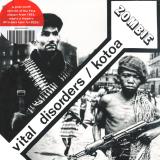
Vital Disorders & Kotoa - Zombie (7")

Vital Disorders & Kotoa

Zombie (7")

7"-VinylWAH7065
Wah Wah 45s
11.09.2025
  • A1: Vital Disorders - Zombie
  • B1: Kotoa - Zombie

Wah Wah 45s present a unique moment from 1982 where New Wave and Post Punk collided with Afrobeat in the shape of Norwich DIY outfit Vital Disorders and their subversive yet instantly memorable version of the Fela Kuti classic, Zombie.

Band member Suzy Cox explains more:

"The song came to the band through our vocalist Lenneka Van Gilst who was in the group between January 1980 and December 1981. Lenneka grew up in Nigeria and had the original track on vinyl. When she moved to Trowse House, Norwich, the flat under Chris, the VD's bass player, he heard the vibes floating through the floorboards. One thing led to another and it was in our set for ages. Lenneka had left the band to travel to Mexico by the time we recorded the track. We did well to choose it as the song has really stood the test of time. Lenneka had a lot of African Beat which was a big influence on us."

The track came to label boss Dom Servini's attention having been unearthed by BBC 6 Music DJ Gilles Peterson in late 2024, and a vinyl reissue of this rare and one-off gem was the obvious choice. Rather than pairing it with its original punky B-side though, Dom enlisted new signings to the label - young Afro-dub outfit Kotoa - to record their take on the Kuti classic. The quintet delivered what is a three minute, intense take on the Afrobeat genre, complete with youthful voices of protest echoing those of over 30 years ago.

The 7-inch vinyl only release of Zombie comes with re-worked art courtesy of our award winning designer Animisiewasz, taking the home-made look of the original cover and updating it respectfully for 2025.

pas en stock

Commandez maintenant et nous commanderons l'article pour vous chez notre fournisseur.

18,07

Derniere entrée: 76 jours
OZZY OSBOURNE - NO MORE TEARS

OZZY OSBOURNE

NO MORE TEARS

2x12inch19439877271
Sony Music
11.09.2025
  • A1: Mr Tinkertrain
  • A2: I Don’t Want To Change The World
  • A3: Mama, I’m Coming Home
  • B1: Desire
  • B2: No More Tears
  • C1: Won't Be Coming Home (S I.n)
  • C2: Hellraiser
  • C3: Time After Time
  • D1: Zombie Stomp
  • D2: A V.h
  • D3: Road To Nowhere
également disponible

Picture Vinyl[30,71 €]


We Are Vinyl label release - 30th anniversary edition. Considered to be one of his most successful and popular albums, Osbourne’s sixth solo studio record was originally released in September 1991 and featured four songs co written by Motörhead’s Lemmy Kilmister. The album went on to become quadruple platinum in the US, becoming one of Ozzy’s two best selling albums alongside his groundbreaking solo debut "Blizzard of Ozz". An 11 song double album pressed on 180gm black vinyl. No download code.

pas en stock

Commandez maintenant et nous commanderons l'article pour vous chez notre fournisseur.

28,36

Last In: 8 months ago
Various - Dolores: Salsa & Guaracha From 70's French West Indies

In Guadeloupe, many people think that jazz and ka music are like a ring and a finger. To some extent, the same could be said about so called Latin music and the music played in the French West Indies.

Both aesthetics were born in the Caribbean and bear so many connections that they can easily be considered cousins. In constant dialogue, there are lots of examples of their fruitful alliance and have been for a while. The English country dance that used to be practiced in European lounges came to be called kadrille in Martinique and contradanza in Cuba. They both featured additional percussion instruments inherited from the transatlantic deportation. Drawing from shared feelings about the same traumatized identity – later to be creolized – it would be hard not to assume that they were meant to inspire each other. The golden age of the orchestras that graced the Pigalle nights during the interwar period further proves the point. As soon as the 1930s, Havana-born Don Barreto naturally mixed danzón and biguine music in a combo based at Melody's Bar. In the following decade, Félix Valvert, a conductor who was born and raised in Basse-Terre in Guadelupe, also worked wonders in Montparnasse with La Coupole, which was an orchestra made up of eclectic musicians. Afro- Caribbean performers of various origins were often hired on rhythm and brass sections in jazz bands, which used to enliven the typical French balls of the capital. In the 1930s and onwards, Rico’s Creole Band was one of them.


Martinican violinist-clarinettist Ernest Léardée, who would become the king of biguine music as well as the main figure of French Uncle Ben's TV commercials (a dark stigma of post-colonial stereotypes), had musicians from the whole Caribbean sphere play at his Bal Blomet – and they all enchanted "ces Zazous-là" (according the words of Léardée's biguine-calypso piece). In les Antilles (French for French West Indies), music history started to speed up in the 1950s, when trade expanded and radio stations grew bigger. The Guadelupean and Martiniquais youth tuned in their old galena radio sets to South American and Caribbean music. As for the women traders, les pacotilleuses, they bought and sold goods across different islands (the "passing of items through various hands" was thought to be most pleasurable) and brought back countless sounds in their luggage. Such was the case of Madame Balthazar, who once returned from Puerto Rico with the first 45rpm and 33rpm to ever enter Martinique.

Out of this adventure was created the famous Martinican label La Maison des Merengues, a music business she opened and undertook with her husband and which proved to be a major landmark. At the end of the 1950s, in Puerto Rico, Marius Cultier competed in the Piano International Contest playing a version of Monk's Round 'Midnight. He won the first prize and this distinction foreshadowed everything that was to come. Cultier, the heretic Monk of jazz, was quickly praised for writing superb melodies, always tinged with a twist that conferred a unique sound to his music. It didn't take long for the gifted self-taught musician to get to play with Los Cubanos, making a name for himself thanks to his impressive maestria on merengues.

The rest is history. Besides, in the late 1950s, Frantz Charles-Denis, born into the upper middle class in Saint-Pierre and better known by his first name Francisco, went back home after working at La Cabane Cubaine – a club located rue Fontaine where he had caught the Latin fever. Francisco's music was therefore heavily marked by his Cuban cousins' influence, which gave the combos he led a specific style and also led to renewal. Things were swinging hard in La Savane, located in the main square in Fort-de-France. He set up the Shango club close by and tested out the biguine lélé there, a new music formula spiced up with Latin rhythms. Soon afterwards, fate had him fly to Puerto Rico and Venezuela.

As for percussionist Henri Guédon (percussions were only a part of his many talents), he was born in Fort-de-France in May 22nd 1944, the day marking the celebration of the abolition of slavery. As an old man, he could remember that in " his father's Teppaz, a lot of hectic 6/8 music was constantly playing...". In the opening lines of his Lettre à Dizzy, a small illustrated collection of writings published by Del Arco, he highlighted the huge impact that cubop had on him as a teenage boy, around 1960. He eventually turned out to be the lider maximo in La Contesta, a big band steeped in Latin jazz. He was also the one who originated the word zouk to describe music which brought the sound of the New York barrio to Paris. It was the culmination of a journey that started in Sainte-Marie: "a mythical place for bélé, the equivalent of Cuban guaguancó". In the early 1960s, the tertiary economy developed to the detriment of agriculture. Yet rural life was where roots music emerged in Martinique and in Guadeloupe.

Record companies played a major part in the process of Latin versions sweeping across the islands – before reaching everywhere else. Producer Célini, boss of the great Aux Ondes label, and Marcel Mavounzy, both the head of Émeraude records - a firm which was founded in 1953 - as well as the brother of famous saxophonist Robert Mavounzy, were big names to bear in mind. Although there were many of them - all of whom are featured on this record - Henri Debs was definitely the major figure in the recording adventure. He proved to be so influential that he even got compared to Berry Gordy. In the mid 1950s, when he acquired his first Teppaz, he worked on his first compositions: a bolero and a chachacha. Then, he became the one man who made people discover Caribbean music, from calypso to merengue. He was among the first ones to rush out to San Juan, Puerto Rico, to buy records and distribute them through a store run by one of his brothers in Fort-de-France. He had members of the Fania All Star come and perform there, which he was madly proud about. He was also the first one to pay attention to Haitian music, such as compas direct and various other rhythms which would soon flood the market. As a result, many of the combos hitting his legendary studio would end up boosted by widespread "Afro-Latin" rhythms. However, he never denied his identity: gwo ka drums were given a major role, although they were instruments which had long been banned from the "official" music spheres. The present selection bears witness to such a creative swarming. Here are fourteen tracks of untimely yet unprecedented cross-fertilization: all types of music rooted in the Creole archipelago have found their way, whatsoever, to the tracklisting. Whether originating from the city or being more rural, they all go back to what Edouard Glissant, in an interview about the place of West Indian music in the Afro-American scope, called "the trace of singing, the one which got erased by slavery." "It is so in jazz, but also in reggae, calypso, biguine, salsa... This trace also manifests through the drums, whether Guadelupean, Dominican, Jamaican or Cuban... None of them being quite the same. They all point to the idea of a trace, seeking it out and connecting to each other through it. This is the hallmark of the African diaspora: its ability to create something new, in relation to itself, out of a trace. It may be the memory of a rhythm, the crafting of a drum, a means of expression which doesn't resort to an old language but to the modalities of it." The opening track features one of the emblematic orchestras of this aesthetic identity, criscrossing many music types from the archipelago. The 1974 Ray Barretto guajira – Ray Barretto was a major New York drummer influenced by Charlie Parker and Chano Pozzo – is magnificently performed by Malavoi, a legendary Fayolais group (i.e from Fort-de-France). Additionally, the compilation ends on a piece by Los Martiniqueños de Francisco. It symbolically closes the circle as it is a genuine potomitan of Martinique culture which also functions as a tireless campaigner for Afro-Caribbean music. Practicing the danmyé rounds (a kind of capoeiria) to the rhythm of the bèlè drum, it delivers a terrific Caterete, a kind of champeta of Afro- Colombian obedience which was originally composed by Colombian Fabián Ramón Veloz Fernández for the group Wgenda Kenya. The icing on the cake is Brazilian Marku Ribas, who found refuge in Martinique in the early 1970s, bringing his singing to the last trance-inducing track. These two "versions" convey the whole tone of a selection composed of rarities and classics of the tropicalized genre, swarming with tonic accents and convoluted rhythms. It is the sort of cocktail that the West Indians never failed to spice up with their own ingredients. For instance, the Los Caraïbes cover of Dónde, a famous Cuban theme composed by producer Ernesto Duarte Brito, has a typical violin and features renowned Martinique singer Joby Valente and his piquant voice.


The track used to be – or so we think – their only existing 45rpm. The meaningful Amor en chachachá by L'Ensemble Tropicana, a band which included Haitian musicians among whom was composer and leader Michel Desgrotte, also recalls how Latin music was pervasive in the tropics in the mid-1960s. They were the ones keeping people dancing at Le Cocoteraie in Guadelupe and La Bananeraie in Martinique. Around the same time, another "foreign" band, Congolese Freddy Mars N'Kounkou's Ryco Jazz, achieved some success on both islands by covering Latin jazz classics – such as their adaptation of Wachi Wara, a "soul sauce" by Dizzy Gillespie and Chano Pozo whose interweaving of strings and percussions can have anyone hit the dancefloor. How can you resist Dap Pinian indeed, a powerful guaguancó by Eugene Balthazar, performed by the Tropicana Orchestra and published by the Martinique-founded La Maison des Merengues? It also acts as a symbol of the maelstrom at work. Going by the name Paco et L'orchestre Cachunga, Roger Jaffory used to play guaguancó too: his Fania-inspired Oye mi consejo is one example of his style. Baila!!!!! Dancing was also one of the Kings' focus points. Oriza is a Puerto Rican bomba and a "classic" originally composed by Nuevayorquino trumpeter Ernie Agosto, which reserves major space for brasses, giving it a special sheen.

Emerging from the New York barrios crucible was also La Perfecta, a Martinique group originating from Trinidad, whose name directly references the totemic Eddie Palmieri figure as well as his own band, also called La Perfecta. Here they borrow Toumbadora from Colombian producer and composer Efraín Lancheros and interpret it by emphasizing percussions, which set fire to the track even more than the wind instruments. The same goes for Martinique's Super Jaguars, who use Tatalibaba – a composition by Cuban guitarist Florencio "Picolo" Santana which was made famous by Celia Cruz & La Sonora Matencera – as a pretext for sending their cadences into a frenzy. In a more typically salsa vein, the Super Combo, a famous Guadelupean orchestra from Pointe-Noire that was formed around the Desplan family and had Roger Plonquitte and Elie Bianay on board, adapt Serana, a theme by Roberto Angleró Pepín, a Puerto Rican composer, singer and musician also known for his song Soy Boricua. Here again, their vision comes close to surpassing the original. In the 1970s, L'Ensemble Abricot provided a handful of tracks of different syles, hence reaching the pinnacle of the art of achieving variety and giving pleasure. They played boleros, biguines, compas direct, guaguancó and even a good old boogaloo - the type they wanted to keep close to their hearts for ever, "pour toujours", as they sang along together in one of their songs. Léon Bertide's Martinican ensemble excelled at the boogaloo which had been composed by Puerto Rican saxophonist Hector Santos for the legendary El Gran Combo.


Three years later, in 1972, Henri Guédon, with the help of Paul Rosine on the vibraphone, tackled the Bilongo made famous by Eddie Palmieri. Such a classic!!!!! And so were the Aiglons, the band from Guadelupe: choosing to execute Pensando en tí, a composition by Dominican Aniceto Batista, on a cooler tempo than the original, they noticeably used a wonderfully (un)tuned keyboard in place of the accordion. On the high-value collectible single – the first one released by Les Aiglons under the Duli Disc label – there is a sticker classifying the track under the generic name "Afro". Now that is what we call a symbol. Jacques Denis

pas en stock

Commandez maintenant et nous commanderons l'article pour vous chez notre fournisseur.

21,43

Derniere entrée: 77 jours
EVERYTHING IS RECORDED - TEMPORARY
 
14
également disponible

Black Vinyl[21,81 €]


Everything Is Recorded, ist das musikalische Kollaborationsprojekt von XL-Recordings Chef Richard Russell. Auf dem Album "Temporary" sind zu hören u.a. Sampha, Bill Callahan, Noah Cyrus, Florence Welch, Maddy Prior, Berwyn, Alabaster Deplume, Jah Wobble, Yazz Ahmed, Laura Groves, Kamasi Washington, Ricky Washington, Roses Gabor, Jack Penate, Samantha Morton, Clari Freeman-Taylor und Nourished By Time. "Temporary" entstand im Verlauf von vier Jahren in Russells Londoner Copper House Studio und während einiger zusätzlicher Sessions in Tottenham, Cumbria, Dorset, Los Angeles und Las Vegas Es schließt an die vorangegangenen Releases wie das 2018 für den Mercury Prize nominierte Debüt an. Auf dem neuen Album erfährt Russells musikalische DNA allerdings ein Reboot: Sein Cut & Paste Approach reicht in die Zeit vor Sampling-Helden wie The Bomb Squad und Prince Paul zurück bis hin zu Innovatoren wie Steve Reich, Robert Rauschenberg und William S. Burroughs. Während Russells Musik bislang geprägt war von Rhythmus, Worten und Melodie - in ebendieser Reihenfolge - tauschen zwei Aspekte diesmal ihre Rollen. Der Rhythmus tritt zugunsten der Melodie in den Hintergrund. Musikalisch ist "Temporary" vom Gedankenexperiment "what if folk music had "gone digital" in the 80s, just as reggae had?" geleitet, während sich in spiritueller und lyrischer Hinsicht vieles um Trauer und den Verlust von Freunden, Familienmitgliedern und Kollegen dreht. Im Ergebnis stehen leuchtende und gelassene Kompositionen, auch dank der faszinierenden und vielfältigen Gästeliste, die "Temporary" mitbringt. Die fragilen, zärtlichen und stillen Tracks liefern vielleicht eines der sanftesten Alben, die je über den Tod geschrieben wurden. "Das Album zu machen, war erfüllend, eine Art, das Leben zu heiligen", so Russell. "Temporary" ist die erste reguläre Veröffentlichung von Everything Is Recorded nach über vier Jahren. In der Zwischenzeit war Russell allerdings nicht untätig. Via Soundcloud und Bandcamp erschienen zuletzt "Summer Solstice", "Autumn Equinox", "Winter Solstice" und "Spring Equinox", die alle mit einer Reihe von Gastmusikerinnen und -.musikern im Rahmen ausgiebiger Jams an jeweils nur einem Tag entstanden. Mit der Schauspielerin und Regisseurin Samantha Morton tat er sich zum Duo Sam Morton zusammen, welches sein Debüt "Daffodils und Dirt" veröffentlichte. Für Peter Gabriels Comeback-Album "i/o" produzierte Russell den Song "Four Kinds of Horses".

pas en stock

Commandez maintenant et nous commanderons l'article pour vous chez notre fournisseur.

21,81

Last In: 8 months ago
PETER MURPHY - LOVE HYSTERIA (INDIGO VINYL)

1988's Love Hysteria was produced by Simon Rogers, who at the time was also playing with The Fall. It contains eight songs written by Peter with Paul Statham, plus a cover of Iggy Pop's "Funtime". Record Collector said that the album's songs "All Night Long, Indigo Eyes, Dragnet Drag and Blind Sublime managed to combine direct rock power with Murphy's vocal gymnastics and imaginative way with lyrics."

pas en stock

Commandez maintenant et nous commanderons l'article pour vous chez notre fournisseur.

21,81

Last In: 8 months ago
EL MICHELS AFFAIR - 24 HR SPORTS

Leon Michels ist still und leise zu einem der gefragtesten Produzenten der Musikszene geworden.Sein unverwechselbarer Sound hat die Aufmerksamkeit des Mainstreams auf sich gezogen und inspiriert gleichzeitig weiterhin die Underground-Szene. Seit dem 2023 erschienenen Album Glorious Game von El Michels Affair & Black Thought war Michels als Produzent für andere Künstler aktiv - darunter Norah Jones' Grammy-prämiertes Visions, Clairos Grammy-nominiertes Charm, Kali Uchis' ,Moonlight" sowie Alben für seine Labelkollegen Brainstory, Derya Yildirim & Grup Simsek, Thee Heart Tones und Liam Bailey. Sein neues Album 24 Hr Sports markiert die langersehnte Rückkehr unter seinem eigenen Namen: El Michels Affair.24 Hr Sports wurde inspiriert von Mode und Grafikdesign der Sports-Illustrated-Magazine der 80er- und 90er-Jahre, MF DOOMs Special Herbs-Alben, den dort verwendeten Sample-Quellen und Gospelmusik à la Pastor T.L. Barrett. Die Summe dieser Einflüsse, gepaart mit Michels' unfehlbarem kreativen Gespür, ergibt ein Rezept für einen Instant-Klassiker - ein Werk, das zweifellos zu den meistgefeierten Veröffentlichungen des Jahres 2025 zählen wird.Der Album-Opener ,Drum Line" ist ein hymnischer, mitreißender Track mit Marschband-Schlagzeug und donnernden Bläserarrangements, die sofort alle Aufmerksamkeit auf sich ziehen und den Ton für das folgende Album setzen. 24 Hr Sports bedeutet eine deutliche Abkehr von der bisher überwiegend instrumentalen Musik im Katalog von El Michels Affair. Mit einer Vielzahl von Gesangsfeatures spiegelt das Album das schwer einzuordnende Genre seiner Musik wider.Das erste dieser Features ist ,Mágica" mit dem brasilianischen Künstler Rogê, der die ohnehin energiegeladene Nummer mit seinen fußballinspirierten Lyrics auf ein neues Level hebt. Weiter geht es von Brasilien nach Ghana: In ,Say Goodbye" feiert Florence Adooni ihre Individualität mit lässigem Selbstbewusstsein und wechselt mühelos zwischen Frafra und Englisch, besonders eingängig im Refrain: ,never gonna find a girl like me_".Labelkollege und weltbekannter Trompeter von The Roots, Dave Guy, veredelt den 70er-Jahre-Groove von ,Oakley's Car Wash" mit seinen charakteristischen Bläserlinien, bevor der Track in ein Dub-artiges Outro übergeht. Vom wilden zum sanften Klang: ,Anticipate" mit Clairo knüpft an die musikalische Chemie an, die das 2024er-Album Charm hervorgebracht hat. Clairo gleitet über die typischen EMA-Arrangements, während sie sich nach unerreichbarer Liebe sehnt - getragen von einer perfekt eingespielten Band.,Eastside" ist ein Stück, das einen Sonnenaufgang am Meer vertonen könnte - Leon Michels' Sinn für Raum und Arrangement wird hier besonders deutlich. Aus Japan ist der Suginami Children's Choir auf dem üppigen Track ,Clean The Line" zu hören - sie singen ein Lied über den Mond, die Sonne und Vögel. Danach reißt ,Cortex" mit verzerrten Gitarren und donnernden Drums die Tür auf - ein Moment purer, filmreifer Intensität in der Mitte des Albums.Leon Michels übernimmt selbst den Lead-Gesang auf ,Shining", einem Song über die Suche nach einem Freund, mit dem man die Freude eines sonnigen Tages teilen kann. Der international gefeierte Shintaro Sakamoto ist auf ,Indifference" zu hören - ein lässiger Song mit federnden Basslinien und gefühlvollen Flöten, in dem Sakamoto zwischen Gesang und gesprochener Poesie über eine vergängliche Liebe reflektiert.Das Grammy-prämierte Duo Norah Jones und Michels kommt auf ,Carry Me Away" erneut zusammen: Jones' honigsüße Stimme schwebt über einem schwer einzuordnenden, aber sofort liebenswerten Track. Michels lehnt sich hier wieder mehr in Richtung El Michels Affair-Stil, der sich klar von seinen bisherigen Produktionen für Norah Jones abhebt. ,Take My Hand" stellt den Gospel-Einfluss in den Vordergrund - mit dem Fabulous Rainbow Singers Choir im Refrain und einem Saxophon-Solo der verstorbenen Jazzlegende Rahsaan Roland Kirk.,Open Season", ein Piano-getriebener Midtempo-Track mit Gruppenrufen wie ,we want the gold, we want the gold_", könnte den perfekten Soundtrack für eine Slow-Motion-Highlight-Reel liefern. Der treffend betitelte Albumabschluss ,Victory Lap" schließlich ist ein traumhafter, euphorischer Ausklang, der dem gesamten Werk würdig ist.Am Ende spricht die Trophäe auf dem Albumcover Bände: El Michels Affair ist Champion Sound - und 24 Hr Sports macht das unmissverständlich klar.

pas en stock

Commandez maintenant et nous commanderons l'article pour vous chez notre fournisseur.

22,65

Last In: 8 months ago
RICK ASIKPO & AFRO FUSION - Got To Be Me LP

Mythical soul/boogie record recorded in Louisiana by Nigerian multi instrumentalist Rick Asikpo when he was studying in Houston. Layers of synths wash over drawn out, Earth, Wind and Fire inspired grooves, moving from the uptempo “Disco Life” and “Jam” to the languid boogie and two step soul of “Love” and Donny Hathaway-esque “Let’s Get High”. The album is shot through a Texan/Nigerian filter that stands as a missing link between the dancefloor experiments of Houston and Lagos. As featured on Soundway’s seminal “Doing It In Lagos” compilation.

pas en stock

Commandez maintenant et nous commanderons l'article pour vous chez notre fournisseur.

21,22

Last In: 8 months ago
HAMMOCK - ELSEWHERE

Hammock

ELSEWHERE

12inchHMKLP81
HAMMOCK Music
10.09.2025

Seeking overlooked beauty and prizing reflection in a distracted world, Hammock creates cinematic music for the road less traveled. In stirring works of shimmering post-rock ambience that swell with hope and melancholic nostalgia, the Nashville-based duo of Marc Byrd and Andrew Thompson immerse listeners in living visions of moments long past, animating life's fond remembrances and scarring losses with gentle lens-flare harmonics, heart-surging neoclassical drama, and pensive silence. A direct challenge to the passive existence of modern life, where everything can be experienced but precious little is felt, Hammock demands, and richly rewards, patience and contemplation. One of Hammock's career defining works, the Mysterium, Universalis, and Silencia trilogy came to a close in 2019. The first chapter, Mysterium, was written following the death of Byrd's 20-year-old nephew and dealt with incomprehensible, shattering loss. Difficult understanding came on Universalis, and an altered reality understood through quiet reflection took hold on Silencia. Emerging from the silence, a period that brought with it the global pandemic of Covid-19 that has kept loved ones apart, conscripted months upon months of isolation, and roused directionless longing for escape, Hammock presents Elsewhere. Recorded by Byrd and Thompson at their homes, apart and with minimal equipment, Elsewhere serves as a gateway to another place, materializes feelings of separation and loss without closure, and calls listeners back to live their lives - not spend them longing to be something or somewhere else. - Wyatt Marshal

pas en stock

Commandez maintenant et nous commanderons l'article pour vous chez notre fournisseur.

23,49

Last In: 8 months ago
Submerse - FR033

Submerse

FR033

12inchFR033
Future Retro London
09.09.2025

I was aware of Submerse from a long time ago, mainly for when he was making hip-hop & footwork tunes but I had noticed that a few years ago, on his SoundCloud page, he was uploading jungle tunes that he had started making, which got me interested in keeping tabs on what he was doing.

But it wasn't until I met him in Tokyo where he's based, when I played after him at an event at Circus (venue in Osaka & Tokyo) and then met up with him again later on that week that I realised how much he had been making.

He sent me some of the stuff he'd been doing that wasn't available publicly yet and I was really impressed by how strong the melodies were and how much influence from video game soundtracks he had in his tunes, I knew I had to get him on Future Retro London for a release.

Big up to Submerse for allowing me to put out this EP of his on Future Retro London, look out for more music from him to come on Future Retro London and other labels!

pas en stock

Commandez maintenant et nous commanderons l'article pour vous chez notre fournisseur.

17,02

Last In: 8 months ago
Various - Summer Of Love LP

An incredible journey through the dark and seductive soundtracks of the Italian nights, this compilation takes you deep into the after-hours soul of Rimini, Riccione, and Milan between the late 1980s and the early 1990s — a period of wild experimentation, underground parties, and sonic exploration. Eight rare and visionary tracks, all produced in the Belpaese, reflect a sound that was too ahead of its time to be fully appreciated back then, yet feels incredibly fresh and relevant today, as if they were made for the dancefloors of now.

In the middle of this evocative collection, a blasting remix by Milord stands out — a peak-time weapon that has already destroyed dozens of dancefloors with its hypnotic energy and raw power. Also featured is the stunning debut of Luca Sorrentini, who breathes new life into an obscure Italo-Arabic track originally composed by Ray Ridha
Credits.

pas en stock

Commandez maintenant et nous commanderons l'article pour vous chez notre fournisseur.

23,11
Buscrates - Blasting Off

Neo funk rising star Buscrates aims high with Blasting Off, his first full-length album. The Pittsburgh-based keyboard cosmonaut has been grabbing ears since his days hooking up beats with the hip hop crew East Liberty Quarters, but after slinging spicy one-offs to a slew of hot labels like Omega Supreme, Voyage Funktastique and Razor N Tape (as well as contributing production to Wiz Khalifa and Curren$y's 2009 project), the time has come for a full-length featuring his growing modern funk repertoire.

"I'm a '90s hip hop dude, but I grew up on that '80s funk stuff," Buscrates acknowledges. DJ gigs provided a working knowledge of the jams that moved a contemporary crowd, and as his collection of keyboards and drum machines grew he began blending the best of both decades with his personal futuristic edge. "I was nice on the MPC but I wanted to have a little more dynamic range with what I was doing," he notes. The self-described "certified synth geek" was soon branching into sounds that recalled '80s legend Kashif crossed with the hip hop bounce of DJ Spinna, and the modern funk community took notice.

For his first full-length, Buscrates has crewed up with an ace team of collaborators, featuring vocalist Sally Green on the bouncy lead single "Lost And Found" and "Eight Nine." Kate Moe Dee takes over mic duties for the second single, "How Ya Gonna Do It," a slinky groove that slides in place alongside groups like the Sunburst Band and Rene & Angela as an exemplar of sophisticated R&B. Adding to those credentials are the sultry vocals of Anda on "Believe," but of course, it wouldn't be a Buscrates set without some stank, neck-snapping instrumentals. "Five Days" and "Sure Shot," both collabos with the drum technician DJ Epik, will rattle speakers and have already been lighting up message boards on recent Buscrates DJ sets. Round things out with some easy gliding, jazzy funk ("Turn It Out" with Brothermartino on flute and "Evergreen" featuring Tony Ozier) and you've got all the ingredients for a high-flying cosmic ride with Buscrates at the controls.

pas en stock

Commandez maintenant et nous commanderons l'article pour vous chez notre fournisseur.

23,57

Last In: 6 months ago
GODSPEED YOU BLACK EMPEROR - Lift Your Skinny Fists Like Antennas To
  • A1: Lift Yr. Skinny Fists, Like Antennas To Heaven
  • A2: Gathering Storm / Il Pleut À Mourir
  • A3: Welcome To Barco Am/Pm
  • A4: Cancer Towers On Holy Road Hi-Way
  • B1: Terrible Canyons Of Static
  • B2: Atomic Clock
  • B3: Chart #3
  • B4: World Police And Friendly Fire
  • B5:
  • C1: Murray Ostril: "...They Don't Sleep Anymore On The Beach
  • C2: Monheim
  • C3: Broken Windows, Locks Of Love Pt. Iii. / 3Rd Part
  • D1: Moya Sings "Baby-O
  • D2: Edgyswingsetacid
  • D3:
  • D4: Attention...mon Ami...fa-Lala-Lala-La-La
  • D5: She Dreamt She Was A Bulldozer, She Dreamt She Was Alone In An Empty Field
  • D6: Deathkamp Drone
  • D7:

[b] A2 Gathering Storm / Il Pleut À Mourir [+Clatters Like Worry]
[c] A3 "Welcome To Barco AM/PM..." [L.A.X.; 5/14/00]


[i] B5 [...+The Buildings They Are Sleeping Now]


[o] D3 [Glockenspiel Duet Recorded On A Campsite In Rhinebeck, N.Y.]
[p] D4 "Attention...Mon Ami...Fa-Lala-Lala-La-La..." [55-St.Laurent]


[s] D7 [Antennas To Heaven...]

pré-commande08.09.2025

il devrait être publié sur 08.09.2025

27,10
Various - Friday Night In San Fransisco LP
  • A1: Mediterranean Sundance / Rio Ancho
  • A2: Short Tales Of The Black Forest
  • B1: Frevo Rasgado
  • B2: Fantasia Suite
  • B3: Guardian Angel

Friday Night in San Francisco is a live album by Al Di Meola, John McLaughlin, and Paco de Lucía.

It was recorded live at the Warfield Theatre in San Francisco,

on December 5 in 1980. The album is considered an iconic recording and was described by jazz author Walter Kolosky as
"a musical event that could be compared to the Benny Goodman Band's performance at Carnegie Hall in 1938...
it may be considered the most influential of all live acoustic guitar albums."

Al Di Meola is an acclaimed Italian American jazz fusion and Latin jazz guitarist, composer, and record producer.
He experienced a celebrated career that has spanned four decades and earned him critical accolades,
three gold albums and more than six million record sales worldwide.
Di Meola has amassed over 20 albums as a leader while collaborating on a dozen or so others.


John McLaughlin, also known as Mahavishnu, is an English guitarist, bandleader, and composer.
He is a pioneer of jazz fusion, combining elements of jazz with rock, world music,
Indian classical music, Western classical music, flamenco, and blues. He received multiple "Guitarist of the Year"
and "Best Jazz Guitarist" Awards from magazines such as Downbeat and Guitar Player and was ranked 49th in Rolling Stone
magazine's list of "100 Greatest Guitarists of All Time". Jeff Beck called him "the best guitarist alive".

Paco de Lucía was a Spanish virtuoso flamenco guitarist, composer, and record producer.
He was one of the first flamenco guitarists to branch into classical and jazz. De Lucía was noted for his fast and fluent fingerstyle runs
and gained popularity outside Spain after collaborating with McLaughlin and Di Meola. Richard Chapman and
Eric Clapton described de Lucía as a "titanic figure in the world of flamenco guitar."


Friday Night in San Francisco is available as a limited edition of 1000 individually numbered copies on purple coloured vinyl and includes an insert.

pré-commande05.09.2025

il devrait être publié sur 05.09.2025

31,30
Naoki Zushi - III (LP 2x12")

Naoki Zushi

III (LP 2x12")

2x12inchWOE021LP
World Of Echo
05.09.2025

World Of Echo announces the reissue of two remastered albums by Japanese guitarist and songwriter Naoki Zushi, 1988’s Paradise, and 2005’s III. Two classics of Japanese psychedelia, both Paradise and III were originally released on Org Records, the imprint of Shinji Shibayama of acid-folk group Nagisa Ni Te, with whom Zushi has guested on second guitar for decades. Both intimate and expansive, rich with revelatory songwriting and blasted, sky-scouring guitar, these reissues return these albums to print for the first time since the 2000s. It’s the first time III has been officially released on vinyl, with an extra, previously unreleased track, “Under The June Moonlight.”

Recorded in Kyoto’s Townhouse Studios in mid 1987 and released in limited-to-500 vinyl pressing in 1988, Paradise emerged from a scene in Kansai, Japan that was embracing the idiosyncracies of 1970s singer-songwriters, the soaring solos of early seventies psychedelia, and the DIY impulse of 1980s post-punk. While Zushi’s musical history stretched back to the early eighties – he was a founding member of Jojo Hiroshige’s noise outfit Hijokaidan – he found his feet with groups like Hallelujahs, whose dream-pop collection Niku O Kuraite Chikai Wo Tateyo was recently reissued by Black Editions, and Idiot O’Clock.

Paradise appeared two years after that Hallelujahs album and share much the same membership – Zushi’s backing band on several of the songs includes Shibayama on drums and Ken-Ichi Takayama (aka Idiot) on electric guitar, though just as often, Zushi plays all the instruments himself. The coordinates here are wide-reaching – you can hear the volume and intensity of Neil Young & Crazy Horse (on “Hallelujah: Left Side” and “Paradise: Midday”), the slow-motion magic of Galaxie 500, the idiosyncratic spirit of The Only Ones, all mixed up with tender guitar miniatures and stumbling garage-psych-pop moves.

Seven years later, after the transitional album Phenomenal Luciferin, Zushi released III. Perhaps his masterpiece, it’s already been bootlegged on vinyl, but this reissue is the real deal. The album was recorded at Studio Nemu over seven years, and sees Zushi backed by Shibayama (bass) and Masako Takeda (drums), his erstwhile bandmates in Nagisa Ni Te. By this stage, Zushi had started to really stretch out, and many of the songs on III swoon languorously, taking their sweet time to say what they need to say. It’s rich with lovely, melancholy songs, in a similar realm to bandmates Nagisa Ni Te, of course, but you can also hear traces of everything from Syd Barrett’s The Madcap Laughs, through seventies private press loner folk, to the slow-burn meanderings of the likes of early Low or Damon & Naomi.

When interviewed by Shibayama in the mid-nineties, Zushi said of Paradise, “it was a sort of collection of songs that had meant something to me up to that point… it was my paradise. I wanted to create paradise.” That’s something Zushi achieves on both of these albums – visionary Japanese psychedelia, en route to paradise. - Jon Dale


g Under The June Moonlight vinyl only bonus track

pré-commande05.09.2025

il devrait être publié sur 05.09.2025

30,04
Ami Taf Ra - The Prophet And The Madman 2x12`

Die aus Marokko stammende und in L.A. lebende Singer-Songwriterin, Ami Taf Ra veröffentlicht ihr Debütalbum „The Prophet And The Madman“ Ende August auf Brainfeeder!

Inspiriert von Khalil Gibrans bahnbrechendem Werk, „Der Prophet“, wurde das Album von Ami Taf Ra vom legendären Saxophonisten und Komponisten Kamasi Washington produziert, mit dem sie häufig zusammenarbeitet. „The Prophet And The Madman“ ist eine zu eine Reise über elf Tracks, an denen unter anderem Ryan Porter, Miles Mosley, Brandon Coleman, Tony Austin, Taylor Graves, Cameron Graves, Ronald Bruner Jr., Allakoi Peete, Kahlil Cummings und Kamasi Washington beteiligt sind. Die LP ist ein kühnes Statement einer Sängerin, die in den Traditionen arabischer Größen wie Fairuz, Umm Kulthum und Warda verwurzelt ist und sich dennoch furchtlos auf neues klangliches Terrain begibt. Es ist ein Album, das nicht nach Antworten, sondern nach Präsenz sucht - eine Hingabe an die Reise, nicht an das Ziel.

Im Laufe ihrer Karriere hat Ami Taf Ra auf Bühnen in aller Welt gestanden und das Publikum in Dänemark, der Türkei, Marokko, Belgien, Israel, dem Libanon und Jordanien begeistert. Sie ist auf angesehenen Festivals wie dem South East Jazz Festival und dem Haarlem Jazz Festival in den Niederlanden aufgetreten, ebenso wie mit dem niederländischen Royal Metropole Orchestra in der königlichen Konzerthalle der Niederlande, dem weltbekannten Concertgebouw, und dem Dutch Blazers Ensemble. Ami Taf Ra war mit Kamasi Washington auf ausgedehnten Tourneen unterwegs und trat gemeinsam an namhaften Orten und auf Festivals in den Vereinigten Staaten auf, darunter City Winery in Boston, das Hollywood Bowl Jazz Festival und die Just Jazz Concert Series in der Mr. Musichead Gallery in Los Angeles. Darüber hinaus ist sie mit einer Vielzahl von Musiker:innen aufgetreten, darunter Posaunist Ryan Porter, Saxophonist Rickey Washington, Perkussionist Kahlil Cummings, Bassist Ben Williams, Schlagzeuger Jonathan Pinson und Pianist Jamael Dean.

pas en stock

Commandez maintenant et nous commanderons l'article pour vous chez notre fournisseur.

29,37

Last In: 6 months ago
GASTR DEL SOL - THE SERPENTINE SIMILAR

GASTR DEL SOL

THE SERPENTINE SIMILAR

12inchDC106
DRAG CITY
05.09.2025

Back from the undead in the fresh (because we believe in upgrades & afterlifes!) is this new pressing of the first of all Gastr del Sol records, The Serpentine Similar. It is one of several distinct initiators of a definitive musical drift in the 1990s, and a drift all of its own, to boot! At the time, this album was largely heard within an underground whose boundaries were clearly defined - but if today"s sound-pool of "commercial" music is deeper and wider than it was back then, it is without a doubt due to the cracking open of certain doors of perception by Gastr del Sol, alongside their esteemed others. The year was 1992. After a bruising run of tour dates the year before, the final lineup of Bastro, a power-trio of David Grubbs, Ken (Bundy) Brown and John McEntire, retired, exhausted. Shortly thereafter, they were rebirthed, sans drums, via a new set of ideas composed in the cut-down configuration of Grubbs on guitars, keyboards and vocals and Brown on bass. Playing in duo format opened up sound and intention, leaving the need for speed (and the stock in rock) out, while letting in an expanse of brooding, droning acoustic space that highlighted the songs" serpentine shapes. This was something so radically different as to require a new calling card: henceforth, Gastr del Sol. Signing to Teen Beat, Gastr del Sol completed The Serpentine Similar in late 1992 for release the following year (the DC reissue came in "97). In the final rendering, Serpentine"s roof-rent, white-sky execution was attenuated with several percussion appearances from the prodigal John McEntire. Over the next five years, his cameo presence was a constant in Gastr del Sol"s steadily-evolving tradition of significant breaks from tradition at every turn. There would be an even more significant tradition-breaker onboard for all this; following the release of The Serpentine Similar, Jim O"Rourke joined Grubbs in Gastr as Brown exited (to focus on Tortoise, with McEntire et al). For the new Gastr duo, a world of new directions in music awaited, the future became the past, and the music of Gastr del Sol emerged from the thin air, then returned there. Now, The Serpentine Similar has been returned to vinyl from the temporal streams of contemporary music listening, a glorious rematerializing of all its spatial details on LP for the first time in 20 years.

pré-commande05.09.2025

il devrait être publié sur 05.09.2025

30,46
LA DISPUTE - NO ONE WAS DRIVING THE CAR LP 2x12"
  • I Shaved My Head
  • Man With Hands And Ankles Bound
  • Autofiction Detail
  • Environmental Catastrophe Film
  • Self-Portrait Backwards
  • The Field
  • Sibling Fistfight At Mom's Fiftieth / The Un-Sound
  • Landlord Calls The Sheriff In
  • Steve
  • Top-Sellers Banquet
  • Saturation Diver
  • I Dreamt Of A Room With All My Friends I Could Not Get
  • No One Was Driving The Car
  • End Times Sermon

It"s been six years since LA DISPUTE released their last album, Panorama. Since then, the Michigan post-hardcore band-made up of Jordan Dreyer on vocals, Brad Vander Lugt on drums, Chad Morgan-Sterenberg and Corey Stroffolino on guitar, and Adam Vass on bass-dealt with the stagnance of the pandemic, celebrated the ten-year anniversaries of Wildlife and Rooms Of The House, and began working on NO ONE WAS DRIVING THE CAR. The fifth studio LP is the first entirely produced by the group, and it came together in Grand Rapids and Detroit, the United Kingdom, Australia, and the Philippines: "I think the change in environment was really helpful to breathing new life into the process each time we came back to it," Dreyer says. Partly inspired by the 2017 psychological thriller First Reformed, NO ONE WAS DRIVING THE CAR reckons with malaise in the shadow of the looming apocalypse, which has noticeably been worsened by the advancement of tech. The title comes from a quote from a police officer Dreyer read in a news article about a lethal self-driving Tesla crash, an absurd event which raises questions about the amount of control we have in our own lives. In fourteen dynamic tracks, the band grapples with the existential topic and the human need to find comfort and a sense of security in an existence where we"re often thrust into chaos without permission.

pré-commande05.09.2025

il devrait être publié sur 05.09.2025

26,01
Teppana Jänis & Arja Kastinen - Teppana Jänis LP

Teppana Jänis was born in the village of Uuksujärvi in Suistamo on 21 June 1850. After becoming blind in the late 19th century, he went house to house, supporting himself by playing the kantele, a traditional Finnish and Karelian plucked string instrument belonging to the southeast Baltic box zither family. He performed at dances and in schools, and also participated in the Suistamo kantele and runosong competitions in 1911.

In the summers of 1916 and 1917, the young folk music researcher Armas Otto Väisänen (1890-1969) made collecting trips to Border Karelia. His aim was to collect kantele tunes, laments and shepherd melodies, which were confusingly few in the archives. The 1916 trip was financed by the Finnish Literature Society, who provided a phonograph for recording purposes. In 1917, the trip was financed by the Kalevala Society and the recording was carried out using a parlograph. During these two summers, Väisänen recorded kantele players in the parishes of Suojärvi, Korpiselkä, Suistamo, Tuupovaara, Kitee and Impilahti. Väisänen met Teppana Jänis in both summers and transcribed 22 kantele melodies from him. He recorded 14 of these on wax cylinders.

This LP, titled simply 'Teppana Jänis' fuses and intertwines the original raw cylinder recordings with replayed pieces by Kantele player and researcher Arja Kastinen together with the now late Finnish folk musician Taito Hoffrén, taking into account the additional information and notes found in Väisänen's sheet music manuscripts. Warm thanks to the Finnish Literature Society for permission to use the archive recordings, to Risto Blomster for his invaluable assistance, and to the Karelian Cultural Foundation.

pré-commande05.09.2025

il devrait être publié sur 05.09.2025

23,49
The Orchids - Lyceum LP 2x12"

The Orchids

Lyceum LP 2x12"

2x12inchPLEXUS001
Circuitry
05.09.2025

“'Lyceum' is a fountainhead of unqualified greatness. It’s a strange, sad sound harking back to old school tunesmanship – Aztec Camera, ‘Rattlesnakes’, prime-time Felt – but the whole affair is permeated with a resonant, almost tearful quality. ‘Lyceum’ is reminiscent of Galaxie 500’s ‘Today’ in that it sounds like it cost less than a round of drinks to produce. But the lo fi sound merely enhances the misty glazed-pop sound and raises the hallelujah choruses to the forefront. Rather than drowning them in production mush. Don’t pass it by”.
– Bob Stanley, Melody Maker 1989
Hailing from the suburbs of Glasgow, this five-piece are best known for their three starry-eyed albums on the renowned Sarah Records - this being an expanded version of their first (an eight-track 10” at the time).
By the tail end of the 1980s the independent music scene in the UK was turning its back on the polish and over-indulgence of the mid-80s with its gated drums and wallpaper production. And those who weren’t stretching the boundaries of sonic innovation had tuned back to the post-punk ethos of ramshackle charm and zealous melody, even dousing the spirit with some political fervour once more. Influences were more likely to be Television and the Television Personalities than MTV.
The Orchids and The Sea Urchins were the first two bands to release 7” singles on the Sarah label having previously begun their recording existence on a shared flexi disc in 1987 (The Sea Urchins went on to become Delta, whose classic album ‘Slippin' Out’ from 2000 will be the second release on Circuitry). The Scottish five-piece released ‘I’ve Got a Habit’ and ‘Underneath the Window, Underneath the Sink’ as EPs before really finding their feet with ‘Lyceum’; the tracks, remastered from the original Toad Hall tapes are included on this reissue as are the three songs from the ‘What Will We Do Next?’ 7” (this collection closes with the frazzled stretch that is ‘Yawn’). 'Lyceum' was originally released in August 1989.
The album opens with ‘It’s Only Obvious’ and its gloriously youthful chorus of “who needs tomorrow when all I need, all I needed was you”. James Hackett somehow appears both forthright and rejected, something that one of their musical heroes The Go-Betweens also had down to a fine art. It barely takes a breath until midway through side two where ‘Hold On’ (sounding suspiciously like an unlikely objective) descends into the intro of ‘Blue Light’, the counted-in ‘1, 2, 3, 4’ whispered like the most hopelessly dejected rally. If that sounds depressing it isn’t. This record by The Orchids was a spirited source of comfort for an 18 year old at the time and still shudders with the best type of melancholy, one that’s spirited not indulgent. If you’re not familiar with the band’s charm, this is where you should begin.
'Lyceum' is released on double black vinyl by new label Circuitry.

pré-commande05.09.2025

il devrait être publié sur 05.09.2025

21,43
Articles par page:
N/ABPM
Vinyl
