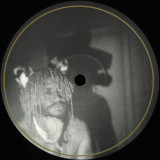
There’s something new under the sun. If you look at it closely,
something new is only (and always) created at crossroads –
when different and signi¦cant traditions are connected and
combined. On their own, these traditions have often existed
for a while. However, in this new form they have never
appeared together. The latest manifestation of something
new can now be found on the album “No Future Dubs”, the
interpretations of “No Future Days” – the most recent album
by German band Messer – by Finnish producer and old
friend of the group Kimmo Saastamoinen aka Toto Belmont.
The intentional traditions that merge on this grand and
digni¦ed album are post-punk, dub and techno. A new
chapter in the culturally constant narrative of dub is written
here. Through their past and parallel activities in hardcore
and post-punk bands, Messer drummer Philipp Wulf met and
befriended Kimmo, originally a drummer too. In their
continuous dialogue discussing their musical journey, Philipp
and Kimmo over the years more and more immersed
themselves in the aesthetic possibilities of dub and reggae.
Indeed, lots of musicians do not listen to the type of music at
home that they write and play in their respective projects
(Take me as an example: House is the music that I produce
and put on as a DJ. On my own, I listen to various stuff,
music by Monk and Messer for example). The same applies
to the protagonists involved here. By discussing dub und
through Toto Belmont’s steadily increasing producingexpertise, the idea of creating dub versions of selected
Messer tracks was born. The Messer album “No Future
Days”, released in 2020, proved to contain the perfect raw
material as the songs on this album are already produced in
a much more transparent way than on previous LPs – and
are hence more suitable for dub. Still, it’s a giant leap from
the originals to the dubs. These add a third dimension to the
described character of the post-punk/dub amalgam: techno.
The result is a sound that hasn’t existed before, especially
not with German lyrics (which scarcely, however, carry
meaning or messages here. Hendrik Otremba’s voice is used
more like an instrument, as if he was the ghostly ¦gure which
he often sings about and which now §oats and screams
through the sound space). The history of mutual contact and
in§uence of (post-)punk and dub (reggae), which Messer
have kept on writing, is glorious and reaches back far in
musical history. Still, it has always been a rather marginal
chapter not only in punk but also in dub history. But already
in the beginnings of punk (the British version, less the
American one), the presence and in§uence of reggae was
obvious in many places as both are united in their resolute
attitude as rebel music. This is how the two genres
recognized each other – especially the punks regarded
reggae as rebellious. As is known, already Johnny Rotten
mainly listened to dub in private. By using the name John
Lydon, he then – together with bass player Jah Wobble –
established the group PiL as one of the most exemplary
bands at the crossroads of dub and punk. The Slits, Pop
Group, Killing Joke, The Ruts and last but not least The Clash
along with the Mick Jones offshoot Big Audio Dynamite –
the thriving British music scene in the early 80s was full of
dub-in§uenced acts. The echoes meandered everywhere. In
the USA, it took longer until the in§uence of dub became
noticeable and it has never been as distinctive as in the UK.
The history of US hardcore, however, cannot be told without
bands like Bad Brains from Washington D.C. who on their
albums occasionally inserted conscious reggae and dub
tracks between breakneck hardcore tracks. Another
important group is Blind Idiot God who similarly included
dub tracks on their LPs – the contrast between densely
droning rock tunes and widely breathing dub versions can be
experienced very vividly here. In the 90s, dub’s in§uence on
post-punk decreased while turning up even more distinctively
somewhere else: Techno was in many respects susceptible
to dub, to say nothing of the music from the so-called British
hardcore continuum (jungle, drum & bass etc.), which directlydeveloped from dub and reggae. But also “pure” techno –
meaning techno without breakbeats – discovered its a¨nity
for the possibilities of dub at an early stage, in England for
instance in projects like Left¦eld or The Orb. In addition, the
project Rhythm & Sound was established in Berlin with close
ties to the Hardwax record store. With regard to this project,
you can’t really say where dub ends and where techno begins
(or vice versa) because of the interconnection of the two
genres here – everything is based on the steppers pulse
which links the two styles like a common DNA. With dub
techno a new genre was created. Until the present day, there
are producers who don’t produce anything else and DJs who
don’t put on any other music. The Messer dubs are
characterized by a grand majestic manner and force that
presumably someone like Mad Professor is able to produce
and that is also inherent in many Scandinavian productions
of the last 15 years; a crystal-clear aesthetic which locates
itself far away from Kingston or Brixton, but features a pulse
referring clearly to Berlin and Helsinki. The songs appear in a
completely new and deconstructed form, the instruments are
exclusively used as particles and raw material, not as riffs;
merely glaring guitar textures ¦ll the wide dub space. There
are many new elements that were added by Toto Belmont,
especially synthesizer sounds and drums. The ¦nal result
creates an enormous aesthetic power and dignity, and an
atmosphere you don’t want to leave anymore. “No Future” is
a well-chosen title as a reference to the protagonists’ punk
association; as a main thrust of the album, however, a
comma between these two words is imaginable as well.
Cerca:washington
As a musician, life is often lived on the road. Each city leaves its imprint on the artist as they develop their craft. Touring, recording, and keeping up with friends and family took Oddisee beyond his hometown of Washington DC to Australia, Europe, Asia, Africa, and South America. From cities like East Africa's Khartoum in Sudan, to cosmopolitan jaunts like Paris & Tokyo. The influence of these travels can be heard on every one of the 24 tracks included on "Traveling Man". Each track was produced while Oddisee stayed in the city it was titled after. The result is a 24 city sonic tour of the world. Listen as Oddisee guides you through his instrumental journey around the globe. Visit the lonely winter streets of Detroit, festive San Francisco, hypnotic Khartoum - or let your swagger loose with the theme music of Chicago or the bounce of South Central. Oddisee sees the world, so that you can hear it.
Sony Classical release - OST from the forthcoming Netflix film directed by Ryan Murphy based on the hit Broadway musical from Bob Martin, Chad Beguelin and Matthew Sklar. The album includes all sixteen songs from the original musical, each newly recorded by the film’s star studded cast including Meryl Streep, James Corden, Nicole Kidman, Kerry Washington, Andrew Rannells, Keegan-Michael Key, Ariana DeBose and newcomer Jo Ellen Pellman. Limited double gatefold LP pressed on purple vinyl. CD was released December 18th 2020. Specialist marketing activity.
They Say: “New directions in contemporary scoring”.
We say: Contempo is one of the best full album listens in the KPM 1000 library. Succinct smoking soul, super tight breaks and string-drenched sleaze composed by the library master, Keith Mansfield.
The creator of the romping tunes that became the iconic themes to the BBC’s Grandstand programme and their televised Wimbledon Tennis Championship coverage, Keith Mansfield was perhaps KPM’s most prolific artist from the mid 1960s right the way through the 1980s. As well as the sort of pop orchestral sound that is all over these classic library records, he could also turn his hand to raw, edgy rock and funk. Quentin Tarantino is a big fan, going as far as including some of Keith’s work on the soundtracks to Kill Bill and Grindhouse.
Many library records are a game of two halves and Contempo is certainly one of those. The first side cooks on a high funk breaks flame whilst the flip is something altogether more tranquil, yet no less groovy. It lays back with dreamier, post-coital grooves.
Rugged funk opener “The Fix” confidently displays its low slung languid grooves with heavy drums, horns and bass. Smokin’ in slow motion. The punchy “What’s Cooking” follows and has a lighter, more whimsical touch. But the drums still roll and the clavs wiggle in fascinating opposition to those horns. The dark and moody intro to “Cut To Music” gives way to a more inclusive, relaxed funk that’s all irresistible bass and stabbing horns. The mid-tempo “Man Alive” signals the time to really get down. A percussive monster jam. If you can’t strut to this then we really can’t help you! Closing out the A side, fresh guitar licks drip all over the slick drums of “Funky Footage”, with a New Orleans piano vibe coming on to really light a fire.
Whilst the dramatic crime funk of the A side is enough on its own to have earned this record its place in the great library record canon, it’s undoubtedly the more smoothed out B side for which Contempo is rightfully adored and celebrated. It’s so chilled and mellow, with beautifully arranged, sweeping strings, sax solos aplenty and a real 70s soundtrack feel. Think Love Boat, CTI label, Bob James, Grover Washington Jr.-type jams.
The super sleek and sexy jazz funk of “Breezin’” is as light and magical as you’d hope. An open-air masterpiece, its indulgent sound is just a taster of the sophisticated funk to follow. The elegant, romantic feels of “Good Vibrations” (used brilliantly by Odd Future’s Mike G for “Swiss Army”) is a string-drenched, wah-wah fuelled ode to living your best life. Nonchalantly. Whilst it keeps a very West Coast feel, the blaxploitation strut is certainly more Blackbyrds than Brian Wilson. “Sun Goddess” will blow your mind with the sensuous sound of glorious horns and beautiful keys. The luxurious “Love De Luxe” and its horizontal grooves have been much sampled, but here it proves that it doesn’t need any help to get you in an intimate mood. Closer “Snake Hips” is a cool mid-pace slouch. Just divine.
Originally released in 1976 but, like the very best KPM records, wonderfully timeless, Contempo is also no mere LP-length collection of loosely related tracks. This is a rare example of a library record that is a genuinely great listen from start to finish.
As with all of our KPM re-issues, the audio for Contempo comes from the original analogue tapes and has been remastered for vinyl by Be With regular Simon Francis. And as usual, the sleeve reproduction duties were handed over to Richard Robinson, the current custodian of KPM’s brand identity.
: Contempo (KPM) (LP)
Legendary pedal steel player Susan Alcorn presents her music as curated and arranged by cellist and composer Janel Leppin. This recording is from a live performance from her residency at Issue Project Room in July 2012. Leppin’s arrangements and curation emotes the brilliance, transparency and resonance of the pedal steel guitar. Through this ensemble, the mastery of Susan Alcorn's compositions shine.
Susan Alcorn has taken the pedal steel guitar far beyond its traditional role in country music. Having first paid her dues in Texas country & western bands, she began to expand the vocabulary of her instrument through her study of 20th century classical music, visionary jazz, and world musics. Struck by the music of Messiaen she began transcribing classical music from recordings and scores on her instrument. Soon, she began to combine the techniques of country-western pedal steel with her own extended techniques to form a personal style influenced by free jazz, avant-garde classical music, Indian ragas, Indigenous traditions, and various folk musics of the world. By the early 1990s her music began to show an influence of the holistic and feminist “deep listening” philosophies of Pauline Oliveros. As her records gained a cult following she moved to Baltimore, MD. She performs internationally and is a key figure in the free improv scene in the US.
Janel Leppin is a core member of the Washington, D.C. experimental, jazz, punk and improvisational scenes and is a celebrated visual artist as a weaver. DownBeat Magazine describes her as “An absolute virtuoso”, NPR Music says “instrumental intimacy swept up in arrangements that cluster around her voice, as delicate and as imposing as a sheet of falling ice.”. Janel leads and writes for her free jazz sextet, Ensemble Volcanic Ash “a rarity..ahhh-vant garde at it’s finest." -Capital Bop. Leppin and Alcorn also recorded the composition “Thick Tarragon” by Eyvind Kang from the album Visible Breath on Ideologic Organ. Leppin appears as a string arranger on many recordings on labels from Dischord Records to Sacred Bones.
Driving anywhere in Texas can cost you half a day, easy. For example, it’ll take you over four hours just to get from R&B singer Leon Bridges’ hometown of Fort Worth down to Houston, where the psychedelic wanderers in Khruangbin hail from. The state is vast, crisscrossed with rugged expanses of road flanked by limestone cliffs and granite mountains, forests of pine and mesquite, miles of desert or acres of sprawling grassland, all depending on what part you’re in. And it’s all baking under the Texas Sun that lends its name to Bridges and Khruangbin’s new collaborative release. “Big sky country, that’s what they call Texas,” Khruangbin bassist Laura Lee says. “The horizon line goes all the way from one side to another without interruption. There’s something really comforting about that.” On ‘Texas Sun’, these two members of the state’s musical vanguard meet up somewhere in the middle of that scene, in the mythical nexus of Texas’ past, present, and future - a dreamy badlands where genres blur as seamlessly as the terrain. It calls equally to the cowboys bootscooting at Billy Bob’s in Fort Worth, the chopped-andscrewed hip hop fans rattling slabs on the southside of Houston, the art-school kids dropping acid in Austin, the cross-cultural progeny who grew up on listening to both mariachi and post-hardcore out on the Mexican borders of El Paso. All of these things, overlapping in a multi-coloured melange, purple hues as vivid and unpredictable as one of the state’s rightfully celebrated sunsets. A journey through homesick reminiscences, backseat romances and late night contemplations, the kind of record made for listening with the windows down and the road humming softly beneath you. Like the highways that inspired it, ‘Texas Sun’ is guaranteed to get you where you’re going - especially if you’re in no particular hurry to get there. Khruangbin and Leon Bridges are critically acclaimed artists with extensive coverage in print and online, including the New York Times, NPR, FADER, four Grammy nominations (Leon Bridges), The New Yorker, Washington Post and Pitchfork, among many others.
Lancaster had initially cut his musical teeth with the avant-garde on New York’s Lower East Side in the 1960s (famously on sessions with pianist Dave Burrell and drummer Sunny Murray) and in Paris during the ‘70s after an appearance at the Actuel festival but, throughout his career, his path was built around community engagement, positivity and “the Philly jazz sound, Germantown style.” He became an ambassador for the music of the City Of Brotherly Love, starting his own Dogtown label, helping launch the Philly Jazz imprint and campaigning tirelessly to improve the circumstances of the city’s street musicians. Lancaster’s sessions for Black Fire were planned following a gig at Caverns Jazz Club in Washington DC. “Jimmy Gray of Black Fire and I originally met during the ‘riotous blisters’ of the late Sixties there,” explained Lancaster. “We became the best of friends.” Backed by a band of Philly musicians including percussionist Keno Speller and Baba Robert Crowder (drummer for Olatunji and Art Blakey), the album also featured the Drummers From Ibadan led by Tunde Kuboye, another influential figure dedicated to community jazz with whom Lancaster had bonded while teaching in Lagos. The result was a free-flowing set of spirituality and positivity, built around full band groove workouts, solo pieces and heavy African roots. “We had big fun documenting this music,” remembered Lancaster. The message of the album remains as relevant today as ever, “I dedicate this album to all African Americans in the USA. To the youth, I ask ‘What does it profit a man to gain the whole world and lose his soul?’”
With 2017’s ‘Planetary Prince’, pianist/composer Cameron Graves established himself as a visionary creative force emerging from the Los Angeles genre-defying collective The West Coast Get Down.
With his sophomore album ‘Seven’, Graves further expands on his otherworldly inspirations, alongside guitarist Colin Cook, bassist Max Gerl, drummer Mike Mitchell and special guest Kamasi Washington.
Upon an initial listen, the juggernaut metal force and hardcore precision of ‘Seven’ can knock you back. After all, Graves grew up in metal-rich Los Angeles, headbanging to Living Colour as a kid and, after immersing himself in jazz and classical studies for years, he reignited his love for hard rock through records by Pantera, Slipknot and his most profound metal influence, Swedish titans Meshuggah.
But a closer listen to ‘Seven’ reveals a myriad of other influences at work. “Los Angeles is a melting pot of everything,” Graves points out. His father, Carl Graves, was a great soul singer, and you can hear his imprint along with the likes of Marvin Gaye and Otis Redding, on “Eternal Paradise,” which marks the younger Graves’ vocal debut.
Throughout the album, the generation of 1970s jazz-rock fusion pioneers is a source of inspiration. “Our mission is to continue that legacy of advanced music that was started by bands like Mahavishnu Orchestra, Weather Report and Return to Forever,” Graves says. “That was instilled in us by the masters. Stanley Clarke, Chick Corea, Herbie Hancock - these guys sat with us and told us, ‘Look, man, you’ve got to carry this on.’
“Cameron Graves is a musical genius. He has an innovative approach to the piano that is completely unique.” - Kamasi Washington
“In all aspects of his being, Graves embodies intense seeking and absurd skill.”
- LA Weekly
Eric Hilton, eine Hälfte des Washingtoner Downtempo-Duos Thievery Corporation, ist auf den Geschmack gekommen und veröffentlicht ein halbes Jahr nach seinem Solodebüt "Infinite Everywhere" schon den Nachfolger. "The Impossible Silence" ist ein elegantes Electronic-Werk, inspiriert von 1960er und 1970er Vintage-Soundtracks, dessen 13 atmosphärische Tracks einen imaginären Film in der Fantasie des Hörers ablaufen lassen. Das Finale bestreitet Hilton mit der brasilianischen Sängerin Elin Melgarejo, bekannt durch ihre Vocalperformance auf dem Thievery Corporation-Klassiker "Lebanese Blond".
Following on from a series of singles, 'Runnin' Wild', 'Confliction' and 'Jump The Line', First Word Records is very pleased to present a full-length EP from alt-soul artist Olivier St.Louis, produced by Oddisee - 'M.O.T.H. (Matters Of The Heartless)'
Olivier was born in Washington DC of Haitian and Cameroon heritage, but spent his teens studying in the UK. As a teenager, his CD and tape collection would encompass a wide range of genres, from hip hop and r&b to garage and British alternative rock. A bio-science student, Olivier couldn't suppress his true passion of music. After graduating, he took on a "Jekyll and Hyde" lifestyle; working as a scientist in the day, and a musician at night.
His work as a recording artist eventually lead to his debut release in 2011, 'The Mr. Saint Louis EP', released under the moniker Olivier Daysoul and produced by longtime collaborator and fellow Washingtonian, Oddisee, a revered hip hop producer / artist in his own right. From here on, Olivier began laying down vocals, collaborating and touring with a wide-range of artists over the following years, including Hudson Mohawke, C2C, Laura Mvula and German rockers, AnnenMayKantereit.
After taking a hiatus from feature work, Olivier decided to concentrate on nurturing his own sound. Embracing a newfound love for blues, rock and funk, a series of late night sessions saw him engulfed in new soundscapes, and reverting back to his birth name, Olivier St.Louis. This saw him release two critically-acclaimed EPs with Berlin-based label, Jakarta, and the release of 'The Serious EP' with Bibio on Warp Records.
Following world tours with many of the afore-mentioned, Olivier has been working on all-new material, which is now set to be unleashed upon the world via Worldwide Award-winning London label, First Word Records.
The 'M.O.T.H.' EP begins with the downtempo bump of 'Jump The Line' before the adrenaline-racing rhythm of 'Runnin Wild' steps up the pace. Next is second single 'Confliction'; a considerably moodier affair, with Oddisee on assist on the bars as well as on the boards. The flipside begins on a similar vein as the first with the smoothed-out soul of 'All In Love', before we head into the slightly jazzier tinged 'Quit'. 'Serotonin' follows next with a groove and bassline reminiscent of Sly Stone, before we close out with the feel-good uptempo boogie stepper, 'Steady'. With Oddisee on the boards throughout, this EP exemplifies Olivier's unique take on alternative soul.
Comparisons have already been made to something between D'Angelo and Shuggie Otis - big boots to fill, though easy to believe once you've seen and heard this man do his thing. This EP is essentially a classically-structured selection of soul-funk with a rock edge, and a touch of jazz. Each track is laced with Olivier's sweet harmonies and fuzzed-out guitar licks throughout, and mixed down with a little 2020 boom bap thump. A prime example of Olivier's unique talents and a set of quality contemporary alt-soul.
When asked his thoughts on his artistry, Olivier St. Louis simply states "no punches pulled, no compromises, just me".
'M.O.T.H. (Matters Of The Heartless)' is released via First Word Records in January 2021.
- A1: Rainy Night In Tallinn
- A2: Windmills
- A3: Meeting Neil
- B1: Priya
- B2: Betrayal
- B3: Freeport
- B4: 747
- C1: From Mumbai To Amalfi
- C2: Foils
- C3: Sator
- C4: Trucks In Place
- D1: Red Room Blue Room
- D2: Inversion
- D3: Retrieving The Case
- D4: The Algorithm
- E1: Posterity
- E2: The Protagonist
- F1: The Plan
- F2: Fast Cars (Bonus Track)
- F3: Turnstile (Bonus Track)
Tenet is the new sci-fi action spectacle from acclaimed filmmaker Christopher Nolan, starring John David Washington, Robert Pattinson, Elizabeth Debicki, Dimple Kapadia, Michael Caine, and Kenneth Branagh.
The Tenet (Original Motion Picture Soundtrack) features music from Academy- and Grammy Award-winning composer Ludwig Göransson (Black Panther, The Mandalorian), & features the new, original song “The Plan” by multi-platinum, Grammy-nominated recording artist Travis Scott, and produced by Göransson, Wondagurl and Scott.
The 3LP soundtrack features the 2 bonus tracks (which appeared on the 2CD), plus liner notes from both Christopher Nolan and Ludwig Göransson.
Fleet Foxes' Robin Pecknold shares, "SHORE feels like a relief, like you'd feel when your feet finally hit sand after getting caught in a riptide. It's a celebration of life in the face of death, honoring our lost musical heroes, from David Berman to John Prine to Judee Sill to Bill Withers, embracing the joy and solace they brought to our lives and honoring their memory. SHORE is an object levitating between the magnetic fields of the past and the future." SHORE was released digitally in its entirety on the fall equinox (22/9) alongside an album length Super-16mm landscape film captured and edited in Washington State by the filmmaker Kersti Jan Werdal. The album was recorded in upstate New York at Aaron Dessner's Long Pond Studio, in Paris at Studios St. Germain, in Los Angeles at the legendary Vox, in Long Island City at Diamond Mine, and New York City's Electric Lady. Fleet Foxes' self-titled debut made a profound impact on the international musical landscape, earning them Uncut's first ever Music Award Prize and a spot in Rolling Stone's 100 Best Albums of the 2000's. The follow-up album Helplessness Blues was met with the same critical praise as its predecessor (MOJO âÿ_ âÿ_ âÿ_ âÿ_ âÿ_, Pitchfork's Best New Music) and earned them a GRAMMY nomination. Both Fleet Foxes and Helplessness Blues are certified Gold in the US. The band's third studio album Crack-Up, released in 2017, had the highest European chart entry at #5. Fleet Foxes has sold over 1 million records in Europe
- A1: Home Is Where The Hatred Is (Feat Puma Ptah)
- A2: Rivers Of My Fathers (Feat Addis Pablo, Puma Ptah)
- A3: Peace Go With You Brother (As-Salaam-Alaikum) (As-Salaam-Alaikum)
- A4: It's Your World (Feat Puma Ptah)
- B1: Who'll Pay Reparations On My Soul? (Feat Mustafa Akbar, Puma Ptah)
- B2: Song Of The Wind (Feat Puma Ptah)
- B3: Must Be Something (Feat Brian Jackson, Puma Ptah)
- B4: A Toast To The People (Feat Raheem Devaughn)
- C1: The Revolution Will Not Be Televised (Feat Kenyatta Hill, Mateo Monk)
- C2: Cane (Feat Puma Ptah)
- C3: Revolution Disguised As Change (Feat Mustafa Akbar, Puma Ptah)
- D1: Winter In America (Feat Brian Jackson, Puma Ptah)
- D2: Home Is Where The Hatred Is Dub (I Grade Dub Mix)
- D3: Rivers Of My Fathers Dub (I Grade Dub Mix)
Washington DC’s The Archives and Montserrat House, the label owned and operated by Thievery Corporation’s Eric Hilton, present Carry Me Home. A Reggae Tribute To Gil Scott-Heron & Brian Jackson.
Carry Me Home is a highly ambitious collaboration featuring an array of guests (including Puma Ptah, Raheem DeVaughn, Addis Pablo and Kenyatta Hill) celebrating the works of the late, great poet and musician Gil Scott-Heron and close collaborator Brian Jackson.
The LP is standard weight black vinyl in a gatefold sleeve and includes download card.
In 1978 Pharoah Sanders went into the studio with pianist, Ed Kelly, who was an important figure in the local San Francisco and Oakland jazz scene. The two of them recorded six tracks which ranged from covers of standards, through soul jazz through to two real gems. The album was originally released as Ed Kelly and Friend due to Pharoah being contracted to Arista Records at the time. Indeed, as you can see, the cover shows Kelly playing next to Pharoah’s hat, shoes and Selmer tenor saxophone.
Rainbow Song, a Kelly composition, opens matters in a manner far removed from Pharoah’s work on his Impulse albums (although there had been a dramatic change of course when he signed with Arista and recorded). This is firmly in Grover Washington Junior territory with a liberal sprinkling of oh so tasteful strings. The Master’s sound is full and mighty as ever.
With the radio track out of the way it is business as hoped for and Newborn is a Sanders composition that burns with intensity. The power of his solo is as good as anything he has produced and he runs over the full span of the tenor’s range and onwards into territory lesser known or explored by 99% of sax players.
Sam Cooke’s You Send Me is treated with reverence and respect, with Pharoah delivering a sensitive and heartfelt rendition and ending with some extraordinary phonics, which we will meet again on later albums. Kelly’s accompaniment complements Sander’s playing before he receives his own space for a shimmering yet restrained solo which discloses what this non-pianist assumes to be an agile right hand.
Answer Me My Love is an early 50’s ballad with a fascinating back story. On its initial release in post-war Britain, covers of this fine melody stirred sufficient controversy for the song to be banned by the BBC. What led to it being barred from broadcast on the Light Programme and treated like Anarchy For The UK, Wet Dream and Give Ireland Back To The Irish? I can reveal that the reason for this draconian action was that the original version was entitled ‘Answer Me, My Lord’. In the olden days, it seems that a direct appeal to God was considered to be blasphemous- especially if set in a secular or selfish. Further research indicates that Nat King Cole made the most celebrated recording and that Bob Dylan used to sing it live in the 1990’s, presumably during his overtly Christian phase. Anyway, it is a grand tune.
Pharoah went on to record at least three studio versions of his great anthem You’ve Got To Have Freedom but the one here is the earliest incarnation that I am aware of. It is also the most restrained treatment of the theme, although Pharoah’s solo shows his ability to play with fire and power over the entire range of the horn. There’s plenty of space for Kelly’s piano too and he provides an elegant setting for Sanders’ exploratory work.
Floating Points remixt „Fair Chance“ (feat. Ty Dolla $ign & Lil B) aus Thundercats aktuellem Album „It Is What It Is“, das Anfang April bei Brainfeeder erschien!
Im April, als sich die Welt in einer Spirale von COVID-19-Kontaktbeschränkungen befand, veröffentlichte Thundercat sein plötzlich so treffend betiteltes Album, „It Is What It Is“, mit musikalischen Beiträgen von u.a. Flying Lotus, Childish Gambino, Kamasi Washington, Steve Lacy, Steve Arrington, BADBADNOTGOOD, Louis Cole, Zack Fox, Ty Dolla $ign und Lil B. Das letztgenannte Paar waren zu Gast auf der Single „Fair Chance“, ein Lied, das eine eher düstere Seite des Albums widerspiegelt und ausdrücklich dem Gedenken an Mac Miller gewidmet war, der 2018 auf tragische Weise verstarb. Jetzt ist der vielgeachtete britische Produzent Floating Points an der Reihe, seinen Ansatz an „Fair Chance“ zu teilen und die Ballade mit einer fabelhaften Überarbeitung auf die Tanzfläche zu bringen, die an klassischen four-to-the-floor UK Garage erinnert.
Light Green Marbled Vinyl
Phillip Washington (aka Cygnus) is an electronic musician based Dallas, Texas and is making
a name for himself since the early 2010's with releases on Central Processing Unit, Breakin' Records, Biosoft Records, Recondite and Icesea to name a few. Gentrified Underground is giving his first & sought after tape-longplayer "Cybercity Z-Ro" from 2012 a vinyl reissue and a total cover-art make-over by Walid El Barbir. These aquatic and futuristic compositions represent a seminal timestamp for Phillip's discography and electro in general.
Pressed on green-vinyl!
SUMMER OF SEVENTEEN are MONIKA KHOT (NORDRA, ZEN MOTHER), WILLIAM FOWLER COLLINS, DANIEL MENCHE, FAITH COLOCCIA (MAMIFFER), and AARON TURNER. (SUMAC, SPLIT CRANIUM).
Wildfires plagued Washington state during the summer of 2017, their smoke drifting westward toward the Seattle area and toxifying the air. Shortly before that trauma, MONIKA KHOT, WILLIAM FOWLER COLLINS, DANIEL MENCHE, FAITH COLOCCIA, and AARON TURNER had gathered at the latter two musicians' House Of Low Culture studio on idyllic Vashon Island with revered producer RANDALL DUNN. There they cut eight songs that capture the makeshift band's feelings of what COLOCCIA calls "a kind of doomsday lurking in the background." It's as if these highly attuned players had a premonition.
"Summer Of Seventeen" -which was edited and arranged by MONIKA KHOT, who records apocalyptic music solo as NORDRA and plays in the avant-rock band ZEN MOTHER—is a nuanced admixture of these musicians' sounds and a culmination of all of their previous collaborations. COLOCCIA and TURNER have created eldritch folk and chamber rock for over a decade in MAMIFFER while engaging in various solo and group projects that explore their profound spirituality in sound. MENCHE has been a fixture on the abstract composition scene for 31 years and COLLINS is a savvy explorer of drone and ambient forms. Their ephemeral summit meeting has yielded a masterwork for the ages.
A heaven/hell and beauty/beastliness dichotomy pervades the album—as if a titanic struggle was transpiring in that small studio. The fearsome trumpet fanfare that starts "Chorus Of The Innocents" heralds a baleful fate. With a subliminal industrial rhythm bristling beneath the eerie exhalations, the song submerges us in a slow-motion maelstrom, a horror-film facsimile of MILES DAVIS' "Bitches Brew". "Perceived Slight" threads death-metal screams through a stark, suspenseful atmosphere, with austere glints of guitar and beats like fists on a casket lid intensifying the dread.
Angelic chants and celestial drones perfume the air in several of the songs on "Summer Of Seventeen", countered with muted blast beats, serrated hums, jagged glitches, simulacra of grinding gears and lightning. It's as if no good deed goes unpunished. "Spirits Of Redeemer" could be an elegy for the human race while "Cultural Orphan" sounds like a symphony for a malfunctioning factory. The album ends with "Theatre Needs An Audience," a harrowing ballad somewhere between EINSTÜRZENDE NEUBAUTEN and MERZBOW; it's a savage rent in the space-time continuum.
"Thinking about this record now," COLOCCIA recalls, "it seems like we were all sort of anticipating something like this current pandemic happening, although we were thinking about it as fire in the hands of man (literal fire, and also gunfire) that would overturn the normal running of things and reveal the current false beliefs systems holding up most of America."
That grave aura infiltrates "Summer Of Seventeen", However, a hopefulness bubbles beneath the foreboding architecture of sound and noise summoned here. The bunker is the new penthouse.
-Dave Segal, April 2020
Coming off a late summer 2020 release on Washington DC’s 1432 R label, Jackson Ryland keeps the momentum flowing with a 4-track self-release 12” entitled Acting Careless. The tracks were recorded between 2018 and spring 2019, intent on embodying a DJ’s record that could be thrown on at different moments and emotions during a set. The freeflowing, laidback and freewheeling feeling behind the house & warehouse party sound of DC inspired the recording process. Borrowing from the past few years’ experience recording at high speeds with the Rush Plus project, Acting Careless continues that same rhythmic intensity with a more uplifting and spiritually cleansing angle. A happy push-pull balance between fierce and sweetness.
- A1: Diana Krall Night And Day
- A2: Madeleine Peyroux Dance Me To The End Of Love (Album Version)
- A3: Till Brönner Stand By Me
- A4: Gregory Porter Hey Laura
- A5: Melody Gardot Baby I'm A Fool
- B1: Max Mutzke Me & Mrs Jones
- B2: Amy Winehouse You Know I'm No Good
- B3: Robbie Williams Beyond The Sea
- B4: Norah Jones Don't Know Why
- B5: Fever
- C1: Jamie Cullum Don't Stop The Music (Album Version)
- C2: Corinne Bailey Rae Put Your Records On
- C3: Mornin' (Album Version)
- C4: Frank Sinatra You Do Something To Me
- C5: Peggy Lee Black Coffee (Single Version)
- D1: Trombone Shorty (Troy Andrews) Backatown
- D2: Esperanza Spalding Black Gold (Special Guest: Algebra Blessett)
- D3: José James Trouble
- D4: Sarah Vaughan Tenderly
- D5: Aretha Franklin Ain't No Way
- E1: Chet Baker My Funny Valentine (Vocal Version)
- E2: Dusty Springfield The Look Of Love
- E3: Herbie Hancock Cantaloupe Island
- E4: Dave Brubeck Take Five
- F4: So Many Stars (Album Version)
- F5: Henry Mancini Moon River
- G1: Summertime
- G2: Etta James At Last
- G3: The Girl From Ipanema (Single Version)
- G4: Sergio Mendes & Brasil '66 Mas Que Nada
- G5: Sarah Mckenzie Quoi, Quoi, Quoi
- G6: Quincy Jones Soul Bossa Nova
- H1: Nina Simone Feeling Good
- H2: Louis Armstrong What A Wonderful World (Single Version)
- H3: Us3 Cantaloop (Flip Fantasia)
- H4: Lizz Wright My Heart (Album Version)
- H5: Je Veux
- H6: Soda Pop
- E5: Dinah Washington Mad About The Boy
- F1: Miles Davis Blue In Green
- F2: Duke Ellington Take The "A" Train
- F3: Curtis Stigers You Make Me Feel So Young
Slinger Francisco, better known as The Mighty Sparrow, has a career that spans over 40 years and counting. He has entertained audiences across the globe and earned his rightful place as « King of the Calypso World » by defeating every other competitor/pretender to his throne.
"I've Got You Under My Skin" is a song written by Cole Porter in 1936. This song was performed by so many American singers, such as Frank Sinatra, Shirley Bassey, Ella Fitzgerald, Dinah Washington, The Ravens, Frankie Valli
and The Four Seasons. Recorded at Trinidad Hilton hotel, Sparrow’s version became a classic for calypso music lovers all over the world.