Impressions marks Budapest based independent label Blue Sun’s 6th release. Hungarian multi-instrumentalist, Fingerfisher guitarist Adam Gollob's debut solo LP carries forward the musical direction set by the label’s founders (Hanussen & Kozmo D) by presenting tracks that are built around concentrated, listening-based music consumption, deliberately crossing, possibly defying genres.
Impressions is a profound reflection of transformation, embracing imperfection along the way. As a former student of jazz guitar at Bartók Conservatory, Gollob evokes the wandering spirit of John Coltrane with the title, at the same time inviting the listener into a brief but intensive creative period of the artist’s own life. Music listened to, festivals visited, thoughts and conversations - all echoing through-and-throughout the composition, questioning, dismantling, and rearranging them into a piece.
The record is a rich and evocative work that blends elements of new wave, indie rock, alternative electronic, and neo-psychedelic styles. The introspective lyrics and unrefined vocals explore different aspects of existence, placing the perpetual tension between uncertainty and confidence at the center. The hypnotic synthesizers, raw drum textures, and the structurally interwoven songs provide a complex listening experience. The material reforms with each replay into an ever-changing musical landscape, with a strikingly unique, fuzzy yet soothing atmosphere.
Cerca:wave lab
- A1: Ringing Bass (Edited Length) 6 27
- A2: Subterranean Liquid 7 31
- B1: Forward (The 5 Am Mix) 4 40
- B2: Forward (Donato Dozzy Remix) 5 42
- C1: Pulse Trader 5 28
- C2: Moisture (Treatment 3) 5 53
- D1: Lustration Four (Daikaiju) 6 05
- D2: Lustration Five (息) 8 15
- E1: Lustration Six (Megalith) 5 35
- E2: Lustration Eight (Contours) 5 18
- F1: Lustration Eleven (Sarychev) 5 52
- F2: Lustration Twelve (Derecho) 6 05
Following the reissue of his debut album Dispatches, Field Records is proud to return to the seminal work of Mike Parker with an overview of his releases on Prologue — a truly original strain of steely, hypnotic techno that has touched upon many different waves within the wider scene.
Having pioneered a hard-edged, reductionist style via his Geophone label since the mid-90s, around 2010 Mike Parker found himself at the vanguard of an emergent sound alongside artists like Donato Dozzy and Cio D'or exploring the possibilities of immersive, profoundly transcendental club music. The Prologue label came to define this cult zeitgeist, where reduction and repetition took on a truly psychedelic quality and the subtle details made all the difference. It ran from 2008 to 2015, laying the foundations for the deep techno sound that remains a vital, evolving subculture in the present moment.
From Parker's first appearance on Prologue with the Subterranean Liquid EP in 2011 through to the Lustrations LP in 2013, he delivered some of the most incisive music of his accomplished career — teased-out rhythms carrying exquisitely engineered textures veering from the subliminal to the visceral, locked into endless, cyclical oblivion and maintaining a stern, machinist veneer. This collection on Field Records combs through Parker's Prologue output and makes a considered selection, gathering key pieces from the first two EPs alongside six of the album tracks on a triple vinyl pressing, alongside a further eight cuts on the expanded digital edition.
Not just a straight-forward reissue, consider Epilogue a thoughtful reframing of a key point in Mike Parker's stellar career. In every exacting pulse, every inch of tacit spatial design, it's the work of an expert sculpting a sound which remains influential in the here and now.
SDK is the collaboration between Stano and David Kitt. Stano, a post-punk pioneer from Dublin, is known for his strikingly individual work. A recurring collaborator with All City, Going Back to the Unknown marks his first new material for the label and his return to vocal work after many years.
The project began after a chance meeting at All City led to a connection with David Kitt. In Kitt’s studio, guitars, pedals, tape delay, and synths combined to form dense, dreamlike textures. The music moves between ambient atmospheres, layered guitars, and fractured song forms. Stano’s words appear only where the music calls for them:
“I just turned the pages until the right lyric appeared — I like when the music dictates what the words should be.”
On the collaborative process, Stano adds:
“There wasn’t a conscious decision, it was just a reaction to what David was playing. It seemed to happen organically, we were really on the same wavelength. At the end of that day I knew we had something really interesting.”
The result is Going Back to the Unknown, a collection shaped as much by intuition and chance as by design. The album is completed by Kitt’s contribution “Fireworks,” which seals the record’s arc.
OK EG turn inwards on Silent Green, their new release on Kia's ambient label Cirrus. Written for a live performance in Berlin, Silent Green finds balance between intimate post club dream states and low tempo rhythmic workouts. Fragmented voices harmonise with delicate synths and organic textures on open sky. Wooden machinery clicks and whirs on veil, opening into an inner expanse. Optimistic warmth and melancholy blend on spirit, knitted with resonant hi hats, scrolling wavetables and dubbed claves. Sequenced hand drums and piccolo snares create structure for rising pads and analog bass on death adder, as subtle grooves unfurl under the watchful gaze of digital crows. The artwork, created by the Amsterdam based digital artist Tharim Cornelisse, finds the cycle of life and death in the artificial environment of a greenhouse, digitally blended with patch notes from the first time the music was performed.
- A1: Demons In The Dark - Money Man & Key Glock
- A2: Magnum P.i. - Larry June
- A3: Rules - Sauce Walka (Feat. Bossman Dlow)
- B1: Let’s Go - Key Glock
- B2: Ballin - Lil Yee & Lil Pete
- B3: Grab Yo Skates - Babytron
- C1: Wave - Asake & Central Cee
- C2: Legacy - Babyface Ray & Doughboy Clay
- C3: On Point - Lucki
- D1: 2 Million Up - Peezy
- D2: Triangle Offense - Albee Al, Dave East, Millyz
- D3: Nothing Is Forever - Haarper
- D4: Player’s Holiday ‘25 - P-Lo, Larry June, Saweetie, G-Eazy, Larussell, Kamaiyah, Thuy, Ymtk
EMPIRE, the nation’s leading independent record label, recently teamed up with the NBA 2K video game to provide the soundtrack for Season 2 of its series in October 2024. The soundtrack was a natural pairing of the two iconic Bay Area based companies to push culture forward through music, sports, and gaming. The 2 LP Box set, which includes music from the likes of Larry June, Key Glock, Money Man, LUCKI, Asake & Central Cee, and more is housed in a premium box with glossy, hardwood floor print on the outside, and a basketball textured inner box will also include a mini-satin championship banner, a custom basketball keychain, and virtual currency for in-game purchases.
Custom outer box with high gloss print
Custom inner box with basketball texture and debossed print
1 Red Smoke Vinyl in jacket
1 Blue Smoke Vinyl in jacket
16.5” x 10.5” custom satin championship banner
Custom basketball keychain
35,000 Virtual Currency for in-game purchases
Featuring music from Larry June, Key Glock, Money Man, LUCKI, Asake & Central Cee, and more
- Still Holding On To You
- Daddy's Girl
- Burn
- Armed With An Empty Gun
- Bullet With My Name On It
- The Medicine Show
- John Coltrane Stereo Blues
- Merrittville
Back on limited classic black vinyl, includes the original 8 track album. At the forefront of the Paisley Underground scene, The Dream Syndicate are one of the most revered indie-rock bands of the 1980s. Medicine Show is the band's second album. Remastered from the original reel-to-reel tapes and featuring liner notes by Steve Wynn. Medicine Show has always been a controversial album, even before it was recorded. The indie rock darlings became the first Paisley Underground band to sign to a major label, hire a mainstream rock producer, change bass players, and spend months recording the album - after having banged out their previous one, The Days of Wine and Roses, in mere hours. After succesful debut and waves of positive press and , A&M Records signed the Dream Syndicate and they went into the studio with producer Sandy Pearlman, who spent five months in the studio guiding the band through their second LP. ... Medicine Show was greeted with openly hostile reviews, largely because it sounded practically nothing like the album that sent tongues wagging two years earlier. ... [...] sounded big and polished, but also dusty and weathered, with the terse, nose-thumbing lyrics of the debut replaced with dark, complex narratives full of bad luck and bad blood backed with booming drums and roaring guitars that were significantly more rockist than what Steve Wynn and Karl Precoda brought to their earlier recordings. Viewed in the context of Wynn's career, Medicine Show marks the spot where the lyrical themes and musical approach of his later work would first come into focus, but it still doesn't bear much resemblance to what the Dream Syndicate would create on their subsequent albums in its grand, doomy tone and obsessive but curiously unobtrusive production style. [...] there are a few great songs scattered throughout (especially "Merrittville" and "Armed with an Empty Gun"), and once it works its way in, the 8:48 of "John Coltrane Stereo Blues" is as potent a guitar workout as anything this band would ever release. [...] Lots of bands let loose with a major-label budget for the first time have made lavish records that didn't quite work, but unlike most of them, Medicine Show doesn't sound like a grandiose waste of money. Instead, it's a widescreen guitar spectacle [...] and if it doesn't always work, enough of it does to make it worthy of serious reappraisal. - allmusic.com
INTEMPORARY AND INDETRONABLE FRENCH COLD WAVE CLASSIC in a SPECIAL EDITION to celebrate the 40th anniversary of this mythical album.
This edition includes a 45T with 2 previously unreleased tracks, available nowhere else.
Thierry Müller, who initiated the RUTH project, is not at his first try when the album POLAROÏD/ROMAN/PHOTO including the eponymous track is released in 1985. His older brother Patrick along with one of their cousins make his musical education and he quickly becomes familiar with contemporary and experimental music. He starts quite early to tinker sounds on old tape recorders by himself but it is in 1977 that Thierry launches with some friends his first group, ARCANE, while studying at the School of Applied Arts. Their sound is weird, a mixture of saturated scratches and feedback tapes: there is no discographic or scenic testimony of this experience.
Alongside ARCANE, Thierry is already working solo on his ILITCH project / concept, an experimental and innovative work, whose first album Periodmindtrouble is released in 1978 on the Oxigène label. Despite insubstantial sales, this album brings Thierry recognition and success in the very elitist circles of experimental and underground music.
ILITCH’s musical bias was too narrow for Thierry’s ceaseless experimental curiosity, parallel to these activities, he therefore develops a Punk project called RUTH ELLYERI with the author, actress and photographer Murielle Huster. The title is an anagram of Thierry Müller (the complete name is Ruth M. Ellyeri). The character is meant to impersonate one of his schizophrenic facets and allows him to extend his field of expressions to musical styles differing from those in ILITCH.
From this work, the very cult punk piece Mescalito emerges, song that can be found on the mythical but unfortunately very rare compilation 125g de 33 1/3 tours (1979) of the Oxigène label (first “french punk” sampler). At the end of 1978, he meets Philippe Doray at the Oxigene office. Doray is another big name of French experimental music. Thierry moves to his home near Rouen, a remote farmhouse with a music studio made of odds and ends.
They work on their respective creations but meet from time to time on experimentations in common, including CRASH (a tribute to JG Ballard) As early as 1982, a first version of the track Polaroïd/Roman/Photo is out under the name of the project RUTH. “I wanted to write a piece to make the girls dance and make fun of the boys. I plugged a small handmade clock on my Farfisa organ as a sequencer. I had a small Roland synth-guitar, I put the organ in it and that’s how it started.” Philippe is quite amused by the idea of working on a more Pop project and offers to write the text. Thierry works on other tracks for the future LP and asks some friends to write other texts : Edouard Nono, visual artist, writes the lyrics of Mots, Frédérique Lapierre those of Misty Mouse and Tu m’ennuies . It is her voice you hear on these 2 tracks and on the first version of Polaroïd/Roman/Photo. Later, Thierry settles down in the Anagramme recording studio to carry out acoustic sound recordings. But when the sessions are over, the 2 musicians are not too happy with the results of Polaroïd/Roman/Photo: according to them, they lack “flamboyance”. They decide then to record a new female voice with a professional singer and the sound engeneer Patrick Chevalot offers to mix the track in the Synthesis studio “so that it blows out”.
With his tape ready and the help of Jacques Pasquier (S.C.O.P.A. / Invisible records where Ilitch’s second album, 10 Suicides, is released) he starts to contact record companies. “I visited almost all the major record companies and was thrown out every time. Only at RCA’s I found someone interested in my music. It was Francis Fottorino who had signed Kas Product but when it reached the the big boss, no way! Philippe Constantin from Virgin records raised some hope but in vain.
The album was finally released in 1985 with Paris Album, a small independant label.” The album barely sells 50 copies in 1985, despite the eponymous title as a potential success. « In 2004, 2 DJs Marc Colin and Ivan Smagghe discover the track Polaroïd/Roman/Photo and decide to exhume it from oblvion. They release it on a compilation called So Young but so cold (Tigersushi) and then with Born Bad records on the BIPPP compilation in 2008. Thanks to them, the track and the album start a new life.
Alongside his activity as graphic designer, Thierry Müller carries on producing music under his name, those of ILITCH and RUTH for his own creations and various collaborations.
Easttown, one of Europe’s hottest talents returns with his third release on Cécille Records.
After making waves with his Chaos EP and following up with the acclaimed Timeless EP, Dutch producer Easttown now
delivers his third release on Cécille – the Get Ready EP. With his distinctive house sound that blends groove, depth and
uplifting energy, Easttown has already landed on respected labels such as Franky Rizardo’s LTF Records, Folamour’s House
Of Love, and most recently Jamie Jones’ iconic Hot Creations.
His tracks have become regular weapons in the sets of leading DJs across Europe, establishing him as one of the most
exciting rising talents on the continent. The Get Ready EP features four original tracks plus a digital bonus, showcasing
Easttown’s ability to fuse deep grooves, lush textures and playful energy into timeless, club-ready cuts.
Easttown is an integral member of the Cécille family and a constant presence at our Cécille Events. We’re happy to have
him with us and excited to continue this journey together.
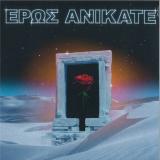
Local Suicide kündigen ihr lang erwartetes Debütalbum "Eros Anikate" an, das am 13. Mai 2022 auf ihrem eigenen Label Iptamenos Discos erscheinen wird. Der Titel bedeutet übersetzt "unbesiegbare Liebe" und ist inspiriert von Sophokles’ Stück "Antigone”.
Das Album bleibt dem Technodisco-Sound des Berliner Duos treu, für den sich die beiden einen Namen gemacht haben, und zeigt ihren unverkennbaren Stil, der 80er Retro-Feeling mit einem modernen, düsteren Twist kombiniert. In gewohnter Local Suicide-Manier zeigt das Debütalbum des Duos augenzwinkernde Texte über mystische Abenteuer, Lieb...
- A1: You Can Never Tell
- A.your Imagination
- A3: Puzzled Into Pieces
- A4: Lattershed
- A5: When Things Come Falling
- B1: In Between And After
- B2: False From Above
- B3: Snowflake Eye
- B4: Emergency Turn Off
- B5: Paradigm Somehow
★Japanese obi-strip
★First time reissued on vinyl
Turning Into Small, the second album by shoegaze band All Natural Lemon & Lime Flavors from New Jersey, originally released in 1998 on local label Gern Blandsten,
is now being reissued on both CD and vinyl.
Formed in the mid-90s, All Natural Lemon & Lime Flavors were deeply influenced by UK shoegaze and alternative rock—most notably My Bloody Valentine—while
pursuing a uniquely experimental sound within the US emo and indie scenes. Their innovative spirit reached full bloom on Turning Into Small, which remains their
final album to date.
One of the standout tracks is the nearly eight-minute-long “Your Imagination,” a spacious sonic landscape that draws listeners into deep immersion.
It has become a signature song for the band, heralding a new wave of shoegaze that emerged in the late '90s and beyond. Even more noteworthy, however, are
tracks like “Puzzled Into Pieces” and “In Between And After,” which showcase the band's layered, synth-driven electronic textures, dynamic collage-like structures,
and occasionally buoyant melodies. These elements come together to create a strange and otherworldly sense of weightlessness—something rarely found even
within the shoegaze genre.
While resonating with the likes of My Bloody Valentine, Stereolab, and The Flaming Lips, the band's mutant-like blend of styles also draws parallels with acts like
Swirlies, Serena-Maneesh, and contemporary shoegaze innovators such as They Are Gutting a Body of Water.
This is a groundbreaking album in US shoegaze—one that still feels fresh and vital thanks to its timeless experimental spirit and originality. Now is the perfect time
to (re)discover it.
After bending boundaries on the acclaimed labels Optimo Music and Höga Nord, Rudolf Abramov resurfaces with a fierce new statement – inaugurating Aquasonic Records, the freshly minted label founded by one half of the duo.
They unveil a sweeping collection of rare recordings, drawn from the shadows of their enigmatic Berlin studio.
This debut full-length album unfolds like a sonic tapestry, threading krautrock, new wave, dub, psychedelia, experimental electronics, ambient, and jazz into a singular, genre-bending experience.
True to form, the duo assembles a diverse ensemble of guest collaborators, fusing layered musical worlds into a cohesive, concept-driven whole.
At its core, the album captures a dynamic interplay: acoustic instruments recorded with raw intimacy and spatial breath meet the hypnotic churn of modular synths, samplers, and analog machines. A vivid document of process, presence, and unfiltered sound, resisting definition, yet wholly their own.
Jessica93, prodigal bastard of our glorious french squat scene, relocated on Born Bad : this is no picnic. Geoffroy Laporte, alone against all odds, alternates bass and guitar to build harsh loops with a drum machine spitting pre-Gulf War patterns. That’s where it gets tricky : every musical posse claims him. Grunge, sure, but Jessica doesn’t indulge in necrophilia. His circuit is punk, he doesn’t dress the part though. Cold wave, the atmosphere fits somehow, but the gear does not. The self-confident rock horde saw him playing with hair in his eyes… but he never joined the Party. Metal had something to say but sadly, nobody listened. Maybe it's time to give it a rest and let Jessica93 cook his great misery broth on her own, called « 666 tours de périph’ » (666 laps on the beltway). Witnessing Jessica93 live makes you dread that he'll get up the next morning, drive 200 miles and one nap later kick it again, when it takes us a good week to recover from the bad half of that same evening. Like so many other unknown soldiers during our very own world war of music, he patrols small venues relentlessly.
At the heart of this cultural pentacle painted by french weirdos Bryan's Magic Tears, and Carine Krinator, Jessica93 has built a sound validated by years of chosen vagrancy, birthing bands with joyously stupid monikers, in the humid jungle of small labels. Jessica93's debut album had a track celebrating Omar Little, HBO’s gay bandit from Baltimore. This story begins on the beltway, where Florence Rey, accidental copkiller turned to political icon of the 90’s. Geoffroy offers his brilliant analysis : " C’est la police qui nous tire d’ssus / C’est mon trou d’balle qui leur chie d’ssus « (Police shoots us down / my dripping asshole gets the job done).
A previous album was haunted by bedbugs, this one is essentially about love, a delicious scourge just as hard to eradicate. Two black diamonds peek out of the LP : ’’La colline du crack’’, heartbreak song about the ultimate temptation of violent delights, located on crackhead central in Paris. The brilliant chorus, ‘Take my hand and come with me to Crack Hill’ will put an end to the rumours, almost everything was really false. And Bébé Requin, alternative obituary that’ll make you shiver, where our nice couple states ‘’on kiffe la drogue dure et les ptits chiens’ (‘we love hard drugs and little dogs’). And that is the reason we face the wall of sound jostled by unnecessary shoulder thrusts: those nice fat chunks of charcoal poetry, hidden under light sarcasm.
The rest of the record demonstrates the know-how acquired in loop-by-loop construction of ruins that are pleasant to squat in together. There’s your classic doom delicatessen, with bits of heavy metal inside, crafted with the manic care typical of hard wankers. Arthur Satàn, who produced and mixed the album at home in Bordeaux, helped him get his head out of the reverb safe house. And Jessica93 took the opportunity to switch to the dark side of the language : french at last. Worth the wait ! Sing along : « nique sa mère / nique sa grosse mère » (translate that yourself).
Following a wildly successful first release, Risk/Reward returns with an outstanding EP from Bizarre Trax bossman and Felon5 member Jhobei, featuring a remix from UK electro royalty Carl Finlow no less!
Digitaria combines a groovy organ bass with psychedelic synths and progressive elements, to create a dancefloor-focused, trance-inducing bomb, guaranteed to get crowds of all sizes moving. Trippy, hypnotic but always playful, the perfect track to bring the energy up in the room.
A monster bassline, punchy drums and dreamy pads make Thinking Nodes a versatile tool, equally at home early in the night or deep into the after hours. Classic UKG swing meets deep house, plus a sprinkling of rave elements go into the recipe, making a tasty treat for DJs and collectors alike.
Beatagroove Funk see's Jhobei channel his inner Random Factor, to create an Electro House ripper, with quirky vocals, glitchy synths, a bassline straight out of a 80s new wave banger and enough drive in the drums to make this a peak time weapon.
Carl Finlow delivers an epic masterpiece on the remix of Beatagroove Funk, creating a work of sheer beauty that sounds like a blissful sunset cruise on a hover bike through a futuristic metropolis. Unexplainably detailed and emotional, this is the work of a true master of his craft and will surely go on to be recognized as some of his very best work - simply unmissable!
With heavy support from Tini, Harry McCanna, Anna Wall, Rich NxT, Voigtmann and more, Jhobei's star seems destined to keep rising, as Risk/Reward continues to establish itself as a must buy label.
A Milan-born multi-instrumentalist of Venetian heritage, Alberto Baldan Bembo was a gifted vibraphonist, organist, pianist, arranger, and composer whose work bridged jazz, pop, and film music. By the early 1960s, he was performing with Italy’s leading ensembles, including I Menestrelli del Jazz and Bruno De Filippi’s group, and soon became an in-demand session musician. For several years, he toured with the legendary Mina, providing the piano and organ backbone to her live shows—a role that sharpened the cinematic sensibility and refined musicianship that would later define his soundtrack work. In the years to come, he would be celebrated for his scores to films such as L’Amica Di Mia Madre (1975) and Lingua Argento (1976), earning a place alongside Piero Umiliani, Alessandro Alessandroni, Berto Pisano, and other luminaries of Italy’s golden age of soundtrack and library music.
Io E Mara is the soundtrack to a film that was never made. Originally released on the CGD label in 1969, this debut album from the brilliant Maestro Baldan Bembo is a sophisticated concept-album tracing 24 hours in the life of two young lovers. Told entirely through music, the record unfolds as a continuous suite of ten tracks, where cinematic lounge, bossa, and jazz flavors mingle to create a dreamlike atmosphere. Baldan Bembo’s signature piano and organ are masterfully complemented by Mara’s ethereal vocals, while immersive soundscapes of crashing waves, seagulls, and rain showers enhance the feeling of a deeply personal and intimate journey. A cast of exceptional musicians brings this vision to life, including Bruno De Filippi on electric guitar and sitar, Carlo Milano on electric bass, Rolando Ceragioli on drums, and Pasquale Liguori on sound effects. This singular work not only showcases the burgeoning talent of a future soundtrack master but also features the original pop art front cover by Italian cult illustrator Guido Crepax.
- Harte Zeiten
- Stopp/Weitergehen
- Fragen
- Teilchenbeschleuniger
- Angst
- Westradio
- Wohngebietspark
- Durchknall
- Tanzen
- Orden An Die Wand
- Manchmal
- Schlussendlich
Am 26.09.2025 erscheint beim feinen Wiener Indie-Label Voller Sound endlich das heiß erwartete Debüt-Album der New-New-Wave-Band Parc de Triomphe - als Vinyl mit grell-pinken Farbtupfern. Eine Reminiszenz an die 1980er- und 1990er-Jahre. Auf dem selbstbetitelten Album setzen sich Jörn Brien und Florian Knabenschuh in gewohnt düsterer Elektro-Pop-Manier mit der eigenen Vergangenheit auseinander. Themen wie Einsamkeit, Verletzlichkeit und die Angst vor Umbrüchen werden aufgehellt von Farb- und Hoffnungsschimmern. Druckvoll, treibend, wütend Musikalisch geht es bass- und beat-lastig zur Sache. In den oft tanzbaren Stücken werden der druckvolle Basslauf und die treibenden Beats von der markanten Stimme und einem ebenso einprägsamen Gitarrensound begleitet. Manchmal schrille, oft wütende, dann wieder ruhige, kühle Synthie-Klänge unterstreichen die Anleihen beim New Wave der 1980er. Passend zu den Texten, die sich nicht zuletzt mit DDR, Wende und den nachfolgenden Baseballschlägerjahren in Ostdeutschland auseinandersetzen. Aber keine Sorge vor zu viel Vergangenheit und Nostalgie. Im Gegenteil: Frei nach dem Bandmotto "Krawall! Elektro! Pop!" schlagen die Musiker mit ihrer melancholisch-düsteren Musik und den aufwühlenden, lyrischen Texten eine Brücke ins Hier und Jetzt. Die erzeugten Emotionen bewegen Jung und Alt. Radio-Airplay, Charts und TV Mit der EP "Harte Zeiten" haben Parc de Triomphe Ende 2023 ein erstes Ausrufezeichen gesetzt. Mit Airplay auf FM4, zahlreichen Konzerten und einem TV-Auftritt sowie Platzierungen in den Austrian Indie-Charts konnte sich die Band in der Wiener Indie-Szene schon einen Namen machen. Der Song "Westradio" lief beim beliebten Berliner Sender radioeins. Auf Spotify kommen die bisher vorab veröffentlichten Singles jeweils auf Tausende Streams. Auf dem Album "Parc de Triomphe" finden sich insgesamt 12 fein produzierte (Alf Peherstorfer) Songs, die eingängig, aber nie langweilig sind, straight, aber auf ihre Art trotzdem schräg. "Geschmackvoll, eingängig und wundervoll" FM4-Moderator Andreas Gstettner-Brugger schrieb zur Single "Harte Zeiten": "Die beiden deutschen Musiker, die sich in einem Wiener Park kennengelernt haben, produzieren hier einen geschmackvollen, eingängigen und wundervollen Song, der mich an Tocotronic, frühe Blumfeld und diverse Krautrockbands erinnert." Fazit: Fans deutschsprachiger Musik, die den New-Wave-Sound der 1980er-Jahre im modernen Gewand feiern und dem Indie-Sound der frühen 1990er-Jahre nicht abgeneigt sind, sollten "Parc de Triomphe" auf ihre Plattenteller legen.
- Patient Boy
- 6: O.4.N.c.8
- Run To Buy Vacuum
- Fields Of Neighborly
- Shell Fantasy
- Ascent Of The Jugular Vein
- Marathon Man
- Murmuur
- Tv Show
Formed in Brussels in 2017, Milk TV has drunk from many sources, quenching an enormous thirst for inspiration to create a singular universe, imbued with nostalgia and cynicism towards Anglo-Saxon pop culture. That of cheap TV programs, giant milk bottle ads, but above all of the underground, from New York no-wave to the Californian noise scene. With "NEO GEO", a new album on Brussels label EXAG' Records, the trio take their music to even more versatile playgrounds, an art-rock kaleidoscope, perhaps more intuitive and effective than its predecessor. While the band's trademark bass chorus and jerky rhythms with a hint of exotica are still present, some tracks give way to a more punky, immediate energy.
After years of exploration and experimentation, a new wave of artists from the Andes is now gaining some deserved global recognition. One such artist is Guillermo aka Existencia Pasajera, whose work has been shaped in southern Chile and so smartly reflects the region's newly emerging creative depth. This new release captures his fluid, expressive keyboard style and opens with the trippy and psychedelic loops of 'Haunted House' before 'The Brujo' gets more dark and menacing. The EP also features a remix by Minus legend Magda. Her label debut blends acid, stripped back rhythm and heady grooves, while closing the release is Map.ache of the Giegling collective, whose minimalist approach offers a meditative counterpoint.
Identified Patient returns to Dekmantel for a third time with his Reset EP. The future-facing four tracker is another mutant fusion of bass and techno with low-end power with cerebral sound designs.
Job Veerman debuted on the Dekmantel UFO Series in 2019, returned in 2020 and has lit up the festival several times with transportative sets that balance power with precision. Like his productions on the Nerve Collect label, he co-runs with Gamma Intel, they are leftfield explorations of genre and tempo that find strange sensuality in often abstract ideas. Once again here, the Dutchman draws on eclectic influences to craft music that sounds like no one else but remains anchored by magnetic rhythms.
Opener 'Light' kicks off with a fuzzy synth line that slithers between syncopated drums. Whispered vocals drift through the mix as lurching basslines swell and collapse beneath them. The groove disassembles and reassembles in waves, propelled forward by bursts of glitchy, off-kilter percussion that's unsteady yet seductive. 'Scales' is a slow, menacing descent into rhythmic darkness. It sounds both ancient and futuristic with ghoulish vocalisations and filtered synths flickering like a badly wired circuit. There's a rave tension lurking throughout, but always in the shadows.
'Internal Pace' drives on but rides fluid, wobbly bass while tightly looped hits build the pressure. Layers of static and subtle distortion add grit to this unrelenting heads-down roller. Finally, 'Return' is a kinetic, razor-edged ride where jungle breaks collide serpentine melodies. Ethereal female coos drift in and out, brushing against spat-out vocal fragments so that tension crackles throughout this hallucinogenic trip.
With Reset, Identified Patient reaffirms his status as a singular voice who twists sound into evocative new worlds.
- A1: Ersatz
- A2: Demain Berlin
- B1: Mauve
- B2: Peine Perdue
First time reissue of this French cold-wave / minimal-synth treasure.
November 1981 – In the heart of autumn, we set off in two cars along the Nationale 1 (!) to reach Choisy-le-Roi, where a 16-track studio was waiting for us—a place where, over the course of a weekend, we would finally be able to carve our own grooves into vinyl. We were quite nervous, as Guerre Froide had already been around for a year and a half. Our elders in Kas Product had already released two EPs—one with four tracks, the other with three—in 1980, even though they’d started only a few months before us. Admittedly, there wasn’t really a sense of urgency—some of us came from the punk movement, where the prevailing mood was still very much No Future, even if we’d long since stopped believing in it... And yet others had truly lost everything, like those from the generation before us. The reasons, ironically, were often the same: heroin and/or love—hard drugs, in both cases.
Speaking of which, I had a terrible stomach ache—due to nerves or some form of tension—which forced us to make a pit stop in the Oise region so I could rush to the toilet of a local café. That same stomach discomfort would hit me again once we arrived at the studio—whose name, incidentally, I’ve since forgotten...
We had gotten there thanks to the generous initiative of a friend, Sylvain S., known as “Perlin” (what a phonetic coincidence!?), who had specifically created the Stechak Products label to produce our record. Stechak because it was consistent with his earlier association called Tchernoziom, and Products as a plural tribute to the trailblazers from Nancy.
Guerre Froide originally consisted of four members: Fabrice Fruchart on guitar-synth (Korg MS-20), Patrick Mallet on bass, and Gilbert Deffais, known as “Bébert”, on Korg drum machine. At the time, I was already singing in a rock/post-punk band called Stress, and that’s how Guerre Froide picked up the bad habit of rehearsing in the same basement in Amiens as Stress. Within a month or two, we had half a dozen songs. We then had the opportunity to record a 4-track demo with a friend from Radio France Picardie, and to perform in October at a festival held at the Amiens municipal circus. Then came the now-legendary concert on November 11 at B.J.’s Club. After that, we self-produced and released 50 completely DIY copies of a cassette titled Cicatrice. A few concerts later—after Jean-Michel Bailleux had joined us on bass and Patrick had switched to guitar, which felt more natural to him—and with more concrete plans starting to take shape, we had to find a new rehearsal space and start renting a room.
Then came the moment when Fabrice told us he was leaving to go study in Lille... After the June 19, 1981 concert, which was naturally dubbed “Farewell to 2F,” Marie-José, Bébert’s wife, offered to take over on synth.
That’s when Perlin, who was a close friend of the Deffais couple and a great fan of our music, offered to fully finance the production of a 4-track 12-inch EP—covering the studio time, mastering, pressing, and artwork. What up-and-coming band would have turned that down? An improvised contract was signed with each member of Guerre Froide. The first step was choosing which four songs we would record. Berlin 81 was an obvious pick, having already become the group’s flagship track. We wanted to avoid reusing songs from Cicatrice, so the focus shifted to new material—some written before, some after Fabrice’s departure. Ersatz, for example, was his composition, but Mauve and Peine Perdue, which were also selected, were both written by Patrick.
- A1: Zombie Radio
- A2: In My Cage
- A3: Demon Possession
- A4: Corpus Domini (Instrumental Version)
- B1: Lobotomics
- B2: Vortex
- B3: A Sakris (Instrumental Demo Version)
- B4: Mother Church Klinik (Instrumental Version)
- C1: Blind Oracle (Instrumental Version)
- C2: Tranz Anima (Instrumental Version)
- C3: The Lost Tribes
- D1: Mindgun (Instrumental Version)
- D2: Super Collider
- D3: Silent Mind
Infoline proudly presents a compilation of tracks by Deo Cadaver on double 12' inch vinyl LP! Active from 1987 to 1993, Geneva-based trio Deo Cadaver stood at the vanguard of Switzerland’s electronic body music scene. Formed at just 17 years old, the group drew early influence from the visceral intensity of acts like The Young Gods, Front 242, Laibach, and Skinny Puppy—but quickly forged a sound and performative presence entirely their own. Their live shows became infamous: loud, theatrical, and uncompromising. Covered in grey-green clay and fake blood, suspended from chains, or locked in cages wired with sensors, projections, and video monitors, Deo Cadaver unleashed chaotic storms of samples, distorted drum machines, live percussion, and seismic basslines. At the center stood a vocalist whose voice and energy pushed the limits of physical endurance. Despite their undeniable force, Deo Cadaver remained largely unknown beyond their immediate circles. “There was no support structure—barely any venues, press, or labels for what we were doing,” they reflect. “Apart from our parents and a few community associations, we were completely on our own.” The internet, still confined, offered no relief. Connections were built face-to-face, and tapes were copied by hand. Still, the band found kinship in the Swiss experimental collective MXP, alongside other likeminded outliers pushing electronics beyond the dancefloor. Their spirit was one of invention, defiance, and independence.
While Belgium reveled in its New Beat wave and the UK fell into euphoric ecstasy, Deo Cadaver raged in the shadows—loud, isolated, and ahead of their time. This compilation finally brings their work into the light: a long- overdue snapshot of an uncompromising force from the margins of EBM history