Ein neues dynamisches Kapitel in der Diskografie von villagerrr: Carousel, das fünfte Album von Mark Scott als villagerrr, bewegt sich von Slowcore zu Shoegaze, von Log-Cabin-Folk zur beschleunigten Glückseligkeit des Rocks, der wie geschaffen ist für eine leere Autobahn. ,Carousel" ist das bisher kühnste und feinfühligste Album des Songwriters aus Ohio und eine umfassende Erkundung dessen, was es bedeutet, in einem überbelichteten und einengenden Zeitalter aufrichtige Kunst zu schaffen, in dem Scotts große Songs aus dem Mittleren Westen von dem Wunsch geprägt sind, in einer von Kommerzialisierung geprägten Ära nach bleibender Bedeutung zu suchen. Scott stellte die Musik im Laufe von zwei Jahren zusammen und ließ den kollaborativen Geist seines vorherigen Albums aufblühen. 2024s ,Tear Your Heart Out" führte zu Tourneen mit Real Estate, Greg Freeman und Momma, einem neuen Plattenvertrag mit Winspear und einer kürzlichen Deluxe-Neuauflage, wodurch sich der Kreis der Zuhörer und Mitwirkenden vergrößerte. ,Carousel" enthält eine Mischung aus Scotts aufstrebenden Folk- und Indie-Rock-Kollegen wie Boone Patrello von Teethe, h. pruz und Carolina Chau e von Hemlock und wurde von Scott selbst gemischt, nachdem er sich die Aufnahmen angehört hatte. ,Carousel" bietet eine Mischung aus Scotts aufstrebenden Folk- und Indie-Rock-Kollegen wie Boone Patrello von Teethe, h. pruz und Carolina Chau e von Hemlock und wurde von Scott gemischt, nachdem er sich die Rohfassungen auf langen Autofahrten oder beim Laufen angehört hatte. Mit Scotts feinem Gehör für Details und weitläufige Landschaften fühlt sich das Hören von villagerrr an, als würde man in das Gras der Prärie spähen, um zu sehen, was dort krabbelt, und dann plötzlich aufstehen, um die Pracht eines herannahenden Sturms zu beobachten. Carousel hegt eine gesunde Skepsis gegenüber der Welt, in der wir leben, aber es liefert auch den Beweis, dass man, wenn man seine Schutzmauer fallen lässt und auf andere Menschen zugeht, kreative und bereichernde Beziehungen aufbauen kann - und damit die Grundlage für ein tiefes, sinnvolles Leben schafft. Das Album wurde von Scott gemischt, nachdem er sich die Rohfassungen auf langen Autofahrten oder beim Joggen angehört hatte. Mit Scotts ausgeprägtem Gespür für Details und weitläufige Klanglandschaften fühlt man sich beim Hören von villagerrr wie beim Beobachten von Insekten im Präriegras, um dann plötzlich aufzustehen und die Pracht eines herannahenden Sturms zu erleben. Carousel hegt eine gesunde Skepsis gegenüber der Welt, in der wir leben, aber es liefert auch den Beweis, dass man, wenn man seine Schutzmauer fallen lässt und auf andere Menschen zugeht, kreative und bereichernde Beziehungen aufbauen kann - und damit die Grundlage für ein tiefes, sinnvolles Leben schafft.
Suche:wes rock
Ein neues dynamisches Kapitel in der Diskografie von villagerrr: Carousel, das fünfte Album von Mark Scott als villagerrr, bewegt sich von Slowcore zu Shoegaze, von Log-Cabin-Folk zur beschleunigten Glückseligkeit des Rocks, der wie geschaffen ist für eine leere Autobahn. ,Carousel" ist das bisher kühnste und feinfühligste Album des Songwriters aus Ohio und eine umfassende Erkundung dessen, was es bedeutet, in einem überbelichteten und einengenden Zeitalter aufrichtige Kunst zu schaffen, in dem Scotts große Songs aus dem Mittleren Westen von dem Wunsch geprägt sind, in einer von Kommerzialisierung geprägten Ära nach bleibender Bedeutung zu suchen. Scott stellte die Musik im Laufe von zwei Jahren zusammen und ließ den kollaborativen Geist seines vorherigen Albums aufblühen. 2024s ,Tear Your Heart Out" führte zu Tourneen mit Real Estate, Greg Freeman und Momma, einem neuen Plattenvertrag mit Winspear und einer kürzlichen Deluxe-Neuauflage, wodurch sich der Kreis der Zuhörer und Mitwirkenden vergrößerte. ,Carousel" enthält eine Mischung aus Scotts aufstrebenden Folk- und Indie-Rock-Kollegen wie Boone Patrello von Teethe, h. pruz und Carolina Chau e von Hemlock und wurde von Scott selbst gemischt, nachdem er sich die Aufnahmen angehört hatte. ,Carousel" bietet eine Mischung aus Scotts aufstrebenden Folk- und Indie-Rock-Kollegen wie Boone Patrello von Teethe, h. pruz und Carolina Chau e von Hemlock und wurde von Scott gemischt, nachdem er sich die Rohfassungen auf langen Autofahrten oder beim Laufen angehört hatte. Mit Scotts feinem Gehör für Details und weitläufige Landschaften fühlt sich das Hören von villagerrr an, als würde man in das Gras der Prärie spähen, um zu sehen, was dort krabbelt, und dann plötzlich aufstehen, um die Pracht eines herannahenden Sturms zu beobachten. Carousel hegt eine gesunde Skepsis gegenüber der Welt, in der wir leben, aber es liefert auch den Beweis, dass man, wenn man seine Schutzmauer fallen lässt und auf andere Menschen zugeht, kreative und bereichernde Beziehungen aufbauen kann - und damit die Grundlage für ein tiefes, sinnvolles Leben schafft. Das Album wurde von Scott gemischt, nachdem er sich die Rohfassungen auf langen Autofahrten oder beim Joggen angehört hatte. Mit Scotts ausgeprägtem Gespür für Details und weitläufige Klanglandschaften fühlt man sich beim Hören von villagerrr wie beim Beobachten von Insekten im Präriegras, um dann plötzlich aufzustehen und die Pracht eines herannahenden Sturms zu erleben. Carousel hegt eine gesunde Skepsis gegenüber der Welt, in der wir leben, aber es liefert auch den Beweis, dass man, wenn man seine Schutzmauer fallen lässt und auf andere Menschen zugeht, kreative und bereichernde Beziehungen aufbauen kann - und damit die Grundlage für ein tiefes, sinnvolles Leben schafft.
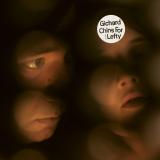
Chins For Lefty is the debut album and first recording by Gichard, a new duo chronicling the absurdities of end-stage capitalism and mouldering social rituals from their vantage point in Glasgow, Scotland. Recorded primarily in the band’s home studio straight to tape, Chins For Lefty combines gorgeous, ramshackle melody, DIY kosmische punk, drum machine + synth and, in vocalist/lyricist Lisa Jones, an absurdist commentator on the human condition as it navigates the anxieties of the modern world. Instrumentalist Chas Lalli’s swirling music accompaniment stitches an evocative mix of musical styles, the ragged wind beneath the lyrics’ wings.
Although the duo first collaborated in their previous group Dragged Up, their disparate musical and artistic backgrounds make for an alluring mix in Gichard. Lalli has spent the last 20 years in the Glasgow underground, most notably in the noise rock group VOM, while Lisa Jones’s practice was in poetry and spoken word. Beginning as co vocalist in her previous band, in Gichard her lyrics are centre stage; the vision concocted alongside Lalli amounts to a total world-build.
Chins For Lefty scans almost like a novel, with each track elucidating a skewed universe that bears only some resemblance to the one you and I partake in. Like all works of fiction Gichard’s songs are rooted in reality and the lived experiences of its authors, but here characters are exaggerated, social mores and habits are pulled apart to reveal their inherent alienness. Universal emotions are laid bare, the bright light of anxious examination searching out every hairline fracture in our relationships. Distorted and cracked, the mirror that Gichard hold up to our world is also pretty damn funny.
Opener Cholesterol Test launches an expansive, cosmic guitar and synth intro that belies the Tascam-tape recorder it was recorded onto, like a Chromatics cut substituting anxiety for overt sexuality. Here Jones intones an apology to a non-responsive recipient, in the medium of a long voice note forensically deconstructing an interaction from the night before. Over punk guitars and shuffling, lo-fi drum machine splutters, the narrator in Asking The Apes “prefers things to people” before being taken hostage in the city zoo to confess an obsession which consumes the protagonist, ending with the immortal two liner “I sleep in a cocoon of old newspapers at the end of your street / And I think I have been fired from my job,” On album standout Posthumous Hologram, the narrator is faced with a human simulacra, in this case an undead pop star; the face of the encroaching technological singularity. Yes, it does requests, it can do My Way in 200 different language options. But what are the implications? While you’re left pondering, the alternating deadpan verse delivery and undeniably catchy chorus keep you company.
By the time Break Up With Johnny Dogbirth rattles into view, the band are satirising a suburban inanity blown up to cartoon proportions, soundtracked with a drawled musicality that recalls Rowland S. Howard’s post-Birthday Party balladeering. This approach is furthered on Human Resources: over an angular guitar+bass track, Jones’s short story recalls Dry Cleaning’s erudite lyrical post punk. On Soft Face, Lalli’s guitar and drum machine are swathed in echo and delay, as Jones dissects dating rituals with a west of Scotland drollness. Hamming It Up brings a porcine perspective in a short story that begins with the line “I was breastfeeding discreetly in the service station. She didn’t mind.” What follows is a passage punctured with canned laughter and a narrative involving tribute acts, modern farming techniques.
Brilliant first single Your Private Hell closes the album, the closest the group get to earnest perhaps, filtered through a surreal central Scottishness. While Your Private Hell might seem like a sardonic take down of romance, perhaps it’s the very distillation of love in all its awkwardness, selflessness and weirdness. Here there’s a distinctive Glasgow-ness to this doomed romance: the protagonist falls for an outsider, offers them cheap jarred hot dogs and carbolic soap (the infamous, excoriating soap dished out in schools and government buildings throughout Scotland), offers to cover up a murder, stalks them in the all-night Spar. It’s a short story of intrigue, murder and the irresistible pull of self-sacrifice to share in someone else’s suffering. If that’s not love, what is it? You can see this vision mapped out in black and white on their video for 'Your Private Hell'.
- A1: Return Of The Knödler Show 2 52
- A2: The Frogs Of Miwa - Cho (1) 4 52
- A3: Waiting (I) 5 38
- A4: An Old Friend Passes By 3 46
- A5: Coco Bolo Strip (1) 5 25
- B1: Peace And Pipe Utopia 3 14
- B2: Unidentified Dancing Object 1 44
- B3: The Call (I) 2 41
- B4: Wenn Das Rohr Dommelt 4 03
- B5: Mariahilf (Live Version) 3 36
- B6: Watching The Shades (I) 2 59
- B7: Playing The Table Music (Ii) 2 43
- C1: Could Be Nice Too 5 29
- C2: Ox Of Inner Depth 4 51
- C3: Ymir Shows Up 3 58
- C4: Could Be Nice 5 24
- C5: Playing The Table Music (I) 4 23
- D1: Coco Bolo Strip (Ii) 4 52
- D2: Locusts Looking Like Men 5 55
- D3: Waiting (Ii) ︎ 3 36
- D4: No Stove 2 29
- D5: An Old Friend Passes By Again 3 00
- D6: Heimkehr Der Holzböcke 3 16
Black Truffle is thrilled to announce Dalbergia Retusa, an extensive double LP selection of the solo guitar music of Hans Reichel, compiled by Oren Ambarchi. Last heard on Black Truffle as one quarter of the joyously anarchic Bergisch-Brandenburgisches Quartett, Hans Reichel (1949-2011) is one of the great figures of experimental guitar music. Though perhaps lesser known than peers like Derek Bailey, Fred Frith and Keith Rowe, Reichel’s rethinking of the instrument was in some ways the most radical of all. Early on, he dispensed with existing guitars to build a series of his own that explored the use of additional strings and fretboards, moveable pickups, extra bridges, special capos, and other innovations documented in the extensive booklet accompanying this release.
Reichel was a long-term resident of Wuppertal, the small Western Germany city that became an unlikely centre of European free jazz in the late 1960s, also home to Peter Brötzmann and Peter Kowald. His solo debut Wichlinghauser Blues was an early entry into the FMP discography and began a relationship with the label that stretched into the 1990s; all the solo performances heard here were first released on FMP. As Reichel says in the charming archival interview with Markus Müller included here, he was ‘always a cuckoo’s egg at FMP’, a label that began as an outlet for roaring European free jazz. What strikes the listener right from the opening selection on Dalbergia Retusa—‘Return of the Knödler show’, from 1987’s The Dawn of Dachsman—is the extraordinary beauty of Reichel’s music, at once alien in the shimmering sonorities and unconventional pitch relationships made possible by his invented instruments, and deeply lyrical, even romantic in its harmonic content. Growing up in West Germany in the 1960s, Reichel’s formative influences were mainly British and American rock bands, a background that shines through in many of the pieces included here: ‘An old friend passes by’ is haunted by the ghost of Hendrix’s rhythm guitar, and the wild closer ‘Heimkehr der Holzböcke’, taken from a rare 1975 7” and the only piece to use overdubbing, layers errant hammer-on and slide tones over a Canned Heat boogie chug.
Reichel was an important source for the development of Oren Ambarchi’s own extended approach to the electric guitar. Appropriately enough, his selection opens with the very first piece by Reichel he ever heard, on a flexidisc included with a 1989 issue of Guitar Player magazine. Though Reichel collaborated with others extensively in many settings and also performed on violin and his other major contribution to instrument invention, the daxophone, his music for solo guitar remains at the core of his oeuvre. Focusing exclusively on solo pieces recorded between 1973 and 1988, the 23 pieces on Dalbergia Retusa showcase the range and consistency of Reichel’s work, allowing the listener to see how his performances developed hand-in-hand with his instrumental inventions. On a piece from his very first LP, played on an 11-string instrument (partly strung with piano strings and using a schnapps glass a slide), we hear his intensive exploration of fret-hammering to create zither-like, chiming tone, which Reichel would hone further in later years with a double fretboard guitar specifically designed to be hammered rather than fretted and picked. On a piece from 1979’s Death of the Rare Bird Ymir, Reichel uses two steel-string acoustic guitars at once, with beautiful results: ‘some even say too beautiful’, he jokes in the interview included here. Many of the pieces from the 1980s make use of varieties of the ‘pick behind the bridge guitar’, instruments of uncanny harmonic richness primarily designed to be played on the ‘wrong’ side of the bridge. At times the unexpected behaviour of attacks, resonance, and decay can almost seem electronic, conjuring up the technology-assisted work of Henry Kaiser or even Fennesz, but realised solely through Reichel’s unorthodox techniques on his invented instruments. Extensively illustrated with photos and Reichel’s own plans and drawings of his instruments, Dalbergia Retusa is an essential introduction to the unique world of Hans Reichel. Rarely has music been at once so strange and so beautiful.
- A1: Black Line - Myele
- A2: Mbamina - Nzoumba I-Robots 1975 Unreleased Edit-44100
- A3: Mbamina - Watchiwara
- B1: Oxid - Bright Heron
- B2: Oxid - Oxid Trail
- C1: Stratosferic Band - Nowhere - Reverberated Unreleased Version
- C3: The Boston Garden - Lady Pick-Up
- D1: Mbamina - Nzoumba Unreleased-44100
- D2: Oxid - Oxid Trail Unreleased Extended Version
Daniele Baldelli
"A pleasant surprise to find in this release various atmospheres and sounds that have always been part of my DJing. It even made me rediscover M’Bamina, whom I used to play back in 1974 at the Tabù Club in Cattolica.
There are afro vibes as well, with Black Line – Myele, which is featured on one of my Cosmic tapes, and Nowhere by the Stratosferic Band recalls a track I used to play at the Baia degli Angeli…
Excellent work!"
Voom Voom Music was an independent Italian record label based in Turin, founded and managed by record producer Ivo Lunardi (Turin, December 6, 1940 – December 9, 2010). A pivotal figure in the Piedmont music scene, Lunardi was active both as a DJ and as the owner of several disco clubs.
The label operated for several years in the latter half of the 1970s, releasing mainly productions connected to the Italian dance and pop scene.
Since 2016, the original master tapes from the Voom Voom Music catalog have been owned by Gianluca Pandullo (I-Robots), a close friend of Ivo and Luca Lunardi. Through his labels Opilec Music and Turin Dancefloor Express, Pandullo oversees their preservation and historical enhancement.
The artistic direction of Voom Voom Music was marked by a distinct sonic identity — eclectic yet visionary. The Turin-based label founded by Ivo Lunardi embraced a sound that blended disco, pop, and rock influences, interwoven with African American grooves in a pioneering, international perspective.
Voom Voom Music was among the first Italian labels to introduce this kind of musical language in the country. A prime example is the Italian edition of the debut album by B.T. Express, Do It ('Til You're Satisfied), released in LP, 8-Track Cartridge, cassette, and 7" single formats.
The label’s productions clearly reflected the influence of black and funk music, as evidenced by the references and inspirations running through its catalogue. The track “Lady Pick-Up”, for instance, includes direct nods to “Do It Good” by KC & The Sunshine Band and Manu Dibango’s iconic “Soul Makossa”, revealing a musically refined and contemporary sensibility.
Among the label’s most representative works is Splash (1977) by the Stratosferic Band, a project conceived by Luigi Venegoni — producer, songwriter, and guitarist of Arti e Mestieri. Venegoni’s artistic journey spanned from progressive rock to space and Italo disco. The album artwork was designed by Piero D’Amore (1944 - 2022), a charismatic and multifaceted figure of Turin’s art scene (one of his works was even acquired by the MoMA in New York).
The record includes a disco reinterpretation of Van Morrison’s classic “Gloria”, and “Splashdown”, a track fusing the disco-rock energy of Rockets and Space. In contrast, “Nowhere” revisits the 1975 single by Hokis Pokis, a soul/disco band from Nassau County (New York), transforming it into a vibrant disco-funk number.
Another significant expression of the label’s catalogue is the afro-rock sound of M’Bamina, an Italo-Congolese group whose rhythmic energy and dialogue between African percussion and Western funk evoke the style of international formations such as Osibisa — themselves linked to a rich artistic history in Italy.
- A1: Rocking Chair
- A2: Le Train
- A3: Golden Sun
- A4: Miroir
- A5: Voyage Mental
- A6: Surprises
- B1: Je Comprends Pas
- B2: Respire
- B3: Sentimental Lies
- B4: Force Invisible
- B5: C’est Quoi Ces Gens
- B6: My Two Hours Of Sleep
- B7: Astrale Maison
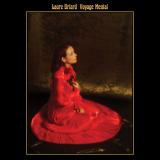
Every so often in music, we come across voices that achieve a certain timelessness, so naturally do they encapsulate both past and present. Laure Briard is one of these voices, retro in form but contemporary at heart, spanning a career rich in aesthetic twists and turns, never without her signature magic, a special kind of eternal filter. Her first album, Révélation (2015), reveals her yé-yé influences, a testament to her love for ‘60s French pop music. Her second studio album, Sur la piste de danse (2016), follows in this vein and finds Laure accompanied as always by her long-time bandmates who share an affinity for warm, catchy arrangements that never lose their appeal. Her tour of Brazil marks a turning point in her career, introducing her to the local indie scene and thus launching her collaboration with the band Boogarins, as well as inspiring the release of multiple EPs composed and performed in Portuguese. Today, her music is embellished by touches of bossa nova and a folk sensibility, boasting increasingly intricate arrangements, as exemplified by her 2019 release, Un peu plus d'amour s'il vous plaît. Several years later, the Californian desert captures the musician’s imagination with Ne pas trop rester bleue, a poignant musical journey inspired by the rich history of Western legends and the role they play in shaping our collective consciousness.
In Voyage Mental, Laure Briard draws upon an inner energy unearthed during a new stage in her life, where the thrill of spontaneous adventure is not accessible in quite the same way. The result is a collection of sophisticated, introspective songs, narrating a young mother’s quest for balance in the face of routine. The album, nostalgic but always tethered to the present moment, is also the fruit of her collaboration with Gaëtan Nonchalant, a talented musician known for coaxing poetry out of the mundane. The two of them co-wrote and recorded five tracks at Studio Nocturne, accompanied by her long-time sidekick Pieuvre, aka Vincent Guyot, Léo Blomov, Pierre-Louis Vizioz, and Hedi Bensalem. The gentle pop opener “Rocking Chair” sways steadily to the rhythm of dynamic drums, followed by “Train,” a ballad that extends an invitation to set sail and daydream alone. The folk escapade continues with “Golden Sun,” a duet featuring the 1960s cult American musician F.J. McMahon, who Laure contacted via the internet on a whim. “Golden Sun” is an unlikely encounter between two generations and two cultures, giving new life to an old forgotten demo on the other side of the Atlantic. And while Laure sings of wide open spaces, cowboys, and sunsets sinking into the sea, we feel the city surrounding her in “Miroir,” a song composed by Hedi Bensalem that laments the suffocation of living in a crowded metropolis where the sky is a distant gray smudge. This pressing need for air, this search for rest and total disconnection, is one of the album's central themes. It may also explain the ever-present sense of nostalgia that pervades the songs, a welcome respite in our current era of doomscrolling and darkness. Along the way, Laure soothes us with melancholy guitar, delivers poetry set to scattered piano notes, and takes us by the hand during lively, uptempo passages. We climb onto her wings, never straying too far from the ground, soaring joyfully above her moods.
- 1: Eureka 378-B
- 2: Brain Of The Firm
- 3: Rotation I
- 4: Playing And Reality
- 5: Rotation Ii
- 6: First Galactic Utopia
- 7: Rotation Iii
- 8: Before The Law
- 9: After The Last Sky
- 10: A City Yet To Come
- 11: Second Galactic Utopia
- 12: Demand To Be Taken To Heaven Alive!
WHITE VINYL[23,49 €]
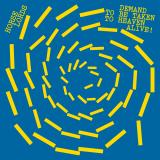
Die Musik auf Horse Lords' "Demand to Be Taken to Heaven Alive!" wirkt zugleich unglaublich detailliert und zutiefst menschlich. Die zwölf versammelten Stücke sind vielschichtig, verflochten, tonal und rhythmisch komplex - moiré-artige Muster aus Interaktion und Verzahnung, die sich sowohl körperlich als auch geistig entfalten, voller klanglicher Gänge mit einem unausweichlichen Groove. Künstler sind nicht notwendigerweise Wissenschaftler, Logiker oder spirituelle Führer, doch durch ihr persönliches Verständnis von Ordnung und Erfahrung eröffnen sie einen unmittelbaren Zugang zu gesteigerten Zuständen von Materialität und Immaterialität. Horse Lords wurden 2010 in Baltimore gegründet; sie gingen aus einer anderen Gruppe namens Teeth Mountain hervor und starteten als Trio mit Gitarrist Owen Gardner, Bassist Max Eilbacher und Schlagzeuger Sam Haberman, bevor der Altsaxofonist Andrew Bernstein zum Kernensemble hinzustieß. Obwohl das Quartett aus einer fruchtbaren Noise- und Experimental-Rock-Szene hervorgegangen ist - einem legendären Umfeld für Künstler und Außenseiter, das viele einflussreiche Bands hervorgebracht hat (Lungfish, Matmos) - war ihr Ansatz über sechs Alben, zahlreiche Kollaborationen und als gefeierte Liveband weit vielseitiger, als es die punktierten Rhythmen instrumentaler elektrischer Rockmusik vermuten lassen. Für dieses Projekt wird die Band durch Bassklarinettistin Madison Greenstone, Posaunist Weston Olencki und - erstmals bei Horse Lords - durch Gesang von Nina Guo und Evelyn Saylor ergänzt. Der Entstehungsprozess von "D2BT2HA!" brachte geografische Hürden mit sich, da die vier Mitglieder seit 2021 in unterschiedlichen Städten leben. Nach sechzehn Jahren als funktionierende Band übersteigt ihre gemeinsame Sprache jedoch jeden Ort. Die aus Deutschland stammenden Gardner, Eilbacher und Bernstein trafen sich in Berlin für die Aufnahmen, während Haberman die Schlagzeugparts in Baltimore erarbeitete. Beim Hören würde man dies nicht unbedingt erkennen, und gemeinsames, räumlich getrenntes Arbeiten ist heutzutage ohnehin keine Seltenheit mehr. Die Band merkt an, dass "es wichtiger war, den Konzepten und Visionen der jeweils anderen zu vertrauen, als Abschnitte immer wieder zu spielen, um zu überprüfen, ob die Musik funktioniert - obwohl dieses Vertrauen nur durch sehr enges gemeinsames Arbeiten möglich wurde". Obwohl "D2BT2HA!" nicht im engeren Sinne eine Suite ist, beeinflusst und durchdringt sich die Musik in komplexen Verknüpfungen selbst. Horse Lords erklären: "Uns gefällt die Vorstellung von Kunst als Werkzeug zur Perspektivveränderung - dass man Ideen rotieren kann und sie aus einem anderen Blickpunkt sehen/hören/fühlen kann." Oder, wie es der Swami Satchidananda Saraswati zugeschriebene Satz ausdrückt: "Understanding is standing under where you are already standing." Das Eröffnungsstück ,Eureka 378-B" ist ein Arrangement von sakraler Harfenmusik aus dem 19. Jahrhundert, getragen vom Gesang von Guo und Saylor; seine Melodie entfaltet sich weit und setzt einen tonalen Startpunkt für vieles, was folgt. Dazu kommen die kurzen "Rotations", die Fragmente aus anderen Stücken isolieren. Offensichtlich tragen die Titel der Stücke einiges an Bedeutung, und "D2BT2HA!" bildet da keine Ausnahme - Transzendenz und Erhebung sind der Musik inhärent, und wenn jede Kunst politisch ist, so sind die Tendenzen von Horse Lords optimistisch und gemeinschaftsorientiert. Transformation und Neubetrachtung sind nicht nur kompositorische Strategien, sondern eine philosophische Haltung, was sich in Titeln wie ,A City Yet To Come", dem Titeltrack oder utopischen Bezügen zeigt. Wie sie selbst sagen: "Wir versuchen Musik zu machen, die den Status quo herausfordert und dem Hörer einen Weg zur Befreiung eröffnet. Das Studium und die Erforschung von Klang und Musik hat eine spirituelle und ekstatische Dimension, und wir haben große Ehrfurcht vor ihrer Wirkung auf den Einzelnen und die Welt." "D2BT2HA!" enthält unzählige klangliche und konzeptuelle Schichten, doch angesichts der unverkennbaren Kraft und Menschlichkeit der Musik ist der Prozess, sie zu entschlüsseln, begeisternd und zutiefst lohnend. Selten ist eine Platte, die einen so unmittelbar packt und zugleich bei jedem Hören vollkommen neu erscheint.
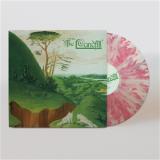
Der Mittlere Westen, insbesondere der Teil, aus dem Eric D. Johnson stammt, ist eine weitgehend flache Weite. Wenn man auf der Autobahn hindurchbraust, sieht man Städte und Ortschaften in der Ferne aufragen, doch wenn man blinzelt, verpasst man andere von Menschenhand geschaffene Gegenstücke zum Leben in der Ebene, die die Landschaft prägen: Hügel um Hügel, erbaut aus den Abfällen der Vergangenheit: Mülldeponien. Einige dieser Hügel eignen sich hervorragend als Schlittenhügel, Parks und Wanderwege. Andere verwandeln organische Abfälle in Kompost. ,The Landfill" ist etwas ganz anderes: ein Berg, der die Landschaft in Johnsons Herzen dominiert. Im Laufe seiner mittlerweile 25-jährigen Karriere unter dem Namen Fruit Bats war der Großteil von Eric D. Johnsons Schaffen das Ergebnis von Geduld und Feinschliff. Seine Songs sind, um einen Ausdruck zu verwenden, Langzeitprojekte, die auf Alben zum Leben erweckt werden, welche lange Zeiträume und Erinnerungen umfassen. "Baby Man" änderte das - er verbot sich, auf Material zurückzugreifen, an dem er vor der Aufnahme des Albums gearbeitet hatte. Es war sowohl ein atemberaubendes Dokument von Johnsons Können als Singer-Songwriter als auch ein ungeschönter Bericht über die zwei Wochen, in denen er das Album aufnahm. "Diese Session war vorbei", erklärt er, "aber es gab noch viel mehr zu erkunden. Mir gefiel die Unmittelbarkeit davon, und ich wollte sehen, wie sich das auf ein Fruit-Bats-Album mit voller Bandbesetzung übertragen lassen würde." Innerhalb weniger Wochen war er wieder im Studio, diesmal mit seiner Band: David Dawda (Bass), Josh Mease (Gitarren, Synthesizer), Frank LoCrasto (Klavier, Synthesizer) und Kosta Galanopoulos (Schlagzeug). Wenn man sich "The Landfill" anhört, stellt man fest: Diese Band rockt. Johnson produzierte die ersten Aufnahmesessions in den Bear Creek Studios in Washington und machte sich daran , "den Sound dieser Band einzufangen, die mich immer wieder in Staunen versetzt - das Gefühl, in einem Raum mit Musikern zu sein, die man liebt und denen man genug vertraut, um sie einfach machen zu lassen." Sie nahmen das meiste davon in einem Durchgang auf - ohne Click-Tracks, ohne zusammengestellte Gesangsparts und mit minimalen Overdubs, wobei der häufige Mitwirkende Thom Monahan zurückkehrte, um zusätzliche Produktionsarbeit zu leisten und den finalen Mix von ,The Landfill" zu erstellen. "So machen wir es auch mit meiner anderen Band, Bonny Light Horseman, und ich war neugierig, wie es bei den Fruit Bats funktionieren würde", bemerkt Johnson. "Es ist sowohl ein sehr persönliches Album als auch mein bisher kollaborativstes." Es ist zudem das live-orientierteste Album der Fruit Bats seit "The Ruminant Band" aus dem Jahr 2009, und durch die Reduzierung der Spuren, die einen Song einer kompletten Band normalerweise ausmachen, ist die psychedelische, technicolorartige Verträumtheit ihres Sounds lebendiger denn je. Die Songs auf "The Landfill" zeichnen sich sofort als einige der besten in Eric D. Johnsons Werk aus, Suchende und Hymnen gleichermaßen. Es ist der bisher gewaltigste Gipfel, den er erklommen hat.
- 1: The Saddest Part Of The Song
- 2: All Wounds
- 3: Think Aboutcha
- 4: That Goddamn Sun
- 5: Silverfish In The Sink
- 6: Wild Pony Tower Moment
- 7: Fishin' For A Vision
- 8: Perhaps We're A Storm
- 9: Hummingbird Sage
- 10: The Landfill
PINK SPLATTER IN CLEAR VINYL[22,27 €]
Der Mittlere Westen, insbesondere der Teil, aus dem Eric D. Johnson stammt, ist eine weitgehend flache Weite. Wenn man auf der Autobahn hindurchbraust, sieht man Städte und Ortschaften in der Ferne aufragen, doch wenn man blinzelt, verpasst man andere von Menschenhand geschaffene Gegenstücke zum Leben in der Ebene, die die Landschaft prägen: Hügel um Hügel, erbaut aus den Abfällen der Vergangenheit: Mülldeponien. Einige dieser Hügel eignen sich hervorragend als Schlittenhügel, Parks und Wanderwege. Andere verwandeln organische Abfälle in Kompost. ,The Landfill" ist etwas ganz anderes: ein Berg, der die Landschaft in Johnsons Herzen dominiert. Im Laufe seiner mittlerweile 25-jährigen Karriere unter dem Namen Fruit Bats war der Großteil von Eric D. Johnsons Schaffen das Ergebnis von Geduld und Feinschliff. Seine Songs sind, um einen Ausdruck zu verwenden, Langzeitprojekte, die auf Alben zum Leben erweckt werden, welche lange Zeiträume und Erinnerungen umfassen. "Baby Man" änderte das - er verbot sich, auf Material zurückzugreifen, an dem er vor der Aufnahme des Albums gearbeitet hatte. Es war sowohl ein atemberaubendes Dokument von Johnsons Können als Singer-Songwriter als auch ein ungeschönter Bericht über die zwei Wochen, in denen er das Album aufnahm. "Diese Session war vorbei", erklärt er, "aber es gab noch viel mehr zu erkunden. Mir gefiel die Unmittelbarkeit davon, und ich wollte sehen, wie sich das auf ein Fruit-Bats-Album mit voller Bandbesetzung übertragen lassen würde." Innerhalb weniger Wochen war er wieder im Studio, diesmal mit seiner Band: David Dawda (Bass), Josh Mease (Gitarren, Synthesizer), Frank LoCrasto (Klavier, Synthesizer) und Kosta Galanopoulos (Schlagzeug). Wenn man sich "The Landfill" anhört, stellt man fest: Diese Band rockt. Johnson produzierte die ersten Aufnahmesessions in den Bear Creek Studios in Washington und machte sich daran , "den Sound dieser Band einzufangen, die mich immer wieder in Staunen versetzt - das Gefühl, in einem Raum mit Musikern zu sein, die man liebt und denen man genug vertraut, um sie einfach machen zu lassen." Sie nahmen das meiste davon in einem Durchgang auf - ohne Click-Tracks, ohne zusammengestellte Gesangsparts und mit minimalen Overdubs, wobei der häufige Mitwirkende Thom Monahan zurückkehrte, um zusätzliche Produktionsarbeit zu leisten und den finalen Mix von ,The Landfill" zu erstellen. "So machen wir es auch mit meiner anderen Band, Bonny Light Horseman, und ich war neugierig, wie es bei den Fruit Bats funktionieren würde", bemerkt Johnson. "Es ist sowohl ein sehr persönliches Album als auch mein bisher kollaborativstes." Es ist zudem das live-orientierteste Album der Fruit Bats seit "The Ruminant Band" aus dem Jahr 2009, und durch die Reduzierung der Spuren, die einen Song einer kompletten Band normalerweise ausmachen, ist die psychedelische, technicolorartige Verträumtheit ihres Sounds lebendiger denn je. Die Songs auf "The Landfill" zeichnen sich sofort als einige der besten in Eric D. Johnsons Werk aus, Suchende und Hymnen gleichermaßen. Es ist der bisher gewaltigste Gipfel, den er erklommen hat.
- A1: From Loch Raven To Fells Point
- A2: Calliope Wailer
- A3: Tightroping
- B1: Critical Masses
- B2: Reservoir Drop > The Summer Song
Jeffrey Alexander and the Heavy Lidders return with their best album yet, and a UK tour this August. Press by Silver PR
‘’On the alternate timeline where the Meat Puppets inherited the bulk of the Grateful Dead’s tourheads when Jerry Garcia died in 1995, none of this would be necessary, because Jeffrey Alexander and the Heavy Lidders are a household name for evolving their own musical space that overlays dusty folk, cosmic jazz, deep psych, free improv, and even (gasp!) indie rock, building an audience that ranges from open-eared curiosity seekers to deep committed music weirdos that’s also yielded the Heavy Lidders, an infamous sub-cult of concert tapers that you’re already sick of hearing about. A lot of other things are better over on that timeline, too.
But in this consensus reality (and probably the other one, too), Liquid Donnon catches the Lidders at their heaviest, “heavy” in the Lidderverse being far from a monolithic musical idea. There’s heavy like the album-opening “From Loch Raven to Fells Point,” one of several tracks with elegant and gnarled conversational jams featuring the core Lidders lineup of Alexander alongside guitarist Drew Gardner and bassist Jesse Sheppard (both of Elkhorn) and drummer Scott Verrastro. But there’s heavy, too, like “Calliope Walker” and “Tightroping,” featuring Gardner shifted to dream-space vibraphone, the former with saxophonist Tacuma Bradley, the latter with Christina Carter of Texas noise-psych legends Charalambides on veil-crossing wordless vocals, her first collaboration with Alexander in some 20 years.
But then there’s also heavy like the cover photo of Alexander’s late friend and album namesake Donnon, taken at a Dead show at Rich Stadium in Buffalo in 1989, a spirit threading through the songs and weaving unexpectedly into Alexander’s life decades later, emerging especially when Alexander passed through a near-death experience of his own. But, taken together, the different heavies of Liquid Donnon add up into a state of musical grace, where all the Heavy Lidders from all the universes come together as one. Just, like, imagine.
Convened in 2019 on Alexander’s relocation back to his native east coast, the Heavy Lidders are the latest hard-touring expression for the guitarist’s music, joining a vast and tangled discography (and tape list) that includes the beloved long-running west coast Dire Wolves Just Exactly Perfect Sisters Band and, before them, the Iditarod and Black Forest/Black Sea, as well as a bushel of solo play-all-the-instruments projects, a stint with Jackie-O Motherfucker, sessions with Kemialliset Ystävät and Avarus and others, and you’ll have to keep digging for the rest.
And while it’s not hard to find tapers at Lidders gigs (and they encourage you to be one), or to track themes and songs over Alexander’s many live releases, Liquid Donnon makes a new primary text, the original versions of six new pieces for the repertoire. The album closes with a devastating pairing of “Reservoir Drop” into “The Summer Song,” floating into a duo between Alexander’s guitar and Carter’s voice. Catch a half-dozen Lidders shows this summer, and you might not ever catch them playing it like that again, but you just might open the doorway back to that better place." - Jesse Jarnow (writer, WFMU DJ, producer and host of The Good Ol’ Grateful Deadcast)
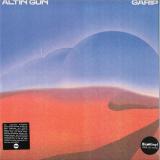
Altin Gün, die türkisch-psychedelische Band aus Amsterdam, veröffentlicht ihr sechstes Studioalbum "Garip", ein ehrgeiziges und vielseitiges Werk, das als Hommage an die türkische Volksmusiklegende Neset Ertas (1938-2012) dient. "Garip" enthält zehn von Ertas" ikonischen Kompositionen, die von Altin Gün auf einzigartige Weise neu interpretiert und musikalisch erweitert werden. Die Band verbindet dabei eine Vielzahl von Einflüssen, von der klassischen Anatolischen Volksmusik über Arabesque und Bollywood-Soundtracks bis hin zu westlichen Rock- und Synth-Vibes. Das Album ist eine kreative Weiterentwicklung des bereits etablierten Sounds von Altin Gün, der Elemente aus Funk, Rock, und türkischer Folklore miteinander vereint. Mit hypnotischen Basslinien, kräftigen Schlagzeugrhythmen und filigranen Synthesizer-Arpeggien schafft "Garip" eine Atmosphäre, die die Essenz von Ertas" emotional aufgeladenen Liedern einfängt und gleichzeitig die experimentierfreudige Energie der Band widerspiegelt. Die Band, die für ihre packenden Live-Auftritte bekannt ist, beweist mit "Garip" einmal mehr, dass sie zu den innovativsten Vertretern der modernen türkischen Musikszene gehört.
- A1: Rock Me Amadeus (The Salieri Version)
- A2: America (The City Of Grinzing Version)
- A3: Tango The Night (The Heart Mix)
- A4: Munich Girls (Just Another Paid One)
- A5: Jeanny (Sus-Mix-Spect Crime Version)
- B1: Vienna Calling (The Metternich Arrival-Mix)
- B2: Männer Des Westens - Any Kind Of Land (Wilde Bube Version)
- B3: Nothin' Sweeter Than Arabia (The Relevant Madhouse Danceteria Jour-Fix-Mix)
- B4: Macho Macho (Sensible Boy's Song)
- B5: It's All Over Now, Baby Blue (No Mix)
As Poorly Knit completes it's first arc of the Sun, it's children become four, as a new mini LP is born.
Tending to his crop with dreams of rotation, Bruce sows and scythes four new grains in the porky mill. Of this strange fruit, that further explores his increasingly familiar, hyper-real and sonically surreal work within this current “movement,” he finds his foothold once more in a wild world intensity: fear and fury grappled in equal measure.
What's more, in celebration of the plentiful harvest thus far, (let alone in the interest of seed diversity), Bruce invites four fellow reapers to the farm, offering their recipe from the spoils of the label's yield:
Vancouver based Brit-abroad, dj_2button pulls apart 'The Hand,' with his 'Accidental Mood Mix,' to be reborn as an Odyssian 13 minute stomper: "a fight of emotions, of light and dark; in quiet protest to the incessant fear mongering that slowly numbs us on a global scale." Balearic shores can be seen glimmering in the distance, whilst you are dragged by part man part (very horny) bull into the depths of dancefloor madness.
re:ni proves she is the captain of her own ship as sweet SSRI numbness billows in the sheets and fraying, dubwise halyards tether and tear through her devilishly elegant 'sertraline queen mix'. polyrhythms plotted and percussion plundered; the vocal from 'Golden Water Queen' sounds oh so sweet in the claws of its new Regina.
Hotly titted deep house reviver, fka boursin empties clips with their bubblegum 'boomkat mix,' of 'The Price,' swivelling the original's brash and bawdy bonce, to face a 120 reality we all need to wake up and start sniffing. Sprinkled with trauma on an icing of a bassline more than a little rood, boursin is packing enough cake for the whole function to take home in (dreadful) goody bags (and even allowed compression in the mastering - mental).
Last and indubitably not least, from lying somewhat dormant in the depths of UK dance music legend, none other than flippin' Untold (!?) rises to seal the release with typically megalithic prowess. Proving he was just resting his eyes for a bit, his 'A1 Mirabelle Mix,' weaves and whips an otherworldly beauty, technically tantalising 'Dham's Jam' in adornments both sour and sweet. It's nothing short of a cloaks and daggers banger, primed for the darkest of dancefloor cosmic moments, and serving as a little less-than-warm-reminder that Untold’s presence in the world of dance music is crucial as ever.
Frankly, if you couldn't tell from all the verbose waffle, they have all absolutely smashed and finessed it: they were all approached after expressing a real resonance from the previous releases and it's such an honour to have them and their fantastic visions on the label.
Available digitally or on high quality cassette, the final chapter of the Poorly Knit's first act has been woven whimsically into the fraying folds.
a A1. It Ain’t Over Till… 04:37
b A2. Wesley’s Sniped All Our Bleeding’ K (Re-Vamped) 05:40
[c] A3. Rockfall [05:06]
[d] A4. You Were Right [10:00
[e] B1. The Hand (dj_2button's accidental mood mix) [13:07]
[f] B2. Golden Water Queen (re:ni's sertraline queen mix) [05:36]
[g] B3. The Price (fka boursin's boomkat mix) [08:30]
[h] B4. Dham's Jam (Untold's A1 Mirabelle Mix) [09:42]
[a] A1. It Ain’t Over Till… [04:37]
[b] A2. Wesley’s Sniped All Our Bleeding’ K (Re-Vamped) [05:40]
[c] A3. Rockfall [05:06]
[d] A4. You Were Right [10:00
[e] B1. The Hand (dj_2button's accidental mood mix) [13:07]
[f] B2. Golden Water Queen (re:ni's sertraline queen mix) [05:36]
[g] B3. The Price (fka boursin's boomkat mix) [08:30]
[h] B4. Dham's Jam (Untold's A1 Mirabelle Mix) [09:42]
- A1: Ros Serey Sothea - Jam 10 Kai Thiet (Wait 10 More Months)
- A2: Yol Aularong - Yuvajon Kouge Jet (Broken Hearted Man)
- A3: Pan Ron - Why Follow Me Wav
- A4: Tet Somnang & Meas Samon - Khnyom Jah Karake
- A5: Houy Meas & Dara Chom Chan - Nek Na Min Rom (Who Isn't Dancing)
- A6: Choun Malai - Jomreang Oun Chreang
- B1: Sinn Sisamouth - Navy A Go Go
- B2: Liev Tuk - Rom Sue Sue (Dance Soul Soul)
- B3: Thra Kha Band - Do You No Wrong Again
- B4: Yol Aularong & Liev Tuk - Sou Slarp Kroam Kombut Srey (Rather Die Under The Woman's Sword)
- B5: Eng Nary - I Wonder. B6- Baksey Cham Krong + Mol Kamach De Quoi Pleures - Tu
Repress!
Before the Khmer Rouge took power in 1975, unleashing a horrifying genocide, Cambodia had one of the most vibrant and exciting music scenes in Asia. With a mixture of traditional Khmer music and a myriad of western genres (from French and latin music, to rock-and-roll , rhythm-and-blues, surf, psychedelia, soul and many more) the few pre 75 Cambodian recordings that survived -most of them were destroyed- are enough to make anyone with a taste for good music shocked by the amazing quality of the sounds created during those golden years. Gathered in this amazing album are some of the most talented and unique musicians from that amazing era with an explosive collection of tracks sure to blow the mind of the listener. A celebration of some of the best music ever made.
It’s with great pride that we announce this amazing album on Optimo Music from Portland-based duo Natural Magic. It was the final vinyl release that Keith McIvor aka JD Twitch put into production before his untimely departure in late September this year.
Having been a long time lover of everything krautrock, space rock, experimental and psychedelic it seems more than fitting that he leaves us this LP as his parting gift; because this sublime album is all these things wrapped up into one and much more.
The album’s opening track “Galaxy Builder”, with its driving tempo, monolithic bass and screaming guitars might give the impression we’re about to hear a Neu for the 21st Century, but no, by the 2nd track we’re already on the first of several wild detours into uncharted territories: part shoe gaze, part ethereal, part psychedelia it’s a unique piece of beautiful euphoria from start to finish. By the time we reach the end of the A-side’s closing track “Distant Bells” the whole place is in tears after hearing possibly one of the most poignant pieces of electronic music of the entire year.
The B-side takes us even deeper into this trip through the duo’s homeland in the Pacific Northwest opening with “Skyward Eye”. If the Orb had ever teamed up with Slowdive and gotten Andrew Weatherall on production this could be it. “Get It Right” is a fuzz-filled epic with heavy dub leanings and meanings...it soars high up into the beyond and prepares us for “Ride”; an unashamed space voyage in the true sense…cosmic guitars, laden with FX; before returning gently down to the rolling green hills of Earth with the closing track “Chugsby’s Theme”. Whoever Chugsby is, his vibe is organic, deeply grounded and beautiful.
In the duo’s own words:
“Natural Magic II is a west coast road trip soundtrack for the fading summer. Taking inspiration from the majesty and myths of their home in the Pacific Northwest, the seven track album is culled from the late night, dimly lit, live sessions of Mike McKinnon on keys/drums and Matthew Quiet on bass. Overdubs of guitar, synths and percussion followed. All this from the same space they throw their legendary Limited Edition parties - all-night free experimentation celebrations in their own right. The album art work is handmade flower pigments, opium poppy pollen ink and wood-scrap charcoal by their friend and collaborator Pith Cocomici. Roll the widows down, tilt the seat back and turn it up. Gas, grass or black mass... there's magic in the hills.
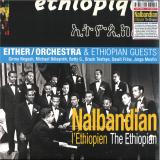
The Éthiopiques series returns! Essential archive recordings from an extremely fruitful period in Ethiopian music.
Before “Swinging Addis” took over the world, there was Moussié Nerses Nalbandian — the Armenian-born composer who shaped modern Ethiopian music. Mentor, arranger, and pioneer, he laid the foundations of Ethio-jazz.
This Éthiopiques volume revives his forgotten legacy, recorded live by Either/ Orchestra First issue ever with new exclusive photos and in depth liner 8-page insert.
“Ethiopian jazzmen are the best musicians that we have seen so far in Africa.
They really are promising handlers of jazz instruments.”
Wilbur De Paris
(1959, after a concert in Addis Ababa)
አዲስ፡ዘመን። *Addis zèmèn* **A new era.**
The time is the mid-1950s and early 1960s, just before "Swinging Addis" bloomed – or rather boomed – onto the scene. Brass instruments are still dominant, but the advent of the electric guitar, and the very first electronic organs, are just around the corner. Rock’n'Roll, R’n’B, Soul and the Twist have not yet barged their way in. Addis Ababa is steeped in the big band atmosphere of the post-war era, with Glenn Miller's *In the* *Mood* as its world-wide theme song, neck and neck with the Latin craze that was in vogue at the same period. Life has become enjoyable once again, with the return of peace after the terrible Italian Fascist invasion of Ethiopia (1935-1941). The redeployment of modern music is part and parcel of the postwar reconstruction. *Addis zèmèn* – a new era – is the watchword of the postwar period, just as it was all across war-torn Europe.
The generation who were the young parents of baby boomers** were the first to enjoy this musical renaissance, before the baby boomers themselves took over and forever super-charged the soundtrack of the final days of imperial reign. Music is Ethiopia's most popular art form, and very often serves as the best barometer for the upsurge of energy that is critical for reconstruction. Whether it be jazz in Saint-Germain-des-Prés or the *zazous* who revolutionised both jazz and French *chanson* after the *Libération*, be it Madrid's post-Franco Movida, or Dada, the Surrealists and *les années folles* that followed World War I, the periods just after mourning and hardship always give rise to brighter and more tuneful tomorrows. Addis Ababa, as the country's capital, and the epicentre of change, was no exception to this vital rule.
**Two generations of Nalbandian musicians**
Nersès Nalbandian belonged to a family of Armenian exiles, who had moved to Ethiopia in the mid-1920s. The uncle Kevork arrived along with the fabled "*Arba Lidjotch*", the** "*40 Kids*", young Armenian orphans and musicians that the Ras Tafari had recruited when he visited Jerusalem in 1924, intending to turn their brass band into the official imperial band. If Kevork Nalbandian was the one who first opened the way of modernism, pushing innovation so far as to invent musical theatre, it was his nephew Nersès who would go on to become, from the 1940s and until his death in 1977, a pivotal figure of modern Ethiopian music and of the heights it. Going all the way back to the 1950s. Nothing less. And it is Nersès who is largely to thank for the brassy colours that so greatly contributed to the international renown of Ethiopian groove. While the younger generations today venture timidly into the genealogy of their country's modern music, often losing their way amidst a distinctly xenophobic historiographical complacency, many survivors of the imperial period are still around to bear witness and pay tribute to the essential role that "Moussié Nersès" played in the rise of Abyssinia's musical modernity.
Given the year of his birth (15 March 1915), no one knows for sure if Nersès Nalbandian was born in Aintab, today Gaziantep (Turkiye/former Ottoman Empire) or on the other side of the border in Alep, Syria... What is certain is that his family, like the entire Armenian community, was amongst the victims of the genocide perpetrated by the Turks. Alep, the place of safety – today in ruins.
Before Nersès then, there was uncle Kevork (1887-1963). For a quarter of a century, he was a whirlwind of activity in music teaching and theatrical innovation. *Guèbrè Mariam le Gondaré* (የጎንደሬ ገብረ ማርያም አጥቶ ማግኘት, 1926 EC=1934) is his most famous creation. This play included "ten Ethiopian songs" — a totally innovative approach. According to his autobiographical notes, preserved by the Nalbandian family, Kevork indicates that he composed some 50 such pieces over the course of his career. This shows just how much he understood, very early on, the critical importance of song as Ethiopia's crowning artistic form. Indeed, for Ethiopian listeners, the most important thing is the lyrics, with all their multifarious mischief, far more than a strong melody, sophisticated arrangements or even an exceptional voice. (This is also why Ethiopians by and large, and beginning with the artists and producers themselves, believed for a long time — and wrongly — that their music could not possibly be exported, and could never win over audiences abroad, who did not speak the country's languages).
Last but not least, one of Kevork's major contributions remains composing Ethiopia's first national anthem – with lyrics by Yoftahé Negussié.
Nersès Nalbandian moved to Ethiopia at the end of the 1930s, at the behest of his ground-breaking uncle. Proficient in many instruments (pretty much everything but the drums), conductor, choir director, composer, arranger, adapter, creator, piano tuner, purveyor of rented pianos,... he was above all an energetic and influential teacher. From 1946 onwards, thanks to Kevork's connexion, Nersès was appointed musical director of the Addis Ababa Municipality Band. In just a few years, Nersès transformed it into the first truly modern ensemble, thanks to the quality of his teaching, his choice of repertoire, and the sophistication of his arrangements. It was this group that would go on to become the orchestra of the Haile Selassie Theatre shortly after its inauguration in 1955, which was a major celebration of the Emperor's jubilee, marking the 25th anniversary of his on-again-off-again reign.
At some point or other in his long career, Nersès Nalbandian had a hand in the creation of just about every institutional band (Municipality Band, Police Orchestra, Imperial Bodyguard Band, Army Band, Yared Music School…), but it was with the Haile Selassie Theatre – today the National Theatre – that his abilities were most on display, up until his death in 1977. To this must be added the development of choral singing in Ethiopia, hitherto unknown, and a sort of secret garden dedicated to the memory of Armenian sacred music, and brought together in two thick, unpublished volumes. Shortly before his death (November 13, 1977), he was appointed to lead the impressive Ethiopian delegation at Festac in Lagos, Nigeria (January-February 1977).
His status as a stateless foreigner regularly excluded him from the most senior positions, in spite of the respect he commanded (and commands to this day) from the musicians of his era. Naturally gifted and largely self-taught, Nerses was tirelessly curious about new musical developments, drawing inspiration from the very first imported records, and especially from listening intensely to the musical programmes broadcast over short-wave radio – BBC *First*. A prolific composer and arranger, he was constantly mindful of formalising and integrating Ethiopian parameters (specific “musical modes”, pentatonic scale, and the dominance of ternary rhythms) into his “modernisation” of the musical culture, rather than trying to over-westernise it. It even seems very probable that *Moussié* Nerses made a decisive contribution to the development of tighter music-teaching methods, in order to revitalise musical education during this period of prodigious cultural ferment. Flying in the face of all the historiographical and musicological evidence, it is taken as sacrosanct dogma that the four musical modes or chords officially recognised today, the *qǝñǝt* or *qiñit* (ቅኝት), are every bit as millennial as Ethiopia itself. It would appear however that some streamlining of these chords actually took place in around 1960. It was only from this time onward that music teaching was structured around these four fundamental musical modes and chords: *Ambassel*, *Bati*, *Tezeta* and *Antchi Hoyé*. A historical and musical “details” that is, apparently, difficult to swallow, especially if that should honour a *foreigner*. Modern Ethiopian music has Nersès to thank for many of its standards and, to this day, it is not unusual for the National Radio to broadcast thunderous oldies that bear unmistakable traces of his outrageously groovy touch.
2026 Repress
If ever an album could transport you to the hazy sunshine and imagined halcyon paradise of Southern California in the mid-1980s, could capture the early evening warmth of hanging at an inclusive boogie jam as it approaches “magic hour” in Santa Ana or Anaheim, then it’s Vaughan Mason and Butch Dayo’s Feel My Love. A brilliantly produced deep slung, low rider funk classic originally released on Salsoul in 1983. It’s a masterpiece of “funk love music”.
Yes, this is indeed a perfectly formed five track “mini LP” of unparalleled heat, but there’s one song here that, above the rest, represents Orange County boogie-funk. A straight killer beloved by all that have had the pleasure of moving to it. A track that can fill up a dance floor within seconds of its starting. That song is the eternal title track, “Feel My Love”.
This is a work of art that made people fall in love with the funk. It transcends the limitations of genre. “Feel My Love”’s deceptive simplicity makes it perfect to drop during a house set, a classic funk party or at a west coast rap jam. It’s sexy, deeply emotional, melancholic, hopeful, passionate and just radiates so, so much raw energy. This is music.
The rest of the record is hardly filler though. Opener “Oh, Love” is a dizzying, emotional slow jam. With heaven-sent vocals riding gorgeous, sweeping keys that alternate between sweet twinkling lines and funk-fuelled stabbing. It’s sensational. A rollerskating jam named “Rollalong Songs” is an ultra-swish piece of dance floor dynamite. Its slick drums, staccato piano and neck snapping claps underscore Dayo’s buoyant vocals. It’s essentially “Bounce, Rock, Skate, Roll Part II”.
The flip begins with “Party On The Corner”. Smoother than silk vocals, day-glo synths, a bubbling bassline and guitar licks that surely received the Prince seal of approval. It’s another example of how Vaughan Mason and Butch Dayo flirt with perfection so routinely. The most majestic closer, the kaleidoscopic, cow-bell-assisted synth-funk heater “You Can Do It” is a proto-rap groover that truly smokes.
This prized LP is a stone cold jam and finding original copies on vinyl at affordable prices has been tough for years. Mastered brilliantly by Simon Francis, cut by Pete Norman and with lovingly reproduced artwork, this fresh Be With reissue ensures this legendary LP now sounds, looks and feels as sensational as it should.
- A1: Matchgame Tour Guide 0 49
- A2: Motivators (Remix) Feat A Tribe Called Quest 2 41
- A3: Word Play (Remix) Feat A Tribe Called Quest 3 01
- A4: The Jam (Remix) Feat A Tribe Called Quest 2 42
- A5: Mind Power (Remix) Feat A Tribe Called Quest 4 10
- A6: Rock-N-Roll (Remix) 3 07
- A7: Willy Overnite (Broke Niggaz) (Remix) Feat Lo-Income 4 43
- A8: Weekendz (Remix) 3 12
- B1: Niggaz Get Knocked 3 13
- B2: Charge! 2 39
- B3: Electric Feat Kanye West 3 38
- B4: The Bidding War (Freestyle) 2 10
- B5: Itch? 1 17
- 6: Stick Up Feat Q-Tip
- B7: Get Money Feat Mobb Deep