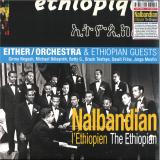
The Éthiopiques series returns! Essential archive recordings from an extremely fruitful period in Ethiopian music.
Before “Swinging Addis” took over the world, there was Moussié Nerses Nalbandian — the Armenian-born composer who shaped modern Ethiopian music. Mentor, arranger, and pioneer, he laid the foundations of Ethio-jazz.
This Éthiopiques volume revives his forgotten legacy, recorded live by Either/ Orchestra First issue ever with new exclusive photos and in depth liner 8-page insert.
“Ethiopian jazzmen are the best musicians that we have seen so far in Africa.
They really are promising handlers of jazz instruments.”
Wilbur De Paris
(1959, after a concert in Addis Ababa)
አዲስ፡ዘመን። *Addis zèmèn* **A new era.**
The time is the mid-1950s and early 1960s, just before "Swinging Addis" bloomed – or rather boomed – onto the scene. Brass instruments are still dominant, but the advent of the electric guitar, and the very first electronic organs, are just around the corner. Rock’n'Roll, R’n’B, Soul and the Twist have not yet barged their way in. Addis Ababa is steeped in the big band atmosphere of the post-war era, with Glenn Miller's *In the* *Mood* as its world-wide theme song, neck and neck with the Latin craze that was in vogue at the same period. Life has become enjoyable once again, with the return of peace after the terrible Italian Fascist invasion of Ethiopia (1935-1941). The redeployment of modern music is part and parcel of the postwar reconstruction. *Addis zèmèn* – a new era – is the watchword of the postwar period, just as it was all across war-torn Europe.
The generation who were the young parents of baby boomers** were the first to enjoy this musical renaissance, before the baby boomers themselves took over and forever super-charged the soundtrack of the final days of imperial reign. Music is Ethiopia's most popular art form, and very often serves as the best barometer for the upsurge of energy that is critical for reconstruction. Whether it be jazz in Saint-Germain-des-Prés or the *zazous* who revolutionised both jazz and French *chanson* after the *Libération*, be it Madrid's post-Franco Movida, or Dada, the Surrealists and *les années folles* that followed World War I, the periods just after mourning and hardship always give rise to brighter and more tuneful tomorrows. Addis Ababa, as the country's capital, and the epicentre of change, was no exception to this vital rule.
**Two generations of Nalbandian musicians**
Nersès Nalbandian belonged to a family of Armenian exiles, who had moved to Ethiopia in the mid-1920s. The uncle Kevork arrived along with the fabled "*Arba Lidjotch*", the** "*40 Kids*", young Armenian orphans and musicians that the Ras Tafari had recruited when he visited Jerusalem in 1924, intending to turn their brass band into the official imperial band. If Kevork Nalbandian was the one who first opened the way of modernism, pushing innovation so far as to invent musical theatre, it was his nephew Nersès who would go on to become, from the 1940s and until his death in 1977, a pivotal figure of modern Ethiopian music and of the heights it. Going all the way back to the 1950s. Nothing less. And it is Nersès who is largely to thank for the brassy colours that so greatly contributed to the international renown of Ethiopian groove. While the younger generations today venture timidly into the genealogy of their country's modern music, often losing their way amidst a distinctly xenophobic historiographical complacency, many survivors of the imperial period are still around to bear witness and pay tribute to the essential role that "Moussié Nersès" played in the rise of Abyssinia's musical modernity.
Given the year of his birth (15 March 1915), no one knows for sure if Nersès Nalbandian was born in Aintab, today Gaziantep (Turkiye/former Ottoman Empire) or on the other side of the border in Alep, Syria... What is certain is that his family, like the entire Armenian community, was amongst the victims of the genocide perpetrated by the Turks. Alep, the place of safety – today in ruins.
Before Nersès then, there was uncle Kevork (1887-1963). For a quarter of a century, he was a whirlwind of activity in music teaching and theatrical innovation. *Guèbrè Mariam le Gondaré* (የጎንደሬ ገብረ ማርያም አጥቶ ማግኘት, 1926 EC=1934) is his most famous creation. This play included "ten Ethiopian songs" — a totally innovative approach. According to his autobiographical notes, preserved by the Nalbandian family, Kevork indicates that he composed some 50 such pieces over the course of his career. This shows just how much he understood, very early on, the critical importance of song as Ethiopia's crowning artistic form. Indeed, for Ethiopian listeners, the most important thing is the lyrics, with all their multifarious mischief, far more than a strong melody, sophisticated arrangements or even an exceptional voice. (This is also why Ethiopians by and large, and beginning with the artists and producers themselves, believed for a long time — and wrongly — that their music could not possibly be exported, and could never win over audiences abroad, who did not speak the country's languages).
Last but not least, one of Kevork's major contributions remains composing Ethiopia's first national anthem – with lyrics by Yoftahé Negussié.
Nersès Nalbandian moved to Ethiopia at the end of the 1930s, at the behest of his ground-breaking uncle. Proficient in many instruments (pretty much everything but the drums), conductor, choir director, composer, arranger, adapter, creator, piano tuner, purveyor of rented pianos,... he was above all an energetic and influential teacher. From 1946 onwards, thanks to Kevork's connexion, Nersès was appointed musical director of the Addis Ababa Municipality Band. In just a few years, Nersès transformed it into the first truly modern ensemble, thanks to the quality of his teaching, his choice of repertoire, and the sophistication of his arrangements. It was this group that would go on to become the orchestra of the Haile Selassie Theatre shortly after its inauguration in 1955, which was a major celebration of the Emperor's jubilee, marking the 25th anniversary of his on-again-off-again reign.
At some point or other in his long career, Nersès Nalbandian had a hand in the creation of just about every institutional band (Municipality Band, Police Orchestra, Imperial Bodyguard Band, Army Band, Yared Music School…), but it was with the Haile Selassie Theatre – today the National Theatre – that his abilities were most on display, up until his death in 1977. To this must be added the development of choral singing in Ethiopia, hitherto unknown, and a sort of secret garden dedicated to the memory of Armenian sacred music, and brought together in two thick, unpublished volumes. Shortly before his death (November 13, 1977), he was appointed to lead the impressive Ethiopian delegation at Festac in Lagos, Nigeria (January-February 1977).
His status as a stateless foreigner regularly excluded him from the most senior positions, in spite of the respect he commanded (and commands to this day) from the musicians of his era. Naturally gifted and largely self-taught, Nerses was tirelessly curious about new musical developments, drawing inspiration from the very first imported records, and especially from listening intensely to the musical programmes broadcast over short-wave radio – BBC *First*. A prolific composer and arranger, he was constantly mindful of formalising and integrating Ethiopian parameters (specific “musical modes”, pentatonic scale, and the dominance of ternary rhythms) into his “modernisation” of the musical culture, rather than trying to over-westernise it. It even seems very probable that *Moussié* Nerses made a decisive contribution to the development of tighter music-teaching methods, in order to revitalise musical education during this period of prodigious cultural ferment. Flying in the face of all the historiographical and musicological evidence, it is taken as sacrosanct dogma that the four musical modes or chords officially recognised today, the *qǝñǝt* or *qiñit* (ቅኝት), are every bit as millennial as Ethiopia itself. It would appear however that some streamlining of these chords actually took place in around 1960. It was only from this time onward that music teaching was structured around these four fundamental musical modes and chords: *Ambassel*, *Bati*, *Tezeta* and *Antchi Hoyé*. A historical and musical “details” that is, apparently, difficult to swallow, especially if that should honour a *foreigner*. Modern Ethiopian music has Nersès to thank for many of its standards and, to this day, it is not unusual for the National Radio to broadcast thunderous oldies that bear unmistakable traces of his outrageously groovy touch.
quête:west k
2026 Repress
If ever an album could transport you to the hazy sunshine and imagined halcyon paradise of Southern California in the mid-1980s, could capture the early evening warmth of hanging at an inclusive boogie jam as it approaches “magic hour” in Santa Ana or Anaheim, then it’s Vaughan Mason and Butch Dayo’s Feel My Love. A brilliantly produced deep slung, low rider funk classic originally released on Salsoul in 1983. It’s a masterpiece of “funk love music”.
Yes, this is indeed a perfectly formed five track “mini LP” of unparalleled heat, but there’s one song here that, above the rest, represents Orange County boogie-funk. A straight killer beloved by all that have had the pleasure of moving to it. A track that can fill up a dance floor within seconds of its starting. That song is the eternal title track, “Feel My Love”.
This is a work of art that made people fall in love with the funk. It transcends the limitations of genre. “Feel My Love”’s deceptive simplicity makes it perfect to drop during a house set, a classic funk party or at a west coast rap jam. It’s sexy, deeply emotional, melancholic, hopeful, passionate and just radiates so, so much raw energy. This is music.
The rest of the record is hardly filler though. Opener “Oh, Love” is a dizzying, emotional slow jam. With heaven-sent vocals riding gorgeous, sweeping keys that alternate between sweet twinkling lines and funk-fuelled stabbing. It’s sensational. A rollerskating jam named “Rollalong Songs” is an ultra-swish piece of dance floor dynamite. Its slick drums, staccato piano and neck snapping claps underscore Dayo’s buoyant vocals. It’s essentially “Bounce, Rock, Skate, Roll Part II”.
The flip begins with “Party On The Corner”. Smoother than silk vocals, day-glo synths, a bubbling bassline and guitar licks that surely received the Prince seal of approval. It’s another example of how Vaughan Mason and Butch Dayo flirt with perfection so routinely. The most majestic closer, the kaleidoscopic, cow-bell-assisted synth-funk heater “You Can Do It” is a proto-rap groover that truly smokes.
This prized LP is a stone cold jam and finding original copies on vinyl at affordable prices has been tough for years. Mastered brilliantly by Simon Francis, cut by Pete Norman and with lovingly reproduced artwork, this fresh Be With reissue ensures this legendary LP now sounds, looks and feels as sensational as it should.
- A1: Matchgame Tour Guide 0 49
- A2: Motivators (Remix) Feat A Tribe Called Quest 2 41
- A3: Word Play (Remix) Feat A Tribe Called Quest 3 01
- A4: The Jam (Remix) Feat A Tribe Called Quest 2 42
- A5: Mind Power (Remix) Feat A Tribe Called Quest 4 10
- A6: Rock-N-Roll (Remix) 3 07
- A7: Willy Overnite (Broke Niggaz) (Remix) Feat Lo-Income 4 43
- A8: Weekendz (Remix) 3 12
- B1: Niggaz Get Knocked 3 13
- B2: Charge! 2 39
- B3: Electric Feat Kanye West 3 38
- B4: The Bidding War (Freestyle) 2 10
- B5: Itch? 1 17
- 6: Stick Up Feat Q-Tip
- B7: Get Money Feat Mobb Deep
Polymania is a collaboration between Earl Grey and Aroma Nice, both of whom hail from the North West of the UK and are known for their genre-pushing productions in and around the overlapping modern Drum & Bass, Jungle and Drumfunk spheres. This record is a euphoric ravey jungle affair with strong acidic inflections, extrovert and dancefloor-focussed, where effortlessly slick percussive flair shines and rolling acid lines squirt out through the seams - the result of two long-time friends with heaps of production experience having a lot of fun.
A-side opener 'Farce of Nature' sets the tone with high energy stabs and a big grooving bassline, rooted in 90s jungle techno but rendered in full high definition, while 'Happy Slaps' continues the theme with crisp drums dancing over an undulating resonant acid line. 'Tank Ammo' deftly ramps up the euphoria with a spiralling melody rising towards a lethal switch-up midway, using filtered choppage to burst the tension with extreme precision. Bouncy acid breaks bubbler 'Give U Up' closes the EP slowing the tempo a touch and dialling up the funk - a refreshing palate cleanser laced with rich braindance melodies and an infectious vocal hook.
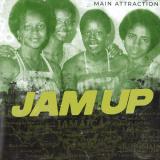
Emerging from the University of the West Indies (UWI) in Jamaica during the late 1970s, Main Attraction was a group of talented singers whose music captured the social and political energy of their time. With a sound that blended reggae and soulful ballads, their songs were both a reflection and a response to the challenges of the era.
The group originally featured Sonia Copeland, a gifted writer, arranger, and back-up singer, alongside Sharon Jones, whose velvet voice led many of their reggae tracks. They were joined by Allison Smith, Marjorie Smith, and Shahiba Ali, forming the group’s first lineup. As time passed, Michelle Thompson and Lileth O’Connor joined, further enriching the group’s dynamic harmony.
Main Attraction’s musical journey began with their debut recording, a cover of Once Upon a Time, produced by David Haughton under the management of Clayton Downie. Later, with Owen Palmer as their manager and producer, the group expanded their horizons, performing in cabaret gigs with the band Mind Benders and embarking on an overseas tour that showcased their talent in New York City. While Sharon Jones led reggae tracks like Jam Up, Allison Peart and Shahiba Ali brought their soulful touch to R&B songs, creating a rich, versatile repertoire that captivated audiences.
Jam Up was the group’s first original recording, composed and arranged by Sonia Copeland. Performed as part of the Reggae Song Competition during Carnival in 1978, the song is a rallying cry for unity and progress. With powerful lyrics and a Shaka rhythm, Jam Up calls on Jamaicans to come together, strive for economic growth, and uplift the nation collectively.
Sonia’s vision was clear: that Jamaicans from all walks of life would find inspiration in the song’s message, motivating them to improve their standard of living and contribute to the country’s growth and prosperity. Decades later, the lyrics remain just as relevant — a timeless call to action for social and economic strength.
Hold this record in your hands, let the music play, and feel the enduring power of reggae music to transform, uplift, and connect.
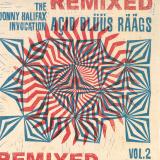
‘Açid Blüüs Räägs Vol.2’ is the latest evolution of the sound of last year’s Volume 1. The debut album was described by Joe Banks for Shindig! Magazine as; “Shivering slabs of drone blues transcendentalism…a burning junkyard of sheet metal blues… Hot stuff.” Volume 2 builds on the skronk blues guitar, sax and electronic drones of it’s predecessor, to explore cosmic free jazz, concrete exotica and dub, channelling influences of Moondog, Terry Riley, 75 Dollar Bill and Wolf Eyes. Playing like the imagined film soundtracks to a dystopian, re-wilded, post eco crash world in the style of Tarkovsky's ‘Stalker’ and ’Solaris’, Jodorowsky's surreal desert western ‘El Topo’, or the early novels of JG Ballard. This new collection sees the addition of minimal analogue drum machine loops as well as live instrumental contributions from the new players of the ever evolving Invocation band, plus some superstar guest contributors.
Featuring five brand new tracks, including the forthcoming single; ‘Cosmic Fanfare’, has already picked up BBC 6 Music support from Gideon Coe. The new album was mixed by Alex McGowan (aka Captain Future) of Space Eko Studios and features Invocation band regulars Rick Jensen of Apocalypse Jazz Unit, Skronk and Oneirologist on sax and bass clarinet, Will Emms aka Tiki Eerie on melodica, horns and claviola, plus special guest appearances from Duke Garwood on clarinet and Mikey 'Moondog' Chestnut of Snapped Ankles on bass synth. “….Acid fried kosmiche blues meets drone raag transcendentalism”. Jonny Halifax is a primitivist free blues outsider, sonic shaman of the acid fuzzed lap steel guitar, demented blower of the howling harmonica of doom. His new band project now combines avant swamp blues heaviosity with kosmic free jazz experimentalism in a fluid collective of godless raag brut improvisations - sonic visions of an hallucinatory apocalyptic near future. Inspired by Henry Flynt’s avant bluegrass experiments fusing country blues with eastern acoustic musical stylings, Spacemen 3’s contemporary sitar music, and the monolithic drone doom immersion of Sunn 0))), THE JONNY HALIFAX INVOCATION build hypnotic instrumental soundscapes using lap steel and homemade slide guitars, harmonica and alto sax. Underpinned by layers of acoustic and electronic drone instruments and fed through an arsenal of pedalboard electronics that would make Kevin Shields weep, the blues are transmogrified, unhinged, reduced and re-imagined as intoxicating, trance-inducing, feedback-drenched noise paintings. THE JONNY HALIFAX INVOCATION follows Jonny’s junkshop skronk blues one man band Honkeyfinger, and the Julian Cope endorsed gospel fuzz psychedelia of Jonny Halifax & The Howling Truth, whilst not forgetting his ambient drone metal side project; Deathenteredinerror. His musical CV also includes studio contributions to tracks by Andrew Weatherall’s Two Lone Swordsmen, UK metal behemoths Orange Goblin, Heck and Melting Hand.
Limited Algae Sea Vinyl. CocoRosie is Bianca and Sierra Casady. Sierra sings and plays guitar and flute. Bianca sings and does percussion (rattles things, makes things squeak, shakes a gold chain belt). They write all the music together. La Maison de Mon Réve was written and recorded in a tiny apartment in the 18th district of Paris during the spring of 2003. La Maison de Mon Réve was released by Touch and Go Records in March 2004. La Maison de Mon Réve is deceptively innocent; enchanting and sweet yet eerie and twisted. An acoustic guitar paints melody through a haze of cryptic sounds and perversely angelic voices. A broken radio transmits a music box orchestra. Tiny field mice sing opera. This 20th anniversary edition of CocoRosie's debut album La Maison de Mon Réve is pressed on transparent algae sea vinyl and limited to 1500 copies worldwide. Packaged in a gatefold jacket with neverbefore-seen photos, the vinyl includes the full album along with a previously unreleased bonus track, "Hairnet Paradise."
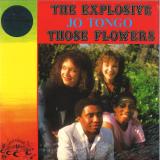
Following the acclaimed reissue of Sa Discossa earlier this year, Jo Tongo's third solo album Those Flowers returns to the spotlight.
Originally released just a year and a half after Sa Discossa, this 1982 gem came out on the small Context label and, in Tongo's own words, the two records are "like twins." Recorded with many of the same musicians, Those Flowers continues the vibrant fusion of disco-funk and reggae - this time dedicating one side to each, leaning slightly more into his Western influences.
But there's more than groove beneath the surface. Tracks like "People Need Peace" and "We Human Beings" channel his enduring themes of resistance, identity, and freedom. The synthesizer at the beginning of the song mimics the ominous drone of warplanes, and lyrics speak directly to global struggles - reminders that his music is both deeply personal and powerfully political. "I paid for these ideals in my career," Tongo reflects, alluding to the personal costs of his outspoken stance against colonialism and injustice.
Still, Those Flowers carries joy at its heart. Songs like "Ain't No Man Like A Real Friend" celebrate trust and loyalty, while the title track offers a tender ode to love and kindness - "picking flowers from the soul," as Tongo puts it. These songs reveal the inner world of a man who has always viewed music as a mirror of life.
This reissue marks the second installment in the African Edge series from The Outer Edge label. Fully restored and remastered, Those Flowers is now set to bloom again - another vital chapter in the legacy of Jo Tongo.
393 Records is a small independent vinyl/digital record label based in Dublin, Ireland
for its 5th release it welcomes Irish producer, Collie with his Static EP
The young producer showcases the versatility of his productions with 4 club driven tracks which represents the energy very similar to his peak time DJ sets weather as a warm up or headline act
On the A1 "Static " The track is built around soft, hazy pads and airy ambient layers that create a wide, enveloping atmosphere, Dreamy, floating, hypnotic, warm, and spacious.
"Into the West" brings a much different approach, with real Dub influenced warming bassline heavy delay & washed stabs
On the flip the journey continues with well crafted progressive 90s era track "soft progress". This one will definitely set the club or festival a light with the breakdown sending chills down your spine
Lastly the maturity of "Electron" keeping that consistency of the B side with its Shuffling hi-hats & deep atmospheric elements & driving low end
The 393 Label has a history of quality over quantity, with no doubts another gem of an EP been released here & another fantastic Artist in Collie been unearthed with a magical collaboration here
Coast-to-coast stripped back hypnotic techno with a funky edge.
Words from the label:
NYC’s premiere live techno maestro, Kanyon dials in three cerebral melters on the A-side that resemble the spiraling sound design of early Surgeon releases with his signature locked groove approach. Headbanger cuts from a hardware rockstar.
B.ROD hits the B-side with a Sterac-like touch that showcases the ease of his West Coast finesse. Both “Exit” and “Down With It” will be a TIP! for all long-blend DJs and perfectly molded for the turntable jugglists too. Vinylists take note!
Syncretic marks the debut full-length from Australian duo Bhairavi Raman, a Western and Carnatic violinist, and Nanthesh Sivarajah, a mridangam player and versatile percussionist. Both artists share a Tamil heritage, a current that hums across the album. Raman, from South India, and Sivarajah, from Sri Lanka, draw lines that connect Western practice and Carnatic tradition. This hybrid is central to Raman’s approach as a violinist, an instrument itself caught between East and West since the late 18th century. Her playing folds history, lineage and experimentation into music that acknowledges inheritance while gently rewiring its circuitry.
Expanding on traditional music can be a precarious practice, but Syncretic never feels heavy-handed. Raman and Sivarajah exercise measured restraint, letting the Carnatic framework breathe even as it is refracted through contemporary tools. Delays, looping, subtle layering and synthesized harmonies tilt tradition into a new light without disguising it.
Even within a contemporary framework, Raman’s rigorous Carnatic training under gurus Sri S. Varadarajan (India), Sri Murali Kumar (Australia) and Sri Gopinath Iyer (Australia) is unmistakable. She captures the spiritual and emotional essence of each raga: on Seven, the playful raga Bahudari becomes both centrepiece and conduit, while on the traditional piece Thunbam Nergayil, drawn from a Tamil poem, we hear a deeply personal iteration, a weeping euphony of mixed emotions hitting all at once. Tradition here is absorbed, expanded and reframed.
Sivarajah’s command of the mridangam, honed by his gurus Sri Jambunathan (Sri Lanka), Sri Balasri Rasiah (Australia) and Sri T. R. Sundaresan (India), is central to his original composition Guardian. He sustains tradition while extending it through layering and sound-spatialisation. The mridangam here functions as both a structural and ornamental force, mapping continuity between inherited form and contemporary sonic architecture.
Syncretic resonates as a space where Tamil heritage, diasporic memory and contemporary practice coalesce. Culture, like sound, circulates, transforms and persists. Tradition is not an archive but living material, a soundworld that lingers in the ears and the imagination.
Moody and Zeitgeist have had the utmost privilege to bring onboard a team of some of the most accomplished musicians/wordsmiths India has to offer for this album. Working out of Island City Studios in Khar West, Mumbai, the duo assembled a team of musicians including acclaimed and awarded vocalists Vinay Sugatha Ramadasan and Anuja Zokarkar. The pair bring a lyrical depth to the music informed by millennia of North-Indian classical poetry and melody. Metaphor and imagery is intermingled with EX GENERATION's unapologetic rhythm and production style to form something that is profound and complex, whilst also accessible and innate in the way it confronts the listener.
DJ Support: Antal, I Cube, Noel Watson, Colleen Cosmo Murphy, Sean Johnston, San Soda, Takaya Nagase, Tina Edwards, Pete Herbert, Kenneth Bager, Severino, Aaron Paar, Felix Joy, Harri Harrigan, Laroye, Telford, Darker Than Wax, Rocky (X Press 2), Shane Johnson, Dan Tyler, Felix Dickinson and many more
Having previously released selected retrospectives focused on the musical output of Ryo Kawasaki and Joan Bibiloni, NuNorthern Soul has now turned its attention to the vast back catalogue of Jasper Van’t Hof’s pioneering electro-acoustic, Afro-fusion collective, Pili Pili.
The band was established in 1984 by Van’t Hof, a Dutch pianist who began his career in Europe’s jazz scene of the late 1960s, as a way of combining his love of jazz-fusion and the music of North-West Africa. Van’t Hof already had a reputation for combining roles in traditional jazz combos with more experimental and abstract projects. These included a spell in violinist Jean-Luc Ponty’s first band, years spent masterminding jazz-rock outfit Jasper Van’t Hof’s Porkpie, the recording of an all- electronic album (1982’s Visitors), and a celebrated collaborative live album with the great Archie Shepp, Mama Rose.
Pili Pili, though, was another step forward for Van’t Hof. Working with percussionists and vocalists from Benin and Mali (including the now legendary Angelique Kidou) and a string of adventurous jazz soloists (saxophonist Tony Lakoto and trumpeter Annie Whitehead included), Van’t Hof’s collective frequently combined live and programmed percussion, electronic and acoustic instrumentation, and the talented improvisor’s own memorable melodies and impactful solos.
NuNorthern Soul’s retrospective focuses on the most productive and celebrated period of Pili Pili’s near three-decade history, showcasing tracks originally recorded and released on studio albums released between 1984 and 2002. The six tracks on show offer an essential glimpse into the musical gold to be found across the Pili Pili catalogue.
In keeping with NuNorthern Soul’s previous retrospectives, the vinyl version of Selected Works 1984-95 comes with extended liner notes telling the remarkable story of this most unusual of cross-cultural collaborations. These feature extensive quotes, reflections and memories from Jasper Van’t Hof and were written by music historian Matt Anniss.
Tre Turner bounces back on Belters4u with two unashamedly old-school Scottish club cuts alongside two remixes from London prog trance upstarts Close Proximity.
With shared spiritual roots in the West of Scotland early 90s rave scene, Belters4U and Tre Turner realise their adolescent dream in releasing this love letter to a decadent lost reality. Title track ”Scottish Piano” amalgamates a million shared moments on Scottish dance-floors and living room afterparties. On the flip, Ultra-Free samples the vocal hook from the ultimate Scottish old skool rave anthem ”Obsession” by legends ‘Ultra-Sonic.’ Hardcore pianos meet gated synths and thumping solid bass, the sound of many a misspent youth.
Through the haze of smoke and strobes, the Close Proximity Trance Mix recalls the wildest, most ecstatic, face-melting moments from the legendary Metro and Hangar 13 clubs. Close Proximity round things off by taking you further into euphoric dreamland with their ever-evolving Paradise Mix of Ultra-Free.
Ring The Alarm! Nach der Neuauflage von Sister Nancys „Bam Bam“, die eine reißenden Absatz fand, folgt nun der nächste unverzichtbare Track auf dem Stalag Riddim vom verstorbenen, großartigen Tenor Saw. Dies ist die ultimative Soundsystem-Waffe und ein Muss für jeden Selector, der etwas auf sich hält. Zurück mit dem entscheidenden Original-Keyboard-Workout von Ansell Collins Stalag 17, aufgenommen für Techniques, ist Stalag einer der Eckpfeiler der Reggae-Musik, der von einer ganzen Galaxie von Superstars der Musikwelt verwendet und genutzt wird, darunter Big Audio Dynamite, Public Enemy, Run DMC, Alicia Keys, Kanye West, Sublime usw. Ein Original Twin-Killer-Doppelsider – limitierte Auflage in illustrierter Hülle. Verpassen Sie es nicht!
R.i.O. welcomes a new member. Straight in full length. An album created by Dorsten,North-Rhine-Westfalia based producer Aroma Von Troisdorf - a man who refuses to be putin a box. Unlike others, who politely stay in one lane, he is a tuneful shape shifter. Alreadyhis 2021 debut on the Cologne based label Papercup Records smashed Krautrock, Synthpop,Electro, Ambient, and dub together. His 2023 and 2024 Papercup Ep's "Buttergolem"and "Rodeln am Rhein" added Italo-Disco, Synth-pop and a drop of experimental Electroto his versatility. Now eight new creations, brilliantly composed, yet - even in odd flashes -effortlessly catchy. They bring once more a stylistic melting pot, now enlarged with TheCure-ish dreamscapes, stretching over guitar riffs and bass grooves, like in the closingambient-folk star "Zeiten" or the dreamy opening track "Fog Frog Green". There is themotorik krautrock pulse of "Osmopower", that boogies heavy in drum machine hypnosisunder Aroma's entrancing new-wave vocals. Tunes like "Dreams Unfold" or "AmplifyShrooms" are likewise propulsive, each one psyching in its very own rhythmic sector. Morevoices are present too. In the two-minute manic preacher "Colas", were Togolese rapperand political activist Yao Bobby chants edgy. Or in "Closer", where singer Aprico sendsspoken-word trances echoing through the cosmic jacking. And there is "Lovers Lake", ahypnotic drift of witchy vocals, bluesy chords, and endless synthscapes, that makes youswim on your feed. Shift the shapes, "Blaumilch" opens the gates.
Steering clear of his usual diet of 90s rave stabs, woolly pads and contemporary R&B vocals, Coco Bryce offers up a full album focussing on non-western sample sources. Drawing from, amongst other things, traditional Azerbaijani folk songs, Indonesian Gamelan experiments, Kenyan Taarab and ancient Sephardi hymns, it traverses half the globe across its ten tracks.
- A1: Finally
- A2: Neva Eva (Feat Barrel Brothers)
- A3: What You Were Looking For (Feat Oddisee)
- A4: Detonate (Feat M.o.p.)
- A5: Brass Tacks (Feat Chino Xl & Finale)
- A6: There's Always Radio (Feat Evidence)
- B1: Still Standin' (Feat Rasheed Chappell)
- B2: The Hard Way (Feat Saga & Ty Farris)
- B3: Gettin' By (Feat Rapper Big Pooh & Dynasty)
- B4: Enemies With Benefits (Feat Ras Kass)
- B5: Walk With Me (Feat Vinnie Paz & Blacastan)
- C1: Not That Guy (Feat Your Old Droog)
- C2: Money (Feat Masta Ace & Wordsworth)
- C3: Who's That (Feat Maffew Ragazino & Freddie Gibbs)
- C4: In The Moment (Feat O.c.)
- D1: Triple Beams (Feat Westside Gunn & Planet Asia)
- D2: Eachother (Feat Eternia)
- D3: Yesman Shit (Feat Sean Price & Reks)
- D4: Checkered Flag (Feat Ugly Heroes)
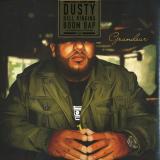
Legendary Mello Music Group producer Apollo Brown's feature packed album including Oddisee, Evidence, Freddie Gibbs, Masta Ace, Vinnie Paz, Westside Gunn, Sean Price and more! 19 full boom bap classics. A celebrated fan favorite with over 20 million streams is finally back on vinyl with this special double lp olive green edition.
- A1: That's My Dog Featuring – Swizz Beatz, The Lox
- A2: Bath Salts Featuring – Jay-Z, Nas, Swizz Beatz
- A3: Dogs Out Featuring – Lil Wayne, Swizz Beatz
- A4: Money Money Money Featuring – Moneybagg Yo
- A5: Hold Me Downfeaturing – Alicia Keys
- A6: Skyscrapers Featuring – Bono
- A7: Stick It Up Skit Featuring – Cross , Infrared*, Icepick*
- B1: Hood Blues Featuring – Benny The Butcher*, Conway The Machine*, Westsidegunn
- B2: Take Control Featuring – Snoop Dogg
- B3: Walking In The Rain Featuring – Denaun*, Exodus Simmons, Nas
- B4: Exodus Skit Featuring – Exodus Simmons
- B5: Letter To My Son (Call Your Father) Featuring – Brian King Joseph, Usher
- B6: Prayer
- A1: Midnight Cowboy
- A2: Herbs &Amp; Wine (Feat Ivar)
- A3: Nothing Is Forever
- B1: Travel Light (Feat Ivar)
- B2: Heat
- B3: Velvet Seas
- C1: Isn&Apos;T It Strange
- C2: All I Need (Feat Iogi)
- C3: Come What May (Feat Ivar)
- D1: Morning Reverie (Feat Berenice Van Leer)
- D2: Real Love
- D3: Ear To The Ground
- D4: Open The Blinds (Feat Ivar &Amp; Berenice Van Leer)
DOUBLE VINYL ALBUM RELEASE
Kraak & Smaak Announce New Album Velvet Seas.
Dutch electronic pioneers Kraak & Smaak return with their highly anticipated seventh studio
album, Velvet Seas. Penned and produced between their hometown of Leiden and the sun-
drenched sprawl of Los Angeles, the album channels a rich seam of West Coast psychedelia,
deep funk roots, and that unmistakable K&S groove, all wrapped in shimmering synths and
electronic soul.
The record captures the essence of the band's genre-defying journey, blending radiant nostalgia
with forward-thinking production. True to form, the Dutch trio have enlisted an eclectic roll-call of
collaborators: from the dreamy stylings of Kosta G (formerly known as PWNT and memebr of Rio Kosta) and Butter Bath to the powerhouse
vocals of Izo FitzRoy, plus contributions from The Undercover Dream Lovers, Kainalu, Iogi, and
longtime live partners IVAR and Berenice van Leer.
With hundreds of millions of streams under their belt and a legacy as industry tastemakers, Kraak
& Smaak are set to take Velvet Seas to the global stage, with a world tour slated for next year.