After a string of two dozen brilliant albums beginning in the 1950’s, clarinetist, saxophonist, flutist,
composer and arranger Jimmy Giuffre stopped recording. For nearly ten years he focused solely on
live performance. This album, Music for People, Birds, Butterflies and Mosquitoes, marked his return
to the studio after his self imposed hiatus. Known for developing forms of jazz which allowed for free
interplay between the musicians, Giuffre began his career as an arranger for Woody Herman’s big
band in the late 1940s. Playing primarily saxophone, he became a central figure in the West Coast
cool jazz scene of the 1950’s, with the Lighthouse All Stars in Hermosa Beach, CA. In the late 50’s, he
began working within different configurations of the trio format, on what he called “blues-based folk
jazz.” A prime example being his piece "The Train and the River" famously featured in 1958 Newport
Jazz Festival concert film, Jazz On A Summer’s Day. The trio here is completed by drums and bass
with Giuffre trading seamlessly between tenor saxophone, clarinet, flute and bass flute. The twelve
original compositions are very much in Giuffre’s signature style. The melody explorations have an
eastern vibe, and are played in hushed tones with an almost chamber music like quality. From 1973,
originally on the Choice label, this album has been remastered and is being presented here as the
artist intended, with its original title, track order and album artwork, for the first time since its original
release. Remastered by Alex McCollough at True East Mastering. Vinyl cut by Jeff Powell at Take Out
Vinyl.
Search:west
A Flor de Piel, the new album from singer-songwriter and composer Maria Monica Gutierrez (aka Montañera), is a meditative journey of self-discovery across oceans, time, and the traditional confines of genre. Originally from Bogota, Colombia, Gutierrez began the album as a way to explore her identity after a difficult move to London left her feeling untethered in a strange new place. The result is an examination of the immigrant's experience through a rich sonic lens of ambient pop textures, inspired by sources as disparate as Colombian traditional music, traditional Senegalese music, and whalesong from the depths of the Atlantic. The album begins with the title track "A Flor de Piel," Gutierrez's indelible vocals floating above a vast expanse before being joined by deep, silky bass and the plucks of a koto-like stringed instrument. "The song was inspired by traditional Japanese music," Gutierrez explains, "It's about making my heart a little lighter; I know that inside of me I can be as light as mist in heat, I can be fragile as the song of a sparrow." That sentiment perfectly encapsulates much of what makes A Flor de Piel so special. The album comes with a message of healing for all people, without forgetting the centuries of struggle and hurt that form the bedrock of modern society. The track "Santa Mar," for instance, is inspired by the musical traditions of afro-pacific women in Colombia, and the crucial role that they play as peacebuilders in the region. Backed by a hypnotic beat, the song features contributions from marimba player Cankita, alongside Las Cantadoras de Yerba Buena, an all-female vocal group that utilizes traditional Afro-Colombian music to preserve their history and promote peace. Standout track "Como Una Rama" is a futuristic take on bullerengue, a traditional style of music and dance originally developed by Maroon communities on Colombia's Caribbean coast. Deeply affecting, the song combines Gutierrez's indomitable voice with electronics that recall Steve Reich's rhythmic minimalism. "Cruzar," the final track on the album, feels almost like a lullaby, with a meditative harmonic style and trance-like vocal melody. "The lyrics," Gutierrez explains, "are a personal reminder of what is important to me: healing, letting go, breathing, evaporating, forgetting, changing, crystallizing." Across the 40-odd minutes of A Flor de Piel, Gutierrez triumphs at recontextualizing traditional sounds and sentiments into a modern form using synth-based and electronic textures. It's a fitting representation for the personal struggles that the artist endured during her move to London. Rather than dwelling solely on the past Guitierrez uses A Flor de Piel to summon the strength of past generations, and forge a new path forward. As she describes it, "The album has accompanied me through inner journeys of finding myself in a new territory _ of redefining myself, of remembering who I am _ in a strange place." As we drift towards an increasingly frightening and uncertain future, perhaps Montañera's A Flor de Piel is exactly what we need: something to give us strength, to bring us peace, and to accompany our journey into a strange new place.
'Racoons' ist das mittlerweile fünfte Soloalbum des außergewöhnlichen Schlagzeugers Erland Dahlen. Er hat auf mehr als 300 Alben mit einer Vielzahl von Künstlern unterschiedlicher Genres gespielt und tritt regelmäßig mit Bands und Künstlern wie der Nils Petter Molvær-Band, Stian Westerhus, Geir Sundstøl, Madrugada und Eivind Aarset auf, um nur einige zu nennen. Auf 'Racoons' spielt Dahlen diverse individuell angefertigte Instrumente - verschiedene Holztrommeln oder maßgeschneiderten Zitherbass. Dahlen verwendet auch chromatische Blütenglocken und verschiedene Metallgegenstände für seine spannenden Klang-Collagen. Erland Dahlens Soloprojekt entstand aus der Tatsache, dass er im Laufe der Jahre eine Vielzahl von Platten mit anderen Musikern gespielt hatte, und ein Projekt haben wollte, bei dem er eigenständig aufnehmen und live spielen konnte. Im Laufe der Zeit hatten sich zu viele musikalische Ideen angesammelt, die zu keinem anderen Projekt passten, sodass er beschloss, einige davon in einem Soloprojekt zu verwenden. Daraus wurden bislang fünf spannende, hochkreative Alben die zwischen Elektronik und Jazz pendeln.
Get On Down is proud to announce a vinyl reissue of one of the West Coast's most revered, yet underrated, hip-hop classics and quite possibly one of the best hip-hop albums of all time: The D.O.C.'s No One Can Do It Better. Produced entirely by Dr. Dre and out of print on vinyl in the U.S. for several years, this limited edition colored LP features original album artwork and thirteen tracks of rap heaven. When his debut album hit in mid-1989, The D.O.C. was in the vortex of the biggest hip-hop happening on the planet: the rise and rule of N.W.A. The group’s breakout album Straight Outta Compton had hit one year prior and had created both controversy and worldwide critical acclaim. As rap history buffs and industry insiders know, The D.O.C. was a crucial behind-the-scenes member of the N.W.A. inner circle - his most important role in the early days of the group was writing many of Eazy-E's rhymes, including his hit 1988 single “We Want Eazy.” He would go on to write for Efli4zaggin, The Chronic and Doggystyle. But The D.O.C. wasn’t in N.W.A. and never wanted to be - he was his own man, with his own vision. And after Compton proceeded to blow up the next crew album was No One Can Do It Better. Significantly, it was the first album where Dr. Dre showed his greatness as a solo producer for one MC. Boasting four singles - “The D.O.C. & The Doctor,” “Mind Blowin’,” the smash “It's Funky Enough” and “The Formula” - the album is flawless from beginning to end. Of particular note beyond the singles is “The Grand Finale,” which was the last time that Ice Cube, M.C. Ren and Eazy-E would rhyme on a track together. The D.O.C. showed on this amazing record that he was one of hip-hops most talented MCs. He nearly died in a horrific car crash as the album was catching fire in the late summer of 1989 which damaged his vocal cords, but he survived and continues to make new music and act as a sounding board for Dr. Dre to this day. More recently a documentary covering D.O.C.'s life titled The DOC debuted at the Tribeca Film Festival with fans eagerly awaiting a wider release. This album is a must have for any Hip-Hop fan
With the exception of Waltz for Matilda, the pieces which make up this album were all composed during the 1980s and early 1990s. However, although some were performed occasionally during this period, they remained unpublished as manuscript notes and were largely forgotten about for some 20 years until Neil rediscovered them in the autumn of 2014, while idly sorting through a box of old manuscripts and musical notes. Their discovery came as a pleasant surprise, and the idea for the album, along with the title, quickly followed.
Der Geiger Nils Økland und der Tastenmusiker Sigbjørn Apeland, seit dreißig Jahren musikalische Partner,
erforschen seit langem die Schnittstellen von traditioneller norwegischer Musik und Improvisation. Glimmer,
ein außergewöhnlich schönes Album, nimmt die Volksmusik der westnorwegischen Region Haugalandet als
Ausgangspunkt. Apelands Sammlung von Stücken lokaler Sänger, die dazu beigetragen haben, die Traditionen am Leben zu erhalten, bildet hier die Grundlage des Repertoires, zusammen mit Eigenkompositionen.
Letztere reichen von Stücken, die für einen Film über Lars Hertevig, den großen norwegischen Landschaftsmaler des 19. Jahrhunderts, geschrieben wurden, bis hin zu vom modernistischen Komponisten Fartein
Valen inspirierter Musik. Die Kombination aus Øklands Hardangerfiedel und Apelands Harmonium ist von
subtilen Klangfarben und einzigartigem Fluss geprägt
Purple 2x12"[36,93 €]
- A1: I Am The Damager
- A2: My Voice My Weapon Of Choice
- A3: 1Of1
- A4: Gogo Boy Girl
- B1: Fancy Feat Catlaine
- B2: Zeit Sie Rinnt
- B3: Zehlendorf Action Superstars
- B4: Westberlin Bass
- C1: Ätzend
- C2: (Skit) Suckafree Fm Call In Line
- C3: Make Ends Meet
- C4: Gangsta Garage Cypher
- D1: Idc Bout What You Think
- D2: Wenn Der Mond In Mein Herz Kracht
- D3: Breakfree
- D4: Think Of Me
After last years „4 THA CULTURE“ and his collaboration with horsegiirL „My Little White Pony“ MCR-T releases his debut album „My Voice My Weapon Of Choice“. My Voice My Weapon Of Choice weaponises MCR-T ́s fierce Soul Power on the mic. This album being more personal than usual, MCR-T does not shy away from giving his listeners insights to his inner demons and personal battles over the course of making this release. Tracks that all tell deep and personal stories while staying true to their club functional nature. MCR-T pays homage to Grace Jones' opening statement on her record “This Is”. Realizing that the liberation of self starts with the paper and pen, the means to an end - therapeutic self expression. Bold statements backed by even bolder sounding rracks all across the electronic music spectrum to underline not only his versatility on the dancefloor but also in the studio. Different flavors for the deserving multifaceted raver of tomorrow.
"Sweet Justice" ist das zweite Album von Tkay Maidza, der ersten Rapperin, die bei 4AD unter Vertrag ist. Der Nachfolger des selbstbetitelten Debüts aus dem Jahr 2016 enthält Produktionen von Flume und Kaytranada und zeigt alle Facetten der in Los Angeles lebenden, in Simbabwe geborenen und in Australien aufgewachsenen Tkay. "Sweet Justice" ist kein Rachealbum, wie der Titel vermuten lässt, sondern das Ergebnis dunkler Nächte und der Erleuchtung am Tag danach. Das Album klingt nach innerer Befreiung und Spaß am Leben. Sie wechselt zwischen den Stilen und überwindet so mühelos Genregrenzen - Musik ohne Zwänge, Regeln und Vorgaben. Dazu trennte sie sich von ein paar alten Freunden, fand einige neue, die auf der gleichen kreativen Wellenlänge lagen: die kanadischen Produzenten Stint und Kaytranada sowie ihr australischer Kollege Flume, die alle zur Produktion beitragen haben. "Sweet Justice" ist ein Album, das die wunderbaren Widersprüche von Tkays Kunst verkörpert: Es ist eine Coming-of-Age-Platte von jemandem, der langsam versteht, wie das Spiel des Lebens läuft. Ein Album über Gerechtigkeit und Verantwortlichkeit, das hell, luftig und unglaublich lustig ist und diejenigen, die unehrlich und respektlos sind, mit bittersüßer Musik niederstreckt. Wie Tkay in "Love Again" singt, einem Song, der wie eine Meditationssitzung klingt: "Vorbei sind die Tage, an denen ich fiel und sah, dass es kein Entkommen gibt." Ein gutes Leben ist die beste Rache. Auf "Sweet Justice" lebt Tkay Maidza dieses Motto.
180-gram 45 RPM double LP
Mastered by Ryan K. Smith at Sterling Sound from the original analogue master tape
Pressed at Quality Record Pressings and RTI
Gatefold old-style "tip-on" jacket by Stoughton Printing
In The Right Place is the sixth, and biggest-selling album of the late iconic music legend, six-time Grammy-winner, and Rock And Roll Hall of Fame inductee, Dr. John. Dr. John, the stage name of Malcolm John Rebennack, Jr., was one of the most original, distinctive and influential voices to ever come out of New Orleans. His career spanned six decades as a songwriter, composer, producer and performer. His unique blend of music carried his hometown of New Orleans at its heart.
His colorful musical career began in the 1950s when he wrote and played guitar on some of the greatest records to come out of the Crescent City, including recordings by Professor Longhair, Art Neville, Joe Tex, Frankie Ford and Allen Toussaint. Dr. John headed west in the 1960s, where he continued to be in demand as a session musician, playing keyboards on records by Sonny and Cher, Van Morrison, Aretha Franklin and The Rolling Stones' Exile On Main St. During that time he launched his solo career, developing the charismatic persona of Dr. John The Nite Tripper. A legend was born with his breakthrough 1968 album Gris-Gris, which introduced to the world his unique blend of voodoo mysticism, funk, rhythm & blues, psychedelic rock and Creole roots.
1973's In The Right Place contained the chart hits "Right Place Wrong Time" and "Such A Night." In addition to his six Grammy wins (1989, 1992, 1996, 2000, 2008 and 2013), he has received six other Grammy nominations over the years. In 2007 he was nominated for "Sippiana Hericane," his Hurricane Katrina benefit disc.
AllMusic says that with In The Right Place, Dr. John struck mainstream paydirt, especially with his hit single "Right Place Wrong Time" bounding up the charts and initiating listeners into New Orleans-style rock (the song hit No. 9 in 1973 on the Billboard Hot 100 songs chart).
Also including Allen Toussaint's "Life," and a funky little number entitled "Traveling Mood," which shows off the good doctor's fine piano styling, and with able help from the Meters as backup group, In the Right Place is still a fine collection to own.
With mastering by Sterling Sound's Ryan K. Smith direct from the original tape, and two sides of premium 180-gram vinyl (pressed by the best — Quality Record Pressings and RTI), our 45 RPM edition of In The Right Place emphasizes Dr. John's gravelly bayou drawl and sonically creates the hoodoo-infused stage persona he brought to his performances.
After Hurricane Katrina Dr. John immediately stepped up to the plate with generous relief fund-raising concerts and recordings. In 2007 he was inducted into the Louisiana Music Hall of Fame and Blues Hall of Fame. In 2008 he released City That Care Forgot, winning him a Grammy for Best Contemporary Blues Album.
His numerous other awards included the Louie Award from the Louis Armstrong House Museum and the Jazz Foundation of America's Hank Jones Award, presented in October 2016 at "A Great Night in Harlem" which pleged $1 million to help musicians recovering from the 2016 Louisiana flood.
We are so pleased to bring you this deluxe 180-gram 45 RPM 2LP Analogue Productions (Atlantic Series) reissue of the timeless Dr. John classic In The Right Place. Cue it up and prepare to be transported.
- A1: The Smell (4 16)
- A2: Panties In A Jumble (3 00)
- A3: Diamonds (3 42)
- A4: The Aura (3 38)
- A5: Dalai Lama Slang (Feat Willie The Kid) (3 10)
- A6: Tiger Bone (2 50)
- A7: Duffles (3 36)
- A8: Avant Garde (3 10)
- B1: Deep In The Casket (3 16)
- B2: Fire (Feat Tristate) (3 39)
- B3: Speak Volumes (2 57)
- B4: Pain (3 21)
- B5: Get Back (3 20)
- B6: Nine Steamin' (Feat Guilty Simpson) (3 34)
- B7: You Love Me (3 35)
- B8: Golden Chakras (Bonus Track) (1 25)
- B9: Broke Encomposs (Bonus Track) (1 25)
Classic Hip-hop meets minimalism and dusty vinyl on Anchovies Cali Agents alum Planet Asia is as sharp as ever with his lyrical smithing. Apollo Brown's style is evident behind the dust and grime of these smoky samples. The Detroit producer approached this album like a director would a movie. Apollo painstakingly laid out every detail of the project and knew what he wanted from the finished product. He knew that only one rapper could execute his vision. Enter Planet Asia. The West Coast legend was able to fit directly into the plan and bring his talents to the album, creating a perfect match.
Planet Asia. The West Coast legend was able to fit directly into the plan and bring
his talents to the album, creating a perfect match.
- A1: Backstreet Boys - Everybody (Backstreet’s Back)
- A2: Spice Girls - Wannabe
- A2: East 17 - It’s Alright (The Guvnor Mix)
- A4: S Club 7 - Bring It All Back
- A5: Sugababes - Push The Button
- A6: New Kids On The Block - Tonight
- A7: Atomic Kitten - Whole Again
- B1: Take That - Back For Good
- B2: Solid Harmonie - I’ll Be There For You
- B3: Westlife - Uptown Girl
- B4: Steps - Last Thing On My Mind
- B5: Tlc - No Scrubs
- B6: 98° - I Do (Cherish You)
- B7: Girls Aloud - Sound Of The Underground
- C1: Boyzone - No Matter What
- C2: All Saints - Never Ever
- C3: Five - Keep On Movin’
- C4: Liberty X - Just A Little
- C5: Eternal - Angel Of Mine
- C6: Another Level - Freak Me
- D1: Pussycat Dolls - Don’t Cha
- D2: Blue - Guilty
- D3: No Mercy - Where Do You Go
- D4: Hear’say - Pure & Simple
- D5: Swv - Right Here (Human Nature Radio Mix)
- D6: All-4-One - I Swear
Boy bands and girl groups were a huge factor in 90’s and 00’s pop culture. From the Backstreet Boys and Take That to the Spice Girls, Sugababes and many more great pop-bands, they sparked mass hysteria among their young fanbase. Being one of the first bands in the late 80’s, New Kids On The Block kicked off the hype, although in the 60’s bands like Jackson 5 and The Supremes had been around for quite some time.
The pop genre sparked a whole new breed of both boys and girl bands, with #1 hits all around, fueled by the sing-a-long lyrics, catchy videos on MTV, magazines and tours targeting a young audience around the world. Girlz ‘n Boyz Collected represents the legendary 90’s and 00’s girl- and boy bands including Backstreet Boys, Spice Girls, Sugababes, Take That, Atomic Kitten, New Kids On The Block and many more acts.
The 2LP Girlz ‘n Boyz Collected is available as a limited edition on blue
(LP1) and pink (LP2) coloured vinyl and includes an insert.
Renowned for his raw, blistering vocals and high-voltage guitar playing, the great Buddy Guy has remained a vital and current musician, moving blues forward without losing sight of its roots. He was a primary influence on blues-rock titans like Jimi Hendrix, Eric Clapton, Jeff Beck, and Stevie Ray Vaughan, as well as a pioneer of Chicago's fabled West Side sound, and a living link to that city's halcyon days of electric blues. This album presents him singing and playing some of his greatest hits backed by such outstanding figures as Junior Wells, Otis Rush, and Willie Dixon. "Buddy Guy was for me what Elvis was probably like for other people... My course was set, and he was my pilot." - Eric Clapton
Marius Müller-Westernhagen “MTV Unplugged” auf 2.000 Stück limiterte 4 LP in transparent weißem Vinyl „Das Konzert hat die Hits, aber auch weniger Erwartbares“, schrieb das Rolling Stone-Magazin im Jahr 2016.
„In den Achtzigern schrieb Westernhagen Lieder, zu denen man sich in den Armen liegen und in trunkenen Nächten große Gefühle haben konnte. Das schnoddrige Pathos und die großspurige Underdoggigkeit blitzen auch auf Westernhagens MTV Unplugged- Album auf.“
Um Fans und Hörern das authentische Unplugged-Gefühl nochmal näher zu bringen, erscheint am 10.11.2023, anlässlich seines 75. Geburtstags, erstmalig das MTV Unplugged Album von Marius Müller Westernhagen als strikt auf 2000 Exemplare limitierte 4LP Sonderedtition in transparent-weißem Vinyl, und entpuppt sich sowohl optisch als auch klanglich als Meisterwerk.
Passend eben, für die Ehrung eines Meisters seines Faches
With a voice of pure gold and a startling sensitivity for heartfelt pop songwriting, on No Reino Dos Afetos (In the Realm of Affections), Berle firmly embraces earnestness, through starry-eyed Brazilian love songs, ambient vignettes, warm, home-cooked beats and gentle strokes of MPB genius.
Maceió, the capital of Brazil’s Alagoas state on its sprawling east-coast, is home to pastel coloured colonial houses, white sand beaches and a brilliant young composer, poet and multi-instrumentalist named Bruno Berle.
With a voice of pure gold and a startling sensitivity for heartfelt pop songwriting, on No Reino Dos Afetos (In the Realm of Affections), Berle firmly embraces earnestness, through starry-eyed Brazilian love songs, ambient vignettes, warm, home-cooked beats and gentle strokes of MPB genius.
“It’s an album that was built from my desire to find beauty”, Berle explains - his simple, graceful words mirroring the graceful simplicity in his music. But amongst the simplicity, the compositions, arrangements and productions on No Reino Dos Afetos tingle with nuance and detail.
On the contemporary R&B inspired lead single “Quero Dizer” - produced by Berle and longtime friend and collaborator Batata Boy - the swirling, lo-fi, kalimba and guitar-fronted beat is turned into a feel-good hit by the ingenuity of Berle’s honey-soaked vocal melody.
Powerfully intimate, “O Nome Do Meu Amor” (My Love’s Name) is a guaranteed tearjerker, with Berle’s stunning voice soaring over gently plucked acoustic guitar and the textural flutter of soft movement, as if we hear him writing the song in the moment.
Drawing upon a close-knit, collaborative scene of Maceió artists and musicians, (of which Berle and Batata Boy are vital members), Berle also recorded some of his friends songs on the album, including João Menezes’ “Até Meu Violao”, the album’s beautifully laid back sunshine soul opener, which has all the charm of early-70s João Donato.
Having cut his teeth in soft-rock group Troco em Bala, and more recently finding himself embedded in both Rio and Sao Paulo’s contemporary music scenes - collaborating with the likes of Ana Frango Eletrico, who took the photo for the album cover - No Reino Dos Afetos is as musically diverse as Bruno himself. It’s hazy indie rock (“É Preciso Ter Amor”), calming ambient and field recording (“Virginia Talk”) as well as Berle’s own take on West African High Life (“Som Nyame”).
Instantly recognisable as a truly special artist, Berle’s character fills every corner of the sound, which is unsurprising considering he played most of the instruments.
- A1: String Quartet No. 5 I
- A2: String Quartet No. 5 Ii
- A3: String Quartet No. 5 Iii
- A4: String Quartet No. 5 Iv
- A5: String Quartet No. 5 V
- B1: String Quartet No. 4 (Buczak) I
- B2: String Quartet No. 4 (Buczak) Ii
- B3: String Quartet No. 4 (Buczak) Iii
- C1: String Quartet No. 2 (Company) I
- C2: String Quartet No. 2 (Company) Ii
- C3: String Quartet No. 2 (Company) Iii
- C4: String Quartet No. 2 (Company) Iv
- D1: String Quartet No. 3 (Mishima) 1957 – Award Montage
- D2: String Quartet No. 3 (Mishima) November 25 – Ichigaya
- D3: String Quartet No. 3 (Mishima) 1934 – Grandmother And Kimitake
- D4: String Quartet No. 3 (Mishima) 1962 – Body Building
- D5: String Quartet No. 3 (Mishima) Blood Oath
- D6: String Quartet No. 3 (Mishima) Mishima/Closing
When Kronos plays a piece, they become fellow composers, true collaborators. Without them, we wouldn’t have the kind of string quartet playing that we find around us today. There are two kinds of string quartet playing: the ‘Before Kronos’ and the ‘After Kronos’.” – Philip Glass
‘Kronos Quartet has broken the boundaries of what string quartets can do.’ – New York Times
Nonesuch releases Kronos Quartet’s acclaimed album Kronos Quartet Performs Philip Glass on vinyl for the first time to coincide with Kronos Quartet: Five Decades, a year-long celebration marking the quartet’s 50th anniversary. Originally released in 1995, the album features David Harrington (violin), John Sherba, (violin), Hank Dutt (viola) and Joan Jeanrenaud (cello) performing Quartet No. 2 (Company) (1983), No. 3 (Mishima) (1985), No. 4 (Buczak) (1990), and No. 5 (1991), the first piece Glass wrote especially for Kronos. Recorded at Skywalker Sound in California, the album was produced by Judith Sherman, Kurt Munkacsi and Philip Glass. The cover art features Francesco Clemente’s painting The Four Corners (1985). At the time of the album’s release, the New York Times said, ‘It contains some of Glass's best music since Koyaanisqatsi. His ear for sumptuous string sonorities is undeniable,’ while the Washington Post called it ‘An ideal combination of composer and performers.’ It was a top 10 hit on Billboard’s Top Classical Albums, and spent 12 weeks on Billboard’s Classical chart.
In his original liner note, critic Mark Swed wrote, ‘Glass’ string quartets may contain his most intimate music. They are works through which a very public composer, perhaps the most important opera reformer of our age and a longstanding collaborator in large-scale music theater, holds up a mirror to himself and his way of composing. “In an odd way,” Glass explains, “string quartets have always functioned like that for composers. I don’t really know why, but it’s almost impossible to get away from it. It’s the way composers of the past have thought and that’s no less true for me. It’s almost as if we say we’re going to write a string quartet, we take a deep breath, and we wade in to try to write the most serious, significant piece that we can.” Glass says that as he sat down to write String Quartet No. 5, he had discovered that perhaps not taking a serious tone might be the most serious way to deal with it. “I was thinking that I had really gone beyond the need to write a serious string quartet and that I could write a quartet that is about musicality, which in a certain way is the most serious subject.”’
Glass’ first numbered quartet was written in 1966; however, he did not return to the string quartet medium until 1983, when he provided incidental music for a dramatization of Samuel Beckett’s prose poem, Company. During those 17 years, Glass had formed an ensemble and developed his style in a series of increasingly elaborate pieces for it. String Quartet No. 3 is also adapted to dramatic music, this time from his score to the 1985 Paul Schrader film, Mishima. It was with the music of Mishima that Kronos became associated with Glass, recording the string quartet sections of the soundtrack and subsequently working extensively with the composer on all five of his numbered quartets. Kronos also gave the first concert performances of Company and Mishima. String Quartet No. 4 was composed in remembrance of the artist Brian Buczak, who died of AIDS in 1988.
As Kronos’ anniversary season continues with further concerts around the world, Nonesuch will reissue Black Angels on vinyl on February 16. First released in 1990, the award-winning album includes George Crumb’s title piece, which inspired David Harrington to found the quartet. Called ‘an unusually elevated and searing Vietnam War protest’ by the New York Times, it sets a dark, powerful tone for this collection, which addresses the political/physical/spiritual consequences of war. Also featured are works by Charles Ives, István Márta, Thomas Tallis, and Dmitri Shostakovich. ‘Stylishly packaged, intelligently programmed, superbly recorded and brilliantly performed,’ proclaimed Gramophone. ‘In short, very much the sort of disc we’ve come to expect from the talented and imaginative Kronos Quartet.’ The Evening Standard included it among its ‘100 Definitive Classical Albums of the 20th Century’.
Born in Baltimore, Maryland, in 1937, Philip Glass is a graduate of the University of Chicago and the Juilliard School. By 1974, he had created a large collection of music for The Philip Glass Ensemble. The period culminated in the landmark opera, Einstein on the Beach. Since Einstein, Glass’s repertoire has grown to include music for opera, dance, theatre, orchestra, and film. His scores have received Academy Award nominations (including Kundun and The Hours, as well as Notes on a Scandal) and a Golden Globe (The Truman Show). Recent works include his memoir, Words Without Music, his first Piano Sonata, opera Circus Days and Nights, and Symphony No. 14. Glass received the Praemium Imperiale in 2012, the US National Medal of the Arts from President Barack Obama in 2016, and 41st Kennedy Center Honors in 2018.
Nonesuch’s relationship with Glass began in 1985, with the release of the score for Paul Schrader’s Mishima featuring Kronos Quartet. Over the years other Glass works on Nonesuch have included Einstein on the Beach (1993), Kronos Quartet Performs Philip Glass (1995), Music in Twelve Parts (1996), Glass Box (2008), as well as the soundtracks for Powaqqatsi (1988), Kundun (1997), Koyaanisqatsi (1998), and The Hours (2002), amongst others.
For 50 years, San Francisco’s Kronos Quartet – David Harrington (violin), John Sherba (violin), Hank Dutt (viola), and Paul Wiancko (cello) – has challenged and reimagined what a string quartet can be. Founded at a time when the form was largely centred on long-established, Western European traditions, Kronos has been at the forefront of revolutionizing the string quartet into a living art form that responds to the people and issues of our time. In the process, Kronos has become one of the most celebrated and influential groups of our era, performing thousands of concerts worldwide, releasing more than 70 recordings of extraordinary breadth and creativity, and collaborating with many of the world’s most accomplished composers and performers. Through its nonprofit organization, Kronos Performing Arts Association, Kronos has commissioned more than 1,000 works and arrangements for string quartet – including the Kronos Fifty for the Future library of free, educational repertoire. Kronos has received more than 40 awards, including three Grammy Awards and the Polar Music, Avery Fisher, and Edison Klassiek Oeuvre Prizes.
Kronos is prolific and wide-ranging on recordings. The ensemble’s expansive discography on Nonesuch includes three Grammy-winning albums: Terry Riley’s Sun Rings (2019), Landfall with Laurie Anderson (2018), and Alban Berg’s Lyric Suite featuring soprano Dawn Upshaw (2003); the 40th-anniversary boxed set Kronos Explorer Series; Nuevo (2002), a Grammy- and Latin Grammy–nominated celebration of Mexican culture; Pieces of Africa (1992), a showcase of African-born composers that simultaneously topped Billboard’s Classical and World Music charts; and Folk Songs (2017), Nonesuch’s 50th album with Kronos, which featured Sam Amidon, Olivia Chaney, Rhiannon Giddens, and Natalie Merchant singing traditional folk songs.

- 01: Emerald Pool
- 02: The Unveilin
- 03: Cult Of Isis
- 04: Phantom Dancer
- 05: Energies
- 06: Century C
- 07: Morning Splendor
- 08: Gossamer Silk
- 09: Untitled Track 1 (Cd Only)
- 01: Mushroom Trip
- 02: Freebasing
- 03: Symphonic Industry
- 04: Organized Confusion
- 05: Plot Zero
- 06: Untitled Track 2 (Cd Only)
- 01: Tenement Stairwell
- 02: Spatial Spectre
- 03: Blood Thirst
- 04: Virgin Ice
- 05: Blood Celebrants
- 06: Freedom At The 45Th Floor
- 07: Alpine Flight
- 08: Untitled Track 3 (Cd Only)
- 01: Ancient Sea Ritual*
- 04: Summer Rain
- 05: Midnight Velvet*
- 06: At The Water Stairs
- 07: Timeless Grief*
- 02: Quiet Joy
- 03: Domestic Peace
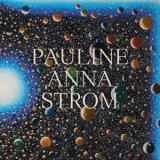
Echoes, Spaces, Lines collects Trans-Millenia Consort, Plot Zero, and Spectre, the first three albums by the late West Coast composer, healer, and medium Pauline Anna Strom. Exploring all corners of the multiverse through transpersonal form and freedom, Strom’s first three albums share a singular sensibility, different streams flowing from the same oracular font. Echoes, Spaces, Lines establishes Strom’s rightful place in the canon of great synthesists. Restored and mixed from the original reels by Marta Salogni, newly remastered, and adding Oceans of Tears, a fully realized but previously unreleased album exclusive to this box set, these are the first official reissues and the definitive encapsulation of Pauline Anna Strom’s prolific and visionary early work. These four-disc LP and CD box sets include 12 and 16 page booklet containing liner notes, an unearthed interview with Strom, and unseen ephemera.
Remastered in 2022 by Bob Weston at Chicago Mastering Studio. Recorded in 1995 at Water Music in Hoboken, NJ, with producer Ted Niceley at the helm, House of GVSB captures Girls Against Boys at the zenith of their musical prowess. The album has a simmering anxiety throughout, a kind of vertigo, a taste of what the band was actually experiencing at the time. Released in 1998, on House of GVSB, Girls Against Boys hit their stride. "Super-Fire" leads off the album with more of a swagger than a bang. Follow that up with songs like "Click Click," "Zodiac Love Team," and "Disco Six Six Six," among others, and you've got the recipe for love, destiny, and straight up gin. No going awry with a song like "Crash 17 (X-Rated Car)." All together they play "TheKindaMzkYouLike." In 1998, Girls Against Boys left the Touch and Go stable for a run with major label and later with Jade Tree Records (2002). In recent years, apart from select short tours and shows in Europe, Girls Against Boys has remained on official hiatus. House of GVSB remains probably their most favorite album.
Five groups, one mythical studio - documenting the emergence of a generation!
The initial postulate was simple: five groups, one emblematic studio and 24 hours for each to imagine and record two unreleased tracks with one objective - the will to document a French jazz scene in the midst of renewal.
In these last few years, several innovative currents have shaken up the world of jazz and attracted new fans. They have bubbled up from Los Angeles, impregnated with hip-hop culture (Kamasi Washington, Terrace Martin, Thundercat), or from London, tinged with African rhythms (Nubya Garcia, Kokoroko, Ezra Collective). Meanwhile, in France, a new scene is emerging, carrying with it more of a dancefloor-oriented sound influenced by electronic music - an obvious kinship with the French Touch explosion of the late 90s.
Historically, every movement has been assimilated to a certain neighbourhood, to specific clubs where late at night, young guns stayed up to imagine the jazz of tomorrow - the Cotton Club for the jazz of the 20s, Minton’s Playhouse in Harlem for Be-Bop, the Black Hawk in San Francisco for West Coast jazz, Birdland in New York for Hard-Bop or a lot more recently, the Total Refreshment Centre which has been the playing field for the new London scene.
In Paris too, this new sound is associated with actual venues, places which have allowed these groups to form, create a repertoire and forge an aesthetic - Le Baiser Salé for Monsieur Mâlâ, La Gare/Le Gore for Photon, La Pêche in Montreuil for Ishkero, La Petite Halle for Underground Canopy and also le Duc des Lombards and le 38 Riv’ for Alex Monfort; it’s in a live context that this music will always continue to evolve.
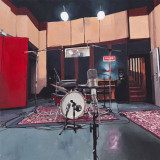
Keeping this “live” spirit, with all its spontaneity, was actually the guiding line for the elaboration of this Studio Pigalle compilation. Each take was recorded in the most organic way possible, bringing all the musicians together in the same room to limit post-production alterations before the final cut was assembled, in just one day, by studio in-house sound engineer, Felix Rémy.
A feeling of urgency permeates a record guided by an artistic production taking care to crystalise the essence of this artistically free-range generation whose childhoods were rocked just as much by Bill Evans and Roy Hargrove as by J Dilla and Jeff Mills. One of the two tracks recorded is geared towards the dancefloor, and the other, more cosmic/ambient gives freer rein to individual interpretation.
There were therefore many possible ways of interpreting these guidelines for the five formations which number among the most distinctive on the current French musical landscape, and the occasion, for some, to rummage through their archives! With Transe (Mbappé) and Da Verdere (Vella), Monsieur
Mâlâ present us with two unreleased tracks issued from the very first rehearsals of the quintet reworked especially for this compilation. “Seen the aesthetic range of this group, it all worked out very naturally in the studio”, recounts keyboardist Nicholas Vella “Recording like they did in the sixties with all the channels live and working with small imperfections was a very interesting task, even when it came to the mix, we had to make do with the takes we had... “
“Our group is very recent, and with this session, in just two tracks, we had the opportunity to present the entirety of our musical universe,” says Photons pianist Gauthier Toux. “All too often, we assimilate this fusion between jazz and dance music to computers and post-production modifications. For “Dessine”, we kept the first take, and we must have recorded just three or four for the other track with more of a techno bent. In one day, we understood that we could play our entire repertoire live, from A to Z”.
“When the Komos label offered me this project, it immediately spoke to me”, remembers Alex Monfort “Straight away, I thought of “Since I Met You”, a track with a nine/four time signature which really is reminiscent of a new- soul groove, but with this extra cosmic vibe! I wrote the words to the chorus and Nina Tonji placed her voice on the track, adding her own verses. For “Tonight”, the up-tempo track, I wanted to head off in more of a hybrid direction inspired by Kaytranada or the Black Radio series by Robert Glasper. A cross-over between jazz and hip-hop which really does represent my world, and I also tried to place vocals centre stage (Emcee Agora)”.
“We truly resonated with the way Antoine Rajon imagined this compilation and the recording session”, confide Warren Dongué and Jérémy Tallon from Underground Canopy. “When arriving in this studio we felt as if we had gone backtothe70s! Inkeepingwiththespiritofthisera,heknewhowtoletus keep our spontaneity, without recording in too many takes, and that’s how we like to work”.
“We managed to adhere to the themes of the compilation without changing our instrumentation, we wanted to remain faithful to the sound of Ishkero on these new compositions and take them somewhere else” – says drummer TaoEhrlich -“Withoutaddinganyelectronics.Thesessionwassupervisedin a truly subtle and benevolent manner. From a human perspective, it was also a wonderful experience”.
Whether turned towards hip-hop, ethnic or electronic music, the artists featured on this Studio Pigalle compilation represent the eclecticism of a new generation in the process of writing the first chapters of its history. Open to experimentation, these artists continue to hold high an immutable love for improvisation and creation in the moment... another definition of the word Jazz!