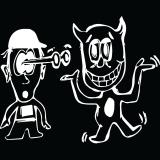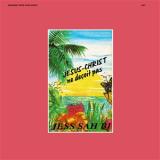
Jess Sah Bi is well-known as half of the legendary duo Jess Sah Bi & Peter One who brought homegrown Country-Americana to the West African masses with their smash debut Our Garden Needs Its Flowers in the mid-1980s. Touring stadiums and reaching listeners worldwide, their music has racked up millions of spins on YouTube and remains imprinted in the hearts of Ivorians of a certain age. ATFA reissued their album in 2018, garnering critical acclaim from publications including Pitchfork and Rolling Stone and reaching a new generation of listeners outside Ivory Coast (Cote d'Ivoire). Sometime in the early 90s, Die Sahbi - or Jesse, as he known to friends-became gravely ill with an unknown ailment and almost died. He visited various doctors and all kinds of religious healers and nothing helped. One day he went down to an Evangelical Christian revival in his neighborhood. They prayed over him and he was delivered. He says, "Their prayers helped chase out whatever demons and unhealthy spirits were inside me. After that my illness went away. When I went to the United States a few months later on an exchange program I wanted to make music to thank God because I was saved." He recorded an album of music praising God in order to honor a promise he made to himself at the depths of his desperation in the hospital. The album Jesus-Christ Ne Deçoit Pas Jesus Christ Does Not Let Us Down came out in 1991 and sold around 3000 cassettes in Ivory Coast. The master tape was lost along the way so the recording has never been on digital platforms until now. Jesse didn't have much time to record while visiting South Carolina, hence the relatively short album, 6 songs including two reprises for filler. A local pastor connected him with a studio and some American musicians (Robert Fortner and Gary Davis) to help. They added acoustic guitar, percussion and keyboard accompaniment to Jesse's soaring French and Gouro vocals, harmonica and finger-picked acoustic. The resulting recording is deeply soothing and contemplative music that perfectly compliments the songs already embraced by millions. But he had to find the rest of the studio expenses-$600 total-which he secured drawing cartoons for UNICEF. Jesse is Ivory Coast's first political cartoonist, a vocation for which he was widely celebrated at the time. It also made him a few enemies which lead to him leaving the country permanently a few years later. Jesus-Christ Ne Deçoit Pas is Jess Sah Bi's first and only gospel album. Fortunately, fans responded with enthusiasm: widespread radio airplay and concerts followed, along with a growing solo profile in the country. The first big gospel artists in Ivory Coast were the duo Mathieu et Constance, who emerged in 1989. There was a bigger gospel music movement in English-speaking counties like Ghana and Nigeria (Christians make up roughly 40% of the population in Ivory Coast, slightly less than Muslims). Jesse didn't have any intention of working in Christian music but he realized, "You don't make music to make money-you want to send a message." In the years since Jesus-Christ's release, gospel music in Ivory Coast has grown to become a key part of music culture in the country. Spiritual music appears in community actives across the public and private spectrum from religious gatherings and parties to television broadcasts and music festivals. And, as it has evolved and indigenized locally, gospel music has picked up elements of traditional Ivorian music, reggae and soul. The album ultimately precipitated the demise of the duo, who were soon separated geographically as Peter One relocated to Nashville. He went on to become a nurse and release a successful solo album on Verve following the ATFA collaboration. Nowadays Jesse lives in the Bay Area and continues to record and perform music wherever and whenever he has the chance. He is publishing a new book of humorous cartoons in 2025 and his most recent album Never Give Up came out in 2020
Search:west
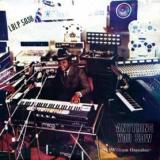
- A1: When The Going Is Smooth & Good
- A2: This Kind Of World
- B1: Anything You Sow
- B2: Everyday B3. Try & Try
William Onyeabor was born outside Enugu, a small, rural town in Eastern Nigeria, he created his own genre of African electronic funk in the late 70s and early 80s, making music completely unique for his time. Today, he is reaching cult status among a growing list of admirers, including everyone from Damon Albarn and Hot Chip to Carl Craig and Madlib, with some likening him to the Kraftwerk of West Africa, or a precursor to LCD Soundsystem.
Among the crate-digging few that knew of him, he is considered a complete myth. While he has never performed live and almost never given interviews, his fantastical biography is scattered and has to this day not been verified. And, though he is still alive, he refuses to speak about anything regarding the past.
According to various rumors, he left home following the Biafran War and went to study cinematography in the Soviet Union, returning in the mid-70s to start his own film company and record label, Wilfilms. He then self-released eight remarkable records from 1978-1985. He wrote and produced everything on his own, and possibly played every instrument himself. Then, at some point of his life, he became born again and denounced his earlier music, deciding it is something he would never speak about.
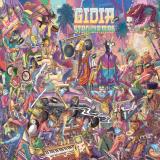
Gidia, the collaborative project of Giorgos Lemos and Kondaktor, deliver a bold release that marks a new chapter for both the artists and the evolving sound of REVOLT.
Born between global influence and local greek reality, Gidia operate at the intersection of club culture and street memory. Their sound moves freely across house, techno, electro and acid, drawing from West Coast grooves, disco-house energy, early Daft Punk aesthetics, boombox culture and the raw attitude of B-boys music.
Arodes & Alessio Cristiano / Super Flu / Moeaike / Martim Rola & Mats Westbroek
Unreleased Records Vinyl Sampler
Unreleased Records is the label founded by Arodes, recognized for its afro-house, melodic, and club-oriented sound within the international electronic music landscape. Through a combination of high-quality productions, a strong and carefully developed artist roster, and an expanding live platform, Unreleased Records positions itself as a forward-thinking imprint that bridges underground credibility with international audience reach, and are now, after much demand, debuting on vinyl, with this standout 4 tracker EP with 3 tried and tested club bangers, and 1 unreleased gem.
So far, “Gwele,” “Don’t Mind,” and “Nothing’s Changed” have already been supported by heavyweights of the scene, including, Ante Perry, Black Coffee, Bluckther, Camilo Franco, Carl Bee, Chus & Ceballos (Ceballos), Cincity, Deer Jade, Djuma Soundsystem, Enoo Napa, Facundo Mohrr, Hyenah, Jonathan Kaspar, Joseph Capriati, Mauricio Brigante, Moeaike, Nicolas Masseyeff, Queen Rami, Sasha Carassi, Simone Vitullo, THEMBA, and Xinobi.
Gatefold Sleeve
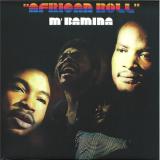
M’Bamina – African Roll (1975)
The story of an album born between Africa, Italy, and the nightclub culture of the 1970s
In the heart of 1970s Italy — a country undergoing profound social change and a music scene just beginning to open itself to distant sounds and cultures — an extraordinary, almost improbable story took shape. It is the story of a group of young African musicians who found their way to Europe, of a Turin nightclub that became a crossroads for communities and experimenters, and of an album which, released in small numbers and largely unnoticed at the time, is now considered a rare jewel of Afro-fusion.
The band called themselves M’Bamina — an ensemble of musicians from Congo, Cameroon, and Benin, who arrived in Italy in the early Seventies. Settling between northern Italy and the Pavia area, they began performing in small clubs and community events, bringing with them a vibrant rhythmic heritage: African polyrhythms, call-and-response vocals, funk-infused bass lines, and Caribbean or Afro-Latin colours absorbed along their musical journeys. Their raw, contagious energy on stage quickly drew attention.
Meanwhile, in Turin, another story was unfolding. There was a venue becoming almost legendary: Voom Voom, one of the city’s liveliest nightclubs, run by Ivo Lunardi. The club attracted an eclectic crowd — students, artists, foreigners, night owls — and Lunardi quickly understood that the dancefloor wasn’t just a place for music, but a melting pot for a new kind of cultural energy. Out of this vibrant atmosphere came his idea: to turn the club’s name into a small independent record label, Voom Voom Music, capable of capturing the spirit of those years and giving voice to unconventional projects.
When Lunardi heard M’Bamina, he immediately sensed that this was the sound he had been searching for: fresh, different from anything circulating in Italy at the time, and capable of blending African tradition with funk and European sensibility. He brought them into the studio.
Production was handled by Lunardi along with Christian Carbaza Michel, while the engineering was entrusted to Danilo Pennone, a young sound technician with a sharp, intuitive ear.
The recording sessions — held in Turin in 1975 — produced a remarkably warm and direct sound. The music feels almost live: grooves rooted in African tradition, but open to funk-rock structures and modern arrangements. It is a natural fusion, never forced. Tracks move between tribal rhythms, funk basslines, light electric guitars, congas and Afro-Latin percussion, with call-and-response vocals and melodies that echo both Congolese tradition and the lineage of Latin jazz. Not by chance, one of the album’s most striking tracks, Watchiwara, reinterprets a Latin standard through M’Bamina’s own rhythmic language.
The album was titled African Roll — a name that was already a statement of intention. It is African music that “rolls,” that moves, adapts, transforms within a new geographic and cultural setting. It is not strictly Afrobeat, nor Congolese rumba, nor Western funk: it is a spontaneous, hybrid blend, shaped more by lived experience than by any calculated aesthetic program.
When African Roll was released, the world around it barely noticed. Distribution was limited, and 1970s Italy had yet to develop a cultural framework for receiving such music. The national music press rarely paid attention to African or “world” productions. The album slipped into silence — though the band’s own story did not.
M’Bamina continued performing across Europe and Africa, even sharing a stage in Cameroon with none other than Manu Dibango. By the late Seventies, they moved to Paris, signed with Fiesta/Decca, and recorded a second LP, Experimental (1978). Meanwhile, the peculiar record they had made in Turin began to resurface quietly among vinyl collectors, Afro-funk enthusiasts, and DJs hunting for forgotten grooves.
That is when the album’s fate began to shift.
Over the decades, African Roll emerged as an almost unique document: a snapshot of an intercultural Italy before the word “intercultural” even existed, a fragment of migrant history, a spontaneous experiment in musical fusion born far from major industry circuits but rich in authenticity. Original copies began commanding high prices on the collector’s market, and the album became recognized as one of the hidden classics of European Afro-fusion from the 1970s.
Today, more than fifty years later, this reissue finally restores visibility and dignity to a project that deserves to be heard, studied, and celebrated. It is not simply an album: it is the testimony of a rare cultural encounter, born in an Italy unaware of how fertile such exchanges would one day become.
It is the story of a visionary producer, an extraordinary band, and a fleeting moment in which music, migration, and nightlife came together to create something genuinely new.
African Roll is — now more than ever — the sound of a bridge: between continents, between eras, between cultures. A record that, after rolling far and wide, has finally come home.
Renowned party DJ, producer and collector The Gaff deals in all sorts of global grooves and here links up with Caleb Hart, who was born in Tobago and is now based on the west coast of Canada. They collide their vast inspirations into a global bass banger inspired by years of crate digging. 'Let's Build' is a big sound with big drums, dark synth grooves and hooky future soul as well as a sleazy vocal. Calypso, bass house and a dark piano all collide in HD colour. The instrumental is no slouch either, and both of these are sure to bring the heat this winter and beyond.
- 1: (I’m Afraid) The Masquerade Is Over
- 2: Let Your Conscience Be Your Guide
- 3: Hitch Hike
- 4: Pride And Joy
- 5: Can I Get A Witness
- 6: Once Upon A Time (With Mary Wells)
- 7: Stubborn Kind Of Fellow
- 8: How Sweet It Is (To Be Loved By You)
- 1: It Takes Two (With Kim Weston)
- 2: I’ll Be Doggone
- 3: Ain’t That Peculiar
- 4: Ain’t No Mountain High Enough (With Tammi Terrell)
- 5: I Heard It Through The Grapevine
- 6: Ain’t Nothing Like The Real Thing (With Tammi Terrell)
- 7: You’re All I Need To Get By (With Tammi Terrell)
- 8: Too Busy Thinking About My Baby
- 1: What’s Going On
- 2: Mercy Mercy Me (The Ecology)
- 3: Inner City Blues (Make Me Wanna Holler)
- 4: Trouble Man
- 5: Let’s Get It On
- 6: You Are Everything (With Diana Ross)
- 1: Distant Lover
- 2: I Want You
- 3: Got To Give It Up
- 4: Heavy Love Affair
- 5: Sexual Healing
- 6: Sanctified Lady
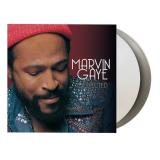
Marvin Gaye always dreamed of being a smooth crooner, “sitting on a stool, possibly behind a piano,” delivering velvety songs like Nat King Cole. But Motown had other plans. Pushed between raw R&B and polished pop, Gaye fought to find his own voice, eventually rising to become one of the greatest soul singers in history.
Motown Records released the first Marvin Gaye record in 1961 "(I'm Afraid) The Masquerade Is Over", a single intended for (radio) promotion from the singer's debut album. This was followed up by the officially released "Let Your Conscience Be Your Guide" a week later. Gaye scored his first real hit with "Stubborn Kind of Fellow" in 1962, which he had co-written himself, joking about his alleged stubbornness. He found his own unique style with the single released at the end of the year: "Hitch Hike". The foundations were now laid for an enormous series of chart successes: "Pride And Joy", "Can I Get A Witness", "How Sweet It Is (To Be Loved By You)" and "Ain't That Peculiar" are all Motown classics from 1963-1965 which are still being regularly played today after all these years. The duets he recorded with Kim Weston ("It Takes Two"), especially Tammi Terrell and Diana Ross were certainly at least as good.
He scored his biggest ever hit with "I Heard It Through The Grapevine" in 1968. "What's Going On" from the same titled album became a number 1 hit in the USA. The album was received as a masterpiece and is regarded as one of the most important records in pop history. In 1973, the artistically and commercially very successful, "Let's Get It On" album was mainly a musical ode to Marvin's love for his new muse Janis Hunter. His journey continued after a turbulent relationship, addiction and a dramatic creative rebirth in Belgium, where he crafted the global hit “Sexual Healing in 1982.
Marvin Gaye left behind timeless hits, groundbreaking albums, and a legacy that shaped the sound of modern soul. His story, from ambition to artistry, from struggle to brilliance, remains as powerful as the music he created.
Music On Vinyl proudly presents a special coloured vinyl edition of the Marvin Gaye Collected album which is available as a limited edition of 10.000 individually numbered copies on white (LP1) and silver coloured vinyl (LP2) and includes a booklet with liner notes.
Ten years ago, in a sharehouse on Chapel Street, four 20-year-olds with zero expectations wrote and recorded an EP in a single afternoon. Those six blistering minutes of music became Giddy Up. An hour later, Amyl and The Sniffers had a name, a Bandcamp upload, and the beginnings of a legacy.
Following a year of backyard gigs, playing for friends and partying across Melbourne's sticky carpet music scene, the band released their iconic second EP Big Attraction in 2017.
Now, to celebrate a decade of raw power and reckless spirit, Giddy Up/Big Attraction returns in a definitive 10th anniversary 12-inch vinyl edition — fully remastered for maximum punch.
Featuring early classics like “I’m Not A Loser” and “Stole My Pushbike,” plus enduring live favourites “Balaclava Lover Boogie” and “Westgate,” this is the sound of Amyl and The Sniffers before the world caught up — feral, funny, and unstoppable.
The LP is housed in a gatefold sleeve showcasing Chris Sutherland’s iconic 2017 band photo, alongside an exclusive new essay from Amy Taylor and a heap of never-before-seen behind-the-scenes shots from the band’s earliest days by Jamie Wdziekonski. As Amy recalls: “We recorded and wrote over the afternoon… we’d never played together before that day… it’s spontaneous, and fun and achievable in that time because to us it sounded more than good and we weren’t perfectionists and it didn’t matter.”
From DIY house shows in Melbourne to international stages, it all started here.
Brown Spirits are a super-heavy psychedelic three-piece band who play raw energetic super-charged psych rock heavily influenced by krautrock, freejazz and deep funk music from the 1970s that gives them a truly unique and highly addictive sound. The group record and mix their own music to ¼-
inch analogue tape at home maintaining a strictly DIY-ethic.
Brown Spirits are Tim Wold, Agostino Soldati and Ash Buscombe. The group are from the suburbs of Melbourne, Australia, home to an ever-growing
music scene that includes Amyl and the Sniffers, King Gizzard and The Lizard Wizard, Surprise Chef, Tropical Fuck Storm and more.
The group have already released two superb critically-acclaimed album on Soul Jazz Records – ‘Cosmic Seeds’ and Solitary Transmissions’.
Soul Jazz Records are releasing three new albums from the Australian group on one day. All three albums are super-limited one-off special coloured
vinyl pressings of just 500 copies each that will all be deleted on the day of release.
These three albums were originally released (between 2017-2020) in long-deleted very short run-editions - either self-released in Australia or on an
indie German psych label. No copies of Brown Spirits #2 or Brown Spirits #3 are currently available anywhere in the world. Both of Brown Spirits two
earlier releases for Soul Jazz Records are also sold out on vinyl and these three super-limited special edition LPs will also sell out.
- A1: Stamp Your Feet
- A2: Mr. Music
- A3: Crayons (Ft. Ziggy Marley)
- A4: The Queen Is Back
- A5: Fame (The Game)
- A6: Sand On My Feet
- A7: Drivin’ Down Brazil
- B1: I’m A Fire
- B2: Slide Over Backwards
- B3: Science Of Love
- B4: Be Myself Again
- B5: Bring Down The Reign
Crayons is the seventh studio album by the Queen of Disco, Donna Summer. Originally released in 2008, Crayons was her first full-length studio album in fourteen years.
Summer worked with a number of different producers and songwriters on the album, including Greg Kurstin (Adele, Paul McCartney, Pink & Foo Fighters), J.R. Rotem (Bad Bunny, Linkin Park & Rihanna), Wayne Hector (Nicki Minaj, One Direction & Westlife), and Toby Gad (John Legend, Fergie & Beyonce) and Lester Mendez (Shakira & Nelly Furtado).
Four singles were released: “I’m A Fire”, “Stamp Your Feet”, “It’s Only Love” and “Fame (The Game)”. The title track contains a guest performance by Ziggy Marley.
Crayons is available on black vinyl and includes a 4-page booklet.
Presse: Eclipsed Interview, Jazzthing, Folker, OX, TAZ World Music, Bad Alchemy, Westzeit, Stadtrevue, Saarbrücker Zeitung, TIP Berlin, Zitty Konzert Tipp, Musikexpress, Choices, Journal Frankfurt, Süddeutsche Zeitung, FAZ, ...
Radio: WDR Cosmo, ByteFM Tour presentation, DLF Kultur Tonart Interview, BR 2 Nachtmix & Kulturwelt, DLF Corso, DLR Kultur Tonart, Radioeins Planet Fruit and other shows, BR 2 Zündfunk, NDR Info Nachtclub Radio Globo and Domingo, Radio Bremen Nordwestradio Sounds, SR 2 Voyages, NDR Kultur Neo, WDR 3 tba, HR 2 Hörbar, MDR Kultur, RBB kulturradio Musik der Kontinente, ByteFM, M94,5 Transglobal Express, Radio Querfunk Orsinos Lied, Oldenburg 1, Radio Dreyeckland, Freies Radio Stuttgart, Radio Darmstadt, tide Radio, Radio Corax, bermudafunk, Radio X, Radio Lora....
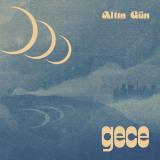
Türkischer Folk-Psych-Rock aus Amsterdam der brennt und funkt und treibt und unwiderstehlich außergewöhnlich ist. Wenn türkische Folk-Music Psych-Rock und Elektro-Pop trifft entstehen Altin Gün. Mit ihrem außergewöhnlichen Spagat zwischen scheinbar komplett unterschiedlichen Stilen gelingt dieser Band, die türkisch klingt, von deren sechs Mitglieder aber nur eines in der Türkei geboren wurde, etwas wirklich Außergewöhnliches. Als türkischen Psych Folk bezeichnen sich diese Niederländer selbst, und betonen, dass sie ihre Musik im Kern als Folk verstehen, freilich ein solcher, dem man die tiefe Liebe zur Musik der funkigen 60er und 70er anmerkt. Sehr groovig, elektrisch und voll explosiver psychedelischer Strukturen kommen die türkischen Stücke daher. Lieder, die zum Teil schon unzählige Male gehört und interpretiert wurden, die zur musikalischen Vergangenheit der Türkei gehören, ihr Erbe sind, aber völlig neu klingen. Bandgründer und Bassist von Altin Gün, Jasper Verhulst, betont, wie wichtig das identitätsstiftende Potential der Lieder ist, dass man diesem aber etwas Einzigartiges hinzufügen wollte, was die Hörer innehalten lässt. "Die Lieder stammen aus einer langen Tradition. Das ist Musik, die versucht, eine Stimme für Viele zu sein. (... Und dann) brauchen wir etwas, das die Leute dazu bringt zuzuhören, als wäre es das erste Mal." Der Sound von Altin Gün klingt gleichermaßen traditionell wie vollständig zeitgenössisch und zeigt auf fast schon märchenhafte Art und Weise, dass Musik ein kulturell durchlässiges, experimentelles Medium ist, in dem uns immer wieder wunderschöne Überraschungen begegnen. Mit "Gece", ihrem zweiten Album, hat sich die Band nun endgültig als unverzichtbarer Interpret des anatolischen Rock- und Folk-Erbes etabliert und ist eine absolut unverwechselbare Stimme in der aufstrebenden globalen Psych-Rock-Szene geworden.
- 1: Be Intense
- 2: I'll Be Damned
- 3: Virginia (West)
- 4: Light Of Becoming
- 5: Cannibal Song
- 6: In Dodge
- 7: Oscar, Please?
- 8: Pandemonium Of Parrots
- 9: The Man Can Dance
- 10: My Eyes Hurt Really Bad
"Blinded by Fame", das zweite Studioalbum von Dutch Interiors, ist ein Fan-Favorit. Es wurde noch nie zuvor auf Vinyl gepresst. Die sechsköpfige Band aus Long Beach begleitet sich schon seit fast zwei Jahrzehnten. Jack Nugent, Conner Reeves, Shane & Hayden Barton, Davis Stewart und Noah Kurtz waren alle Freunde aus Kindertagen, und die Band ist das Ergebnis einer kreativen Verbindung, die durch bereits bestehendes Vertrauen und vertraute Verbundenheit entstanden ist. Man kann die unterschiedlichen Stile und Persönlichkeiten der Bandmitglieder an den Songs erkennen, die sie unabhängig voneinander schreiben, bevor sie sie der gesamten Band vorstellen, wo die Stücke oft zu ganz neuen Formen heranwachsen. Trotz dieser individuellen Herangehensweise an das Songwriting beschreiben sie sich gegenseitig als ,Zweige desselben Lebensstamms", deren aufeinanderprallende Einflüsse und Erfahrungen alle in die Songs einfließen. Mit Einflüssen, die von Ambient über Southern Rock und Jazz bis hin zu Dance-Musik reichen, wandelt sich die Band und oszilliert zwischen Alternative Country, kantigem Indie-Rock und Anklängen an dissonante Ambient-Klänge, während sie dennoch wie eine Band klingt, die sowohl ihre eigene private Sprache spricht als auch diese in etwas Universelles übersetzt. Nach der Veröffentlichung ihres jüngsten Albums ,Moneyball" und einer neuen EP, ,It's Glass", über Fat Possum ist Dutch Interior gekommen, um zu bleiben. Lob für Dutch Interior kommt von Pitchfork, Rolling Stone und anderen.
DJ support: Soul Clap, Walla P (Voyage Funktastique), Moniquea
The first lady of MoFunk Records is also considered by many to be one of the queens of modern funk music. Her latest, “Womp In My Spirit,” fuses a wide range of styles within its ten tracks and shows the true versatility of funk music. On one end, the deep g-funk bounce of songs like “Womp In My Spirit” & “However You Are” show you Moniquea's west coast roots clearly, while uptempo boogie bangers like “Get It Together” sit in the lane that MoFunk is best known for. Tracks like “Red Light” go in a more dancey direction, welcoming the sleekness of house music to mingle with g-funk whistles and rubbery synth bass, a track that recently caught the ear of Soul Clap and was remixed by them on their recent “Soul Clap vs. MoFunk” EP. The majority of production on the album was handled by MoFunk head honcho XL Middleton.
- A1: Return Of The Knödler Show 2 52
- A2: The Frogs Of Miwa - Cho (1) 4 52
- A3: Waiting (I) 5 38
- A4: An Old Friend Passes By 3 46
- A5: Coco Bolo Strip (1) 5 25
- B1: Peace And Pipe Utopia 3 14
- B2: Unidentified Dancing Object 1 44
- B3: The Call (I) 2 41
- B4: Wenn Das Rohr Dommelt 4 03
- B5: Mariahilf (Live Version) 3 36
- B6: Watching The Shades (I) 2 59
- B7: Playing The Table Music (Ii) 2 43
- C1: Could Be Nice Too 5 29
- C2: Ox Of Inner Depth 4 51
- C3: Ymir Shows Up 3 58
- C4: Could Be Nice 5 24
- C5: Playing The Table Music (I) 4 23
- D1: Coco Bolo Strip (Ii) 4 52
- D2: Locusts Looking Like Men 5 55
- D3: Waiting (Ii) ︎ 3 36
- D4: No Stove 2 29
- D5: An Old Friend Passes By Again 3 00
- D6: Heimkehr Der Holzböcke 3 16
Black Truffle is thrilled to announce Dalbergia Retusa, an extensive double LP selection of the solo guitar music of Hans Reichel, compiled by Oren Ambarchi. Last heard on Black Truffle as one quarter of the joyously anarchic Bergisch-Brandenburgisches Quartett, Hans Reichel (1949-2011) is one of the great figures of experimental guitar music. Though perhaps lesser known than peers like Derek Bailey, Fred Frith and Keith Rowe, Reichel’s rethinking of the instrument was in some ways the most radical of all. Early on, he dispensed with existing guitars to build a series of his own that explored the use of additional strings and fretboards, moveable pickups, extra bridges, special capos, and other innovations documented in the extensive booklet accompanying this release.
Reichel was a long-term resident of Wuppertal, the small Western Germany city that became an unlikely centre of European free jazz in the late 1960s, also home to Peter Brötzmann and Peter Kowald. His solo debut Wichlinghauser Blues was an early entry into the FMP discography and began a relationship with the label that stretched into the 1990s; all the solo performances heard here were first released on FMP. As Reichel says in the charming archival interview with Markus Müller included here, he was ‘always a cuckoo’s egg at FMP’, a label that began as an outlet for roaring European free jazz. What strikes the listener right from the opening selection on Dalbergia Retusa—‘Return of the Knödler show’, from 1987’s The Dawn of Dachsman—is the extraordinary beauty of Reichel’s music, at once alien in the shimmering sonorities and unconventional pitch relationships made possible by his invented instruments, and deeply lyrical, even romantic in its harmonic content. Growing up in West Germany in the 1960s, Reichel’s formative influences were mainly British and American rock bands, a background that shines through in many of the pieces included here: ‘An old friend passes by’ is haunted by the ghost of Hendrix’s rhythm guitar, and the wild closer ‘Heimkehr der Holzböcke’, taken from a rare 1975 7” and the only piece to use overdubbing, layers errant hammer-on and slide tones over a Canned Heat boogie chug.
Reichel was an important source for the development of Oren Ambarchi’s own extended approach to the electric guitar. Appropriately enough, his selection opens with the very first piece by Reichel he ever heard, on a flexidisc included with a 1989 issue of Guitar Player magazine. Though Reichel collaborated with others extensively in many settings and also performed on violin and his other major contribution to instrument invention, the daxophone, his music for solo guitar remains at the core of his oeuvre. Focusing exclusively on solo pieces recorded between 1973 and 1988, the 23 pieces on Dalbergia Retusa showcase the range and consistency of Reichel’s work, allowing the listener to see how his performances developed hand-in-hand with his instrumental inventions. On a piece from his very first LP, played on an 11-string instrument (partly strung with piano strings and using a schnapps glass a slide), we hear his intensive exploration of fret-hammering to create zither-like, chiming tone, which Reichel would hone further in later years with a double fretboard guitar specifically designed to be hammered rather than fretted and picked. On a piece from 1979’s Death of the Rare Bird Ymir, Reichel uses two steel-string acoustic guitars at once, with beautiful results: ‘some even say too beautiful’, he jokes in the interview included here. Many of the pieces from the 1980s make use of varieties of the ‘pick behind the bridge guitar’, instruments of uncanny harmonic richness primarily designed to be played on the ‘wrong’ side of the bridge. At times the unexpected behaviour of attacks, resonance, and decay can almost seem electronic, conjuring up the technology-assisted work of Henry Kaiser or even Fennesz, but realised solely through Reichel’s unorthodox techniques on his invented instruments. Extensively illustrated with photos and Reichel’s own plans and drawings of his instruments, Dalbergia Retusa is an essential introduction to the unique world of Hans Reichel. Rarely has music been at once so strange and so beautiful.
Expanding beyond the West Coast with release number three, Goodtunes invites master of the craft Rob Pearson for a dark & moody EP.
Opener “Odd Job Mischief” bends itself over dubbed out low end pressure as echoic LFOs rip through the groove. A2 “Dodgy Brass” doubles down, forcing hazy horns through truncated rhythmic cracks split from beneath its own weight.
On side B, “The Right Speed” is all gas, no breaks. A moody, stripped back weapon with detailed texture & the dark, tripped out aesthetics of Jayson Walker’s murmurs over the top. “Beautifully Mangled” wraps up the EP with a dark minimal groove & lush atmosphere that slowly builds into a warm driving force.
Third time’s certainly the charm on GT003, with Pearson pushing his productions into new territory with meaningful intention.
- A1: Black Line - Myele
- A2: Mbamina - Nzoumba I-Robots 1975 Unreleased Edit-44100
- A3: Mbamina - Watchiwara
- B1: Oxid - Bright Heron
- B2: Oxid - Oxid Trail
- C1: Stratosferic Band - Nowhere - Reverberated Unreleased Version
- C3: The Boston Garden - Lady Pick-Up
- D1: Mbamina - Nzoumba Unreleased-44100
- D2: Oxid - Oxid Trail Unreleased Extended Version
Daniele Baldelli
"A pleasant surprise to find in this release various atmospheres and sounds that have always been part of my DJing. It even made me rediscover M’Bamina, whom I used to play back in 1974 at the Tabù Club in Cattolica.
There are afro vibes as well, with Black Line – Myele, which is featured on one of my Cosmic tapes, and Nowhere by the Stratosferic Band recalls a track I used to play at the Baia degli Angeli…
Excellent work!"
Voom Voom Music was an independent Italian record label based in Turin, founded and managed by record producer Ivo Lunardi (Turin, December 6, 1940 – December 9, 2010). A pivotal figure in the Piedmont music scene, Lunardi was active both as a DJ and as the owner of several disco clubs.
The label operated for several years in the latter half of the 1970s, releasing mainly productions connected to the Italian dance and pop scene.
Since 2016, the original master tapes from the Voom Voom Music catalog have been owned by Gianluca Pandullo (I-Robots), a close friend of Ivo and Luca Lunardi. Through his labels Opilec Music and Turin Dancefloor Express, Pandullo oversees their preservation and historical enhancement.
The artistic direction of Voom Voom Music was marked by a distinct sonic identity — eclectic yet visionary. The Turin-based label founded by Ivo Lunardi embraced a sound that blended disco, pop, and rock influences, interwoven with African American grooves in a pioneering, international perspective.
Voom Voom Music was among the first Italian labels to introduce this kind of musical language in the country. A prime example is the Italian edition of the debut album by B.T. Express, Do It ('Til You're Satisfied), released in LP, 8-Track Cartridge, cassette, and 7" single formats.
The label’s productions clearly reflected the influence of black and funk music, as evidenced by the references and inspirations running through its catalogue. The track “Lady Pick-Up”, for instance, includes direct nods to “Do It Good” by KC & The Sunshine Band and Manu Dibango’s iconic “Soul Makossa”, revealing a musically refined and contemporary sensibility.
Among the label’s most representative works is Splash (1977) by the Stratosferic Band, a project conceived by Luigi Venegoni — producer, songwriter, and guitarist of Arti e Mestieri. Venegoni’s artistic journey spanned from progressive rock to space and Italo disco. The album artwork was designed by Piero D’Amore (1944 - 2022), a charismatic and multifaceted figure of Turin’s art scene (one of his works was even acquired by the MoMA in New York).
The record includes a disco reinterpretation of Van Morrison’s classic “Gloria”, and “Splashdown”, a track fusing the disco-rock energy of Rockets and Space. In contrast, “Nowhere” revisits the 1975 single by Hokis Pokis, a soul/disco band from Nassau County (New York), transforming it into a vibrant disco-funk number.
Another significant expression of the label’s catalogue is the afro-rock sound of M’Bamina, an Italo-Congolese group whose rhythmic energy and dialogue between African percussion and Western funk evoke the style of international formations such as Osibisa — themselves linked to a rich artistic history in Italy.
- 1: Weight Of Words
- 2: Shadow Purposes I. Patterns Of Goodbye
- 3: Shadow Purposes Ii. Path To An Unlit Horizon
- 4: Shadow Purposes Iii. New Tectonics
- 5: Shadow Purposes Iv. The Blue Cascades
- 6: Shadow Purposes V. A Sea Lit By Stars To Swallow Us
- 7: Blood And Black Ink
- 8: Decision Tree
Christopher Tignors ,Bleeding Past the Edges" ist ein bewusster Kontrapunkt zur heutigen, von KI geprägten Musiklandschaft und stellt die menschliche Hand fest in den Mittelpunkt des Schaffensprozesses. In einem kleinen Studio voller Geigen, Stimmgabeln, Pedalen und maßgeschneiderter Software hat Tignor ein Performance-System entwickelt, das sich weniger wie eine Maschine, sondern eher wie ein lebendiges Instrument verhält. Anstatt sich auf Loops oder Backing-Tracks zu verlassen, generiert er jedes Stück in Echtzeit und fängt Klänge ein und formt sie um, während er spielt. Geigenstreichmelodien erweitern sich zu vielschichtigen Mustern, perkussive Schläge lösen sich entwickelnde Strukturen aus, und selbst eine einzelne Stimmgabel kann sich zu einem ganzen harmonischen Feld entfalten. Das Ergebnis ist ein immersiver, orchestraler Klang, der live von einem einzigen Interpreten erzeugt wird, der sich durch ein eng verwobenes System aus Gestik, Timing und Code bewegt. Jedes Element beginnt als physische Handlung und bleibt damit verbunden, was der Musik ein Gefühl von Unmittelbarkeit, Risiko und Präsenz verleiht, das sich durch das gesamte Album zieht. Auf dem Album bewegt sich Tignor fließend zwischen rhythmisch geprägten Kompositionen, die das Instrument als perkussiven Motor behandeln, und melodischeren Werken, die im expressiven Kern der Violine verwurzelt sind. Die Lead-Single ,Weight of Words" unterstreicht diese Balance und entfaltet sich mit einer narrativen Klarheit, die Tignors Kompositionsansatz widerspiegelt. Er beschreibt diese Stücke oft als ,Kurzgeschichten", in denen Melodien als roter Faden dienen und jedes Werk durch wechselnde Strukturen und emotionale Bögen führen. Der Titel ,Bleeding Past the Edges" verweist auf Momente, in denen die Musik über ihr ursprüngliches Konzept hinausgeht, in denen sich die Struktur lockert und der Klang nach außen fließt. Tignor vergleicht den Prozess mit ,einem Seiltänzer", bei dem sorgfältige Vorbereitung auf die Möglichkeit einer Transformation in Echtzeit trifft. Obwohl die Systeme streng ausgearbeitet sind, behält jede Aufführung ein Element der Unvorhersehbarkeit, wodurch sich die Musik ständig weiterentwickeln kann. Im Laufe von zehn LPs, die über Western Vinyl und New Albion erschienen sind, hat sich Tignor in klassischen und experimentellen Kreisen breite Anerkennung erworben. The Guardian bezeichnete ihn als ,absurd talentiert", während Bandcamp seine ,schiere technische Meisterschaft" hervorhob und The New York Times seine seltene Fähigkeit lobte, Computer bei Live-Auftritten nahtlos mit akustischen Instrumenten zu verbinden. The Wire lobte seine Kompositionen zudem für ihre fließenden, sich entwickelnden Strukturen. Über seine Soloarbeit hinaus hat Tignor mit Künstlern wie Rachel Grimes, Helios, Jefre Cantu-Ledesma, John Congleton und This Will Destroy You zusammengearbeitet. Sein Hintergrund verbindet verschiedene Disziplinen: Er hat einen Doktortitel in Komposition von der Princeton University, einen Master in Informatik vom NYU Courant Institute und einen Bachelor vom Bard College, wo er bei dem Dichter John Ashbery studierte. Mit ,Bleeding Past the Edges" führt Tignor diese Stränge zu einem Werk zusammen, das sich sowohl streng konstruiert als auch lebendig anfühlt - ein Album, das Performance, Körperlichkeit und die anhaltende Ausdruckskraft menschengemachter Klänge in den Vordergrund stellt.
2026 Repress
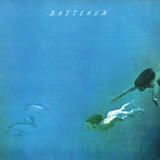
A notoriously jaw-dropping folk-funk classic, long treasured by the Balearic fraternity, the self-titled LP from the brothers Batteau nevertheless remains a criminally underheard gem. Appealing to fans stuck on Ned Doheny's scorching blue-eyed soul as well as Gene Clark's rich country-rock, it's an honour to present the first officially licensed vinyl reissue of this undoubted masterpiece of proto-Yacht-Rock.
Like a forgotten piece of baroque folk caught in 1973, Batteaux's eponymous album somehow sounds magically timeless. A full 45 years after the fact, it remains a mystery as to why they weren't better known. The lush production and virtuoso playing conforms with the ruling aesthetic of the time - well-crafted, melodic songs performed with precision and balance - whilst the shimmering AOR atmosphere and sun-dappled vocal washes align neatly with the best Crosby, Stills & Nash records.
Throughout, the beautifully penned tracks hold traces of Jimmie Spheeris, America and Seals & Crofts. The immaculately orchestrated percussion and additional instrumentation (electric piano and fiddle to name a few) are performed by perennially celebrated West-Coast cats including Tom Scott, John Guerin and Andy Newmark.
It's no surprise that the heavenly "High Tide" is such a Balearic touchstone. A free soul aqua-space groover, its sophisticated rhythms predict the swing of CSN's canonical "Dark Star" by a full four years. An alternative measure of its enduring magnificence can be gauged by MF Doom sampling Paul Horn's wonderful version, subsequently used by Ghostface Killah.
The highlights are many and memorable. Gorgeous opener "Tell Her She's Lovely" is the perfect example of the addictive, melody-driven songwriting which really should have earned them stardom. Moody ballad "Living's Worth Loving" is nothing short of heartbreaking whilst the chugging elegance of "Wake Me In The Morning" showcases their bewitching harmonies. The hypnotic yearning of "Lady Of The Lake" is an exquisitely string-drenched, piano-laced favourite that achieves a peculiar strutting-funk. It's that good.
This lovingly curated reissue enables a long overdue reappraisal of the hitherto buried genius of Batteaux. The serene aqua artwork which adorned the original jacket - their father worked on a dolphin-human communication project in Hawaii, hence the infamous design - and sumptuous inner sleeve have been faithfully restored. Whilst, with access to the original tapes, Simon Francis' sensitive mastering elevates the sound throughout and, as ever, it has been pressed at a reassuringly weighty 180g.
- 1: Jim's Room
- 2: Brad Haunts A Party
- 3: Our Day Trip
- 4: Counting Up Your Bones
- 5: Dumb I Am
- 6: Why Don't You Stay Home
- 7: The Old Woman
- 8: Treehouse Song
- 9: Lee
- 10: Settling Song
- 11: Bird Of Cuzco
- 12: If We Go To The West
Das eindringlich schöne Album "On Leaving" von Nina Nastasia kam genau zum richtigen Zeitpunkt und zeigt die supertalentierte Singer-Songwriterin aus New York in Bestform. Nina Nastasias seltene Gabe, ihre Stimme, ist eine intime, beflügelnde Präsenz, die dein Herz entweder zum Stillstand bringen oder zum Schmelzen bringen kann, die kraftvoll aufsteigen und sich drehen oder dich ganz sanft streifen kann und dir plötzlich Gänsehaut beschert. Mojo kommentierte ihre Fähigkeit, "die Luft aus dem Raum zu saugen". Ihre Songs sind gleichzeitig hart und zerbrechlich, knistern und glühen vor intimer emotionaler Ehrlichkeit und einer dunklen Unterströmung. Anlässlich seines 20-jährigen Jubiläums im Jahr 2026 ist On Leaving zum ersten Mal seit fast zwei Jahrzehnten wieder auf Vinyl erhältlich. Diese Neuauflage von On Leaving wurde 2025 von Josh Bonati für Vinyl remastered und ist auf limitiertem, klarem, farbigem Vinyl gepresst.
- 1: Full Nelson
- 2: Gleam
- 3: Carousel
- 4: Virginia
- 5: Crystal Ball
- 6: Locket
- 7: Indiana
- 8: Roadstar
- 9: Swimming
- 10: What Does It Mean?
Ein neues dynamisches Kapitel in der Diskografie von villagerrr: Carousel, das fünfte Album von Mark Scott als villagerrr, bewegt sich von Slowcore zu Shoegaze, von Log-Cabin-Folk zur beschleunigten Glückseligkeit des Rocks, der wie geschaffen ist für eine leere Autobahn. ,Carousel" ist das bisher kühnste und feinfühligste Album des Songwriters aus Ohio und eine umfassende Erkundung dessen, was es bedeutet, in einem überbelichteten und einengenden Zeitalter aufrichtige Kunst zu schaffen, in dem Scotts große Songs aus dem Mittleren Westen von dem Wunsch geprägt sind, in einer von Kommerzialisierung geprägten Ära nach bleibender Bedeutung zu suchen. Scott stellte die Musik im Laufe von zwei Jahren zusammen und ließ den kollaborativen Geist seines vorherigen Albums aufblühen. 2024s ,Tear Your Heart Out" führte zu Tourneen mit Real Estate, Greg Freeman und Momma, einem neuen Plattenvertrag mit Winspear und einer kürzlichen Deluxe-Neuauflage, wodurch sich der Kreis der Zuhörer und Mitwirkenden vergrößerte. ,Carousel" enthält eine Mischung aus Scotts aufstrebenden Folk- und Indie-Rock-Kollegen wie Boone Patrello von Teethe, h. pruz und Carolina Chau e von Hemlock und wurde von Scott selbst gemischt, nachdem er sich die Aufnahmen angehört hatte. ,Carousel" bietet eine Mischung aus Scotts aufstrebenden Folk- und Indie-Rock-Kollegen wie Boone Patrello von Teethe, h. pruz und Carolina Chau e von Hemlock und wurde von Scott gemischt, nachdem er sich die Rohfassungen auf langen Autofahrten oder beim Laufen angehört hatte. Mit Scotts feinem Gehör für Details und weitläufige Landschaften fühlt sich das Hören von villagerrr an, als würde man in das Gras der Prärie spähen, um zu sehen, was dort krabbelt, und dann plötzlich aufstehen, um die Pracht eines herannahenden Sturms zu beobachten. Carousel hegt eine gesunde Skepsis gegenüber der Welt, in der wir leben, aber es liefert auch den Beweis, dass man, wenn man seine Schutzmauer fallen lässt und auf andere Menschen zugeht, kreative und bereichernde Beziehungen aufbauen kann - und damit die Grundlage für ein tiefes, sinnvolles Leben schafft. Das Album wurde von Scott gemischt, nachdem er sich die Rohfassungen auf langen Autofahrten oder beim Joggen angehört hatte. Mit Scotts ausgeprägtem Gespür für Details und weitläufige Klanglandschaften fühlt man sich beim Hören von villagerrr wie beim Beobachten von Insekten im Präriegras, um dann plötzlich aufzustehen und die Pracht eines herannahenden Sturms zu erleben. Carousel hegt eine gesunde Skepsis gegenüber der Welt, in der wir leben, aber es liefert auch den Beweis, dass man, wenn man seine Schutzmauer fallen lässt und auf andere Menschen zugeht, kreative und bereichernde Beziehungen aufbauen kann - und damit die Grundlage für ein tiefes, sinnvolles Leben schafft.