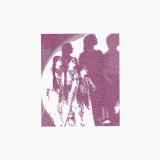
"Imagine More is the follow-up to Lophae's acclaimed debut Perfect Strangers (January 2025).
Recorded live to 2-inch,16-track analogue tape with the band all in one room, engineered and mixed by Benedic Lamdin (Nostalgia 77), and mastered by Caspar Sutton-Jones (Gearbox Studios), this second offering from guitarist and composer Greg Sanders' quartet ventures deeper into their distinctive blend of modern jazz, psychedelic exploration, and world music flourishes.
Four gifted improvisers navigate Sanders' compositions with mercurial dialogue and musical communion, weaving melodic elegance with rhythmic complexity, creating sound-worlds that echo Jeff Parker, Joao Gilberto, and Blake Mills while channeling the sophistication of Stan Getz, Bill Frisell, and Edu Lobo.
Fizzing electric guitar, flowing saxophone lines, and skittering rhythmic interplay transport listeners from north-west London's Fish Factory recording studio to the musical capitals of New York, New Orleans, Rio De Janeiro, Bamako, and Johannesburg - anchored by Sanders' unmistakable compositional voice and the quartet's intuitive sensitivity."
Buscar:west
- 1: Intro Feat. Killa Kela
- 2: Put My Feet Up
- 3: It Wasn't Easy
- 4: Final Results Feat. Grafh
- 5: Different Fabric
- 6: Imposter Feat. Spyda, P Money & Rag'n'bone Man
- 7: Bad Boy Sound Feat. Eksman & Shabba D
- 8: Labour Of Love Feat. Scrufizzer
- 9: Motion Picture
- 10: Stay Defiant
- 11: Legendary Feat. Fliptrix, Jazz T & Verb T
- 12: Wild Bunch Feat. Leaf Dog
- 13: Chasing A Buzz
- 14: New Breed
- 15: Overthinking
- 16: Lazy Days
- 17: You Deserve It
- 18: Breathing Under Water
- 19: Salute Feat. Dj Prime Cuts
- 20: Odyssey Feat. Terri Walker
- 21: No Competition Feat. Westman
- 1: Intro Feat. Killa Kela
- 2: Put My Feet Up
- 3: It Wasn't Easy
- 4: Final Results Feat. Grafh
- 5: Different Fabric
- 6: Imposter Feat. Spyda, P Money & Rag'n'bone Man
- 7: Bad Boy Sound Feat. Eksman & Shabba D
- 8: Labour Of Love Feat. Scrufizzer
- 9: Motion Picture
- 10: Stay Defiant
- 11: Legendary Feat. Fliptrix, Jazz T & Verb T
- 12: Wild Bunch Feat. Leaf Dog
- 13: Chasing A Buzz
- 14: New Breed
- 15: Overthinking
- 16: Lazy Days
- 17: You Deserve It
- 18: Breathing Under Water
- 19: Salute Feat. Dj Prime Cuts
- 20: Odyssey Feat. Terri Walker
- 21: No Competition Feat. Westman
"It may surprise some that, after two decades of silent films, when Alam Ara broke the silence in 1931, it and every South Asian talkie that followed was what we in the West think of as a "musical." Music had been integral to the culture's staged drama going back to the Gupta Dynasty — sometime between the 4 th and 6 th Century CE. Since its inception, South Asian cinema drew heavily from Marathi, Parsi, and Bengali musical theatre and silent film screenings were often accompanied by live music to mimic a live staged experience.
When sound films arrived, actors with serious singing skills became the next wave of stars. Songs were performed live while shooting, with musicians hidden off-camera, to the side or sometimes even in trees. Playback singing — the practice of dubbing a real singer's voice over a lip-syncing actor — didn't become standard until the 1940s.
Thus, the biggest stars of the 1930s were also the greatest singers, with some, like Govindrao Tembe and Pankaj Mullick, excelling as both composers and vocalists. None, however, were more beloved than K.L. Saigal, whose emotional, untrained crooning captivated audiences across the subcontinent. Saigal's voice inspired a young Lata Mangeshkar, who vowed to become India's greatest filmi singer to win his heart. Sadly, Saigal grew increasingly addicted to alcohol, unable to perform without it, and passed away at age 42, seven months before the Partition. Lata never married.
This collection features some of the earliest songs from South Asian cinema, sourced from CDs and LPs found in Jackson Heights, Queens, Coney Island Avenue in Brooklyn, Lexington Avenue in Manhattan, and Oak Tree Road in Iselin, New Jersey — areas home to vibrant immigrant communities. South Asian immigration to New York and New Jersey surged after the 1965 Immigration and Nationality Act, which lifted non-European quotas. By the 1990s and 2000s, the region's Indian, Pakistani, and Bangladeshi media outlets flourished, especially in Jackson Heights, where such stores outnumbered the total number of regular record shops throughout the five boroughs.
The nascent period of sound film featured a limited palette of musical styles, predominantly Marathi Bhagveet, like the Ghazal, but with greater flexibility of subject matter and rhythm, and Rabindra Sangeet, the approximately 2,000 songs and poems composed by Bengali Nobel laureate Rabindranath Tagore. But there was some evolution as well, with the success of South Asian cinema's first woman composer, the classically trained Saraswati Devi, and the introduction of Western instruments including the piano and Hawaiian guitar.
While much of the music was dark and brooding, perhaps exemplified best by Devika Rani's interpretation of Saraswati Devi's "Udi Hawa Mein" from 1936's Achhut Kannya (Untouchable Maiden), there were moments of brightness, such as R.C. Boral's "Lachhmi Murat Daras Dikhaye" sung by Kanan Devi in Street Singer, an otherwise thoroughly depressing film from 1938 that cemented Devi's and co-star K.L. Saigal's superstardom.
This selection was chosen to emphasise a range of expressivity, instrumentation and style achieved even within the decade's relatively limited scope, setting the listener up for the relative explosion of possibility in the 1940s, to be covered in the next installment of this series."
"Touch" is the first new album from the groundbreaking post-everything icons Tortoise since 2016. With "Touch", the Tortoise bandmembers Jeff Parker, Dan Bitney, Douglas McCombs, John Herndon and John McEntire harness their collectivist songwriting approach, a slightly anarchistic but resolutely egalitarian process where ideas triumph over ego towards an abstracted muscularity. While there are still excursions into the dusky, elegantly gnarled jazz ambience that flourished on landmark works like "Millions Now Living Will Never Die" and "TNT", "Touch" is perhaps most remarkable for Tortoise"s unapologetic embrace of grand gesture. Aerodynamically re-engineered Krautrock, hand-cranked techno rave-ups, and pointillist spaghetti western fanfares are all imbued with Tortoise"s now-signature internal logic - equally alluring and confounding, a puzzle to be savored rather than solved. Recorded between the three cities, Los Angeles, Portland, and Chicago, "Touch" is the result of an intentional effort by these five musicians to reconnect, recenter, and reinvigorate their sound for what is perhaps the group"s most diverse release to date.
- A1: That Musician Thats Dead
- A2: Preference Is A Good Friend, Mind
- A3: No One Can Sing That Well
- B1: Last Herald
- B2: Mo**Real
- B3: Things Keep Happening
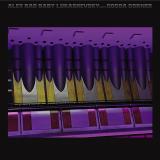
OOOOH! by Alex Bad Baby Lukashevsky with Cocoa Corner (2025)
Celebrated veteran of Toronto’s music scene, known for his boundary-pushing approach to folk and avant-garde music, twists rock music into strange and brilliant new shapes with the help of young jazz players, U.S. Girls, and his own immensely talented son.
OOOOH! is hard on the outside and soft on the inside. Made in the spirit of unity,
humanity, and poetry — disobediently renouncing the glory of personal triumph for the
generosity of an honest experiment. On the last track of the album you’ll hear “Or do you only ever never want to make a single enemy? / That’s not freedom or humility / It’s nothing, honestly.” Oooh, that's a bad baby!
A celebrated Toronto songwriter and performer, Alex Lukashevsky has always been disobedient. Which simply means, nothing is off the table when he’s looking for his
poetic voice; when trying to find the realest I of the teller. As he sings on the lead track “that musician that’s dead” The musician is radical/ it’s the world that’s demented/ listening with their eyes, the music looks dented/ they’re over-represented.
OOOOH! was recorded in January 2024 at Sound Department in Toronto, engineered by Patrick Lefler (ROY), mixed by Grammy-nominated producer Matt Smith. All the songs were tracked live off the floor in two days, with one extra day for recording vocals, to keep the recording fully alive and breathing. As leader of Deep Dark United, as a solo performer, and a sideman in Brodie Wests’ Eucalyptus and Luka Kuplowsky’s Ryokan Band, Alex has been an outsized influence on the Toronto music scene that spawned acts like Broken Social Scene and Owen Pallett. (Pallett, who has toured with Lukashevsky, went so far as to record an entire album’s worth of Alex’s songs, backed
by a full orchestra.)
Lukashevsky has approached each of his albums and projects as something completely new, using only the musical boundaries he creates with each song. Even when he
has recorded songs with nothing but his voice and his own acoustic guitar accompaniment, the results are never “stripped down” or “back to basics,”
Gong! How do you get to heaven / have fun! have fun!
It’s cool to approach music as a game of “spot the influence”; Burt Bacharach-meets-Black Flag; Lana Del Rey-meets-LCD Soundsystem etc. Glorified mash-ups are promising because of their conversational nature. But they can turn us into hyperboreans; blowing cold air beyond ourselves while doing what we can to remain warm. To devise a game or a narrative is to have a winner and a loser, but we all know that just as you win/ so you lose. And does anything really change? Alex Lukashevsky and Cocoa Corner are more at ease drawing blind contours or playing an old game like consequences. They let things add up without knowing particularly how. Cognition is recognition.
Lukashevsky, in addition to writing all the songs, plays guitar and sings on OOOOH!, doing both in ways that are soulful and spikey at the same time. Joining him on guitar and vocals is his oldest child, Charlie Lukashevsky, who, at 23, is already a talented performer and songwriter in his own right. Cocoa Corner also includes Aidan McConnell, an in-demand drummer and composer, Jack Johnston, a jazz bassist and Barry Harris acolyte, and percussionist Evan Cartwright (The Weather Station, U.S. Girls, Cola, Tasseomancy), who plays steel pan and marching drum.
Working with his son and with other younger musicians is central to the album’s
unpredictable aesthetic. It reinvigorated the sound in unexpected ways. Lukashevsky says, “I had to reconsider my own instincts. I had to deal with being 99 years old.”
In addition to these performers, the album includes a tasty contribution from Meg
Remy, the visionary musician and producer who is the leader of the critically acclaimed
project U.S. Girls. Remy duets with Lukashevsky on the imagistic and sprawling album
closer “things keep happening.”
About that album title: OOOOH! is taken straight from “that musician that’s dead” an
arch and unhinged comment on the exertion required to navigate a lifetime of music making.
Lukashevsky’s delivery of that one emotive word is a kind of cultural posture, but also a
hundred percent primitive expression. The impact is never less than visceral. His vocal
delivery ranges through rich baritone blues to keening falsettos to a kind of sprechstimme that periodically steps out from the music to grab the listener’s shirt. He
doesn’t sound too nice, but he is sincere. When life gives you lemons lament.
For OOOOH! his first official full-length album since 2012’s Too Late Blues, (a collection of knotty-yet-effervescent tunes built upon the enchantingly serpentine harmonies of Lukashevsky and his vocal collaborators, Felicity Williams (Bahamas, Bernice) and Daniela Gesundheit (Snowblink, HYDRA)), Alex has once again broken apart and rebuilt his own approach to music. Or rather (because that sounds too over-determined), he
has allowed his music to build itself into strange new shapes that only fleetingly and
coincidentally, but happily, resemble anything that might be called rock and roll. There is some editorializing within the song’s lyrics— Lukashevsky even cheekily contributes to the “spot the influence” game with the line “Muddy Waters, Rite of Spring!” a funny preemptive strike against anyone already reaching for some variation of avant-blues to describe what the song is up to here. In fact there are many names checked on this record (literally and in spirit); they are the lily pads that trace the path of this expression! Palestrina, Peter Pears and Benjamin Brittain, Andrés Segovia, Stravinsky, Lotte Lenya, Alice Coltrane, Skip James, Chuck Berry, D’Gary, Betty Carter, Mukhtiyar Ali, Chuck D, Yoko Ono, Hailu Mergia, David Bowie, Jane Siberry. rhythm is a skeleton mansion / haunted by melody / feckless prodigy / the world is under a spell / cast by some demon angel / Practice day and night / Try as hard as hell / no one can sing that well Musicians are often worried by the way in which they are prepared to fail rather
than how they would like to succeed; it’s such a deep concern that it tempers their creativity and shackles their process. Current cultural proclivities, tend to comfort a certain kind of artistic failure and abnegate another kind. How many testimonials, full of heartfelt care and investment, have you heard for Taylor Swift, and yet a craftsman like Chris Weisman is often dismissed easily as though he’s doing something anti-social. what’s throwing itself in my ears and my eyes / arrogant devil ad hominem christ.
The music you will hear on this recording veers off in multiple directions at once,
and features a rock and roll spirit with a divergent heart. This is no sclerotic clomp of the Average Rock Song, but in fact a flood of humanity in all its darkness and moodiness and unpredictability. If most performers make songs that are like sports cars or pickup trucks to drive around, Lukashevsky has built something more akin to a rowboat in a tree: it’s weird and beautiful.
- Home Of The Brave
- Dog At Large
- Knock Me Down
- Mr. Gridlock
- The Strip
- I Remember
- Those Who Move
- The Envelope
- Backlash Jack
- Peacemaker
- New Dreams
- Slim - Bonus Track
- Rocks Of Sweden - Bonus Track
Limited edition PLUTONIUM vinyl 1000 copies worldwide. Remastered by Bob Weston at Chicago Mastering Service. Originally released in 1986 vinyl reissue includes 2 bonus tracks. "This is a bit different than previous records in that there's only a couple of songs with their distinctive bass licks and chunky melodies. So instead of bordering on redundancy, they prove their diversity by being more melodic, rockin', and even pop. This LP is more challenging than before and really great." - MaximumRockNRoll, April 1986 - // Naked Raygun were an extraordinary staple in the Chicago music scene - beginning in the early 80's and continuing until their quiet demise in the early 90's. Their music showed the world that punk rockers could play and be really good at it. Founded in Chicago in 1980, by Marco Pezzati, Jeff Pezzati and Santiago Durango, Naked Raygun released six albums during their eleven year career that would change the sound of punk rock indefinitely. The band is widely recognized as being one of the most influential punk bands of the 80's. Their anthemic style incorporated politics in a uniquely accessible way, melding pop and hardcore into one cohesive sound, that would later be dubbed, "The Chicago Sound". Shortly after their first release, Basement Screams, Durango left to join Big Black permanently, and was replaced by John Haggerty, whose unique style of buzzsaw guitar would define Raygun's sound for their next four albums. Additionally, Pierre Kezdy replaced Camilo Gonzalez and Eric Spicer took over drums for Jim Colao. In 1990, Haggerty left the band to start Pegboy. Bill Stephens joined the band for their final studio release entitled, Raygun...Naked Raygun.
Limited edition DARK TEAL vinyl 1000 copies worldwide. Remastered by Bob Weston at Chicago Mastering Service. Originally released as a 6-song ep in 1983 vinyl reissue includes 8 bonus tracks. "The long- awaited NAKED RAYGUN EP has finally been released, and musically it's a beauty. The songwriting is extremely imaginative, the vocals are unbelievably catchy, and the unique fuzzed-out guitar work sounds wonderful." - MaximumRockNRoll, October/November 1983 - // Naked Raygun were an extraordinary staple in the Chicago music scene - beginning in the early 80's and continuing until their quiet demise in the early 90's. Their music showed the world that punk rockers could play and be really good at it. Founded in Chicago in 1980, by Marco Pezzati, Jeff Pezzati and Santiago Durango, Naked Raygun released six albums during their eleven year career that would change the sound of punk rock indefinitely. The band is widely recognized as being one of the most influential punk bands of the 80's. Their anthemic style incorporated politics in a uniquely accessible way, melding pop and hardcore into one cohesive sound, that would later be dubbed, "The Chicago Sound". Shortly after their first release, Basement Screams, Durango left to join Big Black permanently, and was replaced by John Haggerty, whose unique style of buzzsaw guitar would define Raygun's sound for their next four albums. Additionally, Pierre Kezdy replaced Camilo Gonzalez and Eric Spicer took over drums for Jim Colao. In 1990, Haggerty left the band to start Pegboy. Bill Stephens joined the band for their final studio release entitled, Raygun...Naked Raygun.
- Soldiers Requiem
- When The Walls Come Down
- Walk In Cold
- Jettison
- Live Wire
- The Mule
- Coldbringer
- Blight
- Free Nation
- Hammer Head
- Ghetto Mechanic
- Suspect Device
- Vanilla Blue - Bonus Track
- The Strip (Live) - Bonus Track
- Roller Queen (Live) - Bonus Track
- Backlash Jack (Live) - Bonus Track
Limited edition GRAPE CRUSH vinyl 1000 copies worldwide. Remastered by Bob Weston at Chicago Mastering Service. Originally released in 1988 vinyl reissue includes 4 bonus tracks. "Plenty of bands can claim Naked Raygun as an influence, from post-punkers to hardcore acts. All of them could learn a thing or two or three by studying the whoas. With Jettison... Naked Raygun achieved creative bliss. Here is an album that successfully combines dissonant instrumentation with supremely catchy vocals." - Punknews.org - // Naked Raygun were an extraordinary staple in the Chicago music scene - beginning in the early 80's and continuing until their quiet demise in the early 90's. Their music showed the world that punk rockers could play and be really good at it. Founded in Chicago in 1980, by Marco Pezzati, Jeff Pezzati and Santiago Durango, Naked Raygun released six albums during their eleven year career that would change the sound of punk rock indefinitely. The band is widely recognized as being one of the most influential punk bands of the 80's. Their anthemic style incorporated politics in a uniquely accessible way, melding pop and hardcore into one cohesive sound, that would later be dubbed, "The Chicago Sound". Shortly after their first release, Basement Screams, Durango left to join Big Black permanently, and was replaced by John Haggerty, whose unique style of buzzsaw guitar would define Raygun's sound for their next four albums. Additionally, Pierre Kezdy replaced Camilo Gonzalez and Eric Spicer took over drums for Jim Colao. In 1990, Haggerty left the band to start Pegboy. Bill Stephens joined the band for their final studio release entitled, Raygun...Naked Raygun.
Limited edition ORANGE SWIRL vinyl 1000 copies worldwide. Remastered by Bob Weston at Chicago Mastering Service. Originally released in 1990 vinyl reissue includes 3 bonus tracks. "We drove up there and my cousin Tracy had turned punk rock. And she said, 'I'm going to this show tonight. Come with me.' And so I went to this club called The Cubby Bear - it's right across the street from the baseball stadium - and a band called Naked Raygun were playing, and they're this legendary Chicago punk rock band. But I'd never seen live music. So my introduction to rock and roll was in a club that held about 150 people that was half full and I was belly up against the stage watching this incredible live band, like, sweat and spit and bleed in front of me." - Dave Grohl interview, The Record, 2011- // Naked Raygun were an extraordinary staple in the Chicago music scene - beginning in the early 80's and continuing until their quiet demise in the early 90's. Their music showed the world that punk rockers could play and be really good at it. Founded in Chicago in 1980, by Marco Pezzati, Jeff Pezzati and Santiago Durango, Naked Raygun released six albums during their eleven year career that would change the sound of punk rock indefinitely. The band is widely recognized as being one of the most influential punk bands of the 80's. Their anthemic style incorporated politics in a uniquely accessible way, melding pop and hardcore into one cohesive sound, that would later be dubbed, "The Chicago Sound". Shortly after their first release, Basement Screams, Durango left to join Big Black permanently, and was replaced by John Haggerty, whose unique style of buzzsaw guitar would define Raygun's sound for their next four albums. Additionally, Pierre Kezdy replaced Camilo Gonzalez and Eric Spicer took over drums for Jim Colao. In 1990, Haggerty left the band to start Pegboy. Bill Stephens joined the band for their final studio release entitled, Raygun...Naked Raygun.
Limited edition GREEN SWIRL vinyl, 1000 copies worldwide. Remastered by Bob Weston at Chicago Mastering Service. Originally released in 1985 vinyl reissue includes bonus track. "This band consistently defies categories. More than hardcore. More than rock. More than experimental. And this LP blazes out with a fury that's sharp, clean, and loud as fuck. The sound on this release is more concise and focused than earlier stuff but doesn't sacrifice any of their drive. Possibly one of America's most important bands." - MaximumRockNRoll, March 1985 - // Naked Raygun were an extraordinary staple in the Chicago music scene - beginning in the early 80's and continuing until their quiet demise in the early 90's. Their music showed the world that punk rockers could play and be really good at it. Founded in Chicago in 1980, by Marco Pezzati, Jeff Pezzati and Santiago Durango, Naked Raygun released six albums during their eleven year career that would change the sound of punk rock indefinitely. The band is widely recognized as being one of the most influential punk bands of the 80's. Their anthemic style incorporated politics in a uniquely accessible way, melding pop and hardcore into one cohesive sound, that would later be dubbed, "The Chicago Sound". Shortly after their first release, Basement Screams, Durango left to join Big Black permanently, and was replaced by John Haggerty, whose unique style of buzzsaw guitar would define Raygun's sound for their next four albums. Additionally, Pierre Kezdy replaced Camilo Gonzalez and Eric Spicer took over drums for Jim Colao. In 1990, Haggerty left the band to start Pegboy. Bill Stephens joined the band for their final studio release entitled, Raygun...Naked Raygun.
Limited edition BROWN & BLACK SWIRL vinyl 1000 copies worldwide. Remastered by Bob Weston at Chicago Mastering Service. Originally released in 1989 vinyl reissue includes 2 bonus tracks. "...one of the best examples of melodic hardcore just a step away from emo. The album is excellently played and is full of breathtaking anthems that, from time to time, even wink at metal soundscapes." - Debaser - // Naked Raygun were an extraordinary staple in the Chicago music scene - beginning in the early 80's and continuing until their quiet demise in the early 90's. Their music showed the world that punk rockers could play and be really good at it. Founded in Chicago in 1980, by Marco Pezzati, Jeff Pezzati and Santiago Durango, Naked Raygun released six albums during their eleven year career that would change the sound of punk rock indefinitely. The band is widely recognized as being one of the most influential punk bands of the 80's. Their anthemic style incorporated politics in a uniquely accessible way, melding pop and hardcore into one cohesive sound, that would later be dubbed, "The Chicago Sound". Shortly after their first release, Basement Screams, Durango left to join Big Black permanently, and was replaced by John Haggerty, whose unique style of buzzsaw guitar would define Raygun's sound for their next four albums. Additionally, Pierre Kezdy replaced Camilo Gonzalez and Eric Spicer took over drums for Jim Colao. In 1990, Haggerty left the band to start Pegboy. Bill Stephens joined the band for their final studio release entitled, Raygun...Naked Raygun.
Biografie eines Ausnahmekünstlers zwischen Berliner Untergrund und Welterfolg. Alexander Hacke ist früh besessen von klassischer Musik, schmeißt dann aber doch lieber die Schule und treibt sich in der Westberliner Untergrundszene zwischen Punks, Hausbesetzer:innen und Lebenskünstler:innen herum. Nach ersten Musikprojekten unter dem Pseudonym Alexander von Borsig wird er 1980 Mitglied der kurz zuvor gegründeten Einstürzenden Neubauten. Während die Neubauten zur bahnbrechenden und überaus erfolgreichen Band avancieren, experimentiert Hacke nicht nur mit allerlei Aufputschmitteln, sondern entwickelt sich musikalisch unermüdlich weiter: sei es zusammen mit seiner zwischenzeitlichen Partnerin Christiane F., als international erfolgreicher Solokünstler, als Gitarrist bei Gianna Nanninis Album Dispetto, als Filmkomponist für Fatih Akin oder gemeinsam mit seiner Frau, der Künstlerin Danielle de Picciotto, mit der er seit 2010 durch die Welt streift. "Krach" ist schillerndes Zeitzeugnis des wilden Westberlins vor der Wende, Aufstiegsgeschichte der Einstürzenden Neubauten und mitreißender Lebensbericht eines Tausendsassas in einem. Für die überarbeitete und erweiterte Neuauflage ergänzt Hacke seine 2015 erstmalig erschienenen Memoiren um die letzten zehn Jahre und zieht die Bilanz seiner einzigartigen Künstlerbiografie zwischen Avantgarde-Kunst, Filmmusik und modernem Nomadentum.
- Fucked Up
- Thanks For Nothing At All
- I Only Want A Date
- True Grit
Das schwedische Punkrock-Urgestein SATOR veröffentlicht mit den High (Rock'n) Rollern und Punkrockern THE HEADLINES eine Split EP: Eine längst fällige Herzens- und Freundschaftsangelegenheit! Schließlich war es Sator-Bandgründer Chips Kiesbye, der vor mehr als 15 Jahren das musikalische Potential und die wilde, ungestüme Power von The Headlines erkannte. Es folgten Supportshows und bis heute produziert und supportet Chips die Band im Studio. Die jeweils zwei exklusiven Songs der Bands auf der limitierten 10inch Vinyl spannen dabei den Bogen von Hard Rock, Sleaze, Glam bis straight forward Punkrock. The Headlines kehren mit "Fucked up" zu der klassischen Rock-Essence zurück, rotzig-frech verpackt in 2 Minuten mit allem was es braucht, um eine "fuckin great hymn" zu schreiben! "True Grit" - der zweite Song" orientiert sich mit melodischen Punkrock an den US-Westcoast Style: "Remember what you're fighting for!" The Headlines liebten es schon immer Gedanken über das Leben, die jeder kennt in griffige Rocksongs zu verpacken. SATOR präsentieren mit "Thanks (For nothing for all) einen vor langer Zeit geschriebenen wütenden Dampfhammer, der als Demo in den Bandarchiven irgendwie in Vergessenheit geriet. Während der Aufnahmen zu "Return of The Barbie-Q-Killers" stoplerte die Band über dieses Juwel und wurde neu aufgenommen. "Wir können uns nicht wirklich erinnern, worüber wir beim Schreiben wütend waren, aber es gibt immer etwas, das einen nervt. Wut ist nie aus der Mode." "I only want a date" wurde ebenfalls im Rahmen der Studio-Sessions für das letzte Sator-Album aufgenommen und ist ein Coversong der US-Band "The Embarrassment", die den gesuchten Song 1984 nur auf Tape veröffentlichten. Die 10inch EP erscheint streng limitiert in klassisch schwarzen oder blauen oder in limitierten zweifarbigen Swirl Vinyl und dürfte sich schnell als Sammlerstück etablieren. Swedish Alternative Rock at its best!
Mit über 8,5 Millionen Followern in den sozialen Medien besitzt Alexandra Kay, die Hauptrolle in der
Netflix-Serie „Westside“, die seltene und außergewöhnliche Fähigkeit, eine echte Verbindung zum Publikum
aufzubauen, indem sie einfach sie selbst ist – mit gefühlvollen Melodien, ihrer „erfrischenden Art des
Geschichtenerzählens … maßgeschneidert für das Country-Genre“ (People) und ihrem „engelsgleichen, aber
dennoch erhebenden Gesang“ (American Songwriter). Der strahlende und hartnäckige Shootingstar, den
Billboard als „verständige, vielversprechende Singer-Songwriterin“ lobte, etablierte sich als eine Größe in
der Branche und veröffentlichte 2023 ihr Debütalbum „All I’ve Ever Known“. Das Projekt erreichte weltweit
Platz 1 der iTunes All Genre- und Country-Charts und sicherte ihr unabhängig davon einen Platz in den
Top 10 der Billboard Country Album-, Emerging Artist- und HeatSeeker-Charts.
Die bezaubernde Sängerin ist bereit, 2025 auf die nächste Stufe zu heben und gibt einen Einblick in ihr
zweites Album: die verträumte Romantik von „The Last“ und das ansteckend eingängige Mitsing-Stück
„Cupid’s A Cowgirl“. Nachdem sie gerade ihre „Cupid’s A Cowgirl“-Tournee als Headliner durch die USA
und Kanada beendet hat, macht sich der aufstrebende Star auf den Weg über den großen Teich zu ihrer
internationalen All I’ve Ever Known U.K. & Europe-Tournee, die in Amsterdam, Glasgow, Birmingham,
Belfast und Manchester bereits ausverkauft ist.
"Hasabe" is a thoughtfully curated collection of Ethio-groove recordings from one of the overlooked pioneers of 1970s Addis Ababa's vibrant music scene-Ayalew Mesfin and his Black Lion Band. Expect trap drum kits, jazz big-band styled horn sections, funky guitars played through wah wah and fuzz pedals- all seasoned with a unique Ethiopian touch_ For many, the music created in 1970s Ethiopia will sound both familiar and alien: while the trappings of '70s Ethiopian music carry some aspects that those in the West will easily identify with-trap drum kits, jazz big-band styled horn sections, guitars played through wah wah and fuzz pedals-the Ethiopian style of singing, and the modes in which the musicians move, may confound. Perhaps some who have delved into the instrumental Ethio-Jazz of Mulatu Astatke-a well-known Ethiopian musical export, relatively unknown in his homeland-will have a context in which to engage this great compilation of '70s Ethiopian music by Ayalew Mesfin. The music Mesfin created with his Black Lion Band is amongst the funkiest to arise from Addis Ababa; his recording career, captured in nearly two dozen 7" singles and numerous reel-to-reel tapes, shows the strata of the most fertile decade in Ethiopia's 20th century recording industry, when records were pressed constantly by both independent upstarts and corporate behemoths, even if they were only distributed within the confines of the unconquerable East African nation. Ayalew was forced underground by the Derg regime that took control of the country in 1974. Until recently, only four of Ayalew Mesfin's tracks had been reissued, appearing in the well-known "Éthiopiques" series. "Hasabe", a carefully curated collection of his singles, marks the first comprehensive release of this powerful and long-overlooked body of work by an artist whose originality and resistance defined a genre: Ethio-groove. More than four decades later, this album offers the rare opportunity to rediscover a vital and beautiful chapter in global music history. We are now reissuing "Hasabe" once again thanks to a collaboration with Now Again. Pressed on 180g vinyl.
The Sator Arepo, or Sator Square, is an ancient word puzzle comprising five palindromes that's etched on various historical sites throughout the Western world. Its origins are unknown, but the square has long been thought to hold magical properties, used as a charm against illness and evil, to cure insanity or to determine whether someone was guilty of witchcraft. Self-styled "punk ethnomusicologist", acoustician and musician Julien Hairon uses this mystical symbol as the starting point for his debut Judgitzu album in an attempt to reconnect with his Celtic heritage, exploring how its hallowed messages might harmonize with contemporary Tanzanian dance music.Hairon has been traveling across the world for over a decade, collecting field recordings from countries such as Indonesia, Australia, Cambodia, China and Bangladesh, and presenting them on his Les Cartes Postales Sonores label, re-issuing any curious cassettes and CDs he came across on the PetPets' TAPES imprint. It was during this time that he became fascinated by rituals that involved spirits, prompting him to examine his own ancestry when he returned to Brittany. "Many artifacts in the landscape remain," Hairon explains, "and the power of spirits is still palpable." He represents this Celtic mysticism on 'Sator Arepo' with murky drones and magickal synth tones, using xenharmonic scales (tuning outside of standard 12-tone equal temperament) that reach back to the ancient world. These sounds are augmented with fast-paced, sci-fi rhythms informed by his time in Tanzania; "Singeli has contaminated me," admits the producer.The most astonishing example of this is 'Miracle', a thrusting soundsystem experiment that layers serpentine, bagpipe-esque electronic wails over extravagant clusters of blocky percussion. Driven by the frenetic 175BPM pulse that echoes through the streets of Dar Es Salaam - popularized globally by forward-thinking producers like Sisso, Duke and Jay Mitta - Hairon opens up a rare conversation, seeking to draw parallels between today's most urgent dance forms and the archaic rituals of antiquity. On 'Vitalimetre', Hairon drives his sonic palette into the red, harmonizing with Dutch hardstyle and gabber, and splaying distorted drones over maddeningly blown-out kicks and ratcheting percussion. 'L'or Des Fous' takes a more meditative route, prioritizing Hairon's eccentric tonality with expressive sheets of pitch-warped sound that ghost walk across energized, rattling beats.If you heard Hairon's last Judgitzu release 'Umeme / Kelele', described by Boomkat as "one of 2019's deadliest dancefloor sessions," then you'll know how mindboggling this material can be. And with 'Sator Arepo', the French producer deepens his reach, grasping a world that we've almost forgotten and juxtaposing it with a landscape most of us barely comprehend.