Green Cream Coloured Vinyl[42,82 €]
A unique mix of exotica, electronica, soundtrack, dub, western, world beat, ambient, and lounge featured on Apple TV's show "Severance" (Tiki Party scene).
expected to be published on 05.04.2024
Green Cream Coloured Vinyl[42,82 €]
A unique mix of exotica, electronica, soundtrack, dub, western, world beat, ambient, and lounge featured on Apple TV's show "Severance" (Tiki Party scene).
expected to be published on 05.04.2024
Black Vinyl[43,49 €]
A unique mix of exotica, electronica, soundtrack, dub, western, world beat, ambient, and lounge featured on Apple TV's show "Severance" (Tiki Party scene).
expected to be published on 05.04.2024
A most unusual & stunning album. Tsege Mariam Gebru is an Ethiopian nun who has dedicated her life to helping others. She has been composing & playing music on the piano since the 1960's. Her music is a unique mix of Western classical music in the vein of Erik Satie, Ethiopian music & Religious Christian meditation music. On this reissue of her first LP, originally released in Germany in a very small pressing, we find Tsege Mariam Gebru playing her own compositions solo on piano. She plays with restrained grace & purity. The record invites repeated listening well and is filled with spiritual warmth.
Order now and we will order the item for you at our supplier.
Purple Vinyl[27,52 €]
Out of print as a stand-alone release for decades since its original 1974 issue. Produced by George Harrison, Shankar Family & Friends is an almost-forgotten masterwork – an emotional and sonic pact between two like-minded souls to both advance their spiritually minded bond and unite musical styles, cultures, and sounds in wondrous fashion Contributions from Ringo Starr, David Bromberg, Billy Preston, Nicky Hopkins, Jim Keltner, Klaus Voorman, and a host of virtuosic Indian musicians add to a diverse album that melds Eastern and Western traditions; encompasses jazz, funk, bhajan, Indian, and pop; and represents the spirit and breadth of Harrison's Dark Horse Records imprint.
Memorable contributions from an A-list of American and English musicians — Ringo Starr (drums), David Bromberg (electric guitar), Billy Preston (organ), Nicky Hopkins (piano), Jim Keltner (drums), Klaus Voorman (bass), Robert Margouleff (Moog), Malcolm Cecil (Moog), Tom Scott (saxophone) included — add to the richness of a set that melds Eastern and Western traditions. These “names” mesh with a host of Indian virtuosos — Alla Rakha, Ashish Khan, Kamala Chakravarty, Hariprasad Chaurasia included — who turn Shankar Family & Friends into a journey laced with percussive, string, and vocal components that aren’t soon forgotten.
Throughout, Shankar Family & Friends remains true to its title — a mesmerizing record named to reflect the group participation approach of its creators. The idea started when Shankar told Harrison about a ballet he wrote. The Beatle, who first met Shankar in June 1966 — roughly a year after Harrison became interested in Indian music after overhearing it in a restaurant while filming Help! — immediately was convinced they needed to record it. Harrison’s staunch admiration of Shankar and serious approach to Eastern styles are reflected throughout the album.
Indeed, for Harrison, Shankar Family & Friends marks the culmination of a years-long effort to master the sitar, study Hinduism, and incorporate elements such as drones, unusual chords, and expressive picking into his own songs. The seeds of this unique collaboration can be heard in Beatles works such as “Norwegian Wood,” “Love to You,” and “Within You Without You.” Both musicians were also fresh from performing at the 1971 Concert for Bangladesh shows. Yet Shankar Family & Friends remains entirely unique in each visionary artist’s history — and ultimately, led to a collaborative tour Harrison and Shankar staged across North America.
Encompassing jazz, funk, bhajan, Indian, and pop, Shankar Family & Friends is thematically split into halves. Side One reveals Shankar’s uncanny ear for melody — even when applied to Western forms. The lead-off “I Am Missing You,” the first single ever released by Dark Horse Records and reportedly the first pop composition Shankar completed, underscores his skills as a composer and global ambassador. Beautifully sung across three octaves by his sister-in-law, Lakshmi Shankar, the devotional song features multiple drummers and production that mirrors Phil Spector’s Wall of Sound approach. Harrison plays autoharp and guitar; Starr sits in on drums; Scott handles flute and soprano saxophone. It’s the inviting start of a musical adventure teeming with color, majesty, and mysticism.
A second version of the track — designated with a “(Reprise)” tag — appears minutes later. Unfolding in different ways, it follows a folk ballad structure stitched together with Indian instrumentation. Here, according to Shankar, the musicians “attempted to convey the sounds and atmosphere of Vrindavan, the ancient holy place where Krishna grew up.” Both renditions speak to the cross-continental fusion that came so naturally to Harrison and Shankar, whose oversight on the side’s other vocal tracks ensures listeners familiar with Western methods gain easy access to the hypnotic allure of his native country’s music.
Nowhere is this more evident than on Dream, Nightmare & Dawn (Music for a Ballet), the side-long piece that served as the genesis for Shankar Family & Friends. Launched with an airy overture and unfolding across three movements, the mostly wordless suite features everything from call-and-response interplay and classical lyricism to uptempo dance figures, stacked rhythms, and intoxicating grooves. Blurring the lines between contemporary and traditional, and Western and Eastern, the inspirational work is the exclamation point on a record that defined “world music” well before the term became co-opted as a catch-all genre.
expected to be published on 31.03.2024
Gui La Testa[41,13 €]
For a few dollars more[41,13 €]
Il Mio Nome à Nessuno[41,13 €]
L'assoluto naturale[41,13 €]
Gamma[41,13 €]
Cosi' come sei[41,13 €]
In the previous year 1965, "A Fistful of Dollars" by Sergio Leone was a huge success, and had greatly increased the popularity of the 'spaghetti western' genre With the two lead actors Clint Eastwood and Gian Maria Volonte "For a Few Dollars More" is the natural progression of that movie, and the addition of the third major star - Lee Van Cleef - a trio that made history in another Sergio Leone masterpiece. Ennio Morricone's music is equally important. The Maestro here chooses a 'poor' registry, consisting of folk instruments such as ocarina, Jew's harp and chimes, respectively used to accompany the entrance of the three main actors. There is as usual, the contributions of Alessandro Alessandroni and his Cantori Moderni choir, for an incredibly exciting vocal climax. This edition sees the eight tracks of the original score in a brand new layout. 45rpm - Ltd. Ed. Crystal clear vinyl edition, new 12-inch sized gatefold cover.
expected to be published on 31.03.2024
The new record from San Francisco based band Monophonics entitled "In Your Brain" sits on the fuzzy psych side of soul and funk. Paying homage to innovators such as Sly Stone, Norman Whitfield and Funkedelic's George Clinton, the 6 piece outfit displays their ability to put a moody stamp on each composition. Touching on everything from cinematic soul, heavy funk, 60's rock and spaghetti western laced with yellow sunshine acid, the album is sure to leave you tuned in and turned on!
Order now and we will order the item for you at our supplier.
Black Truffle is thrilled to announce a major archival release from legendary American composer and live electronics innovator Richard Teitelbaum, centred around his soundtrack for Suzan Pitt’s cult 1978 animation Asparagus. Best known to some listeners for introducing Europe to the Moog synthesizer as a founding member of Musica Elettronica Viva in Rome, Teitelbaum’s extensive and radically experimental body of work includes collaborative recordings with master improvisers like Anthony Braxton, Andrew Cyrille and George Lewis, intercultural experiments combining electronics with non-Western instruments such as the shakuhachi, works for computer controlled piano, and large-scale multi-media operas. Recorded at York University, Toronto in 1975–1976, ‘Asparagus (European Version)’ sprawls across both sides of the first LP. Discovered by composer Matt Sargent in Teitelbaum’s tape archive, this is a previously unheard major work for Moog modular and Polymoog synthesizers, unique in Teitelbaum’s oeuvre for its lushness and gently melodic quality. The music unfolds slowly, submerging lyrical melodies and burbling arpeggios into uneasy, glacially shifting harmonic swells, the luscious texture thickened with subtle changes of modulation and phase, calling up the shifting layers of Costin Miereanu’s classic Derives or the kosmische Musik tradition more than any academic synthesizer exercise. Teitelbaum incorporated much of this material into his soundtrack for Suzan Pitt’s Asparagus, which receives its first official release here. Asparagus, famously paired with David Lynch’s Eraserhead for a two-year run of midnight screenings at New York’s Waverly Theatre, uses hand-drawn and stop animation to unfurl an oneiric succession of images, beginning with a sequence in which the female protagonist defecates two stalks of asparagus, which multiply and float out of the toilet bowl to form the letters of the title. Teitelbaum’s soundtrack interweaves delicate drifting tones from the ‘European Version’ with contributions from Steve Lacy and Steve Potts on saxophones, George Lewis on trombone and Takehisa Kosugi on violin. Edited closely to the film, even without images the soundtrack proposes a surreal journey through floating synth tones, squealing horns, propulsive arpeggios, distant chatter, and an old-timey waltz. The final side of the set presents a new realisation of Teitelbaum’s text score ‘Threshold Music’, performed at a memorial concert at Roulette, New York in 2022 by Leila Bourreuil (cello), Alvin Curran (sampler and objects), Daniel Fishkin (daxophone), Miguel Frasconi (glass objects) and Matt Sargent (lap steel). The piece asks musicians to match their instrumental volume to that of the sounds of the environment in which they play, sometimes with the addition of recorded environmental sounds, reinforcing frequencies they encounter in listening deeply to their surroundings. Here the players use a field recording taken at Teitelbaum’s home in Bearsville, New York, their long tones and shimmering, glassy textures delicately emerging from the white noise of the location recording. Released with the full approval of both Richard Teitelbaum and Suzan Pitt’s estates, Asparagus is illustrated with striking images from Pitt’s film and accompanied by detailed liner notes by Francis Plagne. These previously unheard pieces shed new light on the work of a key composer in the American experimental tradition, offering up some of Teitelbaum’s most beautiful and engaging music.
Order now and we will order the item for you at our supplier.
The norwegian group Boastein was founded by Are Storstein and Øistein Boassen in 1970. Boastein's debut album "Jeg har min egen luke" became something of a holy grail within alternative music in Norway. This is DIY rock from the anarchist basement with a sound and lyrics that was quite groundbraking when it came out. It was also one of the very first independent releases in Norway. The album can be described as free and progressive underground rock filled with dark humor, political sting and a good amount of weirdness. The record was first released in 399 copies in 1977.
expected to be published on 29.03.2024
The word Asapani is part of the artistic vocabulary of Paolo "Batà" Bianconcini, percussionist of the La Scimmia Records collective, founding member of the Circolo Psiconautico and part of the Neapolitan bands Parbleu, Funkin' Machine and Nu Genea. This ancient-sounding term is a creation of the artist, who defines it as a word of nature, but also the (italian) acronym of Listen to the Silence, Listen to the Peace, Listen to the Inner Nothingness. More than a simple term, an exhortation.
The music contained in Asapani was written and produced between 2022 and part of 2023 by Paolo “Batà” Bianconcini who together with the Circolo Psiconautico (Paolo Petrella on bass and synth, Pietro Santangelo on wind instruments and Roberto Porzio on synths) and takes shape from observation of time and the infinite possibility we have of blocking its fragments and making them our own and then sharing them in another form. The intent is to transport the listener outside of himself, through sound vibrations, during the span of four long tracks that melt into each other feeling like one singular body of work.
This album spans several genres, but at the same time is unique in its style. Spiritual jazz blended with primitive settings, achieving a sensation of sonic primitivism. The listener is projected into a circle of musicians who, sitting around a fireplace, are transported towards infinity by their internal vibrations.The research starts from the four elements of nature (water, fire, earth and air) and thus uniting and fusing with each other they make us question our existence, our depths.
As Batà himself explains, starting from the four fundamental elements in order to keep the search for the fifth element constant.
A location, Melizzano, on the western slopes of Monte Taburno, where the Batahaus stands, the physical and spiritual home of Batà, a magical place in which the Circolo Psiconautico meets, with the aim of navigating the waves of the unconscious and composing music which, through contamination and experimentation, captures the moods of the moment and projects images and colours from the inside out that speak to everyone. Like a real club, the Psiconauti come together to give each other the chance to explore together, create suggestions and get excited among friends.
Order now and we will order the item for you at our supplier.
Vladimir Sivc (Funky Destination a.k.a. Mr. Louie) was born on August 19, 1979 in Osijek (eastern Croatia). With dedication to the retro sound of pure funky instinct, he set out to create a wild and groovy sound with this project. Louie took his first step into the world of music by taking guitar lessons. Later he devoted himself to rock singing and playing rhythm guitar.
At the end of the 90s the move from the eastern part to the western coast of Croatia (on the Adriatic Sea). The encounter with the turntable makes him experiment working as a DJ.
Subsequently he begins to produce his own music, traveling through various styles, using house and tribal elements trying to avoid artificial sound processing as much as possible. By using live instruments, the sound remains fresh and alive, resulting in a musical product whose vibrations contain an indestructible power of movement.
He has collaborated with several European labels including IRMA Records, Timewarp Music and Sound Exhibition Records.
In this single we find two of his most famous songs in remix version: Take It Down by LTJ Xperience and Mr. Bong by himself under his pseudonym Louie. Plus the original versions of Take It Down and another of his classics Praise Me Now. While compiling these notes and preparing the release of the single for distribution, we received the terrible news of his sudden passing at just 44 years old. We are completely shocked by this news and we plan to honor him in any case by publishing this EP to which he was very attached.
Order now and we will order the item for you at our supplier.
Repress.
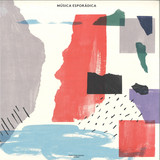
MFM044 sees the reissue of the cult Spanish studio project Música Esporádica with their incredible one off, self-titled album.
Another Suso Saiz side project, this one grew out of his work with his band Orquesta De Las Nubes, who were themselves the subject of a Music From Memory compilation last year.
The idea of getting Orquesta De Las Nubes to collaborate with Glen Velez and Layne Redmond arose after the two American musicians visited Spain during a series of seminars on frame drum techniques in 1985. Having met Glen Velez some years before in Madrid whilst Glen was performing with the Steve Reich Ensemble, Suso Saiz and Glen Velez quickly formed a strong friendship over their mutual love of non-Western music and the potentials of repetition within music. The two would play, talk and drinks for many hours in Suso’s studio space whenever Glen was in Madrid.
During one such session in 1985, Glen and Suso would be joined by Orquesta De Las Nubes and Spanish friend and musician Miguel Herrero. With exciting new ideas flowing quickly and easily, Suso decided to immediately call Track Studios in Madrid to see if they might have a space to record some of the material. With just a few days available the group would record for about 12, with what Suso would describe as ‘incredible fluency’, by which time they would have recorded the album they would later title Música Esporádica.
After its release 34 years ago Música Esporádica sounds as stunning as ever and Music From Memory are delighted to be able to share the fluency, spontaneity and close friendship which fuelled the recording of this amazing album.
Order now and we will order the item for you at our supplier.
When the grunge explosion of the early `90s elevated Seattle's flannel-clad misfits out of the divey clubs of downtown and into the mainstream, a new generation of restless artists filled the void left in the Pacific Northwest's underground music scene. The under-21 crowd making music in the wake of Nevermind seemed even less enamored with the slick production values, classic rock nods, and testosterone-fueled moshing culture that came with the Zeitgeist, favoring their own kind of Revolution Summer-style pivot away from the popular sounds of the era towards a more emotionally nuanced, melodic, and inclusive style of punk. The Puget Sound trio Lync perfectly captured the spirit of that era, blending the passionate chaos of the DC and San Diego scenes with the rough-hewn DIY pop sensibilities of Olympia's thriving indie community into one unified sound. Though they were only a band for two years, they helped define the next era of the Northwest underground, inspiring countless other artists and instigating the creation of beloved records from the region. After being out of print for over a decade, the band's sole LP These Are Not Fall Colors has been remastered and expanded into a 2xLP with the inclusion of "Can't Tie Yet"_a compilation track from the album's recording session_into a deluxe edition available courtesy of Suicide Squeeze Records. Originally released on K Records in the summer of '94 just a few months before the band called it quits, These Are Not Fall Colors is a boisterous collection of scrappy basement-show anthems played on duct-taped-together gear. Led by the off-kilter melodies of late singer/guitarist Sam Jayne and hammered into place by the driving bass of James Bertram and drum battery of David Schneider, the album's eleven songs channel that undefinable sound of the early `90s before descriptors like "post-hardcore" and "emo" became pejorative terms. Sure, you get a sense of the more sophisticated mid-tempo punk approach on songs like "B" and "Silverspoon Glasses," and maybe catch wind of wistful songwriting on "Pennies to Save" and "Cue Cards," but Lync seemed to cull their ideas from whatever bits of inspiration they could find in the gray gloom and geographic isolation of western Washington, absorbing it all and churning it together into a style uniquely their own. Despite Lync's short existence, modest aspirations, and DIY approach, their work had a ripple effect. Jayne would go on to make music under the moniker of Love As Laughter. Built to Spill's Doug Martsch was so enamored by the album that he enlisted Bertram and Schneider to serve as his rhythm section on the There's Nothing Wrong with Love tour. These Are Not Fall Colors engineer Phil Ek would go on to help record and produce records by Fleet Foxes, Band of Horses, and The Shins. Early bassist Isaac Brock and These Are Not Fall Colors album art contributor Jeremiah Green would go on to form Modest Mouse. Bertram and Green would also go on to form the revered indie rock group Red Stars Theory. At times it feels like you could pick any major Northwest indie rock group from the `90s and `00s and trace their DNA back to Lync. The deluxe edition of These Are Not Fall Colors comes pressed on 180g vinyl and packaged in a gatefold cover with printed inner sleeves and expanded artwork by Jesse LeDoux. The 2xLP also features an 18x24 poster with extensive liner notes by Brian Cook. Altogether, this new version of These Are Not Fall Colors not only brings this celebrated classic back into analog libraries of old fans, it also provides new context and appreciation for Lync's ongoing impact on both a local and international level.
expected to be published on 22.03.2024
After 7 studio albums with both Secretly Canadian and Western Vinyl Records over the last 20+ years, Early Day Miners have returned with their latest offering, and their first with Solid Brass Records, titled Outside Lies Magic. Early Day Miners' surroundings have always been reflected in their sound. Their early compositions, while in Bloomington, IN, mirrored the seemingly inescapable expanse of the Midwest. Now based in New Orleans their sound has yielded a subtle but correlative shift in the band. Outside Lies Magic offers an audible lightness. Most notably Dan Burton’s voice, once hushed and at times hesitant, is now full-bodied and sure; his heart, once tenuously carried on his sleeve, is now firmly in his throat. And though this might be the leanest the lineup has been, they are focused and warm, exuding the maximalism of their new home with nuance and a laissez-faire approach. Early Day Miners sound as unhurried as ever, but never aimless; Early Day Miners have finally arrived.
expected to be published on 22.03.2024
After 7 studio albums with both Secretly Canadian and Western Vinyl Records over the last 20+ years, Early Day Miners have returned with their latest offering, and their first with Solid Brass Records, titled Outside Lies Magic. Early Day Miners' surroundings have always been reflected in their sound. Their early compositions, while in Bloomington, IN, mirrored the seemingly inescapable expanse of the Midwest. Now based in New Orleans their sound has yielded a subtle but correlative shift in the band. Outside Lies Magic offers an audible lightness. Most notably Dan Burton’s voice, once hushed and at times hesitant, is now full-bodied and sure; his heart, once tenuously carried on his sleeve, is now firmly in his throat. And though this might be the leanest the lineup has been, they are focused and warm, exuding the maximalism of their new home with nuance and a laissez-faire approach. Early Day Miners sound as unhurried as ever, but never aimless; Early Day Miners have finally arrived.
expected to be published on 22.03.2024
Patsy Cline (born Virginia Patterson Hensley; September 8, 1932 – March 5, 1963) was an American singer. She is considered one of the most influential vocalists of the 20th century and was one of the first country music artists to cross over into pop music. Cline had several major hits during her eight-year recording career, including two number-one hits on the Billboard Hot Country and Western Sides chart. Under the direction of producer Owen Bradley, her musical sound shifted and she achieved consistent success. The 1961 single "I Fall to Pieces" became her first to top the Billboard country chart. Her next single release "Crazy" would also become a major hit. During 1962 , Cline had hits with "She's Got You", "When I Get Thru with You" and "So Wrong". This Limited Edition comes on Solid White coloured vinyl.
expected to be published on 22.03.2024
What Do We Do Now is the fifth solo studio LP recorded by J Mascis since 1996. This is obviously not a very aggressive release schedule, but when you figure in the live albums, guest spots, and records done with his various other bands (Dinosaur Jr., The Fog, Heavy Blanket, Witch, Sweet Apple, and so on), well, to paraphrase Lou Reed, "J's week beats your year." What Do We Do Now began to come together during the waning days of the Pandemic. Utilizing his own Bisquiteen Studio, J started working on writing a series of tunes on acoustic with a different dynamic than the stuff he creates for Dino. "When I'm writing for the band," he says, "I'm always trying to think of doing things Lou and Murph would fit into. For myself, I'm thinking more about what I can do with just an acoustic guitar, even for the leads. Of course, this time, I added full drums and electric leads, although the rhythm parts are still all acoustic. Usually, I try to do the solo stuff more simply so I can play it by myself, but I really wanted to add the drums. Once that started, everything else just fell into place. So it ended up sounding a lot more like a band record. I dunno why I did that exactly, but it's just what happened." Two guest musicians are playing this time out; Western Mass local Ken Mauri (of the B52s) plays piano on several tracks. Since J himself has some experience with keys, when asked why he needed a hired gun, he says, "Ken is great, and he plays all the keys. I tried playing some keyboards on the first Fog album, but I'm really only comfortable playing the white notes, so it's kind of limiting. laughs Nowadays, I could just turn the pitch on a mini Mellotron to play different sounds, but black keys just seem hard. For whatever reason, I just like banging on the white ones. Seems like it's harder to figure out how to stretch your fingers around the other ones." Mauri has no such qualms and plays all the keys very damn well. He sounds especially great on "I Can't Find You," where he is Jack Nitzsche to J's Neil Young, creating one of the album's loveliest tunes. The other guest musician, Matthew "Doc" Dunn, is also prominent on this track. Dunn's steel guitar manages to both widen and soften the musical edges of the music, giving it a full classicist profile. Dunn is an Ontario-based polymath who J met through Matt Valentine. After J played on Doc's great 2022 Sub Pop single, "Your Feel," he figured it was time for payback. Both Dunn and Mauri add beautifully to the songs here, helping to transform them from acoustic sketches into full-blown post-core power ballads. What Do We Do Now is the finest set of solo tunes J has yet penned, and the way they're presented is just about perfect. Asked if he would be touring to support the album, J says he'll be doing some weekend dates, but he probably won't be putting a band together. And I'm sure these songs will sound great solo and acoustic, but the arrangements on this album are truly great and put a cool, different spin on Mascis' instantly Recognizable approach to making music. So, what do we do now? Not sure. But apparently, what J does is to make one of his most killer records ever. Hats off to him. - Byron Coley
Order now and we will order the item for you at our supplier.
"The American hard rock band Mountain was formed in 1969 by Leslie West, Felix Pappalardi, Steve Knight, and Norman Smart. The year after, they released the debut studio album Climbing!, which peaked at #17 on the US Billboard Top Albums chart. It includes the group's best-known song, ""Mississippi Queen"", which became a hit, and ""Never in My Life"", which was regularly aired on contemporary FM radio. Both were sung by West, while Pappalardi supplied the vocal on another radio favorite, ""Theme for an Imaginary Western"" (co-written by Jack Bruce). Climbing! is available on black vinyl and includes an insert."
Climbing! by Mountain, released 15 March 2024, includes the following tracks: "Never in My Life", "For Yasgur’s Farm", "The Laird", "Boys in the Band" and more.
This version of Climbing! comes as a 1xLP. This release comes with (a) Insert(s).
Go Back
Search our catalog
expected to be published on 15.03.2024
Say no more Comorian blues or Indian Ocean rock: Eliasse is ZANGOMA!
This musical concept, created by Baco, the famous Comorian musician, brings together Western music and Comorian and Indo-Oceanic music. Eliasse creates his zangoma rock by mixing rock, blues and folk with typical Comorian and African rhythms. From twarab to mgodro, maloya to afrobeat, zangoma rock reveals its plural face. Its foundation is the drum (ngoma), and Eliasse's percussive rock lays claim to this common, hybrid banner!
With his third album, eponymously entitled Zangoma, due out in early 2024 (Soulbeats Music), Eliasse and his power trio once again promise to deliver groove: Fred Girard's powerful drums, Eliasse's roaring guitar, Jérémy Ortal's swaying bass and a thousand nuances of voice... In short: the Indian Ocean is dancing ZANGOMA ROCK!
expected to be published on 15.03.2024
Sitar-laden raga rock-xotica! Light the incense, turn on and tune out to this acid folk blend of electric oud, minitar and melodica - its genuine organic blend of both Eastern and Western sounds make this band truly sound like no other. Pressed on seaglass blue vinyl!
Ltd. Seaglass Blue Coloured Vinyl ( )
expected to be published on 15.03.2024
Footballhead is a Chicago-based alternative rock band headed by singer/ songwriter Ryan Nolen - At its heart, the band is a vessel to toil forward through internal and external insecurity It also serves the unrelenting spirit of new- millennium Midwestern youth, with MTV and skatepark dreams in the core of their memories. By blending pop structures with alt and emo sounds, Footballhead channels the frantic, dramatic, and anthemic to map the pressure points of existence. It's outcast music, revitalized in search of a modern, blissful awakening. Nolen was a skate kid from the western Chicago suburbs; the one who only kicked it with older neighborhood kids. The punkish attitude of late-90s and earlyaughts alt- rock galvanized Nolen, from the infectiously fun music down to the fashion.
A teenage relocation to Palm Springs, CA coincided with Nolen inundating himself with all the music he could: Warped Tour, 411 videos, Limewire, and the like. The Footballhead ethos comes from this comfort zone of pop impulses and raucous energy, carried by a DIY spirit that grants Nolen the autonomy to facilitate honesty and reflection. Joined by Adam Siska, snow ellet, Liam Burns, and Robbie Kuntz, Footballhead crafts supercharged rock songs like brief, open secrets. However weathered one is from their struggles and mistakes, this music offers unbridled fun as a reprieve, and salves for the shaken. These are your old friends inviting you in to commiserate, elevate, and believe.
expected to be published on 15.03.2024
Tucked away in a corner of northwestern Europe and so small you could drive through it in minutes without noticing you were ever there, Luxembourg is often overlooked. This is also true for Luxembourg’s music scene, and even more so in the early 1980s. Aside from a string of victories at the annual Eurovision song contest or the mighty Radio Luxembourg that had for decades been blasting jazz, rock and other modern music into stolid Western European ears, very little else seemed to be going on. But even in a country of barely 350,000 people, musical adventurers had picked up on the spaced-out jazz-funk of bands like Return to Forever, Herbie Hancock’s Mwandishi, Weather Report, George Duke, and the electric Miles Davis. Under the leadership of trumpet player Gast Waltzing, a handful of them put together a band called “Atmosphere” and used the sound of their inspirations as a launchpad for their own musical exploration.
What you hold in your hands is a “best of” the Atmosphere band, which released two albums and a 7” single between 1981 and 1986. Privately pressed and long out of print, with original copies very hard to come by even in their country of origin, these records have for years been unheard by anyone outside hardcore collector circles. With no master tapes available, it was a real labor of love to track down the best quality vinyl copies and to reissue a selection of our favorite tracks in professionally remastered form.
Editions de Lux is a new label dedicated to unearthing and releasing records we love and believe deserve more attention, with a focus on Luxembourg and the surrounding countries. We are just the latest in a long line of immigrants who have come to work in Luxembourg and who are trying to find our own path into the heart of this mysterious little country that has much more to it than dark forests, medieval castles, rusting steel mills, and shadowy banks.
Order now and we will order the item for you at our supplier.
Following 2022' acclaimed 'Topical Dancer' album with Charlotte Adigéry, here comes 'Letter To Yu', the debut solo album by Bolis Pupul : produced by fellow Belgians Soulwax & released on DEEWEE/Because Music. Exploring many themes including loss, grief, ancestry, culture, belonging/not belonging and identity. It's no coincidence that Bolis Pupul's music sounds the way it does. Born in Belgium to a Chinese mother and Belgian father and raised in the super-cool creative city of Ghent, Bolis' music is a joyous cross-cultural assemblage. Mixing widescreen electronica with the warm-hearted and wonky naivete of Belgian New Beat, Bolis' singular sonics are at once playful, emotive, unrelenting and tender. The real key to unlocking Bolis' musical secret, however, is that conversation he has between his Eastern and Western roots. The creation of the album is built around Bolis' trip to Hong Kong earlier this year, made to reconnect with his late mother's roots.
Order now and we will order the item for you at our supplier.
Except from Rachid Taha, who allowed himself a few forays into the teeming, vibrant heaths of techno, no raï singer other than Cheb Malik has ever ventured into this terrain known for its abundance of sound. If you know about Malik Adouane's ancestry, this is hardly surprising. Born in Librecourt, near Lens, he comes from a union between an Italo-Celtic mother who instilled Western sounds into his ears and a father, a former miner born in Biskra (north-east Algeria), a palm grove near the desert, musically renowned for its lively diwan that could be called Saharan opera. In addition, the town is renowned for its chakhchouka, a dish called after its rich blend of various ingredients and spices. Just like Malik’s music, as he was a fan of James Brown, Barry White, classical Arabic and raï music. He had been thinking about it from the beginning, but the dream took a long time to materialize. In January 1986, many raï idols turned up in Bobigny, France, for a historic and seminal festival. In the midst of the audience, the young man, dressed in black leather, provided security for the concerts of many stars before becoming one himself. He would rub his eyes, not because he was dazzled, but because they were clouded by a nostalgia that remained him of itself. So, with his head full of sounds warmly recommended by the best DJs, he set out, a little provocatively, to position himself at the cutting edge of music with a new concept called "After raï". It combined the sweet and precious past with an almost uncontrollable creative audacity. It's a balm made in a test-tube-studio from a mix of Arabic melodies and lyrics - a kind of "Arabeat", and the arrogant modernity produced by samplers, electronic spinning, roaring bass and guitars made for house music. The pinnacle of the record is a masterful cover of Isaac Hayes' Shaft, which set dancefloors on fire in Paris, London, Ibiza and New York, and became internationally known thanks to its presence on a Paris Dernière compilation curated by French musician and DJ Béatrice Ardisson along with Claude Challe's iconic Buddha Bar series. Now, shall we dance?
expected to be published on 08.03.2024
The newly reborn Danish label, tech-nology, is reintroducing itsfirst two releases.
Tech-nology is thrilled to reintroduce the world to the groundbreaking debut releases from 2003.
This was the first release on the label bearing the title "RedSector" and catapulted tech-nology into the music scene with adistinctive blend of warm, raw, and captivating machine funk, fusing elements of techno and electroclash. The title track"Valyom" reach third place on Ricardo Villalobos' chart, while"Echo Dreams" became an enduring electro classic.
Hailing from Belgium, Valyom, also known as Filip Vandendriessche, had already left a strong mark on the music landscape under the moniker DJ Valium. He had previously released with the German label International DJ Gigolo Records and emerged as one of the first Belgian artists to contribute tothe Detroit sound with releases on Teknotika Records.
Filip Vandendriessche has been a fixture on record labels and event flyers since the early '90s when, fueled by his passion for dance music, he co-founded the UFO parties in the western provinces of Belgium. These early gatherings laid the foundation for a global journey that took him to some of the most iconic underground parties labels worldwide.
Tech-nology is proud that Valyom was the first artist to be released on the label.
Red is also the colour of love!
Order now and we will order the item for you at our supplier.
First official vinyl reissue of this sought-after psychedelic folk-rock / Americana / SSW album from 1976.
Major Arcana was a group led by counter-culture Milwaukee icon JIM Spencer, featuring a revolving cast of musicians / collaborators. The core of the band was Jim Spencer (guitar, vocals); Randall Dubis (electric guitar); Michael Burdecki (bass, slide guitar) and Jim Kitchen (percussion, harmonica). They were helped in the studio by some friends / musicians like Sigmund Snopek III and Barry Patton among many others.
Released on Jim Spencer’s own private label (A Major Label, home also to Anonymous of “Inside The Shadow” fame), the album opens with the terrific psych-folk of “Western Wind” and closes with an acid-folk rendition of “Greensleeves”. In between, you’ll also find some blues rock, SSW ballads, jazzy bits…
File next to groups like Pearls Before Swine or Bermuda Triangle.
expected to be published on 01.03.2024
By welcoming the beauty of imperfection and simplicity, Sven Wunder applies the timeless wisdom of wabi sabi on this musical journey. What you can hear is filtered through Ukiyo-e (which translates as “pictures of the floating world”), which illustrates everyday life, as well as through Japonism, the study of Japanese art, and more specifically its influence on European works. The result is a surface that creates an illusion by sound. The infusion of Min’yō with jazz rock, this hazy scene evokes the landscape of Monet’s ”The Water Lily Pond”, which depicts the painter’s Giverny garden, with a Japanese bridge, bamboo, ginkgo trees and the reflection of the sky in the pond. This illusion constructs both time and space.
The surface of the music, like the canvas of the painting, invents a journey between now and then by interpreting the idiom of folkloric and western art instruments. In this composition, the sound of the Western concert flute, which stretches back to the Renaissance and Baroque periods, evokes the sound of the bamboo-flute (”shakuchachi”), which reached its peak during the Edo period. The guzheng, also known as the Chinese zither, with a more than 2,500 year history, joins traditional Japanese folk melodies with modern pop percussion and 20th century electronic instruments such as the Moog synthesizer, Wurlitzer electric piano and electric bass.
This is the illusion that celebrates the fleeting nature of all things. A journey. A deep inhale and a slow exhale. It has a mix of jazz (both funky and progressive), East Asian and South Asian sounds. The idea of fusing these styles and reframing them with the aesthetic of wabi sabi is to reconnect with nature and concentrate on asymmetries and emphasize ornamentation to generate new ways of looking at the world, here and now.
Order now and we will order the item for you at our supplier.
Reggae and Jamaican music have long embraced a symbiotic relationship with the movies. Rooting back to the island's golden era, countless arrangements have either been direct covers, or inspired by, the musicality and mood found in both cinema and television. These reinterpretations would become part of the backbone of the instrumental sound that accompanied the Jamaican record industry's acceleration from the mid-60s and beyond. Talented young musicians, rising from Alpha Boys School and the early studios of Coxsone, Duke Reid and others, found a showcase for their unique playing style on hundreds of different recordings, while appealing to the country's own love affair with Westerns, James Bond canon, and other rebellious themes and motifs that were projected from Hollywood during this time.
In this same tradition, in a new interval, arrives the debut release of Anant Pradhan and Larry McDonald, the latter a master percussionist with direct participation in some of Jamaica's earliest recordings. McDonald, although often uncredited, was a legitimate influence in helping to bridge the Afro-Caribbean sound from calypso into ska and later reggae with his iconic style on hand drums and percussion. A kindred spirit of McDonald, despite 50 years separating them, Anant Pradhan is a bonafide member of the next generation. Although this is his first "solo" record, the talented saxophonist has already played on dozens of incredible sessions for the likes of Victor Axelrod, The Inversions, Andy Bassford, Channel Tubes, Ralph Weeks and Combo Lulo. As an official member of the current touring group of the legendary Skatalites, Pradhan has honed his musicianship under some of the greats of reggae music. His particular soulful, instrumental arrangements are an homage to that influential era of Jamaican music. Pradhan and his band's performance retain the skill and innovation of the old vanguard, and like the generations before, capture a magic that may only be possible when cinema goes reggae.
A cult favorite from A Nightmare Before Christmas, Danny Elfman's "Sally's Song" was immortalized in Tim Burton's 1993 classic stop-motion film. It's immediately recognizable in all its haunting charm, and now, Pradhan and McDonald have managed to transform it into an irrefutable reggae classic, reinvented with its melancholic lead sax and bombastic percussion. The prolific Henry Mancini is already entrenched in the Jamaican canon, yet nobody has knowingly attempted to recreate one of his most magical numbers, "Meglio Stasera" aka "It Had Better Be Tonight," that of the riveting one-take scene in 1963's The Pink Panther. The galloping percussion of the original is transposed through a cloud of smoke, slow and low in a roots style at the hands of McDonald. Pradhan's sax leads the way over the locked-in rhythm section, both deep and cheeky all at once. These first two productions of Anant Pradhan and Larry McDonald are a deserving entry into the canon of reggae covers, and are equally adept to be heard on the screen and or at the dance alike.
Order now and we will order the item for you at our supplier.
Ennio Morricone is known throughout the world for the Italian Western genre, but most of all for his famous soundtracks for Sergio Leone’s
masterpieces which have entered into popular culture on an international level, and here represented by iconic themes such as
A FISTFUL OF DOLLARS (1964), FOR A FEW DOLLARS MORE (1965), ONCE UPON A TIME IN THE WEST (1968), A FISTFUL OF DYNAMITE (1971) with extraordinary
soloists such as the whistle of Alessandro Alessandroni, the harmonica of Franco De Gemini, and Edda Dell’Orso’s soprano voice.
For the Westerns starring the legendary Giuliano Gemma - A PISTOL FOR RINGO and THE RETURN OF RINGO - both directed by Duccio Tessari, he wrote the songs
“Angel Face” (with lyrics by Gino Paoli) and “The Return of Ringo” respectively performed by Maurizio Graf with pop music arrangements that were popular at the time.
With PISTOLS DON’T ARGUE (1964) Morricone experiments with a still undefined pre-Leone sound, DEATH RIDES A HORSE (1967) presents a main theme for
guitars ostinatos, exotic flutes and choir. For LIFE IS TOUGH, EH PROVIDENCE? Ennio Morricone creates a theme that mixes religious elements for a female choir
with modern arrangements. And A FIST GOES WEST (1981) a late Western in which the composer himself interprets the Indian’s screams.
expected to be published on 23.02.2024
It’s a family affair. One formed almost thirty years ago, back in the mid-nineties, when the pair joined seminal French jazz combo Olympic Grammofon. For twenty-four years they have worked together as Bumcello, each complementing the other, echoing polar opposites. The Boom in Bumcello is none other than Cyril Atef, incisive drummer, relentlessly pushing beats towards new horizons. The Cello is Vincent Ségal, cellist without blinkers and extraordinary musical alchemist. Since 1999, these two die-hard music fans, coming together for mercurial results, have released one record after the other whilst conquering the hearts of their live audiences, old regulars as well as new recruits. We have all been seduced by the way their music leapfrogs categories - these two experts are much more interested in kindred spirits than pigeonholing, and this very spirit is celebrated on more than one track of this ninth record, whose concept is original to say the least.
Everything began with an idea by Cyril Atef - a soundtrack based upon drawings penned by Marin, Vincent’s son, architect and visual artist. The musicians involved then coached their reaction to these images on a score, and the pair were charged with collating and adjusting the results. These thirteen ink drawings, in a heroic fantasy vein, constituted a matrix which was then to serve as a guide, like a roadmap through a singular and multi-faceted labyrinth. The key to this sonic fresco is in Bumcello’s image – an eclectic aesthetic twinned with a great sense of contrast. Herein lies the trademark of this entity animated by the gift of musical ubiquity, gorged on scales and rhythms, capable of a slap as much as a gentle caress. From classical music to electronics, from improvised music to sophisti-pop, everything is allowed with no preconceived ideas. They can even reclaim the traditions of others, all the better to propel them towards new horizons - this is how the very history of music has always panned out.
If you listen between the lines and look at the details, more than one piece bears witness to the moments and individuals that have impacted the criss-crossing lives of Vincent and Cyril. The track Crash is the perfect excuse to create a Jamaican-style jam with New York inflections, and we can see, in capital letters, the name Hilaire Penda, playing alongside Bumcello at the Apollo Theater in the associated drawing. This bass player from Cameroon, who died on 5th November 2018, was more than just a friend for the two Frenchmen. He was one of the family. Similarly, they give a nod to another Cameroonian, and another departed friend - singer of rock band les Têtes brûlées, Zanzibar, through the vocals of fellow countryman Zanzi. The ghost of Rémi Kolpa Kopul, emblematic voice of Radio Nova, haunts the margins of Spark Av, in a vocal sample with a smattering of effects. As for I Remember Tim, it directly honours the memory of Timothy Jerome Parker, aka The Gift Of Gab, another friend who left us in 2021. Tim is depicted in a drawing with the docks of Oakland in the background, and it’s his alter ego within Blackalicious, Chief Xcel, who remotely added his signature to the track, notably by adding the words of Lateef The Truthspeaker to brass and woodwind sounds.
These are the only additions to Bumcello’s original nucleus, all the better to create a genuine musical concoction where Vincent Taurelle is in charge of production and mixing sessions recorded live and direct. He is also invited for a twinkle on the keys (piano, synths, Wurlitzer, organ), on a handful of tracks. Already at the commands of previous opus Monster Talk, always taking care over the slightest detail, the one that makes all the difference, this pianist is now also part of the family. “Everything he brings is perfect, whether added though slight touches or through very important choices”, say the two members of a combo which today, appears to us under the guise of a trio, adding an extra dimension to a far-reaching mix, in the image of the veiled or more explicit tributes making up the cornerstones of this release.
Booker, a drawing where we see the musicians enter a club, honours James Booker, great pianist from New Orleans who has always fascinated Vincent, in a genre that is off-beat and gender defying. Her Story was created by Cyril in support of the Iranian women’s movement. Aysyen Kampe evokes, even in the original drawing, a tradition that remains impactful for Bumcello – Haitian mysticism, and Ouï Khouïette Ouï conjures up the beats of the Allaoui, a war dance from Western Algeria, one they have taken part in in the past with the help of Cheikha Rabia. They deliver a metal version, original and surprising, especially as Marin Ségal’s drawing features the Nicholas Brothers, those iconic dancers of the 30s jazz scene!
Resolutely hard to pin down, Bumcello’s beats can initially take on the structure of disjointed house, though Sangre begins like a film soundtrack, “in a Mexican style” adds Vincent, who was at the origin of this track. A delicate alap on the cello can open up onto afrobeat rhythms, a well-pitched voice can enchant, like on the amazing The City Has Eyes which has everything of a hummable pop hit. Emblematic of this manner of encompassing all music without being exclusive, Le Grand Sommeil, a direct reference to the Howard Hawks movie inspired by Raymond Chandler, a precursor of David Lynch, begins nice and smooth but ends on a wild tempo, on a drum’n’bass tip, as in the good old days of Cithéa, when this Party story began in the other century.
expected to be published on 23.02.2024
Oceanic White & Blue Vinyl, limited to 300 copies. The band's name is borrowed from the legend of the Cailleach, the ancient witch god of winter from Scottish Celtic mythology. The story goes that she lives at the bottom of an enormous whirlpool, Corryvreckan, which lies between some of the western isles of Scotland and lends its name to this album. As the herald of winter, she rises from the depths to wash her plaid (cloak) in the waters of the Corryvreckan. Once washed and restored to a bright white, she casts it across the earth where it lands as snow. This is done at the start of Samhainn (beginning on 31st October, which was the Celtic precursor to Halloween and the name of the band's debut album). Her reign ends as spring arrives with the festival of Bealltainn in May, and she turns to stone to await the next winter. The Cailleach is depicted in various, contradictory ways - both as a symbol of death, loss and despair, as well as a source of nurturing and protection. Taking inspiration from all this, the music that HAND OF KALLIACH creates is centred around these dual concepts of benevolence and malevolence, all against the backdrop of the history, mythology and land/seascapes of the Scottish islands. The threads of Celtic and Gaelic folk music and folklore weave throughout the album, against a backdrop of spectral, melodic death metal. Blending the robust brutality of death metal with the ethereal wisps of folk is an intoxicating brew. Corryvreckan was recorded with Wynter Prior at Sphynx Studios, Brighton, UK. The resulting album is a phantasmagorical journey through ancient tales and truly progressive modern metal, with an unmatched eye for detail that brings every single element of Corryvreckan to life.
expected to be published on 23.02.2024
Black vinyl LP. Debut album by striking experimental duo featuring Aboriginal songman Fred Leone. Mixed by Jake Miller (Björk, Arca), mastered by Alex Wharton (The Beatles, MBV). RIYL: Autechre, Arca, Björk. Yirinda means 'Now' in Butchulla language. Australian duo Yirinda combine ancient Aboriginal language with sublime modern production. Fred Leone and Samuel Pankhurst's music invokes thousands of generations of story and culture, while emerging as something entirely new. Fred is one of three Butchulla songmen - a song and language custodian for the Butchulla people from the Fraser Coast region of Queensland, including K’gari (formerly known as Fraser Island). He sings the songs on this album in the endangered Butchulla language, now spoken by only a handful of people. Samuel is an internationally acclaimed contrabassist / producer known for his kaleidoscopic harmonies and polyrhythmic mastery. Their self-titled debut album was recorded in Brisbane by Samuel, then mixed in London by Jake Miller (Björk, Arca, Yves Tumor) and mastered at Abbey Road by Alex Wharton (The Beatles, My Bloody Valentine). The album sets Fred’s powerful vocals against striking experimental soundscapes, rich with strings, horns, double bass, synthesizer, piano and percussion. Every arrangement began with Fred's voice alone and from there sounds and systems were constructed. The result is otherworldly, a timeless art music outside Western convention. Yirinda have performed at the Australian Art Music Awards, Vivid Festival, Golden Plains, Dark Mofo, Supersense and elsewhere, and been covered by ABC Radio and NME Australia. Fred has toured Europe as a member of The Black Arm Band, and as a solo artist supporting Ash Grunwald. He founded Australia’s first Aboriginal hip hop label Impossible Odds in the late 2000s. Samuel has performed with the Brodsky Quartet and is a member of the Australian Art Orchestra. He has scored extensively for contemporary dance, and his studio work covers everything from the Bluey TV show to Hiatus Kaiyote
expected to be published on 20.02.2024
"Webster explores themes of different relationships through her broody tunes, tackling the notion of writing only sad songs by writing her "saddest song" yet. In a way, the record feels like a comingof-age for the singer-songwriter into her own perfectly curated moment, which surely will lead to bigger and better things." - NYLON // "Faye Webster is filled with lush bluegrass sounds, featuring plenty of slide guitar and the occasional trill of a fiddle, which Webster's fragile voice flits through like that of a younger Natalie Prass." - W Magazine // "_a soulful offering heavily inspired by the country and western music she grew up listening to." - Pitchfork "Her self-titled record will win fans across the musical spectrum for its left-of-center approach to folk. Webster is a lifelong student of country-western songwriting and Americana sound (...) But she punctuates her own tunes with subtle flourishes of funk. Her voice hits a sweet spot somewhere between bluegrass powerhouse Alison Krauss, Natalie Prass, and Tennis's Alaina Moore, whose light vocals glide across any melody." - VICE // #8 album of 2017 - Gorilla vs. Bear
expected to be published on 16.02.2024
2023 Repress
Frank Maston’s Tulips is a sample-ready film score to the best 70s movie never made. Originally a super-limited self-release on his Phonoscope label in late 2017, Tulips has already become incredibly sought-after. Be With were introduced to Maston by mutual friends Aquarium Drunkard and it didn’t take long before we decided this modern classic deserved a reissue.
Inspired by the deep-grooving soundtracks of Italian cinema - think Morricone, Umiliani and Alessandroni - Maston conceived the entire Tulips project as a continuation of these revered works. Frank designed the artwork and made two 16mm films to accompany the music: “It wasn’t just the LP… it was kind of a whole vibe I was trying to create. Not really trying to emulate the things that influenced me but more trying to make something that could sit alongside those records on a shelf. I’m still very proud of the project.”
There’s a distinct library music feel too, with wiry organ, spacey keyboards and loping 60s guitar hinting at KPM and DeWolfe. Like the best library music, Tulips creates a cinematic universe through sound alone, evoking moving images in the listener’s technicolour imagination. It turns out that was accidentally on purpose: “I was discovering a lot of library music for the first time… listening to a composer’s entire catalog or finding all this obscure stuff. I wasn’t entirely conscious of the influence until I started making this music and realized I was channeling the vibe. That’s when I began focusing more on weaving melodic themes throughout the record to make it function more like a soundtrack”.
Tulips was recorded between 2015 and 2017 in a small studio in a village called Zwaag in Holland, during downtime from Frank’s touring duties with Jacco Gardner’s band. “Tulips” comes from the title of the very first demo he made in Holland, it was the first thing that came to mind. Makes sense.
Recording in Europe with some very European influences in mind, Frank wanted to eschew any American influences. But we can still feel the studio wizardry of the likes of Brian Wilson and Harry Nilsson in there somewhere. A psychedelic bedroom-pop song-cycle, full of hypnotic hooks and dusty drums, Tulips manages to sound charmingly homemade yet wholly widescreen.
Dreamy opener “Swans” is an exquisite soul instrumental and recalls the soft-psych of Koushik, which Be With loves of course. Tropicalia influences abound in the cool and breezy “New Danger” and the KPM-references are loud and proud on the lush organ pop of “Old Habits”. Fast-paced “Chase Theme No. 1” manages to be both tense and laid back, decorated by acid-drenched spaghetti Western guitars. The glorious Gainsbourg-esque melancholia of “Infinite Bliss” is all gauzy flutes and happy-sad vocalizing and the title is almost perfect: it’s bliss, no question; *if only* it went on forever. Side A closes with “Evening”, a subtle bossa nova beat thing. Gorgeous.
Side B opens with the heat-shimmer guitars of “Rain Dance”, evoking an unreleased Byrds or Buffalo Springfield backing track. Yes, it’s that good. “Sure Thing” is music to accompany an elevator ride you never want to end, but in a good way! The ornate “Garçon Manqué” is as beautiful as the instrumentals on Pet Sounds (think “Let’s Go Away For A While”) and the wistful “Turning In” starts like a stroll in the park before Maston introduces a scorched-Earth guitar solo that would startle if it wasn’t so pitch-perfect. “Chase Theme No. 2” is a briefer, more keening counterpart to what we hear on side A. The head-nod bass-drums-keys funk of “Hues” rounds out this staggeringly assured set; still opening each phrase with a plaintive strum, but using vibrato and heavy reverb to accent the electric organ melody. Sublime.
All these top drawer musical references might sound like just more of the usual release notes hyperbole, but there’s a reason that this still-young LP already changes hands for big money. It really is that good. Of course that first pressing didn’t hang around for long and Frank’s regularly been asked about a re-press pretty much ever since.
Re-issuing Tulips on Be With made sense to Frank “because the record would fit in so well with the catalogue”. Having already delved into the archives of KPM and Themes, and beginning to do the same with Coloursound and Selected Sounds, the collaboration “just makes sense and seems inevitable”. We agree.
Frank wasn’t sure a record of instrumentals with obscure soundtrack references would be an easy sell when it was originally released, and was surprised when Tulips turned out to be exactly what some people wanted to hear. We reckon its timeless beauty ensures that it’ll *always* have an audience.
The record was originally cut to be played at 45rpm, a technical quirk that grants the home listener the opportunity to go deeper, for longer. Played at 33rpm, the more languid unfurling of the tracks proves just as wonderful a trip. As a psilocybin-soaked case study from Aquarium Drunkard back in January of 2019 describes, some of the songs sound as if they were intended to be heard that way. The slower speed allowing the listener to step inside and perhaps even “crack the code” of the music’s meaning.
Mastered for this vinyl reissue by Simon Francis and featuring alternative burnt orange artwork from Maston himself, this Be With pressing is limited to just 500 copies. Hypnagogic it may be, but please don’t sleep.
Order now and we will order the item for you at our supplier.
Maya Youssef is a multi-award winning musician and composer from Syria. She is hailed as ‘queen of the qanun,’ the 78-stringed Middle Eastern plucked zither. Maya’s intense and thoughtful music is rooted in the Arabic classical tradition but forges pathways into Western classical and contemporary styles. It explores the emotional and healing qualities of music.
The 'Finding Home' is a journey through memories and the essence of home both within and without in the search of that place of peace, comfort, and healing which manifests in everyone in a unique way.
Maya wrote this album during a time of spiritual awakening. Over time she has come to accept the loss of her homeland and in the process of grieving (which she explored in her Album Syrian Dreams in 2018) Maya has found a much greater sense of home in the most spiritual sense.
“As any Syrian will tell you, there is this overwhelming sense of loss and an overwhelming sense of grief. Because that world which existed before the war started, despite it naturally having problems, was a beautiful world with a booming economy, artistic scene, film festivals and visiting international artists, Damascus was the third safest city in the world. The loss of that world was heart wrenching and, in a way, steered me towards a universal concept of home.
The main trigger that made me create Syrian Dreams was the Syrian war and the loss of my homeland. And it's only by embarking on that spiritual journey of constant meditation and of finding home within God and within myself that I started to feel consolable and started to feel that I have my own home within me. I felt that the world is my home and humanity is my home. With my latest album I want to take people through a transformative journey, where they land in that place of home for them. No matter how that will look like for each person.” Maya Youssef
expected to be published on 16.02.2024
Remastered and first worldwide release (previously only limited availability in Iceland) Since first bursting onto the global punk scene in 2018, Icelandic trio GRÓA have thrilled audiences across the world by fully embracing an unruly freedom. Made up of sisters Hrafnhildur Einars Maríudóttir (aka Hrabba, age 22) and Karólína Einars Maríudóttir (aka Karó, age 20) and their childhood friend Fríða Björg Pétursdóttir (also 22), the Reykjavík-bred band merge elements of post-punk and noise-rock and art-pop with absolute abandon, arriving at an explosive yet magnificently arranged sound unlike any other. A local favorite, the Icelandic government has recently been sponsoring worldwide travel to share GRÓA with the rest of the world and in 2023 they have played shows around the world including in UK, Western and Eastern Europe as well as USA dates including Washington DC, Seattle, Chicago and New York City. They have recently recorded an in studio performance at KEXP which will be broadcast worldwide in January 2024 and more worldwide touring is planned for early 2024 to support the vinyl and CD releases. Listing iconoclasts like Sonic Youth, PJ Harvey, and Bikini Kill among their longtime inspirations, the Icelandic punk band GRÓA pursued their experimental impulses with more intensity and confidence on Í Glimmerheimi, matching the album’s shapeshifting sound with a surrealist but emotionally potent form of lyrical storytelling. “It’s about a girl who’s trying to escape the world she’s stuck in—this glitter world that looks so good on the surface, but it’s not where she’s meant to be,” says Karó in discussing the album’s concept. “There’s a song called ‘Jetpackstelpan,’ or ‘Jetpack Girl,’ where she leaves the world on a jetpack and flies away to the moon, and she’s never coming back again.” Opening on the kaleidoscopic rhythms and rowdy call-and-response vocals of “Fullkomið” (“Perfect”), Í Glimmerheimi brings that narrative to frenetic and dazzling life, ultimately closing out on “Skrímslið er að ná þér” (“The monster is getting you”): a serpentine and strangely mesmerizing epic whose swirling textures, otherworldly vocals, and sparse yet complex guitar tones illuminate the immense scope and depth of GRÓA’s artistry.
expected to be published on 16.02.2024
For the last seven years, sound artist, technologist, and electronic musician Moisés Horta Valenzuela (aka Hexorcismos) has been studying artificial intelligence and generative art, wondering how these new technologies might be augmented into his musical process. Born in Tijuana and currently based in Berlin, Hexorcismos has long attempted to break down the permeable borders between musical styles and expressions, using the spaces in between to reinforce his politics and worldview. And on 'MUTALISMX - becoming sonic network', he expands his vision, inviting artists from across the globe to collaborate on work that questions the biases inherent in AI models, offering a collective alternative that could serve as a blueprint for further research.
The majority of AI art at this stage works with "big data", taking ideas from the cultural canon and muddying them with our contemporary reality. But if we accept that mass culture is always politically biased, always swaying towards historical prejudices, then there must be a counter-narrative. Hexorcismos began to develop a bottom-up approach, using "small data" to interrogate his idiosyncratic approach to art; he built a tool called SEMILLA.AI based on neural audio synthesis that could not only mimic his sonic fingerprint but transform it into another. So when he offered the synth to his network of collaborators, he gave them the option of either using only their data or sharing the signatures of each other artist involved in the project, blurring their identities into a mutual voice.
The result is a compilation that unspools with the coherence and fluidity of a single-artist album or adventurous DJ mix, genreless and boundless but unified by a singular message. Hunanese-American artist Kloxii Li for example takes rugged percussion and tense, industrial ambience, smudging her soundscape into a swirling gust of ghostly dissonance. Hexorcismos himself contributes two compositions: the lengthy, hypnotic 'Acaso de veras se vive con raíz en la Tierra', an AI-powered scramble of his pointed tribal guarachero experiments; and 'Interferencias', a collaboration with Mexican club veteran Bryan Dálvez, aka El Irreal Veintiuno that drives intense dancefloor rhythms into a dense haze of frozen drones and radio static. Elsewhere, Berlin-based Lebanese artist and writer Jessika Khazrik dissolves her voice into a mesh of obscured rhythms and dissociated whirrs, blending the organic with the artificial but retaining an overpowering sense of humanity.
Some artists were drawn to the nebulous aspects of the technology, searching for truth in a soup of different sounds, while others, such as KMRU, used Hexorcismos's synthesizer the examine their output. On 'hidden options', the Kenyan sound artist fed his immense catalog into the neural net, bringing out his mannerisms and tendencies in the process. Each track is singular but myriad, prompting both mutual respect and a sonic becoming, a feedback process between the artist and the tool, the individual and the collective. Data sets are made by people, and by engaging directly with musicians, Hexorcismos suggests a new way of utilizing a technology demonized and glorified without careful examination. Each artist owns their AI model, and alongside the album Hexorcismos will release SEMILLA.AI to the public (with custom-made models to start the process), allowing anyone to access this revolutionary technology.
Even the album's artwork reflects the political message, conceptualized by Chilean duo hypereikon, who used AI processes to develop a visual reflection of the technology and its possibilities. Operating outside of academia and capitalist enterprises, MUTUALISMX proposes an alternative future - one without borders that's not beholden to the Western canon, where independent labor can be prioritized and celebrated, and where creativity can truly flourish.
Order now and we will order the item for you at our supplier.
What Do We Do Now is the fifth solo studio LP recorded by J Mascis since 1996. This is obviously not a very aggressive release schedule, but when you figure in the live albums, guest spots, and records done with his various other bands (Dinosaur Jr., The Fog, Heavy Blanket, Witch, Sweet Apple, and so on), well, to paraphrase Lou Reed, "J's week beats your year." What Do We Do Now began to come together during the waning days of the Pandemic. Utilizing his own Bisquiteen Studio, J started working on writing a series of tunes on acoustic with a different dynamic than the stuff he creates for Dino. "When I'm writing for the band," he says, "I'm always trying to think of doing things Lou and Murph would fit into. For myself, I'm thinking more about what I can do with just an acoustic guitar, even for the leads. Of course, this time, I added full drums and electric leads, although the rhythm parts are still all acoustic. Usually, I try to do the solo stuff more simply so I can play it by myself, but I really wanted to add the drums. Once that started, everything else just fell into place. So it ended up sounding a lot more like a band record. I dunno why I did that exactly, but it's just what happened." Two guest musicians are playing this time out; Western Mass local Ken Mauri (of the B52s) plays piano on several tracks. Since J himself has some experience with keys, when asked why he needed a hired gun, he says, "Ken is great, and he plays all the keys. I tried playing some keyboards on the first Fog album, but I'm really only comfortable playing the white notes, so it's kind of limiting. laughs Nowadays, I could just turn the pitch on a mini Mellotron to play different sounds, but black keys just seem hard. For whatever reason, I just like banging on the white ones. Seems like it's harder to figure out how to stretch your fingers around the other ones." Mauri has no such qualms and plays all the keys very damn well. He sounds especially great on "I Can't Find You," where he is Jack Nitzsche to J's Neil Young, creating one of the album's loveliest tunes. The other guest musician, Matthew "Doc" Dunn, is also prominent on this track. Dunn's steel guitar manages to both widen and soften the musical edges of the music, giving it a full classicist profile. Dunn is an Ontario-based polymath who J met through Matt Valentine. After J played on Doc's great 2022 Sub Pop single, "Your Feel," he figured it was time for payback. Both Dunn and Mauri add beautifully to the songs here, helping to transform them from acoustic sketches into full-blown post-core power ballads. What Do We Do Now is the finest set of solo tunes J has yet penned, and the way they're presented is just about perfect. Asked if he would be touring to support the album, J says he'll be doing some weekend dates, but he probably won't be putting a band together. And I'm sure these songs will sound great solo and acoustic, but the arrangements on this album are truly great and put a cool, different spin on Mascis' instantly Recognizable approach to making music. So, what do we do now? Not sure. But apparently, what J does is to make one of his most killer records ever. Hats off to him. - Byron Coley
expected to be published on 02.02.2024
What Do We Do Now is the fifth solo studio LP recorded by J Mascis since 1996. This is obviously not a very aggressive release schedule, but when you figure in the live albums, guest spots, and records done with his various other bands (Dinosaur Jr., The Fog, Heavy Blanket, Witch, Sweet Apple, and so on), well, to paraphrase Lou Reed, "J's week beats your year." What Do We Do Now began to come together during the waning days of the Pandemic. Utilizing his own Bisquiteen Studio, J started working on writing a series of tunes on acoustic with a different dynamic than the stuff he creates for Dino. "When I'm writing for the band," he says, "I'm always trying to think of doing things Lou and Murph would fit into. For myself, I'm thinking more about what I can do with just an acoustic guitar, even for the leads. Of course, this time, I added full drums and electric leads, although the rhythm parts are still all acoustic. Usually, I try to do the solo stuff more simply so I can play it by myself, but I really wanted to add the drums. Once that started, everything else just fell into place. So it ended up sounding a lot more like a band record. I dunno why I did that exactly, but it's just what happened." Two guest musicians are playing this time out; Western Mass local Ken Mauri (of the B52s) plays piano on several tracks. Since J himself has some experience with keys, when asked why he needed a hired gun, he says, "Ken is great, and he plays all the keys. I tried playing some keyboards on the first Fog album, but I'm really only comfortable playing the white notes, so it's kind of limiting. laughs Nowadays, I could just turn the pitch on a mini Mellotron to play different sounds, but black keys just seem hard. For whatever reason, I just like banging on the white ones. Seems like it's harder to figure out how to stretch your fingers around the other ones." Mauri has no such qualms and plays all the keys very damn well. He sounds especially great on "I Can't Find You," where he is Jack Nitzsche to J's Neil Young, creating one of the album's loveliest tunes. The other guest musician, Matthew "Doc" Dunn, is also prominent on this track. Dunn's steel guitar manages to both widen and soften the musical edges of the music, giving it a full classicist profile. Dunn is an Ontario-based polymath who J met through Matt Valentine. After J played on Doc's great 2022 Sub Pop single, "Your Feel," he figured it was time for payback. Both Dunn and Mauri add beautifully to the songs here, helping to transform them from acoustic sketches into full-blown post-core power ballads. What Do We Do Now is the finest set of solo tunes J has yet penned, and the way they're presented is just about perfect. Asked if he would be touring to support the album, J says he'll be doing some weekend dates, but he probably won't be putting a band together. And I'm sure these songs will sound great solo and acoustic, but the arrangements on this album are truly great and put a cool, different spin on Mascis' instantly Recognizable approach to making music. So, what do we do now? Not sure. But apparently, what J does is to make one of his most killer records ever. Hats off to him. - Byron Coley
expected to be published on 02.02.2024
Bob Balch hier. Diese Aufnahmen gehen in das Jahr 2021 zurück. BIG SCENIC NOWHERE spielten eine Show in Joshua Tree, und da wir alle am selben Ort waren (Tony, der Sänger, wohnt etwa 20 Stunden entfernt), dachten wir, wir sollten zwei Tage lang im Studio jammen. Normalerweise produzieren wir unsere Aufnahmen, indem wir frei jammen und diese Jams dann in Songs umwandeln. Der Song "The Way Down" war der letzte Jam dieser Session. Wir wollten gerade einpacken, als Tony Reed anfing, das Hauptriff zu spielen. Manchmal ist das alles, was es braucht, um in einen 25-minütige Jam einzutauchen.
expected to be published on 02.02.2024
Bob Balch hier. Diese Aufnahmen gehen in das Jahr 2021 zurück. BIG SCENIC NOWHERE spielten eine Show in Joshua Tree, und da wir alle am selben Ort waren (Tony, der Sänger, wohnt etwa 20 Stunden entfernt), dachten wir, wir sollten zwei Tage lang im Studio jammen. Normalerweise produzieren wir unsere Aufnahmen, indem wir frei jammen und diese Jams dann in Songs umwandeln. Der Song "The Way Down" war der letzte Jam dieser Session. Wir wollten gerade einpacken, als Tony Reed anfing, das Hauptriff zu spielen. Manchmal ist das alles, was es braucht, um in einen 25-minütige Jam einzutauchen.
expected to be published on 02.02.2024