Originally recorded in 1987 at Tabansi recorded Studio & Roger All Stars and pressed by Wilfilms, Nigeria. You’ll find six tracks of drumcomputer driven lo-fi jams laced with catchy synth lines from the mind of producer Austine Onwurah, who was quite active in the 80’s.. The project with Mr. Idigo resulted in a highly addictive cosmic boogie album which includes four absolute highlights. The record starts with one of the standout cuts; Flight 505, which is a tough electro/boogie crossover with vocals and sparse vocoder on top. Followed by the heavy boogie jam ‘We Got To Love’ , that is the personal favorite and a great track for DJ’s . The magnificent A-side closes with the catchy title track, again great production with top chorus and synth hook. On the flip you’ll find the wicked digital reggae tune ‘Mystic World’ with still ever relevant lyrics that closes the LP.. There is something special about this sought after record, the way the instrumentation has been played and programmed is very groovy and musical with a certain sound to it that is unmistakably Nigerian. The synth melodies weave in the tracks with ease and layers of funky bass and guitar float on top. Music that will grow on you every time you listen to it, one of the clever wonders coming from Nigeria! Officially licensed with courtesy of the family. Carefully restored and remastered with respect to the original sound and artwork. ‘’The need to ‘Search’ has come oh’ people of the world we have taken earthly forms the wisdom of love and unity thou shall love one another for love and unity is the route of life so do I search for Love, Peace & Unity’’ – Alphonsus Idigo
Suche:what! what! records
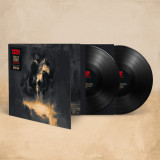
Analogue Productions (Atlantic 75 Series) Celebrating the 75th Anniversary of Atlantic Records! 180-gram 45 RPM double LP Mastered by Bernie Grundman from the original analog tape Contains Otis Redding's posthumous hit "Sittin' On the Dock Of the Bay" Appeared on Rolling Stone's 500 Greatest Albums of All Time, rated 161/500! Pressed at Quality Record Pressings Gatefold old-style "tip-on" jacket by Stoughton Printing Hybrid Mono SACD Mastered directly from the original master tape by Bernie Grundman The guts of the story are this: While on tour with the Bar-Kays in August 1967, Otis Redding's popularity was rising, and he was inundated with fans at his hotel in downtown San Francisco. Looking for a retreat, he accepted rock concert impresario Bill Graham's offer to stay at his houseboat at Waldo Point in Sausalito, California. Inspired, Redding started writing the lines, "Sittin' in the morning sun, I'll be sittin' when the evening comes" and the first verse of a song, under the abbreviated title "Dock of the Bay." He had completed his famed performance at the Monterey Pop Festival just weeks earlier. While touring in support of the albums King & Queen (a collaboration with female vocalist Carla Thomas) and Live in Europe, he continued to scribble lines of the song on napkins and hotel paper. In November of that year, he joined producer and esteemed soul guitarist Steve Cropper at the Stax recording studio in Memphis, Tennessee, to record the song. Cropper remembers: "Otis was one of those the kind of guy who had 100 ideas. ... He had been in San Francisco doing The Fillmore. And the story that I got he was renting boathouse or stayed at a boathouse or something and that's where he got the idea of the ships coming in the bay there. And that's about all he had: 'I watch the ships come in and I watch them roll away again.' I just took that... and I finished the lyrics. If you listen to the songs I collaborated with Otis, most of the lyrics are about him. ... Otis didn't really write about himself but I did. Songs like 'Mr. Pitiful,' 'Fa-Fa-Fa-Fa-Fa (Sad Song)'; they were about Otis and Otis' life. 'Dock of the Bay' was exactly that: 'I left my home in Georgia, headed for the Frisco Bay' was all about him going out to San Francisco to perform." Redding and Cropper completed the song in Memphis on Dec 7, 1967 with tragedy, unknowingly, looming. Just two days later Redding lost his life on a routine commute to a performance when the small plane he was in crashed. The other victims of the disaster were four members of the Bar-Kays — guitarist Jimmy King, tenor saxophonist Phalon Jones, organist Ronnie Caldwell, and drummer Carl Cunningham; their valet, Matthew Kelly and pilot Fraser. Cropper and bassist Donald "Duck" Dunn completed the music and melancholic lyrics of "(Sittin' On) The Dock of the Bay' which was taken from the sessions — Redding's final recorded work. Cropper added the distinct sound of seagulls and waves crashing to the background. This is what Redding had wanted to hear on the track according to Cropper who remembered Redding recalling the sounds he heard when he wrote the song on the houseboat. One of the most influential soul singers of the 1960s, Redding exemplified to many listeners the power of Southern "deep soul" — hoarse, gritty vocals, brassy arrangements, and an emotional way with both party tunes and aching ballads. At the time of his tragic death he was 26. ‘(Sittin’ On) The Dock of the Bay’ was released just a month following Redding’s death and became his only ever single to reach number one on the Billboard Hot 100 in January 1968. The album, which shared the song's title, became his largest-selling to date, peaking at No. 4 on the pop albums chart. "Dock of the Bay" was popular in countries across the world and became Redding's most successful record, selling more than 4 million copies worldwide. The song went on to win two Grammy Awards: Best R&B Song and Best Male R&B Vocal Performance. With the album, Redding confirmed himself as a talent lost far too soon. All the hallmarks of a top-notch Analogue Productions reissue are here for you to savor: Mastered directly from the original master tape by Bernie Grundman and cut at 45 RPM. Pressed on 180-gram vinyl at Quality Record Pressings, and housed in tip-on old style gatefold double pocket jackets with film lamination by Stoughton Printing.
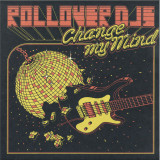
Into the best Balearic tradition boldly steps Milan’s Rollover crew. As well as a regular party in Milan, the Rollover DJs (Tiberio Carcano & Rocco Fusco) have been making edits and releasing tunes over the past several years, but with this release there has been a step change in ambition. The latest collection of songs has been produced in a studio with actual musicians and songwriters, but with the ear of an experienced DJ. The best of both worlds. It was recorded almost exactly one year ago in December 2022, with the cream of Italian players, including bass player and Jovanotti collaborator, Saturnino, sticksman Sergio Carnevale, vocalist David Blank and guitar and synth boffin Lorenzo Morresi, who’s helped the guys with production. It follows in the tradition of a new generation of Italian musicians, like Nu Genea, Mystic Jungle Tribe and also DJs like Volcov. The lead single, ‘What Do You Live For’ was what Rocco & Tiberio describes as, “a funky track inspired by the early 1980s” and grooves so hard, with Blank’s message hitting right in the solar plexus. This will be followed by a pair of bangers, ‘Change My Mind’, a mid tempo disco chugger that is a tribute to LTJ Experience, the Bologna DJ Luca Trevisi, while ‘Never Found The Way’ heads towards Arthur Russel, before pealing off directly to the dancefloor. There’s also a Bawrut remix that adds some urgency and darkness to proceedings. The package is completed by lovely artwork by Riccardo Corda, whose work has adorned the Nu Genea releases. Is it Balearic? We think it is.
FOLLOWING THEIR RECENT REUNION, THE DELGADOS REISSUE THEIR FOURTH STUDIO ALBUM HATE ON COLOURED VINYL AND CD TO MARK ITS 21st ANNIVERSARY
Ushering in a new era of emotionally vulnerable and cinematic songwriting for celebrated Glasgow group The Delgados, 2002’s Hate is the group’s most ambitious recorded statement to date. Recorded amidst a backdrop of personal change and international crisis, Hate’s internal alchemy transmogrifies darkness into light. It’s an enclosed universe full of tragedy and magic, a swirling galaxy of lush orchestration, misanthropy dealt with kindness and black humour. Above all it showed a band coming to terms with their fragility with a new power and grace.
In Hate, the band’s ambition saw them striving to reflect the breadth of human experience, both the joy and tragedy of living in tumultuous times. Initially commissioned by The Barbican in London to compose music for a film about artist Joe Coleman, the instrumental music that instigated Hate was laden with darkness from the outset. The Delgados’ worldview has always been informed by nuance, an oblique but incisive lyrical perspective but on Hate a new rawness is woven throughout the songs. Coleman’s original subject matter - portraits of troubled historical figures like Ed Gein, Mary Bell and Jayne Mansfield - influenced the tonality of the music but the songs were written against a backdrop of international tumult and personal life changes for the band members. Beginning writing sessions following a family bereavement in drummer Paul Savage’s family, Hate was then recorded while both Alun Woodward and co-singer/guitarist Emma Pollock were expecting new additions to their young families, the latter with drummer Paul Savage. In the background to the recording process were the attacks on the World Trade Center of September 2001 and their aftermath. In this context, it’s remarkable that an album was made at all, let alone one so grand and compassionate. It’s a masterclass in restraint and imagination.
Hate sounds like the world in all its ugly glory. Recorded in Glasgow and New York with Tony Doogan, Dave Fridmann and the band as producers and using over 20 additional musicians, Hate grabs the baton from the group’s breakthrough critical and commercial success The Great Eastern. Bolder, broader and more all-encompassing than anything the band had previously attempted, the album’s palette is furnished by a string section, brass and reed instrumentation, a choir and electronic elements augmenting the core group of Emma Pollock, Alun Woodward, Paul Savage and Stewart Henderson. Far from being over the top, the group’s skill is in attention to detail, in honing and refining each arrangement, allowing each element its space.
It’s a fine balancing act that pays massive dividends. Woodward’s new lyrical vulnerability is spotlighted on tracks like The Drowning Years, which throws elegiac string arrangements against the narrative of characters living in darkness, punctuated by couplets that bring a real-life documentary feel to the narrative. All Rise brings a black comedy to the idea of a confessional before a transcendent, choir-led refrain brings ecstatic resolution to Woodward’s vocal in its highest register. On the single All You Need Is Hate, Woodward’s trick of subverting the Beatles standard showcases the dark humour at the centre of Hate. Here The Delgados’ perversity is in full flow, nurturing a glowing light from darkness, the resolving melody and Fridmann production recalling contemporaries The Flaming Lips (whose Michael Ivins assisted in mixing) or Mercury Rev. The perversity is the surging serotonin induced by the group while singing the lines “Hate is everywhere, inside your mother’s heart and you will find it there. You ask me what you need? Hate is all you need.”
It’s a dark magic that pervades Hate, indeed it’s almost the driving force throughout the album. Flipping minor to major and back again, Favours is fuelled by fear and violence before blasting into the heavens with the gauche line “and you’re feeling fine,” operating in stark contrast to the verses’ tone. Album opener The Light Before We Land finds Emma Pollock in the aftermath of recent family trauma. Her vocal is effortless; a study in steady restraint against the massive, Fridmann-patented drum sound powering Savage’s playing and Henderson’s instantly recognisable melodic basslines. Coming In from the Cold is Pollock in full flight, lifted to the heavens by wide-screen, instrumental texture. Her presence on Hate highlights her knack for lyrical impressionism, the timbre of her voice lending itself to drama while always retaining a mystique. Never Look At The Sun, inspired by the Coleman painting The Big Bang Theory (itself an explosives-themed study), revels in paranoia, her performance ringing out in the eye of the storm conjured by the swirling arrangements. It reaches the peak of a redemptive arc while seemingly parodying the very idea of redemption.
Hate was the sound of The Delgados completely fulfilling their potential, a fully realised vision buoyed by the weight of coming through a darkness into light. For its 21st anniversary, the album is being reissued on the band’s own Chemikal Underground on coloured vinyl and CD. Hate is all you need
On 'Unknown Affairs' The Vices close their eyes and no longer see frames or lines. This leads to an album
where wild rock tracks, small ballads, psychedelic guitar solos and gypsy-like jams flow seamlessly into each
other. 'Unknown Affairs' offers an honest, unique and, above all, very personal view of the world.
On 'Unknown Affairs' The Vices close their eyes and no longer see frames or lines. This leads to an album
where wild rock tracks, small ballads, psychedelic guitar solos and gypsy-like jams flow seamlessly into each
other. 'Unknown Affairs' offers an honest, unique and, above all, very personal view of the world.
Hailing from Hawthorne, California, Thee Heart Tones are the newest band to join the Big Crown roster. Just out of high school their music has both the innocence and charm of young love and the intensity of young heartbreak. Their forthcoming debut album was recorded at Diamond West Studio in five days with producers Leon Michels and Tommy Brenneck. This first set of songs on this unstoppable two-sider give a glimpse of what is to come while their album is getting the finishing touches.
The A side “Forever & Ever” is an instant classic that lifts your mood and gets you moving. Lead singer Jazmine Alvarado’s unmistakeable and incredible voice dances over the band’s backing track while she professes her desire for a sincere and lasting love. The groove will get everyone on the floor swaying and the chorus sticks in your head long after the needle bumps up against the label.
The B side is their rendition of the classic “Sabor A Mi” which brought the house down live at the LA Big Crown Showcase when they performed it for the first time. Not an easy tune to take on, Jazmine does it justice and Thee Heart Tones put their version right up there with the best of them.
Originally released by Cooking Vinyl in 1993 this live album took songs from Hanks tour in the Spring of 1992. Taken straight from the desk with no mixing or overdubs they capture the band at their very best. With slow heart wrenching tracks such as 'Birmingham Motel' written by Reg Meuross to the danceable 'Get Rhythm' this LP is a must for anyone interested in Country music from an English musician with a clear passion for the genre. This rerelease has new cover artwork. It is an iconic black and white picture printed in full colour black ( additional cyan) by o Winston Link who is rated as the greatest railway photographer ever to record the passing of steam in the USA. The shot is called 'Sometime the Electricity Fails'
ISLAND APES is a British band, formed in the East Midlands around 2018. The current line-up consists of ex members of Bivouac, Force Fed and Fudge Tunnel; guitarist/producer Dean Selby, drummer Antronhy, vocalist MKJ and bassist David Ryley. Their roots lie in anxiety, ritual and underlying melody. Call it what you like. Answers on a postcard to God Unknown. So the Germans call English football fans Island Apes? I guess they don’t know about the punk band of the same name. ISLAND APES features a lineup of UK underground punk legends. Antronhy, the drummer, was Nirvana’s infamous dancer at their Live at Reading performance. David Riley was the bass player in the legendary UK noise rock band Fudge Tunnel and current bass player in doom masters Conan. MKJ was in Forcefed and Meatfly; two early 90's influential UK hardcore bands. They have paid their dues and have produced a wild, lo-fi trip into an alternate punk universe where they tame audio chaos and explore the psychedelic side of consciousness. It’s grungy and grimy, guttural and grating, and even dubby, all in the most beautiful way. Their debut self-titled record is available on limited vinyl copies via God Unknown Records. To keep it punk the album will be released on vinyl only. Limited to 300 copies.
Orchestral Manoeuvres In The Dark (OMD) return with their 14th studio album Bauhaus Staircase, over six years after the triumph of their Top 4-charting record The Punishment of Luxury. The album was born from the impetus to kickstart new explorations during lockdown when as Andy McCluskey admits: “I rediscovered the creative power of total boredom.”
The album’s first offering as a single is the title track which serves as a nod both to Andy McCluskey’s love of the Bauhaus era & the power of protest art. “I am a huge lover of visual arts especially mid 20th century movements” Andy comments. “The song is a metaphor for strength and artist passion in the face of criticism and adversity. When times are hard there is a tendency for Governments to look at cutting funding for creativity just at the moment when the arts are most needed to nourish our souls. It seems appropriate that the song and its eponymous album were created during Covid Lockdown.”
Ranging further from the beautiful film noir ballad of ‘Veruschka’ and the dance stylings of ‘Anthropocene’ - a term for the current epoch in Earth’s evolution to the sinister ‘Evolution Of Species’ and the hectic ‘Kleptocracy’ - OMD’s greatest straight-up protest song - the new album is a broad electronic sonic masterpiece that lyrically tackles the topics of the future. The record closes on ‘Healing’ - a moment of reflective calm.
By rights OMD should be in semi-retirement performing classics like Enola Gay and Maid Of Orleans on the nostalgia festival circuit like so many peers. Instead they’ve created a landmark album worthy of their finest work. Bauhaus Staircase remains unmistakably the work of a duo who are still perfectly in sync 45 years after their first gig at legendary Liverpool club Eric’s.
“I’m very happy with what we’ve done on this record" McCluskey summarises. “I’m comfortable if this is OMD’s last statement.”
Early Life Forms is a new quartet fronted by Belgian guitarist and sound wizard Vitja Pauwels, and on the 26th January, they are set to release their self-titled debut album via W.E.R.F. Records; a stunning, one-off live show recorded with American guitarist Marc Ribot (Robert Plant, Tom Waits, Wilson Pickett, Marianne Faithfull, The Black Keys, John Zorn).
Having already earned his spurs as a sideman with artists including Naïma Joris, Bombataz and Lara Rosseel, rising Belgian star Pauwels released his debut album 'Day at Half Speed' in 2019, which explored the possibilities of acoustic guitar and live electronics. This experiment became a new artistic path for Pauwels and showcased his musical versatility, with second album 'Drift By, Sink In', released to critical acclaim in 2022.
The same year, Pauwels was invited as special guest by the BRAND! Festival, Mechelen, to showcase new material and he came up with the idea of putting together his 'dream' live band which included his hero Marc Ribot, one of world's most accomplished and acclaimed guitar players. Reaching out to him via videos and early demos for this new recording project, Ribot liked what he heard and agreed to perform with Pauwels and his new project Early Life Forms in what would be the band's first ever live show.
Joined by Frederik Leroux (baritone guitar), Laurens Dierickx (Hammond organ) and Casper Van De Velde (drums), during the lead up to the festival, Pauwels wrote a number of songs he felt would work for the live show, with the only agreement being that there would be no rehearsals ahead of the performance, only a brief soundcheck beforehand with Ribot. The music was stripped down to its essentials - compelling melodies, themes, and clear forms but with the possibility to change direction at any given moment. "The music was played and heard for the first time, and it felt like a birth of something that needed to be alive. We felt connected in the right state of mind - relaxed and focused - and it all happened in a rush of shared energy. No ego's or fear, only connection and the music", states Pauwels.
Drawing on latin, jazz, cuban, and rock with a touch of exoticism and cinematic explorations, 'Early Life Forms' cites Ry Cooder, Henry Mancini, Los Lobos, Ennio Morricone and of course Ribot, as heavy influences. There is something existential, primary, something epic and at the same time youthfully uncomplicated, which is strongly associated with the music. From the mischievous and imaginative 'My Little Renaissance' to the adventurous and hypnotic 'Latin Dancer', 'Early Life Forms' is overflowing with sharp twists and turns, with Ribot's heavily rhythmic, distorted guitar amplifying the cinematic feel to the sound. The on-stage relationship between each member of the band and Ribot is childishly uncomplicated, something primary but always epic. The music is left to the moment and the magic of their first encounter with their hero Ribot. "Marc's commitment in the music was better than I could have hoped for. What he played was with 200% intention, putting the rest of us in a state of hyperfocus. Given the fact that it was a one-time thing and a recording, we took risks without 'overplaying' or overthinking it. Right before the gig, we felt an urge to play, Marc said, "Let's rock!!" and we hit the stage", says Pauwels.
Contradictory accounts of Miles Davis’ creation of the soundtrack to Louis Malle’s film noir Ascenseur pour l'Échafaud have all become part of its legend. Rarely has a soundtrack been so decisive. Nearly seventy years on, beyond the myth, this taut, feverish recording, imbued with extreme dramatic tension, remains one of the Miles’ finest records. The basic outline remains: Jean-Paul Rappeneau suggested to Malle asking Miles Davis to create the film's soundtrack who agreed to record the music after attending a private screening. Davis was performing at the Club Saint-Germain in Paris in November 1957 and on December 4, he brought his four sidemen to the recording studio without having had them prepare anything. Davis only gave the musicians a few rudimentary harmonic sequences he had assembled in his hotel room, and, once the plot was explained, the band improvised without any precomposed theme, while edited loops of the musically relevant film sequences were projected in the background. Bassist Pierre Michelot recalled in 1988 that “Miles just asked us to play two chords, D minor and C7, 4 bars of each, ad lib.” Typically, Miles planned very little but know exactly what he wanted. François Leterrier, the film’s Second Assistant Director picks up the story: “The session started at around ten o’clock and went on until dawn. The screen in the auditorium was showing the scenes for which Miles had devised some harmonies, and they were edited into a loop. And that’s what makes this music unique: it was entirely improvised in conditions that went back to the days of silent films, while watching frames shot in black and white by cinematographer Henri Decaë: tracking shots of Jeanne Moreau wandering down the Champs-Elysées at night, passing in front of lit window displays or going into bars, while looking for her lover/murderer alias Maurice Ronet … All of us there in the dark auditorium were aware that something extraordinary was taking place, something that had definitely never happened before. … In the small hours we all met up again at the Pied de Cochon in Les Halles, and Louis was looking at Miles with the disbelieving eyes of a child … as if he couldn’t believe the gift he’d just received. Even in his wildest dreams he had probably never imagined what his film would be like once it had been as if illuminated by the trumpet of Miles, incisive or wrapped softly in cotton.” The music was released on 10” by Fontana and received the Grand Prix from France’s Académie Charles Cros. It was released in the USA on Columbia as the A-side of the 12” LP Jazz Track, which received a 1960 Grammy nomination for Best Jazz Performance, Solo or Small Group. This beautiful re-issue of the original recording is pressed on 180g vinyl at GZ, and packaged in a deluxe gatefold tip-on jacket with Boris Vian’s original liner notes and Jean-Pierre Leloir’s iconic studio photo of Miles and Jeanne Moreau, and an essay on the circumstances that led to this out-of-the ordinary music by Franck Bergerot.
Gruff Rhys is pleased to announce his new album "Sadness Sets Me Free" which will be released by Rough Trade Records on 26.01.2024. This incredibly will be the 25th album he has released in his 35 year career individually, collaboratively and as a member of various bands. "Sadness Sets Me Free" is also the follow up to 2021"s "Seeking new Gods", his first solo top ten record. The album will be available in a range of formats including a unique Dinked edition on "honeycomb neo-neapolitan" vinyl, an LP sleeve with "container doors" and a bonus 7" with exclusive audio for the first 1500 copies. A gatefold soft pack CD also includes a pull out poster. Lead-off single "Celestial Candyfloss" is a telling four minute glimpse of the forthcoming album, revealing the heady wonders and classic pop sounds within. Soaring strings carry the sweet melodies along, anchored by just enough necessary melancholy to add emotional ballast. The eye-popping video was created by long-time collaborator Mark James and compliments the scope and style of the song on a galactic scale. "Celestial Candyfloss" is, Gruff says, "an attempted pocket symphony about the cosmic lengths that people will travel in the pursuit of love and acceptance. Mark James has brought the Sadness Sets Me Free album cover to life & managed to place me watching TV interference in a shipping container that"s lost in space. For what is apparently the 25th album I"ve had a hand in writing I"ve reverted to a rich seam of inspiration relating to shedding some light on sadness and the general terror of cosmic loneliness." And so it was that Gruff and his band - Osian Gwynedd (piano), Huw V Williams (double bass) and former Flaming Lips drummer turned Super Furry Animals archivist Kliph Scurlock (drums) piled into a van driven by the late, legendary tour manager "Dr" Kiko Loiacono and raced from Dunkirk, where they had just played the final show of a tour of Spain and France, to the outskirts of Paris in the early hours of a March morning in 2022. There, in La Frette Studios, a recording facility installed in a 19th-century house, Gruff and his road-hardened group tracked "Sadness Sets Me Free" in just three days. Backing vocals were added along the way by Kate Stables from This Is The Kit along with additional strings and orchestration and it was mixed between Marseille and Cardiff. What finally emerged from these intense bouts of cross-continental activity was Gruff"s most accomplished and beautiful record to date. In a career that has taken him from the slate-mining towns of north-west Wales, down to the expat communities of Patagonia, up to the Mandan tribe of the Great Plains of North America and across to the Tuareg rock groups of the Saharan Desert, Gruff Rhys, one of Britain"s most beloved and successful singer-songwriters, has always been willing to follow an opportunity, wherever it may lead him. "At this point I quite like working with serendipity," he says. "Not in a cosmic way, but I try and leave things open to chance encounters and chance geography. As I"m around 25 albums in I"m always looking for ways to make a different-sounding record".
Here it finally is, the first ever official reissue of all recorded material by Zyklome A, and as a bonus one unreleased track plus unreleased live recordings! One of Belgium’s earliest and most primitive hardcore punk bands’ legendary ‘Made In Belgium’ LP has been one of the rarest artifacts in the genre, and although it was bootlegged many times, the reason why an official reissue on vinyl has never been published is complicated. Zyklome A’s story starts in the middle of nowhere: in Bonheiden in early 1980, above a bank office. Brothers Bie and Toon Puttemans started shredding and terrorizing ears and minds with Markus Verbeeck, without any knowledge of anything close to a scene or other people doing what they were doing. Completely isolated, they were struck by lightning with the genius idea of speeding up punk, playing Ramones chords backwards and letting the bank office’s fire alarm go off with their wall of noise. When drummer Bie got to hear other hardcore records through a school mate, he was baffled to hear there were other folks out there doing what they were doing as well. After a fire alarm and family drama too many, the trio moved to a tiny shed in the garden of the Verbeeck family to refine their special blend of primal hardcore. The rest is history! For just 5 years they became one of Belgium’s most active HC bands, befriending many other classic main stays such as The Dirty Scums, Moral Demolition, Vortex, Wulpse Varkens etc., creating pits everywhere, and turning many a nazi skin’s skulls into pulp! When guitarist Toon “forgot” to fulfil his army service, he had to flee Belgium, and as the police harassed the other band members constantly about this, it became next to impossible to maintain Zyklome A. Zyklome A morphed into Ear Damage, with different members. In a later, army free future, a reunion of Zyklome A was not possible due to Toon’s heroin problem. It is strange, and sad to say, that the cards played differently when Toon passed away. Zyklome A played 2 reunion gigs in 2016 with guitarist Pieter Coolen (of Toxic Shock fame) before Markus’ severe back pain sadly also led to his passing. This record is dedicated to Toon and Markus, whose spirits live on through their incredible music. You will find the entire first album plus an extra LP with their part of the split single Moral Demolition, their tracks of the ‘Alle 24 Goed’ compilation LP, their tracks of the ’Second Time Around’ compilation cassette, an unreleased track and a live recording at the height of their game from 1984 in Deventer (which includes covers such as ’These Boots Are Made For Walking’ and ‘Rock ’n Roll Rebel’) and a 76 page book filled with tons of archive material such as flyers, lyrics, drawings, pictures and a lengthy interview with Bie Puttemans on this most possibly last Ultra Eczema release, Zyklome A’s ‘Uitgesproken (1980-1985)’.
Svaneborg Kardyb are Nikolaj Svaneborg – Wurlitzer, Juno, piano and Jonas Kardyb – drums, percussion a multi award winning duo from Denmark, with a fast-rising international reputation and with an NPR Tiny Desk concert – number one on many artist’s wish lists - in the bag before even the release of their Gondwana Records debut album Over Tage last November.
Their beautiful, exquisite compositions draw on Danish folk music and Scandinavian jazz influences, resulting in a joyful melding of beautiful melodies, delicate minimalism, catchy grooves, subtle electronica vibes, Nordic atmospheres and organic interplay. All of this and more shines through on their NPR session, first broadcast in May 2022 on YouTube. But of course, not everyone watches YouTube and so here, remastered for vinyl and download, is a strictly limited to 1500 vinyl, four tracker - At Home (An NPR Tiny Desk Concert) featuring bespoke artwork from Gondwana Records’ Daniel Halsall.
Here is what Kara Frame had to say for NPR, “Svaneborg Kardyb's Tiny Desk (home) concert was recorded in the countryside of Djursland, Denmark. "You have to drive for a while on a gravel road, and then you come to a lovely old house surrounded by hills and a stream on one side and a very flat landscape on the other, where you can see 10 miles away," the band wrote to us, describing the location of the shoot. It's this place that inspired Svaneborg Kardyb's second album, Haven (or "garden" in English). "Haven celebrates places we like to be," the duo said.
The Danish jazz duo is composed of Nikolaj Svaneborg on the Wurlitzer, synthesizer and piano, and Jonas Kardyb on drums and percussion. Their instrumentation set-up is untraditional, with the drums and keys facing each other, a position that they play in on stage just as they do in Kardyb's kitchen and living room here. They open up their set with the title track from Haven, which begins with a quiet melody over an effervescent loop. The sound mimics the shimmy of leaves in the breeze.”
- 1: Afrique - House Of The Rising Funk
- 2: Blue Mitchell - Soul Village
- 3: Sarah Vaughan - Magical Connection
- 4: Art Farmer - Soulsides
- 5: Shelly Manne - Mask 7:30
- 6: Alice Clark - Never Did I Stop Loving You
- 7: Buddy Terry - Abscretions
- 8: Maxine Weldon - Right On
- 9: Barry Miles - Scatbird
- 10: Jack Wilkins - Red Clay
- 11: Clark Terry - Rum And Mumbles
- 12: Ellerine Harding - I Ain't Got Much (But Whatever I Got It's Yours Baby)
- 13: Blue Mitchell - Granite & Concrete
- 14: Hadley Caliman - Quadrivium
- 15: Carmen Mcrae - Feelin' Good
A compilation of rare spiritual jazz and funk grooves culled from the archives of producer Bob Shad's Mainstream Records. Alice Clark's cult classic Never Did I Stop Loving You' features here alongside many gems uncovered for the first time.
Bob Shad worked with titans such as Charlie Parker and Lightnin' Hopkins in the 40s, founded the EmArcy jazz label in the 50s, and discovered Janis Joplin in the 60s, and started the Mainstream label in 1964.
From Afrique's classic House of the Rising Funk' and its funky wah wah frenzy, to Hadley Caliman's deep jazz Flute ode, From one of Clark Terry's famous Mumbles (Shad produced the original with Oscar Peterson) to Jack Wilkins' Red Clay' sampled by both A Tribe Called Quest and Chance the Rapper. A Soul Music lover, Shad also excelled in soul divas and produced Ellerine Harding, Maxine Weldon and of course the mighty Alice Clark. Carmen McRae, one of Shad's long time collaborators, gives a soulful, conga-led version of the classic Feelin' Good, originally made famous by Nina Simone
Cardinal Fuzz (UK) and Feeding Tube Records (USA) once again join forces to release this behemoth of an album! “Attack Of Sound” is an unapologetic swooning love letter to pop music. It’s the perfect album, where dissonant and harsh guitars are juxtaposed with almost bubblegum pop. Sheets of feedback over inept tribalism and sugared by amazingly sweet vocals. This album works brilliantly as Ajay & Holly show their innate love of classic 60s pop and psychedelia as much as the Stooges. The ghosts of Love and Phil Spector haunt the wasted grooves of "What The Girl Does" and "Damned And Drowned", while the lurching punk noise mayhem of "How We Made It Seem" resurrects the in-yer-face Detroit icons like the MC5. "Attack Of Sound" remains a touchstone for all the people who ever believed that rock was for waking you up....equal parts Beach Boys’ melody and Velvets’ minimalism. It still provides that visceral thrill…an attack of sound!
- A1: You're Not God (02:31 )
- A2: Tommy's Requiem #1 (02:38)
- A3: Tommy's Plan (02:22)
- A4: Death Is A Kindness (04:09)
- A5: Black Tuesday (01:32)
- A6: I Don't Like The Life (03:15)
- A7: Moseley #1 (02:34)
- A8: Ruby's Birthday (03:30)
- A9: Grace (02:41)
- B1: There Ain't No Grave (03:42)
- B2: We Don't Like The Life (02:58)
- B3: The Execution (03:36)
- B4: Do What The Voices Tell You (02:39)
- B5: Moseley #2 (02:07)
- B6: Retribution (02:15)
- B7: Reckoning (03:10)
- B8: Tommy's Requiem #2 (05:42)
- C1: Miquelon (03:01)
- C2: Esme (01:41)
- C3: Under The Maple Tree (01:23)
- C6: The Sanatorium (02:27)
- C7: Mosley (01:05)
- C8: Where Will You Go (01:13)
- C9: Pledge Your Allegiance (02:37)
- C10: Arthur (03:03)
- C11: Esme’s Dream (02:22)
- D1: Ruby Has A Fever (04:47)
- D2: Jail And Perfume (01:06)
- D3: Michael’s Plan (03:53)
- D4: Red Right Hand (04:17)
- D5: The Eleventh Hour (01:16)
- D6: Opium (01:12)
- D7: Goodbye Billy (03:30)
- D8: Legacy (02:21)
- D9: Tommy’s Final Requiem (02:10)
- C4: Gina (01:43)
- C5: Ain’t No Grave (03:40)
Anna Calvis fesselnde und atmosphärische Kompositionen für der 5. und 6. Staffel von Peaky Blinders, der rekordverdächtigen BBC-Fernsehserie, werden über Domino Soundtracks veröffentlicht. Der Original Score umfasst 37 Tracks, die verschiedene Mitglieder der Shelby Company Limited sowie neuere Charaktere wie Oswald Mosley einbeziehen. Das Album enthält auch die zuvor veröffentlichten Originalsongs "You're Not God" und das schwungvolle "Ain't No Grave" sowie Calvis Cover von "Red Right Hand", dem Peaky Blinders-Titelsong von Nick Cave & The Bad Seeds.