What’s It Gonna Take? ist der Nachfolger von Van Morrisons Veröffentlichung aus dem Jahr 2021 - dem 28-Track-Doppelalbum Latest Record Project, Vol. 1 - und ist ein weiterer Beweis für die reiche kreative Ader, auf der sich einer der größten Künstler der Welt derzeit befindet.
What’s It Gonna Take? enthält fünfzehn neue Kompositionen von Van Morrison, die allesamt den unermüdlichen Drang des Künstlers widerspiegeln, Aufnahmen zu machen und live vor Publikum aufzutreten. Van Morrison ist eines der wahren Originale der Musik - absolut einzigartig und inspirierend mit einem Vermächtnis, das die letzten sieben Jahrzehnte umspannt. Der 1945 in Belfast geborene und von Blues, Country und Gospel inspirierte Musiker gründete 1964 die äußerst erfolgreiche R&B-Band Them, bevor er sich als Solokünstler in andere Gefilde begab. Als einer der produktivsten Plattenkünstler und fleißigsten Live-Performer seiner Zeit hat Van Morrison einen unvergleichlichen Katalog von Veröffentlichungen
geschaffen, der sich mühelos durch seine unzähligen Einflüsse bewegt, darunter visionäre Straßenpoesie, Jazz, Swing, Skiffle und keltische Wurzeln, und einige der beliebtesten Songs des 20. Jahrhunderts. Außerdem ist es ihm gelungen, sowohl auf der Bühne als auch im Studio eine Arbeitsmoral zu bewahren, die jüngere Künstler beschämen würde. What’s It Gonna Take? ist das 43. Studioalbum von Van Morrison.
Buscar:what! what! records
The Counts formed in Michigan in 1964 as the Fabulous Counts, releasing two singles, ‘Jan Jan’ and ‘Get Down People’ on the Moira label in 1968 and 1969 that became R&B chart hits. This led to the album “Jan Jan”, issued by Cotillion in 1969.
Snapped up by Westbound, the line-up that recorded “What’s Up Front That Counts” included Mose Davis (Organ), Leroy Emmanuel (guitar), Demetrius Cates (sax) and Andrew Gibson (drums). Although tenor player Jim White is on the front cover, he left the band shortly before the album was recorded. Extended, mostly instrumental tracks like ‘Why Not Start All Over Again’ and the title track are now recognized as some of the juiciest funk ever laid down in the studio. Shorter tracks like ‘Rhythm Changes’, ‘Thinking Single’ and ‘Bills’ are equally sweet. What gives the album such powerful musical chemistry was the fact that the Counts were jazz players weaned on the likes of Miles Davis who were also into the funk of James Brown and Sly & The Family Stone so every track features groove-driven interplay. One might argue this is the sound that Miles Davis was trying to find on his early 70s albums.
The Counts were to tour with Funkadelic and record more singles and albums but it is this 1971 offering that is, and remains, an all-time classic. Indeed, the track ‘What’s Up Front That Counts’ has been sampled by artists like Queen Latifah and Eric B & Rakim, keeping the music of the Counts firmly in the minds of a young contemporary audience.
Out of print on vinyl for nearly two decades, Ace is proud to reissue this beauty
White Vinyl / Dl Code
Finely selected, wide range of 11 tracks form a full journey that embodies the prolific duo's vibrant past decade. The doctrine-like title encourages listeners to introspect and challenge themselves.
From a bunch of school friends setting out to be 'the British Jefferson Airplane', over the course of their first quartet of releases, the group metamorphosed into the leading exponents of British folk rock. In the way American folk and blues had looked back to gospel songs and spirituals, Fairport mined a seam a traditional English folk song, and then combined them with rock rhythms to create something ground-breaking and quickly emulated.
After the success of their previous "Get Mine/I'm Gone" 7" vinyl 45 release LRK Records is proud to announce the digital single follow up by Bella Brown & The Jealous Lovers!!
Bella Brown & The Jealous Lovers are a Los Angeles based, transplanted fromChicago, unit that specializes in 60s/70s soul and funk. The band is fronted by the dynamically charismatic Bella Brown. A fiery female lead singer that is a mixture of Tina Turner and Sharon Jones, with a persona that is reminiscent of the empowered female
leads of 70s Blaxploitation films. Backed by the musicianship of The Jealous Lovers they form a unit that expertly expresses a uniquely modern interpretation of the traditionalsoul and funk genres.
Their new single "What Will You Leave Behind" exemplifies this
ideal. The track is a heartfelt call to action in these times of failed humanity and injustice. A Motown influenced message of hope that features sympathetic vocals, supportive horns, and a funky twist that asks us to create a better future by considering the effects of our present.
Look for "What Will You Leave Behind" March 3rd, 2023 on all streaming platforms, and stay tuned for an announcement from LRK Records regarding "What Will You Leave Behind" and a future Bella Brown & The Jealous Lovers 7" vinyl 45 released!
Yumi Zouma release a special one off coloured vinyl (colour in colour red), a cover version album of Oasis seminal album (What's the Story) Morning Glory reimagined by Yumi Zouma - first time pressed on vinyl for retail. On bands own imprint.
Manchester's Avant-Jazzy-Funk outfit Swamp Children were enviably eclectic and Taste What's Rhythm is their mini masterpiece. Flitting gracefully through a feast of genres with consummate ease, the band were almost indefinable and, accordingly, nigh-on impossible to market. So whilst this cult EP, originally out in 1982 on Factory Benelux, remains in demand for those in the know, it has also glided under the radar of many otherwise clued-up heads for over 40 years. If you don't know, get to know...
The Taste Whats Rhythm EP was originally released in 1982 on Factory Benelux (an informal partnership between the legendary Manchester-based Factory Records and Belgium-based Les Disques du Crépuscule). With it's kaleidoscopic brightness, silky panache and superb execution, it remains one of the most startling documents of a remarkable time and place.
The EP opens with the oh-so-Balearic title track. "Taste Whats Rhythm" gently unfolds with a Spanish guitar, hazy, drifting vocals and sun-bleached Latin percussion. After this most sumptuous of intros, the tempo is raised, the rhythms grow in complexity as horns jostle amidst the restrained chaos quite wonderfully. And then it winds down again. Proper fluctuating rhythms and tempos throughout. I guess that was the point - taste the variety!
“You’ve Got Me Beat” is a *perfect* piece of post-punk pop-jazz. A mysterious, after dark jazz-dancer, the aching vocals serve as a touching, tender resignation to love. A guitar hook which seems to elegantly reference The Blackbyrds' "Rock Creek Park" and a flowing pulse from New York's No Wave scene. It still sounds so fresh all the years later.
Closing out this most perfect of EPs, the twisted synths and nimble rhythms of bass-heavy roller "Softly Saying Goodbye" combine to create a super-slinky gem; Brit-Funk of the highest order.
Swamp Children formed in Manchester in 1980, around core members Ann Quigley (vocals), Tony Quigley (bass, metalaphone, percussion), John Kirkham (electric & acoustic guitars, metalaphone, percussion), Ceri Evans (keyboards, bass, percussion, background vocals), Cliff Saffer (saxaphone, clarine) and Martin Moscrop (drums, percussion, trumpet). They initially practised at a rehearsal space shared with fellow post-punk funkers A Certain Ratio and Joy Division/New Order. Young and relatively inexperienced upon getting together, the ages of Swamp Children's members ranged from just 16 to 19. Talk about the brilliance of youth.
From the outset, Swamp Children shared DNA with A Certain Ratio. Martin Moscrop was a founder member of Ratio, while Ann provided artwork for them. Although the close association with ACR led some to assume that Swamp Children were simply a splinter group, the new band pursued a more overt latin and jazz tinged direction, at the same time adopting a post-punk attitude towards making music, influenced by the records they were listening to at the time: Miles Davis, Brazilian jazz fusion and heavy funk dancefloor sides.
The band made their live debut at Manchester's infamous Beach Club in May 1980. Thanks to a double-booking blunder another support band turned up and were turned away, having travelled all the way from Dublin for a string of British dates. The name of the unlucky band was U2...
With arrangements that emphasised Tony Quigley’s darkly-coloured basslines (and Ann Quigley’s impressionistic vocals as another instrument in the mix) Swamp Children possessed an easygoing grace and a bubbling energy which indicated that the band's true strength was as an ensemble. The band’s musical sophistication (a fusion of funk, jazz, and bossa nova) would prove to be a strong influence on later UK acts like Sade. Indeed, Swamp Children themselves later mutated into the more known and acclaimed latin jazz outfit Kalima.
Working directly with James Nice, custodian of Factory Benelux, means that the audio for this re-issue of the classic EP comes from the original tapes. Cut at 45 RPM and released in the house Be With disco sleeve, we’ve made sure this record is well up to the job of having a permanent place in every DJ’s bag. As far as we’re concerned, this is essential stuff.
The impossibly cool 1973 album What's Going On from Late, Great Japanese Funk & Jazz Don Takehiro Honda which swings through jazz orchestral renditions of American R&B and Funk Classics like Marvin Gaye's "What's Going On,"
Otis Redding's "Sitting On The Dock of the Bay," and James Brown's "Ain't It Funky Now" turning them into the most Down Home, Grits 'N' Gravy Grooviest Versions and sounding like they were recorded at the studio of the band that taught the Memphis Rhythm Sections all they ever were gonna need to to know.
As well as the aforementioned tracks the album also iconic funk/soul gems from the Impressions (Check-Out Your Mind) & Soul Jazz covers from Eddie Harris (Sham Time), The Crusaders (Greasy Spoon) and a Pacific Soul Jazz Classic in "Ain't Tell You A Good Way But" which was composed by Takehiro Honda.
Original copies regularly change hands for eyewatering sums and the album is seen as a much loved classic of it's era.
- A1: Logic System - Unit
- A2: Kraftwerk - Computerwelt (2009 Remastered
- B1: Whodini - Magic's Wand
- B2: Rocker's Revenger - Walking On Sunshine (Feat Donnie Calvin
- C1: Klein & Mbo - Dirty Talk (European Connection
- D1: Liaisons Dangereuses - Los Niños Del Parque
- D2: Yello - Bostich
- E1: The The - Giant
- F1: The Residents - Kaw-Liga
- G1: Clan Of Xymox - Stranger
- G2: A Split - Second - Flesh
- H1: Severed Heads - Dead Eyes Opened
- H2: The Weathermen - Poison!
- I1: New Order - Blue Monday
- J1: Anne Clark - Our Darkness
- J2: 16 Bit - Where Are You?
- K1: Phuture - We Are Phuture
- K2: Model 500 - No Ufo's (Vocal
- L1: Frankie Knuckles Feat Jamie Principle - Your Love
- L2: Quest - Mind Games (Street Mix
- M1: Jasper Van't Hof - Pili Pili
- N1: Guem Et Zaka Percussion - Le Serpent
- N2: Hugh Masekela - Don't Go Lose It Baby
- O1: Sly & Robbie - Make 'Em Move
- Q1: The Ecstasy Club - Jesus Loves The Acid
- R1: Foremost Poets - Reason To Be Dismal?
- S1: Lhasa - The Attic
- S2: A Guy Called Gerald - Voodoo Ray
- T1: M/A/R/R/S - Pump Up The Volume - Usa 12" Mix
- T2: Bobby Konders - Nervous Acid
- U1: Meat Beat Manifesto - Helter Skelter
- V1: Raze - Break 4 Love
- W1: Sueño Latino With Manuel Goettsching Performing E2-E4 - Sueño Latino (Paradise Version
- X1: Off - Electrica Salsa
- O2: Brian Eno - David Byrne - Help Me Somebody
- P1: Primal Scream - Loaded (Andy Weatherall Mix
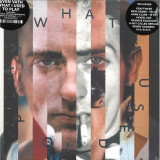
For this uniquely personal retrospective spread over twelve vinyl discs, Sven Väth takes us back to the early days of his DJ career. On What I Used To Play we meet great pioneers of electronic music, gifted percussionists, obscure wave bands, and innovative producers of a bygone 'new electronic' era. Rough beats and irresistible grooves from the identification stage of house, techno, and acid remind us not just how far electronic music has evolved over the past four decades, but how great it was to dance to EBM, techno, and house for the very first time.
If there is one protagonist of the electronic music scene who has remained curious, innovative and at the very cutting edge of music for over four decades, it's Sven Väth. His multi-layered artist albums and Sound of the Season mix compilations have been defining the genre for over two decades, and even today, he is constantly on the lookout for the next top tune to add to the highlights of his next set. At least, that's the case when he's not producing them himself as an artist or remixer. "Actually, it's always been part of my DNA to think ahead," and nothing had been further from his mind than looking back at his past, but when in spring of 2020 the international DJ circuit had to be scaled down to virtually zero, the 'restless traveler' suddenly had time. Time to stop and reflect on "how it actually was back then, at the very beginning of my career..."
"It was a great trip and with every track, beautiful memories came flooding back".
In the London apartment, he had just moved into, Sven has set up a "little music room", where he cocooned himself for several days, "to look way back for the first time and review my musical journey through the eighties, so to speak."
The interim result was six thematically oriented playlists with a grand total of 120 tracks from 'early 80s' to 'Balearic late 80s', together with excursions into afrobeat, European new wave, and EBM sounds and a few epochal techno/house tracks from the USA in between. From these 'Best of Sven Väth's favorites', the project What I Used To Play crystallized. Sven remembers how the Cocoon team reacted to his proposal: "They found the idea of making a compilation out of it MEGA from the beginning and everyone said 'Sven, go for it', but then, of course, the work really started, namely, to clear the rights and to get clean sounding masters of the up to 40-year-old tracks. There was also disappointment, of course. We couldn't clear certain titles because the rights holders in the USA had fallen out with each other or simply disappeared from the scene. In short, it wasn't easy, but now I can safely say we got the most important tracks."
Finally, after two years of research, curation, design, and administrative fine-tuning, the "little retrospective" from 1981 to 1990 is available. The exquisitely packaged, and three-kilo heavy box set is not only physically impressive, WIUTP is also the definitive record of Sven Väth's musical development. On each of the twenty-four sides of vinyl, you can trace track by track, what influenced him during which phase, and how he took off as a DJ from his parents' Queen's Pub straight into the spotlight at Dorian Gray. There and at Vogue (later OMEN), Sven became the style-defining player in the DJ booth that he still is today.
1981 - 1990: Future Sounds of Now
In the early eighties, the crowd in clubs like Vogue and Dorian Gray danced to what nowadays we call 'dance classics' - mainly disco, funk, soul, and chart pop. It was up to a new generation of DJs, including Sven Väth, the youngest protagonist in the Rhine-Main area at the time, to create their own club-ready music mix. Good new tracks and potential floor-fillers were rarities that had to be sought out and found, in order to prove oneself worthy.
Without MP3s, internet streaming, or other digital download possibilities, music didn't just gravitate to the DJ, instead, it had to be tracked down. In well-stocked record stores in Frankfurt and Wiesbaden or even in Amsterdam, London, or New York, Sven and friends sourced the material for countless magical nights. On WIUTP we can follow Sven's very personal journey through this wild, innovative era in which synth-pop, funk, hip-hop, and disco were successively replaced as 'club music' by house, techno, acid, and breakbeat. By the end of the decade, it was clear to see that these once exotic 'fringe' phenomena would soon become 'mass' phenomena.
Early 80s
Dirty Talk by the Italian-American duo Klein & M.B.O. represents the most innovative phase of the Italo-disco genre in the early eighties like no other track. Mario Boncaldo (I) and Tony Carrasco relied entirely on the original synthetic drum and percussion sounds of the Roland TR-808, coupled with the raunchy vocals of Rossana Casale and guitar accents of Davide Piatto. Of course, other tracks from this period were also influential in style, most notably Unit by Logic System, which worked as the perfect soundtrack to the laser lighting system at the legendary Dorian Gray club. With stomping beats and robotic rap interludes, Bostich by Yello also belongs on Sven's eternal playlist - after all, it caught the attention of Afrikaa Bambaataa, who invited the Swiss duo to perform at the Roxy in New York in 1983.
EBM Wave - Mid 80s
From today's point of view, the almost ten-minute-long, downtempo track Giant by Matt Johnson's band project The The, would probably not be considered an obvious club classic. However, a closer (re)listen reveals the rhythmic intricacies of the percussion overdubs by JG Thirlwell (aka Foetus) on Johnson's composition, and it becomes clear why this exceptional piece of music is one of Sven's absolute favorites. Other classics from this phase include Kaw-Liga by the mysterious The Residents, the hypnotic-synthetic Our Darkness by Anne Clark (and David Harrow), and last but not least, the somber, monotonous anthem Where Are You? by 16Bit, one of Sven Väth's projects together with Michael Münzing, Luca Anzilotti from 1986.
US House - Late 80s
You certainly can't talk about Chicago house without mentioning Frankie Knuckles. The resident DJ at the Warehouse not only gave the name to an entire genre, but also produced epochal floor fillers on the Trax label like the timeless Your Love, sung (and moaned) by Jamie Principle. Acid house protagonists Phuture also hail from Chicago, and on We Are Phuture (also released on Trax) we hear the chirping acid sounds of the legendary Roland TB-303 in full effect. Another featured classic is No UFO's by Detroit's Model 500 aka Juan Atkins, who is rightly considered the 'Godfather of Techno' even if the genre-defining track from 1985 still breathes with the spirit of hip-hop and electro from the first breakdance era.
Afrobeat
Le Serpent, by Algerian-born Abdelmadjid Guemguem, is a track that sounds completely different from everything else on WIUTP. Made in 1978, it's a monumental, rousing groove created without bass or synths, just with five congas! Even though Guem sadly passed away in 2021, his immortal, acoustic beats are understood all over the world and will continue to enrich many thousands of DJ sets for years to come. Another classic that not only Sven appreciates beyond measure is Hugh Masekela's Don't Go Lose it, Baby. In addition to being one of the most important jazz pioneers, the trumpeter and freedom fighter from Johannesburg was very experimental, integrating electronic sounds into his music in later years, in a similar vein to Miles Davis and Herbie Hancock. Dutch jazz pianist Jasper van't Hof's afrobeat project Pili Pili has also aged well. The trance-like, almost sixteen-minute-long track of the same name, manages to fill a whole side on the seventh of twelve vinyl discs in the WIUTP box.
UK-US-Euro - Late 80s
Time for a change of scene, in the truest sense of the word, and from a musical perspective, this section is like landing on another planet. First up is Andrew Weatherall's classic remix of Primal Scream's Loaded, featuring the iconic Peter Fonda sample (lifted from the 1966 biker film Wild Angels) that came to personify the mood triggered by the British Second Summer of Love in the late eighties: "We wanna be free to do what we wanna do, and we wanna get loaded...". This period also saw the emergence of M/A/R/R/S whose only single, 1987's Pump Up The Volume, became a club classic with support from DJ legend CJ Mackintosh. In this most eclectic of sections, we also encounter New York house and reggae producer Bobby Konders and his seminal Nervous Acid.
Balearic - Late 80s
Those who know him, know that Sven had already lost his heart to the 'magic island' of Ibiza as a teenager, so with that in mind, the WIUTP project couldn't end without a Balearic chapter. Inspired by Manuel Göttsching's E2-E4, the immortal, eponymously titled Sueño Latino belongs in there without question. Equally popular on the island was, and still is Break 4 Love by Raze, which thinking about it, would also fit perfectly into the house chapter. Last, but not least, there's an overdue reunion with Sven Väth himself, in his role as frontman of the successful Frankfurt trio OFF. Together with Michael Münzing and Luca Anzilotti (later of Snap!) this 'Organization For Fun' created the off-the-wall club hit Electric Salsa in 1986 which incidentally turned into an international chart smash, putting Sven in the enviable position of having to decide between pop stardom and a DJ career. Well, we all know how that decision turned out and the rest, as they say, is history. A not insignificant part of his story is What I Used To Play. Enjoy!
Stay What You Are is the breakout third studio album by the American alternative rock band Saves The Day. Produced by Rob Schnapf (Elliot Smith, Beck, The Vines) in early 2001 it's a record that remains incredibly influential within the emo and rock scene to
this day, showcasing the band's signature blend of upbeat catchy melodies, with dark lyrical undertones. Features the standout singles 'At Your Funeral' and 'Freakish'.
Originally released on July 10th 2001, the album saw Saves The Day crack the Billboard 200 at the same time other that emo acts like Jimmy Eat World and Dashboard Confessional were enjoying mainstream success.
This new pressing comes on double 10" splatter vinyl, packaged in a hand-numbered gatefold sleeve with lyrics and accompanying insert; released via Hassle Records for the UK/EU in conjunction with Vagrant Records to celebrate their 25th Anniversary.
• Darrow Fletcher’s belated success in Europe - from the 70s onwards, but particularly in this century - has been very rewarding from him; he has been thrilled by the interest and admiration for his past work. These are two of his revered Jacklyn label sides; Jacklyn being owned by his father, who named the imprint after Darrow’s sister.
• This Repro coupling will be welcomed by collectors who cannot afford the high price of the originals – many of which are often found in poor condition as they were played the hell out of in 1960s Chicago.
Each of the three hundred covers is different! All are numbered.
After two well-received albums of Normal Bias, the time has come for a solo debut in U Know Me of the half of this valued dub dub, i.e. Piotr Krupiński, better known as YAC.
The starting point for "We Have Much More In Common Than What Divides Us" was the rhythm, and on the one hand synthetic sounds of classic analog synthesizers with the legendary EMS VCS3 at the forefront, and on the other hand the organic hypnotic sound of Tibetan bowls and tubular bells. All together strongly processed and traditionally ground with dub techniques and marked by the tape's noise.
The amazing graphic design was created by Bartosz Szymkiewicz.
The cover design is the result of an attempt to graphically represent the album's minimalist but full of lively nuances music. Each of the forms on the cover corresponds with its surface area to the length of the work it depicts. The composition was procedurally generated by a computer program, resulting in 300 unique covers. Interestingly, the program definitely preferred to arrange the forms close together, which is an unforeseen reference to the title of the album.
What It Means To be Human is the second in a series of four albums from Jasper Høiby’s Planet B, featuring saxophonist Josh Arcoleo and drummer Marc Michel, that focus on global topics of vital importance - Humanity, Climate Change, Artificial intelligence and Monetary Reform. This album seeks connection. A connection between humanity and the planet, between the problems we all face and about an opportunistic optimism to fix them. The mastermind is Jasper Høiby, the esteemed and revered Danish bassist and the deeply reflective, expressive and visionary artist. Whilst there are many moments that display the virtuosity and hard-hitting grooves of Phronesis, the long-standing band that shot Jasper to the limelight, Planet B offers additional rewards of subtle expression. The music is captivating and highly absorbing, enhanced by soundscapes of electronics and interspersed with powerful, emotive speech by some unique and forward-thinking female minds including Grace Lee Boggs, Ruby Sales and Jane Goddall. They all share a profound understanding of the world, only achievable through practical wisdom, each offering their individual take on where we are as a species and what we can do to improve. At the heart of the album is the trio. A group of like-minded and creative souls where the focus is all about the collective sound. As a whole, the music is a powerful, mesmerising and poignant display of musicianship, integrity and storytelling. What it Means To Be Human is an album at the forefront of the creative European scene.
New album from the acclaimed singer and songwriter Nerina Pallot. Written and produced by Pallot, the album was recorded over a three-year period, due in part to the pandemic but mainly as a result of her painstaking production process. If her previous album was more live in sound and feeling, I Don't Know What I'm Doing involves a large cast of supporting musicians, intricate orchestrations and
dedicated attention to detail.
The result is expansive and lush, with her trademark classic song- writing front and centre.