Despite producing countless 7” scratch records and being the host of the DMC World Championships online Portablist battle since it’s inception, turns out that Woody’s been saying the word ‘portablism’ wrong the whole time! Referring to the genre as ‘Poor-tablism’. But let’s face it, if you choose ’scratch DJ’ as a career path, the odds are that it’s a pretty accurate description!
This record switches up the predictable format of the traditional 7” skip-proof’ scratch tool. Each track contains 1 scratch sound that repeats every rotation (making it fully skip-proof) with the other samples in the phrase repeated every 2 rotations (allowing for more variation in the samples). Side A is arranged at 100 bpm whilst Side B is arranged at 133 bpm, each side contains 6 different tracks and end with a full scratch sentence.
The record combines freshly dug and unused samples with original vocal recordings from UK rap legend MC Mercury of the group Gunshot alongside DC born MC and longtime collaborator BluRum 13.
‘The Poortablist’ is pressed on Gold vinyl with full colour picture sleeve illustrated by Woody himself.
• Produced by 2x World Champion DJ Woody
• 12 unique scratch phrases and full sentences
• Features original samples from MC Mercury and Blu Rum 13
• Perfect go-to record for any portablist jam or 7” DJ set.
• Artwork by DJ Woody
• Gold vinyl
quête:whilst
- A1: Play For The Prisoners
- A2: Gaffer With Cedis
- A3: Major T-Bay Loves Girls
- B1: Shake A Leg High Life
- B2: One Touch
- B3: African Thriller
- B4: Lonely Nights Of Lome
- C1: All Night In Accra
- C2: Jah Bless Africa
- C3: No Show In Togo
- D1: Thrilla - Night Of The Assasin Remix
- D2: Midnight In Accra Remix
- D3: No Show In Togo Remix
- D4: Where Did The Major Go Remix
Referred to as "one of Reggae's quietest superstars" Jackie Mitto aka "The Keyboard King" had a remarkable path in Reggae music, a protege of Sly Stone, he started his career as part of Studio One's in house recording band and later went on to work with artists such as Bob Marley, UB40, Barry White, Peter Tosh and Oscar Peterson. This album was the result of a rare occasion of being on tour in Africa and establishing musical connections with musicians from Ghana, recorded in Accra and mixed in London. Predominantly instrumental, this album is essential to any dub conscientious record collection, as it culminates the career of a Reggae legend whilst under new influences in West Africa resulting in an unmistakably characteristic modern dub sound. Re-issued on vinyl with remixes previously only availably on CD format.
LP reissue of Collective Calls, the first duo LP from Evan Parker and percussionist Paul Lytton. Mythically alluded to as ‘An Improvised Urban Psychodrama In Eight Parts”, Collective Calls utilises electronics, pre-records and homemade instruments to wryly in/act self investigation. Having just recorded the cliff jumping Music Improvisation Company with Derek Bailey, Christine Jeffrey, Hugh Davies and Jamie Muir, Parker was at the point where he was thinking, ‘what’s the next thing?’ On Collective Calls, only the 5th release to appear on the newly minted Incus label, percussionist Paul Lytton arrives with an arsenal of sound making sources to push Parker into ever new territory. Recorded in the loft of The Standard Essenco Co on Southwark Street by Bob Woolford (Topography of the Lungs, AMM The Crypt), Collective Calls has more in common with noise or music concrete than with jazz; sitting comfortably alongside Italian messrs Gruppo di Improvvisazione Nuova Consonanza or the husband-wife duo of Anima Sound. According to Martin Davidson, it was a Folkways record that Lytton was obsessed with around the time of this release - Sounds of the Junkyard - its track titles like “Steel Saw Cutting Channel Iron in Two Places” working to give you a good idea of the atmosphere of Collective Calls. Paul Lytton had encountered the use of electronics in music in 1968 when he was invited to play drums on the recording of An Electric Storm by White Noise (along with David Vorhaus, Delia Derbyshire and Brian Hodgson). He had seen Hugh Davies using contact mics in the Music Improvisation Company, and soon set about assembling a Dexion frame akin to drummer John Stevens’, except that his own was armed with several single-coil electric guitar pickups, long wires and strings with connected foot-pedals to modulate pitch. Influenced as much by Stockhausen, Cage and David Tudor as he was by Max Roach and Milford Graves, Lytton’s percussion is abstract, expressionist and at times totally mutant. Sometimes rolling extremely fast, then screeching almost backwards over feedback, Lytton gives Parker room to play some of his weirdest work. Parker is listed as performing both saxophones, but also his own home made assemblages, including one dubbed the ‘Dopplerphone’ - a length of soft rubber tubing (activated by a saxophone mouthpiece and manipulated to alter the rate of airflow) attached to a longer length of clear plastic tubing (whirled around the head whilst being played) ending in a plastic funnel. Thickening the brew even more, Parker would also add a cassette recorder, on which he would play back collected sounds and previous recordings of the duo. Imagining the set up in a 70s loft, it’s an assemblage more akin to what today's free ears might see at a Sholto Dobie show, spread out on the floor of the Hundred Years Gallery, the shadow of Penultimate Press lurking in the corner. It’s a testament to Parker’s shape shifting sound - the ever present link to birdsong being at its most warped here - terrifically free and unfussy, wild and loose from any of the dogma that might come in later Brit-prov years
Orphax & PONI (person of no importance) is a collaboration between the two Dutch brothers, Sietse (Orphax) and Tjeerd (PONI) van Erve. Since their early years they share a broad interest in music, fed mostly from their fathers’ record collection, ranging from early blues to Pink Floyd or Beethoven. But also listening to Belgian radio channel Studio Brussels (which during the late 80s and early 90s was a common listening close to the borders between The Netherlands and Belgium), and the late night Dutch radio inspired them in exploring the rough edges of underground music.
An exploration that gave them a common interest in indie and noise rock, but soon enough both followed their own path in music. Tjeerd moving more into underground guitar music, whilst Sietse developed a wider interest in (experimental) electronic and contemporary music. Both as listeners, but also exploring their own interests as musicians.
Now many years later these musical paths cross again in this album Inheritance (with a slight imagination, a translation of their last name van Erve). An album where Tjeerd brings in his dark and noisy lo-fi guitar songs and Sietse brings in his drones and electro-acoustic composition styles.
The album opens with its longest track, “As Received”. This combination results in a slow developing drone, with the intensity and tension of a well build-up post-rock track, that slowly unfolds Tjeerd his guitar layers and vocals. The title of the song refers to one of the PONI projects, where Tjeerd would send rough recordings to befriended musicians who than would rework those recordings without any restrictions which then would be released side by side with the original rough recordings. A project which actually sparked the idea of this collaboration (and that can still be listened to on PONI’s bandcamp-page).
On the flip side of the record, three shorter works give more room for regular song structures. In “Sunburns” this results in slowcore with subdued vocals, melancholic guitars and nasty synth and organ drones. When Tjeerd wrote the basis for the song, he actually had been listening to a lot of Codeine and Bedhead. One does not need much fantasy to recognize the influences of these bands.
“The Tears Are Necessary” is build up around various broken up piano tracks accompanied by moody drones to develop a fragile song.
The album closes with “Lockdown”, opening with silence as a moment of contemplation after the previous work but then quickly develops in a playful song where improvised play on piano, guitar and modular synthesizer create a lo-fi gem that clearly shows that both brothers still haven’t lost their love for Sentridoh or Guided By Voices.
All together resulting in an album that is an ode to the love of music, experiment, and creativity and a celebration of brotherhood.
Temple, Bassey, MacLaine and now, Hurt; in a world of Shirleys, the name Sophia Ruby Katz has chosen for her music is perhaps prophetic as it captures her stunningly emotive vocal approach. And whilst Shirley Hurt might be the perfect nom de plume for the creative Toronto-based artist, it’s her self-titled debut album which positions her as protagonist of her own universe.
Traversing sonic landscapes, Shirley Hurt’s vocals ebb and flow like lyrical Ley lines tracking the contours of her own well-travelled map. By the age of 18, Hurt had travelled extensively, having lived in upwards of 20 different apartments and houses, as a result never really feeling “at home” anywhere. At this age was when Hurt found herself in New York, dipping her toes into various scenes and musical realms. The first and only place she ever felt at home, and a partial home-base for her, she travelled between Toronto and New York until the age of 26.When the project she was working on in New York reached a dead-end she returned West, moving in with musicians Harrison Forman (Hieronymus Harry, Zones) and Patrick Lefler (Roy, Possum). Being surrounded by their improvising at all hours, a new approach emerged. “Harrison is a virtuosic guitar player, and I hadn't picked up a guitar in any serious way since I was 16,” she says, “by osmosis I started playing again for fun.” Without agenda, the process grew organically from there.
Hurt and Forman decided to travel across the US and Canada in a trailer for half a year, with the entire album written in the final months of their trip. Hurt had been writing loose ideas here and there but felt blocked creatively. When the pair reached Berkley, they wound up house-sitting for a tuned-in friend who recommended she pray, in a very direct way, to remove the block. “I took her advice and to my surprise it worked. The album was conceptualized and finished within a couple of months.” Shapeshifting in tone and phrasing, Hurt’s music alchemizes the furthest corners of experimental indie folk, pop, and country into a singular sound with elegant unpredictability.
Whilst Shirley Hurt’s lyrical and structural ideas may have emerged on the road, the album was self-produced and recorded at Joseph Shabason (The War on Drugs)’s Aytche studio in Toronto’s West End. It was engineered by Nathan Vanderwielen and Chris Shannon (Bart), and Hurt enlisted collaborators Jason Bhattacharya, Nick Dourado, Patrick Lefler, and Harrison Forman to hone her vision. “I wasn’t sure what was going to happen with the songs until we returned to Toronto,” she recalls. “Joseph and I had been talking about working together after sending across some demos and Jason happened to recommend his studio at the exact same time, so everything came together naturally at that point.”
Whilst her most recent adventures may have seen Shirley Hurt bound for Texas as an official SXSW artist (hand-picked by Gorilla Vs Bear to perform at their own showcase), she currently resides in her native Canada, more specifically rural Ontario, close to friends and family, and is already working on her second album. The ties to lineage are interwoven in the fabric of the music. Hurt’s mother, artist Leala Hewak, instilled a lust for life and innate value of creativity in her from a young age as she explored the role of gallery owner, vintage jewellery show host, mid-century modern furniture expert, real estate agent, painter. Hurt’s father, a civil litigation lawyer and new-wave obsessed music lover with an extensive vinyl collection, introduced Hurt to a wide-range of artists at a young age such as Nina Hagen, Laurie Anderson, Tom Tom Club, and endless others.
In her video for ‘Problem Child’ Hurt’s grandmother walks her through a generationally revered pie-making process. One would be tempted to hear this, and other songs, as autobiographical. Yet, Hurt’s lyrics are rarely pulled from her relationships or personal history––at least not consciously. Rather, they arise from somewhere less tangible or defined. “Lyrics tend to come to me when I am doing non-musical things - washing dishes, brushing my dogs, walking to the grocery store. I have a lot of voice memos on my phone and half-filled notebooks and when I hear something, I have to stop what I'm doing to get the idea down. Usually it’s bits and pieces. It's rare a full song comes to me in one go, but it's great when they do, and those are often my favourites.”
Carving out a space of her own in an all-encompassing universe, Shirley Hurt is the introduction to a long artistic story, and if the journey so far is anything to go by, it will be stippled with evermore unpredictable chapters.
Following up his anthemic late-summer burner, Hope, Credit 00 returns to Pinkman to deliver the album Midnightlife Crisis. Hopping between genres whilst remaining resolutely coherent, the twelve-track double LP is a showcase of the Rat Life boss' many influences. From the driving, mesmeric techno of Music Is A Spiritual Thing to the sci-fi electro on Bouncing Bell and Love Warrior's downtempo, half-time shuffle, the collection of tracks is broad and varied yet simultaneously unified by belonging to the club. Whether it's warm-up material, peaktime rollers or afterhours sludge for tired legs and scrambled heads, there's something for every scenario on Midnightlife Crisis. And with recurring themes of melancholy and anxiety throughout, the album perhaps reflects that all too familiar period for every club enthusiast when the years are ticking by and the lights are coming on. "I just hope there's hope", sings the voice on the album's lead single, before reminding us that the dancefloor's sweet release is often the best remedy to these negative thoughts - "I see you shaking on the floor, that gives me hope, gives me hope."
Robert Hood's techno and Femi Kuti's Afrobeat intertwine in a new form where jazz-grooves reign supreme. For the fourth season of La Compagnie des Indes & Sourdoreille "Variations" live series of creations for France TV, the duo were united around the singer and producer James Brown, performing a tribute to the legendary Godfather of Soul who passed away in 2006. This "Variations" album is the live recording of this unique collaboration and performance, capturing a very special moment in time.
The evening witnessed a meeting of two icons in their own genres: one with synths and drum machines, the other on saxophone: Robert Hood and Femi Kuti embody excellence in their respective fields and the pair combined to make something truly unique, soulful, funky and spontaneous. Recorded in one 30+ minute take, "Variations" is embellished by Femi's exquisitely free-flowing yet restrained saxophone, whilst Hood anchors the groove with layers of pads and kicks with the long-time mastery of a true DJ.
Alongside Jeff Mills and Mad Mike, Hood is one of the original members of Detroit techno group Underground Resistance. His style is characterised by minimalist and experimental tones with an assertive groove. Throughout the '90s, he helped pave the way for techno to flourish - giving birth to minimal techno with his seminal album "Minimal Nation". Since then, he has been consistently forwarding electronic music culture with ground-breaking productions, sensational performances and his M-Plant label.
Alongside him, Femi Kuti takes on every musical style with his saxophone, which he plays with a virtuoso touch: pop, soul, electronic music and Afrobeat, of which he is one of the leading exponents. The son of Afrobeat singer and political activist Fela Kuti, he has inherited his father's zeal for both music and activism, where he continues to highlight the plight of most Nigerians living conditions in the oil rich state.
With "Variations" the duo capture an explosive combination on a special night in Paris 4 years ago, November 2019, filmed at the ADP Group headquarters (Paris Aéroport - Charles de Gaulle (CDG) - Roissy).
"It is so amazing when a vision comes to fruition. I enjoyed collaborating with the legendary Femi Kuti for this special project." Robert Hood
Red Vinyl
For the first time in their diverse second act, they allow themselves to be a rock band, freed of adornment and embellishment. As much as Carlson’s guitar has always been the focal point of EARTH’s music, it’s been surrounded by consistently diverse instrumentation. Here the dialog between Carlson and Davies drumming remains pivotal, underpinned by the sympathetic bass of Bill Herzog (Sunn O))), Joel RL Phelps, Jesse Sykes and the Sweet Hereafter) and thickened by additional layers of guitar from Brett Netson (Built To Spill, Caustic Resin) and Jodie Cox (Narrows). Perhaps the largest left turn on Primitive And Deadly, though, is the prominence of guest vocalists Mark Lanegan and Rabia Shaheen Qazi (Rose Windows) who transform the traditionally free ranging meditations of EARTH into something approaching traditional pop structures.
On “Rooks Across the Gates,” a song stylistically the closest to the folk inspired modality of Angels Of Darkness, Carlson stretches out into some of his most lyrical playing to date, creating an almost symbiotic relationship between his performance and the vocals of old friend Mark Lanegan. “From the Zodiacal Light,” meanwhile, takes the late 60s San Franciscan/freaked-out jazz-rock transcendence of The Bees Made Honey In The Lion’s Skull and quickly re-appropriates that sound into a musky torch song for the witching hour.
This contradictive tension between a band pushing itself ever-forward whilst surveying their history is reflected in the albums twin recording locales. The foundation of the record was laid in the mystic desert highlands of Joshua Tree, California where EARTH recorded hour after hour of meditations on each track's central theme at Rancho de la Luna. Upon returning to Seattle these were edited, arranged and expanded upon at Avast with the help of long-term collaborator Randall Dunn (who was previously at the helm for the Hex, The Bees Made Honey In The Lion's Skull and Hibernaculum sessions).
Formed in Melbourne Australia in 2014, the band consists of Dave Hill (guitars), Tony Forde (vocals), and David Haley (drums) and have recently added long time live bass player Tim Anderson to their permanent line- up. The quartet forge a sound that captures the essence of old whilst fanning the embers of more modern musical influences, seamlessly combining all elements to create their signature sound, cold but uplifting.
Prepare for the pilgrimage.
Formed in Melbourne Australia in 2014, the band consists of Dave Hill (guitars), Tony Forde (vocals), and David Haley (drums) and have recently added long time live bass player Tim Anderson to their permanent line- up. The quartet forge a sound that captures the essence of old whilst fanning the embers of more modern musical influences, seamlessly combining all elements to create their signature sound, cold but uplifting.
Prepare for the pilgrimage.
The first album release on Sprechen is a trip across the astral planes of electronica and through the neon soaked streets of South Manchester, where genres cross & styles meet on the creative peripherals away from the dance floor.
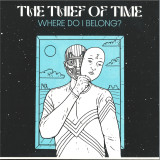
A life lived through clubs, comic books, cult movies, cosmic adventures & electronic musical endeavours have all played a role in the creation of 'Where Do I Belong?', the debut long player by The Thief Of Time, a new studio project from Sprechen founder Chris Massey.
What started as just very loose ideas and half started projects during lockdown resulted in a semi autobiographical collection of songs that draw on a lifetime love of electronic artists & synth heavy movie scores.
Nods are given, toes are dipped & caps are doffed in various sonic directions whilst still treading a truly unique path of its own making.
As Chris says: "it started really with me being in a headspace I've never really had in the studio. There was no pre-conceived ideas or agenda of what I wanted to achieve other than just going with what felt right and pursuing sounds & style I favour away from a smokey basement of ravers. Being a child of the 80's gave me a wealth of ever-evolving influences of sounds, styles, imagery, fashion, literature & art which all somehow seemed to direct this project.
It's the first time I've ever created something that contains personal reflections of my own life. Good & bad alongside the high & low points have all driven this creative process which reflects my own headspace will hopefully speak to everyone on some sort of level".
The album also features a host of Manchester artists including A Certain Ratio, Bay Bryan, Psychederek, NIIX & Love Letters From Space as well as Allison Rae from Causeway (Italians Do It Better) who were all instrumental in realising Chris' vision and bringing this exciting project into existence.
Whisky soaked, nocturnal, brooding. Aging’s album »Troubles? I Got A Bartender« was a noteworthy, film-noir infused suite that quietly slipped out on cassette in 2015 by a then budding Manchester avant-jazz ensemble, led by David McLean.
In 2020, amidst the pandemic’s tempest and winter's gloom, the idea manifested of showcasing McLean’s slow burning, wistful soirée in a new light via a curated effort by Berlin’s Vaagner label, which invited a series of hand-picked artist to rework selected compositions from the album, rendering its mournful, smoke-tinged resonances into new shapes.
Its result is »Reworks (Rewoven)«, and it presents 6 new interpretations by 5 artists. These range from ruminating, tape smudged ambient works interlaced with sublime acoustic strums by fellow Manchester musicians The Humble Bee and Tape Loop Orchestra, to poignant steel guitar renditions by Nashville based Kelby Clark. Furthermore, Barcelona based Dania and London based Laila Sakini, each present pieces that draw the listener into opaque realms harbored by swooning reverie and eerie, glistening prophecy.
Carefully assembled across two sides of vinyl, McLean’s penchant for hard-boiled detective novels, vintage Japanese crime flicks and film noir iconography have a continued lurking presence in the reworks, yet the new pieces each add a modern facet to the original’s cinematic narrative, its morose and sulky mood now opening into new avenues of interpretation. And whilst some artists have chosen to dive further into the themes of contentious ambivalence and pensive solitude, others have sought to slightly lift the haze, stirring up melodies tinged with a sense of hope, hinting at times, towards instants of poise and vivacity.
In the end this leaves us with a new body of work that manages to feel poignant in its complexity whilst remaining dissonant and elusive in its renditions, hinting at a modern day existence even more opaque, intricate and convoluted than the film noir classics of old might have pictured the world.
Repress!
Housemeister Joins Herbert's Ever Burgeoning Accidental Jnr Roster With An Ep Of Definitive Leftfield Techno Clout. Lead Track Late At Night Pulsates With A Piercing Vocal Hook Whilst A Remix Of The Track From Matthew Herbert Offers A Funkier And Altogether Darker Edge. Other Offerings On The Release Are The Acid Inflected Der Kleine König Dezember And Closing The Show Is The Simple But Affecting Funk That Which Really Speaks For Itself. Housemeister Has Never Looked To Conform To The Genre Rule Book And This Latest Release Is No Different With Serious Execution And Cheeky Playfulness In Equal Measure
ME LOST ME led by Newcastle-based artist Jayne Dent announces a new album RPG via Upset The Rhythm on 7th July, and is touring across the UK including support dates with Pigs x7. RPG (recorded in Blank Studios with Sam Grant of Pigs x7) is ME LOST ME’s fourth outing as a collective, having transitioned from an ambitious solo project in 2017, Jayne now regularly collaborating with acclaimed North-East jazz musicians Faye MacCalman and John Pope.
ME LOST ME delights in experimenting with songwriting and storytelling, creating a beguiling mix of soaring vocals and atmospheric electronics that playfully weave together disparate genres, drawing influence from folk, art pop, noise, ambient and improvised music. Hauntological in part, RPG is concerned with tales and with time - are we running out of it? Does insomnia cause a time loop? Do the pressures of masculinity prevent progress? Jayne Dent asks these questions and more on RPG, her homage to worldbuilding and the story as an artform, calling back to those oral traditions around a campfire, as well as modern day video games - bringing folk music into the present day as she does so.
ME LOST ME presents sound reaching in opposite directions, straddling time towards the archaic and timeless traditions of folktales, and towards the possible and potential futures of pastoral Britain and the world at large. Part speculation, part reminiscence, what results on the new album RPG is music that sounds ultimately displaced and yet omnipresent, adjacent to a hapless Vonnegut hero whose life is scattered throughout time and history, but full of wonder and curiosity rather than fear.
On track “The Oldest Trees Hold The Earth”, we see time stretched out between the branches of impossibly old beings in the woods. This track was co-written in Aarhus, Denmark with fellow Newcastle folk musician (with Danish heritage) Ditte Elly. The pair wordlessly passed a sheet of paper between each other to write the lyrics, inspired by Højbjerg and Mosegård, the woods they were sitting in. “How long should I wait/Before the moss grows?/On my skin, on my outstretched arms,” the lyrics are sung in a round, the close harmonies delicate and detailed.
A central thesis of this album is the joy of creation, something which is paid homage to in the album’s final track, “Science And Art” (Not because we need it to last/just because we needed to make it - so we invented the words/this language). It is also reflected in the definition that Jayne gives for “folk” itself. She comments, “To me, folk is quite an expansive idea. I think of it as creative work that's often made ad-hoc, with things that are at hand and more often than not it's born of a DIY ethos. It is songs and stories of the people, as in the traditional sense, but also creative coding, game design etc. Whatever outlet someone has for their creative expression could be described as folk. It's the things we make because humans need to make things, and the stories we tell about ourselves and the world around us.”
Crucially, on latest album RPG, Dent expands her songwriting and looks towards the unreal locations of worldbuilding in video games for inspiration. She comments, “I think the main similarity is the importance of a song's setting/environment to inform its narrative and textures, I'm often most inspired when out walking in the natural landscape, in cities and travelling to places I've never been before - the environment I'm in really impacts the work I make. While writing this album, however, I found myself inspired by imaginary landscapes, those in video games, paintings, etc. I was writing stories into these unreal locations instead. Even the songs inspired by real places, like The Oldest Trees Hold the Earth, have a very surreal quality to them in the songs, like they're being warped and turned into something not of this world. I think that's the main difference for me in terms of the thematic content and inspiration behind this album - I've been getting more and more interested in balancing surreal and fantastical environmental elements with ordinary and everyday settings.”
RPG upends the concept of the eternal return - we may be in the midst of inevitable repetition, but we tell stories whilst awaiting the passage of time.
"Being familiar with, and a fan of Jayne's earlier work, it was great to get the opportunity to work with her on the production of her new record. I had in mind a sense of what the record might be, but what came of the sessions, led by the vision Jayne had for the record, totally exceeded my expectations. As far as albums go, it has a breadth of writing and a sonic depth that made it a truly brilliant record. Having Jayne join us on a leg of the Pigs x7 tour in April is going to be ace. The creative nature, the sincerity and bold strokes of ME LOST ME put it in that space outside of any genre pigeonholes, and between our two sets I imagine the audience is going to have a proper sonic bath..."
Sam Grant, Pigs Pigs Pigs Pigs Pigs Pigs Pigs, 2023
“The music of Me Lost Me is beguiling, idiosyncratic and cinematic - or should that be video-game-omatic? This suite of songscapes often hits the sweet spot between ancient and modern with its masterful blend of stark folk, neon electronic burbling and unusual arrangements. Jayne's singing is refreshingly straightforward and nuanced - it's exquisite! - and perfectly punctures the nebulae of synths and brass which billow around the old wooden frames of the songs. Whilst listening I had images in my mind of what Northumberland might look like through the eyes of Simon Stalenhag - foggy moors, a robot looking across the sea to Lindisfarne, twinkling lights on metal towers.... that sort of thing. It's a really great album.”
Richard Dawson, 2023
"North London’s midnight man tumbles out his treehouse to deliver twelve potions of minor healing in “Iron Day”, his questing, soul-salvaging songbook. Brimming with majesty and maraud in equal parts, Genghis Cohn synthesises trad. English folk and woe with surrealist dream sequences on this debut long-player. A romance of two hedgehogs, devotional bone temples, broken shadows and sausage kings, GC conjures Brent Hayward strolling through the silver birch and presents to us, in a warmly recognisable form, a grand slab of folk music that challenges its ancient rewards.
Previous acquaintance with GC's lean, amorphous strain of experimental home recordings may encounter a menacing apprehension whilst trying to settle in the splendour of "Iron Day", unnerved by it's posture and the anticipation of songs dissolving or amalgamating in rust and gob at any moment. Still minimalist and direct, but delivered by an altogether different jester, songwriting that has featured in many previous works is smithed into fine, well-wrought suites that build and blend through paced, tempered sequencing and playful, intricate storytelling.
Amidst cavernous inner-dialogue and brilliant, contorted pastoral sequences, GC’s guitar (reported to be over 100 years old!?) laps and thrashes alongside accompaniments of Lauren Collier’s aching violin, a lethargic harmonica and emphatic hand-percussion that drifts in and then out. A dynamic, earthy collection that places future barn-stormers like “Underneath The Oak” and the gentle blaze of “Onion” in cadence with the doom-stricken, ghostly slides as on “Misunderstood” and “Secrets”, all recorded in dazzling clarity that captures the cascading instrumentation as clearly as the settled, tormented humour of GC’s blues. Indispensable candlemeat and essential, joyous listening for fans of; Davy Graham, The Godz, Leonara Carrington, Smelly Feet, Martin Carthy..."
CUT THE ENGINES is the third album by All Structures Align, following the critically acclaimed Details And Drawings and Distance And Departure (both released on Wrong Speed Records in 2022). All Structures Align began as a studio project reuniting brothers Tim and Adam Ineson of 90s underground rock heroes Nub. Their debut album Details And Drawings took everyone by surprise.
Rather than sounding like a tentative bedroom project, it arrived fully formed and with its own identity. It was an album of unhurried patience, of mounting tension (and eventual release) and it possessed a depth that rewarded repeated listens as irresistible hooks revealed themselves almost casually to the listener.
It also felt slightly out of time: no rush to the chorus, no gimmicks, no desire to pack out every second of space with sound. Lots of people agreed and the limited vinyl pressing sold out almost instantly. The follow-up came within the same year with the brothers recruiting drummer extraordinaire Neil Turpin (Objections, Bilge Pump, Polaris) to bring swing and pulse to their songs.
Distance And Departure was the result and widened their audience and acclaim further. So much so that the brothers decided to venture out and play live. To do so they brought in Oli Heffernan (Ivan The Tolerable, King Champion Sounds) on bass and Andrew Pollard (Polaris) on guitar and additional vocals.
If you’ve been lucky enough to see All Structures Align live over the last year, you’ll know this expanded band bring the songs to life beyond simple recitation. Those dynamic shifts in the music are now larger than life and fully multi-dimensional. Cut The Engines is the first All Structures Align release to capture the five-piece live band in the studio. Eight songs as spacious and measured as their previous work but with an increased directness and drama that seems to come from the interplay between people in a room.
Whilst never getting down to Ramones levels of brevity, the songs are compact and sharper than before, as though the addition of extra personnel has allowed their musical language to become more concise and effective. The songs still feel like rich novels condensed into short stories, but the band format has brought a confidence and ease to the telling that increases their impact. The resulting record is their most accessible yet, a slow-core indie-rock masterpiece that will intrigue and delight existing fans and newcomers alike for decades to come.
Parallel Minds’ fifth label release is a major landmark for the Toronto-based label. Not only is it their first full length LP, it is also the debut album from co-founder Ciel, who is also making her first solo appearance on the label since its inception.
In 2021, spurred on by a productive creative streak and the economic austerity of pandemic lockdowns, the Xi’an-born and Toronto-based DJ Ciel (real name Cindy Li) applied for grant funding from the government of Canada to write her debut album. Self-proclaimed “DJ first, producer second”, Ciel never thought she would have the self-confidence and desire to write an album. It wasn’t until after spending prolonged time away from clubs & festivals whilst dedicating herself to daily sessions in her studio that she gained the motivation and aspiration to make a musical statement that only an album could express.
Since the start of the covid19 outbreak, Ciel, like many other Chinese diaspora people in the West, had felt a great deal of anxiety and pain at the rise of anti-Chinese sentiment and racism in the media — even in her corner of the dance music industry. Tired of expressing her frustrations fruitlessly online, she felt inspired to channel that into her music, to turn something that was filled with hate into a thing of joy and beauty. It was within this context that Homesick began to take shape.
After researching the rich history of Chinese instruments, a concept began to form around the album in which she could marry her love of sampling and analogue instruments. Using the eight types of traditional Chinese instruments (silk, bamboo, wood, stone, metal, clay, gourd, and hide) as a guideline, Li began writing each track with a focus on one of the eight. She hired traditional Chinese instrumentalists to play the guzheng and the xiao, whilst purchasing and teaching herself the smaller hand drum instruments like the kuaiban (bamboo clappers), and muyu (temple blocks). With the news that she had successfully been granted funding from Canada Arts Council, she wrote, recorded, arranged, and mixed all nine tracks of her album over the first three months of 2022. More than just highlighting Chinese instruments, the music on this album encapsulates so many musical influences from Ciel’s childhood when she began her lifelong love affair with music. True to her style as a DJ, the LP incorporates a diversity of genres she loves, from drum & bass to house, electro to breaks - even downtempo.
What has come out of these sessions is a deeply personal dancefloor record, a true expression of love for Cindy’s culture that came out of a time of relentless chaos, negativity, and uncertainty. Ciel sees her compositions as a distillation of herself — her life experiences, her wide interests and passions, and her often-turbulent emotions. Immersing oneself in the LP feels like listening to the musical confessions of an artist heading towards the peak of their career, who is finally starting to make sense of her artistic identity. What a joy to witness it.
credits
black 2x12"[45,17 €]
Director's Cut is Kate's 9th studio album and was released on 16 May 2011 on Kate's own label Fish People.
On Directors Cut Kate revisits a selection of tracks from her albums The Sensual World and The Red Shoes.
Kate has re-recorded some elements whilst keeping the best musical performances of each song - making it something of a director's cut but in sound, not vision.
red 2x12"[48,70 €]
Director's Cut is Kate's 9th studio album and was released on 16 May 2011 on Kate's own label Fish People.
On Directors Cut Kate revisits a selection of tracks from her albums The Sensual World and The Red Shoes.
Kate has re-recorded some elements whilst keeping the best musical performances of each song - making it something of a director's cut but in sound, not vision.
The Roger Webb Sound's Moonshade is one of the coolest records ever. Originally appearing via the legendary De Wolfe library in 1971, it's a sumptuous jazz-soul-funk instrumental set. Full of melodic, melancholic yet sun-drenched songs, rich with colour and contrast, it was composed by self-taught jazz pianist Roger Webb and features vocal performances by Barbara Moore. That's right; *the* powerhouse library music duo! It makes Moonshade the perfect precursor and accompaniment to Barbara Moore's eternal classic Vocal Shades And Tones. It will come as no surprise that original copies, if you can ever find them, will set you back north of 200 notes.
Moonshade is a phenomenal showcase of Brit maestro Webb's own roots in jazz. Those roots are served up here with a plethora of fast-stepping rhythms that truly give flight to the vocals of Barbara Moore, as they soar in wonderful ways. Moore sings wordlessly throughout, allowing her voice to act like another instrument in concert with the horns and keyboards elevating the fine arrangements. This is a deeply beautiful record.
The album opens with the ornate Baroque pop splendour of the sun-dappled melancholia of "Sunshine". Strings, piano and wordless female vocals combine to create this brief beauty of unimaginable grace. The cool "Gentle Eyes" features haunting and beautiful vocals, smooth jazz piano and horns and a general easy vibe without being easy listening, if you know what we mean. You do. Just listen. The pounding "Heavy Lace" is one for the beat-heads, funky open drums (!) with muted organ, bassy piano chords and ace horns. Sampled by Quakers for their great debut album on Stones Throw. The nostalgic "Yesterday" is wistful and beautifully melodic instrumental soul music with gorgeous acoustic guitar and flutes. It's followed by the light, lilting "Petal Soft" which features more Baroque styles, overflowing with flutes and harps. The bright, bouncing "Coaster" is an easy-going piano-led, guitar-driven swinger whilst "Grey Sigh" is another classic. A real highlight, with more fantastic propulsive drums and percussion and plaintive wordless vocals courtesy of Barbara. Speaking of which, the soft, sweet Rhodes jazz of the lilting "Sweet Thing" is another staggering showcase of the brilliance of Barbara. Just astounding.
Head straight past the honky-tonk-by-numbers piano jaunt "Cough Drop" and luxuriate in the soft, delicate beauty of the album's melodic, cyclical title track, "Moon Shade". Fragile flutes and acoustic guitar float across judicious bass notes before giving way to slightly ominous piano and, again, those beguiling wordless vocals. And then round again to the flute refrain of the intro. This time with the vocals to see us out. Majestic drama jazz at its finest. The cello-and-flute adorned "Sapphire" is a fluid orchestral beauty whilst "Interweave" rides with more urgency in its string and bass stabs. When the warm keys enter, it's a bonafide mellifluous wonder. The softer "Musette" begins in beautifully gentle fashion before pivoting for a driving yet elegant piano middle section. It reverts back to the mellow intro, for its outro. Understood? The melodic organ and prominent rhythm section running through "Reminiscence" makes for a delightfully understated folk-funk instrumental whilst the cool, rolling piano feels of "7.30 For 8.00" seem to perfectly suit the phrase "dinner jazz". It's no bad thing, c'mon. This classy, memorable set is rounded out by the half-minute mince of the Barbara-blessed "Sparky". It's just over too soon!
The audio for Moonshade has been brilliantly remastered by Be With regular Simon Francis, ensuring this release sounds better than ever. Cicely Balston's expert skills have made sure nothing is lost in the cut whilst the records have been pressed to the highest possible standard at Record Industry in Holland. The original, iconic sleeve has been restored here at Be With HQ as the finishing touch to this long overdue re-issue.