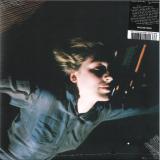
"Across eleven cinematic tracks — each a melodic treasure and short film — Dienel probes: What does freedom look like when rooted in presence, not escape? “Joy, especially queer joy, is revolutionary,” they muse. “Even in the face of everything else, I wanted to show that happiness is still possible — and necessary.”
The record was brought to life with an impressive ensemble of collaborators: producer Adam Schatz (Japanese Breakfast, Neko Case), bassist Spencer Zahn, guitarists Carly Bond (Meernaa) and meg duffy (Hand Habits), drummer Max Jaffe, mixing engineer Jake Aron (Solange, Snail Mail), and mastering engineer Heba Kadry (Björk, Sade). Breaking from their usual DIY approach, Dienel embraced the power of the collective — an experiment in trust, connection, and openness.
Tonally influenced by My Own Private Idaho and widescreen pop, such as Born in the U.S.A., My Heart Is An Outlaw is a warm-hearted exploration. Can we love fully without being domesticated? Can we resist cultural scripts by choosing presence and community over self-erasure? As they put it, “The heart has a mind of its own…It’s the thing holding you back that you have to set free on your own time, in your own way.”
From the early days of White Hinterland to the lush orchestral pop of her solo work, Dienel has consistently bent and challenged the boundaries of independent music. My Heart Is An Outlaw continues that legacy — an unapologetic, joyous declaration of queer love and creative agency."
Suche:white jack
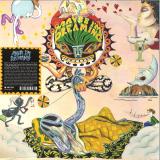
The Keith Tippett Group's Dedicated to You, But You Weren't Listening is a landmark in cutting edge fusion/avant-jazz. A vital and profoundly adventurous Jazz-Rock record that still swings very hard, it was first released on Vertigo in 1971.
Original copies are now very tricky to score and, as most of you really should know, it’s aged ridiculously well.
A legendary work, this Be With re-issue has been newly remastered from the original Vertigo master tapes, demonstrating just why this deserves to be back in press. The stunning gatefold jacket fully restores Roger and Martyn Dean's original, arresting album artwork to complete this must-have reissue.
Alive and bursting with a joyful energy that has to be heard to be believed, Dedicated to You, But You Weren't Listening flirts with perfection. It's truly magical and forever essential.
A brilliant jazz pianist, composer, arranger and bandleader "who could make the outlands of modern music feel like the most hospitable of places" (The Guardian), Keith Tippett's second album is oft-regarded as his Canterbury album.
Indeed, not only does he draw heavily on Soft Machine members past, present and future but the album title itself archly references a Soft Machine composition. Ray Babbington handles bass alongside Neville Whitehead and the drums are shared between Brian Spring (Nucleus), Robert Wyatt(!) and Phil Howard (who would go on to replace Wyatt in Soft Machine). Gary Boyle (Isotope) is on guitar whilst the great percussionist Tony Uter is enlisted for his conga and cow bell expertise. Elton Dean on Alto Saxello, cornetist Marc Charig and Nick Evans on trombone round out this quite stunning ensemble.
Dedicated to You, But You Weren't Listening presents a collective of superhuman musicians really, *really* enjoying themselves in the studio. The sheer exuberance of the performance is totally infectious. It's wild, energetic, atmospheric and, bluntly, bordering on chaotic at points. In a word, it's beautiful.
Robert Wyatt's drumming opens the record with a bang on the majestic Be With favourite "This Is What Happens". Some have described his work here as "easily the most inspired of his career on record." It's an ultra-funky conga-driven groove that truly sparks via the duelling interplay between the three horn players. In the background, Keith's insistent piano, in conversation with those unignorable drums, is the anchor that keeps this piece rollicking away. Breathtaking.
The epic, energetic "Thoughts to Geoff" is a 10-minute jammer that tends towards the dissonant and improvisational but becomes more fluid, laconic and melodic as it unravels. The interplay between soloists and ensembles is particularly dazzling here - blazing solos by Evans, Charig and Tippett himself in a flourish of angular arpeggios interspersed with chordal elocution. Phew.
Up next, the no less-urgent Mingus-referencing "Green and Orange Night Park" is a soaring example of ambitious jazz mixed with rock aggression, with Dean strutting his stuff by launching into a scorching solo. An absolutely jaw-dropping piece. Arguably the highlight of this album of huge highlights!
Though much of the album tends to fall on the raucous side ("Gridal Suite" approaches free-jazz at its most chaotic and, dare we say it, "difficult"), there are a few more sedate, at times spacey numbers, such as the deeply impressionistic "Five After Dawn". The rhythmically complex "Black Horse" is the most accessible track here, a sort of swinging Big Band number with tight grooves, soaring horn & reed melodies, a sizzling Boyle guitar solo and tasty electric piano riffs from Tippett. An hypnotic climax to a staggering record.
This Be With edition of Dedicated to You, But You Weren't Listening has been re-mastered from the original Vertigo master tapes, Simon Francis’ mastering working together with Cicely Balston's cut at Abbey Road Studios to weave their usual magic with these wonderful recordings. The stunning gatefold sleeve has been restored in all its brainchild glory so you know you're dealing with the definitive reissue, here. Now, are you listening?
- A1: Concierto De Aranjuez
- A2: Will O’ The Wisp
- B1: The Pan Piper
- B2: Saeta
- B3: Solea
Miles Davis' Final Collaboration with Arranger Gil Evans Yields Watershed Innovations: Flamenco-Themed Sketches of Spain Spins Graceful Webs of Sound and Emotion Mobile Fidelity's UltraDisc One-Step 180g 33RPM LP Set Brings Out the Record's Full Spectrum of Color: 65th Anniversary Edition Pressed at Fidelity Record Pressing and Strictly Limited to 5,000 Numbered Copies 1/4" / 15 IPS analogue master to DSD 64 to analogue console to lathe Miles Davis and Gil Evans bridged styles and collaborated on high-concept projects three different times during their celebrated careers. For their final act, they created Sketches of Spain, a peak moment in each luminary's legacy.
The transformative album weds Spanish themes, lush orchestrations, romantic timbres, and Davis' lyrical methods in a tender ceremony that resonates more than six decades after its original release. Part of Mobile Fidelity's Miles Davis restoration series, this 1960 landmark has been afforded the ultimate white-gloves treatment for its 65th anniversary. Sourced from the original master tapes, strictly limited to 5,000 numbered copies, and pressed at Fidelity Record Pressing, this UltraDisc One-Step 33RPM 180g LP set dramatically expands the soundstages and eradicates a dryness that many critics found inhibitive to the record's enjoyment. You can now hear the full-range responsiveness of the woodwinds, strings, and percussion, all of which come alive with superior definition and detail.
The beautiful presentation of this UD1S set befits the record's historical importance. Housed in a deluxe slipcase, it features a special foil-stamped jacket and faithful-to-the-original graphics that illuminate the splendor of the 1960 LP. This reissue is made for discerning listeners who desire to fully immerse themselves with the album. And who wouldn't want to go deep with Sketches of Spain? Whether it is the somber mood piece "Concierto de Aranjuez," renowned for Davis' flugelhorn performance, or the folktale-based "Solea," Sketches of Spain transfixes with playing, ideas, and innovations exclusive to this incomparable effort. It's one reason why Mobile Fidelity's engineers took all available measures to insert listeners into the space originally occupied by Davis, bassist Paul Chambers, drummer Jimmy Cobb, percussionist Elvin Jones, and an 18-piece orchestra. The results are as breathtaking as the music.
Multi-note motifs, brief improvisational solos, fanfare sweeps, and contrapuntal exchanges inform flamenco-spiced pieces. Davis' famous Harmon-muted trumpet is complemented by an assortment of bassoons and French horns. Heard together, they create pleasing contrasts and sounds (pp, mf, ppp) that get to what resides at the heart of Sketches of Spain: color. Seldom, if ever, did Davis ever so expressively and liberally paint with color. And in Evans, he has a likewise-minded partner to help draw out tones, shades, layers, and textures. What they achieved continues to draw praise from the global music community in the 21st century. Ranked #358 on Rolling Stone's 500 Greatest Albums of All Time, deemed "a work of unparalleled grace and lyricism" by noted scribe J.D. Considine, bestowed a five-star review from DownBeat, and noted by Q to have taken "jazz in a new direction," the Grammy Award-winning effort has never been better.Miles Davis' Final Collaboration with Arranger Gil Evans Yields Watershed Innovations: Flamenco-Themed Sketches of Spain Spins Graceful Webs of Sound and Emotion Mobile Fidelity's UltraDisc One-Step 180g 33RPM LP Set Brings Out the Record's Full Spectrum of Color: 65th Anniversary Edition Pressed at Fidelity Record Pressing and Strictly Limited to 5,000 Numbered Copies 1/4" / 15 IPS analogue master to DSD 64 to analogue console to lathe Miles Davis and Gil Evans bridged styles and collaborated on high-concept projects three different times during their celebrated careers.
For their final act, they created Sketches of Spain, a peak moment in each luminary's legacy. The transformative album weds Spanish themes, lush orchestrations, romantic timbres, and Davis' lyrical methods in a tender ceremony that resonates more than six decades after its original release. Part of Mobile Fidelity's Miles Davis restoration series, this 1960 landmark has been afforded the ultimate white-gloves treatment for its 65th anniversary. Sourced from the original master tapes, strictly limited to 5,000 numbered copies, and pressed at Fidelity Record Pressing, this UltraDisc One-Step 33RPM 180g LP set dramatically expands the soundstages and eradicates a dryness that many critics found inhibitive to the record's enjoyment. You can now hear the full-range responsiveness of the woodwinds, strings, and percussion, all of which come alive with superior definition and detail. The beautiful presentation of this UD1S set befits the record's historical importance. Housed in a deluxe slipcase, it features a special foil-stamped jacket and faithful-to-the-original graphics that illuminate the splendor of the 1960 LP.
This reissue is made for discerning listeners who desire to fully immerse themselves with the album. And who wouldn't want to go deep with Sketches of Spain? Whether it is the somber mood piece "Concierto de Aranjuez," renowned for Davis' flugelhorn performance, or the folktale-based "Solea," Sketches of Spain transfixes with playing, ideas, and innovations exclusive to this incomparable effort. It's one reason why Mobile Fidelity's engineers took all available measures to insert listeners into the space originally occupied by Davis, bassist Paul Chambers, drummer Jimmy Cobb, percussionist Elvin Jones, and an 18-piece orchestra. The results are as breathtaking as the music. Multi-note motifs, brief improvisational solos, fanfare sweeps, and contrapuntal exchanges inform flamenco-spiced pieces. Davis' famous Harmon-muted trumpet is complemented by an assortment of bassoons and French horns. Heard together, they create pleasing contrasts and sounds (pp, mf, ppp) that get to what resides at the heart of Sketches of Spain: color. Seldom, if ever, did Davis ever so expressively and liberally paint with color. And in Evans, he has a likewise-minded partner to help draw out tones, shades, layers, and textures. What they achieved continues to draw praise from the global music community in the 21st century. Ranked #358 on Rolling Stone's 500 Greatest Albums of All Time, deemed "a work of unparalleled grace and lyricism" by noted scribe J.D. Considine, bestowed a five-star review from DownBeat, and noted by Q to have taken "jazz in a new direction," the Grammy Award-winning effort has never been better.
- Cryptmaster Theme
- The Four Pillars
- Use Your Words
- It Sees You
- Rats!
- Spell It Out
- Toad Palace
- Whatever
- Rumble Underground
- Countess Ulara
- Hubble Bubble
- Heavy Hitter
- Iss The Enticer
- Loria The Fair
- Klaxo The Lawless
- Payn The Destroyer
- For Shallya!
- Bending The Law
- Audo The Pure
- Cryptmaster Theme (Ending Version)
- Level Up!
White vinyl. The record is housed in a gatefold jacket, designed as your own personal treasure chest. Akupara Games and Black Screen Records are over the moon (and down in the crypt) to announce the soundtrack release of the game hit Cryptmaster on vinyl. For the music, sound expert Surasshu, part of the duo Aivi & Surasshu (i.a. Steven Universe), has teamed up with Stemage and Catton Arthur to virtuously solve the puzzle of a perfectly fitting game score. SAY ANYTHING in this bizarre dungeon adventure where words control everything. Fill in the blanks with text or voice to uncover lost abilities, embark on strange quests, and solve mindbending riddles. Can you conquer the crypt and uncover the mystery at the heart of Cryptmaster? In the ancient past, four brave heroes banded together to destroy a terrible evil, giving their lives to save countless others. But now their eternal rest has been disturbed by the Cryptmaster, a capricious necromancer in whose thrall they must ascend through the buried strata of the city above them - the gloomy Bonehouses, mysterious Sunken Sea and freakish Downwood. With the enigmatic Soulstone in hand, the four adventurers must recover their memories, solve whimsical puzzles and defeat outlandish enemies. From fishing and card games to bardic rap battles, finding the right word is the key to success. Who knows, maybe you'll even remember a little more than you bargained for. Surasshu, veteran of television and game music, brings out the best in the Cryptmaster soundtrack, featuring his peers Catton Arthur on bass and Stemage on guitar. From laid back accordions of the Bonehouses, to the shredding guitar of battles, to the piper's haunting melody, this album features enough musical morsels to keep all kinds of dungeon-crawling deviants tapping their toes.
Der schwüle Ton von Eliana Glass ist nicht zu überhören - sie wechselt zwischen einer unkonventionellen, suchenden Qualität und ihrer ergreifenden, ehrfurchtgebietenden Bandbreite. Auch ihr Klavierspiel besitzt dieses mitreißende Hin und Her zwischen dem Jenseitigen und dem schmerzlich Menschlichen - jede Melodie ist ihr eigenes, einzigartiges, schmerzhaftes Reich. Glass' spärliche, meditative Musik fängt oft, wie sie sagt, die ,Verdichtung des Alltags" ein, ein Bild, das zu der bittersüßen, flüchtigen und abstrakten Natur ihrer Arbeit passt. Glass' Debütalbum E erscheint bei Shelter Press und ist nicht nur ein zärtliches Porträt ihrer lebenslangen Beziehung zum Klavier, sondern auch eine Destillation ganzer Lebenszeiten. Vier Jahre lang arbeitete Glass mit dem Mitbegründer und Produzenten von Public Records, Francis Harris (Frank & Tony, Adultnapper), und dem Tontechniker Bill Skibbe (Shellac, Jack White) zusammen, um das Album E in verschiedenen Studios in Nashville, Brooklyn, Memphis und Benton Harbor, Michigan, aufzunehmen. Glass' experimentelle, improvisatorische Werke erinnern an den sinnlichen Minimalismus von Annette Peacock, die freudige Rätselhaftigkeit von Carla Bley und die wehmütige Intimität von Sibylle Baier. Ihre Verehrung für die Größen des Leftfield Jazz und der freien Improvisation ist unüberhörbar, aber immer gefiltert durch ihren unverwechselbaren, naturalistischen Sound. ,Dreams" ist eine majestätische Interpretation von Peacocks gleichnamigem Stück aus dem Jahr 1971, ,Sing Me Softly the Blues` ist eine minimale, fesselnde Neuinterpretation von Baiers Jazzstandard mit einem von der norwegischen Sängerin Karin Krog adaptierten Text, und ,Emahoy` ist eine schmachtende Hommage an die äthiopische Pianistin, Komponistin und Nonne Emahoy Tsegué-Maryam Guèbrou und ihre 2006 erschienene Kompilation Éthiopiques. Glass' Musik basiert auf einem taktilen, sprunghaften Klang und ihrer stimmlichen Kraft und Vielseitigkeit. E's glatte Stöße von Kontrabass und Schlagzeug kitzeln den Gehörgang und betonen die Schlagfertigkeit ihrer unverwechselbaren tiefen Stimme, die sonore, androgyne Gelassenheit mit flatterhafter Zartheit verbindet. E hat auch eine rätselhafte elektronische Note, die die verschwommenen Emotionen von Glass' Songwriting noch verstärkt. Von Hintergrundrauschen und windigem Gesang bis hin zu kaleidoskopischen Synthesizern stammen diese subtilen, geschmackvollen Verzierungen oft von speziellem analogem Equipment: einer unterirdischen Echokammer aus den 1960er Jahren, einem Cooper Time Cube (im Grunde das Hardware-Äquivalent der Audioverarbeitung durch einen Gartenschlauch) und einem AEA-Bandmikrofon aus den 1940er Jahren. Aber das bedeutet nicht, dass E veraltet klingt - Glass' Songs sind von einem zukunftsweisenden Geist durchdrungen und fungieren letztlich als Vehikel für ihre berauschenden Emotionen und fragmentierten Erinnerungen und Träume. Glass' eigentümliche stimmliche Alchemie und ihre lebhaften Klavierausflüge sind meisterhaft und ganz und gar ihre Sache, und ihr Debütalbum ist ein Geschenk von klangvoller Schönheit und lohnender Mehrdeutigkeit. Als Musikerin und Improvisatorin ist Glass von der Suche nach Bedeutung, nach Klängen, nach Neuem, nach Verbindung begeistert und beherrscht diese. Und wie Krog 1975 in ,Sing Me Softly the Blues" sang: ,Life's so thrilling / if you search."
The Vestige is the first fruit of a new intergenerational collaboration between Giuseppe Ielasi, a quietly prolific key contributor to the European experimental music scene for over twenty years, and Jack Sheen, a young composer-conductor-sound artist from Manchester whose recent projects have seen him moving seamlessly from enigmatic chamber music composition and installations to conducting the London Symphony Orchestra. Their materials and working methods differ significantly, with Ielasi having focussed for many years on electro-acoustic techniques alongside his ongoing commitment to the guitar, and Sheen primarily composing for traditional instruments. More important, though, is what they share: a fascination with what Sheen calls “mysterious, liminal musical material,” using irregular repetition and cyclical forms to create structures at once alive with activity and almost static, as well as a rigorous exploration of spatial diffusion and the interaction of sound event and environment. Working individually with a library of acoustic instrument sounds from Sheen’s recent projects and Ielasi’s guitar, the pair eventually met for several days at Ielasi’s home studio in Monza, sculpting the fourteen pieces that make up The Vestige. Like Ielasi and Sheen’s solo works, the record shows an exquisite attention to details of sequencing and pacing, the sound palette and compositional approach consistent throughout while each piece asserts its own identity. The twenty-five seconds of the opening piece serve as an entrée into the record’s distinctive world of sound: repeated chirps fluctuate in volume as they move across the stereo spectrum, woven between strangled snatches of string glissando against a backdrop of percussive ticks, long tones, and white noise. Across the remaining thirteen pieces, Ielasi and Sheen sketch further dimensions of the ambiguous space, where distinctions between pitch and noise, repetition and irregularity, electronic and acoustic remain pointedly unclear. As the record’s title suggests, the origins of the sounds we hear have become remote: while at moments we get flashes of timbres and attacks that could come from wind instruments, bowed strings, or prepared guitar, these remain vestigial traces, glimpsed through a veil of shifting white noise textures. These textures are themselves difficult to trace, suggesting artefacts of the recording process, electronic synthesis, amplified room sound, rubbed instruments or objects. The Vestige shows an unusual degree of attention to frequency range as a compositional tool, something it shares with the hyper-subtle variations of Ielasi’s electroacoustic works and the deliberately ‘unbalanced’ midrange-heavy ensemble of Sheen’s Sub. Here, movement between episodes is as much about adding or removing a frequency band as it is about changes in density, harmonic content, or instrumental texture. Tracks are marked by the sudden appearance of subbass or exaggeration of high frequencies in otherwise similar material, contributing to our sense that these fourteen pieces are like different views on a scene that we can never quite see clearly. While calling up a range of past music, from the early works of Rolf Julius to Simha Arom’s recordings of layered polyrhythms embedded in the background sounds of central African villages to the temporal distortions and layered hiss of DJ Screw, the alluring and disconcerting world of The Vestige is entirely its own.
- A1: The Watson Brothers Band - Justwhistle
- A2: Jim Huxley - Tessa On A Magazine
- A3: Rick Penta - My Story Changes
- A4: Mak - That's Life
- A5: Palm Pizazz! - Silent Letter
- A6: Twice As Nice - Thoughts Of You
- B1: Barracuda - Baby I Love You
- B2: Elderberry Jak - Forrest On The Mountain
- B3: Dennis - Walk With Me
- B4: Jim Ware - Green Eyed Gypsy
- B5: John Lyle - Oh My Wind
- C1: Peter Kraemer - Let The Light Slip
- C2: Brian Freel - Nightrider
- C3: Michael Moore - Holland
- C4: Clete Stallbaumer - John’s Song
- C5: Ronnie White - The Jump
- D1: David Owens - Take Off Your Armour
- D2: The Squad - D L.m.h.i.m.a
- D3: Christoph Spendel Group - Forever
- D4: Awakening - Gotta Do Somethin / Might As Well Cultivate
‘Maybe I’m Dreaming’ is the latest collection selected by Mikey Young (Total Control, EddyCurrent Suppression Ring) and Keith Abrahamsson (Founder and Head of A&R at AnthologyRecordings), the mangled minds behind the beloved ‘Follow the Sun’, ‘Sad About the Times’,and ‘…Still Sad’ compilations. The twenty tracks of ‘Maybe I’m Dreaming’ make a conscious(and unconscious) detour from its predecessors, sourced entirely from private press releases,spanning new decades and production modes within homespun folk, soft rock and otherwise70s and 80s FM radio adjacent music. The magic of ‘Maybe I’m Dreaming’ is the untold story of the artists behind these songs; thosewho missed the big time, but whose song craft and unrequited care hit the right notes, bothhigh and low.
Where ‘Follow the Sun’ and ‘Sad About the Times’ introduced us to the fame chasing, ambitioncrashing crooners who missed their shot in the mainstream, ‘Maybe I’m Dreaming’ delvesdeeper into the isolated wilds - a private world where production quirks, late-night tape hiss andone-man studio dreams were not necessarily a choice but the hand that was dealt.
With the parameters set to ‘private press only’, Young and Abrahamsson follow a circuitous trailof invention and emotion, documenting a spirit that’s more homespun, sometimes lonelier andoften a little weirder. The guitars still strum, but the keyboards’ hum is more prevalent andprecious; wistful harmonies brush up against lo-fi drum machines; a bittersweet fog lingeringover even the brightest melodies.
As with their previous collaborations, Young and Abrahamsson weren’t interested inconstructing a museum or drafting a historical survey. ‘Maybe I’m Dreaming’ is a sentimentalmixtape, assembled late at night when the mind wanders and old memories blur with imaginedfutures, those within reach and those far too mysterious to ever encounter. Songs wereunearthed in personal collections, deep YouTube burrows, dilapidated web archives and thedim corners of Discogs, with many selections tied not only to intuition but to personalconnection. Some tracks arrived via friends - Kelley Stoltz, a frequent guide for Young, tipped him off toboth Peter Kraemer’s lost gem ‘Let the Light Slip’ and Awakening’s revelatory closer - addingan unseen but deeply felt thread of camaraderie to the compilation.
The journey takes in a wide, strange sweep: The Watson Brothers Band’s ‘Just Whistle’ opensthe collection with a sigh and a shrug, a song that feels like it’s been waiting for decades to beheard again. Jim Huxley’s ‘Tessa on a Magazine’, rediscovered after a long and winding searchby Young, shimmers with a distinctly Australian melancholia. The heartbreak of Rick Penta’s‘My Story Changes’ and Twice As Nice’s delicate ‘Thoughts of You’ float easily alongside themore buoyant, radio-dream sheen of Barracuda’s ‘Baby I Love You’ and MAK’s sunshinedappled ‘That’s Life’.
Widening the aperture to the late 1970s and early 1980s allows for a deeper exploration intoevolving production techniques and musical technologies. The Squad’s ‘D.L.M.H.I.M.A.’ andChristoph Spendel Group’s ‘Forever’ crackle with the kind of bedroom synth warmth that couldonly come from the analogue age, while the soulful, yearning undercurrent of Awakening’s‘Gotta Do Somethin / Might As Well Cultivate’ caps the collection with a call for action - ormaybe just acceptance - in an accidental Brian Eno ‘Here Come the Warm Jets’ parroting.
While ‘Maybe I’m Dreaming’ moves away from the ‘sad man with guitar’ archetype that hoveredover its predecessors, it remains tethered to a familiar emotional gravity - a balance of longingand lightness that defines this corner of the musical universe. Each track shuffles gentlybetween resignation and hope, sadness and serenity, as if the artists themselves were chasinga dream just beyond reach, recording not for fame but for the simple act of getting it, thatprimal, creative itch, out into the world.
Available on CD and 2LP, featuring the third eye-opening artwork of Dang Wayne Olsen. Thedouble LP set arrives in an outrageous double-wide spine jacket with printed inners and adream journal entry by Pacific Northwest artifactual authority Josh Lewellen.
Five sisters Jacqueline, Lyn, Pat, Rae and Gennie Jackson were from Compton, California. “I Believe In Miracles” was written and originally recorded by Mark Capanni. The musical tracks were the work of the late Gene Page (string arranger for Barry White). The vocals were produced by Pete Moore of the famous Smokey Robinson & The Miracles along with Bobby Taylor, who also had a group called Bobby Taylor & The Vancouvers. “When I Believe In Miracles was first released in 1973 the sisters were nominated for best new vocal group for the Black Image Awards and best new female artist by Record World Magazine in 1974-1975 which was announced on Soul Train an aired Feb. 22, 1975. However the song did not take off until the UK ‘rare groove’ scene of the 80s, after which an extended version was created which appears for the first here time on 7”
"The Word II," which gained instant worldwide recognition after being sampled by Mac DeMarco in "Chamber of Reflection" and by Travis Scott and Quavo's unit HUNCHO JACK in "How U Feel." Shigeo Seikito 's seminal work, which includes that track, will be reissued on colored vinyl. It's the most widely listened-to electone piece in the world, drawing attention from a diverse range of audiences including hip-hop, Balearic, and dream pop enthusiasts.
BLKG 7 is an essential triple-threat for collectors who go deep into that jazz-funk-psych crate.
Side A features Joe Pass’ haunting “A Time For Us,” lifted from his slept-on Guitar Interludes LP (1970, World Pacific). Heavy w/ cinematic strings, sparse drums & spacious guitar—perfect for blends, loops, or just zoned-out listening. J Dilla thought the same on “Chopped Thoughts”, & for Slum Village’s “Too Much”, but the original stands alone as pure mood.
Side B is a masterclass in moody grooves: “Enchanted Lady” (Milt Jackson & Ray Brown, Much In Common, 1964) is an underrated modal slow-burner w/ a hypnotic swing. Pete Rock & CL Smooth double dipped in “Caramel City” & Escape”, but others were also inspired: Large Professor “Ijuswannachill”, De La Soul“Dinninit”, Rob Swift“Natural Hight”, Knxwledge “3Koins”, among others.
Then comes “Cross Country” by Archie Whitewater—famously Kanye chopped it for Common’s “Drivin’ Me Wild”, but the OG is all groove: head-nod drums, brass stabs & electric piano that goes there.
- 1: Wherever I Go
- 2: Bad Guy
- 3: Sweet Child O Mine
- 4: Halo
- 5: Shallow
- 6: Demons
- 7: I Don T Care
- 8: Cryin
- 9: Livin On A Prayer
- 10: The Sound Of Silence
Croatian cellists Luka Šulić and HAUSER, together known as 2CELLOS, celebrated their 10th anniversary in 2021 with a brand new album, titled Dedicated. The album was led by the first single, a cover of Bon Jovi’s anthem “Livin’ On A Prayer”. Dedicated showcases their unique playing style on ten new arrangements that reinvent both recent hits such as One Republic's “Wherever I Go”, Ed Sheeran/Justin Bieber's “I Don’t Care” and Billie Eilish's “Bad Guy”, and iconic classics such as Guns ‘N Roses' “Sweet Child O’ Mine” and Aerosmith's “Cryin’”. In 2011, 2CELLOS went viral with their self-uploaded version of Michael Jackon’s “Smooth Criminal”. Since then, they’ve released five chart-topping studio albums, amassed over 2.5 billion streams and surpassed 20 million followers on their socials. They shared the stages with Elton John, Steven Tyler, Andrea Bocelli, George Michael and Queens Of The Stone Age amongst others. Dedicated is available as a limited edition of 1000 numbered copies on white coloured vinyl and includes an insert.
Strike Up The Band is Little Feat's triumph return to rock n roll with plenty of swampy southern soul with Bill Payne (keys/vocals0, Scott Sharrard (guitar/vocals), Tony Leone (drums/vocals), Fred Tackett (guitar), Kenny Gradney (bass), and Sam Clayton (percussion/vocals). It's their first album of new material in over 13 years with songs written by Payne and Tacket as well as Feat's newest members Sharrrard and Leone. The album was produced by the multi Grammy Award winner, Vance Powell (Phish, Chris Stapleton, Jack White) and Bill Payne. The song "Bluegrass Pines" features speacial guest Molly Tuttle and Larry Campbell & Teresa Williams, and was written by Payne and the Grateful Dead lyricst Robert Hunter, and the title track features Larkin Poe on guest vocals.
- A1: Pharoah Jones
- A2: Ghost Gospel
- A3: Ill Feeling
- A4: Capital Punishment
- A5: Do Not Adjust
- A6: Cool Green Trees
- A7: Chill Scratch
- A8: Poisonous Fumes
- A9: Welcome Aboard The Starship
- B1: Keep On Runnin
- B2: Sounds Impossible
- B3: Painted Faces
- B4: The Knew Style
- B5: Chicken Wing Blues Sauce
- B6: Kool Breeze
- B7: Sexx Bullets
- B8: Soul Child
- B9: Take Off Runnin
- B10: Centurian
- B11: Bozack
- B12: Church
- B13: Splash One
- B14: Hank
- B15: 73 Goatee
"Chasing the funky symphonies that filled my head and my dreams..."
December 25th, 2023 - an Instagram post. Stimulator Jones shared half a dozen FIRE tracks from his beat tape archive. We were immediately drawn to the rough hewn boom bap.
"I'd release that", Rob commented.
Hours of material was shared and the result is this: Cool Green Trees (1999-2005). A collection of beats and loops Stimulator Jones created between the ages of 14-20 at home in his basement, bedroom and computer room in Roanoke, Virginia.
You will not believe the profound soulful genius contained within these naive schoolboy melodies.
December 25th, 1998 - 25 years ago to the day and his much-coveted Yamaha SU10 sampler was finally bestowed upon young Stimmy AKA Sam Lunsford: "I immediately hooked up a CD Walkman to the input jack and looped the beginning two bars of Grover Washington Jr.'s "Mercy Mercy Me". I don't know what exactly was so thrilling about hearing two measures of music repeating over and over but it was so infectious and hypnotizing and enthralling to me. I'll never forget that ecstatic rush of making my first loop - an uncontrollable, gleeful smile plastered all over my face." When you hear the pocket breakbeat symphonies featured here on Cool Green Trees, you'll feel the same sense of frisson.
In the wake of his Stones Throw breakthrough - Exotic Worlds & Master Treasures - Stimulator Jones was pegged by many as a 90s throwback artist. However, he literally IS a 90s artist. He's been recording music most of his life and he's now 40. He created the bulk of Cool Green Trees as a teenager. Everything before 2004 was recorded when Sam was still in school. He was in 8th grade when he made the 1999 tracks - he didn't even have his learner's permit. This album is a snapshot of a young man in a simpler time. Things were still mysterious back then and he was flying blind, relying on his ears and having to figure things out for himself: "I had no road map for becoming a beatmaker. I have been collecting music since I was a kid, I am a lifelong digger and seeker of cool and interesting sounds. I was there in the golden age of Hip Hop, and while I may have been a suburban white kid in Roanoke, Virginia, I was tuned in and I bought so many classic albums when they came out. I was attracted to Hip Hop because of the musical and poetic quality. I was hypnotized by the rhythms, partially because I was a drummer. I didn't brag about collecting my breakbeat records or making beats - it was something I did in isolation. It wasn't something I generally wanted to bring attention to and it didn't really score me any cool points. I certainly wasn't flexing on social media about it."
Hell, he can do that now!
Opener "Pharoah Jones" was inspired by Yesterday's New Quintet and Madlib's ability to capture that classic 70s sound whilst playing all the instruments. Sam created this one stoned afternoon by laying down a 2 bar loop and a shaker loop on his Yamaha SU700 sampler. He hung a microphone from the ceiling and played his Yamaha Stage Custom drum kit over the top before adding ender Rhodes and playing his dad's Selmer tenor sax through an Electro Harmonix Memory Man echo pedal. Yes! Up next, "Ghost Gospel" utilises a dope loop from a gospel record and adds some soul-funk drums overtop, whilst working that filter knob. Says Sam: "The loop reminded me of something Ghostface would rap over. The sample was in 3/4 waltz time but I flipped it for a 4/4 groove, a technique I picked up from RZA. "Ill Feeling" uses sped-up pieces from a dusty old funk record and putting them over a classic NOLA drum loop; gain chopping up a slow, bluesy 3/4 time signature and bending it to a 4/4 groove. Classy shit. "Capital Punishment" features drums tapped in live, inspired by MF Doom's Special Herbs series. "Do Not Adjust" consists loops found on a compilation of 70s French music at Happy's Flea Market, a classic Roanoke digging spot.
The sublime, evocative title track, "Cool Green Trees" was created when Sam was still living at home. He dumped samples off his SU10 into the family desktop and arranged them in a demo version of Pro Tools: "This track was sort of my ode to the DJ Shadow style of sample based production. Super spacey, slow, and moody. The heavily filtered drums were inspired by Alec Empire's 'Low on Ice' album. I later added some scratches and sounds from a Spider Man storybook record." "Chill Scratch" snags the final bit of a bossanova record and pairs it with a drum loop before adding experimental scratching run through an Electro Harmonix Memory Man echo pedal. "Poisonous Fumes" was made using a sampler, mixer and a turntable; a kind of mixtape beat collage with added scratches and sounds from various records. Using dialogue from superhero records was a nod to Madlib. "Welcome Aboard The Starship" is dark, downtempo trip-hop with a spooky bent. Sam paired a slow, hard drum loop with a guitar sample grabbed off a psychedelic rock record. To finish, he added various backwards sounds and weird atmospheric effects and a little scratching. Swoon.
Side B opens with "Keep On Runnin", made on a borrowed Roland SP202 sampler. Having always loved the sound of the Lo-Fi filter on those machines, reminiscent of the Emu SP1200, Sam always imagined Del or another of the Hieroglyphics crew rapping over this beat. You can certainly hear why. "Sounds Impossible" sees Sam experimenting with layering multiple kick samples at different volumes to create patterns similar to those heard by Showbiz and Lord Finesse during their God-level 1995 period. "Painted Faces" was made by chopping up a REDACTED record which he had gotten from Happy's Flea Market and paired it with a REDACTED drum loop. By the time Sam recorded "The Knew Style", he had acquired a shitty old 1960s portable turntable off eBay. It didn't function properly when he bought it but his brother opened it up, cleaned it out and got it working: "I remember he told me that there was a bunch of sand inside of it when he opened it up, as if its previous owner had taken it to the beach. I would take that turntable on my Happy's Flea Market digs so I could preview records...that's how I found this loop."
"Chicken Wing Blues Sauce" loops up a classic blues joint and pairs it with some REDACTED drums. A bit of filtering and arranging et voilà! "Kool Breeze", from 1999, is one of Sam's oldest surviving beats, as is "Sexx Bullets". The Roots sampled the same record, leaving Sam frustrated yet vindicated. "Soul Child" was an early SU10 creation, looping a dusty old Soul Children 45 and pairing it with 70s rock drum loops to great effect. "Take Off Runnin" was another loop found digging with a portable turntable. Paired with some boom bap drums it makes for a hypnotic head-nod groove. "Centurian" was intended to be a little beat interlude a la Pete Rock. The sample is from a sun-dappled soft-psych record and it's paired with a Robin Trower drum loop that just happens to fit perfectly. Sometimes you slap things together kind of haphazardly and magic happens. "Bozack" was the first beat Sam made using Pro Tools, his first foray into using chopped sounds instead of loops, an exciting new world. "Church" is beat interlude using a Phil Upchurch loop with the "Long Red" drums - a favourite break of Dilla et al. Sam was really on a tear in late 2004, probably because he was unemployed and phoneless and able to just make beats all day. He made "Splash One" on a borrowed Yamaha SU700 and again was experimenting with tapping the drums in live with his fingers, instead of using a loop or sequenced pattern. Channeling 9th Wonder, Sam used a water splash sound effect from a Batman record as a percussive element, hence the title (also a 13th Floor Elevators reference). The main loop is a backwards portion of one of his favourite Roy Ayers songs.
"Hank" is another fun little beat interlude thing, created on a borrowed Roland SP202 sampler with the fantastic Lo-Fi effect that resembled the Emu SP1200 at a fraction of the price. "73 goatee", from 99, is another of his oldest surviving beats, created in his bedroom with his Yamaha SU10 and his brother's Vestax MR-300 4-track recorder: "This one will always feel special. I can remember having a feeling all the way back then on the night that I created it that this was a solid beat with a catchy loop. There was something in the Fender Rhodes melody that resonated with me emotionally, and I had never heard a producer sample that portion before. I felt like I had found my own unique sound, my own unique loop. It came from an Ahmad Jamal '73. I actually even recorded myself rapping and scratching over this beat way back then, I still have that version in all its imperfect sloppy glory."
Sam explains just how much these tracks mean to him: "They all have immense historical and sentimental value and I'm proud of them. These beats come from an innocent, simple time when I was just figuring out how to craft these sounds. They're something very personal to me. They are the initial part of a journey that I really was taking *alone*. There was no YouTube. I couldn't Google shit. I didn't even know any other beatmakers, producers or DJs in my town that could teach me anything. It was always just me, alone, in a room with some equipment - chasing the funky symphonies that filled my head and my dreams. What I was doing wasn't cool. Most of my peers thought I was a weirdo and couldn't care less. Creating these sounds was an anti-social endeavour. In a sense, I felt like it was me against the world, and all I had to instruct and assist me were the recordings produced by my heroes - RZA, DJ Premier, Erick Sermon, Beatminerz, Showbiz, Diamond D, Beatnuts, Prince Paul, The Bomb Squad, Pete Rock, Q-Tip, E-Swift, Mista Lawnge, DJ Shadow, Cut Chemist, Peanut Butter Wolf, El-P and so many more...I dedicate this collection to them, and to my older brother Joe who has always been a musical and technical guiding light for me.
This was a time before every kid was a self-described producer and beatmaker, before everyone had a DAW, before Kanye and "chipmunk soul", before Red Bull beat battles, before there was any social media beyond chat rooms and AOL Instant Messenger, before Soundcloud, before SP-404 mania, before lo-fi beats to study to, before Splice, before targeted ads for MIDI chord packs, etc. In 99 when I told people that I had a sampler and made beats I was mostly met with bewildered confusion and indifference. Kids and adults alike would wonder why I got this weird machine for Christmas instead of something worthwhile like a Playstation or a mountain bike or even a guitar for that matter because at least that could be used to make "real music". Back then, sampling was still not widely respected as an art form - it was seen as lazy, talentless and unoriginal at best and outright criminal theft at worst. I had gotten respect for playing drums and guitar and things of that nature but this was a step in the wrong direction in the eyes of many."
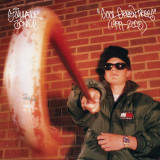
The cover photo is a picture of Sam standing on his back porch in the latter part of 1998, just before he got his first sampler. He was 13 years old, in 8th grade. His dad took the picture with his 35mm film camera: "I actually wanted to be pointing my dad's .22 pistol at the camera lens but he wouldn't let me. He gave me an old walking cane to use instead. The Tommy Hilfiger puffer jacket came from the lost and found at William Fleming High School where my mom worked as a secretary. I was thrilled when she brought it home because we never spent money on expensive name brand clothing like that - we were for the most part strictly a sale rack, bargain bin, thrift store, yard sale, flea market kind of family when it came to clothes. My watch is some cheap off-brand fake gold department store watch." Mastering for this vinyl edition was overseen by Be With regular Simon Francis and it was cut by the esteemed Cicely Balston at Abbey Road Studios to be pressed in the Netherlands by Record Industry.
Eight years ago exactly, in April 2017, the Australian soon-to-be dark synth maestro Buzz Kull released his first full-length album Chroma via Burning Rose imprint.
The seminal album is a mass of jagged synth lines and pounding drum machines, a testament to Marc Dwyer’s personal sonic exploration over time. Each song on Chroma transcends the traditional archetype of darkwave by pushing pop sensibilities, focusing on different emotional states and boundaries. Since his debut, Dwyer has given the world tewo more album tackled multiple tours abroad, and continues to remain an elusive but omnipresent figurehead of goth electronics global underground.
With this dark gem being out of print for years now, it was time to bring it to life!
New run of 500 on black vinyl LP housed in reverse board jackets.
Divine Dances. In plural form.
The fourth album from DjeuhDjoah & Lieutenant Nicholson couldn't have a more explicit title.
Masters of emotions and feelings, the duo has always known how to express melancholy and nostalgia with precision. Yet this time, all their efforts have concentrated on a single goal: taking listeners by the hand—no, by the ear, obviously!—to bring everyone back to the dance floor and explore a variety of atmospheres together.
And naturally, a variety of styles. Funk, ndombolo, electro, hip hop or zouk, each new vibration discovered carries away the previous one to form a dancefloor where all eventually come together.
Divinely light.
The body, surrendered to this call to dance in all its forms, has been so caught up in the whirlwind of groove that the mind has fallen in behind it to continue as one. Words explode into syllables that metamorphose into notes, then perfectly align with those from the score.
One second. A bit of attention. Caught by an irrepressible groove, then comes the moment to slalom through melodies to discover, at the turn of a rhyme, a new meaning. Approached head-on, certain overly serious themes would empty the room and bring the atmosphere down to lead levels. The diagonal approach, humor, and apparent nonchalance of the two men are the best weapons at their disposal. Their Trojan horse to put substance into their form(s). To evoke transidentity, consent, economic malaise as well as the spiritual, or to tell little stories of frustrated loves, seemingly insoluble but which will end well.
Anthony Hilaire for Creole words, Sarah Solo for hip-swiveling soukous, Patrick Bebey for pygmy flute notes, and Grégoire Mahé to bring electricity to DjeuhDjoah & Lieutenant Nicholson's songs; styles blend in a musicality worked into its smallest interstices.
Gathered on this dance floor illuminated with 80s disco brilliance, you observe brassy notes slithering under the electronic veneer, synthesizer keys splashed by furious hip movements. To raise your eyes to connect with the spiritual is to watch the sky become constellated with crystalline Fender Rhodes notes, destined to fall like rain on the heavy bass of afrobeat groove.
Smiles attached to faces, no one should think they can get through the ten tracks of Divine Dances while remaining seated : he's doomed to fail.
OUT MAY 2025 DELUXE WHITE VINYL 180 G /CD / DIGITAL
- A1: Intro
- A2: White Chalk
- A3: Excuse Me
- A4: Realms Of Junior M.a.f.i.a
- B1: Player’s Anthem
- B2: I Need You Tonight
- B3: Get Money
- C1: I’ve Been
- C2: Crazaay
- C3: Back Stabbers
- C4: Shot!
- D1: Lyrical Wizardry
- D2: Oh My Lord
- D3: Murder Onze
- D4: Outro
The 90s were all about Hip-Hop groups. Brooklyn’s Junior M.A.F.I.A., consisting of members Lil’ Kim, Lil’ Cease, Trife, Larceny, Nino Brown, Chico Del Vec, MC Klepto, Capone, and Bugsy, formed under the guidance of The Notorious B.I.G. after he released his classic debut album Ready To Die. At the end of the summer of 1995, Junior M.A.F.I.A. released their debut album Conspiracy on Big Beat Records featuring the lead single “Player’s Anthem” which featured Biggie and was produced by the late great DJ Clark Kent. Clark Kent produced three other songs including the second single “I Need You Tonight” featuring Biggie’s wife Faith Evans on the chorus. The third single, “Get Money”, another Biggie feature produced by EZ Elpee with it’s classic flip of the Roy Ayers Orduced Sylvia Striplin track “You Can’t Turn Me Away” was certified platinum. With eight members deep, it was difficult to stand out, but Lil’ Kim and Lil’ Cease would be the breakoutr stars and go on to release solo albums. The group disbanded after Notorious B.I.G. was murdered in 1997, but left behind songs that still hold up today and remain a big part of Biggie’s legacy, as well as producer DJ Clark Kent -RIP Out of print on vinyl since 2017, Get On Down is proud to present this 90s Hip-Hop classic as a limited edition reissue preesed on splatter colored vinyl and packaged in a gatefold jacket.
Mit „Room On The Porch“ präsentieren Taj Mahal & Keb’ Mo’ den lang ersehnten Nachfolger ihres mit einem GRAMMY ausgezeichneten Erfolgsalbums „TajMo“ aus 2017!
Die außergewöhnliche Kollaboration vereint zwei der besten noch lebenden Blues-Musiker – mit je 11 GRAMMYs sind beide zweifellos wahre Ikonen des Genres.
Den Auftakt der Albumkampagne bildet der Titeltrack „Room On The Porch“ mit der gefeierten Sängerin Ruby Amanfu. Die aus Ghana stammende und in Nashville aufgewachsene Singer-Songwriterin hat bereits für Alicia Keys, Brandi Carlile und H.E.R. geschrieben und war zwei Jahre lang Teil der Band von Jack White. Mit „Room On The Porch“ knüpfen Taj Mahal & Keb’ Mo’ nahtlos an ihren bisherigen Erfolg an und liefern ein weiteres musikalisches Highlight für Blues-Fans weltweit.
- A1: I Don't Know Why
- B1: If I Could Open Up My Heart
Lynn White hails from Mobile, AL and started singing at the age of six in her local church. She worked in Ike Darby’s record store where she would sing along to the sounds that were playing, and it wasn’t long before the owner decided to record her on his local label Darby Records in 1978 at the age of 25. Three singles and the highly collectable album “Am I Too Much Woman For You” ensued, but they didn’t bring much success to the label, which folded shortly afterwards. They did get married though.
Her sultry bluesy Darby-penned/produced “I Don't Ever Wanna See Your Face Again” was released in 1982 on another local label, Sho-Me Records, and it quickly came to the attention of Willie Mitchell, who signed her immediately to his Waylo imprint. A fruitful period followed with 7 albums and 12 singles released for the Memphis-based label during the rest of that decade. Her mid-paced “See You Later Bye” was a huge favourite with the modern soul scenes in Europe, and it was a pleasure to see White as part of Waylo’s A Memphis Soul Night - Live In Europe in 1990 when she appeared with Otis Clay, Ann Peebles and David Hudson, performing in Amsterdam, Rotterdam, Berlin and London; each artist doing a solo spot then all four joining together for some rousing soul medleys.
By now a Memphis resident, she switched to S.O.H. Distributions in 1990, which gave her more control of her output, and these two sides are from that period; “I Don’t Know Why” (1993), clearly her most popular track was only available as a 12” single, and featured the amazing but uncredited vocals of Farris Lanier Jr., who was lead singer of another Waylo act, Lanier & Co. Now very hard to find, this will be an eagerly awaited release as a 7” single. The flip is a gorgeous stepper written by George Jackson (previously recorded by Otis Clay) and from her CD only album The New Me (1990). White’s version just oozes with soul and makes for an essential double-sider.
Based in São Paulo and formed in 2017, TaguaTaguais lead by songwriter and producer FelipePuperi. Felipe, having fronted space groove rock band WannabeJalvafor several years, has an extensive indie resume. Having played at Lollapalooza Brazil, supported shows for Pearl Jam and Jack White. He's also been featured on KCRW, NY Times, Stereogum, Brooklyn Vegan and WFUV.
Tagua Tagua's 3rd full length LP and 3rd release on Wonderwheel following 2024's Todo Tempo EP and 2023's Tanto LP
Upcoming tour plans include SXSW and Lollapalooza Brasil in March 2025
Lead singleLado a Ladofeatures James Petralli frontman of the Austin, TX based rock band White Denim
White Denim were founded in 2008 and have shifted through genres like post-punk, soul, garage, and psychedelic rock and have released music on labels such as Bella Union, City Slang, and Downtown
2024 was a big year at radio as Tagua Tagua filmed and recorded a live sessions for NPR's World Cafe (US) and Gilles Peterson's Brownswood Basement on Worldwide FM (UK)
Embarked on a 10 date Brazilian tour in Spring of 2024 playing to capacity crowds each night in 400-500 cap rooms
Recent tour history includes two stints in the US for New Colossus Festival in NYC and SXSW March 2024 and November of 2024 in Miami, New York, and Philadelphia as well as a headline tour throughout Europe in September and October of 2024
Significant press coverage from publications like NPR Alt Latino, Remezcla, FIP, Bandcamp, and Sounds & Colours to name a few
Huge worldwide radio support from stations like KEXP, KCRW, KUTX (US) Inter, FIP, Nova (FR), RinseFM, Soho Radio, Worldwide FM (UK), 3RRR, 2SER, RTR (AU), RTP Antena 3, TSF Rádio Notícias, Rádio Oxigénio (PT) iCat, Radio 3 (ES) RBB Radioeins (DE) and many more
- The Prophecy
- Concerning Hobbits
- The Bridge Of Khazad Dum
- The Breaking Of The Fellow
- Foundations Of Stone
- The Riders Of Rohan
- Evenstar
- The Hornburg
- The White Tree
- The Ride Of The Rohirrin
- The Grey Havens
- Into The West
Dive into the enchanting world of Middle-earth with our compilation LP featuring the most iconic tracks from The Lord of the Rings - Themes. This stunning collection captures the heart and spirit of the epic saga, making it a must-have for fans and music lovers alike. The Lord of the Rings film trilogy, directed by Peter Jackson, is based on the classic novels by J.R.R. Tolkien with The Fellowship of the Ring (2001), The Two Towers (2002) and The Return of the King (2003).