Suche:white rainbow
Ten years into his role as poster boy for pop soul and peak-hour R&B, Syl Johnson did an unlikely about-face and cut the most inspiring and powerful song he'd ever touch. Issued on 45 in September of 1969, "Is It Because I'm Black" struck an immediate chord within the black community, forcing the song up the charts by sheer volume of call-in requests. It would be Syl's biggest hit for Twinight, climbing as high as #11 on the Billboard R&B chart during its 14-week stay, marking the defining moment of what had become more than just an occupation. Syl had his hands on a career and worked tirelessly rehearsing his next opus, an album of songs reflective of the changing times. With "Is It Because I'm Black" still bolding the pages of Billboard, the coming LP's title appeared to Syl plain as day _ or, in this case, black as night. Issued in April 1970 _ a full 13 months before Marvin Gaye's What's Going On _ Is It Because I'm Black can rightly be called the first black concept album, a distinction few give it credit for. But that factoid, whatever its meaning then or now, failed to inspire music buyers: Johnson's record never got a whiff of the two million copies Gaye's did in its first year of availability. Syl lays the blame squarely on the record's lack of marketability to a white audience. The album's cover didn't exactly move units either. Photographer Jerry Griffith dragged Syl to a burned-out building on 43rd Street to shoot the back cover image, and he finger-painted the iconic title over a stock photo of an eroding brick wall. The title track, coupled with the politically charged "I'm Talking About Freedom" and ghetto conscious "Concrete Reservation" sealed the album's cool reception as the work of an "angry black man." Which is unfortunate, as "Together Forever," "Come Together," and "Black Balloons" are positively uplifting, forming their own pot of gold at the end of a grayscale rainbow. The album's closer burns the brightest. "Right On" devolves into a full-on party track, ending with Syl riffing on the line "I'm gonna keep on doing my thing," as if to answer his critics before their needles reached the run-out groove.
- A1: Unknown Artist – When She Finds The Way Back Home
- A2: The Lavenders – Wanderer
- A3: Nancy Lee Jordan – Happpy Don't Last Forever
- A4: Artie Minz, Ellie Shepperd & The Countryment – Just Another Name
- A5: Curley Fields & The Kentuckians – Firsco Flower Tale
- A6: Dave Davis – Kentucky Sunshine
- A7: Patti Whipp – It's Gone
- B1: Gene Ski & The Troubadours – Six Foot Down
- B2: Dixie Drifter – Little Hero
- B3: Larry Phillipson – Challenge
- B4: Harrison Two – Run Little Girl
- B5: Johnny Madrid – Hello Houston (Goodby Ol' L.a.)
- B6: Duane And The Drifters – Tell Me
- B7: Sam Podany – There's A River
- C1: Shunka Wa Kaon – Legend Of The White Buffalo
- C2: Frank Gay & The Gayblades – Down Bound Train
- C3: Unknown Artist – Now They're Gone
- C4: Rog Winters & The Plainsmen – When I See You
- C5: Harrison Two – La Fraja
- C6: The Chieftones – The Sun Is Shining
- C7: Patti Whip – Walkin
- D1: Gary Chamberlain & The Country Cats – Muleskinner Blues
- D2: Rod & Terry – I Still Love You
- D3: Janet Kaye – Heaven Help The Working Girl
- D6: Tom Sheehan – God Help The World
- D7: Sam Podany – Highway
- D4: Curley Fields & The Kentuckians – Trouble Sweet Trouble (Just A Barstool Away)
- D5: Georgette Beltran – This Lovely Day Is Mine
Black vinyl[43,99 €]
Home to Cuca Records and hundreds of Nashville-fantasizing pluckers and singers, Wisconsin’s Driftless region was a hotbed of country music in the 1960s. Influenced by old-timey ethnic songs, Bakersfield outlaws, countrypolitan rainbows, and the lonesome twang of every rural route roadhouse, these 17 Driftless Dreamers washed up at Jim Kirchstein’s Sauk City record plant with little more than $100 and a longing. Collected here are the fruits of Cuca’s documentary approach to record making, capturing the voices and stories of a culture and glacier in abatement.
- A1: Unknown Artist – When She Finds The Way Back Home
- A2: The Lavenders – Wanderer
- A3: Nancy Lee Jordan – Happpy Don't Last Forever
- A4: Artie Minz, Ellie Shepperd & The Countryment – Just Another Name
- A5: Curley Fields & The Kentuckians – Firsco Flower Tale
- A6: Dave Davis – Kentucky Sunshine
- A7: Patti Whipp – It's Gone
- B1: Gene Ski & The Troubadours – Six Foot Down
- B2: Dixie Drifter – Little Hero
- B3: Larry Phillipson – Challenge
- B4: Harrison Two – Run Little Girl
- B5: Johnny Madrid – Hello Houston (Goodby Ol' L.a.)
- B6: Duane And The Drifters – Tell Me
- B7: Sam Podany – There's A River
- C1: Shunka Wa Kaon – Legend Of The White Buffalo
- C2: Frank Gay & The Gayblades – Down Bound Train
- C3: Unknown Artist – Now They're Gone
- C4: Rog Winters & The Plainsmen – When I See You
- C5: Harrison Two – La Fraja
- C6: The Chieftones – The Sun Is Shining
- C7: Patti Whip – Walkin
- D1: Gary Chamberlain & The Country Cats – Muleskinner Blues
- D2: Rod & Terry – I Still Love You
- D3: Janet Kaye – Heaven Help The Working Girl
- D6: Tom Sheehan – God Help The World
- D7: Sam Podany – Highway
- D4: Curley Fields & The Kentuckians – Trouble Sweet Trouble (Just A Barstool Away)
- D5: Georgette Beltran – This Lovely Day Is Mine
Glacier Blue vinyl[41,81 €]
Home to Cuca Records and hundreds of Nashville-fantasizing pluckers and singers, Wisconsin’s Driftless region was a hotbed of country music in the 1960s. Influenced by old-timey ethnic songs, Bakersfield outlaws, countrypolitan rainbows, and the lonesome twang of every rural route roadhouse, these 17 Driftless Dreamers washed up at Jim Kirchstein’s Sauk City record plant with little more than $100 and a longing. Collected here are the fruits of Cuca’s documentary approach to record making, capturing the voices and stories of a culture and glacier in abatement.
- A1: Queen - Another One Bites The Dust
- A2: Def Leppard - Pour Some Sugar On Me
- A3: Bon Jovi - Livin' On A Prayer
- A4: U2 - Pride (In The Name Of Love) (In The Name Of Love)
- A5: The Who - You Better You Bet
- A6: Rainbow - I Surrender
- A7: Huey Lewis & The News - The Power Of Love
- B1: Iron Maiden - Run To The Hills
- B2: Motorhead - Ace Of Spaces
- B3: Black Sabbath - The Mob Rules
- B4: Twisted Sister - We're Not Gonna Take It
- B5: David Lee Roth - Just Like Paradise
- B6: Scorpions - Rock You Like A Hurricane
- B7: Robert Plant - Big Log
- C1: Yes - Owner Of A Lonely Heart
- C2: Zz Top - Gimme All Your Lovin
- C3: Gary Moore & Phil Lynott - Out In The Fields
- C4: Iggy Pop - Real Wild Child (Wild One) (Wild One)
- C5: John Mellencamp - Hurt So Good
- C6: Snowy White - Bird Of Paradise
- C7: Poison - Every Rose Has It's Thorn
- D1: Kiss - Crazy Crazy Nights
- D2: Simple Minds - Don't You (Forget About Me) (Forget About Me)
- D3: Robert Palmer - Addicted To Love
- D4: Cher - If I Could Turn Back Time
- D5: Status Quo - In The Army Now
- D6: Steve Winwood - Higher Love
- D7: Billy Idol - Rebel Yell
American/Danish glam metal band White Lion released their third studio album Big Game in 1989 through Atlantic records. The album was recorded while the band were still thriving on the success of its predecessor Pride. The result is an eclectic album that addresses political and social issues, something that was rare among other bands in this genre. The album contains the single “Little Fighter”, which is about the famous Greenpeace boat The Rainbow Warrior. The album also contains a cover version of Golden Earring’s “Radar Love”, which was released as the second single. Other well-known songs from this album are “Cry for Freedom”, “Goin’ Home Tonight” and more. A critical and commercial success, the album went gold in the US and also charted well in Sweden, Norway, Switzerland, Canada and the UK – ultimately performing even better than Pride did.
This imited edition of 1000 individually numbered copies on white coloured vinyl includes an insert.
MSG is a legendary name. After two phenomenal records under the guise of Michael Schenker Fest, a true guitar hero is returning to his roots. By forming Michael Schenker Group (MSG) back in 1979, Michael Schenker laid the foundations for one of hard rock’s most glorious solo careers of all times. And while nobody expected anything less from a former guitarist for Scorpions and UFO, it’s close to impossible mentioning everything Michael has built over the past 50 years, or the countless people he influenced or played with. This, truly, is the stuff that hard rocking myths are made of.
“I never looked back,” is how Michael dryly sums up an extraordinary career. Due to this mindset, he only realised much later what a huge impact his playing had made on the world of metal and hard rock. Very few guitarists can be cited as a primary influence for the likes of James Hetfield, Kirk Hammett, Dave Mustaine, Dimebag Darrell, Slash or Kerry King. However, to understand Michael Schenker means to understand one primary thing: he’s not here to be worshipped or adored, he’s not here to get rich, he’s here to play. And at 65, he’s doing it with the same swagger, verve and dizzying artistry as always. “I’m still 16 in my head,” he laughs.
Right in time for his 40th anniversary as a solo artist and his 50th birthday as a musician, he resurrects the immortal Michael Schenker Group. “Immortal” is also the name of his new album, recorded by likely the strongest line-up in his long history. Its a lightning bolt of an album that sounds fresh, bloodthirsty and agile. “Immortal” showcases the gargantuan vocal talents of Chilean hard rock prodigy Ronnie Romero (Rainbow), backed by singers Ralf Scheepers (Primal Fear), Joe Lynn Turner (ex-Deep Purple) as well as Schenker’s brother in arms, Michael Voss (Mad Max) who again produced the record alongside Michael Schenker – flawlessly, punchy and at full steam as if their very lives depended on it.
Next to Michael Schenker caressing his iconic black and white Dean Flying V, we hear bass player Barry Sparks (Dokken), keyboard player Steve Mann as well as the three drummers Bodo Schopf, Simon Phillips (ex-Toto) and Brian Tichy (ex-Whitesnake) pumping gallons of fresh blood through the tracks. And that’s not all, keyboard wizard extraordinaire Derek Sherinian (Dream Theater, Black Country Communion) gives the listener a baptism of fire in the blistering, heavy hitting opener “Drilled to Kill”, powered by Ralf Scheepers’ unbelievable vocal tornado.
Michael Schenker doesn’t live to play, he plays to live, and there’s no better way of summing up his relationship to his music than this – now for half a century and counting. The most emblematic representation of this relationship is the monumental closing track “In Search Of The Peace Of Mind”, a new recording of the very first song he ever wrote. “I composed this track in my mother’s kitchen back when I was 15,” he looks back half a century and smiles broadly: “The solo is just so perfect, I wouldn’t change a single note even today. This is the most important song of the last 50 years for me. It’s what started it all.”
When it finally got released in 1972 on the Scorpions’ debut “Lonesome Crow” Schenker had already moved on to UFO. What followed were several decades of pure hard rock ecstasy on and off stage, featuring a rotating cast of stellar players, always pressing the pedal to the metal. Now, in 2020, he reaps what he sowed. Alongside many of his peers, friends and contemporaries, he is celebrating 50 years of hard rock – fittingly with an album that is something like a zeitgeisty reminiscence of everything he’s ever done. The massive midtempo smasher “Don’t Die On Me Now” sees Joe Lynn Turner going all in, Ronnie Romero works his magic in “Knight Of The Dead” while Michael Voss cuts a grand figure before the microphone as well as behind the mixing desk on the furious second single “After The Rain”.
Towering above them all, Michael Schenker and his guitar prove they’re truly and utterly invincible. The celebrated icon pulls out all the stops – including his legendary “howler”, the fabled magnet he’s used on his fingerboard for a while now. And here’s yet another thing that’s just so archetypically Schenker, when bringing up his fiery and dedicated performance on “Immortal” he nonchalantly shrugs it off: “I simply played from the heart, as always.” This, dear Michael, is the understatement of the year – all the more so for a record that is already one of the top contenders for hard rock/metal album of the year.
MSG is a legendary name. After two phenomenal records under the guise of Michael Schenker Fest, a true guitar hero is returning to his roots. By forming Michael Schenker Group (MSG) back in 1979, Michael Schenker laid the foundations for one of hard rock’s most glorious solo careers of all times. And while nobody expected anything less from a former guitarist for Scorpions and UFO, it’s close to impossible mentioning everything Michael has built over the past 50 years, or the countless people he influenced or played with. This, truly, is the stuff that hard rocking myths are made of.
“I never looked back,” is how Michael dryly sums up an extraordinary career. Due to this mindset, he only realised much later what a huge impact his playing had made on the world of metal and hard rock. Very few guitarists can be cited as a primary influence for the likes of James Hetfield, Kirk Hammett, Dave Mustaine, Dimebag Darrell, Slash or Kerry King. However, to understand Michael Schenker means to understand one primary thing: he’s not here to be worshipped or adored, he’s not here to get rich, he’s here to play. And at 65, he’s doing it with the same swagger, verve and dizzying artistry as always. “I’m still 16 in my head,” he laughs.
Right in time for his 40th anniversary as a solo artist and his 50th birthday as a musician, he resurrects the immortal Michael Schenker Group. “Immortal” is also the name of his new album, recorded by likely the strongest line-up in his long history. Its a lightning bolt of an album that sounds fresh, bloodthirsty and agile. “Immortal” showcases the gargantuan vocal talents of Chilean hard rock prodigy Ronnie Romero (Rainbow), backed by singers Ralf Scheepers (Primal Fear), Joe Lynn Turner (ex-Deep Purple) as well as Schenker’s brother in arms, Michael Voss (Mad Max) who again produced the record alongside Michael Schenker – flawlessly, punchy and at full steam as if their very lives depended on it.
Next to Michael Schenker caressing his iconic black and white Dean Flying V, we hear bass player Barry Sparks (Dokken), keyboard player Steve Mann as well as the three drummers Bodo Schopf, Simon Phillips (ex-Toto) and Brian Tichy (ex-Whitesnake) pumping gallons of fresh blood through the tracks. And that’s not all, keyboard wizard extraordinaire Derek Sherinian (Dream Theater, Black Country Communion) gives the listener a baptism of fire in the blistering, heavy hitting opener “Drilled to Kill”, powered by Ralf Scheepers’ unbelievable vocal tornado.
Michael Schenker doesn’t live to play, he plays to live, and there’s no better way of summing up his relationship to his music than this – now for half a century and counting. The most emblematic representation of this relationship is the monumental closing track “In Search Of The Peace Of Mind”, a new recording of the very first song he ever wrote. “I composed this track in my mother’s kitchen back when I was 15,” he looks back half a century and smiles broadly: “The solo is just so perfect, I wouldn’t change a single note even today. This is the most important song of the last 50 years for me. It’s what started it all.”
When it finally got released in 1972 on the Scorpions’ debut “Lonesome Crow” Schenker had already moved on to UFO. What followed were several decades of pure hard rock ecstasy on and off stage, featuring a rotating cast of stellar players, always pressing the pedal to the metal. Now, in 2020, he reaps what he sowed. Alongside many of his peers, friends and contemporaries, he is celebrating 50 years of hard rock – fittingly with an album that is something like a zeitgeisty reminiscence of everything he’s ever done. The massive midtempo smasher “Don’t Die On Me Now” sees Joe Lynn Turner going all in, Ronnie Romero works his magic in “Knight Of The Dead” while Michael Voss cuts a grand figure before the microphone as well as behind the mixing desk on the furious second single “After The Rain”.
Towering above them all, Michael Schenker and his guitar prove they’re truly and utterly invincible. The celebrated icon pulls out all the stops – including his legendary “howler”, the fabled magnet he’s used on his fingerboard for a while now. And here’s yet another thing that’s just so archetypically Schenker, when bringing up his fiery and dedicated performance on “Immortal” he nonchalantly shrugs it off: “I simply played from the heart, as always.” This, dear Michael, is the understatement of the year – all the more so for a record that is already one of the top contenders for hard rock/metal album of the year.
MSG is a legendary name. After two phenomenal records under the guise of Michael Schenker Fest, a true guitar hero is returning to his roots. By forming Michael Schenker Group (MSG) back in 1979, Michael Schenker laid the foundations for one of hard rock’s most glorious solo careers of all times. And while nobody expected anything less from a former guitarist for Scorpions and UFO, it’s close to impossible mentioning everything Michael has built over the past 50 years, or the countless people he influenced or played with. This, truly, is the stuff that hard rocking myths are made of.
“I never looked back,” is how Michael dryly sums up an extraordinary career. Due to this mindset, he only realised much later what a huge impact his playing had made on the world of metal and hard rock. Very few guitarists can be cited as a primary influence for the likes of James Hetfield, Kirk Hammett, Dave Mustaine, Dimebag Darrell, Slash or Kerry King. However, to understand Michael Schenker means to understand one primary thing: he’s not here to be worshipped or adored, he’s not here to get rich, he’s here to play. And at 65, he’s doing it with the same swagger, verve and dizzying artistry as always. “I’m still 16 in my head,” he laughs.
Right in time for his 40th anniversary as a solo artist and his 50th birthday as a musician, he resurrects the immortal Michael Schenker Group. “Immortal” is also the name of his new album, recorded by likely the strongest line-up in his long history. Its a lightning bolt of an album that sounds fresh, bloodthirsty and agile. “Immortal” showcases the gargantuan vocal talents of Chilean hard rock prodigy Ronnie Romero (Rainbow), backed by singers Ralf Scheepers (Primal Fear), Joe Lynn Turner (ex-Deep Purple) as well as Schenker’s brother in arms, Michael Voss (Mad Max) who again produced the record alongside Michael Schenker – flawlessly, punchy and at full steam as if their very lives depended on it.
Next to Michael Schenker caressing his iconic black and white Dean Flying V, we hear bass player Barry Sparks (Dokken), keyboard player Steve Mann as well as the three drummers Bodo Schopf, Simon Phillips (ex-Toto) and Brian Tichy (ex-Whitesnake) pumping gallons of fresh blood through the tracks. And that’s not all, keyboard wizard extraordinaire Derek Sherinian (Dream Theater, Black Country Communion) gives the listener a baptism of fire in the blistering, heavy hitting opener “Drilled to Kill”, powered by Ralf Scheepers’ unbelievable vocal tornado.
Michael Schenker doesn’t live to play, he plays to live, and there’s no better way of summing up his relationship to his music than this – now for half a century and counting. The most emblematic representation of this relationship is the monumental closing track “In Search Of The Peace Of Mind”, a new recording of the very first song he ever wrote. “I composed this track in my mother’s kitchen back when I was 15,” he looks back half a century and smiles broadly: “The solo is just so perfect, I wouldn’t change a single note even today. This is the most important song of the last 50 years for me. It’s what started it all.”
When it finally got released in 1972 on the Scorpions’ debut “Lonesome Crow” Schenker had already moved on to UFO. What followed were several decades of pure hard rock ecstasy on and off stage, featuring a rotating cast of stellar players, always pressing the pedal to the metal. Now, in 2020, he reaps what he sowed. Alongside many of his peers, friends and contemporaries, he is celebrating 50 years of hard rock – fittingly with an album that is something like a zeitgeisty reminiscence of everything he’s ever done. The massive midtempo smasher “Don’t Die On Me Now” sees Joe Lynn Turner going all in, Ronnie Romero works his magic in “Knight Of The Dead” while Michael Voss cuts a grand figure before the microphone as well as behind the mixing desk on the furious second single “After The Rain”.
Towering above them all, Michael Schenker and his guitar prove they’re truly and utterly invincible. The celebrated icon pulls out all the stops – including his legendary “howler”, the fabled magnet he’s used on his fingerboard for a while now. And here’s yet another thing that’s just so archetypically Schenker, when bringing up his fiery and dedicated performance on “Immortal” he nonchalantly shrugs it off: “I simply played from the heart, as always.” This, dear Michael, is the understatement of the year – all the more so for a record that is already one of the top contenders for hard rock/metal album of the year.
- A1: Crystal Drift (03:56)
- A2: Rainbow Ripples (04:08)
- A3: And Breathe (02:10)
- A4: Lost Oceans (01:34)
- A5: New Infinity (05:03)
- A6: White Mirror (02:54)
- B1: Peace Bells (02:40)
- B2: Revolving Evolving (03:34)
- B3: Mountain Dreaming (02:03)
- B4: Forest Motion (03:16)
- B5: Sleep Golden (03:16)
- B6: The Long Path (03:29)
Ocean Moon is a solo project from Jon Tye of Seahawks. A long time explorer of the sounds of spaciousness, having released the ambient classic LP iO in 1994 as MLO, Crystal Harmonics is a document of Jon’s latest discoveries. An ambient/new age/modern classical library suite for KPM, this is inter-dimensional music for mind, body and spirit.
Island Visions, the recent collection of music from Seahawks for KPM, touched on the deeper, more spatial side of music and led to Jon exploring this territory in greater depth, again for KPM, under his Ocean Moon alter ego. This time he brought along some of today’s most visionary musicians: Jon Brooks (The Advisory Circle / Ghostbox) for his intuitive melodic mastery, Seaming To (Graham Massey’s Toolshed) for her extraordinary vocal talents, Steve Moore (Zombi) for his sophisticated and inventive rhythmic sensibility and Richard Norris (The Grid) for his sensitive and deeply resonant ambience. The initial recordings were made at The Centre Of Sound in Cornwall, with the collaborators various contributions coming from London, Derbyshire and the US.
The supremely serene electronic flute and bells of “Crystal Drift” ease us into our journey and we take our next steps with “Rainbow Ripples” as it gently folds space with arpeggiated synth swells and delicate machine beats. Light vocal tones, bells and breath FX on “And Breathe” keep us going, accompanied by synth drones and billows of electric piano.
We travel through the synth-space-surf haze of “Lost Oceans”, with soft bass and warm ambience, to reach the “New Infinity” of revolving melody, spacious pads and light electronic beats. The celestial tone floats of “White Mirror” close out the first side.
Temple bells ring out to running water flowing together with deep resonant vocal tones as the second side opens with “Peace Bells”. “Revolving and Evolving” follows, a tranquil electronic meadow of lush pastoral synth tones where we rest for a while for “Mountain Dreaming”, a light rhythmic dance of zither and birdsong.
The undulating “Forest Motion” ripples with synth arpeggios, dreamy Solina strings and percussive modular electronics before allowing the crackling ambience and Cantonese whispers of “Sleep Golden” to wash over us. Finally we find ourselves on “The Long Path”, its warm temple ambience of drones and chants guiding us home.
Crystal Harmonics is inspired by four particular albums from KPM’s catalogue. There’s The Electronic Light Orchestra by Adrian Wagner from 1975 and then Temple Of The Stars, Breath Of Life and finally Keith Mansfield’s Circles, these last three coming from KPM’s mid-1980s run of modern classical/New Age gems. For Jon, “making library music can be very liberating. I really enjoyed the additional focus it brought to the music working on different facets of composition with each collaborator”.
But Crystal Harmonics is no mere exercise in vulger pastiche. As the past, present and future sound of paradise, this fresh exploration of mid-90s ambient and original New Age sounds exists outside of our linear experience of time.
The cover started as a collage Jon made a couple of years ago, a different expression of the same impulses that guided the music. As a nod to the records that provided seeds of inspiration, the collage was framed by KPM’s house style of the 1980s for the finished sleeve by Richard Robinson.
Mastered for vinyl by Be With’s sonic shaman Simon Francis, cut by the legendary Pete Norman and pressed in the Netherlands by Record Industry, Ocean Moon’s Crystal Harmonics is the tranquil balm for these turbulent times.
(RSD 2020 Exclusive) (pressing 1000 copies, white coloured vinyl) This killer album was originally released only on CD format in 1998, and now on vinyl for the first time - over 20 years later + 2 bonus tracks!This album includes the killer ‘Prowling Lion’ known by everyone across the Dub and sound system scene! Played heavily by all top sound systems!
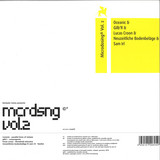
Microdosing is a series of compilation 12”s selected by Julienne Dessagne aka Fantastic Twins, and designed in collaboration with French visual artist Geff Pellet. Microdosing is a collective experiment aimed at helping you fighting back your modern obsession with happiness. You may deserve a nice day but the day does not need a nice you, nothing should be forced, everything is permitted. Microdosing will provide you with sonic healing weapons on regular basis and at irregular dosage. Those doses will favour psychedelic social techniques against self help tyranny, creation over soma, provoking over numbing, our outer-selves over our inner-selves. Microdosing refuses the fatality of the pleasure principle. Life is a struggle, time to embrace it. —— "My battery is low and it’s getting dark” We at Microdosing will make Opportunity’s famous last words fully ours. Some would see these as an epitaph on a black screen, we embrace them as a reclaimed fragility. Are we grains of sand wandering in space, hoping for a goal? No. We are the cosmos, the cosmos is us, unafraid of the end, unafraid of the void. Before the rise of the infinite silence, Microdosing brings you new guiding lights, white sun or black hole being a simple permutation of the kinetic rainbow. Oceanic’s “Parallel Lines Of Stripes” is a meandering mantra, an synthesised Moebius ring, a mission to your heart, that furthest star in the sky. Gilb’R’s “Cosmogonie” simply reminds us of the profound relation between spatial systems and the holy act of birth (cosmo, world and gon, conceive). The universe is a body, your body is your universe. Lucas Croon’s “Threshold Stimulus” is the soundtrack of a never ending voyage, the man is on a trip to the core sanctum. Imagine Space as a reverberation room cladded with bakelite. Losing yourself in delay repeats sometimes is the shortest way. Neuzeitliche Bodenbeläge & Sam Irl’s “Faeden” is another hymn to the umbilical chords joining us to the outer world, a black monolith of kraut acid, a pagan dance as portal to a destination only you can choose. Microdosing will be back soon with more enablers, helping to turn your petty struggles into a search for a meaning of life. The Quest lives on.
- A1: Ohoopee River Bottomland
- A2: Through The Eyes Of Little Children
- A3: New Beginnings (Russian River Rainbow)
- A4: The Truth Ain'y In You
- A5: Canoochee Revisited (Jesus Man)
- B1: Broomstraw Philosophers And Scuppernong Wine
- B2: Lay Me Down Again
- B3: Melt Not My Igloo
- B4: Things Ain't What They Used To Be (And Probably Never Was)
- B5: Bertrand My Son
larry Jon Wilson He Can Break Your Heart With A Voice Like A Cannonball.' - Kris Kristofferson. Larry Jon Wilson Came To The Party Late. When He Arrived In Nashville, Country Soul Pioneer Tony Joe White Had Already Made Six Albums. Townes Van Zandt Had Made Seven, Mickey Newbury Eight. Kristofferson, The Accepted High Priest Of The New Nashville, Had Made Five. Larry Jon, By The Time He Arrived, Had Spent Ten Years In Corporate America. He Did Not Start Playing Guitar Until The Age Of 30, But Five Years Later He Released His Debut, New Beginnings (1975) And Followed It Just A Year Later With Let Me Sing My Song To You, Both On Monument Records. A Revelation Among The Hipsters And Critics Of Nashville, The Lps Ensured Larry Jon Was Immediately Embraced As Part Of The Mid-70s outlaw Country Movement' That Eschewed Slick Production In Favour Of A Raw, Gritty Approach. When A Film Crew Came To Document This Burgeoning Sound, They Made Straight For Larry Jon's Door. The Legendary Heartworn Highways (1981) Featured His Mesmerising Performance Of ohoopee River Bottomland', A Boogaloo Funk Monster. He Was A Singer And Writer Of Intensely Private, Painfully Moving Tales Of Southern Life. With His Deep, Papa-bear Voice, Funky Southern Groove, And Richly Evocative Narratives Of Rural Georgia, Larry Jon Was A Unique Stylist But His Gutsy, Greasy Sound Did Not Translate Into Sales.
Michigan artist John Beltran's 13th studio album and 3rd on Delsin is his most complete and personal work yet. Written largely on modular synthesizers for the first time, it melts 90s intelligent techno with post rock and ambient with leftfield downtempo. The seventeen tracks draw on his expert knack for sound design; for melody and atmosphere and make for yet another hugely absorbing affair.