White vinyl, limited to 650 copies. The album title hangs heavy throughout the duration of the songs themselves, a weight around the neck of its creators. Inspired by a tumultuous time for vocalist Seb Alvarez, the album is an uncomfortable listen as he grapples with then-undiagnosed bi-polar and unchecked addiction issues. Whilst the themes of shame, deception and trauma are not new to meth., they have previously been dressed up with a fictional veneer. This time around, Alvarez lays his vulnerabilities bare, offering up the darkest parts of himself. The oppressive burden of shame, galvanised by behaviours rooted in addiction and mental illness seeps into the anxiety-inducing atmosphere of the album. Alvarez chronicles the differing types of shame and rock bottom feelings from Catholic guilt instilled in him from a young age, through to the more recent deceptions of concealing the effects of alcoholism. As he details his constant internal battles and downward spirals, everything is channelled into the creative process. The result is stark, unyielding and raw. For the first time, the band wrote as a unit, indicating a shift in focus. Alvarez focussed on the lyrical and thematic elements of the album and created more room for his bandmates to thrive. The ominous sound of SHAME is littered with experimental flourishes, as meth. lean into noise rock and metal simultaneously. There is an industrial bleakness to the album that propels it along, at some points as though through gritted teeth. Operating under a remit that included avoiding a reliance on riffs, meth. instead let rhythm - specifically their drums - carry the weight and forward motion of their compositions. Recorded in winter 2022-23 by Zack Farrer at Rose Raft in New Douglas, IL, the album was later mixed and mastered by Colin Marston.
Suche:white room
Baxter Dury’s neues und siebtes Studioalbum heißt 'I Thought I Was Better Than You' (über Heavenly Recordings).
Mit ordentlich Selbstironie und Sprachakrobatik malt der Musiker und Schriftsteller eine wilde Collage aus schrägen Träumen und Szenen, in der Baxter mit seinem Erwachsenwerden abrechnet. Doch anstatt nur mit einem Baseballschläger blindlings auf seine Vergangenheit einzuschlagen, spricht er offen über den giftigen Cocktail, in unglückliche Umstände hineingeboren zu werden, ohne richtige Strukturen oder Verantwortungsgefühl, und schwankt dabei zwischen “Fuck you Leon…/ You stole the sunglasses and I got busted” und dem Wunsch nach “Porridge in the morning and be normal”.
Mit kaum funktionierenden Maschinen arbeitete Baxter alleine in seinem Wohnzimmer an groben Demos, die er Produzent Paul White (Danny Brown, Obonjayer, Charli XCX) übergab, der sie in wiederum in seinem Wohnzimmer mit etwas besserem Equipment zum Leben erweckte.
Auf der ersten Single 'Aylesbury Boy' erzählt Dury von “Day Ghosts” und Personen, die lieber durch die Straßen streifen und die Schule meiden, aber auch enttäuschten Erwachsenen, die genau diese Entscheidungen bereuen. In Kombination mit dem swingenden Westcoast-angehauchten Hip-Hop-Beat und Spoken-Word-Elementen ergibt sich dabei eine besondere Kombination aus Humor und Mitgefühl, die Baxters gezeichnete Bilder begleitet. “This song is about coming from one place and arriving at another without fitting in to either, and I think of these people like characters from Studio Ghibli’s Spirited Away.”
Contradictory accounts of Miles Davis’ creation of the soundtrack to Louis Malle’s film noir Ascenseur pour l'Échafaud have all become part of its legend. Rarely has a soundtrack been so decisive. Nearly seventy years on, beyond the myth, this taut, feverish recording, imbued with extreme dramatic tension, remains one of the Miles’ finest records. The basic outline remains: Jean-Paul Rappeneau suggested to Malle asking Miles Davis to create the film's soundtrack who agreed to record the music after attending a private screening. Davis was performing at the Club Saint-Germain in Paris in November 1957 and on December 4, he brought his four sidemen to the recording studio without having had them prepare anything. Davis only gave the musicians a few rudimentary harmonic sequences he had assembled in his hotel room, and, once the plot was explained, the band improvised without any precomposed theme, while edited loops of the musically relevant film sequences were projected in the background. Bassist Pierre Michelot recalled in 1988 that “Miles just asked us to play two chords, D minor and C7, 4 bars of each, ad lib.” Typically, Miles planned very little but know exactly what he wanted. François Leterrier, the film’s Second Assistant Director picks up the story: “The session started at around ten o’clock and went on until dawn. The screen in the auditorium was showing the scenes for which Miles had devised some harmonies, and they were edited into a loop. And that’s what makes this music unique: it was entirely improvised in conditions that went back to the days of silent films, while watching frames shot in black and white by cinematographer Henri Decaë: tracking shots of Jeanne Moreau wandering down the Champs-Elysées at night, passing in front of lit window displays or going into bars, while looking for her lover/murderer alias Maurice Ronet … All of us there in the dark auditorium were aware that something extraordinary was taking place, something that had definitely never happened before. … In the small hours we all met up again at the Pied de Cochon in Les Halles, and Louis was looking at Miles with the disbelieving eyes of a child … as if he couldn’t believe the gift he’d just received. Even in his wildest dreams he had probably never imagined what his film would be like once it had been as if illuminated by the trumpet of Miles, incisive or wrapped softly in cotton.” The music was released on 10” by Fontana and received the Grand Prix from France’s Académie Charles Cros. It was released in the USA on Columbia as the A-side of the 12” LP Jazz Track, which received a 1960 Grammy nomination for Best Jazz Performance, Solo or Small Group. This beautiful re-issue of the original recording is pressed on 180g vinyl at GZ, and packaged in a deluxe gatefold tip-on jacket with Boris Vian’s original liner notes and Jean-Pierre Leloir’s iconic studio photo of Miles and Jeanne Moreau, and an essay on the circumstances that led to this out-of-the ordinary music by Franck Bergerot.
- A1: Forever Chemicals (Live In Europe 2023)
- A2: Beautiful James (Live In Europe 2023)
- A3: Scene Of The Crime (Live In Europe 2023)
- A4: Hugz (Live In Europe 2023)
- A5: Happy Birthday In The Sky (Live In Europe 2023)
- B1: Bionic (Live In Europe 2023)
- B2: Surrounded By Spies (Live In Europe 2023)
- B3: Sad White Reggae (Live In Europe 2023)
- B4: Try Better Next Time (Live In Europe 2023)
- B5: Too Many Friends (Live In Europe 2023)
- C1: Went Missing (Live In Europe 2023)
- C2: For What It's Worth (Live In Europe 2023)
- C3: Slave To The Wage (Live In Europe 2023)
- C4: Song To Say Goodbye (Live In Europe 2023)
- C5: The Bitter End (Live In Europe 2023)
- C6: Infra-Red (Live In Europe 2023)
- D1: Shout (Live In Europe 2023)
- D2: Fix Yourself (Live In Europe 2023)
- D3: Running Up That Hill (Live In Europe 2023)
Premium Box Set, Limited Edition (316 x 316 x 20 mm) = Clear Vinyl 2LP Gatefold, Blu-ray, CD Softpack-Gatefold, exklusives Faltposter 30 x 60 cm
Collapse Into Never - Placebo Live in Europe 2023, aufgenommen @ Low Festival, Spanien
This Is What You Wanted -> Blu-ray mit Full-Length-Konzertfilm, aufgenommen in Mexico City 2023
Live From the White Room -> Live-CD mit "Never Let Me Go" Albumtracks im Softpack-Gatefold, aufgenommen @ Studio 1, Twickenham Studios
LP reissue of Collective Calls, the first duo LP from Evan Parker and percussionist Paul Lytton. Mythically alluded to as ‘An Improvised Urban Psychodrama In Eight Parts”, Collective Calls utilises electronics, pre-records and homemade instruments to wryly in/act self investigation. Having just recorded the cliff jumping Music Improvisation Company with Derek Bailey, Christine Jeffrey, Hugh Davies and Jamie Muir, Parker was at the point where he was thinking, ‘what’s the next thing?’ On Collective Calls, only the 5th release to appear on the newly minted Incus label, percussionist Paul Lytton arrives with an arsenal of sound making sources to push Parker into ever new territory. Recorded in the loft of The Standard Essenco Co on Southwark Street by Bob Woolford (Topography of the Lungs, AMM The Crypt), Collective Calls has more in common with noise or music concrete than with jazz; sitting comfortably alongside Italian messrs Gruppo di Improvvisazione Nuova Consonanza or the husband-wife duo of Anima Sound. According to Martin Davidson, it was a Folkways record that Lytton was obsessed with around the time of this release - Sounds of the Junkyard - its track titles like “Steel Saw Cutting Channel Iron in Two Places” working to give you a good idea of the atmosphere of Collective Calls. Paul Lytton had encountered the use of electronics in music in 1968 when he was invited to play drums on the recording of An Electric Storm by White Noise (along with David Vorhaus, Delia Derbyshire and Brian Hodgson). He had seen Hugh Davies using contact mics in the Music Improvisation Company, and soon set about assembling a Dexion frame akin to drummer John Stevens’, except that his own was armed with several single-coil electric guitar pickups, long wires and strings with connected foot-pedals to modulate pitch. Influenced as much by Stockhausen, Cage and David Tudor as he was by Max Roach and Milford Graves, Lytton’s percussion is abstract, expressionist and at times totally mutant. Sometimes rolling extremely fast, then screeching almost backwards over feedback, Lytton gives Parker room to play some of his weirdest work. Parker is listed as performing both saxophones, but also his own home made assemblages, including one dubbed the ‘Dopplerphone’ - a length of soft rubber tubing (activated by a saxophone mouthpiece and manipulated to alter the rate of airflow) attached to a longer length of clear plastic tubing (whirled around the head whilst being played) ending in a plastic funnel. Thickening the brew even more, Parker would also add a cassette recorder, on which he would play back collected sounds and previous recordings of the duo. Imagining the set up in a 70s loft, it’s an assemblage more akin to what today's free ears might see at a Sholto Dobie show, spread out on the floor of the Hundred Years Gallery, the shadow of Penultimate Press lurking in the corner. It’s a testament to Parker’s shape shifting sound - the ever present link to birdsong being at its most warped here - terrifically free and unfussy, wild and loose from any of the dogma that might come in later Brit-prov years
- A1: The Number 3
- A2: The Number 4
- A3: August 10 / Master Of Life
- A4: Two Fish And An Elephant
- A5: White Gloves
- B1: First Class
- B2: So We Won't Forget
- B3: Shida
- B4: Friday Morning
- C1: Lady And Man
- C2: Pelota
- C3: Evan Finds The Third Room
- C4: Maria Tambien
- D1: Time (You And I)
- D2: People Everywhere (Shifting Sands Remix)
- D3: A Calf Born In Winter
- D4: Zionsville
Die Doppel-LP folgt auf vier Live-Alben der Band, die seit Anfang des Jahres veröffentlicht wurden und mit Gästen wie Kelly Doyle, Ruben Moreno, The Suffers und Robert Ellis im Stubb's in Austin, Nubya Garcia im Radio City in New York, Men I Trust im RBC Echo Beach in Toronto und Toro y Moi im Fillmore in Miami aufwarten. Khruangbin sind bekannt für ihre Verbindung von Klängen aus aller Welt - darunter "eine Mischung aus R&B, Reggae, Surf-Rock, Melodien aus dem Nahen Osten, persischen Phrasierungen, lateinamerikanischen Rhythmen, Hip-Hop der 90er Jahre, westafrikanischer Instrumentierung, ätherischen Harmonien, psychedelischen Effekten und rumpeliger Disco" (Vanity Fair). Das Trio war mit zahllosen Welttourneen unterwegs und stand auf fast allen großen Festivalbühnen der Welt, darunter Glastonbury, Primavera und Coachella.
For Fans Of... Magic Sam, Otis Rush, GA-20, Albert King, Elmore James. Never before heard blues from 1969! The 2023 RSD release is now also available on black vinyl and CD! Pressed right in Cleveland, Ohio at Gotta Groove Records. On Remined Records, Colemine's re-issue imprint. Produced by Eli 'Paperboy' Reed. Recorded by Eli's father in 1969. Tapes have been hidden for over 50 years, now being released for the first time ever. "Fred Davis was a legend, but only in my living room. As a teenager, I started digging deeper and deeper into the blues records in my Dad’s collection. That was when I started to get the Fred Davis story in fits and starts. Fred could play like T-Bone Walker and had a keen voice like J.B. Lenoir, he said. He used to front a jump band in Kansas City, before something went down that sent him to prison at Leavenworth. In the summer of 1967, he ended up working alongside my Dad at Harco, the Cleveland factory where my grandfather was an executive. They became friends, bonding over the B.B. King and Bobby Bland records blaring from the AM radio on the factory floor. Fred taught my Dad the rudiments of blues guitar, but his style. Instead of barring with his first finger, he wrapped his thumb around the back of the neck. That left his other fingers free to create big, ringing voicings that imitated the Kansas City horn sections he heard in his youth. Fred could play up and down the neck and, even when he played and sang just by himself, he sounded like a full band. Or, at least, so the legend went. These were only foggy memories from thirty years previous, passed down from a father to a son. But then we found the tape. A quarter inch reel in a plain white cardboard box, hiding on a shelf in the attic. My Dad explained how it came to exist: He found some friends (acquaintances really) who had a band and some equipment. They setup in my grandparents living room where the upright piano was, and he invited Fred over to record some of his songs with the band backing him up. We found a place nearby that could dub the tape and put it on a CD for us. When we finally got the transfer back, the legend became real. With this music now professionally transferred and remastered, I can only hope that Fred Davis can finally receive the acclaim that he deserves; that he never received in his lifetime. The legend can finally go behind the confines of my living room and, with any luck, to the whole world." Eli 'Paperboy'
- I Feel Free (Ft. Deborah Bonham, Bernie Marsden And Malcolm
- White Room (Ft. Pete Brown, Malcolm Bruce And Clem Clempson)
- Theme For An Imaginary Western (Ft. Pete Brown, Malcolm Bruc
- We're Going Wrong (Ft. Malcolm Bruce And Clem Clempson)
- Sunshine Of Your Love (Ft. Ginger Baker, Joe Bonamassa, Malc
- Deserted Cities Of The Heart (Ft. Joe Bonamassa, Bernie Mars
- Sweet Wine (Ft. Ginger Baker,Nathan James,Pee Wee Ellis,Bern
- Tales Of Brave Ulysses (Ft. Ginger Baker, Nathan James, Pee
- Crossroads (Ft. Ginger Baker, Bernie Marsden, Joe Bonamassa
- Take It Back (Ft. Maggie Bell, Bernie Marsden And Malcolm Br
- Spoonful (Ft. Bobby Rush, Bernie Marsden And Malcolm Bruce)
- Sitting On Top Of The World (Ft. Bobby Rush, Maggie Bell, Be
- Badge (Ft. Deborah Bonham, Bernie Marsden And Malcolm Bruce)
- Politician (Ft. Pete Brown, Bernie Marsden And Malcolm Bruce
- Born Under A Bad Sign (Ft. Paul Rodgers, Bernie Marsden And
Heavenly Cream 'An Acoustic Tribute To Cream' features Ginger Baker, Cream lyricist the late Pete Brown, Free front man Paul Rodgers, Bernie Marsden, Joe Bonamassa, Bobby Rush, Malcolm Bruce (son of Jack Bruce), Debra Bonham, Maggie Bell and others.
For a band that only existed for two and a half years, the influence and fame of Cream seems to have only grown and grown over the decades.
One of the highlights of this project was the participation of Cream's original drummer Ginger Baker. It turned out, sadly, that these were the last recording sessions he ever did.
Another big plus was getting the great Bobby Rush. The 85 year old blues/ funk master verve and energy is spectacular.
Joe Bonamassa didn't quite realize that we were all- acoustic, but plugged in for his slide work on "Sunshine" to great effect.
The powerful vocals of Deborah Bonham gracefully shook the walls of Abbey Road studios when she came in to lay down a couple of tracks. Her husband Peter Bullick also added to the mix, displaying his guitar finesse with great ease.
Maggie Bell's performances were a welcome reminder that she is still one of the greatest British blues/ soul artists of our time. And multi- instrumentalist and singer Malcolm Bruce, who played on every track, did some magical work that his late father Jack would surely have been very proud of.
If that wasn't enough, the phenomenal voice of Paul Rodgers puts the sweetest icing on this fine collection of tracks with his unmistakable presence.
In 2006 Cream won the Lifetime Achievement Award at the Grammys. Features Joe Bonamassa 3 times Grammy Nominee, Bobby Rush 2 time Grammy Winner, Son Of Jack Bruce, Malcolm Bruce, plays on every track.
Produced by Rob Cass, also producer of Silver Rails, Jack Bruce's final album.
Fittingly, for the release of "White Bread, Black Beer", which was a beautiful expression of the creative energy Gartside had sustained over two decades at that point, Scritti Politti returned to Rough Trade for the first time since the mid-1980s. Humbly described by Green on release as "an album of me playing around in the back room... just me alone at home", "White Bread, Black Beer" was universally acclaimed. Described as "a return to the top" by The Guardian, "the best record of this restlessly self-critical career" by Uncut and "a sophisticated, gloriously gentle thing" by Pitchfork, the record was duly nominated for the 2006 Mercury Prize (and was only pipped by Arctic Monkeys" debut).
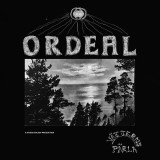
As an important agent of Gothenburg’s underground scene, Dan Johansson has been a member of several experimental harsh noise projects such as Sewer Election, and lo-fi indie folk bands like Enhet För Fri Musik and Amateur Hour. Ordeal is his latest solo output, and might as well be ashes stuck in the blast furnace's edges of his last longing career. Not by means of summing up genres or as a culmination of his musical development, but as a profound music piece weaved in his own household.
With not much more than a synthesizer, Vätterns Pärla is built by trembling, dissonant drones stained in feedback and reverberation, thickly textured by the no-fi quality of the recording, depicting a menacing atmosphere congested with heavy fumes. In Johansson's words, Ordeal "takes inspiration from the early 80’s albums of Maurizio Bianchi, filtered through a Gothenburgian no-fi bleakness. It’s an album for inner voyage, childhood memories, and places that now lost purpose and meaning”.
There's certainly intimacy and nostalgia, yet a claustrophobic, hypnotic ambiance wraps it all up in a contained and narrow space. Emphasis is put on texture rather than on detail, on color rather than on progression, on suspense rather than on conclusion. Tension varies stiffly, sometimes a drone layer dismantles and the mood seems to filter, but ragged edges are never polished. We can feel the walls and the air, which although tarnished, can be breathed in somehow. It's as if waking up in a dark room and having to recognize it with our ears and tact, testing its dimensions and its surface. The stillness in the chamber is like the stillness between gasps of storms.
Without visible stars, an enclosed share of night sky hides a heavy load of industrial debris underwater. These remnants are maybe the pearl regarding the album's title. It all can seem like a dream, a grim mechanical soundscape deafened by hefty, yet sporadic winds. Soil strives to make something grow, but sprouting is kept suspended, held by a dismal presentiment. Long shadows on the ground prove that darkness is about to befall. And as these shadows stretch, almost about to break up in a loud strike, the noise turns white.
UK dance music antagonist Works Of Intent redefines big room techno on ‘Richer Sound’, an album sampler with four new tracks to accompany the digital release of his album of the same title which features with six
all-new tracks alongside six cuts previously released on Laurent Garnier and Scan X's COD3 QR label.
Works Of Intent is a vital voice in the underground who champions the sounds and stories of South Asian creatives in his role as Project Manager and Visual Designer for DAYTIMERS. He has also written multiple essays on race, class and privilege in the industry while laying down expressive sets across four decks at key clubs like fabric, Panoramabar and Rex. His emotive, storytelling sounds have come on labels like Turbo, Rekids and Monkeytown, and outside that, he's a go-to mix engineer for some of the UK's most exciting prospects.
‘Richer Sound’ features six tracks previously released on the label’s Various Artist EPs and six brand new offerings that avoid tired big room tropes. Gone are the snare rolls, white noise risers and kick drops, instead Work's operates under the mantra of "big tunes for big hearts" where musicality makes the motive. The artist himself has taken care of the artwork, mixing and mastering and says of the album, “It’s melancholia turned up so loud you can’t ignore it. It’s a deafening barrage of emotions designed for super clubs. It’s unsubtle, it’s unabashed, it’s unrelenting, and it wears its heart on its sleeve. It’s unmistakably a work of intent.”
Cars and motorsport have been a recurring theme in previous Works Of Intent releases and appear again here in 'Left Unseen', which has the high octane, death-defying adrenaline of rally driving perfectly transposed into a big room techno experience. ''Old Ways, New Mistakes' bounces boisterously with stadium-sized kick drums and synthetic mourning that will break hearts across arenas. 'Dreamt I Saw You' takes fawning imaginations to lucid heights with a synthand cymbal pairing designed to get you stargazing in the club.
‘Richer Sound’ is just the sort of expertly-crafted, genre-busting work of emotional and physical potency you would expect from such a restless nonconformist as Works Of Intent.
Erste Vinylreissue eines Harold Budd-Klassikers, der ursprünglich 1988 erschien. 'The White Arcades' wurde teilweise im Studio der Cocteau Twins aufgenommen und mit Hilfe von Robin Guthrie und Brian Eno produziert. Die ungezwungene Mischung aus glitzernden Synthesizern, klaren Klaviertönen, nebligen Texturen und Raum ergibt ein wunderschönes, kontemplatives Ganzes.
'Obwohl ihre Aura ätherisch und weltfremd ist, ist Buddhas Musik tatsächlich eine beispielhafte Form von menschlich nützlicher Musik. Wenn die alltäglichen Dringlichkeiten des Lebens oder der Unsinn unserer politischen Kultur einen aus der Fassung bringen, was heutzutage so gut wie jeden Tag der Fall ist, kann man diese Musik auflegen und ihre Stille und Anmut in sich aufnehmen. Seine Platten sind genau die Art von Musik, die man bei einem Trauerfall spielen würde, um Ruhe und Trost zu finden - oder bei einer Trauerfeier, bei der jemand zur letzten Ruhe gebettet wird. Harold Budd klingt wie der Himmel auf Erden.' - Simon Reynolds
Ltd. Auflage auf transparentem Vinyl im Gatefold mit Archivmaterial - Harold Budd im Interview mit Carl Stone - plus Download-Code.
"I imagine myself playing these songs in a small club that is slowly burning," says A. Savage of his second solo record, Several Songs about Fire. After more than a decade in New York, the co-frontman of Parquet Courts has left the city, marking his exit with a masterpiece of maturity and a worthy corollary to his first solo venture, 2017"s Thawing Dawn. "Fire is something you have to escape from. This album is a burning building, and these songs are things I"d leave behind to save myself." Produced by John Parish on a 1" 16-track in just ten days in Bristol and studded by the support of Cate Le Bon and Jack Cooper (Modern Nature, Ultimate Painting) as well as saxophonist Euan Hinshelwood (Cate Le Bon), drummer Dylan Hadley (Kamikaze Palm Tree, White Fence), and violinist Magdalena McLean (Caroline), Savage"s outsize gifts as a lyricist and observer - a quality Parish calls "an emotional openness guarded by a laconic wit" - shine. Worrying questions of wealth and poverty, self and other, Savage displays the poet"s gift of knowing when to narrate and when to vanish, leaving the listener to their own emotional privacy rather than instructing them how to feel. The end result is tantamount to psychic odyssey, with "Elvis in the Army" placing us in a subterranean venue where the livid, ratifying cymbal raises the room"s blood pressure and "Mountain Time", evoking an austere waltz playing in a desolate house, returning those listening to life. Influenced by Sybille Baier and Townes Van Zandt, Savage joins a canon of songwriters constantly dilating aperture and perspective. In rendering the signage of laundromats and threats of debt collectors as glistering and totemic as the scope of mountains, rivers, seas, and skies, Savage finds hopes and curses in equal measure.
Prolific songwriter and guitar virtuoso David
Tattersall presents 11 new songs on themes of
memory, dreams, loneliness and love, featuring
nylon string guitar improvisations in the vein of
gypsy jazz legend Django Reinhardt.
The David Tattersall Group are old friends who
rehearsed together for months in a small, smoky,
sweaty room, before recording the album on a
huge red boat moored on the River Thames, all
vintage microphones and wooden walls inside.
Friendship is a vital part of the record’s magic.
Stylistic influences include Ronnie Lane, after
whom one song is named, and the nylon-string
guitar work of Jonathan Richman and Willie
Nelson. A pastoral mood prevails, with swells of
melancholic violin and Spaghetti Western
harmonica, backed by honky-tonk piano and the
dry drum sounds of Neil Young’s ‘Harvest’ period,
while the golden voice of Holly Holden adds a
touch of glamour to proceedings.
David’s process includes much musical
improvisation and stream of consciousness writing,
but his end goal is to couple classic songwriting
with the collective chemistry of musicians playing
live in the studio. His lyrical influences include Tom
Verlaine, John Cooper Clarke and the New York
School of Poets, particularly James Schuyler.
Pressed on 140g white vinyl with OBI strip.
Includes digital download code
"I imagine myself playing these songs in a small club that is slowly burning," says A. Savage of his second solo record, Several Songs about Fire. After more than a decade in New York, the co-frontman of Parquet Courts has left the city, marking his exit with a masterpiece of maturity and a worthy corollary to his first solo venture, 2017"s Thawing Dawn. "Fire is something you have to escape from. This album is a burning building, and these songs are things I"d leave behind to save myself." Produced by John Parish on a 1" 16-track in just ten days in Bristol and studded by the support of Cate Le Bon and Jack Cooper (Modern Nature, Ultimate Painting) as well as saxophonist Euan Hinshelwood (Cate Le Bon), drummer Dylan Hadley (Kamikaze Palm Tree, White Fence), and violinist Magdalena McLean (Caroline), Savage"s outsize gifts as a lyricist and observer - a quality Parish calls "an emotional openness guarded by a laconic wit" - shine. Worrying questions of wealth and poverty, self and other, Savage displays the poet"s gift of knowing when to narrate and when to vanish, leaving the listener to their own emotional privacy rather than instructing them how to feel. The end result is tantamount to psychic odyssey, with "Elvis in the Army" placing us in a subterranean venue where the livid, ratifying cymbal raises the room"s blood pressure and "Mountain Time", evoking an austere waltz playing in a desolate house, returning those listening to life. Influenced by Sybille Baier and Townes Van Zandt, Savage joins a canon of songwriters constantly dilating aperture and perspective. In rendering the signage of laundromats and threats of debt collectors as glistering and totemic as the scope of mountains, rivers, seas, and skies, Savage finds hopes and curses in equal measure.
The most potent memories I have of music are from my early childhood listening to the oldie's station, riding in the back of my Pops' 1975 Cadillac Seville to work alongside him moving plants in Sacramento at the now long gone Capitol Nursery during white hot summer afternoons, and then the drives back home in the purple twilights and oily blue-oranged nights. I'm talkin' The Temptations, War, Earth Wind and Fire, Al Green, Sly and the Family Stone, The Delfonics, Stevie Wonder, Chaka Khan...soul music. I loved the melodrama of it all. The world outside refracted and transmuted through the crackling speakers past Pops' thumping thumb and my tiny whirring mind and left whatever road behind us fundamentally changed in our wake. Through the years other sounds too left its imprint well before I picked up a guitar. Rap, Punk, hardcore, dub, R&B--and a little later in middle school, blues, folk and country. But those early Cadillac memories always remained the bedrock. With folk and blues music, I fell in love with the immediacy of it and found the acoustic guitar economical for all the solitary roaming of my early 20's. All the while I knew that one day, when I had something I felt like I could add, I wanted to incorporate the sound of those early Cadillac memories. But only after I felt established as a songwriter in its most simple form, banging on a wooden guitar and yodeling up some melody did I feel comfortable exploring other sounds and only recently did I find the time and space to do that. The pandemic trapped all the world in their rooms. While recording my last record in the height of it and at the behest of my friend and You, Yeah, You producer Brad Cook and his friend Justin Vernon, I bought my first keyboard. A Roland Juno DS. I started tinkering on it throughout the past couple of years and as I became more stationary started writing songs on different instruments that I accumulated. Layering sounds on garageband in my apartment writing bass and horn parts, making drum loops, adding synth... I became pretty obsessive with the endless possibilities it brought and got quicker and quicker at making songs that way. It was just so fun and limitless.
Since stepping onto the scene over a decade ago, Romanian producer Nu Zau has become a figurehead for the microhouse scene his homeland is synonymous with, racking up releases on the likes of the Italian Modbox helmed Castanea, Stockholm’s Sono Unica and Aurum, sub-label of the renowned white label Telum imprint. Here, we see Nu Zau joining the roster of Basel, Switzerland’s Adam’s Bite, home to material from the likes of Barac, Cristi Cons, Traumer and Ion Ludwig amongst others.
Leading the way on the package is ‘Feeling Alive’ a subtly unfurling journey that twists and turns through bouncy bass notes, an amalgamation of modulating synth flutters, hypnotic voices and crisp percussion. ‘Your Turn’ follows next and shifts gears towards squelchy acid bass, choppy stab sequences and ethereal pads, all underpinned by a crunchy, raw drum workout.
On the flip-side ‘Intense Jazzy’, as the name would suggest leans into a more organic feel with a snaking bass line, a shuffled jazz-tinged rhythm and a murky underlying tension perfectly crafted for dark, smoky rooms. ‘The Light We Carry’ then rounds out the release, bringing swirling resonant synth textures and robotic voices into the mix alongside a swaying sub bass groove and low-slung drums
Die amerikanischen Black-Metal-Herrscher WOLVES IN THE THRONE ROOM kehren mit einer neuen EP zurück, Crypt of Ancestral Knowledge. Sie enthält vier neue Tracks, die die Bandbreite von WOLVES INTHE THRONE ROOMs cineastischem Black Metal und düsterem Akustik-Folk abbildet und den Hörer mit auf eine Reise durch atmosphärische Industrial-Tracks und dunklere klangliche Territorien nimmt. Eröffnet wird die EP mit "Beholden to Clan", einem flammenden Stück Symphonic Black Metal. GitarristKody Keyworth kommentiert: "Hoch oben auf einem heiligen Berg erinnert der Song an die Bedeutung des Zyklus der Wiedergeburt des geopferten Königs durch die halluzinogenen Rechte der Vorfahren. Es ist ein wilder Trip. Hail Othila!" An anderer Stelle folgt "Twin Mouthed Spring".
Dieser neue Track enthält Gesang und Akustikgitarre des WOLVES IN THE THRONE ROOM-Gründungsschlagzeugers Cedar Serpent, der vor kurzem nach einer jahrelangen Live-Pause auf die Bühne zurückgekehrt ist. Er kommentiert:
"Dieser Song ist eine Reise zu einer tiefen Quelle von Leidenschaft und Kreativität. Themen aus der keltischen Mythologie werden auseinandergenommen und neu interpretiert." Seite B der EP zeigt eine andere Seite der rätselhaften Band: "Initiates of the White Hart", eine atmosphärische Industrial-Interpretation von "Spirit of Lightning", führt die Band in tiefere, dunkle, psychedelische Gewässer.