Yuvi Havkin aka Rejoicer returns with an exceptional collaborative album, California Space Craft. On this aptly titled record, he joins forces with seasoned LA bass polymath Sam Wilkes — known for his inspired studio work with Sam Gendel and his dynamic live performances alongside Louis Cole and KNOWER — and drummer Tamir Barzilay, completing the LA-connected trifecta alongside a select handful of key featured guests. The idea for California Space Craft was born out of a series of inspired live sessions in Los Angeles between 2019 and 2022, notably at Listen to Music Outside in the Daylight Under a Tree, where the trio’s natural chemistry first began to bloom. The resulting recordings encompass a wide variety of inspired sound stylings, as one would expect from any of these accomplished artists on their own; however, the sum is truly greater than the parts here, with the fluidity of their freeform improvisations over a dedicated three-day recording session feeling remarkably focused as a cohesive whole. Opening track “Traveling Light” sets the LP’s tone with equal parts Sly & Robbie-style, space echo– drenched rhythms and the cozy kosmische, guitar-led feel of early-2000s genre-fluid explorers like Tortoise. As we continue on to “Ritual in G#,” we are reminded that this is indeed a unique and timeless sonic space the trio has created, as Havkin’s crisp Rhodes chords anchor an ever-evolving psychedelic sound bed. The soaring trumpet of Avishai Cohen adorns the Afrobeat-indebted “Lion Water,” with Barzilay laying down a proper Allen-esque groove, while “Further (with you),” featuring Nitai Hershkovits on keys, offers a defining look at the titular concept of the album — with pure Cali feels coalescing effortlessly into sciNew Release Information fi narrative modes and a proper dose of Rejoicer futurism. Elsewhere, “Her Hair in the Air” shines with fresh polyrhythmic intention, illustrating the balanced bond between the three collaborators at their conversational peak, and the brisk synth strokes of “Early Porpoises,” alongside LP closer “Oceanic Friends” — again ideally named — double as a grand, in-stereo ride into the blissful Pacific sunset horizon. California Space Craft embodies the power of open, collective intention and musical kinship, offering memorable, uplifting moments and an aural glimpse of hope, warmth, and loving melodious calm in an otherwise quite chaotic time for humanity.
quête:who else
- Tongue
- Pain
- Can't Feel It
- Longer
- Onenine-Eight-Zero
- Eclipse
- Skem
- I.d.c
- Beal Feirste
- Ache
The beauty, confusion, complexity, and intensity of their youth - lived under the shadow and around the scars of conflict - are entangled in the industrial dance-punk hybrid encoded in the record's DNA, aptly entitled Crystalpunk. "This record is us waving a flag for that generation -- the ones who inherited confusion, resilience, and a fractured sense of self." They're waving that flag as intensely as possible too. For the uninitiated, Chalk mainlines the reaction between genres, eras, and cultures, commuting this collision into their sound. The Belfast group could comfortably power an underground warehouse party after-dark, incite a mid-day festival mosh-pit, or shake an arena on any given evening.
Their power has seamlessly translated to the stage with the group packing venues and delivering alternately sweaty and electrifying performances to a growing rabid fan base. As a group, they've sold out shows across the UK, EU and USA, notched festival performances such as Glastonbury, SXSW, BBK, Trans Musicals and more across 11 countries and were handpicked to tour alongside IDLES and Fontaines D.C.. Coming from dissimilar backgrounds and rallying together naturally, Ben and Ross first crossed paths in film school. As the story goes, Ben had noticed a framed poster of Dublin disruptors Gilla Band in one of Ross's Instagram photos and felt a kinship before ever actually speaking to him.
"Nobody else at our school was into experimental noise guitar bands, so that was all I needed to see," laughs Ben. Emerging in 2022, Chalk initially made waves with songs like "Them," "Velodrome," and "Static." Ultimately, they come-of-age and tell a story that resonates beyond borders. Not just a portrait of the band, but one of their home, a complicated place where the sacrifices made and risks taken by activists, artists, ravers and punks created the only environment that a band like Chalk could emerge from. Crystalpunk is not about choosing a side, it's about choosing the future.
- 1: Lemonade Tycoon
- 2: Anti-Bird-Spike-Bird-Nest
- 3: Interlude (Stride)
- 4: Allcapsallbold
- 5: Pet Boss
Taupe’s latest album release, waxing | waning delivers jazz experimentalism, ‘skronk’, avant-rock, and electronics, by the Glasgow-based trio, due out via Minority Records. Across its seven tracks, waxing | waning captures Taupe’s approach – bold and boundary pushing – shaped by a fresh shift in the band’s dynamic and compositional approach.
Taupe’s waxing | waning, co-composed and realised by its players in a studio that was once an undertaker’s premises in Glasgow, is an absolutely affirmative album, an act of cultural defiance in desperate times.
Comprising Mike Parr-Burman (guitar, bass guitar, electronics), Jamie Stockbridge (alto and baritone saxophones) and Alex Palmer (drum kit, percussion), Taupe work up a storm of skronk, free jazz and harmolodic frenzy whose closest relations include Zu, Melt Banana and John Zorn. However, waxing | waning is from its opening, stuttering blasts, an exercise in seeking out and claiming new territory, finding unique and novel permutations in which jazz, rock, electronics interbreed at breakneck pace. Here is a group determined to say and do things they don’t get to say and do elsewhere in their musical lives.
‘Lemonade Tycoon’ hits the ground skronking. It’s cubistic jazz, cumulative in its impact, avoiding the white lines of the conventional freeway, bridling, bustling, coming at you from all angles – a three way conversation of astonishing rapidity, fast track, telepathic communication – everyone from James Chance to Albert Ayler coming at you at once, before morphing in to a spidery scrawl of electronics and furious percussion. ‘Anti-Bird-Spike BirdNest’s‘ title somehow sums up the sort of mental images evoked by the music – its sheer creative disobedience, as if being chased in vain, like a delivery rider evading capture by ICE agents -– shapeshifting, assuming different shades, sprouting metal quills and, in its midsection, seeming almost to swallow itself alive, before regurgitating itself in a sublime mess.
‘Interlude (Stride)’ is not exactly ambient, more a horizontal enmeshment of percussion, drones, reverberant noise, electronics, a sonic mulch. ‘allcapsallbold' reminds of early Aksak Maboul, in its playfulness, a haywire series of short phrases, subject to mechanical interference, a complex weave of irregular rhythms, increasingly eloquent sax phraseology and caustic guitars, which land heavier and heavier. ‘Pet Boss' is the new jazz equivalent of a highly evolved, mature conversation among brilliant equals, sharp, empathetic, complementary, rising to a collective, joyful noise. On the title track, electronics descend like a shower of bright particles, intensifying in their luminosity, whitening the skies, as sax and drums kick up a tempestuous, spontaneously sculpted noise that summons the ghosts of the great free jazz players, before a dark calm descends slowly. Finally, ‘Turn Push Kick’, a burgeoning chatterstorm of electronics, before the group kicks in, at angles to one another, led by abrasive guitars, reminiscent of Sunn O))) in their ritualistic concussion, riffing, digging deep amid squealing sax and piledriving percussion.
Impatience is thrilled to present Leaving Memory, the latest album-length work by Piper Spray and Lena Tsibizova. Leaving Memory is a searing distillation of the duo’s ouevre - it’s eleven prismatic electronic seances combining for a mind warping wormhole with it’s own internal (il)llogic, where pop, ambient, and industrial music convene beneath a rugged HD of digital processing and brain fog. Equally rosy with nostalgia as it is ominously forward looking, Leaving Memory defies easy categorization and makes for an astounding, confounding listen.
By turns violently abrasive and disarmingly touching, Piper and Lena deploy sounds that fracture and disintegrate, burn up and explode, synthetic supernovas that give the record an unmistakable, inimitable texture. Song structures often abide by their own blueprint - heading in one direction before making an abrupt dive elsewhere. Bursts of vibrant colour lurk below layers of grayscale noise. Unidentifiable voices deliver secret messages from the murk. When rhythm’s emerge they ground the tracks to some unknown terrain and invigorate.
Lame Line veers towards the sweeter end of their spectrum, a hazy plaintive repetition increasingly lashed with friction, before Exit erupts with clanging rhythm and shards of distortion. Diagnosis is an almost sweet alt-pop song, Lena’s vocals yearning beneath a dubby shuffle, while Keeper Of The Void’s possessed incantations open up to a ripping, fried climax. Beryl Grey releases the pressure gauge, a gently lilting drift arpeggiating as the sun sets, and Lost Cars sweats through claustrophobic drones and bird song before the clouds part on a serene scene. Leaving Memory closes with Shin, offering a genuinely sweet resolution and a gentle landing back down to earth of either footsteps or fireworks, swelling synthesized horns and woodwinds, a kiss on the cheek for making it out the other side.
On Leaving Memory, Piper Spray & Lena Tsibizova share their uniquely discordant take on freaky music for unsettled minds, an intensely energized set that offers a deeply evocative, unimaginable otherworld for adventurous ears.
Piper Spray and Lena Tsibizova have been producing music together since 2020. Leaving Memory is the first to be presented in the LP format. Piper has previously released music via Orange Milk, Hausu Mountain and Gost Zvuk, as well as his own Singapore Sling Tapes label. Lena works predominantly as a photographer, and together Piper and Lena have released music via radio.syg.ma and Kartaskvazhin. Both make music as part of Air Krew, who have released music on the Echotourist and Motion Ward labels. They’re both currently based nowhere.
Leaving Memory was written, produced and mixed by Piper Spray and Lena Tsibizova, and mastered by Sergey Podluzhniy. Cover photo by Lena Tsibizova, design and layout by Justin Sloane.
Alex Rex, the project of acclaimed musician and former Trembling Bells bandleader Alex Neilson, is set to release his fourth and final studio album, The National Trust, on March 28th. Written in the wake of the sudden death of his younger brother, Alastair, the album is a poignant reflection on loss, love, and renewal, deeply rooted in the landscape of Carbeth—a cabin community in the Scottish countryside that Alastair called home. For Neilson, the cabin became both a physical and emotional project, a symbol of restoration and reconnection.
"For the first four years after Alastair died, his cabin lay empty and exposed to the remorseless Scottish weather. It came to look like a rotten tooth in a beautiful mouth. Cladding was dropping off its veneer, the ashen baubles of dead wasps nests clung to the rafters, all his possessions were just as he'd left them but eaten by mice, moths and time. Ashtrays still carried the crushed centimetres of his old tab ends. The cabins are so joyfully animated by their host's specific personality and this one looked like a haunted house. Guilt, unrealised hopes and encroaching nature yoked together in a wandering sadness. Combined with the fact that I didn't know the right way round to hold a hammer made the project of its restoration seem hopeless.”
Neilson, however, gradually began chipping away at the task, determined to transform the cabin into something he hoped would resemble “a National Trust site occupied by a psychopath,” with a little help from some friends, including Lavinia Blackwall and Marco Rea.
“They poured love into the cabin and helped restore Alastair's original vision. The project also helped restore my relationship with Lavinia which had fractured after Trembling Bells broke up in 2017. Alongside long-term Rex lieutenant Rory Haye, we applied the same intensity of dedication that we did in renovating the cabin, into creating The National Trust.”
As with Neilson’s previous albums, the recording process was intentionally unpolished, with songs presented in the studio with no rehearsals and captured in just a few takes. This raw, immediate approach amplifies the emotional weight of the album, which Neilson describes as being at a “personal apex of sour self-reflection, mock misanthropy, and self-exposure.” Longtime collaborators Lavinia Blackwall, Marco Rea, and Rory Haye return, alongside guest musicians like Jill O’Sullivan (Jill Lorean) and Trembling Bells guitarist Mike Hastings, to bring Neilson’s vision to life. The result is a deeply personal and multifaceted work, blending acid wit with haunting introspection.
The songs on The National Trust traverse a wide emotional and thematic range. The title track opens the album with a sharp and confessional edge, exploring love, loathing, and cultural critique with Neilson’s signature wit. “Boss Morris” pays tribute to the all-female Morris dancing troupe that reinvents British folk with vibrant energy, while “Two Kinds of Song” turns self-referential humour into an avalanche of remorse, culminating in the unforgettable chorus: “I’ve got two kinds of song. Which one will it be; one where I hate myself or one where you hate me?” Elsewhere, tracks like “Psychic Rome” draw from the decadence and hysteria of ancient Rome, while “The Coward in the Tower” breaks new ground as the only song Neilson has composed on an instrument before recording.
Throughout the album, Neilson’s lyricism is as vivid as ever, transforming personal tragedy into poignant and often darkly humorous art. Yet, there is a sense of finality to this work. "Songwriting has encouraged me to see the whole world as a resource. The things people say and throw away can be chiselled and polished and plopped into a lyric. It’s the same with building the cabin- scouring the edges of society for pallets, discarded wood, ornaments for the garden. But while song writing brings to life orphaned parts of my personality, the cabin is a synthesis of all my interests – nurturing my emotional health instead of exploiting it. With that in mind, I think this will be my last album as Alex Rex.”
With The National Trust, Neilson closes a significant chapter of his career, blending masterful musicianship with deeply personal storytelling. Known for his collaborations with artists such as Bonnie "Prince" Billy, Shirley Collins, and Current 93, as well as his decade-long tenure leading the psych-folk outfit Trembling Bells, Neilson has long been celebrated for his eclectic and uncompromising vision. This final album serves as a fitting culmination of his journey as Alex Rex, capturing the essence of his artistry while offering a profound exploration of loss, renewal, and the enduring power of love.
- Only Love
- Big Red Sun
- Stormy Sunday
- Where The Water Meets The Land
- Not On The Radar
- Daybreak
- Where Would I Be
- Jamais A L'heure
- Rainbow Days
- If I Could
Includes demos of every track from the original album, stripped back to (mainly) guitar and voice. Originally a Norman Records exclusive, these are the last few copies available from a limited pressing of just 300. Mark Fry is a France- based, English singer- songwriter/ artist whose debut album, 'Dreaming With Alice,' released in Italy in 1971, became a much-bootlegged "acid-folk" classic three decades later. Fry returned to recording in 2008 and has since released 4 more acclaimed studio albums. These days, far less "acid" than in his youth, Fry still knows his way around a beautiful melody. This album of sketches is resplendent with love songs, the beauty of nature and the passing of time Fry is certainly no stranger to the preparatory sketch. An artist in the truest sense of the word, renowned equally for his decades- long career as a painter of vibrant abstracts and as a cult psychedelic minstrel turned intimate, evocative singersongwriter, his atelier, housed in a converted stable building at his Normandy home, literally doubles as his music studio. It was in this space that Mark's fifth solo album, 'Not On The Radar,' released back in May, was recorded in the summer of 2024, with the singer pushing back his easels to accommodate a four-piece live band and vanloads of miscellaneous accompanying paraphernalia.
Before that, the studio had been a considerably emptier space in which working versions of the album's ten languidly bucolic compositions were first demoed by the solitary songwriter (although some emergent tracks were also captured at Balintore - the home studio of Mark's regular guitarist, Iain Ross, housed on the latter's London-moored canal barge). With those sketches presented here in the same running order as on the mothership longplayer, this new album stands as a document of process - offering the opportunity for track- by- track comparison for those already familiar with Not On The Radar. Crucially, it also makes for a very fine standalone album in its own right, which, if nothing else, bears testament to the inherent robustness of Mark Fry's songwriting.
At the start of this summer, following a three-year hiatus for Daphni (punctuated only by his first ever collaborative Daphni track ‘Unidos’ alongside Sofia Kourtesis), he dropped ‘Sad Piano House’. The track represented something of a continuation in the Daphni catalogue, its roots growing from Cherry’s ‘Cloudy’ and its subsequent Kelbin remix, something in that song’s makeup having a profound effect when played on dancefloors by Snaith and countless others. ‘Sad Piano House’ deployed more intangibly irresistible bendy piano to equally satisfying effect and continues to achieve similarly rhapsodic dancefloor saturation.
Though a sizeable gap for Daphni releases, between Cherry and Butterfly however of course sits Honey, the latest Caribou album and one that saw the more instantaneous and dancefloor leaning traits of Daphni peaking through the cracks more than ever before. This blurring of the lines leads to an intriguing collaboration in Butterfly’s lead single ‘Waiting So Long (feat. Caribou)’. An unlikely duo - in that both artists are the same man, Dan Snaith - ‘Waiting So Long’ is not so much an identity crisis, ego trip, or the result of a chemical spill in the Snaith laboratory. It’s simply a track that Snaith felt for the first time belongs to both aliases, and might appeal to fans of both. He has never sung on a Daphni track before, and did not set out with the intention to do so this time, and yet this strange billing was born.
Daphni music has always been Snaith’s way of hitting directly to the core of the dancefloors he spends so much of his time playing to, and those dancefloors have been steadily expanding as his name grows, with the music following suit. This album however also draws from further back with a definite kinship to the very first Daphni album, the invigorating bag of ideas that was Jiaolong.
Butterfly is a showcase of the wonderful variety and surprising twists and turns that made that album such an exciting new prospect and that still to this day make Snaith such an intriguing DJ. There are more heavy hitters here, tracks that fill those dancefloors better than anyone, like ‘Clap Your Hands’ which picks up the energy of ‘Sad Piano House’ and flips it, exposing the gritty and intoxicating underbelly of Snaith’s hitmaking side, while retaining the playful urgency that runs through all of his work of late. Meanwhile ‘Hang’’s comic-strip horns are unpinned by gleeful force, unrelenting and thrillingly unshakeable. Elsewhere though comes a clutch of other tunes that might creep out somewhere more off the beaten path, a path Snaith has never stopped seeking in amongst his larger billings. ‘Lucky’ is squirmy and elusively intoxicating, ‘Invention’ skitters down meandering, inviting corridors, ‘Talk To Me’ grumbles and broods in the murk, and ‘Miles Smiles’ could roll on endlessly, so confident in its groove. There are no obvious peaks in these tracks or unifying moments, in fact many of them really have no business being on the dancefloor at all, and yet in the right setting, they could be the most fun to be had all night.
One such club is a good microcosm for the ethos of Butterfly as a whole. “Around the time I was finishing up this album I played a long set in a club called Open Ground in Wuppertal, Germany.” Snaith recalls, “It’s kind of, in one sense, the platonic ideal of the kind of club I’d want to play in. Every single decision has been taken, at great expense, with the aim of making the perfect sounding medium sized club room. But on top of it being the perfect acoustic environment it also is run by an amazing collection of people in a way that gives it a sense of community that dance music at its best provides. It is an absolute pleasure to play in that room to a crowd of people who come from all over. Playing in there you feel like you can play anything, and I played works in progress of pretty much every track on this album in my set there. Don’t get me wrong, I love playing a short set at a festival or in a more raw warehouse kind of club where you bang it out and only really functional music works but on record I guess the point of these Daphni records is to keep in mind a more expansive idea of dance music where the parameters are broad and the church is broad. I think that actually, putting really functional stuff next to weirder tracks (both on an album and in a dj set) might be the thing that’s still most interesting to me.”
This is the feeling that’s most palpable on Butterfly, and in every single time you see Snaith DJ. Right from the inception of the Daphni alias - and even before that – the thrill of trying stuff out, pushing at the boundaries has always been there and on Butterfly is present in all its twists and turns. It leaps all over the place and yet it hangs together, never feeling like a grab bag of dancefloor utilities but rather a distillation of all the strings to Snaith’s bow, exhilaratingly human and unified by one singular concept – simple and joyful exploration.
At the start of this summer, following a three-year hiatus for Daphni (punctuated only by his first ever collaborative Daphni track ‘Unidos’ alongside Sofia Kourtesis), he dropped ‘Sad Piano House’. The track represented something of a continuation in the Daphni catalogue, its roots growing from Cherry’s ‘Cloudy’ and its subsequent Kelbin remix, something in that song’s makeup having a profound effect when played on dancefloors by Snaith and countless others. ‘Sad Piano House’ deployed more intangibly irresistible bendy piano to equally satisfying effect and continues to achieve similarly rhapsodic dancefloor saturation.
Though a sizeable gap for Daphni releases, between Cherry and Butterfly however of course sits Honey, the latest Caribou album and one that saw the more instantaneous and dancefloor leaning traits of Daphni peaking through the cracks more than ever before. This blurring of the lines leads to an intriguing collaboration in Butterfly’s lead single ‘Waiting So Long (feat. Caribou)’. An unlikely duo - in that both artists are the same man, Dan Snaith - ‘Waiting So Long’ is not so much an identity crisis, ego trip, or the result of a chemical spill in the Snaith laboratory. It’s simply a track that Snaith felt for the first time belongs to both aliases, and might appeal to fans of both. He has never sung on a Daphni track before, and did not set out with the intention to do so this time, and yet this strange billing was born.
Daphni music has always been Snaith’s way of hitting directly to the core of the dancefloors he spends so much of his time playing to, and those dancefloors have been steadily expanding as his name grows, with the music following suit. This album however also draws from further back with a definite kinship to the very first Daphni album, the invigorating bag of ideas that was Jiaolong.
Butterfly is a showcase of the wonderful variety and surprising twists and turns that made that album such an exciting new prospect and that still to this day make Snaith such an intriguing DJ. There are more heavy hitters here, tracks that fill those dancefloors better than anyone, like ‘Clap Your Hands’ which picks up the energy of ‘Sad Piano House’ and flips it, exposing the gritty and intoxicating underbelly of Snaith’s hitmaking side, while retaining the playful urgency that runs through all of his work of late. Meanwhile ‘Hang’’s comic-strip horns are unpinned by gleeful force, unrelenting and thrillingly unshakeable. Elsewhere though comes a clutch of other tunes that might creep out somewhere more off the beaten path, a path Snaith has never stopped seeking in amongst his larger billings. ‘Lucky’ is squirmy and elusively intoxicating, ‘Invention’ skitters down meandering, inviting corridors, ‘Talk To Me’ grumbles and broods in the murk, and ‘Miles Smiles’ could roll on endlessly, so confident in its groove. There are no obvious peaks in these tracks or unifying moments, in fact many of them really have no business being on the dancefloor at all, and yet in the right setting, they could be the most fun to be had all night.
One such club is a good microcosm for the ethos of Butterfly as a whole. “Around the time I was finishing up this album I played a long set in a club called Open Ground in Wuppertal, Germany.” Snaith recalls, “It’s kind of, in one sense, the platonic ideal of the kind of club I’d want to play in. Every single decision has been taken, at great expense, with the aim of making the perfect sounding medium sized club room. But on top of it being the perfect acoustic environment it also is run by an amazing collection of people in a way that gives it a sense of community that dance music at its best provides. It is an absolute pleasure to play in that room to a crowd of people who come from all over. Playing in there you feel like you can play anything, and I played works in progress of pretty much every track on this album in my set there. Don’t get me wrong, I love playing a short set at a festival or in a more raw warehouse kind of club where you bang it out and only really functional music works but on record I guess the point of these Daphni records is to keep in mind a more expansive idea of dance music where the parameters are broad and the church is broad. I think that actually, putting really functional stuff next to weirder tracks (both on an album and in a dj set) might be the thing that’s still most interesting to me.”
This is the feeling that’s most palpable on Butterfly, and in every single time you see Snaith DJ. Right from the inception of the Daphni alias - and even before that – the thrill of trying stuff out, pushing at the boundaries has always been there and on Butterfly is present in all its twists and turns. It leaps all over the place and yet it hangs together, never feeling like a grab bag of dancefloor utilities but rather a distillation of all the strings to Snaith’s bow, exhilaratingly human and unified by one singular concept – simple and joyful exploration.
In his own time, in his own tone and in his own company.
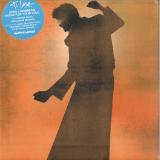
‘Win and lose without losing oneself’’ This line from French rapper Oxmo Puccino greatly accompanied David Walters while composing his fourth studio album. Over the eleven tracks on ‘Ti Love’, David took his time to find the right tone and in turn, tell his truth.
‘Ti Love’, is a French-Creole abbreviation for “petite love”, meaning ‘little love’, evoking that sweet fondness found in those small gestures and little acts of kindness.
Think of things like young kids' brotherly love or a stranger lending you a helping hand, while expecting nothing in return. It’s these motions that allow this album to feel full of real life, carried by beating drums that also pull at our heart strings.
Basing himself in a small village in Martinique, where David had not long since scattered the ashes of his late mother, the multi-instrumentalist decided to remain there and let the writing of Ti Love pour out from deep inside him. Taking influence from around the island, the energy from his makeshift studio set up in Fort de France, allowing a resilient yet grieving man to recount, let go and come to terms with his recent loss.
So embracing these new circumstances, on the rugged coastal Caribbean island of Martinique, David took up an artist’s residency in the island’s capital Fort de France, located near the town’s port is the ‘Manoir des Artistes’, a bustling recording studio space. A place where the walls shake as the latest sounds being created are blasted by locals and visitors alike. Most studio doors are wide open; as music here is a huge part of everyday life, feedback from encouraging neighbouring musicians is on hand and welcomed. A contrast to the isolation often assumed with working in more traditional music studios.
It was here in this stimulating environment that David recorded Ti Love’s initial demos.
With his first collaborator onboard, Neeweed, a 25-year-old producer and gospel expert who David met at the Martinique Jazz Festival.
Of the album’s initial versions of the record David recollects: ‘It took me three years to write it, then I rewrote it, reworked it. In the end I'm really glad I stepped back and listened to myself.’ I found a great ally in GUTS, who ended up being the artistic director of the record”
David surrounded himself with the right people who helped him express himself in the best possible way. He called on other friends and musical comrades; album opener and title track, ‘Ti Love’ features the incomparable Fatoumata Diawara (World Circuit Records / Africa Express) and further along additional production came in from; Izem, Art Of Tones, and GUTS himself, who all added just the right amount of ‘little love’ to this
project. Further helping hands came from Californian producer and DJ Captain Planet, who David was introduced to a few years ago. Closer to home, here in Europe, the German producer Bluestaeb appears on two tracks: the very catchy disco funk ‘Mr Maraboo’ and ‘Kite Koule’, the latter being the first single lifted from the album, where David invited Nigerian guitarist Keziah Jones.
Elsewhere on the album, fellow Heavenly Sweetness recording artist Blundetto contributed two tracks; the reggae ‘Voodoo Love’, which is David's tribute to Studio One, and the very sweet and resilient ‘Bon Voyage’, which closes the album... "It's gold, it doesn't need anything changing.” remarked David - ‘Bon Voyage’ is a goodbye to his mother, whose voice called him from the bottom of the sea one night while he was surfing during the full Moon.
Released almost 20 years after his debut album ‘AWA’ released on French imprint Ya Basta, home to Gotan Project and many others, David boasts a long list of radio supporters including; Gilles Peterson, Cerys Matthews and Don Letts at the BBC, while further field Cosmo Radio in Germany, and KCRW in Los Angeles.
On this new record, David has shown sincerity and vulnerability, while still honouring the infectious groove that he is known for the world over. Despite the upsets, a little love can indeed go a long way.
CREDITS:
Produced by Bluestaeb / Blundetto / Captain Planet / Izem / Art of Tones
A&R : Guts
Mixed by Mr Gib @ Onetwopassit
Except "Bon Voyage” and "Voodoo Love" mixed by Jerome “Blackjoy” Carron
Mastered by Benjamin Joubert @ Biduloscope
Art by Elliott Walters
- 1: Where We Breathe
- 2: The Only Honest Love Song
- 3: This Broken Killswitch
- 4: Victor Versus The Victim
- 5: Sketch Artist Composite
- 6: A Torrid Love Affair
- 7: The Only Honest Love Song (Yamc)
- 8: Sketch Artist Composite (Yamc)
- 9: The Anatomy Of The Journey (Yamc)
- 10: Victor Versus The Victim (Yamc)
- 11: Sketch Artist Composite (Demo)
- 12: The Anatomy Of The Journey (Demo)
On one hand, it could be bumming out the people who enjoyed hearing what the band evolved into. On the other hand, nostalgia sells...and daddy needs to eat! So...Nevermind 2! Broken Bones and Bloody Kisses has seen a few vinyl pressings in the past, but landing a physical copy of You Are My Canvas (which was only released on burned CDs, crafted in the Lovat- Frasers' basement) is almost impossible. And ooooooh boy...the pre- demo demo (or PDD) versions of "Sketch Artist Composite" and "The Anatomy of the Journey"? Those puppies - with me (Connor...hi!) on vocals/drums and Jeff playing everything else - were only available on the Y2K version and basically only used to recruit other band members. Smash all these old chestnuts together in one release and see what happens! Why not? It perfectly captures the whole spirit of early BOYS NIGHT OUT. But what title does one bestow upon such a sonic siphonophore? There are 3 versions of "Sketch Artist Composite".
Do you call it Sketch Artist Composite Plus Other Songs? Do you go all in on a lyric- based title like Fuck Us Where We Breathe? Decisions, decisions! Probably best to follow Costa's sage advice and go with Nevermind 2. So, almost exactly two decades after our first show - July 19, 2001 @ The Oakville Pine Room with Sky Came Falling, Unearth, and Rise Over Run - may we present unto you, Nevermind 2! What's old is new again, probably?
- A1: Pale Dogwood (4:21)
- A2: Field Drab (5:14)
- A3: Ceda Chast (5:10)
- A4: Wild Blue Yonder (8:39)
- B1: Inchworm (6:23)
- B2: Vetiver (3:50)
- B3: Orange Crayola (7:37)
- C1: Black Olive (5:19)
- C2: Wild Strawberry (4:00)
- C3: African Violet (6:39)
- C4: Deep Sky (4:52)
- D1: Permanent Geranium Lake (6:23)
- D2: Carnelian (4:09)
- D3: Helltrope (7:56)
Ivan The Tolerable returns with Chromophobia, an expansive new double album and his fourth for Riot Season after ‘Water Music’ & ‘Vertigo’ (both 2024) and ‘An Orphan Form’ (2025)
Chromophobia carries with it a deep personal history. The earliest recording sessions date back to 2018 at the IDI in Middlesbrough, engineered by longtime collaborator Nigel Crooks over the course of three weekends. The material was left unfinished for years, shelved for reasons that accumulated and compounded - until the tragic passing of Crooks in 2023. His unfinished work lingered, and the desire to complete it became a mission.
“In the end, I finished this record for Nigel, above all else,” says Oli Heffernan (Ivan The Tolerable). “It always annoyed him that it never got done.”
To bring the album to completion, the original stems were passed to producer Hugh Major (formerly of Benefits) in early 2024. Across a year of meticulous experimentation - countless versions, radical reconstructions, entire songs torn down and rebuilt - the album transformed into something wholly new. The final collection spans 14 tracks, reimagined from the ground up yet still anchored to the spirit of the sessions that began it.
“It’s a very different beast from where it started,” Heffernan adds, “but I think Nigel would really like it - and be glad it was finally finished.”
Chromophobia stands as both a reinvention and a tribute: a document of persistence, creative overhaul, and the enduring impact of a lost collaborator.
- A1: Condition Red - The Goodees
- A2: Go Away - The Murmaids (Of ’66)
- A3: Where Is The Boy Tonight - The Charmaines
- A4: One Way Street - Beverly Williams
- A5: What Did You Do Last Night - The Drake Sisters
- A6: Forget Where I Live - The Half-Sisters
- A7: He Told Me He Loved Me - Miss Cathy Brasher
- B1: Don’t Let Him Hurt You - Les Chansonettes
- B2: He’s A Lover - Tutti Hill
- B3: Anything Worth Having (Is Well Worth Waitin’ For) - Joan Moody
- B4: I’ll Come Running Over - 2 Of Clubs
- B5: Hey Boy - The D.c. Blossoms
- B6: Wild Side - Denita James
- B7: Eddie My Love - The Sweethearts
From Ace Records’ early days, there’s always been a place in our hearts for music’s feminine side. A year having flown by since the release of our last compilation spotlighting the US girl group sound of the 60s – think castanets, anguished teen sirens, Svengali-esque producers and mini-sonatas about dreaming, dancing and moody boyfriends (sometimes deceased) – means the time has come for a new vinyl-only volume.
As 1968 drew to a close, the golden age of girl groups had seemingly been and gone: the Shangri-Las, Ronettes and Chiffons, for example, hadn’t had a hit record of note since 1966. Then along came ‘Condition Red’, a cleverly produced psychodrama performed by the Goodees, who grace the front cover and open the top side of this new comp in dramatic style. Over on the generally more soulful second side, Les Chansonettes are first up with ‘Don’t Let Him Hurt You’, a big production stomper written with Martha & the Vandellas in mind.
Elsewhere, Beverly Williams performs the very Lesley Gore-like ‘One Way Street’; ‘Go Away’ by the Murmaids (of ’66) is a lavishly produced number with a chamber pop vibe; ‘What Did You Do Last Night’ by the Drake Sisters was recorded in Phase-O-Phonic Sound; the lyrics of Denita James’ ‘Wild Side’ call to mind genre classics such as ‘He’s A Rebel’, ‘Out In The Streets’ and ‘Chico’s Girl’; and the Sweathearts close the show with a gorgeous harmony-filled update of the mid-50s oldie ‘Eddie My Love’. As usual in this series, the inner sleeve features a picture-packed 4,000-word track commentary by long-serving compiler Mick Patrick.
Repress!
Second Phase (aka Joey Beltram and Mundo Muzique) are 2 legendary producers whose output shaped an entire generation of ravers, DJs and producers minds.
'Mentasm / Mind To Mind' is one such influential release, literally creating new styles, new directions and impacting on dance music for decades to come. Unique programming and fresh sounds made their records stand out head and shoulders above everyone else's output. 'Mentasm' particularly broke ground with it's now infamous 'hoover sound', influencing house, techno and trance music to come and even spilling over into the nascent hardcore, jungle and D&B scenes where it was often imitated or sampled by producers who wanted that ruff, visceral feel for their own tracks, but didn't know how to create it themselves. A new energy was born and it emanated from this milestone 12". 'Mind To Mind' on the flipside is equally as deadly, but in a deeper, more spaced out realm it maneuvers and pulls into a trippy early morning space, the yin to 'Mentasm's yang. This is a quintessential techno record, a glimpse of innovation from back in the day. File under 'classic'.
This special 2021 edition is reissued by R&S Records from original master sources, remastered by Curve Pusher.
- Kollaps
- Grovt Skadeverk
- Riv Skorpen Av Såret
- Skreddersm
- Parasitt
- Traumemarsj
- Rottebitt
- Til Ettertids Plage
- Klarhet Og Dybde
- Rennestein
- Svikter Din Neste
- Naglet Til Livet
- Klangbunn Fra Helvete
NEW VERSION ON WHITE VINYL! After turning heads with the relentless 2024 EP Råtner på rot, Jordsjuk are back with their full-length debut: Naglet til livet (translates to 'Nailed to life'). Across twelve tracks and 36 minutes, the band delivers a visceral strike of raw, uncompromising metal - free of gloss, gimmicks and nonsense. Naglet til livet is a kaleidoscope of destruction, decay, and ugliness, the band states. From the thrash-fueled chaos of "Grovt skadeverk" and the suffocating aggression of "Parasitt", to the punk-driven decay of "Rennestein" and the gloomy introspectiveness of "Svikter den neste", this is the sound of filth, concrete, ruin, and rage. Twelve tracks of in-your-face, riff-driven and organic metal. Jordsjuk consists of Renton (drums), Mannevond (vocals), Sagstad (guitars), and Larsen (bass) - seasoned musicians from the Norwegian underground. Their sound sits somewhere between black, death, thrash, punk, and rock, forging a sonic identity as raw as it is deliberate. The lyrics, written in Norwegian, dive into personal collapse, trauma, and apocalyptic despair, delivered with uncompromising honesty. Drums were recorded at PhatCat Studios (Rygge, Norway), with the rest captured at various locations in Oslo. Mixing was handled by Kurt Ballou (Converge) at God City Studios (Salem, MA), while Brad Boatright took care of mastering at Audiosiege Studio (Portland, OR). The result is exactly what it needs to be: dirty, sharp, and heavy. Jordsjuk is necro music for necro times, says the band, and after hearing Naglet til livet, it's hard to disagree. The band were booked to by:Larm festival and Midgardsblot in 2025, and it's on stage that their sonic violence truly takes over. For those who've seen them live, expectations are high. For everyone else - prepare to be run over.
- Somewhere, Nowhere
- Angles Mortz
- False Prophet
- Fluoride Stare
- The Void
- Ascension
- Just A Kid
- Host
- Landslide
- Renaissance
- 7: Am
- Blue In Grey
2026 Repress
Flickering in ultraviolet, there is an elusive place where blue pill meets red, ups become downs, and day merges with night. Those liminal spaces where anything is possible is where you’ll find Nightbus and their hypnotic debut album Passenger. Doom, uncertainty, and opportunity lurk in the shadowy corners of their murky existence with stops at disassociation, co-dependency, and addiction before reaching its final destination - a glimmer of hope.
The in-between of Nightbus’ own Gotham lies where Manchester’s city pulse meets Stockport’s outer realm. An audio-visual entity formed among a musical family of friends, freaks, and foes in messy mills and after hours on dancefloors alike, their sound bleeds from tension where collective creative forces are bound together and collide with the fallout of being torn apart. Before even playing a show, their So Young released single ‘Mirrors’ – a knowing nod of respect to some well-known gloomy Northerners - may have made old school indie heads shimmy at shows in Salford’s The White Hotel but also signalled the duo’s knack for offering listeners a Bandersnatch approach to hitchhiking their own personal Nightbus in whatever direction they choose to take. “Everyone can have their moment with our songs; the music is our response to who we are as young people, living in the city full of this energy right now,” they say.
Whilst reverb hefty melodies and dread-filled loops embody isolation from writing at each of their home studio set-ups, magic happens in the ether across 90s trip-hop, indie sleaze and electronica; Jake’s production layers Olive’s pop sentimentality with drums and samples whilst tales of a cast of faceless characters place Olive as puppet master; her severed self’s perspective manipulating their stringed limbs at arm’s length to see how their stories play out when scenes reflecting her own lie close to the bone. “It’s a bit fucked; like having this out of body experience with a made-up movie running through my head,” she says. “As I write I can see they’re all from a similar world, but they allow me to explore different feelings without giving away part of myself.”
Recorded at The Nave in Leeds with producer-engineer Alex Greaves (Heavy Lungs, Working Men’s Club), surprise and danger lies in every crevice. Brooding whispers turn to chants on 6-minute opus ‘Host.’ Improvised when performed live, its immersive shift in tempo leads to hefty dub courtesy of Jake’s pedals. Even then, you won’t know shit’s hit the fan until its mid-point reveal when ominous bass blasts a thunderous soundtrack as its protagonist defiantly walks away after committing the perfect crime. “It makes you wait, and more songs should have sirens,” Olive grins.
Leaning deeper into alter-egos via the video game-psychological horror of a Silent Hill dystopia, the band’s Fight Club moment ‘Angles Mortz’ turns its literal translation of death angles on its head as it reflects upon kink and internalised shame reincarnated as pride. Elsewhere the ice cool ‘Landslide’ is a Requiem for a Dream about the addiction of being in a band; ‘The Void’ explores co-dependency and estranged relationships; and carefully selected samples revive house track ‘Just A Kid’ from the band’s early incarnation. Passenger’s every direction is to face challenges head on. “That is what’s so great about horror; you can see through predictable patterns so when the unexpected occurs it's more realistic and uncomfortable… I want to own the dark stuff!”
As for Passenger’s first single, the pulsating ‘Ascension’ is a spiralling deep dive into death, suicide, and legacy around who or what we leave behind. A noughties club banger by way of NYC beats - ergonomically designed for those who like to stay out a little too often and too late - it throbs like a house party’s partition wall as the literal levelling up undergoes a neon transformation; blue glitching to pink, diffusing the white construct of the Nightbus Matrix. “It really does feel like the end of something and was purposely written that way,” they say, “the ascension is like a firework going off!”
With wheels in motion, Nightbus has become a movement surpassing sonic realms. Between shows from Porto to Brighton taking in The Great Escape, Rotterdam’s Left Of The Dial and Paris’ Supersonic; DJing; remixing; guesting (BDRMM’s Microtonic album); and even enlisting talented like-minds to craft a 3-part queer coming-of-age music video series which ties in with a new ‘hyperpop’ phase in the evolution of their popular Nightbus Soundsystem club night, heads are now being turned from sports brands to high-end fashion designers. “There are things we can’t reveal just yet,” tells Olive, “but we’re excited about the direction this beast we’ve created is heading.” As the album philosophises and asks one ultimate question; what does it truly mean to be ‘Passenger’? Nightbus may not claim to offer a definitive answer, but it might make you feel a bit better about those demons.
‘Pilot’ is the debut album from London quintet Miniseries. Channelling the epic sweep of TV themes and movie soundtracks into resplendent space rock they explore themes of youth and ageing, heartbreak and paranoia, euphoria and existential dread.
Songwriter Doug Morch (Longview) had been working on largely acoustic folk songs when he met Angela Gannon (The Magic Numbers) at Glastonbury 2017. Romance and musical collaboration ensued. The band coalesced in the hallowed environs of Farringdon's The Betsey Trotwood pub – a musical nexus where burgeoning indie and Americana scenes collide – where they met fellow songwriter and guitarist Dermot Watson (from Brighton's The Dials) and drummer Danny Abbasi and were joined by Doug's former bandmate Aidan Banks on bass. When they came together, their indie folk mutated into motorik art rock, with their first single being an eight-minute jam called "Road".
When it came to capturing their sound, the band reached for maverick musician and producer Sean Read. They recorded tracks at Read's Famous Times studio in Clapton, London, as well as at Edwyn Collins' Clashnarrow in Helmsdale, Scotland – one of the world's most breathtaking and idiosyncratic studio locations, adding unquantifiable magic to the proceedings.
For the closing track "May You Always", they headed to another studio imbued with tangible inspiration: Blueprint Studio in Salford with producer Craig Potter (Elbow) at the helm. For the song, Dermot drew cinematic inspiration from the Withnail & I line "I'll never play The Dane", the song is about realising that the things you aspired to in youth will never come to pass and being at peace with that realisation.
The recurring themes of youth and ageing are apparent in the resplendent lead track ‘You're Gold’ – a heartfelt call for young people to reject materialism and exploitative influencer culture in search of life's deeper meaning, with stylistic nods to The Pixies and early Stereolab.
On the opposite end of the spectrum, "Sepia" explores old age and fading memories through dementia, where the ending descends into chaos like a fragmenting mind. Elements of "Sepia" are foreshadowed in the album's opening track, the instrumental "Pilot Theme", which pays homage to TV theme music, invoking spy thrillers or perhaps something otherworldly from science fiction.
“Offcumdens” is a Calder Valley, Yorkshire term for people who live in the area but come from somewhere else. Hailing from Bury, Lancashire, Morch wrote the song while living in Hebden Bridge (and watching too much Happy Valley) and found himself being an offcumden. It’s a pop at the kind of local nativism which breeds intolerance and an illustration of the sinister rise of wider political populism.
Miniseries' Pilot is just the beginning of the story. Enthralling and atmospheric, the London quintet have created something familiar yet timeless. As singer Doug Morch says, "It's the Miniseries Pilot episode. Like the TV episode a studio makes to test whether it's viable.” In the age of streaming and box-sets, this is an album to truly binge on. We can’t wait to hear what happens next.
Swan Song
The vinyl LP at the heart of this éthiopiques 31 tracks 2 to 11 was one of the very last vinyl records ever released in Ethiopia. But above all it represents, we felt, the absolute masterpiece of the Ethiopian Groove – the Swan Song of Swinging Addis. The album leaves a clear idea for posterity of the level of sophistication and mastery that modern Ethiopian music had achieved, before being crushed under the Stalino-military heel of the Derg – as the bloody revolution that was unfolding came to be called.
Ethiopia1976.
The Revolution that broke out in February 1974 rolled on in a ruthless march. The whole of Ethiopian society was utterly stunned. The bouquets of flowers handed joyfully to the first tanks of the coup d'état were to wilt very rapidly. From September 1976 to February 1978, 18 months of Red Terror (the name given by the junta itself) spilled blood throughout the country. This fratricidal conflict took its heaviest toll among students and youth. The shift from feudalism to a cruel and primitive Stalinism left the country's citizens deeply traumatised, and snuffed out any pretence of activism, whatever the sector of society. This ice age was to last for seventeen long years.
ሙሉቀን፡መለሰ Mulukèn Mellèssè Muluqän Mälläsä
It was three tracks by Muluken that served as the opener for éthiopiques-1 more than 25 years ago. Seven more tracks appeared on éthiopiques-3 and 13, all accompanied by The Equators, which was soon to become the Dahlak Band.
The first track, Hédètch alu, also the very first piece that Muluken ever recorded, left audiences both unsettled and amazed. Reflecting the singer's extremely young age (he was just 17 at the time), this angelic voice mystified many, who thought they were in fact listening to a feminine voice. He was not yet 22 when he released his last vinyl record in 1976 with Kaifa Records (KF 39LP), one of the very last to be issued in Ethiopia, before the cassette tape became the dominant medium for music distribution – and before the new revolutionary regime put a stop to all independent musical life, via an unspeakable barrage of prohibitions and other persecutions.
Mulu qèn, literally, “A well filled day”. This tender maternal intention wasn't enough to ward off the cruelty of fate. His mother's premature death drove Muluken to leave his native Godjam, in northeast Ethiopia, to live with an uncle in Addis Ababa. Born Muluken Tamer, he took his uncle's last name – Mèllèssè.
The spelling Muluken appeared in his administrative records. Transcription of Amharic to the Latin alphabet, both in Ethiopia and for scholars, gives rise to controversies and quibbles that can never be neatly settled. French allows for a closer approximation of the original pronunciation, thanks to its battery of accent marks, confusing as they may be to anglophones.
Between rather accommodating administrative record-keepers and the various versions that pop up in interviews given by the artist, Muluken's year of birth oscillates between 1953 and 1955…
1954? One thing is certain: the artist's talent made itself known very early indeed, because he got his start in 1966-67, at the age of 13 or 14. Photos from the period attest to his extreme youth. It's a strange sort of initiation for a very young teenager to become a sensation in the heart of Addis's nightlife at the time, Woubé Bèrèha – the Wilds of Woubé. And what's more, in the club of the Queen of the Night, the Godjamé Assègèdètch Alamrèw herself, the very same that was portrayed by Sebhat Guèbrè-Egziabhér in his novel-memoir Les Nuits d’Addis Abeba2… The legendary female club owner who is remembered to this day by the capital's ageing boomers.
Muluken first tried his hand at the drums, before he grabbed the microphone. He emigrated briefly to the Zula Club, across the street from the old Addis Post Office, one of the ground-breaking bars of the burgeoning musical scene, before joining the Second Police Band in 1968, for around three years. He spent a few months with the short-lived Blue Nile Band founded by saxophonist Besrat Tammènè. As the musical scene grew increasingly successful, and pulled slowly but decisively away from its institutional ties, Muluken released his first 45rpm single in February 1972 (Amha Records AE 440). It was included in two LP Ethiopian Hit Parade compilation albums in September of the same year. All in all, Muluken released eight two-track 45s and the same number of original cassette tapes between February 1972 and 1984, the year that he departed for permanent exile in the USA. After converting to Pentecostalism in 1980, Muluken gradually abandoned all secular musical activity. In 1985, at the end of a concert in Philadelphia, he decided to quit concerts and recording for good. Mèlakè Gèbré, the historic bass player from the Walias band who was playing with him that night, recalls that everything appeared so irredeemably diabolical in Muluken's eyes, that it was to be the end of his contribution to Ethiopian Groove.
The end of the story, the beginning of a legend.
Dahlak Band, forgotten by History
Aside from his personal history and vocal talents, it must be remembered that Muluken Mèllèssè was one of the biggest names in the musical innovations that marked the end of the imperial period. These éthiopiques aim to convince those who are just discovering this hidden gem... As for Ethiopians themselves, they are to this day captivated by this singular and atypical figure in the Abyssinian pop landscape – even though he withdrew from public life some 40 years ago. Incorrigible devotees of poetic twists, of more or less hidden meanings, Ethiopians appreciate above all the care Muluken took in choosing his lyrics and the writers who penned them, such as Feqerte Haylou, Alemtsehay Wodajo and, here, Shewalul Mengistu (1944-1977). Love songs, written by women, a far cry from the conventional drivel that pleases sappy sentimentalists.
Muluken is equally acclaimed for his perfectionism when it came to music, the opposite of the overly casual approach that is all too common. He remained a faithful partner of musicians who came from a lineage that borrowed from several inventive and pioneering bands (Venus, Equators, Dahlak). Amongst them were certain artists who began their musical lives with Nersès Nalbandian at the Haile Sellassie Theatre and who come of age in around 1973 – at just the wrong time, you might say. Among them were the pillars Shimèlis Bèyènè (trumpet), Dawit Yifru (keyboards) and Tilayé Gèbrè (sax & flute). Most notably Tilayé Gèbrè, certainly one of the most important musicians, composers and arrangers of his generation, of the end of the imperial era, and of the early years of the Derg.
It was only in 1981 that a miraculous opportunity arose for Tilayé to escape the Stalinist paradise of the dictator Menguistou Haylè-Maryam. Once again it was Amha Eshèté (1946-2021) who provided a solution. The spirited and courageous producer, who had been in exile in Washington since 1975, succeeded, thanks to his incredible perseverence, in bringing the Walias Band to the USA. It was, in fact an extended Walias Band comprising ten musicians3, six of whom chose to slip away after a few concerts and the recording of an LP (The Best of Walias, WRS 100). Tilayé Gèbrè was one of these. He has been living in the USA ever since. There he joined the then-nascent Ethiopian diaspora, which lived largely unto itself, and was making only very modest headway in the American musical market. It seems unfair that Tilayé Gèbrè and the Dahlak Band were not able to benefit earlier from the public recognition that they do deserve.
A similar draining away of the top-rate talents would lead to the reorganization of the major groups of the “Derg Time”. The remaining artists spread themselves around between Ibex Band (renamed Roha Band), Ethio Star Band and a remodeled Walias Band. That spelled the end of the Dahlak Band.
With this record, produced by the essential Ali Abdella Kaifa a.k.a. Ali Tango, we can appreciate everything that the Derg not only destroyed, but also prevented from flourishing. This gem of Ethiopian-style afrobeat came out in 1976 (and, by way of a parenthesis, before the FESTAC 1977 in Lagos, which was attended by an impressive delegation of Ethiopian musicians — although Fela was already personna non grata in his own country). Despite everything that might distinguish this ethio-groove from Fela’s music – no colonial axe to grind, no question of political confrontation with the authorities, no claims to negritude or Africanism for the Ethiopian musicians, and less extrovertion! –, this LP fits beautifully into the saga of intense and electrified soul of the new “African” groove that Fela and Manu Dibango embodied so well from that point onwards.
In restoring this record to its place in the afrobeat epic, it can be seen that, if nothing else, the timeline bestows a legitimate pedigree and a historical primacy to works that had no international impact when they were originally released.
Warning! Masterpiece!
- 1: At The End Of My Daze
- 2: The Wolf
- 3: Psychotic Reaction
- 4: A Sinner’s Fame
- 5: The Misery Shows (Act Ii)
- 6: R.i.p
- 7: Black Shapes Of Doom
- 8: Heaven On My Mind
- 9: E.n.d
- 10: All Is Forgiven
- 1: R.i.p
- 2: Black Shapes Of Doom
- 3: Psalm 9
- 4: The Wolf
- 5: At The End Of My Daze
- 6: Assassin
- 7: The Misery Shows (Act Ii)
- 8: Psychotic Reaction
- 9: Bastards Will Pay
- 10: The Tempter
- 11: All Is Forgiven
Trouble’s absolute classic: the legendary album from 1990 and the pinnacle of Trouble’s impressive career. Heavy Metal was never better than this! Includes a live bonus CD recorded in Dallas, Taxas (USA)! Trouble’s debut album did great things for Metal and remains one of the darkest, thrashiest Doom albums to date. A lot of things can change in six years, especially when you’re talking Metal and the dates are 1984 and 1990. The decade may have changed them, but not in a way that suggests decay or a decline in the quality of their resolve or their skill as musicians and performers. On the contrary, Trouble’s 1990 self-titled release is arguably their most mature, boasting a fleshed out sound with unparalleled songwriting, a great production, and the time-crafted vocals of Eric Wagner which had improved major in the years since their previous efforts. All of this culminates in what is my mind the most “complete” thing Trouble ever created. From the mid-paced chug of a killer opener in “At the End of My Daze” to the last notes of “All Is Forgiven”, I can’t see filler or anything resembling a weak link. The riffs here are some of the best ever written, by Trouble or anyone else; every song has a manically awesome main riff that demands a display of headbanging. Riffs are undoubtedly the point of focus here; they make the songs, and they’re a timeless variety of great. Also, the interplay between guitarists Bruce Franklin and Rick Wartell is some of the best lead work you will ever hear in Metal. Trouble basically reinvented themselves with this release, and while I think it was a fantastic rebirth, those who aren’t so keen on the laid back stoner vibe they chose to adopt may not see it as a rejuvenation, but a step back (they did go from doom and gloom to collectively embracing their inner acid dropping free love hippie, after all). But the Metal remained fully intact! And as I’ve said, I think this is Trouble at their best. This is originality and innovation at its best, it is supreme quality. A leader of bands paves the way and then steps aside to create something that will serve as an example of how to improve upon an established formula: that is, by doing it really damn well.
- New York Ripper
- Coffin Colony
- Island Of The Dead
- Depraved Unspeakable Acts
- Massive Cadaver Resurrection
- Undead Apocalypse
- Phantom Intrusions
- Burial Disturbance
- Lunatic Butcher
HOUSE BY THE CEMETARY, the 'supergroup' led by former MONSTROSITY and VILE frontman and current artwork artist Mike Hrubovcak and Rogga Johansson from PAGANIZER and RIBSPREADER are releasing their third full-length, "Disturbing The Cenotaph". Since the duo, completed by former THE PROJECT HATE drummer Thomas Ohlsson, originally picked up their moniker as an homage to the 1981 cult horror flick of the same name, it shouldn't come as a surprise they've once again paying tribute to director Lucio Fulci (1927-1996) in one of this album most lethal salvo, 'New York Ripper'. Elsewhere on this third album, other tracks like 'Undead Apocalypse' or 'Burial Disturbance' were inspired by other famous horror classics like "Night Of The Living Dead" and "The Texas Chainsaw Massacre", Hrubovcak has come up in his lyrics with his own tales of terror. Some are totally fictional like, 'Coffin Colony' about a "diseased homeless living in underground coffins who gets infected with rabies after eating sewer rats". Others, like 'Lunatic Butcher' are inspired by real-life events or, in that case, by the antics and vicious killings of Paul John Knowles, dubbed 'the Casanova killer'. Musically speaking, Johansson jokes about "every band saying that their new album is their best but that's actually true here eh eh! This album is HOUSE BY THE CEMETARY on steroids. The sound is broad and impious, the vocals are awesome and the heavy riffing interlaced with occasional melody makes an overall varied, fun and GORY listen!" Completed, like on 2024's "The Mortuary Hauntings", by a gruesome artwork courtesy Felipe Mora (whose nightmarish visions can already be seen on albums by CONSUMPTION, ACHERON or WOMBBATH) and mixed by Håkan Stuvemark from WOMBBATH, Disturbing The Cenotaph is one raw, in-your-face and eight songs packed death-metal-to-the-core album ready to chill you to the bone!
- A1: (Part I)
- B1: Prelude (Part Ii)
- B2: Maiysha
- C1: Interlude
- C2: Theme From Jack Johnson
The capstone of Miles Davis’ electric period, Agharta reigns as a funk-rock fireball — a blazing comet streaked energy and elan, a fearless organism feasting on adventure and freedom, a seven-headed Godzilla stomping its way through Osaka, Japan. Recorded on February 1, 1975 at Osaka Festival Hall at the first of a two-show stand, the double album offers an endless abundance of surprises and shifts — as well as a road-proven ensemble whose chemistry and abilities equal that of any of Davis’ celebrated bands. If the true measure of jazz is the capacity to adapt to the moment and challenge perception, Agharta is consummate.
Sourced from the original master tapes, housed in a Stoughton gatefold jacket, and pressed at Fidelity Record Pressing in California, Mobile Fidelity’s numbered-edition 180g 33RPM 2LP set of this epic live release presents it in audiophile sound on a domestic pressing for the first time. Offering greater degrees of separation, detail, and richness than the compressed CD editions and more clarity, openness, and presence than older vinyl copies, this version of the 1975 release helps bring the concert stage to your home. Just make sure your turntable and speakers are up to the challenge of Davis and Co.’s explosive performances — and producing the decibels they demand.
Teeming with vibrant colors, tones, and pace, Mobile Fidelity’s reissue captures the hear-it-to-believe-it flow, sweep, and moodiness of the music. Though the group honors looseness and freedom with religious verve, the specificity and scale rendered by this remaster allows you to detect methods behind the alleged madness that are often otherwise harder to discern. This insight extends to the understated changes in volume, harmonics, and phrasings. In many ways, you can listen as Davis himself did that early February evening as he helped coordinate the overall direction and decided on whether to blow his wah-wah-wired trumpet or take a turn on the organ.
Tellingly, Agharta would likely never have been made if not for Davis’ ventures overseas and, specifically, to the Land of the Rising Sun. Having for years faced a backlash on his native soil for his choices to experiment and blow past all known borders, Davis was welcomed with open arms in Japan. The concert documented on Agharta — as well as the day’s later show, captured on the equally exciting Pangea — stemmed from a sold-out three-week tour that would ultimately mark Davis’ final public appearances for years, as he soon settled into semi-retirement and nursed the wounds connected to an unprecedented stretch of restless and relentless output.
For all the band-fueled merit of Agharta — and there’s plenty, given the cast of saxophonist Sonny Fortune, bassist Michael Henderson, drummer Al Foster, percussionist James Mtume, and guitarists Reggie Lucas and Pete Cosey seemingly blasts off to outer space and travels distant galaxies by the time this minimally edited record runs its course — Davis’ own playing often remains overlooked. As critics Richard Cook and Brian Morton observed, it is “often fantastically subtle, creating surges and ebbs in a harmonically static line, allowing him to build huge melismatic variations on a single note.” He attacks like a man on a mission, out to prove naysayers wrong and bent on trailblazing another new path forward. Convention and skeptics be damned.
Noisy and furious, dark and discordant, abstract and off-balance, radical and intense, abrasive and atmospheric, strangely beautiful and hypnotically eccentric: Agharta evades simple description, and refuses to be pinned down in any established category — rock, jazz, punk, ambient, prog, avante-garde, or otherwise. Shot through with trench-deep grooves, screaming riffs, scalding solos, and free-improv leads, its cosmic thrust comes on as the equivalent of an animated pointillist painting comprised of millions of textured dots, dashes, and dabs that hold your attention so raptly you want to revisit the ideas again and again.
Always steps ahead of everyone else, Davis knew what he was doing even when Agharta debuted in Japan before later hitting U.S. markets. Though “Maiysha” and “Theme from Jack Johnson” are identified in the track listing, the record contains a number of uncredited references to other Davis works, including a nod to “So What.” This decision to bypass labels only adds to the art of the reveal — the rare black magic in which Agharta expertly deals.