Kapingbdi came together in Liberia, West Africa, during the late 1970’s and had their own unique style. This six to seven-piece band played original compositions in a vibrant mix of African Rhythms, Soul, Spiritual Jazz, Funk and Rock. Led by Kojo Samuels on sax, flute and vocals “Born in The Night” presents the essential tracks from their rare studio LPs produced between 1978-1981. The work has been carefully edited and remastered in 2019 for vinyl LP and a 6-Page Digipack CD, which includes two additional recordings. Kapingbdi toured through Europe and the U.S. and were the only Afro funk band to ever come out of Liberia.
Kapingbdi hail from Liberia, West Africa and have their own imitable style. They effortlessly combine traditional African music in a modern mix of Jazz, Funk, Soul and Rock. The band is a fusion of the old and the new.
The word "Kapingbdi" is taken from the Sierra Leone language Mende and means "born in the night". Kojo Samuels was given the name by his Latin teacher whilst attending high school in Freetown, They often meet and debate at night in the city and soon after Kojo is called Kapingbdi. The name serves as a description of his origin. Born In Lagos, Nigeria in 1943. The son of slave children. His mother from Nigeria and father from Sierra Leone who moved the family to Liberia, during the 1950’s.
Kojo has played music for as long as he can remember. He starts with the harmonica and later becomes a drummer and percussionist in his first band at school. During his art studies 1965-1972, he tours Germany and works as an art teacher in the USA. His band Kapingbdi is reorganized five times and consists of up to seven musicians. In a VW-Bulli he drives the group from concert to concert and if the drummer fails, he jumps in himself. Between 1978 and 1981 three Kapingbdi LPs are produced for the independent label Trikont, recorded in Hamburg and Munich. During this creative period, the band plays at festivals in Africa and Europe. In 1984, the band tours the United States and shortly after, they came to an end.
At their best, Kapingbdi would rouse the audience with original compositions like "Human Rights", justice for all, especially for South Africans, and "You Go Go You Go Come". The officials and employees in the government departments have no time for the common man, for any questions such as job search, scholarship or similar, he receives the answer "go, come back tomorrow" and the same thing the following day. Or "Now Is The Time For Cry For Love." Now it is time to scream for love and finally, time for humanity and justice. Despite immense difficulties, the musicians consciously live and work in Africa and are at home in Liberia.
On April 12, 1980, ordinary soldiers and non-commissioned officers organize a coup against the government. This is an attempt to put an end to a policy of exploitation of the Liberian people. Whilst efforts to eradicate poverty, lawlessness and illiteracy are obvious throughout the country, Liberia is still Americanized to a high degree. This is evident, as the radio programs of that time almost exclusively played American disco music. Under these conditions, the people seek a reconnection to their folk music, and Kapingbdi were aware of this. Kojo tried many times to come together with traditional Liberian musicians. This passion takes him north of the country. Meeting and playing with the old hornblowers and playing music on traditional instruments, such as the elephant tusk.
Kapingbdi make high quality tape copies of their own vinyl LPs and patiently try to displace all unauthorized tapes from the domestic "market". Nevertheless, it is hard to make a living through music in Liberia. Kapingbdi, is now celebrated. The radio plays are in abundance, but royalties are not forthcoming. Their musical link is the feeling of Afrobeat and Highlife, which is found in each of the many Kapingbdi pieces. They embody Jazz, which is understood to be the most refined example of black music outside of Africa. In Liberia, Jazz is virtually impossible to hear. Bright shining names such as John Coltrane, Charlie Parker or Miles Davis were widely unknown. Thus, the Black Jazz, including its Back-To-Africa movement of the 60’s and 70‘s, passes by without leaving a trace in Africa itself.
Kojo's claim at the time, was to make African music with the depth, sensitivity and the freedom of the technical level of Jazz. This makes Kapingbdi the torchbeares. The underpaid prophets in small Liberia. It is the passion with which the founder of the band continues to work on their music for years. Tirelessly, stimulating and encouraging his fellow musicians. This is ultimately responsible for the success of Kapingbdi in Liberia itself. The local audience seems to listen to the band in fascinated astonishment. One wonders about the ability to develop as demonstrated by Kapingbdi on the basis of their music. It is African and unusually jazzy, danceable and better than the American disco music heard on the radio.
Rather than chase the money and the job opportunities in Europe, Kapingbdi are firmly rooted in Africa. The musicians live in Monrovia, the capital of Liberia, at the Kabingbdi workshop, located in the Congotown area on the eastern edge of the sprawling city. Kojo works here as a sculptor, painter, batik artist and musician. The sales revenue that his activities generate, gives him the opportunity to support the development of African Jazz music. The highest percentage of funds are from Germany and Kojo’s work ethic is “to work on your own thing“. The stance taken aims to support the welfare of Liberians and Africans. The other musicians of the group live in a second house that is nearby.
For the sake of consistency, Kapingbdi is a full-time band. However, the revenue, from all of the sources, could not keep them afloat. Equally, as important to the group are Kojos's knowledge of traditional African music and his sculpting skills. His knowledge is shared with others at the afternoon workshops. It is here that they discuss new lyrics, engage in political debate and the self-imposed task of improving conditions in Africa. At times the debate became heated, especially during rehearsals. This was regarded as good and integrative, sowing the seeds of innitiative to keep the band together.
From 1980 to 1985 Kojo also opened and ran the club "Panjebota", located on the grounds of the U.S. Consulate in Monrovia. Almost every evening Kapingbdi perform the song "Wrong Curfew Walk", whose lyrics lament the killing of citizens during the curfew imposed by the Liberian government. When the head of state Samuel Doe hears the song, he behaves agressively and forces Kojo to close the "Panjebota". Kojo had already moved on. Soonafter he meets Fela Kuti at the Africa-Festival and plays concerts in Germany with Cecil Taylor's workshop band.
Kapingbdi is for thinking, dreaming, dancing. What they sing about is what they have experienced. Kojo Samuels is 76 years old today and still follows his vocation as a critical musician, artist and activist.
Ekkehart Fleischhammer / Sonorama 2019 (with the help of original press sheets and the memories of Kojo Samuels)
Suche:whos who
- A1: Kin'tro
- A2: Flysiifu's Voicemail
- A3: Suitcase Special
- A4: Runthafade
- A5: Foisey's Interlude (Feat $Ilk Money)
- B1: Richard Pryor (Feat B Cool-Aid)
- B2: Open Up Shop
- B3: Mind Right (Feat Liv E)
- B4: Shloww
- B5: One Hit Moo Skit
- C1: Rick James
- C2: Black Bitches Matter Hoe
- C3: Spades
- C4: 333Get@Me
- C5: Clean (Feat Liv E)
- C6: Creme's Interlude (Feat Foushe)
- D1: Waiting To Get Shot
- D2: Time Up
- D3: Demon Tyme Skit
- D4: Razberry
- D5: Pick Up Tf Phone
- D6: Dollar Dr Dream
- D7: Morph's Interlude
- D8: Blame
FlySiifu is a new collaborative project by Pink Siifu & Fly Anakin. Their debut album, ‘FlySiifu’s’, unites two prolific rappers with infectious chemistry.
The album mirrors their musical community, as they welcome guests into FlySiifu’s record store, with appearances from Liv.e, Foushe , $ILKMONEY, and producers Madlib, Jay Versace, Ohbliv, Awhlee, Budgie, Playa Haze, Animoss and more.
“Fly Siifu has all of our attention. The pair sound as soothing as a day spent sitting on the porch with your grandparents. Fly Siifu have found something special.” PITCHFORK.
The album’s lead singles have caught the attention of Vince Staples, Danger Mouse, KEXP, Hot97, Colors, Pitchfork, FADER, Hypebeast and i-D. Pink Siifu is a Baltimore based MC, singer and producer, originally from Alabama, whose diverse output ranges from soulful rap to punk.
He’s collaborated with The Avalanches, Mndsgn, Teebs, Quelle Chris, Anna Wise & Maxo. His 2018 album ‘Ensley’ featured in Pitchfork’s Album’s Of The Year list. 2019’s ‘NEGRO’ was described by Pitchfork as “intense and riotous, tapping into the anger at the heart of Black America.” “One of the most intriguing musicians in Black music.” THE FADER. Fly Anakin is a rapper from Richmond, Virginia, who was described by Madlib as “one of the illest MCs”, and has previously collaborated with Freddie Gibbs. He’s co-founder of the Richmond rap collective Mutant Academy. “Anakin’s detail isn’t a skill that could just be picked up from studying the legends of the genre, it’s a gift.” PITCHFORK
Following hot on the heels of lead single and recent mind-body tantalizer “I Feel Stronger Now,” we are now truly proud to present you with Portable’s latest full-length My Sentient Shadow. Filled to the brim with all of the inventiveness the sonic auteur has commanded we expect from his sizable and consistent body of work on worldrenown labels such as Perlon, ~scape, !K7, and his own Süd Electronic and Khoikhoi imprints, and dare we say offering us perhaps the most cohesive, emotive, and balanced of his highly-admirable catalog here to date. By using the analogy of a shadow that possesses its own consciousness, the theme of light and its distortion vs balance with the inherent and necessary darkness that surrounds it is in clear vision.
Immediately from the warmly bizarre vibes of opening cut “The Simulacrum”, it’s clear Portable is requesting clearance to other worlds of funk and ingenuity. The delightfully trippy, smoky, back-room of the Tattooine Cantina feel sets the stage just right to curb expectations and let the carefully constructed noise movements wash over us.
Elsewhere amongst the generous set we find tracks like “Cages” and “Ripple Effect” continue in the direction of horizontally-maximized aural tapestries oozing with texture, while at the other end of the energy spectrum pieces such as “The Self-Assembling” and “We Exist..” roll and bounce with all the sci-fi gyrations and slick synth layers hinting at a hypnotic halfway rendezvous point to his Bodycode moniker. And of course, no proper Portable outing would be complete without his own robust tenor vocal tone, which feels right at home front-and-center on the space travel anthem “The Spacetime Curvature” and used in more calculated micro-doses on “Analogue World”, as well as the gorgeous “Foreign to You” whose meta-title features a rare guest starring vocalist NiQ.E, and brings to hearts some of Herbert’s finer moments with dear friend Dani Siciliano, albeit done-up entirely in some distant yet alluring parallel dimension. The LP journey finishes with the frenetically-charged closer “Fractal Distortion” which will no doubt please many-a cosmic techno purist while making percussion masters from the afterlife such as Jaki Liebezeit and Tony Allen proud, and is quite possibly the closest thing to a danceable musical take on the current state of cognitive dissonance in the world that surrounds us, offering us a one-way
ticket out from the not-too-distant future. Please join us in welcoming and celebrating this wonderful album from Portable on Circus Company.
Ellise is a singer, songwriter, and producer based in Los Angeles. Born and raised in the Bay Area, Ellise grew up on her dad’s classic rock and her Iranian mom’s traditional Arabic music while her own taste skewed poppier, influenced by the sounds and sights of the Y2K era. After graduating high school early to pursue music full time, she moved to Los Angeles, where she spent several years honing her craft in the studio before beginning to work in earnest on her debut album, Chaotic, alongside regular collaborator Micah Gordon.
Written almost entirely by Ellise herself, the record has a distinctive point of view wrapped in some of pop’s sleekest and most thrilling sounds, inspired by the music she’s surrounded herself with over the past two years (think Ariana Grande, Lorde, Dominic Fike, Lana Del Ray, Amy Winehouse, and Fat Joe). Standout songs like “Bubblegum Brain,” “Princess,” and “Zipper Lips!” present Ellise’s blueprint as both expertly produced pop and highly intelligent ruminations on love, loss, and what it’s like to feel flawed in a world that often demands perfection. Chaotic is certainly a product of a confident young artist steeped in pop’s richest stock, but also a singer and songwriter whose clear-cut vision is imprinted on each of the album’s songs.
Released in 2007, ‘Enjoy Eternal Bliss’ was the inaugural release from Kentish post-rock outfit Yndi Halda (whose name is Old Norse for the album’s title). Formally referred to as an EP despite its running length of over an hour with all four tracks clocking in between ten and twenty minutes, the group's vertiginous, widescreen post-rock sound drew favourable comparisons with Sigur Rós and Explosions In The Sky.
- A1: Black Slate - "Sticks Man
- A2: Dee Sharp - "Rising To The Top
- A3: Asher Senator - "One Bible
- A4: Cymande - "Fug
- B1: Digital Mystikz - "Misty Winter
- B2: Winston Curtis - "Be Thankful For What You've Got
- B3: Trevor Hartley - "It Must Be Love
- B4: Shut Up & Dance - "Java Bass
- C1: Brown Sugar - "Black Pride
- C2: The Terrorist - "Rk1
- C3: Black Harmony - "Don't Let It Go To Your Head
- D1: Pebbles - "Positive Vibrations
- D2: Ragga Twins - "Ragga Trip
- D3: Janet Kay & Alton Ellis - "Still In Love
- E1: Funk Masters - "Love Money
- E2: Cosmic Idren - "Compelled
- E3: Harry Beckett - "No Time For Hello
- F1: Sandra Reid - "Ooh Boy
- F2: Tabby Cat Kelly - "Don't Call Us Immigrants
- F3: Brown Sugar - "I'm In Love With A Dreadlocks
Soul Jazz Records new ‘Life Between Islands’ collection coincides with the launch of Tate Britain’s exhibition of the same name. This landmark exhibition explores the links between Caribbean and British art and culture from the 1950s to now.
Soul Jazz Records album, sub-titled “Soundsystem Culture – Black Musical Expression 1973-2006,” focuses on the most important Black British musical styles to emerge out of the distinctly Caribbean world of sound systems. The album features an all-star line-up including Dennis Bovell, Shut Up and Dance, Cymande, Digital Mystikz, Brown Sugar, Funk Masters, Janet Kay, Ragga Twins and more.
The album is a lightning-rod journey across Roots Reggae, Jungle/Drum & Bass, Jazz-Funk, Lovers Rock, Jazz, Dubstep and more. Much of Soul Jazz Records’ catalogue comes out of these genres and this album is partly an overview of some of Soul Jazz’s earlier releases (including Digital Mystikz’ long-deleted groundbreaking and now highly-collectible single, ‘Misty Winter’) alongside some choice rare and classic tunes that span over 30 years of sound system culture.
Many of the tracks represent how Black British artists defined their own identity with songs such as Brown Sugar’s righteous ‘Black Pride’, ‘I’m In Love with A Dreadlocks’ and Tabby Cat Kelly’s powerful ‘Don’t Call Us Immigrants’. Aside from being musically rooted in the distinctly Jamaican-born phenomenon of the sound system, much of this identity is also shaped by the triangular relationship of being British-born, of Caribbean heritage, and with an equal love of African-American Jazz, Funk and Soul, as evidenced with many Lovers Rock tunes reggae covers of American soul tunes (such as those of Jean Carn, William de Vaughan and Rose Royce featured here). This stateside influence can also be heard in groups such as the Funk Masters, a group formed by reggae radio DJ Tony Williams, whose jazz-funk music successfully crossed over into New York’s clubland, as well as the great Cymande, whose unique street-funk became staple material for numerous US hip-hop artists in the years that followed.
In the early 1990s, jungle and drum and bass artists took the essence of reggae’s soundsystem culture – MCs, dubplates, crews – and applied them to their own music, applying heavy reggae bass lines to intense double-speed drum breakbeats. At the forefront of this new movement were the duo Shut Up and Dance, working closely with The Ragga Twins, aka Deman Rocker and Flinty Badman, both MCs for North London’s infamous Unity reggae soundsytem. In the early 2000s, dubstep, spearheaded by Digital Mystikz, became the latest instalment in this ever-evolving soundsystem culture.
- A1: Opening - 03 24
- A2: Call Center - 02 22
- A3: End Love - 00 58
- A4: Sister - 01 39
- A5: Mdma - 01 33
- A6: Paris 13Th - 01 52
- A7: Mother - 01 27
- A8: Arrival - 01 43
- B1: Nora - 02 05
- B2: Humiliation - 1 34
- B3: One Month Later - 02 37
- B4: Camille & Emilie - 01 39
- B5: Emilie Dance - 01 54
- B6: Looks - 01 10
- B7: Porno - 2 40
- B8: Nora & Amber - 2 56
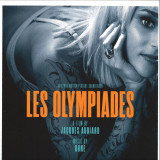
Sixteen musical vignettes of electrifying emotion at the crossroads of ambient, modern synthesizer productions and organic orchestral music experimentation, which tint French director Jacques Audiard's new feature film with the illuminated glow of a whole new generation.
Textextext - (add your write up)
When Jacques Audiard contacted him, Rone was just a few weeks away from receiving the Cesar award for best film score for his very first soundtrack "Night Ride", the highest honor in French film for a composer.
Throughout his career, the French director has been able to surprise his audience by playing on the codes of "genre films", while remaining faithful to the aesthetics of "art film". His cinema is both profound and entertaining, sophisticated and accessible, dark and dreamlike.
"Jacques' cinema is physical, sensual, modern", Rone says about the director, "when he asked me to do the music for Paris, 13th District , I immediately accepted, without seeing any images or reading the script. He is simply one of the greatest contemporary filmmakers."
His new feature film deals with youth in general and their sexuality in particular in a way no one may have done before. The story is based on four young characters and their existential questionings, whose destinies intertwined against the backdrop of the Parisian "Olympiades" high rises in the 13th arrondissement.
But time was already running out, as the film was set to be nominated for *Cannes' Palm D'or* at the rescheduled edition of the festival in July 2021. Between the releases of "Rone & Friends" and his remixes for Agnes Obel, Go Go Penguin and Jehnny Beth (who also plays a role in the film), the producer decided to lock himself away in in his brand-new Isola Studio in Cancale, French Brittany. He also invested in a large screen on which he projected loops of the film and started manipulating his gear. "I had Miles Davis in mind and the way he composed "Ascenseur pour l'échafaud" by improvising with his band while watching excerpts from the film."
After a first conclusive test on three scenes of the film which allowed Rone to showcase the skills he had developed in composition in various musical fields, a relationship of trust developed between the musician and the director, which resulted in over 45 minutes of Rone's music used for the final cut.
"There was a lot of music to be made in a short time, but the talks with Jacques were very stimulating. He had a fairly precise idea of what he wanted, while at the same time, I think, having the desire to be surprised, or even a little shaken up."
If the black and white aesthetic recalls the great hours of the "Nouvelle Vague", Rone´s music gives a new layer to the film which fits resolutely with 2020's zeitgeist.
This second soundtrack by Rone is a sonic urban adventure in itself. As it is used in the film, colouring in the lives of Audiard's protagonists, it will have the same impact on us, the listeners, in our own everyday lives.
Cardinal Fuzz are pleased to bring your way The Band Whose Name Is A Symbol – Ensemble 2016. Eight players made up the iteration of the always mutating ensemble cast, who were as follows for this recording - John Westhaver, Nathaniel Hurlow, Bill Guerrero, Jason Vaughan, Dave Reford, Scott Thompson, Mark McIntyre and Eric Larock.
The session for Ensemble went down at their spiritual home of Birdman Sound in Ottawa in August 2016 where what you hear on record was recorded direct from the floor (and mastered/tweaked by Chris Hardman).The whole session (and note this is an edit to fit the constraints of vinyl) - flies by with a reckless, organic abandon, as at times 8 players fly off in different dynamic directions of abstract playing and improvisation with trumpet player Scott Thompson much to the fore and blowing wild.
At times the feel of this recording is like a collision between a 70s album on the German Sky transported to a San Franciscan Ballroom is ’68 as the audience are peaking on ‘Orange Sunshine’ as Ensemble finishes up like a beautiful trip, well taken.
Beyond their highly sought after 1978 album Festa Para Um Novo Rei - home to the mystical jazz-funk classic ‘Vidigal’ and released on Philips’ iconic Musica Popular Brasileira Contemporanea series (MPBC) - little is known about Marcos Resende & Index, even to aficionados of obscure Brazilian music. Far Out Recordings is immensely proud to present their previously unreleased self-titled debut album from 1976, contributing a crucial missing work from the glory days of progressive Brazilian instrumental music.
Born in Cachoeiro de Itapemirim, Brazil in 1947, Marcos Resende was a prodigious child who learned to play the accordion at the age of two, and the piano aged six. In spite of his immense musical potential, he travelled to Lisbon in the 60s to study medicine. Yet continuing to explore his musical passion on the side, he formed a trio which went on to open for Dexter Gordon at the Cascais Jazz Festival in 1971. From here he formed the electronic oriented prog-jazz group Status, who opened shows for the likes of Elton John, Phil Woods, Stan Getz, Art Blakey & The Jazz Messengers, but in spite of their relative live success they have no known recordings.
Now established as a highly regarded keyboardist, composer, and innovative electronic musician, Resende returned home to Brazil following Portugal’s Revolução dos Cravos in 1974. Inspired by US jazz and British progressive rock he’d experienced while residing in Europe, Resende went all out acquiring a keyboard arsenal to be reckoned with, which included the Prophet 5, Yamaha CP-708 and Mini Moog. Determined to integrate his newfound inspirations with Brazilian rhythms and jazz traditions, he formed a new quartet with Rubão Sabino (bass), Claudio Caribé (drums) and the late great Oberdan Magalhães, of Banda Black Rio and Cry Babies fame. Marcos Resende & Index recorded their self-titled debut at Sonoviso Studios with the legendary sound engineer Toninho Barbosa, known as the ‘Brazilian Rudy Van Gelder’ whose impressive resumé includes the era defining classics Light As A Feather by Azymuth, Previsão Do Tempo by Marcos Valle, and Quem É Quem by João Donato. Marcos Resende & Index fits perfectly amongst these masterpieces, sharing both the timeless ethereal qualities as well as the progressive and futuristic ideals of Light As A Feather in particular.
As funny as it may sound, Anaïs Mitchell has spent the past 15 years in some kind of hell. OK, not actual hell, but the multi-faceted world of Hadestown, a musical project she began in Vermont in 2006 that has grown into a Tony®- and Grammy®-award-winning Broadway phenomenon with touring editions now delighting audiences as far away as South Korea.
“I experienced so much joy working on Hadestown, but it just kept ramping up and up and requiring more and more attention,” Mitchell admits. “I had to become so single-minded and really put blinders on to my other creative life.” As it did for many artists, the COVID-19 pandemic unexpectedly offered Mitchell a blank slate to reconnect with her own music. The result is a new self-titled album made with close collaborators from Bon Iver, The National and her own band Bonny Light Horseman, Mitchell’s first collection of all-new material under her own name since 2012’s Young Man in America.
“I was nine months pregnant when the pandemic reached New York, so we made an 11th hour decision to leave and have the baby in Vermont,” Mitchell recalls. “We left the city and had the baby a week later, and then like everyone, we were in the midst of this unprecedented stillness. It felt like I could see behind me: oh, there’s New York City. There’s Hadestown. There’s my life with just one kid. A certain kind of stress and expectations. In Vermont, we moved onto my family farm and lived in my grandparents’ old house, with a new baby. I’d look at pictures on my phone from a few months earlier and wonder, whose life was that? This record, and the songs that are on it, came out of that time. I got into a flow again that I hadn’t felt in a really long time.”
Dubbed by NPR as “one of the greatest songwriters of her generation,” Mitchell is a master of the worlds of narrative folksong, poetry and balladry. Those talents are evident from the first moments of the new album, as Mitchell narrates what she calls “an unbearably romantic” trip over the Brooklyn Bridge colored by Bon Iver member Michael Lewis’ heartstring-tugging saxophone accompaniment. “Having left New York, I was able to write a love letter to it in a way I never could when I was living there,” she says. “It was like, fuck it. This is how I feel. There is nothing more beautiful than riding over one of the New York bridges at night next to someone who inspires you.”
Produced by Mitchell’s Bonny Light Horseman bandmate Josh Kaufman, the album proceeds to chronicle Mitchell’s reconnection with the Vermont roots that have been so formative in her life and music. “Bright Star” finds her making peace with the idea of being at peace in the familiar setting of her grandparents’ house, while “Revenant” was inspired by paging through a box of journals and letters belonging to herself and her grandmother — “a very pandemic activity,” she says. “That house is literally my happy place. I can picture myself as a kid, in this house, laying on the carpet with a sunbeam coming through the sliding glass door. There’s something about it that is really connected in my mind to my childhood and a very free, imaginative, creative time. “Revenant” has a lot to do with that house and reconnecting with my childhood self.”
Mitchell concedes that she tends “to be someone who thinks it has to be hard in order for it to be good or beautiful,” but that feeling has changed, partly thanks to her deep connection with musicians she’s met through the 37d03d collective established by The National’s Aaron and Bryce Dessner and Bon Iver’s Justin Vernon. During the pandemic, some of those artists participated in a “song a day” writing group — an idea Mitchell says is usually “totally opposite of how I roll. But it really helped me to gain access to some kind of trust and intuition and flow. I began a bunch of these songs while doing that.”
“It unlocked something that allowed me to finish a bunch of songs I’d been sitting on, and feeling a bit paralyzed about how to finish them,” she continues. “Because no one was touring, it’s not like I was playing them for anyone before we were in the studio. In other times, I’ve trotted things out in advance. Here, it was like, here’s all these brand new songs. Let’s discover what they can be. That was really exciting.”
That discovery process took flight at Dreamland Recording Studios outside Woodstock, N.Y., which Mitchell describes as “this weird, janky, beautiful church - it’s my favorite studio in the world.” Kaufman, Lewis and Big Red Machine drummer JT Bates formed a core band around Mitchell, while Aaron Dessner and Thomas Bartlett joined the sessions mid-week on guitar and piano, respectively.
After the appropriate COVID tests came back negative, “it was a pretty extraordinary feeling to hug, kiss and share the same space playing together,” Mitchell says. “We went into that world for a week and didn’t leave the studio for any reason. I felt very safe with all those guys. It was warm and joyful.”
Mitchell says this environment brought out unexpected details in the material, which was recorded almost entirely live together in the room. “Sometimes we tried separating things out, like vocals, but we always ended up back in the room together,” she says. Indeed, after spending the better part of a day recording overdubbed versions of “Little Big Girl” that nobody loved, the musicians gave up and tracked it again live. “We got so frustrated that we went in and I was like, I’m just going to sing this as hard as I fucking can. It felt like that’s what the song wanted to be,” Mitchell says. “It felt like all those songs wanted to be recorded as live as possible.” The exception to the rule was Nico Muhly's arrangements for strings and flute, which were added from New York City afterward.
Mitchell will debut the new material during various headline tours in the U.S. and Europe in 2022, at which she’ll be accompanied by players from the album. On stage, she can’t wait to further hone the sights, sounds and scenes that bring the songs to such vivid life. “I’ve spent a lot of time trying to write in the voice of other characters, especially with Hadestown. It’s fun for me, but these songs are not that,” she says. “Weirdly, they’re all me. The narrator is me. That’s why it felt right to self-title the album. It felt like after so many years of working on telling other stories, now here are some of mine.”
As funny as it may sound, Anaïs Mitchell has spent the past 15 years in some kind of hell. OK, not actual hell, but the multi-faceted world of Hadestown, a musical project she began in Vermont in 2006 that has grown into a Tony®- and Grammy®-award-winning Broadway phenomenon with touring editions now delighting audiences as far away as South Korea.
“I experienced so much joy working on Hadestown, but it just kept ramping up and up and requiring more and more attention,” Mitchell admits. “I had to become so single-minded and really put blinders on to my other creative life.” As it did for many artists, the COVID-19 pandemic unexpectedly offered Mitchell a blank slate to reconnect with her own music. The result is a new self-titled album made with close collaborators from Bon Iver, The National and her own band Bonny Light Horseman, Mitchell’s first collection of all-new material under her own name since 2012’s Young Man in America.
“I was nine months pregnant when the pandemic reached New York, so we made an 11th hour decision to leave and have the baby in Vermont,” Mitchell recalls. “We left the city and had the baby a week later, and then like everyone, we were in the midst of this unprecedented stillness. It felt like I could see behind me: oh, there’s New York City. There’s Hadestown. There’s my life with just one kid. A certain kind of stress and expectations. In Vermont, we moved onto my family farm and lived in my grandparents’ old house, with a new baby. I’d look at pictures on my phone from a few months earlier and wonder, whose life was that? This record, and the songs that are on it, came out of that time. I got into a flow again that I hadn’t felt in a really long time.”
Dubbed by NPR as “one of the greatest songwriters of her generation,” Mitchell is a master of the worlds of narrative folksong, poetry and balladry. Those talents are evident from the first moments of the new album, as Mitchell narrates what she calls “an unbearably romantic” trip over the Brooklyn Bridge colored by Bon Iver member Michael Lewis’ heartstring-tugging saxophone accompaniment. “Having left New York, I was able to write a love letter to it in a way I never could when I was living there,” she says. “It was like, fuck it. This is how I feel. There is nothing more beautiful than riding over one of the New York bridges at night next to someone who inspires you.”
Produced by Mitchell’s Bonny Light Horseman bandmate Josh Kaufman, the album proceeds to chronicle Mitchell’s reconnection with the Vermont roots that have been so formative in her life and music. “Bright Star” finds her making peace with the idea of being at peace in the familiar setting of her grandparents’ house, while “Revenant” was inspired by paging through a box of journals and letters belonging to herself and her grandmother — “a very pandemic activity,” she says. “That house is literally my happy place. I can picture myself as a kid, in this house, laying on the carpet with a sunbeam coming through the sliding glass door. There’s something about it that is really connected in my mind to my childhood and a very free, imaginative, creative time. “Revenant” has a lot to do with that house and reconnecting with my childhood self.”
Mitchell concedes that she tends “to be someone who thinks it has to be hard in order for it to be good or beautiful,” but that feeling has changed, partly thanks to her deep connection with musicians she’s met through the 37d03d collective established by The National’s Aaron and Bryce Dessner and Bon Iver’s Justin Vernon. During the pandemic, some of those artists participated in a “song a day” writing group — an idea Mitchell says is usually “totally opposite of how I roll. But it really helped me to gain access to some kind of trust and intuition and flow. I began a bunch of these songs while doing that.”
“It unlocked something that allowed me to finish a bunch of songs I’d been sitting on, and feeling a bit paralyzed about how to finish them,” she continues. “Because no one was touring, it’s not like I was playing them for anyone before we were in the studio. In other times, I’ve trotted things out in advance. Here, it was like, here’s all these brand new songs. Let’s discover what they can be. That was really exciting.”
That discovery process took flight at Dreamland Recording Studios outside Woodstock, N.Y., which Mitchell describes as “this weird, janky, beautiful church - it’s my favorite studio in the world.” Kaufman, Lewis and Big Red Machine drummer JT Bates formed a core band around Mitchell, while Aaron Dessner and Thomas Bartlett joined the sessions mid-week on guitar and piano, respectively.
After the appropriate COVID tests came back negative, “it was a pretty extraordinary feeling to hug, kiss and share the same space playing together,” Mitchell says. “We went into that world for a week and didn’t leave the studio for any reason. I felt very safe with all those guys. It was warm and joyful.”
Mitchell says this environment brought out unexpected details in the material, which was recorded almost entirely live together in the room. “Sometimes we tried separating things out, like vocals, but we always ended up back in the room together,” she says. Indeed, after spending the better part of a day recording overdubbed versions of “Little Big Girl” that nobody loved, the musicians gave up and tracked it again live. “We got so frustrated that we went in and I was like, I’m just going to sing this as hard as I fucking can. It felt like that’s what the song wanted to be,” Mitchell says. “It felt like all those songs wanted to be recorded as live as possible.” The exception to the rule was Nico Muhly's arrangements for strings and flute, which were added from New York City afterward.
Mitchell will debut the new material during various headline tours in the U.S. and Europe in 2022, at which she’ll be accompanied by players from the album. On stage, she can’t wait to further hone the sights, sounds and scenes that bring the songs to such vivid life. “I’ve spent a lot of time trying to write in the voice of other characters, especially with Hadestown. It’s fun for me, but these songs are not that,” she says. “Weirdly, they’re all me. The narrator is me. That’s why it felt right to self-title the album. It felt like after so many years of working on telling other stories, now here are some of mine.”
For the past 20 years, Jason Boland & the Stragglers have dazzled audiences all over as one of the leading ambassadors of the Oklahoma and Texas music movement. Millions of fans cheering him on, over 500,000 records sold independently and 10 albums later, Boland is a career musician whose legacy continues to grow. From his early days touring in cramped vans and playing in front of tiny bar crowds to the packed venues he performs in today, Boland’s uncompromising approach has grown his profile dramatically, especially in the past handful of years. Add to that the legions of musicians who are influenced by Boland, and his impact on the scene is undeniable.
Formed in 1983, Hallows Eve was a thrash metal band hailing from Atlanta, GA, whose first brush with notoriety came via the inclusion of their song Metal Merchants” in the Metal Massacre, Vol. 6 compilation two years later. Duly signed by the collection’s parent label, Metal Blade, the group, comprised of vocalist Stacy Anderson, guitarists David Stuart and Steve “Skullator” Shoemaker, bassist Tommy Stewart, and drummer Ronny Appoldt, released their debut album, Tales of Terror, later the same year and then followed it with two more discs (1986′s Death & Insanity and 1988′s Monument).
- 1: Death And Insanity
- 2: Goblet Of Gore
- 3: Lethal Tendencies
- 4: Obituary
- 5: Plea Of The Aged
- 6: Suicide
- 7: D.i.e. (Death In Effect)
- 8: Attack Of The Iguana
- 9: Nefarious
- 10: Nobody Lives Forever
- 11: Death And Insanity (Reprise)
- 12: Nefarious (Live November 1985)
- 13: Valley Of The Dolls / Suicide (Live November 1985)
- 14: Death And Insanity (Live November 1985)
- 15: Lethal Tendencies (Live November 1985)
Formed in 1983, Hallows Eve was a thrash metal band hailing from Atlanta, GA, whose first brush with notoriety came via the inclusion of their song Metal Merchants" in the Metal Massacre, Vol. 6 compilation two years later. Duly signed by the collection's parent label, Metal Blade, the group, comprised of vocalist Stacy Anderson, guitarists David Stuart and Steve "Skullator" Shoemaker, bassist Tommy Stewart, and drummer Ronny Appoldt, released their debut album, Tales of Terror, later the same year and then followed it with two more discs (1986's Death & Insanity and 1988's Monument). By 1989, the band had folded but eventually re-formed in 2004 with plans to record a new, as yet unreleased, effort. - Eduardo Rivadavia (All Music Guide)
Black Vinyl, DL Card. Following Lucy Gooch’s acclaimed ‘Rain’s Break’, her first release on Fire Records earlier this year, the artist’s acclaimed debut EP ‘Rushing’ is revisited with new artwork and a brand new track, ‘Orthione’. “Lucy’s sound marries the etheral qualities of ambient music with buoyant, effortless pop” Crack ‘Rushing’ in its original shorter five-track incarnation was heralded as a touchstone beneath the cascading torrent of modern times and an oasis for turbulent times. An intimate collection of songs built around Lucy’s emotive vocals and unique ambient dream pop, the newly added stand-out track ‘Orthione’ trips into the esoteric world of Laurie Anderson and Philip Glass; here her voice is the grounding force that travels to a space that heals and grows. “For an artist whose favourite trick is the seemingly infinite crescendo, she clearly knows the value of restraint” Pitchfork // “Expansive, upfront, spectral pop” KEXP // “The pastoral element of the music resonates more as you tune in to Lucy’s unique vocal.” Loud And Quiet
MOMENTS LIKE THESE, THE NEW ALBUM FROM SUBWAY SECT, PRODUCED BY MICK JONES AND FEATURING THE 1981 SUBWAY SECT LINE-UP, VIC GODARD WITH SEAN MCLUSKY, CHRIS BOSTOCK, JOHNNY BRITTON, & DC COLLARD and guest appearances by MICK JONES, PETE WILLIAMS, TERRY EDWARDS and SIMON RIVERS. Sukhdev Sandhu runs a publishing imprint Texte und Töne in New York.
The LP, the imprint's first, is also the first-ever Subway Sect record to come out in the States. (Perhaps unsurprisingly: they did have a song called U.S. Cunts!) It's been produced by Mick Jones of The Clash. (A White Riot '77 reunion of sorts.) ‘There’s a certain element of unspoiltness about the whole thing and that’s what really appealed to me about it.’
Mick Jones MOJO ‘This is Vic reflecting on a lifetime in the music business. It sounds like a record that he had to make and is perfect for now. When I was a kid, I used to make up my fantasy punk band with members from different bands and they almost always
contained Vic Godard and Mick Jones. The songs are as good as it
gets and with Mick Jones producing and playing piano, what more do
you need?’ Jim Reid, Jesus and Mary Chain ‘The Subway Sect story is one of the strangest, and therefore one of the best. Vic Godard indicated ways that pop should go. He dropped hints, left clues. It is all there.’ Kevin Pearce ‘Vic's always walked his own path. He's a model of independence.
No wonder that he's recorded for some of the best UK independents
(Rough Trade, el, Postcard). Years ago, when I was writing a book
about nocturnal London, he took me on a postal round with him, all
the while telling me funny stories about some of the prog rock
aristos whose mail he delivered, and enthusing about the latest hip
hop and bhangra he was listening to.
Asked by Time Out to write an essay about my favourite Londoner, I wrote it about Vic. Now, in summer 2021, I'm very happy to help release Moments Like These. It's about thinking back and thinking forward, about walking your own path. It's got soul, swagger and swing. Vic Godard: always onward!’ Sukhdev Sandhu ‘It was an accident really as Sukhdev wanted to put What's the Matter Boy out until I told him I'd just recorded a new LP. I'd been in discussions with loads of record labels but they all wanted to get my back catalogue digital rights and weren't into the idea of putting out a new LP. I thought it was on course to be my 2nd lost album until the phone calls with Sukhdev.’ Vic
Martina Topley Bird’s new studio album ‘Forever I Wait’, features collaborations and arrangements from Robert Del Naja of Massive Attack, Euan Dickenson, Rich Morel, Christoffer Berg, Benjamin Boeldt and Tiadiad.
'Forever I Wait' is Topley-Bird’s fourth long awaited studio album and her very first self-produced and curated piece of work to date. The album, set for a digital release on September 10th, with a vinyl LP available to pre-order now, captures an extensive journey confronting, exploring, analysing and reflecting on the devastating fragilities of life as it ultimately seeks to make peace with what life is.
A sentient and sensual presence framed Tricky’s trip-hop pioneering white label debut release, Aftermath. Hauntingly unique and immediately recognisable, that voice became the defining timbre of a new music movement. Behind this voice was mysteriously soft-spoken, London-born Martina Topley-Bird, whose exquisite voice came to inspire and infuse other pioneering artists across all genres.
“It’s a trip through different emotional states and frequencies, mostly dark, from insecurity and desire, all the way through to serenity and acceptance with themes that resonate from my young teens all the way through till today. Things that I’ve seen and things I’ve felt and worked through, although sometimes I sense them trying to return”
“Forever I Wait”, as the title alludes, was written and re-written over a long period of time.
“I had to change my way of relating to music and the music industry in order to make the record I wanted to make.…and that took time. And I took the time I needed. I started in London, moved and lived in America for the first time in my life, then briefly moved back to London and finished the record in Spain.”
“After trying to work on a new record for a couple of years, I came to a realisation that in order to move forward I had to separate the concept and vision I had for this record from me as a person. I had to shift my perspective. That was a big personal win and the beginning of “Forever I Wait.”
'Forever I Wait' leans on a multitude of tense sounds, dubby atmospherics and natural instrumentation to demand the listeners attention leading to over two decades of observations, experiences and musical sacrifices. It is a bi-product of the new perspective featuring carefully selected and tailored supporting arrangements from a handful of collaborators including Robert del Naja (Massive Attack), Rich Morel (Deep Dish), Christoffer Berg (Fever Ray) and Benjamin Boeldt (Adventure).
A truthful expression of desire and heartache “Forever I Wait “Is Topley Bird’s most precise and accurate album to date.
El Michels Affair follows up the massive success of their full length Yeti Season with The Abominable EP. A collection of unreleased tracks, alternate takes, and instrumentals from the Yeti Season recording sessions. EMA's blending their signature cinematic soul sound with influences from Turkis Funk and the grittiest of Bollywood soundtracks yielded an instant classic The Fader calls "a carnival of dusty funk and soul". The EP starts off with the unreleased gem "Messy Grass" whose synth intro, peppered with distant yeti cries, gives way to a tremendous backing track that Tamer Pinarbasi's Qanun dances over. On "Cham Cham" EMA invites Piya Malik to the microphone again to share her styled storytelling vocals over the instrumental track from Yeti Season's "Perfect Harmony". Where some of the tunes on the EP have vocals added, some of them have them removed letting the band take center stage; "Poison Song", "Uncut Gem", "Smoked", and "Progress" are all instrumental here giving them a wholly different energy than the vocal versions. The EP is being released with two different covers, each one has two paintings from different Ghanaian mobile cinema artists commissioned through Chicago's Deadly Prey Gallery and are interpretations of the original album artwork. One version is paintings by Stoger and Heavy J, who also contributed cover paintings to the Return To The 37th Chamber album. The other version of the cover is two paintings by Teshie and Farkira.
ACCIDENT IN HEAVEN was originally released in 1987 as a hand-made micro-edition of about 40 cassette tapes. It was only the third ever release on the short-lived now near legendary SDV label which had been established that same year by Konrad Kraft, Bernd Sevens and Dino Oon in Düsseldorf.
Finally finding a more substantial and appreciative audience on vinyl over 30 years after its original limited release, ACCIDENT IN HEAVEN is a strong testament to the explorative experiments of Detlef Funder a.k.a. Konrad Kraft, whose homebuilt studio sound attempted to bridge the clinical roughness of Severed Heads and the psychedelia of Coil with the density and force of industrial, post-punk and prototechno. Concurrent with his ever-expanding production skills, KONRAD KRAFT's sound work in the second half of the 80s stayed firmly rooted within a highly stylised underground spirit. Both his music and also the freshly launched SDV label first and foremost served as a medium for communication. The vital urgency of ACCIDENT IN HEAVEN underlines the record's core narrative which arguably sounds even more futuristic today than it did 30 years ago.
Hallmarks of ACCIDENT IN HEAVEN are an 8-track tape recorder, a Yamaha DX7 synth and a Roland 707 drum computer and the late 80s’ internationally ubiquitous shift from analogue to digital music production. Whilst its predecessor ARCTICA (another cassette-only release from 1986/87, previously reissued on TAL in 2018) was significantly more experimental and almost an in-between-states affair, ACCIDENT IN HEAVEN was the point at which Konrad Kraft really began to experiment with beat structures, sequenced synth pads and the framework of 'dance' music. However, the rhythmic elements are submerged so far beneath his expertly crafted drones it's almost impossible to label these sounds as “dancefloor oriented” work at all, as the tracks on the album joyfully disrespect the rules and boundaries of that or indeed any other genre.
ACCIDENT IN HEAVEN also epitomizes the decade's ending energy and sharp momentum with its successful merging of highly individual production and irresistible rhythm tracks.
The rich wealth of references is mirrored within the silhouettes and the graphics of the album’s unique artwork, which was created by Dino Oon. The new mastering has all sounds on ACCIDENT IN HEAVEN emerge in fresh shades and three dimensional plasticity, inviting the listener not to merely revisit the full palette of KONRAD KRAFT’s creation but offering an entirely new sound experience.
Translucent red LP housed in a beautiful gold mirror-board sleeve with large Thundercat logo hologram sticker and gold holofoil detail. Includes two bonus tracks: ‘$200 TB’ and ‘Daylight (Reprise)
Vinyl only (no digital) 2021 Black Friday release
If indeed "you blows who you is," as Louis Armstrong once famously said, then Stephen Bruner's bass is a mainline to the soul of a man whose DNA was transcribed from the stars onto staff paper. His Flying Lotus-produced debut, The Golden Age of Apocalypse, offers both stone-cold skill and uncanny astrality, picking up where the pair left off on 2010's Cosmogramma and further distilling the jazz current running through that landmark Lotus release. A longtime contributor to others' albums, Bruner, aka Thundercat, is accompanied by an impressive cast ranging from Erykah Badu to members of Sa-Ra and J*DaVeY, to pianist Austin Peralta and his own Grammy-winning brother, drummer Ronald Bruner, Jr. Still, the end result is unmistakably a Thundercat record -- a lush and magical document combining classic jazz fusion, futurist electronic strains and timeless musical seeking.
Spanning a cosmic stew of players, locations and times, The Golden Age of Apocalypse was years in the making. . There's the ebullient "Daylight," a soft whirl of bluesy piano, New Age synth, snapping beats and warm bass. There's "Walkin'," an upbeat soul strutter powered by Bruner's digitally distorted plucks. There are raw, improvised numbers like "Jamboree" and virtuosic bass pileups like "Fleer Ultra." One of the album's most stunning moments arrives with a spacious cover of George Duke's "For Love I Come," a taut beauty spangled with crystalline harp and keys. Bringing this string of divinely unexpected moments to a moody and cinematic close is "Return to the Journey." There, Bruner sings, "Time will pass us by," but listeners needn't worry. Inside of this space, time really isn't a thing.