Comes with insert and download coupon.
Imagine a Latin remake of Back to the Future. The mad scientist is Arsenio Rodriguez (the godfather of salsa) and the young student who travels through time with him is Eblis Alvarez (Meridian Brothers). This album can only be described as the perfect soundtrack for that movie that never was.
After the massive buzz generated by his first solo album, Mentallogenic, Alex Figueira got back in the studio to work in a more collective fashion this time, carefully assembling the second album of his largest project to date, Conjunto Papa Upa; a team of 6 musicians, spanning 3 generations of some of the best talent in the Latin and avant-garde scenes.
In an era where tropical music is dominated by purely electronic and rhythmically uniform sounds, the ten songs encompassed in “Fruta Madura” (“Ripe Fruit”) wander through the most diverse tempos, rhythms, and motifs effortlessly. A real breath of fresh air that gracefully incorporates soul, funk, jazz, psychedelia, and electronics into a solid tropical, irresistibly polyrhythmic foundation, without ever succumbing to the many genre clichés.
The distinctive production and catchy songwriting of Figueira shine in a very distinctive light on this second full-length. Living up to his reputation (Miles Cleret, founder of Soundway Records, called him “one of the scene's truly authentic and eccentric producers”), he takes the opportunity to show he’s not afraid to keep walking his own path.
Taking the band for a wild ride through the traditions of Africa, America, and the Caribbean; contrasting them with a ridiculously wide plethora of vintage, contemporary, and futuristic sounds, and pivoting on the exuberant musicality displayed by his musicians; the result leaves no doubt: this album is destined to be considered a future classic of the exciting tropical psychedelic music of the 21st century.
Addressing the most diverse themes in this new collection of songs, things take on a much more mature tone, as the title clearly suggests.
The opening track “El segundo es más sabroso” (“The second one is tastier”) sets the tone in the most assertive way imaginable, with the band boldly declaring, through multiple metaphorical references (laid upon a crazy mix of Dominican merengue, Detroit techno, classic and free jazz, dub, and electro), that the bar will be set higher with this second album.
The remaining compositions touch upon the most diverse subjects, with a fair dose of humor, sarcasm, and postmodern “magic realism”. “El Algoritmo” (The Algorithm) is a parranda-cumbia hybrid (for lack of a specific term) about the omnipresence of technology in our lives. The sophisticated Latin soul of the titling track “Fruta Madura” makes a case for the beauty of the maturity process. Some key philosophical teachings of Marcus Aurelius (the role of causality, the impositions of “the logos” and the importance of self-control) get a twisted cumbia treatment on “Reos del Deseo” (Prisoners of Desire). “No le pongas Coca-Cola” (“Don’t put Coca Cola in it”) shows us the most satirical side of the band, accusing those who mix Coca Cola with Rum of committing "sacrilege", on a powerful base of Dem Bow (the grandfather of Reggaeton), intertwined with touches of soul, salsa, and Cuban comparsa.
"Háblame Claro" (“Talk to me clearly”) is a story of heartbreak that evokes in its first part the spirit of the erotic salsa of the 80s (a subgenre deeply despised by purists), and after an unexpected samba interlude, leads to the hardest salsa of the 70s (a subgenre adored by purists), to end up in the surprising form of pure Afro-Cuban ceremonial music.
“Tu mamá tenía razón” ("Your Mom Was Right") is an attempt to exalt the spirit of the Latin American soap opera in the key of “acid bachata”, to recount a real-life case, witnessed by the band on countless occasions: the partying woman who arrives at the show accompanied by her bitter husband, who obviously does not like to dance. A very cheeky song to talk about the very serious and pertinent topic of female empowerment.
“La misma vaina” (“The same thing”) with its indescribable blend of bantú, candomblé, and Mozambique rhythms with abstract synthesizers, is an ode to adventure in favor of the aversion to taking risks and seeking predictability.
“Amigas picadas” (“Salty friends”) is another humorous song recounting another real-life case witnessed by the band on countless occasions: a love encounter sabotaged by the girlfriend's friends, who all happen to fancy the same guy. A jazzy take on the ancient Dominican rhythm of pambiche (grandfather of merengue), with generous psychedelic touches, resembling the classy late 60s releases of Guadeloupe's legendary producer / label owner Henri Debs.
“Vinimos a hablar” (“We came to talk”) takes sarcasm to the highest level, to ridicule the absurdity (also experienced by the band firsthand) seen in live music venues where people pay a ticket to go and have conversations that could be carried out much better on any bar, where no band is playing. The music alternates between a delicate melody with loose, sparse percussion and a full-on, pumping Angolan semba, with a techno kick drum included; bringing things to an apotheotic grooving finale, where the peculiar swing of Venezuelan calypso from the Callao region is thrown on top of all the precedent elements; closing the album in the most uplifting, “end of the carnival parade” feel.
The artwork is a delicate and impactful oil painting by Colombian artist Kevin Simón Mancera, who has collaborated many times with the label before (“Maracas, tambourines and other hellish things” tape and the Lola’s Dice LP).
What the experts are saying:
“Alex (Figueira) dove into this work with a brutal cohesion between lyrics and synths. Timbre poetry, sound poetry (you name it). And that, superimposed on his always impeccable percussive base, confirms the title of “avant-garde visionary of our beautiful Latin music”".
EBLIS ALVAREZ (MERIDIAN BROTHERS)
“Papa Upa's infectious quirkiness is a balm against boredom. A mature album, but without an expiration date”.
GLADYS PALMERA
“Here there is a lot of strength, drum, cadence and psychedelia, lost dance rhythms, united in an intercontinental Latin/African/and Caribbean journey, a unique winning combination that we could consider the new “Ritmo Figueira”.
DISCODELIC
Conjunto Papa Upa are:
Alex Figueira - Timbales, percussion, vocals.
Gerardo Rosales - Congas, percussion, vocals.
Ramón Mendeville - Bongos, percussion, vocals.
Randy Winterdal - Bass.
Andrew Moreno - Guitar.
Nico Chientarolli - Organ, piano, synths.
All songs written by Alex Figueira.
Arranged and performed by Conjunto Papa Upa.
Recorded, produced, mixed and mastered by Alex Figueira at Heat Too Hot, Amsterdam.
Поиск:wil do
Все
- A1: Prayer (From Xabo: Father Boniecki)
- A2: In Between (From Xabo: Father Boniecki)
- A3: Journey (From Xabo: Father Boniecki)
- A4: Trip To Ireland (From I Never Cry)
- A5: The Beach (From I Never Cry)
- A6: The Locker Room (From I Never Cry)
- A7: At The Hospital (From I Never Cry)
- B1: Waiting (From At Home)
- B2: Wildfires (From Truth In Fire)
- B3: Ghosts (From Pradziady)
- B4: Soleil Pâle
- B5: Nora (From Nora)
Writing music for film and theatre has always been a big part of Hania Rani's musical world. It is also a part of the creative process that can be tantalisingly out of reach for listeners, either the project doesn't come to fruition or the music simply isn't available away from the film or play. From early collaborations with friends, to last year's two scores for full length films (xAbo: Father Boniecki directed by Aleksandra Potoczek and I Never Cry directed by Piotr Domalewski') Rani has been involved in many such projects, each representing an important step in her artistic development and life as a composer and artist:
"Composing for motion picture or theatre is for me a very different kind of work than writing for my own projects. Firstly, I need to collaborate with somebody else who sees the world through the lense of their own art and craft. That's why these kinds of encounters can be so exciting - they are a promise of creating something very new, as a result of creative work of so many people from all walks of life. Secondly, I feel that music in film is an invisible character, a missing emotion that creates a special atmosphere and sensation. It doesn't illustrate, it completes the work of art. I think it is an extremely sensitive matter that rejects banal associations and easy solutions. I feel like composing for film works like an exercise for my imagination."
It is the nature of these collaborations though, that sometimes the composers own preferred compositions don't make the final cut. This is where Music for Film and Theatre comes in as it allows Rani to present a selection of her own personal favourite pieces composed for film and plays. Pieces that made it to the final cut and pieces that were rejected by the director or the producer. Bringing the music together as an album offers a chance for Rani to share her music with her listeners on her own terms and a chance for her fans to hear a different side of her art.
"I put them in one place, as a collection of precious objects that were kept for years in a drawer. Some of them were composed a couple years ago, some are the result of recent research. I am very happy to finally be able to present them as a separate project."
Rani is of course grateful to all of the directors who have entrusted her to create music for their projects, but she professes especially warm feelings for the pieces composed for her first 'real' theatre play, Pradziady, directed by Michał Zdunik. The title comes from 'Dziady' a term in Slavic folklore for the spirits of the ancestors and a collection of pre-Christian rites, rituals and customs that were dedicated to them. The essence of these rituals was the 'communion of the living with the dead', namely, the establishment of relationships with the souls of the ancestors. "I felt this story needed extremely dark and fragile music, and at the same time a sound that could express the mixture of the two worlds - the living and the dead. I decided to compose part of the soundtrack with a string quartet but including two cellos, viola and only one violin. We recorded in a little house, completely built from wood, mostly from Finnish pine. I always felt this space has a very special, warm and natural acoustics - especially when it is combined with string instruments. The track composed for this theatre play is called Ghosts but actually didn't finally make it to the performance, although I like it so much that I thought it would perfectly fit
this compilation". Other highlights include the enchanting Soleil Pâle written for a collaboration with director Neels Castillon, and improvising dancers Alt Take, the beautiful melancholy of In Between (from the film score for xAbo: Father Boniecki) and the magical bliss of The Beach (from I Never Cry) and together they create a beautiful offering from an artist whose every note is worth hearing, but for whom the journey is just beginning:
"I am very happy to see that many artists consider my music as the right soundtrack for their works, because film music was always a huge inspiration for any of my compositions. I find there a lot of life and real emotions, but also a feeling of freedom. Freedom from my own thinking patterns and prejudices. I also believe strongly in collaboration between people, I always feel this is the way to create something really new, based on a mixture of different ways of thinking, feeling, expressing."
This then is Hania Rani, Music for Film and Theatre – enjoy!
Formed in Montreal, eight-piece funk band Cane and Abel melded Caribbean elements with soul, blues and psych, frontman Frenchie Thompson holding plenty of bite and the full horn section including former Dragonaires trumpeter Norris Ridguard. After early singles on GRT, the group signed to Epic and relocated to the US but made their biggest splash in France, where they cut two LPs in 1972; this self-titled rarity has Thompson’s ‘Girl You Move Me,’ percussionist Blinky Bostic’s ‘Who’s Gonna Take The Weight,’ and likeable takes of Wilson Picket’s ‘Don’t Knock My Love,’ ‘Green Grass’ and ‘Toe Hold.’ A lost funk classic!
- A1: Music Of The Earth
- A2: Let’s Sing A Song Of Love
- A3: When I Found You
- B1: Haven’t You Heard (12” Version)
- B2: Givin’ It Up Is Givin’ Up With Dj Rogers
- C1: Forget Me Nots (12” Version)
- C2: Look Up! (Long Version)
- C3: Where There Is Love
- D1: Never Gonna Give You Up (Won’t Let You Be) (Long Version)
- D2: Number One (12” Version)
- E1: All We Need
- E2: Remind Me (Lp Version)
- E3: Settle For My Love
- F1: Feels So Real (Won’t Let Go) (12” Version)
- F2: To Each His Own
Black Vinyl[27,52 €]
Strut present the first definitive retrospective of an icon of 1970s and ‘80s soul, jazz and disco, Patrice Rushen, covering her peerless 6-year career with Elektra / Asylum from 1978 to 1984. Joining Elektra after three albums with jazz label Prestige, Patrice had shown prodigious talent at an early age and had first broken through after winning a competition to perform at the Monterrey Jazz Festival of 1972. By the time of the recordings on this collection, she had become a prolific and in-demand session musician and arranger on the West coast, appearing on over 80 recordings for other artists. She joined the Elektra / Asylum roster in 1978 as they launched a pop / jazz division alongside visionaries like Donald Byrd and Grover Washington, Jr. “The idea was to create music that was good for commercial radio / R&B,” Patrice explains. “We were all making sophisticated dance music, essentially.”
Drawing on some of the leading musicians in L.A. like saxophonist Gerald Albright, drummer “Ndugu” Chancler and bassman Freddie Washington and keeping an open minded approach from her training in classical, jazz and soundtrack scores, Patrice’s music was a different, more intricate proposition to many of the soul artists of the time. “L.A. musicians were not so locked into tradition,” she continues. “None of us were accustomed to limitation and the record label left us to take our own direction.”
Early classics like ‘Music Of The Earth’ and ‘Let’s Sing A Song Of Love’ were among Patrice’s first as a lead vocalist before her ‘Pizzazz’ album landed in 1979, featuring the unique disco of ‘Haven’t You Heard’ and one of her greatest ballads, ‘Settle For My Love’. “Although ballads make you feel more vulnerable as an artist because they are often personal, I think listeners relate to that sincerity,” she reflects. By now, Patrice’s records were supremely arranged and produced as her confidence as an all-round writer, producer, arranger and performer grew. Slick dancefloor anthem ‘Never Gonna Give You Up’ and the ‘Posh’ album in 1980 led to her landmark album ‘Straight From The Heart’ two years later. Receiving little support from her label, Patrice and her production team personally funded a promo campaign for the first single from it, ‘Forget Me Nots’. It went on to peak at no. 23 on the Billboard Hot 100 and the album was later Grammy-nominated, while the track became a timeless anthem and popular sample, inspiring Will Smith’s theme for the film ‘Men In Black’ and George Michael’s ‘Fastlove’.
Patrice’s final album for Elektra, ‘Now’ kept the bar high with sparse, synth-led songs including ‘Feel So Real’ and ‘To Each His Own’. It concluded a golden era creatively for Patrice which remains revered by soul and disco aficionados the world over.
‘Remind Me’ features all of Patrice Rushen’s chart singles, 12” versions and popular sample sources on one album for the first time. Formats included a 3LP set and 1CD fully remastered by The Carvery from the original tapes. Both formats include an exclusive new interview with Patrice Rushen and rare photos.
• First definitive Patrice Rushen compilation released on vinyl since the ‘80s
• Includes all of her chart hits, DJ favourites and sample sources
• Official release featuring full interview with Patrice Rushen about her career and music • Features rare photos from her personal collection + some of the photographers she has worked with during her career
• Fully remastered by The Carvery from the original ¼” tapes
• Start of full Patrice Rushen reissue programme from her Elektra era
Repress!
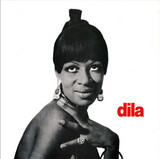
Far Out Recordings proudly presents the first and only album from the mysterious Brazilian vocal sensation Dila (pronounced “Jee-la”). Having reportedly died in a car crash shortly after the album’s release in 1971, there is very little known about the woman behind the voice. But the joyous music Dila left behind, gives us a picture as good as any, of a powerful feminine soul at the top of her game.
The liner notes on the elusive original LP, written by composer Arnoldo Medeiros attest: “Friend, look out! Because when this girl starts to sing, you’re in trouble. Hold the railing so you don’t fall down the stairs, because she’s coming this way and shaking up everything.”
Arranged and produced by Durval Ferreira, alongside his studio band affectionately known as “Os Grillos” (The Crickets), Dila (1971) is a rare glimpse into the authentic soulful Samba sound of Rio’s favelas in the late sixties and early seventies.
A blast of funky, percussive Brazilian breaks, scorching hot brass and swing-laden piano, the music is as iconic as the album’s stark cover, as is clear on opener ‘Inez’, composed by The Crickets’ bassist Romildo. There’s a fantastic interpretation of the Ivan Lins classic ‘Madalena’ (made famous by Elis Regina), a moving version of the Tom Jobim and Vinicius De Moraes classic ‘O Morro Não Tem Vez’, and a number of sunny original compositions by Arnold Madeiros, who’s other writing credits include music for Marcos Valle, Wanderlea, Evinha and Dom Salvador.
With original LPs extremely hard to come by, this rare treasure of Brazilian soul, which fans of Gal Costa, Celia, Evinha and Elis Regina will love, gets a much-deserved official reissue: remastered and pressed to 180g vinyl.
Recorded straight on the heels of Bad Company's 1974 debut — just a matter of three months later; not quite long enough to know how big a success the first LP would be — Straight Shooter is seemingly cut from the same cloth as its predecessor. It is, after all, a tight collection of eight strong, steady, heavy rockers that never, ever proceed in a hurry, but from the moment "Good Lovin' Gone Bad" kicks off the proceedings, it's clear that Bad Company have decided to expand their palette this second time around, writes AllMusic.
The album, released in April 1975, reached No. 3 on both the U.K. Albums Chart and the U.S. Billboard 200. It was certified gold (500,000 units sold) by the Recording Industry Association of America (RIAA) a month after its release.
The jacket for the album was designed by Hipgnosis, who also designed their debut album.
"Good Lovin' Gone Bad," was released in March 1975 and reached No. 36 on the Billboard Hot 100. The album was released in April. The album's final single "Feel like Makin' Love" was released in August and reached No. 10 on the Hot 100.
"Feel Like Makin' Love" and "Shooting Star," became classic rock staples due to this expanded aural vocabulary, and even straight-ahead rockers like "Good Lovin' Gone Bad" and "Deal with the Preacher" benefit from this additional muscle, while they feel comfortable enough to settle into a soulful groove on "Anna" and "Call on Me."
Pressed on 180-gram vinyl at Quality Record Pressings, and housed in a tip-on old style gatefold double pocket jacket by Stoughton Printing, this is the definitive pressing of Straight Shooter and one fans of Bad Company will be proud to own.
In 1995, schoolmates Elin Almered and Johan Duncanson started a band which they named after a gas-station-turned-radio-repair-shop called "Radioavdelningen" (Swedish for The Radio Department). In 2001, the Radio Dept. sent recordings to music magazine Sonic, receiving a positive review and being featured on the free CD sampler that came with the magazine. Labrador Records heard them on the disc and signed them to their label. The band"s debut album Lesser Matters (2003) was well received by the music press, scoring 10 out of 10 in the NME. NME would rank Lesser Matters ninth on their list of the 50 best albums of 2004. The album received an 84/100 (Universal acclaim) on Metacritic from a total of five reviews.
*140+ Pages, Full Colour, Heavyweight Print *
DJ Koco on the cover. A growing superstar DJ, but with an old soul. He brings a classic beat digger’s approach to his impeccable 7-inch selections but peppers them with new-school DJ tricks and is now making waves that reverberate worldwide. Beyond this the issue will be chocked full with articles covering Brit-Funk, Taj Mahal, 23 Skidoo, DJ Parrot, the Monterrey dance scene in the 90's, Don Blackman, Hermeto Pascoal, Larry McDonald and much much more.
Asmaa Hamzaoui stands out as a pioneering female figure in the traditionally male-dominated realm of Gnawa music. With her group, Bnat Timbouktou, she brings a dynamic and spiritual dimension to the genre, infusing it with the vibrant energy of desert blues. Despite the essential role women have played in Gnawa rituals, female musicians have historically been underrepresented. Hamzaoui, however, is at the forefront of changing this trend. Born into a family deeply entrenched in Gnawa traditions in Casablanca, Hamzaoui was immersed in this musical heritage from a young age. Her father, a master musician, and her mother, a dancer, provided a rich environment for her early education in music. She learned to play the guembri, a three-stringed lute central to Gnawa music, and began performing with her father's band on the qraqeb, metal castanets used in Gnawa music, and in the choir. Encouraged by her father, she eventually formed her own group, Bnat Timbouktou. The group's debut album, "Oulad Lghaba," recorded in collaboration with the Swedish label ajabu! Records, was critically acclaimed and nominated for a Songlines Music Award. This album, along with their upcoming release "L'bnat," showcases Hamzaoui's commitment to preserving and revitalizing Gnawa music. "L'bnat," will emphasize the female traditions and spiritual aspects of Gnawa culture. Hamzaoui's performances are characterized by her powerful voice and the rhythmic, percussive playing of the guembri. Her music not only pays homage to the spiritual and healing qualities of Gnawa but also aims to keep the tradition alive by introducing it to new audiences worldwide.
- A1: Meat Loaf - I'll Do Anything For Love (But I Won't Do That) (But I Won't Do That)
- A2: D Ream - Things Can Only Get Better
- A3: Wet Wet Wet - Love Is All Around (From "Four Weddings & A Funeral" Soundtrack)
- A4: All-4-One - I Swear
- A5: The Pretenders - I'll Stand By You
- A6: Youssou N'dour - 7 Seconds (Feat Neneh Cherry)
- A7: East 17 - Stay Another Day
- B1: Livin' Joy - Dreamer
- B2: Coolio/L.v. - Gangsta's Paradise
- B3: Radiohead - Street Spirit (Fade Out) (Fade Out)
- B4: Oasis - Don't Look Back In Anger
- B5: Saint Etienne - He's On The Phone
- B6: Mark Morrison - Return Of The Mack
- B7: Spice Girls - Wannabe
- C1: George Michael - Fastlove
- C2: Deep Blue Something - Breakfast At Tiffany's
- C3: The Prodigy - Breathe
- C4: Eternal - I Wanna Be The Only One (Feat Bebe Winans)
- C5: Hanson - Mmmbop
- C6: Chumbawamba - Tubthumping
- C7: All Saints - Never Ever
- D1: Robbie Williams - Angels
- D2: Natalie Imbruglia - Torn
- D3: Aqua - Barbie Girl
- E1: Britney Spears - Baby One More Time
- E2: Steps - Tragedy
- E3: Gabrielle - Rise
- E4: Sonique - It Feels So Good
- E5: Craig David - 7 Days
- E6: Atomic Kitten - Whole Again
- E7: S Club - Don't Stop Movin
- F1: Kylie Minogue - Can't Get You Out Of My Head
- F2: Mary J Blige - Family Affair
- F3: Sophie Ellis-Bextor - Murder On The Dancefloor
- F4: Liberty X - Just A Little
- F5: Las Ketchup - The Ketchup Song (Asereje) (Asereje)
- F6: Girls Aloud - Sound Of The Underground
- F7: Nelly/Kelly Rowland - Dilemna
- D4: The Tamperer - Feel It (Feat Maya)
- D5: Boyzone - No Matter What
- D6: Cher - Believe
- D7: Atb - 9Pm (Till I Come) (Till I Come)
In November 2023 we celebrated NOW’s 40th anniversary with a collection of massive Pop hits – but with 40 years of hits to choose from we had to leave out so many fantastic tracks – so it’s time to continue that celebration with NOW That’s What I Call 40 Years - Part 2 – again honouring the legacy with a stellar selection from the past four decades of NOW. Embark on a musical journey from 1983 right up to the present day. Released on a triple vinyl set pressed on Green, Clear Transparent, and Pink LPs with 43 essential hit tracks. and 100 essential hit tracks across the 5 CD set
Repress!
Far Out Recordings Proudly Presents The 1975 Self-titled Debut Album From Brazilian Vocalist And Bossa Nova Luminary Emilio Santiago. Nicknamed 'the Nat King Cole Of Brazil', Santiago Was A Master Bossa Balladeer And A Top-class Crooner. But He Is Known Equally For His Brazilian Funk, Soul And Boogie Classics. One Of His Best Know Is Album Opener 'bananeira', A Party-starting Version Of The Song Originally Written By Joao Donato And Gilberto Gil. 'brother' Is A Smooth-grooving Killer With Great Horn Arrangements And A Huge Backing Choir, While 'la Mulata' Is A Soulful, Swinging Salsa Stepper.
Originally Released On The Cid Label, The Album Showcases The Full Range Of Emilio's Talents, While Paying Homage To Some Of Brazil's Greatest Composers, Including Jorge Ben, Marcos And Sergio Valle And Ivan Lins Among Others.
The Credits On The Album Are A 'who's Who' Of Brazil's Greats, With João Donato On Keys, Wilson Das Neves, Ivan 'mamão' Conti And Paulinho On Drums, Durval Ferreira, Carlos Roberto Rocha And Helio Delmiro On Guitar, Ariovaldo, Orlandivo, And Chacal On Percussion, Danilo Caymmi On Flute, A Brass Section Featuring Victor Assis Brasil, Edson Maciel And Jesse Sadoc, And Backing Vocals From Jaime And Nair, Lúcia Lins, Jurema And Marcio Lott.
White w/ Red Splatter Vinyl. For their third album As You Please, Citizen is looking inward. Pairing up again with longtime producer Will Yip, the band presents twelve songs that fuse aspects of their entire catalog into one neoteric whole. While the cathartic melancholy of their debut Youth and the jarring intensity of 2015's Everybody is Going to Heaven are both present, the most welcome addition to Citizen's arsenal on As You Please is the range of auxiliary instrumentation and sonic experimentation on the album. This is most notable on "In the Middle of it All," where vocalist Mat Kerekes is sampled singing the song title in a modulated, haunting chorus that echoes throughout the song. The addition of organs and unconventional drum effects on songs like "You Are A Star" and "Medicine" create shifting emphases on tension and frailty, while the huge choruses of songs like opener "Jet" and "I Forgive No One" are reminders that while Citizen dove headfirst into uncharted territory with their new album, the band is still as good as ever at writing emotionally-charged anthems. As You Please presents Citizen's vision at the most focused it has ever been - it is delicately crafted to provoke at every moment.
- A1: Psycho Killer
- A2: Heaven
- A3: Thank You For Sending Me An Angel
- A4: Found A Job
- A5: Slippery People
- A6: Cities
- B1: Burning Down The House
- B2: Life During Wartime
- B3: Making Flippy Floppy
- B4: Swamp
- C1: What A Day That Was
- C2: This Must Be The Place (Naive Melody) (Naive Melody)
- C3: Once In A Lifetime
- C4: Big Business/I Zimbra
- D1: Genius Of Love
- D2: Girlfriend Is Better
- D3: Take Me To The River
- D4: Crosseyed & Painless
LOS ANGELES—To celebrate the 40th anniversary of the celebrated Talking Heads and Jonathan Demme’s concert film Stop Making Sense, the set will be re-released as a 2LP and 2CD/Blu-ray set this summer.
Released last year, the sold-out Deluxe Edition of the soundtrack will return as a 2-LP black vinyl on Rhino and 2-LP crystal clear vinyl at retail. Both variants feature a 12-page booklet with liner notes from all four band members –Tina Weymouth, David Byrne, Chris Frantz, and Jerry Harrison—and band photos. The 2CD/Blu-ray version includes the entire 28-page booklet from last year’s Deluxe Edition and a Dolby Atmos mix of the complete concert, mixed by Jerry Harrison and E.T. Thorngren, who also mixed the original release. Both will be available on July 26. Pre-order now.
The band appeared together for a sold-out screening and Q&A last night at the Pantages Theater, the same theater at which Stop Making Sense was recorded. They were joined by Blondshell, who performed “Thank You For Sending Me an Angel.” Another special screening with the band will occur in Brooklyn at the King’s Theater on June 13, with the Q&A hosted by Questlove and The Linda Linda’s performing “Found a Job.” The two events cap off a banner year of celebrations for what many consider to be the best concert film of all time.
The inspiration for Stop Making Sense came when director Jonathan Demme saw Talking Heads perform during the band’s 1983 tour for Speaking in Tongues. Afterward, he approached them with the idea of making the show into a concert film. They agreed and worked together over the next few months to finalize the details. Ultimately, Demme filmed three shows at Hollywood’s Pantages Theater in December 1983 to create Stop Making Sense.
The concert film presents a retrospective of the band up to that point, with a performance that weaves together songs from all six of its studio albums. The show progresses methodically, opening with Byrne onstage performing “Psycho Killer” alone with a drum machine. After each song, he’s joined by a new band member until Weymouth, Frantz, and Harrison are all on stage with him. The group continues to grow throughout the concert as members of the stellar touring band are added: keyboardist Bernie Worrell, percussionist Steve Scales, guitarist Alex Weir, and backup singers Lynn Mabry and Ednah Holt.
The band performs 18 songs in Stop Making Sense, including its recent single at the time, “Burning Down The House.” That summer, the song was in heavy rotation on radio and MTV, helping the song become the band’s first top 10 hit in America. It was, however, a different song from Speaking in Tongues that was destined to deliver one of the film’s signature moments. Talking Heads would perform “Girlfriend Is Better” wearing the now iconic, oversized suit inspired by costumes worn in traditional Japanese theater. For good measure, a picture of David Byrne in the suit also graces the album cover.
Stop Making Sense focuses mainly on music by Talking Heads but does include a few songs recorded outside the band: “Genius Of Love” by Tom Tom Club, “What A Day That Was” and “Big Business” from Byrne’s 1981 album, The Catherine Wheel. Limited edition vinyl versions of both of these albums, along with Harrison’s The Red And The Black, were released for this year’s Record Store Day.
When it arrived in September 1984, Stop Making Sense was an artistic and commercial triumph. The film had people dancing in theatre aisles, and the soundtrack sold over two million copies. Just last year, the Library of Congress added Stop Making Sense to the National Film Registry in recognition of its cultural, historical, and aesthetic significance.
Weymouth praises Demme as a collaborator: “…Jonathan was a very enthusiastic, highly adaptive, and imaginative guy who was just as good a listener as he was a talker and collaborator. From the get-go you just got the impression he was as flexible as he was disciplined. Being team players, that boded well for a great relationship and a great film!”
Harrison says the film still holds up today: “To me, Stop Making Sense has remained relevant because the staging and lighting techniques could have been created in a much earlier time period. For example, Vari-Lights, lights with motors to re-aim them, had just come into vogue. Had we used them, there would have been a timestamp on the film, and it eventually would have felt dated...The absence of interviews, combined with the elegant and timeless lighting, created a film that can be watched over and over.”
Byrne says it’s interesting that this album was – for many people – an introduction to Talking Heads. “We had done a live album before this, but coupled with the film, and with the improved mixes and sound quality, this record reached a whole new audience. As often happens, the songs got an added energy when we performed them live and were inspired by having an audience. In many ways, these versions are more exciting than the studio recordings, so maybe that’s why a lot of folks discovered us via this record.”
Frantz recalls the sheer joy surrounding the entire Stop Making Sense experience. “I’m talking about real, conscious, transcendent joy… I’m talking about what the Southern gospel people call ‘getting happy,’ which means ‘to be filled with the Spirit.’ That is what happened to us onstage every night, and from my seat behind the drums, I recognized that this was happening to the audience too. Joy was visible in front of me and all around me every night.”
Resonance is one of the most powerful forces this world has,
simply because there is no way to stop it. A drop of
condensed water separates itself from the concrete ceiling.
Propelled only by its own weight, it plummets down towards
a cacophony of naked bodies and §ailing arms to shatter on
a the forehead of an ecstatic dancer. And while all this is
happening, a voice resonates through the entire room,
making the walls shake and the crowd lose themselves even
further : “Move Your Body, Move Your Soul”. Narciss emerges
from a grimey basement in Berlin to bring us two heavy
utility dance§oor cuts on Actions Speak Louder Than Words,
his ¦rst Solo EP on Seelen. The title track is truly something
to behold. With a breakneck tempo, hard hitting percussions
and a legendary house vocal, it wields an absolutely
hypnotizing power that, before you know it, will make
everyone in attendance grind and juke till the early morning
hours. There is a palpapable vibe of mid 90s Detroit-Techno
but still it manages to cut out an identity for its own, with
razor sharp sound-design and a very uplifting attitude for its
genre. And while the tracks arrangement and sound-design is
very minimal, it is on Brennpunkt that Narciss really §exes
his trademark way of building tension with remarkably few
elements. Everything here is stripped down to its most
functional core. The synth-lead is simple yet menacing, the
kick-drum hits like a boxer, and you can be pretty sure that
the hihats will leave burns if you get too close to the record.
As is custom on this label, the B-side is dedicated to thereconstructive efforts of friends or family. This time the
mastermind of Manhigh and Grounded Theory, Mr. Henning
Baer, and Seelen’s very own Shaleen have both let their
actions speak. Henning Baer has taken on the title track in
his Remix and has transformed it into a true vintage electro
cut. A distorted synth and pad add heavy grit to the original’s
vocal, and the warehouse sized kickdrum will knock anyone
unprepared off their feet. Meanwhile Shaleen’s reinterpretation of Brennpunkt strips it down even further,
swirling the original’s elements into a groovy maelstrom.
This version rumbles, clicks and sneers, with sampled voices
from a Shakespeare play giving the whole ordeal a truly
macabre feeling. This is a tool for only the most darkest of
warehouses when the night is at its peak. So now, to
summarize this record : it is a call to action. And because of
this, it continues to resonate, even when the last track has
been played. And a resonance can never be stopped.
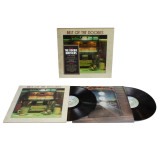
"A new 2LP set combining two classic Doobie Brothers hit albums in one collection. Features hits spanning their Warner Records years, including ""Listen To The Music, "" Takin' It To The Streets,"" ""China Grove,"" ""What A Fool Believes,"" ""Long Train Runnin', ""Minute By Minute,"" and more.
The Doobie Brothers will actively tour this summer with Tom Johnston, Pat Simmons, John McFee and Michael McDonald on board for their Summer 2024 Tour. They will open for the Eagles in the UK and Netherlands starting in late May"
FFO: Melvins, Big Business, Torche, Karp, Lightning Bolt, Red Fang. Super limited vinyl, first press is transparent-y orange. Based in Sheffield, POHL is a stunning and brutal noise rock duo, featuring former Hey Colossus axeman Will Pearce on guitar/vocals, and drummer Dr Linda Westman of Toronto-based death metal two-piece, Old Hope. This July the band releases their debut album Mysteries; a sonic tome which draws as much from MF Doom as it does doom metal. It’s a swirling, cosmic onslaught of heavy motorik riffs and offhand musings about everything and nothing in equal measure. New single ‘The Whale’ summons the glorious thunder pop of Torche, the pithy lyricism of Karp and the DIY derring-do ethos of Guided by Voices. As guitarist/vocalist Will Pearce explains: “I suppose you could say that Mysteries is an album about grief. How we live with grief, and how we overcome it. When you’re trapped in the belly of the beast, and all seems lost - how do you come back from that? All I can say is that sometimes you eat the whale, and sometimes the whale eats you." Pearce, who played with Hey Colossus on their 2019 album Four Bibles and 2020’s Dances/Curses is thrilled to be teaming up once more with former bandmates Joe Thompson and Chris Summerlin and their Wrong Speed Records imprint. Recorded at the band’s own Cool World studio and mixed by serial collaborator and producer Wayne Adams, Mysteries is many things, often all at the same time. Veering from biblical allusions to fragmented Burroughsian cut-ups, it is at once mystical, profane, sacred, and scatological. Profoundly stupid, perhaps? Or just stupidly profound… either way, Mysteries demands your attention
2024 Repress
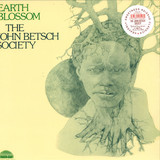
180 Gram, Tip On Sleeve RSD version of this classic. One of the rarer records of the mythical Strata East albums is finally reissued for the first time on Heavenly Sweetness!
The recording of Earth Blossom, the John Betsch Societys one and only album, seems something of an enigma nowadays. For even though Nashville is clearly one of the towns in the US with the highest number of recording studios, who would have thought that the capital of country music would give birth to one of the forgotten masterpieces of 1970s spiritual jazz. The path leading to the album starts in 1963 when John Betsch, originally from Jacksonville in Florida, arrives in Nashville to study at Frisk University. He is a young drummer and joins Bob Holmes trio. Holmes is one of the towns major jazz organists and pianists; he becomes Betschs mentor and, over the space of two years, John will play alternately with him and with the trumpeter Louis Smiths group. However, in 1965, John leaves town to go to the prestigious Berkeley University in Boston and do a two-year course along with his fellow debutants with names like John Abercrombie, Ernie Watts and Alan Broadbent. Two years later, he is invited by a pianist friend, Billy Chilf, to join the legendary singer/songwriter Tim Hardins group. Just after Woodstock, John Betsch and Tim record a psychedelic album Columbia will never release together with the members of the future group Oregon: Colin Walcott, Glen Moore, Paul McCandles and his friend Billy Chilf. But he soon leaves this group to return to Nashville where he hooks up again with his friend Bob Holmes. Two years later, he is accepted on Archie Shepp and Max Roachs famous course at the University of Massachusetts Amherst (UMASS) and for the next four years he participates in this collective of intellectuals and musicians under the aegis of the two masters.
During this period he returns to Nashville to form his Society whose music is obviously influenced by the Afrocentric ideas of the UMASS student and political movement. However, the album, recorded in one day and in one take, also bears the hallmark of their generations psychedelic experiences, and in the themes and playing of the musicians we can hear a less violent form of music than the radical free jazz of New York or Chicago. Nature and environmental themes are the inspiration behind tracks touched by the spirit of Coltrane but also of Flower Power.
After Amherst, John Betsch joins Marion Browns group in 1976, leaves Tennessee for good and makes his home in New York over the next ten years or so. He plays and records with Dollar Brand, Kalaparusha Maurice McIntyre and many others, before heading off to France. He has lived in Paris for the last twenty years and played in Steve Lacy, Mal Waldron and Archie Shepp bands, as well as forming groups of his own. He now lives in Paris and plays with many musicians/bands.
Shop Assistants formed in Edinburgh in 1984 and quickly gained a cult following, playing with kindred spirits the Pastels and the Jesus & Mary Chain and gaining positive coverage in fanzines and the music press. Their Shopping Parade EP and Safety Net single both hit the top of the indie charts and charmed listeners with their unique melodic blend of punk rock and 60s pop. The band signed to Geoff Travis' new Chrysalis Records imprint, Blue Guitar, in 1986 for the release of their debut album 'Will Anything Happen'. The album has since become a cult classic and is an essential listen for fans of indie, dream-pop, and shoe gaze. Stand-out songs include the lead single 'I Don't Wanna Be Friends With You', 'All Day Long', and 'Somewhere In China'. This newly expanded edition has been remastered from the original master tapes and compiled in collaboration with David Keegan and Laura McPhail from the band. CD 1 features the newly remastered version of 'Will Anything Happen' accompanied by B-sides from the era, plus previously unreleased instrumental demos from 1986. CD 2 contains a further 18 previously unreleased tracks including recently unearthed alternate versions and rough mixes from the making of the album, live recordings from London and Deinze, and a John Peel session featuring a cover version of Motorhead's 'Ace Of Spades'. The discs are housed in a 6-panel digisleeve with a 12-page booklet featuring lyrics and photographs.
"We had a conversation recently where we realized that we’ve been a band for almost 10 years. When we started Wild Rivers way back when, we had never played a real concert before. When we made our first record it was our first time stepping into a real studio. We barely even knew each other when we started this band. Since then we’ve played a thousand shows, recorded over 30 songs, and become a family.
When we set out to record ‘Never Better’, we felt like we were at a new stage of the band. By that point, we’d put in the hours and all began to feel totally self assured in what we were about to do. We wanted to bring everything we’ve learned over the years and all that we’ve been through as a group to the project. We chose to trust our guts and move quickly and confidently in every decision, second guessing ourselves as little as possible. In having this mindset, we were able to completely let loose and go deeper into the process, finding new ways of recording live, swapping instruments, and turning these songs on their heads. We couldn’t have made this record a few years ago.
We approached this record with the mindset, ‘this is who we are’. We aren’t pretending to be something we’re not, or trying to sound like anyone else. We wanted it to feel easy. We wanted the stories to be real. We wanted to show our true selves as best we could. We’re proud of who we’ve become as people and as a team. We truly feel like we’re having the most fun with music that we’ve ever had, and in the most exciting stage of our lives. We’re never better."
Spray’s Punctuality arrives sharp for its second instalment, rolling out the velvet carpet to welcome LA’s royal rave highness Etari. Kweenie is her inauguration, a no-nonsense exhibition of prog tonkers and tech pumpers accompanied by a wild remix from Angel D’Lite.
Deep in the heart of the angel’s city resides Etari, the west coast icon of boundless rave energy. Having graced the kingdoms of 100% Silk and Delusional Records previously with a wily array of hardcore dance styles, Spray’s Punctuality is the next stop. Etari duly obliges his invitation with Kweenie, a new iteration of her sound that develops her twisted club fantasies beyond the clouds, or at least as far as the lasers will carry.
Clocking in and the title track throws down from the off, shaking its royal rump that’s fit for a Kweenie before bumping its soaring bassline along its naughty groove. Angel D’Lite heeds the remix call, kickin’ it rage style with a breakbeat pumper that harkens to jungle tekno past while straddling future prog pastures. Lulu Limon gets freakier on side B, as Etari zests its anaesthetised groove with clicks and pops while gliding down its minimalised wormhole of latent psychedelia. Racehorse is last out the gate, initiating a heads-down stomper of tech(no) consequence that gallops cute but serious with club tenacity along its majestic travels, and thus concluding Punctuality’s latest transmission.