Noodzakelijk Kwaad heeft een nieuwe plaat.
‘Morsen Met Mensen’
Het kwartet bestaande uit Jef Mercelis, Teuk Henri, Frank Pay en Jan Ducheyne spelen nu al meerdan zes jaar samen. En dat is er aan te horen als ze op een podium staan. De gitaren van Teuk Henri klinken helemaal in evenwicht met de zoemende Korg van Jef Mercelis, die er dan nog eens zijn gouden stem bovenop gooit als het even past. Frank Pay zorgt dat alles strak en los tegelijk zit met drums en percussie en welgemikte achtergrondzang.
Jan Ducheyne kan als geen ander zijn teksten in de nu eens voortstormende, dan weer langzaam
kabbelende muziek van Noodzakelijk Kwaad leggen. Improvisatie is nooit ver weg eens dit viertal het podium bestijgt.
Wat niet wil zeggen dat ze geen songs schrijven. ‘De Wind’, ‘Morsen Met Mensen’, ‘Wilde Bloemen’, ‘Kabine’ het is maar een greep uit de vijftien nummers die op de dubbelplaat staan.
De plaat is opgenomen bij de wizzard Pascal Deweze in Studio Jezus in Hoboken.
Het hoesontwerp is van de handen van Jirka De Preter en Emma Ducheyne.
De plaat komt uit bij Rotkat Records.
Noodzakelijk Kwaad is een belevenis, een openbaring voor zij die hen nog nooit aan het werk zagen en een genot en immer blij weerzien voor al wie dit viertal al langer volgt.
Noodzakelijk Kwaad heeft er zin in! Tot in uw oren!
quête:wild planet
It has now been four years since our return to earth in "2020 back to earth". There we had found a cold and inhospitable place, humanity was inexorably channeled on the path to extinction. We therefore decided to flee immediately in search of another planet where we could dwell.
We therefore came to New Babylon, a planet inhabited by humanoids but also by monstrous and ravenous creatures. There are "giants" that march about raising immense clouds of dust, stealing and plundering everything from people. Giants much like our corporations, they know no defeat and have no weaknesses, at least apparent ones.
There are old warriors like jarek who wait for war to feel like heroes, to feel alive. They find their dimension within the battle, where the line between hero and assassin magically blurs.
There are pyramids erected by men who think they are gods and turn the things life gives them into weapons and death, changing their use and meaning. Little men who think themselves omnipotent, burying knowledge of how life works under piles of lies.
We find a myriad of slaves, surrendered to live in huge troughs. They toil at nothing and find meaning in nothing. They prefer a convenient lie to an inconvenient truth.
In short, we realize that we have arrived in a world very much like earth. We are aliens but in a certain way we feel at home. We want to know, to understand, to evolve. We don't recognize ourselves in this deceived humanity, we don't give in, we believe. Nature, life is wonderful but when one thing loses its usefulness life gently explains to it that it is time to make room for something else. This existence has already explained to the dinosaurs.
Kayleth continue their journey, never stopping because who seeks will find itself.
"New Babylon ranks next to Space Muffin as Kayleth’s best album for me and one that contains some of their best grooves of their career to date." - Outlaws Of The Sun
"Sit down and really take in We Are Aliens as it’s a joy to listen to, but are the aliens we think exist, just like us? Let Kayleth take you on their journey of discovery." - The Sleeping Shaman
"On this album the Italian five manage to translate heroism into wild and wonderful sounds, often sounding even more like a grungier, metal version of Monster Magnet, mixed with mix a definitive love for Kyuss, Orange Goblin and a prog rock outfit like Riverside." - Stoner Hive
"It’s a call to arms for the dreamers and the rebels, a reminder that no matter how dark the journey, there is always light to be found. This album is a must-listen for anyone into psych stoner rock!" - Witching Buzz
"New Babylon is a triumph. It’s an album that demands to be listened to in full, each track a journey through heavy riffs and cosmic themes." - Iron Backstage
"Listening to a piece like 'New Babylon's Wall,' you can appreciate the richness and sonic fertility of the group, with beautiful melodies enriched by the right amount of electronics, starting from a psych conception of the stoner sound, and there is no lack of prog elements, all with beautiful melodies. As mentioned earlier, a sci-fi band in both approach and essence." - InYourEyesEzine
"KAYLETH doesn't reinvent anything, but they absolutely crush it by the rules!" - Rock'N Force
"Stoner rock has rarely sounded as original, diverse and intoxicating as it does here!
Die umjubelelten, schrill-bunten Rockerinnen von The Hot Damn! sind mit einem Paukenschlag zurück und veröffentlichen ihre elektrisierende neue Single Can You Hear Me Now? zusammen mit der Ankündigung ihres mit Spannung erwarteten Debütalbums Dancing on the Milky Way, das am Freitag, den 27. September 2024, über Fat Earth Records erscheinen wird. Die vierköpfige britische Rockband wird als das ,farbenfrohe Chaos" des Rock bezeichnet und bringt mit jedem Song, jedem Video und einer energischen Live-Show nach der anderen wieder Farbe in die Musikszene. Mit knackigen Riffs und wilden Harmonien bringen The Hot Damn! dich zum Tanzen, bevor du es merkst. Die vier temperamentvollen Damen, die unter anderem von Kerrang!, Planet Rock und BBC Radio 2, BBC Radio 6 und Radio BOB gelobt wurden, sind keine Unbekannten in der Musikszene. entstand die Band u.a. aus der Asche von The Amorettes und Tequila Mockingbyrd und besteht aus den Talenten von Gill Montgomery (The Amorettes), Josie O'Toole (Tequila Mockingbyrd), Laurie Buchanan (Aaron Buchanan and the Cult Classics) und Lzi Hayes (New Device/Sophie Lloyd Band).The Hot Damn! aus Marlow, Buckinghamshire, mögen es laut, aber sie machen nicht nur mit ihrer Musik auf sich aufmerksam, sondern auch auf ein Thema, das ihnen am Herzen liegt - den Gehörschutz. Da die Band erkannt hat, wie wichtig die Gesundheit des Gehörs sowohl für das Publikum als auch für die Musiker ist, hat sie sich dazu verpflichtet, bei all ihren Konzerten Einweg-Ohrstöpsel anzubieten. Neben einzelnen Headline-Gigs reisen The Hot Damn! im November 2024 als Support von D-A-D durch Deutschland um ihr hart rockendes Werk zu präsentieren. CD mit zwei Akustik-Bonustracks, LP als Sunshine Yellow Vinyl!
Signed to Island Records, his Iggy Pop/Jim Morrison side was cultivated, the weirdness dialled down, leathers were worn and a rock'n'roll microphone stand was utilised. The lead track "World Shut Your Mouth" gave Cope his first solo UK Top 20 hit, a big, brash slice of garage rock, it was a post-punk equivalent to David Bowie returning with Let's Dance; simple, straightforward. Backed by what Cope called his 'two-car garage band', the album reached No 11 in the UK chart, his highest placing to date whether solo or in The Teardrop Explodes, it also entered the US Billboard Hot 200. It's not all straight-ahead stomp, the eight minute closer "A Crack In The Clouds" harks back to the Teardrop Explodes' Wilder, and Kate St. John's oboe on the title track evokes his Mercury albums. Released in March 1987, Saint Julian was seen as a storming return to form for Julian Cope - This re-issue faithfully replicates the original 1987 Mercury Records UK release and is pressed onto high quality 180g vinyl.
The relationship between our star, the source that gives us life and the land we occupy during this transcendental process is one of sensitivity and compassion. Topography and rock settlements are positioned as conductive posts of energy. An energy line wrapping around a planet that straddles between the past, the present and the future. And on this land, exists an engineered string of energy called the 37th Parallel. Time Travel, multi-dimensional activity, healing, spiritual transition and rejuvenations in the supernatural respect and other powers we've yet to discover and realize.
3. Album der instrumentale Rock-Band Der Neue Planet aus Köln. Sie bezeichnen ihre Musik als"Heavy Dream Prog" bezeichnen: Schwere wuchtige Stoner Riffs bilden den Kontrast zu verträumt-spielerischen Post-Rock-Melodien und immer wieder wird man als Hörer durch Stilwechsel überrascht. Die Songs sind lang und entfalten einen wilden Genre Mix verschiedener Einflüsse: Jazz, Latin, Funk, Metal, Doom, Psychedelic oder Disco. Die Kompositionen sind vielseitig und progressiv ohne dabei in technische Dudelei oder laut-leise Post Rock Klischees zu verfallen. In fünf sehr unterschiedlichen Stücken tobt sich die Band aus und berührt zahlreiche Stile der Musikgeschichte, ohne ihren eigenen melodischen Wiedererkennungswert zu verlieren. Eine genaue Genre-Einordnung fällt schwer. Post- und Stoner Rock Elemente verschmelzen mit Sounds von Funk bis Jazz, über Kraut- und Psychedelic-Rock Parts, bis hin zu knüppelharten Metal-Klatschen. Wie bei Der Neue Planet üblich gibt es eine Menge zu entdecken.
Cardinal Fuzz and Little Cloud Records bring to you the new LP from a band we hold dear, Firefriend – ‘Decreation Facts’ – From São Paulo in Brazil and now close to two decades of creating and honing what has become their trademark, a heavy reverb, minimalistic slow-burn menace which sends chills down your bones. If you don't know Firefriend from somewhere along the last decade, you must cut a safe course through music. ‘Decreation’ is the undoing of creation, something destructive and primal and that Firefriend carry through on all the twelve songs written for this LP. Yury explained that the album "is a commentary on our 21st century, so violent and radical. We live in times of accelerated transformation. We wrote and recorded this album between the pandemic and WW3 – times of ground-breaking changes – and somehow that uneasy feeling got into our songs. Reality is the most crazy trip, isn it? And we are always trying to explore new territories: we want a new album to take you to new places, so we were chasing the sounds, structures and moods to make this a truly new album to match this wild new world’ ‘Decreation Facts’ is all this as they simply inject you with a liquid paranoia for their dark conjuring’s that is hugely dark and foreboding – Julia and Yury’s uber cool stoned and detached delivery creates a seriously dark menace with Julia’s delivery having echoes of Nico – all the while THAT claustrophobic reverb and tremolo encloses and swirls around the inside of your head and vibrates your inner core. This is HEAVY shit. Decreation Facts’ is an unsettling sonic fuck you to those that seek to destroy this planet for their love of money and power and we think it is a stunning achievement. As Terence McKenna might once have said – ‘Firefriend should be consumed alone, in the dark, in silence, with your eyes closed’. Firefriend advises, “Express yourself through any method you want. That is how you become a transmitter, generating waves that will open connections with others vibrating on the same frequencies. That energy field will change the game.” Now that is a truly psychedelic perspective if there ever was one. RCKNRLL, FUZZ, FEED YOUR HEAD
Étrange Hiver (Strange Winter) is UK songwriter, Tom McRae's 9th studio album. An exquisite collection of original duets with renowned French artists, such as Keren Ann, Chien Noir, Alex Beaupain, Clou and more. McRae decided to collaborate on these 11 new songs with various artists as a way of acknowledging his deep love of French music, and deepen his relationship with mainland Europe, following Britain’s disastrous decision to leave the EU. Tom’s debut album went Gold in France in 2001, selling over 60,000 copies, and he has divided his time between Paris and Wiltshire since 2021. Says Tom: “I grew up being intrigued by classic French songs. Before streaming services made all music readily available, only the huge crossover pop songs made it across the channel, but while my friends were listening to Vanessa Paradis, I was listening to Serge Gainsbourg. It seemed exotic, adventurous, and to be from another planet, let alone a country only 21 miles away from my own.” During Covid, McRae released a single with his Belgian friend, Wannes Cappelle, a reworking of one of Tom’s songs in English and West Vlaams, as well as an album of duets with a Welsh artist, Lowri Evans. Both projects sparking his interest in collaboration with other artists. “It’s not been a great time to be British since 2016”, says McRae. “We’ve become politically, economically and culturally isolated since Brexit - and I want to show that I feel more of a European than simply just an English person.” “But mostly this album, Étrange Hiver, is about beautiful songs, some in English, some in French. Sung as duets with friends (some established artists, as well as some new or undiscovered voices) and creating 11 little emotional moments in a crazy world. Some cinematic, some more intimate and personal, all of the songs addressing the important things in life: love, loss, political populism, impending climate collapse… written at a time when it feels as if the world may never escape from this long, strange winter.“ Artists duetting on this album with Tom include: Keren Ann, Chien Noir, Clou, Alex Beaupain, Rose, Naya, Vanille, Helena Noguerra, Alma Forrer, Aïtone, Julien Brocal, and now more are lining up to sing with Tom on a volume 2
Wo ein Krater liegt, muss es einen Vorfall gegeben haben. Etwas ist eingeschlagen oder ausgebrochen, wo jetzt Ruhe ist. 2012 spien Messer das fiebrige Debüt "Im Schwindel" in die brodelnde Begeisterung für Punk aus Deutschland und wuchsen zu einer prägenden Stimme im Post-Punk-Revival der Zehnerjahre. Was auf den letzten beiden Platten "Jalousie" (2016) und "No Future Days" (2020) noch wild wucherte, ist nun auf "Kratermusik" stärker begriffen und gibt zugleich Sicherheit für weiterführende Expeditionen. Die einzelne Idee ist jetzt schärfer konturiert als zuletzt, Kratermusik ein Album im Wortsinn: Jede Seite ein anderes Bild, eine andere Szene mit anderen Figuren, zusammengehalten von einem Einband, einer Motivwelt, einem Sound, der dieses Mal dicht, aber umso detaillierter ausfällt. An anderer Stelle lösen sich Stimmen auf: Pola Lia Levy, die lange schon eng mit der Band befreundet ist und gerade mit ihrer neuen Band Dews in den Startlöchern steht, spendet Harmonien, die im erst sachten, dann zunehmend mitreißenden "Im falschen Traum" mit dem Rest der Band verschwimmen. Im Space-Dub-Finale "Am Ende einer groszen Verwirrung" stimmt sie mit Joachim Franz Büchner in einen beherzten Singsang ein. Was hier tröstlich klingt, wirkt im vielstimmigen Spiegel zerrissen, wenn auch nicht zwingend unheimlich - sondern ähnlich faszinierend-ambivalent wie Mille Petrozza von der legendären Thrash Metal-Band Kreator, der mit einigen englischsprachigen Zeilen durch den wispernden Refrain am Ende des Wave-Epitaphs Grabeland schneiden darf. Messer bleiben also ambivalent, fragend und suchend, gerade wenn es um Krieg und Frieden oder die Zukunft des Planeten geht. Die Bewegung steckt schon im Titel: Das "Messer verwandte Wort" Krater, so Otremba, "ist vieldeutig, ein Wort, bei dem klar ist: Zu dem muss man sich verhalten. Das ist ein scharfkantiges, schroffes Wort." Im Krater steckt immer auch das Potenzial zur Explosion, im Frieden lauert der nächste Krieg. Im Vorrang des Ästhetischen ist die neue Platte aber ein typisches Messer-Album, auch in seiner gewohnten Überschreitung dessen, was Post-Punk sein kann. Vielfältiger klang diese Band nie, ihr Referenzsystem bleibt undurchschaubar. Parallel spülen die Pop-Gezeiten wieder eine (Neue) Neue Deutsche Welle an, doch Messer bleiben ihren eigenen Zyklen verpflichtet, befinden sich in ständigem Übergang: Metaphern nie ganz auflösen, Motive immer neu ausleuchten, Sounds nochmal anders aufeinander beziehen.
- Chance Is Her Opera
- Heatwave Pavement
- Green Ray
- Orange Zero
- Late July
- Darkness-Blue Glow
- Mono Valley
- Coastal Lagoon
- Alkaline Eye
- 3: Am Walking Smoking Talking
- Three Fires
- Disc 2
- She Smiled Mandarine Like
- Under The 3000 Foot Red Ceiling
- Orange Zero (Single)
- Chance Is Her Opera (Demo)
- Late July (Demo)
- Alkaline Eyed (Demo)
- She Smiled Mandarine Like (Demo)
World Of Echo are proud to announce the long-awaited reissue, on 17th February, of the self-titled debut album by Bristol’s Movietone. Originally released in 1995 by Planet Records and reissued on CD in 2003 by The Pastels’ Geographic Music imprint, this is the first time Movietone has been reissued on vinyl. An expanded double-LP edition, it includes the extra tracks from the 2003 CD (their first two singles, and an unreleased demo of “Chance Is Her Opera”), and adds three more unearthed gems: demos of “Alkaline Eye” and “She Smiled Mandarine Like”, and an early take of “Late July”, recorded in a garden by Dave Pearce (Flying Saucer Attack) in 1993. Taken together, this is the definitive collection of music from the first phase of one of Bristol’s most remarkable groups.
Movietone was the cumulation of a series of events, explorations, and discoveries, starting at secondary school – the group’s core membership of Kate Wright, Rachel Brook, Matt Elliott and Matt Jones met at Cotham School in Bristol. As for many other groups, their early years were all about experimenting, and finding ways to ‘make do’, a DIY sensibility that would inform Movietone through their decade-long lifespan. From formative rehearsals in a shed in the garden of Brook’s family home, to recording early material to four-track in Redland Library, and on into the Whitehouse and Mr Grin’s studio sessions for their debut album, Movietone’s music fell together in a creatively unpredictable, yet conceptually rigorous manner.
By the time they released Movietone, they’d found a home with Bristol’s Planet, run by author Richard King and James Webster, who had both released their first two singles, “She Smiled Mandarine Like” and “Mono Valley”. There was other music happening around them in Bristol, too, from the Jones brothers’ avant-rock outfit Crescent (who were Movietone’s closest conspirators), through Elliott’s jungle/electronica project Third Eye Foundation, and Brook and Elliott’s membership of Flying Saucer Attack. A closely knit community, Movietone are the centre of this nestling architecture of groups.
The vision in the music, mostly, belongs to Wright, but Movietone ran in democratic creative consort. Listening back to Movietone, you can hear this democracy in action through the wildness of the music, which is balanced by the poetics of Wright’s lyrics and melodies. Full of half-captured memories and entangled abstractions, there’s an elliptical, ruminative quality to much of the writing here that shows the deep influence of the Beat Generation writers, along with a twilight environment captured in the songs that’s pure third-album Velvets, Galaxie 500, early Tindersticks, Codeine. Unpredictable interventions – the crashing glass in “Mono Valley”, the sudden explosions of “Orange Zero” – point towards the noise blowouts of My Bloody Valentine, the unpredictability of Sonic Youth; Wright’s understated vocal cadence suggest a deep, embodied understanding of John Cage’s Indeterminacy.
Movietone would go on to make three fantastic albums for Domino – Night & Day (1997), The Blossom Filled Streets (2000) and The Sand & The Stars (2003) – and their Peel Sessions were released early in 2022 by Textile. Still held in high regard by artists like Steven R. Smith, and The Pastels, whose Stephen McRobbie once described them as “one of the great unknown English groups,” it’s an absolute thrill to listen to Movietone anew – still inspired, still seductive, still magic, still mysterious.
Irgendwo zwischen Planet Punk, Milchstraße Retro-Pop, Mikrokosmos New Wave und Hinterwelt Thüringen befindet sich das Universum MAMORÉ. Es sendet schrille Signale aus, wird Tag und Nacht von einer rosaroten Sonne beleuchtet. MAMORÉ ist ein Ort, an dem alles erlaubt ist: Zu feierlichen Synth-Melodien und schroffen Rockgitarren wird simultan ruppiger Pogo, romantischer Paartanz und Bowie-esker Hüftschwung praktiziert. Drama und Behaglichkeit, Anachronismus und Innovation, Herzschmerz und Augenzwinkern aggregieren hier zu einem blumigen Gefühlsgewirr. Im Zentrum des Treibens: Fünf in extravagante Outfits aus der Vintage-Kleiderkiste gewandete junge Männer, die hin und wieder selbst nicht so ganz fassen können, was um sie passiert.
Jetzt, im Dezember 2023, legen MAMORÉ endlich ihren langersehnten ersten, nach dem Bandnamen betitelten Langspieler vor. »MAMORÉ« ist eine wilde Experience, ein heißkaltes Wechselbad — hier tippelnd-euphorisch, konsonant und tanzbar, da abgründig-absurd, schnell und kalt. Was alle zehn Anspielstationen eint, ist ihre nonchalante Eingängigkeit: MAMORÉ haben Hits gemacht, die eigentlich gar keine sein wollen, sich keineswegs anbiedern und trotzdem im Ohr bleiben. In manchen Momenten erinnert ihr Album an die ersten Veröffentlichungen der Band Abwärts, hin und wieder scheinen die frühen Die Ärzte durchzuschimmern — und doch ist »MAMORÉ« in seiner Attitüde stets eigenwillig, modern und neu. Der in neuer Bandbesetzung re- ecordete, von hysterischen Klangmustern gespickte Opener »Voll im Visier« signalisiert direkt, wo die Reise hingeht: »MAMORÉ« piepst, knallt und explodiert fortwährend, klingt dabei voll und gravitätisch.
Im bittersüß-verträumten »Du fehlst« crashen harte Brüche in sanfte Schlager-Ästhetik, in »Ich Sehe Dich« treffen raue Gitarrenriffs auf NDW-typisches Synthie-Spiel. Die Neuauflagen der 2021 veröffentlichten Stücke »Meine Liebe Nicht« und »S.O.S« gehen der von seichtem Piano-Spiel eingeläuteten Dark-Wave-Schnulze »Pfeil Ins Herz« voraus. Die bereits erschienene Single »Wolke 7« baut in den Parts kitzelnde Spannung auf, um in Richtung Hook wie ein Vulkan auszubrechen — und auch die darauffolgende Punk-Hymne »Melancholie«, ein Feature mit NNDW-Sternchen Gwen Dolyn, schraubt sich in ihrer Dynamik von Sekunde zu Sekunde weiter hoch. Im Zuge vom hallig-darken, Gitarren-getragenen »Die Hatz« erreicht das Rabbit Hole »MAMORÉ« seinen tiefsten Winkel, bevor das abschließende »Keine Bewegung« dort anknüpft, wo die LP begonnen hat: Auf der klammen Tanzfläche einer Diskothek. »MAMORÉ« kreist inhaltlich stetig um das Thema Zweisamkeit — inmitten von Liebeskummer und Euphorie, gebrochenen Herzen und kochendem Blut, »Rennen gegen Einsamkeit«, Nervendoktor und Oktobertristesse liefert das Album ein geballtes ABC der Gefühlsausbrüche.
The old is dying and the new cannot be born; in this interregnum a great
variety of morbid symptoms appear"
-Antonio Gramsci, Prison Notebooks.
Iskandr's latest offering "Spiritus Sylvestris" appears to be a radical
statement in both content and form Signifying a departure from the black metal roots of the project, the psychedelic folk doom of the new album builds upon the directions of where both "Vergezicht" and "Glas" were already moving towards.
"Spiritus Sylvestris" is cinematic in scope: majestic and threatening in its aura of sublime grandeur. The Latin title translates to "spirit of the wild" and also refers to the early modern alchemical name for carbon dioxide - when the spirit of the wilderness is released into the
aether through the burning of wood and charcoal. The songs tell impressionistic stories of natural elements personified; when powerful spirits that linger in the earth are stirred, those elemental forces will be forced to haunt our world.
In an era of irreversible damage to our planet and anthropogenic climate change, Iskandr aims to offer funeral dirges for the world that we have already lost.
"Spiritus Sylvestris" embraces a limitless approach to translate this vision into musical form. Employing musical elements from a broad array of genres; easily moving between the martial stomp of early Laibach and the ethereal melodics of Dead Can Dance.
Recorded and mixed by the legendary Pieter Kloos (The Devil's
Blood, Motorpsycho) at The Void Studio in Eindhoven, the new Iskandr record has broadened the scope and sound of the project beyond any confines, resulting in the most open soundscapes from Iskandr to date. The heavy baritone guitar riffs that form the backbone of the record provide a pitch-black canvas in which huge percussive rhythms and psychedelic layers of Hammond organ, Mellotron as well
as subtle acoustics move in and out of focus. If this world is at an end it deserves a requiem for that what is lost.
For the better part of the last 15 years, the duo of Max Dameron (guit/vox) and Sam Ford (drums/vox) have been too weird and too wild for this lame-ass planet. After enjoying vagabond stints living in Portland, Los Angeles, and Brooklyn, they now call Detroit home. Here they rebuild, out of the scraps and wreckage of the 21st century, something which casts aside any rules or adherence to banal tropes. Specializing in the unexpected, Max and Sam have wrought an individual sound that’s as much post-Melvins sludge punk as it is futurist prog metal. Their forthcoming self-titled debut, recorded in 2022 at High-Bias in Detroit, puts on display the fruits of their metamorphosis. From the soaring triumphal fuzz of “Uncanny Valley” or the sweep and thrust of “House of Butterflies” their craft is precise, they’re just making up their own shapes to sculpt. Times change and artists mature: now under the name PSYCHIC TRASH, Ford and Dameron come to Riding Easy Records as veterans turning a fresh page, reinvigorated at the prospect of forging a new path and the beneficiaries of about a decade and a half’s slog through the underground. Psychic Trash’s self-titled debut is unmistakably uncompromising, a little theatrical, intermittently manic, and deceptively broad in style for just how much punk rests beneath.
- A1: The Kryptic Krew - Jazzy Sensation (Feat Tina B - Manhattan Version - Remix
- A2: Afrika Bambaataa & The Soulsonic Force - Planet Rock (Vocal & Bonus Beats I)
- A3: Planet Patrol - Play At Your Own Risk
- B1: Jonzun Crew - Pack Jam (Look Out For The Ovc) (Look Out For The Ovc)
- B2: Afrika Bambaataa & The Soulsonic Force - Looking For The Perfect Beat (Vocal)
- B3: Pressure Drop - Rock The House (You'll Never Be) (You'll Never Be)
- B4: Globe & Whiz Kid - Play That Beat Mr Dj
- C1: Force Md's - Itchin' For A Scratch (Lp2 1984-1985)
- C2: Globe & Whiz Kid - This Beat Is From The Bronx (Edit)
- C3: Rock Squad - Facts Of Life
- C4: Double Cross Mc's - Believe In Yourself
- D1: Sweet Trio - Non-Stop
- D2: Globe & Pow Wow - Celebrate! (Everybody) (Everybody)
- D3: Force Md's - Force Md's Meet The Fat Boys (Feat Fat Boys)
- D4: Stetsasonic - Just Say Stet
- E1: Stetsasonic - Go Stetsa I (Lp3 1986-1989)
- E2: Chilly Reds - Chilly Reds
- E3: Ss2 - It's Time (Edit)
- E4: Mc Globe - Get Ridiculous (Edit)
- F1: Stetsasonic - Talkin' All That Jazz (Radio Version)
- F2: Digital Underground - The Humpty Dance (Album Version - Edit)
- F3: De La Soul - Plug Tunin' (Last Chance To Comprehend) (Last Chance To Comprehend)
- F4: Queen Latifah - Ladies First (Feat Monie Love - Radio Edit)
- F5: Digital Underground - Doowutchyalike (Radio Mix)
- G1: De La Soul - Me Myself & I
- G2: Queen Latifah - Come Into My House
- G3: Digital Underground - Kiss You Back (Smack On The Cheek Mix)
- G4: Prince Rakeem - Ooh I Love You Rakeem (Baggin' Ladies Mix)
- G5: Naughty By Nature - Opp
- H1: Naughty By Nature - Uptown Anthem
- H2: Queen Latifah - Latifah's Had It Up 2 Here
- H3: House Of Pain - Jump Around
- H4: Apache - Gangsta Bitch
- H5: Naughty By Nature - Hip Hop Hooray
- I1: K7 - Come Baby Come (Lp5 1993-1996)
- I2: Leshaun - Wild Thang
- I3: House Of Pain - Back From The Dead
- I4: Coolio - Fantastic Voyage (Timber Mix)
- J1: Lord Finesse - Hip 2 Da Game
- J2: Naughty By Nature - Feel Me Flow
- J3: Coolio - Gangsta's Paradise (Feat. Lv)
- J4: Capone N Noreaga - La, La (Feat Mobb Deep & Tragedy Khadafi - Kuwait Mix)
- K1: Capone N Noreaga - Tony (Top Of New York) (Top Of New York)
- K2: Coolio - C U When U Get There (Feat 40 Thevz)
- K3: Everlast - Money (Dollar Bill) (Dollar Bill)
- K4: Prince Paul - More Than U Know (Feat De La Soul)
- L1: Noreaga - Superthug
- L2: Above The Law - Deep Az The Root
- L3: Handsome Boy Modeling School - Once Again (Here To Kick One For You) (Here To Kick One For You)
- L4: Coo Coo Cal - My Projects
Tommy Boy Music veröffentlicht ein Compilation-Projekt mit dem Titel "... And You Don't Stop", um das 50-jährige Jubiläum des Hip Hop mit einem 6 LP Box-Set zu feiern. Es wird einige der größten Hits aus dem Katalog enthalten, von den kultigen Naughty By Nature, De La Soul, Digital Underground und Queen Latifah bis hin zu digital unveröffentlichten Hits von G.L.O.B.E & Whiz Kid, Sweet Trio und mehr.
DJ Manny's new album 'Hypnotized' is full of fresh ideas which push the footwork format of 160bpm hyper-rhythmic music in really enjoyable new directions. He builds on the romantic themes of his last album 'Signals In My Head' and evolves them with shades of blue, taking very natural sounding experimentation into new moods and musical colour while never making the album inaccessible. Arguably this is a fine successor to the ground broken by DJ Rashad's 'Double Cup' album, which of course Manny also worked on. 'Hypnotized' solidifies Manny's style, from relaxed r'n'b rollers to moments of romantic distress - like 'WTF Goin On' and the reflective 'You N You (ft. DJ Phil)', to more intense moments like the dubstep inflected 'Ooh Baby' from the vaults, co-produced by DJ Rashad himself. Other tracks like 'Want U Bad' retool Robert Hood style minimal techno whereas dark, nervous belters like 'Turn Me Up' sound like Paul Johnson at his most wild but welded to footwork rhythms and a pumping jump up drum & bass-line. There are also moments of enjoyably hype daftness like the acid and diva head-fuck of 'Opera' or the old school Bukem style jungle homage 'Lost In Da Jungle'. 'Hypnotized' is an album that expands footwork's template with natural ease and outstanding skill.
Action Pact were a punk rock band from Stanwell, an isolated village right under the flight-path of London Heathrow Airport, inspiring this album title-song.àFormed in 1981 by guitarist Wild Planet, bassist & lyricist Dr. Phibes, and the then 15-year-olds drummer Joe Fungus and singer George Cheex, still school-kids when their Heathrow Touchdown EP was released in October 1981. BBC Radio 1 DJ John Peel played the single many times and booked them for their first session, recorded February 1982.àSigned to Jungle's Fall Out Records imprint, Action Pact"s label debut Suicide Bag EP went to the top of the British punk chart in July 1982.àFive more singles entered the indie charts including Yet Another Dole Queue Song, and a reworked London Bouncers, along with two albums, 'Mercury Theatre - On The Air' and 'Survival of the Fattest'.àA second John Peel session in '82 and a David Jensen BBC session in '83 were also recorded and broadcast - all collected together here for the first time.
Oblako Maranta is the collaboration between Radial Gaze and A-Tweed. The duo has already released several tracks in different compilations by Samo Records, Electric Shapes, Playground Records, as well as their debut EP “Maranta Kicks” on Duro.
In their new EP “Trance Beckenbauer”, the St-Petersburg-based Radial Gaze and Rome-based A-Tweed produced 4 original tracks that finely blend the sound of each artist, where slow tribal techno meets acid weird disco.
Starting off with the title track “Trance Beckenbauer”, Oblako Maranta brings us through a cinematic voyage, paced by percussive wonders and catchy bass lines, hypnotizing the listener from the first kick on. The atmosphere is dark, trippy, beautifully loved in an analog synth “duvet”. With that feeling of timelessness, “Trance Beckenbauer” sounds like the perfect fit for the next Blade Runner´ s soundtrack.
Next on the tracklisting is “Putos Mosquitos”, a tune that gives a feel of crossing a jungle full of wild life, with weird acid patterns on repeat, groovy percussions, and that sense of limitless adventure as the track plays on.
“Congarella di Luna” is a bewitching tune blending a mesmerizing melody with dreamy pads, finely arranged as the drop brings the energy down before reaching its paroxysm: an irresistible melodic pattern that will leave no one still on the dancefloor.
The fourth track “Analog Garbage” ´should bring any human being on the planet to an ecstatic state as it infuses that energy that makes you move fast and forward, without looking back. Indeed, “Analog Garbage” is driven by a fat bass riff and a kick-drum that tirelessly hammers the pace, while acid melodies are raining as the track unfolds. And there is that drop…
The EP is completed with first-in-class remixes by Inigo Vontier and Zillas on Acid, who reworked “Putos Mosquitos” and “Congarella di Luna”, respectively.
Artwork by Danish artist Christoffer Budtz.
- A.1. I Wanna Be Somebody
- A.2. L.o.v.e. Machine
- A.3. The Flame
- A.4. B.a.d
- A.5. School Daze
- B.1. Hellion
- B.2. Sleeping (In The Fire)
- B.3. On Your Knees
- B.4. Tormentor
- B.5. The Torture Never Stops
- C.1. Wild Child
- C.2. Ballcrusher
- C.3. Fistful Of Diamonds
- C.4. Jack Action
- C.5. Widowmaker
- D.1. Blind In Texas
- D.2. Cries In The Night
- D.3. The Last Command
- D.4. Running Wild In The Streets
- D.5. Sex Drive
- E.1. The Big Welcome
- E.2. Inside The Electric Circus
- E.3. I Don`t Need No Doctor
- E.4. 9.5. - N.a.s.t.y
- E.5. Restless Gypsy
- E.6. Shoot From The Hip
- F.1. I`m Alive
- F.2. Easy Living
- F.3. Sweet Cheetah
- F.4. Mantronic
- F.5. King Of Sodom And Gomorrah
- F.6. The Rock Rolls On
- G.1. The Heretic (The Lost Child)
- G.2. The Real Me
- G.3. The Headless Children
- G.4. Thunderhead
- H.1. Mean Man
- H.2. The Neutron Bomber
- H.3. Mephisto Waltz
- H.4. Forever Free
- H.5. Maneater
- H.6. Rebel In The F.d.g
- I.1. The Titanic Overture
- I.2. The Invisible Boy
- I.3. Arena Of Pleasure
- I.4. Chainsaw Charlie (Murders In The New Morgue)
- J.1. The Gypsy Meets The Boy
- J.2. Doctor Rockter
- J.3. I Am One
- K.1. The Idol
- K.2. Hold On To My Heart
- K.3. The Great Misconceptions Of Me
- L.1. The Story Of Jonathan (Prologue To The Crimson Idol)
- L.2. Phantoms In The Mirror
- M.1. Inside The Electric Circus (Live)
- M.2. I Don`t Need No Doctor (Live)
- M.3. L.o.v.e. Machine (Live)
- M.4. Wild Child (Live)
- M.5. 9.5. - N.a.s.t.y. (Live)
- M.6. Sleeping (In The Fire) (Live)
- N.1. The Manimal (Live)
- N.2. I Wanna Be Somebody (Live)
- N.3. Harder Faster (Live)
- N.4. Blind In Texas (Live)
- N.5. Scream Until You Like It (Theme From Ghoulies Ii)
- O.1. Animal (F**K Like A Beast)
- O.2. Show No Mercy
- O.3. Paint It Black
- O.4. Savage
- O.5. Mississippi Queen
- O.6. Flesh And Fire
- O.7. D.b. Blues
- P.1. Locomotive Breath
- P.2. For Whom The Bell Tolls
- P.3. Lake Of Fools
- P.4. War Cry
- P.5. When The Levee Breaks
DELUXE 8LP BOXSET FROM THEIR ‘CAPITOL YEARS’, WITH STUDIO ALBUM HALF-SPEED MASTERING, LP OF BONUS TRACKS, 60 PAGE BOOK, POSTERS & NUMBERED CERTIFICATE
Currently on the 40 Years Live World Tour and sounding better than ever, W.A.S.P. is one of the most consistent and reliable forces in rock music - unstoppable and unassailable, like a heavy metal juggernaut sent back in time from a long, distant galaxy. Frontman Blackie Lawless is undoubtedly one of rock’s everlasting figures – someone’s whose attitude and vision changed the musical landscape around him, in the process bearing fruit to some of the biggest anthems of their time.
Their first five studio albums (W.A.S.P., The Last Command, Inside the Electric Circus, The Headless Children & The Crimson Idol) contributed enough on their own for W.A.S.P. to be considered one of the greatest rock bands of all-time. Those LPs are all presented in this set, mastered half-speed at Air Studios, London, for a superior, sharper, more direct and engaging sound.
Packaged within a deluxe red leatherette effect double slipcase, The 7 Savage: 1984-1992 is completed on vinyl with two more LPs: 1987’s Live… in the Raw and new compilation Bonus Tracks & B-Sides featuring the controversial breakthrough anthem ‘Animal (F**k Like a Beast)’.
Compiled with the full cooperation of Blackie Lawless, the box set also includes a 60-page book with exclusive and rare pictures from legendary metal photographers (including Ross Halfin, Tony Mottram, David Plastik and Paul Natkin), along with extensive liner notes from Amit Sharma (Kerrang!, Planet Rock). Also included is an exclusive Blackie Lawless poster, plus an individually numbered circular saw shaped certificate.
The 7 Savage: 1984-1992 will be released Friday 27th October 2023 on Madfish and is strictly limited to 2000 copies worldwide.
[yb] L.2. Phantoms In The Mirror [04:36] D.3. The Eulogy
Since 2011, Mike"s been a Drag City stalwart, first with Sic Alps, then as a solo and with The Peacers - but Mike "The Mighty Flashlight" Fellows has been a behind-the-scenes figure at Drag City since the early early days, playing live and on record with Royal Trux, Silver Jews and Will Oldham. Mike D"s music, in all phases, takes the form of a next-phase roots-pop: soaked in the traditional waters of rock and roll and passed through a variety of after-punk sonic sieves, highlighted with DIY and lo-fi values, and making a jolly hallucinatory racket, at that! He prefers a particular density of obtuse angles colliding sweet and hot noise, an arrangement he has perfected over all his Sic Alps/solo/The Peacers years; his innate understanding of the mechanics of a pop song wends purposefully through the junk-strewn landscape, sharing secrets with cipher in hand. Playing in this cracked kingdom of sound/garden of verse, Mighty Flashlight alternately accents and balances Mike"s eccentricities with his playing and knob-spinning - and with the Flashlight shining bright upon him, Donovan"s serpentine path becomes ever so much more elastic, heightened from line to line, change to change, its motility creating different shapes in our ears. Mighty"s own kind of stereo imagining informs Donovan"s smoky subterranea with additional depth of field, while still allowing all the wayward details within the arrangement to diverge as one. Mike and Mighty wind it all together: art punk utterance and top 40 radio junk of yore, the primitivity that formed recorded music in its youth, honkytonk romanticism, liminal chamber-folk and ever-present disassociated psychedelia, transformed via self-medication into a gleeful, extramusical ennui while giving the listener impetus to sing along with Mike"s patented unlikely combos of melody and lyric.
Swapping BPM for GPM (Goosebumps per minute), Dusky’s Life Signs Vol.3 is made from the heart to nourish the soul. to a long-overdue journey to the uncharted territories of Planet Dusky. Completing their triptych for Running Back with four tracks, one of the UK’s most dependable duos shows once again how to connect fun with functionality and funk with efficiency. From the jacking rhythms of early Chicago to the emotive qualities of Detroit and the fever pitch aesthetics of the UK sounds of the 90s or the studies of the contemporary scene, it includes the right choice for each taste and need. Dusky, but not rusty.
- A1: Silvi's Dream (Damiano Von Erckert Remix)
- A2: What I Used To Play (Roman Flügel Remix)
- B1: The Worm (Robag Wruhme Remix)
- B2: We Are (Jonathan Kaspar Remix)
- C1: Feiern (Krystal Klear Remix)
- C2: Mystic Voices (Benjamin Damage Remix)
- D1: Sven | Väth – Nyx (Pas Deep Heet Remix)
- D2: Butoh (Robert Hood Remix)
- E1: Nyx (Planetary Assault Systems Remix)
- E2: Being In Love (Harald Björk Remix)
- F1: Catharsis (Mano Le Tough Remix)
- F2: Silvi‘s Dream (Florian Hollerith Remix)
The life-affirming energy at the heart of Sven Väth‘s recent album Catharsis is revisited, reanimated, and remixed by some of the most exciting names around, closing the circle on a superlative burst of
recent work that has not only given us the epic original LP, but also the extraordinary compilation What I Used To Play.
Roman Flügel, Benjamin Damage, Robert Hood, Planetary Assault Systems, Mano Le Tough… do we need to go on? This hand-picked list of luminaries have answered the call and certainly don’t disappoint, each fusing their signature sound with Sven‘s DNA to create a wild, uncompromising companion piece to the original album.
True to form, the running order is very much rooted on the dance floor, Silvi‘s Dream, revisited by Damiano von Erckert, explodes like a Balearic sunrise. Dreamy strings with a touch of Detroit create a lovely atmosphere while the beautiful piano sound goes right into your heart and appears as if you could feel the warm sun on your skin. Roman Flügel’s acidic rework of What I Used To Play is a homage to the 80s and the early sound of electronic music which creates nostalgic feelings and offers a greatly produced retro soundscape à la Kraftwerk. Staying close to the original, but with the perfect amount of spin, it’s a symbiotic interplay of synthetic bass pads, and a tiny bell melody. Robag Wruhme’s cranking minimal funk takes us down The Worm-hole. A concise interference sound builds
up sustained tension, tangled but structured, deep and yet driving. Robag took over the deep and dirty rhythms of the original perfectly and delivers a versatile piece. This opening salvo oozes quality and
sets things up perfectly for the electrified celebration of hi-octane technology come.
Jonathan Kaspar‘s growling interpretation of We Are provides a melancholic atmosphere with fascinating percussion parts. Zaps shoot through the air like small laser pistols while we let ourselves
be carried away by the bass, the frisky vocal stutter effect is the icing on the cake. Speeding things up, the euphoric trance that engulfs Krystal Klear’s epic version of Feiern. Expansive strings increase up
to ecstasy and guide us to a love-filled unity. This remix is sure to be an excellent peak-time smasher for the open-air season. On to a wild ride of pure techno with Benjamin Damage, who delivers a dry and uncompromising Berlin Techno version of Mystic Voices. Harder pace but the string synthesizer harmony brings light to an otherwise gloomy environment. Next up is Luke Slater’s PAS Deep Heet Mix to add a retro nineties vibe to proceedings on Nyx. Entering a rough space with gigantic clap impacts, we are blessed with straightforward Techno. Shimmering and spooling, this groove hits the
mark. Then, as if it was ever in doubt, Sven‘s lofty place in the techno firmament is underlined by a peak-time contribution by non-less than Detroit legend Robert Hood. Unmistakable, you must recognize the signature Robert Hood drive on Butoh. Chord stabs fulfill the Detroit feeling with offtaking string elements and high-energy vocal transformations. It’s a warm embrace that triggers emotions. Planetary Assault Systems then blasts things ever deeper into the cosmos on a second outing of Nyx. Reduced and to the point but of course, true to form, with powerful tribal percussion parts and intensive cutting hi-hats.
From there on in, the collection gradually re-enters the atmosphere, burning with a phosphorescent, melancholy glow. Harald Björk extrapolates Being In Love into a hypnotic groove for the early hours. A playful and atmospheric electronica interpretation to soothe our souls due to disharmonious synth pads and a dreamy deformation of the original melody. Mano Le Tough harnesses the ethno-rhythms
and brooding energy of Catharsis into a low-slung, tribal stomper. Anomalous organ parts ring out and link up with a trance-like sequence, summer feelings arouse as you feel like you can almost smell Ibizan air. The collection comes full circle with a second equally seductive interpretation of Silvi‘s Dream by Florian Hollerith. Stripped-down and hypnotic, the homage to Sven's girlfriend Silvi is extended as a reverence to Sven himself. Sven's profound vocal clearly infuse time and space and leave a forever-lasting memory of love.
By accident or design, it somehow leaves us with the reassuring sense that, although this specific part of the journey may be drawing to a close, the mission of the man behind it all most definitely isn't.
written & produced by: Sven Väth & Gregor Tresher
Voyager Gold Vinyl
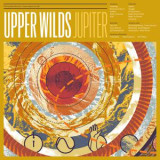
On Jupiter, Brooklyn trio Upper Wilds voyage deeper into the cosmos, mapping out the overwhelming enormity of the universe in soaring hooks and blistering noise. The third installment in the trio"s exploration of our solar system looks to its largest planet for a daring exploration of scale and perspective. New York underground mainstay Dan Friel"s melodic gifts and wry lyricism are magnified and propelled ever outwards by the thundering rhythm section of bassist Jason Binnick and drummer Jeff Ottenbacher, all immersed in rippling fuzz. Just like its namesake, Jupiter stands as Upper Wilds most colossal offering in their catalog. The raw power of their music is amplified to titanic proportions, sky-clawing riffs invoking the sheer awe that the heavens inspire. More than any Upper Wilds album before it, Jupiter makes humanity"s endeavors in space exploration an inseparable part of its sonic DNA . Recorded with Travis Harrison at his studio Serious Business in Brooklyn (Guided By Voices, Dope Body, The Men), the trio"s live recordings are inspired by the Voyager Golden Record - a double LP launched with the 1977 Voyager probe spanning field recordings to compositions by J.S. Bach and Laurie Spiegel. While the Voyager Golden Record"s intended audience may have originally been the extra-terrestrial beings that might encounter the probe, Upper Wilds bring cosmos-seeking sounds back to earth with a record made for and about humanity. Jupiter finds comfort in space"s unending expanse. Far from feeling defeated by the smallness of our existence in the face of an uncaring universe and ever-expanding infinite, Upper Wilds capture the power of creativity to extend our lifespans far beyond our limited time on earth
When Belgian Adolphe Sax invented the saxophone in the mid-19th century, he could not have imagined what he had set in motion with his invention. Neither in classical music nor in military music did his new woodwind instrument find much appreciation. It was only long after his death that it became the most important instrument in jazz music via swinging big bands. It would probably have amazed Mr. Sax if he had been able to witness a young trio from Germany playing loudly against climate change and the lack of political consequences with two noisy saxophones and a drum set on a stage in front of the Reichstag in Berlin in front of more than 50,000 people jumping up and down during the climate strike in September 2021: BRASS RIOT.
The trio around Constantin von Estorff (Sax), Simon Sasse (Drums) and Carl Weiß (Sax) have been a band since their school days in Lüneburg. What started there as street music became a permanent and sought-after formation through the proximity to political initiatives, above all the Fridays-For-Future movement, and appearances at countless demonstrations. The band's name is slightly misleading, as "brass" in music refers to brass instruments such as the trumpet or tuba, even though most brass bands always include a saxophone. Moreover, the word "brass" means something in the German language, which in turn fits perfectly with this young, energetic trio: Fury.
On the heels of their debut album "Matschsafari" (2018), their second studio album "The Never Acting Story" is now released on Fun In The Church. The album title, in critical allusion to the world-famous fantasy book by Michael Ende, sums up well what the music of BRASS RIOT is about at its core: the possibility to get a noisy outlet for all the fury about the failed politics of the last decades and the frustrations and fears that go with it, and to free oneself from it for a moment. That this path has produced the wildest live music on this crisis-ridden planet is an irony of history - and certainly not the first time it has happened. It's no different in the jazz of Charlie Parker than in the songs of Patti Smith, the raps of Little Simz or the Afro-beat of Fela Kuti.
Musically, BRASS RIOT move more in the area of the melodic ska-pop of Madness, the fake jazz of the Lounge Lizards and contemporary rave brass ensembles like MEUTE between house music and electro beats. The fact that they have managed to politicize their sound so strongly over the years, despite all the party that goes with it, and without any song lyrics at all, is truly phenomenal.
Theory Of A Deadman return to Roadrunner Records with their 8th studio album ‘Dinosaur’ releasing on 17th March on CD and Digital with the vinyl version following in July. It features the single and title track from the album ‘Dinosaur’ that was released late 2022 and was A Listed at both Kerrang and Planet Rock Radio as well as brand new single ‘Ambulance’.
- A1: Hip Hop Delivery Intro
- A2: Global Chemistry (Feat Craig G)
- A3: Go Move (Feat Andy Cooper)
- A4: Wild Thing (Feat Birdapres)
- A5: Who`s Nice Kid (Feat Chrome)
- A6: King Of Rock
- B1: Chasing The Funk (Paul Sitter`s Version)
- B2: B-Boys Impressions
- B3: It`s On Like That (Feat Dr Syntax)
- B4: Bollywood Cannot Carry Double
- B5: Nothing Gonna Change (His Way)
- B6: Outro
Breakbeat Paradise Recordings has teamed up with hip-hop legend Paul Sitter who has gather some of dopest MCs on the planet to feature on the epic LP: Hip-Hip Delivery.
The LP is a celebration to the oldskool hiphop vibes that started it all by cutting and scratching up the classic funk record, twisted in a brand-new way with MCs from around the world dropping fire on the mic.
Starting out with the intoxicating Global Chremistry with Craig G and some big funky grooves. Moving on to the Go Move featuring the awesome Andy Cooper on a smooth boom bap joint. The classic Wild Thing gets a oldskool hiphop twist with some big rhymes by Birdapres and cuts by DJ Robert Smith. The breaks are about to get serious as Chromedrops some high paced rhymes on the Who's Nice Kid track. Finally the A-Side finishes up paying some respect to some of the classics beat and breaks from the early hip days on the King Of Rock jam.
The flip side kicks off with more groovy, soulful hip hop featuring Andy Cooper on the catchy Chasing the Funk. Paul Sitter breaks is down nice on another slick hip hop anthem B-Boy Impressions before letting Dr Syntax take it over on the mic on the It's On Like That jam.
The last 3 joints on the album lets Paul Sitter get busy on some funky hip-hop creations showcasing his classic breakbeats and heavy sample techniques.
Breakbeat Paradise Recordings' first full album release since 2019 to drop on 12" vinyl but with an instant classic release like this we felt there was no other way to do it.
- A1: India
- A2: Child Of Nature
- A3: Anna Was Mine (Demo Version)
- A4: Nature Boy (Mantovani Orchestra)
- A5: Land Of Love (Come My Love And Live With Me)
- A6: Hey Jacque (Hey Jacque)
- A7: Palm Springs (The Ray Anthony Orchestra)
- A8: Umgowah
- B1: Wild Boy ( With Mort Wise & The Wisemen And Rocky Holman)
- B2: Surfer John (Nature Boy & Friends)
- B3: Eden’s Island (Arthur Lyman)
- B4: Monterey (With John Harris And Paul Horn)
- B5: Overcomers Of The World (With John Harris)
- B6: The Clam Man
- B7: Nature Boy (The Talbot Brothers)
Colour Vinyl[31,89 €]
“Wild Boy …” is a reissue of the well-known 2016 release curated by Brian Chidester, renowned researcher and biographer of Eden Ahbez. Especially for this album, Brian wrote an interesting text about Abi’s life, which definitely became the decoration of the release.
With the new 2020 re-release, we went a little further and kept what is commonly referred to as studio cuts. It’s a few more minutes in the studio with ahbez himself, full of emotion and life. In addition, to the delight of fans, the edition includes an additional composition Nature Boy (Mantovani Orchestra).
Especially, it is worth noting the outstanding mastering prepared from practically decomposed tapes by the Grammy-nominated Jessica Thompson, which guarantees the deepest and warmth possible sound. Jessica a huge ahbez fan and we’re highly appreciated for what she has done to save his music for the future.
Eden Ahbez is definitely at the origin of psychedelic music and this release can be taken as further proof. Over the past twenty years, the iconic figure of the world’s first hippie Eden ahbez has become famous primarily for his 1948 song “Nature Boy”, praising universal love, and his amazingly solo album from the 1960s called “Eden’s Island” – one from the first concept albums in the history of music and probably the first psychedelic music album. “Wild Boy: The Lost Songs Of Eden Ahbez” deepens understanding of the origins of the psychedelic movement in the 1950s.
The disc contains a musical selection of works by Eden ahbez himself, written by him in the period after Nature Boy. The inclusion of songs such as “Palm Springs” – Ray Anthony Orchestra and “Hey Jacques” by Erta Kitt gives the listener the chance to discover for the first time the little-known recordings of world-famous artists composed by Eden ahbez. Through “Wild Boy” and “Surfer John” you can hear the author’s handling of absurd rock and exotic experimentation, as well as sweet psychedelic pop like Monterey (with Paul Horn on flute). Overall, Wild Boy: The Lost Songs Of Eden Ahbez offers an overview of the lost works of 1949-1971 with seven unpublished recordings and eight rare singles.
If in 2020 you are missing the hallucinogenic content in Eden Ahbez, it amazingly makes up for that deficiency with simple chords, expansive arrangements, and lyrics about travel, relaxation, free love, and spirituality. Thus creating the standard of psychedelic music. Eden Ahbez’s songs weren’t only fantasy and his personal philosophy was the real thing that he lived.
reviews:
“This carefully and extensively researched compilation culls covers by top notch mainstream artists juxtaposed with unreleased Eden recordings. What might sound like a mixed bag is actually more like a chronological, musical non-fiction novel about Eden Ahbez. While Eden was writing hundreds of songs and performing live and making recordings in various styles, his songs were also being picked up by popular artists like Nat King Cole and Eartha Kitt who recorded with a more polished mainstream style. There are also some early rock n roll style recordings here. Eden’s professionally recordings often end up as Novelty Pop records such as “Child of Nature” and “The Clam Man” but if you read between the lines and listen to the lyrics it is pretty eye-opening that he is singing about Eastern-religion-style and pre-hippie philosophies about being at one with the planet Earth.
All of this is explained in the lengthy liner notes inside the lp along with a few choice photos that establish Eden as a founding father of Southern California mystic/psychedelic music.” – Tiki_News
“Eden Ahbez’s life philosophy was summed up in the lyrics of his most famous song, “Nature Boy,” a 1948 hit for Nat King Cole: the song describes a “strange enchanted boy” who wanders the world in search of truth. “The greatest thing you’ll ever learn,” he concludes, “is to love and be loved in return.” Ahbez was a pre-cursor of California’s beatniks and hippies, and an exalted icon of ex-otica via his rare 1960 album Eden’s Island. Beyond “Nature Boy” and Eden’s Island, though, there were nu-merous lesser-known Ahbez record-ings. Ahbez biographer Brian Chidester has been doing an exemplary job of archiving and documenting that catalog of work. The Exotic World of Eden Ahbez (reviewed in UT#38) appeared a few years ago, gathering together 14 Ahbez-related rarities” – Ugly Things
The Legendary album ‘From Mars to Sirius’ put GOJIRA on the path to Worldwide stardom. Almost 18 years , 72 seasons later, this classic album is still a massively Heavy Monster !. It is a concept album addressing environmental issues and the rebirth of a dead planet through a space travel storyline, with the underlying theme of a transition from war to peace. From Mars to Sirius was released in 2005 to critical acclaim. It has since been ranked amongst the Rolling Stone's 100 Greatest Metal Albums of All Time. (wikipedia) A first run of 2000 copies of this double pic disc are being made .
- A1: Logic System - Unit
- A2: Kraftwerk - Computerwelt (2009 Remastered
- B1: Whodini - Magic's Wand
- B2: Rocker's Revenger - Walking On Sunshine (Feat Donnie Calvin
- C1: Klein & Mbo - Dirty Talk (European Connection
- D1: Liaisons Dangereuses - Los Niños Del Parque
- D2: Yello - Bostich
- E1: The The - Giant
- F1: The Residents - Kaw-Liga
- G1: Clan Of Xymox - Stranger
- G2: A Split - Second - Flesh
- H1: Severed Heads - Dead Eyes Opened
- H2: The Weathermen - Poison!
- I1: New Order - Blue Monday
- J1: Anne Clark - Our Darkness
- J2: 16 Bit - Where Are You?
- K1: Phuture - We Are Phuture
- K2: Model 500 - No Ufo's (Vocal
- L1: Frankie Knuckles Feat Jamie Principle - Your Love
- L2: Quest - Mind Games (Street Mix
- M1: Jasper Van't Hof - Pili Pili
- N1: Guem Et Zaka Percussion - Le Serpent
- N2: Hugh Masekela - Don't Go Lose It Baby
- O1: Sly & Robbie - Make 'Em Move
- Q1: The Ecstasy Club - Jesus Loves The Acid
- R1: Foremost Poets - Reason To Be Dismal?
- S1: Lhasa - The Attic
- S2: A Guy Called Gerald - Voodoo Ray
- T1: M/A/R/R/S - Pump Up The Volume - Usa 12" Mix
- T2: Bobby Konders - Nervous Acid
- U1: Meat Beat Manifesto - Helter Skelter
- V1: Raze - Break 4 Love
- W1: Sueño Latino With Manuel Goettsching Performing E2-E4 - Sueño Latino (Paradise Version
- X1: Off - Electrica Salsa
- O2: Brian Eno - David Byrne - Help Me Somebody
- P1: Primal Scream - Loaded (Andy Weatherall Mix
For this uniquely personal retrospective spread over twelve vinyl discs, Sven Väth takes us back to the early days of his DJ career. On What I Used To Play we meet great pioneers of electronic music, gifted percussionists, obscure wave bands, and innovative producers of a bygone 'new electronic' era. Rough beats and irresistible grooves from the identification stage of house, techno, and acid remind us not just how far electronic music has evolved over the past four decades, but how great it was to dance to EBM, techno, and house for the very first time.
If there is one protagonist of the electronic music scene who has remained curious, innovative and at the very cutting edge of music for over four decades, it's Sven Väth. His multi-layered artist albums and Sound of the Season mix compilations have been defining the genre for over two decades, and even today, he is constantly on the lookout for the next top tune to add to the highlights of his next set. At least, that's the case when he's not producing them himself as an artist or remixer. "Actually, it's always been part of my DNA to think ahead," and nothing had been further from his mind than looking back at his past, but when in spring of 2020 the international DJ circuit had to be scaled down to virtually zero, the 'restless traveler' suddenly had time. Time to stop and reflect on "how it actually was back then, at the very beginning of my career..."
"It was a great trip and with every track, beautiful memories came flooding back".
In the London apartment, he had just moved into, Sven has set up a "little music room", where he cocooned himself for several days, "to look way back for the first time and review my musical journey through the eighties, so to speak."
The interim result was six thematically oriented playlists with a grand total of 120 tracks from 'early 80s' to 'Balearic late 80s', together with excursions into afrobeat, European new wave, and EBM sounds and a few epochal techno/house tracks from the USA in between. From these 'Best of Sven Väth's favorites', the project What I Used To Play crystallized. Sven remembers how the Cocoon team reacted to his proposal: "They found the idea of making a compilation out of it MEGA from the beginning and everyone said 'Sven, go for it', but then, of course, the work really started, namely, to clear the rights and to get clean sounding masters of the up to 40-year-old tracks. There was also disappointment, of course. We couldn't clear certain titles because the rights holders in the USA had fallen out with each other or simply disappeared from the scene. In short, it wasn't easy, but now I can safely say we got the most important tracks."
Finally, after two years of research, curation, design, and administrative fine-tuning, the "little retrospective" from 1981 to 1990 is available. The exquisitely packaged, and three-kilo heavy box set is not only physically impressive, WIUTP is also the definitive record of Sven Väth's musical development. On each of the twenty-four sides of vinyl, you can trace track by track, what influenced him during which phase, and how he took off as a DJ from his parents' Queen's Pub straight into the spotlight at Dorian Gray. There and at Vogue (later OMEN), Sven became the style-defining player in the DJ booth that he still is today.
1981 - 1990: Future Sounds of Now
In the early eighties, the crowd in clubs like Vogue and Dorian Gray danced to what nowadays we call 'dance classics' - mainly disco, funk, soul, and chart pop. It was up to a new generation of DJs, including Sven Väth, the youngest protagonist in the Rhine-Main area at the time, to create their own club-ready music mix. Good new tracks and potential floor-fillers were rarities that had to be sought out and found, in order to prove oneself worthy.
Without MP3s, internet streaming, or other digital download possibilities, music didn't just gravitate to the DJ, instead, it had to be tracked down. In well-stocked record stores in Frankfurt and Wiesbaden or even in Amsterdam, London, or New York, Sven and friends sourced the material for countless magical nights. On WIUTP we can follow Sven's very personal journey through this wild, innovative era in which synth-pop, funk, hip-hop, and disco were successively replaced as 'club music' by house, techno, acid, and breakbeat. By the end of the decade, it was clear to see that these once exotic 'fringe' phenomena would soon become 'mass' phenomena.
Early 80s
Dirty Talk by the Italian-American duo Klein & M.B.O. represents the most innovative phase of the Italo-disco genre in the early eighties like no other track. Mario Boncaldo (I) and Tony Carrasco relied entirely on the original synthetic drum and percussion sounds of the Roland TR-808, coupled with the raunchy vocals of Rossana Casale and guitar accents of Davide Piatto. Of course, other tracks from this period were also influential in style, most notably Unit by Logic System, which worked as the perfect soundtrack to the laser lighting system at the legendary Dorian Gray club. With stomping beats and robotic rap interludes, Bostich by Yello also belongs on Sven's eternal playlist - after all, it caught the attention of Afrikaa Bambaataa, who invited the Swiss duo to perform at the Roxy in New York in 1983.
EBM Wave - Mid 80s
From today's point of view, the almost ten-minute-long, downtempo track Giant by Matt Johnson's band project The The, would probably not be considered an obvious club classic. However, a closer (re)listen reveals the rhythmic intricacies of the percussion overdubs by JG Thirlwell (aka Foetus) on Johnson's composition, and it becomes clear why this exceptional piece of music is one of Sven's absolute favorites. Other classics from this phase include Kaw-Liga by the mysterious The Residents, the hypnotic-synthetic Our Darkness by Anne Clark (and David Harrow), and last but not least, the somber, monotonous anthem Where Are You? by 16Bit, one of Sven Väth's projects together with Michael Münzing, Luca Anzilotti from 1986.
US House - Late 80s
You certainly can't talk about Chicago house without mentioning Frankie Knuckles. The resident DJ at the Warehouse not only gave the name to an entire genre, but also produced epochal floor fillers on the Trax label like the timeless Your Love, sung (and moaned) by Jamie Principle. Acid house protagonists Phuture also hail from Chicago, and on We Are Phuture (also released on Trax) we hear the chirping acid sounds of the legendary Roland TB-303 in full effect. Another featured classic is No UFO's by Detroit's Model 500 aka Juan Atkins, who is rightly considered the 'Godfather of Techno' even if the genre-defining track from 1985 still breathes with the spirit of hip-hop and electro from the first breakdance era.
Afrobeat
Le Serpent, by Algerian-born Abdelmadjid Guemguem, is a track that sounds completely different from everything else on WIUTP. Made in 1978, it's a monumental, rousing groove created without bass or synths, just with five congas! Even though Guem sadly passed away in 2021, his immortal, acoustic beats are understood all over the world and will continue to enrich many thousands of DJ sets for years to come. Another classic that not only Sven appreciates beyond measure is Hugh Masekela's Don't Go Lose it, Baby. In addition to being one of the most important jazz pioneers, the trumpeter and freedom fighter from Johannesburg was very experimental, integrating electronic sounds into his music in later years, in a similar vein to Miles Davis and Herbie Hancock. Dutch jazz pianist Jasper van't Hof's afrobeat project Pili Pili has also aged well. The trance-like, almost sixteen-minute-long track of the same name, manages to fill a whole side on the seventh of twelve vinyl discs in the WIUTP box.
UK-US-Euro - Late 80s
Time for a change of scene, in the truest sense of the word, and from a musical perspective, this section is like landing on another planet. First up is Andrew Weatherall's classic remix of Primal Scream's Loaded, featuring the iconic Peter Fonda sample (lifted from the 1966 biker film Wild Angels) that came to personify the mood triggered by the British Second Summer of Love in the late eighties: "We wanna be free to do what we wanna do, and we wanna get loaded...". This period also saw the emergence of M/A/R/R/S whose only single, 1987's Pump Up The Volume, became a club classic with support from DJ legend CJ Mackintosh. In this most eclectic of sections, we also encounter New York house and reggae producer Bobby Konders and his seminal Nervous Acid.
Balearic - Late 80s
Those who know him, know that Sven had already lost his heart to the 'magic island' of Ibiza as a teenager, so with that in mind, the WIUTP project couldn't end without a Balearic chapter. Inspired by Manuel Göttsching's E2-E4, the immortal, eponymously titled Sueño Latino belongs in there without question. Equally popular on the island was, and still is Break 4 Love by Raze, which thinking about it, would also fit perfectly into the house chapter. Last, but not least, there's an overdue reunion with Sven Väth himself, in his role as frontman of the successful Frankfurt trio OFF. Together with Michael Münzing and Luca Anzilotti (later of Snap!) this 'Organization For Fun' created the off-the-wall club hit Electric Salsa in 1986 which incidentally turned into an international chart smash, putting Sven in the enviable position of having to decide between pop stardom and a DJ career. Well, we all know how that decision turned out and the rest, as they say, is history. A not insignificant part of his story is What I Used To Play. Enjoy!
Red Vinyl
It has been exactly ten years since Finders Keepers first intrepidly entered Andrzej Korzyński’s cavernous musical vault, but it is only today that we are able to proudly announce the safe retrieval on what we consider the true heavy psych holy grail of the Polish composer’s mind-bending oeuvre. By cruel coincidence this welcome event has sadly come during the same year as the composer’s tragic passing. However, in true Korzyński style, alongside his previous Finders Keepers releases, the legacy he has left behind in this one final lost soundtrack project alone has come with musical riches beyond anyone’s wildest expectations.
The comprehensive elusive archive of the deeply psychedelic soundtrack to Andrzej Żuławski’s forbidden film Diabeł (The Devil) is perhaps the most detailed dossier one could wish to find – including audio sketches, rejected proposals and pre-butchered variations that play out like an intense and veritable creative conversation between the director and the maestro, both of whom are widely recognised as true mavericks of socialist-era Poland’s fertile artistic landscape. Never intended for anything as conventional as a straightforward movie tie-in promotional disc (state owned Eastern European record labels rarely did this), the music in this archive has required special forensic inspection. Let’s say the devil is in the detail. The 7” record you are now holding is more than just a companion piece, and it is far from a selection of the (non-existent) poppy title themes to promote a full feature-length album. This standalone release is wholly unique in its own right, giving Finders Keepers listeners a final access all areas snoop into the mind of one of the pillars of our alternative musical community.
As those familiar with Żuławski and Korzyński’s long-running relationship will understand (a methodology best exemplified in the schizoid soundtrack to the film Possession), their exchanges were deeply nuanced and often complicated, with lots of artistic “tennis” thrown into the mix. The key plot in this behind-the-scene fable is that after delivering his original off-kilter psychedelic score to the director, maestro Korzyński was asked to make the music “totally unique, like something from another planet”, to which Korzyński took his tapes, pulled down the vari-speed to a guttural grind and continued to recompose over the top using avant-garde electro-acoustic techniques while deploying psychedelic skills of guitarist Winicjusz Chróst. This limited record release proudly boasts Korzyński’s original uptempo awkward psychedelic pop music prior to the doom laden growls that make the official films soundtrack a true Goliath of Eastern European soundtrack composition. Which, when recontextualised, will stand as a veritable face-melter for stoner rock fans. As one of Finders Keepers deepest conquests, we are delighted to share The Devil Tapes… What is a grail without the wine.
The debut from new splinter alias of Manchester producer, sequencer designer, and Cong Burn label boss John Howes was made entirely on a Nord Modular G2, Elektron Machinedrum, and Monomachine – a rig he characterizes as “an authentic 2006 studio, best listened to on Windows XP Media Player or Winamp.” Paperclip Minimiser’s self-titled full-length collects eight elusively multi-dimensional constructs of stereo panned synthetics and slithering ambient techno, born of a web of generative patches subjected to improvisational alterations. Taking things further, Howes’ process involves “planting ghosts in the machines,” instilling each element with “some self-correcting behavior in a cybernetic / lo-fi AI / semi-autonomous agent kinda way.” The result is an ambiguous and dynamic hybrid of accident and intention, chaos and control, shuffling through an innerspace wilderness of psychic circuitry.
The title alludes to a 2003 thought experiment about the existential risk of artificial intelligence; how even a mundane objective, algorithmically extrapolated, could culminate in catastrophe. Here the notion is inverted, demonstrating the sonic infinities to be mined by “pushing and pulling at the strings” of musical systems. Howes aptly samples a vintage interview with electronic music pioneer Bebe Barron – co-composer of the Forbidden Planet soundtrack – discussing the anthropomorphic potential of randomized audio generation: “We thought of our circuits as actors in a script.” Paperclip Minimiser descends from a similar family tree, coaxed as much as crafted, flickering rhythmic synchronicities glimpsed in a mirage of wires and glass.
- A1: Show Biz Kids - Rickie Lee Jones
- A2: Nobody's Buying - Nancy Bryan
- A3: Angel From Montgomery - Susan Tedeshi
- A4: The Spider And The Fly - Myra Taylor
- A5: Low Spark Of High Heeled Boys - Rickie Lee Jones
- B1: Rimsky-Korsakov: Dance Of The Tumblers, From The Snow Maiden
- B2: Mozart: Piano Concerto #21 In C, K. 467
- B3: Jack End: Blues For A Killed Cat
- B4: Stravinsky: The Firebird Suite, 1919-Finale
- C1: Driving Wheel - Little Hatch
- C2: You Had Quit Me - Wild Child Butler
- C3: I'll Be Around - Jimmie Lee Robinson
- C4: Last Night - Eomot Rasun
- C5: Walking Thru The Park - Big George Brock
- C6: The Sun Is Shining - Harry Hypolite
- D1: I'll Take You There - The Staple Singers
- D2: Theme From Shaft - Isaac Hayes
- D3: Mr. Big Stuff - Jean Knight
- D4: Rock Me Right - Susan Tedeschi
- D5: Just Won't Burn - Susan Tedeschi
- E1: Sounds Unheard Of - Shelly Manne
- E2: The Alternate Blues - Clark Terry, Freddie Hubbard, Dizzy Gillespie
- E3: September Song - Chet Baker
- E4: My Foolish Heart - Bill Evans
- E5: Round Midnight - Wes Montgomery
- F1: Abangoma - Hugh Masekela
- F2: Stimela - Hugh Masekela
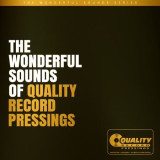
Celebrate the technical expertise of the world's finest LP pressing plant — Quality Record Pressings — with the finest LP sampler ever assembled!
The Wonderful Sounds Of Quality Record Pressings includes music hand-picked by Acoustic Sounds CEO Chad Kassem and classical music tracks chosen by the team at Reference Recordings.
Every song meets the criteria of excellent performance, perfect recording and flawless mastering. What better way to celebrate such a monumental anniversary for one of the absolute leading brands in analog high fidelity than with this to-die-for LP sampler? Contains most genres of music — blues, jazz, classical, R&B and female vocal. From now on, you'll only need to carry one demo record around with you.
Vinyl expert Michael Fremer, of Analogue Planet and Stereophile, gives you a track-by-track tour of the history and production of the songs on this special album.
What separates our world-renowned Quality Record Pressings LPs from other manufacturers? Since Acoustic Sounds CEO Chad Kassem launched QRP in 2011, the focus has been on producing consistently virtually silent vinyl playing surfaces, as well as reproducing details that were hallmarks of vintage labels — the "deep groove" label of Blue Note LPs, for example.
The craft of pressing fine vinyl is perfected in such details. Such as plating lacquers within 24 hours of their arrival at the plant. Cut grooves are prone to change with temperature fluxuations, high humidity and time. The sooner that lacquers are plated, the better the fidelity of the final pressing. Other keys include using a proprietary silver spray formulation, made fresh daily. And incorporating computer microprocessors on our presses to precisely control press functions with absolute precision. And an imbedded temperature sensor in the dye cycles the press with just as much control. The result — more consistency in each LP, high fidelity and reduced distortion. The ultimate sonic advantage.
- A1: Rock This Mother
- A2: Talk To Me Girl
- A3: You Can Find Me
- A4: Check This Out
- A5: Jesus Going To Clean House
- A6: Hope You Understood
- A7: Is It What You Want
- A8: Love Is Everlasting
- A9: This Is Hip-Hop Art
- A10: Opposite Of Love
- A11: Do You Know What I Mean
- B1: Saving All My Love For You
- B2: Look Out Here I Come
- B3: Girl You Always Talking
- B4: Have A Great Day
- B5: Take My Hand
- B6: I Need Your Love
- B7: Your Town
- B8: Talk Around Town
- B9: Booty Head/Take A Little Walk
- B10: I Love My Mama
- B11: I Never Found Anyone Like You
Vinyl LP[23,49 €]
As the sun sets on a quaint East Nashville house, a young man bares a piece of his soul. Facing the camera, sporting a silky suit jacket/shirt/slacks/fingerless gloves ensemble that announces "singer" before he's even opened his mouth, Lee Tracy Johnson settles onto his stage, the front yard. He sways to the dirge-like drum machine pulse of a synth-soaked slow jam, extends his arms as if gaining his balance, and croons in affecting, fragile earnest, "I need your love… oh baby…"
Dogs in the yard next door begin barking. A mysterious cardboard robot figure, beamed in from galaxies unknown and affixed to a tree, is less vocal. Lee doesn't acknowledge either's presence. He's busy feeling it, arms and hands gesticulating. His voice rises in falsetto over the now-quiet dogs, over the ambient noise from the street that seeps into the handheld camcorder's microphone, over the recording of his own voice played back from a boombox off-camera. After six minutes the single, continuous shot ends. In this intimate creative universe there are no re-takes. There are many more music videos to shoot, and as Lee later puts it, "The first time you do it is actually the best. Because you can never get that again. You expressing yourself from within."
"I Need Your Love" dates from a lost heyday. From some time in the '80s or early '90s, when Lee Tracy (as he was known in performance) and his music partner/producer/manager Isaac Manning committed hours upon hours of their sonic and visual ideas to tape. Embracing drum machines and synthesizers – electronics that made their personal futurism palpable – they recorded exclusively at home, live in a room into a simple cassette deck. Soul, funk, electro and new wave informed their songs, yet Lee and Isaac eschewed the confinement of conventional categories and genres, preferring to let experimentation guide them.
"Anytime somebody put out a new record they had the same instruments or the same sound," explains Isaac. "So I basically wanted to find something that's really gonna stand out away from all of the rest of 'em." Their ethos meant that every idea they came up with was at least worth trying: echoed out half-rapped exhortations over frantic techno-style beats, gospel synth soul, modal electro-funk, oddball pop reinterpretations, emo AOR balladry, nods to Prince and the Fat Boys, or arrangements that might collapse mid-song into a mess of arcade game-ish blips before rallying to reach the finish line. All of it conjoined by consistent tape hiss, and most vitally, Lee's chameleonic voice, which managed to wildly shape shift and still evoke something sincere – whether toggling between falsetto and tenor exalting Jesus's return, or punctuating a melismatic romantic adlib with a succinct, "We all know how it feels to be alone."
"People think we went to a studio," says Isaac derisively. "We never went to no studio. We didn't have the money to go to no studio! We did this stuff at home. I shot videos in my front yard with whatever we could to get things together." Sometimes Isaac would just put on an instrumental record, be it "Planet Rock" or "Don't Cry For Me Argentina" (from Evita), press "record," and let Lee improvise over it, yielding peculiar love songs, would-be patriotic anthems, or Elvis Presley or Marilyn Monroe tributes. Technical limitations and a lack of professional polish never dissuaded them. They believed they were onto something.
"That struggle," Isaac says, "made that sound sound good to me."
In the parlance of modern music criticism Lee and Isaac's dizzying DIY efforts would inevitably be described as "outsider." But "outsider" carries the burden of untold additional layers of meaning if you're Black and from the South, creating on a budget, and trying to get someone, anyone within the country music capital of the world to take your vision seriously. "What category should we put it in?" Isaac asks rhetorically. "I don't know. All I know is feeling. I ain't gonna name it nothing. It's music. If it grabs your soul and touch your heart that's what it basically is supposed to do."
=
Born in 1963, the baby boy of nine siblings, Lee Tracy spent his earliest years living amidst the shotgun houses on Nashville's south side. "We was poor, man!" he says, recalling the outhouse his family used for a bathroom and the blocks of ice they kept in the kitchen to chill perishables. "But I actually don't think I really realized I was in poverty until I got grown and started thinking about it." Lee's mom worked at the Holiday Inn; his dad did whatever he had to do, from selling fruit from a horse drawn cart to bootlegging. "We didn't have much," Lee continues, "but my mother and my father got us the things we needed, the clothes on our back." By the end of the decade with the city's urban renewal programs razing entire neighborhoods to accommodate construction of the Interstate, the family moved to Edgehill Projects. Lee remembers music and art as a constant source of inspiration for he and his brothers and sisters – especially after seeing the Jackson 5 perform on Ed Sullivan. "As a small child I just knew that was what I wanted to do."
His older brother Don began musically mentoring him, introducing Lee to a variety of instruments and sounds. "He would never play one particular type of music, like R&B," says Lee. "I was surrounded by jazz, hard rock and roll, easy listening, gospel, reggae, country music; I mean I was a sponge absorbing all of that." Lee taught himself to play drums by beating on cardboard boxes, gaining a rep around the way for his timekeeping, and his singing voice. Emulating his favorites, Earth Wind & Fire and Cameo, he formed groups with other kids with era-evocative band names like Concept and TNT Connection, and emerged as the leader of disciplined rehearsals. "I made them practice," says Lee. "We practiced and practiced and practiced. Because I wanted that perfection." By high school the most accomplished of these bands would take top prize in a prominent local talent show. It was a big moment for Lee, and he felt ready to take things to the next level. But his band-mates had other ideas.
"I don't know what happened," he says, still miffed at the memory. "It must have blew they mind after we won and people started showing notice, because it's like everybody quit! I was like, where the hell did everybody go?" Lee had always made a point of interrogating prospective musicians about their intentions before joining his groups: were they really serious or just looking for a way to pick up girls? Now he understood even more the importance of finding a collaborator just as committed to the music as he was.
=
Isaac Manning had spent much of his life immersed in music and the arts – singing in the church choir with his family on Nashville's north side, writing, painting, dancing, and working various gigs within the entertainment industry. After serving in the armed forces, in the early '70s he ran The Teenage Place, a music and performance venue that catered to the local youth. But he was forced out of town when word of one of his recreational routines created a stir beyond the safe haven of his bohemian circles.
"I was growing marijuana," Isaac explains. "It wasn't no business, I was smoking it myself… I would put marijuana in scrambled eggs, cornbread and stuff." His weed use originated as a form of self-medication to combat severe tooth pain. But when he began sharing it with some of the other young people he hung out with, some of who just so happened to be the kids of Nashville politicians, the cops came calling. "When I got busted," he remembers, "they were talking about how they were gonna get rid of me because they didn't want me saying nothing about they children because of the politics and stuff. So I got my family, took two raggedy cars, and left Nashville and went to Vegas."
Out in the desert, Isaac happened to meet Chubby Checker of "The Twist" fame while the singer was gigging at The Flamingo. Impressed by Isaac's zeal, Checker invited him to go on the road with him as his tour manager/roadie/valet. The experience gave Isaac a window into a part of the entertainment world he'd never encountered – a glimpse of what a true pop act's audience looked like. "Chubby Checker, none of his shows were played for Black folks," he remembers. "All his gigs were done at high-class white people areas." Returning home after a few years with Chubby, Isaac was properly motivated to make it in Music City. He began writing songs and scouting around Nashville for local talent anywhere he could find it with an expressed goal: "Find someone who can deliver your songs the way you want 'em delivered and make people feel what you want them to feel."
One day while walking through Edgehill Projects Isaac heard someone playing the drums in a way that made him stop and take notice. "The music was so tight, just the drums made me feel like, oh I'm-a find this person," he recalls. "So I circled through the projects until I found who it was.
"That's how I met him – Lee Tracy. When I found him and he started singing and stuff, I said, ohhh, this is somebody different."
=
Theirs was a true complementary partnership: young Lee possessed the raw talent, the older Isaac the belief. "He's really the only one besides my brother and my family that really seen the potential in me," says Lee. "He made me see that I could do it."
Isaac long being a night owl, his house also made for a fertile collaborative environment – a space where there always seemed to be a new piece of his visual art on display: paintings, illustrations, and dolls and figures (including an enigmatic cardboard robot). Lee and Issac would hang out together and talk, listen to music, conjure ideas, and smoke the herb Isaac had resumed growing in his yard. "It got to where I could trust him, he could trust me," Isaac says of their bond. They also worked together for hours on drawings, spreading larges rolls of paper on the walls and sketching faces with abstract patterns and imagery: alien-like beings, tri-horned horse heads, inverted Janus-like characters where one visage blurred into the other.
Soon it became apparent that they didn't need other collaborators; self-sufficiency was the natural way forward. At Isaac's behest Lee, already fed up with dealing with band musicians, began playing around with a poly-sonic Yamaha keyboard at the local music store. "It had everything on it – trumpet, bass, drums, organ," remembers Lee. "And that's when I started recording my own stuff."
The technology afforded Lee the flexibility and independence he craved, setting him on a path other bedroom musicians and producers around the world were simultaneously following through the '80s into the early '90s. Saving up money from day jobs, he eventually supplemented the Yamaha Isaac had gotten him with Roland and Casio drum machines and a Moog. Lee was living in an apartment in Hillside at that point caring for his dad, who'd been partially paralyzed since early in life. In the evenings up in his second floor room, the music put him in a zone where he could tune out everything and lose himself in his ideas.
"Oh I loved it," he recalls. "I would really experiment with the instruments and use a lot of different sound effects. I was looking for something nobody else had. I wanted something totally different. And once I found the sound I was looking for, I would just smoke me a good joint and just let it go, hit the record button." More potent a creative stimulant than even Isaac's weed was the holistic flow and spontaneity of recording. Between sessions at Isaac's place and Lee's apartment, their volume of output quickly ballooned.
"We was always recording," says Lee. "That's why we have so much music. Even when I went to Isaac's and we start creating, I get home, my mind is racing, I gotta start creating, creating, creating. I remember there were times when I took a 90-minute tape from front to back and just filled it up."
"We never practiced," says Isaac. "See, that was just so odd about the whole thing. I could relate to him, and tell him about the songs I had ideas for and everything and stuff. And then he would bring it back or whatever, and we'd get together and put it down." Once the taskmaster hell bent on rehearsing, Lee had flipped a full 180. Perfection was no longer an aspiration, but the enemy of inspiration.
"I seen where practicing and practicing got me," says Lee. "A lot of musicians you get to playing and they gotta stop, they have to analyze the music. But while you analyzing you losing a lot of the greatness of what you creating. Stop analyzing what you play, just play! And it'll all take shape."
=
"I hope you understood the beginning of the record because this was invented from a dream I had today… (You tell me, I'll tell you, we'll figure it out together)" – Lee Tracy and Isaac Manning, "Hope You Understand"
Lee lets loose a maniacal cackle when he acknowledges that the material that he and Isaac recorded was by anyone's estimation pretty out there. It's the same laugh that commences "Hope You Understand" – a chaotic transmission that encapsulates the duality at the heart of their music: a stated desire to reach people and a compulsion to go as leftfield as they saw fit.
"We just did it," says Lee. "We cut the music on and cut loose. I don't sit around and write. I do it by listening, get a feeling, play the music, and the lyrics and stuff just come out of me."
The approach proved adaptable to interpreting other artists' material. While recording a cover of Whitney Houston's pop ballad "Saving All My Love For You," Lee played Whitney's version in his headphones as he laid down his own vocals – partially following the lyrics, partially using them as a departure point. The end result is barely recognizable compared with the original, Lee and Isaac having switched up the time signature and reinvented the melody along the way towards morphing a slick mainstream radio standard into something that sounds solely their own.
"I really used that song to get me started," says Lee. "Then I said, well I need something else, something is missing. Something just came over me. That's when I came up with 'Is It What You Want.'"
The song would become the centerpiece of Lee and Isaac's repertoire. Pushed along by a percolating metronomic Rhythm King style beat somewhere between a military march and a samba, "Is It What You Want" finds Lee pleading the sincerity of his commitment to a potential love interest embellished by vocal tics and hiccups subtlely reminiscent of his childhood hero MJ. Absent chord changes, only synth riffs gliding in and out like apparitions, the song achieves a lingering lo-fi power that leaves you feeling like it's still playing, somewhere, even after the fade out.
"I don't know, it's like a real spiritual song," Lee reflects. "But it's not just spiritual. To me the more I listen to it it's like about everything that you do in your everyday life, period. Is it what you want? Do you want a car or you don't want a car? Do you want Jesus or do you want the Devil? It's basically asking you the question. Can't nobody answer the question but you yourself."
In 1989 Lee won a lawsuit stemming from injuries sustained from a fight he'd gotten into. He took part of the settlement money and with Isaac pressed up "Saving All My Love For You" b/w "Is It What You Want" as a 45 single. Isaac christened the label One Chance Records. "Because that's all we wanted," he says with a laugh, "one chance."
Isaac sent the record out to radio stations and major labels, hoping for it to make enough noise to get picked up nationally. But the response he and Lee were hoping for never materialized. According to Isaac the closest the single got to getting played on the radio is when a disk jock from a local station made a highly unusual announcement on air: "The dude said on the radio, 107.5 – 'We are not gonna play 'Is It What You Want.' We cracked up! Wow, that's deep.
"It was a whole racist thing that was going on," he reflects. "So we just looked over and kept on going. That was it. That was about the way it goes… If you were Black and you were living in Nashville and stuff, that's the way you got treated." Isaac already knew as much from all the times he'd brought he and Lee's tapes (even their cache of country music tunes) over to Music Row to try to drum up interest to no avail.
"Isaac, he really worked his ass off," says Lee. "He probably been to every record place down on Music Row." Nashville's famed recording and music business corridor wasn't but a few blocks from where Lee grew up. Close enough, he remembers, for him to ride his bike along its back alleys and stumble upon the occasional random treasure, like a discarded box of harmonicas. Getting in through the front door, however, still felt a world away.
"I just don't think at the time our music fell into a category for them," he concedes. "It was before its time."
=
Lee stopped making music some time in the latter part of the '90s, around the time his mom passed away and life became increasingly tough to manage. "When my mother died I had a nervous breakdown," he says, "So I shut down for a long time. I was in such a sadness frame of mind. That's why nobody seen me. I had just disappeared off the map." He fell out of touch with Isaac, and in an indication of just how bad things had gotten for him, lost track of all the recordings they'd made together. Music became a distant memory.
Fortunately, Isaac kept the faith. In a self-published collection of his poetry – paeans to some of his favorite entertainment and public figures entitled Friends and Dick Clark – he'd written that he believed "music has a life of its own." But his prescience and presence of mind were truly manifested in the fact that he kept an archive of he and Lee's work. As perfectly imperfect as "Is It What You Want" now sounds in a post-Personal Space world, Lee and Isaac's lone official release was in fact just a taste. The bulk of the Is It What You Want album is culled from the pair's essentially unheard home recordings – complete songs, half-realized experiments, Isaac's blue monologues and pronouncements et al – compiled, mixed and programmed in the loose and impulsive creative spirit of their regular get-togethers from decades ago. The rest of us, it seems, may have finally caught up to them.
On the prospect of at long last reaching a wider audience, Isaac says simply, "I been trying for a long time, it feels good." Ever the survivor, he adds, "The only way I know how to make it to the top is to keep climbing. If one leg break on the ladder, hey, you gotta fix it and keep on going… That's where I be at. I'll kill death to make it out there."
For Lee it all feels akin to a personal resurrection: "It's like I was in a tomb and the tomb was opened and I'm back… Man, it feels so great. I feel like I'm gonna jump out of my skin." Success at this stage of his life, he realizes, probably means something different than what it did back when he was singing and dancing in Isaac's front yard. "What I really mean by 'making it,'" he explains isn't just the music being heard but, "the story being told."
Occasionally Lee will pull up "Is It What You Want" on YouTube on his phone, put on his headphones, and listen. He remembers the first time he heard his recorded voice. How surreal it was, how he thought to himself, "Is that really me?" What would he say to that younger version of himself now?
"I would probably tell myself, hang in there, don't give up. Keep striving for the goal. And everything will work out."
Despite what's printed on the record label, sometimes you do get more than one chance.
Ten releases in the space of seven years and then…puff, then nothing (in Europe). Los Peyotes seemingly vanished into the smoke that they knew full well did us wrong. But now they’re back, ripping up the rule book once again to shower us with evil-hearted, spitfire garage punk rock'n'roll on an album that takes in and mashes up straight from the grave garage rock with doses of savage psychedelia and hip-shaking yé-yé. Prepare to be beaten, bastardised, and left twitching on the floor as they hit you with 13 brand new tracks. "They say we’re all the same. Long-haired freaks. Drugs, sex, and into everything filthy. Haters of authority. But Los Peyotes don’t give a damn." As they spit on the opening track, "People are sh+t", but hey, at least their dog ain’t! Screw the haters and critics, everyone thinks they’re one. Take a look around. But who cares when Los Peyotes are biting back with all the force they have? Cranked guitars, a stabbing Farfisa and those ever-present wild-eyed howls. Theirs is, and has always been, a garage that draws lines straight back to their furious forefathers; Los Saicos, The Sonics, Los Shakers, The Seeds; and on their new album, Virgenes, they keep not only the flame but the whole goddamn sin-fuelled incinerating city burning. They rise up in swirling insanity on tracks like No Puedo Aguantar Mas (I Can’t Take Anymore) before bringing everything crashing down on songs like the riotously spooky Dame Dinamita (Gimme Dynamite). And yeah, of course, everything is sung in Spanish, drawing a line firmly back to their musical ancestors who cranked up that British Invasion sound like nobody else to pave the way for proto-punk. All hail Los Peyotes! Prepare to get dosed once again. - Sir Nathan Whittle de Manchester Genre: Alternative / Garage / Punk
Track list: 01 La Gente Es Una Mierda 02 Soy La Droga 03 No Puedo Aguantar Mas 04 El Hombre De Dos Cabezas 05 Terrorista De La Musica 06 Mi Chica 07 Mi Planeta Rosa 08 No Quiero Crecer 09 Soy Asi 10 Cumbia Del Dolor 11 Dame Dinamita 12 Peyolove 13 Nada Pude Ver
- A1: Rock This Mother
- A2: Talk To Me Girl
- A3: You Can Find Me
- A4: Check This Out
- A5: Jesus Going To Clean House
- A6: Hope You Understood
- A7: Is It What You Want
- A8: Love Is Everlasting
- A9: This Is Hip-Hop Art
- A10: Opposite Of Love
- A11: Do You Know What I Mean
- B1: Saving All My Love For You
- B2: Look Out Here I Come
- B3: Girl You Always Talking
- B4: Have A Great Day
- B5: Take My Hand
- B6: I Need Your Love
- B7: Your Town
- B8: Talk Around Town
- B9: Booty Head/Take A Little Walk
- B10: I Love My Mama
- B11: I Never Found Anyone Like You
Cassette[11,72 €]
As the sun sets on a quaint East Nashville house, a young man bares a piece of his soul. Facing the camera, sporting a silky suit jacket/shirt/slacks/fingerless gloves ensemble that announces "singer" before he's even opened his mouth, Lee Tracy Johnson settles onto his stage, the front yard. He sways to the dirge-like drum machine pulse of a synth-soaked slow jam, extends his arms as if gaining his balance, and croons in affecting, fragile earnest, "I need your love… oh baby…"
Dogs in the yard next door begin barking. A mysterious cardboard robot figure, beamed in from galaxies unknown and affixed to a tree, is less vocal. Lee doesn't acknowledge either's presence. He's busy feeling it, arms and hands gesticulating. His voice rises in falsetto over the now-quiet dogs, over the ambient noise from the street that seeps into the handheld camcorder's microphone, over the recording of his own voice played back from a boombox off-camera. After six minutes the single, continuous shot ends. In this intimate creative universe there are no re-takes. There are many more music videos to shoot, and as Lee later puts it, "The first time you do it is actually the best. Because you can never get that again. You expressing yourself from within."
"I Need Your Love" dates from a lost heyday. From some time in the '80s or early '90s, when Lee Tracy (as he was known in performance) and his music partner/producer/manager Isaac Manning committed hours upon hours of their sonic and visual ideas to tape. Embracing drum machines and synthesizers – electronics that made their personal futurism palpable – they recorded exclusively at home, live in a room into a simple cassette deck. Soul, funk, electro and new wave informed their songs, yet Lee and Isaac eschewed the confinement of conventional categories and genres, preferring to let experimentation guide them.
"Anytime somebody put out a new record they had the same instruments or the same sound," explains Isaac. "So I basically wanted to find something that's really gonna stand out away from all of the rest of 'em." Their ethos meant that every idea they came up with was at least worth trying: echoed out half-rapped exhortations over frantic techno-style beats, gospel synth soul, modal electro-funk, oddball pop reinterpretations, emo AOR balladry, nods to Prince and the Fat Boys, or arrangements that might collapse mid-song into a mess of arcade game-ish blips before rallying to reach the finish line. All of it conjoined by consistent tape hiss, and most vitally, Lee's chameleonic voice, which managed to wildly shape shift and still evoke something sincere – whether toggling between falsetto and tenor exalting Jesus's return, or punctuating a melismatic romantic adlib with a succinct, "We all know how it feels to be alone."
"People think we went to a studio," says Isaac derisively. "We never went to no studio. We didn't have the money to go to no studio! We did this stuff at home. I shot videos in my front yard with whatever we could to get things together." Sometimes Isaac would just put on an instrumental record, be it "Planet Rock" or "Don't Cry For Me Argentina" (from Evita), press "record," and let Lee improvise over it, yielding peculiar love songs, would-be patriotic anthems, or Elvis Presley or Marilyn Monroe tributes. Technical limitations and a lack of professional polish never dissuaded them. They believed they were onto something.
"That struggle," Isaac says, "made that sound sound good to me."
In the parlance of modern music criticism Lee and Isaac's dizzying DIY efforts would inevitably be described as "outsider." But "outsider" carries the burden of untold additional layers of meaning if you're Black and from the South, creating on a budget, and trying to get someone, anyone within the country music capital of the world to take your vision seriously. "What category should we put it in?" Isaac asks rhetorically. "I don't know. All I know is feeling. I ain't gonna name it nothing. It's music. If it grabs your soul and touch your heart that's what it basically is supposed to do."
=
Born in 1963, the baby boy of nine siblings, Lee Tracy spent his earliest years living amidst the shotgun houses on Nashville's south side. "We was poor, man!" he says, recalling the outhouse his family used for a bathroom and the blocks of ice they kept in the kitchen to chill perishables. "But I actually don't think I really realized I was in poverty until I got grown and started thinking about it." Lee's mom worked at the Holiday Inn; his dad did whatever he had to do, from selling fruit from a horse drawn cart to bootlegging. "We didn't have much," Lee continues, "but my mother and my father got us the things we needed, the clothes on our back." By the end of the decade with the city's urban renewal programs razing entire neighborhoods to accommodate construction of the Interstate, the family moved to Edgehill Projects. Lee remembers music and art as a constant source of inspiration for he and his brothers and sisters – especially after seeing the Jackson 5 perform on Ed Sullivan. "As a small child I just knew that was what I wanted to do."
His older brother Don began musically mentoring him, introducing Lee to a variety of instruments and sounds. "He would never play one particular type of music, like R&B," says Lee. "I was surrounded by jazz, hard rock and roll, easy listening, gospel, reggae, country music; I mean I was a sponge absorbing all of that." Lee taught himself to play drums by beating on cardboard boxes, gaining a rep around the way for his timekeeping, and his singing voice. Emulating his favorites, Earth Wind & Fire and Cameo, he formed groups with other kids with era-evocative band names like Concept and TNT Connection, and emerged as the leader of disciplined rehearsals. "I made them practice," says Lee. "We practiced and practiced and practiced. Because I wanted that perfection." By high school the most accomplished of these bands would take top prize in a prominent local talent show. It was a big moment for Lee, and he felt ready to take things to the next level. But his band-mates had other ideas.
"I don't know what happened," he says, still miffed at the memory. "It must have blew they mind after we won and people started showing notice, because it's like everybody quit! I was like, where the hell did everybody go?" Lee had always made a point of interrogating prospective musicians about their intentions before joining his groups: were they really serious or just looking for a way to pick up girls? Now he understood even more the importance of finding a collaborator just as committed to the music as he was.
=
Isaac Manning had spent much of his life immersed in music and the arts – singing in the church choir with his family on Nashville's north side, writing, painting, dancing, and working various gigs within the entertainment industry. After serving in the armed forces, in the early '70s he ran The Teenage Place, a music and performance venue that catered to the local youth. But he was forced out of town when word of one of his recreational routines created a stir beyond the safe haven of his bohemian circles.
"I was growing marijuana," Isaac explains. "It wasn't no business, I was smoking it myself… I would put marijuana in scrambled eggs, cornbread and stuff." His weed use originated as a form of self-medication to combat severe tooth pain. But when he began sharing it with some of the other young people he hung out with, some of who just so happened to be the kids of Nashville politicians, the cops came calling. "When I got busted," he remembers, "they were talking about how they were gonna get rid of me because they didn't want me saying nothing about they children because of the politics and stuff. So I got my family, took two raggedy cars, and left Nashville and went to Vegas."
Out in the desert, Isaac happened to meet Chubby Checker of "The Twist" fame while the singer was gigging at The Flamingo. Impressed by Isaac's zeal, Checker invited him to go on the road with him as his tour manager/roadie/valet. The experience gave Isaac a window into a part of the entertainment world he'd never encountered – a glimpse of what a true pop act's audience looked like. "Chubby Checker, none of his shows were played for Black folks," he remembers. "All his gigs were done at high-class white people areas." Returning home after a few years with Chubby, Isaac was properly motivated to make it in Music City. He began writing songs and scouting around Nashville for local talent anywhere he could find it with an expressed goal: "Find someone who can deliver your songs the way you want 'em delivered and make people feel what you want them to feel."
One day while walking through Edgehill Projects Isaac heard someone playing the drums in a way that made him stop and take notice. "The music was so tight, just the drums made me feel like, oh I'm-a find this person," he recalls. "So I circled through the projects until I found who it was.
"That's how I met him – Lee Tracy. When I found him and he started singing and stuff, I said, ohhh, this is somebody different."
=
Theirs was a true complementary partnership: young Lee possessed the raw talent, the older Isaac the belief. "He's really the only one besides my brother and my family that really seen the potential in me," says Lee. "He made me see that I could do it."
Isaac long being a night owl, his house also made for a fertile collaborative environment – a space where there always seemed to be a new piece of his visual art on display: paintings, illustrations, and dolls and figures (including an enigmatic cardboard robot). Lee and Issac would hang out together and talk, listen to music, conjure ideas, and smoke the herb Isaac had resumed growing in his yard. "It got to where I could trust him, he could trust me," Isaac says of their bond. They also worked together for hours on drawings, spreading larges rolls of paper on the walls and sketching faces with abstract patterns and imagery: alien-like beings, tri-horned horse heads, inverted Janus-like characters where one visage blurred into the other.
Soon it became apparent that they didn't need other collaborators; self-sufficiency was the natural way forward. At Isaac's behest Lee, already fed up with dealing with band musicians, began playing around with a poly-sonic Yamaha keyboard at the local music store. "It had everything on it – trumpet, bass, drums, organ," remembers Lee. "And that's when I started recording my own stuff."
The technology afforded Lee the flexibility and independence he craved, setting him on a path other bedroom musicians and producers around the world were simultaneously following through the '80s into the early '90s. Saving up money from day jobs, he eventually supplemented the Yamaha Isaac had gotten him with Roland and Casio drum machines and a Moog. Lee was living in an apartment in Hillside at that point caring for his dad, who'd been partially paralyzed since early in life. In the evenings up in his second floor room, the music put him in a zone where he could tune out everything and lose himself in his ideas.
"Oh I loved it," he recalls. "I would really experiment with the instruments and use a lot of different sound effects. I was looking for something nobody else had. I wanted something totally different. And once I found the sound I was looking for, I would just smoke me a good joint and just let it go, hit the record button." More potent a creative stimulant than even Isaac's weed was the holistic flow and spontaneity of recording. Between sessions at Isaac's place and Lee's apartment, their volume of output quickly ballooned.
"We was always recording," says Lee. "That's why we have so much music. Even when I went to Isaac's and we start creating, I get home, my mind is racing, I gotta start creating, creating, creating. I remember there were times when I took a 90-minute tape from front to back and just filled it up."
"We never practiced," says Isaac. "See, that was just so odd about the whole thing. I could relate to him, and tell him about the songs I had ideas for and everything and stuff. And then he would bring it back or whatever, and we'd get together and put it down." Once the taskmaster hell bent on rehearsing, Lee had flipped a full 180. Perfection was no longer an aspiration, but the enemy of inspiration.
"I seen where practicing and practicing got me," says Lee. "A lot of musicians you get to playing and they gotta stop, they have to analyze the music. But while you analyzing you losing a lot of the greatness of what you creating. Stop analyzing what you play, just play! And it'll all take shape."
=
"I hope you understood the beginning of the record because this was invented from a dream I had today… (You tell me, I'll tell you, we'll figure it out together)" – Lee Tracy and Isaac Manning, "Hope You Understand"
Lee lets loose a maniacal cackle when he acknowledges that the material that he and Isaac recorded was by anyone's estimation pretty out there. It's the same laugh that commences "Hope You Understand" – a chaotic transmission that encapsulates the duality at the heart of their music: a stated desire to reach people and a compulsion to go as leftfield as they saw fit.
"We just did it," says Lee. "We cut the music on and cut loose. I don't sit around and write. I do it by listening, get a feeling, play the music, and the lyrics and stuff just come out of me."
The approach proved adaptable to interpreting other artists' material. While recording a cover of Whitney Houston's pop ballad "Saving All My Love For You," Lee played Whitney's version in his headphones as he laid down his own vocals – partially following the lyrics, partially using them as a departure point. The end result is barely recognizable compared with the original, Lee and Isaac having switched up the time signature and reinvented the melody along the way towards morphing a slick mainstream radio standard into something that sounds solely their own.
"I really used that song to get me started," says Lee. "Then I said, well I need something else, something is missing. Something just came over me. That's when I came up with 'Is It What You Want.'"
The song would become the centerpiece of Lee and Isaac's repertoire. Pushed along by a percolating metronomic Rhythm King style beat somewhere between a military march and a samba, "Is It What You Want" finds Lee pleading the sincerity of his commitment to a potential love interest embellished by vocal tics and hiccups subtlely reminiscent of his childhood hero MJ. Absent chord changes, only synth riffs gliding in and out like apparitions, the song achieves a lingering lo-fi power that leaves you feeling like it's still playing, somewhere, even after the fade out.
"I don't know, it's like a real spiritual song," Lee reflects. "But it's not just spiritual. To me the more I listen to it it's like about everything that you do in your everyday life, period. Is it what you want? Do you want a car or you don't want a car? Do you want Jesus or do you want the Devil? It's basically asking you the question. Can't nobody answer the question but you yourself."
In 1989 Lee won a lawsuit stemming from injuries sustained from a fight he'd gotten into. He took part of the settlement money and with Isaac pressed up "Saving All My Love For You" b/w "Is It What You Want" as a 45 single. Isaac christened the label One Chance Records. "Because that's all we wanted," he says with a laugh, "one chance."
Isaac sent the record out to radio stations and major labels, hoping for it to make enough noise to get picked up nationally. But the response he and Lee were hoping for never materialized. According to Isaac the closest the single got to getting played on the radio is when a disk jock from a local station made a highly unusual announcement on air: "The dude said on the radio, 107.5 – 'We are not gonna play 'Is It What You Want.' We cracked up! Wow, that's deep.
"It was a whole racist thing that was going on," he reflects. "So we just looked over and kept on going. That was it. That was about the way it goes… If you were Black and you were living in Nashville and stuff, that's the way you got treated." Isaac already knew as much from all the times he'd brought he and Lee's tapes (even their cache of country music tunes) over to Music Row to try to drum up interest to no avail.
"Isaac, he really worked his ass off," says Lee. "He probably been to every record place down on Music Row." Nashville's famed recording and music business corridor wasn't but a few blocks from where Lee grew up. Close enough, he remembers, for him to ride his bike along its back alleys and stumble upon the occasional random treasure, like a discarded box of harmonicas. Getting in through the front door, however, still felt a world away.
"I just don't think at the time our music fell into a category for them," he concedes. "It was before its time."
=
Lee stopped making music some time in the latter part of the '90s, around the time his mom passed away and life became increasingly tough to manage. "When my mother died I had a nervous breakdown," he says, "So I shut down for a long time. I was in such a sadness frame of mind. That's why nobody seen me. I had just disappeared off the map." He fell out of touch with Isaac, and in an indication of just how bad things had gotten for him, lost track of all the recordings they'd made together. Music became a distant memory.
Fortunately, Isaac kept the faith. In a self-published collection of his poetry – paeans to some of his favorite entertainment and public figures entitled Friends and Dick Clark – he'd written that he believed "music has a life of its own." But his prescience and presence of mind were truly manifested in the fact that he kept an archive of he and Lee's work. As perfectly imperfect as "Is It What You Want" now sounds in a post-Personal Space world, Lee and Isaac's lone official release was in fact just a taste. The bulk of the Is It What You Want album is culled from the pair's essentially unheard home recordings – complete songs, half-realized experiments, Isaac's blue monologues and pronouncements et al – compiled, mixed and programmed in the loose and impulsive creative spirit of their regular get-togethers from decades ago. The rest of us, it seems, may have finally caught up to them.
On the prospect of at long last reaching a wider audience, Isaac says simply, "I been trying for a long time, it feels good." Ever the survivor, he adds, "The only way I know how to make it to the top is to keep climbing. If one leg break on the ladder, hey, you gotta fix it and keep on going… That's where I be at. I'll kill death to make it out there."
For Lee it all feels akin to a personal resurrection: "It's like I was in a tomb and the tomb was opened and I'm back… Man, it feels so great. I feel like I'm gonna jump out of my skin." Success at this stage of his life, he realizes, probably means something different than what it did back when he was singing and dancing in Isaac's front yard. "What I really mean by 'making it,'" he explains isn't just the music being heard but, "the story being told."
Occasionally Lee will pull up "Is It What You Want" on YouTube on his phone, put on his headphones, and listen. He remembers the first time he heard his recorded voice. How surreal it was, how he thought to himself, "Is that really me?" What would he say to that younger version of himself now?
"I would probably tell myself, hang in there, don't give up. Keep striving for the goal. And everything will work out."
Despite what's printed on the record label, sometimes you do get more than one chance.
Deluxe 180gram vinyl edition comes in a foil-embossed and die-cut cardstock jacket with printed inner sleeve and additional 12x12 art cards featuring the collages of Maciek Szczerbowski. All the art interacts with the die-cut jacket framing. Edition of 300. Rooted in a distinct and immediately identifiable sound_with the cello of Rebecca Foon (Saltland, Set Fire To Flames, Thee Silver Mt Zion) and the marimba of ex-Godspeed You! Black Emperor percussionist Bruce Cawdron at its core_Esmerine has long embroidered emotive chamber works using threads of post-classical, post-rock, Minimalism, neo-Baroque, jazz, pop and a wide array of folk traditions. Multi-instrumentalist Brian Sanderson, who joined the group in 2012, has furthered Esmerine's melodic and ethnomusicological sensibility ever since, expanding the ensemble's palette as its third core member with guitars, ngoni, ekonting, hulusi, brass horns of all sorts, and more. Since 2003, six stately and filmic instrumental albums have inscribed compositional landscapes through epigrammatic miniatures, longform multi-movement chronicles, and all manner of evocative musical prosody between. Marked by an inimitably turbid yet tempered pastoralism, alternately lit by dappled dawn and disquieted dusk, Esmerine's musical narratives balance asceticism and romanticism, melancholy and hope, stillness and wanderlust. Esmerine now shares Everything Was Forever Until It Was No More, its seventh full-length album and first in five years. The band surprise-dropped the full album digitally on 06 May 2022, with the CD and Deluxe 180gram LP editions hitting stores on official release date 26 August 2022. Following an acclaimed run of mid-career records on Constellation through the 2010s_the last three of which have all been finalists or winners of Juno Awards for Instrumental Album of the Year and/or Album Packaging of the Year_Esmerine began working on new music at decade's end. Under the auspices of a grant from the Canada Council for the Arts, and a summer 2019 residency at Le Château de Monthelon (an artist commune in France where the band has cherished long-standing spiritual, creative, and personal connections), compositional seeds were planted_and then pandemic rooted everyone in place. In between lockdown waves, at the respective rural Québec homesteads of Cawdron and Foon, longtime co-producer Jace Lasek (The Bernard Lakes) began capturing the band in various stripped-down configurations with spartan remote equipment. More fulsome arrangement and overdub sessions at Foon's converted barn during the summer of 2021 brought the album to full fruition_where a notable increase in the use of acoustic piano also poured forth, with just about every band member having a go. The record also signals the definitive integration of bassist Philippe Charbonneau_having joined Esmerine as a touring member pre-pandemic, he plays throughout the album on upright and electric bass, with turns on piano and synth, as well as sound design contributions via tape echo and other processing. Everything Was Forever Until It Was No More grapples with the existential tensions between atmosphere and airlessness, seclusion and claustrophobia, forbearance and coalescence. In many ways it is one of Esmerine's most restrained records. Only a few passages are driven by full percussion. There is palpably less Sturm and Drang or overt crescendos compared to its recent predecessors. The new album roils with a different sort of dynamic intensity, where instrumental densities ebb and flow within an overtonal centre, melding into each other with gauzy timbral warmth, sometimes tracing fleeting tendrils outwards, but always rotating around a saturnine gravitational force. Everything Was Forever Until It Was No More is like a dark forest lit by a closely-orbiting opalescent planet; it could be the alternate score to Von Trier's Melancholia or Cormac McCarthy's The Road.

- 1: Duende (Feat. Katie Melua)
- 2: Bank Of Wildflowers (Feat. Georgia)
- 3: I Paint What I See (Feat. Beth Orton)
- 4: William Orbit & Hukwe Zawose - Heshima Kwa Hukwe
- 5: Nuestra Situación (Feat. Lido Pimienta)
- 6: The Diver (Feat. Natalie Walker)
- 7: William Orbit & Polly Scattergood - Colours Colliding
- 8: Gold Coast
- 9: Second Moon
- 10: Promethean Lies (Feat. Ali Love)
- 11: Planet Sunrise
- 12: No Other World (Feat. Beth Orton)
- 13: Free Glo (Feat. Gloria Kaba And Laurie Mayer)