Mr Bongo proudly presents the debut album from Tasmania-born, Melbourne-based, Finn Rees. Gliding across a swirling palette of saturated hues, Dawn Is A Melody feels vintage yet vibrant, new but familiar at the same time. A spiritual, deep and textured jazz record, tipping its hat to greats from the past, capturing memories and reformulating them into new ideas with the help of some of Melbourne’s finest talent.
Expert keys player for the likes of 30/70 and Elle Shimada, alongside one-half of Close Counters, this debut LP was Finn’s conscious departure from the realm of groove-based jazz. Instead, Dawn Is A Melody places the piano and arrangements centre stage, giving Finn and his fellow Melbourne crew freedom to explore the spaces in between, new emotions and alternate soundscapes.
In Finn’s own words: “My intention with Dawn Is A Melody was to create a world; a microcosm of colour. Something rich and beautiful that allowed the melodies and compositions to reach their full potential. It was driven by hope, curiosity and the search for beauty and reassurance in this ever-changing world. The emotion behind the music is really about the journey of life, growing up and changing, as well as my relationship with Tasmania’s natural landscapes where I grew up, a part of the world that is incredibly unique and beautiful.”
The album arcs between opening, middle and end. Beginning with the optimism of ‘Looking Up’ and ‘Lagoon’, the former a celestial, string and harp marbled slice of positivity, the latter a spiritual journey of exuberance and hope, Finn’s fingers dancing across the ‘70s Yamaha grand piano. From there the songs blossom outwards with the cinematic soulful journey of ‘It’s Behind Me Now’ and Brazilian-inspired ‘Expansion’, as the divine ‘Crossing’ signals a transition to a new realm. The energy is transformed from the rich cosmic textures to a more intimate and personal feeling with ‘Ablaze’, ‘Between Spaces’ and ‘As It Passes’ which blissfully fades down to simply piano and strings to close out the record.
Recorded at Rolling Stock in Collingwood, Melbourne, Henry Jenkins was drafted in as recording and mix engineer, his minimal vintage mic setups giving a live aesthetic and warmth to the arrangements. Lucky Pereira and Blakely McLean Davies form the rock-solid rhythm section, with a hand-picked line-up of other Melbourne talent on display, including Cheryl Durongpitikul on tenor sax, Siwei Wong on harp, Audrey Powne on trumpet and Allysha Joy on vocals to name only a few.
Plotting a course from Alice Coltrane, through Herbie Hancock, to Arthur Verocai, this is a debut nourished by the past but firmly made in the present. A record unable to be age-stamped, casting ambiguity as to when, what era and by whom it has been crafted. Like a vintage lens capturing a current scene, Dawn Is A Melody is warm and familiar yet focused on the here now.
quête:wo land
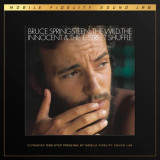
Released only eight months after his exhilarating debut, Bruce Springsteen's The Wild, the Innocent & the E Street Shuffle contains rousing dispatches from the boardwalk, the street, the beach, and the bedroom. It explodes with energy, dares to dream, teases with humour, crackles with tragedy, clings to hope, and overflows with discovery, youthfulness, and personality. It features an unforgettable cast of characters — corner boys, teenage hustlers, doomed lovers, jazz men, junk men, factory girls, fortune tellers, alley cats, pimps, escorts, and more — illuminated by vivid colour, breathtaking detail, and poetic action.
Musically, the heartfelt 1973 record is inhabited by sympathetic vignettes and cinematic arrangements steeped in rock 'n' roll, soul, jazz, and R&B. It finds the New Jersey native looking beyond the parameters of his preceding record and seeking to move on from environments he knows well (and chronicles here) by rushing headlong toward unknown territories, adventures, and people. Underpinned by the singer-guitarist's ambitious poetic enterprise and will to succeed, The Wild, the Innocent & the E Street Shuffle is the album on which Springsteen becomes the Boss.
Mastered on Mobile Fidelity's renowned mastering system, pressed at RTI on MoFi SuperVinyl, and strictly limited to 7,500 numbered copies, Mobile Fidelity's UltraDisc One-Step 180g 33RPM LP set is the definitive-sounding version of Springsteen's sophomore record. Benefitting from SuperVinyl’s nearly non-existent noise floor, superb groove definition, and dead-quiet surfaces, The Wild, the Innocent & the E Street Shuffle plays with a clarity, energy, presence, and openness that complement the expressiveness, dynamics, and scope of the seven restless songs that comprise a work Rolling Stone ranked the 345th Greatest Album of All Time.
Beyond the audiophile sonics that practically place you behind the console at 914 Sound Studios — listen to the separation between the instruments, natural decay of the notes, interplay within the widescreen soundstaging, and nothing-to-lose youthfulness of Springsteen’s voice — this reissue takes seriously this record’s influential merit by presenting it in packaging that underlines its status. Tucked in a beautiful slipcase, the LP is housed in a special foil-stamped jacket with faithful-to-the-original graphics. This reissue is made for listeners who prize sound quality and who want to engage themselves in everything involved with the invigorating set that busted Springsteen loose from the club circuit and landed him on the radio
Determined to liberate anyone within earshot and unafraid to come on strong, The Wild, the Innocent & the E Street Shuffle serves as the debut of the E Street Band — not only heard but seen for the first time by most of the public courtesy of the back-cover photograph. This is where saxophonist Clarence Clemons, organist-accordionist Danny Federici, and pianist David Sancious step out of the shadows — and drummer Vini Lopez and bassist Garry Tallent again stoke a fiery rhythmic engine that helps drive the untamed, reimagined big-band swing of “Kitty’s Back,” breathless R&B thrust of “Rosalita (Come Out Tonight),” and carefree dance steps of the funky “The E Street Shuffle.”
Of course, the main attraction remains a then-24-year-old visionary on the precipice of becoming a sensation and turning a then-bloated rock scene on its head. Recorded over three months while Springsteen and company were busy touring his debut LP, The Wild, the Innocent & the E Street Shuffle reflects the high-octane approach the vocalist embraced onstage and drifts away from the label-dictated acoustic-based frameworks of his debut. The set also witnesses Springsteen deepening his observational skills, with narratives such as the romantically tinged “4th of July, Asbury Park (Sandy)” and redemptive epic “Incident on 57th Street” mirroring changes taking place in the singer’s own life, small towns, and America at large.
A thrilling collision of memories, reflections, and composites — Sandy, Rosalita, and the latter’s parents are all based on actual people Springsteen knew, as is the community depicted in the opening track — the aptly titled The Wild, the Innocent & the E Street Shuffle resonates decades on due to its truths, authenticity, and spirit. Those characteristics — as well as the fact that many of its lengthy songs come on as the equivalent of sweaty, feverish soul revue that won’t stop until you’ve been exhausted — also explain how this now-iconic album triumphed over the reservations of industry “experts” that both demanded Springsteen re-record it and instructed deejays not to play it.
Yet there’d be no stopping a record that saw the past, present, and future, a band whose will would not be denied, and a phenomenon who was born to run. A never-ending invitation to act real cool and stay up all night, The Wild, the Innocent & the E Street Shuffle always feels alright.
Castle Face present Dan Rincon’s (OSEES, Wild Thing, Apache, Personal and the Pizzas) premier solo release Spotlight City.
Artificial landscapes and melodies comprised of Moog Grandmother, Mellotron and a kinky Modular system span from beautiful and lilting to haunting and etherial. The album was a years long learning experience of getting all components and ingredients to link arms and blend comfortably. Wrangling was part of the process. Strings soaring and sines weaving. Sometimes in the atmosphere, sometimes in the Earth’s core, sometimes flanked by neon blur as it hums & weave patterns through a world imagined in vintage sci-fi pulp.
“I was listening to a lot of solo Roedelius and Conrad Schnitzler records while writing this record and I’d say that both have been hugely inspirational on what I want to do as a solo recording artist. The way both of those of those artist pushed the early, chaotic electronic music into something more melodic is really inspiring to me, it’s not that dissimilar than trying to get melodies out of a modular synthesizer.”
An absolute necessary slab for anyone a fan of CF, OSEES, Popol Vuh soundtracks , 8 bit video game accompaniment & 80s Tangerine Dream. Burn one and burn out.
Gemma Blackshaw is a scholar, writer and curator currently Senior Tutor for research at the Royal College of Art. She has curated major exhibitions for galleries and museums in London (National Gallery; Wellcome Collection and Vienna (Leopold Museum; Wien Museum).
This is her debut album.
Who Will You Love is the debut collaborative album from The Dengie Hundred with Gemma Blackshaw. In 2023, The Dengie Hundred co-produced with Japan Blues two albums for Demdike Stare’s DDS label, and released the solo album Tube on London’s Sagome imprint; their solo debut Brackenbank appeared on Ethbo in 2022, when they also contributed to World of Echo’s Thorn Valley compilation. Here, they collaborate with Gemma Blackshaw on an album of smudged dream pop.
Gemma’s vocals were recorded from home at night on an old iPhone. Who Will You Love surfaces dark, desiring songs on the passion and exhaustion of looking after others. Emerging in simple rounds that expand with layers of field recordings, synths and drum machines, the songs include lullabies for baby boys and men, enchantments of wary lovers and spells of protection for a daughter.
Moving between her children and her lover, the mother sings of the demands of daily intimacy (play with me, carry me, sing to me…) that echo through adult relationships too.
Who Will You Love was mastered by Carim Clasmann, and mastered and cut for vinyl by Stefan Betke (aka Pole). Artist Alexis-Soul-Gray gifted Screen Memory of 2022, a painting on found paper, for the artwork. Mark Thomson designed the sleev
LIMITED BOXSET[117,61 €]
10 Year Anniversary Gatefold 2LP 10 year anniversary gatefold 2LP edition of Cult of Luna's take on Fritz Lang's Metropolis film, Vertikal. "Somewhere Along The Highway" and "Eternal Kingdom" were inspired by the landscape of Västerbotten, the county we are from. We realised that there was only one way to go for us: to the city, into the future. Making a droney John Carpenter-esque album would be too easy and we've never been about taking the simple route. I was studying film at the time and had been floored by the aesthetic of German expressionism. This resonated perfectly with Erik Olofsson, who had just got into Italian futurism. This was a real challenge. We put in a lot of effort to realize our vision of the stale, artificial city in all aspects of what an album is. The way we played guitar (only down strokes), the production, artwork and band photos, everything was done with the vision as a guide. "Vertikal" is the album where we had the most precise vision of what we wanted to do and worked hardest to transform it from an idea into reality. A lot of things happened during the years between "Eternal Kingdom" and "Vertikal" and I could continue writing for ages but this will do for now. Ten years have passed since its release and what felt like a rebirth of the band, the band that is still ongoing with new goals and missions. It's a full circle kind of thing. At the time we had no label and now we are releasing it on our very own. Life is strange. Johannes Persson - Umeå December 2022
This work, imbued with Rastafari philosophy and messages of resistance and unity, reinforces Marley’s status as the voice of the people. Blending captivating melodies with powerful lyrics, “Small Axe” addresses social injustices, calling for a fight against oppression. Marley, with his mastery of reggae, delivers a message of hope and revolution, thus marking a landmark moment in his musical career
Haust started in the city of Notodden in 2001 and redefined the borders between punk and black metal with their 2008 debut album “Ride The Relapse”. The album was the first album to be released on the Fysisk Format-label and went on to inspire a generation of bands. Members from Haust have also been prominent in bands like Okkultokrati and Outer Limit Lotus, and guitarist Ruben Willem’s production skills has made its mark on bands like Kvelertak, Bokassa, Djevel, Ondt Blod, NAG and Sibiir.
With their debut album Haust showed the world how negative forces could manifest into an album. Some songs were inspired by the destructive car-culture in Notodden with its intense local mentality and anti-sophistication, as well as old horror movies and trash films by John Waters. Three more albums appeared, with some other members here and there, but the band went on hiatus from 2015 for several years. Now the band is back, in their original line-up, to return to their dark horror-inspired landscape from the early days; dirty punkrock with a strong negative energy.
The album summarizes everything Haust has done and stood for in the last 23 years: negativity, death and corruption are recurring themes, and the music is more aggressive, noisy and catchy than ever before.
After 10 years of activity, Regarde is releasing "Nothing, Again", a six-tracks EP produced by Maurizio Baggio at La Distilleria (Bassano Del Grappa, Italy). Working on this new EP, the band ventured into uncharted territories, exploring new sounds and pushing the boundaries of their music, adding heavy synths to their atmospheres. "Nothing, Again" is a reminder that even as we feel like strangers in this world, we are still capable of love, of connection, and of rediscovering ourselves in the ever-changing landscape of life. Illustrated cover artwork created by Paris-based artist Célestin Krier.
"Listen to This." As the original working title for Bitches Brew, the instruction and invitation resonates to this day as the best way to approach a record that shattered conventions, altered music history, and, more than five decades after its original release, still sounds far ahead of its time. The aural Mount Rushmore of jazz fusion, Bitches Brew is rightly ranked by virtually every significant outlet among the 100 greatest albums ever made in any genre. Sewn together with vibrant colours, voodoo textures, and ethereal moods, the 1970 landmark emerges with supreme detail on Mobile Fidelity's definitive 180g 33RPM 2LP set.
Sourced from the original master tapes and pressed on 180g vinyl at RTI, this numbered-edition version of Bitches Brew joins the audiophile ranks of other essential Miles Davis sets reissued by Mobile Fidelity. Having established new possibilities for studio-recording techniques, the record can now be experienced to maximum degree by way of a pressing that widens and deepens the soundstage, opens up separation between instruments, and broadens the dynamic range. If ever a jazz album can be said to have gone to outer space and back, this is it.
Davis conceived Bitches Brew by having the musicians stand in a semi-circle, where he pointed at them with vague directions for tempo, solos, and cues. The collective improvisation and interplay spawned a galaxy of melodies and grooves later spliced together by producer Ted Macero. On this reissue, these creations take shape with utmost realism. Compositions stretch across black backgrounds and paint abstract canvasses on par with those of Axis: Bold As Love and Abraxas. Juxtaposed percussion, loose jams, and melodic segues explode with impressionistic verve.
And "verve" defines Bitches Brew. Gathering a Hall of Fame-worthy lineup of musicians and tweaking it according to his desires, Davis follows through on his idea to "put together the greatest rock and roll band you ever heard." Central to his proposition is the presence of two (and sometimes three) drummers and two bassists, a tactical move that thrusts rhythms into central focus. Akin to the futuristic album cover art, the drum-driven suites head toward distant universes and uncharted territories. At once hypnotizing and grooving, they chart maverick adventures with quixotic rock, funk, and R&B elements.
Conceptually, Davis described Bitches Brew as "a novel without words" and "an incredible journey of pain, joy, sorrow, hate, passion, and love." The vast psychedelic expanses of warped echoes, liquid reverb, and tape loops confirm such ambitious contrasts of light and dark, fear and hope. Yet the most absolute characteristic of this watershed effort lies in how it resists definitive interpretation and encourages free thought — the very principles with which Davis conceived the everlasting beauty and fascination that remain Bitches Brew.
A landmark recording and masterful symphony of performance, composition, and execution, Miles Davis' E.S.P. established the template jazz would follow for the following decade. The 1965 record splits the gap between accessible hard-bop and the cutting-edge approach Davis increasingly pursued into the 1970s. Adventurous, sophisticated, and yet altogether cohesive, E.S.P. stands out not only due to its elastic compositions but via its chemistry, interplay, and feeling attained by the instrumentalists. The first album Davis' classic second quintet made together, it's also very arguably the group's best. Never before has the effort been experienced in such transformational sound.
Pressed at RTI, this 180g 45RPM 2LP set of E.S.P. renders the music's dynamics, pitch, colors, and textures with lifelike realism and proper scale. Reference-caliber separation, wall-to-wall soundstages, and distinct images magnify the intensity and beauty of Davis and Co.'s creations. Whether it's the distinctive snap of Tony Williams' drum sticks against the snare head, air moving through Davis' trumpet, acoustic thrum of Ron Carter's bass, or upper register of Herbie Hancock's piano, the sound is better than you'd even hear in the most intimate jazz clubs. Prepare to be swayed on every level.
For many, E.S.P. looms among the decade's best albums if only because of the significance of Davis' line-up. While Hancock, Williams, and Carter are holdovers that began playing with one another on 1963's Seven Steps to Heaven, Wayne Shorter functions as the secret weapon and key addition responsible for this ensemble hitting a new peak. Indeed, the saxophonist helped pen two of the seven compositions here – notably, E.S.P. is entirely comprised originals and clocked in as one of the longest-running jazz LPs issued at the time – and, more importantly, grants Davis the confidence and leeway necessary for the eruption of enigma, steadiness, and tension.
As he did with John Coltrane year earlier, Davis hangs back and picks his moments to solo, with Shorter stepping up to supply the churn. Their bandmates respond in kind, itching to take off into new stratospheres all the while keeping their improvisations grounded and connected to the piece at hand. Guided by Davis' visions and inspired by current boundary-pushing works by the likes of Ornette Coleman, Cecil Taylor, and Coltrane, the magnificent results spark with variation, harmony, emotion, energy, and brilliant movement.
Interlocking lines drive "Little One," alternating rhythms pulse through the funky "Eighty-One," melodies soar on the balladic "Iris," the aptly titled "Mood" broods over minor-key structures, and "Agitation" – goosed by a two-minute percussive introduction by Williams – delivers on its promise. No record – and no group of musicians – have ever balanced coherent themes and exploratory playing in better fashion than Davis' quintet on E.S.P. It's the avant-garde record even jazz traditionalists love, and essential on every level.
red LP[26,85 €]
The Dream Of Delphi is an ode to motherhood created in LA, Natasha’s second home, during the Covid-19 pandemic. It’s a sonic archive of a time when Natasha birthed her daughter Delphi earth side. The record weaves together ten song poems, documenting the polarity of navigating both an exterior world that was seemingly turning upside down, whilst also experiencing theprofoundly personal and transformational early moments of mothering Delphi, named after the Greek Oracle, the ancient future teller. The music became Natasha’s sanctuary, born out of stolen trips to the studio, where each track was improvised and completed in a few hours and chronologises her diary like offerings over a period of two years; from “The Midwives Have Left”; to writing a “Letter To My Daughter”; and all the way through to “Waking up”, as well as a cover of her daughter’s favourite song, “Home”.While the storytelling behind Bat For Lashes’ previous albums have traditionally used otherworldly narratives and female lead characters (e.g. ‘Laura’, ‘Daniel’ and ‘The Bride’), for the first ti me, The Dream Of Delphi is about Natasha’s personal experience of the magical and sometimes melancholy intimacy of early motherhood. This record creates a more private form of mythology around the music than her previous work. The Dream Of Delphi touches on more of an instrumental “Bat For Lashes” world, and shows Natasha to be both a confident composer and craftswoman of intimate landscapes. While the music creates a more womb-like, ambient space for the listener, it still leaves ample room for her signature dream pop songwriting to vibrate through. Natasha has worked with Brad Oberhofer, Mary Lattimore and Jack Falby on this record.
black LP[26,85 €]
The Dream Of Delphi is an ode to motherhood created in LA, Natasha’s second home, during the Covid-19 pandemic. It’s a sonic archive of a time when Natasha birthed her daughter Delphi earth side. The record weaves together ten song poems, documenting the polarity of navigating both an exterior world that was seemingly turning upside down, whilst also experiencing theprofoundly personal and transformational early moments of mothering Delphi, named after the Greek Oracle, the ancient future teller. The music became Natasha’s sanctuary, born out of stolen trips to the studio, where each track was improvised and completed in a few hours and chronologises her diary like offerings over a period of two years; from “The Midwives Have Left”; to writing a “Letter To My Daughter”; and all the way through to “Waking up”, as well as a cover of her daughter’s favourite song, “Home”.While the storytelling behind Bat For Lashes’ previous albums have traditionally used otherworldly narratives and female lead characters (e.g. ‘Laura’, ‘Daniel’ and ‘The Bride’), for the first ti me, The Dream Of Delphi is about Natasha’s personal experience of the magical and sometimes melancholy intimacy of early motherhood. This record creates a more private form of mythology around the music than her previous work. The Dream Of Delphi touches on more of an instrumental “Bat For Lashes” world, and shows Natasha to be both a confident composer and craftswoman of intimate landscapes. While the music creates a more womb-like, ambient space for the listener, it still leaves ample room for her signature dream pop songwriting to vibrate through. Natasha has worked with Brad Oberhofer, Mary Lattimore and Jack Falby on this record.
Eszaid imagines the sonic paranoia of discovery with Brumes, a 9 part movement for FELT that coalesces industrialised murmurs from the currents of cavernous creep.
An electronic complexion shaded dusk haunts Eszaid’s output. Previous releases on L.I.E.S., Worship and his own Collapsing Market label exemplified a shutters-closed style of rhythmic and melodic variance that teetered on techno-related realities with the lights kept firmly off. The Avignon-based artist lands at Fergus Jones's FELT stable to further the imprint’s unpredictability, coaxing some of his most perturbed oddities yet with Brumes.
The mythologized voyage of Pytheas to the island of Thule provides the abstracted blueprint for Brumes’ 9 parts. Each movement is born of soundscapes inspired by envisaged scenes of his trip to the North, an aural construction of interpretation. Eszaid unwinds tense metronomic rhythms within sparse sound environments, sprung with globular textures of motorik warbles and darkside atmospherics. Its minimalist beat complexions are buoyant by an abstracted fear of the unknown, tracks defined by bobbling industriale, Gregorian dub and atonal menace. It’s an alternative experience to the often faux-jubilance of expeditious revelation, and something that will resonate long after Nord’s beatless modulation fade out.
Source 02 is the second release from the Uruguayan label New Source. We are pleased to have the debut of Lorenzo Batlle, Uruguayan producer and DJ.
Track A1 - IDRIS:
Opening the EP, IDRIS invites you to a disorderly dance through time, weaving dub influences, atmospheric acid lines, and fragmented vocals creating an eclectic sonic landscape.
Track A2 - MEDEA:
MEDEA emerges with a soft and hypnotic embrace, drenched in hypnotic bells and delayed acid lines.
Track B1 - SIRIUS:
Inspired by Cyrus, woods, and '80s shades, SIRIUS is a blended journey guided by a pulsating baseline—an invitation to move forward on the dancefloor.
Track B2 - God works in mysterious ways:
Closing the EP, God works in mysterious ways leaves a moody imprint, resonating with house vibes and playful synths bringing joy to the dancefloor.
Active since 2001, Ayyuka was one of the first bands to look back at 70’s Turkish music to find a new voice. Not caught up in the Retromania but reincarnating Turkish Psychedelic within their own style, the band managed to develop an unmistakeable unique sound. Inspirations of Dick Dale, John Frusciante, and local heroes like Erkin Koray, Orhan Gencebay, make their music more guitar oriented but their fascination with film music and improvisation creates unexpected twists within their songs. Right after their eponymous debut in 2007, the band shared stage with Sonic Youth and Jonathan Richman. Heading to a completely instrumental music, their 3rd studio recording “Sömester” had already become a cult album for record collectors. They’ve collaborated with Orlando Julius, Ilhan Ersahin and had guests on almost every album. Their latest full length “Maslak Halayı” was a creative collaboration with Calibro35 genius Tommaso Colliva. The worldwide hype of "Yukadans” will now be followed by their upcoming EP "Zaman Ziyan”, showcasing four brand new instrumental tracks that will transport listeners through a kaleidoscope of musical landscapes, experimenting with techniques of music writing and flirting with genres like afro-beat, funk, dub or arabesque. Save the date for their very first performance of these, live at babylon, as a part of Akbank Jazz Festival.
They grew closer as restrictions dropped away and audiences grew, using the shifts to experiment with their material and reach more expansive and formidable levels. The final product is a landmine of sound, inspired by the raw, sweeping fuzz of the likes of Sonic Youth and The Jesus and Mary Chain. Familiar elements of noughties era guitar shine through, confronted with cutting contemporary angst to create a nostalgic yet intoxicating sound. As the band's confidence grew through their live shows they were liberated, taking all they had learnt in order to begin working on "a lot more cohesive and bigger sounding" project
Bill MacKay and Drag City are delirious with pride to announce the discovery of a new territory: Locust Land, a record which seeks to reflect the nerve-shredding consciousness run amok in our world today - and somehow allay it with sound. Bill"s music is a visceral crackling where it meets the air, and Locust Land can"t help but reflect its era more than any other in his discography. It"s been five years since the release of Fountain Fire - but in the interim, Bill has barely stopped moving, collaborating with artists across the spectrum, including cellist Katinka Kleijn, banjo player Nathan Bowles and keyboardist Cooper Crain. He"s also contributed to recordings by Steve Gunn, Ryley Walker, Bill Callahan & Bonnie Prince Billy (Blind Date Party), and Black Duck (on their self-titled record featuring Douglas McCombs and Charles Rumback). Forget five years - how"d he even get Locust Land squeezed out of his temporal lobes? Bill"s sense of music as art is constantly modulating - lifting off from where it is found and naturally migrating to some other place. Sometimes, that"s elsewhere - others, it"s simply to be found deeper inside the starting point. And so, the action of moving on informs the landscape of Locust Land. This manifests in several different ways. A restless energy and urgency is repeatedly felt - in the driving momentum of "Keeping in Time," "Glow Drift," and "When I Was Here" - while a dogged persistence radiates from the tone colors and percussion of "Oh, Pearl." Mating a dirge-like desolation with sparkling guitars, "Radiator" adds darkness and depth. The sense of searching, displacement and longing in vocal tracks "Keeping in Time," "Half of You," and "When I Was Here" speak literally to the tumult of current vibrations. Within the arrangements, there"s also departure from previous norms - in addition to the brilliant guitar work for which he is known, Bill plays a variety of keyboards, from piano to organ to synth, extending his music with the available voicings, while enriching the sound field without abandoning his signature brevity. For fans of his singing, and following in the recent tradition of Fountain Fire as well as his collaboration with Nathan Bowles, Keys, Locust Land expresses with an increased vocal presence - and heightened engagement, with Bill"s words and melodies drawing us closer. Also different: on his previous solo recordings, Bill played every sound. Here, he has invited other illustrious Chicagoans to join him: Sam Wagster (The Father Costume, Mute Duo) plays bass on three songs, two of which feature the percussion playing of Mikel Patrick Avery (Natural Information Society, Jeff Parker, etc.). Additionally, Janet Beveridge Bean (Eleventh Dream Day, Freakwater) adds otherworldly vocal textures to the elegiac "Neil"s Field." Whether played alone or with companions, this music projects the strength of a universal collective. Even with a piece that might earlier have passed for blissful pastorale, Bill displays some declamatory motives. The reverie which opens the album, "Phantasmic Fairy," embodies both transcendent and desperate moods, with Bill"s ineffable slide guitar playing afloat, with organs and synths, in a dream state suffused with a sense of foreboding - a requiem, perhaps for the days of unencumbered bandwidth? On the other side of the album, the strength to continue to hope appears in the lifting melodicism/exoticism of the album-closing title track, leaving the listener with the sense of having achieved a hard-won space - a place of personal contemplation and dissent, one that everyone on the planet deserves to visit every single day on earth. With cover art also by Bill MacKay (the third of his albums on Drag City to feature his work), Locust Land stands as a thoroughly personal statement from Bill to everyone everywhere.
GER Als Night Beats erschafft der in Texas geborene und in LA lebende Künstler Danny Lee Blackwell Musik, wie man ein Puzzle zusammensetzen könnte. Der psychedelische Autorenfilmer aus dem Westen baut sein Werk aus einem Moment, einer Initialzündung, auf, die bestimmte Kriterien erfüllen muss: Sie muss ihm Gänsehaut bereiten. Wenn dieses Gefühl eintritt, verfolgt Blackwell die Idee unermüdlich, bis er einen neuen Song hat; wenn nicht, geht er zum nächsten Moment über, immer auf der Suche nach dem perfekten Molekül eines Songs. Auf seinem sechsten Night Beats-Album "Rajan" zeigt sich der Songwriter von seiner besten Seite und erschafft Werke, die mit fesselnden Melodien und hypnotischen Rhythmen glänzen, aber auch durch subtile handwerkliche Entscheidungen unterstrichen werden, die nur nach unzähligen Stunden im Studio erreicht werden können. Blackwell erschafft ein Werk, das irgendwo zwischen Spaghetti-Western-Filmmusik und Psych-Pop-Opus angesiedelt ist, ein karrierebestimmendes Album, das viel über Danny Lee Blackwells künstlerische Philosophie verrät und gleichzeitig den so wichtigen Hauch des Geheimnisvollen bewahrt. Exklusiv für den Indie-Handel, todesrote LP, handnummeriert mit Poster und DLC.
ENG As Night Beats, Texas-born, LA-based artist Danny Lee Blackwell creates music like one might assemble a puzzle. The Western psychedelic auteur builds his work from one moment, an initial spark, that must fit a certain criteria: it must give him goosebumps. If that sensation arrives, Blackwell will pursue the idea relentlessly until he has a new song; if not, he moves onto the next moment, constantly looking for the perfect molecule of a song. On his sixth Night Beats album, 'Rajan', the songwriter is at his strongest, creating works that shine with captivating melodies and hypnotic rhythms, but are underscored by subtle choices of craftsmanship that can only be achieved after countless hours in the studio. Blackwell creates a work that lands somewhere between Spaghetti Western film score and psych-pop opus, a career-defining album that reveals much about Danny Lee Blackwell's artistic philosophy while keeping that ever crucial air of mystery intact. Indies only LP on 180g 'Dying Red Giant' coloured vinyl, limited to 350 hand-numbered copies, fold-out art poster, download card included.



