
Suche:wobble t

auch erhältlich
Vol.2[27,52 €]
Straight from an alternative dancefloor, a recollection of stone cold classics from huge & influential post-punk pioneers. They called it white funk once, but here you can even catch echoes of latin, dub and club influences, a mutant disco manifesto from a series of British champions such as Medium Medium, Jah Wobble, Animal Magic, Blue Rondo' A La Turk, Nightmares In Wax, Tappa Zukie and many more.
Tracklist Side A:
Blue Rondo A La Turk - Sarava
Medium Medium - Serbian Village
Jah Wobble - Invaders Of The Heart (Mix One)
Perfect Zebras - What Dance Is This?
Splat! - Yeah... The Dum Du
Tracklist Side B:
Dancing Did - Ballad Of The Dying Sigh
Animal Magic - Get It Right
Nightmares In Wax - Black Leather
Tappa Zukie – Freak

9
2026 Repress
Gaudi’s Jazz Gone Dub is a masterclass in genre fusion, seamlessly blending the improvisational essence of jazz with the heavy atmospheric grooves of dub. Known for his eclectic approach to music production, Gaudi pushes the boundaries yet again, creating a sonic landscape that feels both nostalgic and refreshingly innovative.
Four years in the making, from the opening track it’s clear that Jazz Gone Dub is more than just a mashup of styles—it's a thoughtful exploration of the intersections between two rich musical traditions.
Gaudi’s multi-instrumental talents are on full display, and the presence of reggae royalty is palpable, courtesy of rootsy melodies from David Hinds (Steel Pulse), Jah Wobble’s iconic bass grooves, Ernest Ranglin’s intricate guitar lines and Sly & Robbie’s rhythmic genius. Add Sardinia’s Train to Roots band, Manu Chao collaborator Roy Paci, veteran guitarist Marcus Upbeat, Mr Woodnote and Tim Hutton’s brass work, Gavin Tate-Lovery’s sultry sax and flute, Horseman’s percussive flair plus Colin Edwin and Vlastur’s serious basslines, and the
result is a rhythmic foundation that’s both solid and fluid, allowing the jazz elements to float freely above the dub undercurrents.
Despite this star-studded line-up, Gaudi remains the glue that holds this gem together: his production is meticulous yet organic, allowing each track to breathe and evolve naturally. The use of space, delays and reverb—a hallmark of dub music—is expertly handled, giving the album a dreamy, immersive quality. Tracks like Susceptible and Alabaster Moon showcase Gaudi’s ability to create mood and atmosphere without sacrificing melodic and rhythmic complexity.
In Jazz Gone Dub Gaudi has crafted an album that feels both timeless and forward-thinking, a celebration of musical synergy where the free-spirit of jazz meets the deep resonance of dub. Whether you’re a fan of either genre or simply appreciate masterful musicianship and innovative production, this album is a must-listen.
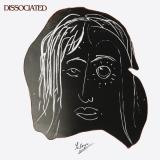
- A1: Dissociated
- A2: For Wayne
- A3: Sweet Stuff
- A4: It's About Love
- A5: The Kid From Bondy
- B1: Trees Utopia
- B2: Brazilian Wobble
- B3: At The Mehul Fest
- B4: Myself Again
- B5: Dissociated Pt 2
Serge Hirsch / LeSerge is a multi-instrumentalist based in Paris.
He plays the violin and keyboards, and composes and produces his own music.
His music blends jazz improvisation, a rhythmic approach drawn from hip-hop, and the sonic experimentation of contemporary bedroom music.
His main band, a trio featuring Noé Bénita on drums and Yungccos on electric bass, aims to create music that is social, joyful and musically demanding, yet never becomes esoteric.
His debut album is set to be released in partnership with Roche Musique in early 2026.
As well as composing and performing his own music, he has collaborated with numerous artists, either as a string arranger or as a producer and pianist. (Bonnie Banane, Shygirl, Lossapardo, Lablue, Swing, Madone...)
He notably made a name for himself during FKJ’s 2020 European tour, where he performed all the support slots alongside electronic music producer CRAYON.
As a bandleader, he has built a solid reputation by performing at numerous venues and residencies at Le Silencio des Près in 2024, at Soho House and at Le Serpent à Plume. He also served as deputy musical director at Le Serpent à Plume during the venue’s early years from 2019 to 2025.
Translated with (free version)

shubostar, originally from south korea and currently based in germany, began releasing her own works in 2018. she quickly attracted attention with releases on prins thomas’s label internasjonal.
this work, her debut release on mule musiq, presents a new disco sound that updates elements of cosmic, italo disco, and new wave for a contemporary context.
a1, “abbiamo,” is an electric disco piece reminiscent of the french disco classic magic fly by space.
a2, “gambi,” can be described as a cosmic disco track akin to a disco version of klaus schulze that might be played by dj daniel baldelli.
b1, “starlight arcade,” offers a more dub-oriented, club-friendly new wave disco sound.
b2, “tip top” appears to draw influence from artists such as jah wobble, combining uk new wave with ebm elements into a proto-house style track.
her refined production style, which stands apart from typical disco-oriented artists, may be attributed to a distinct sensibility.
this release marks the emergence of a notable new artist.
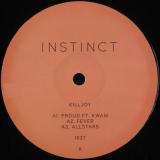
Burnski's Instinct label kicks on with more filthy low-end wobblers, this time with Killjoy the man behind the buttons. He opens up with 'Proud' (feat Kwam) which has a dirty low-end sleaze and blasts of busted bass topped with grimy bars and razor sharp percussion. It's pure filth for lip-curling disgust. Then 'Fever' drops into punchy speed garage energy with hustling drums and more warped bass and 'Allstars' gets lose on a glitchy two-stepper. The flip side shows yet another look with 'Lovestruck ' packed with pitched up vocal hooks and slamming drums and 'Shout' rounds out with icy cool.

Reliance is one of many labels run by British powerhouse Burnski and it continues to establish itself here with a fifth EP, this time from Oldboy. It opens with a naughty, filthy, throwback dark garage shuffler, 'How'd Ya Feel', complete with old school vocals and warehouse vibes that get heads down and feet marching. 'Straight Hittah' is another throwback with a bumping low end and urgent drums that are brought to life with withering pads and killer bass. 'Hustla' closes down with another bumping and authentic dark garage wobbler. Pure sleaze from front to back.

No Static Automatic is proud to cap off the year with the electrifying *Cabin Pressure EP* from seasoned producer and sound designer **Luke Sanger**.
Set for release on limited edition vinyl, this four-track weapon is a potent fusion of classic electro rhythms and Sanger’s signature world of bleeps, wobbles, and modulated
chaos.
With a career spanning two decades at the nexus of music and technology, Luke Sanger is a relentless innovator. While his roots are often linked to techno, his artistic output defies easy categorization, constantly exploring the full spectrum of electronic music. On the
*Cabin Pressure EP*, he turns his focus to electro, injecting the genre with his uniquely off- kilter and captivating sound.
The EP is a masterful display of analog synthesis. Sanger crafts simple, infectious basslines and leads, then sets them in motion, allowing them to converse, modulate, and evolve into a complex tapestry of sound. The result is a listening experience that is as intellectually fascinating as it is physically compelling. Over a bedrock of sturdy electro beats, Sanger layers acid basslines with wild envelope modulation, distorted humanoid samples, and an array of wobbly, techy textures designed to bring dancefloors to a state of ecstatic, unstable bliss.
This is a record built for impact. The *Cabin Pressure EP* is not just a collection of tracks; it's a dynamic tool for DJs, guaranteed to become a secret weapon in sets that demand character and forward-thinking energy.

It's time to set those jaws to wobble mode as this funky favourite label is back with more serious sounds for the disco, this time from Hysteric. 'Italo Mystery Theme' is a brilliant timewarp to the 80s with its overtly streamy and seductive vocals over neat guitars and stepping disco drums with lush chords. 'After Dark' is more breezy and hip-swinging with its airy vocals and wet claps, then 'Sugar Daddy Again' brings rugged analogue bass sounds and snappy drums under some erotic vocal work. 'All Right' shuts down with a UK street soul-cum-disco groover that's lit up with nice neon chords.

4
Berlin-based upstart Gadget Recs makes an entrance into the world with a display from four fresh European producers. With their scope on the melting pot of global bass music, they document the ever-morphing, liminal fringes of breakbeats, electro, dubstep, techno, and beyond! A multi-tool for any bass-facing DJs.

Next up on Mesh is Throwing Snow’s ‘Jackals’, a five-track EP drawing on echoes of UK subcultures.
Written in Ireland late last year with the London 2010s in mind, ‘Jackals’ is Throwing Snow’s love letter to his time spent there, tapping into a detailed web of sounds and styles through a personal lens, but skillfully produced to resonate with many. Locating memories in a transient city that is constantly reconfiguring itself, each track is an attempt at honouring fragments of recent, but seemingly distant, musical history. Taking us from DMZ at Brixton Mass to FWD at Plastic People, or Future Garage Fridays in Soho (IYKYK) to early days of NTS, the EP captures some of the fleeting moments that continue to play a significant part in the city’s sonic patchwork.
Production-wise, all the tracks share the same sounds twisted in different directions. The hats are vocoded with noise and random LFOs, and much like the chaos of London, every bounce has a unique pattern.
Opening track ‘Jackals’ walks the line between dub and UK bass, quickly overtaken by a wonky synth lead that spirals eternally upwards. ‘Ohnein’ jumps in with a massive pad swirling above a half-time step. In Throwing Snow’s own words, ‘I had to check with Martyn whether I'd ripped him off, turns out I hadn't, but it's a heavy head nod crossed with Un Vingt from my first 12"’. ‘A Cloud Mountain’ - a nod to the timeless James Holden remix of Nathan Fake’s ‘The Sky Was Pink’, leans into a maximalist progression of deep chords and fractured synths. ‘Forged’ steps into a weightier space with sparse drums driven forward by a deep cut of bass and twitchy echoes. Rounding things off, ‘Path Dependency’ speeds things up with touches of DnB in the drums, distant echoes in the forefront and the occasional sub wobble holding things together.
9
When it first appeared in 1986, the 'Desert Equations: Azax Attra' album
was greeted with enthusiasm, awe and disbelief: nobody had done
anything quite like that before, and this dizzying, inspired blend of
Persian tradition, New York avantgarde and electronic music remains
incomparable, powerful and mesmerising to this day
A haunting and futuristic album, it combines the sublime voice of Iranian vocalist
Sussan Deyhim and the electronic wizardry of US composer Richard Horowitz.
'Desert Equations' wonderfully blends the duo's multiple sources, including their
experiences at the epicentre of New York's early 1980s avantgarde music and
theatre scene, Sussan Deyhim's knowledge of traditional Persian music and its
reverberation in modern Iranian arts, and Richard Horowitz's background in jazz,
electronics and Moroccan folk music. This 2021 remastered reissue includes
three previously- unreleased bonus tracks, one included on the LP and two only
available on the CD and digitally, and a rich booklet with photographs and notes
recounting the duo's fascinating life stories.
Sussan Deyhim went on to work with the likes of Peter Gabriel, Jah Wobble,
Bobby McFerrin, Adrian Sherwood, Ornette Coleman, and renowned visual artist
Shirin Neshat. Richard Horowitz has collaborated with David Byrne, was the
original artistic director of the Gnaoua Festival in Essaouira, and has written and
recorded film soundtracks for the likes of Oliver Stone. In April 2021, Deyhim and
Horowitz were invited to perform at the first Nobel Prize Summit.

5
The writer Max Sebald often pondered over the nature of human memory, specifically, how our thoughts and desires - and their results - overlap and mutate over time. In A Place in the Country, he writes of the significance of what see as “similarities, overlaps and coincidences”. Are they the “delusions” of the self and senses, or manifestations of “an order underlying the chaos of human relationships, ... which lies beyond our comprehension”?
Song of the Night Mists, the new album by post-classical composer Stefan Wesołowski, often feels it draws on Sebald’s premise.
On a simpler plane, the one where the market dictates the neatly ordered information we consume, Song of the Night Mists can be described thus: recorded in the main by Stefan Wesołowski in Gdańsk, both in his studio and in Saint Nicholas' Basilica, the album incorporates acoustic instruments - piano, violin, double bass - and classic synthesizers such as the Roland Jupiter-8, the Soviet Polivoks. A Roland Space Echo RE-150 tape delay was also pressed into service as an instrument. We also hear the basillica’s organ and field recordings from the Tatra Mountains. Other musicians were Maja Miro, who played the flute parts on ‘Glacial Troughs’ and brother Piotr Wesołowski, who played the organ on ‘Wilhelm Tombeau’. Sound engineer was Marcin Nenko, who was also on hand to record the basilica organ parts. The album was mixed in New York by Al Carlson (Oneohtrix Point Never, Jessica Pratt, Zola Jesus, Lady Gaga, and Liturgy) and Rafael Anton Irisarri handled the mastering.
Ostensibly, Song of the Night Mists is the last in a trilogy, following on from albums Liebestod (2013) and Rite of the End (2017). All three deal with existential matters such as love, death, decay and “an ultimate end”; apocalyptic and Promethean in spirit, and betraying very human conceits. The Sebaldian nature of the new record starts to make itself felt when Wesołowski talks of how he used sampling. One element is unexpected, that of sampling himself: “I go back to dozens of my own unused sketches and recordings, treating them as raw material to cut, slow down, reverse, and transform in every possible way.” Memory as sound, to be reemployed by the listener through their own imaginings.
Another set of samples made by Wesołowski plays another role. These are field recordings, originally created for an audio illustration of the formation of the Tatra Mountains, and used in a film by sound designer Michał Fojcik. Wesołowski: “You can hear cracking ice, streams, footsteps in the snow and the wind, and a real avalanche, recorded from the inside.” The “Tatra connection” on the album is also found in samples referencing composer Karol Szymanowski. The album’s title alludes to a poem about the mountains by Polish poet, Kazimierz Przerwa-Tetmajer.
Wesołowski’s Tatra recordings are “about a world without humans - about the fact that the world existed, was beautiful, and had meaning long before people arrived, and for the vast majority of its history, it was a place without us.” Wesołowski, using one iteration of the natural world, plays out in sound Sebald’s idea of another order, underlying the chaos of human relationships lying beyond human comprehension.
These feelings play themselves out on the five album tracks. Sonorous and rich, they illustrate tectonic shifts we have no control over. Wesołowski hints that the overall sound is a “meditation on the metaphysics of the non-human set against the spirituality that human presence has brought into it.” In that light, the opening number, ‘Core’, with its slow build, and crackling and straining sound effects, create an effect of the earth groaning into life in a creation myth. Once the piano part raps out a simple melody and modulated tonguing trumpet samples add to the overall atmosphere, the listener can certainly find a cue in the “spiritual”, or “human” side of the story. Human versus nature: from the strains and harmonic muscle stretches of the second number, ‘Glacial Troughs’, through to the powerful and filmic ‘Stalagmite’ and heart-on-sleeve romance expressed in closer, ‘Wilhelm Tombeau’, we listeners are cast as Friedrich’s wanderer, looking out over a landscape that will appear only if we engage with it.
Formations of melody appear incrementally, almost appearing by chance - like hidden footings in the rock shelves to give us something to grasp onto. Rhythms are used sparsely: the prolonged percussive taps on ‘Glacial Troughs’ are an anomaly and maybe there to give pace to the album to come; essentially to keep the listener strapped in. Elsewhere, percussion is used as an aid to mood, the two thudding, timpani-style passages on ‘Peak’ there to offset the short, beautiful, kosmische passage that splits them.
Elements of the borderline religious spirit that drove German electronic music in the late 1960s and 1970s also find a place on Song of the Night Mists. The swells and recessions of the organ find their emotional climax on ‘Wilhelm Tombeau’, a track which summons up echoes of the “mountain magic” vistas created by Popol Vuh or Tangerine Dream, especially with the slightly atonal wobble of the Mellotron that counters it.
This is a dramatic album, but it does feel a strangely short, or curtailed listen on ending, evoking the feeling one gets when waking from a dream, and, for all its incipient grandeur, a track like ‘Stalagmite’, for instance, ends on a minor note. Wesołowski admits that Song of the Night Mists is born of the all too human process of temptation, doubt and recalibration - Sebaldian overlaps and coincidences forming something that must live another life, away from its creator. In Wesołowski’s words, the album is “a newborn foal must stand up and walk right after birth.” Now it is yours to ponder.

Coming correct with a heavily garnished follow-up to his first drop of neo-junglist delicacies, Skins is back with a second volume of Sauce Direct. The name tells you all you need to know about the school of breakbeat science he's coming from, but the learned craft of drum edits is offset by a mischievous thirst for disruption, presenting the matter on this platter as a stand-out serving on the plentiful menu of modern-day jungle.
'Strictly Hardcore' brings together the heavy weather of quintessential dub techno with deft, stepped breaks for a brooding heads down tear-out while 'Lost In The Sauce' revels in vintage synth melancholia as a unique backdrop to Skins' own brand of rabid Amen chops.
'Reaper's Kiss' switches stance with some heavy sub wobble and the teased flicker of Apaches in a patient half-time roll out of serious soundsystem reverence. There's space for some snappier breaks in the second half, but this cut is testament to Sauce Direct being a space for wider ideas beyond textbook jungle.
'Double Dose' keeps the stylistic dexterity on lock with a swerve towards trance-speckled lead lines, deployed with a necessary restraint to play nice on top of the nimble breaks. It's an approach which could be so easily overcooked - in Skins' hands the balance of flavours is on point, capping off another essential round in this must-check series of white label delicacies for heads with real taste.

Spiritual Rhythms by Mix’Elle, the fourth release on Portuguese label angel, is particularly special for a couple of reasons: it’s the artist’s first record (a true triumph at that) plus she is a resident at the night series that originated the label itself. It’s truly an all-connected type of affair. This EP taps, in a personal and intentional way, into the very foundations of jungle and drum n bass, taking us on a soulful ride permeated by Mix’Elle’s influences while incorporating her artistic vision, one that was shaped through hours behind the decks in underground drum n bass parties for well over a decade.
The record opens with title track ‘Spiritual Rhythms’, a 174 bpm mantra-like roller clocking in at 6 minutes with the textured pads and the realness you could expect from a Rufige Kru classic. A fat sub underpins it, urgent spoken words remind us what we’re here for: ‘it comes from the drum. and the drum is something spiritual’ as congas play briskly into the groove.
Things slow down significantly for the second track, ‘Angel nights drop tha bass’ - a signature floaty pad and a drum break maintain a steady continuum. A hopeful chord progression is offset by the sharpness of the drums, the bass gluing it all together with the help of an archetypal stretched vocal. Everything is in its right place - a genre veteran is very clearly at work.
‘Touring’ features a mischievous low end, as if a jazzy double bass were played by a dub experimentalist. The funkiness is infectious, with off-tempo string stabs and a mutating filtered breakbeat that feels alive - a vocal pad chants throughout, adding a layer of wide-eyed enchantment.
Percussion never falls short in this record, and the closing track begins with nothing but a shaker, toms and congas - evolving to an elegant, dreamlike yet crisp piece, led by a prominent bassline, its washes and wobbles re-arranging our chakras. Spiritual Rhythms indeed.
angel is a label run out of Lisbon by Violet. A sister label to naive, angel tries to portray the party series of the same name - a bass-led, smoke-drenched celebration where the main room is dedicated to dnb and the second explores adjacent stylistic fringes like dubstep, trip hop, dub or jazz.

SPF 50 aka Stephan Kimbel has been working the club circuit in NYC and abroad for years now. His approach to techno often incorporates breakbeats and a psychedelic attention to sound design details. He has released killer 12”s on Dzungla, Bliss Point, and his own label, Professional Music. Fixed Rhythms is now excited to present his latest 12” EP offering–”The Rush”.
The titular track, an acid breakbeat techno party starter for the heads, absolutely breaks down the door of the A-side. A2 “Deep Woods” descends into tasty, wiggly, spacious techno. B1 “Kinetic Ritual” is just that…you have arrived in the Zone, a dark corridor leading straight to One and Everyone. Then B2 “UV Got Me Faded” whips you wonky with a modular drumless wobble slap. This is well-crafted dance music that can plunge any crowd into the deep end.

2
Housey Doingz, widely regarded as one of the most influential collectives to emerge from the London scene, returns to Sushitech with an extraordinary new release, set to become a cornerstone for discerning collectors.
This exclusive 10x10” series reflects Sushitech's 20th anniversary, featuring remastered tracks, rare and previously unreleased material carefully selected from the legendary Strange Weather DAT archives.
The second installment features a remastered version of Belly Wobbler, originally released in 1998 and highly sought after ever since. On the B side, an alternative unreleased mix of the massive Chess With Dwarves, taken from the original studio session.
Sushitech 20th anniversary.

2
Edit maestro Danny Krivit delivers a double-sider of killer instrumentals that rocked such iconic venues as the Loft and the Paradise Garage. ‘Flying Machine’ from War was written for the climactic scene in the 1978 film Youngblood and brings an intense burst of drama and excitement to any set. With swirling flute, the group’s trademark heavy percussion & an iconic drum beat that's been sampled by countless afro house records. This Latin-flavoured jam never fails to provoke dancers to new heights of expression, appearing for the first time on a 7-inch! The Flipside ‘How Much Are They’ plumbs the depths of dub and exists in a strange netherworld between four-on-the-floor, steppers reggae and motorik krautrock, courtesy PIL bassist Jah Wobble and Can’s Jaki Leibezeit and Hoger Czukay. Two certified classics from the playlists of NYC’s greatest clubs, remastered & delivered in maximum sonic fidelity.

- A1: Bo Harwood & John Cassavetes - No One Around To Hear It
- A2: Chen Ming Chang - Rainwater
- A3: Bhairavi Raman & Nanthesh Sivarajah - Bittersweet Reflections
- B1: The King Of Luxembourg - Poptones
- B2: Slapp Happy - Is It You
- B3: O.g. Jigg - Jesus Is My Jam
- B4: Klang - As It Is
- C1: Scala - Fuser
- C2: Soft Location - Let The Moon Get Into It
- C3: Gyeongsu - Yzobel (Feat. Croche)
- C4: Omertà - Moments In Love
- D1: Kasumi Trio - Cabbage Butterfly
- D2: Un - Fast Money Blues
- D3: Delphine Dora - V
- D4: Harry Plunket-Greene - The Hurdy-Gurdy Man
15
2025 Repress
Searchlight Moonbeam is the new narrative compilation from Time Is Away (Jack Rollo and Elaine Tierney) whose eponymous monthly NTS Radio shows, tinctured fusions of fugitive sounds and reverie-inducing archival speech, have won them an ardent following. It follows from the London-based duo’s Ballads, a remarkable driftwerk released on A Colourful Storm in 2022.
Searchlight Moonbeam is an autumnal dreamscape, intimate and vespertine, pensive and irresolute. An imagined community where differences drop off and resonances emerge – between Maher Shalal Hash Baz affiliates Kasumi Trio, Taiwanese score composer Chen Ming Chang whose ‘Rainwater’ (written for Hou Hsiao-Hsien’s 1986 film Dust In The Wind) is exquisitely heartbroken, and the plangent improvisations of self-taught French pianist Delphine Dora.
Revelations are frequent: the bedsit isolationism of Bo Harwood and John Cassavetes’ ‘No One Around to Hear It’ (from The Killing of a Chinese Bookie); the narked minimalism of Klang (an early 2000s band formed by ex-Elastica guitarist and featuring prize-winning experimental novelist Isabel Waidner on bass); the etude-grooves and echoic wobble of below-the-radar French avant-gardists Omertà ; the beautiful, plaintively dubby ‘Is It You?’ by Slapp Happy; a psych-tinged reimagining of PiL’s ‘Poptones’ by Simon Fisher Turner (one half of Deux Filles, and here, recording for él as The King of Luxembourg) that's as perverse as the cover of Throbbing Gristle’s 20 Jazz Funk Greats.
Searchlight Moonbeam is the musical analog of an Italo Calvino novel or a medieval fable. Associative, intuitive, borderless. Emotional and mysterious. Endowed with the tactility of Braille. A private language that is both unknowable and understood. It is a record of the seasons, for the seasons.
2023 marks the tenth anniversary of Time Is Away’s first broadcast. Featuring an evocative essay by writer Jeremy Atherton Lin and disarming cover art by Penny Davenport, Searchlight Moonbeam showcases Rollo and Tierney’s still-unrivalled talent for gloaming melodies, disques du crépuscule, ensorcelled storytelling.

7
The story of So-Do is both familiar and completely unique. A classically trained multi-instrumentalist with a poet’s sensibility and a passion for folk music meets a worldly bar owner with a love for psychedelia, post-punk and dub in the small town neither could bring themselves to leave. Over two years, they play dozens of shows in independent live houses across Japan, cut and self-release three singles – two 7”s and a 12” – and leave behind just eight tracks, all of which are set to be reissued for the first time forty years on.
So-Do’s Studio Works ’83-’85 collects the full output of this iconoclastic post-punk phenomenon, whose sparse, syncopated arrangements were infused with a dubbed-out flair that owed more to Dennis Bovell’s productions of Orange Juice, the Jah Wobble basslines of Public Image Limited or Adrian Sherwood’s live dubs of Mark Stewart than even they knew at the time.
Because for lead songwriter Hideshi Akuta, music offered an escape from the existential malaise of small-town life, folding a melancholy nihilism into tracks like ‘Kakashi’ and ‘Hashiru’ (which translates as ‘run’), or taking aim at the inequalities and creeping apathies of the middle classes, as he does on ‘Get Away’ and ‘Nothing’.
And if Talking Heads had CBGBs, Sex Pistols had the Roxy, then So-Do had Buddha. Influenced by Buddha venue owner and amateur producer Atsuo Takeuchi, Akuta turned So-Do’s sound towards dub, crafting playful, ironic and funky compositions that crackle with live energy at the vanguard of Japan’s nascent independent music scene.“So-Do is hard to explain,” Takeuchi says. “It’s been a struggle for years to try to find the words for our music.” The answer perhaps, is just to listen.
Both familiar and completely unique, So-Do extend Time Capsule’s genre-defining exposition of Japan’s reggae-inspired music of the ‘70s and ‘80s, as collected on the label’s two critically acclaimed Tokyo Riddim compilations, and London-based live outfit Tokyo Riddim Band.
Embracing the rip-it-up-and-start-again ethos of the early ‘80s, So-Do burned bright for a short time and then burned out. Their legacy is about to be reignited. Expect it to catch alight once more.
All songs are written & composed by Hideshi Akuta
Produced by Atsuo Takeuchi
Artwork by Ben Arfur
Liner Notes by Anton Spice, Ayana Honma, Kay Suzuki
Curated by Kay Suzuki
Licensed from Atsuo Takeuchi (Oregano Cafe)
Tape Restoration and Mastered by Mike Hillier at Metropolis Studios, London, UK
Time Capsule | TIME023 | 1983-1985 → 2025
