
Cerca:wolfgang muller
- 1
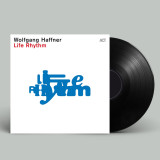
- Life Rhythm
- Balance
- Joy Of Life
- Eternity
- Desert Move Feat. Shantel & Thomas Konstantinou
- Second Nature Feat. Dominic Miller
- Open Land
- Full Circle Feat. Bill Evans
- Silence And Sound
- Supernova
- Home
»Ich denke immer wieder aufs Neue darüber nach, wie ich mich als Schlagzeug-spielender Bandleader so positionieren kann, dass das Instrument eine tragende Funktion einnimmt, dies aber auf eine musikalische Weise geschieht und auf keinen Fall als Zurschaustellung von Virtuosität«, sagt Wolfgang Haffner. Diese Haltung zieht sich als roter Faden durch seine gesamte Karriere - und auch durch »Life Rhythm«, sein zehntes Album auf ACT.
Und obwohl Haffners Musik gängigen Vorstellungen virtuoser Schlagzeug-Leader ganz bewusst widerspricht, steht das Instrument diesmal besonders im Fokus. Ausgangspunkt dafür war Wolfgang Haffners allererstes Solokonzert im Jahr 2022 auf Schloss Elmau. Er erinnert sich: »Das war eine Wahnsinns-Herausforderung bei der ich auch vor der Entscheidung stand: Spiele ich jetzt eine Stunde Schlagzeugsolo? Natürlich nicht! Also habe ich habe eine Menge melodisch klingender Perkussionsinstrumente eingebaut, Passagen live geloopt, mit Echos und Delays gearbeitet – im Grunde wie im Studio, nur eben auf der Bühne.« All dies brachte Haffner dazu, sich noch einmal auf ganz intensive Art mit dem Thema mit dem Instrument zu beschäftigen, welches ihn sein Leben lang begleitet. Und so haben alle Stücke auf »Life Rhythm« diesmal ihren Ursprung, nicht wie sonst bei Haffner, am Piano, sondern am Schlagzeug.
Das Ergebnis dieses Prozesses kann man gleich zum Auftakt von »Life Rhythm« auf dem Titeltrack erleben: Das Stück basiert auf einem hypnotischen Groove, bei dem nicht die Becken, wie sonst im Jazz üblich, die Time angeben, sondern vor allem die Trommeln. Das dieser Groove direkt Phil Collins und besonders an dessen Stück »Take Me Home« erinnert, ist kein Zufall: Collins' Art, Drum-Parts zu elementaren Teilen des Songwritings zu machen, ist bis heute eine von Haffners größten Inspirationen. Und auch jedes weitere der elf sehr kompakten, Song-haften Stücke auf »Life Rhythm« öffnet eine eigene Welt des musikalischen Schlagzeugspiels: Mal mal trocken-reduziert mit Besen wie auf »Balance«, poppig bei »Joy of Life«, mit filigranen Becken-Grooves, dezenter Elektronik und Percussion auf »Eternity« oder minimalis-tisch bis kurz vor der Stille in »Silence and Sound«.
Das aus all diesen Stilistiken ein so stimmiges Ganzes ent-steht liegt daran, das Wolfgang Haffner diese im Laufe seiner Karriere bis in die Tiefe durchdrungen hat - an der Seite von stilbildenden Charakteren wie Al Jarreau, Chaka Khan, Pat Metheny, Jan Garbarek, Esbjörn Svensson, Nils Petter Molvaer, Albert Mangelsdorff, Ricardo Villalobos und vielen, vielen mehr. All diese Kollaborationen haben Wolfgang Haffners Voka-bular am Instrument und auch als Komponist geprägt und die da-mit verbundenen, unterschiedlichsten Stile sind gleichermaßen Teil seiner musikalischen Persönlichkeit.
Vielseitigkeit und höchste Musikalität sind auch die Eigen-schaften, die Wolfgang Haffner und seine Mitmusiker auf »Life Rhythm« verbinden. Die Basis bildet ein bestens einges-pieltes Trio zusammen mit Keyboarder Simon Oslender, selbst auch Drummer und Bandleader, und Thomas Stieger, einem der gefragtesten deutschen Bassisten in Pop wie Jazz. Dazu kommen Trompeter Sebastian Studnitzky, Mitstreiter Haffners seit seinem ACT-Debüt »Shapes« und der Finne Arto Mikälä, eine echte Entdeckung in Sachen Klangvielfalt an der Gitarre. Diese Band herausragender Allrounder erweitert Haffner um eine Reihe musikalischer Charaktere, die der Musik ihre ganz eigene Farbe verleihen: Nils Landgren, Freund und Weggefährte seit mehr als 20 Jahren, Saxofon-Ikone Bill Evans, Sting-Gitarrist Dominic Miller, Balkan-Beat-Star Shantel, Bass-Feingeist Nicolas Fiszman, Oud-Virtuose Thomas Konstantinou und Bruno Müller, einer der besten deutschen Jazzgitarristen.
»Life Rhythm«, sagt Wolfgang Haffner, »ist für mich eine Fortsetzung, keine Wiederholung«. Die Musik trägt mit ihrer Wärme, Kraft und Klarheit die charakteristische Handschrift, die Haffner mit seinen Alben und auf tausenden von Konzerten in mehr als 100 Ländern zum wohl populärsten Schlagzeug-spielenden Leader Europas gemacht hat. Und gleichzeitig ist es eine Evolution seiner Musik. Gut möglich, dass Haffners Erfolg genau darin begründet ist, dass seine Musik immer etwas Ver-trautes und etwas Neues beinhaltet und dass Haffner sein Publikum so immer »mitnimmt« im Fluss seiner Ideen - und in einem gemeinsamen »Lebensrhythmus«

- A1: Àbáse - Bamba (Part 2)
- A2: J Lamotta - Seven Weeks
- A3: Flofilz X Bokoya - Makali
- A4: Zeitgeist Freedom Energy Exchange Ft King Owusu - Obana
- B1: Liraz - Bia Bia (Jm Version)
- B2: Karaba - Orbit Autounfall
- B3: The New Love Experience Ft Eric Owusu - Telemo
- B4: Wolf Müller & Niklas Wandt - Der Vogel Aus Der Unterwelt (Jm Version)
- B5: Mc Yallah X Bokoya X Debmaster - Moto Itawaka
9
Cultural power house Jazz Montez is back with the second edition of its compilation series "Jazz Montez Presents". The album comprises nine tracks by artists from around the world: Àbáse, Bokoya, Debmaster, FloFilz, J.Lamotta, Karaba, King Owusu, Liraz, MC Yallah, The New Love Experience, Wolf Müller & Niklas Wandt and Zeitgeist Freedom Energy Exchange. Inspired by the tradition of jazz, they collectively channel the power of music to transcend all borders and push the boundaries of pre-conceived genres. Each track was recorded in the analogue sanctuary Lotte Lindenberg in Frankfurt, Germany, mixed by D&B legend Kabuki and mastered by renowned producer and audio technician Wolfgang Gottlieb. The vinyl cover was designed by artist Clara Sipf and includes a booklet featuring texts by all participating artists as well as a picture story on music as a universal connecting force.

Content:
- Softcover: 300g/m² raw cardboard, granular lamination, open spine binding
- 352 pages: Neon CMYK print on Lessebo Smooth Natural 90g/m² and Galaxi ArtSamt 115g/m²
- Dimensions: 22,0 x 30 x 2,2cm (1,4kg)
Tresor: True Stories is the first printed excavation of Tresor’s legendary history. Digging deeply into its rich
archives, the venerable institution has unearthed countless treasures from its over three-decade old history.
Over 400 never before seen photographs, flyers, faxes and other artefacts illustrate a story that intersects
with the most important social and musical trend in the modern history of Berlin. The story is told with the
voices of those that were there - over 40 protagonists share their first-hand reminiscences of the ‘big bang’
that launched techno into the world. Through the story of Tresor, the book charts the heady days of 80s West
Berlin through to the explosion of new energy that midwifed in the new social reality of reunified Germany.
This is a unique and essential printed monument to the institution that changed electronic music forever,
and the city that allowed it to exist.
Chapters:
I. Dada at the End of the World
II. The Wild Years
III. Tresor Never Sleeps
Editors:
Harry Glass, Paul Reachi, Sven von Thülen
Authors:
Dimitri Hegemann, Paul Hockenos, Regina Baer
Interviews and transcriptions:
Felix Denk, Jeannette Goddar, Jürgen Laarmann, Ruro Efue
Digitization:
Felix Moser, Rüdiger Müller
Translations, proofreading and copyediting:
Edessa Malke, Paul Fleischmann, Paul Sabine
Photography:
Gustav Volker Horst
Oliver Wia
Tilman Brembs
Wolfgang Brückner
Additional photography:
Anja Rosendahl
Carlos Alberto Heinz
Carola Stoiber
Daffy
Eberle & Eisfeld
Ernst Stratmann
Jan Hillebrecht
Jo?rg Blank
Helge Birkelbach
Helge Mundt
Marie Staggat
Martin Holkamp
Norbert Smuda
Susanna Kubernus
Susanne Deeken
Uwe Reineke
Concept, layout and design: onlab
Vanja Golubovic, Matthieu Huegi, Thibaud Tissot
8 rue des Vieux Grenadiers, 1205 Geneva, Switzerland
Lithography, printing and binding: Druckerei zu Altenburg GmbH
Gutenbergstrasse 1, 04600 Altenburg, Germany

12
"Ihr brüllt von Liebe in engen Gewändern / Doch einer wie ich will die Welt noch verändern", singt Andreas Dorau im, zusammen mit Sven Regener verfassten, Hit "Kein Liebeslied". Statt von Liebe, wollte er lieber von anderen Dingen singen, von Wildschweinen ("Schwarze Furchen"), Prozessionen ("40 Frauen") und vom Hinterhaus, aus dem die Leute vorne rauskommen ("Hinterhaus"). Und so geschah es. Acht lange Jahre tüftelte der Maestro an der sogenannten "Wildschwein-Platte". Ihm zur Seite standen dabei Wolfgang Müller, Justus Köhncke, Carsten "Erobique" Meyer, Paul Kominek sowie Andreas und Dorau. So nämlich das Konzept des Albums, die Trennung von Andreas und Dorau. Auf dem Papier ein interessantes Konzept - hier der zarte Songs schreibende Künstler Andreas, dort das Partyanimal Dorau mit der fetten Bassdrum. "IbdEvuB" sollte ein Trennungsalbum der besonderen Art werden. Wie gesagt, auf dem Papier ganz gut, in der Praxis... na ja, ich sag nur "acht Jahre", aber acht Jahre nervenzerfetzende Tüftelei, die sich gelohnt haben. House, Softrock, Disco, Glampop, zusammengefügt zu einem schillernden Ganzen von Andreas und Dorau. Zum Teil in der Garage, zum Teil in den legendären Can-Studios in Weilerswist aufgenommen und produziert. Haben Andreas und Dorau mit "Ich bin der Eine von uns Beiden" die Welt verändert? Vermutlich nicht, aber sie haben ein großartiges, zeitloses, elektronisches Pop-Album erschaffen, welches sich lohnt wiederentdeckt zu werden. Ist doch auch was! Erschien erstmals 2005 auf Mute Enthält Klassiker wie "Kein Liebeslied", "40 Frauen" und "Im September" Endlich als re-mastertes Reissue wieder überall verfügbar

9
Reinhold Weber, born in 1927, was known as a pioneer of electronic music. In his compositions, Weber placed a focus on twelve-tone music, he became increasingly fascinated in the field of computer music since the 1970s. He produced numerous works at the Studio for Electronic Music at the University of Karlsruhe.
Reinhold Weber was born in Gießen on July 18, 1927. He studied at Robert Schumann Conservatory in Düsseldorf (including composition with Jürg Baur, piano with Max Martin Stein) and passed his exam in composition, theory, piano and ear training with distinction. He completed further masterclasses with Wolfgang Fortner, Hermann Heiss, Oliver Messiaen (composition), Kurt Thomas (choral conducting), Andor Foldes (piano) and Gerhard Nestler (electronic music). Reinhold Weber was a professor at the Baden Conservatory of Music in Karlsruhe and also worked in the Studio for Electronic Music of the University of Karlsruhe. His works have been performed in numerous concerts and were broadcasted by SDR, WDR, NDR, HR, SWF and Radio Bremen. Reinhold Weber died March 25, 2013.
Actor Kurt Müller-Graf was born in 1913. After visiting the Theater Academy of Baden in Karlsruhe, he appeared on stage at National Theaters of Karlsruhe, Kassel and Munich since 1935. During World War II he performed in about 10 feature films by Bavaria Film Munich. After 1945 he played at National Theaters in Karlsruhe, Stuttgart and at Theaters in Nuremberg, Cologne, Munich, Mannheim, Baden-Baden and Burgtheater Vienna. Furthermore he had guest performances in Zurich, Basel, Salzburg and Heidelberg. Kurt Müller-Graf was touring and had broadcasts on radio and television shows at home and abroad. Kurt Müller-Graf died August 10, 2013.

- A1: Wolfgang Dauner - Output
- A2: My Solid Ground - The Executioner
- A3: Association Pc - Scorpion
- B1: Fritz Muller - Fritz Muller Traum
- B2: Exmagma - It's So Nice
- B3: Anima-Sound - It Loves Want To Have Done It
- C1: Tomorrow's Gift - Jazzi Jazzi
- C2: Out Of Focus - See How A White Negro Flies
- C3: Brainstorm - Snakeskin Tango
- C4: Thirsty Moon - Big City
- D1: Gomorrha - Trauma
- D2: Brainticket - Black Sand
12
With his ongoing commitment to like-minded archivist label Finders Keepers Records, industrial music pioneer Steven Stapleton further entrusts us to lift the veil and expose “the right tracks” from his uber-legendary and oft misinterpreted psych/prog/punk peculiarity shopping list known as The Nurse With Wound List.
Following the critically lauded first instalment and it’s exclusively French tracklisting both parties now combine their vinyl-vulturous penchants to bring you the next ‘Strain Crack & Break’ edition which consists of twelve lesser-known German records that played a hugely important part in the initial foundations of the list which began to unfold when Stapleton was just thirteen years old.
From the perspective of a schoolboy Amon Düül (ONE) victim, at the start of a journey that commenced before phrases like kosmische and the xeno-ignant Krautrock tag had become mag hack currency, this compendium is devoid of the tropes that united what many would accurately argue to be the greatest progressive pop bands in Europe
(namely CAN, Neu! and Kraftwerk) and rather shatters the ingredients across a ground zero landscape for both inquisitive fans and socially rehabbing musos to begin to assemble a unique self-styled identity. If Krautrock was the music that journalist told us lurked behind schlager (German pop) in the 1970s, then this record includes the music that skulked behind Krautrock and perhaps refused to polish its backhanded name belt.
Including lesser-known artists like the late Wolfgang Dauner, whose career proceeded and outlived the kosmische movement while consistently informing and outsmarting them whenever they got stuck in their metronomic ruts, or how about Fritz Müller, the man who
was to Kraftwerk what Stuart Sutcliffe was to The Beatles but had more in common with Yoko and quite rightly couldn’t give a stuff about the Fab Four’s Hamburg roots.
Elsewhere we have a plethora of German bands made for German audiences as they try and shed secondhand flower power Americanisms and feel the benefits of much harder drugs and the realisations of difficult second album budgets while Kommune 1
newsflashes wipe smiles from everybody’s faces and replace them with opioid chic or acid-sarcastic grins. Bonzo Cockettes show us their Big Muffs and drummers ask for extra mics while Conny Plank goes for parliamentary office and gives babies good firm handshakes for the camera.
‘Strain Crack & Break: Volume Two’ is the sound of Steve Stapleton’s sponge-like mind and the dividends of anyone who was brave enough to even peek inside those brick-thick gatefold covers never mind drop the needle.
Over forty years since Nurse With Wound’s first album was released, Finders Keepers Records and Steve Stapleton take connoisseurs of our kind of music back to the disused elevator shaft towards ground zero. Arriving at the same checkout from different departments, Finders Keepers and Nurse With Wound continue to sing from the same hymnal with this ongoing collaborative attempt to officially, authentically and legally compile the best tracks from Steve’s list, where many overzealous erds have faltered (or simply, got the wrong end of the stick).
After ‘Strain Crack & Break: Volume One’ merely scratched the surface of this DIY dossier of elongated punk-prog peculiarities, this second lavish metallic gatefold double vinyl compendium drives a much deeper groove which, in accordance with Steve’s wishes, focusses exclusively on individual tracks of German origin - the country whose music forged the prototype of the NWW inventory in the form of his secondary school vinyl wantlist in the early 1970s, comprised of disassembled free jazz, unshowered stoner psych, hypnotic prog, deranged monk funk and fuzzed out Deutschmark bin bonzo beats.

In der Pause' (During the Pause) was the title of the last track on the b-side of , the first album by Die Tödliche Doris. In der Pause' was pause music, as well as the announcement of the interval between their debut album, released in 1982, and the box format project 'Chöre und Soli' that followed in 1983. The original sounds of In der Pause' survived on a single audio tape dating from 1981.Now, about 35 years later, Chris Dreier and Wolfgang Müller have used the material recorded on the audio tape as the source for five new tracks of pause music. The material on the original audio tape has was reworked using Moog analogue effect modules and Ableton Live. It has been supplemented with archived announcement interludes from radio and television stations, including German stations WDR, NDR and HR, Radio Italy IBF and Radio Kamerun.Sprechpause' was recorded in 1981 — 1982 by Chris Dreier, Nikolaus Utermöhlen and Wolfgang Müller and reworked by Wolfgang Müller and Chris Dreier in 2017.
- 1
Articoli per pagina:
