Pop-punk veterans Teenage Bottlerocket are primed to release their new LP Ready to Roll, the band's first full length for Pirates Press Records. "This time around, there was no big concept, no pressure. We just wrote songs that felt good to play," explains bassist Miguel Chen. "That freedom brought something fresh. It reminded us why we started doing this in the first place. The vibe is all about reconnecting with the joy of making music together. "The band returned to The Blasting Room in Fort Collins, CO, with Andrew Berlin behind the board & Jason Livermore overseeing the final master. "The Blasting Room is like home for us," says Miguel. "Working with Andrew and Jason is always a smooth ride-they know how to pull the best out of us." Fans got their first taste of what's to come via the lead single "She's the Shit." Ray Carlisle wrote the song for his wife Rachel, who he says "loves to give me a hard time-she rolls her eyes when I rock out in front of the mirror, makes fun of the music I love, and calls me an old man when I bring up movies she's never seen. And I totally love her for it." As for the song, Ray says, "It kicks the door open. It sets the tone for the whole record-fast, catchy, and not taking itself too seriously. Just the way we like it." This back to basics approach carries through the album, making it equally satisfying for longtime fans & newcomers alike. "Whether it's your first TBR album or your tenth," says Miguel. "There's something here for you." It's packed with everything you'd expect from TBR with a few surprises the band think you'll love - including a couple of songs where Miguel steps up to the mic for his first-ever lead vocals! "We're lucky to still be here, making music with our best friends, and connecting with people who get it," sums up Miguel. "Ready to Roll is exactly what it sounds like-we're stoked, and, in a way, we're just getting started."
quête:work hard play hard
Hilit Kolet and The Illustrious Blacks team up for the ‘Transatlantic Kiki’ EP. Dropping on Rekids late August, the package is remixed by Floorplan.
London-based artist Hilit Kolet returns to Rekids, collaborating with New York’s The Illustrous Blacks, the project formed by Manchildblack and Monstah Black, for the ‘Transatlantic Kiki’ EP, landing 29th August 2025 via Radio Slave’s Rekids. Legendary father-daughter duo Floorplan remix the single, with the release following up Kolet’s 2024 ‘Snap Talk’ EP, which won support from artists like Dam Swindle, Chloé Caillet, Bradley Zero, and more.
With lyrics that connect London and New York, ‘Transatlantic Kiki’ is a tough, funk-fueled roller true to Hilit Kolet’s signature production style, infused with an unmatchable personality via The Illustrous Blacks’ playful, vogue-like vocals. It’s hypnotic, bold, and irresistible, with the pair supplying a loopy ‘First Class’ mix that introduces vocal elements not featured in the original, amplifying the track’s qualities to hit even harder, and works the dancefloor into a sweat.
Robert and Lyric Hood, known together as Floorplan, remix Hilit Kolet & The Illustrous Blacks’ ‘Transatlantic Kiki’. Equally infectious as the original, they transform its rhythm into a drummy late-night cut. Stabs and vocal chops ride the groove, culminating in a proper lose-yourself-in-the-dance House cut that also comes with an instrumental version.
London’s Hilit Kolet came up through the former Soho Black Market Records shop, and has since become synonymous with the city’s House scene via releases on Defected, Snatch!, Domino, and Rekids, with a #1 debut on Music Week’s Upfront Club Chart and support from BBC Radio 1, Jamie Jones, HAAi, Skream, and more. NYC duo The Illustrious Blacks, comprising Manchildblack and Monstah Black, blend Afro-Electro, Funk, Disco, and House across releases on Soul Clap, Classic Music Company, and Defected, as well as collaborations with artists such as Osunlade, DJ Minx, Seven Davis Jr., and David Morales.
- A1: Malavoi - Te Traigo Guajira
- A2: Los Caraibes - Donde
- A3: Tropicana - Amor En Chachacha
- A4: Ryco Jazz - Wachi Wara
- A5: Eugene Balthazar - Dap Pignan
- A6: Roger Jaffort - Oye Mi Consejo
- A7: Les Kings - Oriza
- B1: Les Supers Jaguars - Tatalibaba
- B2: Super Combo De Pointe A Pitre - Serrana
- B3: L'ensemble Abricot - Se Quedo Boogaloo
- B4: Henri Guedon - Bilonga
- B5: Les Aiglons - Pensando En Ti
- B6: Los Martiniquenos - Caterate
In Guadeloupe, many people think that jazz and ka music are like a ring and a finger. To some extent, the same could be said about so called Latin music and the music played in the French West Indies.
Both aesthetics were born in the Caribbean and bear so many connections that they can easily be considered cousins. In constant dialogue, there are lots of examples of their fruitful alliance and have been for a while. The English country dance that used to be practiced in European lounges came to be called kadrille in Martinique and contradanza in Cuba. They both featured additional percussion instruments inherited from the transatlantic deportation. Drawing from shared feelings about the same traumatized identity – later to be creolized – it would be hard not to assume that they were meant to inspire each other. The golden age of the orchestras that graced the Pigalle nights during the interwar period further proves the point. As soon as the 1930s, Havana-born Don Barreto naturally mixed danzón and biguine music in a combo based at Melody's Bar. In the following decade, Félix Valvert, a conductor who was born and raised in Basse-Terre in Guadelupe, also worked wonders in Montparnasse with La Coupole, which was an orchestra made up of eclectic musicians. Afro- Caribbean performers of various origins were often hired on rhythm and brass sections in jazz bands, which used to enliven the typical French balls of the capital. In the 1930s and onwards, Rico’s Creole Band was one of them.
Martinican violinist-clarinettist Ernest Léardée, who would become the king of biguine music as well as the main figure of French Uncle Ben's TV commercials (a dark stigma of post-colonial stereotypes), had musicians from the whole Caribbean sphere play at his Bal Blomet – and they all enchanted "ces Zazous-là" (according the words of Léardée's biguine-calypso piece). In les Antilles (French for French West Indies), music history started to speed up in the 1950s, when trade expanded and radio stations grew bigger. The Guadelupean and Martiniquais youth tuned in their old galena radio sets to South American and Caribbean music. As for the women traders, les pacotilleuses, they bought and sold goods across different islands (the "passing of items through various hands" was thought to be most pleasurable) and brought back countless sounds in their luggage. Such was the case of Madame Balthazar, who once returned from Puerto Rico with the first 45rpm and 33rpm to ever enter Martinique.
Out of this adventure was created the famous Martinican label La Maison des Merengues, a music business she opened and undertook with her husband and which proved to be a major landmark. At the end of the 1950s, in Puerto Rico, Marius Cultier competed in the Piano International Contest playing a version of Monk's Round 'Midnight. He won the first prize and this distinction foreshadowed everything that was to come. Cultier, the heretic Monk of jazz, was quickly praised for writing superb melodies, always tinged with a twist that conferred a unique sound to his music. It didn't take long for the gifted self-taught musician to get to play with Los Cubanos, making a name for himself thanks to his impressive maestria on merengues.
The rest is history. Besides, in the late 1950s, Frantz Charles-Denis, born into the upper middle class in Saint-Pierre and better known by his first name Francisco, went back home after working at La Cabane Cubaine – a club located rue Fontaine where he had caught the Latin fever. Francisco's music was therefore heavily marked by his Cuban cousins' influence, which gave the combos he led a specific style and also led to renewal. Things were swinging hard in La Savane, located in the main square in Fort-de-France. He set up the Shango club close by and tested out the biguine lélé there, a new music formula spiced up with Latin rhythms. Soon afterwards, fate had him fly to Puerto Rico and Venezuela.
As for percussionist Henri Guédon (percussions were only a part of his many talents), he was born in Fort-de-France in May 22nd 1944, the day marking the celebration of the abolition of slavery. As an old man, he could remember that in " his father's Teppaz, a lot of hectic 6/8 music was constantly playing...". In the opening lines of his Lettre à Dizzy, a small illustrated collection of writings published by Del Arco, he highlighted the huge impact that cubop had on him as a teenage boy, around 1960. He eventually turned out to be the lider maximo in La Contesta, a big band steeped in Latin jazz. He was also the one who originated the word zouk to describe music which brought the sound of the New York barrio to Paris. It was the culmination of a journey that started in Sainte-Marie: "a mythical place for bélé, the equivalent of Cuban guaguancó". In the early 1960s, the tertiary economy developed to the detriment of agriculture. Yet rural life was where roots music emerged in Martinique and in Guadeloupe.
Record companies played a major part in the process of Latin versions sweeping across the islands – before reaching everywhere else. Producer Célini, boss of the great Aux Ondes label, and Marcel Mavounzy, both the head of Émeraude records - a firm which was founded in 1953 - as well as the brother of famous saxophonist Robert Mavounzy, were big names to bear in mind. Although there were many of them - all of whom are featured on this record - Henri Debs was definitely the major figure in the recording adventure. He proved to be so influential that he even got compared to Berry Gordy. In the mid 1950s, when he acquired his first Teppaz, he worked on his first compositions: a bolero and a chachacha. Then, he became the one man who made people discover Caribbean music, from calypso to merengue. He was among the first ones to rush out to San Juan, Puerto Rico, to buy records and distribute them through a store run by one of his brothers in Fort-de-France. He had members of the Fania All Star come and perform there, which he was madly proud about. He was also the first one to pay attention to Haitian music, such as compas direct and various other rhythms which would soon flood the market. As a result, many of the combos hitting his legendary studio would end up boosted by widespread "Afro-Latin" rhythms. However, he never denied his identity: gwo ka drums were given a major role, although they were instruments which had long been banned from the "official" music spheres. The present selection bears witness to such a creative swarming. Here are fourteen tracks of untimely yet unprecedented cross-fertilization: all types of music rooted in the Creole archipelago have found their way, whatsoever, to the tracklisting. Whether originating from the city or being more rural, they all go back to what Edouard Glissant, in an interview about the place of West Indian music in the Afro-American scope, called "the trace of singing, the one which got erased by slavery." "It is so in jazz, but also in reggae, calypso, biguine, salsa... This trace also manifests through the drums, whether Guadelupean, Dominican, Jamaican or Cuban... None of them being quite the same. They all point to the idea of a trace, seeking it out and connecting to each other through it. This is the hallmark of the African diaspora: its ability to create something new, in relation to itself, out of a trace. It may be the memory of a rhythm, the crafting of a drum, a means of expression which doesn't resort to an old language but to the modalities of it." The opening track features one of the emblematic orchestras of this aesthetic identity, criscrossing many music types from the archipelago. The 1974 Ray Barretto guajira – Ray Barretto was a major New York drummer influenced by Charlie Parker and Chano Pozzo – is magnificently performed by Malavoi, a legendary Fayolais group (i.e from Fort-de-France). Additionally, the compilation ends on a piece by Los Martiniqueños de Francisco. It symbolically closes the circle as it is a genuine potomitan of Martinique culture which also functions as a tireless campaigner for Afro-Caribbean music. Practicing the danmyé rounds (a kind of capoeiria) to the rhythm of the bèlè drum, it delivers a terrific Caterete, a kind of champeta of Afro- Colombian obedience which was originally composed by Colombian Fabián Ramón Veloz Fernández for the group Wgenda Kenya. The icing on the cake is Brazilian Marku Ribas, who found refuge in Martinique in the early 1970s, bringing his singing to the last trance-inducing track. These two "versions" convey the whole tone of a selection composed of rarities and classics of the tropicalized genre, swarming with tonic accents and convoluted rhythms. It is the sort of cocktail that the West Indians never failed to spice up with their own ingredients. For instance, the Los Caraïbes cover of Dónde, a famous Cuban theme composed by producer Ernesto Duarte Brito, has a typical violin and features renowned Martinique singer Joby Valente and his piquant voice.
The track used to be – or so we think – their only existing 45rpm. The meaningful Amor en chachachá by L'Ensemble Tropicana, a band which included Haitian musicians among whom was composer and leader Michel Desgrotte, also recalls how Latin music was pervasive in the tropics in the mid-1960s. They were the ones keeping people dancing at Le Cocoteraie in Guadelupe and La Bananeraie in Martinique. Around the same time, another "foreign" band, Congolese Freddy Mars N'Kounkou's Ryco Jazz, achieved some success on both islands by covering Latin jazz classics – such as their adaptation of Wachi Wara, a "soul sauce" by Dizzy Gillespie and Chano Pozo whose interweaving of strings and percussions can have anyone hit the dancefloor. How can you resist Dap Pinian indeed, a powerful guaguancó by Eugene Balthazar, performed by the Tropicana Orchestra and published by the Martinique-founded La Maison des Merengues? It also acts as a symbol of the maelstrom at work. Going by the name Paco et L'orchestre Cachunga, Roger Jaffory used to play guaguancó too: his Fania-inspired Oye mi consejo is one example of his style. Baila!!!!! Dancing was also one of the Kings' focus points. Oriza is a Puerto Rican bomba and a "classic" originally composed by Nuevayorquino trumpeter Ernie Agosto, which reserves major space for brasses, giving it a special sheen.
Emerging from the New York barrios crucible was also La Perfecta, a Martinique group originating from Trinidad, whose name directly references the totemic Eddie Palmieri figure as well as his own band, also called La Perfecta. Here they borrow Toumbadora from Colombian producer and composer Efraín Lancheros and interpret it by emphasizing percussions, which set fire to the track even more than the wind instruments. The same goes for Martinique's Super Jaguars, who use Tatalibaba – a composition by Cuban guitarist Florencio "Picolo" Santana which was made famous by Celia Cruz & La Sonora Matencera – as a pretext for sending their cadences into a frenzy. In a more typically salsa vein, the Super Combo, a famous Guadelupean orchestra from Pointe-Noire that was formed around the Desplan family and had Roger Plonquitte and Elie Bianay on board, adapt Serana, a theme by Roberto Angleró Pepín, a Puerto Rican composer, singer and musician also known for his song Soy Boricua. Here again, their vision comes close to surpassing the original. In the 1970s, L'Ensemble Abricot provided a handful of tracks of different syles, hence reaching the pinnacle of the art of achieving variety and giving pleasure. They played boleros, biguines, compas direct, guaguancó and even a good old boogaloo - the type they wanted to keep close to their hearts for ever, "pour toujours", as they sang along together in one of their songs. Léon Bertide's Martinican ensemble excelled at the boogaloo which had been composed by Puerto Rican saxophonist Hector Santos for the legendary El Gran Combo.
Three years later, in 1972, Henri Guédon, with the help of Paul Rosine on the vibraphone, tackled the Bilongo made famous by Eddie Palmieri. Such a classic!!!!! And so were the Aiglons, the band from Guadelupe: choosing to execute Pensando en tí, a composition by Dominican Aniceto Batista, on a cooler tempo than the original, they noticeably used a wonderfully (un)tuned keyboard in place of the accordion. On the high-value collectible single – the first one released by Les Aiglons under the Duli Disc label – there is a sticker classifying the track under the generic name "Afro". Now that is what we call a symbol. Jacques Denis
Saxophonist, flautist and producer Chip Wickham casts a formidable shadow across the worldwide jazz landscape. Originally from Brighton, but now dividing his time between the UK, Spain and the Middle-East, he has made a name for himself with a series of beautifully crafted solo albums that draw equally on the hard swinging spiritual jazz of Roland Kirk, Yusef Lateef and Sahih Shihab, alongside the music of British jazz legends such as Tubby Hayes and Harold McNair and the more contemporary sounds of Jazzanova, Kyoto Jazz Massive and Robert Glasper. His close working relationship with Matthew Halsall’s Gondwana Records has spanned close to two decades (since he played on Halsall’s 2008 debut ‘Sending My Love’) and has since released three standout releases on the label (the ‘Cloud 10’ LP, and the ‘Astral Travelling’ and ‘Love & Life’ EP’s). Once again returning to the heralded label, he now prepares to release his elegant fifth studio album ‘The Eternal Now’. Further exploring his penchant for hard-hitting soulful, spiritual jazz and modal hard-bop, it denotes an exciting new chapter in his much- revered discography, once which sees his unbridled artist flourish into new and fruitful pastures.
A beautifully crafted record, ‘The Eternal Now’ is a heartfelt ode to submitting oneself to the practice of creating art, and the freedom that’s derived from letting go. Speaking on his journey to bringing it into the world, Chip explains “The Eternal Now is a creative place where time has no purpose. A place where the past and the future don’t exist. A place where an artist can create something that is timeless and relevant. Writing this album has been a deliberate journey of exploration and drive into the furthest reaches of creativity. An attempt to push myself artistically into new spaces using new colours and new energy”. On how he approached this record in comparison to his previous offerings, he divulges ‘I had to be playful and take risks. It has taken longer than any other album to make and it has been so worth it. I have been drifting and taking the road less travelled as well as not looking back. I’ve enjoyed being on the outside and the freedom it has brought me to create something new and fresh and relevant and timeless.’
- A1: Time Was
- B1: Sometime World
- B2: Blowin' Free
- C1: The King Will Come
- C2: Leaf And Stream
- D1: Warrior
- D2: Throw Down The Sword
Wishbone Ash reigned supreme through the 1970s — centered on inspired musicianship, joyful spirit and inventive songs. Their concerts were uplifting and their recorded work sublime. Argus remains a stunning high point in the band's startling repertoire. Argus was a 1972 tour de force, a hard-rocking masterpiece that has gone on to have a huge impact on rock bands moving forward. If you've never heard Argus, you've surely heard music that it inspired.
The British quartet's trademark harmony guitars became a touchstone for many: Thin Lizzy, Iron Maiden, Opeth, and Lynyrd Skynyrd have all acknowledged an Ash influence, and tracks such as Lizzy's "The Boys Are Back in Town," Maiden's "The Trooper," and even Steely Dan's "Reeling in the Years" all have twin-guitar moments that hark back to Argus. But Wishbone Ash were different from the start. They were never strictly a hard rock band; their soaring vocal harmonies and musical grandeur placed them close to progressive rock.
But they weren't strictly prog either: They had no keyboards, no real classical influence and weren't into side-long suites. Their roots were in the blues, and their calling card was twin lead guitars in harmony (played in the original lineup by Ted Turner and Andy Powell). Even the hardest Ash rockers — like "Blowin' Free," the most famous track from Argus — had an ethereal touch. They could rock the big stages, but they did it with subtlety and grace. This is reflected perfectly in the classic album sleeve by prog-associated designers Hipgnosis: The front cover shows a Greek sentry — the "argus" of the title — staring off into the distance. It's a mythic, old-world kind of image until you look closely at the back cover, and see that he's heralding the arrival (or perhaps watching the departure) of a spaceship.
Two worlds colliding. Exactly what the band and album were all about. By the time of Argus, Wishbone Ash were stars in England and cult heroes among Anglophiles in the US. What made Argus a step forward was its flow of moods. The songs don't run together, but there's an emotional connecting thread from the album's somber beginning to its heroic end. The band insisted at the time that lyrics were something of an afterthought: Shortly after its release, main lyricist Martin Turner told NME that he wrote them mainly to fit the mood of the music: "The music that was coming out was very English, very medieval, and the lyrics had to reflect that." Added Powell at the time, "The expression comes out in the guitars. We wouldn't play it if it didn't express something." Now, Analogue Productions has applied all of its vaunted craft and technical expertise to make this epic album shine! Two 45 RPM LPs pressed on virtually silent 180-gram vinyl at Quality Record Pressings make the remastered audio sparkle. Quieter lyrical sentiments and softer musical passages are rendered precisely, while majestic riffs and fist-waving anthems fully reveal the energy of the music! Argus isn't just another rock record — it's a journey through a sonic landscape rich with depth, emotion and technical prowess. It's the album that solidified Wishbone Ash as masters of twin guitar harmony. Discerning audiophiles will find Argus an essential addition to their record collection. It's a masterclass in sound engineering that fully captures the intricate interplay of dual guitars with pristine clarity and a warmth that only analog recordings can provide.
- A1: Transmaniacon Mc
- 2: I'm On The Lamb But I Ain 'T No Sheep
- 3: Then Came The Last Days Of May
- 4: Stairway To The Stars
- 5: Before The Kiss, A Redcap
- 1: Screams
- 2: She's As Beautiful As A Foot
- 3: Cities On Flame With Rock And Roll
- 4: Workshop Of The Telescopes
- 5: Redeemed
Released in 1972, Blue Öyster Cult’s eponymous debut failed to garner initial interest from the music-loving public upon release, but is now considered a must-have classic. The exceptional psychedelic hard rock album with stunning cover art, features songs such as "Cities On Flame With Rock And Roll", "Stairway to the Stars", and "Then Came the Last Days of May", all of which the band still plays regularly during its concerts. The band toured with artists such as The Byrds, Alice Cooper and the Mahavishnu Orchestra to support the album, which received a positive reaction from critics. The Village Voice called it "the tightest and most musical hard rock record since - dare I say it - Who's Next".
Black Vinyl LP with insert (including the story behind the album and lyrics with English translation)
After their first LP, in 1987, Pedro gathered his usual band, Carlos Sousa on keyboard, Bulimundo on drums, Nuno Santos and Zézé on lead and rhythm guitars, Augusto Rasta on bass, Daló on sax and finally Dalú on percussions, for yet another project, one that carried both their names: Jacinta Sanches - Pedro Ramos. Eight days, no more, that’s all Pedro Ramos and Jacinta Sanches needed inside the Estúdios Musicorde. The process was natural, as with all their music, memories recollected and arranged by Pedro on café napkins, rehearsed and perfected at home with Jacinta. Together they imagined music where Cape Verdean saudade could dance together with Kingston’s skank, two island hearts beating inside European concrete.
His name is Pedro Correia Ramos Varela, born in Praia, Santiago, Cabo Verde on April 6th 1954; her name is Jacinta Lopes Veiga Varela, born in Cidade Velha, Santiago, Cabo Verde on January 22nd 1959. The two met in Praia, where a few exchanged words turned into long evening conversations; conversations into friendship; friendship into love; and love into six wonderful children. After the independence of Cabo Verde, they got married in 1978 and moved to Portugal, where Pedro started working as a welder for Lisnave and playing the guitar in a band in Ramada. Trading shipyard sparks by day for the after-hours pulse of Cova da Moura, his love for music proved harder than steel. And in 1982, after seeing Bob Marley and Peter Tosh in Rotterdam, he opened his own Dancing Bar just below their house, a pioneering space for the promotion of reggae music in Portugal.
Their Dancing Bar kept its doors open from 1982 to 1994, seeing the release of two albums and more singles. To this day, Pedro and Jacinta are still making music, one the inspiration of the other. They define themselves as simple people, living happy without prejudice, friends with the world.
Indonesian duo Kuntari make music that's so distinctive, they had to devise their own genre: primal-core. On Mutu Beton, multiinstrumentalist Tesla Manaf and percussionist Rio Abror dialog with both history and their tropical surroundings in Bandung, West Java's mountainous capital. Using the cornet and hulusi, a free reed instrument made from a bottle gourd and bamboo pipes, Manaf echoes the bellows of local elephants, orangutans and rhinos, grazing Abror's ancestral Indonesian rhythms with potent overdriven riffs and evocative microtonal chimes.
It's music that's profoundly atmospheric and simultaneously raw, recorded live to fully encapsulate the dynamic and deeply human interaction between the two seasoned players. There are elements of sludge metal, noise and post-hardcore, references to traditional folk music and jazz, and gestures towards sound art, 20th century minimalism and dark ambient, but what Kuntari do is completely idiosyncratic -- it's hardly surprising it needed a similarly unique categorization.
Manaf started Kuntari as a solo project, debuting in 2020 with Black Shirt Attracts More Feather and animating his nimble instrumental improvisations with bold electronic processes and booming synthetic drums. And by the time he recorded 2022's acclaimed Last Boy Picked, his approach had evolved significantly; prioritizing organic sounds, he played prepared cornet and piano, bringing in additional percussionists to help devise a ritualistic rhythm section. Abror was one of those performers, and ended up sticking around, playing on 2023's furious LARYNX/STRIDULA, the stylistic precursor for Mutu Beton. At this stage, the duo have racked up a litany of accolades and collaborated with a spectrum of like-minded artists, from noise deity Keiji Haino to fellow Indonesian free-thinker Rully Shabara, who's best known for his work with Senyawa and avant-garde supergroup Osmium. Mutu Beton plays like a lap of honor, showcasing their most kinetic and most feral recordings to date. Kuntari surpass their own high standards, folding history and geography in on itself and suggesting a trailblazing Indonesian cultural movement that's not restricted by highbrow Western conventions. It's not just automation and technology that drives progression, it's interaction and observation. And there's nothing more primal, or revolutionary, than that.
Ranil is undoubtedly the most unconventional figure among the greats of Amazonian cumbia, earning a well-deserved place alongside iconic bands like Los Mirlos, Los Wembler's, and Juaneco y su Combo. This compilation offers a glimpse into the vast musical output Ranil created in the late 1970s and early 1980s. Psychedelia, rock fusion, cumbia, salsa, mambo, Amazonian folk_ you'll find all these flavors blended into the vibrant, jungle-rich sound Ranil crafted. DESCRIPTION Ranil is undoubtedly the most unconventional figure among the greats of Amazonian cumbia, earning a well-deserved place alongside all the better-known iconic bands. He worked as a teacher, criollo guitarist, radio host, TV entrepreneur, and politician, but gained lasting fame as the founder of Ranil y Su Conjunto Tropical in the 1970s. By 1968, around the same time Los Destellos were making waves in Lima, groups like Los Wembler's de Iquitos and Juaneco y su Combo began electrifying cumbia in Iquitos. This new genre, dubbed Amazonian cumbia, exploded nationwide in 1973, thanks to hits by Juaneco y su Combo, Los Mirlos, and Los Wembler's. The success these bands achieved spawned dozens of other groups from the Amazon. Ranil, always a visionary, recognized the movement's potential and joined forces through his first single recorded on the Dinsa label in 1974. Unhappy with the contractual terms, he went on to found Producciones Llerena, the label on which he would release the rest of his discography. Over the years, Ranil y su Conjunto Tropical featured guitarists like Límber Zumba and Luis Nigro, while Ranil remained the lead vocalist and bassist for group. Zumba and Nigro had already played with other regional bands and written songs for groups like Los Destellos and Los Mirlos. This compilation offers a glimpse into the vast musical output Ranil created in the late 1970s and early 1980s, bringing together 14 tracks from the band's 10 LPs. These records have always been hard to come by as, despite being recorded in Lima, they were distributed by Ranil from Iquitos. Psychedelia, rock fusion, cumbia, salsa, mambo, Amazonian folk_ you'll find all these flavors blended into the vibrant, jungle-rich sound Ranil crafted.
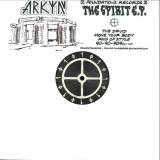
Hot on the heels of 12bit Jungle Out There's 'Right Mind' EP, Foundations Records brings you the hotly anticipated follow-up from rising star Arkyn on 'The Spirit EP' Drawing influence from classic '93 era jungle techno on the likes of Basement Records, it's perhaps his most accomplished work to date in his first foray into all hardware production. Arkyn is a UK based DJ and Producer. His production is influenced from a wide range of music he grew up listening to including Reggae, Dub, Soul, Techno and Funk to name a few. After discovering rave music through the underground party scene in Northampton, he began to cut his teeth DJing and has since gone on to play at some of the most established Jungle/Hardcore events in the country including Distant Planet, The Rave Story and Calling The Hardcore among others. He also recently debuted at Fabric for Motive Hunter Audio's takeover. Arkyn has released on FFF's 3am Eternal, Billy Daniel Bunter's Music Mondays and Motive Hunter Audio to name a few. He also runs his own label TufStuf Records. FOUNDATIONS002 - Arkyn - The Spirit EP Four tracks of Hardcore Jungle Techno and 4x4 made with Akai S3000 XL sampler, Roland 909, Roland JV 1080, Korg 01/W FD and Roland D50.
- A1: Got A Memory
- A2: Entangled
- A3: Every Journey From Here
- A4: Satellites
- A5: The Sky’s On Fire
- B1: We Don’t Dream Their Dreams
- B2: Settle Down
- B3: Falling
- B4: First Time Caller
- B5: Daylight
- B6: Going To The Moon
Get ready for a musical journey like no other as Apollo Junction, the dynamic and innovative indie rock sensation, prepares to launch their eagerly awaited new album, ’What In The World’ on August 22nd. The members of Apollo Junction hail from Leeds, UK. Known for their electrifying live performances and genre-blurring sound, the band has captured the hearts of music enthusiasts worldwide.
With a strong and dedicated fan base, Apollo Junction continues to push the boundaries of their craft, creating music that resonates on a profound level. Apollo Junction’s new album ‘What in the World’ has been years in the making - born from highs, lows, countless gigs, and all the chaos in between. It’s the most honest version of the band yet, a record shaped by every late-night argument, every breakthrough, every crazy story they have ever told each other.
Recorded at Chairworks Studio with David Watts (The Reytons, OMD, Paul Heaton, and Kaiser Chiefs) the album also features tracks co-written with Eliot Kennedy (known for his work with Bryan Adams and the Spice Girls) and includes a track with a powerful guest vocal from Brianna Corrigan of The Beautiful South. Lead singer Jamie Williamson explains the importance of the album: “This album feels exactly right for where we are now. Every track is a snapshot—of getting lost, finding our way back, and remembering why we started. It’s about making something that feels like home. We went looking for meaning and realised it was right in front of us: the band, the songs, this record. ‘What in the World’ isn’t just a title—it’s the answer we’ve been chasing all along.” Leeds-based quintet Apollo Junction is made up of Jamie Williamson (singer) Matthew Wilson (guitarist), Ben Hope (bassist), Jonny Thornton (drummer) and Sam Potter (keyboards). Their shared love of live music and dedication to performing, coupled with an incredible hard-work ethic has taken them on this magical journey which has included support slots for Shed Seven, Kaiser Chiefs, Richard Ashcroft and performing at festivals including the prestigious Isle of Wight Festival. Coming up this summer, the lads will be playing with Blossoms, Manic Street Preachers and Doves
White LP. Born out of the early 1980's Austin noise punk scene, Scratch Acid deliberately eschewed the loud, fast rules of hardcore as everything they didn't want to be and embraced a weirder, artier sound. Prior to the release of their 1984 debut S/T EP, someone gave Touch and Go Records owner Corey Rusk a cassette of the recording, and he was instantly a huge fan. Rusk was immediately interested in releasing the EP and contacted the band to express his admiration. At the time, Scratch Acid had already committed to working with Rabid Cat Records, who released the band's debut release S/T EP (1984) and their only full-length album, Just Keep Eating (1986). The group quickly developed a riveting performance aesthetic, and, as the debut S/T EP made its way around the country via fanzines, college radio, and word-of-mouth, the band mounted short tours to the Midwest and the East Coast. After playing a total of 146 shows, Scratch Acid broke up after the long tour that followed the release of the Berserker EP (Touch and Go Records, 1987). Since that time, the band have had many imitators, and many alternative bands have cited Scratch Acid as one of their influences.
Brenda (Hudson Whitlock of Surprise Chef / Karate Boogaloo / The Pro-Teens) presents new album 'Bath Time', a suite of heartbreaking, cinematic indie-soul ballads from the hotbed of Melbourne, Australia.
Brenda encompasses the left-field soul sensibilities for which Whitlock has come to be recognised in cult instrumental groups Surprise Chef, Karate Boogaloo and The Pro-Teens, alongside heartfelt, introspective lyricism delivered in a sincere, delicate falsetto. Stylistically, lines can be drawn to the 1960s sweet soul ballads of The Delfonics, Jean-Claude Vannier's vivid arrangements for Serge Gainsbourg, and, of course, the unmistakable flavour of Melbourne's cinematic soul movement à la other Whitlock exploits Surprise Chef and Karate Boogaloo.
'Bath Time' contains ten entrancingly melancholic ballads that earnestly express Whitlock's dramatic indie-soul sensibilities; encompassing the classically introspective nature of the poetic lyricist and the idiosyncratic use of soulful instrumental arrangements. The songs encompass themes of old romantic habits dying hard, familial rifts and unrequited love.
True to his modest vagabond nature, Whitlock has 'released' six Brenda albums to date, each uploaded exclusively to bandcamp, gladly resigning the music to the underground. Whilst he created theses albums in solitude, playing each instrument himself, 'Bath Time' sees Whitlock relinquishes the isolationism of previous works in favour of including his trusted inner circle of friends and collaborators: Surprise Chef's Lachlan Stuckey and Jethro Curtin on guitar and keyboard respectively, Karate Boogaloo's Darvid Thor on bass, and production from Henry Jenkins (Surprise Chef, Karate Boogaloo, Frollen Music Library).
AVAILABLE IN BLACK ICE WITH ORANGE AND BLUE SPLATTER (COK015WW)
A“This album is about what it means to be human, and its creation is my offering. I attempt to tell a tale of the human experience in the reflection of my own.”
‘In the Andean mythology, condors are believed to be immortal. It is said that once they feel old, without energy, and useless, they climb to the highest peak and let themselves fall to death.’
The Allegorist is a visionary, enigmatic, transmedia, and boundary-pushing artist known for crafting deep, immersive dark sonic tales. Embracing a wide array of influences, weaving together the mysteries, art and spirituality, the art project defies categorisation, resonating with those who seek the unconventional.
From Birth Until Death is an introspective and immersive concept album that reflects on the essence of the human experience. Crafted over six years by The Allegorist (aka Anna Jordan), the album traces the arc of life—from its fragile beginnings to its inevitable end—using sound art to explore existential and philosophical terrain. Inspired by the Andean mythology of the condor – a symbol of immortality – the album blends electronic soundscapes with raw field recordings, evoking a deep sense of connection between the natural world and human existence.
The album’s progression mirrors the stages of life, starting with the birth of new beginnings and culminating in death, with each track offering a unique reflection on the moments in between. From the dynamic energy of Momentum, to the ethereal, illusionary world of Fata Morgana, the tracks guide the listener through emotions, perceptions, and experiences that shape the human condition.
A distinctive feature of From Birth Until Death is its intricate production. The album incorporates field recordings from Grunewald Forest, a distant roar of a jet, barking dogs, blending the sounds of nature – footsteps in the snow, birdsong, ocean waves – with layered synthesisers and electronic beats. The bass and ambient textures are crafted using an array of analog hardware, while all vocals, both lead and backing, are performed and recorded by Jordan. Some of the vocal takes were intentionally left raw, capturing the spontaneous energy of early recordings, while others were re-recorded to balance the album’s organic yet polished feel. Each element is meticulously crafted, revealing its deeper meaning as the album unfolds like a multidimensional, living sculpture.
At its core, From Birth Until Death is a meditation on the full spectrum of life. The album’s title track, From Birth Until Death, encapsulates this journey, reflecting on the passage of time and the unique experience of being human. The final track, Death, offers a melancholic yet beautiful exploration of endings, not as finalities, but as moments in the grand cycle of life. With its combination of evocative sound design and deeply personal themes, From Birth Until Death invites listeners to contemplate their own lives, offering a moving experience of reflection, growth, and transformation.
About From Birth Until Death
Words By Robin Rimbaud (Scanner)
From Birth Until Death is a deeply personal and reflective album and beautifully crafted. A detailed listen reveals that Jordan was in search of a profoundly human and authentic expression. In an era when so much around us seems defined by speed, Anna Jordan, aka The Allegorist, stands apart – aware that skimming the surface of life is neither sufficient nor rewarding. She reminds us of the value of deep, authentic listening.
The track Andean Condor seductively draws us into a smoky, blurred rhythmic soundscape, capturing the essence of the darkest Berlin nightclub, while Birth pulses with an almost shamanic transformation of sound, moving from the organic to the musical. It features a recording of Jordan’s footsteps in the snow in Grunewald Forest, Germany.
At times, the music feels almost sculptural in shape and tone – lifting, pushing, lilting, opening, and closing – where each piece is given room to fully develop. Many of the works blend synthetic sound with the natural, incorporating the human voice alongside environmental recordings: the wild waves of the ocean, a jet flying overhead, and barking dogs.
With From Birth Until Death, Jordan, like an alchemical architect revealing in the process of getting lost and relinquishing control, leaves us with a taut, immersive soundtrack in which to lose ourselves.
About the album ‘From Birth Until Death’
words by The Allegorist
“The album From Birth Until Death did not come easily to me. I started working on it in 2019, and it underwent many alterations over the years. I produced multiple versions of the tracks each year, but the album name, the track titles, and the album cover art stayed the same for 6 years. Not everything I did fit into the album’s final form, but I hope the heavy selection just made it better. I played this piece live in my techno live set between 2019 and 2020, and in the years after, I performed different art, ambient, and vocal versions of it, most notably the one at the church St. Marienkirche in Berlin in 2022. It just wanted to live and didn’t want to be finished. As I aged, this album aged with me. And now I’m ready to let it go.”
When you love a record too damn much, you will soon discover whether you "got what it takes” to make it yours. Such is the case with Turbo label head Tiga, who has played 11Schnull & Newinfluenzer’s 2023 underground hit “Ich und meine Ubahn” in each and every one of his DJ sets since its non-Turbo release. But unbridled track-passion is not always enough, and sometimes one must take a step back and recognize that the music business is also a business. So our in-house Corporate Development team, which has of late been entirely focused* on figuring out how best to monetize Tintin entering the public domain, set to work, successfully licensing the original while also creating the fun and potentially life-saving opportunity to visualize just how amicable the licensing process was.
All of which brings us to the remix pack at hand. The essentially perfect electro programming and vocal performance of the 2023 original leaves virtually no angle for improvement, save for the fact that the 4:20 runtime not enough for the median touring DJ to satisfy their chatbot mistress before they must begin the exacting work of selecting and mixing the next track. As such, we enlisted producers who could interpret the song from different planes of existence, namely Chilean-German wizard Matias Aguayo, French hardstyle prodigy Krarmpf, German aesthetes Extrawelt, Hamburg electro master DJ MELL G, and Asturian highbrow god Architectural. For reference, the planes conjured by these remixes are as follows: blacked out on Ivermectin; finally beat a pay-to-win mindfulness game; voted the Greatest Living Teen Artist by the readers of US Weekly; transformed into an expressionless little muscleman as if by magic; going viral; and curing jet lag in our lifetime. It is not for us to say which remix corresponds to which realm of human experience, but we do know that it is limited to those options.
Finally, please do not invite a chatbot lover into your marriage. Your spouse cannot hope to compete. And know that this advice comes from our best understanding of current world affairs, and does not represent what a repressed British man would calling “taking the pee.” At their very best, jokes are funny, and the fate of the human bedroom is no laughing matter at all.
*Like a laser!
Brenda (Hudson Whitlock of Surprise Chef / Karate Boogaloo / The Pro-Teens) presents new album 'Bath Time', a suite of heartbreaking, cinematic indie-soul ballads from the hotbed of Melbourne, Australia.
Brenda encompasses the left-field soul sensibilities for which Whitlock has come to be recognised in cult instrumental groups Surprise Chef, Karate Boogaloo and The Pro-Teens, alongside heartfelt, introspective lyricism delivered in a sincere, delicate falsetto. Stylistically, lines can be drawn to the 1960s sweet soul ballads of The Delfonics, Jean-Claude Vannier's vivid arrangements for Serge Gainsbourg, and, of course, the unmistakable flavour of Melbourne's cinematic soul movement à la other Whitlock exploits Surprise Chef and Karate Boogaloo.
'Bath Time' contains ten entrancingly melancholic ballads that earnestly express Whitlock's dramatic indie-soul sensibilities; encompassing the classically introspective nature of the poetic lyricist and the idiosyncratic use of soulful instrumental arrangements. The songs encompass themes of old romantic habits dying hard, familial rifts and unrequited love.
True to his modest vagabond nature, Whitlock has 'released' six Brenda albums to date, each uploaded exclusively to bandcamp, gladly resigning the music to the underground. Whilst he created theses albums in solitude, playing each instrument himself, 'Bath Time' sees Whitlock relinquishes the isolationism of previous works in favour of including his trusted inner circle of friends and collaborators: Surprise Chef's Lachlan Stuckey and Jethro Curtin on guitar and keyboard respectively, Karate Boogaloo's Darvid Thor on bass, and production from Henry Jenkins (Surprise Chef, Karate Boogaloo, Frollen Music Library).
AVAILABLE IN BLACK ICE WITH ORANGE AND BLUE SPLATTER (COK015WW)
The discovery of Doris Dennison's score represents a genuine musicological breakthrough—what once would have been "a tree falling in the woods" thirty years ago now holds the potential to render "a thunderous clap in our minds." While researching Anna Halprin's lesser-known collaborators, scholar Tom Welsh uncovered the archives of AA Leath, one of Halprin's principal dancers. Buried within these materials was Dennison's handwritten score for Earth Interval, dated May 1956. Born in Saskatchewan, Canada, in 1908, and raised near Seattle, Dennison (1908-2009) encountered John Cage while teaching Dalcroze eurythmics at the Cornish College of the Arts. She joined Cage's earliest percussion quartet—alongside Margaret Jansen, the composer and his wife Xenia—in the group widely regarded as having performed the first complete concert of percussion music in the United States. This historic December 1938 concert was followed by tours and the landmark May 1941 performance at the California Club, comprising Cage and Lou Harrison's Double Music, the premiere of Cage's Third Construction, and Harrison's 13th Simfony.
As Bradford Bailey observes in his extensive liner notes, Earth Interval demonstrates "an extraordinary balance of elements that imbues the piece with a sense of clarity, directness, and constraint that is both distinct and ahead of its time." The work's most remarkable innovation lies in its approach to extended techniques, particularly Dennison's notation for the central movement: "In 2nd movement, 1st player lowers + raises a gong into a tub of water while beating." This technique, absorbed from Cage's experimental vocabulary, generates what Bailey describes as "fields of acoustic abstraction that bend and warp time through sustained resonances, beat, and space." The temporal sophistication of these manipulations anticipated Karlheinz Stockhausen's Mikrophonie I (1964) and Annea Lockwood's water-based sound investigations by over a decade. After joining Mills College as dance accompanist, Dennison maintained crucial connections to the Bay Area's experimental scene, collaborating with figures like Merce Cunningham and programming Cage's music throughout the 1950s.
Comprising three movements—Land Form, Air Tide, and Earth Play—Earth Interval is scored for recorder, drums, gongs, maracas, muted gongs, and bowl gongs. In total, the piece is just under eight minutes: "a fleeting glimmer of moment in time, a life spent at the cutting edge, and a singular creative vision that packs a powerful punch." When viewed in historical context, placed in contrast to roughly contemporaneous avant-garde percussion works by Cage, Harrison, Louis Thomas Hardin (Moondog), and Harry Partch, or important precursors like Edgard Varèse's Ionisation (1931) and Henry Cowell's Ostinato Pianissimo (1934), it's clear that Dennison was following her own path. Earth Interval is not derivative. It is a precursor to what was yet to come, alluding to developments of avant-garde and experimental music that wouldn't begin to appear on the cultural landscape until the 1970s and '80s, with the emergence of Post-Minimalism and more idiosyncratic artists and ensembles like Midori Takada, Ros Bandt, Peter Giger, Frank Perry, Christopher Tree, Michael Ranta, Gamelan Son of Lion, and Niagara.
This recording by Chicago's Third Coast Percussion, captured in March 2022, represents the first complete documentation of this pioneering work. The ensemble's interpretation reveals the piece's remarkable contemporaneity while maintaining its historical specificity. Where Cage, Harrison, and Partch employed "self-consciously off-kilter polyrhythms," Dennison's rhythmic sensibility anticipates minimalist developments by nearly a decade, yet integrates "forceful rests, as well as sharp shifts in sonic character, tempo, and meter, that break the momentum and breathe a sense of life into the piece's structure." This positions her work closer to Post-Minimalism decades before its emergence. The architectural approach demonstrates Dennison's understanding that "the composer almost entirely disappears" in favor of phenomenological listening experience, creating what might be called an egoless music that places its realities and meaning entirely in the ear of the beholder. The present recording, realized by Chicago's distinguished Third Coast Percussion ensemble, represents a significant achievement in experimental music scholarship and performance practice. As specialists in the Cage tradition and contemporary percussion repertoire, Third Coast Percussion approached Earth Interval with the historical sensitivity and technical precision required to illuminate Dennison's subtle compositional innovations. The March 2022 recording sessions, engineered by Colin Campbell, capture both the work's intimate chamber music qualities and its bold exploration of extended techniques. The ensemble's interpretation reveals the piece's remarkable contemporaneity—its ability to speak directly to current musical concerns while maintaining its historical specificity.
This recording serves multiple scholarly functions: it provides the first complete documentation of Dennison's compositional voice, offers insight into the broader network of experimental music practitioners surrounding Cage and Harrison, and demonstrates the sophisticated level of compositional thinking that was occurring within the Bay Area's dance-music collaborations of the 1950s. The work's emphasis on phenomenological listening—what might be called an "egoless" approach to musical experience—places it within a lineage of American experimental music that prioritizes perceptual process over compositional personality. The work's original obscurity—limited to AA Leath's performances at venues like the 1957 Pacific Coast Arts Festival at Reed College—paradoxically allowed it to remain "entirely on its own terms," free from the constraints of historical categorization. Drawing on Jacques Derrida's Archive Fever, the argument emerges that "the archive can acknowledge, celebrate, and resurrect" overlooked voices, transforming our understanding of experimental music history. The present Blume edition, featuring Third Coast Percussion's authoritative interpretation, includes a lavishly illustrated 16-page booklet designed by Bruno Stucchi / dinamomilano, containing complete scholarly apparatus, historical photographs, and detailed production notes. This recording enables "cross-temporal intersectionality," allowing Dennison to "belong to a newly formed and more dynamic understanding of the present and past," demonstrating how forgotten voices can reshape entire historical narratives when given proper scholarly attention and performance advocacy.
- I'm | Getting Sick
- Evicted | 05 24
- We've | Made It This Far
- Undercurrent
- King | Of Swords
- Omw
- Happy | Is Hard
- Tired
- Keep | Driving
- I'll | Be Here 03 56
Vines, the solo project of New York-based multi-instrumentalist and composer Cassie Wieland, offers a window into her inner world through expansive swaths of sound. She pieces together a celestial mix of synths, percussion, strings, and vocoded voice, making music that is at once deeply personal and cinematic in scope. This diaristic approach first took shape with her 2023 EP Birthday Party, and is crystallized on her debut LP, I’ll be here. With the sweeping and vulnerable I’ll be here, Vines arrives fully formed as an artist who crafts deeply resonant and open music–the kind that invites listeners in to listen, reflect, and share in the journey of learning through living.
“It was through making music that I was able to meet myself,” Wieland said. “Anything I’m going through or feeling is something that somebody else out there can relate to, and that’s really special to me.”
I’ll be here is both a culmination of years spent creating gossamer soundscapes and an opening to a new journey for Wieland as an artist. The album grew out of her years as a composer and songwriter, and builds on the language she developed on Birthday Party, which transformed the tumultuous feelings of the passing of time into minimalist meditations. It was just a start, though–a prologue, a development of the kind of language and ideas she wanted to express. With I’ll be here, she digs deeper and writes music that feels more sprawling, further solidifying her singular voice.
Wieland’s musical composition process is similar to journaling, lending itself to the music’s honesty. When she writes, she makes room for all the ideas she has; in these sessions, there are no wrong ideas, and she allows the music to be attuned to the experiences she’s having at the time. With I’ll be here, Wieland zeroes in on themes of anxiety, loneliness, navigating human connection, and having to grow up from a young age, ultimately coming to a place of acceptance. And though it began as a journal written in solitude, her collaborators shape the music with her.
Working with friends, in fact, was a crucial part of bringing the record to life. “Everything that was supposed to happen came together so easily because of the people involved,” Wieland said. I’ll be here was co-produced and recorded with Wieland’s longtime collaborator Mike Tierney, a four time Grammy-nominated engineer who has worked with artists across the contemporary classical and experimental scene like minimalist pioneer Steve Reich, LA’s preeminent classical ensemble Wild Up, and various bands on Bang on a Can’s Cantaloupe Music label. Percussionist and composer Adam Holmes and violinist Adrianne Munden-Dixon are two other longtime collaborators who are frequent fixtures of her live show. Holmes plays synths, drums, and banjo; in live settings, his kit is loaded with elements of the songs that are then triggered by MIDI, making the music an interactive, evolving experience. The album’s gentle, filamented edges are colored by Munden-Dixon, whose poignant string melodies elevate Wieland’s introspective compositions, as well as cellist Helen Newby, saxophonists Julian Velasco and Jordan Lulloff, and bassist Pat Swoboda.
Wieland takes an economic approach to writing music, building the swirling and immersive landscapes of Vines through short melodies, lyrics, and phrases. As each element layers and interweaves, they grow into sprawling webs of ghostly sound. Prior to Vines, Wieland composed pieces for other people to play using a minimalist’s sensibility, writing slowly unfolding melodies for instruments like violin and saxophone. In recent years, she sharpened her solo style across a variety of singles and covers which have garnered significant attention on social media for their emotional resonance (“being loved isn't the same as being understood” in particular went massively viral on TikTok in 2024). Birthday Party, her debut as Vines, brought her writing to a much more intimate space, centering on her vocoded voice cloaked in feathery reverb. A series of recent singles, meanwhile, including “I am my home,” showcase the way that Wieland’s music is born from the story of her innermost feelings, extending far beyond just the self.
Though Wieland’s music often deals with dark themes, it unfolds with tender melancholy, the kind that feels like a warm embrace. On “Evicted,” Wieland wonders if she’s getting sick or moving on, if she’s lost or found. Her vocals expand with each lyrical repetition, as the instrumentals slowly encircle and the music’s rhythm grows and bursts into a heart-wrenching, yet radiant wave reminiscent of post-rock bands like Explosions in the Sky. “Tired” follows a similar trajectory, building from a looping, melancholy rhythm and floating lyrics into a solemn resignation. Elsewhere, Wieland takes a more ruminative approach: “Omw” begins with twinkling piano and melancholy strings that gradually transform into an undulating mass. It is a song born out of the warm feeling of reminiscence, the slight return of hope that comes with nostalgia.
With any searching journey, there is also a point of understanding. The title track closes the album with the freedom of acceptance. A marching drum beats steadily beneath Wieland’s open vocals, moving forward, ever onward as it flies into the ether. In Wieland’s delicately textured music, there is room to come into yourself, and learn to love whomever that is. I’ll be here is a special space that can be all your own, one in which to feel what needs to be felt. “This is music for your story,” Wieland said. “I want you to use it how you need it.”
3XL boss and scene hyper-connector Special Guest DJ (aka uon, shy, Caveman LSD) lands on their own label with a debut album of hazed ambient noise and aquatic club anarchitextures, with a patented, heady style bent into new shapes.
For nigh on a decade, Berlin-based American producer, label boss, promoter and DJ Shy has operated at the centre of a scene that's still not fully defined. Their mythical DJ sets, where you're likely to hear precision-tweaked dubstep, dreampop, decelerated rap and dubwise ambient blended into vapour; gives some sense of the vibes at play, and a comb thru their spiderweb of a catalog - as Caveman LSD or uon, as part of Ghostride the Drift, Hoodie, crimeboys, virtualdemonlaxative and Cypher, or as the figurehead of 3XL, Experiences Ltd, xpq? and bblisss labels - further blurs that gist.
They've been caught in the crossfire of Big Ambient, sure, but there's always been something scrappier, sexier and more present going on under the hood. Shy and his network of associates - Huerco, Ulla, Perila, Ben Bondy, Naemi/Exael, Ponteac Streator and Arad Acid, among others - have asserted the interrelatedness of their discrete approaches. So-called "ambient" music doesn't exist in a vacuum, it un-focuses elements that undergird so many more corporeal sounds, and for Shy, their music reflects the druggy, DIY, genre-agnostic ethos of a trans-Atlantic neo-punk underground that exists in some liminal zone between the club, the bedsit and the basement.
Concerned with themes of “anger, sensuality, and dreaming”, the 40 minute roil of ‘Our Fantasy Complex’ frames Special Guest DJ at their most unapologetically oblique and illusive, expanding and contracting between whorls of shoegazing dynamics and extended portions of quasi-speed D&B x dub tech smeared on the mind’s-eye, with a vivid sense of bruised lushness that’s perfused all shy’s work thus far.
Joined by kindred collaborators Ben Bondy, Arad Acid and mu tate, and suspended in agitated bliss by Rashad Becker’s lucid mastering, the results feel out some of 2025’s most considered and distinctive within an amorphous zone that’s become a world unto itself. Ambient music’s fluffier signifiers are swapped out for a sort of sublime tension that, like the sound’s original ‘90s explosion, can be heard to reflect states of altered consciousness - both individual and collective.
Shy's layered, undulating productions are more like the chewed remnants of a thousand mixtapes cooked into a stream-of-consciousness hex. Save for the glistening, zoomed-out parting piece ‘Dream’, it all mostly avoids pretty melodies in favour of a spatio-textural sensuality that wraps us up, sometimes uncomfortably intimately, in shy’s thoughts. That oneiric closer is one of three gritty palate cleansers that swirl around its peaks, where elements of Reese-bass are suspended, writhing below looming atmospheric pressure in ‘How Long Can I Burn?’, emerging charred and flecked with rattled percussion on ‘Yoro (pt I & II)’, as though K-holing thru a blazing summer’s day.
In step with Perila’s notably darker turn of events on her ‘Omnis Festinatio Ex parts Diaboli Est’, album, or the unexpected ferocity of recent Space Afrika live shows, it’s not hard to hear a darkside gravitational pull on this one, where ambient music is no longer just a balm for troubled souls, but also suggestive of humanity’s most frightful odours.
To mark 10 years since SOPHIE’s game-changing singles collection PRODUCT, Numbers are celebrating with a special edition featuring 11 songs across Deluxe Vinyl and Compact Disc.
This anniversary release includes bonus tracks, track-by-track slide posters, and a SOPHIE PRODUCT Card. Physical editions are now available for pre-order and released on 11th July 2025.
SOPHIE classics ‘BIPP’, ‘LEMONADE’ and ‘VYZEE’ are joined by two immaculate PRODUCT-era songs ‘OOH’ and ‘GET HIGHER’ recorded and produced at the time, each with colourful single artwork completing the set.
‘OOH’ is one of SOPHIE's earliest productions that has been through several revisions since 2011. It was one of three original tracks that Numbers had signed when SOPHIE uploaded the song alongside 'BIPP' and 'ELLE' to her Soundcloud, and while it had been through several iterations and speed changes, this finalised version was completed by SOPHIE in 2019.
SOPHIE once described ‘OOH’ as “hi tech club dance pop”. Musically speaking, the earworm hook is carved out by her signature portamento-infused synths and candy-coated lyrics, a firm cult classic approved by AG Cook and Charli XCX. Initially titled 'MAKE RESPECT', the track was first performed live by SOPHIE in 2011 to a handful of lucky people at a beach afterparty surrounding Sonar Festival, Barcelona and later that year at Manhattan's New Museum. The vocal was recorded as the first track in the same one-day recording session as SOPHIE's debut single 'NOTHING MORE TO SAY', released on the Huntley & Palmers label, where Sophie's songwriting was performed by the London vocalist Jaide Green.
The genesis of the ‘OOH’ and ‘NOTHING MORE TO SAY’ recording session is lore-worthy in its own right: after watching Jaide Green perform live with Olly Murs during the sixth series of The X Factor in 2009, SOPHIE reached out and invited Jaide to record in her home bedroom studio.
‘GET HIGHER’ was born during joyous sessions in 2013, when SOPHIE’s beat was introduced to the vocalists Cassie Davis and Sean Mullins. The track feels like a visionary precursor to ‘Vroom Vroom’, and doesn't sound out of place next to the sub-clang intensity of SOPHIE’s ‘HARD’ and ‘MSMSMSM’. Striking a playful balance between blissed-out hyperpop and club-ready Atlanta trap, it showcases SOPHIE’s signature, laser sharp sound design. Originally released as a bonus track on the Japanese CD edition of PRODUCT, ‘GET HIGHER’ has remained a hidden gem.
A groundbreaking producer, songwriter and performer, SOPHIE's visionary approach reshaped the landscape of pop and electronic music. Emerging in the early 2010s, SOPHIE introduced a hyper-detailed, futuristic sound defined by metallic textures, elastic basslines, and an uncanny blend of synthetic and emotional tones. Collaborating with artists including Charli XCX, Madonna, Vince Staples and Arca, SOPHIE helped pioneer a new pop movement while challenging conventions around identity, genre and production. SOPHIE's work continues to resonate deeply, leaving a lasting impact on a generation of artists and listeners alike. Discography: PRODUCT (2015), OIL OF EVERY PEARL'S UN-INSIDES (2018), SOPHIE (released posthumously, 2024).