Julek ploski’s ‘Give up Channel’ is on mappa. It’s the follow-up to the Poland-based FL Studio demon’s ‘Hotel *’, released via Orange Milk in 2023.
It’s an album that wrestles against a shadow self. It’s about shelter from the hailstorm of unwanted memories and guilt pangs and serrated blades of thought. It’s about clinging on to some semblance of hope, knuckles taut and teeth gritted.
The fragmented drift of opener ‘Naysayer’ flows forward like an anxious daydream, pad eddies and piano plinks anchored by Trapaholics drops and bursts of guaracha drums. It’s a mess of mind: the bleakness of ‘Truth’ is punctuated by gun cocking and bullet spray and sudden jester-like blasts of unhinged, schizo-whimsical melody. An internal war without a clear winner.
Shame snakes through this music like venom through an emaciated body. Blue screenlight in a dark bedroom, pulsating temples, lockjaw. ‘Titanic’ hits like the thrashing resistance of a being built for love grappling against the scalding vengefulness it’s forced to contend with, the song’s abstracted rave synths giving way to warped voices and spiralling derangement. ‘Hollywood’ is a scarred battleground, the martial bludgeoning of a tightly wound hardstyle stomp blistering and shredding a delicate piano-and-string arrangement.
This music is about deep solitude, a meditation on simmering, slow-marinating hatred. But it’s ultimately about prevailing. It doesn’t revel in negativity, it roils and twists and writhes against it. Dots of light in oppressive darkness. Clarity and purpose against chaos and filth. It’s a struggle worth waging.
h I Was #AllAlone Movements V - VIII
[i] Economy [Movements I - IV]
Buscar:wound
- A1: Slaughter Disorder
- A2: Stricken By Might
- A3: Autopsy
- A4: Metal Hell
- A5: Slayer
- B1: Martial Law
- B2: Warchild
- B3: Fatally Wounded
- B4: Seek And Destroy
- B5: Crib Death
- B6: Dangers
US-Thrash-Metal-Klassiker aus dem Jahr 1987 wird neu aufgelegt, erstmals auf CD, remastered und mit einem zusätzlichen, unveröffentlichten Track
von den Originalaufnahmen!Wenn es um Diskussionen über klassischen Thrash geht, ist es ehrlich gesagt gar nicht so selten, dass E-X-Es Debüt
„Stricken By Might“ hin und wieder erwähnt wird. Wenn ein Album so viel Metallic Steel in sich trägt, können wir definitiv verstehen, warum viele
Fans dieses Album lieben. E-X-E steckten mitten in der Thrash-Explosion fest, ein wenig zu spät für die „No Rules“-Veröffentlichungen von 1985 wie
das Debüt von Agent Steel, und das war vor den frühen 90ern, als es schien, als müsse jeder eine perfekte Produktion haben. Verstehen Sie uns nicht
falsch, auch wenn wir Alben wie „Victims Of Deception“ von Heathen oder „By Inheritance“ von Artillery lieben, sehnen wir uns oft nach ein wenig
Rohheit, einer amateurhaften Note, die sagt, dass diese Jungs einfach nur Spaß haben. Das Debüt von E-X-E erfüllt all diese Kriterien mit Sicherheit.
- Sun Arise! (An Invocation/An Introduction) (Live)
- A New Anhedonia (Live)
- Terror In The Canyons (The Wounded Master) (Live)
- The Quotidian Beasts (Live)
- Tell Me Baby (Have You Had Enough)(Live)
- Nothing Was Stolen (Love Me Foolishly) (Live)
- Dead Heart (Live)
- Down To Go (Live)
- Song For Zula (Live)
- Ride On/Right On (Live)
- A Picture Of Our Torn Up Praise (Solo, Live)
- Muchacho's Tune (Solo, Live)
- Wolves (Solo, Live)
- Joe Tex, These Taming Blues (Live)
- Los Angeles (Live)
- A Picture Of Our Torn Up Praise (Live)
- South (Of America) (Live)
- Wolves (Live)
- At Death, A Proclamation (Live)
Opaque Gold Vinyl. Recorded over four nights at The Music Hall of Williamsburg, this triple LP is a veritable best-of from a band at the height of their performative powers. Featuring scorching renditions of the best-loved songs of the Phosphorescent catalog, from Los Angeles to Song for Zula, Phosphorescent delivers a live album for all-time. Comes with album download.
- A1: Under Surveillance
- A2: Prince's Wrath
- A3: Space Invaders Re-Group
- A4: World Cup Squad Lick Their Wounds
- A5: Vampire Initiative
- B1: Malicious Intent
- B2: The Dark Secret Of The Box
- B3: S.o.s
- B4: Man-Trap
- B5: Look Out-Behind You!
Shards is a collection of pieces originally written for various film and TV soundtracks
Tim Hecker has scored over the last half decade.
These compositions were originally written for scoring projects including Infinity Pool, The North Water, Luzifer, and La Tour.
Press quotes for No Highs (2023):
"Tim Hecker has become one of the most pre-eminent and nuanced electronic producers of his
generation." New York Times
"Hecker pairs expansive and bright songs with more repetitive compositions, capturing the beauty in uneasiness and vice versa…” Resident Advisor
“It's somewhere between a replenishing bath and an out-of-body experience.” All Music
"The shapes it makes in the air are often wounding, but also graceful. And like all of his work, it is
devastating in the best way possible.” The Quietus
"The love of creation seems to be what drives him and that’s a special thing to be cherished.” New Noise Magazine
“To his credit, Hecker isn't just good at this stuff - he helped write the playbook.” Boomkat
- A1: Diamond Jubilee
- A2: Glitz
- A3: Baby Blue
- A4: Dreams Of You
- A5: All I Want Is You
- B1: Dallas
- B2: Olive Drab
- B3: Always Dreaming
- B4: Wild One
- B5: Flesh And Blood
- B6: Le Machiniste Fantome
- C1: Kingdom Come
- C2: Demon Bitch
- C3: I Have My Doubts
- C4: Til Polarity's End
- C5: Realistik Heaven
- D1: Stone Faces
- D2: Gayblevision
- D3: Dracula
- D4: Lockstepp
- D5: Government Cheque
- E1: Deepest Blue
- E2: To Heal This Wounded Heart
- E3: Golden Microphone
- D4: Crime Of Passion
- D5: 24/7 Heaven
- E4: If You Hear Me Crying
- E5: Darling Of The Diskoteque
- E6: Don't Tell Me I'm Wrong
- D1: What's It Going To Take
- D2: Wild Rose
- D3: Durham City Limit
Superior Viaduct and our new artist label, W.25TH, are proud to continue to be the home for Cindy Lee with the physical release of the celebrated album Diamond Jubilee. Universally praised, shortlisted for the 2024 Polaris Music Prize, and already hailed by Pitchfork as the 3rd best album of the 2020s, anticipation and conversation around the record has been high.
Cindy Lee is the performance and songwriting vehicle of Patrick Flegel (who previously fronted influential indie group Women). Over several albums, Flegel has combined delicate melodies and sheer beauty with moments of experimentation. With Diamond Jubilee, Flegel’s undeniable songcraft comes to the foreground, embracing a more instant connection and accessibility. Timeless tales of love and longing, surrounded by sticky hooks, take the listener on an unforgettable journey. Diamond Jubilee was written and recorded over several years by Patrick Flegel in Toronto, Durham, Calgary and Montreal at Realis- tik Studios. The album was mixed by Steven Lind, who also contrib- utes to several tracks and co-wrote “Baby Blue,” and was mastered by Joshua Stevenson.
Triple LP on black vinyl comes with 24” x 36” poster.
- A1: Pride
- A2: Bloom
- A3: My Love
- A4: Nearness Of You
- A5: Upstate
- B1: Wither
- B2: Passerby
- B3: Exit Wounds
- B4: It Could Be Simple
Rising indie soul artist Sevens announces the release of his highly anticipated debut album, Sincerely, Sevens, on February 21, 2025. At just 24 years old, Sevens emerges as a compelling voice in the contemporary soul scene, blending indie soul, neo-soul, and jazz into a collection of sincere, heartfelt songs.
With a distinct baritone voice and a gift for storytelling, Sevens explores themes of love, growth, and introspection throughout the 9-track record. His philosophy is simple: less is more. Crafted over a span of three years, much of the album was created in Sevens' bedroom, showcasing his skills not only as a songwriter and vocalist but also as a multi-instrumentalist and producer.
Sincerely, Sevens captures the artist in his purest form—a deeply personal work that touches the soul. From sparse, intimate arrangements to warm, groove-infused instrumentation, the record embraces vulnerability while exuding timeless charm.
The album features contributions from trusted collaborators: Boris Van Overschee (co-producer / Delv!s, Portland) Willem Ardui (additional production / Blackwave.) and David Poltrock (additional keys)
Tobie Speleman expertly handled the final mix, ensuring every note resonated with clarity and purpose.
Reflecting on the album, Sevens shares: “I wanted to feel more with less. I wanted to evoke, I wanted to touch. Parts of me I’ve never gone. It is honest, it is true. It is me.”
With Sincerely, Sevens, the young artist solidifies his position as one to watch—an emerging voice with both depth and authenticity.
- 1: Canto De Enramada
- 2: A Temple By The River
- 3: Exuviae
- 4: Burial Of The Patriarchs
- 5: Siphonophores
- 6: Despe?Aperros
- 7: O Rubor
- 8: Fiat Lux
- 9: Kwisatz Haderach
Coloured Vinyl[29,20 €]
Maud the moth, the solo project of Spanish-born and Scotland-based pianist, singer and songwriter Amaya Lopez-Carromero announces her new album, The Distaff, to be released via The Larvarium (digital +CD) and La Rubia Producciones (vinyl) Amaya has long used the mantle of Maud the moth as an alter-ego, a séance-like conduit to explore themes of rootlessness, identity and trauma. The Distaff in particular refers to the stick or spindle onto which wool or flax is wound for spinning, and an object which has historically been used across multiple cultures as a symbol wielded by the “virtuous woman”, an authoritarian ideal around which much of the trauma surrounding the feminine coalesces. The album takes the form of a sort of self reflective and surreal autobiography. It was in part inspired by the poem of the same name written by the Greek poet Erinna, as she mourns her friend's loss of individuality and agency in exchange for marriage - and therefore safety and acceptance in the eyes of society. The album exists in an ethereal but violent world of aesthetic overlaps where time stands still and fictional and reimagined folk sits at the table with Maud the moth’s usual sonic menagerie. It is the result of a lifetime of obsession with sound and music, where glimpses of musical genre offer insight into Amaya’s artistic interests and her participation in the underground European scene for many years, in bands such as healthyliving. Heavier, darker, and more exposed than any of her previous works it features some highly accomplished artists, such as Seb Rochford (Patti Smith, Polar Bear, Sons of Kemet, Pulled by magnets, etc.) on drums, Alison Chesley (Helen Money) on cello, Fay Guiffo on violin and Scott McLean (Ashenspire, healthyliving, Falloch) on guitar, saxophone and synthesiser. Maud the moth shares the video for "Siphonophores". About the track, Maud the moth says; I wrote "Siphonophores" on guitar, during the first lockdown, a period where I was kind of trapped between an almost empty flat in Edinburgh and Dresden. It was an incredibly harrowing time, but also one of hope and where important new things were being birthed. I felt incredibly sensitive to everything, almost like life was happening in slow motion. I´m not a confident guitarist since I am completely self-taught, but, probably because of this, I feel that this instrument allows me to focus on aspects of the songwriting that I normally overlook when writing on piano, and I think it was a necessary step for this song to exist. Something else which I've been really exploiting lately and features strongly in the album is the percussive capabilities of the piano, and in particular, of the sustain pedal when mic'd up. This can be heard very clearly at the beginning of "Siphonophores". Written and arranged by Amaya, with some contributions in the later role from the aforementioned collaborators, the album presents nine tracks originally written entirely on acoustic piano as accompanied voice pieces, in pure singer-songwriter fashion. The album was co-produced and recorded by Scott and Amaya in different studios across the UK between January and July of 2024, in a process that started shortly after the 2020 pandemic and finished alongside the album recordings in a detailed, organic and at times obsessive process aimed primarily at capturing the natural dynamics and expression of free performance. The Distaff was mixed in its entirety by Scott and mastered at Abbey Road by Alex Wharton (Radiohead, My Bloody Valentine, Aurora, Kathryn Joseph etc.) Despite being born of a very personal point of view, the album lacks a specific narrator and was conceived almost as a sonic trousseau, where the needle point, silks and other family heirlooms have been swapped for out-of-the-corner-of-the-eye memories of rural Spain by the vineyards, family disputes, old tales of wartime pains, generational breaches and finally the conflict of migration and estrangement. The songs paint dystopian pastoral scenes which evolve throughout the span of one fictional day outside of time and coherent locations and where imagination (often the only account surviving from traumatic events and gaslighting) has become indistinguishable from fact. The Distaff attempts to acknowledge past trauma, comprehend and process some of the more difficult aspects which have contributed to our darker self and offer closure and solace through creative catharsis.
- A1: Faith And Truth
- A2: Salvage
- A3: The Five Wounds
- A4: Obedience
- A5: The Image Of The King
- A6: Broken On The Body
- B1: Killing Vein
- B2: Defiance
- B3: Man Of Sorrows
- B4: A Little Heaven
- B5: The Mirror And The Light
- B6: Wolf Hall Suite
After 10 years, WOLF HALL returned our screens in 2024 bringing Hilary Mantel's epic saga to its grim conclusion in WOLF HALL: THE MIRROR AND THE LIGHT. Directed by Peter Kosminsky, the six episodes tell the continuing story of Thomas Cromwell (Mark Rylance) and his complex relationship with Henry VIII (Damian Lewis) after the execution of Anne Boleyn,.
The new soundtrack reunites original Wolf Hall composer Debbie Wiseman with The Locrian Ensemble. Debbie Wiseman comments on her return to that world - "The distinctive sound of Wolf Hall is all about immediacy and being in the present with these characters. Drawing on elements from the original Wolf Hall score, new themes have been created for our soprano, Grace Davidson, our viola player, Philip Dukes, and our mandolin player and guitarist John Parricelli. It's been the most thrilling experience composing the score for this production."
Exit Wounds by The Haunted is a must-have reissue for fans of powerful, unrelenting metal. Originally released in 2014, this iconic album showcases The Haunted’s signature blend of thrash, death metal, and hardcore influences, with razor-sharp riffs and intense energy that set it apart in the genre. Known for their fierce, high-energy sound, The Haunted was formed in Sweden by members who went on to become legends in the metal scene, including guitarist Jensen, drummer Adrian Erlandsson, and vocalist Marco Aro. "Exit Wounds" delivers a potent mix of aggression and skill, with tracks that echo themes of struggle, endurance, and rebellion. This reissue celebrates the artistry and technical prowess that define The Haunted, offering fans and collectors the chance to experience "Exit Wounds" in a new, high-quality vinyl pressing.
- 01: Ha
- 02: Rent Boy
- 03: Your Mistress Turns To Dust
- 04: Kiss Before The Fall
- 05: Waltz Real Slow
- 06: Panties
- 07: She’s Seventeen
- 08: Fascinator
- 09: Disco
HTRK step into their 21st year on reflective terms, launching a series of collaborations, covers/remixes, installations, and performances alongside the new repress of their full-length debut, Marry Me Tonight. First released in 2009 via Blast First Petite, the album saw its first vinyl pressing in 2015 via Ghostly International and has since been out of stock. In late 2024, Marry Me Tonight becomes available in limited edition pink and black vinyl, also finally on streaming services. Few groups in history elevate mood to such singular, smoldering supremacy as the Australian duo of Jonnine Standish and Nigel Yang, aka HTRK (or "hate rock" if informed). Across two decades of work and wounds, HTRK’s sound has shape-shifted between densities and intensities, noise and nakedness, but never wavered in its delicate poetic gravity. In HTRK’s sound world, cavernous reverberations of dub techno are mixed with frosted post-punk motifs and the gravelly imperfections of industrial, reimagined in the setting of a dingy basement. Like all HTRK albums, Marry Me Tonight was singular in sound and circumstance. It's the only album the outfit recorded from start to finish as a trio, and it's the only HTRK record that bears the co-production stamp of Rowland S. Howard. Breathy, caustic, and rife with contradiction, Marry Me Tonight took the raw material recorded on 2005's Nostalgia and transformed it into a pop record — pop that buckled and warped beneath the glare of Howard, fellow producer Lindsay Gravina, and the HTRK trio: Jonnine Standish, Nigel Yang and Sean Stewart. Howard died at the end of 2009; Stewart died the year after. Things would never be the same. The band would carry on and reach new heights despite it all, but as a trio, this is their definitive document.
HTRK step into their 21st year on reflective terms, launching a series of collaborations, covers/remixes, installations, and performances alongside the new repress of their full-length debut, Marry Me Tonight. First released in 2009 via Blast First Petite, the album saw its first vinyl pressing in 2015 via Ghostly International and has since been out of stock. In late 2024, Marry Me Tonight becomes available in limited edition pink and black vinyl, also finally on streaming services. Few groups in history elevate mood to such singular, smoldering supremacy as the Australian duo of Jonnine Standish and Nigel Yang, aka HTRK (or "hate rock" if informed). Across two decades of work and wounds, HTRK's sound has shape-shifted between densities and intensities, noise and nakedness, but never wavered in its delicate poetic gravity. In HTRK's sound world, cavernous reverberations of dub techno are mixed with frosted post-punk motifs and the gravelly imperfections of industrial, reimagined in the setting of a dingy basement. Like all HTRK albums, Marry Me Tonight was singular in sound and circumstance. It's the only album the outfit recorded from start to finish as a trio, and it's the only HTRK record that bears the co-production stamp of Rowland S. Howard. Breathy, caustic, and rife with contradiction, Marry Me Tonight took the raw material recorded on 2005's Nostalgia and transformed it into a pop record _ pop that buckled and warped beneath the glare of Howard, fellow producer Lindsay Gravina, and the HTRK trio: Jonnine Standish, Nigel Yang and Sean Stewart. Howard died at the end of 2009; Stewart died the year after. Things would never be the same. The band would carry on and reach new heights despite it all, but as a trio, this is their definitive document.
A cybernetic rush of non-conformist techno from Italian maverick Piezo.
Milan-based Piezo is usually found at the helm of his Ansia label, exploring a versatile spectrum of experimental club music grounded in soundsystem presence and non-linear structures. On Ecstatic Nostalgia he edges his sound into a more driving, techno-spirited framework which lends itself to the energy of the UFO series beautifully. From tightly wound, artfully fractured 150 rumble and elegant sci-fi breakbeat on to needlepoint electronica and subtly trance-brushed atmospherics, Piezo's broad palette fuels an ear-snagging EP which balances visceral impact with a deft touch.
Anyone familiar with Dekmantel's flagship festival will know the UFO stages showcase spikier strains of modernist body music, and the label series serves to push these sounds forwards in the hands of consistently visionary producers. After a what could be seen as a brief pause in the UFO series - it's with a fresh wave of releases.
Blackest Ever Black presents Sleep Heavy, the debut album of broken-hearted, downtempo R&B/street-soul and supremely atmospheric, introspective electronics from Jabu: a trio comprised of vocalist/lyricists Alex Rendall and Jasmine Butt, and producer Amos Childs.The group was born out of Bristol's Young Echo collective: an ecosystem unto itself which has birthed and nurtured a number of other notable soundsystem-rooted projects and artists to date including Kahn & Neek, Sam Kidel, Ishan Sound, Ossia, Asda, chester giles (the title Sleep Heavy comes from a giles poem) and Killing Sound (Childs with Kidel and Vessel).
- Asphodels
- O Fortune Teller
- The Ladder
- The Dream Of Life
- Mortal Wound
- The Sum
- Melancholy Moon
- Concrete After Rain
- A Land Beyond
Asphodels, the seventh studio album from The Veils, was recorded live to tape over five days at Roundhead Studios in Aotearoa New Zealand, in the spring of 2023. The album takes its name from the Ancient Greek flower of the Underworld, and lyrically, Andrews draws more from the great poets than he does from the well of more traditional rock and roll songwriters. Asphodels will be released on 24-01-2025 by V2 (World) and Banished From The Universe (New Zealand)

- Where Whispers Grow 05:47
- Amber And Gold 05:15
- In Deep Despair 04:08
- Ashen Gray 04:56
- Eternity 03:07
- Beneath Us All 05:08
- Bereft Of All Light 05:52
- Wounds We've Sown 05:28
The second album by the Dutch group Our Throne marks the transition between seasons. Moving on from the cold, desolate vibes of their impressive debut, 'Withered and Forgotten', the band now welcomes the autumn with 'Amber and Gold'.
Featuring the recognizable style of "MXM"—who's also behind Cold Body Radiation and An Autumn for Crippled Children—alongside his bandmate “J.,” this follow-up album is a solid recommendation for fans of Atmospheric Black Metal and Blackgaze.
Our Throne taps into nature's raw energy to create a sound that's aggressive yet gentle. In tracks like 'Amber and Gold', it's clear how the band captures a bittersweet feeling, blending melancholy with a touch of hope—a connection that resonates deeply for those willing to immerse themselves.
'Amber and Gold' delivers on what it sets out to do, standing out as a memorable release that showcases the evolving artistry of these musicians. Released by Flowing Downward Records.
- It Didn't Mean Nothing
- In Your Head
- Bruised
- If I Had To Go I Would Leave The Door Closed Half Way
- Wish You Would Notice (Know This)
- Ghosts
- Pressure Makes A Diamond
- Head In A Wheel
- Bluebird
- Ny Ny
LP[28,15 €]
"I decided to just let myself go," Zzzahara says of their new record, 'Spiral Your Way Out' "I think I finally came to this acceptance that I don't have to be perfect. I want to be a good role model to my fans and stuff like that, but I also don't want to hide who I am." Zzzahara's music wades into the deep waters of love, lust, and self-discovery in a part of the world where artifice and authenticity co-exist. Emerging from the heart of LA's alternative music scene, their sound is raw in feeling and rebellious by nature.
Their 2022 debut album, Liminal Spaces, chronicles a coming- of- age in Highland Park, following painful childhood memories through to late- night, live- fast coping mechanisms, and the changes the neighbourhood has endured over the same period of time. Their 2023 follow- up, Tender, marked a period of slowing down, looking inward, and embracing a softer side of being. 'Spiral Your Way Out' sees Zzzahara evolve again. Emotionally, its foundations are built on scorched earth.
The album finds Zzzahara in the aftermath of a relationship spent trying to fit someone else's mould, being jerked around by indecision, and then hitting "emotional rock bottom." Made in a three-month burst that let all their pent-up frustrations loose, 'Spiral Your Way Out' is in part a work of self-reclamation, swapping there 2nd album Tender's meditative state for something fiery and more assertive. The new album marks another sonic evolution as much as an emotional one. Zzzahara's songs have always come wrapped in a warm glow that reflects how they were written -namely at home in their bedroom.
That glow remains on 'Spiral Your Way Out', but it also packs an ambitious streak and a gutsy punch. Taking a more collaborative approach than usual, Zzzahara worked with a range of producers including Jorge Elbrecht (Japanese Breakfast, No Joy, Sky Ferreira), Sarah Tudzin (boygenius / Cloud Nothings / The Armed), former Ducktails guitarist Alex Craig (Jelani Aryeh / re6ce) and Halsey tour drummer Franco Reid, who helped harness their intimate style of writing and blow it up into something more panoptic. After a year of upheaval, Zzzahara finally feels "calm." The musical equivalent to going several rounds on a punching bag, 'Spiral Your Way Out' finds solace between extremes. It licks its wounds in a place where pain and love, healing and abandon, sit side-by-side. If it has a message, it's one of standing tall in your own shoes - scuffs and all.
"I decided to just let myself go," Zzzahara says of their new record, 'Spiral Your Way Out' "I think I finally came to this acceptance that I don't have to be perfect. I want to be a good role model to my fans and stuff like that, but I also don't want to hide who I am." Zzzahara's music wades into the deep waters of love, lust, and self-discovery in a part of the world where artifice and authenticity co-exist. Emerging from the heart of LA's alternative music scene, their sound is raw in feeling and rebellious by nature.
Their 2022 debut album, Liminal Spaces, chronicles a coming- of- age in Highland Park, following painful childhood memories through to late- night, live- fast coping mechanisms, and the changes the neighbourhood has endured over the same period of time. Their 2023 follow- up, Tender, marked a period of slowing down, looking inward, and embracing a softer side of being. 'Spiral Your Way Out' sees Zzzahara evolve again. Emotionally, its foundations are built on scorched earth.
The album finds Zzzahara in the aftermath of a relationship spent trying to fit someone else's mould, being jerked around by indecision, and then hitting "emotional rock bottom." Made in a three-month burst that let all their pent-up frustrations loose, 'Spiral Your Way Out' is in part a work of self-reclamation, swapping there 2nd album Tender's meditative state for something fiery and more assertive. The new album marks another sonic evolution as much as an emotional one. Zzzahara's songs have always come wrapped in a warm glow that reflects how they were written -namely at home in their bedroom.
That glow remains on 'Spiral Your Way Out', but it also packs an ambitious streak and a gutsy punch. Taking a more collaborative approach than usual, Zzzahara worked with a range of producers including Jorge Elbrecht (Japanese Breakfast, No Joy, Sky Ferreira), Sarah Tudzin (boygenius / Cloud Nothings / The Armed), former Ducktails guitarist Alex Craig (Jelani Aryeh / re6ce) and Halsey tour drummer Franco Reid, who helped harness their intimate style of writing and blow it up into something more panoptic. After a year of upheaval, Zzzahara finally feels "calm." The musical equivalent to going several rounds on a punching bag, 'Spiral Your Way Out' finds solace between extremes. It licks its wounds in a place where pain and love, healing and abandon, sit side-by-side. If it has a message, it's one of standing tall in your own shoes - scuffs and all.
Dance and drama began for Paulo Alvarado in 1992 when Sabrina Castillo, Bettina Barckhausen, Joam Solo, Xavier Pacheco, and Alfredo Porras invited him to create the music for their choreographic and theatrical productions as an ethereal actor who is not seen but heard; a sound that is not merely an occasion to "musicalize" the stage production; music that does not merely adorn or incidentally accompany the movement and text, but that acts.
This is how he soon had the opportunity to work on the stage production of Sophocles’ OEDIPUS REX (Edipo Rey), the first of several plays for which Alvarado composed music at the request of Luis Tuchán one of the revered theatrical directors from Guatemala. With him, they also worked on Shakespeare’s Macbeth, which carried the subtitle "Asesino del Sueño" (Sleep Murderer). Later, as an example of another area of action, and at the request of Dennis Leder one of Guatemala's leading artists from the past three decades and Ana Asturias who had worked with the Guatemalan Dance Company, he created the music for a dance-installation called, fittingly, "Lederana" mixing both words from their name. Around that time, he also began composing and presenting music for productions by Guatemalan authors, such as the drama by Rubén Nájera, "Sacra Conversación", directed by Joam Solo.
These pieces, contained on Side A of the album, represent only a very brief sample of an era immersed in theatre and other performative projects where more than forty theatrical and choreographic pieces where created in a span of three decades, and consist of his valuable contribution to the soundtrack of dramatic theater and contemporary dance in Guatemala.
Separately, the title piece of this album, ANTIGUA, found on Side B, was designed for the exhibition of
engravings, lithographs, and digital prints by Roberto Godoy, Antigua Estampa de la Vida Mía. It gathers musical extemporizations for the dance we invented at the moment of inaugurating the photographic exhibition by Rocío Villanueva, Los Mutantes de los Apegos; the fifth movement of my String Quartet No. 5 (version for six cellos); Exiliados en Tierra Propia(introduction to my song Púrpura de Vida y Sentimiento); and Las 56 (from the film Después del Fuego), dedicated to the young women wounded and killed on March 8, 2018, in a so-called "safe home" in Guatemala City. This LP unites many of Paulo's most experimental works and serve as a small tribute to his life, trajectory and to all those who, without reservation, dedicated and invested resources in his music catalogued by himself as one of the main ways to celebrate human life: art.
"This is the time that we, who have benefitted from the Last Poets shouldbe able to say, 'it's the Last Poets. It's them we should be honouring, because we did not honour them for so many years_"
KRS One wasn't just addressing the hip hop fraternity when he uttered
those words by way of introducing the video for Invocation - a poem
written thirty years ago, around the time of the Last Poets' last significant comeback. He was speaking to everyone who's been affected by the word, sound and power issuing from the most revolutionary poetry ever witnessed, and that the Last Poets had introduced to the world outside of Harlem at the dawn of the seventies.
In 2018 the two remaining Last Poets, Abiodun Oyewole and Umar Bin
Hassan, embarked on another memorable return with an album -
Understand What Black Is - that earned favourable comparison with theirseminal works of the past, whilst showcasing their undimmed passion andlyrical brilliance in an entirely new setting - that of reggae music. Trackslike Rain Of Terror ("America is a terrorist") and How Many Bullets demonstrated that they'd lost none of their fire or anger, and their essential raison d'etre remained the same.
"The Last Poets' mission was to pull the people out of the rubble o f their lives," wrote their biographer Kim Green. "They knew, deep down that poetry could save the people - that if black people could see and hear themselves and their struggles through the spoken word, they would be moved to change."
Several years later and the follow-up is now with us. The project started when Tony Allen, the Nigerian master drummer whose unique polyrhythms had driven much of Fela Kuti's best work, dropped by Prince Fatty's Brighton studio and laid down a selection of drum patterns to die for. That was back in 2019, but then the pandemic struck. Once it had passed, the label booked a studio in Brooklyn, where the two Poets voiced four tracks apiece and breathed fresh energy, fire and outrage into some of the most enduring landmarks of their career. Abiodun, who was one of the original Last Poets who'd gathered in East Harlem's Mount Morris Park to celebrate Malcolm X's birthday in May 1968, chose four poems that first appeared on the group's 1970 debut album, called simply The Last Poets. He'd written When The Revolution Comes aged twenty, whilst living in Jamaica, Queens. "We were getting ready for a revolution," he told Green. "There wasn't any question about whether there was going to be one or not. The truth was many of us still saw ourselves as "niggers" and slaves. This was a mindset that had to change if there was ever to be Black Power." He and writer Amiri Baraka were deep in conversation one day when Baraka became distracted by a pretty girl walking by. "You're a gash man," Abiodun told him. The poem inspired by that incident, Gash Man, is revisited on the new album, and exposes the heartless nature of sexual acts shorn of intimacy or affection. "Instead of the vagina being the entrance to heaven," he says, "it too often becomes a gash, an injury, a wound_" Two Little Boys meanwhile, was inspired after seeing two young boys aged around 11 or 12 "stuffing chicken and cornbread down their tasteless mouths, trying to revive shrinking lungs and a wasted mind." They'd walked into Sylvia's soul food restaurant in Harlem, ordered big meals, then bolted them down and run out the door. No one chased after them, knowing that they probably hadn't eaten in days. Fifty years later and children are still going hungry in major cities across America and elsewhere. Abiodun's poem hasn't lost any relevance at all, and neither has New York, New York, The Big Apple. "Although this was written in 1968, New York hasn't changed a bit," he admits, except "today, people just mistake her sickness for fashion." Umar is originally from Akron, Ohio, but had arrived in Harlem in early 1969 after seeing Abiodun and the other Last Poets at a Black Arts Festival in Cleveland. That's where he first witnessed what Amiri Baraka once called "the rhythmic animation of word, poem, image as word- music" - a creative force that redefined the concept of performance poetry and stripped it bare until it became a howl of rage, hurt and anger, saved from destruction by mockery and love for humanity. When Umar's father, who was a musician, was jailed for armed robbery he took to the streets from an early age where he shined shoes and raised whatever money he could to help feed his eight brothers and sisters. By the time he saw the Last Poets he'd joined the Black United Front and was ready to join the struggle. Once in Harlem, Abiodun asked him what he'd learnt in the few weeks since he'd got there. "Niggers are scared of revolution," Umar replied. "Write it down" urged Abiodun. That poem still gives off searing heat more than fifty years later. In Umar's own words, "it became a prayer, a call to arms, a spiritual pond to bathe and cleanse in because niggers are not just vile and disgusting and shiftless. Niggers are human beings lost in someone else's system of values and morals." And there you have it. It's not just race or religion that hold us back, but an economic system that keeps millions in poverty and living in fear - a system born from political choice and that's now become so entrenched, so bloated on its own success that it's put mankind in mortal danger. It was many black people's acceptance of the status quo that inspired Just Because, which like Niggers Are Scared Of Revolution, was included on that seminal first album. Along with their revolutionary rhetoric, it was the Last Poets' use of the "n word" that proved so shocking, but it would be wrong to suggest that they reclaimed it, since it never belonged to black people in the first place. There's never any hiding place when it comes to the Last Poets. They use words like weapons, and that force all who listen to decide who they are and where they stand. Umar's two remaining tracks find him revisiting poems first unleashed on the Poets' second album This Is Madness! Abiodun had left for North Carolina by then where he became more deeply enmeshed in revolutionary activities and spent almost four years in jail for armed robbery after attempting to seize funds related to the Klu Klux Klan. Meanwhile, the 21 year old Umar was squatting in Brooklyn and had developed close ties with the Dar-ul Islam Movement. A longing for purity and time-honoured spiritual values underpins Related to What, whilst This Is Madness is a call for freedom "by any means necessary," and that paints a feverish landscape peopled by prominent black leaders but that quickly descends into chaos. "All my dreams have been turned into psychedelic nightmares," he wails, over a groove now powered by Tony Allen's ferocious drumming. Those sessions lasted just two days, and we can only imagine the atmosphere in that room as the hip hop godfathers exchanged the conga drums of Harlem for the explosive sounds of authentic Afrobeat. Once they'd finished, the recordings and momentum returned to Prince Fatty's studio, since relocated from Brighton to SE London. This was stage three of the project, and who better to fill out the rhythm tracks than two key musicians from Seun Anikulapo Kuti's band Egypt 80? Enter guitarist Akinola Adio Oyebola and bassist Kunle Justice, who upon hearing Allen's trademark grooves exclaimed, "oh, the Father_ we are home!" Such joy and enthusiasm resulted in the perfect fusion of Nigerian Afrobeat and revolutionary poetry, but the vision for the album wasn't yet complete. He wanted to create a new kind of soundscape - one that reunited the Poets with the progressive jazz movement they'd once shared with musicians like Sun Ra and Pharoah Sanders. It was at that point they recruited exciting jazz talents based in the UK like Joe Armon Jones from Mercury Prize winners Ezra Collective, also widely acclaimed producer/remixer and keyboard player Kaidi Tatham, who's been likened to Herbie Hancock, and British jazz legend Courtney Pine, whose genius on the saxophone and influence on the UK's now vibrant jazz scene is beyond question. The instrumental tracks on Africanism are in many ways as revelatory and exciting as the Last Poets' own. It's important to remember that the kaleidoscope of styles and influences we're presented with here aren't the result of sampling but were played "live" by musicians responding to sounds made by other musicians. That's where the magic comes from, aided by Prince Fatty's peerless mixing which allows us to hear everything with such clarity. Music fans today have grown accustomed to listening to all kinds of different genres. Their tastes have never been so broad or all- encompassing, and so the music on this new Last Poets' album is as groundbreaking as their lyrics, and perfectly suited to the era that we're now living in. John Masouri
- 1: Get Lost Feat. Vas Kallas (Hanzel Und Gretyl)
- 2: I’m So Sick Feat. Mea Fisher Aka Dj Mea (Lords Of Chaos)
- 3: If You Don’t Know Me, You Cannot Judge Me
- 4: Eden Feat. Gabriel Lennox
- 5: Push Feat. Raymond Watts (Pig), Erica Dilanjian (Lords Of Acid) & Gabriel Lennox
- 6: Wahrhaftige Täuschung
- 7: Wumms Feat. Raymond Watts (Pig)
- 8: Do It Feat. Hope Nicholls (Pigface)
- 9: Yum Yum Beauty & The Nasty Thief Feat. Guenter Schulz
- 10: Epic Feat. Mea Fisher Aka Dj Mea (Lords Of Acid)
- 11: The Sweetest Aggravation Feat. Gabriel Lennox & Erica Dilanjian (Lords Of Acid)
- 12: The Sweetest Aggravation Feat. Gabriel Lennox & Erica Dilanjian (Lords Of Acid)
- 13: World Of Deceit
En Esch's corrosive new album decimates both standards and dance floors alike.
Anyone familiar with industrial luminary En Esch and his essential work in groups like KMFDM and PIG knows he is no stranger to political statements through his art. Now, on his first LP in eight years, Dance Hall Putsch, Esch decimates your standards and dance floors with vitriol. With carefully-sown and complimenting features from fellow KMFDM alumnus Raymond Watts, Guenter Schulz and Mark Durante, plus Vas Kallas (Hanzel und Gretyl), Mea Fisher and Erica Dilanjian (Lords of Acid), Hope Nicholls (Pigface) and more, Dance Hall Putsch delivers everything an industrial fan could want. From opener "Get Lost," with its categorically punishing industrial-metal riffs to the slicing EBM electronics of "Yum Yum Beauty & The Nasty Thief," it's all here and in no less than four languages throughout. En Esch's signature rasp is often contrasted by the sparkling vocals of his female counterparts, and the album is lush with brutal honesty, humor, and even a bonus En Esch-lullaby.
"I began work on Dance Hall Putsch in the early days of Covid-19. I was trying to create an upbeat, rather positive and very danceable album to leave the pandemic days behind us. Then it happened that a war began near where I live with tens of thousands of civilians killed and wounded so far. Everyone was caught by surprise and it influenced me, especially lyrically. "This current conflict is just 500 miles away from Berlin, and while that does not make it more horrific than other wars, it is very close to home. From living with this 'war next door,' the album turned out much more sinister than originally planned. It became a rather political album that reflects on the senselessness and nastiness of all the current wars around us. It's always the innocent and those who hold no power that suffer the most. Their fate isn't always death, but many times indescribable and long-term suffering. We must not forget them or turn a blind eye. "I’m very pleased that I had the opportunity to collaborate with different and interesting colleagues here. Thanx everybody for your interest in my musical works and for your love and support."
ON SAND COLOUR VINYL FOR FIRST TIME
Post-Punk? Indie-Rock? Post-Hardcore? The Van Pelt walked between all these worlds. Spoken/sung vocals, anthemic pop hooks, fiery guitars and a tightly wound rhythm section made them stand outs of the DIY basement scene they emerged from.
RELATED TO: The Lapse, Native Nod, St Vincent, Blonde Redhead, Enon, Jets to Brazil, Vague Angels.
ABOUT “STEALING FROM OUR FAVORITE THIEVES”:
90s NYC indie heroes The Van Pelt have had a lasting power far greater than so many of the other once bigger bands of that era have had. The sort of interest that has neither waxed nor waned over the decades since they disbanded, yet just mysteriously continues on despite their discography being out of print since the end of the last millennium. So what is it that sets them apart? Too soft to have ran with the AmRep or Touch and Go crowds, not hip enough to have made sense on Matador or Merge, ernest yet not histrionic enough to make it onto the “best emo bands” lists, not weird enough to be on bills with Arto Lindsay and Thurston Moore, etc. In a sense, their outsider status comes not from the wings, but from the dead center eye of the storm. The 90s were happening all around them, they were witnesses thereof, yet they emerged transcendent of it all. You Follow? Maybe it’s worth having a listen to see what I mean.
Barcelona’s La Castanya records is treating us with the first ever rerelease of the two Van Pelt albums to mark the 20th anniversary of Sultans of Sentiment, their benchmark album. They teased us in 2014 that this might be on the docket with the release of Imaginary Third, a collection of singles and unreleased Van Pelt tracks which were originally intended to have been the components of their third album, including the alt-famous “Speeding Train”. Now we’ll finally have access to their entire discography. The first album, Stealing From Our Favorite Thieves is an explosion of anthems belted out as if the war was already lost yet they were hoisting that tattered banner anyhow until there wasn’t a shred to salvage. The momentum coming out of that album had every major label in the States salivating at the possibility of turning them into the next Nirvana. Instead, The Van Pelt followed it up by pulling the van into the garage, leaving the engine running, funneling the exhaust into their lungs, and blissfully deciding to bow out of the race with the epic Sultans of Sentiment. Of course as the story goes, their intended financial flop was the exact opus that jettisoned them into the history books. Buy both albums. You’ll need them both.
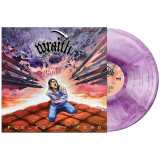
Blue and orange Stardust vinyl, limited to 500 copies. Since 2016, Indiana's Wraith have been emitting their incendiary brand of blackened thrash and speed metal into the world. Summer 2024 will see them release their debut full length under the Prosthetic Records label banner; prepare for Fueled By Fear. What started as a one-man band many moons ago has evolved into a propulsive beast of a band. Channeling a reverence to classic metal from a bygone era, Wraith incorporate their distinctively blistering sonic signature to create something urgent and contemporary. The band have previously described their collective mission as follows: a war of aggression on the dour confines of the modern metal scene and total sonic annihilation. Fueled By Fear captures the raw punk edge of their previous releases; a sound that will already be familiar to converts who have caught the band live in all their full-throttled abrasive glory. The album was self-produced by the band in Griffith, Indiana -, with engineering, mixing and mastering handled by CJ Rayson. Each member brings their own influences and stylistic flourishes to the table, combining to create a tightly wound, cohesive collection of scorching tracks that reflect their individual personalities and tastes.
- A1: I Never Learn
- A2: No Rest For The Wicked
- A3: Just Like A Dream
- A4: Silver Line
- A5: Gunshot
- B1: Love Me Like I'm Not Made Of Stone
- B2: Never Gonna Love Again
- B3: Heart Of Steel
- B4: Sleeping Alone
10th Anniversary Edition[44,33 €]
Re-issue of the Lykke Li album I Never Learn to be released on vinyl on 15 November to celebrate
the 10th anniversary. Following the success of Wounded Rhymes, Lykke released I Never Learn in 2014 which was well received by fans and features the tracks Gunshot and No Rest For The Wicked.
We will also be releasing a new digital single Midnight Shining to coincide with the announcement.
How wild did things get in 1967? So wild that a label (Audio Fidelity) not particularly known for its hipness put out a record with an insert to send away for “psychedelic ornaments” so you, too, could throw an acid party! And the back cover offered “instructions” referencing everybody from Emmett Grogan of the Diggers to Albert Hofmann, the discoverer of LSD. But perhaps the most amazing thing about this album was that, despite its almost comical (though well- informed) attempt to cash in on the psychedelic craze, How to Blow Your Mind and Have a Freak-Out Party wound up being a charming and even entrancing psych-pop gem of a record, albeit one with its requisite share of Eastern-influenced mumbo-jumbo. For its first-ever American vinyl reissue, we’re pressing up just 500 copies in “orange sunshine” vinyl, complete with the insert (you can try sending it in, but don’t get your hopes up). Groovy, man!
- Unholy Waters
- Daylight In The Dark
- Exit Wounds
- Continents
- Dragged Across The Desert Floor
- Soft Sun
Gary Arce, Pia Isaksen and Dan Joeright have created something very special and amazing with SoftSun. Spaced-out, other-worldy and soothing, the band move within a sphere it's wonderful to be.
Re-issue of the Lykke Li album I Never Learn to be released on vinyl on 15 November to celebrate
the 10th anniversary. Following the success of Wounded Rhymes, Lykke released I Never Learn in 2014 which was well received by fans and features the tracks Gunshot and No Rest For The Wicked.
We will also be releasing a new digital single Midnight Shining to coincide with the announcement.
Camelot, the legendary seat of King Arthur's court in Early Middle Ages Britain, was probably not a real place. A corruption of the name of a real Romano-Briton city, the word "Camelot" accumulated symbolic, mythic resonances over centuries, until achieving its present usage as a near-synonym of "utopia." In the mid-20th century alone, Camelot inspired an explosion of representations and appropriations, among them the violent, affectless Arthurian court of Robert Bresson's 1974 film Lancelot du Lac and the absurdist iteration of Monty Python's 1975 Holy Grail, both of which feature armored knights erupting into fountains of blood; the mystical Welsh world of novelist John Cowper Powys's profoundly weird 1951 novel Porius, with its Roman cults, wizards and witches, and wanton giants; and the nationalist nostalgia of President John F. Kennedy's White House. Unsurprisingly there are fewer Camelots in more recent memory. Camelot, Canadian songwriter Jennifer Castle's extraordinary, moving 2024 chronicle of the artist in early middle age, charts a realer, more rooted, and more metaphorical place than the fabled Camelot of the Early Middle Ages (or its myriad depictions), but it too is a space more psychic than physical. In Castle's Camelot, the fantastic interpenetrates the mundane, and the Grail, if there is one, distills everyday experience into art and art into faith, subliming terrestrial concerns into sublime celestial prayers to Mother Nature, and to the unfolding process of perfecting imperfection in one's own nature. Co-produced by Jennifer and longtime collaborator Jeff McMurrich, her seventh record is at once her most monumental and unguarded to date, demonstrating a mastery of rendering her verse and melodies alike with crisply poignant economy. For all their pointedly plainspoken lyrical detail and exhilarating full-band musical flourishes, these songs sound inevitable, eternal as morning devotions. "Back in Camelot," she sings on the lilting, vulnerable title track, "I really learned a lot / circles in the crops and / sky-high geometry." The album opens with a candid admission of sleeping "in the unfinished basement," an embarrassing joke that comes true. But the dreamer is redeemed by dreaming, setting sail in her airborne bed above "sirens and desert deities." If she questions her own agency_whether she is "wishing stones were standing" or just "pissing in the wind"_it does not diminish the ineffable existential jolt of such signs and wonders. This abiding tension between belief and doubt, magic and pragmatism, self and other, sacred and profane, and even, arguably, paganism and monotheism, suffuses these ten songs, which limn an interior landscape shot through with sunstriped shadows of "multi-felt dimensions" both mystical and quotidian. The epic scale and transport of "Camelot," with its swooning strings, gives way dramatically to "Some Friends," an acoustic-guitar-and-vocals meditation in miniature on Janus-faced friends and the lunar and solar temperatures of their promises_"bright and beaming verses" versus hot curses_which recalls her minimalist last album, 2020's achingly intimate Monarch Season. (In a symmetrical sequencing gesture, the penultimate track, the incantatory "Earthsong," bookends the central six with a similarly spare solo performance and coiled chord progression, this time an ambiguous appeal to _ a wounded lover? a wounded saint? our wounded planet?) Those whom "Trust" accuses of treacherous oaths spit through "gilded and golden tooth"_cynics, critics, hypocrites, gurus, scientists, doctors, lovers, government, the so-called entertainment industry_sow uncertainty that can infect the artist, as in "Louis": "What's that dance / and can it be done? What's that song / and can it be sung?" Answering affirmatively are "Lucky #8," an irrepressible ode to dancing as a bulwark against the "tidal pools of pain" and the "theory of collapse," and "Full Moon in Leo," which finds the narrator dancing around the house with a broom, wearing nothing but her underwear and "big hair." But the central question remains: who can we trust, and at what cost faith, in art or angels or otherwise? Castle's confidence in her collaborators is the cornerstone of Camelot. Carl Didur (piano and keys), Evan Cartwright (drums and percussion), and steadfast sideman Mike Smith (bass) comprise a rhythm section of exquisite delicacy and depth. This fundamental trio anchors the airiness of regular backing vocalists Victoria Cheong and Isla Craig and frames the guitars of Castle, McMurrich, and Paul Mortimer (and on "Lucky #8," special guest Cass McCombs). Reprising his decennial role on Castle's beloved 2014 Pink City, Owen Pallett arranged the strings for Estonia's FAMES Skopje Studio Orchestra. On the ravishing country-soul ballad "Blowing Kisses"_Pallett's crowning achievement here, which can be heard in its entirety in the penultimate episode of the third season of FX's The Bear_Jennifer contemplates time and presence, love and prayer_and how songwriting and poetry both manifest and limit all four dimensions: "No words to fumble with / I'm not a beggar to language any longer." Such rare moments of speechlessness_"I'm so fucking honoured," she bluntly proclaims_suggest a state "only a god could come up with." (If Camelot affirms Castle as one of the great song-poets of her generation, she is not immune to the despairing linguistic beggary that plagues all writers.) Camelot evinces a thoroughgoing faith not only in the natural world_including human bodies, which can, miraculously, dance and swim and bleed and embrace and birth_but also in our interpretations of and interventions in it: the "charts and diagrams" of "Lucky #8," a daydreamt billboard on Fairfax Ave. in LA in "Full Moon in Leo," the bloody invocations of the organ-stained "Mary Miracle," and all manner of water worship, rivers in particular. (Notably, Jennifer has worked as a farmer and a doula.) The album ends with "Fractal Canyon"'s repeated, exalted insistence that she's "not alone here." But where is here? The word "utopia" itself constitutes a pun, indicating in its ambiguous first syllable both the Greek "eutopia," or "good-place"_the facet most remembered today_and "outopia," or "no-place," a negative, impossible geography of the mind. Utopia, like its metonym Camelot, is imaginary. Or as fellow Canadian songwriter Neil Young once sang, "Everyone knows this is nowhere." "Can you see how I'd be tempted," Castle asks out of nowhere, held in the mystery, "to pretend I'm not alone and let the memory bend?"
. For Fans Of: The Weather Station, Weyes Blood, Adrianne Lenker, Phoebe Bridgers, Joan Shelley, Lana Del Rey, Cass McCombs, Angel Olsen & Neil Young. Camelot, the legendary seat of King Arthur’s court in Early Middle Ages Britain, was probably not a real place. A corruption of the name of a real Romano-Briton city, the word “Camelot” accumulated symbolic, mythic resonances over centuries, until achieving its present usage as a near-synonym of “utopia.” In the mid-20th century alone, Camelot inspired an explosion of representations and appropriations, among them the violent, affectless Arthurian court of Robert Bresson’s 1974 film Lancelot du Lac and the absurdist iteration of Monty Python’s 1975 Holy Grail, both of which feature armoured knights erupting into fountains of blood; the mystical Welsh world of novelist John Cowper Powys’s profoundly weird 1951 novel Porius, with its Roman cults, wizards and witches, and wanton giants; and the nationalist nostalgia of President John F. Kennedy’s White House. Unsurprisingly there are fewer Camelots in more recent memory. Camelot, Canadian songwriter Jennifer Castle’s extraordinary, moving 2024 chronicle of the artist in early middle age, charts a realer, more rooted, and more metaphorical place than the fabled Camelot of the Early Middle Ages (or its myriad depictions), but it too is a space more psychic than physical. In Castle’s Camelot, the fantastic interpenetrates the mundane, and the Grail, if there is one, distills everyday experience into art and art into faith, subliming terrestrial concerns into sublime celestial prayers to Mother Nature, and to the unfolding process of perfecting imperfection in one’s own nature. Co-produced by Jennifer and longtime collaborator Jeff McMurrich, her seventh record is at once her most monumental and unguarded to date, demonstrating a mastery of rendering her verse and melodies alike with crisply poignant economy. For all their pointedly plainspoken lyrical detail and exhilarating full-band musical flourishes, these songs sound inevitable, eternal as morning devotions. “Back in Camelot,” she sings on the lilting, vulnerable title track, “I really learned a lot / circles in the crops and / sky-high geometry.” The album opens with a candid admission of sleeping “in the unfinished basement,” an embarrassing joke that comes true. But the dreamer is redeemed by dreaming, setting sail in her airborne bed above “sirens and desert deities.” If she questions her own agency whether she is “wishing stones were standing” or just “pissing in the wind” it does not diminish the ineffable existential jolt of such signs and wonders. This abiding tension between belief and doubt, magic and pragmatism, self and other, sacred and profane, and even, arguably, paganism and monotheism, suffuses these ten songs, which limn an interior landscape shot through with sunstriped shadows of “multi-felt dimensions” both mystical and quotidian. The epic scale and transport of “Camelot,” with its swooning strings, gives way dramatically to “Some Friends,” an acoustic-guitar-and-vocals meditation in miniature on Janus-faced friends and the lunar and solar temperatures of their promises—“bright and beaming verses” versus hot curses which recalls her minimalist last album, 2020’s achingly intimate Monarch Season. (In a symmetrical sequencing gesture, the penultimate track, the incantatory “Earthsong,” bookends the central six with a similarly spare solo performance and coiled chord progression, this time an ambiguous appeal to … a wounded lover? a wounded saint? our wounded planet?). Those whom “Trust” accuses of treacherous oaths spit through “gilded and golden tooth” cynics, critics, hypocrites, gurus, scientists, doctors, lovers, government, the so-called entertainment industry sow uncertainty that can infect the artist, as in “Louis”: “What’s that dance / and can it be done? What’s that song / and can it be sung?” Answering affirmatively are “Lucky #8,” an irrepressible ode to dancing as a bulwark against the “tidal pools of pain” and the “theory of collapse,” and “Full Moon in Leo,” which finds the narrator dancing around the house with a broom, wearing nothing but her underwear and “big hair.” But the central question remains: who can we trust, and at what cost faith, in art or angels or otherwise? Castle’s confidence in her collaborators is the cornerstone of Camelot. Carl Didur (piano and keys), Evan Cartwright (drums and percussion), and steadfast sideman Mike Smith (bass) comprise a rhythm section of exquisite delicacy and depth. This fundamental trio anchors the airiness of regular backing vocalists Victoria Cheong and Isla Craig and frames the guitars of Castle, McMurrich, and Paul Mortimer (and on “Lucky #8,” special guest Cass McCombs). Reprising his decennial role on Castle’s beloved 2014 Pink City, Owen Pallett arranged the strings for Estonia’s FAMES Skopje Studio Orchestra. On the ravishing country-soul ballad “Blowing Kisses” Pallett’s crowning achievement here, which can be heard in its entirety in the penultimate episode of the third season of FX’s The Bear Jennifer contemplates time and presence, love and prayer and how songwriting and poetry both manifest and limit all four dimensions: “No words to fumble with / I’m not a beggar to language any longer.” Such rare moments of speechlessness “I’m so fucking honoured,” she bluntly proclaims suggest a state “only a god could come up with.” (If Camelot affirms Castle as one of the great song-poets of her generation, she is not immune to the despairing linguistic beggary that plagues all writers.) Camelot evinces a thoroughgoing faith not only in the natural world including human bodies, which can, miraculously, dance and swim and bleed and embrace and birth but also in our interpretations of and interventions in it: the “charts and diagrams” of “Lucky #8,” a daydreamt billboard on Fairfax Ave. in LA in “Full Moon in Leo,” the bloody invocations of the organ-stained “Mary Miracle,” and all manner of water worship, rivers in particular. (Notably, Jennifer has worked as a farmer and a doula.) The album ends with “Fractal Canyon”s repeated, exalted insistence that she’s “not alone here.” But where is here? The word “utopia” itself constitutes a pun, indicating in its ambiguous first syllable both the Greek “eutopia,” or “good-place” the facet most remembered today and “outopia,” or “no-place,” a negative, impossible geography of the mind. Utopia, like its metonym Camelot, is imaginary
- Underdose
- Firefly
- Wounds
- Lava Twilight
- Natural
- Her Mask (P.a.)
- Energy
- Crushed Like Fruit
- Icewarm
- Trenches
- Neptune
- Mosaic
- Web
- Gelosa
- Spur Of Moment
- Ruins
- Alaya
- May (As Well Kiss Me)
- Gently Hurting
- Receipt For Life
- Miracle
- Deep Regret
Limited WHITE VInyl[42,44 €]
Overgrown Eden is the debut album from Essex rock band InMe. The album was released in the UK in 2003 and produced four singles: ""Underdose"", ""Firefly"", ""Crushed like Fruit"" and ""Neptune"". The highest UK Album Chart position was No. 15. However, it reached No. 1 in the Rock Album Chart. For the first time, Overgrown Eden is expanded with an additional bonus LP featuring 10 non-album tracks.
Overgrown Eden (Expanded Edition) is available as a limited edition of 666 individually numbered copies on translucent green coloured vinyl and includes a renewed insert with lyrics.
4 Jahre sind vergangen, seit "Endless Wound" Stigmata auf der Menschheit hinterlassen hat, aber seid sicher, Black Curse werden sich jetzt noch tiefer einschneiden. Eine Platte, die wegen ihrer ekstatischen Rücksichtslosigkeit und massiven fanatischen Bösartigkeit schockieren soll. Aber das was tief unter den Kompositionen schwebt, öffnet die Türen zu einer Welt, die so unglaublich groß ist, dass man Gefahr läuft, sich in ihr zu verlieren. Und diese Tiefen entziehen sich jeglicher Exegese.
4 Flüche wurden in 4 Hymnen absoluter Todesmagie verwoben. Und diese werden einen in den schwarzen Abgrund des großen Göttlichen führen. Das Album wurde erneut vom unbestrittenen Meister Arthur Rizk produziert, der mit seiner außergewöhnlich dichten und zerstörerischen Produktion mal wieder alle Erwartungen übertrifft. "Burning in Celestial Poison" klingt, als wäre es mit dunklen magischen Formeln aus einer sehr viel tieferen Welt erschaffen. Um die Erhabenheit dieses Albums zu erkennen, müssen andere Sichtweisen und Wertigkeiten definiert werden. In dieser Welt wird es als hässlich und bedrückend gelten. Und zwar von denjenigen, die nicht in der Lage sind, sich diesen bodenlosen Abgründen hinzugeben.
Es bricht absichtlich mit allen modernen Hörgewohnheiten, vermeidet alle Regeln der Songlänge und -struktur und erzielt genau dann das beste Ergebnis, wenn es in Dunkelheit und bei maximaler Lautstärke erlebt wird.
"Burning in Celestial Poison" beginnt, mäandert und endet mit einem prophetischen Grollen, das sicherlich aus der Welt stammt, der wir uns noch stellen müssen, nämlich der Welt in Flammen.
Corrosion of Conformity’s 1994 album, Deliverance, is a land- mark in the band’s evolution, blending heavy metal, stoner rock, and southern rock influences. Released on Columbia Re- cords, the album propelled the band to mainstream success, with standout tracks like “Clean My Wounds” and “Albatross” becoming iconic hits.
Deliverance showcases Corrosion of Conformity’s groove-driv- en sound, featuring heavy riffs, dynamic rhythms, and the powerful vocals of Pepper Keenan. It marks a shift from their earlier punk roots to a more melodic and structured style that appeals to both metal and rock fans alike. Praised for its gritty, Southern-influenced vibe, Deliverance remains one of COC’s most influential albums, solidifying their place in the metal scene.
Discover Corrosion of Conformity’s Deliverance for a raw, heavy-hitting experience that defined 90s metal. Deliverance is a limited edition of 1500 individually numbered copies on crystal clear vinyl.
Not much to say on this one, Mattias Ostling aka Rolando Simmons is back on AF. You should know what you're in for: undeniably beautiful acid stuff, somewhere between propulsive and melancholy, lush but fidgety 4/4 beats...'Terrestrial Ultra-Doula EP' is a 4-track adventure that deftly dabbles in rave, IDM, techno and beyond in classic RS style. In his own words "Every completed project is the failure of an original idea and the triumph of a successful adaptation. These tracks were inspired by a dream and my subsequent reflections on it. Playing music for others is an act of alchemy that can alter thought patterns and life paths to varying degrees. It is a formidable power to wield." Ostling is one of those artists who works in a specific continuum but adds his own touch here and there--and when it comes to reverb-drenched, acid-lashed, wound-up IDM pitter-patter, not many can do it as well, or as elegantly, as this. Word, you're gonna need this one.
Now On Limited Edition, Clear-With Blue Splatter-vinyl Third Eye Blind's sophomore album debuted at number forty on the Billboard 200 and went platinum within one month of its release. The classic 1990s Alternative Rock album features hits like: “Never Let You Go,” “Deep Inside You,” and “Anything.” Tracklist Anything Wounded 10 Days Late Never Let You Go Deep Inside Of You 1000 Julys An Ode To Maybe The Red Summer Sun Camouflage Farther Slow Motion Darkness Darwin
THE OMEGA SWARM, eine atmosphärische Death-Metal-Band aus Deutschland, begann im Jahr 2022, sehr bescheiden, sehr zurückgezogen. T., der bereits vier großartige Alben mit Sulphur Aeon veröffentlicht hat, hatte keinen vollwertigen Live-Act im Sinn, als er frühe Demos komponierte und das Skelett seiner - damals noch namenlosen - neuen Kreatur formte. Im Herzen ein wahrer Schöpfer, umarmt T. die akribische Arbeit an Riffs, Tönen, Klängen, den abenteuerlichen Geist des Aufbaus und der Verwirklichung von Ideen, das Experimentieren mit seinen geliebten Gitarren und Synthesizern, um erstaunliche Vibes und Songs zu produzieren, die bedeutungsvoll und doch extrem, melodisch und doch hart sind und sich in THE OMEGA SWARMs Debütalbum vereinen, einer Platte, einem Zeugnis, das der Essenz der Kunst selbst gewidmet ist.
So bodenständig T. auch ist, er ist nicht der Typ Mensch, der sich an eine Klangformel hält, er sucht nach "etwas mehr", "etwas anderem". Nachdem Sulphur Aeon mit dem monumentalen "Seven Crowns and Seven Seals" von 2023 vorerst abgeschlossen haben, was sie ausdrücken wollten, sind THE OMEGA SWARM jetzt sein Hauptaugenmerk, und das Line-up der Band, das von Sänger Christian Schettler (bekannt durch seine Arbeit bei den Labelkollegen Wound) und Schlagzeuger Max Scheefeldt (ex Misanthrope Monarch) komplettiert wird, passt perfekt zusammen. Musikalisch entstanden THE OMEGA SWARM aus T.s Experimenten mit rhythmischen Mustern, übereinanderliegenden Synthesizern, ausgefeilten Leads und etwas technischeren Riffingstrukturen.
Die wohl einzigen offensichtlichen Parallelen zu Sulphur Aeon sind die Betonung einer dichten, fesselnden Atmosphäre, epische Elemente und eine übergreifende Dunkelheit sowie die Erkenntnis nach der Fertigstellung der ersten Aufnahmen, dass auch THE OMEGA SWARM die Qualität besitzen, mehr als nur ein 'Schlafzimmerprojekt' zu sein.
Aufgenommen in den Studios von Feire Records und s/w records, gemischt und produziert von Langzeitpartner Simon Werner, wurde V. Santura (Triptykon, Dark Fortress) für das Mastering angeheuert und sorgte für den letzten Schliff von "Crimson Demise", einem Album, das stolz und mühelos zwischen Death und Black Metal changiert und von einer herausragenden Gesangsleistung abgerundet wird, bei der Chris eine ähnliche Bandbreite an Growls, Screams und cleanen Parts erreicht wie Peter Tägtgren in seinen besten Zeiten.
Vom Konzept her verzichtet die Gruppe auf uralte Lovecraft'sche Schrecken und wendet sich stattdessen geradlinigen apokalyptischen Themen zu. Ob Viren, bösartige Bakterien, verrückte Diktatoren, Klimawandel, religiöse und politische Ideologien, korrupte Technologie, Terrorismus oder Krieg, die Menschheit hat sich selbst für den Untergang gezeichnet - in leuchtenden Neonfarben, damit selbst eine außerirdische Spezies, die Galaxien entfernt ist, erkennen kann, was für Narren wir wirklich sind. "Die Menschheit kann sich nicht auf eine gemeinsame Wahrheit einigen, geschweige denn auf eine Strategie zur Lösung ihrer mannigfaltigen Probleme", erklärt Chris, "und bildet somit überhaupt keine Einheit. Der einzige gemeinsame Nenner, der uns alle eint, ist unsere Zerstörungswut, die irgendwann die gesamte Existenz der Menschheit gefährden könnte. Die Utopie wurde durch dystopische Szenarien ersetzt. Welche Formen des negativen menschlichen Verhaltens uns und die Gesellschaft derzeit beeinflussen und letztlich in eine zukünftige Endzeit führen, ist Teil des lyrischen Konzepts von THE OMEGA SWARM."
Aber keine Angst, bevor die Weltuntergangsuhr zum letzten Mal schlägt, soll euch das Vergnügen vergönnt sein, ein abwechslungsreiches, intensives und fesselndes Stück Metal zu erleben, das das neu formierte Trio aus dem Schlafzimmer auf die Bühne bringen will!
Formed in leafy Surrey in the late 1980s, Threshold rose to prominence in the decade that followed, quickly establishing themselves as Britain's leading pioneers of progressive metal. Since debuting "Wounded Land" in 1993, the proven core creative duo of guitarist Karl Groom and keyboard maestro Richard West have developed a unique form of fierce progressive music that features precise melodies, thought-provoking lyrics and complex yet thunderous arrangements united. Threshold have tirelessly evolved over three decades of creative passion and may have reached a new peak in their performance with 2017's conceptual and musical feast, Legends Of The Shires. With the return of vocalist Glynn Morgan to the band, the Brits' permanent line-up of Groom, West, drummer Johanne James and bassist Steve Anderson have reached new heights and received critical acclaim in the process. The band's latest (and twelfth) studio album, Dividing Lines, was darker, heavier and even more adventurous than its predecessor, producing some of the most creative and melodically powerful material they have ever recorded. With these reissues of the remixed and remastered albums “Clone” and “Extinct Intinct” come the next two new vinyl formats and CDs with bonus tracks.
Nothing Left to Love is Counterparts' sixth studio album following 2017's You're Not You Anymore. Bookended by the powerful lyric “Will you love me when there’s nothing left to love?” — a desperate plea on commitment in the face of both mortality and morality — the album muses on many of the topics vocalist Brendan Murphy has in the past: life’s darkness, self-destructive tendencies and the self-flagellation they beget.