“Dedicated to the Island” is a new album by Kaoru Inoue, a Japanese DJ/music producer also known as Chari Chari.
Initially released as a CD supplement to Saunter Magazine 06 “Yakushima 2023” issue, and through a new process, its vinyl record will be released for the first time on Record Store day 2024. A gem of nine organic, electronic, balearic, and ambient techno tracks including "Tobitatsu", “Mizukumi”, “Nagareru”, and “Hoshifuru” produced based on field recordings made in Yakushima Island.
180-gram audiophile weight black vinyl with a printed double-sided insert, RSD limited edition.
quête:ya ya
" The solo venture is expansive and easy on the ears. It's so serene yet expressive of big terrain and huge vistas of emotional landscapes of sound. He works off his own scale. Everything flows outwards. Effortlessly." - Irish Times Experimentation in early electronic music in the Sahara from the singular Mamman Sani. Dreamy organs and droning melodies reinterpret ancient folk tradition into a sublime fantastical soundscape. Never before released recordings from the very beginning - unreleased tracks from his first album, recordings of a short-lived trio, and a cover of an American folk ballad.
BBE Music is thrilled to present J Jazz: Free and Modern Jazz From Japan 1954-1988, a
remarkable large-format book covering some of the deepest, rarest, and most innovative
jazz music released anywhere in the post-war era. Compiled by Tony Higgins and Mike
Peden, co-curators of BBE Music's acclaimed J Jazz Masterclass Series, the book also
features a foreword by Japanese jazz icon, Terumasa Hino.
This is the first time a book of this type has been published outside of Japan and the first
anywhere of this size and scale. It is a unique collection of over 500 albums of free and
modern jazz released in Japan during a period of radical transformation and constant
reinvention. An era that saw Japan return from the ravages of World War Two to become a
global economic power and emerge as both a technological leader and an international
cultural force.
Through a unique gallery of albums, J Jazz charts the development of jazz in Japan from the
first stirrings of the modern jazz scene in the mid to late 1950s and on through the hard bop
and modal jazz of the 1960s. It steers the reader into the radical directions of the 1970s when
free jazz, fusion, post-bop, and jazz-funk opened up a growing number of Japanese jazz
artists to a new global audience before consolidating in the mid to late 1980s with a musical
scene that laid the path for the contemporary jazz generation to follow.
Over 500 full-colour sleeves from many of the leading names in Japanese jazz sit alongside
rare and private pressings that tell a story of constant change and musical exploration. J
Jazz includes profiles of several leading record labels such as East Wind, Frasco, King
Records, and Nippon Columbia as well as critical independents such as Three Blind Mice,
ALM, and Aketa’s Disk.
J Jazz includes interviews with celebrated jazz photographer Tadayuki Naito, and pianist
Tohru Aizawa, bandleader on the totemic spiritual jazz album, Tachibana Vol 1, as well as
free-jazz record collector and jazz musician Mats Gustafsson.
The book also features a chapter on albums by non-Japanese artists that only received a
Japanese release, with collectible, rare, and obscure releases by figures such as Herbie
Hancock, Miles Davis, Mal Waldron, Steve Lacy, and Art Blakey. J Jazz includes Japanese
jazz charts from some of the world's leading jazz DJs including Gilles Peterson, Toshio
Matsuura, Paul Murphy, and Shuya and Yoshihiro Okino. Among the specialist content is a
feature on obi strips by record dealer and Japanese jazz expert, Yusuke Ogawa, plus a
special article on Japanese Blue Note albums.
Across its 300-plus pages, J Jazz includes a detailed introduction contextualising the music,
tracing the story of Japan's fascination with jazz back before the war. It also features
biographical information on many of the key artists involved in shaping the post-war
Japanese jazz scene including Sadao Watanabe, Toshiko Akiyoshi, Masabumi Kikuchi,
Masahiko Togashi, Terumasa Hino, Yosuke Yamashita, Fumio Itabashi, Masayuki
Takayanagi, Takeo Moriyama, Isao Suzuki, and many more
Die in Edinburgh ansässige fünfköpfige Band rEDOLENT veröffentlicht ihr Debüt über das aufstrebende schottische Label und Kreativzentrum Post Electric (Heimat von Hamish Hawk, Humor, Iona Zajac, Voka Gentle). "Dinny Geet", eine akribische Mischung aus eckigem Pop, Elektronik und eigenwilligen Melodien, bietet auf zehn eleganten, durchdachten Tracks harte Realität und freudige Flucht. Obwohl rEDOLENT so unterschiedliche Einflüsse wie Mount Kimble, King Krule, Animal Collective, Brockhampton, LCD Soundsystem, Madvillain, Tom Vek, Clairo, CAN und Talking Heads zitieren, gehen sie zweifellos ihren eigenen Weg und kreieren einen eigenen maßgeschneiderten Sound.
Brooklyn Sounds legendary 1971 debut album, full of heavy Nuyorican underground salsa dura propelled by raw trombones and in-your-face percussion, born of the barrio streets and the band’s Caribbean heritage.
Fully authorized by producer Bobby Marin, with liner notes detailing the Brooklyn Sounds story, featuring never-before seen photos and pressed on 180g vinyl.
Mr Bongo proudly presents the debut album from Tasmania-born, Melbourne-based, Finn Rees. Gliding across a swirling palette of saturated hues, Dawn Is A Melody feels vintage yet vibrant, new but familiar at the same time. A spiritual, deep and textured jazz record, tipping its hat to greats from the past, capturing memories and reformulating them into new ideas with the help of some of Melbourne’s finest talent.
Expert keys player for the likes of 30/70 and Elle Shimada, alongside one-half of Close Counters, this debut LP was Finn’s conscious departure from the realm of groove-based jazz. Instead, Dawn Is A Melody places the piano and arrangements centre stage, giving Finn and his fellow Melbourne crew freedom to explore the spaces in between, new emotions and alternate soundscapes.
In Finn’s own words: “My intention with Dawn Is A Melody was to create a world; a microcosm of colour. Something rich and beautiful that allowed the melodies and compositions to reach their full potential. It was driven by hope, curiosity and the search for beauty and reassurance in this ever-changing world. The emotion behind the music is really about the journey of life, growing up and changing, as well as my relationship with Tasmania’s natural landscapes where I grew up, a part of the world that is incredibly unique and beautiful.”
The album arcs between opening, middle and end. Beginning with the optimism of ‘Looking Up’ and ‘Lagoon’, the former a celestial, string and harp marbled slice of positivity, the latter a spiritual journey of exuberance and hope, Finn’s fingers dancing across the ‘70s Yamaha grand piano. From there the songs blossom outwards with the cinematic soulful journey of ‘It’s Behind Me Now’ and Brazilian-inspired ‘Expansion’, as the divine ‘Crossing’ signals a transition to a new realm. The energy is transformed from the rich cosmic textures to a more intimate and personal feeling with ‘Ablaze’, ‘Between Spaces’ and ‘As It Passes’ which blissfully fades down to simply piano and strings to close out the record.
Recorded at Rolling Stock in Collingwood, Melbourne, Henry Jenkins was drafted in as recording and mix engineer, his minimal vintage mic setups giving a live aesthetic and warmth to the arrangements. Lucky Pereira and Blakely McLean Davies form the rock-solid rhythm section, with a hand-picked line-up of other Melbourne talent on display, including Cheryl Durongpitikul on tenor sax, Siwei Wong on harp, Audrey Powne on trumpet and Allysha Joy on vocals to name only a few.
Plotting a course from Alice Coltrane, through Herbie Hancock, to Arthur Verocai, this is a debut nourished by the past but firmly made in the present. A record unable to be age-stamped, casting ambiguity as to when, what era and by whom it has been crafted. Like a vintage lens capturing a current scene, Dawn Is A Melody is warm and familiar yet focused on the here now.
- 1: La 2020 (Feat. Exile)
- 2: Ca All Day (Feat. Vcl Tha Moslem)
- 3: In Living Color (Feat. Skye Louise)
- 4: I’m G (Omg) (Feat. Chuuwee And Born Allah)
- 5: La Summer (Feat. G Kidd, Jack Davey, And Like)
- 6: We Originals (Feat. Longevity, Sahtyre, And Onwun)
- 7: We Bang (Feat. Med, Thurz, And Yah Ra)
- 8: The Joy (Feat. Speed Walton And Mykestro)
- 9: West Coast (Feat. Iman Omari And Imani)
- 10: Weekdays (Feat. Polyester The Saint)
- 11: Roll Up (Feat. Jimetta Rose, Donel Smokes, And Tiron)
- 12: Red, White, & Me (Feat. Colin Devane)
- 13: Out Of The Blue (Feat. Shaq Husayn, Ta’raach, Ayun Bassa, Propaganda, And Jo Roq)
- 14: Colorful (Feat. Cashus King, Self Jupiter, And Myka 9)
From weaving thought-provoking poetics to channeling the spirit of vintage West Coast gangsta rap, acclaimed Los Angeles emcee Blu is a dynamic musical presence, forever evolving and defying expectations. Supremely talented producer and musician Shafiq Husayn has a similarly diverse skill set, with a storied history as a member of Sa-Ra Creative Partners and solo production credits for top artists across the musical spectrum, from Erykah Badu to Ice-T to Anderson .Paak to Jurassic 5 and many more. After linking up for the mixtape The Blueprint back in 2018, Blu and Shafiq Husayn are reuniting for the new album Out Of The Blue, elevating their collaboration to a new level. “The Blueprint was just me rhyming over some of Shafiq's beats that I found online,” Blu explains. “This time we were actually in the studio together. We’ve been working together since 2008, but this is our first official album.” Awash in Shafiq’s dense sonic architecture, Out Of The Blue showcases the intricacy of Blu’s spiritual street talk while simultaneously delivering a series of bass-heavy L.A. anthems. Entirely produced by Shafiq Husayn, the collection features guest appearances by MED, Exile, Chuuwee, Thurz, Speed Walton, Jimetta Rose, and Freestyle Fellowship members Myka 9 and Self Jupiter. “Out Of The Blue is my G-Funk album,” Blu explains. “Big brother Shafiq gave us a master class in production. We just in here being funky and having fun.”
- A1: To Tomorrow
- A2: Believe In Yourself
- A3: Believe In Yourself (Strings Version)
- A4: A Powerful Enemy Appears
- A5: Difficult Battle
- A6: Crushing Defeat
- A7: Sign Of Victory
- A8: Great Comeback
- A9: Super Saiyan God
- A10: Reconciliation
- A11: Beerus' Planet
- A12: Beerus' Teatime
- A13: Beerus' Madness
- A14: Vegeta's Strength
- B1: Team Dragon's Theme
- B2: What's Taking Goku So Long!?
- B3: Under The Blue Sky
- B4: Higgledy-Piggledy Town
- B5: Scene Of A Party
- B6: A Romantic Night
- B7: Like Those Clouds
- B8: Scene Of A Southern Island
- B9: Fire Dance
- B10: Fate Of The Earth
- B13: I’m The Greatest In The World
- B14: Infinitely Expansive Grand Universe
- C1: Birth Of A God
- C2: Delightful Friends From Pluto
- C3: Incident
- C4: Probing Each Other
- C5: Cha-La Head-Cha-La (Days Of Battle)
- C6: Delightful Days
- C7: Gods Of Destruction Invitational Fighting Tournament
- C8: Champa's Theme
- C9: Chubby Waltz
- C10: Resurrected Frieza
- C11: Frieza's Plot
- C12: Premonition
- C13: Terror Of The Frieza Army
- D1: Fear That Can’t Be Erased
- D2: Into Battle
- D3: A Close Battle
- D4: Frieza's Chosen
- D5: Golden Frieza's Theme
- D6: Tough Opponent
- D7: Time To Fight Back
- D8: Waves Of Battle
- D9: Blue Saiyan
- D10: Regret
- D11: End Of A Desperate Battle
- B11: The Pilaf Gang's Scheme
- D12: Endless Training
- D13: Gods Of Destruction Invitational Fighting Tournament Begins!
- B12: The Pilaf Gang Flees
DRAGONBALL SUPER is a Japanese anime produced by Toei Animation Studios. Scripted by original Dragon Ball author Akira Toriyama, it follows his work and begins shortly after my defeat of Boo in Dragon Ball Z..
"Four years after Boo's death, peace has returned to Earth, and everyone is living in peace.
Goku has become a farmer, and Vegeta spends time with his family. However, the desire to train and grow stronger never leaves them.
Goku goes to train with Master Kaio, who tells him that a powerful enemy has awakened from a 39-year slumber: Beerus, God of Destruction. The latter is looking for a warrior who appeared to him in a dream, the Divine Super Saiyen, against whom he wishes to measure himself."
The anime has been broadcast since 2017 in France on Toonami in a censored version, then in an uncensored version 1 month later. There are 131 episodes and 2 features.
The anime doesn't resume until 2025.
Introducing "Azerbaijani Gitara vol. 2" by Rəhman Məmmədli, the eagerly awaited sequel to Bongo Joe’s acclaimed debut featuring Rüstəm Quliyev. Born from the vibrant streets of Baku, Azerbaijani gitara culture has evolved into a mesmerizing fusion of indigenous traditions and global influences. From the oil boom era to Soviet rule, musicians have embraced the electric guitar as a symbol of cultural expression.
Rəhman Məmmədli, a legend in his own right, revolutionized the sound with his innovative techniques and impassioned performances. Drawing inspiration from mugham music, Məmmədli's compositions resonate with soul-stirring melodies and electrifying solos.
Join us as we honor the pioneers of Azerbaijani gitara culture while celebrating the continued evolution of this rich musical tradition. "Azerbaijani Gitara vol. 2" promises to captivate listeners with its depth, diversity, and unbridled passion, inviting you on a journey through the heart and soul of Azerbaijan's musical heritage.
Two years in the making, 25-year-old Angelica Garcia's album Cha Cha Palace is the result of an artist's need to SAY SOMETHING. The second song on the record, "Jícama" might only be a minute and 25 seconds in its entirety, but the message spans generations and is one that resonates deeply for Garcia with her Mexican and Salvadoran roots. Singing/shouting, "I see you, but you don't see me Jímaca, Jímaca, Guava Tree_I've been trying to tell ya, but you just don't see, like you I was born in this country," Garcia tells the reality for millions of Americans unapologetically and with passion.That feeling of being between places is something Garcia knows well having been raised between multigenerational, multicultural, homes with step-parents and half-siblings. Additionally, she made the journey from the West Coast to the East Coast and back again multiple times before finally settling down in Richmond, Virginia.She fondly recalls Mexican ranchera music always playing throughout her childhood. Ranchera was ingrained within the maternal side of her family with her Mother, Grandmother, Uncle & Aunt constantly singing the traditional music throughout the home of her Grandparents.Like Mitski, Lorde, Billie Eilish, and Rosalía, Garcia isn't afraid to tear pages out of her diary and express emotions that might be difficult and oftentimes daunting to share given today's social and political environment. Like her peers, she joins a new chapter of musicians who are connecting with their audiences on a level that lives outside the reaches of technology, trends, and social media, the daily experience of feeling torn between saying something and doing something, for being a voice and speaking with your voice, of being Latina while being American. And it's humanity and honesty that audiences are looking for and will find in spades throughout each note of Cha Cha Palace.
An’archives presents the latest album by Japanese free saxophonist and vocalist Harutaka Mochizuki, Doppelgänger ga boku wo. Since the early 2000s, Harutaka has quietly, yet steadily, released a string of solo and collaborative releases that have allowed multiple perspectives on one of the most singular voices in modern music. In collaboration, he seems to prefer the duo format, and digging through his discography, you’ll find releases where he pairs with Tomoyuki Aoki (of Up-Tight), Michel Henritzi, and Hideaki Kondo. But Harutaka’s solo performances, with their lyricism and physicality, are where the magic truly happens.
If earlier albums, like Solo Document 2004 (Bishop, 2005) and Pas (no label, 2014), were raw documentations of solo alto saxophone performances, in recent years, Harutaka’s solo albums have become more complex, more mystifying. Most significantly, they’ve become more personal; there are few musicians extant whose albums feel quite so much like diaristic interventions, and Harutaka’s music now is deeply moving in its intimacy. Developing that thread of revelation, Doppelgänger ga boku wo offers a still richer exploration of many facets of Harutaka’s artistry.
The two double-tracked alto saxophone performances here feel consummate, with Harutaka shadowing himself, exploring the possibilities of the multiple self: Doppelgänger is me, indeed. The playing here is rich with affect, but still exploratory, voiced with rigour and intent. Two short pieces for keyboard and voice (about Giacometti and Genêt, respectively) are fragile miniatures, with clusters of chords, and passing phrases, wrapping around Harutaka’s untutored but lovely singing.
The ‘karaoke’ performance that closes the album, of “Woman ‘W no higeki’ yori”, speaks to the iterative aspects of Harutaka’s music. A cover of the Hiroki Yakushimaru song, the theme to Shinichirō Sawai’s 1984 film W’s Tragedy, he’s returned to this song several times, and here, his delivery perfectly captures the spirit of what Michel Henritzi, in his typically beautiful liner notes, evocatively details as “one of those sad love songs that accompany lonely sake drinkers in smoky night bars, sharing their spleen.”
Gorgeous, human, heartrending - Doppelgänger ga boku wo is Harutaka Mochizuki in element and in spirit.
- A1: Spitkicker Com / Say R
- A2: U Can Do (Life)
- A3: My Writes Featuring Tash & J-Ro
- B1: Oooh - Featuring Redman
- B2: Thru Ya City Featuring D V. Alias Khrist
- B3: I C. Y'all Featuring Busta Rhymes
- B4: View
- B5: Set The Mood Featuring Indeed
- C1: All Good? Featuring Chaka Khan
- C2: Declaration
- C3: Squat! Featuring Mike D And Ad Rock
- C4: Words From The Chief Rocker Featuring Busy Bee
- C5: With Me
- D1: Copa (Cabanga)
- D2: Foolin
- D3: The Art Of Getting Jumped
- D4: U Don't Wanna B D.s. Featuring Freddie Foxx
ora’s most innovative modern exponent bathes in communion with a re-imagined classical guitar, unveiling a new and previously unsuspected musical universe. In a meeting between instruments, not traditions, these maestros emerge from quite different and distant musical worlds. Ballaké Sissoko’s kora tradition and lineage traverse the once powerful West African empire known as Kaabu. South African Derek Gripper’s roots are in European classical guitar but infused with a unique jeli music mastery that takes guitar’s modern history in a captivating new direction.
But we are not hearing these traditions in dialogue: these masters meet on the sonic groundings of the kora, instrument of the griots, resonant vessel of the sacred and profane, sound carrier of history and wisdom. Through two decades of commitment and study, it is to this terrain that Gripper brings his guitar to meet its multi-stringed cousin.
The two men do not share a spoken language, but if it is true that music speaks universally, then they were already involved in profound dialogue long before they met for the series of London concerts which yielded this recording session – a session which matches deep communion with sparkling improvisation, which pushes a living tradition into brand new sonic spaces, and opens a live and direct channel of communication between kora and guitar. In the complex web of theme and variations spun by Sissoko’s twenty-two strings and Gripper’s six, a new African string theory is elaborated.
“Musically we tested each other,” says Sissoko, explaining that the most magical aspect of their encounters are spontaneity. “We have the mastery of our instruments, the technique and a good ear. Derek is very curious, that’s very important.”
“He’s just such a good listener,” says Gripper about Sissoko. “It’s not what he plays, it’s how he plays it. He’s an amazing interpreter, the prime master of timbre.”
Recording by Taylor Pollock at Platoon Studios, London.
Mixed, edited and produced by Derek Gripper.
Mastered by Murray Anderson at Milestone Studios, Cape Town.
Produced for vinyl by Chris Albertyn and Matt Temple at Matsuli Music.
Mastered for vinyl and lacquers cut by Frank Merritt at The Carvery, London.
Vinyl pressed at Pallas GmbH, Germany.
Sleeve notes by Francis Gooding, French translation by Paulo Goncalves.
Cover design by Toby Attwell at Twoshoes, Cape Town.
The Lovely Eggs will release Nothing/Everything - the lead single from their forthcoming album “Eggsistentialism” on Friday April 26th on Egg Records. Their third collaboration with Grammy Award winning producer Dave Fridmann, “Nothing/Everything” will be released on ltd edition bright yellow 7” vinyl with more out of this world art-work by illustrator Casey Raymond. Nothing/Everything is a wistful, stark, magnificent seven minute psychedelic epic. It’s The Lovely Eggs as you’ve never heard them before. “Nothing/Everything is the Yin/Yang of life,” explains Holly. “There’s hope and despair, patience and frustration, birth and death, the mundane and the extraordinary. It’s the magnificence of “Being” walking hand in hand alongside life’s daily grind. This song is simply what is. It’s not looking forward or back. It’s us now. It’s uplifting and it’s tragic. It is probably the longest and most meaningful song we’ve ever written and recorded. It’s our magnum opus about life.” With the full 7 minute and two second version on the A side, the B gives you the radio edit.
The original beat of "Battlecry," the opening theme of the anime "Samurai Champloo," known as "The Other Side of Phase," will be released.
The song was included on the compilation CD "Listening is Believing" released by Libyus Music, the label from which the albums "metaphorical music"
and "modal soul" were released. In physical form, it was distributed only on CD.
After a long time, "Rainyway Back Home" from "spiritual state" and "Horizon" from "modal soul" were recorded and released on analogue vinyl!
The cover was designed by Meguru Yamaguchi, a Japanese artist based in New York, adding vivid colour and dynamism to the music.
Two legendary figures of the Greek and international music scene, Floros Floridis and SavinaYannatou join their breaths in this new release on vinyl by To Pikap Records, entitled Blink. In the album’s seven tracks-movements, the two musicians expand the time it takes for the eye to blink. Avant-garde and improvisation, modernism and tradition seek to describe, but ultimately limit, this melodrama of existence, the libretto of which is written in the langue that may have been first heard in Pangea.
Blink departs from the ground on which records like the Residents’ Eskimo sprouted, but moves on by removing the horizon points and the conventions they carry, in order to board the next Voyager that will travel to the stars. Two experienced breaths that generate sound without rules become -through reeds and mouth- vehicles of the language of newborns deconstructing the conventions of human communication. The fragility of existence becomes -like the birdsong- lullaby and dirge, hymn and incantation. The instinctive manages to express the unspeakable in this abstract and ultimately tender work that does not conclude but remains open to the timeless movement of a prehistoric future.
"Keady & Vallins" is an all-too-familiar story of potential left unfulfilled -- glorious pop music shunted by the impetuous thrums of a music industry stricken by decadence and a preference for high turnover and rigorous proprietorship.
A tour with the Bee Gees by Vallins and help from Robert Stigwood resulted in a deal with Polydor .
After a pair of singles produced by a young, upstart (now hugely important head of Universal Music Group) Lucian Grange achieved moderate success in France, an album was next: taped by Keady and Vallins during downtime from other sessions. They pulled world class talent from the studio, from the pub down the street from the studio, while also (temporarily) pilfering instruments from the shop below the studio (price tags still affixed) -- to create a striking blend of sepia-toned soft pop / yacht rock and pop disco-lite.
2024 Repress!
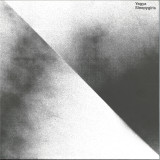
Limited 10 year anniversary repress. In May 2014, Icelandic producer Yagya released his fifth album, Sleepygirls, across three slabs of vinyl on Dutch label Delsin. It's a deep, spacious and dubbed out affair that stays locked at a pleasingly sedentary tempo throughout. Since 2002 the definitive member of the Thule Musik collective has been crafting lush electronic albums under his Yagya alias and always manages to find pure bliss and beauty and his simple, nature inspired soundscapes. "I wanted to create an album that's atmospheric, repetitive, and easy to listen to over and over again," says the man himself. "Something that works well in the background (e.g. when concentrating on work), as well as up close in a big sound system. I also wanted to learn how to make my music sound better than before, since I'm a huge sound-nerd, so that was a part of the goal for me personally." The album is a fine fusion of tropes from Yagya's earlier albums, features jazz instrumentalists that improvise beautiful melodies over monotonic, almost drone-like, techno beats and also uses live recordings of Japanese vocals, saxophone and guitar to counter the repetitiveness of the rhythms. Right from the rolling bliss of the opener, you're suspended in a womb like pillow of sound that is soft, warm and serenely beautiful. As tracks roll on, the pace stays the same but themes vary from upright and summery to more elongated and insular. This is natural, organic dub that is a delight and a pleasure to listen to. The vinyl versions of each track have been specially mixed with random LFOs, sonic quirks and unique fingerprints making them the subtly different to the CD version, but overall this is a brain soothing and mind melting album that can soundtrack lazy days, long summer afternoons and warm winter evenings in equal style.