Kate Bollinger's songs tend to linger well beyond their run times, filling the negative space of ordinary days with charming melodies and smart phrasings. She writes them at home in Richmond, Virginia, letting her subconscious lead, an open-ended process she likens to dreaming. From a chord progression appears a line, maybe a syllable will start to stick, enough to pursue, but she says sometimes the words don't feel likeher own, more like shapes that form in the mind's sky. Bollinger's musical universe is relaxed, tender, and unassuming; within lives a timeless sensibility, a songwriter's knack for noticing the little things and their counterpoints. Darkness and light, pain and pleasure, reality and escape. Her new EP, Look at it in the Light, her first project on Ghostly International, is collaborative; she shoots music videos with her friends and colors each of her folk-pop songs with musicians in her community. The title Look at it in the Light is a reference to the aspects of Bollinger's life that she knows need examining. For one, there's her persistent resistance to change _ she chooses to ignore it on the title track ("I try not to notice / I deny my fate"), as wiry strums sync with crisp drums. She surrenders to comfort on "Who Am I But Someone," a light and softly psychedelic number. "Yards / Gardens" finds Bollinger in full swing, skipping verses of uncertainty above a bright and nimble bassline and kick. Guitar riffs unravel across the bridge, trailing her lines like ellipses. The string-backed "Lady in the Darkest Hour" is the set's most luxuriant statement, recorded during a session at Matthew E. White's Spacebomb Studios with in-house arranger Trey Pollard (Natalie Prass, Helado Negro). Here her lines ring bittersweet yet reassuring, uplifted by swells of golden-hued instrumentation. From the hushed abstractions of "I Found Out" to the biting suspicions of closer "Connecting Dots," Kate Bollinger uses every inch of this dazzling EP to find her footing amidst the ever-present sways of life.
Buscar:ya ya
Die Ukrainischen Stoner Rocker mit ihrem neuen Album "The Space", als Digipak und Vinyl! Für Fans von: CONAN, GREEN LUNG, KING BUFFALO, WEEDEATER, MONOLORD
- A1: Cypress Hill & Sonic Youth - I Love You Mary Jane
- A2: Onyx & Biohazard - Judgment Night
- A3: House Of Pain & Helmet - Just Another Victim
- A4: Run Dmc & Living Colour - Me, Myself & My Microphone
- A5: Ice T & Slayer - Disorder
- A6: Del The Funky Homosapien & Dinosaur Jr - Missing Link
- B1: De La Soul & Teenage Fanclub - Fallin
- B2: Sir Mix-A-Lot & Mudhoney - Freak Momma
- B3: Boo-Yaa Tribe & Faith No More - Another Body Murdered
- B4: Fatal & Therapy? - Come & Die
- B5: Cypress Hill & Pearl Jam - Real Thing
LIMITED EDITION
Nigerian classic Black Children Sledge Funk Group 1976’s debut album full of positive vibrations and feel-good grooves! A sunny blend of Reggae and Afro-Funk with a lot of percussions, psychedelic and rhythmic guitar and organ. In the mid-seventies in Nigeria everybody loved them; they were a symbol and pride of Africa.
Michael Hammedatha Moore sang and played congas and percussion. Daniel Carlos Yakubu played guitar. Jerry Freeman Nwokolo was on keyboards. Ricky Hardnar on bass and And Benson Teteh played the drums. Everyone in the band changed their last name to Black.
- A1: Mental Cube - Q
- A2: Yage - Quazi
- A3: Candese - You Took My Love (Earth Mix)
- A4: The Future Sound Of London - Papua New Guinea (Dumb Child Of Q)
- B1: Indo Tribe - Owl
- B2: Semi Real - People Livin' Today
- B3: Yage - Theme From Hot Burst
- B4: Indo Tribe - Shrink
- C1: Mental Cube - So This Is Love
- C2: Mental Cube - Chile Of The Bass Generation
- C3: Smart Systems - Tingler
- C4: Yage - Coda Coma
- D1: Indo Tribe - In The Mind Of A Child
- D2: Humanoid - Stakker Humanoid (Coby '94 Mix)
- D3: Smart Systems - Creator
- D4: Indo Tribe - Bite The Bullet Baby
This is a very significant 30th Anniversary issue of an iconic album from 1991. The Future Sound Of London broke boundaries with "Papua New Guinea", included here, influencing a whole new era of techno, ambient and electronic music. For the first time this album has been divided into four sides to comprise a double LP for higher end audio sound. There are only 1500 copies and each is individually numbered. It comes in a gatefold sleeve and includes new artwork exclusive to this limited edition.
Both the original single and album were a fixture on the end of year charts of many publications including Melody Maker, NME and Mixmag, whilst also achieving Best Techno Single at the Mixmag Awards in 1992.
- A1: Beauty, Mind And Body _1
- A2: Open The Sense
- A3: Gaze On Your Palm
- A4: Breathing Wave (With Foodman)
- A5: Have A Noble Meal (With Jim Orourke)
- A6: Moisture Of View (With Mc.sirafu)
- B1: Beauty, Mind And Body _2
- B2: Isometrics
- B3: Can You Hear A New World
- B4: Treadmill (With Lisa Nakagawa)
- B5: Aroma Oxygen
- B6: Beauty, Mind And Body _3
The 4th full-length by Tokyo Metropolis electronica entity UNKNOWN ME, Bishintai, is a sublime synthetic suite of cosmic wellness transmissions exploring “the unknown beauty of your mind and body,” appropriately named for a kanji compound meaning “beauty, mind, body.” Crafted with software, synthesizer, steel drum, rhythm boxes, and robotic voice by the core quartet of Yakenohara, P-RUFF, H. Takahashi, and Osawa Yudai, the album unfolds like a holographic guided meditation, soothing but cybernetic, framed by subways and sky malls. Latticework electronics flicker with texture, glitch, wobble, and mirage, themed around sensory perception and body parts.
A diverse cast of collaborators assist in actualizing the collection's uniquely urban expression of new age ambient, from psychedelic footwork riddler foodman to multi-instrumentalist institution Jim O'Rourke to Japanese underground shape-shifters MC.Sirafu and Lisa Nakagawa. Although the group cites a therapeutic muse (“made for the maintenance of the minds of city dwellers”), Bishintai shimmers with an alien strangeness, too, like decentralized relaxation systems obeying sentient circuits. This is music of utopia and nowhere, channeling worlds within worlds, birthed from a sonic ethos as simple as it is sacred: “in pursuit of beautiful tones.”
Spectacular live recording from 1986 of two seminal figures of the Japanese avantgarde - Akira Sakata on saxophone and Takeo Moriyama on drums. Mitochondria captures the reunion of the two free jazz masters, who started playing together in the Yosuke Yamashita Trio in 1972 until 1975. For both, the experience with the trio was an important step in the development of their own career and musicianship. The recordings are a remarkable performance in which each successfully highlights the essential elements of his playing while giving of room for the other musician. Recorded at Kashiwa Church Chiba Pref. In Japan on 24 May 1986 by Yukio Tezuka on Sony stereo cassette recorder. Mixed by Jim O'Rourke, Mastered by Martin Siewert. Graphic design/cover photo by Lasse Marhaug. Liner notes by Kazue Yokoi
FROM MUSIC COMES HARMONY
HARMONY BRINGS BALANCE
BALANCE RESTORES PEACE
Enter the heart of drums ..
With obvious intent Nui and Simon set out to create an album that encompasses all of their influences and experiences as musicians and journeymen in the world of African inspired rhythm and sound and have arrived at a work that is at once global, innovative and deeply funky !
It’s been an incredible journey that has taken them from the wilds of the northern hinterlands of New South Wales in Australia to the dreamy secret gardens of Marrakesh, from the onsite recordings of Afro-Cuban choirs of Havana, to the Gnawa street sounds of Moroccan medinas.
Nui and Simon have traversed the globe to create these recordings and have collected diverse and international group of artists to collaborate with in the making of Heart of Drums.
Artists such as Cazeaux Oslo, who is an African-American Mc and vocalist hailing from California.
Olugbade Okunade , Nigerian trumpeter and vocalist , was formerly a member of the Femi Kuti Positive Force band.
Members of Clave y Guaguanco, One of Cuba’s foremost folkloric groups, who have been around since the 60’s.
Lalita Yagnik, Portuguese Speaking Indian, vocalist and martial artist.
Radouan Naim, Traditional Moroccan vocalist and instrumentalist .
And
Close Counters, Australian Up and coming Electronic duo.
Digital Afrika is made up of two main protagonists:
Zhonu ‘Nui” Moon (Future Roots)
An African-Australian producer, percussionist and Dj that has performed and recorded all over the world.
With a strong focus on African music,He has worked with the likes of Femi Kuti , Mulatu Astake and Tony Allen.
And Simon Durrington (Si Fixion ) who is an Australian based producer, keys player and DJ. With extensive experience of working with Melanesian , Indian and world musicians.
Drawing on these influences, Si weaves these styles together seamlessly with his unique high quality electronic production.
This album ‘Heart of Drums’ is a synergy of lush analog electronica and fiery African percussion, vocals and instrumentation.
With occasional reinvented throwbacks to the Disco and Funk era as well as forward thinking Afro-futuristic Record bag essentials, Heart of Drums really brings the party!
These are constructed dance floor motivators for any environment.
The artwork for this record deserves special mention as the mask was handcrafted by the interesting and talented artist Ju Mu Monster. Based in Berlin, the studied fashion designer creates colourful, wildly dancing image-worlds, in which beings from diverse cultures are combined with shamanism and spiritual worlds. Her enchanting works of art include murals and canvases as well as magical masks.
All tracks produced and arranged by Zhonu (Nui) Moon & Simon Durrington
Even in trying times, “there is no love without electricity.” Electricity is the fourth and most progressive album from Ibibio Sound Machine, and like all good Afrofuturist stories, it begins with an existential crisis. “It’s darker than anything we’ve done previously,” says Eno Williams, the group’s singer. “That’s because it grew out of the turbulence of the past year. It inhabits an edgier world.”
Electricity was produced by the Grammy Award and Mercury Prize nominated British synthpop group Hot Chip, a collaboration born out of mutual admiration watching each other on festival stages, as well as a shared love of Francis Bebey and Giorgio Moroder. The fruits of their labor reveal a gleaming, supercharged, Afrofuturist blinder. Electricity is the first album Ibibio Sound Machine have made with external producers since the group’s formation in London in 2013 by Williams and saxophonist Max Grunhard. True, 2017’s Uyai featured mixdown guests including Dan Leavers, aka Danalogue, the keyboard jedi in future-jazz trio The Comet Is Coming, but Hot Chip and Ibibio Sound Machine worked together more deeply throughout the process, collaborating fully. Along the way, the team conjured a kaleidoscope of delights that include resonances of Jonzun Crew, Grace Jones, William Onyeabor, Tom Tom Club, Kae Tempest, Keith LeBlanc, The J.B.’s, Jon Hassell’s “Fourth World,” and Bootsy Collins.
The hook of opener “Protection From Evil” has Williams wielding a massive synth line from Hot Chip’s Al Doyle like a spiritual shield against unspecified, malign forces unspecified because Williams is speaking in tongues. Her lyrics are onomatopoeic: their meaning is defined in her energetic delivery. As Electricity takes off, so do Williams’ words towards a brighter future, alternating between English and Ibibio, sometimes within verses, and propelled by Joseph Amoako’s unabating afrobeat. She digs into this sentiment further on single “All That You Want,” coolly assuring her romantic interest while also requesting reciprocity. Meanwhile, Scott Baylis’ playful Juno synth guides the listener’s feet along the dancefloor.
Electricity is a deep and seamless realization of Williams’ and Grunhard’s ambitious founding manifesto to combine the singularly rhythmic character of the Ibibio language which Williams spoke growing up in Nigeria with a range of traditional West African music and more modern electronic sounds. While the band enjoys veering further into electronic territory with the help of mutuals like Hot Chip, Grunhard emphasizes, “For us, it’s not just a matter of embracing new technology. What’s key is to keep the music grounded in African roots.” Ibibio Sound Machine best exemplify this on Electricity’s “Freedom.” That track was inspired by the water-drumming rhythms of Cameroon’s Baka women, which in turn fueled its lyrics, which in turn prompted Hot Chip and Ibibio Sound Machine to layer joyfully kinetic electronic counterparts on top in the studio. As the track culminates with the mantra of “rage, hope, cope, soul,” it’s clear that Ibibio Sound Machine have channelled, harnessed, and distilled these words as guiding principles, both for the album and for the turbulent world that awaits it.
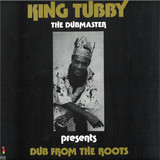
Tubby did three original dub albums, “Dub From The Roots, “The Roots Of Dub” and the third is “Brass Rockers” with Tommy McCook ’pon the flying cymbals. Where he mixed it with the horn going in and out in a dub way and one named “Shalom Dub” you can call Tubby’s too because he mixed the versions as they were off the forty fives.
King Tubby and Producer Bunny “Striker” Lee are intertwined in the birth of Dub Music. After discovering a mistake that made a “serious joke” (more of which later…) they went on to release the first pressings of this new musical genre namely “Dub Music”. Tubby’s vast knowledge of electronics and Bunny’s vast catalogue of rhythms would lay the foundations of what today is taken as a standard…. The Remix / Version cuts to an existing vocal tune.
Osborne “King Tubby” Ruddock was born in Kingston, Jamaican the 28th January 1941 and grew up in the High Holborn Street area of downtown Kingston. He studied electronics at Kingston’s National Technical College and also on two correspondence courses from the USA. When he had qualified, Tubby began repairing radios and other electrical appliances in a shack in the back yard of his mother’s home. His work in the early days included winding transformers and building amplifiers for Kingston’s Sound Systems. Tubby built his first Sound System in 1957 playing jazz and Rhythm and Blues at local weddings and birthday parties His reputation as a man who knew and understood both electronics and music grew steadily and as the sixties drew to a close. Tubby purchased his own basic two track equipment. He installed this alongside his dub cutting machine, a homemade mixing console and his impressive collection of Jazz albums in the back bedroom of his home at 18 Dromilly Avenue which he christened his music room.
Dynamic Sounds upgraded to sixteen track recording in 1972 and Tubby purchased, again with the help of a deal brokered by Bunny Lee. The old four track equipment and the MCI console from their Studio B. The four tracks now gave him far wider scope to work with and he began to create a new musical form where the bass and drum parts were brought up while the faders allowed Tubby to ease the vocal and rhythm in and out of the mix. It was only a matter of time before Tubby’s dub plate experiments began to make it on to vinyl and the first ever long playing King Tubby releases would feature a collection of his mixes to a selection of Striker’s rhythms. So please sit back and enjoy this historic set of sounds. Lovingly restored and with a few extra gems added to the CD editions. These releases were the first to carry the name of King Tubby and the first to credit the great musicians that contributed so much to the rhythms that made these albums possible.
Hope you enjoy the set……
TJJA10024 Vinyl, finally coming out with "Princess Mononoke".
Includes remastered audio, new deluxe artworks and liner notes! Please enjoy the beauty of artworks and rich sound of vinyl record.
Following the popular LP releases of "Nausicaa of the Valley of the Wind” “Castle in the Sky”. “My Neighbor Totoro”, “Kiki’s Delivery Service” and “Porco Rosso”.
Image Album recorded ahead of soundtrack by "Joe Hisaishi",
he is based on the notes which Director 'Miyazaki' wrote about music when he was planning the movie.
Furthermore, these 2 Scores have been never released on
Vinyl before!
In March 2020, Tahiti 80 had a plan to start recording their new album in the studio. That plan, of course, along with everything else in the world, got derailed. But the five-piece group was resilient and resourceful. They quickly shifted to a socially distanced plan B that included file swapping and virtual sessions, all refereed by producer Julien Vignon. The result, due for release in March 2022, is the buoyant Here With You, a collection of eleven upbeat songs that unfold like a prescription for a post-pandemic panacea.
“When lockdown in France happened, we said, 'We're not going to stay at home not doing anything,'” says singer-guitarist Xavier Boyer. “And our new plan became a hopeful thing, waking up every morning and seeing what the other guys had worked on. It wasn't always easy, but this new method allowed a freer approach where we could really go all the way with an idea without being influenced by each other’s suggestions. It must've been overwhelming for Julien, who ended up selecting all our arrangements. But he stayed positive all the way through.”
To help stay inspired and focused during their time in isolation, the band created a mood board, with the centerpiece a photo of an early '90s rave in the UK.
Boyer says, “Whenever you see pictures from this era, people seem very innocent. There are no cell phones and everybody is in to what they are experiencing. We kept that picture in mind as a kind of mantra that would help everyone feel connected to this idea of people celebrating, gathering and just having fun. We were missing the connection with people, and thought it would be great if we could create music that would inspire that kind of emotion.”
Indeed, the songs on Here With You are brimming the feeling of communion that we've all been missing over the past two years. It's there in the catchy opener Lost in the Sound, which walks the walk with Chic guitar flicks, urban nightfall sparkles and an inviting chorus (“Your heart grooves like a thousand 808s on the right time”). It's there in the Jackson 5-style syncopated bounce of “Vintage Creem,” the lush, dreamy “Breakfast in L.A.” and the panoramic sweep of “UFO.” And it's there in the first single “Hot,” which matches an irresistible groove with a neon-lit, percolating arrangement that evokes the disco clubs of 1979.
What's remarkable is that though Tahiti 80 displays a clear affection for sounds of the past, from bubble gum to '70s soul, they never trade in mere pastiche. Their take is more a slightly warped and playful carnival mirror mash-up of classic pop styles, given depth through Boyer's hang-gliding, coolly emotive vocals and lyrics that often rub against the euphoric grain of the music.
“I like to think of songs as a three-minute drama,” says Boyer. “This concept of drama definitely adds different levels to our music. There's the melody, the lyrics, then the production that can maybe emphasize or counterbalance the interaction between the yin and yang in a song.
“There's a difference between the very upbeat, sunshine-y soft rock and the lyrics, even on our past albums,” he continues. “Not dark, but a little more melancholy, and also looking for some kind of motivation, talking to yourself. Like with a lot of Motown songs, you get that feeling where you body’s dancing while your mind’s reflecting, reminiscing.”
That alluring blend of happy-sad has been a signature part of the Tahiti 80 sound from the time Boyer and bassist Pedro Resende formed the group in 1993, as students at the University of Rouen. Taking their name from a souvenir t-shirt given to Boyer's father in 1980, the duo recruited guitarist Mederic Gontier in 1994, and with the addition of drummer Sylvain Marchand a year later, the lineup was complete. The foursome released a self-produced and self-financed EP, 20 Minutes, in 1996, which resulted a record deal with French label Atmospheriques in 1998. Their full-length debut Puzzle, produced with Ivy's Andy Chase and mixed by Tore Johansson, went gold and featured the international hit “Heartbeat” that established the band throughout Europe and Asia.
In the years since, Tahiti 80 – with the additions of Raphaël Léger on drums and Hadrien Grange on keys - has released eight acclaimed albums. The band has fused what MOJO called a “glorious entente of old and new technology” (including singles like “Yellow Butterfly,” “1000 Times,” “Sound Museum,” “Crush!” and “Big Day,” which was featured on a FIFA video game soundtrack), while collaborating with such producers and arrangers as Richard Swift, Tony Lash and Richard Anthony Hewson, who famously arranged The Beatles' “Long and Winding Road.” Boyer has also put out two solo albums, the first under the anagram Axe Riverboy and the second under his name. In 2019, the band released Fear of an Acoustic Planet, a stripped-down reimagining of some of their best-loved tracks from the previous twenty years. It served not only as a look back but a reminder of their formidable songwriting skills.
Boyer is definitely a student of the timeless three-minute pop song format pioneered by '60s artists like The Beatles and The Beach Boys. He says, “I see it as kind of a frame for a painting. Most of the songs on this album, I wrote a verse, pre-chorus and chorus. There aren't many middle eights. I wanted it to be very concise. I feel like people have less attention. There's so much music. It's too easy to switch off or skip to another track, so I want to hook the listener. The three-minute song is kind of an easy code to crack, but at the same time you have to figure out a new way to tell the stories that we've heard before.”
And the stories on Here With You are very much about the longing for connection. Of the album title, Boyer says, “In the world right now, that can mean a lot of different things. Like missing our fans, missing going to concerts. In a way, it can be a statement of what happened last year, and a wish of 'I want to be here with you again.' It's our ninth album. We've had some had some very open, conceptual titles like Puzzle, Activity Center. Sometimes they were more specific like Fosbury orWallpaper for the Soul. Here with You, seems more personal, more engaging in terms of relationships. When I suggested that title, everyone in the band said, 'Yeah, that's it.'”
Until Tahiti 80 can resume a full tour schedule, Boyer says he hopes the new record will make that personal connection. “If I see from the point of view as a music fan, sometimes I see albums I like as companions throughout my life. So if we can be a part of people's existence, even if it's a song that reminds them of the time they were driving with the windows open and it was sunny. Or a sad song that resonates with them after a breakup. That's what we're all looking for when we're making music. You do this very personal thing and you want it to touch as many people as possible.”
- A1: One More Year
- A2: Instant Destiny
- A3: Borderline
- B1: Posthumous Forgiveness
- B2: Breathe Deeper
- B3: Tomorrow's Dust
- C1: On Track
- C2: Lost In Yesterday
- C3: Is It True
- D1: It Might Be Time
- D2: Glimmer
- D3: One More Hour
- E1: One More Year (Nts Extended Version)
- F1: Patience (Maurice Fulton Remix)
- F2: Patience
- G1: Is It True (Four Tet Remix)
- H1: Breathe Deeper (Lil Yachty Remix)
- H2: Borderline (Blood Orange Remix)
- I1: Track 1
- J1: Track 2
”The Slow Rush”, das vierte Album von Kevin Parker als Tame Impala, wurde im Februar 2020 mit großem Erfolg veröffentlicht. Parker erreichte seine zweite Nr. 1 in Australien und sein bisher höchstes Chart-Album sowohl in den USA als auch in Großbritannien sowie 14 Top-10-Chartplatzierungen weltweit.
Die neue Farbversion von ”The Slow Rush” in limitierter Auflage, die zum ersten Mal seit der Erstveröffentlichung neu aufgelegt wurde, erscheint auf 180 Gramm cremeweißem Vinyl.
Mit ”Lost In Yesterday”, ”Borderline”, ”It Might Be Time”, ”Breathe Deeper” und ”Is It True” taucht Parker auf ”The Slow Rush” in die Tiefen des Ozeans der Zeit und beschwört das Gefühl eines Lebens in
einem Blitzmoment herauf, über wichtige Meilensteinen, die vorbeisausen, während man auf sein Handy schaut, ist es ein Loblied auf Schöpfung und Zerstörung und den unendlichen Kreislauf des Lebens.
- A1: Chrizpy Chriz - Dark Satate
- A2: Chrizpy Chriz - Hollow Point
- A3: Chrizpy Chriz - Sewer Rat Mob
- A4: Chrizpy Chriz & Smol - Black Widow
- B1: Chrizpy Chriz - Mentally Broken
- B2: Chrizpy Chriz - Intoxicated
- B3: Chrizpy Chriz - Discomfort
- B4: Chrizpy Chriz - Compulsion
- C1: Chrizpy Chriz - Frayed
- C2: Chrizpy Chriz - Trauma
- C3: Chrizpy Chriz - Erratic
- C4: Chrizpy Chriz - Stomp Box
- D1: Chrizpy Chriz - Monsterpiece
- D2: Chrizpy Chriz - Burnt Wires
- D3: Chrizpy Chriz & Yunis -Janky
- E1: Aagentah -From Empire
- E2: Aagentah -Spark With The Flame
- E3: Aagentah - Aeldari
- E4: Aagentah - Webway
- F1: Aagentah - Gassed Up
- F2: Aagentah & Subp Yao - Told You Twice
- F3: Aagentah - Catalyst
- F4: Aagentah & Chrizpy Chriz - Awakening
Big Yawn make experimental electronic music by fusing a wash of sweeping synthesizers, heavily refracted vocal sampling, motorik style percussion and disorientating dub FX.
Their latest studio release 'Pressure Acts' creates a space where breaks compete with live drums compete with drones. Relentless pummelling bass lines and kinetic dub FX come standard.
Big Yawn's energetic and unrelenting live performances create a definitive impression on this release. The sonic textures in the record are lush, stoned, frenetic and fun. The music is sinister yet also tongue-in-cheek — Phil Collins and Slipknot may have even been sampled.
The first single 'Ragazzo' is ideal for joy rides in HSVs and/or flaunting at the local disco parlor - a dank blend of YMO style pop hooks, driving bass, delicate synths, and a robotic pulse.
"We’ve reached book IV in Rupert Clervaux’s series of “Zibaldone” audio diaries, at which point we find him telling a different kind of story.
“The first three all had very specific themes, while this one feels a little bit looser and doesn’t have just one thematic thrust,” he tells me, which maybe explains why listening feels a bit like annotating. I’m underlining, emphasizing, drawing arrows from here to there, highlighting symbols and noting motifs, realising, questioning, eureka-ing. An impressionistic meaning’s been encoded in and we’re lucky to be given the space to play that most poetic and boundless of all mental games: narrativization.
There are no wrong answers, but Rupert offers some clues either way. If there’s any cipher here it’s “something like a meditation on the concept of ‘depth’––in all its connotative forms.” Think below the surface, (the) underground, yawning oceans, being ‘down in the dirt’, soil, roots, rootlessness, pulling at the dregs, collapse, profundity, stable and unstable horizons, distance, perspective, intuition, not to mention relative opposites: to be shallow, to be above, to be beyond.
It’s got me thinking of Bresson’s “Bring things together that have as yet never been brought together and did not seem predisposed to be so.” His: “Dig deep where you are. Don't slip off elsewhere.” Rupert has realized these—two favourite goals of mine!—here.
This is music that catches you at your own periphery, gives pause, has you offering a little “huh” to, asking “I wonder why” to. Again, it’s got me musing on another mindworm, this time from New York publisher and multi-sensory reading room Dispersed Holdings: “Feeling-making-knowing feedback loop; cartography of feeling; water as text, read to know the land beneath and around it, and body as reader.”
Is it ok to offer up these other contexts out of context? I think so, because Zibaldone IV articulates a similarly swirly tone. Like, we’ve got Rebecca Solnit talking through Kropotkin’s “Mutual Aid” and later calling out to Michael Ruppert a ways away, and “Easy Rider” is playing in the wings. We’ve got Susan Sontag magically contextualizing Mariah Carey with poet Thylias Moss triangulating in order to sketch out (Rupert again) “something a little more interesting than wilful eclecticism or that laboured and patronising kind of pop-savvy.”
Are we following? Whether yes or no Vanessa Bedoret follows on with a performance of a performance of Moss’s 'Water Road’: to be once or twice removed, via strange transitions, purposeful confusions, and, suddenly, seagulls. We’re on a boat with Ingeborg Bachmann—and how I wish I could actually be! But maybe thanks to this music I can as literature, films, friends, lethargy, coincidences, little mental links, eternal wormholes, lingering notions come together to imagine something better."
Text by Natalia Panzer
Always open to experimentation, Welsh imprint Haŵs welcomes Wyatt to the family. Comprising five evocative, glossy cuts, the ‘Netherwood’ EP is a time capsule back to his hometown, turning memories into alchemical moments experienced under a blazing sun or by the light of a full moon.
The opening ‘Sewell’ sails through a sensory voyage of stripped-back breakbeat, travel intercom samples and earworm melodies. ‘Netherwood’ snakes into a trippy pace, carving an indefinable sculpture of synth melodies nestled between weightless ambient.
On the B-side, ‘Mousehold’ launches into a peak-time club number, its initial drive of drums and bass tempered down by emotive accents that feel like a coy dance between yin and yang. ‘Tombland’ slinks into a shadow-cast realm of melancholy and introspection, joining the hands of broken beat and synth lines into a melodic collaboration drunk on its private thoughts. To close, ‘Heathgate’ retreats into a hopeful murmur, reflecting its quiet, percussive optimism back at itself through tear-stained melodies and a glassy bass.
Sometimes, existential introspection happens through external movement. ‘Netherwood’ is a catalyst for those epiphanies.