Yeketelale is the third album from Franco-Ethiopian group uKanDanz, combining a heady brew of rock energy, saxophone zigzags and Ethiopian melodies, all fronted by veteran singer Asnake Gebreyes grooving harder than ever.
In Ethiopia, sons follow fathers and, together, their names tell a story. Some discographies are the same way. After Yechelal (''It's Possible''), Awo (''Yes!''),here's Yeketelale (''It Continues''), the third album from Ukandanz.
The adventure that links Damien Cluzel (guitars) and Lionel Martin (tenor sax), the two founders of the group, with the Ethiopian singer Asnake Guebreyes continues and, with this album, takes on new colors and a new dimension. It is a polished synthesis that keeps the rock energy of their first recordings and gives even more space to the subtle vocal ornamentations that mark great Ethiopian singers. Add to that a groove that is more danceable than ever, carried by Adrien Spirti's synth bass and Yann Lemeunier's drums, and you have the magic formula of Yeketelale.
This came about slowly over the course of a dialogue that began in the early 2000s when Damien Cluzel, arriving with a circus in Ethiopia, met up with the occupant of the next room in their hotel. A stroke of luck: this was Francis Falceto, high priest of the Ethiopiques collection (Buda, 30 volumes to date) which had introduced to the West the treasures of swinging Addis, the capital that vibrates to the sound of big brass orchestras. With him, he dives into the capital's nightlife and meets a galaxy of musicians. The singer Asnake Guebreyes is among them.
Recruited by the famous Police Orchestra at the tender age of 16, he already had all the power, energy and class of his role model, Tlahoun Guessessé ''the Ethiopian James Brown''. He began his solo career at the beginning of the 1990s with several major successes, most famously an explosive duo with the singer Fekker Addis.
This experience made a big impact on the French guitarist. Having learned how to blend in with a uniquely Ethiopian groove, he was now ready to take it to other places and in other directions. In his old friend Lionel Martin, he found an ideal partner to engage in such experiences. But they needed a singer. The idea of Asnake Guebreyes was mentioned. Then Francis Falceto called and suggested going to see him at the Addis Music Festival. Ukandanz, a rock version of Ethiopian groove, was born.
Some pieces, like the disturbing Yene Hassab, call to mind Herbie Hancock's experiments in the seventies, as well as the Juju guitars of the Gulf of Guinea. Others, like the dark Fetsum Deng Ledj Nesh, allow Asnake's voice to soar above the synthetic waves, like a siren song for a freighter in distress. Dance and trance are not left out, with inspiration from the inexhaustible Ethiopian traditional repertoire. In a nod towards Asnaké's first album (Ahadu, also reissued by Buda) Ukandanz returns to its track Ajiré, transfigured by the guitar, claps and synthetic bass and takes us back to the glory days of breakdancing. Listening to the two versions gives the key to understanding the unique touch of Ukandanz and of the rich musical colours of Yeketelale (''It Goes On''), a fusion musical journey that brings the electric spark of the Frendj (Westerners) to Ethiopian lyricism.
Suche:yek
- A1: Canto De Amor Jayeechi
- A2: Quitiplás
- A3: Punto Oriental
- A4: Rumba Callejera
- A5: Percusión Con Platos
- A6: Tamboritas De Fulía
- A7: Jujuta
- A8: Tambor De Palma
- B1: Saludo A San Juan Bautista
- B2: Campana De Los Diablos De Chuao
- B3: Canto De Pilón
- B4: Joropo Estribillo
- B5: Marimba Indígena
- B6: Carrizos Con Baile
- B7: Tambor De Los Diablos De Yare
- B8: Canto Yekuana
"After a concert of Kenyan singer Ogoya Nengo in Berlin in 2015 in a pleasant conversation Guillermo Lares told me about his father, Oswaldo Lares, a studied architect who, parallel with his professional activity, began to make field recordings of the traditional and indigenous Venezuelan music from the early 1960s onwards up until today.
His search and fascination for finding the musical roots of his country led Oswaldo Lares to visit the rural villages outside Caracas, investigating the many and varied musical cultures of the region and the complex relationship between Venezuelan folk music and its various origins, including the African (mu´sica afrodescendiente).
The vast amount of music documents in the form of sound recordings, photographs and videos accompanied by notes and studies reflect the scope of this entirely self- taught sound engineer's work and represent a passionate documentary, making his work today one of the most comprehensive and systematic that has ever been assembled by a single person in Venezuela. Oswaldo Lares as an ethnomusicologist remained an amateur in the most direct meaning of the word: amare. Whereas most studied ethnomusicologists travel around the world to explore far away continents and foreign cultures, Oswaldo began to devote much of his spare time to the generally overlooked folk traditions that existed right in his very neighbourhood.
Currently Guillermo Lares has started to promote his father's work through the Achivolares Foundation, turning it into a living archive that preserves an essential part of Venezuelan musical memory. It is a pleasure and honor of our label TAL to support the invaluable work of Oswaldo and Guillermo Lares with this album."
- A1: Alemayehu Eshete - Addis Abeba Bete
- A2: Girma Beyene - Set Alameneme
- A3: Gemechu Itana - Shemermare Tiya
- A4: Seifu Yohannes - Tezeta
- A5: Abayneh Degene - Yebereha Lomie
- B1: Teshome Meteku - Gara Ser Naw Betesh
- B2: Menelik Wossenachew - Asha Gedawo
- B3: Muluken Melesse - Hedech Alu
- B4: Mulatu Astatke - Yekermo Saw (Instrumental)
- B5: Essatu Tessema - Ayamaru Eshete
- B6: Abebe Tessema - Ashasha Beyew
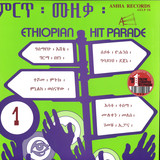
After releasing around fifty 45 rpm singles and his first 33 rpm album (Ethiopian Modern Instrumental Hits AELP 10, re-released by Heavenly Sweetness HL092VL), Amha Esthèté set about compiling his best 45s on a series of now legendary albums in 1972.