Highlights: Limey and the Yanks' A-side 'Love Can't Be A One Way Deal' is a garage song with a sound pitched somewhere between the Beau Brummels and the Beach Boys. 'Guaranteed Love', on the flipside, is an outstanding bluesy number with a stinging fuzz guitar, a concise harp solo and a rousing Bo Diddley-fied groove that has made its way to various compilations since the early 80s and now gets reissued for the first time on a 7" single. This release includes notes by Mike Stax (Ugly Things Magazine) Details: In California in the mid-sixties, with the British Invasion raging, having an authentic Englishman as the lead singer of your band was an ace in the hole that gave you an edge over the competition. Such was the case with Limey & the Yanks a quintet from Buena Park in Southern California's Orange County. Limey was young Steve Cook, and his Yanks by 1965 were guitarists Gregg DeLorto and Tim Gunne, bass player Bob Batman and drummer Wes Hunsinger. With his blonde Keith Relf-style hair, Steve was a striking front man who fortunately also possessed a decent voice, and with his father managing the group they were soon making waves throughout the area. A victory at a Battle of the Bands at the Hollywood Palladium put them on the map in Los Angeles, attracting the attention of producer Gary Paxton. By this time Wally Downing had joined on lead guitar, replacing Gregg DeLorto who had defected to the Spats. Paxton produced their debut single in late 1965, and it was released in January of the following year on his Starburst label. Paxton's business partner in Starburst was Lloyd Johnson, and the single's A-side was written by Lloyd's son Ken, who also recorded for Starburst with his group Ken & the Forth sic Dimension. Paxton had already produced a version of 'Love Can't Be A One Way Deal,' a couple of years earlier with the Rev-Lons, a girl group from Bakersfield, but the version by Limey & the Yanks took a completely different approach, turning it into a lovelorn garage number with a sound pitched somewhere between the Beau Brummels and the Beach Boys, with bright harmonies, mournful harmonica and a melodic twangy guitar solo. Swinging on a guitar hook based on Bobby Parker's 'Watch Your Step,' 'Guaranteed Love,' took a bluesier approach with a confident Limey vocal, stinging fuzz guitar, a concise harp solo and a rousing Bo Diddley-fied groove. The single was not a hit, but it added heft to the group's growing reputation. A second single, 'Out of Sight, Out of Mind,' was released in October, but it would be the group's last, although they did continue, through several lineup changes, into 1967. Limey's legacy lives on_
Suche:young hollywood
Propelled into the industry at just 19, Foxes was at
the forefront of the pop stratosphere with her
critically acclaimed debut album ‘Glorious’,
Grammy-winning collaboration ‘Clarity’ with EDM
giant Zedd, big name support slots and six singles
in the UK Top 40. In 2017, she decided it was time
to press pause and focus on connecting with
herself.
‘Friends In The Corner EP’, available on
transparent vinyl, is ultimately about facing up to
tough experiences that led her to pressing that
pause button, and the effects of having your
confidence and agency diminished.
The EP features previously released singles ‘Love
Not Loving You’ - her bold, buoyant comeback
single that transports you to the light at the end of
her time away; ‘Friends In The Corner’ on the
fragility and hidden nature of mental health
struggles; ‘Hollywood’, revealing some of the most
challenging experiences she’s had to date,
chasing her dreams to Los Angeles as a young
songwriter; ‘Woman’ with its universal message of
standing up to the unacceptable; new single
‘Kathleen’, an ode to her grandmother and
unheard tracks ‘Courage’, ‘Dance’ and an acoustic
version of ‘Kathleen’.
Love At Leeds is the realization of many dreams for Mikey Erg
A lifelong music obsessive, growing up in the early 90's,there was one sound he'd
always hoped to capture on his recordings. The sound of Steve Albini. Steve's
credits include The Pixies, PJ Harvey, Jimmy Page & Robert Plant and of course
Nirvana's 3rd LP In Utero, One of Mikey's absolute favorite records. Mikey had
never in his 20 plus year recording career ever gotten to make a fully analog
recording. Love At Leeds was the perfect time to rectify all of that. Using the
group of musicians that helped him realize his debut solo LP Tentative Decisions
(Jeff Rosenstock, Alex Clute & Lou Hanman), He Headed out to Chicago to make
this dream a reality. Recorded and Mixed in only 5 Days, Love at Leeds is a swift
25 minute long grunge-pop tour de force. Once the album was complete, Steve
and his trusty razorblade compiled the master mix reels and sent the band on
their way. The tapes then made the journey to Hollywood, California to the
legendary Bernie Grundman Mastering facility to be mastered and cut straight to
lacquer disc by Chris Bellman (Frank Zappa, Neil Young, Kenny Dorham, Pearl
Jam).
- A1: Wham! - Wake Me Up Before You Go-Go
- A2: Huey Lewis And The News - Stuck With You
- A3: Bryan Ferry - Slave To Love
- A4: Frankie Goes To Hollywood - Relax
- A5: Pat Benatar - Love Is A Battlefield
- A6: China Crisis - Wishful Thinking
- B1: Duran Duran - Hungry Like The Wolf
- B2: Orchestral Manoeuvres In The Dark - (Forever) Live And Die
- B3: Thompson Twins - Hold Me Now
- B4: Nik Kershaw - I Won’t Let The Sun Go Down On Me
- B5: Level 42 - Take A Look
- B6: A-Ha - The Sun Always Shines On Tv
- C1: Simple Minds - Sanctify Yourself
- C2: Culture Club - The War Song
- C3: Propaganda - P: Machinery
- C4: Robert Palmer - Pride
- C5: Paul Young - Tomb Of Memories
- C6: The Christians - Forgotten Town
- D1: The Cure - In Between Days
- D2: Julian Lennon - Too Late For Goodbyes
- D3: Abc - When Smokey Sings
- D4: The Human League - (Keep Feeling) Fascination
- D5: Ub40 - If It Happens Again
- D6: Karel Fialka - Hey Matthew
- D7: Curiosity Killed The Cat - Down To Earth
The Decades Collected compilations are part of the new Collected compilation series, which is a collaboration between Universal Music and Music On Vinyl. The compilations bring together the biggest names of each decade, combined with forgotten hits and less discovered gems, giving the listener an experience of listening to their favourite tunes while uncovering new musical grounds at the same time.
Various Artists - Eighties Collected features original hits like Wham! “Wake Me Up Before You Go-Go”, Duran Duran “Hungry Like A Wolf”, A-HA “The Sun Always Shines On TV”, The Cure “In Between Days”, Pat Benatar “Love Is A Batteflield”, Culture Club “The War Song”, Robert Palmer “Pride”, Frankie Goes To Hollywood “Relax”, Simple Minds “Sanctify Yourself”, ABC “When Smokey Sings”, The Human League “(Keep Feeling) Fascination”, UB40 “If It Happens Again” and many more.
Recorded in 1991 by the quintet of vocalist Billie Ray Martin and Birmingham-based electronic musicians Brian Nordhoff, Joe Stevens, Les Fleming and Roberto Cimarosti, Electribal Soul was conceived as the sequel to the band’s 1990 debut album, Electribal Memories.
Electribal Memories had yielded the hits ‘Talking With Myself’ and ‘Tell Me When The Fever Ended’ and pushed Electribe 101 to the forefront of a crossover electronic scene that fused dance music with pop savvy. They were snapped up by Phonogram, managed by Tom Watkins and hailed as “the next band to meet the Queen” by i-D. The band took the coveted support slot for Depeche Mode on their epochal World Violation tour and supported Erasure at Milton Keynes Bowl. Seen as the next big thing, everything pointed toward enduring critical success for Electribe 101, and the band settled into putting their second album together.
“There was a degree of confidence among us when we came to write the second album,” recalls Billie Ray Martin. “To me, the songs we put down sound like some of our finest moments.” More immediately lush and warm than the dancefloor-friendly structures of Electribal Memories, the clue to the sound of Electribal Soul lies in the second word in its title: soul. Songs like the aching sensuality of opening track ‘Insatiable Love’ or the emboldened defiance of ‘Moving Downtown’ showcase Billie Ray Martin’s distinctive vocal range as it moves from haunting quiet to dramatic, euphoric rapture. Lyrics from ‘Moving Downtown’ had found their way into ‘Pimps, Pushers, Prostitutes’ by S’Express, and the song would appear as ‘Running Around Town’ on Martin’s 1996 solo album. The strikingproduction on the version of the song presented on Electribal Soul suggests classic late sixties soul influences, such as those of legendary Motown producer Norman Whitfield, with the long shadow cast by Kraftwerk never being far away.
‘Deadline For My Memories’, the song that provided the title for Martin’s first solo album, was originally intended for the second Electribe 101 album. Its lyrics document a sense of freedom and liberation from the darkness of a bad relationship, accompanied by jazzy piano and organ sounds over a quiet rhythm and discrete electronics. In contrast, ‘A Sigh Won’t Do’ finds Martin in soothing vocal mode, despite its devastating message about the final ending of a strained relationship, her lyrics framed by restrained and subtle beats and sounds.
To spend time with Martin’s voice on Electribal Soul is to find yourself moved deep into the ordinarily impenetrable emotional corners of your own psyche. “I was into big ballads at the time and listening to all kinds of US and UK singers, and I was also young enough to want to prove myself as a belter of ballads,” explains Martin of the classic soul edge the album showcased.
Electribal Soul heads into darker territory with ‘Hands Up And Amen’. Originally written by Martin in Berlin in the period before moving to London and forming Electribe 101, the song was then perfected and enhanced by the band’s production nous. ‘Hands Up And Amen’ savagely documents the mugging of a woman in Queens, NY at gunpoint, only to resolve itself with a middle section that nods reverently toward gospel tradition. The song coalesces around a regimented break and burbling synths, finally ending with layers of urgent synth sounds.
Meanwhile, a cover of Throbbing Gristle’s ‘Persuasion’ takes us into a seedy world of sexual coercion and creepy infatuation, predating Martin’s chilling version of the track with progressive house unit Spooky two years later. Supported by a minimal, nagging rhythm and barely-fluctuating sounds, Electribe 101’s take on ‘Persuasion’ makes for uneasy listening, even though Martin manages to inject a sort of twisted sympathy for the protagonist as the song progresses.
That Electribe 101 were as comfortable offering complicated, nuanced tracks like ‘Persuasion’ alongside pop house bangers like ‘Space Oasis’ – written by Billie Ray Martin with Martin King before Electribe 101 was formed – is testament to the way the band wove their way effortlessly through electronic music reference points. Framed by light, jazzy piano melodies and string sounds, the energy of ‘Space Oasis’ soars so high that it could easily reach the moon, while highlighting how well-suited Martin’s voice has always been to club music. We hear the same reminder of her dance music credentials on ‘True Memories Of My World’, finding her describing a Hollywood actress who reflects on being used by directors to sell her ‘tears’.
Hooking up with the Birmingham-based Nordhoff, Stevens, Fleming and Cimarosti after placing a Melody Maker ad in 1988 (“Soul rebel seeks musicians – genius only”), it was clear that Martin had found a group that recognised the unique power and importance of her voice. Having worked with genres as diverse as reggae, rock and R&B, the four producers proved to be perfect collaborators, presenting carefully-sculpted backdrops that emphasised the towering emotional dexterity of her voice.
“Listening back to these tracks now, I was reminded of what a bunch of great musicians they were,” says Martin. “They had a rule that if a part still sounded good after a day or two then it could stay. If it bothered the vocals, it would go.” Even more so than on Electribal Memories, Electribal Soul places Martin at the captivating centre of these pieces, surrounding her voice with everything from dubby rhythms to chunky R&B beats to nascent trip hop breaks; wiry, acid-hued synths uncoil gently without ever dominating, while horn samples and lush, disco-inflected strings provide a rich, naturalistic accompaniment for Martin’s emotional outpourings.
The band finished mixing the album at London’s Olympic Studios in 1991. They were assisted by Apollo 440’s Howard Gray on production duties for ‘Deadline For My Memories’, ‘Insatiable Love’ and ‘Space Oasis’, with Gray supported by talented engineer Al Stone. Pre-release promo tapes were issued and an enthusiastic energy started to build around the band’s anticipated second album.
It was not meant to be. Against a backdrop of a worsening relationship with Tom Watkins, and a disinterested Phonogram, instead of receiving a positive reaction to the new tracks, Electribe 101 were swiftly dropped by their label. Electribal Soul languished, unreleased, and the band yielded to pressures that had been building and split up. After collaborating with Spooky and The Grid, Billie Ray Martin went on to release her seminal debut solo album in 1996, with it securing the era-defining hit ‘Your Loving Arms’, while the other group members continued to work together as The Groove Corporation.
Thirty years after the songs were recorded, we’re now finally able to hear what the second and final chapter of Electribe 101’s story sounded like. Electribal Soul shows that the band had really only just got started when they dropped their first album in 1990. Heard only by a select and privileged few, what followed elevated the band’s music to a completely new level, making Electribal Soul musical buried treasure of the most precious and rare variety.
Electribal Soul will be released on LP, CD and digital formats on 18th February 2022 through Electribal Records. The physical formats include extensive liner notes from Billie Ray Martin, and the album sleeve features unseen archive photographs by Lewis Mulatero from the original 1990 sessions with the band that were never used in the sleeve designs for Electribal Memories.
- A1: Stay Gold (Performed By Stevie Wonder)
- A2: Fate Theme
- A3: Country Suite
- A4: Cherry Says Goodbye
- A5: Incidental Music 1
- B1: Fight In The Park
- B2: Bob Is Dead
- B3: Deserted Church Suite
- B4: Sunrise
- C1: Fire At The Church
- C2: Incidental Music 2
- C3: Rumble Variation / Dallas’ Death
- C4: Brothers Together
- D1: Rumble
- D2: Stay Gold (Alternate - Performed By Stevie Wonder)
- D3: The Outside In
- D4: Stay Gold (Performed By Bill Hughes)
Francis Ford Coppola’s coming-of-age drama The Outsiders (1983) adapted S.E. Hinton’s successful 1967 novel of the same name, using a young cast of rising stars (C. Thomas Howell, Tom Cruise, Matt Dillon, Rob Lowe, Emilio Estevez, Patrick Swayze, Ralph Macchio and Diane Lane) many of whom came to be known as the Brat Pack, defining a genre of 80’s films. The plot focuses on the rivalry between two gangs of teenagers in Tulsa, Oklahoma, one poor (Greasers), the other wealthier (Socs).
Coppola’s ambition was to achieve the widescreen scope ‘of a teen Gone with the Wind’, and he asked his father, Carmine Coppola, to score the soundtrack. The result is epic and romantic, a return to a golden age of Hollywood film composing which suits the stylised and epic cinematography, becoming darker as the characters fulfil their tragic destinies. Stevie Wonder co-wrote and performed the song that plays over the credits, ‘Stay Gold’, which is included on this release.
The inner sleeves feature extensive notes by Daniel Schweiger on the history of the film, the soundtrack and an insight into the Coppola father and son partnership.
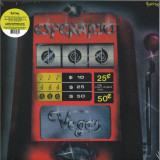
After the recent reissue of their first eponymous album, Favorite Recordings proudly presents Vegas, the second LP from Venezuelan band Esperanto. Rare and sought-after for many collectors, it was recorded in between Las Vegas and Caracas and originally released in 1981. Following bandleader Jorge Aguilar in his musical trip to the infamous American city bathing into flashing lights and vivid colors, we're invited to an excursion in Disco, Boogie and Jazz-Funk territories. Finally reissued, fully remastered, Vegas will be available as Gatefold Tip-On Vinyl LP.
With great care and attention to details, Esperanto managed to create a very convincing sequel to their Jazz-Funk debuts. Vegas keeps indeed a perfect balance between various influences. Through energic disco beats with intense funky solos, catchy AOR-influenced songs, where Jorge delivers convincing vocal performance, or sunny jazz-funk slow jams, the album still reveals something quite authentic. And this feeling echoes surely the one that could have been felt by Jorge Aguilar while discovering USA on a trip - where it all started for the music he loves. Like sometimes a foreigner's enriching view on some local specialty, he surely brought with the band all his authenticity and young but vibrant experience while convincing at the same time major labels for distribution.
With certain notoriety coming with the release of their first album, Jorge Aguilar and his drummer Pablo Matarazzo planned to go to Los Angeles for a few gigs. But once there, they realized their contact had to leave for Tina Turner's tour in Europe. Before that, he invited them to come along to Las Vegas and eventually meet musicians there. Luckily, the plan worked perfectly: Jorge came back to Los Angeles with a lot of contacts then moved to Boston and NYC before finally coming back to Caracas. He told: "I was so impressed with this trip that I told myself that one day I would return to Los Angeles and Las Vegas. The first tracks I did them in Los Angeles with Kenny More, James Gadson and other session musicians from that city. Later, I took the tracks to Caracas where the musicians of the band recorded overdubs. After that, I returned to Los Angeles to master with Bernie Grundman who was still working in his small studio at A & M records studios in Hollywood. As can be seen in the title of some of the songs like "Hollywood", "Vegas", "Kenny's Place", were only the translation of my experiences at the time."
- A1: The Boys Are Back In Town
- A2: Jailbreak
- A3: Don't Believe A Word
- A4: Dancing In The Moonlight (It's Caught Me In Its Spotlight) (It's Caught Me In Its Spotlight)
- A5: Waiting For An Alibi
- A6: Rosalie/ Cowgirl's Song (Live)
- B1: Do Anything You Want To
- B2: Chinatown
- B3: Sarah (Version 3)
- B4: Fighting My Way Back
- B5: Killer On The Loose
- B6: Hollywood (Down On Your Luck) (Down On Your Luck)
- C1: Thunder & Lightning
- C2: Renegade
- C3: Still In Love With You
- C4: The Sun Goes Down
- D1: Whiskey In The Jar
- D2: Bad Reputation
- D3: The Rocker
- D4: Showdown
- D5: Cold Sweat
- D6: Wild One
Formed in Dublin in 1968 few would dispute that Thin Lizzy helped define the genre Hard Rock.
The band scored 8 top 20 hits over 8 years and place no less than 8 albums in the UK top 20, 3 of which would make the top 10 and 4 the top 5.
From the mid-70s onwards, they championed the use of two lead guitars, it gave them a unique sound which evolved down the years and influenced the likes of Def Leppard, Metallica and Iron Maiden
After numerous line-up changes, Thin Lizzy called time in 1983
With 1986 just 4 days young lead singer and main songwriter Phil Lynott died aged 36. All music’s John Dougan wrote, “As the band’s creative force, Lynott was a more insightful and intelligent writer than many of his ilk, preferring slice-of-life working-class dramas of love and hate influenced by Bob Dylan, Bruce Springsteen and virtually all of the Irish literary tradition.”
This 2-LP set contains all that is great about the band – the tracklisting overseen by Lizzy Expert Nick Sharp covers what is the best of the band’s output throughout the years.
- A1: Limahl - Never Ending Story (Stranger Things)
- A2: Roxy Music - Love Is The Drug (Sex Education)
- A3: The Motels - Suddenly Last Summer (Breaking Bad)
- A4: Duran Duran - Save A Prayer (American Horror Story)
- A5: Abc - The Look Of Love (Dark)
- A6: Canned Heat - Going Up The Country (Legends Of Tomorrow)
- A7: Cutting Crew - (I Just) Died In Your Arms (Stranger Things)
- B1: Elton John - Rocket Man (I Think It’s Going To Be A Long Long Time) (Blacklist)
- B2: Salt-N-Pepa - Push It (Sex Education)
- B3: Devo - Whip It (Stranger Things)
- B4: Billy Ocean - Love Really Hurts Without You (Sex Education)
- B5: The Spencer Davis Group - Keep On Running (End Of The Fckn World)
- B6: Frankie Goes To Hollywood - Two Tribes (Sex Education)
- B7: Santa Esmeralda - Don’t Let Me Be Misunderstood (Riverdale)
- B8: Lesley Gore - You Don’t Own Me (American Horror Story)
Music has always played an important role in TV shows. It can create a vibe, tension, a romantic atmosphere or a certain setting in time. With the wide range of shows currently being offered by the growing number of streaming services, their audiences are discovering bands and artists, old and new, more than ever before.
Song Education brings together some of the pivotal songs from these series, with background info on each of these artists for educational purposes. But mostly, for you to enjoy these often re-discovered songs in the most romantic way to experience music: on a beautiful vinyl record.
Song Education is a new compilation that serves to familiarise youth and young adults with popular music from the 60’s through the 90’s. Some of the artists included on this record are Roxy Music, Duran Duran, The Cutting Crew, Elton John, Salt-N-Pepa and Frankie Goes to Hollywood. The album is available on solid red coloured vinyl. The package contains an insert with more information about the featured artists.
This album is released through Vinyl Base, a brand new sublabel by Music On Vinyl that is specifically targeted at youth and young adults.
On February 27, 2018, Chris Forsyth & The Solar Motel Band (comprised, in this iteration, of long-time SMB bassist Peter Kerlin and Kerlin’s Sunwatchers battery mate Jason Robira on drums) were close to wrapping up an 18-date tour of the EU and UK with a two-set, one hour and 45 minute show at Cafe OTO, London’s premier venue for adventurous music. Highlights of that show are included in this live release, RARE DREAMS: SOLAR LIVE 2.27.18, recorded before a packed house seated mere feet from the band’s amplifiers. These recordings reveal a band that is clearly in high spirits and high gear, operating with an expansive, improvisatory fleetness that allows them to stretch the material to almost ludicrous extremes and then let it to snap back to some semblance of form while somehow seemingly never wasting a note, a beat, a gesture. The four tracks included here comprise material culled from (at the time) the two most recent Solar Motel Band records DREAMING IN THE NON-DREAM (No Quarter, 2017) and THE RARITY OF EXPERIENCE (No Quarter, 2016) plus covers of two Neil Young songs - the autobiographical plaint “Don’t Be Denied,” lyrically relocated by Forsyth from Young's Canada and Hollywood to the more personally relevant geography of New Jersey and Philadelphia, and encore “Barstool Blues” (they’d run out of material to play, so another Neil Young tune it was). While the covers establish Forsyth’s basis, serving as an homage to Young and the quest for self-realization, the long tracks’ jams showcase the trance-inducing power of the Solar Motel Band as a performing entity. Kerlin’s gymnastically propulsive bass playing locks in with Robira’s relentless thud, each serving as counterpoint to some of the most blistering guitar work of Forsyth’s career. The telepathically dynamic interplay of the trio explodes with whiplash intensity across the 15-plus minute takes of “Dreaming In The Non-Dream” and “The First 10 Minutes of Cocksucker Blues,” each song’s structure serving as a framework for extended lava flows of energy. At one point late in the “Dreaming” jam, Forsyth unplugs the jack from his guitar, dragging it across the strings and lashing the body of his single-pickup “parts" Esquire, producing a desiccated barrage of percussive static. This is music beyond the notes; it is an expression of pure electric ecstasy, a simultaneous negation and celebration of rock music’s (indeed all musics’) essential energy. In contrast to the expansive but meticulously detailed guitar arrangements of his recordings, here Forsyth’s unhinged live guitar sound positively roars with a barely restrained vocal intensity, from liquid melodic lines to gnarled blasts of free jazz scree, to pulsating lead/rhythm vamping. I’ve had the pleasure of witnessing this band up close for a number of years now and I can authoritatively attest that while every show is different, when the SMB is running down a steep hill at full speed (as on these takes), they become a single leaderless vibrating sonic tornado, possibly beyond the control and logic of the players themselves, picking up listeners along the way and taking them along for the ride straight into a solar furnace of sound. - Jerome Onfront, Philadelphia
We're back with our 5th release! This time it's the certified dancefloor weapon by Alonzo Turner ‘Whoever Said It?’ Released on a 7 inch with a part 1 & 2, this record has been played on dancefloors worldwide by such players as Rahaan, Sadar Bahar and more, with those selectors favouring the part 2 in the most euphoric moments with that incredible vocal half way through. The record has remained hard to come by for most so we are thrilled to have this one out there as an affordable and great sounding reissue.
Remastered as always by Frank at The Carvery and this time released with a vibrant company sleeve and a baby yellow label on the 7 to match the original.
"Alonzo Turner was born in Northern California in 1955 and was introduced to music by his church, of which his father was pastor. As a young adult, Turner moves to West Hollywood and at 23, he starts to manage a local rock band while working day and night to write what will turn out to be his first and only release, ‘Whoever Said It’.
The song catches the attention of Dave Crawford, A former producer at Atlantic. Like most stuff on Crawford’s label, LA Records, the single never makes it to the charts but helps Turner make a name for himself in L.A. and Orange County where he performs often. There is only speculation about what happened to ‘You’ve Got Something’, the LP on which the song was meant to appear, but five years later Alonzo ends up writing an eponymous piece for Norma Lewis (Shakatak, Charade) on her debut album ‘It’s Gonna Happen’.
In 1984, struggling to make ends meet from his music career, Turner takes a part time job at a record store, while also pushing garments to an elite clientele in Beverly Hills, even selling clothes to one of Michael Jackson’s designers. In 1991, aged 38, Alonzo Turner will pass away from illness.
Written by a loner who lived in a modest flat filled with antiques and expensive art pieces, ‘Whoever Said It’ is a testament to the idea that love does exist beyond our imagination. While asking who is to blame for spreading the opposite theory, Turner makes this simple yet compelling argument to debunk it: emotions are a motor of action, they literally set us in motion and therefore reality derives its very momentum from them."
Dream Violence, Michael Beach’s fourth full-length, is an epic album that explores the duality of the human condition. Or, as Beach himself puts it, the album is about “human futility, passion, desire, anger, frustration, and the struggle to maintain hope in a somewhat hopeless time.” Dream Violence, then, addresses the existential crisis of being an artist in 2020.
Known for his work touring with the Australian guitar pop band Thigh Master and the late, brilliantly eccentric Israeli guitarist Charlie Megira, currently the focus of a number of reissues by the Numero Group, Beach is the architect of a sound that is both well-built and ramshackle, straightforward and indeterminably complex, out of the norm yet familiar in all the best ways.
Dream Violence unfolds like a revelation, filled with sonic tumbleweeds that reference Neil Young’s On the Beach, Bruce Springsteen’s Nebraska, the Velvet Underground’s Loaded, and the Go Betweens’ Before Hollywood. Influences ranging from the enigmatic outlier Megira to Glenn Branca to the Oblivians are combined to create a new, exhilarating sound, part of the path that Beach has been on since 2008’s Blood Courses. A veteran of year-end indie rock round ups beginning with Golden Theft in 2013 and continuing with Gravity/Repulsion, released in 2017, Beach distills the best of those early albums and adds sharpened intent.
Dream Violence works beautifully as a start-to-finish album. There are magnificent stand-alone moments: “Spring,” a raggedly building ballad that perfectly captures the ennui attached to new beginnings; “De Facto Blues,” a born-to-lose anthem that, says Beach, “is the sound of people totally at their wits end;” “Curtain of Night,” a simultaneously derelict and bright tribute to the late Megira, which sounds like it could’ve been cut at Muscle Shoals Sound Studio after the Rolling Stones wrapped up sessions for Sticky Fingers; and the delicately vulnerable “You Found Me Out,” which evokes equal parts Lou Reed and Joni Mitchell. On the latter, the lyrics “You found me out, on a ship at sea, you pulled me in, made a wreck of me,” encapsulate “the aimless of a modern world view in a future without hope and the draw/dependence of love in those times,” Beach explains.
Through music, Beach strives to convey both passion and compassion, energy and action. “My hope is that something gets communicated that makes people think outside of themselves or their surroundings,” he says. “To ask questions, and consider the effects of their decisions. To communicate some essential part of the human spirit that understands intuitively how to feel connected to each other rather than divide, exploit, separate, ignore, and all the other heinous shit we have the ability to do with each other.”
Recorded on two continents, Dream Violence documents Beach’s move from Oakland, California to Melbourne, Australia as he navigated a new music scene, plenty of bureaucratic red tape, and, ultimately, citizenship. Parts of the album were recorded and mixed at Tiny Telephone Recording in Oakland, at the end of a 2019 tour with Kelley Stoltz producing. Other tracks were recorded at Beach’s new home in Melbourne, where he could be “relaxed and sloppy in all the right ways,” and partially remixed at Phaedra Studios.
At the Memphis-based Goner label, Beach joins an increasingly unique roster of international musicians that reaches far beyond garage or indie rock to encompass artists like gospel singer Rev. John Wilkins, Kentucky rockers Archaeas, New Orleans iconoclasts Quintron and Miss Pussycat, and no-wavers Optic Sink.
Calypso Drip FM is a journey of styles & influences that formed the varied musical landscape of its creator. Only known by the moniker of Gryff, the author wanted a project that reminded listeners of radio stations of decades past. Particularly the type you would have on GTA: Vice City.
Gryff is a 90s kid, but the track list of his debut album plays like a greatest hits of a much mature songwriter and producer.
Almost exclusively written by himself, requesting the help from Andrew Threlfo in production for 'Do You Feel Like This?', and with NY songstress Primo The Alien as guest and co-writer for Reverse, his undeniable talent is showing in spades.
This incredible debut album is going to make waves in the scene and turn the young musician into a big player.
Mica Paris is back with Gospel, returning to her roots with an album inspired by legends of the genre and the experiences of her life. Featuring classic Gospel hits such as “Oh Happy Day” and “Something Inside (So Strong)”, combined with more recent songs such as Rag ‘n’ Bone Man’s “Human”, interpreted with a soulful flair, the album portrays a message of hopefulness throughout. The album also features original tracks “Mama Said” and “The Struggle” which are an emotional insight into Paris’ experiences, re-enforcing the message of hope and power in self-belief present throughout the album.
Raised in the world of Gospel by her grandparents, Mica Paris has been a powerhouse of the genre from a young age. Having been brought up surrounded by music, and after regular appearances at her local church, Paris began to establish herself as an artist, appearing as a backing vocalist on Hollywood Beyond’s 1985 album, If. At the age of 19, Paris released her debut solo album in 1988, entitled So Good, which has since gone to achieve Platinum certification. Now released on vinyl 5th February 2021
Icelandic composer ?lafur Arnalds set to release his first Hollywood film score. ?lafur Arnalds' original motion picture soundtrack for Sam Levinson's feature film debut 'Another Happy Day', starring Ellen Barkin and Demi Moore, will see a worldwide release via UK modern classical label Erased Tapes Records on February 27, 2012. In his own words: 'In mid-December 2010 I was on a holiday in China when I received an email from Sam Levinson about the film. We got on the phone at like 4 in the morning Beijing time and ended up talking all through the night, instantly connecting. He told me that they had been listening to my music while making the film, so the film was already very influenced by my music. However, it was not until Ellen Barkin ? the beautiful force that she is ? had pestered the producers for a week, calling them every day about how I am the right one for this film, that they finally gave in. The only catch was that it had to be done two weeks later, in the first week of January. So I ended up scoring nonstop all throughout Christmas, making my mother mad in the process.' ? ?lafur Arnalds Born in the suburban Icelandic town of Mosfellsb?r, a few kilometers outside of Reykjav?k, the 24-year old composer has always enjoyed pushing boundaries with both his studio work and his live-shows. Through relentless touring and determination this young artist has steadily gained recognition worldwide since his 2007 debut Eulogy for Evolution. ?lafur Arnalds' second full-length album ...and they have escaped the weight of darkness, continues his mission to lure an indie-generation of pop and rock fans into an emotive world of beguiling electronic chamber music and delicate classical arrangements. After recently having supported Ryuichi Sakamoto throughout Germany, ?lafur will return with a European 'Trio Tour' in spring 2012.
- A1: The Drowners
- A2: Metal Mickey
- A3: Animal Nitrate
- A4: So Young
- A5: Stay Together (Long Version)
- B1: We Are The Pigs
- B2: The Wild Ones
- B3: New Generation
- B4: Trash
- B5: Filmstar
- C1: Lazy
- C2: Beautiful Ones
- C3: Saturday Night
- C4: Electricity
- C5: She’s In Fashion
- D1: Everything Will Flow
- D2: Can’t Get Enough
- D3: Obsessions
- D4: Barriers
- D5: It Starts And Ends With You
- E1: For The Strangers
- E2: Outsiders
- E3: Wastelands
- E4: Life Is Golden
- F2: My Insatiable One
- F3: He's Dead
- F4: The Big Time
- G1: Pantomime Horse
- G2: Sleeping Pills
- G3: The Next Life
- G4: High Rising
- H1: My Dark Star
- H2: The Living Dead
- H3: Killing Of A Flashboy
- H4: Heroine
- H5: This Hollywood Life
- I1: The 2 Of Us
- I2: The Asphalt World
- I3: Still Life
- J1: Europe Is Our Playground(Sci-Fi Lullabies Version)
- J2: She
- J3: By The Sea
- J4: He’s Gone
- J5: Indian Strings
- J6: Oceans
- K1: Snowblind
- K2: Sabotage
- K3: Sometimes I Feel I'll Float Away
- K4: Pale Snow
- K5: I Don’t Know How To Reach You
- E5: The Invisibles
- L1: Tightrope
- L2: As One
- L3: All The Wild Places
- L4: Flytipping
- F1: To The Birds
From their early singles and their 1993 Mercury Music Prize winning debut album to their break up in 2003 , Suede were a fixture in the single and album charts , and in the music press too . They scored twenty hit singles and five hit albums (three of which debuted at # 1), and a double album of B sides even charted at # 9.
The band reformed for a one off charity concert in 2010 and decided to make it permanent they have released three new studio albums since 2013 .
Compiled by the band , this comprehensive six LP set features the huge 90s hits like “Metal Mickey”, “Animal Nitrate”, “Stay Together”, “Trash, “Filmstar”, “Lazy”, “Beautiful Ones”, “Saturday Night”, “Electricity”, “She’s In Fashion”, “Everything Will Flow” and “Can’t Get Enough”Enough”, along with favourite B sides like “To The Birds”, “My Insatiable One” and “Killing Of A Flashboy”Flashboy”. Also featured are classic album tracks like “The Asphalt World” and “He’s Gone”. The collection brings the story up to date with sixteen tracks from the three recent albums , including “Life Is Golden”, “It Starts And Ends With You” and “ Outsiders”.
The six LPs are pressed on 180 gram white vinyl and are housed in inner sleeves featuring all the lyrics as well as photos of dozens and dozens of items of Suede memorabilia and promotional items , all lent by fans.
- A1: Nobody Knows
- A2: When You Died (Feat Sean Martin)
- A3: Ohm And Raga
- A4: Little Girl (Feat Rahma Hafsi)
- A5: Astratto
- B1: Art Is A Cat (Feat Beatrice Velasco Moreno)
- B2: Alli Guai
- B3: Carpet Of Green (Feat Georgeanne Kalweit)
- B4: Summer Blues
- B5: Sweet Love (Feat Beatrice Velasco Moreno)
- C1: Nella Sua Loca Realtà (Feat Lola Kola)
- C2: Ghosts
- C3: Two Thousand Parts (Feat Sean Martin)
- C4: Mare Della Tranquillità
- C5: Teach Me To Dance (Feat Beatrice Velasco Moreno & Sean Martin)
- D1: Intreccio
- D2: No Frame (Feat Georgeanne Kalweit)
- D3: I Love You
- D4: She Says I'm Bad
"Art Is A Cat" is The Dining Rooms' eighth studio album - thirteenth if we also consider five remix and rework records - in over twenty years of career. It comes out five years after the fully instrumental "Do Hipsters Love Sun (Ra)?", and shows itself as a new milestone in the artistic path of the Milanese duo formed by Stefano Ghittoni and Cesare Malfatti.
In fact, "Art Is A Cat" hosts every facet of The Dining Rooms' music, mostly nourishing the intuitions delivered in past albums such as "Experiments in Ambient Soul" (2005) and "Ink" (2007). It preserves all the characteristics of their typical signature: songs balanced between folk and soul, dub expansions, instrumental hip hop and cinematic atmospheres. Not to renounce to any of these aspects and given the high quality of the recorded material, Stefano and Cesare decided not to sacrifice anything, and wrote and produced a 19-song full-length for a total duration of about sixty minutes.
"Art Is A Cat" also hosts a large group of guest singers, both historical voices of the band and absolute novelties, who also co-wrote the lyrics; the vocal parts are interspersed with the group's instrumental classics, from funk-fueled visionary downtempos to more experimental micro-songs. Sean Martin and Georgeanne Kalweit therefore return with two songs each (one of the two sung by Georgeanne has its lyrics written by Jake Reid, a London-based singer who already collaborated with The Dining Rooms in "Lonesome Traveler" in 2011).
Among the new entries we have, first of all, the Italian-Tunisian Rahma Hafsi on the sensual ballad "Little Girl" sung both in English and Arabic, while the very young Italian-Salvadoran Beatrice Velasco Moreno sings, together with Sean on backing vocals, the spoken-word "Teach Me To Dance", the spiritual "Sweet Love" and the title-track, an orchestral folk moment among the most inspired ones in the entire band's history; Lola Kola, queen of Tropicantesimo, also brings an absolute novelty in the world of The Dining Rooms, presenting for the first time an Italian-sung piece: "Nella Sua Loca Realtà", a post-melodic song dedicated to the fragility of love.
The vocal parts series ends with two episodes in which Stefano resumes his past as a singer (in the '80s with Peter Sellers & The Hollywood Party) with the Indian-flavoured "Ohm And Raga" and the existentialist ballad "She Says I'm Bad".
"Art Is A Cat" is therefore a complete and very fascinating album, destined to excite and leave its mark.
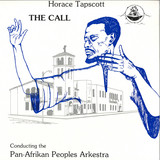
Available on vinyl for the first time in 40 years, Outernational Sounds is proud to present a masterpiece from the Los Angeles jazz underground - Horace Tapscott's burning, spiritualised 1978 set, The Call.
One of the unsung giants of jazz music, the composer, bandleader, arranger, pianist and community activist Horace Tapscott was the undisputed keystone in the grassroots Los Angeles jazz scene. Throughout the 1960s and 1970s, his radical community arts and music formations the UGMA (Underground Musicians Association, later changed to UGMAA - Union of God's Musicians and Artists Ascension), and his protean big band, the Pan Afrikan Peoples Arkestra, were at the epicentre of music, culture and politics in the Los Angeles area.
From their 1960s base at the Watt's Happening Coffee House on 103rd St, to their decade-plus- long 1970s residency at the Immanuel United Church of Christ on 85thE St and Holmes Ave, Tapscott's groups were the beating heart of underground music in LA. Hundreds of musicians passed through and played their part. Major figures in LA jazz such as Arthur Blythe, Azar Lawrence, Jimmy Woods, John Carter, Bobby Bradford, Sonny Criss, Ndugu Chancler and dozens of others all paid dues or just got down with Tapscott, not to mention the core Arkestra regulars who have since become celebrated names - Nate Morgan, Jesse Sharps, Adele Sebastian, Dadisi Komolafe, Gary Bias, to mention only a few.
Tapscott and the Arkestra were down on the ground - playing fundraisers in park and street, organising teach-ins and workshops for young and old, mixing it with radical theatre groups, firebrand poets, political radicals, Black separatists, community groups and churches. They lived communally, and built an ark for the Black arts in the heart of the city. But as a result of this grassroots community focus and Tapscott's antipathy to the music industry, the Arkestra didn't record for nearly two decades. That only changed when long-time jazz fan Tom Albach started Nimbus Records. The label was initiated specifically in order to document Tapscott and his circle, and the first three records showcased Horace and the Arkestra.
The Call was put together from two studio sessions in April 1978, one at Hollywood Sage and Sound, one at United Western - the latter session had the addition of a string section, who can be heard on the moody Cal Massey composition 'Nakatini Suite' and Jesse Sharps' swinging modal trip, 'Peyote Song No. III', with its swirling soprano solo. In keeping with the communal nature of the Arkestra, the other two compositions, 'The Call' and 'Quagmire Manor at Five A.M.' are also by Arkestra members. But at the centre of the music is the builder of the Ark, the visionary whose original call to action started a movement whose legacy continues to this day - Horace Tapscott.
Heed The Call!
Véronique Sanson is one of the most famous French pop oriented female singer, songwriter, and composer of the 80s. She began her career in the 70s, and was the girlfriend of genius composer Michel Berger. Her world turnt upside down when she met Stephen Stills of Crossby Stills & Nash. One Day, during a recording session in Paris, she left the studio pretending to go buy
cigarettes, but never came back... She flew overnight to the USA, where she married Stephen Stills. In LA, she records new music with superstar composers such as Ray Parker JR and Harvey Mason. "Bernard's Song", produced in 1976, was the first single of the double gold album Hollywood.Funky French League is an intergenerational collective (based in Paris) formed by Young Pulse (Gamm) , Dabeull (Roche Musique), Arthur Chaps,
Woody Braun (Malka Family), Mr Willy, DJ Asko et Uncle T (Groove Deluxe). All coming from different universe from hip-hop, to electronic music, but united by their love for the groove and the funk
- A1: Theme From The Conversation (3:33)
- A2: The End Of The Day (1:37)
- A3: No More Questions / Phoning The Director (2:18)
- A4: Blues For Harry (Combo) (2:39)
- A5: To The Office / The Elevator (2:40)
- A6: Whatever Was Arranged (2:09)
- A7: The Confessional (2:21)
- B1: Amy's Theme (2:51)
- B2: Dream Sequence (2:35)
- B3: Plumbing Problem (2:54)
- B4: Harry Carried (2:47)
- B5: The Girl In The Limo (2:25)
- B6: Finale And End Credits (3:54)
- B7: Theme From 'The Conversation' (Ensemble) (2:31)
THIS IS NOT A REISSUE. THIS IS THE FIRST TIME THIS AMAZING MINIMAL SCORE HAS BEEN ISSUED ON VINYL
This is the first time the complete score to The Conversation has been released on vinyl. The film itself was originally released in 1974 and a 7' demo of the theme was sent out as promotional material by Paramount (PAA-0305), but a USA stock edition was never issued. In Japan the same music was also issued on a 7' at about the same time (JET-2273), with a picture sleeve, but until now nothing else has ever been pressed on vinyl.
Jonny Trunk's little obsession with this music began after I'd caught the film, late night, sometime in the mid 1990s. Musically it's an exceptional example of the 'new minimalism' in film music of the period, marking a departure (for some) from big scores to smaller, more economic ensemble sounds.
The film was written, produced and directed by Francis Ford Coppola and is still a thrilling journey into sound, mind and murder. Heavily influenced by Antonioni's Blow-Up (and not, as some thought, by Watergate), Coppola wanted to fuse the concept of Blow-Up with 'the world of audio surveillance'. The story centres around Harry Caul (Gene Hackman), a mac-wearing professional wire-tapper and clandestine bugger who gets unusually consumed by a conversation he's been paid to record. Caul is a loner, an obsessive-compulsive character with numerous neuroses that play out brilliantly throughout the film. And as he slowly pieces together the conversation fragments and forms his own story around it, his world falls apart.
Sonically this movie - all about sound - is groundbreaking in many ways, with actual 'sound Design' Provided By The Legendary Walter Murch - The Man Who Actually Invented The Term In The First Place.
For The Music, Coppola Wisely Chose A Young David Shire, His Brother In Law. Shire's Deceptively Simple Piano Theme (composed Because Of No Budget For Big Orchestra) Is One Of Tragic Beauty, Brilliantly Capturing Caul's Loneliness, His Slightly Disturbed Nature And This Trip Into Darkness. The Melody Has Both Sweet And Sour Tones, Feeling A Little Like A Slow Ragtime, Which Both Develops And Retreats Throughout The Film; There Are Even Trips Into Avant-garde Territory With Electro-acoustic Flourishes And Concrète. The Solo, Agitated Figure Of Caul, Wearing His Distinctive Transparent Mac, Is Made All The More Raw And Poignant By The Score - The Sparse And Curiously Emotional Compositions Are Unlike Any Others I Can Think Of From The Period.
The Soundtrack For The Conversation Proved To Be A Major Break For Shire, His Career Really Taking Off From This Musical Point. His Next Score Was To Be The Underground Classic Taking Of Pelham 123, Followed Up Later Ironically By All The Presidents Men - A Thriller About The Watergate Scandal.
The Conversation Went On To Win Several Awards And Nominations, And Has Become A Classic Of The 'new Hollywood' Movement. Hopefully Now This Music May Become Part Of The Renewed Interest In Old Film Soundtracks.