Buscar:young roots

Estilos
Todo
Earl Sixteen & The 18th Parallel - My Son

With a career spanning over 50 years, Earl Sixteen is one of the major artists in the history of Jamaican music. He has been produced by some of the biggest names in the business, from Studio One to Jah Shaka, Lee ‘Scratch’ Perry and Mad Professor. Earl Sixteen has always stood out for the accuracy of his performances and the smooth depth of his voice.

Today, in collaboration with Switzerland most active studio group of the last decade, The 18th Parallel, he presents his new single ‘My Son’, written by the genius lyricist Marc Ismail. The lyrics touch on the harsh reality of the younger generations in Jamaica who grow up in precarious conditions and, in some cases, have no choice but to turn to crime. Here, the elder's voice urges young listeners to take a hard look at themselves and weigh the consequences of their decisions.

The message is enhanced by Earl Sixteen's performance and the extraordinarily powerful rhythm section of The 18th Parallel. B side features a scorcher dub by Westfinga: 'Hear My Dub'. A masterpiece of contemporary roots reggae!

Reservar06.02.2026

debe ser publicado en 06.02.2026

12,56
Various - Wizzz! French Psychorama Volume 5 (67-75)

The journey through French-speaking pop archives continues with this fifth volume, packed with fuzz, gimmicks, and dissent. Far from the charts, the selected tracks display a great creative freedom, often backed by corrosive humor. Welcome to the surprising, kaleidoscopic, and colorful world of the late sixties and early seventies, Wizzz!
Born in Montauban, Robert Pico stumbled into music by chance when he met René Vaneste, then artistic director at Pathé-Marconi. René brought him to Paris to record his first 45 RPM EP in 1964. A year later, Pierre Perret introduced him to Vogue, where he recorded his second album with Claude Nougaro’s orchestra. Sylvie Vartan then introduced him to RCA, where he recorded four singles, including the astonishing "Chien Fidèle," a track backed by a hair-rising fuzz guitar. Alongside his solo career, he also composed for other artists like Alain Delon (the song was recorded but remains unreleased), Magali Noël, Bourvil, and Georges Guétary. In the Paris of the sixties, he mingled with Mireille Darc, Elsa Martinelli, Marie Laforêt, France Gall, Françoise Hardy, Petula Clark, Régine, Dani, Serge Gainsbourg, Joe Dassin, Franck Fernandel, Charles Level, and Roland Vincent. Despite his efforts and winning a Grand Prix Sacem for his final record, Robert Pico didn’t achieve the expected success in show business and decided to leave Paris and return to the Southwest, where he devoted himself to writing. He is the author of 23 books (including Delon et Compagnie, Jean-Marc Savary Editions 2025, a memoir about his youth and his many encounters). Today, he is relieved to never have become a celebrity and devotes himself to his work with passion.
In 1969, the Franco-Italian movie Erotissimo was released, directed by Gérard Pirès (who later directed Taxi in 1998, written and produced by Luc Besson). This pop comedy features Annie Girardot, Jean Yanne, Francis Blanche, Serge Gainsbourg, Nicole Croisille, Jacques Martin, and Patrick Topaloff. The soundtrack was written by Michel Polnareff and William Sheller, with lyrics by Jean-Lou Dabadie. "La Femme Faux-cils," performed by Annie Girardot. It recounts the feelings of a rich CEO's wife who seeks to develop her sex appeal under the influence of advertisement and magazines. Groovy, sparkling and light, this track, with ITS lush arrangements humorously critiques consumer society and feminine beauty standards.
“Je suis l’Etat” (1967) is the flagship track of the first EP by singer-songwriter Spauv Georges, aka Georges Larriaga, better known as Jim Larriaga (1941-2022). Born into a family of bakers, the young man was initially planning to become a hairdresser when he discovered English-speaking music through Elvis Presley and the Beatles. After this revelation, he decided he would become a songwriter and gave himself five years to succeed. He recorded his first two EP’s independently for RCA under the pseudonym Spauv Georges; meaning “that poor George”, a nickname given to him by the mother of her friend Jean-Pierre Prévotat (future drummer of the Players, Triangle, or Johnny Hallyday). Portraying a depressed and eccentric young man, Spauv Georges created corrosive and amusing songs that didn’t reach a wide audience, despite a TV appearance with Jean-Christophe Averty.
Supported by his loyal friend and fellow songwriter Jean-Max Rivière, Georges Larriaga met the future singer Carlos in the early '70s, then Sylvie Vartan’s assistant. He wrote songs for Carlos, including the popular "La vie est belle," "Y’a des indiens partout," and "La cantine", which went onto become a huge hit in 1972. He also composed for Claude François (“Anne-Marie”, 1971), Charlotte Julian (“Fleur de province”, 1972), helped launch child singer Roméo (who sold 4 million records), and later wrote the hit "Pas besoin d’éducation sexuelle" (1975) for the young Julie Bataille. In 1971, Jim recorded an album for Disc'Az: “L’univers étrange et fou de Jim Larriaga”, which featured pop gems like “La maison de mon père”.
The story of the song "Zoé" began when Pierre Dorsay, artistic director at Vogue Records, asked Swiss singer and musician Pierre Alain to write a song for a new female singer. The inspiration came when he realized that Zoé (the artist's name) was also the name of France's first atomic battery, created in 1948, which consisted of uranium oxide immersed in heavy water! The lyrics reflect a bubbling energy that must be handled with caution, while the instrumentation echoes this atomic theme, notably with the use of a theremin.
Zoé’s career lasted only as long as a single 45 RPM, but it seems Christine Fontane was the vocalist behind this pseudonym, who is known for several EPs, a good "popcorn" album in 1964, and a handful of children’s singles in the '70s. Regardless, the photograph on the cover is of a different girl entirely.
Later, Pierre Alain continued his career, writing songs for himself, Marie Laforêt, Danièle Licari, Alice Dona, Arlette Zola (3rd place in Eurovision 1982), and achieving multiple gold and platinum records in Canada. Also an inventor with several patents, president of the Romande Academy, and head of the French Alliance in Geneva, he now composes atonal music, books, and poetry. Moreover, he is also the host of "Les Mardis de Pierre Alain" at "Le P'tit Music'Hohl" in Geneva.
Filled with oriental choruses and fuzz guitar, "Fou" is from Jacques Da Sylva's only EP released by Vogue in 1967. Despite the quality of this recording, all traces of this singer disappear after this first effort.
Valentin is a baroque pop singer born in Belgium. He is the songwriter and composer of most of the tracks on his three singles released in the late 60s in Canada. A legend says that he reincarnated himself as Jacky Valentin during the 1970s for a rock'n'roll revival career in Belgium, but his older brother sadly debunked this story. Valentin's first two singles were arranged by Claude Rogen, a Parisian session pianist who had come to Canada to promote the song “Mister A Gogo”, a cover of David Bowie’s “Laughing Gnome”, adapted by singer Delphine, his wife at the time. Far from his usual network, Claude Rogen arranged music for Polydor, including the arrangements for “Je suis un vagabond” in 1969, a jerk tune with string arrangements and a furious optimism.
Jacques Malia wrote, composed, and recorded his only 45 EP for Festival in 1966. “Histoire de gitan” is an incredible beat track with bohemian scat that tells the story of a gypsy musician who came to Paris to make it in the Music-Hall, to no avail. The hero of the song and its author probably shared a similar fate, as Jacques Malia faded into anonymity after this remarkable attempt.
Bernard Jamet recorded two EPs for Barclay in the late sixties and co-wrote several songs with Christine Pilzer, Pascal Danel, and prolific songwriters Michel Delancray and Mya Simile. The track “Raison Légale” (1968), his masterpiece, immerses the listener in a courtroom right when a murderer is being judged, with jerk rhythm and free arrangements. A unique, paranoid, judicial, and psychedelic oddity.
Jean-Pierre Lebrot-Millers started his career in show business in 1967 as a singer and songwriter for the Philips label. After three singles, he wrote several songs of a new kind with his friend Pierre Halioche, in the midst of the sexual liberation movement and the democratization of drugs. With provocative lyrics, “Les filles du hasard” and “Barbara au Chapeau Rose” were released on a Philips singles in 1968. The character of Barbara was inspired by a queen of Parisian nightlife during the psychedelic years: model Charlotte Martin, who dated Eric Clapton from 1965 to 1968, then Jimmy Page from 1970 to 1983. Jean-Claude Petit’s arrangements, with a table-filled intro, soul brass, and Hendrixian guitar, emphasize the flamboyance of a hedonistic and sexy character, whose dog is named Junkie because “Junkie est un nom exquis”! The track was recorded live in three takes with a full orchestra.
Upon its release, the record was censored by Europe 1 and RTL due to its references to drug use. Jean-Pierre Lebrot was then banned from the airwaves and later dismissed by his record label. He changed his artist name to Jean-Pierre Millers, while his companion Pierre Halioche became D. Dolby for a new dreamy composition, “Chilla”, which Jean-Pierre produced himself with arrangements by Jean Musy. Once again, the song was immediately censored everywhere. After this setback, he decided to stop singing and started taking on odd jobs to support his Swedish wife and their son until the day he met Jean-Pierre Martin, then production manager at Decca, who had worked with Manu Dibango. Martin offered Jean-Pierre Lebrot-Millers, then employed at Rank Xerox, the position of artistic director at Decca. He accepted and became, a year later, promotion director (radio, press, TV). He worked on Julio Iglesias’s first album for Decca, which became a massive hit and allowed him to meet Claude Carrère. The latter asked him to write new songs and find their performers, much like a “talent scout.” It’s through him that Jean-Pierre discovered Julie Pietri and Corinne Hermès. He composed “Ma Pompadour” for Ringo, Sheila’s husband, and took the microphone again for the syncope hit “Rendez-Vous” in 1982.
That same year, Jean-Pierre Lebrot-Millers tried to release a track for which he had heavily gone into debt: “Si la vie est un cadeau”. Having recorded it in London, he presented it to numerous professionals, all of whom refused to get involved. The same thing happened with Antenne 2 and the Sacem when he proposed the song as France’s entry for Eurovision. He then met Haïm Saban, who was producing cartoon soundtracks and had just launched the Goldorak theme song. Saban, having listened to the song, declared it had the potential to become a hit. He sent Jean-Pierre and Corinne Hermès to meet the CEO of the Luxembourg radio and television network. The latter received them, asked to hear a verse and chorus a cappella in his office, and immediately hired them to represent Luxembourg at Eurovision 1983. They reworked the arrangements and recorded a new version with Haïm Saban as co-producer. The song ended up winning Eurovision 1983, a great comeback for our hero. He continued producing and hung out with the band Nacash in Belgium when a couple came to introduce their daughter for an impromptu audition in a hotel room. The girl sang “Les démons de minuit” while dancing to a radio cassette. Impressed, he had her take singing lessons for a year and composed a song for her (for which he had the melody and title, but no lyrics). This required him to go on the hunt for a lyricist, who ended up being Guy Carlier. They recorded the song, which was initially a ballad, at Bernard Estardy’s CBE studio, and gave the singer a new name: Melody. They showed the song around their industry network without success. Later, Estardy called Jean-Pierre to suggest changing the rhythm and making it pop-rock. Orlando, Dalida’s brother, liked the result and decided to co-produce the track. “Y’a pas que les grands qui rêvent » became a classic hit. The song has since been covered by Juliette Armanet (as a ballad, like the original) and Valentina.

Born into an aristocratic Breton family, Hervé Mettais-Cartier worked as a DJ at Queen Kiss, a nightclub in Poitiers, where he formed the band Les Concentrés with Michel (an actor) and Christian (a radio technician). Together, they created a repertoire of whimsical songs (“Ma bique est morte”, “J’suis un salaud”, “Fils de dégénéré”...) that they performed on stage dressed in white (in homage to “concentrated milk”). They performed at Bliboquet and Olympia in 1968 for the 10th edition of the “Relais de la chanson Française” organized by L’Humanité-Dimanche and Nous les Garçons et les Filles, sponsored by Pepsi Cola. Winners in the author-composer category, alongside Danish singer Dorte, their visibility allowed them to record a 45, and appear on television in Jean-Christophe Averty’s show. The A-side of the disc features Bruno le ravageur, a casatchok dedicated to Bruno Caquatrix, the director of Olympia, nicknamed in the song “Coq Atroce” or “croque-actrices”. The B-side is dedicated to “Fils de dégénéré”, a quirky tribute to Hervé's aristocratic roots, mixing absurdity with sophisticated vocal harmonies.
After Les Concentrés, Hervé Mettais-Cartier formed the duo La Paire et sa Bêtise with his friend Olivier Robert. They performed in Parisian cabarets and toured with Pierre Vassiliu. In the late 1970s, Hervé began a solo career. He recorded two albums for the Motors label in 1978 and 1979, which did not achieve their anticipated success due to lack of promotion. In 1980, he met Bernadette, with whom he started a family and created a “Chansons à voir” (songs to see) show that he performed until his death at the end of 2024.

Publicité comes from the final EP by the Missiles (Ducretet Thomson, 1966), a disc that also includes “La (nouvelle) guerre de cent ans”, featured on Volume 4 of our Wizzz! series. Please refer to the booklet for the story of the band.

“He’s 1.82 meters tall, 28 years old, weighs 135 kg, is black and Belgian”: this is the description of singer Hegesippe on the back of his sole single (Decca, 1967). He appears on the album cover wearing a Greek toga, like a hippie gag – we are at the end of the year 1967. In “Le crédo d’Hegesippe”, this former bodyguard of Antoine and the Charlots plays the delightful card of the thick brute converted to Flower-Power and non-violence, with arrangements by Jean-Daniel Mercier, aka Paul Mille.
“Ethéro-disco” was released on a promotional record for clients of the Maréchal company (Liège, Belgium) for the New Year 1979. Over a funky rhythm, celebrity impersonations (Brigitte Bardot, Jacques Dutronc, Fernandel…) deliver an enigmatic text about pharmaceutical products like ether, bismuth, and aspartate. The track was composed by Dan Sarravah (responsible for Joanna's “Hold-up inusité” featured on Wizzz! Volume 3) and Tony Talado, who was also a singer (one 45 in 1967), songwriter (with over a dozen credits between 1964 and 1985 in various styles from surf music to disco), author (Devenez Végétarien, Dricot Editions, 1985), ad designer, and psychologist.

Décollez-les is on the A-side of Mamlouk's only single, a pseudonym for Marsel Hurten, who is known for his work on several EPs in the late sixties, as well as composing music for Hervé Vilard’s “Capri, c’est fini”, Claude Channes' “La Haine”, Annie Philippe’s “On m’a toujours dit”, and Nancy Holloway’s “Panne de Cœur”.
This strange song, with Afrobeat horns and absurd dialogues between a chef and his kitchen staff, is the result of a collaboration between Marsel Hurten and one of his neighbors, a photographer from Pavillon-sous-Bois (93), where the musician settled after returning from the Algerian War. A music video was shot to promote the record.
Marsel Hurten was born in Tourcoing (59) into a musical family. At a young age, he joined the brass band founded by his grandfather, playing the piston before studying trumpet at the conservatory, as well as teaching himself how to play the guitar. As an orchestra musician, he toured in France, Belgium, Germany, and England. He released a series of solo 45’s between 1965 and 1968 for the DMF and Az labels before stopping recording to focus on working for other artists (Gilles Olivier, Noëlle Cordier…).
“L’amour nu” (Vogue, 1971) is the work of the short-lived Belgian band Mozaïque. The track, written by singer Jacques Albin, closely resembles another of his compositions, “Carré Blanc”, which he recorded in 1969 for Disc’AZ.
Represented by the Lumi Son micro-label based in Marignane (Côte d'Azur), Jean-Marc Garrigues released two 45 RPMs in the late sixties, defending the French jerk sound. The song “Je dis Non” is a short, joyful ode to youth, pop music, and rebellion.
Songwriter and performer Jacques Penuel released three singles. The first one, “Astronef 328” (Fontana, 1969), features a dizzying series of chords punctuated by sound effects, a sci-fi story, and arrangements by Jean-Claude Vannier.

We would like to sincerely thank Pierre Alain, Moon Blaha, Marsel Hurten, Bastien Larriaga, Jean-Pierre Lebrot-Millers, Bernadette Mettais-Cartier, Robert Pico, Olivier Robert, Claude Rogen, Micky Segura.


No en stock

Haga su pedido ahora y le encargaremos el artículo en nuestro proveedor.

23,11

Ültimo hace: 3 Meses
Any Young Mechanic - There's A New Place On The Market (7")
  • A1: There's A New Place On The Market
  • B1: Every Time You Put Me Up, I Get Down Some New Way

Having taken their name from a line in Hooray For Hollywood – inspired by the song’s jarring use in Robert Altman’s Philip Marlowe detective movie The Long Goodbye – there is an aptly cinematic quality to Any Young Mechanic’s music.
With intricate scenes, enthralling narratives and unique characters cropping up across the lyrics, and a kaleidoscopic yet coherently interwoven spectrum of moods and emotions stretching through the music, the Adelaide five-piece bring a fresh language to folk music’s natural propensity to spin a good yarn.
So rather than offering borrowed references illuminated by the cosy flickers of campfire flames, on their debut album The Modern Shoe Is Ruining The Foot, the Australian band’s urgent songs conjure up vivid, widescreen vistas that blend the genre’s enduring charms with a musical dexterity and sharp vision reaching beyond folk’s usual corners.
“We are trying to make folk music for now,” suggests frontman Sam Wilson. “Turning it on its head in a new, sometimes uncanny way, because we don't want to just do the old thing again. I don't think it’s interesting to make things again, so we’re searching for a contemporary edge.”
The roots of this original yet inclusive approach, in part, go back to the Adelaide music scene that helped to forge Any Young Mechanic.

Reservar30.01.2026

debe ser publicado en 30.01.2026

20,38
Modern Sound Quartet - Italian Library Breaks (5x7")
  • 01: Imprevedibile
  • 02: Confabulante
  • 03: Melissa
  • 04: Mais
  • 05: Aglio
  • 06: Genziana
  • 07: Bucaneve
  • 08: Papaveri
  • 09: Campanule
  • 10: Taurus
  • 11: Il Diavolo

The Modern Sound Quartet represents one of the most treasured, yet least documented, outfits in the history of Italian library music. An exceptional studio band of session musicians with a formidable groove, they released only a handful of albums under this name in the second half of the 1970s. However, their sound indelibly shaped dozens of "invisible" soundtracks, often without ever receiving an official credit on the back sleeve.

Led by pianist and composer Oscar Rocchi, and featuring Andrea Surdi (drums), Luigi Cappellotto (bass), and Ernesto Verardi (guitar), the quartet embodies the more jazz-funk, cinematic, and irresistibly groovy side of the 1970s Milan scene. They established themselves as a compelling alternative to the already established groups operating primarily out of Rome, such as I Marc 4 or I Gres.

Juggling late-night club jam sessions, tours supporting Italian pop giants like Ornella Vanoni, and creating rhythmically intense library records, the Modern Sound Quartet forged a unique sonic aesthetic: sophisticated, electric, and profoundly metropolitan.

This boxset celebrates their funkiest side—an irresistible combination of incandescent drum breaks, tight grooves, and high-intensity fusion passages—bringing together some of the most sought-after tracks from legendary LPs like Erbe Selvatiche (1977), Floreama (1977), Horoscope (1978), and I Tarocchi (1980). The selection also delves further back to the roots of their sound, including two powerhouse tracks from Pop-Paraphrenia (1973), a project where Oscar Rocchi—backed by a young, lethal Tullio De Piscopo on drums—sowed many seeds that would fully blossom in the subsequent Modern Sound Quartet output.

Created with DJs, beatmakers, and collectors of Italian library music in mind, this boxset deliberately features tracks that were never previously released on 7 inch—an ideal format for maximizing the rhythmic punch of the quartet's sound.

Available in a limited worldwide edition (500 copies), enriched by iconic 70s-style artwork conceived and designed by Eric Adrian Lee.

Reservar30.01.2026

debe ser publicado en 30.01.2026

79,79
NICHOLS, JEB LOY & COLD DIAMOND & MINK - - THIS HOUSE IS EMPTY WITHOUT YOU LP

NICHOLS, JEB LOY & COLD DIAMOND & MINK -

THIS HOUSE IS EMPTY WITHOUT YOU LP

12inchTRLPC112023
Timmion Records
19.12.2025

Der aus Wyoming stammende Troubadour Jeb Loy Nichols kehrt mit ,This House is Empty Without You" zu Timmion Records zurück, einer zeitlosen Sammlung von Songs mit Soul-Wurzeln, die Wärme, Weisheit und stille Intensität ausstrahlen. Erneut unterstützt von Timmions Hausband Cold Diamond & Mink, liefert Jeb ein Album in voller Länge, das sich nahtlos in die Reihe der besten Veröffentlichungen des Labels einreiht - geprägt von den Traditionen des Southern Soul, aber getragen von seiner unverwechselbaren Stimme und seinem lyrischen Touch.Vom sanft dahinschreitenden Opener ,First Night Away from Home" bis zum Schlussstück ,Time On My Hands" entfaltet sich das Album wie ein gutes Sommerbuch, das man am besten mit einer warmen Brise im Gesicht genießt. Nichols hat die Fähigkeit, alles mühelos klingen zu lassen - als würde er nur für Sie singen, von der Veranda oder aus dem Hinterzimmer -, aber wenn man genau hinhört, entdeckt man Songwriting voller Tiefe, subtil arrangiert mit Orgelklängen, knackigen Drums und tiefen Grooves.Neben dem luftigen Midtempo-Romantikstück ,Here With You" gehören zu den weiteren Höhepunkten der rootsige Southern Shuffle ,Good Morning Monday", das herzergreifende ,Coming Home Love" und ,Step In", ein sanfter Groove über Wiederentdeckung und Wiedersehen. Zusammen mit Nichols - und Emilia Sisco, deren gospelartige Hintergrundharmonien mehrere Titel zieren - haben sie ein Album geschaffen, das sich an klassischen Einflüssen orientiert, aber unverkennbar persönlich und präsent klingt. ,This House is Empty Without You" ist eine Meisterklasse in zurückhaltendem Soul und beweist, dass Jeb Loy Nichols nicht nur immer noch da ist - er wächst weiter, strahlt und findet neue Wege, die Wahrheit zu sagen.

No en stock

Haga su pedido ahora y le encargaremos el artículo en nuestro proveedor.

22,27

Ültimo hace: 4 Meses
SKINSHAPE X HORUS FT. ANDY PLATTS - ACT LIKE YOU KNOW
  • Act Like You Know
  • Act Like You Know (Dub)

The first single from the forthcoming Skinshape x Horus dub album, "Act Like You Know" is a soulful reggae reworking of Fat Larry's Band's 1982 classic, featuring smooth vocals from Andy Platts (also Mama's Gun, Young Gun Silver Fox). Produced using fully analogue techniques and recorded in the spirit of vintage Jamaican dub, this 7" is a perfect blend of oldschool authenticity and modern production finesse. Skinshape (Will Dorey) and Ben Bell (Horus Records / Lion Vibes) bring over two decades of collaboration and deep roots to this project. Known for their love of rare roots reggae and dub, the pair are now crafting original material with the same dedication to sound and detail that defined the golden era of Jamaican music. Released as white label 7" vinyl in plain white sleeve with dub version of Act Like You Know on the flipside.

Reservar28.11.2025

debe ser publicado en 28.11.2025

11,35
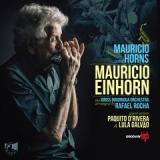
Mauricio Einhorn - Mauricio and Horns LP 2x12"

'Mauricio and Horns' by Bossa Nova legend and harmonica master Mauricio
Einhorn is produced by Jacques Muyal, with the Idriss Boudrioua Orechestra
arranged by Rafael Rocha and with guest artists Paquito D'Rivera and Lula
Galvao
In jazz, we all know the harmonica master, Mr. "Baron" Toots Thielemans, but we are
equaly fortunate to have our "Prince", Mauricio Einhorn. His early contributions in the
1950s to the birth of the Samba Jazz movement in Brazil played a pivotal role in the
creation of Bossa Nova, a genre that quickly became an integral part of the jazz world.
The influence of jazz on Brazilian music - exemplified by the great Carlos Lyra in
"Influencia Do Jazz" - was so profound that local musicians embraced it to forge a
new musical identity. Many of Einhorn's compositions have become timeless
standards performed worldwide since the early 1950s and '60s.
Together with another giant of the scene, alto saxophonist Idriss Boudrioua,
Mauricio's music gets an even grander presentation than ever before. This time, he
teamed up with an exceptionally talented young musician: a big band arranger and
trombonist named Rafael Rocha, who wrote all the arrangements and conducted the
recordings. Rafael's arrangements are nothing short of magical. They are never
overdone, always respecting the beauty of the original harmonies while infusing them
with his deep passion for jazz. His trombone solos recall the phrasing of Frank
Rosolino, and he modulates the pieces with swirling harmonies that evoke the very
roots of Brazilian jazz. In every track, Rafael enhances Mauricio's elegant and
expressive phrases without ever overpowering the artist, creating a "wall of sound"
that gracefully floats alongside Mauricio.

Reservar21.11.2025

debe ser publicado en 21.11.2025

35,59
The 046 - Legacy In Motion LP

Legacy in Motion is the third studio album from Western Sydney hip-hop powerhouse The 046. Legacy in Motion is a 16-track statement of growth, resilience, and ambition that cements our status as leaders of Australia’s rap scene. Blending our signature “Aus Funk” sound with a GFunk and West Coast-inspired style built on heavy basslines, smooth synths, and street-level lyrics with fresh, evolved production. Legacy in Motion captures The 046 at their sharpest, from the anthemic opener “Forever G’s” to standouts like “Music Is Everything” and “Young Free & Reckless”, the album moves seamlessly between hard-hitting street energy, reflective storytelling, and tracks built for festival stages. Stacked with heavyweight collaborations, including Lisi, Barkaa, Nyxladd, JKING, D-Boy 223, and Say True God?.

Legacy in Motion expands The 046’s reach across Australia’s hip-hop landscape. The title track and deeper cuts like “Nothing’s Free” showcase their maturity, reflecting on hustle, loyalty, and carving out a lasting legacy while staying true to their Western Sydney roots. This album isn’t just another release it’s The 046 proving their movement is unstoppable.

Reservar10.10.2025

debe ser publicado en 10.10.2025

49,37
Variuos - ZAMAAN YA SUKKAR – SMR45-01

Leila Gamal’s ‘Abaleeh Abalingi’

At the height of Pan-Arabism, when the United Arab Republic fused Egypt and Syria in a fleeting but bold experiment, a new wave of popular music was emerging—vibrant, infectious, and universally danceable. Among its lesser-known stars was actress Leila Gamal, whose voice—delicate yet rich with longing—embodied the golden era of Egyptian cinema. Born in Alexandria to Syrian roots, Gamal’s vocals were a magnetic blend of sweetness and passion, with a timeless allure that echoed the silver-screen sweethearts of her time.

Abaleeh Abalingi pulses with the hypnotic drive of funky organ riffs, reminiscent of the blind visionary Ammar El Sheriyi, creating a sound both cinematic and undeniably catchy. The delicate lyrics by Khairi Fouad place the track firmly in the lineage of the Middle East’s most iconic pop divas, from Angham to Nawal El-Zoughbi who he subsequently wrote for. This reissue, lovingly remastered, brings this long-lost gem back to life, where it belongs—spinning on turntables, teasing dance floors, and transporting listeners to Egypt in the late sixties.


Adel Osman’s “Oriental Eyes”

Oriental Eyes captures the essence of the 60s Egyptian Franco-Arab movement, blending Western (often jazz) influences with Arabic melodies to mesh mystique with sensuality. Osman’s commanding yet delicate vocals deliver the bilingual lyrics with captivating sincerity, his voice effortlessly gliding over the swells of the arrangement. The trumpet, possibly connecting him to Zaki Osman of Salah Ragab’s legendary Cairo Jazz Band, adds a layer of flair, enriching the track’s Tarantino-esque eclecticism. Now remastered, ‘Oriental Eyes’ is not only a nostalgic gem but a timeless reminder of the boundary-defying spirit that defined the 1960s musical landscape.

Given the ongoing war efforts against Israel, this record wasn’t pressed by Sono Cairo till much later in 1975 once Egypt had recaptured the Sinai and restored national pride. Sono Cairo (Sawt el-Qahira) was the first Arab-owned and by far the largest record label in the Middle East, amassing an unmatched catalogue of music. With exclusive rights over much of Umm Kulthum’s works, Sono Cairo played a crucial role in disseminating the sounds of Arab Nationalism and projecting Egypt’s soft power across the region.

Muhammad Al-Najjar
London, April 2025

credits
Audio restoration and vinyl mastering: Colin Young
Lacquer cut: Timmion cutting lab
Sleeve and label artwork: Grotezk Studio
Under License of Sono Cairo

No en stock

Haga su pedido ahora y le encargaremos el artículo en nuestro proveedor.

18,91

Ültimo hace: 7 Meses
MATT WATTS - HOW DIFFERENT IT WAS WHEN YOU WERE THERE LP
  • A1: Time Turns As An Engine
  • A2: Joanne
  • A3: Your Love Is Not Your Own
  • A4: How Many Years
  • A5: Just One Man To Be Turned Loose
  • A6: If We’ll Ever Be Here Again
  • B1: Things Have Surely Changed
  • B2: Days Have Come And Gone
  • B3: Endless Twisted Root
  • B4: Many An Friend Too Kind
  • B5: Known Thieves

Matt Watts (1987–2024) was born in Philadelphia, in the USA. He recorded his first songs along the banks of the Missouri River in Montana when he was 15, touring the north-western states extensively as a young troubadour. He arrived in Belgium at the tender age of 19 and grew into a full-fledged singer-songwriter that combines a profound respect for the folk tradition with contemporary influences.

His solo album, Songs from a Window, was released in 2014 by Starman Records and received glowing praise in the press.

Matt Watts played dozens upon dozens of shows in the Benelux, often together with Stef Kamil Carlens and Nicolas Rombouts. While his predecessor Songs from a Window was a true solo album, How Different It Was When You Were There includes personal stories by Watts that have been subtly seasoned with wonderful musicians such as Nathalie Delcroix, Bjorn Eriksson, Geert Hellings (Stanton, Guido Belcanto), Maarten Moesen (Guido Belcanto), and bassist and this album’s producer, Nicolas Rombouts (formerly with Dez Mona, Stef Kamil Carlens, The Colorist, Guido Belcanto, and many others).

One of the highlights of this album, which truly showcases Matt Watts’ awakening, is “Many a Friend Too Kind”: a fabulous duet with Stef Kamil Carlens. Watts also performed in Zita Swoon Group’s production, The Ballad of Erol Klof. Sadly, Matt Watts passed away in June 2024.

MORE QUOTES

“Watts, who washed up in Belgium, sings his personal, poetic lyrics in a high, whispering voice that immediately brings Nick Drake to mind.” 4/5 **** (De Standaard)

‘This is an album full of sincere sentiment and stimulating, evocative stories in fine songs that have been beautifully coloured by Watts and his band, and on which he brings the narrative aspect to the fore more than ever.’ (daMusic)

‘Sensitive songwriter, exceptional storyteller... Introverted, dark, more country, less Nick Drake.’ (OOR)

‘This is real, raw, authentic. Well done, Matt, very well done.’ (Keys And Chords)

‘And no matter how young Matt Watts may be, the singer/musician writes timeless songs reminiscent of those by David Blue and John Martyn...’ (Rootstime)

‘Matt knows how to strike that chord in the same way as Cohen, which immediately moves you. From the beginning to the end of this record.’ (Gigview)

‘A singer-songwriter who believes in simplicity (not a note too many), but grabs you by the scruff of the neck from the start and confronts you with the painful beauty of romance.’ (Luminous Dash)

‘Let's be honest here: Belgium has simply become too small for an album like “How Different It Was When You Were There”. Song material of this calibre deserves a much, much wider audience!’ 4.5***** (ctrl.alt.country)

Reservar12.09.2025

debe ser publicado en 12.09.2025

23,95
Mystical Powa, Danny Red & Eddie Tbone - Zion / Kunta Kinte

Influenced by the vibrant Caribbean community and the reggae sounds that permeated his environment, Danny Red was drawn to music at a young age. His journey began in the 1980s, but it was in the early 1990s that Danny Red truly started to make his mark in the reggae scene. Rise to prominence was marked by his unique voice and his commitment to the Rastafari movement, which heavily influenced his music. In the 1990s, as dancehall began to dominate the reggae scene, Danny Red stayed true to his roots reggae origins, focusing on socially conscious themes and spiritual messages.

Known for his powerful vocal delivery and a profound lyrical approach, Danny Red’s music often explores themes of cultural identity, social justice, and spiritual awareness. Here teamed up with south Italian collective Mystical Powa to bring lyrically rich and musically vibrant single. Exploring Rasta believe in holy place called Mount Zion that awaits for each good person. Backed with highly popular anthem horn piece entitled Kunta Kinte played by Eddie T-Bone. Both tunes comes with tuff dub versions ready to mash up all dances worldwide.

No en stock

Haga su pedido ahora y le encargaremos el artículo en nuestro proveedor.

17,61

Ültimo hace: 8 Meses
Texas Headhunters - Texas Headhunters (LP)
  • A1: Pocket
  • A2: Maggie Went Back To Mineola
  • A3: Everybody Loves You (When You're Down)
  • A4: Kathleen
  • A5: Fool Don't Play With Fire
  • A6: Headhunters Themea
  • B1: Gun Barrel Boogie
  • B2: Independence Day
  • B3: Seeing Around Corners
  • B4: Who Will Your Next Lover Be?
  • B5: Gimme Some Love
  • B6: Burnin' Daylight

Ian Moore, Johnny Moeller, and Jesse Dayton-three of Texas' fiercest fretmen-join forces at last as Texas Headhunters, a band born from deep roots, old friendships, and a shared reverence for the raw, swaggering spirit of Texas blues. Their self-titled debut isn't a nostalgia trip. It's a declaration.

Cut over five days at Willie Nelson's Pedernales Studio, 'Texas Headhunters' deals 12 tracks of grit, groove, and gut-level truth. No smoke, no mirrors-just seasoned musicians in a room, plugged in and turned up. The chemistry is real. The result is mind blowing. Clifford Antone looms large in the story of Texas Headhunters-the spiritual godfather of the project, and the man who first recognized the fire in each of its members. All three-Johnny, Jesse, and Ian-were among the last generation of young guns taken under his wing.

Texas Headhunters isn't just a summit of three badasses with guitars. It's a reclamation. A statement. A reminder that Texas blues, in all its grit and glory, still matters. It's not retro-it's revival. And it's not a tribute-it's a shot across the bow.

Format: Standard Jacket with printed sleeve with lyrics. Pressed on Opaque Red Vinyl.

Reservar29.08.2025

debe ser publicado en 29.08.2025

25,63
Amparo - Keep Your Soul Young LP

Lela Amparo's debut album for Past Inside The Present is a smooth fusion of ambient guitar, IDM, trip-hop rhythms, orchestral arrangements and poetic vocals that draw from her American Southwest roots, international travels, and life in Gothenburg, Sweden. Amparo crafts a raw, worldly sound from these inspirations and mixes cinematic grandeur with tender grace, gorgeous melodies and head-nodding drum programming. Highlights include 'Space Us Out' with its emotional beat and piano loop, and 'You Say You Love' which combines harp and choral voices. 'Rose & Honey' reflects on isolation in Tokyo, while 'Wrong Thing' offers a Burial-style rhythm. Keep Your Soul Young is all about finding home within yourself.

No en stock

Haga su pedido ahora y le encargaremos el artículo en nuestro proveedor.

25,42

Ültimo hace: 9 Meses
Emapea - Seeds, Roots & Fruits LP

Emapea

Seeds, Roots & Fruits LP

2x12inchBUSTEDINCHES32RIG
Cold Busted
11.07.2025

Accomplished Polish beat-maker Emapea has made memorable appearances on many Cold Busted label compilations – such as in the IWYMI and Bust Free series – and has been selected for inclusion in Mark Farina’s next Mushroom Jazz installment. All this activity has mouths watering for the debut full length album from Emapea, and the appearance of Seeds, Roots & Fruits doesn’t disappoint one bit. Featuring sixteen exceptional tracks ranging from hip hop to acid jazz to psychedelic trip hop in the style of Mo’Wax, Emapea’s long player is indeed, as a wise man once said, “a journey into sound.” Seeds, Roots & Fruits rises above the average beats album to reveal the enduring depth of this young producer

Reservar11.07.2025

debe ser publicado en 11.07.2025

45,17
GASTR DEL SOL - UPGRADE & AFTERLIFE LP 2x12"

Way back when, Upgrade & Afterlife was the umpteenth release from the individual and collective forces of David Grubbs (known then for Bastro, The Red Krayola, Codeine, Squirrel Bait) and Jim O"Rourke (known for O"Rourke), whose further history has since numbered at least another umpteen or so essential listens. What is it though, wrapped up in delectable sonic amber here, that defines this Upgrade? To be sure, we hear these young men dashing through the joys of youth-their actual young youth-as well as a version captured in memory and relived with a performative touch. Time remembered as tones, with gravity gained via perceptions. The stuff of memory and sentiment as selective and potentially deceptive in their nature. Who needed "em? As part of its time-traveling function, Upgrade & Afterlife is a return to roots, but not always necessarily Gastr"s. They were more than happy to stand on branches up above other folks in order to see any next thing worth leaping for. In addition to the elder-statesman Conrad, Gastr del Sol drew upon a memorable spectrum of players for the sounds of Upgrade & Afterlife, including Anthony Burr, Steve Braack, Gene Coleman, Mats Gustafsson, Terri Kapsalis, John McEntire, Günter Müller, Jerry Ruthrauff, Ralf Wehowsky and Sue Wolf. When issued, this combination of players, parts and play - packaged in an impressively broad tip-on Stoughton gatefold sleeve emblazoned with Roman Signer"s instantly iconic "Wasserstiefel" image - became the fastest-moving Gastr del Sol record to date. A delightful result, to our way of thinking, of the band"s ability to push at the far boundaries of their music while consolidating upon pleasure points within sounds and songs. Gastr used these polarities to compulsively draw the listener intimately close with sudden injections of g-force and an uncanny interpolation of space.

No en stock

Haga su pedido ahora y le encargaremos el artículo en nuestro proveedor.

39,71

Ültimo hace: 10 Meses
Knowledge The Pirate & Roc Marciano - The Round Ta-ble (TAPE)
  • 1: Eating Etiquette
  • 2: Golden Rules
  • 3: Takes A Ten
  • 4: The Outfit (Feat. Roc Marciano)
  • 5: Magic & Kareem
  • 6: Addicted To Danger
  • 7: Ride Wit A P
  • 8: Food For Thought
  • 9: Forks And Knives
  • 10: Gut Feeling
  • 11: 1 On Me
  • 12: Young Thugs
  • 13: Servitude
  • 14: Receipts

Knowledge The Pirate returns with a powerful new statement with his new album, The Round Table, which is now available. The Round Table is produced in its entirety by longtime collaborator and legend Roc Marciano through his Pimpire International imprint.

With roots in New York’s revered ‘90s hip-hop scene, Knowledge The Pirate has steadily built a reputation as one of the genre’s most consistent and authentic voices. A frequent Roc Marci collaborator and key figure in the modern un-derground renaissance, Knowledge fuses golden-age grit with new wave innovation—bridging generations while stay-ing firmly rooted in New York’s timeless sound.

Since his 2018 debut Flintlock, Knowledge has carved a lane entirely his own through his label Treasure Chest Enter-tainment, Inc. With five acclaimed projects under his belt, including the recent 5lbs of Pressure, he continues to deliver unfiltered street wisdom and personal reflection in every bar.

The Round Table stands as a testament to his evolution—an uncompromising body of work laced with Roc Marciano’s signature production and Knowledge’s lived-in lyricism. It’s not just a record—it’s a meeting of the minds, an audio council of kings.

“The Round Table is cinematic storytelling, teaching street knowledge, eating etiquette that will save your life” Knowledge professes. “This album is like an Honorable Elijah Muhammad book; How To Eat To Live. Produced fully by the true creator of the new wave sound, Roc Marciano, you are all invited to a seat at The Round Table; and break bread with the true Godfathers of this new wave rap renaissance.”

Reservar04.07.2025

debe ser publicado en 04.07.2025

27,31
Brian Kage - Timeless Times Remixed

Detroit’s own Brian Kage returns with Timeless Times Remixed, a interstellar re-imagination of his album "Timeless Times" featuring an all-star lineup of remixers. Timeless Times Remixed brings together some of the finest minds in house and techno, delivering deep, timeless grooves with Detroit soul.

Brian Kage, a staple of Detroit’s electronic music scene, brings together a heavyweight lineup of producers to rework key tracks from his latest album. The legendary Delano Smith infuses Detroit Techno City with his signature deep and hypnotic touch, while Scotland's Milton Jackson reworks Just The Groove with a dose of his classic rolling house energy. The collaborative Reference (Luke Hess & Brian Kage) Remix of Nordhouse leans into peak time dub-techno atmospheres, while Detroit's newest and finest young talent from the Submerge crew Max Watts takes Galaxian into raw, driving 808 Electro terrain.
This essential four-tracker bridges deep house, techno, electro, and dub, while staying true to the classic and timeless sounds of Detroit’s roots.

No en stock

Haga su pedido ahora y le encargaremos el artículo en nuestro proveedor.

13,24

Ültimo hace: 6 Días
Stimulator Jones - Cool Green Trees (1999-2005) (LP)

"Chasing the funky symphonies that filled my head and my dreams..."

December 25th, 2023 - an Instagram post. Stimulator Jones shared half a dozen FIRE tracks from his beat tape archive. We were immediately drawn to the rough hewn boom bap.

"I'd release that", Rob commented.

Hours of material was shared and the result is this: Cool Green Trees (1999-2005). A collection of beats and loops Stimulator Jones created between the ages of 14-20 at home in his basement, bedroom and computer room in Roanoke, Virginia.

You will not believe the profound soulful genius contained within these naive schoolboy melodies.

December 25th, 1998 - 25 years ago to the day and his much-coveted Yamaha SU10 sampler was finally bestowed upon young Stimmy AKA Sam Lunsford: "I immediately hooked up a CD Walkman to the input jack and looped the beginning two bars of Grover Washington Jr.'s "Mercy Mercy Me". I don't know what exactly was so thrilling about hearing two measures of music repeating over and over but it was so infectious and hypnotizing and enthralling to me. I'll never forget that ecstatic rush of making my first loop - an uncontrollable, gleeful smile plastered all over my face." When you hear the pocket breakbeat symphonies featured here on Cool Green Trees, you'll feel the same sense of frisson.

In the wake of his Stones Throw breakthrough - Exotic Worlds & Master Treasures - Stimulator Jones was pegged by many as a 90s throwback artist. However, he literally IS a 90s artist. He's been recording music most of his life and he's now 40. He created the bulk of Cool Green Trees as a teenager. Everything before 2004 was recorded when Sam was still in school. He was in 8th grade when he made the 1999 tracks - he didn't even have his learner's permit. This album is a snapshot of a young man in a simpler time. Things were still mysterious back then and he was flying blind, relying on his ears and having to figure things out for himself: "I had no road map for becoming a beatmaker. I have been collecting music since I was a kid, I am a lifelong digger and seeker of cool and interesting sounds. I was there in the golden age of Hip Hop, and while I may have been a suburban white kid in Roanoke, Virginia, I was tuned in and I bought so many classic albums when they came out. I was attracted to Hip Hop because of the musical and poetic quality. I was hypnotized by the rhythms, partially because I was a drummer. I didn't brag about collecting my breakbeat records or making beats - it was something I did in isolation. It wasn't something I generally wanted to bring attention to and it didn't really score me any cool points. I certainly wasn't flexing on social media about it."

Hell, he can do that now!

Opener "Pharoah Jones" was inspired by Yesterday's New Quintet and Madlib's ability to capture that classic 70s sound whilst playing all the instruments. Sam created this one stoned afternoon by laying down a 2 bar loop and a shaker loop on his Yamaha SU700 sampler. He hung a microphone from the ceiling and played his Yamaha Stage Custom drum kit over the top before adding ender Rhodes and playing his dad's Selmer tenor sax through an Electro Harmonix Memory Man echo pedal. Yes! Up next, "Ghost Gospel" utilises a dope loop from a gospel record and adds some soul-funk drums overtop, whilst working that filter knob. Says Sam: "The loop reminded me of something Ghostface would rap over. The sample was in 3/4 waltz time but I flipped it for a 4/4 groove, a technique I picked up from RZA. "Ill Feeling" uses sped-up pieces from a dusty old funk record and putting them over a classic NOLA drum loop; gain chopping up a slow, bluesy 3/4 time signature and bending it to a 4/4 groove. Classy shit. "Capital Punishment" features drums tapped in live, inspired by MF Doom's Special Herbs series. "Do Not Adjust" consists loops found on a compilation of 70s French music at Happy's Flea Market, a classic Roanoke digging spot.

The sublime, evocative title track, "Cool Green Trees" was created when Sam was still living at home. He dumped samples off his SU10 into the family desktop and arranged them in a demo version of Pro Tools: "This track was sort of my ode to the DJ Shadow style of sample based production. Super spacey, slow, and moody. The heavily filtered drums were inspired by Alec Empire's 'Low on Ice' album. I later added some scratches and sounds from a Spider Man storybook record." "Chill Scratch" snags the final bit of a bossanova record and pairs it with a drum loop before adding experimental scratching run through an Electro Harmonix Memory Man echo pedal. "Poisonous Fumes" was made using a sampler, mixer and a turntable; a kind of mixtape beat collage with added scratches and sounds from various records. Using dialogue from superhero records was a nod to Madlib. "Welcome Aboard The Starship" is dark, downtempo trip-hop with a spooky bent. Sam paired a slow, hard drum loop with a guitar sample grabbed off a psychedelic rock record. To finish, he added various backwards sounds and weird atmospheric effects and a little scratching. Swoon.

Side B opens with "Keep On Runnin", made on a borrowed Roland SP202 sampler. Having always loved the sound of the Lo-Fi filter on those machines, reminiscent of the Emu SP1200, Sam always imagined Del or another of the Hieroglyphics crew rapping over this beat. You can certainly hear why. "Sounds Impossible" sees Sam experimenting with layering multiple kick samples at different volumes to create patterns similar to those heard by Showbiz and Lord Finesse during their God-level 1995 period. "Painted Faces" was made by chopping up a REDACTED record which he had gotten from Happy's Flea Market and paired it with a REDACTED drum loop. By the time Sam recorded "The Knew Style", he had acquired a shitty old 1960s portable turntable off eBay. It didn't function properly when he bought it but his brother opened it up, cleaned it out and got it working: "I remember he told me that there was a bunch of sand inside of it when he opened it up, as if its previous owner had taken it to the beach. I would take that turntable on my Happy's Flea Market digs so I could preview records...that's how I found this loop."

"Chicken Wing Blues Sauce" loops up a classic blues joint and pairs it with some REDACTED drums. A bit of filtering and arranging et voilà! "Kool Breeze", from 1999, is one of Sam's oldest surviving beats, as is "Sexx Bullets". The Roots sampled the same record, leaving Sam frustrated yet vindicated. "Soul Child" was an early SU10 creation, looping a dusty old Soul Children 45 and pairing it with 70s rock drum loops to great effect. "Take Off Runnin" was another loop found digging with a portable turntable. Paired with some boom bap drums it makes for a hypnotic head-nod groove. "Centurian" was intended to be a little beat interlude a la Pete Rock. The sample is from a sun-dappled soft-psych record and it's paired with a Robin Trower drum loop that just happens to fit perfectly. Sometimes you slap things together kind of haphazardly and magic happens. "Bozack" was the first beat Sam made using Pro Tools, his first foray into using chopped sounds instead of loops, an exciting new world. "Church" is beat interlude using a Phil Upchurch loop with the "Long Red" drums - a favourite break of Dilla et al. Sam was really on a tear in late 2004, probably because he was unemployed and phoneless and able to just make beats all day. He made "Splash One" on a borrowed Yamaha SU700 and again was experimenting with tapping the drums in live with his fingers, instead of using a loop or sequenced pattern. Channeling 9th Wonder, Sam used a water splash sound effect from a Batman record as a percussive element, hence the title (also a 13th Floor Elevators reference). The main loop is a backwards portion of one of his favourite Roy Ayers songs.

"Hank" is another fun little beat interlude thing, created on a borrowed Roland SP202 sampler with the fantastic Lo-Fi effect that resembled the Emu SP1200 at a fraction of the price. "73 goatee", from 99, is another of his oldest surviving beats, created in his bedroom with his Yamaha SU10 and his brother's Vestax MR-300 4-track recorder: "This one will always feel special. I can remember having a feeling all the way back then on the night that I created it that this was a solid beat with a catchy loop. There was something in the Fender Rhodes melody that resonated with me emotionally, and I had never heard a producer sample that portion before. I felt like I had found my own unique sound, my own unique loop. It came from an Ahmad Jamal '73. I actually even recorded myself rapping and scratching over this beat way back then, I still have that version in all its imperfect sloppy glory."

Sam explains just how much these tracks mean to him: "They all have immense historical and sentimental value and I'm proud of them. These beats come from an innocent, simple time when I was just figuring out how to craft these sounds. They're something very personal to me. They are the initial part of a journey that I really was taking *alone*. There was no YouTube. I couldn't Google shit. I didn't even know any other beatmakers, producers or DJs in my town that could teach me anything. It was always just me, alone, in a room with some equipment - chasing the funky symphonies that filled my head and my dreams. What I was doing wasn't cool. Most of my peers thought I was a weirdo and couldn't care less. Creating these sounds was an anti-social endeavour. In a sense, I felt like it was me against the world, and all I had to instruct and assist me were the recordings produced by my heroes - RZA, DJ Premier, Erick Sermon, Beatminerz, Showbiz, Diamond D, Beatnuts, Prince Paul, The Bomb Squad, Pete Rock, Q-Tip, E-Swift, Mista Lawnge, DJ Shadow, Cut Chemist, Peanut Butter Wolf, El-P and so many more...I dedicate this collection to them, and to my older brother Joe who has always been a musical and technical guiding light for me.

This was a time before every kid was a self-described producer and beatmaker, before everyone had a DAW, before Kanye and "chipmunk soul", before Red Bull beat battles, before there was any social media beyond chat rooms and AOL Instant Messenger, before Soundcloud, before SP-404 mania, before lo-fi beats to study to, before Splice, before targeted ads for MIDI chord packs, etc. In 99 when I told people that I had a sampler and made beats I was mostly met with bewildered confusion and indifference. Kids and adults alike would wonder why I got this weird machine for Christmas instead of something worthwhile like a Playstation or a mountain bike or even a guitar for that matter because at least that could be used to make "real music". Back then, sampling was still not widely respected as an art form - it was seen as lazy, talentless and unoriginal at best and outright criminal theft at worst. I had gotten respect for playing drums and guitar and things of that nature but this was a step in the wrong direction in the eyes of many."

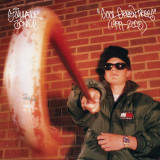
The cover photo is a picture of Sam standing on his back porch in the latter part of 1998, just before he got his first sampler. He was 13 years old, in 8th grade. His dad took the picture with his 35mm film camera: "I actually wanted to be pointing my dad's .22 pistol at the camera lens but he wouldn't let me. He gave me an old walking cane to use instead. The Tommy Hilfiger puffer jacket came from the lost and found at William Fleming High School where my mom worked as a secretary. I was thrilled when she brought it home because we never spent money on expensive name brand clothing like that - we were for the most part strictly a sale rack, bargain bin, thrift store, yard sale, flea market kind of family when it came to clothes. My watch is some cheap off-brand fake gold department store watch." Mastering for this vinyl edition was overseen by Be With regular Simon Francis and it was cut by the esteemed Cicely Balston at Abbey Road Studios to be pressed in the Netherlands by Record Industry.

No en stock

Haga su pedido ahora y le encargaremos el artículo en nuestro proveedor.

25,63

Ültimo hace: 10 Meses
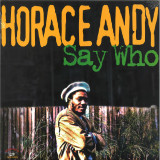
Horace Andy - Say Who

Horace Andy

Say Who

12inchKSLP041
Kingston Sounds
20.06.2025

Horace Andy has always commanded a place high on the list of Reggae singers from Jamaica. His distinctive haunting vocal style stands strong on any rhythm,song or style he chooses to cover. Of the singers on that long list, he has managed more so than any other, to crossover to a new generation of listeners due to his individual style, helped also by his collaborations with the likes of Massive Attack. Horace Andy (b. Horace Hinds,1951,Kingston Jamaica) like many otherJamaican singers began his musical career at Coxsonne Dodd's Studio One. So impressed with the youth, Coxsonne decided on a name change for theyoung artist and called him after his top songwriter of the time Bob Andy. So Horace Hinds became Horace Andy. His first tune for Coxsonne 'Something On My Mind' was a slow burner in Jamaica, but his belief in his young protégé paid off when followed later by 'Skylarking' a tune that burst the singer all overthe radio and sound systems of Jamaica. After numerous singles and two albums worth of material, Horace moved on to work with many of the topflight Jamaican producers, among them Keith Hudson, Augustus Pablo and Niney the Observer, but it was his work with producer Bunny Lee in the 70's that he cut most of his hits for and from this stable of work, that we have compiled this set. Some of his late 60's classics were recut in the popular1970's style, working with the rhythm kings themselves, Sly Dunbar andRobbie Shakespeare. They have added some shine to the tracks, 'SomethingOn My Mind' and 'Skylarking' and made them hits all over again. Such wasHorace's delivery to the covers he sang like Delroy Wilson's version of theTams 'Riding For A Fall', the Heptones 'My Guiding Star', John Holts'Man Next Door' and Bill Wither's 'Ain't No Sunshine', that these finetunes were made his own. The roots end of his musical style was covered by
Andy originals such as 'You Are My Angel', 'Zion Gate','Money Money'and the cut which we have taken our edited title, the timeless 'Just SayWho'.A bass heavy cut to Bob Marley's 'Natural Mystic' works so well inthis style also. Another nickname Horace acquired was the affectionate title of Sleepy, as he was always hanging around the yards and studios of Jamaica waiting his turn, sometimes so long he would fall asleep. His enthusiasm to get back in the studio to work some more of his magic, to a catalogue of material that has developed into one of the finest in Jamaica. I hope you will agree, this fine set of 1970's classics will sit alongside.


O B8 | AIN'T NO SUNSHINE

No en stock

Haga su pedido ahora y le encargaremos el artículo en nuestro proveedor.

13,40

Ültimo hace: 7 Meses
ELIZABETH PARKER - FUTURE PERFECT

Elizabeth Parker

FUTURE PERFECT

12inchJBH103LP
Trunk
16.06.2025

First ever release of pioneering radiophonic / experimental / electronic / soundtrack composer you may never have heard of but really should have by now. 26 tracks in all.
As we began the mammoth task of whittling down material for this album Elizabeth recalled the time she met Delia Derbyshire. It was during a party for existing and former Radiophonic Workshop composers at BBC Maida Vale in the early 1980s. Delia introduced herself with typical energy and exuberance proclaiming "It's up to you now - I'm passing the baton. Show these men how we get things done". That must have been quite an honour and responsibility for a young, female composer establishing herself within the male-dominated environs at Delaware Road.
Looking back over a musical career spanning almost five decades, it's clear Elizabeth rose to the challenge and made her mark. She was consistently in demand with television and radio producers, composing for an array of ground-breaking, critically acclaimed and popular BBC projects. Whilst Delia's legacy has achieved mythical status with her position as an innovator and feminist icon secured, the majority of Elizabeth's recorded work remains unavailable so her contribution to the output of the Workshop and evolution of British electronic music is somewhat under-appreciated.
Perhaps this record will help start to remedy the situation. Included are early tape experiments, home demos and non-BBC commissions from the early 1970's to the late 2000s. Having listened to 260+ digital audio tapes from Elizabeth's personal archive we have barely scratched the surface but hope to provide an indication of the breadth of her compositional and sound design skills.
Classically trained in cello and piano, Elizabeth graduated from the University of East Anglia with a degree in Music in 1973. She was mentored by Tristram Cary who helped her to become UEA's first recipient of a Masters in Electronic Music and later awarded an Honorary Doctorate by Staffordshire University. Joining the BBC as a studio manager in 1975, Elizabeth transferred to the Radiophonic Workshop in 1978. One of her first tasks was to create special sound effects for Blake's 7 using tape loops, the EMS 100 and trusted VCS3.
Her celebrated score for The Living Planet in 1982 featured early use of the PPG synthesizer and earned an Emmy nomination. Over the following years studio technology evolved rapidly, but Elizabeth transitioned from analogue recording techniques to newer digital platforms with relative ease, using samplers, midi sequencing and computer controlled workstations.
With an incredible 1,400 commissions to her name, she created special sound for The Day Of The Triffids, Lord Of The Rings, countless radio dramas including Iris Murdoch's The Sea, The Sea, Harold Pinter's Moonlight, all of Howard Barker's plays, productions of King Lear, Wordsworth's Prelude and The Pallisers. The success of The Living Planet led to further work for the BBC Natural History Unit followed by numerous commissions for The Natural World. At one point in the late 1980's at least five of her signature tunes were being broadcast every week including Points Of View, Horizon, Doctors To Be and Everyman.
After the closure of the Workshop in 1996 Elizabeth became freelance, arranging Faure's Pavane for the BBC World Cup '98 coverage (reaching no. 9 in the UK singles chart). She wrote additional music for Monty Python's Holy Grail DVD, scored Michael Palin's Full Circle and Sahara TV series, The Lost Gardens Of Heligan and The Human Body with Robert Winston.
Retiring from the music industry in the late 2000's, Elizabeth recently returned to her East Anglian roots and now lives near the coast. She walks daily, listening to all kinds of music, new and old, on her beloved air-pods.

No en stock

Haga su pedido ahora y le encargaremos el artículo en nuestro proveedor.

18,28

Ültimo hace: 10 Meses
Artículos por página
N/ABPM
Vinyl